



Abstract
Limited information is known about the offending phenomenon of Hong Kong adolescents, specifically from a theoretical standpoint. Using a sample of 892 secondary school students, this study aims to explore the criminogenic risk factors of juvenile delinquency in Hong Kong adolescents. Grounded in the theoretical propositions of mainstream criminological theories (i.e., self-control, social control, social learning, general strain, and routine activity), the adolescents’ types of delinquent behavior (i.e., violent, nonviolent, and general delinquency) are examined. Findings indicate that male adolescents reported significantly higher levels of violent, nonviolent, and general delinquency than female adolescents. Relative to females, males are also reported significantly higher levels of pro-violence attitudes, deviant peer influence, alcohol and drug use, and perceived neighborhood disorganization. However, female adolescents are found to have higher levels of self-control, social bonding, and negative temperament than their male counterparts. Multivariate analyses demonstrate that deviant peer influence in addition to alcohol and drug use is found to be general risk factors for engaging in all sorts of delinquent activity. A high level of pro-violence attitudes is significantly associated with violent offending, while low self-control is a significant predictor of nonviolent offending and general delinquency. Social bonding, negative temperament, and perceived neighborhood disorganization are found to be important factors associated with general delinquency. Implications of the findings are offered to address the adolescents’ criminogenic risk factors and prevent their propensity to engage in violent, nonviolent, and general delinquency.
Keywords
Introduction
Juvenile delinquency, regardless of its classification as either violent or nonviolent, has always been a global problem that threatens the social stability of a society. It has arguably reached an alarming level in Hong Kong—a special administrative region (SAR) of the People’s Republic of China (PRC). Males and females aged under 20 were estimated to comprise 15.4% of the total Hong Kong population in 2018 (Hong Kong Census and Statistics Department, 2019). It is noteworthy that the minimum age of criminal liability in Hong Kong has been raised from 7 to 10 years with effect from July 1, 2003. Based on police figures, juveniles (aged 10-20 years; juvenile and youth delinquents in Hong Kong are referred to those who are aged 10-15 years and 16-20 years, respectively) who were apprehended in 2018 comprised 5.1% of the total arrests in Hong Kong (Hong Kong Police Force, 2019).
In Hong Kong, the annual number of juvenile and youth crime arrests has risen steeply over the last three decades, with its peak in the late 1980s and early 1990s (Hong Kong Police Force, 2019). According to police statistics, the arrest rate for juvenile delinquency (i.e., 7-15 years of age) was 212 per 100,000 residents in 1976, and this rate has increased rapidly to its peak of 962 per 100,000 residents in 1989. This is because of the fact that the minimum age of criminal responsibility in Hong Kong has been changed in 2003 from 7 to 10 years. Similarly, the arrest rate for youth delinquency (i.e., 16-20 years of age) has also risen since the mid-1970s (973 per 100,000 residents in 1976) to its peak in the mid-1990s (2,203 per 100,000 residents in 1994). Nonetheless, a steady decline in both juvenile and youth arrests have been documented over the past 10 years (9,008 juveniles aged 10-20 years were arrested in 2008, 6,522 juveniles in 2012, and 2,769 juveniles in 2018). Despite this declining trend in the juvenile arrest rate in Hong Kong, more research is desirable to further understand what makes these Hong Kong adolescents become involved in juvenile delinquency. Specifically, past studies indicate that male and female adolescents are anticipated to possess different levels of criminogenic risk factors to delinquency. Hence, it is worthwhile to further explore the juvenile delinquency phenomenon in Hong Kong, particularly from the perspective of mainstream criminological theories. Findings of this study will certainly add to our knowledge in this area and contribute to the repertoire of literature on this topic.
Theoretical Background
During the past half-century, different theoretical perspectives have been adopted to explain juvenile delinquency and adult offending behavior. A number of mainstream criminological theories have been widely applied to the offending phenomenon. Among others, self-control theory is arguably one of the most tested and influential criminological theories (see Pratt & Cullen, 2000). This theory postulates that individuals with less self-control are more likely to get involved in delinquent activities in pursuit of immediate gratification, without considering the potential consequences (Gottfredson & Hirschi, 1990). Adolescents with low self-control are posited to manifest six core characteristics: They are impulsive, risk-seekers, self-centered, and short-tempered, and they prefer simple over complex tasks and physical over mental activities (Muraven, Pogarsky, & Shmueli, 2006). The personality trait of low self-control, once formed between the ages of 6 and 10 years, is argued to be considerably stable over one’s lifespan (Hirschi & Gottfredson, 1994; see also Na & Paternoster, 2012) and across individuals regardless of their demographic characteristics such as age, gender, culture, and social class (Vazsonyi & Klanjsek, 2008).
Recent delinquency research in Hong Kong has consistently demonstrated a significant and strong effect of low self-control on the adolescent’s propensity to commit delinquency, irrespective of its nature as either violence or nonviolence (e.g., Chan, 2019a; Chan & Chui, 2017; N. W. T. Cheung, 2014; Chui & Chan, 2016). In their study of 1,377 native Chinese secondary school–aged adolescents, Chui and Chan (2016) noted that male adolescents were generally having lower self-control than female adolescents, in the areas of impulsivity, risk-seeking, and self-centeredness. Similar findings were also noted in N. W. T. Cheung and Cheung’s (2010) study of 1,030 secondary school adolescents in Hong Kong. Chui and Chan (2016) also found that the relationship between low self-control indicators and types of delinquency differed across gender. For example, a preference for simple tasks and being self-centered were significant predictors of both theft and violent delinquency for only male adolescents. Conversely, a preference for physical activities was only significant in predicting theft delinquency in female adolescents.
Control theories, particularly the social control theory (also commonly known as the social bonding theory), also offer another theoretical explanation to elucidate the reasons why adolescents become involved in delinquent activities (Hirschi, 1969). In general, the social control perspective postulates that delinquency or crime occurs as a result of weak social bonds. Individuals with a stronger social bond to the conventional society (e.g., parents, prosocial peers, and schools) are less likely to involve themselves in delinquent or criminal activities. According to this theory, there are four key elements of social bond: (a) attachment, (b) commitment, (c) involvement, and (d) belief. Attachment simply refers to the affective or emotional ties toward parents, peers, and school. Commitment refers to an individual’s investment in conventional (prosocial) behavior, including a willingness to do what is promised and respecting the expectations of others regarding carrying out one’s promises. Involvement, conversely, refers to active participation in prosocial activities such as sports, religious practices, and community services. Finally, belief refers to the respect for moral validity of societal norms and regulations. Hirschi (1969) argued that these elements are strongly correlated and that their combined effect is likely to be stronger than their individual effects. As social bond elements are interrelated, attachment and commitment to prosocial individuals and activities are likely to increase an adolescent’s morality belief, which in turn may reduce the tendency to engage in delinquency (Laundra, Kiger, & Bahr, 2002).
The constructs of social bonding are also extensively researched in the context of delinquency in Hong Kong adolescent population in the recent decade. A low level of social bonding, in general, was found to be associated with a higher probability of getting involved in delinquency, both in violent and nonviolent manner (e.g., Chan & Chui, 2015; Chui & Chan, 2011; Chui & Chan, 2012b). Specifically, Chan and Chui (2015) found in their sample of 1,177 Chinese male adolescents that poor parental bonding, poor educational commitment, negative belief in the legal system, and high involvement in organizational activities were related to an increased level of nonviolent and violent offending. Similar findings were noted in Chui and Chan’s (2011) study of 94 juvenile male probationers in Hong Kong. Poor parental bonding and negative belief in the legal system were significantly associated with an increased propensity to commit theft and violent delinquency, while an increased level of involvement in organizational activities was only positively related to the involvement in violent delinquency. Specifically, familial detachment was noted to have a significant effect on a 1-year official recidivism risk and general self-anticipated reoffending risk in a group of 278 and 351 incarcerated repeat offenders in Hong Kong, respectively (Chan, Lo, & Zhong, 2016; Chan, Lo, Zhong, & Chui, 2015). Shek, Ma, and Tang (2012) asserted that positive family communication was an important protective factor of delinquency. Indeed, a longitudinal positive relationship between parental parenthood qualities and adolescent developmental outcomes has been found in Shek’s (2005) study of 199 Chinese adolescents with economic disadvantage in Hong Kong tested at two time-points in a year (see also Sun & Shek, 2013, on their longitudinal study of positive youth development and life satisfaction on problem behavior among 4,523 Hong Kong adolescents).
The general strain theory (Agnew, 2002) proposes that experiencing stressors (i.e., strains) interacts with individual characteristics to amplify the risk of engaging in maladaptive behaviors, such as criminal activities, aggression, and violence. These manifestations of negative coping are adopted in response to adverse events, conditions, or treatment. Specifically, this theoretical framework emphasizes the function of negative emotion (e.g., anger and depression) as a stimulus for action that triggers youth progression from strain to delinquency (Agnew, 1992). Exposure to these strains is likely to produce negative emotions including anger and frustration, which demand corrective action (Agnew, Brezina, Wright, & Cullen, 2002). According to this theory, delinquent behavior is a type of corrective action that seeks to injure, damage, or seek revenge on the presumed sources of the strain. According to R. B. Felson’s (1992) social interactionist approach, an individual’s resentment, aggression, and desire for revenge may lead to a cycle of violence and retaliation. Specifically, retaliation is likely to cause an escalation in violence (Silver, Piquero, Jennings, Piquero, & Leiber, 2011).
Studies have consistently demonstrated that different types of strain and their conditions have influenced Chinese young people in their tendency to engage in delinquency. In their study of family strain and adolescent delinquency in Guangzhou and Hong Kong, C. Cheung, Ngai, and Ngai (2007) found that negative emotions derived from parental agitation were strongly related to adolescent delinquency, with the parental agitation was more deleterious in Hong Kong than in Guangzhou. In another study, Y. W. Cheung (1997) postulated that students who experienced frustrations in their school experiences through a host of school-related factors (e.g., difficult curriculum, heavy schoolwork, ineffective teaching, and strong competition among classmates) were more likely to get involved in delinquent activities. N. W. T. Cheung and Cheung (2010) found that strained Chinese adolescents with more self-control were less likely to turn to deviant coping (e.g., delinquency). Similar findings were noted in N. W. T. Cheung and Cheung (2008) where stressful life events significantly predicted general delinquency in their sample of 1,015 Chinese secondary school students in Hong Kong.
Meanwhile, the learning theories of delinquency and offending behavior, such as Sutherland’s (1947) differential association theory and Akers’ (1985) social learning model, hypothesize that delinquency is learned through close social interaction with family and peers in the form of reinforcement or reward and punishment. Similar to other attitudes and behavior, delinquent behavior is learned from role models. Bandura (1973) stressed that the imitation of observed behavior is a key process of behavioral learning. Simply put, when an individual anticipates incentives, his or her probability of learning the observed delinquent behavior increases. The impact of such exposure, however, varies greatly according to the frequency, duration, intensity, and priority of different associations (Akers, 1998). Although the primary social groups (e.g., family and peers) tend to have a tremendous influence on the behavioral learning process, secondary and reference groups (e.g., the school system, colleagues and work groups, the mass media, the Internet, and computer and mobile games) can be equally important to the normative definitions (e.g., attitudes, beliefs, values, and norms) in the learning process (Warr, 2002).
Situational mechanisms, such as routine activities and lifestyle choices, have also been commonly used to explain juvenile delinquency and criminal offending. The routine activity theory, proposed by Cohen and Felson (1979), theorized that the possibility of a crime to occur is largely influenced by the convergence in space and time of three key elements in the daily routines of individuals: (a) a motivated or potential offender, (b) an attractive and suitable target, and (c) an ineffective or absent guardian capable of protecting against a violation. The lack of any one of these elements reduces the likelihood of a potential crime (M. Felson & Cohen, 1980). This theory, originally used to describe victimization as the outcome of legitimate and routine daily activities that expose poorly guarded targets to potential offenders in close proximity, has since been extended to explain delinquent behavior. For instance, individuals who spend substantial time in “unstructured socializing” with delinquent peers and without adult supervision may be at a heightened risk of engaging in delinquent activities, irrespective of their own criminal tendencies (Osgood, Wilson, O’Malley, Bachman, & Johnston, 1996). Alcohol and drug use can be an example of such socialization with delinquent peers (Sanchagrin, Heimer, & Paik, 2017). Tangible or intangible rewards (e.g., reputation or status within a group) may also encourage participation in delinquent activities and persistent offending (‘t Hart-Kerkhoffs, Vermeiren, Jansen, & Doreleijers, 2011).
Consistent with previous findings, the study conducted by Y. W. Cheung (1997) on 1,139 secondary school students in Hong Kong has found support that peers’ deviant behavior is the best predictor for adolescent deviant behavior. Peer groups seemed to be a dominant source of influence and reinforcement of deviant values and behavior for adolescents in Hong Kong. Ngai and Cheung (2005) also found in their sample of 229 marginal youth in Hong Kong that learning delinquent skills from peers contributed to their propensity to engage in theft. Interestingly, the generality of the protective function of prosocial social learning on Chinese delinquent youths’ gang involvement was noted in Ngai, Cheung, and Ngai’s (2007) study of 838 Chinese delinquent youths from Hong Kong, Guangzhou, and Shanghai. Individuals who reported a high level of prosocial social learning were less likely to involve in gang activities.
The Present Study
Through testing a number of mainstream theoretical concepts, this study aims to explore the criminogenic risk factors that are associated with the involvement in violent offending (i.e., delinquent behavior that involves violence; e.g., interpersonal violence), nonviolent offending (i.e., delinquent behavior that does not involve any violence; e.g., property offense), and general delinquency (e.g., status offense and deviant behavior) in Hong Kong male and female adolescents. This study is important in not only examining different types of delinquent behavior through testing a number of mainstream criminological theories, but also to explore the potential gender differences in these different types of delinquency in a group of Hong Kong adolescents. Moreover, the findings of this study can inform practice (e.g., preventive measures) by identifying significant criminogenic risk factors for different types of delinquent conduct. Strategic interventions could potentially help to reduce adolescents’ propensity to engage in delinquency. Drawing from the extant literature, the following research hypotheses are proposed.
Method
Participants and Procedure
Although approximately 95% of the people in Hong Kong is of Chinese descent, Hong Kong is a melting pot of different cultures with substantial Western influence. Before its return to the PRC in July 1997, Hong Kong was a British colony for more than 150 years. Thus, Hong Kongers generally balance their Western modernized way of life with traditional Chinese cultural values and practices. In this study, a total of 892 participants, aged between 13 and 18 years, were recruited from 12 secondary schools in Hong Kong. These schools were stratified according to their geographic region (i.e., the Kowloon Peninsula, Hong Kong Island, and the New Territories). Four schools were selected from each region. Ethical approval was obtained from the university’s institutional review board (IRB) and different school administrators. The participants’ informed consent was then sought before the administration of the pen-and-paper questionnaires. Their participation in this study was completely voluntary and without any monetary incentive. They were reassured that their responses would be kept confidential and used only for research purposes. On average, 25 minutes were required for the participants to complete the questionnaire. The response and cooperation rate for the survey was about 90%.
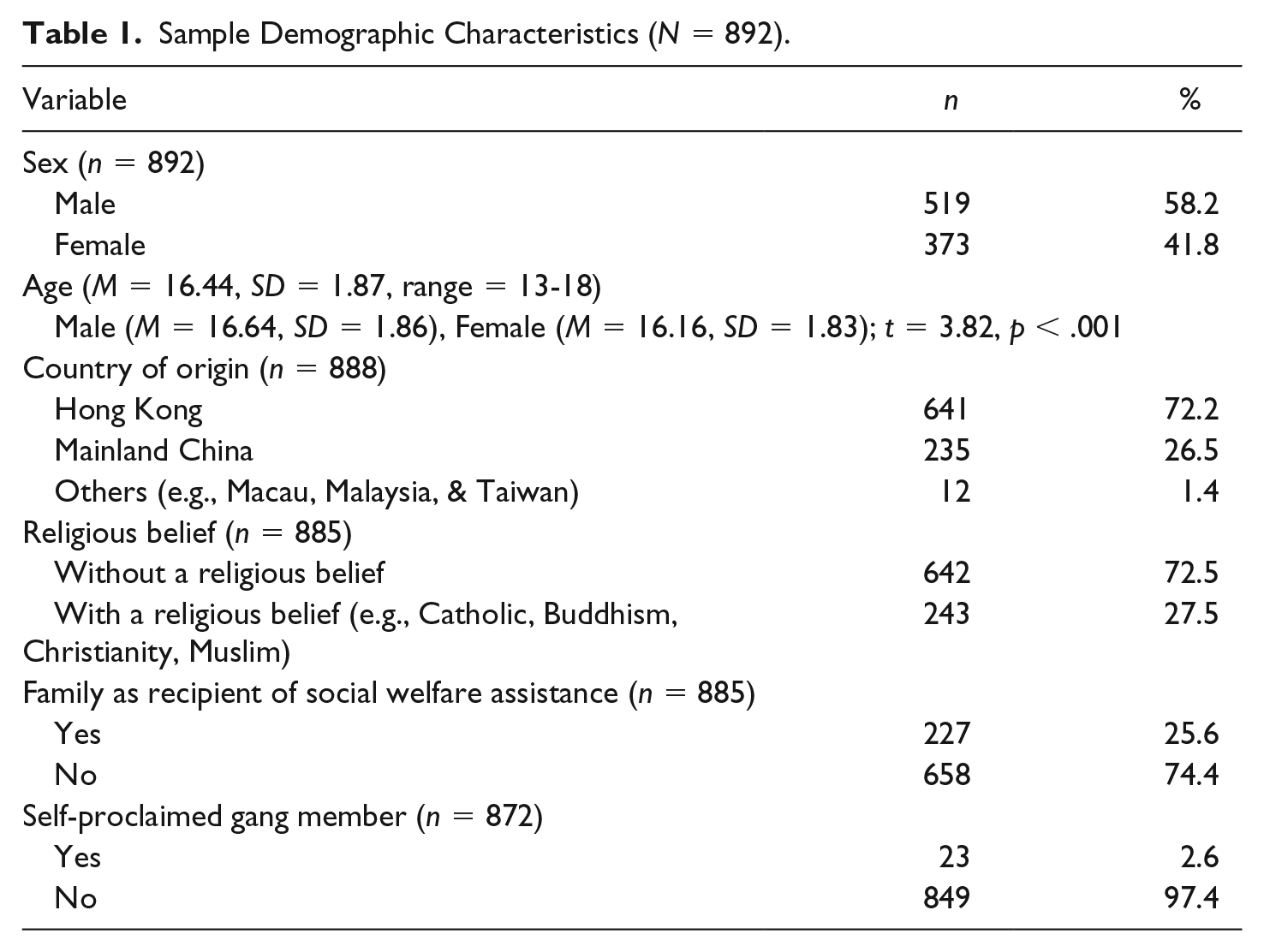
Most of the participants in this study were males (58.2%; Table 1). The average age of participants was 16.44 years (SD = 1.87), with a slight age difference between males and females (the mean age of males and females was 16.64 years [SD = 1.86] and 16.16 years [SD = 1.83], respectively; t = 3.82, p < .001). About three quarters of the participants were local Hong Kongers (72.2%), without any religious affiliation (72.5%), from a family not in receipt of any social welfare assistance (74.4%), and not a gang member (97.4%).
Sample Demographic Characteristics (N = 892).
Measures
A collection of self-reported measures were used in this study to explore (a) the participants’ prevalence of self-reported violent, nonviolent, and general delinquency perpetration; (b) the gender differences in these three types of delinquent behavior; and (c) the overall and gendered effects of criminogenic risk factors in predicting violent, nonviolent, and general delinquency perpetration. The questionnaires were printed in both English and Chinese versions to accommodate the participants’ different language needs. To accommodate the local Chinese population, the English-written scales were initially translated by an experienced and academically qualified English-to-Chinese translator. Next, the Chinese version scales were back translated to English to ensure their face validity and to compare them with the original measures developed in English for ascertaining their content similarity.
Self-Reported Delinquency Scale
To measure the prevalence of self-reported violent, nonviolent, and general delinquency perpetration over the past 12 months, a 36-item delinquency scale was used. On a count measure, this scale was originally developed by Elliott, Huizinga, and Ageton (1985) and has been widely used in delinquency studies. In this measure, eight items were identified as violent offending behavior, 17 items as nonviolent offending behavior, and 11 items as general delinquent behavior. Sample items included asking whether the participant had “Attacked someone with a weapon” (violent offending behavior), “Gone or tried to go into building to steal something” (nonviolent offending behavior), and “Made obscene telephone calls” (general delinquent behavior).
Self-Control Scale
Gottfredson and Hirschi’s (1990) original six elements of self-control (i.e., self-centeredness, impulsivity, risk-seeking tendencies, a volatile temper, a preference for simple tasks, and a preference for physical activities) are also often regarded as low self-control indicators. The widely adopted 23-item Low Self-Control Scale (LSCS), developed by Grasmick, Tittle, Bursik, and Arneklev (1993), was used to assess the adolescents’ level of self-control in this study. The LSCS is measured on a 4-point Likert-type scale (1 = strongly agree, 4 = strongly disagree), with a total score ranging from 23 to 92. A higher score denoted greater self-control. Sample items were “I often act on the spur of the moment without stopping to think,” “Sometimes I will take a risk just for the fun of it,” and “I lose my temper pretty easily.” The Cronbach’s alpha value of this measure was .89.
Social Bonding Scale (SBC)
An 18-item SBC, as detailed in Chapple, McQuillan, and Berdahl (2005) and based on Hirschi’s (1969) social control theory, was used to evaluate the participants’ conventional ties and attachments to their parents, peers, school, and society in general. The attachment to parents in the SBC was extracted into two separate latent variables (i.e., parental dependence and parental bonding). The items were assessed using a 4-point (1 = never, 4 = many times; two items) and a 5-point (1 = strongly disagree, 5 = strongly agree; 16 items) Likert-type format, with a total score ranging from 18 to 38. A higher score indicated a greater social bond. Sample items were “I share my thoughts and feelings with my mother,” “I would like to be the kind of person my best friend is,” and “I have lots of respect for the police.” The alpha coefficient of this measure was .73.
Pro-Violence Attitudes Scale
The adolescents’ attitudes in support of violence were measured with a seven-item scale using a 4-point Likert-type scale (0 = strongly disagree, 3 = strongly agree), with a total score ranging from 0 to 21. These items were extracted from Pyrooz, Moule, and Decker’s (2014) study on the subculture code of the street in the involvement of gang activities. A higher score denoted a more supportive level of pro-violence attitudes. Sample items were “When someone disrespects you, it is important that you use physical force or aggression to teach him/her not to disrespect you,” “People tend to respect a person who is tough and aggressive,” and “People do not respect a person who is afraid to fight physically for his/her rights.” The internal consistency of this measure was .90.
Negative Temperament Scale
To assess the participants’ level of negative emotions, an eight-item measure was adopted. This scale was measured on a 4-point Likert-type scale (1 = strongly agree, 4 = strongly disagree), with a total score ranging from 8 to 32 (Tillyer & Wright, 2014). A higher score indicated a more strongly negative temperament. Sample items were “I get angry easily,” “I frequently have mood swings,” and “I lose my temper easily.” The Cronbach’s alpha value of this measure was .70.
Deviant Peer Influence Scale
A five-item measure was used to assess peer delinquency and its potential influences. Adolescents were asked about the delinquent activities of their peers in dichotomized items (0 = no, 1 = yes), with a total score ranging from 0 to 5 (Posick, 2013). A higher score signified a greater number of delinquent conducts by peers. Sample items were “I have friends who did steal something from a shop or department store,” “I have friends who did beat someone up or hurt someone badly with something like a stick or a knife,” and “I have friends that entered a building with the purpose to steal something.” The alpha coefficient of this measure was .69.
Alcohol and Drug Use Scale
The participants’ alcohol and drug use over the past 30 days was measured using an eight-item 6-point Likert-type scale (0 = never, 5 = 20 or more times), with a total score ranging from 0 to 40 (Espelage, Low, Rao, Hong, & Little, 2014). A higher score denoted a higher frequency of alcohol and drug use. Sample items were “Drunk liquor (like whiskey or gin),” “Used marijuana (like pot, hash, reefer),” and “Used inhalants (like gasoline, sprays, glue).” The internal consistency of this measure was .89.
Perception of Neighborhood Disorganization Scale
To evaluate the adolescents’ living environment, a five-item scale measuring their perception of neighborhood disorganization was used (Posick, 2013). These items were assessed using a 4-point Likert-type scale (1 = strongly agree, 4 = strongly disagree), with a total score ranging from 5 to 20. Sample items were “There is a lot of crime in my neighborhood,” “There is a lot of drug selling,” and “There is a lot of fighting.” These items were subsequently reverse coded so that higher scores would indicate higher levels of perceived neighborhood disorganization. The Cronbach’s alpha value of this measure was .93.
Analytic Strategy
In this study, independent sample t tests were computed to examine the gender differences in different types of delinquency perpetration (i.e., violent, nonviolent, and general delinquent behavior) and criminogenic risk factor (i.e., self-control, social bonding, pro-violence attitudes, negative temperament, deviant peer influence, alcohol and drug use, and perceived neighborhood disorganization). Pearson correlations were also performed to explore the interrelatedness of violent, nonviolent, and general delinquency perpetration. Correlation coefficients were computed between study variables for males and females. To prevent the occurrence of Type I errors due to multiple comparisons, the alpha level was lowered to p ≤ .001. Most of the coefficients between different study variables were low in magnitude, indicating that they were not overlapping measures. Subsequently, the ordinary least squares (OLS) regression approach was adopted to explore the effects of different criminogenic risk factors on self-reported violent, nonviolent, and general delinquency perpetration while controlling for the participants’ demographic characteristics (i.e., age and religiosity). The significance level was set at .05.
Results
Mean Differences Between Types of Delinquency and Criminogenic Risk Factor
Table 2 illustrates the mean scores for different types of delinquency and criminogenic risk factor of male and female adolescents. Relative to females, males reported significantly higher levels of violent (t = 4.50, p < .001), nonviolent (t = 2.65, p = .008), and general delinquent behavior (t = 2.35, p = .019). Pertaining to the criminogenic risk factors, females scored significantly higher in self-control (t = −3.62, p < .001), social bond (t = −5.93, p < .001), and negative temperament (t = −3.62, p = .003) than their male counterparts. However, males were found to report higher levels of pro-violence attitudes (t = 5.92, p < .001), deviant peer influence (t = 3.20, p = .001), alcohol and drug use (t = 3.62, p < .001), and perceived neighborhood disorganization (t = 2.27, p = .024) than females.
Gender Differences of the Prevalence of Self-Reported Violent, Nonviolent and General Delinquency Perpetration, and Criminogenic Risk Factors.
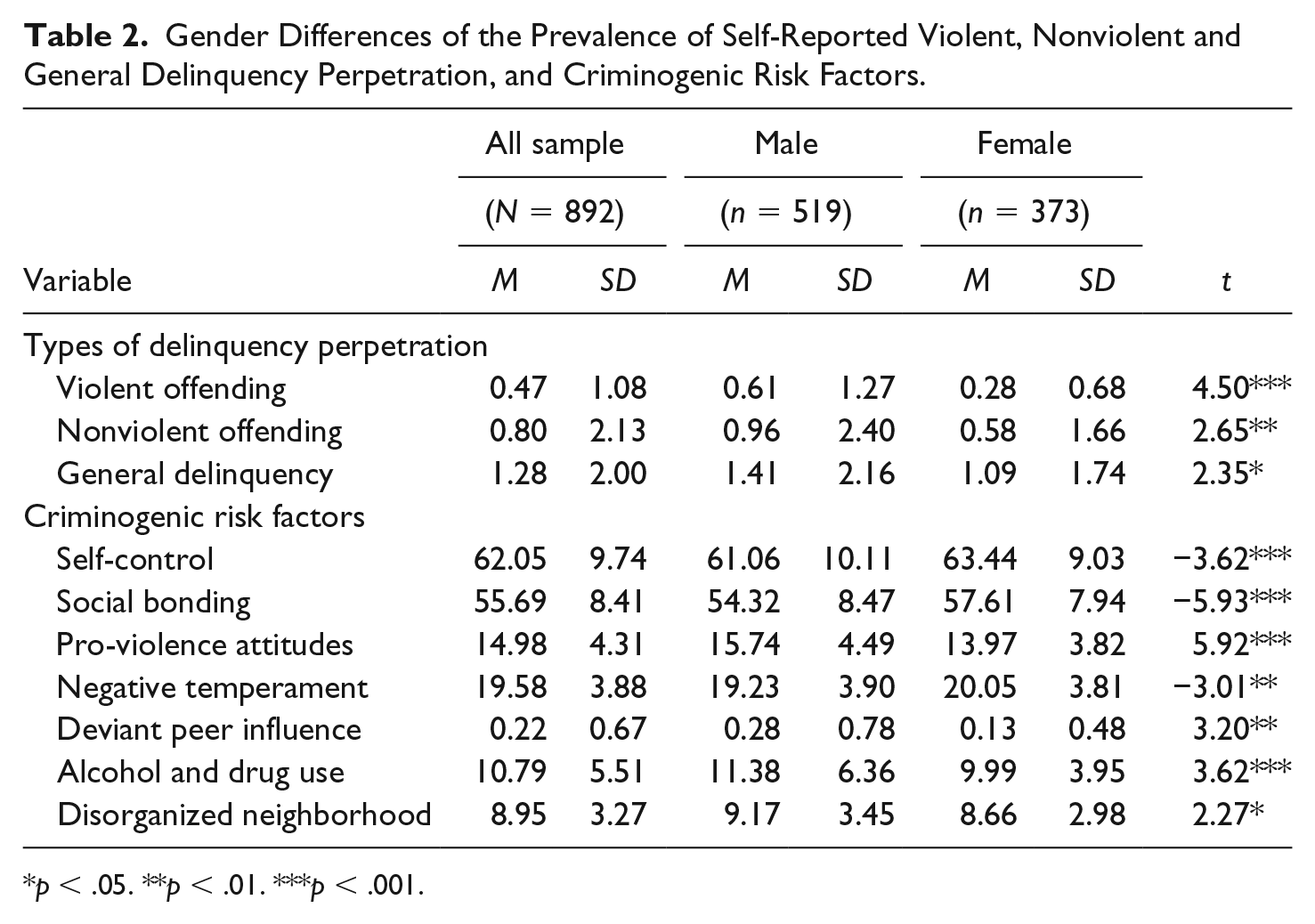
p < .05. **p < .01. ***p < .001.
Pearson Correlations of Violent, Nonviolent, and General Delinquency Perpetration
Pearson correlations were used to assess the relationships among the different types of delinquency perpetration (i.e., violent, nonviolent, and general). As is shown in Table 3, all three types of delinquency perpetration were found to be significantly and positively correlated with one another. The correlation coefficients for violent, nonviolent, and general delinquency for the total sample were in the range of .59 to .71. The correlation coefficients for male adolescents were in the range of .66 to .74 and female adolescents in the range of .39 to .67.
Pearson Correlations of Violent, Nonviolent, and General Delinquency Perpetration.
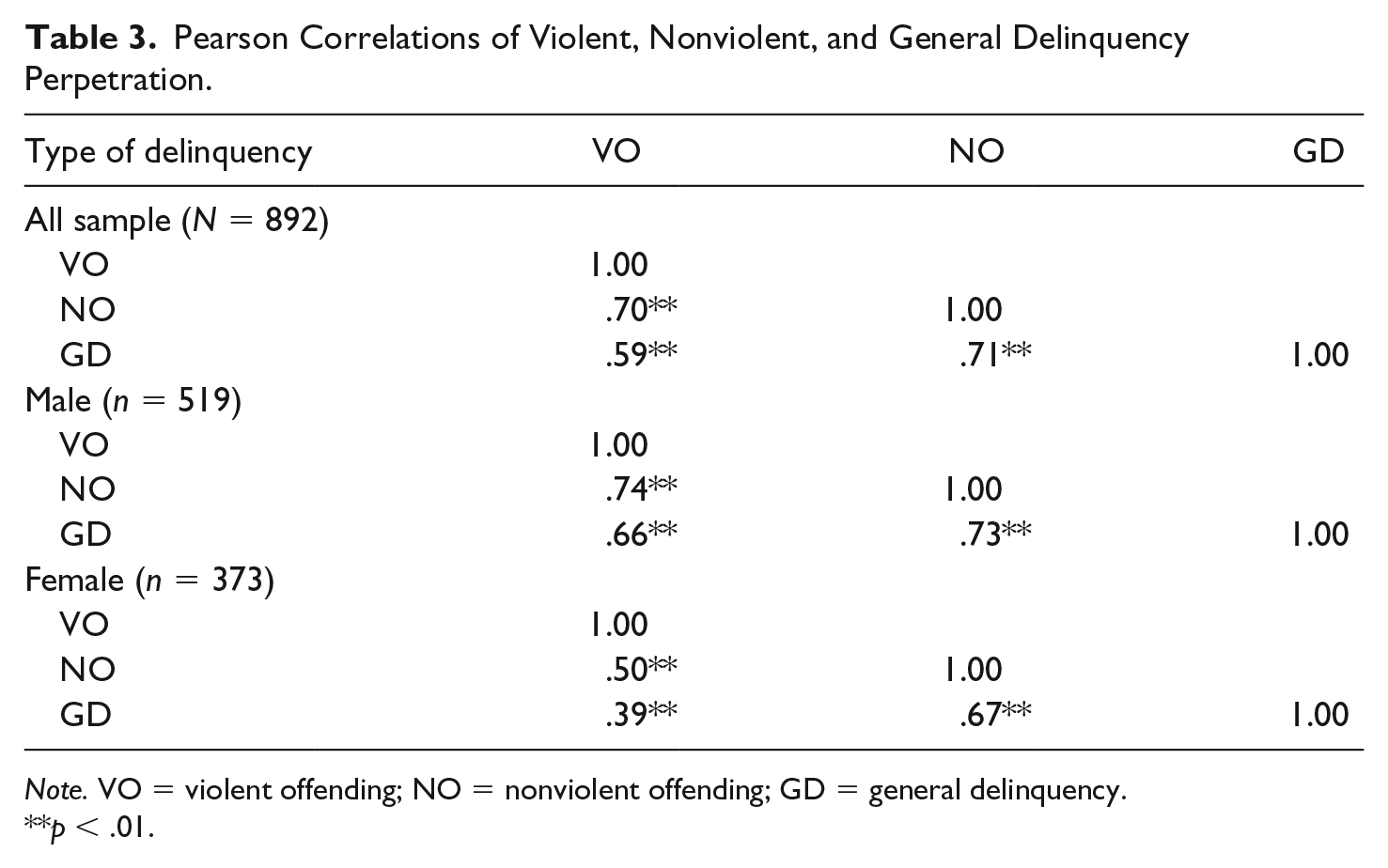
Note. VO = violent offending; NO = nonviolent offending; GD = general delinquency.
p < .01.
Effects of Criminogenic Risk Factors on Violent, Nonviolent, and General Delinquency Perpetration
OLS regressions were performed to explore the effects of criminogenic risk factors on self-reported violent, nonviolent, and general delinquency perpetration, while controlling for the adolescents’ demographic characteristics (i.e., age and religiosity). Table 4 indicates that all regression models were significant. In general, Hong Kong adolescents’ levels of pro-violence attitudes (B = 0.04, SE = 0.01, p < .001), deviant peer influence (B = 0.69, SE = 0.05, p < .001), alcohol and drug use (B = 0.04, SE = 0.01, p < .001), and perceived neighborhood disorganization (B = 0.03, SE = 0.01, p = .012) were significantly associated with the adolescents’ violent offending. Specifically, male adolescents’ levels of self-control (B = −0.01, SE = 0.01, p = .049) were negatively correlated with their self-reported violent offending, while their levels of pro-violence attitudes (B = 0.04, SE = 0.01, p = .001), deviant peer influence (B = 0.77, SE = 0.07, p < .001), alcohol and drug use (B = 0.04, SE = 0.01, p < .001), and perceived neighborhood disorganization (B = 0.03, SE = 0.02, p = .049) were positively associated with their propensity to perpetrate violent behavior. However, female adolescents’ tendency to engage in violent offending was also positively correlated with their levels of pro-violence attitudes (B = 0.03, SE = 0.01, p = .004) and deviant peer influence (B = 0.40, SE = 0.08, p < .001). Gender differences were noted where self-control and alcohol and drug use were significantly associated with violent offending only in male adolescents, while perceived neighborhood disorganization was only a significant predictor of violent offending in female adolescents.
OLS Regression Models of Violent, Nonviolent, and General Delinquency Perpetration.
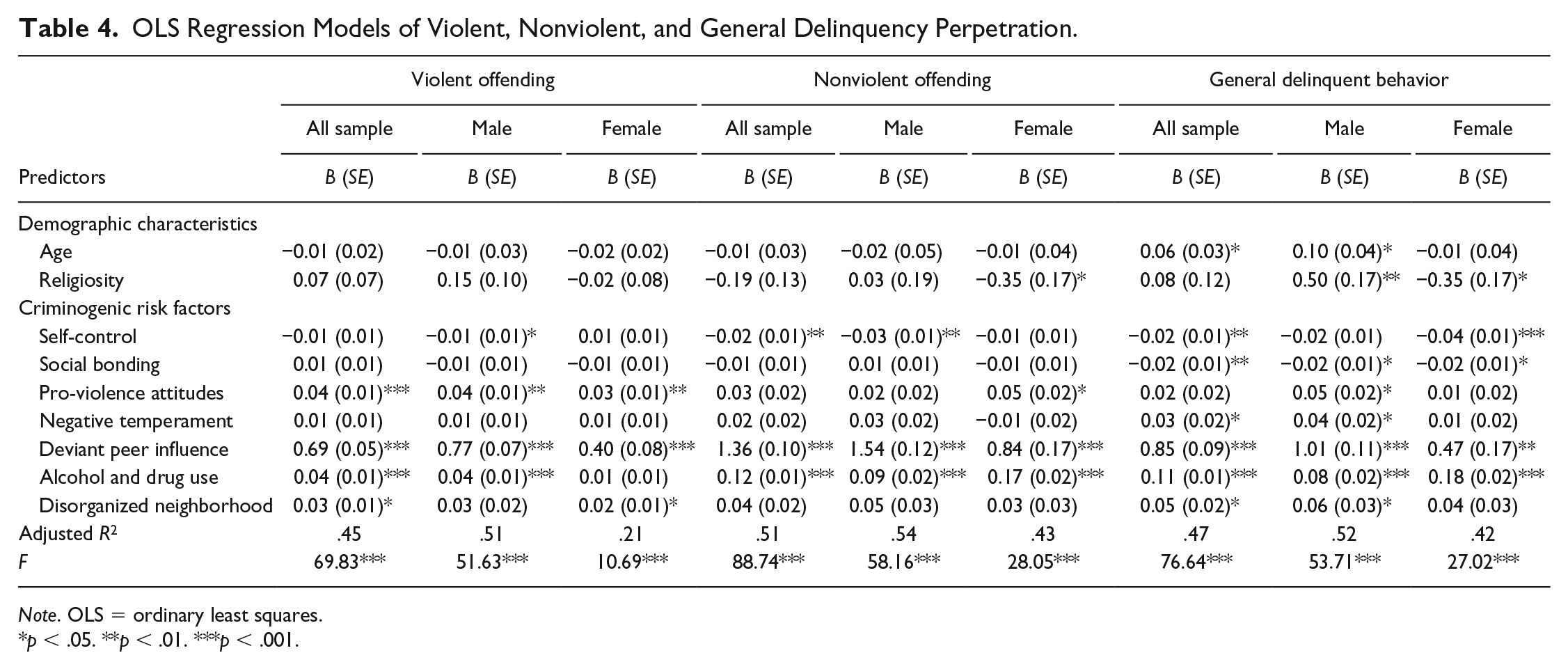
Note. OLS = ordinary least squares.
p < .05. **p < .01. ***p < .001.
With regard to their self-reported nonviolent offending, Hong Kong adolescents’ levels of self-control (B = −0.02, SE = 0.01, p = .002), deviant peer influence (B = 1.36, SE = 0.10, p < .001), and alcohol and drug use (B = 0.12, SE = 0.01, p < .001) were found to be significant predictors of such offending. For male adolescents specifically, their levels of self-control (B = −0.03, SE = 0.01, p = .008), deviant peer influence (B = 1.54, SE = 0.12, p < .001), and alcohol and drug use (B = 0.09, SE = 0.02, p < .001) were found to be significantly correlated with their propensity to perpetrate nonviolent behaviors. Female adolescents’ pro-violence attitudes (B = 0.05, SE = 0.02, p = .027), deviant peer influence (B = 0.84, SE = 0.17, p < .001), and alcohol and drug use (B = 0.17, SE = 0.02, p < .001) were positively associated with their nonviolent perpetration behaviors, while their religiosity (B = −0.35, SE = 0.17, p = .039) was found to have a significant negative effect on this type of perpetration behavior. Gender differences were found where self-control was only significantly associated with male adolescents’ nonviolent offending, while pro-violence attitudes were only significantly correlated with nonviolent offending in female adolescents.
Interestingly, several significant predictors of the adolescents’ general delinquent behavior were evident. Their levels of self-control (B = −0.02, SE = 0.01, p = .001), social bonds (B = −0.02, SE = 0.01, p = .003), negative temperament (B = 0.03, SE = 0.02, p = .023), deviant peer influence (B = 0.85, SE = 0.09, p < .001), alcohol and drug use (B = 0.11, SE = 0.01, p < .001), and perceived neighborhood disorganization (B = 0.05, SE = 0.02, p = .015) were significantly correlated with their involvement in general delinquency. Specifically, male adolescent’s levels of pro-violence attitudes (B = 0.05, SE = 0.02, p = .019), negative temperament (B = 0.04, SE = 0.02, p = .049), deviant peer influence (B = 1.01, SE = 0.11, p < .001), alcohol and drug use (B = 0.08, SE = 0.02, p < .001), and perceived neighborhood disorganization (B = 0.06, SE = 0.03, p = .022) in addition to age (B = 0.10, SE = 0.04, p = .019) and religiosity (B = 0.50, SE = 0.17, p = .004) were positively correlated, while the level of social bonds (B = −0.02, SE = 0.01, p = .013) was negatively associated with their likelihood to involve themselves in general delinquency. Similarly, female adolescents’ levels of self-control (B = −0.04, SE = 0.01, p < .001), social bonds (B = −0.02, SE = 0.01, p = .044), deviant peer influence (B = 0.47, SE = 0.17, p = .008), alcohol and drug use (B = 0.18, SE = 0.02, p < .001), and religiosity (B = −0.35, SE = 0.17, p = .045) were found to be significantly correlated with their propensity to engage in general delinquent behaviors. Gender differences in significant criminogenic risk factors of general delinquency were noted. Pro-violence attitudes, negative temperament, and perceived neighborhood disorganization were only significantly correlated with general delinquency in male adolescents, while self-control was only significantly associated with female adolescents’ general delinquent behavior.
Discussion
Adolescents, in general, are often reported to engage in various types of problem (or risky) behaviors and delinquent activities. This study is important not only in its contribution to the repertoire of knowledge on juvenile delinquency, but also specifically for its advancement of such knowledge through a less commonly researched population—that of Hong Kong adolescents. Using a large sample of school-age adolescents in Hong Kong, the purpose of this study was twofold: (a) to explore gender differences at the mean levels of different types of delinquent behavior (i.e., in violent, nonviolent, and general delinquency) and criminogenic risk factors (i.e., self-control, social bonds, pro-violence attitudes, negative temperament, deviant peer influence, alcohol and drug use, and perceived neighborhood disorganization) and (b) to examine whether the relationship between different types of delinquent behavior and criminogenic risk factor holds after controlling for demographic characteristics (i.e., age and religiosity). In general, male adolescents reported significantly more violent offending, nonviolent offending, and general delinquent behavior than female adolescents. Relative to their female counterparts, male adolescents had significantly higher levels of pro-violence attitudes, deviant peer influence, alcohol and drug use, and perceived neighborhood disorganization, but lower levels of self-control, social bonds, and negative temperament. Put differently, male adolescents were found to possess an overall higher tendency than female adolescents to engage in delinquent activities.
In general, the criminogenic risk factors examined in this study were significantly associated with different types of delinquent behavior, and thus, our data lend support for the different mainstream criminological theoretical concepts that can explain juvenile delinquency.
The findings indicate that the approaches adopted to identify the influence exerted by learning (i.e., deviant peer influence) and routine activity and lifestyle (i.e., deviant peer influence and alcohol and drug use) were useful in explaining the overall offending phenomenon in Hong Kong adolescents, regardless of the type of delinquency (i.e., violent, nonviolent, and general delinquency). Put differently, associating with delinquent peers and consuming alcohol and drugs were noted to be strong predictors of an adolescent’s involvement in all sorts of delinquent activity. The routine activity approach hypothesizes that adolescents are likely to be at an increased risk of engaging in delinquent activities if they are spending substantial time in “unstructured socializing” (e.g., drinking alcohol and taking drugs) with their delinquent peers (Schreck, Fisher, & Miller, 2004). This was the case for male adolescents in their propensity to engage in violent offending. Males and females socialize differently. One of the key attributes of female socialization is that females should “do no harm.” As a result, predatory delinquency (violent and nonviolent offending for which there is a victim) is not consistent with a feminine identity (Steffensmeier & Allan, 1996). In contrast, masculine identity often can be strengthened by engaging in predatory offending (Messerschmidt, 1993). Therefore, adolescent male culture may generate many competitive pursuits, often delinquent in nature, and male group membership emphasizes on aggression, toughness, risk-taking, and physical strength, which are commonly observed in (predatory) delinquent activities (Augustyn & McGloin, 2013).
In addition to deviant peer influence and alcohol and drug use, having higher levels of pro-violence attitudes and perceived neighborhood disorganization were also found to be important factors associated with violent offending behavior. In addition, a high level of perceived neighborhood disorganization was also positively correlated with the propensity to engage in general delinquency. This is consistent with previous studies (e.g., Chan, 2019a; Hoeben, Meldrum, Walker, & Young, 2016; Osgood et al., 1996); therefore, it is reasonable to argue that peer deviance and inherently maladaptive lifestyles (e.g., living in a disorganized neighborhood) are likely to contribute to a platform from which adolescents learn pro-violence attitudes and other maladaptive behaviors (e.g., alcohol and drug use). This phenomenon was apparent among female adolescents in their likelihood to involve in violent (perceived neighborhood disorganization) and nonviolent (pro-violence attitudes) offending, while it was the case for male adolescents in general delinquency (pro-violence attitudes and perceived neighborhood disorganization). Mills (2003) argued that “people who are exposed to violence are more likely to absorb pro-violence norms and values, which, in turn, makes them more violence prone” (p. 88). To compare with male adolescents, it is reasonable to posit that female adolescents in this study might have been exposed to many levels of violence presently or in the past that might have shaped their perception of living in a disorganized neighborhood, which thus giving them greater reason for engaging in more serious delinquent behaviors.
Interestingly, low self-control was only significantly correlated with nonviolent offending and general delinquency in this study. Regardless of the type of delinquency, low self-control has long been recognized by cross-cultural studies as a ubiquitous predictor of juvenile delinquency (e.g., Chan & Chui, 2017; Gottfredson, 2009; Sacarellos et al., 2016). Risk-seeking behavior (e.g., alcohol and drug abuse, smoking, illicit sexual behavior, reckless driving), an indication of low self-control, has also consistently been found to have a strong positive relationship with the involvement in delinquent activities (Liang, Flisher, & Lombard, 2007; Love, 2006; MacDonald, Piquero, Valois, & Zullig, 2005). To these adolescents, offending may be a source of arousal and excitement (Zuckerman, 1979). They are often egotistical and unsympathetic to others, and particularly more likely to do whatever it takes to obtain quick and easy gratification, even at the expense of others’ well-being. According to Hirschi and Gottfredson (2001), “people who engage in crime are people who tend to neglect long-term consequences. They are, or tend to be, children of the moment. They have what we call low self-control” (p. 90). In this study, it was the case for male adolescents in their tendency to engage in violent and nonviolent offending, and for female adolescent in their likelihood to involve in general delinquency. Perhaps the effect of self-control differed in terms of types and severity of delinquent behavior for male and female adolescents. Similar findings were noted in LaGrange and Silverman’s (1999) study where female adolescents differed significantly from their male counterparts in their propensities to engage in different delinquent behaviors. Chui and Chan (2016) found that male adolescents were significantly more impulsive, risk-seeking, and self-centered than female adolescents.
Social bonding, on the other hand, was found to be an important factor associated only with the involvement in general delinquency (e.g., making obscene telephone calls or running away from home). Put differently, adolescents with low levels of social bonding had an increased tendency to engage in general delinquent acts. This finding supports Hirschi’s (1969) contention that the strength of social bond is related inversely with the propensity to engage in delinquency. Possessing high levels of social bond with their parents, prosocial peers, school, and society as a whole insulates adolescents from involvement in delinquent activities. Specifically, the influence that a strong and prosocial bond with parents or primary caregivers has on adolescents’ psychological well-being and behavior is universal. A healthy and secure parent–child attachment is pivotal to protect adolescents from engaging in delinquent activities (Chan & Wong, 2019). The roles that school (e.g., via a commitment to education) and society (e.g., via a belief in the criminal justice system) play in protecting adolescents from involvement in delinquency is equally important (Chan & Chui, 2015).
Finally, the adolescents’ negative temperament was found to have a positive relationship with their involvement in general delinquency. Simply put, those who experience negative emotions often (e.g., are angry, frustrated, or depressed) are more likely to engage in delinquent activities. This assertion is in line with the findings by Caspi, Moffitt, Stouthamer-Loeber, Krueger, and Schmutte (1994) and Krueger and colleagues (1994) whereby high levels of negative emotion and low levels of constraint are associated with delinquent behavior. Chui and Chan (2012a) also found that having negative emotions was a significant reoffending risk factor in a group of male juvenile probationers. In this regard, delinquent activities—as (maladaptive) corrective actions—are performed to cope with the negative emotions. Similar findings were also consistently noted in other studies (e.g., Baglivio, Wolff, DeLisi, Vaughn, & Piquero, 2016; DeLisi & Vaughn, 2014; Wolff, Baglivio, Piquero, Vaughn, & DeLisi, 2016). This was the case for male adolescents in their propensity to engage in general delinquent behavior. Liu and Kaplan (1999) found that male adolescents reported a higher level of frustration in achievement than female adolescents, which may affect subsequent delinquency indirectly.
The findings of this study should be interpreted cautiously in view of several limitations. First, this study was limited by the use of self-reported data. Biases, such as social desirability and memory recall, are possible, which may in turn result in an underreporting of delinquent behavior. Future studies should consider incorporating a measure of response bias. Next, given the cross-sectional nature of this study, it failed to examine the causal relationships between the adolescents’ criminogenic factors and their self-reported violent, nonviolent, and general delinquency. Therefore, future research should adopt a longitudinal framework to acquire a better understanding of the offending phenomenon in this population. Third, it is plausible that there are variables that may play the role of mediator or moderator in explaining the delinquency phenomenon. Potential interactions among the different criminogenic risk factors are possible as some of the risk factors are largely focusing at the individual level, while others are more relevant to the situational or environmental influences. For instance, N. W. T. Cheung and Cheung (2010) found that self-control mitigates the effects of certain strains on delinquency in female adolescents, and coercive parenting moderates the impact of low self-control in male adolescents. Thus, future research may consider exploring the mediating and/or moderating effect of some criminogenic risk factors on different types of delinquency. Last, the measures used in this study were translated into Chinese to accommodate the language needs of the sample population. Even though these measures were carefully translated to minimize errors, the true meaning of the measurement items might still have been distorted as they were not presented in the language they were originally developed. A major translation problem in research is that of attaining conceptual equivalence because a concept that is well understood and frequently used in one culture might not be comparable in another culture (Sechrest, Fay, & Hafeez Zaidi, 1972). Hence, a systematic English–Chinese translation approach should be considered in future research.
Implications of the Findings
Implications for practice, in the area of crime prevention, could be offered from these findings. It is important to note that peer deviance was found to be an important factor influencing the adolescents’ engagement in all sorts of delinquent behavior—violent, nonviolent, and general delinquency. Adolescents, with increasing age, become more oriented toward their peers and spend more time outside the home (Sullivan, 2014). Peer influence operates in a manner consistent with the learning approach. The behavioral learning that occurs in groups of nonconventional (delinquent) peers is more salient in offending decisions among those who feel close to their peers (Brauer & De Coster, 2015). Although during this developmental period where adolescents are likely to gain more freedom and independence from their parents, parents remain important for the continuing socialization of adolescents (Halgunseth, Perkins, Lippold, & Nix, 2013). Indeed, studies have noted the importance of parental involvement in the life of adolescents in affecting their future involvement in delinquency, both as offenders and victims (e.g., Chan, 2019b; Craig, 2015; Hoeve et al., 2012; Piko, 2000). This is in line with the social learning and control perspectives whereby, in addition to adolescents’ peers, parents and primary caregivers also possess tremendous influence on the behavioral learning process of the adolescents.
Indisputably, a secure and healthy parent–child relationship is an important protective factor against adolescent delinquency and other problematic behaviors (e.g., alcohol and drug use). Healthy child-rearing practices including adequate parental supervision and effective parent–child communication are pivotal to encourage healthy and prosocial psychosocial functioning in the adolescents. The breakdown of the family bond, especially the parent–child attachment, is likely to not only expose an adolescent to involvement in delinquency, but also cause an adolescent to fall prey to victimization (Chan, 2019a). Hoeve and colleagues (2012) even noted that the combination of parental bonding and control (i.e., supervision, rules setting, and discipline) might have more influence on the adolescents’ behavior than a secure parent–child bond alone. To parents who find communicating effectively with their children challenging, youth or school social workers could act as a useful bridging mechanism between parents and adolescents (Chan & Chui, 2012; Wong, 2000). Parents ought to be trained to identify potential warning signs of their children’s delinquent behaviors and involvement in delinquent activities.
In addition to the parents, school administrators and teachers play an important role in preventing adolescents from being susceptible to deviant peer influence and subsequently engaging in delinquent activities. Alongside a healthy parenting style that is responsive and supportive to their children for strengthening their self-control development, Yun and Walsh (2011) suggested that adequate school practices can also increase adolescents’ self-control levels. Trainings in personal development skills to promote prosocial functioning (i.e., to reduce negative temperament) in areas such as delaying gratification, victim empathy, anger management, unselfishness, and resilience could potentially improve adolescents’ self-control. Teachers’ support and timely interventions for those who are found to display problem behaviors at school are essential.
Importantly, the suggested implications can only be effective if all relevant parties (e.g., parents, caregivers, school administrators, teachers, and social workers) are working closely together in a collective manner. Individual efforts (i.e., school interventions without the parents’ support or vice versa) may not be as effective in preventing adolescents from engaging in delinquent activities. Despite the noted shortcomings, the findings of this study have offered a crucial step forward in better understanding the significant criminogenic risk factors of Hong Kong adolescents in committing violent, nonviolent, and general delinquency.
Supplemental Material
Responses_to_the_Reviewers_IJOTCC_9-3-19 – Supplemental material for Violent Offending, Nonviolent Offending, and General Delinquency: Exploring the Criminogenic Risk Factors of Hong Kong Male and Female Adolescents
Supplemental material, Responses_to_the_Reviewers_IJOTCC_9-3-19 for Violent Offending, Nonviolent Offending, and General Delinquency: Exploring the Criminogenic Risk Factors of Hong Kong Male and Female Adolescents by Heng Choon (Oliver) Chan in International Journal of Offender Therapy and Comparative Criminology
Footnotes
Declaration of Conflicting Interests
The author(s) declared no potential conflicts of interest with respect to the research, authorship, and/or publication of this article.
Funding
The author(s) disclosed receipt of the following financial support for the research, authorship, and/or publication of this article: This work was supported by the Early Career Scheme (ECS), funded by the Research Grants Council of Hong Kong (CityU 21400114).

References
Supplementary Material
Please find the following supplemental material available below.
For Open Access articles published under a Creative Commons License, all supplemental material carries the same license as the article it is associated with.
For non-Open Access articles published, all supplemental material carries a non-exclusive license, and permission requests for re-use of supplemental material or any part of supplemental material shall be sent directly to the copyright owner as specified in the copyright notice associated with the article.
