



Abstract
Recidivism risk assessment is central to addressing criminogenic needs among youth offenders. To accomplish this, the Youth Level of Service/Case Management Inventory (YLS/CMI) is worldwide used, but it is long and has limited predictive validity for minority populations. This study presents a particularly predictive combination of seven items that overcomes these limitations. A sample of 430 Spanish youth offenders participated in this study. The YLS/CMI long version was filled out and reconvictions were collected over a 2-year period. Results show that this combination of seven items reduced more than 80% of the inventory and improved the predictive validity, globally and for minorities. The items that were included were related to psychopathic traits and the lack of protective role models. Therefore, this specific combination of YLS/CMI items has considerable higher predictive validity across gender and culture, and may be useful to practitioners in this field.
Introduction
Predicting youth recidivism has become a central issue in prevention and intervention programs for young offenders. Over the years, it has been carried out using a wide range of risk-assessment tools that have now reached their fourth generation (Viglione, Rudes, & Taxman, 2015). The first generation of tools for assessing offender risk involved the offender being evaluated by unstructured professional judgments. The second generation employed actuarial risk methods to evaluate static risk factors, whereas the third included both static and dynamic risk factors. The latest generation of assessment tools encompasses risk and protective factors, both static and dynamic, for the purpose of evaluating risk of recidivism and designing personalized interventions (Bonta & Andrews, 2016; Viglione et al., 2015).
Despite the large number of studies analyzing different risk and protective factors (Li, Chu, Xu, Zeng, & Ruby, 2019; Viljoen, Bhanwer, Shaffer, & Douglas, 2018), a risk factor is no more than a variable that predicts recidivism (Farrington, Loeber, & Ttofi, 2012). Their nature may be static or dynamic depending on their variability over time. However, dynamic risk factors are particularly important because, whereas static factors are usually not amenable to change over time, dynamic risk factors can be targeted through psychosocial interventions (Andrews, Bonta, & Wormith, 2006; Baglivio, Wolff, Piquero, DeLisi, & Vaughn, 2018). Their nature aside, these factors may have different mechanisms that affect youth offending, either directly or as mediators (Li et al., 2019). For example, a protective factor is a variable that interacts with a risk factor to nullify its effect (an interactive protective factor), whereas a factor that predicts a low probability of offending among a group at risk is called a promotive factor (Farrington, Ttofi, & Piquero, 2016).
These assessment tools have become a key feature of juvenile justice systems worldwide (e.g., Hazel, 2008; Takahashi, Mori, & Kroner, 2013). They have been used to support courts making decisions about sentencing and community release (Bonta, 2002; Campbell, French, & Gendreau, 2009), and to help justice professionals (e.g., psychologists, probation officers) develop personalized, and thus more effective, intervention strategies.
The Specific Case of the Youth Level of Service/Case Management Inventory (YLS/CMI)
The YLS/CMI (Hoge & Andrews, 2006) is one of the most widely known and widely used fourth-generation assessment tools (Schwalbe, Fraser, & Day, 2007). Conceptualized as a general recidivism prediction tool, it was originally developed for Canadian offenders aged 12 to 17 years (Hoge, 2002). The theoretical framework upon which the inventory is based is Andrews and Bonta’s (2010) general, personality, and social–psychological model of criminal conduct. This model considers a wide range of risk and protective factors empirically related to recidivism, some factors being more important than others (Bonta, 2002). These factors or areas are antisocial attitudes, antisocial friendships, an antisocial personality pattern, and a history of previous offences (called “the Big Four”), plus poor family circumstances, education and employment, substance abuse, and free time for leisure and recreation. Taken together, these factors are referred to as “the Central Eight,” and are the same as those used in the YLS/CMI. Indeed, Andrews and Bonta’s (2010) model includes some of the mechanisms most commonly acknowledged in developmental criminological approaches to promote criminal careers (Farrington & McGee, 2017; Moffitt, 2006; Sampson & Laub, 2005). For instance, the model considers individual factors such as self-control/impulsiveness, behavioral (e.g., dysfunctional behavior) and emotional (e.g., lack of empathy) deficits, and environmental factors such as poor and criminogenic family environments (e.g., Farrington & McGee, 2017) and deviant peers (e.g., Dishion & Tipsord, 2011).
As expected, the YLS/CMI shows a capacity to distinguish between youth recidivists and nonrecidivists (Anderson et al., 2016; Rennie & Dolan, 2010); participants with protective factors tend to be older when first charged, do not reoffend during follow-up periods, and are less prolific offenders (Cuervo & Villanueva, 2015; Rennie & Dolan, 2010). Regarding the predictive validity of the inventory, area under the curve (AUC) values have been shown to range from c. = .57 to c. = .75 (Anderson et al., 2016; Schwalbe, 2007; Shepherd, Singh, & Fullam, 2015). Several studies have also shown adequate predictive validity of the YLS/CMI for non-Western populations (Benuto, Thaler, & Leany, 2014; Chu et al., 2015), although some subscales (prior criminal history and substance abuse) lacked content representativeness and predictive validity (Mori, Takahashi, & Kroner, 2017). Despite the fact that the YLS/CMI also assesses protective factors, the prediction of recidivism risk is mainly focused on the risk factors. Therefore, the emphasis is on deficits and negative aspects in a minor’s life, the presence of protective factors being somewhat anecdotal in predicting juvenile delinquency (Viljoen et al., 2018). Despite recent efforts, there remains a general lack of research and little use of protective or promotive factors when it comes to the assessment of, and interventions with, youth offenders (e.g., Farrington et al., 2016).
In the same vein, the Spanish culture and system are a rarely explored research area in terms of juvenile justice (Cuervo, Villanueva, & Prado-Gascó, 2017; Ortega-Campos, García-García, & Zaldívar-Basurto, 2017). In the few studies of Spanish populations there are, poor to satisfactory levels of recidivism prediction using the YLS/CMI have been reported, with AUC values ranging from c. = .62 to c. = .80 (Cuervo & Villanueva, 2015). Here, the factors that emerged as the most discriminatory in predicting youth recidivism were education/employment, leisure/recreation, and personality (Cuervo & Villanueva, 2015). As even Bonta and Andrews (2016) acknowledge, the Big Four are not entirely present in some types of samples, such as offenders with mental health disorders, minorities, or drug offenders. The social context and nature of each culture must consequently be taken into account when analyzing factors predicting recidivism. Indeed, there are also a number of critical studies concerning the general application of risk assessment instruments to different races or cultures (Martel, Brassard, & Jaccoud, 2011; Wilson & Gutierrez, 2014). A consistent finding across studies is a better prediction of recidivism for majority groups than for minority groups of offenders (Perrault, Vincent, & Guy, 2017; Shepherd et al., 2015). The indices for Aboriginal/African/Pacific young offenders were always weaker than for young Australians/White as a whole (Frize, Kenny, & Lennings, 2008; Olver, Stockdale, & Wormith, 2014; Onifade, Davidson, & Campbell, 2009). Therefore, further studies are needed to improve the inventory’s predictive validity across minorities in different countries.
The inventory can assist in a wide range of decisions, the most common being pre- and postadjudication case planning (Hoge, 2005). However, its length (42 items) is a challenge, particularly in urgent situations, when the information to be obtained is extensive and often hard to access; this would be the case for domestic violence or child to parent violence, when an urgent risk assessment is essential to take the decision to separate or not the youth from the rest of the family members.
The Predictive Ability of YLS-CMI Short Versions
Hoge and Andrews (2011) also developed a brief form of the Youth Level of Service/Case Management Inventory–Screener Version (YLS/CMI-SV) that contains eight items, one representing each of the eight domains. The few studies using this shortened version agree that it is a reliable and valid assessment of risk and protective factors (e.g., Chu, Yu, Lee, & Zeng, 2014).
More recently, another shortened version of the YLS/CMI was developed by Campbell et al. (2014), using a different strategy. Here, the selection of items was based on their ability to individually predict recidivism among youth offenders. Ten items met the criteria, representing four of the eight subscales of the original YLS/CMI: Education/Employment, Peers, Leisure, and Personality. Interestingly, the results consistently showed the screener to predict 2-year recidivism for males (but not for females) at a significantly higher rate (AUC c. = .68) than that for the long form of the inventory (AUC c. = .60). This version represented a valid assessment tool that was faster to apply and effective at predicting recidivism. However, its level of predictive ability was poor (AUC c. < .70).
To sum up, although the YLS/CMI is a well-established risk-assessment tool in the field of recidivism prediction, it still faces some challenges for several reasons: (a) It is a rather lengthy tool, (b) the protective factors are not an important part of the predictive model, (c) studies of the predictive validity of short forms of the inventory are scarce and need further development, and (d) its predictive validity for females and minorities is consistently lower than the one for general participants.
Therefore, the main aim of this study is to overcome these limitations, by exploring and testing the most predictive combinations of YLS/CMI risk and protective factors. This work may contribute to create a better YLS/CMI shortened version, with higher predictive ability and that is less vulnerable to gender and ethnic differences.
Method
Participants
The sample consisted of 345 male (82.3%) and 75 female (17.6%) youths with official records of juvenile offending. Ages ranged between 14.3 and 19.3 years, with a mean age of 16.08 years (SD = 1.18 years). All the young people who had been charged in a court case between March 2008 and May 2011 were included in this study. With regard to the cultural majority/minority, the largest proportion of participants were Spanish with a Spanish cultural background (77.4%), 8.5% had an eastern European background, 6.8% a South American background, and 6.3% a North African background. A further inclusion criterion was to be proficient in the Spanish language. The juveniles included in this study had been accused of committing an offence specified in the Spanish penal code. Their crimes ranged from minor ones to persistent and more severe ones, including crimes committed against persons and against property such as shoplifting, fraud, reckless driving, robbery, assault, and sexual assaults. After 2 years from the first assessment, approximately one quarter of the participants (23.99%, n = 101) presented new convictions. The recidivism rate was higher for males (25.51%, n = 88) than for females (17.33%, n = 13).
Materials
The YLS/CMI is a tool designed by Hoge and Andrews (2006) for evaluating the risk of a youth reoffending. It consists of 42 items, classified according to eight risk factors. Each item is marked as either present (1 point) or absent (0 point) and then summed across the domains to provide a total score ranging from 0 to 42. The total score across the eight factors provides a recidivism risk level: low, from 0 to 8 points; moderate, from 9 to 22; high, from 23 to 32; and very high, from 33 to 42. The eight factors are (a) prior and current offences/adjudications (five items), (b) family circumstances/parenting (six items), (c) education/employment (seven items), (d) peer relations (four items), (e) substance abuse (five items), (f) leisure/recreation (three items), (g) personality/behavior (seven items), and (h) attitudes/orientation (five items).
The instrument was completed by a member of the Youth Offending Team of the juvenile court and combined with data from multiple informants such as that collected through interviews with the youth and his or her family, previous court records, and information from other social centers, high school, and so on. The Youth Offending Team interviewed both the minor and his or her legal representatives about individual, educational, familial, and social aspects of the youth’s environment. The inventory also takes into account protective factors. The assessor can indicate whether a specific subscale might be considered to be one of the youth’s strengths. Protective factors are considered to be not merely the absence of risk but the explicit presence of a positive factor. This option exists for all factors except for prior and current offences. The Spanish version of the inventory has shown satisfactory psychometric properties in previous studies, obtaining a Cronbach’s alpha ranging from .87 to .91 (Cuervo & Villanueva, 2013; Cuervo et al., 2017) for all the items. In this study, the Cronbach’s alpha was .92.
Procedure
The initial individual interviews to obtain a profile of the young person and information to complete the inventory were carried out by the Justice Department in the offices of the Youth Offending Team. This team consisted of two social workers, two psychologists, and two community workers. During two previous months, 2 days a week, the members of staff from the team were trained by an expert to understand the minors’ assessments. The authorization to apply the YLS/CMI to this sample was obtained from Multi-Health Systems (MHS).
All files were extracted from the juvenile court between March 2008 and May 2011. The recidivism study covered a period of 2 years from the date of each offender’s baseline (when the juvenile was assessed using the YLS/CMI). Each interview took place at the juvenile court around 3 to 6 months after charge, when the YLS/CMI was completed. Therefore, the variable of criminal recidivism refers to new charges (both violent and nonviolent) filed after the date of this baseline. Data from minors who had committed more than one offence in the follow-up period were transformed into a dichotomous variable: reoffender/nonreoffender.
Data Analysis
Statistical analyses were performed using SPSS 24.00 (SPSS; Version 24.0, Chicago, IL, USA) and R (R Core Team, 2013). The odds ratio (OR) was used as a measure of association between risk/protective factor exposure and recidivism. The risk (OR > 4.00) and protective items (OR < 0.25) with large effect sizes were included (Ferguson, 2009) in a backward logistic regression model. The significant and marginally significant variables were maintained in the final algorithm. The area under the receiver operating characteristic (ROC) curve was tested.
In regard to missing data, nine of the cases do not have information about recidivism, one of these cases does not have information about gender and ethnicity, and 13 of the cases only miss information about ethnic group. In analysis using any of these variables, the participants with missing information were excluded. In addition, the logistic regression model assumptions were fulfilled, and the ratio between participants/variable included in the logistic regression model was appropriate for effectively detected relationships (Field, 2009; VanVoorhis & Morgan, 2007).
Results
The results are organized into three sections. The section “YLS Risk and Protective Factors: OR Between Recidivists and Nonrecidivists” presents the OR and confidence intervals (CIs) between recidivists (n = 101) and nonrecidivists (n = 320) for each risk and protective factor, as well as the prevalence of those factors in each group (from here on, the items are operationalized as factors). In the section “YLS Risk and Protective Factors: Predictors of Persistence/Nonpersistence in Crime Among Delinquent Youths,” we have selected the largest significant effect sizes between groups and conducted a backward logistic regression. Finally, the predictive ability of the proposed YLS-7 items solution was tested across gender and ethnicity.
YLS Risk and Protective Factors: OR Between Recidivists and Nonrecidivists
Among the 49 risk and protective factors, only six were not statistically significant (Table 1). The most important risk factor was attitudes/orientation domain (8e; OR = 11.45, CI = [3.09, 42.47]). A callous youth (attitudes/orientation domain [8e]) has 11 times the odds to recidivate in the next 2 years compared with the remaining youths. The most important protective factor was from the peer relations domain (OR = 0.05, CI = [0.01, 0.35]): A youth with this protective factor has 95% less the odds to recidivate in the next 2 years when compared with the remaining youths.
Prevalence of Risk/Protective Factors and Unadjusted OR (CIs) for Youth Recidivism.

Note. In bold are variables included in the backward logistic regression model. OR = odds ratio; CI = confidence interval.
p < .05.
YLS Risk and Protective Factors: Predictors of Persistence/Nonpersistence in Crime Among Delinquent Youths
The most important risk (OR > 4.00) and protective factors (OR < 0.25) of persistence in crime among youths with an official history of juvenile delinquency (OR > 4.00) were included in a logistic backward model.
A backward logistic regression model (using one-tailed tests because of directional predictions) was tested for recidivism versus nonrecidivism in a 2-year period. Table 2 presents the logistic model tested. The final model predicting recidivists showed that youth characteristics related to the lack of concern for others (OR = 3.60, p = .039) were the strongest predictor of recidivism in the next 2 years. Six risk factors and one protective factor independently predicted/marginally predicted recidivism in the next 2 years. The full model was statistically significant, χ2(7) = 112.27, p < .001, and correctly classified in 80% of the cases (p = .5). Detailed information is provided in Table 2.
The Final Logistic Regression Model Predicting Recidivism Among Juvenile Youths.

Note. OR = odds ratio.
Area Under the ROC Curve: Predicting Recidivism in the Next 2 Years Among Delinquent Youths
Formula 1 resulted from the logistic regression model presented in Table 2. Using the Youden Index cutoff point (J = maximum {sensitivity + specificity} – 1) indicator, we searched the best ratio between sensitivity and specificity, imposing the criteria of a minimum of 70% of sensitivity and 70% specificity simultaneously. We have found a cutoff point corresponding to a 70% sensitivity and 79% specificity.
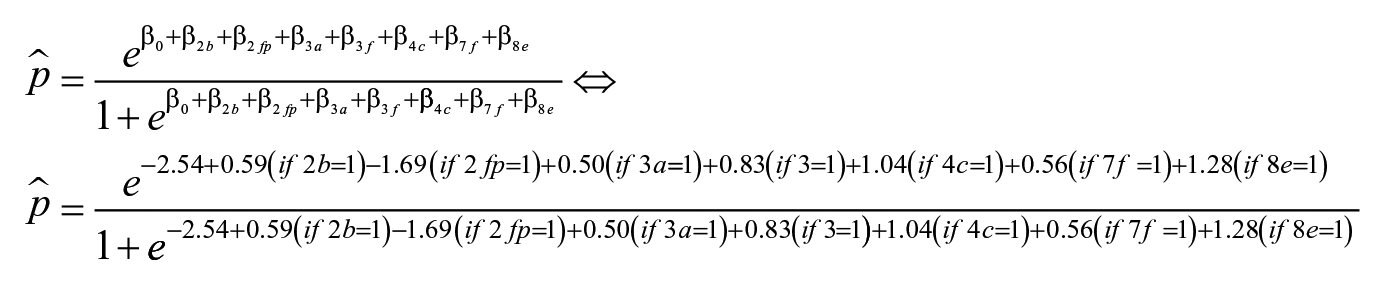
According to the area under the ROC curve, this set of seven items corresponds to an improvement from c. = .79 (p < .001) in the long version to c. = .83 (p < .001), as the graphical representation of ROC curve shows (Table 3 and Figure 1).
Area Under the ROC Curve (AUC) for the YLS Seven Items and Long Form.

Note. AUC = area under the curve; YLS/CMI = Youth Level of Service/Case Management Inventory.

Graphical representation of the area under the ROC curve for the different scores of the YLS/CMI.
Cross-Gender and Cultural Validity of YLS-7 Items Combination
The cross-gender and cultural validation of YLS-7 items (direct sum) was tested (Table 4). As expected, the predictive ability was better for Spanish males. The direct score of seven items YLS showed an appropriate predictive ability for both Spanish cultural minorities (c. = .79, p < .01) and females (c. = .72, p = .012).
The Predictive Ability YLS/CMI Short Version—Across Culture and Gender.

Note. YLS/CMI = Youth Level of Service/Case Management Inventory; AUC = area under the curve.
Discussion
The main goal of this study was to analyze the most significant risk and protective items and factors relating to youth recidivism, and along with that to propose a short combination of items that would be valid across gender and ethnicities/minorities. Impressively, the results from this study confirm that this combination of seven items together were able to predict, prospectively over the course of 2 years, general recidivism in a Spanish sample, with higher values than those for the full version, which is 5 times longer. In addition, it satisfactorily predicts youth recidivism across gender and ethnicity. Its predictive ability for cultural minorities and/or immigrants was almost the same as that for cultural majority groups, probably because culturally mediated risk factors (e.g., alcohol use among Muslim populations) were naturally excluded during the statistical process. The AUC values were even better than those reported in other previous studies using a short form (Campbell et al., 2014; Chu et al., 2014), improving the general sample’s values as well as those of female and minority participants.
On this basis, a number of theoretical insights may be drawn. First, as theoretically expected this combination of seven items of the YLS assesses dimensions of peers, personality, and attitudes—factors that are particularly important for predicting recidivism, in line with the Andrews and Bonta’s (2010) Big Four factors model. Although not all eight domains of the inventory were represented (as the YLS/CMI-SV), the selected items only cover five of the factors (the three cited above, plus family and education). Curiously, none of the items associated with history of previous offences (the only static factor of the Big Four) was selected. In fact, other studies have shown that among Spanish and Portuguese samples (e.g., Cuervo & Villanueva, 2015; Graña, Garrido, & González, 2007; Pimentel, Quintas, Fonseca, & Serra, 2015), items concerning history of previous offences are not particularly predictive. One possible explanation is that youths in these countries are especially protected from labeling and deviant peers contagion effects compared with young people in other Western countries. For instance, in these jurisdictions (Spain and Portugal), crimes committed during adolescence are erased from their official records, and juvenile detention measures in custody centers rarely applied (see Basto-Pereira, Ribeiro, & Maia, 2018; Spanish Statistical Institute (INE), 2016).
Second, although some authors have argued that there is no reason to think that dynamic factors are superior to static ones when it comes to predicting recidivism (e.g., Bonta, 2002), results from several studies using short forms of the inventory (Campbell et al., 2014), including this study, have shown that specific, dynamic items are particularly important. Moreover, some of the most important theories of crime include, as important mechanisms of recidivism, the same factors found in this study—namely, lack of empathy and emotions and impulsiveness/lack of self-control. Interestingly, these factors are key components of psychopathic traits, so these individual risk factors are in line with major psychopathic traits. As Matt DeLisi (2009) pointed out in his Unified Theory of Crime, psychopathic traits are the most compelling factors for explaining serious, violent, and chronic antisocial patterns promoting long criminal careers. These psychopathic traits (not a psychopathy diagnosis) show a general validity in predicting diverse forms of antisocial behavior among diverse groups of offenders and even across gender, ethnicity, and age. Even in the most extreme offending trajectories, psychopathy is a necessary factor to explain their causal mechanism albeit still not a sufficient explanation (Corrado, DeLisi, Hart, & McCuish, 2015), as is the case with more occasional or limited trajectories.
In contrast, protective role models (arising from a set of events, such as marriage, a change of neighborhood or group of friends), have been theorized as being important turning points and promoters of desistance from crime in most theories (e.g., Farrington & McGee, 2017; Sampson & Laub, 2005). Thus, finally, what this study proposes to add to Matt DeLisi’s (2009) formulation is that, it is precisely the absence of protective role models in young people’s environments (family, school, or even acquaintances) to contradict these individual antisocial traits during juvenile trajectories, that promotes recidivism and long-term antisocial patterns. Thus, according to this, protective models present in a young person’s life may counteract negative effects, such as psychopathic traits, in a kind of interactive protective factor. In contrast, the absence of these positive role models, in the presence of previously developed psychopathic traits, could create a highway to crime throughout a young person’s life.
Strengths, Limitations, and Final Considerations
This study has several strengths. A new combination of items from the seven items YLS-CMI was generated and tested. This work may contribute to create a better YLS/CMI shortened version, one that reduces more than one fifth of the YLS/CMI original version, and even improves its predictive validity and classification rates. Moreover, in contrast with previous YLS/CMI studies (Olver et al., 2014; Perrault et al., 2017), this set of items is equally predictive for minority and majority ethnic groups and offers satisfactory predictive ability for female youth offenders. In addition, most of the items are dynamic (risk/protective), being equally useful for broader lines of assessment and to define urgent lines of intervention. Nonetheless, despite the satisfactory predictive validity values obtained (AUC c. > .70), we must remain extremely cautious when making custody decisions for youth offenders on the basis of any kind of short version. All cases may benefit from a more extensive and comprehensive assessment. In fact, even an extensive assessment with any risk instrument cannot assure a perfect prediction of the risk of recidivism, or at least a prediction without limitations.
There are also some limitations to this study that need to be considered. First, it may have underestimated offending rates for youths who were 18 years at the time of their offence, as only recidivism recorded in juvenile system records was collected. Future studies should combine official records and self-reported delinquency to give a more complete picture. Moreover, interrater reliability data on the inventory was not available for the present study, although all the members of the Youth Offending Team must complete a formation process. Second, only recidivism as a broad category was analyzed. Therefore, in future research, it would be particularly interesting to take into account the type of crime committed by the minor upon reoffending, because this would allow more accurate predictions to be made about the risk factors involved in each type of crime. Finally, future studies should be conducted using samples from different cultures in different countries, to confirm the cross-cultural validity of this set of items.
Footnotes
Acknowledgements
We would like to thank the professionals from the Castellón Juvenile Court for their support. We are also grateful to all the young participants in this project and for the reviewers’ valuable suggestions and insightful comments.
Declaration of Conflicting Interests
The author(s) declared no potential conflicts of interest with respect to the research, authorship, and/or publication of this article.
Funding
The author(s) received no financial support for the research, authorship, and/or publication of this article.
