




Abstract
Since the 1970s, the state response to intimate partner violence (IPV) has increasingly become one of criminalization—particularly police intervention. Little is known, however, about marginalized women’s experiences with the police within a context of intimate partner violence in Canada. Drawing on interviews with 90 battered immigrant women, this study examines which women contact the police, why some do not, and what characterizes their experiences when the police are involved in an IPV incident. This study demonstrates that while the women who called the police were demographically similar to those who did not call, the women who called reported much greater levels of physical abuse. Findings indicate that general fear of the police and fear of police being racist or culturally insensitive continue to be important reasons why women do not call the police. Notably, the majority of women who had contact with the police reported the encounter as positive.
Beginning in the 1970s and 1980s, the state response to outcries against inaction toward intimate partner violence (IPV) was one of police intervention and criminalization (Berman et al., 2009; McGillivray, 1999). By the early 1980s all provinces in Canada implemented zero-tolerance policies that supported mandatory charging in IPV cases (McGillivray, 1999; Salvaggio, 2002). As a result, it is no surprise that police intervention is a primary response to IPV. Social divisions along lines of class, race, gender, ethnicity, and so forth, however, impact relationships between the police and certain groups within a society (Wachholz & Midema, 2000). As a result, the social location of battered women influences their experiences with police intervention (Salvaggio, 2002).
One relevant factor of a woman’s social location is her citizenship/immigration status. Immigrant women occupy a unique social position stemming from their relationship to the state and consequent vulnerabilities (Barrett et al., 2011). Despite representing 21% of Canada’s population of women (Hudon, 2015), little is known about who the immigrant women are who call the police or about battered immigrant women’s encounters with the police (Barrett et al., 2011; Hyman et al., 2006; Wachholz & Miedema, 2000). The current study begins to address this void by exploring who calls the police in response to an IPV incident, why some women do not call the police, what characterizes battered immigrant women’s encounter when the police are involved in the Canadian context. This line of research is essential for (1) uncovering barriers to immigrant women seeking assistance from police—particularly important in a national context where police intervention is a primary response to IPV—and (2) understanding battered immigrant women’s encounters with the police in Canada.
Criminalization of Intimate Partner Violence
Historically, Canadian society– along with other western nations—largely ignored and relegated IPV to the private sphere (McGillivray, 1999). Until the 1960s and early 1970s, IPV was not seen as an issue warranting criminal justice intervention (Liang et al., 2005; McGillivray, 1999). In the early 1990s a number of groups brought IPV into the public sphere (Liang et al., 2005) and called for its criminalization (McGillivray, 1999). Currently, police are required to lay charges where there is “reasonable and probable grounds to believe that an assault had taken place” and crown attorneys (Canadian prosecutors) are required to prosecute all cases where there is enough evidence to do so (Di Luca et al., 2003, p. 10). In other words, when there is reason to believe a physical assault took place, police do not have any discretion in how to respond to the incident, they must lay charges. Police may also lay other types of charges when applicable (e.g., if there is evidence of harassment or other crimes), but laying such charges are not policy mandated as they are for physical assaults. As a result, police intervention has become the primary social response to intimate partner abuse in Canada (Waccholz & Miedema, 2000) with the belief that such an approach benefits all women (Singh, 2010).
The advantages and disadvantages of mandatory charging and “no drop” policies are beyond the scope of this paper. However, the critique of the notion that these policies benefit all women is particularly relevant to the paper. Individuals’ social positioning stemming from race, class, gender, ethnicity, and immigration status shapes their interactions with the police (Wachholz & Midema, 2000). As mentioned earlier, immigrants have a unique relationship to the state and the police are agents of the state (Barrett et al., 2011). Immigrants also have vulnerabilities and concerns related to their ability to remain in Canada, their experiences in their country of origin, societal responses to their presence in Canada, and structural barriers to their success within Canada. As such, a more comprehensive understanding of the consequences of police response to IPV requires considering the experiences of immigrant women with the police.
Battered Immigrant Women and Police
Research on battered immigrant women and the police focuses almost exclusively on reasons why they do or do not seek police intervention with much less focus on their actual experiences with the police (Ahmad et al., 2009; Ahmadzai, 2015; Alaggia et al., 2017; Finfgeld-Connett & Johnson, 2013; Hyman et al., 2006; Kim & Lee, 2011; Wachholz & Miedema, 2000). Many immigrant women have concerns similar to Canadian-born women about calling the police, such as fearing their children will be removed from their home, fearing the economic consequences of their abuser’s arrest, fearing retaliation, and not wanting the relationship to end (Martin & Mosher, 1995; Wachholz & Miedema, 2000).
In addition to these more general concerns, immigrant and racialized women also have unique misgivings. Some women fear bringing shame to themselves and their family by calling the police (Ammar & Orloff, 2007; Martin & Mosher, 1995; Wachholz & Miedema, 2000). Sometimes the unwillingness to call the police stems from immigrant women’s unfamiliarity with laws in their new country. For example, some women do not report the abuse because they do not know what will happen next (Bui, 2003; Raj & Silverman, 2002) and many do not call the police for fear they will be deported (Ammar et al., 2005; Bui, 2003; Martin & Mosher, 1995; Wachholz & Miedema, 2000). Other concerns revolve around the service or treatment police will provide (Menjivar & Salcido, 2002). Specifically, some women avoid the police because they do not speak their language (Raj & Silverman, 2002). Similarly, there are women concerned that services are not culturally sensitive or safe (Raj & Silverman, 2002; Wachholz & Miedema, 2000). Battered immigrant women with an acute awareness of racial discrimination may also fear racist police (Martin & Mosher, 1995; Wachholz & Miedema, 2000) and that the police will not help them, will treat them differently, and/or will be excessively harsh toward their partners (Bui, 2003; Erez & Ammar, 2003; Martin & Mosher, 1995; Sokoloff & Laughon, 2005; Wachholz & Miedema, 2000). Some women are further wary that reporting will contribute to negative perceptions of their culture (Raj & Silverman, 2002). Fear of police response can also stem from or be exacerbated by immigrant women’s negative encounters with the police in their origin country (Erez & Ammar, 2003; Wachholz & Miedema, 2000).
The little research from the U.S. (research which is largely absent in the Canadian context) examining experiences with the police suggests battered women have less than positive experiences. Specifically, the research documents issues of lacking cultural sensitivity and language accessibility, low levels of arrests (Ammar et al., 2005; Erez & Ammar, 2003), police failure to take calls seriously, and generally inadequate service (Ammar et al., 2012; Orloff et al., 2003). These findings, however, may not be generalizable to the Canadian context due to potentially distinct policing structures and styles as well as immigration policies. In response to the limited research on battered immigrant women’s experiences with the police in the Canadian context, the current paper asks the following research questions: (1) what are the characteristics and prior abuse experiences of the women who call the police compared to those who do not? (2) what are some of the reasons women give for not calling the police? (3) how do battered immigrant women who had contact with police describe those encounters? and (4) what characterizes positive and negative experiences during those encounters between the police and battered immigrant women?
Methods
This research uses data from 90 face-to-face, structured interviews with battered immigrant women from the Greater Toronto Area (GTA) in Canada. The interviews were conducted between 2015 and 2017. All of the women in the sample experienced IPV in the last 12 months, although not all were seeking help for it at the time of contact with the organization. Interviews were guided by an extensive questionnaire, which looked into demographic characteristics, measurements of prevalence, severity, types, risk, and lethality of IPV, and help-seeking information from the police, courts, health care, residential, and non-residential services. The questionnaire was developed initially in English by a team of academics, law enforcement, advocates, and service providers. The researchers obtained Research Ethics Board (REB; this is similar to the American Institutional Review Board or IRB) approval prior to beginning data collection. We partnered with multiple community organizations in the GTA that provide shelter and/or assistance to battered women to recruit participants for this study. Members of the community organizations informed their clients of the study and how they could participate if desired. Prior to participation, we provided each prospective participant with information about the study and assured anonymity and confidentiality. Each participant provided informed consent. A number of trained interviewers conducted the research. All interviews were conducted in a private space and translators were available as needed. The researcher who conducted the interview recorded the responses on a paper questionnaire. A second researcher inputted the responses into a data analysis software. We gave each participant a $35 CND honorarium as a token of appreciation for their time and participation. If at any point the participant felt uncomfortable, they had the option to exit the study and keep the honorarium. The interviews lasted approximately 1.5 to 2.5 hours.
The questionnaire included a combination of open- and closed-ended questions to generate both qualitative and quantitative data. Each method complemented the research by contributing a unique dimension to the understanding of the survivors and their experiences with police. The closed-ended quantitative questions allow statistically assessing the trends and patterns in the data, while the open-ended qualitative questions provide the researchers with greater context and richer details about the participants’ experiences. We used Stata for our descriptive analysis of the quantitative data. We manually analyzed the qualitative data specifically related to the participants’ experiences with the police. We coded the data by hand using a combination of simultaneous and thematic techniques (Saldãna, 2009). We used an inductive approach to analyze the data. Specifically, we examined the data to identify emerging themes and then developed a coding system based on those themes. Simultaneous coding allowed us to apply multiple codes to the same parts of the data that had multiple meanings (Saldãna, 2009). We used first-level codes to distinguish between positive and negative experiences with the police and then applied second-level codes or subcodes to identify more nuanced themes or sub-themes within the data of what specifically made the experiences positive or negative (Elliott, 2018). Positive experiences were classified as such when they suggested the participant was pleased or satisfied with the responding police officers’ response whereas negative experiences were classified as such when the participant suggested the opposite.
Findings
Sample Profile
A total of 90 immigrant women participated in this study and over half (59%, n = 53) had been in Canada for over 10 years (Table 1 provides a summary of the sample profile). Just under half (42%, n = 38) of the women entered Canada under the family reunification immigration program with their abuser as their sponsor. At the time of the study, most of the immigrant women in this study were between 36 and 47 years of age (38%, n = 34) or over the age of 48 (37%, n = 33). Approximately a quarter of the women were between the ages of 25 and 35 (26%, n = 23). Many of the participating women were South Asian (32%, n = 29). The next most commonly reported ethnicities were Middle Eastern (18%, n = 16) and Black (14%, n = 13). The participants’ abusers were also often South Asian (32%, n = 26), Middle Eastern (18%, n = 15), and Black (16%, n = 13). Many of the women were a Christian denomination (38%, n = 34) and Muslim (37%, n = 33) and the majority practice their religion (80%, n = 72).
Sample Profile.
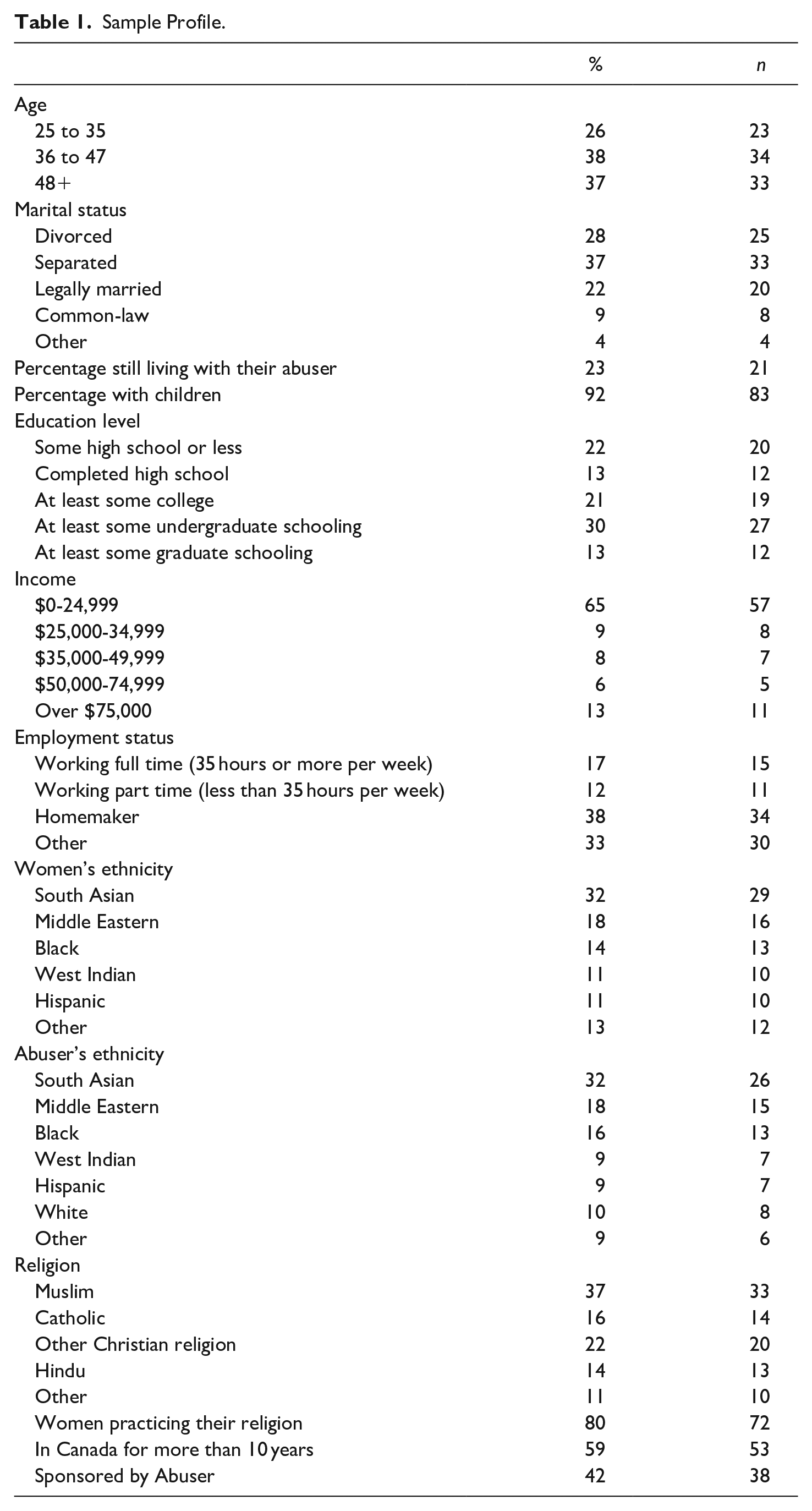
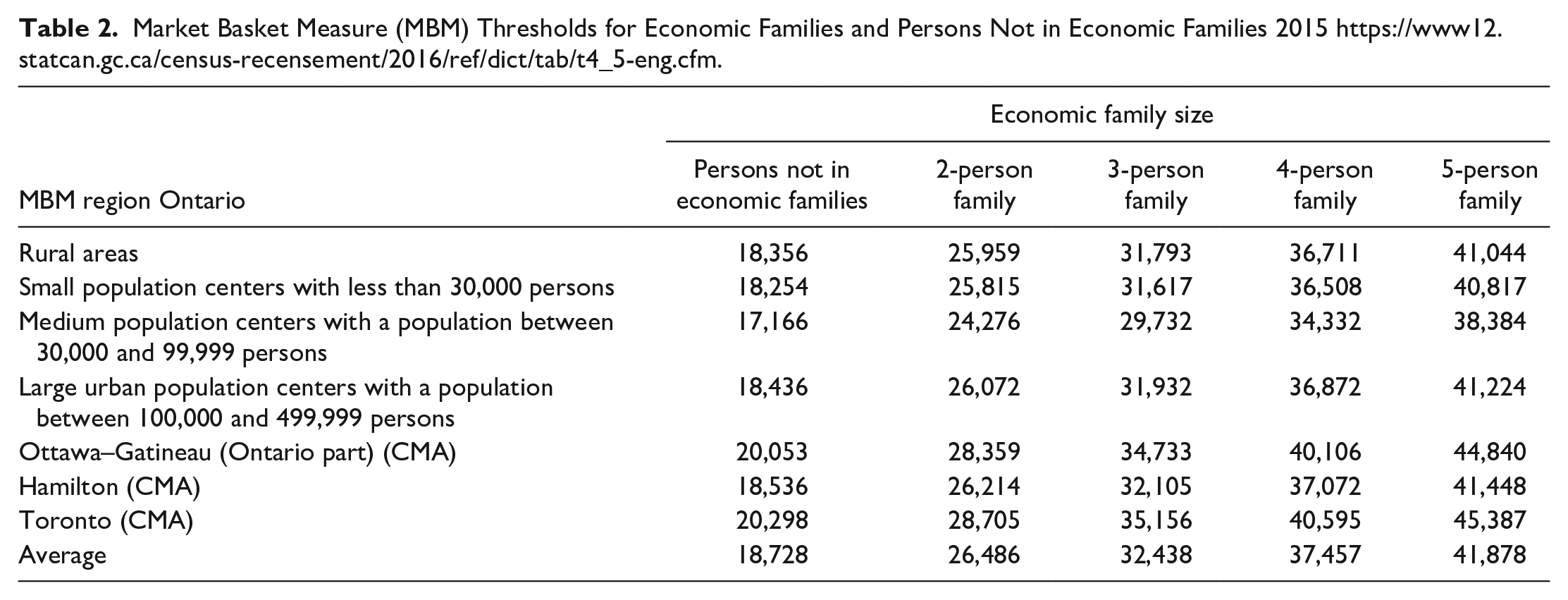
The majority of participants were either divorced (28%, n = 25) or separated (37%, n = 33) at the time of the study, while 22% (n = 20) were legally married and 9% (n = 8) were living common-law. Almost a quarter (23%, n = 21) were still living with their abuser at the time of the study. Almost all of the women (92%, n = 83) had children. While the majority of the participants were fairly educated (completed at least some college; 64%, n = 58), almost a quarter (22%, n = 20) had some high school-level education and another 13% (n = 12) completed high school. Just over a quarter of the women in the study worked either full time (17%, n = 15) or part time (12%, n = 11). Given the small number of women working full-time, it is unsurprising that over half of the women in the study earned less than $24,999 (65%, n = 57). While Canada does not have an official poverty line indicator, recently, the Government of Canada announced that the Market Based Measure (MBM) will be used as Canada’s Official Poverty Line once Statistics Canada completes its consultations. To provide a comparative perspective of the participants’ household income we used the MBM for the region of Ontario in 2015 (where the participants were living at the time of the survey). The average calculations show that the participants’ household income falls well below the poverty line for families of 2, 3, 4, or 5 members. The income reported is only above the poverty line for those who are not in economic families (see Table 2). This indicates that the participants’ household income was very low.
Market Basket Measure (MBM) Thresholds for Economic Families and Persons Not in Economic Families 2015 https://www12.statcan.gc.ca/census-recensement/2016/ref/dict/tab/t4_5-eng.cfm.
Who Called the Police? Characteristics and Abuse Experiences of Women Who Called and Did Not Call Police
The majority of the battered immigrant women in this study (67%, n = 59) reported police involvement in at least one of the violent incidents by their partner. Approximately 67% (n = 35) of the women who reported police involvement called the police themselves while the remaining 33% (n = 17) reported that someone else called the police.
To better understand who called the police and who did not, we compared the demographic characteristics and experiences of abuse of two groups of women: those who called the police (43%, n = 35) and those who did not call the police themselves or those who did not encounter the police at all (57%, n = 50). About 10% more of the women who called the police (69%, n = 24) were divorced or separated compared to women who did not call the police (59%, n = 27) at the time of the study (for a detailed review of all demographic characteristics, see Table 3). Slightly fewer women who called the police had children (91%, n = 32) compared to those who did not call the police (98%, n = 45). This may reflect a greater openness to police involvement when there are fewer concerns about the impact on children.
Comparison of Women Who Called and Did Not Call the Police.
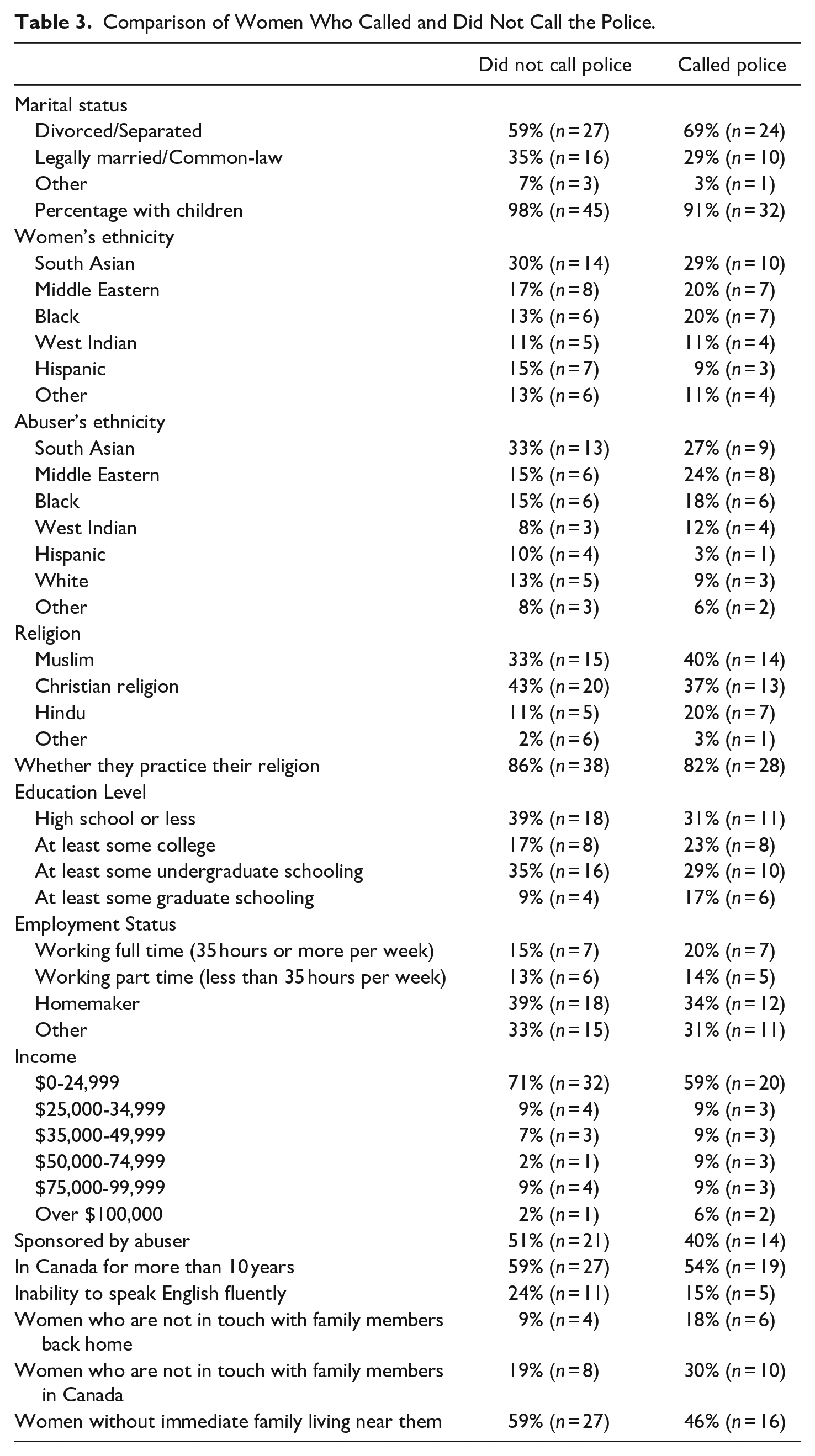
Both groups of women reported similar ethnicities; however, a greater percentage of those who called the police were Muslim (40%, n = 14) compared to those who did not call the police (33%, n = 15). A greater percentage of the women who did not call the police were, instead, of a Christian denomination (43%, n = 20) than those who called (37%, n = 13).
The women who called the police also had slightly higher levels of education than those who did not call. Specifically, only 31% (n = 11) of those who called had a high school education or less compared to 39% (n = 18) of those who did not call the police—an 8% difference. Women who called the police also appeared to be more financially secure than those who did not call the police. In particular, a greater percentage of the women who called the police were working full time (20%, n = 7) than those who did not call (15%, n = 7). Similarly, more of the women who called the police had a higher income than those who did not call the police (71%, n = 32 of those who did not call the police earned less than $24,999 compared to 59%, n = 20 of those who called the police—a 12% difference).
Fewer women who called the police (40%, n = 14) were sponsored by their partner than those who did not call (51%, n = 21). Slightly more of the women who called the police had been in Canada for less than 10 years (46%, n = 16) compared to those who did not call (41%, n = 19). Almost 10% more of the women who called the police spoke fluent English (85%, n = 28) compared to those who did not call the police (76%, n = 35). Although the majority of both groups of women were not in contact with their family in their country of origin or in Canada, a greater percentage of the women who called the police were not in touch with family members in either location (in origin country: 18%, n = 6 for women who called; 9%, n = 4 for women who did not call; in Canada: 30%, n = 10 for women who called 19%, n = 8 for women who did not call). This may suggest a greater reliance on formal support (i.e., the police) when women have fewer familial or informal supports. In contrast and surprisingly, 13% more of the women who called the police had immediate family members living near them (54%, n = 19) than those who did not call the police (41%, n = 19).
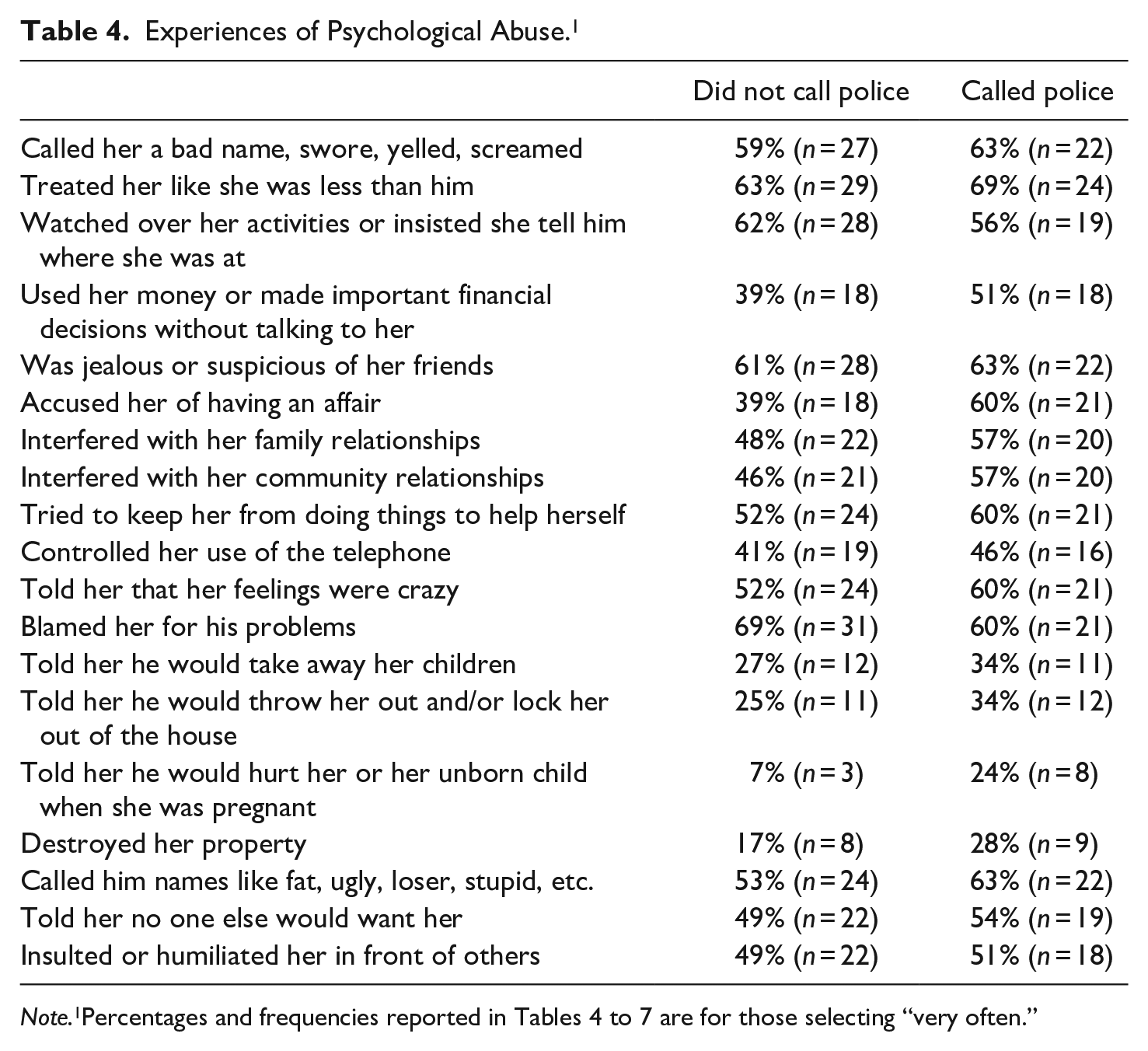
With two exceptions (him watching over her activities or insisting she tell him where she is at; blaming her for his problem), a greater percentage of women who called the police experienced each form of psychological abuse “very often” (see Table 4 for details for each form of psychological abuse). The differences between the two groups ranged from 2% for him insulting and humiliating her in front of others to a 21% difference for him accusing her of having an affair. The most commonly reported form of psychological abuse experienced “very often” for the women who called the police was him treating her like she was less than him, while the most frequently reported form of abuse for those who did not call the police was him blaming her for his problems. More of the women who called the police experienced immigration-related abuse “very often” compared to those who did not call the police (the differences ranged from 8% to 16% higher; see Table 5). These forms of abuse included: threatening to turn her into immigration officials, threatening to change her immigration status or that of her children, and threatening her immigration status.
Experiences of Psychological Abuse. 1
Experiences of Immigration-Related Abuse. 1

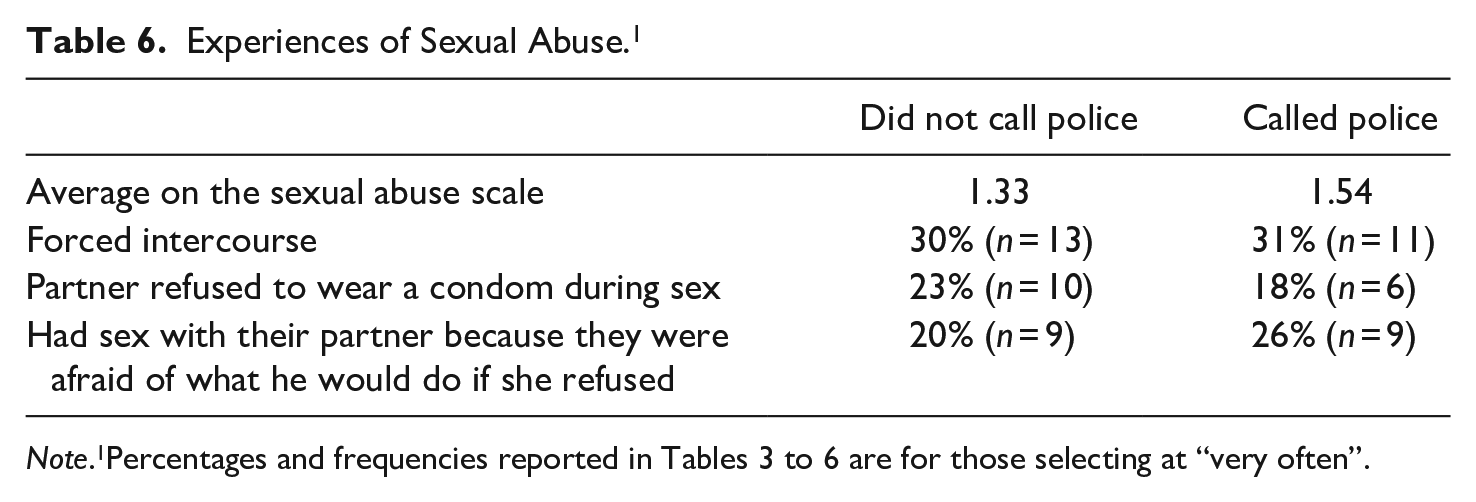
A similar percentage of both groups of women were forced into intercourse by their abuser “very often” (see Table 6). About 6% more of women who called the police had sex with their abuser because they were afraid of what he would do if she refused (26%, n = 9) than those who did not call the police (20%, n = 9). A slightly lower percentage of the women who called the police, however, reported their abuser refused to wear a condom during sex (18%, n = 6) than those who did not call the police (23%, n = 10).
Experiences of Sexual Abuse. 1
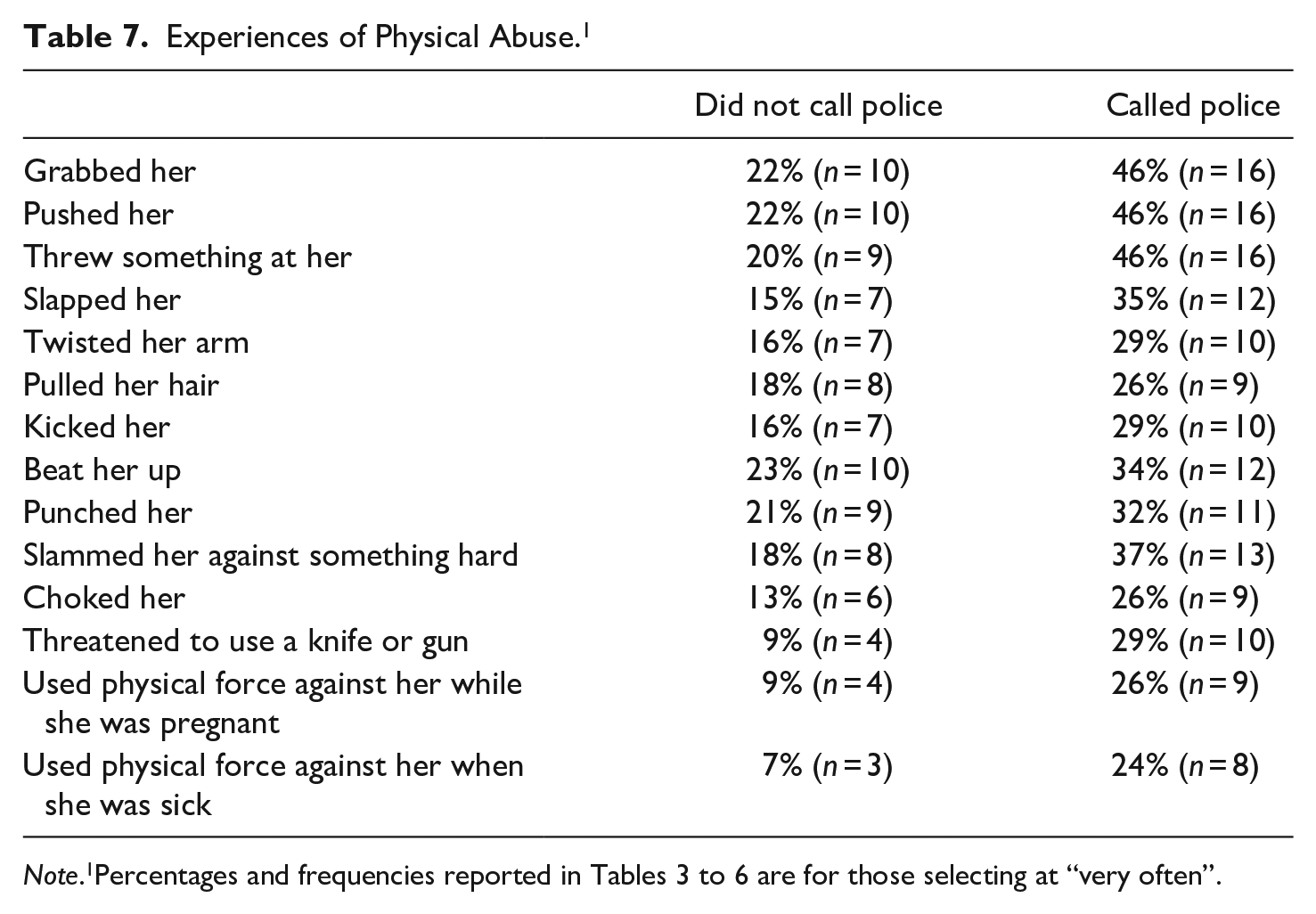
Even more substantial differences exist between the two groups of women with respect to physical abuse. A much larger percentage of women who called the police experienced each form of physical abuse “very often” than those who did not call the police. The differences ranged from 8% for him pulling her hair to 26% for him throwing something at her. On average, the difference between the two groups was approximately 17%. The most commonly reported form of physical abuse by the women who called the police was him grabbing her, while the most common forms for those who did not call the police included him grabbing her, him pushing her, and him punching her. Table 7 provides the percentage and number of women reporting each type of physical abuse “very often”.
Experiences of Physical Abuse. 1
Reasons for not Calling the Police
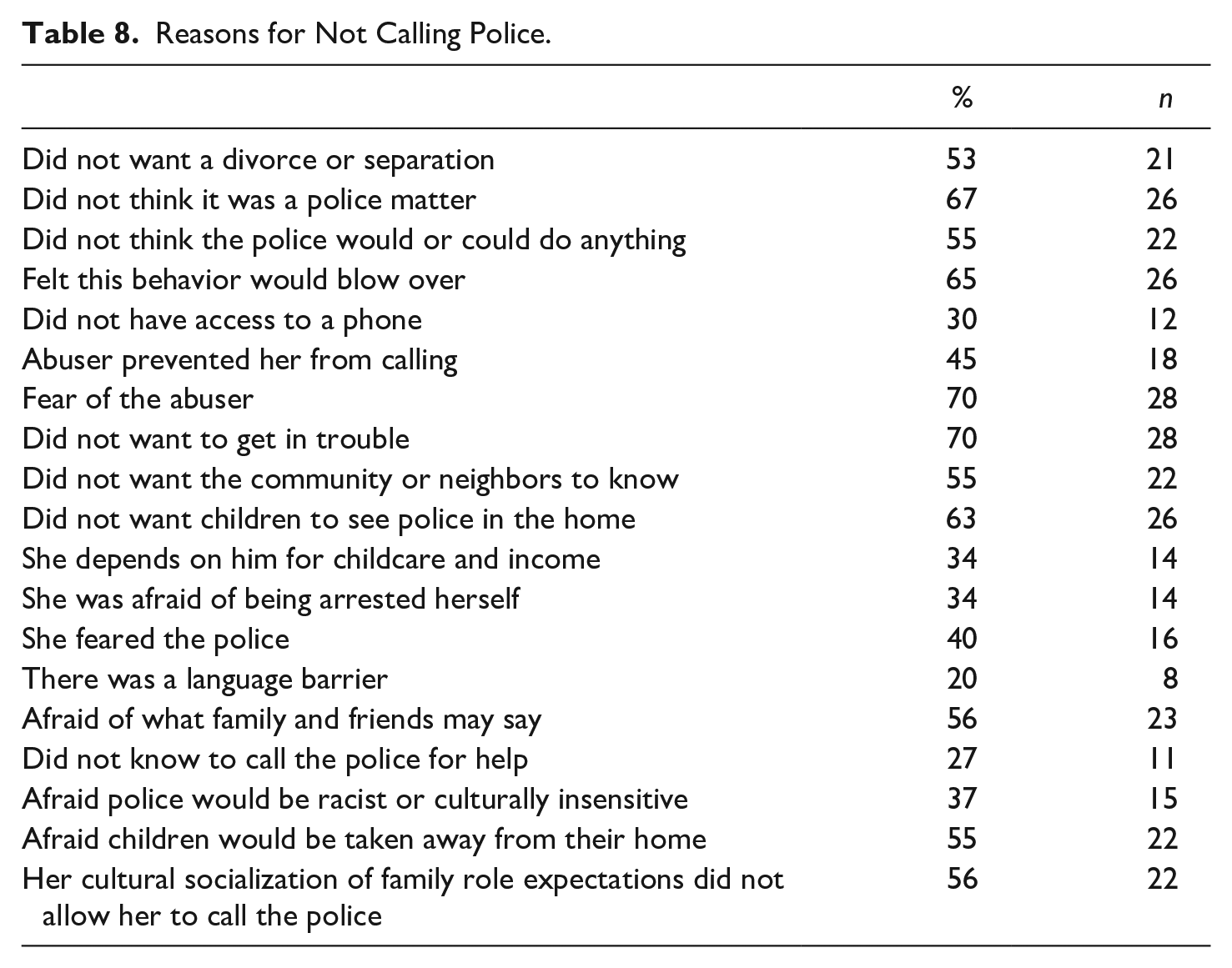
As previously discussed, the primary societal response to IPV is one of police intervention. Given that over half of the immigrant women in this study (57%, n = 50) avoided calling the police—one of the few services that will provide protection - we need to understand why and identify the barriers and/or concerns that may prevent immigrant women from calling. The top three reasons women did not call the police included: fear of the abuser (70%, n = 28), she did not want to get in trouble (70%, n = 28), and she did not think it was a police matter (67%, n = 26). Participants also reported reasons for not calling the police because of concerns about the police themselves, these included: believing the police would not or could not do anything (55%, n = 22); fearing the police generally (40%, n = 16); fearing the police would be racist or culturally insensitive (37%, n = 15); fearing being arrested (34%, n = 14); and language barriers (20%, n = 8).
Other common reasons for not calling the police reported by over half of the women who did not call included: felt the behavior would blow over, did not want the children to see the police in the home, afraid children would be taken away from their home, fear of what friends and family might say, did not want the community or neighbors to know, her cultural socialization of family role expectations, and she did not want a divorce or separation. See Table 8 for the percentage and number of women reporting each reason for not calling.
Reasons for Not Calling Police.
Experiences With Police
The police arrested the abuser in most cases where police were involved in at least one of the IPV incidents (37%, n = 20). In other cases, police responses included giving the abuser a warning (20%, n = 11), doing nothing (15%, n = 8), and making the abuser leave (11%, n = 6). One woman (2%) reported the police arrested her for fighting the abuser.
Among the women who had encountered the police, there were two groups: those who called the police themselves and those who encountered the police because someone else called the police. It was more common among the women who called the police for the police to give the abuser a warning (29%, n = 10) or do nothing (21%, n = 7) compared to the women who did not call themselves (0%, n = 0 for both responses). Approximately 45% fewer women who called the police said the police arrested the abuser than those who did not call (those who called: 26%, n = 9; those who did not call 71%, n = 10).
The majority of the women who encountered the police reported that their experience was positive (80%, n = 39). Almost 20% fewer women who called the police had a positive experience (75%, n = 21) than those who did not call the police themselves (93%, n = 14). A quarter of the women who called the police (25%, n = 7) had a negative experience compared to only one of the women who did not call the police themselves (7%, n = 1).
To better understand what characterized positive and negative encounters with the police, we categorized the participants according their experience and compared them where possible. The number of women who had a negative experience with the police (20%, n = 10) is not large enough to allow for meaningful comparisons of these two groups’ (i.e., those who called the police themselves and those who did not) characteristics or prior experiences. However, notable differences emerged related to details of the encounters themselves. Among the women who had a positive experience, the vast majority reported the police did not pressure them to compromise (88%, n = 29) and the police did what the women wanted (95%, n = 35). They also felt at least some influence over what the police did (69%, n = 25). Only one of the women in this group said the police did nothing in response to the incident (3%). In contrast, half of the women who had a negative experience with the police said they pressured them to compromise. All the women in this group said that the police did not do what they wanted them to do, and felt they had little or no influence over what the police did. Half of the women in this group (n = 5) said the police did nothing.
A thematic analysis of the qualitative data shows that the women who had positive experiences with the police felt safe, respected, and had a sense that they had some influence over how the abuser was treated. For instance, one woman said, “to be honest, I love the police. If it weren’t for them, I wouldn’t been here today.” Another participant said the police were “amazing, very respectful, [she felt] protected.” This same participant explained that her encounter with the police “brought back her trust in the world, after all the trust was gone.”
In contrast, common themes among the women who had a negative experience included that the police did not assist them, did not make them feel safe, and did not inform them as to what would happen next. For example, one woman explained, “the police did nothing for me. I hate the law. The law doesn’t do anything for us!. . .all they did was talk to him—police need to punish him and they did not.” Another woman reported, “they did not keep me well informed or explain consequences.” One of the participants in this group said she did not feel comfortable talking to the police. Similarly, another woman said she still felt unsafe and another said the police were useless in helping her.
Some of the women who described the experience as negative sensed they were not treated well due to racial, cultural, and language discrimination. As one woman explained, “they were good, but I found they were very judgmental about our culture and made comments like ‘your people love to fight.’” Similarly, another participant stated: “[I] don’t trust them for reasons not dealing with abuse—[I] feel like they would be judgmental based on race.”
Discussion and Conclusion
Accessing battered immigrant women to conduct research on IPV is a difficult process. The women survivors are—rightfully—afraid to speak with strangers, and their advocates are protective of them from the harms of fly-by researchers. As such, most research conducted with battered immigrant women is difficult to fit within the prescribed methodological rules of social scientific research. Nevertheless, the systematic data we collected for this study provide important insight for improving the impact of Canada’s institutional prioritization of a policing response to IVP and for further funded research.
The findings from this study indicate that women who called the police were slightly more educated and financially secure than those who did not call. Financial dependence and insecurity are well-documented barriers to help seeking among battered women and it is particularly felt by immigrant women since many of them depend on their abuser financially (Kim & Lee, 2011; Wachholz & Miedema, 2000). Many abused women avoid seeking help, especially from the police, because they fear the potential financial consequences, such as losing their family’s primary provider or that an arrest could result in the abuser losing their job (Kim & Lee, 2011;Wachholz & Miedema, 2000) and battered immigrant women are not much different. The findings support, albeit cautiously, that increased financial security makes calling the police a more viable help-seeking option to battered immigrant. Thus, if the societal response to IPV is to continue to be one of criminalization and policing, it is essential to simultaneously improve the financial security of battered women, especially battered immigrant women. If we fail to provide such security, immigrant women may continue to avoid turning to one of the few services available and capable of helping ensure their physical safety when encountering abuse.
We find a greater proportion of those who did not call the police were sponsored by their abuser and did not speak English fluently compared to those who called the police and that many women who did not call the police reported language barriers as a reason for not calling. Consistent with existing research, the findings suggest that language barriers and deportation concerns continue to factor into whether battered immigrant women will reach out to police (Guruge & Humphreys, 2009; Martin & Mosher, 1995; Orloff et al., 2003). Even when women can speak English well, many are more comfortable discussing their abuse experiences and personal lives in their origin language (Ammar et al., 2005). Although the local police agency serving the participants in this study have access to translators 24 hours a day, seven days a week, these translations are done over the phone and cannot replicate face-to-face interactions. Thus, prioritizing the hiring of officers who speak a variety of languages and having language training for existing officers should be prioritized in police agencies to not only increase the likelihood of women calling the police, but also to improve their experiences with the police.
Similar to prior research, the findings suggest that the extent of abuse appears to contribute to battered immigrant women calling the police (Ahmad et al., 2009; Ammar et al., 2005; Bonomi et al., 2006; Orloff et al., 2003). Although both groups of women experienced severe forms of abuse, the women who called the police experienced the abuse more frequently, especially physical forms of abuse. This an issue worth exploring further given that in most previous research conducted in the U.S. women who experienced frequent abuse often do not call or encounter the police at all (Ammar et al., 2005; Raj & Silverman, 2002).
In addition to examining who calls the police, the study also explored why some women do not call the police. Over half of the immigrant women in this study did not call the police in response to any violent IPV incident, despite experiencing violence regularly. This result supports previous research in the U.S. (Ammar et al., 2005, Raj & Silverman, 2002). Service providers have even expressed concern that victims in high-risk situations may avoid calling the police, which could put immigrant women at high risk of injury and death (Singh, 2010). This pattern of lacking police involvment among severely abused battered immigrant women is concerning given Canada’s prioritization of policing as the primary state response to IPV. There are few alternatives for ensuring battered women’s immediate safety during violent incidents. As such, it is necessary to examine why some women choose not to call the police. It is particularly important to consider reasons why women do not call the police that are about the police themselves as this will identify areas requiring police improvement. This study finds that concerns about the police are, indeed, key reasons why women in this study did not call the police. Between one quarter and over half of the women identified various concerns related to the police as reasons why they did not call. These findings demonstrate some immigrant women still fear the police, the actions the police may take (or not take, in some cases), as well as the discriminatory and/or racist attitudes they perceive police hold.
Although many of the women in the study had significant concerns about the police, the vast majority of women who did have contact with the police during a violent IPV described the experience as positive. This is a promising finding suggesting that the police may indeed be a positive source of formal support for battered immigrant women—if women will actually call them. However, it is necessary to determine what makes the experience negative for the one fifth of participants who had contact with the police. These negative experiences could prevent some women from calling the police again and could prevent other women who hear about these experiences from calling the police (Liang et al., 2005). What appears to distinguish positive and negative experiences with the police revolve around the empowerment—or a sense of control over the situation (Kasturirangan, 2008)—of the women during the police encounter. Indeed, police pressuring the woman to compromise, police not doing what the woman wanted them to do, and women feeling like they had little influence over what the police did was much more common among women who described the experience as negative. Again, given that the police are the key institutional response to IPV in Canada, it is vital to determine what the police can do to improve the experiences of the battered women they encounter. These findings suggest police should prioritize increasing women’s feelings of empowerment, particularly since the abuser may have left them feeling powerless. In a context where there are mandatory charging policies when physical assault is evident, it can be particularly difficult to ensure women feel some control over the police response. When arrests must be made, police may be able to provide women with some semblance of control by giving women all the information on what will happen next and connect them with available resources and advocates to assist them in moving forward and regaining control.
Although this study provides important initial insights into who calls the police, why some women do not, and women’s experiences with the police, additional research is still needed to provide more nuance into these experiences. Specifically, future research should consider whether and how the responding officer’s gender impacts battered immigrant women’s experiences with the police. Research suggests higher rates of reported abuse when there is greater representation of women on police forces (Miller & Segal, 2019). Battered women may feel more comfortable and therefore have a more positive experience when reporting abuse to women officers. This may be particularly relevant to immigrant women if cultural norms stigmatize discussing intimate issues with men. Future research should also investigate the impact of legal status on encounters with the police. A number of studies have shown that battered women without status are afraid of encounters with the police due to deportation threats (Chow, 2002; Duffy, 2005; Miedema & Waccholz, 1998; Raj & Silverman, 2002). Today, police enforcement of immigration has increased and reaches beyond the undocumented to immigrants who hold legal statuses and even to the Canadian-born (Armenta, 2017; Ivie et al., 2018; Menjívar et al., 2018) making it an even more pressing issue to examine within the context of IPV.
While this study identifies elements of battered immigrant women’s fear of the police, we were not able to focus on the complexity of this fear. Further investigation into issues related to how the experiences from their origin country persist in terms of fear of police, how and whether the women who encountered the police overcame the fear, and whether battered immigrant women overcome the fear by simply encountering the police is needed. Answers to these issues will provide a more comprehensive understanding of police encounters with battered immigrant women in the Canadian context.
Footnotes
Declaration of Conflicting Interests
The author(s) declared no potential conflicts of interest with respect to the research, authorship, and/or publication of this article.
Funding
The author(s) disclosed receipt of the following financial support for the research, authorship, and/or publication of this article: This work was supported by the Social Sciences and Humanities Research Council Partnership Development Grant under Grant 890-2011-0033.
