




Abstract
Restorative justice seeks to balance the needs of the victim, offender, and community by repairing the harm caused by crime and wrongdoing and improving the prosocial competencies and accountability of the offender in response to an offense. Restorative justice interventions (RJIs) offer an alternative method to reduce harm and short- and long-term recidivism. However, empirical validation of mechanisms and moderating factors warrant additional inquiry within jail and prison settings. Thus, the authors sought to examine RJI delivery timing on recidivism outcomes with age and gender as moderators. A final sample of 1,316 individuals (49.8% female) incarcerated in several United States prisons received an RJI between 2001 and 2017. RJI timing did not relate to binary recidivism. However, women recidivated less than men and older individual recidivated less than younger individuals. For the subsample of reoffenders (n = 283), RJIs delivered closer to release increased the amount of time before recidivism. Delivering RJIs closer to release from prison may allow for other community programs to intervene and reduce recidivism even further.
Restorative justice seeks to balance the needs of the victim, offender, and community by repairing the harm caused by crime and wrongdoing and improving the prosocial competencies and accountability of the offender in response to an offense (Bazemore, 1997; Zehr, 1990, 2015). This process holds promise in reducing harm and short- and long- term recidivism rates (Dhami et al., 2009; Maryfield et al., 2020; Pavelka, 2016; Pavelka & Thomas, 2019; Wallace & Wylie, 2013). The fundamental aspects of restorative justice focus on in-person dialogue in which the offender and victim or other members of the community work with justice professionals to resolve matters arising from a crime. While most settings allow the implementation of direct victim offender dialogue and victim impact panels, Restorative Justice Interventions (RJIs) commonly differ in prison and jail settings and employ other accepted restorative justice activities (Daly, 2016; Dhami et al., 2009).
RJIs are seen as effective interactive and communicative driven programs targeted at increasing a participant’s knowledge and awareness of the short- and long-term harm that crime inflicts on victims and their communities, as well as providing an opportunity for the expression of thoughts and emotions resulting from victimization while building upon participants’ self-efficacy skills and competencies (Dhami et al., 2009; Pavelka & Seymour, 2019; Wallace & Wylie, 2013). The curriculum is delivered in a solution-focused, structured, and contingency-based model using positive modeling, reinforcement, discussions, exercises, and constructive feedback. The program is skill-based learning which helps in enhancing participant’s strengths and important skills by building rapport, increasing knowledge, displaying accountability and responsibility, and practicing skills through discussions and practical exercises which may include, increasing an offender’s understanding of victim empathy and the harm they inflicted on the victim, the survivor and the community, mock apology letters to the victim by the offender, restitution and reparation, community service projects, and discussions in group settings (Dhami et al., 2009; Pavelka & Seymour, 2019; Wallace & Wylie, 2013). Each curriculum section builds upon the previous section to culminate in achievement of expectations and desired outcomes for the course.
The study described within follows a similar curriculum within a brief 8-hour course and has shown significant reductions in recidivism 6 years post-treatment among individuals on probation (Kennedy et al., 2019). The current study examines the long-term effectiveness of the same brief RJI among those who paroled from prison. Relative to prison populations, RJIs show moderate reductions in recidivism compared to treatment as usual groups (Bergseth & Bouffard, 2012; Duwe, 2012; Forgays & DeMilio, 2005; Koss, 2014; Latimer et al., 2005; McChargue, et al., 2020). These effects are consistent with meta-analytic data and results from individual studies showing the various tools employed within RJIs result in lower levels of recidivism and/or higher levels of victim satisfaction among adolescents involved in probation or diversion, individuals experiencing domestic violence, individuals in a child welfare setting, and in school and community organizations (Latimer et al., 2005; Maryfield et al., 2020; Wilson et al., 2017). However, RJIs have room for improvement with delivery considerations and identification of mechanisms increasing or decreasing efficacy within prisons and other restorative justice settings (Albrecht, 2011; Dhami et al., 2009; Latimer et al., 2005).
One such delivery or implementation factor receiving little examination is the timing, the point in which the RJI is delivered during an inmate’s incarceration, and subsequent recidivism rates (Crawford, 2015). This is particularly concerning as the literature does not empirically identify a standard for when RJIs are most efficacious in prison settings (Kennedy et al., 2019; O’Brien & Daffern, 2017). Instead, most studies deliver RJIs 3 to 9 months prior to release from prison due to previous protocols or to increase practicality of delivery (Duwe, 2012). However, if RJIs demonstrate efficacy regardless of delivery timepoint, these interventions could reach more individuals incarcerated in prisons and reduce recidivism rates to a greater extent. The present study aims to addresses these concerns by assessing how RJI timing impacts whether an individual recidivates, alongside examining nuances of RJI timing on time to recidivism among a subsample of individuals who recidivated. Focusing on general recidivism and time to recidivate allows for more detailed consideration of how RJI timing may influence efficacy, especially given the lack of research on the subject (Crawford, 2015).
Additionally, other factors could possibly influence the relationship between RJI timing during an individual’s prison sentence and recidivism. Two possible demographic factors include age and gender. There are theoretical discussions (Cook, 2006; Hudson, 2006; Kim, 2021) as well as gender (Gaarder & Hesselton, 2012; Osterman & Masson, 2018) and age-related (Hayes, 2013; Latimer et al., 2005; Riedl et al., 2015) restorative justice approaches that establish the importance of considering such factors when testing restorative justice effectiveness. For example, younger age (i.e., early 30’s and below) is a documented risk factor for increased recidivism within the literature (Bonta & Andrews, 2017; Higley et al., 2019; Staton-Tindall et al., 2015; Van Voorhis et al., 2013), while older age may reflect more maturity, ability to consider other perspectives, and possibly increased motivation to change compared to younger age (Bonta & Andrews, 2017; Higley et al., 2019). With these study considerations in mind, younger individuals may not be able to engage with the RJI material to the same degree as an older individual. Impacts of age on whether an individual recidivates could then result in lower or higher levels of recidivism depending on whether an individual is younger or older. Additionally, younger individuals could also impact the strength of the relationship between RJI timing and time to recidivism among those who recidivated.
Literature evaluating gender differences on RJIs and recidivism outcomes is less robust due to samples primarily consisting of males or having large amounts of missing data (Latimer et al., 2005; Wallace et al., 2013). Related studies examining other interventions in criminal justice settings note females are generally less likely to recidivate or take longer to recidivate compared to males (Bergseth & Bouffard, 2012; Cloyes et al., 2010; Staton-Tindall et al., 2015; Yang et al., 2015). Given this pattern of related findings and lack of strong gender comparison groups in RJI studies delivered in prison settings, examining whether gender alters the relationship between RJI timing and recidivism may offer greater insight into whether RJI delivery requires tailoring for different prison populations. For example, if female individuals show lower recidivism rates regardless of RJI timing, then these prison settings could incorporate RJIs across various points of individual’s sentences. Or, if male individuals who recidivated experience re-arrest earlier than females regardless of RJI timing, then alternative hypotheses and research questions warrant additional research.
Overall, RJIs require additional examination of mechanisms, attenuating factors, and amplifying factors to increase the efficacy of these interventions in prison settings. Thus, the present study primarily sought to determine if RJIs delivered closer to release or earlier in a sentence differentially impact recidivism. Age at prison release and gender were also examined as possible moderators influencing the strength of relationship between RJI timing and recidivism. The authors hypothesized older age at release would bolster the relationship between later RJI timing and less recidivism, while younger age would show the opposite effect (Model 1). We also hypothesized the proposed relationship between later RJI timing and binary recidivism would be stronger for males compared to females (Model 1). Our secondary aim was to examine the same primary relationship and moderators among the subsample who recidivated. We hypothesized those who received the RJI earlier in their sentence and who were younger at release would recidivate faster than those who received a class closer to release and who were older (Model 2). In addition, earlier RJI delivery was expected to correspond to increased recidivism for males compared to females. See Figure 1 for a conceptual model.
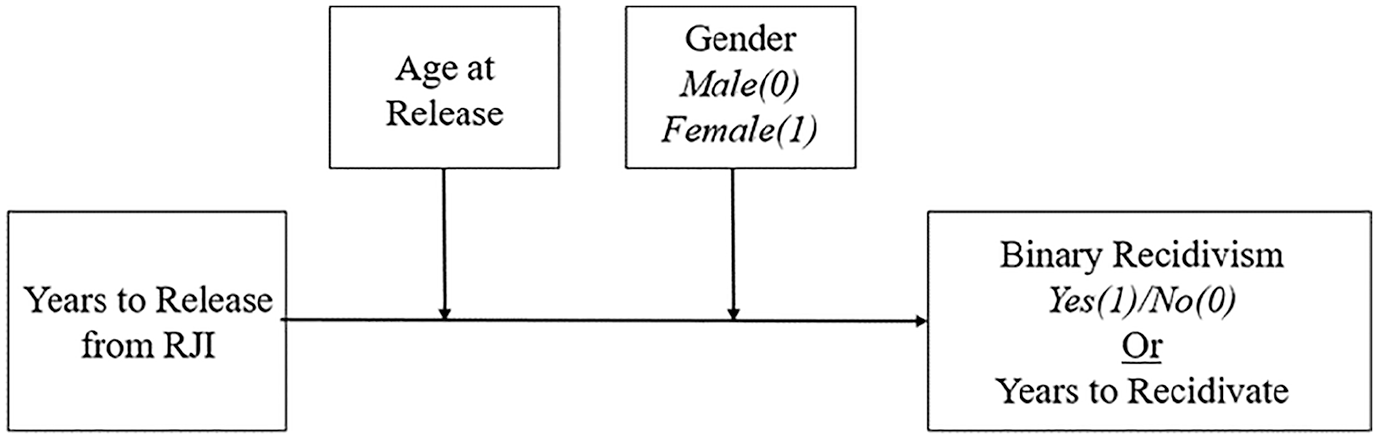
Impact of RJI timing moderated by age at release and gender on binary recidivism or years to recidivate—conceptual model.
Method
Participants
A total of 1,958 individuals incarcerated in several United States jails and prisons received an 8-hour RJI between 2001 and end of 2017. After initial data cleaning, the sample consisted of 1,316 incarcerated individuals. Individuals not included in the analyses were 201 individuals who remained incarcerated at the time of final data review, 21 with life sentences, and 6 who died in prison. An additional 414 were removed due to not having a minimum of a 3 years follow up after release as of February 2020. An almost even split between male and female gender occurred, 50.2% and 49.8%, respectively. Most of the sample was European American (63.6%) followed by African American (21.4%), Hispanic/Latinx (8.5%), Native American (5.1%), Asian American (0.2%), and multi-racial (1.1%). The final sample had a mean age of 35.04 years (SD = 9.46) at release, and they had an average of 0.38 (SD = 0.75) prior offenses. Individuals spent an average of 2.08 years in prison (SD = 2.36) between the RJI class and release. Finally, the individuals had an average of 2.04 felonies (SD = 1.65) and .36 misdemeanors (SD = 1.17) for the sentence that they completed the RJI.
Compared to national 2019 statistics (Carson, 2020) and Midwestern state specific statistics (NDCS, 2019, 2017), the current sample offers comparable and dissimilar demographics. In 2019, 92% of incarcerated individuals were male out of 1,430,800 imprisoned individuals under the care of state or federal prison systems (Carson, 2020). The Midwestern state showed a similar gender breakdown with 92% of male gender (NDCS, 2017). The national averages based on race were 29.5% European American, 31.6% African American, 22.4% Hispanic/Latinx, and 12.9% encompassing other racial identities (Carson, 2020). At the state level, 54% were European American followed by 28% African American, 14% Hispanic/Latinx, and 6% of other racial identities (NDCS, 2019). Importantly, the state racial profile offers similar findings to the current sample. At the end of 2019, 47% of incarcerated individuals were between the ages of 25 and 39 (Carson, 2020) and at the state level the average age was 37.64 (NDCS, 2017).
Procedures
The incarcerated individuals voluntarily participated in 1 of 181 different RJI sessions offered by a non-profit organization during their sentence. The non-profit organization collected initial data and accessed the State’s Department of Correctional Services criminal database and inmate locator in February 2020 to gather re-arrest data, which served as the criteria for recidivism. Thus, this resulted in follow up periods ranging from 3 to 19 years depending on when an individual was released from prison. All individuals had a minimum of a 3-year follow-up period. The criminal database and inmate locator provide summary level data of a criminal incident and whether the inmate is currently incarcerated. The final data set was deidentified and approved for use by the University’s Institutional Review Board.
The RJI occurred over the course of an 8-hour in-person group session to help offenders understand the impact of their crimes. RJI facilitators completed training related to restorative justice principles and victim impact education. Data on facilitator adherence and feedback from participants about facilitators were not available. Groups consisted of 1 to 21 individuals. Victim Impact Statements (VISs; Jackson & Bonacker, 2006) derived from individuals across the country who suffered from various criminal acts enacted against them served as the primary component of the RJI. VISs allow offenders to gain insight into the harm enacted on their victim(s) and the broader community (Jackson & Bonacker, 2006; Martinez, 2014; Wondra & Ellsworth, 2015). Compared to other RJIs (Sherman et al., 2005), the current intervention used VISs written and/or recorded to match the broader category of an offense. Participants then completed the RJI using the written and/or recorded VIS related to their most severe offense. The incarcerated individuals discussed their own and the VISs of group members via group facilitation. Group members documented harm inflicted on victims and communities by the differing crimes on an emotional/mental, physical, financial, and spiritual level. The goal of this main component was to build empathy and insight into how crime impacts many different people and the community at large.
The participants also discussed the purpose of restorative justice, received psychoeducation about emotion recognition and regulation, and completed three written assignments as part of the RJI. The first assignment focused on documenting their direct and indirect harm and damage inflicted upon the victim and community, respectively. This assignment promoted a greater understanding of short- and long-term impacts of their crime. The second assignment consisted of reading and analyzing 10 additional VISs outside of those already discussed in the group. Exposing group members to a variety of crimes and how these crimes lead to harm ensured a broader understanding of impact. The third assignment consisted of writing a mock apology letter to their direct and indirect victims to solidify learning. While the current intervention did not include direct victim-offender dialogue, design of the intervention ensured a greater understanding of victim and community impact utilizing tools commonly employed in other RJIs. Thus, the current intervention is in line with many RJI components and the overall characterization of restorative justice (Daly, 2016; Dhami et al. 2009; Hall, 2010; Latimer et al., 2005; Wallace & Wylie, 2013).
Measures
Demographics
Participants completed demographic questionnaires prior to engaging with RJI groups. Primary demographics collected included gender, birth date, race/ethnicity, and prior sentences. A subset of the sample provided information about military service; however, removal of this variable in the present study occurred given only later RJI groups provided this information. Using age information from prison admission an “Age at Release” from prison variable was calculated and served as a mediator. Creation of a binary gender variable (male = 0 and female = 1) provided groups for multiple group analyses in Model 3.
Years to release after RJI
Subtracting the last RJI class date from an individual’s prison release date provided number of days between these dates. The days divided by 365 resulted in the variable “Years to Release”. Years to Release after taking the RJI served as the predictor variable in all models. There was no missing data on this variable.
Recidivism (binary)
Recidivism was defined as re-arrest upon release from prison. Follow up periods ranged from 3 to 19 years depending on release date. All participants had a minimum of a 3-year follow-up period. “Binary Recidivism” coded as 0 for “did not recidivate” and 1 for “yes, recidivated” served as the outcome variable in Model 1. Use of a binary coded recidivism variable addresses the general recommendation by Crawford (2015) to identify the impacts of RJI timing on recidivism. Coding recidivism in this manner also allows for a broad examination of whether RJI timing impacts whether an individual will recidivate while reducing the impact of variance due to long follow up periods for some individuals. No missing data was present.
Years to recidivate
Most recent recidivism date subtracted by release date created number of days to recidivism. Days to recidivate divided by 365 resulted in the variable “Years to Recidivate”. Years to Recidivate served as the primary outcome variable in Model 2, which focused on parsing out specific influences of RJI timing to bolster intervention and post-release intervention efforts rather than only focusing on whether someone recidivated or not. Including individuals with a variety of years to recidivate allowed for greater variance to fully examine the question rather than relying on 3-year follow ups only. A total of 283 re-arrests occurred after release as of February 2020. This sub-sample was comprised of 66.8% males and 33.2% females. European Americans were the majority (59.7%) followed by African Americans (26.9%), Hispanic/Latinx (7.1%), Native Americans (6%), Asian Americans (0%), and multi-racial (.4%). The sub-sample of those who recidivated had a mean age of 32.87 (SD = 8.78) at release and an average of 2.08 years (SD = 2.12) between the RJI and release. They had an average of 0.57 (SD = 0.87) prior offenses and were currently serving time for an average of 1.98 (SD = 1.42) felonies and 0.44 (SD = 1.23) misdemeanors. They had an average of 3.8 years (SD = 2.83) between release and recidivating. For the subset of the sample who recidivated there was no missing data.
Data Analytic Plan
Initial descriptive statistics provided insight into recidivism rates over the course of the 3 to 19-year follow-up period and an evaluation of data assumptions (Kline, 2016; Tabachnik & Fidell, 2013). T-tests and chi-square statistics also offered a comparison of the full sample to those who recidivated on demographic variables. We also group mean centered (z-scored) Years to Release from RJI and Age at Release prior to conducting moderation models. Group mean centering allows for the interpretation of the direct effect of Years to Release when Age at Release = 0. To center the predictor variables, we computed the variable group means in SPSS Version 22.0 (IBM Corp, 2020) and then subtracted the group mean from each individual score on the variable. Mean centered variables then have a mean of 0 and standard deviation of 1. It is important to note mean-centering does not impact the test of interaction, coefficient estimates, R2, or other model estimation parameters (Hayes, 2012).
We conducted the two moderation models in Mplus with selected estimators addressing follow up period variance and overall variance encountered within the sample (Kline, 2016; Muthén & Muthén, 1998–2017). Model 1 employed WLSMV estimation with a PROBIT link given the binary nature of the recidivism outcome (0 = did not recidivate and 1 = recidivated). WLSMV is currently the gold standard estimator for binary outcomes in large samples with little missing data to provide robust standard error estimation (Muthén & Muthén, 1998–2015; Muthén et al., 1997; Tabachnik & Fidell, 2013). Model 2 utilized full information maximum likelihood estimation (FIML) and bootstrapped confidence intervals with 10,000 draws (Enders, 2010). Bootstrapping specifically maximizes power while minimizing Type I error rate (Shrout & Bolger, 2002). This method of estimation further addresses the variance of the Years to Recidivate variable while maintaining sensitivity (Kline, 2016). Models 1 and 2 are “just identified”, meaning the number of model parameters equal the number of observations resulting in 0 degrees of freedom (Kline, 2016). Due to this, indices of model global fit are not meaningful (Enders, 2010). Instead, reviewing the significance level of interactions and main effects determines if effects are present (Hayes, 2018). Ninety-five percent confidence intervals with bootstrapping provide additional information on whether effects are present for Model 2 (Hayes, 2018).
Results
Of the 1,316 individuals released from prison as of February 2020 and who received the RJI, 283 (21.5%) recidivated over the course of the 3 to 19 years follow up period. A total of 189 males recidivated out of the full sample of 660 males, which resulted in a recidivism rate of 28.6%. Females recidivated at a rate of 14.3%, as 94 females recidivated out of 656. When comparing those who recidivated to those who did not, individuals did not differ on time from RJI to release, number of offenses, or race, p = .12 to .90. However, they did differ on age, t (1, 1,314) = 4.39, p < .001, with those who recidivated being younger. Those who recidivated also had a greater proportion of males compared to those who did not recidivate, χ2 = 39.90, p < .001. The correlations for the final sample fell within appropriate model assumptions (r < .70). All variables had skew <3 and kurtosis <10, indicating the presence of normal distributions. As previously discussed, all variables had full data across each individual participant. Table 1 presents descriptive statistics and correlations for the final sample (n = 1,316) used in Model 1 and for the subsample of those who recidivated (n = 283) in Model 2.
Descriptive Statistics and Correlations Among Model Variables.
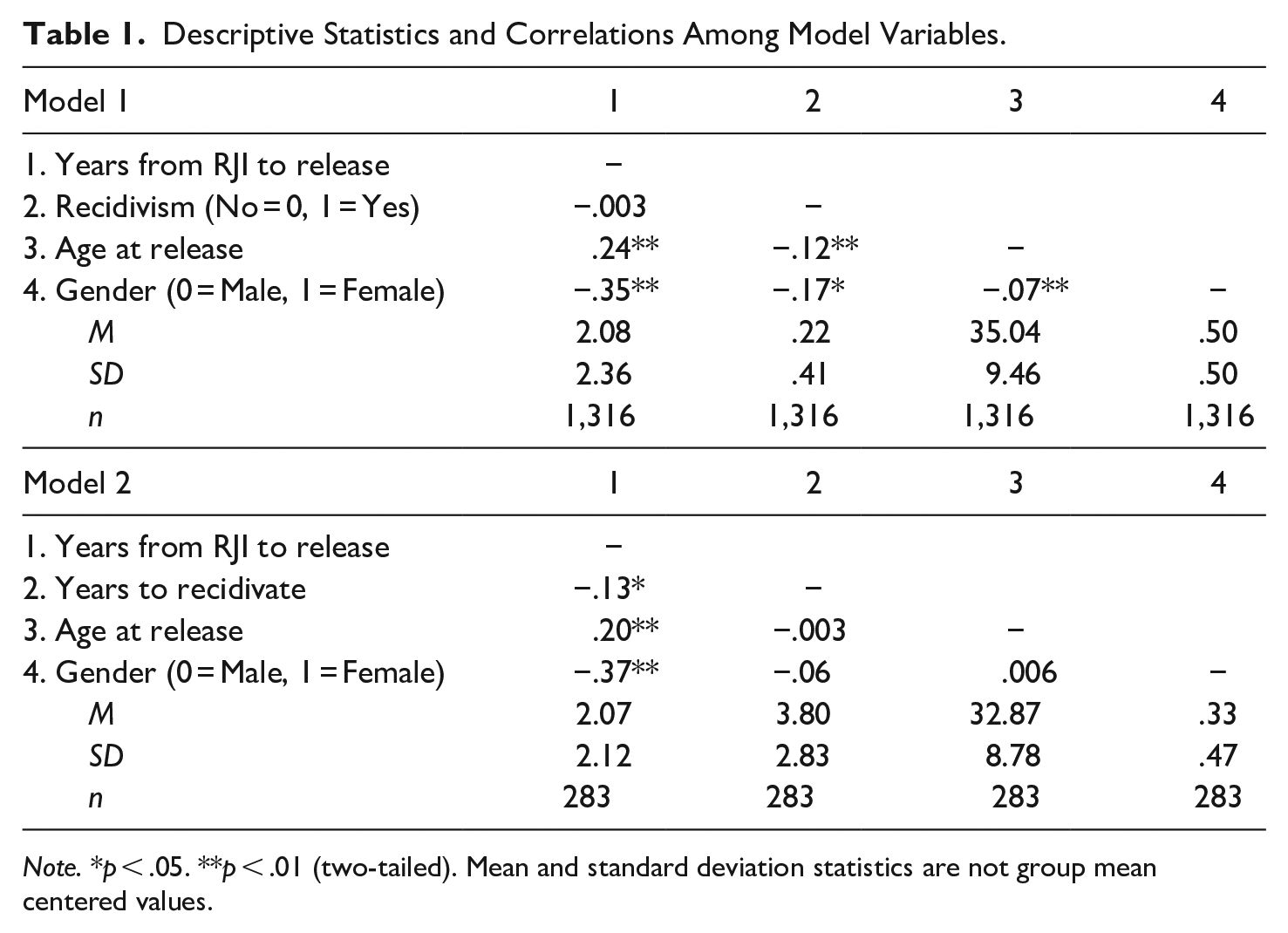
Note. *p < .05. **p < .01 (two-tailed). Mean and standard deviation statistics are not group mean centered values.
Model 1: Binary Recidivism Outcome
Model 1 addressed three hypotheses with the first being RJI delivery timing would correspond to either more or less recidivism. This hypothesis was not supported as there was not a direct effect between Years to Release and binary recidivism, p = .58. The second hypothesis proposing there would be a stronger relationship between RJI delivery and binary recidivism for older individuals was also not supported, p = .49. While an interaction was not present, older age was significantly related to less recidivism at the average Years to Release, standardized = −0.17 (SE = 0.04), p < .001. Finally, there was not a significant interaction between gender and Years to Release contrary to the hypothesis males would show a stronger relationship between later RJI delivery and less recidivism, p = .15. However, gender was directly related to binary recidivism with women recidivating less than men at the average Years to Release, standardized = −0.30 (SE = 0.04), p < .001. Overall, the model accounted for 10% of the variance in binary recidivism. These findings suggest Years to Release after RJI does not correspond to those who recidivated versus those who did not. Instead, gender and age are stronger predictors of recidivism. Specifically, those who are older are less likely to recidivate and females are also less likely to recidivate compared to males. Table 2 and Figure 2 present standardized estimates for Model 1.
Standardized Estimates of Model 1 and Model 2.
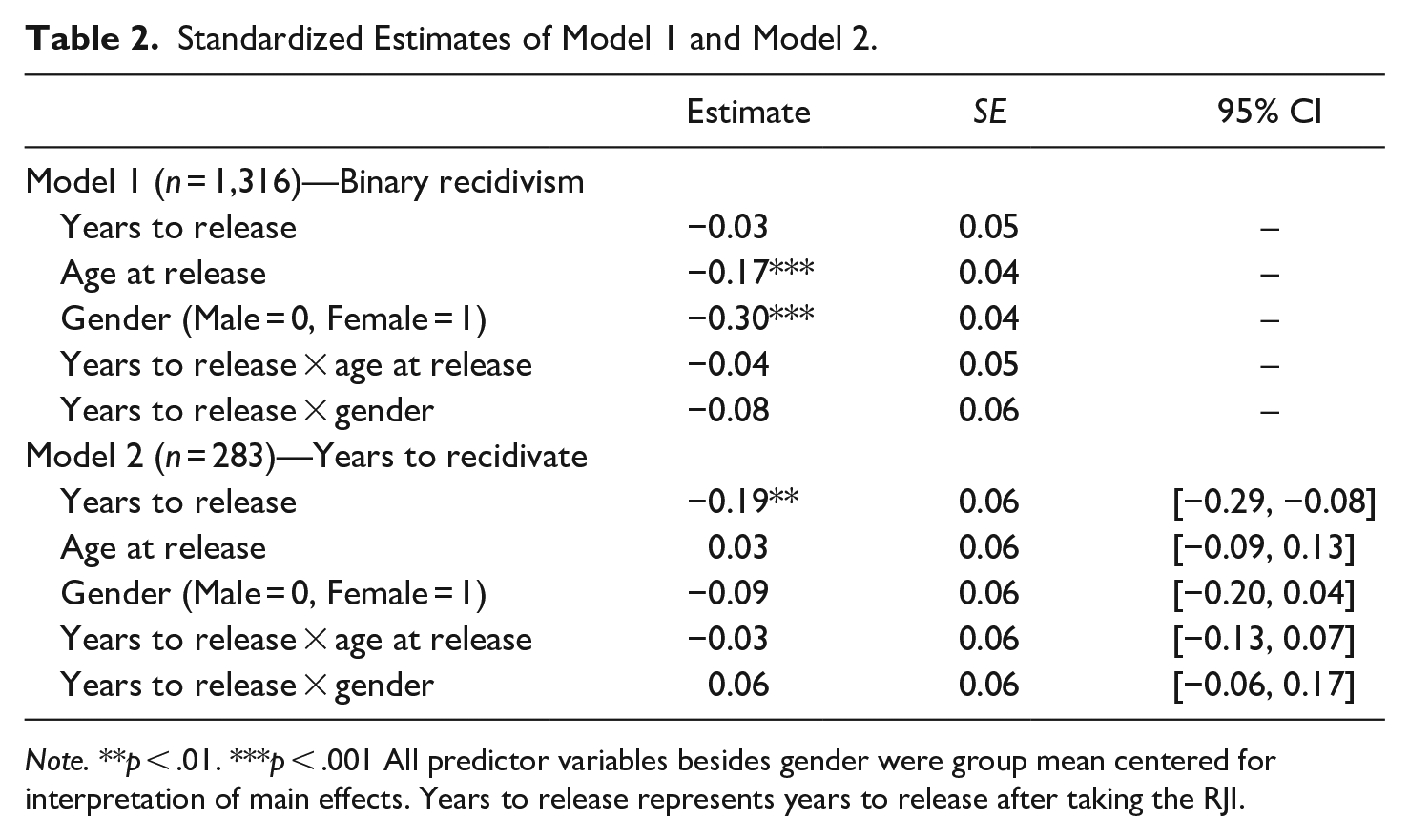
Note. **p < .01. ***p < .001 All predictor variables besides gender were group mean centered for interpretation of main effects. Years to release represents years to release after taking the RJI.
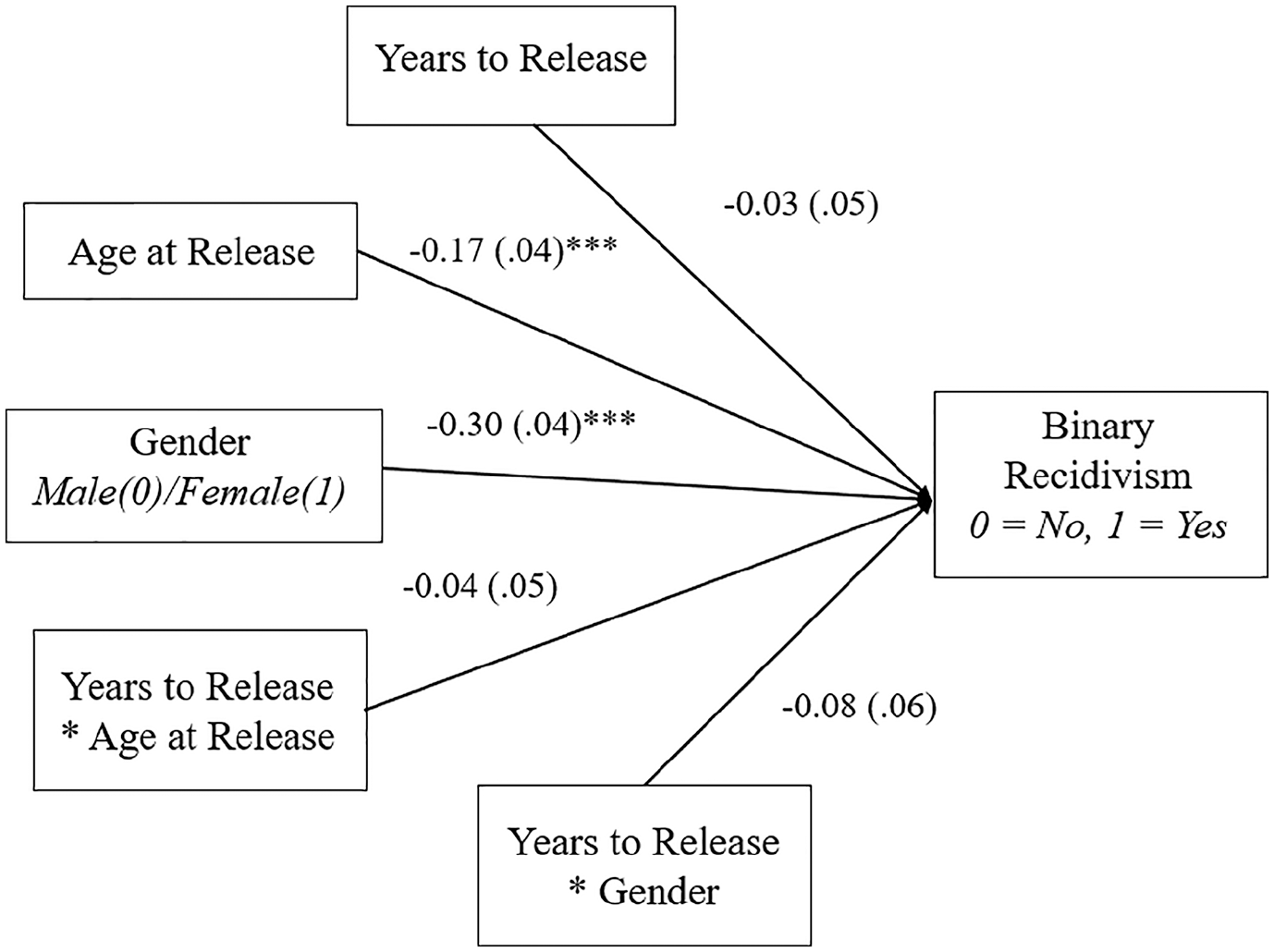
Standardized estimates for model 1.
Model 2: Recidivated Sub-Sample
Model 2 also examined three hypotheses. Specifically, later RJI delivery was expected to correspond to later recidivism. This hypothesis was supported with RJIs delivered closer to release corresponding to a later date of recidivism, standardized = −0.19 (SE = 0.06), p < .01, 95% CI [−0.29, −0.08]. We also expected gender and age to alter the pattern of this relationship. However, neither age, p = .54, 95% CI [−0.13, 0.07], nor gender, p = .32, 95% CI [−0.06, 0.17], moderated the relationship between RJI delivery and time to recidivism. Age also did not demonstrate a significant main effect, p = .65, 95% CI [−0.09, 0.15], and neither did gender, p = .16, 95% CI [−0.20, 0.04]. Overall, the model accounted for 3% of the variance in Years to Recidivate. Thus, these results suggest RJIs delivered closer to an individual’s release from prison prolong the time to recidivism compared to RJIs delivered earlier in a sentence. Neither age nor gender alter this relationship pattern. Table 2 and Figure 3 depict standardized estimates of paths in Model 2.
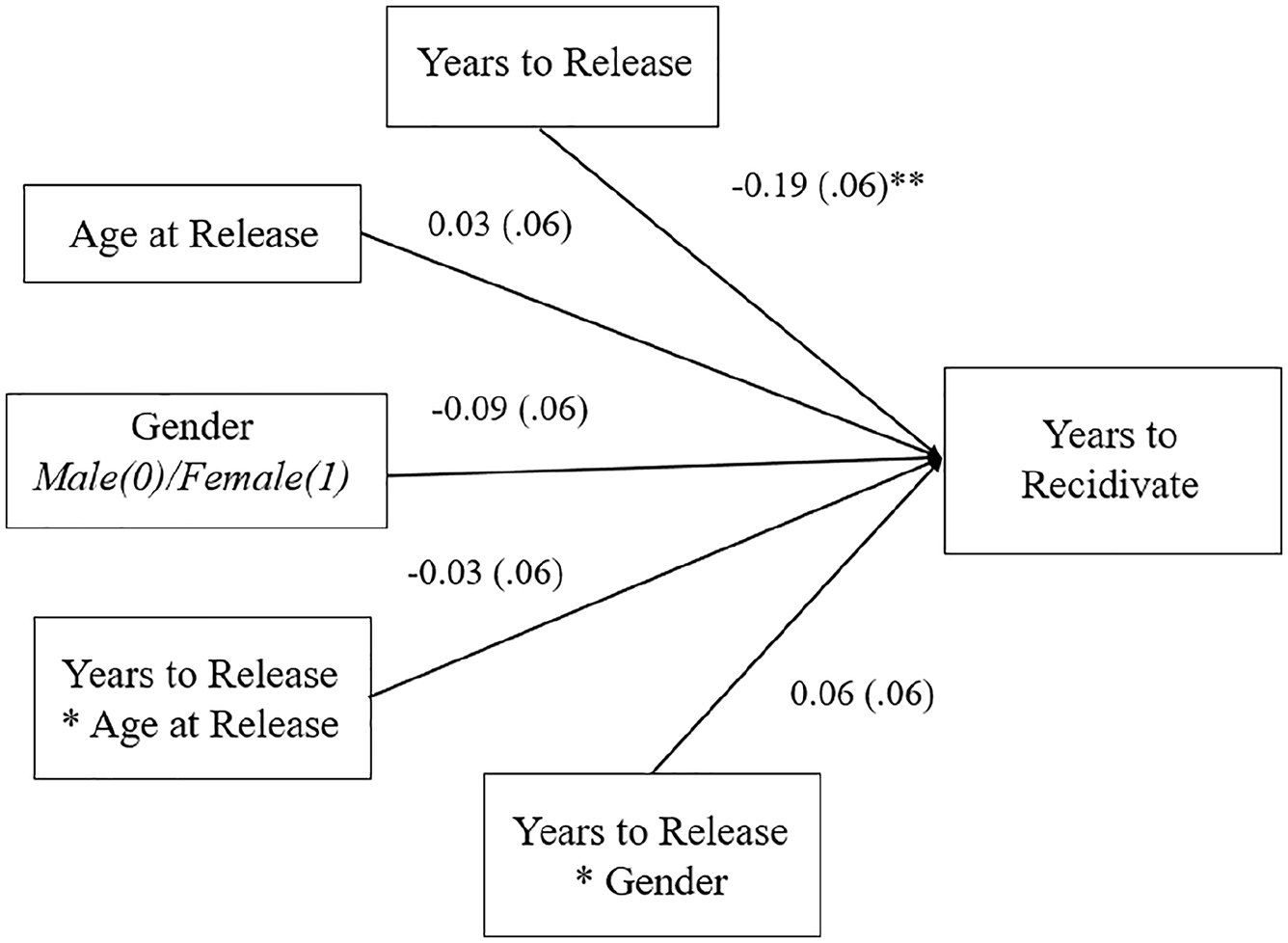
Standardized estimates for model 2
Discussion
Examining the efficacy and mechanisms of RJIs in prison settings offers steps to reduce the long-term cycle of recidivism within United States jails and prisons (Albrecht, 2011; Dhami et al., 2009; Latimer et al., 2005). Our primary aim of exploring the impact of RJI delivery timing during a prison sentence on subsequent recidivism addressed an important question to inform the enaction of these programs. While a significant finding was not present for binary recidivism, the significant finding among recidivating individuals suggests that RJIs delivered closer to release dates prolonged the amount of time before recidivism. These findings add needed empirical evidence that supports the general notion of delivering RJIs closer to release (Duwe, 2012; Kennedy et al., 2019; O’Brien & Daffern, 2017).These findings also offer important implications for future research and RJI implementation whereby RJIs delivered closer to release may allow for additional intervention efforts after release to further reduce recidivism.
Additionally, our study provided a more robust examination of both age and gender differences overall and within the relationship of RJI delivery timing and recidivism outcomes. Much of the literature cites lack of an even split between male and female individuals and large amounts of missing data making it difficult to draw conclusions (Latimer et al., 2005; Wallace et al., 2013). However, our study had an almost even 50/50 split between male and female individuals with little to no missing data. Thus, our findings suggesting women recidivate less than men offer a more robust evaluation of gender differences (Bergseth & Bouffard, 2012; Cloyes et al., 2010; Staton-Tindall et al., 2015; Yang et al., 2015). Gender also did not moderate the relationship between RJI timing and years to recidivism among the sub-sample of recidivists. This discovery suggests among those who recidivate, both males and females generally benefit from RJIs delivered closer to release. Thus, delivery of RJIs in both men’s and women’s prisons can take similar timing approaches. Placing this finding in the context of obstacles faced upon release, both men and women likely experience difficulties meeting basic needs as they reintegrate into the community (Bazemore & Maruna, 2009; Fox, 2012).
Examining the impacts of age at release on RJI timing and recidivism outcomes in the current study provided additional validation of prior research. Specifically, we found those older at release were less likely to recidivate compared to younger individuals when accounting for RJI timing, which is consistent with other recidivism citations (Bonta & Andrews, 2017; Higley et al., 2019; Staton-Tindall et al., 2015; Van Voorhis et al., 2013). Several of these studies note older age may be a proxy for greater maturity and an increased proclivity to change (Bonta & Andrews, 2017; Higley et al., 2019). However, our study findings offered a different story among the subsample who recidivated. Within this sample, age at release did not impact the relationship between RJI timing and years to recidivate. Thus, for those individuals who recidivate other factors may have a more significant role outside of age or gender. Literature suggests ties to other people engaging in criminal activity, higher levels of criminal attitudes, mental health diagnoses, and emotion regulation difficulties may all be important moderating factors which we were unable to examine in the current study (Bakken & Visher, 2014; Kennedy et al., 2019; Latimer et al., 2005; Staton-Tindall et al., 2015).
The findings noted throughout the paragraphs above must also be considered in the context of community re-entry obstacles, a crucial point for theoretical and policy provisions. Individuals who voluntarily chose to engage in the RJI, arguably, demonstrated an interest in bettering themselves and desisting from criminal activities. For those who received the RJI closer to release, some of this motivation may have helped them desist for a longer period in the face of various reintegration obstacles (Bazemore & Maruna, 2009; Fox, 2012). However, offering additional programs and support to promote their success could help bar the current recidivism rates noted in the recidivist group even further. Employing theoretically derived RJI re-entry programs could offer such a support, while offering consistent teachings to the current RJI (Bazemore & Maruna, 2009; Fox, 2012). Although, other programs focused on housing acquisition and employment cannot be overlooked (Fox, 2012). Overall, integrating the importance of delivering the RJI closer to release with increased community programs and basic needs delivery, offers means for policy makers to change the narrative related to incarceration and reduce the cycle of recidivism.
Nuanced discussion of how earlier RJI delivery corresponds to less successful recidivism rates offers another avenue for implication consideration and alternative hypotheses. Individuals who chose to engage in the RJI earlier in their sentence also, arguably, exhibited a desire to make changes and understand the impact of their crimes. However, given the longer time between RJI completion and their release, they likely faced various institutional barriers and incarceration pressures reducing their ability to maintain their motivation for change (Blankenship et al., 2018; Bloom & Bradshaw, 2021; Yang et al., 2009). These barriers and pressures could then lead to earlier recidivism rates, which may have nothing to do with the delivery of the RJI. Examining the interaction between RJI delivery and these additional institutional barriers in future research may help offer insight into whether the RJI timing plays a significant role. From a broader implication standpoint, the field is aware of institutional barriers while incarcerated (Blankenship et al., 2018; Bloom & Bradshaw, 2021; Yang et al., 2009), and the current results offer additional insight into the importance of finding ways to change the institutional culture of incarceration to help those who are trying to change their lives for the better (Bloom & Bradshaw, 2021).
Consideration of how the RJI delivered in the current study both differs and compliments core principles of restorative justice offers additional nuance to our findings and application to future research. As mentioned in the introduction, a tenet of most RJIs focuses on the face-to-face victim-offender dialogue or presence of victim or community member panels (Dhami et al., 2009; Maryfield et al., 2020; Pavelka, 2016; Pavelka & Thomas, 2019; Wallace & Wylie, 2013). However, the current study utilized written victim impact statements gathered from individuals across the nation alongside other victim awareness tasks, reflecting the difficulties often faced in applying face-to-face RJIs in prison settings. Yet, Bouffard and colleagues (2017) point out use of little or no victim dialogue in RJIs, similar to the current study, shows improved recidivism outcomes compared to punitive interventions. Two more recent studies further highlight the benefits on reparation outcomes or plans to engage in other RJIs when using “surrogate” victims or no victim dialogue in RJIs (Hobbs et al., 2021; Weimann-Saks & Peleg-Koriat, 2020). Overall, our findings complement the body of literature focusing on alternative implementation methods of RJIs and suggest lack of dialogue does not preclude benefits of increasing victim awareness. Focusing future research on how to intertwine non-dialogue based RJIs with face-to-face dialogue or other interventions may also help reduce recidivism after release from prison, consistent with the increased willingness to engage in restorative dialogue found by Weimann-Saks & Peleg-Koriat (2020).
While not a direct aim of the present study, we feel it is also important to briefly comment on recidivism rates in the current sample compared to average recidivism rates in the United States as a whole. Providing general recidivism statistics within a broader context is particularly important for reviews and general evaluation of RJI programs (Albrecht, 2011; Dhami et al., 2009; Latimer et al., 2005). Overall, a total of 21.5% (n = 283) of the full sample recidivated with the follow up period ranging from almost 3 to 19 years while the average 73-year recidivism rate for the Midwestern state was 27.5% (NDCS, 2020). This reflects a 9.2% difference in recidivism, with some individuals in our sample having a substantially longer follow up period. Finally, the average recidivism for individuals in 30 states across the United States was 83% after a 9 year follow up (Alper et al., 2018), which reflects a 64.7% difference compared to our sample. However, the national statistics may be influenced by other demographic factors and crime rates within individual states or cities, which offers an important line of comparative research.
Limitations
While our findings offer important considerations for the timing of RJIs in prison settings, there are several additional limitations outside of the alternative hypotheses noted in the discussion above we would like to acknowledge. A primary limitation is the lack of a comparison group of individuals in the same prison settings who did not receive the RJI. However, our study still offers a large sample of both male and female individuals allowing for a robust examination of temporal effects between those who did and did not recidivate. The sample also consisted of primarily European American individuals. While these demographics reflect the racial and ethnic compilation of the state, multiple studies note that racial and ethnic minority individuals are often overrepresented within the United States’ prison system due to problematic racial biases (Brewer & Heitzeg, 2019; Fornili, 2018; Kovera, 2019). Thus, future studies and the implementation of RJIs need to oversample racial and ethnic minorities. Additionally, an examination of how to increase the engagement of racial and ethnic minority individuals in RJIs in the United States offers an additional line of inquiry.
Conclusion
In summary, RJI classes offered closer to release from incarceration increase the time to recidivism. Increasing the time to recidivism for those who recidivate may offer a window to incorporate other interventions or supports for individuals to ensure greater success in communities (Bazemore & Maruna, 2009; Fox, 2012). The impacts of class timing among those who recidivated did not vary as a function of age at release or gender, which suggests other factors may be more important for those who go on to recidivate, such as institutional barriers and/or community re-entry obstacles (Bazemore & Maruna, 2009; Blankenship et al., 2018; Bloom & Bradshaw, 2021; Fox, 2012; Yang et al., 2009). On the other hand, females recidivated less than males and those who were older at release also recidivated less compared to younger individuals when examining whether someone recidivated. Overall, these findings bolster the field of restorative justice and RJIs by providing a more robust examination of important moderators and clinical implication considerations via RJI timing.
Footnotes
Declaration of Conflicting Interests
The author(s) declared the following potential conflicts of interest with respect to the research, authorship, and/or publication of this article: Dr. McChargue provides consultation for the Community Justice Center (CJC). His relationship with the CJC began roughly 7 years ago. The data collection for the current study began prior to Dr. McChargue’s involvement. Additionally, he did not provide recommendations for the present study’s data collection procedures after the consultant relationship began.
Funding
The author(s) received no financial support for the research, authorship, and/or publication of this article.
