



Abstract
A fundamental challenge facing individuals returning from prison is securing income. Although there have been numerous studies on the relationship between post-release employment and reintegration, less is known about the extent to which returning individuals rely on other sources of financial support, such as the support from family members, public assistance, or earnings from illicit activities. There is also a knowledge gap around how these sources of financial support relate to one another. We use survey data from 385 men who were released from prison to two Chicago neighborhoods, collected as part of an evaluation of the Safer Return Demonstration. We found that 41% of men reported having a legal job since their release, 9% reported receiving income from illegal activities, 30% reported receiving monetary public assistance, 66% received non-monetary public assistance, and 60% were currently receiving financial support from their families. Results from logistic regression models indicate that individuals who were employed were less likely to be financially supported by their families or receive public benefits, but this had no impact on whether they received earning from illegal activities. We discuss the implications of these findings for policy, practice, and future research.
Introduction
Individuals returning from prison face a multitude of complex individual, family, and community challenges (Travis, 2005; Visher, 2004). One fundamental barrier is securing income. Gate money (funds provided by the prison at the time of release) is usually insufficient to cover a full day of living expenses (Evans, 2014). Other sources of financial support, such as income earned from working in prison or prior savings, are also negligible. For example, previously incarcerated individuals in Baltimore had access to an average of $40.71 from all income sources at the time of their release (Visher, 2004). As a result, the post-release period is marked by financial instability, housing uncertainty, and food insecurity (Harding et al., 2014).
Because of the high level of material vulnerability among returning individuals, scholars have focused on the importance of employment for reentry (Harding et al., 2014; Maruna, 2001; Nally et al., 2014; Pogrebin et al., 2014; Tripodi et al., 2010). However, less is known about other sources of financial support, such as public assistance, contributions from family members, or earnings from illicit activities. There has also been limited research on how these sources of support relate to one another. For example, financial support from legal employment may reduce individuals’ need for public assistance or illegal income. This study addresses these gaps using data from the evaluation of the Safer Return demonstration, a comprehensive reentry program implemented in Chicago in the early 2010s (Fontaine et al., 2015). These data provide a unique opportunity to examine the sources of financial support individuals rely on in the months following their release from prison, as well as the relationship between these sources.
Knowledge generated from this study can offer important insight for policy and practice. Most of the reentry scholarship has focused on recidivism as the primary indicator of successful reintegration. However, Harding et al. (2014) argue that an equally important “determinant of whether returning prisoners are able to establish conventional lifestyles is meeting basic material needs” (p. 2; see also Travis, 2004). Understanding what sources of financial support returning individuals draw upon during the early stages of reentry can help policymakers and service providers identify how best to support this population. For example, it may be that expanding transitional employment opportunities, public assistance, or support to families can improve economic stability among individuals returning from prison.
The Importance of Employment for Returning Individuals
Extant research suggests that employment can reduce recidivism (Nally et al., 2014) and support the criminal desistance process (Maruna, 2001; Tripodi et al., 2010). However, formerly incarcerated people face significant barriers to employment, which is why their unemployment rates that are more than five times higher than the general public (Carson et al., 2021; Couloute & Kopf, 2018). Chief among these barriers is legalized employment discrimination against people with a criminal record. Many states have enacted laws that directly bar certain occupations from hiring applicants with criminal convictions (Harris & Keller, 2005). Employers can also be found legally negligent for hiring people with a criminal record and, as a result, held liable for any criminal acts committed by those employees (Bushway, 2004). Beyond these legal obstacles, previously incarcerated individuals carry a stigma of criminality (Cherney & Fitzgerald, 2016; Silver et al., 2021), which compounds with minority status in a way that is disproportionally harmful to black Americans (Pager, 2003).
Returning individuals also have employment deficits; many lack the skills, education, and prior work experiences to successfully compete in the labor market (Baldry et al., 2018). Incarceration itself also stifles skill development and furthers the employment gap for a population with already poor labor market prospects. For example, in a study of people serving time in federal prison, only a third were employed 12 quarters prior to their prison admission and just over 11% were employed in the quarter of prison admission (Carson et al., 2021). Furthermore, more than one-fifth of this population reports having a serious or moderate mental illness, which can also limit their ability to attain and maintain work (Bryson et al., 2019).
Because of these challenges and the importance of post-release employment for reintegration, reentry programs often focus on assisting returning individuals in the labor market. Some of these programs include placement into temporary jobs to boost participant’s resumes, to help develop skills, and to improve long-term employment (e.g., Jacobs, 2012; Zweig et al., 2011). Other programs provide individuals with an array of employment-related services, such as resume writing workshops, interview training sessions, and assistance with job placement (Courtney et al., 2023; Farabee et al., 2014).
Systematic reviews of these reentry programs suggest that their impact on recidivism is mixed, but generally non-significant (Berghuis, 2018; Newton et al., 2018). However, these programs generally increase employment and earnings in the short run, though these effects diminish over time (Berghuis, 2018; Newton et al., 2018). Importantly, job-focused programs expand individuals’ access to employment and earning opportunities in the initial months after release from prison, when the risk of reoffending is highest (Huebner & Berg, 2011). Even if people do not take advantage of the opportunities, these programs may serve as a protective factor against their decision to seek illegitimate sources of income and thus have important implications for improving reentry and criminal desistance. While that has not been consistently demonstrated in studies focusing solely on recidivism (Berghuis, 2018; Newton et al., 2018), there has been little research on how such programs may affect other markers of reintegration, such as the receipt of various other sources of financial support.
Other Legitimate Sources of Financial Support
Given the challenges individuals face in finding and maintaining gainful employment after returning from prison, many turn to alternative or supplemental sources of financial support like public assistance. Yet, here too returning individuals face obstacles. The welfare reform act of 1996 includes a federal lifetime ban on Temporary Assistance for Needy Families (TANF) and Supplemental Nutrition Assistance Program (SNAP) benefits for people with felony drug convictions. Most states have opted to modify or remove the ban on TANF and/or SNAP benefits (Center for Law and Social Policy, 2022), but this has created significant state-level variation in public assistance eligibility that has consequences for reentry. For example, Yang (2017) found that people convicted of drug offenses in states that fully or partially opted out of these bans had better recidivism outcomes than those in states with the bans in place. Even absent state-level bans, there are numerous administrative burdens that can create barriers to people attempting to access public benefits. These include limited understanding about the availability of the programs and eligibility guidelines, stigma around accessing such benefits, and an arduous application process that requires extensive paperwork (Barnes, 2021).
Given the barriers to achieving financial stability through employment and public assistance sources, family members often provide resources in the form of housing and financial support to returning individuals. In two of the Returning Home study sites (Baltimore and Chicago), more than 80% of those returning from prison lived with a family member in the months following release and just over half had family members who provided financial support (Naser & La Vigne, 2006; Visher, 2004). More recent studies demonstrate the importance of family support in the reentry process, such as protecting against recidivism and drug use (Berg & Huebner, 2011; Liu & Visher, 2021).
However, many families do not have the means to provide material support to their returning loved ones, resulting in a strain on their socioeconomic and psychological wellbeing (Hood & Gaston, 2022). Taking in a family member after prison may not be financially feasible or it may put a family member at risk of eviction due to potential violations of lease agreements or federal or state housing laws (Hartman & Robinson, 2003; Mule & Yavinsky, 2005). Family conflict and tension can then increase an individual’s risk of poor reentry outcomes, rather than protect against them (Liu & Visher, 2021). There are thus challenges to formerly incarcerated people in accessing and relying on any source of legitimate financial support while they transition back into the community.
Illegal Income and Criminal Desistance
Absent sufficient income from employment, public assistance, or family support, individuals may resort to illegal activity for income. At a societal level, research has found an inverse relationship between strong labor market conditions and illegal income (Houston & Bernstein, 2000). This may also extend to people returning from prison, as scholars have long argued and tested whether post-release employment reduces recidivism under the theory that gainful income negates the need to engage in illicit earning activities (Finn, 1998; Nally et al., 2014; Tripodi et al., 2010; Uggen, 2000). For example, unemployed formerly incarcerated respondents in Chicago (4.2%) were more than two and a half times as likely as employed respondents (1.6%) to report illegal activities as a source of income (La Vigne, 2004). In a sample that included formerly incarcerated individuals, Uggen and Thompson (2003) found that every legal dollar made decreased illegal earnings by seven cents, while the overall unemployment rate was positively associated with illegitimate income.
Despite the ostensible impact of legitimate earnings on individuals’ decision to engage in criminal enterprise, other research calls this into question. Gottfredson and Hirschi (1990) argued that the relationship between employment and criminal behavior is spurious. That is, people generally gain self-control as they age, which is associated with both increased employment (legitimate income) and reduced criminal activity (illegitimate income) (Gottfredson & Hirschi, 1990). More recent research by Thompson and Uggen (2012) similarly found that individuals’ illegal income was not significantly impacted by their employment-related income or income from public benefits.
Given the contradictory claims about employment and criminal earnings, there is value in further exploring the connections between these sources of financial support among returning individuals. However, beyond merely adding to this mixed literature, studying illicit earning activities, and the mechanisms that can disrupt these processes, has important theoretical and policy implications. Numerous studies have examined how employment affects recidivism (Berghuis, 2018; Newton et al., 2018), but this is an imperfect measure of criminal desistance. Recidivism may be an artifact of law enforcement efficacy and focus, as well as the general risk environment into which people return from prison (National Academies of Sciences, Engineering, and Medicine, 2022). Conversely, illicit earnings are a measure of individual competence and their achievements in post-release criminal enterprise (Nguyen & Loughran, 2017). Laferrière and Morselli (2015) further note that illicit earnings are linked to individuals’ perceptions of “criminal self-efficacy” (Laferrière & Morselli, 2015). Success in such criminal activities, marked by higher amounts of illicit earnings, is linked to persistence in crime (McCarthy & Hagan, 2001).
Thus, identifying ways to mitigate returning individuals’ reliance on illegal income can shed light on critical desistance and reentry processes and help identify areas of focus for policymakers and service providers. While it is possible this can be achieved by increasing opportunities for employment and legal income, further research is required. This study contributes to the literature by providing a more holistic view of the financial support systems available to people immediately after their release from prison, and by exploring how employment and employment-focused reentry services impact illicit income and other sources of support.
Current Study
This study has three main objectives. First, we aim to understand the various sources of financial support returning individuals receive. As described above, these sources may include legal employment, public benefits, support from family, and illicit earnings. There is limited available research on the degree to which returning individuals access all these sources of support, as well as on the scope of these sources (e.g., the amount of money made through illegal activities versus through legal employment). Second, we aim to examine the relationship between sources of financial support. For example, employment may mitigate the need for public assistance, alleviate some of the financial burdens borne by the family members of returning individuals, or dissuade people from seeking illicit earnings. Finally, we seek to understand whether participation in an employment-focused reentry program moderates the relationship between being employed and these alternatives sources of financial support. As noted above, these programs provide access to legitimate earning opportunities that may affect whether individuals seek other sources of financial support, regardless of whether they take advantage of these services and become employed. Based on these objectives, we test three hypotheses:
Data
Data for this study come from a survey administered to men returning from the Illinois Department (IDOC) of Corrections to two Chicago neighborhoods as part of an evaluation of the Safer Return demonstration. Safer Return was a comprehensive reentry program that included transitional employment opportunities and job placement, family-inclusive case management services, prerelease and postrelease planning, housing, and mentoring services. Safer Return was administered by Chicago’s Safer Foundation, an organization that has provided employment services to individuals with criminal histories for over 40 years, in partnership with several Chicago-based service provides and the parole department (Rossman & Fontaine, 2015).
Safer Return services were offered to all people returning from prison to Chicago’s East and West Garfield Park communities between April 2008 and January 2012. To recruit program participants, the Safer Foundation worked with the IDOC to identify incarcerated individuals who were expected to be released to Garfield Park addresses. Staff then conducted in-person and video-based exit orientations with these individuals 45 to 60 days before their release to describe the services available through Safer Return and enroll those interested in the program. Of the 1,450 individuals who attended these orientations, 727 eventually participated in at least one Safer Return service. Some of the people who did not participate in Safer Return did so because they were eventually deemed to be ineligible for the program (e.g., they were released to a community other than Garfield Park), while others simply declined to enroll or participate (for more information, see Rossman & Fontaine, 2015).
As part of an evaluation of this program, researchers recruited a sample of Safer Return participants and a comparison sample of individuals returning to a similar neighborhood in Chicago, West Englewood, who were not eligible for the program. Between April 2010 and December 2011, the researchers contacted all individuals who participated in Safer Return, and those who were released to addresses in West Englewood, approximately 1 month after their release from prison to determine their interest in participating in surveys. There were 563 men who indicated interest in participating, of which 385 (154 Safer participants and 231 West Englewood comparisons) eventually completed a baseline survey around 4 months post-release. Surveys were administered in person by the research team to ensure clarity and comprehension. The survey contained 206 questions covering sociodemographic characteristics, employment, family relationships and dynamics, criminal history, and other reentry experiences (for more information, see Fontaine et al., 2015).
Survey Measures
This study draws from multiple survey questions that measure respondents’ sources of financial support. To understand legal employment, measures include: (a) whether respondents reported any legal employment in the past 4 months since their release; (b) whether they were working a legal job at the time of the survey; (c) the number of legal jobs they were working at the time of the survey; (d) the total number of hours they worked across those jobs; and (e) their weekly wages across all legal jobs. “Legal employment” on the survey was defined as any job that does not involve criminal activities, which included self-employment and jobs that pay “under the table.” In that sense, it is a broader measure of legal employment than what has been included in prior research.
Illegal income measures include: (a) how much of respondents’ income in the past 4 months since their release was gained through illegal activity (responses included “some,” “about half,” “most,” and “all”); (b) the sources of respondents’ illegal income during this period; and (c) estimated weekly earnings from those illegal activities. Public assistance/benefits includes several binary measures of monetary and non-monetary types of assistance (e.g., veteran’s benefits, social security benefits, welfare, food stamps, housing vouchers). Finally, family financial support measures include: (a) whether respondents had been financially supported by their family since their release from prison; and (b) the degree to which family had provided financial support on a 4-point scale (1 = strongly disagree, 4 = strongly agree).
Methods
To address our first hypothesis (that returning individuals will seek multiple sources of financial support) we assessed descriptive statistics of the measures listed above. These include whether respondents reported having any legal employment, income from illegal activity, public assistance/benefits, and financial support from family members in the four-month period after their release from prison.
For the second and third hypothesis, we conducted a series of logistic regression models to examine the impact of legal employment and participation in an employment-focused reentry program on four binary outcome variables accounting for financial supports returning individuals received in the 4 months after their release from prison: (a) whether respondents reported any income from illegal activity; (b) whether they received any financial support from family members; (c) whether they received any monetary public assistance/benefits; and (d) whether they received any non-monetary public assistance/benefits. We chose to examine monetary and non-monetary public assistance separately for two reasons. First, some people received non-monetary benefits but did not receive monetary benefits and vice versa. This is described in greater detail below. Second, these two types of public assistance might serve different functions for returning individuals: non-monetary public benefits might supplement wages, while monetary benefits replace them.
The primary independent variable in these logistic regression models is an indicator of whether respondents reported having a legal job after their release from prison and whether they were a Safer Return participant. There are four categories: (a) unemployed and in West Englewood (the comparison group for Safer Return participants); (b) employed and in West Englewood; c) unemployed and a Safer Return participant; and (d) employed and a Safer Return participant. This allowed us to examine the impact of both being employed and participating in an employment-focused reentry program, as well as the interaction of these two variables.
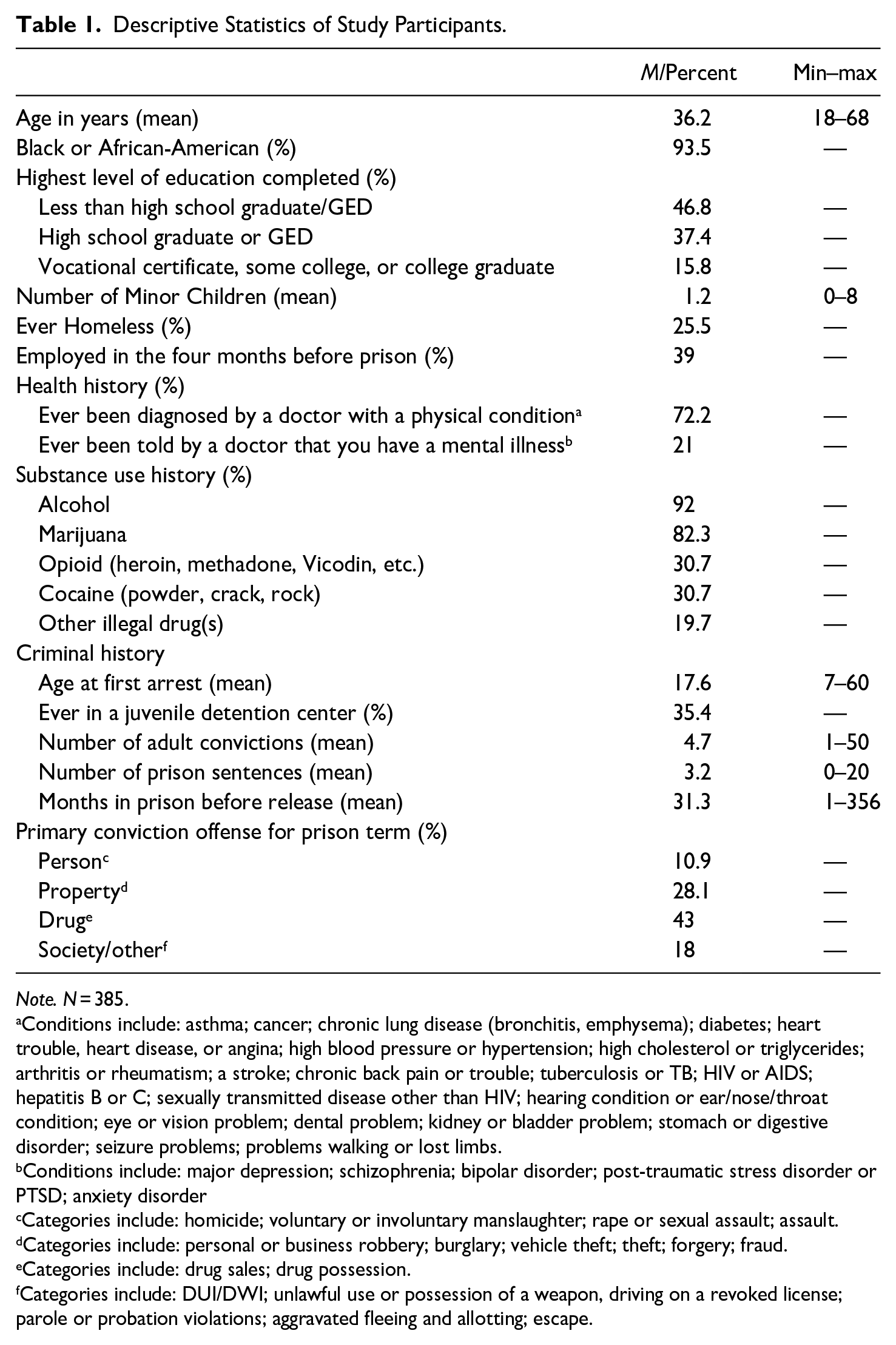
All our models also control for several sociodemographic, mental and physical health, substance use, and criminal history variables that are theoretically linked to employment outcomes and financial needs (see Berg & Huebner, 2011; Link et al., 2019; Visher et al., 2008, 2011). These variables are summarized and described in the following section (Table 1).
Descriptive Statistics of Study Participants.
Note. N = 385.
Conditions include: asthma; cancer; chronic lung disease (bronchitis, emphysema); diabetes; heart trouble, heart disease, or angina; high blood pressure or hypertension; high cholesterol or triglycerides; arthritis or rheumatism; a stroke; chronic back pain or trouble; tuberculosis or TB; HIV or AIDS; hepatitis B or C; sexually transmitted disease other than HIV; hearing condition or ear/nose/throat condition; eye or vision problem; dental problem; kidney or bladder problem; stomach or digestive disorder; seizure problems; problems walking or lost limbs.
Conditions include: major depression; schizophrenia; bipolar disorder; post-traumatic stress disorder or PTSD; anxiety disorder
Categories include: homicide; voluntary or involuntary manslaughter; rape or sexual assault; assault.
Categories include: personal or business robbery; burglary; vehicle theft; theft; forgery; fraud.
Categories include: drug sales; drug possession.
Categories include: DUI/DWI; unlawful use or possession of a weapon, driving on a revoked license; parole or probation violations; aggravated fleeing and allotting; escape.
Results
The characteristics of the men who participated in the baseline survey are reported in Table 1. Most of the men in the study group were between 30 and 40 years old, black/African-American, and had low levels of educational attainment. On average, men had at least one child and low rates of employment in the four-months prior to their incarceration. Roughly one-quarter of the men were homeless at some point. More than 70% had suffered from a physical health condition, while more than 20% had been diagnosed with a mental illness. Other survey responses suggest these men, on average, reported extensive histories of criminal justice system contact, substance use, and housing instability, all of which could affect their recidivism and post-release employment outcomes.
Sources of Financial Support
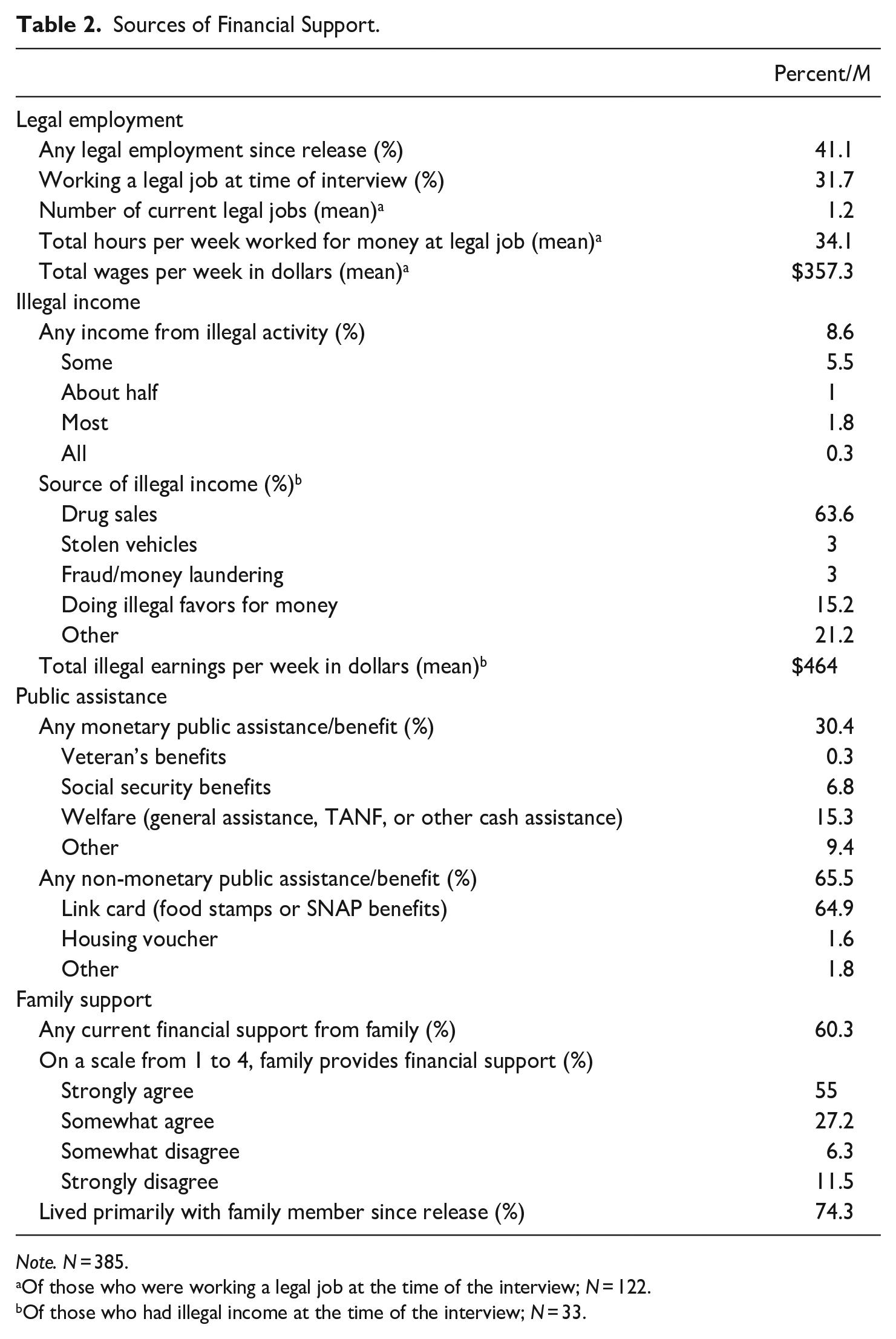
Table 2 provides descriptive statistics on the sources of financial support reported by the survey participants. Results confirm our first hypothesis: individuals returning from prison have multiple sources of financial support in the 4 months following their release. Forty-one percent of all men reported having a legal job at some point since their release, while only 32% reported working a legal job at the time of the interview. Of the men that were employed, the average individual worked 1.2 jobs and made $357.30 for 34 hr of work each week. Factoring in inflation since 2012, that equates to approximately $471.64 dollars today.
Sources of Financial Support.
Note. N = 385.
Of those who were working a legal job at the time of the interview; N = 122.
Of those who had illegal income at the time of the interview; N = 33.
Only 33 men—or 9% of all respondents—reported receiving any income from illegal activity. Most of these men reported only making “some” of their total earnings from illegal activities, while 12 respondents (3% of the total) reported “about half,” “most,” or “all” of their earnings came from illegal activities. Of the men who reported earnings through illegal activities, the majority (64 %) reported making money by selling drugs. Across all illegal activities, men reported earning an average of $464 per week (or $612.48 adjusting for inflation). This is over $100 more than the reported weekly earnings from legal employment.
Nearly one-third of all men received monetary public assistance, while two-thirds reported receiving non-monetary assistance. Most of the non-monetary public assistance was facilitated through respondents’ Link Card, which is a program in Illinois that allows individuals to spend Food Stamps/SNAP benefits electronically. Finally, more than 60% of the respondents received financial support from their families. On a separate question, 80% reported that they “strongly agree” or “somewhat agree” that someone in their family had provided them with financial support during their release. It is therefore clear that most of these individuals relied heavily on their families as a source of financial support.
Relationship Between Sources of Support
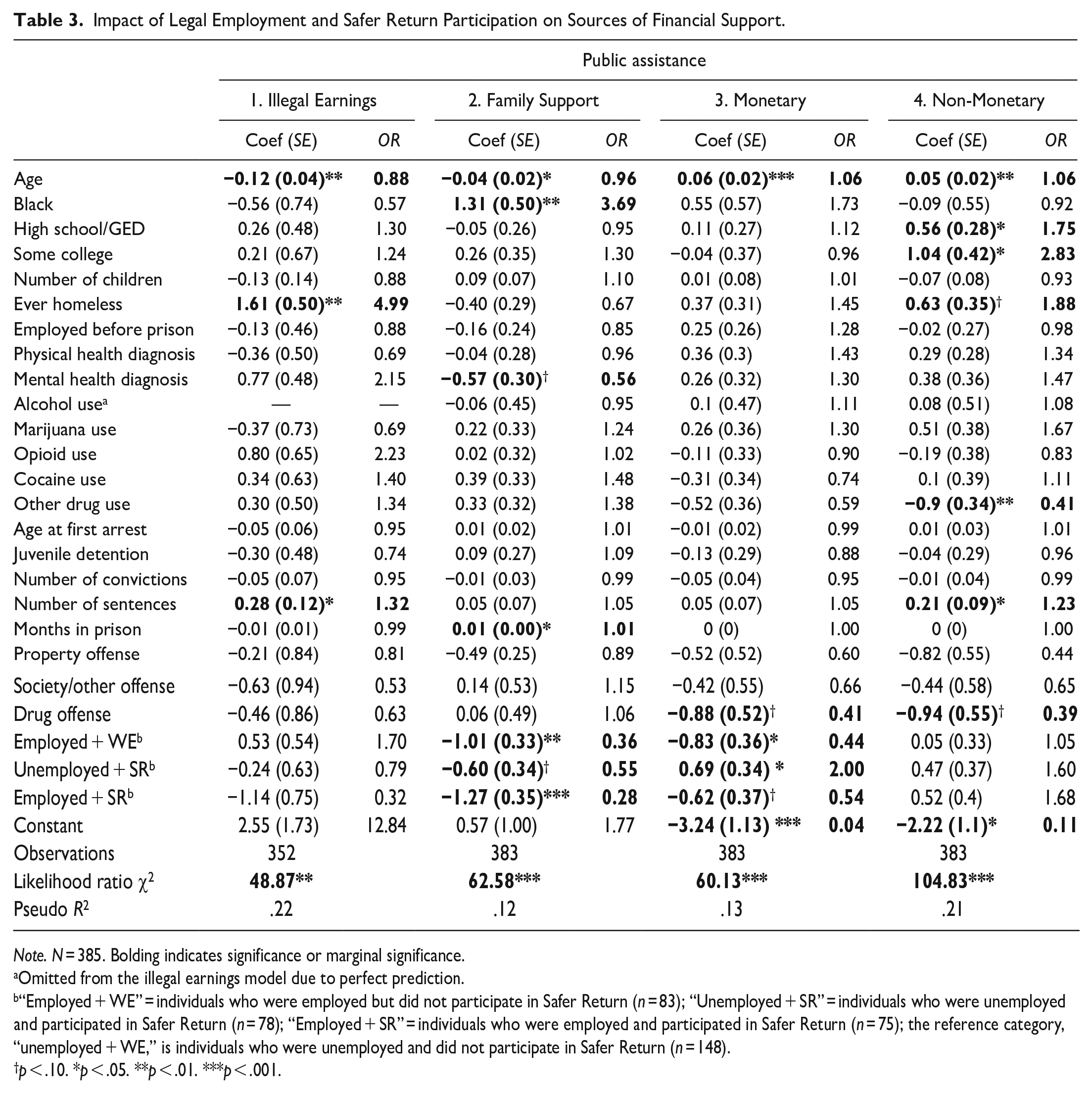
The results presented in this section focus on the relationship between legal employment and participation in the Safer Return program on other sources of financial support, controlling for the covariates presented in Table 1. Table 3 provides the results of four logistic regression models, focusing on illegal earnings (Model 1), financial support from family (Model 2), monetary public assistance/benefits (e.g., welfare, social security, etc.; Model 3), and non-monetary public assistance/benefits (e.g., Link Card, housing voucher, etc.; Model 4).
Impact of Legal Employment and Safer Return Participation on Sources of Financial Support.
Note. N = 385. Bolding indicates significance or marginal significance.
Omitted from the illegal earnings model due to perfect prediction.
“Employed + WE” = individuals who were employed but did not participate in Safer Return (n = 83); “Unemployed + SR” = individuals who were unemployed and participated in Safer Return (n = 78); “Employed + SR” = individuals who were employed and participated in Safer Return (n = 75); the reference category, “unemployed + WE,” is individuals who were unemployed and did not participate in Safer Return (n = 148).
p < .10. *p < .05. **p < .01. ***p < .001.
Results from the first model indicate that age has an inverse relationship with illegal earnings (OR = 0.88, p < .01), while homelessness (OR = 4.99, p < .01) and the number of sentences in respondent’s criminal history (OR = 1.32, p < .05) have a positive relationship. The relationship between age and illegal earnings is consistent with prior research demonstrating that individuals “age out” of crime as they become older (Farrington, 1986; Ray & Jones, 2023). It is also notable that individuals who were homeless before their incarceration were five times more likely to report illegal earnings than those without a history of homelessness, highlighting the relationship between an individual’s personal history of residential instability, reentry, and criminal behavior (Ellsworth, 2022; Listwan et al., 2018). Model 1 also shows that neither having a legal job nor participating in Safer Return affected illegal earnings.
The results of Models 2 suggest that both age (OR = 0.96, p < .05) and race (OR = 3.69, p < .01) are related to family support, such that younger men and black men were more likely to receive financial support from family members than their counterparts. In addition, each month spent in prison on the current sentence increased the respondents’ likelihood of receiving support from their family by 1% (OR = 1.01, p < .05). This relationship is significant even after controlling for age, indicating that regardless of how old respondents were, the longer they spent in prison, they were more likely to rely on their family for support when they returned.
Compared to the reference group (unemployed respondents from West Englewood), employed respondents who participated in Safer Return (OR = 0.28, p < .001), and those employed from West Englewood (OR = 0.36, p < .01) were significantly less likely to receive financial support from their family. Notably, the unemployed group of Safer Return participants were also less likely to be financially supported by their family, though this difference was only marginally significantly (OR = 0.55, p < .10). The predicted probabilities of receiving support from a family member was 73% for the reference group, 52% for employed respondents in West Englewood, 61% for unemployed Safer Return participants, and 46% for employed participants. Thus, while families play an important role in financially supporting unemployed men who may not have access to other sources of support, a large proportion of men across all four groups relied on their family members.
Very few independent variables in Model 3 were significantly associated with receiving monetary public assistance/benefits. Age had a positive impact on the outcome (OR = 1.06, p < .001), though that is likely because social security is only available to older individuals. There is also a significant, negative relationship with receiving monetary public assistance and being legally employed in West Englewood (OR = 0.44, p < .05). Notably, unemployed individuals in the Safer Return program were more likely to receive monetary public assistance compared to the reference group (OR = 2.00, p < .05). The relationship between employment and receiving monetary public benefits is not unexpected, given that many of these benefits are designed for individuals who do not have stable employment. However, it is noteworthy that participation in Safer Return increased unemployed respondents’ receipt of this type of public assistance. This is because, as part of the services provided through Safer Return, program case managers helped participants to identify and apply for relevant public benefits.
Model 4 shows several covariates were significantly associated with receiving non-monetary public benefits. Age was positively associated with this outcome (OR = 1.06, p < .01). Notably, and perhaps contrary to expectations, respondents with a high school diploma/GED (OR = 1.75, p < .05) and those with some college (OR = 2.83, p < .05) were significantly more likely to receive non-monetary benefits than those with less than a high school diploma. Though it is beyond the scope of the current project to explain this finding, it is possible that individuals with higher educational attainment were more knowledgeable about the availability of public benefits and/or were better able to navigate the processes required to request them. Employment and Safer Return participation was not related to the receipt of non-monetary public assistance.
Discussion
We tested three hypotheses, finding varying levels of support. Confirming our first hypothesis, we found that returning individuals were likely to receive multiple sources of financial support when they come home from prison. More than 40% of men reported having legal employment in the four months after return from prison, 9% reported earnings from illegal activity, 30% received monetary public assistance, 65% received non-monetary public assistance, and 60% received financial support from family members.
We also found some support for our second hypothesis, that individuals who are legally employed are less likely to receive other sources of financial support. For example, respondents with legal employment were less likely to be financially supported by their families. This is noteworthy because families often bear a substantial financial burden to take care of their returning loved ones, which can be a source of strain on relationships and an obstacle to successful reintegration (Hood & Gaston, 2022; Naser & La Vigne, 2006). Therefore, providing returning individuals with legal employment can alleviate some of the financial burdens borne by their families and mitigate some of the stress families experience during the reentry process.
Regardless of whether they were employed or participating in Safer Return, most men in our study relied on their families for financial help during after their release from prison. Extant literature has consistently shown that families are a critical source of both emotional and financial support when their loved ones return from prison, especially in the time immediately after release when returning individuals are most vulnerable (Naser & La Vigne, 2006; Visher, 2004). In fact, financial and other forms of instrumental support (e.g., housing and transportation) are likely more important to successful reentry than emotional or interactional support (Mowen et al., 2019).
We also found that legal employment decreased the likelihood that men would receive monetary public benefits, such as welfare and social security, regardless of whether they participated in Safer Return. This suggests that returning individuals are using public resources as they were designed: to supplement their income during periods of unemployment after their release. This is relevant when considering that “employment” in this study included under the table jobs that may not be reported to public assistance agencies. This also suggests that there is a cost savings incentive for correctional, reentry, social service, welfare, and other public agencies to provide employment opportunities to individuals returning from prison.
We also found that of the individuals who were unemployed, those that participated in the Safer Return program were significantly more likely to receive monetary public assistance than unemployed individuals returning to West Englewood. Prior research has shown that there are numerous structural and administrative barriers associated with enrolling in public assistance that can result in substantial variation among individuals otherwise eligible for these benefits. People may not be aware of these programs or their eligibility, or they may be daunted be the extensive application process (Barnes, 2021). Reentry services, such as those provided through Safer Return, can thus serve an important role in providing information about the public assistance/benefits available to returning individuals and in helping these individuals navigate the bureaucratic process of applying for these benefits.
Conversely, we found no relationship between employment, Safer Return participation, and non-monetary public benefits. One reason for this finding is that these types of benefits serve to fulfill basic needs of individuals returning from prison, such as the LINK card program, which allows individuals to spend their Food Stamps/SNAP benefits. It is also possible that returning individuals are more aware of these types of benefits, or that it is easier for individuals to apply to these benefits than other types of public assistance.
We had also hypothesized that individuals without legal employment would be more likely to supplement their income through illegal enterprises. This is in line with the notion that people engage in criminal activity simply out of need or because they are not making enough money through legal channels to survive (Finn, 1998; Nally et al., 2014; Tripodi et al., 2010; Uggen, 2000). Yet, contrary to expectations, we found that employment had no measurable impact on whether people earned income through illegal activities.
This null relationship has two main theoretical implications. First, prior desistance scholars have argued that employment can serve as a “turning point” away from criminal behavior (Maruna, 2001; Tripodi et al., 2010; Uggen, 2000). It is possible that these assumptions are simply wrong. Prior evaluations of employment-focused reentry programs have similarly found mixed or non-significant impacts on recidivism (Berghuis, 2018; Newton et al., 2018). While we argued above that our outcome (engagement in illicit earning activities) is a more direct measure of criminal desistance than recidivism, our findings are largely consistent with these prior studies (see also Thompson & Uggen, 2012).
Second, it is conceivable that illicit income was simply more appealing to returning individuals than the legal employment opportunities available to them. Our study included a binary measure of “employment” that did not distinguish between relevant job-related characteristics. Yet we know not all jobs are equal. Stable jobs with a higher occupational level are more likely to protect against recidivism than short-term or less professional jobs (Ramakers et al., 2017). Many of the jobs available to the returning individuals in our study, and particularly those jobs provided through Safer Return, were transitional or entry-level positions. This is, in part, evidenced by the reportedly higher earnings from illegitimate means than through legal employment ($464 vs. $357.3 per week). The relatively larger financial returns from criminal enterprise may also reinforce assumptions about the efficacy of these activities, resulting in continued criminal behavior (Laferrière & Morselli, 2015; McCarthy & Hagan, 2001). Future research should examine whether different types of employment are differentially associated with illegitimate income and other outcomes related to criminal desistance.
It is also worth noting that the null relationship between legal employment and illicit earnings may be an artifact of the temporal ordering of the measures in the survey. Returning individuals were asked whether they received any income from illegal activities and whether they were legally employed at any point during the four-month period after being released from prison. It is possible that individuals engaged in illegal earning activities shortly after returning from prison to address their immediate financial needs until they could obtain a legal job later in that four-month window. Still, we would expect there to be differences between the Safer Return participants and their counterparts in West Englewood on the illegal earning outcome as they were offered employment services 45 to 60 days before their release from prison. The (near) immediate access to employment opportunities after release likely would have mitigated the need for Safer Return participants to supplement their income through illicit activities, but we did not observe any differences between the two groups in our models.
Finally, we found little evidence supporting our third hypothesis that individuals who participated in Safer would be less likely to seek alternative sources of financial support, regardless of their employment status. The results from our family support model indicate that unemployed Safer Return participants were less likely to rely on their families than those who were unemployed in the comparison group, though this was only marginally significant. We also found that unemployed Safer Return participants were more likely to receive monetary public assistance than their unemployed West Englewood counterparts, demonstrating the success of the program in helping participants enroll in these benefits.
This study has important implications for policy and practice. Returning individuals are more likely to rely on family members and public assistance, rather than criminal activity, during periods of unemployment. Given that employment-focused reentry programs can increase employment and earnings in the months immediately after release from prison (Berghuis, 2018; Newton et al., 2018), policymakers should focus on creating and expanding these programs to not only directly benefit returning individuals, but also to alleviate the financial burden shouldered by family members (Berg & Huebner, 2011; Harding et al., 2014; Hood & Gaston, 2022; Visher et al., 2011). Even if the effects of employment-focused programs wane over time (Berghuis, 2018; Newton et al., 2018), they may still offer meaningful reprieve to family members who might otherwise bear these costs. Likewise, these programs may save taxpayer money by reducing the reliance on public assistance.
In addition, given the central role families play in the reentry process, policymakers should explore providing additional supports to families. This may include expanding access to public benefits for family members, who often stretch their own benefits and resources to cover the needs of their recently incarcerated loved ones (Harding et al., 2014). Additionally, service providers can involve families in reentry planning and other aspects of the reentry process (Peterson et al., 2019; Sullivan et al., 2002). This is also relevant for future research. As Harding et al. (2014) argue “[e]valuations of reentry programs that provide material resources . . .directly to the ex-offender should also take into account the effects of such resources on the well-being of his or her family or household” (p. 29).
Though not the focus of our study, another significant finding in our analyses is the strong connection between an individual’s history of homelessness and whether they reported receiving any illegal earnings. This underscores the complex relationship between residential and financial stability among people returning from prison (Ellsworth, 2022; Listwan et al., 2018). Thus, effective policy and practice should not only focus on employment opportunities, but also address housing and the other multifaceted needs of returning individuals.
Conclusion
This study had a few limitations. First, our survey respondents were all returning to one of two neighborhoods in Chicago, limiting the generalizability of our study findings. Still, these neighborhoods were specifically selected because of their high concentration of men returning from prison. Thus, the lessons generated from this study offer valuable context to other programs targeting high-need neighborhoods or populations.
Second, the data we used are from a survey conducted more than a decade ago. Despite the length of time between data collection and this study, we believe these data are uniquely well-suited to address our study hypotheses. This unique dataset captured rich information on employment, the receipt of public benefits, earnings from illegal activities, and participation in an employment-focused reentry program. Moreover, recent changes to the reentry landscape in the U.S. stemming from the COVID-19 pandemic, such as increased challenges around employment and housing (Desai et al., 2021; Simonds et al., 2022), makes our findings and the lessons generated from this study timely.
Third, the data we used for this study came from a self-reported questionnaire. As is the case with any self-reported data, there is a concern that individuals would intentionally or unintentionally misrepresent the truth in their response to the questions. This is particularly relevant to some of the more sensitive questions, as well as those that were more difficult for respondents to answer, such as the questions about illegal activities and earnings.
Fourth, the survey was administered to respondents at approximately 4 months post-release. This precluded anybody from taking the survey who had moved out of Chicago or otherwise could not be located by the team administering the survey. Likewise, respondents who were rearrested and returned to jail or prison within 4 months of their release were excluded from the survey. Because of this, our study may underrepresent individuals who supplemented their income through illegal activities after they returned from prison.
A final limitation is that the measures of various sources of financial support were not originally designed to be compared to one another. Some of the questions on the survey from which these measures were created used difference referenced periods (e.g., “anytime in the past 4 months since your release from prison” vs. “currently”) and most are drawn from different sections of the survey entirely. In a perfect scenario, the survey would have asked respondents to list each source of financial support in one question, then ask for further breakdowns of each type (e.g., estimated wages/earnings, level of contribution, subcategories, etc.)
Despite these limitations, this study made several contributions to the current body of research. We conducted a comprehensive study on the sources of financial support available to returning individuals in the initial months after their release from prison, as well as the relationships between employment on other forms of support. We found that these individuals rely on a several types of support, including legal employment, family, public assistance, and to a lesser extent, income from illegal activities. A particularly interesting finding is that while fewer than 9% of the men in our sample reported receiving any illegal income, the total earnings from this type of support was seemingly higher ($464 per week) than from employment-related wages ($357.3) per week.
We also found that individuals with legal employment were less likely to be financially supported by family members or to receive public benefits. We argue that these findings demonstrate not only the direct impact of employment on returning individuals, but also the indirect impacts on family members and taxpayers. We suggest that policymakers focus on expanding employment opportunities for these individuals, as well as providing additional support to their families. We would encourage future scholarship to examine these findings with more recent data and in other reentry contexts.
Footnotes
Acknowledgements
None.
Declaration of Conflicting Interests
The author(s) declared no potential conflicts of interest with respect to the research, authorship, and/or publication of this article.
Funding
The author(s) disclosed receipt of the following financial support for the research, authorship, and/or publication of this article: Initial drafting of this manuscript was funded by grants 07-87946-001-HCD, 09-92418-000-HCD, and 11-98490-000-USP awarded by the John D. and Catherine T. MacArthur Foundation.
