




Abstract
Past research and punishment of prostitution have predominantly focused on the women selling sex, neglecting the other side of the equation, the solicitors. As many jurisdictions are now focusing more on men who solicit sex (MSS), understanding who these men are is important for more effective interventions and prevention of illegal sex solicitation. In the current scoping review, authors examined 54 works (i.e., scholarly and non-peer-reviewed, published on any date, published in English) on MSS in the United States. Based on these works, findings are categorized and discussed based on common themes, such as behavioral and psychological characteristics, motivations and potential etiology of solicitation, and prior efforts of rehabilitation. The manuscript concludes with suggestions for important next steps in research and intervention. Examination of this understudied group of MSS may serve to inform criminal justice professionals in the effort to decrease the demand of illegal sex solicitation. As a result, professionals may more effectively reduce the victimization of women involved in the commercial sex market.
Plain Language Summary
The goal of this study is to introduce and discuss the existing research regarding men who solicit sex (also known as “Johns,” customers, or solicitors) in the United States. In the current manuscript, research regarding demographic characteristics, behavioral characteristics, psychological characteristics, causes of behavior (i.e., etiology, theory), and legal responses (i.e., diversion programs) to solicitation are synthesized in a scoping review. Understanding these men and their participation in the commercial sex market is necessary to drive any initial efforts to decrease the demand for sex work. A full understanding of all parties involved in this market is warranted in order to ensure intervention efforts, attempts to lessen the harm towards women involved in the commercial sex market, are fully effective.
Introduction
Prostitution, colloquially considered the “oldest profession,” describes adults exchanging sexual favors for something of monetary value (Haak, 2018; M. A. Monto, 2004). Although prostitution on paper describes two adults consenting to a sexual barter (see M. A. Monto, 2004), the act of selling sex has not been universally decriminalized or legalized. Conducting research on the commercial sex market is important because sex work, especially selling sex, intersects with various social issues, ranging from mental health, sexual health, and violence against women (Farley, 2003; Lovell & Jordan, 2012; M. A. Monto, 2004). To understand prostitution as a phenomenon, it is important to first understand the people involved. While prior work suggests that selling and soliciting sex is not restricted to gender binaries (e.g., Grov et al., 2013; Kosloski & Diamond-Welch, 2021; Weitzer, 2005), sex work research has predominantly focused on female sex workers (FSW), the “prostitutes,” with less attention given to the customers. Men who solicit sex (MSS), the “Johns,” have been studied significantly less as research tends to imitate legal responses by focusing on, and punishing, the FSW (Weitzer, 2005; Winick, 1962).
The prevalence of MSS in the United States can range from a low 1% to 6% to a high 14% to 16% (e.g., Diamond-Welch & Kosloski, 2020; Roe-Sepowitz et al., 2019; Sanders et al., 2020). While this percentage is arguably small, similar prevalence rates have been observed in other Western countries, with estimates from nationally representative surveys (depending on the country) ranging from 11% to 18% (e.g., Birch, 2015; Sanders et al., 2020; Wakefield, 2025). If there are approximately 165.28 million men residing in the United States (see Korhonen, 2023), this suggest that 3.31–26.44 million men have solicited sexual services. Additionally, early studies suggested approximately 16% of American men interacted with FSW at least once in their lifetime, and the rate of MSS who are frequent customers (i.e., soliciting more than 20–50 times) is less than 10% (Birch, 2015; M. A. Monto & Milrod, 2013). However, the limited number of studies, lack of representative sample sizes, overreliance on cross-sectional data, and confusing conceptualizations has led to a discrepancy in the true prevalence of MSS (M. A. Monto & Milrod, 2013; Roe-Sepowitz et al., 2019; Sanders et al., 2020).
Increased focus on MSS in research is necessary because men have been identified as a catalyst for the rising sex trade demand and, simultaneously, different jurisdictions are changing policies and practices to rely less on punishing women. For example, in the state of Texas, soliciting sex was made a felony offense in 2021, compared to other jurisdictions where solicitation is considered a misdemeanor offense, often punished via fines. In Texas, MSS are receiving probated sentences where they are provided programming like other justice-involved individuals. Increasing the knowledge about MSS can help drive the understanding and rehabilitation efforts of MSS.
Purpose of the Scoping Review
As policies are shifting to focus punishment and rehabilitation from the sex worker to the sex solicitor, obtaining an understanding of what is known about men who solicit sex is imperative to appropriately respond. Prior research and responses to prostitution have predominately focused on the female sex workers, with significantly fewer examinations of men who solicit sex. To understand men who solicit sex and what would be the most effective intervention, further research is warranted. The purpose of the present review is to examine the extant literature regarding MSS in the United States. After review of the studies, findings are organized according to common themes found in the articles included. Reviewing this literature provides a current picture of an understudied group of individuals and acts as a foundation for future efforts to understand men who solicit sex and how to better intervene in the reduction of prostitution and the illegal commercial sex market.
Methodology
A scoping review was conducted to best serve the goal of providing an overview of what researchers have reported on men who have illegally solicited sex in the United States (see Levac et al., 2010). Scoping reviews have become a common method adopted across many sciences because it allows examination of broad and under-researched topics (Munn et al., 2018). This method of investigation allows researchers to identify broader research, consolidate relevant findings, and report notable themes and findings. The primary goal of the present review is to identify what research on men who solicit sex (MSS) in the United States exists and what we know about these individuals based on these findings. The following research questions were considered when conducting this review:
What is currently known about the characteristics of men who solicit sex (MSS) in the United States?
What do we know about the legal responses and treatment of MSS in the United States?
Performing the Literature Search
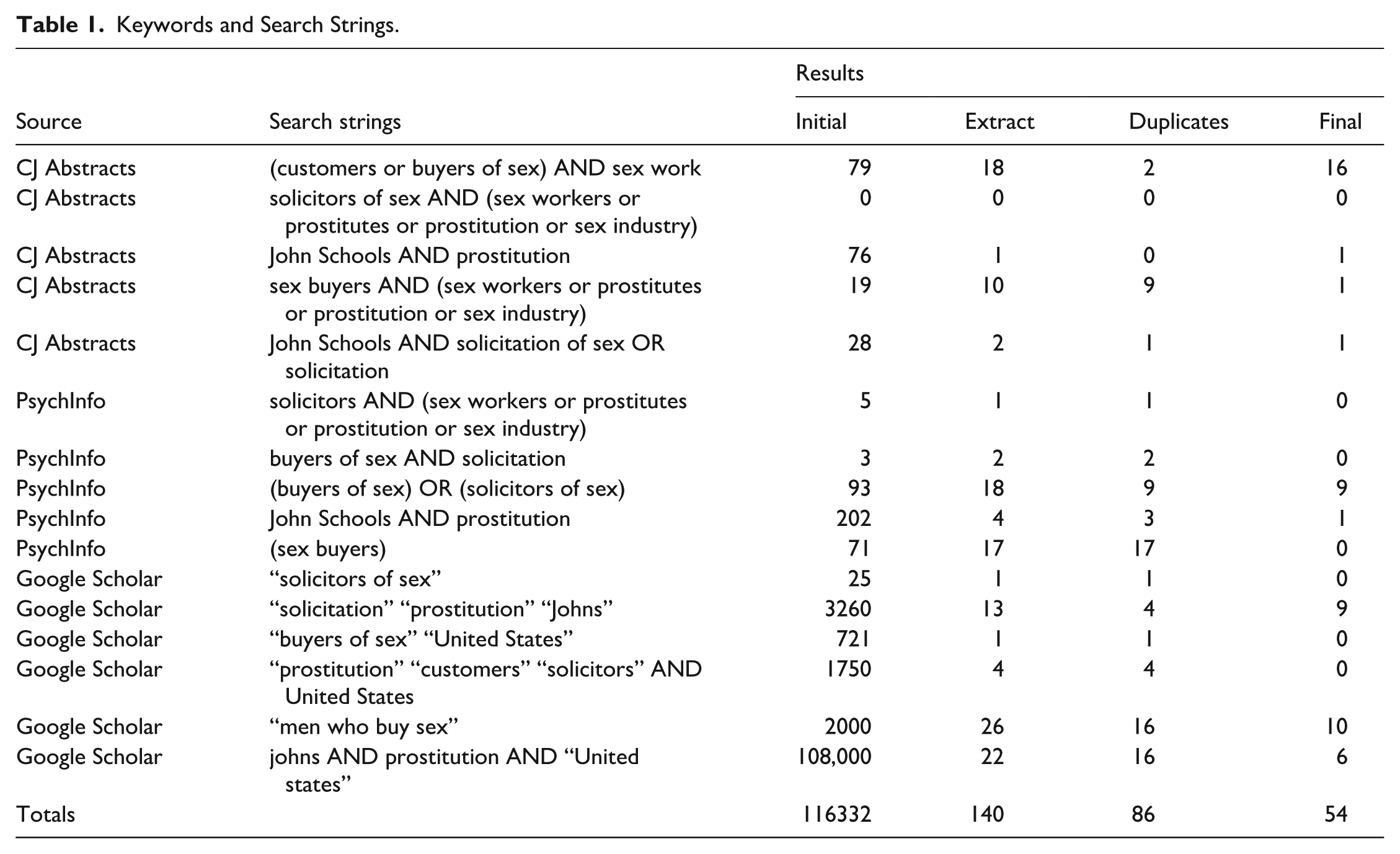
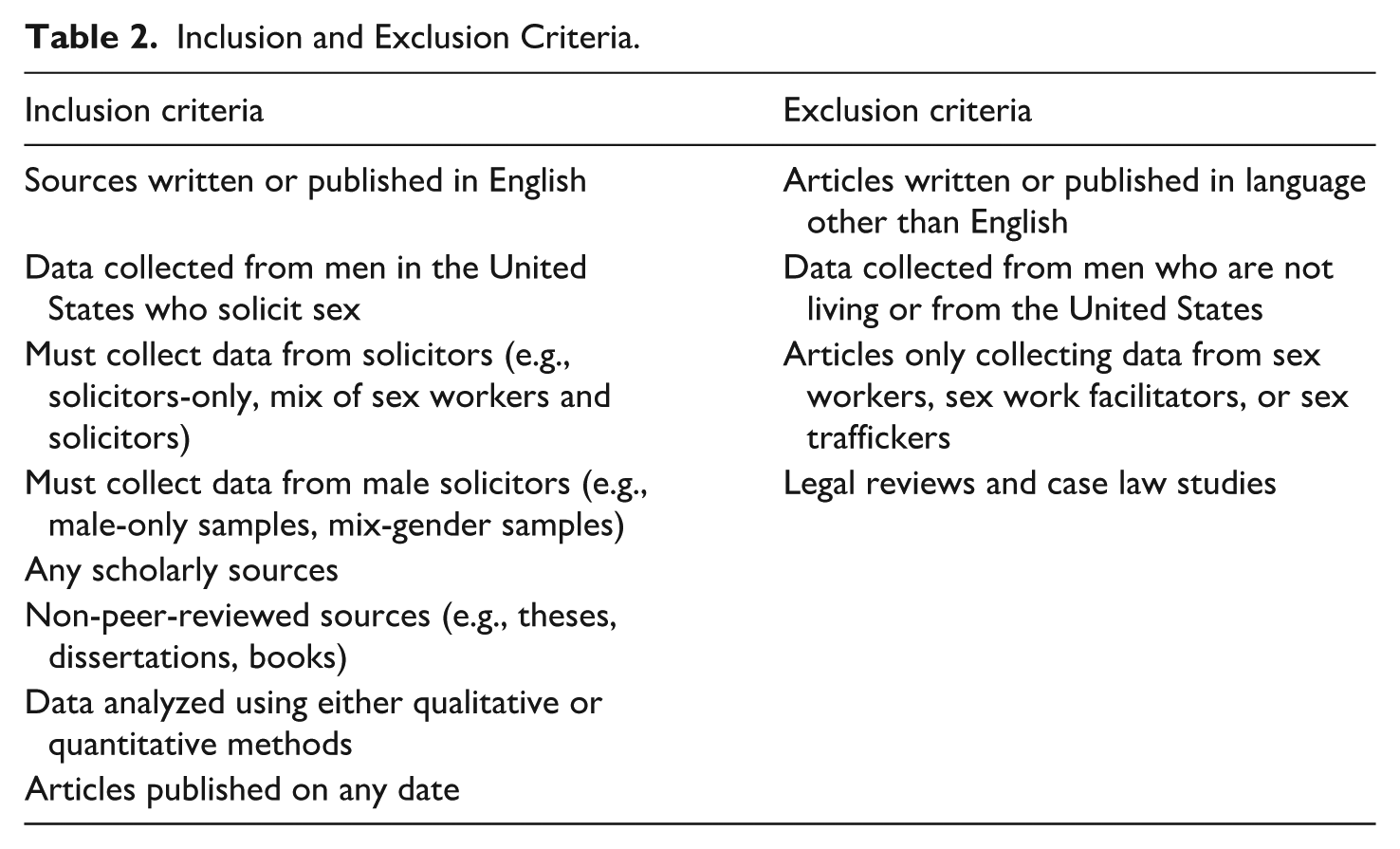
First, string phrases and keywords that best captured the research questions were chosen (see Table 1). Phrases to describe MSS included “Johns,” “solicitors,” “sex buyers,” and “customers.” Additional phrases, such as “sex work,” “prostitution,” or “solicitation,” were included in the search to further narrow the focus. Second, databases that hosted social science research were searched. Initial searches revealed a total of 116,332 available results, and the results of each individual search term was reported in Table 1. Third, articles were selected based on how well the article titles and abstracts met the inclusion or exclusion criteria (see Table 2). Inclusion criteria for the sources were as follows:
Sources written or published in English
Data collected from men in the United States who solicit sex
Must collect data from solicitors (e.g., solicitors-only, mix of sex workers and solicitors)
Must collect data from male solicitors (e.g., male-only samples, mix-gender samples)
Any scholarly sources
Non-peer-reviewed sources (e.g., theses, dissertations, books)
Data analyzed using either qualitative or quantitative methods
Articles published on any date
Additionally, potential articles for review were collected if the authors had full access (per the permissions of the university library) to the text. Although initial search results provided 116,332 total potential sources, duplicates and articles that met one or more criteria for exclusion were removed from the data pool. Therefore, the final sample of articles consisted of 54 relevant sources.
Keywords and Search Strings.
Inclusion and Exclusion Criteria.
Once sample size was finalized, the authors began categorizing the collected articles based on thematic elements. First, each author independently reviewed the manuscripts of each source and coded their theme. Then, the authors reconvened to discuss and decide which theme was most appropriate, especially for the 11 sources that were coded differently across authors. This process resulted in five agreed-upon themes: demographic characteristics, behavioral characteristics, psychological characteristics, etiology, and legal responses.
Results
Summary of Collected Research Examining Men Who Solicit Sex in the United States
While research examining men who solicit sex (MSS) has gained traction in commercial sex market literature, there are still gaps to understand who these men are, as well as their motivations for soliciting sex. Obtaining a more specific understanding of MSS will aid in the development of effective intervention strategies. Research on these individuals has faced methodological challenges, including but not limited to small sample size, non-representative samples, and questionable proxies for abstract concepts. Therefore, composing a clearer image of who MSS are– specifically, their characteristics, behaviors, and motivations—can further illustrate who is behind the demand for sex work. Even though MSS are, overall, a heterogenous group of individuals, identifying any commonalities or patterns within the group may be of great importance for future research and rehabilitation efforts.
The literature search revealed 54 relevant sources pertaining to research of men who solicit sex (MSS) in the United States. A majority of the manuscripts were peer-reviewed journal articles, with eight sources being non-peer-reviewed studies and three sources being government and funded reports. The oldest source was published in 1962, and the most recent sources were published in 2025. Study methodologies included qualitative interviews with MSS, content analyses, advanced statistical analyses, and critical reviews of solicitation research. Articles were categorized based on the theme of their research: demographic characteristics (i.e., age, criminal history), behavioral characteristics (e.g., motivations, sex-specific behaviors), psychological characteristics (i.e., emotional intimacy, sexual liberalism), etiology (i.e., deviant peer association, masculinities) and legal responses to MSS (i.e., diversion programs, recidivism). While the thematic findings are discussed further, the list of articles and their theme designations are reported in Table 3.
Data Sources Organized By Theme (N = 54).
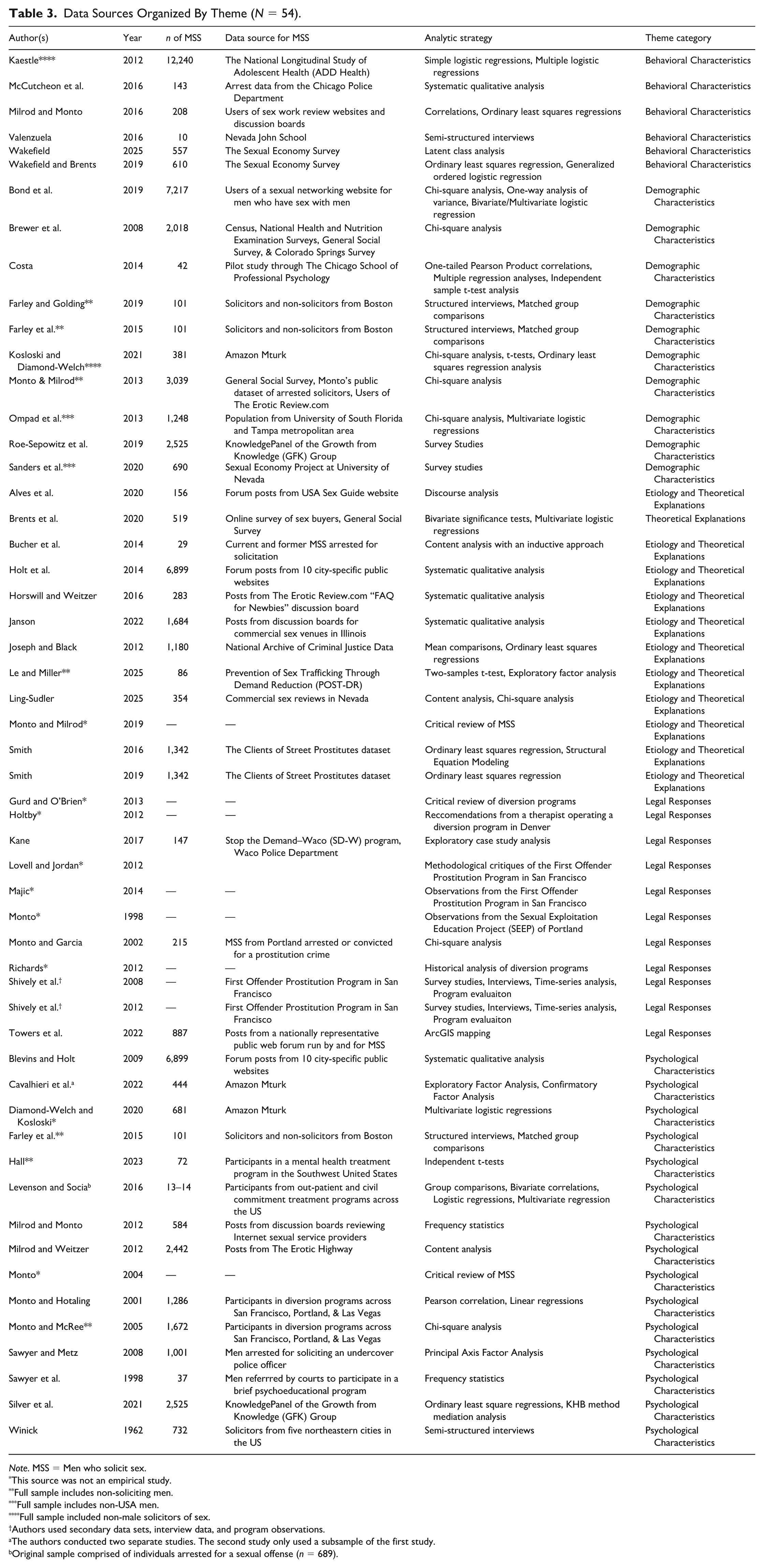
Note. MSS = Men who solicit sex.
This source was not an empirical study.
Full sample includes non-soliciting men.
Full sample includes non-USA men.
Full sample included non-male solicitors of sex.
Authors used secondary data sets, interview data, and program observations.
The authors conducted two separate studies. The second study only used a subsample of the first study.
Original sample comprised of individuals arrested for a sexual offense (n = 689).
Demographic Characteristics
Though there have been studies examining both men and women who have solicited sex (Kosloski & Diamond-Welch, 2021), males make up most sex buyers. Across the 10 studies included from the United States, a fairly consistent demographic and behavioral profile emerge for men who purchase sex. Although there is meaningful variation across market types and subgroups (Sanders et al., 2020), the research collectively paints a clear picture of who these men tend to be and how they differ from non-buyers. Overall, sex buyers are most commonly middle-aged, heterosexual (90%–97%), cisgender men, typically between their late 20s and mid-50s (Bond et al., 2019; Brewer et al., 2008; Costa, 2014; Farley et al., 2015). Most buyers are between 30 and 55 years old, with a stronger peak in the 40s. Younger men do purchase sex but are underrepresented, except in the street market (Brewer et al., 2008; M. A. Monto & Milrod, 2013; Ompad et al., 2013; Sanders et al., 2020).
Studies using nationally representative samples, such as the General Social Survey (M. A. Monto & Milrod, 2013) and survey samples (Roe-Sepowitz et al., 2019), estimate that 13% to 16% of U.S. men have ever paid for sex, while only 1% to 4% report doing so recently, indicating that purchasing is relatively uncommon but not rare. In a nationally representative survey sample of 2,525 U.S. men, Roe-Sepowitz et al. (2019) found 4% of males (roughly 1 of every 25 adult males in the US) purchased sex over the last three years. The authors reported that using that estimate of sex buying behavior to the general U.S. male population results in four million adult men purchasing sex over the last 3 years. Buyers tend to be White, more educated and more financially stable than the general population, with many holding college degrees and full-time employment. However, this pattern shifts in street-based markets, where arrested buyers are more likely to be younger, lower-income, and racially diverse, especially Black and Hispanic men, who appear overrepresented in arrest data due to policing patterns rather than actual purchasing rates (Brewer et al., 2008).
A fairly consistent finding across studies is that buyers are more likely to be married or in a long-term relationship (Farley et al., 2015; Kosloski & Diamond-Welch, 2021), though many men in relationships reported they were dissatisfied with their sexual relationship at home (Farley et al., 2015). Some buyers participate while in open or polyamorous relationships, complicating assumptions that purchasing is always clandestine or tied to infidelity. Studies found that younger buyers of sex were less likely to be married or in monogamous relationships compared to non-buyers (Brewer et al., 2008; Ompad et al., 2013). Motivations vary widely, ranging from seeking intimacy and emotional connection to sexual variety, fetish exploration, or convenience (Farley et al., 2015; Farley & Golding, 2019; Kosloski & Diamond-Welch, 2021; Ompad et al., 2013). A subset of buyers reports motivations linked to loneliness, social anxiety, male-peer bonding, or difficulty forming conventional relationships, while others describe purchasing as a form of thrill-seeking or consumerist sexual expression.
Behaviorally, buyers tend to report higher numbers of lifetime sexual partners, earlier sexual debut, and greater engagement in non-mainstream sexual practices (Bond et al., 2019; Farley et al., 2015). Men who purchase sex from both men and women are significantly more likely to be buyers than exclusively heterosexual men. Buyers also exhibit higher rates of STI diagnoses, particularly among those who purchase frequently or engage in higher-risk markets (Bond et al., 2019). Condom use varies by context: men are more likely to use condoms with commercial partners than with private partners, but some buyers offer higher payment for condomless sex, increasing risk for both parties (Ompad et al., 2013).
Substance use patterns and prior arrests also differentiate buyers from non-buyers. Studies consistently show higher rates of alcohol use, pornography consumption, and polydrug use, especially among men who both buy and sell sex or who participate in street-based markets (Bond et al., 2019). Some research links frequent purchasing to antisocial traits, hostile masculinity, and attitudes supportive of sexual aggression against women, though these patterns are not universal and appear concentrated among high-frequency buyers (Farley et al., 2015; Farley & Golding, 2019). Additionally, men who solicit sex, compared to non-solicitors, are more likely to have prior arrests, substance-related offenses, restraining orders, and charges related to violence against women (Bond et al., 2019; Farley & Golding, 2019).
Finally, purchasing patterns differ by market type. Online buyers tend to be older, wealthier, and more experienced, while street-market buyers are more likely to be younger and economically disadvantaged. Online buyers who frequently review sex workers or post about their experiences are considered “hobbyists” while online buyers who are newer or who read posts without actively commenting are considered “lurkers” (Kosloski & Diamond-Welch, 2021). Across all markets, buyers tend to live close to the areas where they purchase, suggesting that convenience and geographic accessibility play meaningful roles (Bond et al., 2019; Costa, 2014; Kosloski & Diamond-Welch, 2021).
Behavioral Characteristics
Five studies involved authors examining the behavioral characteristics of MSS. In these studies, authors examined what factors influenced sex buyers’ actions (i.e., Costa, 2014; Kaestle, 2012; McCutcheon et al., 2016; Wakefield & Brents, 2019). Many buyers’ motivations, behaviors, and decisions are affected by external factors. When considering the legality of solicitation, an inverse relationship between frequenting legal venues and illegal venues is present (Wakefield & Brents, 2019). Put another way, when legal options are available, reliance on criminalized sexual services decreases. When considering the progress throughout one’s life-course, desire to solicit sex can develop like any other high-risk behaviors (Kaestle, 2012). More specifically, early negative life experiences can influence how individuals sexually function or develop interpersonal relationships. When considering the efforts needed to solicit female sex workers (FSW), ease and accessibility to sexual services are significant for buyers (McCutcheon et al., 2016).
Some authors examined whether certain behaviors exhibited by MSS suggests increased sexual activity (i.e., Costa, 2014; Milrod & Monto, 2016; M. A. Monto & McRee, 2005; Wakefield, 2025). Compared to non-buyers, MSS engage in the overall sex industry more frequently. The frequency at which they interact with FSW increases when they find their usual or favorite FSW (Milrod & Monto, 2016). Relatedly, the frequency and pattern at which buyers purchase sex resembles their preferences in commercial sex trade (Wakefield, 2025). For example, buyers motivated by emotional connections are more likely to seek venues that allow frequent and repeat service. These same men often report frequent thoughts about sex and higher rates of masturbation and pornography use (Costa, 2014; M. A. Monto & McRee, 2005). Compared to the men in the general population, MSS report high frequency of masturbation, numbers of sexual partners, involvement in other activities in the sex industry (i.e., purchase pornographic materials, attend nude establishments).
Psychological Characteristics
Sixteen studies involved authors examining the psychological characteristics of MSS. Only two studies examined whether abuse or adverse childhood experiences (ACE) influence purchasing behaviors (i.e., Diamond-Welch & Kosloski, 2020; Levenson & Socia, 2016) but these findings are largely mixed. One study suggested overall abuse was associated with arrests related to prostitution crimes (Levenson & Socia, 2016). However, another study suggested certain types of abuse (i.e. physical, sexual) were associated with increases in sex buying while other types of abuse (i.e., emotional) were associated with decreases (Diamond-Welch & Kosloski, 2020). It is important to note that Levenson and Socia’s (2016) study focuses on the role of ACEs in a sample of individuals who have committed a sexual offense, and a small proportion of participants (2% of 685 individuals) were identified as arrested for a prostitution crime. In contrast, Diamond-Welch and Kosloski (2020) recruited participants who exchanged money/goods for sex through MTurk. Therefore, these differences in samples should be considered when attempting to draw conclusions about the role of ACEs in solicitation. Given the limited findings, more research is warranted to examine whether prior abuse and trauma are predictive of solicitation.
Many studies explored what men were seeking by procuring sex, specifically examining cognitions and perceptions these men have about commercial sex trade and sex workers. First, researchers explored how MSS commodify sex and objectify FSW (i.e., Blevins & Holt, 2009; Cavalhieri et al., 2022; Cole, 2022; M. A. Monto, 2004; S. Sawyer et al., 1998; Sawyer & Metz, 2008). The commodification of FSW is a subcultural norm prevalent in MSS communities. Many of these buyers perceive sex workers as products (Blevins & Holt, 2009; Cole, 2022). The sex worker’s agency and needs are disregarded, with men only appreciating this woman when she can fulfill the customer’s desires and pretend to enjoy it (Costa, 2014; Ling-Sudler, 2025). Interestingly, this perception of commodification can be shaped by additional factors, such as pornography use or reviews from peers (M. E. Smith, 2016).
Second, researchers frequently discuss MSS’s desires for emotional intimacy with FSW (i.e., Milrod & Monto, 2012; Milrod & Weitzer, 2012; M. A. Monto & McRee, 2005; Winick, 1962). More specifically, the desire for an emotional connection and companionship is more important to these men than a sexual one. When seeking sex workers, these men aim to replicate the intimate relationships that would be found in conventional relationships (Milrod & Monto, 2012). Buyers have reported seeking physical relations with women but later developing feelings for FSW (Milrod & Weitzer, 2012). Regardless of how they feel about these women, they are still self-aware that the intimacy is temporary (Milrod & Weitzer, 2012).
Third, the prevalence of sexual violence was frequently discussed among researchers (i.e., Diamond-Welch & Kosloski, 2020; Farley et al., 2015; Levenson & Socia, 2016; M. A. Monto & Hotaling, 2001; Hall, 2023; Silver et al., 2021). While a majority of these men do not exhibit tendencies for sexual violence, there are a select few that still commit or threaten violence (Joseph & Black, 2012). To determine which MSS exhibit a propensity for violence, researchers often study these men’s level of rape myth acceptance (M. A. Monto & Hotaling, 2001) and sexual aggression (Farley et al., 2015), given that support for these attitudes and ideals have been previously linked to sexual violence. In fact, early studies of MSS found that frequency of visits with FSW was correlated with endorsement of rape myths (M. A. Monto & Hotaling, 2001). However, there has been contradicting research that does not support these patterns, suggesting MSS do not differ from the general population in their levels of aggression or empathy (Hall, 2023).
Finally, MSS also tend to demonstrate values of sexual liberalism, suggesting they demonstrate more sex-positive attitudes and less conservative restrictions for sex between consenting parties (M. A. Monto, 2004; M. A. Monto & McRee, 2005). Compared to nationally representative samples of men (i.e., non-solicitors), buyers exhibit higher levels of sexual liberalism, which translates into less judgmental attitudes toward sexuality or sexual activity outside of one’s marriage (M. A. Monto & McRee, 2005). M. A. Monto (2004) argued that perpetuating sexually liberal attitudes is a strategy MSS use to assert their own sexual desires and justify their sex-specific decision-making. These ideas of morality, and the influence of purity culture, affect how buyers interpret harm towards sex workers (Silver et al., 2021). Although these men may recognize that commercial sex trade is dangerous, any attitudes or beliefs they have about sex work will not be as important as the desire to fulfill their emotional, psychological, or sexual needs (Costa, 2014; Silver et al., 2021).
Etiology and Theoretical Explanations for Solicitation
Eleven studies involved authors examining causes for solicitation, guided by theoretical frameworks across various disciplines (i.e., criminology, sociology). Many authors examined the role of masculinities to influence MSS decision-making (i.e., Alves & Cavalhieri, 2020; Janson, 2022; Joseph & Black, 2012; Le & Miller, 2025; Ling-Sudler, 2025). Results from these studies imply adherence to hegemonic masculinity ideals (e.g., toughness, dominance, heterosexual) is important for these men. Men will engage in multiple types of masculinity (e.g., toxic, fragile, consumer) to get closer to the hegemonic type (Joseph & Black, 2012; Le & Miller, 2025). Perceptions of what it means to be a “real” man act as a justification, for these men, to objectify, fetishize, and perpetuate sexual violence towards FSW (Alves & Cavalhieri, 2020; Ling-Sudler, 2025).
Other authors examined how interactions within the MSS community further encourage deviance (i.e., Alves & Cavalhieri, 2020; Holt et al., 2014; Horswill & Weitzer, 2016; Janson, 2022; Ling-Sudler, 2025; M. Smith, 2019; M. E. Smith, 2016). These studies examined the extent that these communities foster socialization among MSS and teach others about the nature of commercial sex trade (Horswill & Weitzer, 2016). Some examples of information traded amongst MSS include tips for best areas to procure FSW, strategies to avoid being caught by law enforcement, and reviews of which FSW offer the best services (Holt et al., 2014; Kosloski & Diamond-Welch, 2021). Once all available information about how to successfully procure sex is obtained, buyers are expected to weigh the potential costs and rewards before proceeding with their sexual exchange (Holt et al., 2014).
Other authors used specific criminological frameworks to explain solicitation. Bucher et al. (2014) used general strain theory to explain solicitation, with results implying that solicitation acts as a coping mechanism for stress, such as negative emotions or failure to achieve sexual satisfaction. M. Monto and Milrod (2019) relied on structuration and exchange theories to understand power differentials between MSS and FSW: under the exchange theory framework, buyers’ power and dependence on sex workers varies based on their existing needs and resources. Alternatively, power in the relationships between buyers and sex workers will vary, depending on the individual characteristics of each party and broader societal characteristics. For example, if MSS perceive the relationship with sex workers as equal among all parties (i.e., the girlfriend experience), they are typically unaware of the obstacles or motivations that drive someone to sell sex (M. Monto & Milrod, 2019). Furthermore, women’s bodies become another commodity that can be exchanged in sexual interactions between MSS and FSW. Finally, M. Smith, 2019; M. E. Smith, 2016) examined the influence of informal social bonds (i.e., marriage, employment, age) over motivations to procure sex, and the most prevalent motivations for solicitation involved either a desire to take risks or a desire to engage in a sexual business transaction.
Legal Responses Toward MSS
Research on John Schools and related demand-reduction initiatives focuses on two interrelated questions: why men purchase sex and whether educational diversion programs meaningfully reduce recidivism and long-term demand (Kane, 2017; Lovell & Jordan, 2012; M. A. Monto, 1998; Richards, 2012). Across U.S. contexts, the literature reflects both empirical findings and critical theoretical perspectives on how these programs function and what they ultimately achieve. Studies examining motivations for purchasing sex, such as Michael Holtby’s work (Holtby, 2012), consistently demonstrate that demand is driven by more than sexual gratification alone. Men cite factors including entitlement, loneliness, emotional disconnection, power and control, and socially reinforced norms of masculinity. This research suggests that programs relying primarily on education around laws and prostitution risks, deterrence or moral condemnation, are unlikely to address the deeper psychological and cultural drivers of demand, thereby constraining their long-term impact (Gurd & O’Brien, 2013; Majic, 2014).
Program evaluations of initiatives, such as Stop the Demand–Waco and the Sexual Exploitation Education Project (SEEP), show that accountability-based educational approaches can produce short-term changes in attitudes (Kane, 2017; M. A. Monto, 1998; M. A. Monto & Garcia, 2002). These programs typically combine legal education, survivor or community testimony, and explicit discussions of harm. SEEP, in particular, is noted for framing prostitution as sexual exploitation rather than vice, emphasizing men’s responsibility for sustaining harm. Participants often report increased awareness of the consequences of their behavior and greater recognition of harm to women and communities immediately following program completion (Gurd & O’Brien, 2013; M. A. Monto, 1998; M. A. Monto & Garcia, 2002; Richards, 2012).
Quantitative studies assessing recidivism across the United States, including Recidivism Among the Customers of Female Street Prostitutes, find modest reductions in re-arrest rates among program participants relative to non-participants (M. A. Monto & Garcia, 2002). However, these effects vary substantially by jurisdiction and participant profile, with the strongest impacts observed among first-time offenders. Importantly, the deterrent effect frequently diminishes over time, raising questions about durability. Macro-level analyses, such as national overviews of demand-reduction efforts and time-series studies of arrest patterns, suggest that buyer-focused enforcement and education can temporarily suppress visible street prostitution (Shively et al., 2008, 2012; Towers et al., 2022). However, these interventions often result in displacement to other locations or online venues rather than a genuine reduction in demand.
The San Francisco First Offender Prostitution Program (FOPP; Majic, 2014), evaluated by Shively et al., remains one of the most cited evaluative studies in this field (Shively et al., 2012). The evaluation reports lower recidivism, increased legal knowledge, and enhanced empathy among participants. Nonetheless, subsequent critiques by Lovell and Jordan highlight significant methodological weaknesses, including selection bias, insufficient comparison groups, and an overreliance on arrest data as a proxy for behavioral change (Lovell & Jordan, 2012). These critiques underscore broader concerns across the literature regarding the validity of recidivism-based outcome measures and the overall effectiveness of traditional “John Schools.”
Theoretical analyses, including research on the Nashville John School, conceptualize these programs as forms of affective governance. Their primary mechanism appears to be reintegrative shaming—eliciting fear, shame, and moral reckoning to regulate behavior. While this approach can produce short-term compliance, it rarely results in sustained changes to underlying beliefs about gender, entitlement, or intimacy (M. A. Monto, 1998; Shively et al., 2008, 2012).
Overall, the research indicates that historical “John Schools” may be moderately effective as short-term diversion and accountability tools but limited as long-term demand-reduction strategies. Their greatest value lies as adjuncts to broader enforcement and prevention frameworks rather than as standalone solutions. Sustainable impact appears most likely when these programs are embedded within comprehensive approaches that combine consistent policing, survivor-centered services, and cultural interventions targeting the social norms that underpin demand, along with specific psychological reasons for solicitation for each solicitor.
Discussion
As the focus to reduce the demand in the commercial sex market and illegal prostitution seems to be shifting more toward targeting men who solicit sex (MSS), it is important to have a good understanding of who these men are and their role in the commercial sex market. After using a systematic approach to search for relevant sources, 54 studies were analyzed. This review aims to contribute to the field by providing a clearer picture of the individuals who influence the demand for commercial sex. Additionally, reviewing these works can help identify gaps in knowledge requiring more attention.
The present scoping review aimed to synthesize existing research about MSS, specifically collecting research related to demographic characteristics, behavioral characteristics, psychological characteristics, etiology, and legal responses. Regarding demographic characteristics, research indicates that, while MSS are a heterogenous group overall, there are some emerging patterns. For example, research indicates MSS, compared to their non-soliciting counterparts, are more likely to be older, employed, heterosexual, cisgender, have multiple sexual partners across their lifetime, have a prior history of substance abuse, and have a prior criminal history. Given that relationship dissatisfaction and being unmarried was prevalent with sex-buyers, future research could examine aspects of relationship satisfaction and the likelihood of soliciting sex. This knowledge would help to build potential important rehabilitative efforts around intimacy deficits or any other potential predictive variable around relationship satisfaction and soliciting sex. Notably, the other demographic characteristics cannot be changed in treatment or rehabilitation and, therefore, do not substantially affect the demand for sex trade. However, the identification of certain demographic characteristics can guide practitioners to something more targetable. More specifically, the differences in purchasing patterns, and their variations based on each market type, warrants further examination. Reported findings suggest MSS who are older, wealthier, and experienced are more likely to purchase sex online while street-market buyers are the opposite. The nature of online procurement has received increased attention in recent studies (e.g., Brents et al., 2020; Roe-Sepowitz et al., 2016). This online atmosphere is unique because they are a place to spread first-hand information, review services and workers, list estimated prices, and warn peers about potential law enforcement interventions (Holt et al., 2014; Sanders et al., 2020). The identifications of purchasing patterns can help law enforcement officers identify where to find these solicitors. Overall, information on demographic characteristics proves useful to researchers because it paints a picture of who these buyers are.
Regarding behavioral characteristics, research indicates that there are a variety of factors influencing buyers’ action and decision-making. When examining general deviance, MSS are more likely engage in criminal activity and substance use, compared to non-soliciting men. This suggests that high-risk behaviors extend beyond sexual activity. Therefore, practitioners and treatment providers could tailor their efforts to address why these individuals engage in high-risk activities and how to best cope with these behaviors. When examining behaviors specific to buyers’ sexual activities, the research indicates that MSS have higher involvement in the general sex industry and higher frequencies of sex-based activities. More specifically, MSS reported increased masturbation, pornography use, and involvement in the sex industry (Costa, 2014; M. A. Monto, 2004; M. A. Monto & McRee, 2005), although there has not been much (if any) corroboration of these relationships. Future research is warranted to determine if pornography use in general, or if some of the important pornography use variables (such as frequency of use, type of porn used, developed sexual scripts) are significantly related to the likelihood of soliciting sex. This information could be invaluable to help agencies develop effective intervention strategies for these men.
Regarding psychological characteristics, the research suggests there are multiple perceptions and desires worth addressing. Specifically, commodification of sex (e.g., Blevins & Holt, 2009; Ling-Sudler, 2025), need for emotional intimacy and companionship (e.g., Milrod & Weitzer, 2012), tolerance of sexual violence (e.g., Cole, 2022; Hall, 2023), and expressions of sexual liberalism (e.g., M. A. Monto & McRee, 2005) were attitudes frequently observed in MSS. It is important to note that discussion of whether MSS psychologically differ from the general population warrants further research. For example, one study by Hall (2023) argued that there are no statistically significant differences in empathy between MSS and non-MSS, which contradicts Farley et al.’s (2015) findings that solicitors exhibited less empathy toward female sex workers (FSW). Both studies used similar definitions for empathy, defined as the extent that one perceives another person’s positive and negative emotions and shares in that person’s emotional state (Hall, 2023; Farley et al., 2015). However, there measurements and operationalization differs: Hall (2023) used items from the Questionnaire of Cognitive and Affective Empathy as their measure while Farley et al. (2015) asked participants to describe how they believed women felt about sex work and compared their responses to what sex workers said they felt about their experiences. In other words, authors in one study are examining empathy as scores on their scale while authors in another study are examining empathy as it pertains to participants’ verbiage (i.e., negative words, neutral words, positive words). These differences in findings regarding the role of empathy cannot be ignored given that empathy can influence an individual’s interpersonal relationships and their compassion toward others. Exploring empathy in buyers is especially important for understanding how these men treat female sex workers (FSW). Therefore, future replication and further research is warranted to determine whether MSS are psychologically unique when compared to their non-soliciting counterparts.
Regarding etiology and theoretical frameworks, extant research suggests that certain factors can be used to further explain solicitation. The examination of MSS’s masculinities and associations with deviant peers has been heavily researched. Few researchers have explored whether existing criminological frameworks can be used to explain solicitation. Understanding MSS from a theoretical lens is important for understanding how sex work functions as a social practice (Birch et al., 2017) and to help determine appropriate interventions to prevent the demand for FSW. However, these studies and frameworks represent a small portion of theoretical literature. To date, there is no consistent theory that has been able to explain the solicitation of sex and none of the past study findings have been replicated with additional samples from the United States. There are also many theories (i.e., rational choice theory) that could provide explanations that have yet to be examined. Having a more consistent body of literature attempting to examine the etiology of soliciting sex in United States is an important missing piece for the understanding and intervention of MSS.
Regarding legal responses to solicitation, the review also noted that the traditional diversion programs have not been soundly examined for efficacy. Though few studies have demonstrated attitude change through “John School” intervention, there has been no investigation whether that attitude change reduced recidivism rates. Additionally, it is not surprising that an educational class based on three to eight hours of presentations to MSS does not seem to significantly alter re-offense rates. Though the education of accurate knowledge on the effects of prostitution, on the seller and community, the possible health risks for each participant, and the education of the commercial sex market is important to learn for MSS, there is no evidence that this education makes a significant impact.
Limitations
Two of the central limitations of this review is that it was a scoping review completed on the published literature only in the United States, thereby not exhaustive of the complete literature on men who solicit sex. A systematic review may provide a more thorough investigation of sex buyers in the United States. Additionally, conducting a review that includes literature in other countries besides the United States, as well as literature in different languages, may provide additional information on this group.
Another limitation is that we used three main sources for published literature. Though just using these sources produced numerous duplicates, it is possible that there may be missed literature on men who solicit sex in the United States from other publishing outlets. The use of our search terms could also produce a limitation. Additional or alternative search terms could potentially identify published works that were not originally included. Furthermore, scoping reviews offer broad overviews and are limited by their lack of depth, generally not assessing the quality of the study, making definite conclusions and recommendations risky.
Despite these limitations, this scoping review provides many important insights into the characteristics, motivations, behaviors, and legal responses to men who solicit sex in the United States. The results demonstrate some common characteristics that may separate men who solicit sex from non-buying men, initial understanding of potential etiology and important factors that could be included in a rehabilitative program, and the need for further development and evaluation of programs in efforts to reduce the demand of illegally soliciting sex.
Concluding Remarks
Importantly, other countries (e.g., Birch, 2015; Deogan et al., 2020) have continued to develop research exploring the nature and characteristics of MSS. The results from the present scoping review reveal that MSS are heterogenous, engage in increased sexual behaviors, and seek FSW for reasons beyond sexual gratification. Criminal legal responses to solicitation (i.e., diversion programs) are designed to address the demand for sex trade in hopes of reducing it and recidivism; increased examinations of which responses are most effective are still warranted. As illegal solicitation of sex remains a prevailing issue in the United States, it is important to continue devoting research efforts toward understanding who MSS are and why they solicit sex. Additionally, a more in-depth examination into the etiology of these men is needed to best inform intervention programs aimed at reducing the solicitation of sex. Overall, future research on MSS is warranted in all the areas described above to obtain a clearer picture of who these men are and what interventions could be more effective to reduce prostitution rates and sex trafficking within the United States.
Footnotes

Funding
The authors received no financial support for the research, authorship, and/or publication of this article.
Declaration of Conflicting Interests
The authors declared no potential conflicts of interest with respect to the research, authorship, and/or publication of this article.