




Abstract

Barry John Kemp (fig. 1) was born on 14 May 1940 to Ernest and Norah (née Lawless) Kemp and grew up in Dudley, on the outskirts of Birmingham. 1 His father was a salesman who served in Egypt during the war, and it was his postcards and the photographs he brought home that inspired Barry’s lifelong interest in ancient Egypt. Barry attended the grammar school King Edward VI Five Ways and developed a clear interest in archaeology, visiting excavations and writing an illustrated school project on ancient Egypt. He narrowly missed compulsory national service, which was phased out in the UK from 1957, and moved to Liverpool to study Egyptology, graduating in 1962. He had a life-long fascination with railways and showed early interest in farming, volunteering locally in his teens. He also learned to play the bagpipes at university and joined a pipe band.
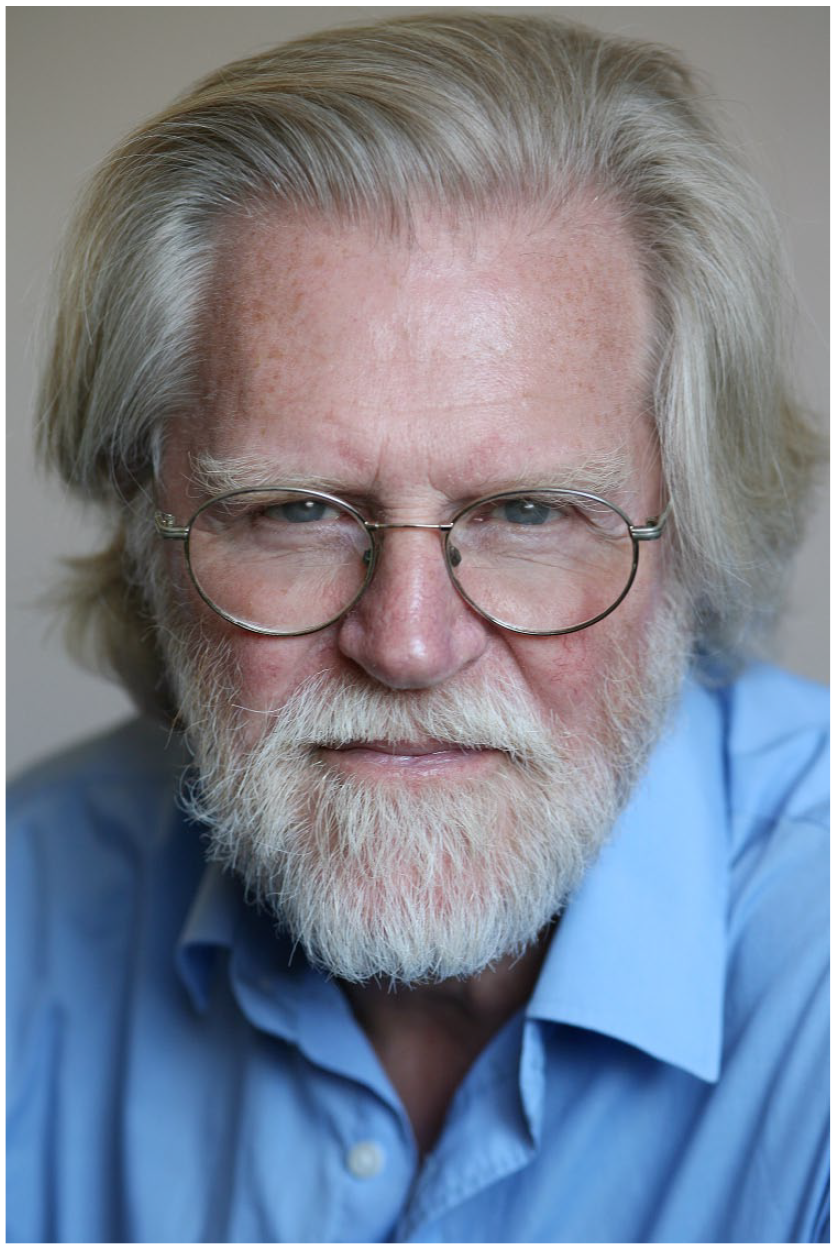
Barry John Kemp 1940–2024 (photo: Andreas Mesli).
Barry gained his first experience of fieldwork in the Nile Valley over the winter of 1962–1963 joining Bryan Emery’s small team excavating the Egyptian fortress of Buhen as part of the UNESCO campaign to Save the Monuments of Nubia. He began a PhD at Liverpool in 1962 but, in the days when a talented recent graduate could move directly into a teaching post, he was invited to apply to be Assistant Lecturer at the University of Cambridge. Despite little field experience, Barry was appointed in 1963 to teach Egyptian archaeology alongside Professor Jack Plumley who had the good sense to see the need for students to understand archaeological approaches to Egyptian material in addition to learning the languages. Barry never finished the PhD, but remained at Cambridge throughout his teaching career. He retired from the university in 2007, although he remained active in fieldwork right up until his death.
Barry is best known for his work as a settlement archaeologist and is particularly associated with the four decades of work he undertook at the New Kingdom city of Amarna (fig. 2). However, his initial work and publications were focused on early Egypt. He was interested in using archaeological approaches rigorously to explore themes that could not be tackled directly through textual sources and this approach worked particularly well for early periods; his early publications cover Hierakonpolis, Abydos and the Early Dynastic royal burials there – focusing on the monumental enclosures and their relationship to the tombs at Umm el-Qaab. He remained very interested in these early periods throughout his life, encouraging several of his PhD students to work on early Egypt, and returning to themes of state formation, royal ideology, and early settlements later in his career.
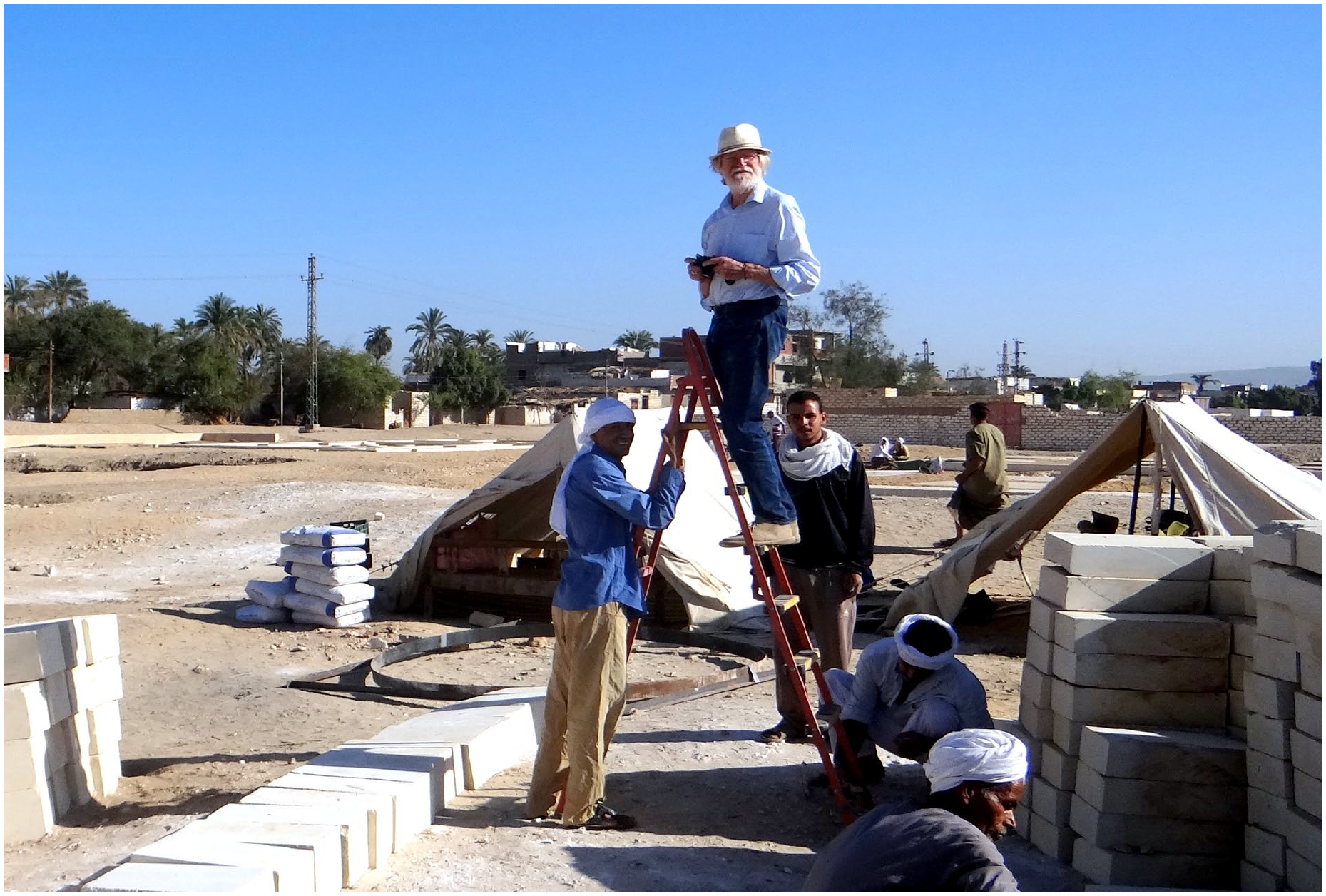
Barry Kemp on site in the Great Aten Temple at Amarna (photo: Juan Friedrichs).
Increasingly, however, he began to see the value of using archaeological evidence to study periods for which textual sources existed, but for which those texts were focused almost exclusively on the values, ideology and experience of the king and elite. Barry was always primarily interested in the lives of ordinary people which are much harder to access through textual and artistic sources. In 1970, Barry took part in Peter Ucko, Ruth Tringham and G. W. Dimbleby’s seminal conference on settlement at UCL, and contributed two papers to the resulting 1972 publication Man, Settlement and Urbanism. Both of these papers had a focus on New Kingdom urbanism with ‘Temple and town in ancient Egypt’ laying out some of the themes that dominated his later work at Amarna, including social organisation, economy, provisioning and the nature of urban society. Barry stated in an interview to mark 40 years of the Amarna Project 2 that this was the first time he had looked seriously at the site and recognised its significant potential.
Barry gained additional field experience in the early 1970s working with David O’Connor on the Pennsylvania-Yale expedition to Abydos and, when access to Abydos was restricted during and after the 1967 war between Egypt and Israel, he and David O’Connor conducted a few seasons of excavation at Malkata, particularly in the area around the Birket Habu. This work provided significant experience on a site very close in time to Amarna and with similar conditions archaeologically. Sadly, much of this work remains unpublished, although Barry was still working up material from these excavations at the time of his death. He also found time to work with Robert Merrillees on a major publication of Minoan pottery in second millennium Egypt, a study that reinforced Barry’s interests in economy, trade and the evidence for contact between societies.
When political conditions in Egypt stabilised and access to Middle Egypt again became possible, Barry asked the Egypt Exploration Society for their support in applying to re-open excavations at Amarna and, with permission from the then Egyptian Antiquities Organisation, he began survey work at the site in 1977. He initiated excavations in the Workmen’s Village in 1979 which continued until 1986. The following year, Barry started work in the southern part of the Main City with the aim of providing comparative evidence for the results achieved in the Workmen’s Village, but this was interrupted by what was essentially a rescue excavation at the Amarna Period and early Christian site of Kom el-Nana (south Amarna) from 1988. Parallel to this, work had started in the Central City in 1987, involving re-recording and consolidation of previously excavated monumental structures, beginning in the Small Aten Temple; this heritage and conservation-focused work later moved to the North Palace. The 2000s were very productive, with Barry collaborating closely with Anna Stevens on a range of projects: it saw a return to domestic architecture in the city with the re-investigation of the House of Ranefer and excavation of nearby smaller houses (Grid 12), and the discovery of large cemeteries of ordinary people located in the desert wadis. Over the last decade of his life, Barry focused his excavations and consolidation work on the Great Aten Temple, which has been under constant threat of encroachment from the nearby village cemetery.
Barry’s archaeological approaches were rooted in the ‘New’ or processual archaeology of the 1960s–1970s, approaches which were well embedded in Cambridge Archaeology at the time. At Amarna, the focus was on professionalising archaeological practice, trialling new methods of recording and analysis, and establishing which methods would give the best results for analysing life at the site. He was keen to establish what he referred to in the title of one of his courses at Cambridge as the ‘Framework for living’ or how life in the city actually worked: what people ate, how they interacted with each other, the extent of state control and how economies functioned at household and state level. Opportunities for scientific analysis, which was central to much processual archaeology, were exciting at Amarna on account of the level of organic preservation, and Barry recruited early team members to work on archaeobotanical and soil analyses, as well as with animal bone, ceramics and artefacts. He brought in professional archaeologists and experimented with single context recording as he moved to professionalise work at the site. He did not follow the usual tradition in British Egyptology of employing Quftis to manage the workforce and labour on site, preferring instead to work closely with local people from the villages around Amarna. He was interested in site management and conservation (overseen by Surésh Dharghalkar), and, with Michael Mallinson, developed plans for a site Visitor Centre, which opened in 2016.
Barry was particularly keen on studies of production, technology and trade, and a number of research projects and PhDs were built entirely or in part around material from the site; he was very welcoming of those with skills and interests who wished to work on the material remains. Projects included those on pottery and faience production (Paul Nicholson, Pamela Rose, Jane Faiers), baking and brewing (Delwen Samuel), weaving (Gillian Vogelsang-Eastwood), basketry (Willeke Wendrich), charcoal (Rainer Gerisch), resins (Margaret Serpico), wall paintings (Fran Weatherhead, Gillian Pyke), sculpture (Kristin Thompson, Marsha Hill), and high-fired industries (Mark Eccleston and Anna Hodgkinson). Significant broader work has been undertaken on human remains (Jerry Rose, Gretchen Dabbs) and environmental history, including projects on archaeobotanical remains (Alan Clapham, Wendy Smith, Chris Stevens), animal bones (Howard Hecker, Rosemary Luff) and insect remains (Eva Panagiotakopulu), on to name but a few.
Spatial analysis at both large and small scales was central to Barry’s thinking, and he supported large scale surveys of the site by Sal Garfi and later Helen Fenwick, embracing new technologies as they became available. With Gwil Owen he experimented with aerial photography using kites, balloons and a scaffolding tower. He cared deeply about the quality of images for both recording and publication purposes and inked most of the site plans and maps himself, moving from pen and ink in the early days to coloured excavation plans created in Adobe Illustrator over the last couple of decades. He also drew the majority of the illustrations for his books himself, finding that putting together images helped to frame his ideas.
He was very committed to the publication of archaeological work. Initially he focused on a series of preliminary reports, published by the Egypt Exploration Society as Amarna Reports I–VI between 1984 and 1995. Later, he decided that time was better spent working directly towards final publications, and this has been the route taken with archaeological projects at Amarna over the past two decades. The quality and consistency of the work and the published output from Amarna is impressive. Some of his collaborators found his editing rather heavy handed in earlier publications as he tried to maintain consistency across volumes, but in later years the variety of outputs gave more scope for different approaches and opinions.
Barry’s first 30 years of work at Amarna was largely funded by the Egypt Exploration Society which received an annual block grant from the British Academy for fieldwork and other projects. This funding was withdrawn by the British Academy in 2009, leaving all EES excavations on a very precarious financial footing. The announcement of this was made shortly before Barry’s retirement, restricting his ability to apply for institutional funding. Recognising the need for rapid fundraising, Barry established the Amarna Trust to raise funds for the Amarna Project, from this point formally run through the McDonald Institute for Archaeological Research at the University of Cambridge. Barry established an Amarna Project website to disseminate work online, and began publishing a newsletter Horizon which was sent out to funders and other interested parties. For someone who was not particularly comfortable in the company of strangers, Barry became an adept fundraiser, regularly travelling to the United States and elsewhere to raise money through lecturing.
The most accessible summary of Barry’s work at Amarna is provided by his 2012 book, The City of Akhenaten and Nefertiti: Amarna and its People. Aimed at a popular as well as a scholarly audience, the book sums up and contextualizes the broad results of the Amarna excavations, demonstrating how the project broke new ground methodologically and how considerable information can be retrieved with careful excavation, recording and analysis. It also shows the breadth and depth of Barry’s thinking on all aspects of the site, moving beyond the scope of his own archaeological work and covering the historical and religious context of Akhenaten’s reign.
Barry was far more than a talented and resourceful field archaeologist. He was a close observer of human behaviour and a deep thinker whose interests ranged broadly across Egypt and its neighbours from the Predynastic to the Late Period. His early interests and influences were broad. He liked Emery’s work on architecture, and Barry’s early illustrations and archaeological drawings show that influence clearly (however, he thought less of Emery’s photographic skills and always aimed to work with good professional photographers when he could). Harry James’ work on ordinary Egyptians impressed him and he often said that he wished Harry had published more. At Cambridge he was influenced by the early spatial thinking of Roland Fletcher, the economic work of Moses Finlay, and the processual archaeologists and scientists of the Archaeology Department. He read widely, much of it outside Egyptology, and had a deep interest in social history. He co-authored Ancient Egypt: A Social History (1983) with Bruce Trigger, David O’Connor and Alan Lloyd and his chapter in that volume ‘Old Kingdom, Middle Kingdom and Second Intermediate Period c. 2686-1552 BC’ remains a starting point for research on these periods.
Barry’s most influential publication is without a doubt his Ancient Egypt: Anatomy of a Civilization, first published by Routledge in 1989. In the volume, Barry laid out his thinking on how the Egyptian state came into being, through nucleation into a set of ‘proto-kingdoms’ that competed until the kings buried at Abydos emerged as sole rulers; he explored how the state operated and maintained power, including coverage of ideology and what he called ‘the myth of the state’. He tackled urbanism, economy and the relationship between ordinary people and the state, drawing on Amarna as a case study to elucidate the relationship between all the elements he had explored. The interpretation was grounded in careful holistic analysis of source materials and provided an exciting and totally fresh approach to ancient Egypt. Barry’s ability to move between scales, working from historical patterns, comparative analysis and contemporary analogy to close reading of individual artefacts, texts or images is assured. It has proved hugely influential within Egyptology and beyond. Barry revised the book twice, in 2005 and 2018, with each revision substantively altering the content of the book as his thinking evolved.
Barry’s most controversial work is that on Egyptian religion, with his later views well summarised in a short biography he wrote for the British Academy’s website: ‘I have come to see that human society is built around inventions of the imagination, which create knowledge at various levels of confirmability, channelled in particular directions by the inbuilt urge of deference and the acceptance of hierarchy. There is no place for ‘religion’ as a separate category of study. Its terms are easily absorbed within the framework of knowledge and deference, to leave a more objective picture of how individuals, singly and collectively, function.’ 3 While many may disagree with his views, the questions he asked about the role of religion, the nature of belief and its penetration into society, as well as the issues his work has raised about what can be known on the basis of the evidence available to us, remain important challenges to much scholarship in this area.
Barry was a talented and inspiring teacher, although he preferred hands on teaching with artefacts and in the field to lecturing. While he took his teaching role seriously, it also took time and kept him away from his research. His solution was to cram as many lectures as he could back-to-back on a Wednesday morning so that teaching did not infringe too much on the rest of his week. He never seemed to have difficulty maintaining focus over such a long stint, although the arrangement certainly proved challenging to those of us who occasionally covered his lecturing, and to his students. His teaching was research led, and ranged widely over topics and sites of interest to him. He loved to teach directly from excavation reports and would load up a library trolley with folio volumes and transfer them by lift to the basement lecture room in the Oriental Studies building (now Asian and Middle Eastern Studies) in which he alone seemed to like teaching, and pore over details of the site plans with variously engaged students. He was a hands-off supervisor to his graduate students, happy to let students develop their work independently as long as the work engaged closely with material culture, was interesting to him and was progressing in a suitable direction. He was non-judgemental, and was quietly kind when things did not go to plan. He was a loyal and supportive mentor and referee to his former students and people who had worked with him at Amarna. He had a wry sense of humour and was easily amused by the absurdities of life.
Cambridge was never a very comfortable environment for Barry. With broadly libertarian leanings he strongly disliked the hierarchical environments of departments, the constraints of university terms and teaching and the high table society of colleges. He did not go to departmental meetings, avoided university politics and rapidly left the college he was invited to join soon after arrival at Cambridge. Later in life he found the McDonald Institute for Archaeological Research a more comfortable environment to work in, and he maintained a loose link with Wolfson College that he appreciated. He was deeply committed to the field of Egyptology and the insights that could be gained by studying Egypt, but was also wary of the Egyptological establishment which, at least early in his career, he had found old fashioned in its thinking and socially narrow. He avoided conferences, which he did not find useful, but he was usually enormously helpful and supportive to those who approached him for information about Amarna or with research-focused questions.
Barry always seemed most relaxed at Amarna, away from the constraints of Cambridge and surrounded by people who shared his archaeological interests and passion for the site. He rebuilt the old German excavation house in the south of the ancient city and expanded it over the years as the size of the team and the number of stored finds increased. Initially very spartan, creature comforts such as a fridge, running water, trays of fizzy drinks and hot showers gradually appeared, despite Barry’s grumbles about how much simpler things had been in the early years. He developed very strong links with some of the local residents of Hagg Qandil, most notably with Mohammed Omar who was the same age as Barry and, with his family, has looked after the excavation house from the beginning of Barry’s work there.
Never one for self-promotion, Barry was awarded a professorship in 2005, only two years before retirement. He was elected a Fellow of the British Academy in 1992, and was appointed CBE in the 2011 New Year’s Honours List, for services to archaeology, education and international relations in Egypt.
Barry was married three times and divorced twice. He is survived by his third wife Miriam Bertram, with whom he found great personal happiness in the last decade of his life. Barry and Miriam were rarely apart, working together at the Amarna Great Aten Temple. He remained close to his second wife, Corinne, throughout his later years. He had three daughters: Nickie and Vicky with his first wife, Veronica, and Frances with Corinne. He had three granddaughters and one great-granddaughter. Although he was away for long periods on fieldwork, and on retirement spent most of his time in Cairo and Köln, he was very proud of all his children and loved visiting and spending time with them. He and Miriam returned regularly to the UK to spend time with family in Devon or in a rented cottage on the outskirts of Cambridge. It was on a trip home for his birthday that he sadly passed away on 15 May 2024. He leaves an extraordinary legacy as an educator and archaeologist, as well as through his publications and the ongoing work at Amarna.
Footnotes
1.
I thank Corinne Duhig, Pamela Rose and Claudia Näser for their comments on a draft of this text, and am grateful to some of Barry’s students for their insights on working with him across his teaching career. I thank Miriam Bertram for her help in sourcing images. Any errors or oversights remain my own.
