




Abstract
Introduction
In today's academic world, higher education students from all study areas are expected to simultaneously cope with a variety of assignments, which increases stress levels. This tension may affect productivity, health and quality of life. Hence, it is important for students to adopt effective time organization and management techniques. This study aims to characterize time organization and participation dimensions, and the relationships between those dimensions among undergraduate students.
Method
The research sample consisted of 60 undergraduate students who completed several questionnaires: demographic, time organization and participation scales assessing daily time organization; an occupational questionnaire; and additional questions for assessing further daily participation dimensions that are unique to students.
Results
Time-organization ability related to and maintained a predictive relationship with individual daily participation aspects. Particularly, academic and daily routine constituted a majority (44%) of the students' time. Regression analysis indicated that the way the students' daily activities were organized in terms of time use explained between 12% and 18% of the variance of daily participation dimensions as performance, enjoyment and motivation levels.
Conclusion
Time-organization abilities significantly affected students' participation dimensions. Further research is recommended to help develop an assessment and intervention programme suiting student needs and enhancing their productivity potential and wellbeing.
Keywords
Introduction
Academic success fulfils a very important role for people in western society (Wayne, 2007; Yang, 2011). Through years of schooling, students are required to meet complex schedules and, therefore, can face difficulties organizing their time and effectively managing the various activities in which they engage (Britton and Tesser, 1991). The term time organization portrays the self-management aspect of coping with a multitude of goals under time limitations (Claessens et al., 2009). Thus, a significant part of the student's role is the ability to organize and manage the time required for academic performance and active participation in various life activities and tasks (Heiman and Kariv, 2004). A student who does not adopt effective learning and time-organization techniques is disposed to tension resulting from academic requirements and is likely to develop a low academic self-image (Broman, 2005; Misra and McKean, 2000). Those difficulties may affect the student's degree of productivity, health and wellbeing, causing a decline in quality of life.
Studies which examined various populations demonstrating difficulties related to time organization also reported problems engaging in significant activities and daily life routines (Pemberton and Cox, 2011; Scanlan et al., 2011). Additionally, a review of occupational therapy studies indicated the need for quantitative research concerning time organization among healthy populations in different life contexts (Hunt and McKay, 2015). Thus, there is an important need for an occupation-oriented assessment of the way in which university students construct their time for activities in general and their academic duties in particular. Such understanding can contribute to fulfilling each student's unique participation potential and enhance life quality (Law et al., 2005; World Health Organization, 2001).
Literature review
Student role and time organization
Committing to an academic programme in order to earn a degree also assumes a new role as a higher education student. A key purpose in performing the college or university student role is to strive for academic achievement. Such achievement fulfils a significant role in western society (Yang, 2011), and people without a standard education level in a given society are likely to find themselves at the bottom of the social hierarchy (Wayne, 2007).
One key skill necessary for university students to fulfil that role successfully is time organization (Gutman et al., 2009). Students are required to cope simultaneously with a variety of courses which each pose different tasks and involve various requirements such as tests, papers and oral presentations (George et al., 2008). In addition, the students' grades are determined based on their ability to provide quality output within defined, pre-determined time limits (Heiman and Kariv, 2004). Another important factor is a student's ability to attend class regularly and on time, which was found by Bijsmans and Schakel (2018) to be a direct determinant of academic performance and has a substantial impact on end-of-year grades.
Time-organization ability is essential for effective, independent engagement in the activities comprising one's life routine (Kielhofner, 2002; Pemberton and Cox, 2011). Organization, defined as an executive function, constitutes part of the meta-cognitive skills, referring to people's ability to sort their thoughts on a proper continuum of work stages and coordinated timing (Katz and Hartmann-Maeir, 2005). The term time has been associated with macro- and micro-levels of organizational and managerial behaviour (Bluedorn and Denhardt, 1988). The term time organization portrays an aspect of self-management, including implementing general managerial strategies (such as planning, solving problems, establishing goals, prioritizing and control) to cope with a multitude of tasks under time limits (MacCann et al., 2012).
Literature regarding time management and organization is limited (Claessens et al., 2007). In a comprehensive management and organizational science review conducted 30 years ago, which addressed concepts of time and organization, Bluedorn and Denhardt (1988) concluded that organization was an essential component of life in modern society and, hence, people are compelled to thoroughly explore and understand it. Zuriff (2003) argued that the ability to organize time is the factor students are able to control more than they can other factors in their lives.
Effective time organization has been described as an important aspect of self-awareness of abilities and as part of learning self-regulation processes (MacCann et al., 2012). According to Bidjerano (2005), students who demonstrate effective time-organization behaviour possess a higher degree of self-awareness and can consciously and independently organize, prioritize and calculate their time to correspond with academic requirements. Hence, their learning processes are of a higher quality and do not depend upon the environment but rather upon their inner self-regulation abilities (Yang, 2011). Hence, it is not only the amount of time but also the way it is organized and managed that affects academic success.
Time organization also portrays an aspect of self-management. A methodical review of 32 time-management studies conducted from 1982 to 2004 with various populations positively related time-management behaviours to perceived time control, work satisfaction and health, and negatively to stress level (Claessens et al., 2009). However, the relationship between time management and academic performance was unclear. Those researchers concluded that further studies concerning time management in relation to students' daily activities and academic success were necessary.
Participation and time organization related to student quality of life
Academic work constitutes a significant but not exclusive part of a university student's life. Aside from academic studies, students engage in daily non-academic activities which also require proper prioritizing – for example, hours devoted to work as a source of living or leisure time spent with friends and family (Douglas et al., 2016). Thus, to understand the students' world, one must consider the extent of their participation in the fabric of their lives.
The World Health Organization (2001) defined participation as involvement in life situations. Its International Classification of Functioning, Disability and Health document addressed participation by various functioning areas: learning and knowledge employment, economic tasks, communication, mobility, self-care, family life, interpersonal interactions and so forth. A recent review identified 61 research programmes in occupational therapy studies that addressed the use of time in a functional context, revealing time organization as an ability necessary for effective functioning and participation in the various activities in which a person may engage (Hunt and McKay, 2015). Whereas time shapes a person's daily activity characteristics and performance patterns, doing and occupation shape that person's life continuum and time in the long term (Kielhofner, 2002). Hence, the way in which people organize their time in life in relation to their activities significantly influences their participation in the fabric of their lives and, thus, their satisfaction with and quality of life (Rosenblum, 2012).
Evidence indicates that students' ability to cope with their academic performance and participation in other activities relates to their quality of life. College students are particularly prone to high stress levels, which has significantly increased in the past few years (Broman, 2005). The high stress levels stem from the multitude of requirements to meet academic objectives towards academic degree completion within a defined, limited period and the need to combine those requirements with work and leisure time (Misra and McKean, 2000). Furthermore, stress and ineffective coping strategies negatively influenced quality of sleep and increased the use of addictive substances and risk-taking behaviours (Broman, 2005). Misra and McKean's (2000) research, which included 249 students, examined the relationships between stress-related feelings stemming from academic requirements, time-organization abilities and satisfaction with leisure time. The findings indicated that the stress-related feelings students experienced because of academic requirements strongly and negatively related to time-organization skills. Therefore, students who did not adopt effective learning and time-management techniques were more prone to stress due to the multitude of academic requirements and the need to combine them with work and leisure time (Misra and McKean, 2000).
Researchers believed that a better understanding of the way in which students perceived their time and managed it accordingly would lead academy heads to construct systems more attentive to student needs and facilitate them to reach optimal participation (George et al., 2008). Based on the literature about the importance of time-organization skills in relation to the concept of participation as significant for students' quality of life, there seems a need for further understanding of the relationship between time organization and participation characteristics among university and college students (Sharfi and Rosenblum, 2014).
Method
Study goal
The goal of this study was to characterize time-organization and participation dimensions and the relationships between those dimensions among undergraduate students. Four dimensions of time organization were evaluated using the time organization and participation scale (TOPS) (Rosenblum, 2012), as described in the ‘Outcome measures’ section. Another four participation dimensions were evaluated using the occupational questionnaire (OQ) (Smith et al., 1986) and further questions added by the researchers, in order to detect students’ daily schedule percentage of participation, performance level, enjoyment level and motivation level in the occupation areas of work, daily tasks, leisure, rest, sleep and academic.
Hypotheses
Outcome measures
Study outcomes were measured using the demographic, TOPS and OQ questionnaires and researchers' additional questions.
Demographic information
This questionnaire included multiple-choice questions concerning the student's grade average in the various courses as an academic performance index.
The time organisation and participation scale
This self-report questionnaire assessed individuals' time-organization ability based upon their perceptions of in-home, outside and leisure activities (Rosenblum, 2012). Participants were instructed to complete the questionnaire while comparing their time-organization ability to that of other people in their environment (Rosenblum, 2012). The questionnaire consists of 34 items divided into four parts (dimensions) constituting the categorical measures yielded by the instrument: A: pace of daily task performance (20 items); B: manner in which activities are organized throughout the day (five items); C: frequency of emotional responses following disorganization in time (seven items) and D, divided into D1: difficulty when a change occurs in a familiar routine (one item) and D2: degree of distraction by various stimuli while performing a time-limited task (one item). In Rosenblum's (2012) study, high internal consistency (Cronbach's alpha) was found for all 34 TOPS items (α = 0.88), as well as for all four questionnaire dimensions, ranging from α = 0.88 to α = 0.60. In the current study high internal consistency was also found, ranging from α = 0.78 to α = 0.91.
The occupational questionnaire
This self-report questionnaire targets adolescents and adults and aims to assess individuals' participation in the occupational areas comprising their daily routine and the length of time devoted to them (Smith et al., 1986). The questionnaire was translated into Hebrew in 2009 by Prof. Naomi Katz and Yossi Freier Dror, and the authors obtained permission to use the translated version. Iindividuals complete the questionnaire, in the form of a table referring to 19 waking hours (05:00–24:00), addressing the main area of occupation (work, daily routine, leisure, rest or sleep) in which they were engaged at a given time, relative to their levels of performance, enjoyment and importance of the occupation. The parameter labelled ‘level of importance’ was not used in this study. Participation level (performance, enjoyment) scores ranged from 1 (highest) to 5 (lowest). Questionnaire test–retest reliability yielded significant findings, and the questionnaire was found to be of parallel validity (Scanlan and Bundy, 2011; Smith et al., 1986).
The OQ yielded the following participation dimensions: (a) percentages of total daily hours devoted to each occupation; (b) average participant scores for levels of performance and enjoyment in combined daily areas of occupation, which we termed, respectively, general performance and general enjoyment; and (c) average participant scores for levels of performance and enjoyment in separate occupation areas, which we termed performance, enjoyment or motivation in the relevant occupation area. For example, work performance is the participant's level of performance in the work area of occupation.
Additional questions
In order to supply a more holistic picture about the student's daily schedule, further components were added to the current study in addition to the OQ: students were asked to rate their performance, enjoyment and motivation, also related to waking hours 01:00–05:00 (which are not included in the OQ), as well as to their academic area of occupation, which served a key role among students but was missing in the OQ. Furthermore, they were requested to rate their motivation level to perform each given activity from 1 (highest) to 5 (lowest).
The additional questions yielded the following participation dimensions: (a) performance, enjoyment and motivation levels, related to the hours 1am to 5am; (b) percentages of total daily hours devoted to the academic area of occupation; (c) general motivation – average participant's motivation level for all areas of occupation; (d) average participant motivation level for each occupation area.
Students who participated in the research filled in the OQ and additional questions twice, referring to two days (weekends and holidays excluded) within a typical school week throughout the semester. For data calculation, the percentage of time within the day devoted to each occupation area and the average numerical value were calculated based on each of the two questionnaires.
Procedure
Ethics
The study was approved by the Ethics Committee of the Faculty of Social Welfare and Health Studies at the University of Haifa. All participants gave written informed consent to join the study and for their data to be used, after receiving written and oral information on the study.
Data analysis
Demographic variables and variables characterized by the TOPS and participation dimensions were analysed with descriptive statistics. Pearson correlations were applied to analyse data concerning the relationships of the four time-organization (TOPS A–D) and four participation dimensions (OQ and additional questions- participation percentage (1) and performance (2), enjoyment (3) and motivation (4) levels in the occupation areas of work, daily routine, leisure, rest, sleep and academic). Numerical scales of TOPS dimensions were inverse to those of the OQ and motivation level dimensions – thus, the higher participants ranked time-organization dimensions, the more they attributed it to the participation dimension (performance, enjoyment and motivation levels), which manifested in lower numerical scores (negative relationships). To examine the research hypothesis concerning the predictability of time-organization ability (TOPS A–D) for four participation dimensions (OQ and additional questions- participation percentage (1) and performance (2), enjoyment (3) and motivation (4) levels in the occupation areas of work, daily routine, leisure, rest, sleep and academic). we conducted stepwise regression tests.
Results
Sample
Demographic characteristics and areas of study of research participants.
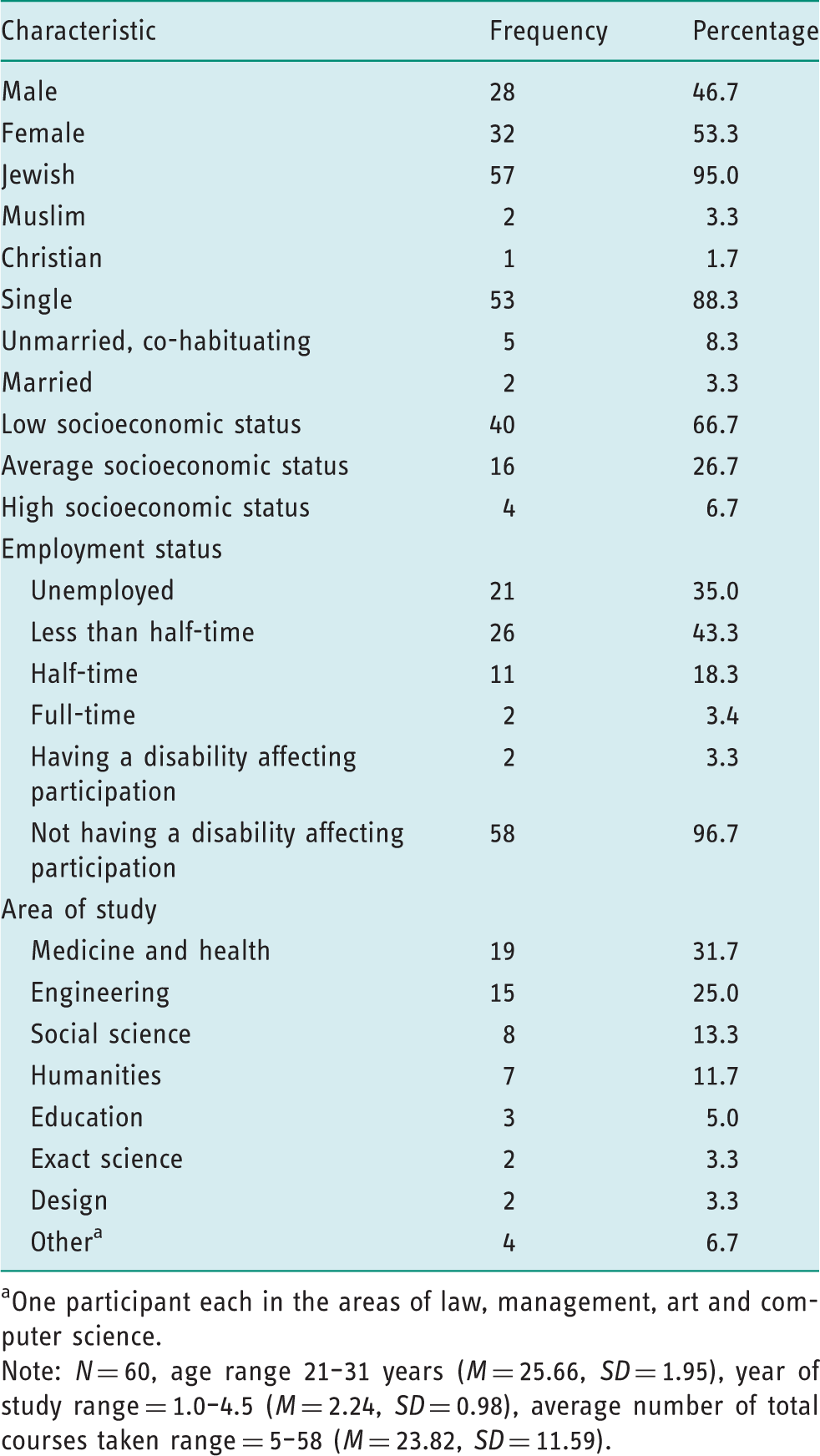
One participant each in the areas of law, management, art and computer science.
Note: N = 60, age range 21–31 years (M = 25.66, SD = 1.95), year of study range = 1.0–4.5 (M = 2.24, SD = 0.98), average number of total courses taken range = 5–58 (M = 23.82, SD = 11.59).
Table 1 indicates that, on average, the participants were in their second year of education (M = 2.24 years; SD = 0.98) with an average load of 23.82 courses (SD = 11.59) taken so far. The areas of study varied widely, with the main areas in medicine and health (31.7%), followed by engineering (25.0%), social science (13.3%) and humanities (11.7%).
Descriptive statistics
Time-organization and participation dimensions
Participant dimensions of organization in time capability scores, measured using the time organization and participation scale (TOPS).

Note: N = 60; α = Cronbach's alpha. Maximum possible response = 5.00.
Participants' time division during the day and the percentage of time devoted to each occupation are portrayed in Figure 1. As shown in the figure, most participants' daily schedules were devoted almost equally to the academic dimension (30.91%) and to sleep (30.88%). Similarly, the rest of the day was spent almost equally in daily routine (13.06%), work (9.47%) and leisure (9.10%), with the least amount of time for rest (6.77%).
Students' percentage of participation in daily activities (occupational questionnaire, waking hours 01:00–05:00, academic area of occupation).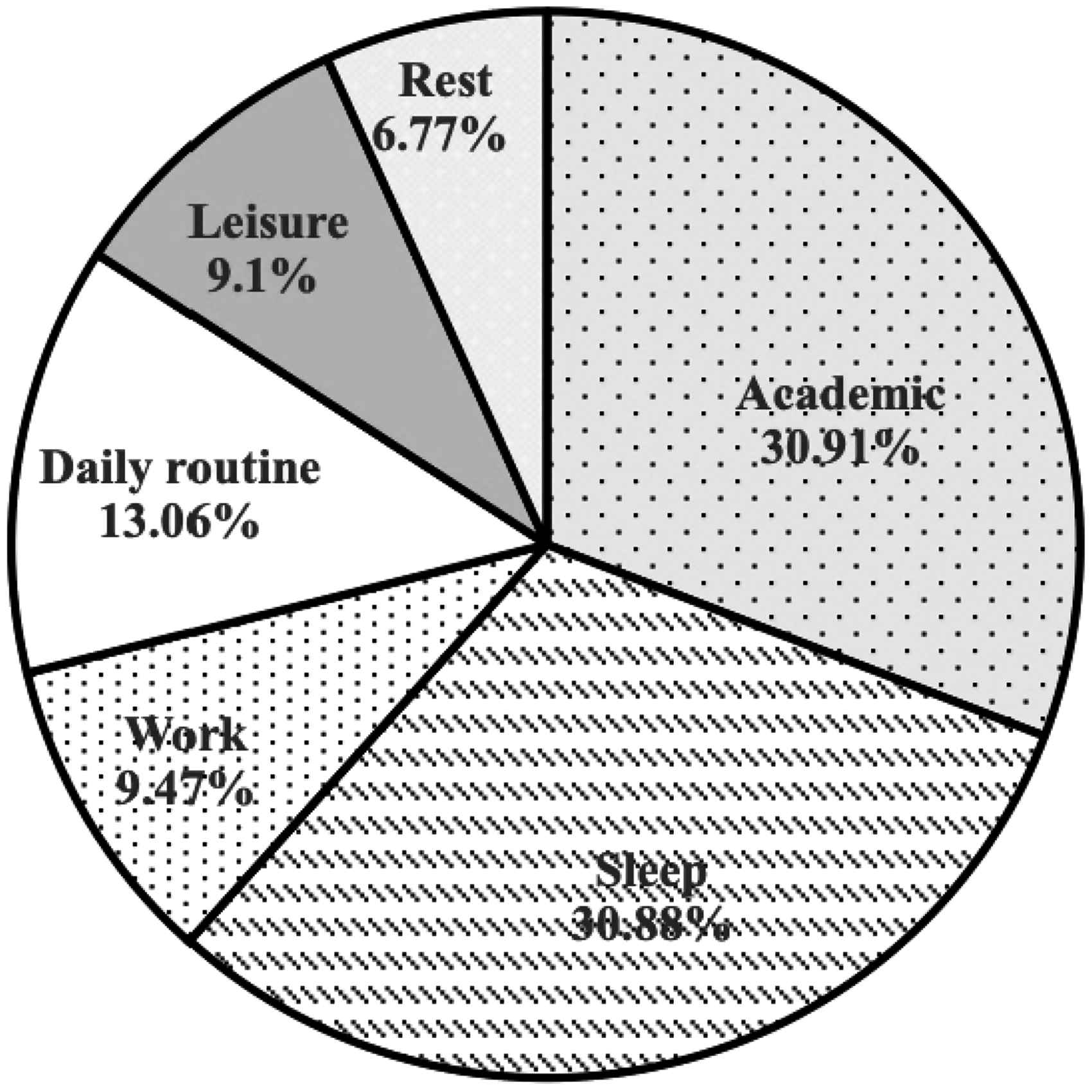
Participants' separate and general participation-dimension scores in occupation areas (occupational questionnaire domains + academic domain and motivation level).
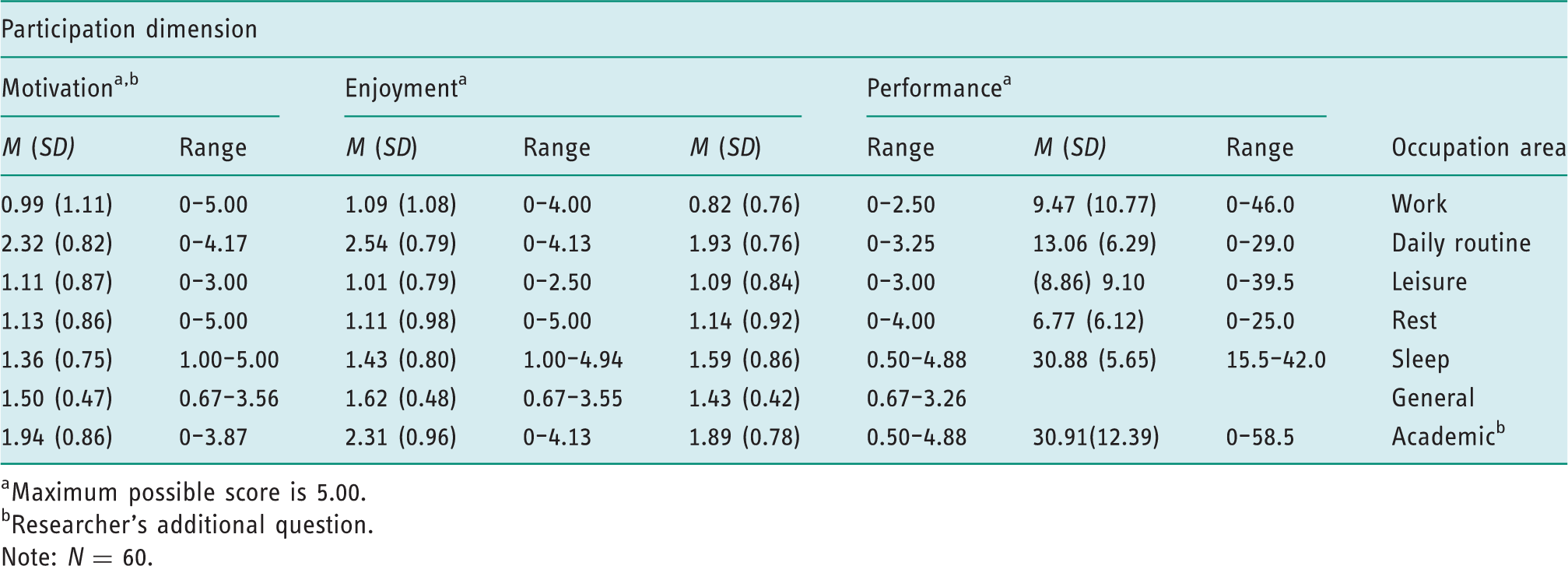
aMaximum possible score is 5.00. bResearcher’s additional question. Note: N = 60.
Relationship of time-organization and participation dimensions
Pearson correlations between the time organization and participation scale (TOPS) domains and participation dimension (occupational questionnaire domains + academic domain and motivation level).

Note: N = 60.
Time expressed as percentage.
bResearcher's additional question.
Perform: performance; Enjoy: enjoyment; Motivat: motivation.
*p < .050; **p < .001.
Predictive relationships of time-organization and participation dimensions
Prediction of participation-dimension scores (occupational questionnaire domains + academic domain and motivation level) by organization in time capability (TOPS).
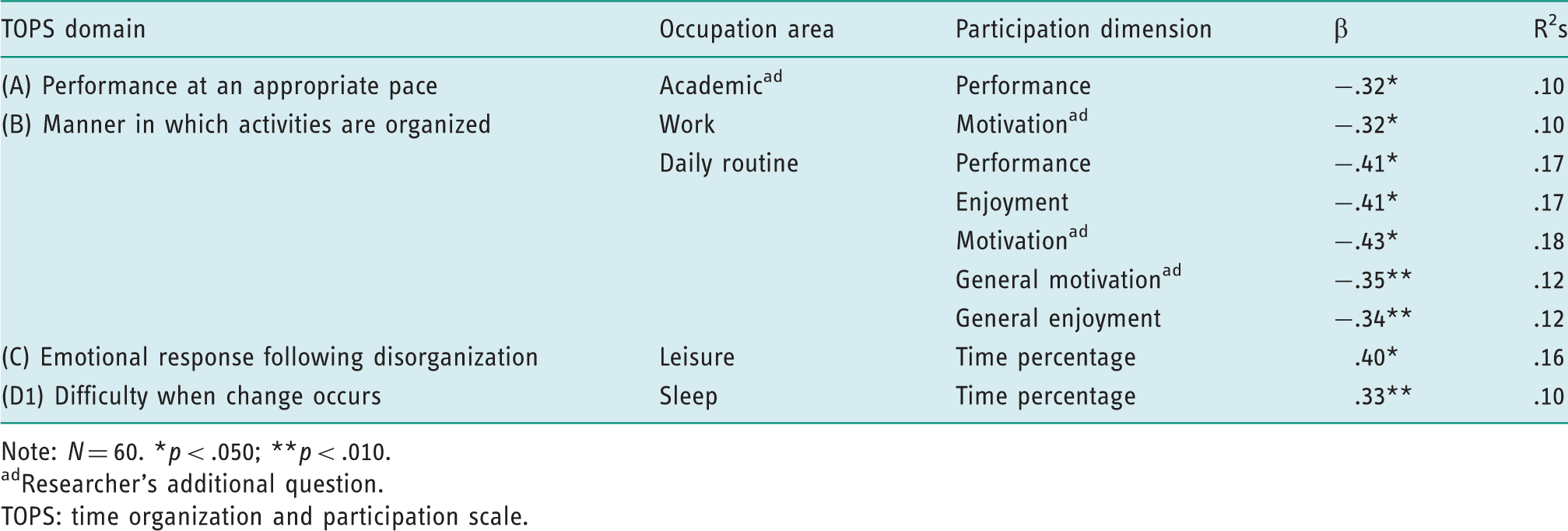
Note: N = 60. *p < .050; **p < .010.
adResearcher's additional question.
TOPS: time organization and participation scale.
Discussion
This study goal was to characterize time-organization ability dimensions and participation dimensions among undergraduate students, as well as to explore relationships between time-organization ability and participation dimensions in the studied population. It was revealed that time-organization abilities as manifested in the scores of four TOPS questionnaire dimensions (Parts A–D) were high among healthy undergraduate students. In addition, most (30.91%) of the students' time was devoted to the academic area of occupation. Thus, this research sample appears characterized by a high daily performance level, and the participants perceived their time-organization abilities as good.
The second and third hypotheses were partially reinforced, revealing significant relationships and predictive relationships between the four time-organization dimensions assessed by the TOPS, and the four participation dimensions assessed by the OQ and researchers' additional questions (related to waking hours 01:00–05:00, academic area of occupation and motivation level). The significant relationships were mainly found in relation to academic and daily routine areas of occupation, which constituted a considerable part (44%) of the participants' daily schedule. Of the participation dimensions the student attributed to themselves, the main dimensions related to time-organization abilities were levels of performance and enjoyment. Only one significant relationship was found between time-organization ability (TOPS B) and participants' motivation level. These findings demonstrated the positive relationship portrayed in the literature between time-organization ability and general levels of participation and feelings of enjoyment and motivation (Pemberton and Cox, 2011). They reinforced the understanding that the way in which individuals organize their time in relation to the occupation in which they choose to participate significantly affects their ability to be involved in the fabric of life (level of performance) and satisfaction (level of enjoyment) and, accordingly, quality of life (Fricke and Unsworth, 2001). The science of occupation maintains that health, in its broad context (physical, mental and psychological), occurs when individuals' resources allow them to achieve their goals and fulfil their needs through independent participation in a significant occupation (Zemke, 2004). The enjoyment and motivation participation dimensions significantly contributed to a sense of wellbeing and satisfaction in occupations significant to the students and corresponded to their physical and mental health (Passmore and French, 2003). Thus, failings related to time use and organization are likely to damage students' health and quality of life (Pemberton and Cox, 2011; Scanlan et al., 2011).
This research revealed significant relationships between emotional response following disorganization (TOPS C) and the percentage of participation in leisure and sleep and level of performance at rest. It also showed a significant relationship between difficulty when a change occurs in a familiar routine (TOPS D1) and percentage of participation in sleep. The relationship between emotional responses pertaining to task performance at an appropriate pace related mostly to the leisure, rest and sleep areas of occupation. An American College Health Association (2007) survey conducted among more than 16,000 students revealed that 33.7% reported that stress negatively affected their academic performance, sleep quality, use of addictive substances and high-risk behaviours. Studies that examined relationships between time management, academic performance and stress indicated that students who perceived their time-management control as high reported less burden and stress in their lives (Macan et al., 1990). That research may assist in understanding this study's findings. It may be assumed that time-control levels will be higher when emotional response frequency to time disorganization is lower (that is, fewer responses of anger, frustration and so on). Accordingly, students would experience less burden and stress. On that basis, as revealed by this research, when students experience less stress and burden (because their emotional responses to time disorganization are minor), they sleep less and find and set aside more time to participate in leisure activities and develop leisure hours. In addition, as shown in this study's results, their level of performance at rest is higher. This current study's identification of daily participation change related to emotional response following difficulties in time organization has a particular importance in light of previous findings, indicating significant relationships between stress and students' health level, and hence their life quality (Broman, 2005; Lazrovitz, 2007).
Findings related to the second and third hypotheses indicate that time-organization dimensions bear a relationship, even a predictive relationship, with the participation dimensions in a variety of occupation areas comprising students' daily life routines. Thus, the findings not only reinforce the relationships reviewed in the literature between time organization and students' participation in their education (Balduf, 2009; George et al., 2008), but also broaden the consideration of time organization as a key component of all areas of occupation comprising students' daily life routines. This broad vision is necessary for understanding the student population worldwide, which tends to integrate work and leisure with the academic area of occupation (Douglas et al., 2016).
In their review addressing use and knowledge of the concept of time, Pemberton and Cox (2011) argued that, on its own, knowledge concerning the way in which people used their time was insufficient. Instead, it was important that assessment processes include time-management and time-organization strategies among all areas of individuals' occupations to attain a more thorough understanding of their world. The researchers concluded that service providers tended to guide clients to withstand western society's rapid productive pace. Thus, it is necessary to adopt an approach that encourages balance and harmony between the ‘productive’ areas of occupation, such as work, and the recreation and leisure areas in the client's world (Pemberton and Cox, 2011). This study's findings reinforce the need to adopt such an approach. Shaping assessment and intervention processes pertaining to time organization should not be channelled solely towards enhancing performance and output in the academic area in particular. Rather, assessment of the daily life routine as a whole, striving to bring harmony to its parts, is necessary.
Theoretical implications and future research direction
This research is the first of its kind. Accordingly, further research is necessary to expand knowledge regarding the perceived time-organization ability of the student population, as well as other populations, and its effect on their extent of participation in the areas of occupation comprising their lives. This study's findings indicate that time-organization dimensions relate to and interact with occupation areas other than academic pursuits, such as work, rest, leisure and sleep. Therefore, future research attempting to examine the relationships between time organization and the time students devote to studying should consider both the effects of participation as a whole and the time devoted to other occupation areas comprising their daily routines. Additionally, future research should explore other organizational and functional dimensions, such as strategies and patterns of daily organization. Understanding that time-organization abilities relate to and even affect daily life routine in a variety of occupational areas can promote more thorough assessment processes in the student world. It could also help develop an intervention programme suiting student needs and facilitating an optimal degree of productivity, as well as level of wellbeing.
Practical implications for occupational therapy
The findings indicate a need to develop assessment and intervention models emphasizing functioning and participation levels in student guidance centres at higher education institutes. Accordingly, occupational therapy professionals who specialize in assessment and treatment from a functional viewpoint (Yalon-Chamovitz et al., 2006) should serve as consultants during model development and application. Furthermore, we recommend increasing awareness among lecturers and counsellors in higher education institutions, enabling them to assist and guide students to relevant treatment facilitators such as occupational therapists.
The results also indicate a need to construct treatment goals and plans based on student perceptions concerning time organization, routines, habits and performance patterns gathered using the TOPS. We recommend developing a comprehensive functioning and participation profile of the student's daily routine, emphasizing all occupation areas that comprise the routine rather than focusing only on academic occupation areas. For that purpose, the OQ, as implemented in this study, provides functional information on students' participation dimensions within a measurable period. Additionally, it is recommended to add waking hours of 01:00–05:00, academic area of occupation and motivation level when assessing higher education, which contribute to the understanding of the student's meaningful participation dimensions during a full day. It is important to examine students' general level of enjoyment and motivation and explain the connection of time organization to those indices that affect satisfaction and quality of life. Additionally, it is necessary to address not only ways in which students construct their daily routines, but also their ability to cope with changes in routine and their emotional responses following difficulty.
Limitations
Sample
This research used a small (N = 60) convenience sample of students, most of whom were single and Jewish. Hence, the research hypotheses should be re-examined with a broader, more heterogeneous and representative sample to generalize the findings to the whole population.
Outcome measures
Three questions were added by the researchers for the current study (related to waking hours 01:00–05:00, academic area of occupation and motivation level) in order to achieve complete information about the student's participation dimensions during a full day. In order to broaden and create in-depth understanding of higher education students' participation dimensions, a modification of the OQ including these indicators is necessary in future studies with higher education students.
Conclusion
One of the main goals of higher education institutions is to ensure that their students will progress through the programmes of study and complete them with maximum success within the established time (Yang, 2011). This study's findings indicate that time-organization abilities are important for students' life management. Hence, the findings call for developing an occupational therapy-oriented assessment and intervention model emphasizing time-organization abilities that will allow student integration into academia while maintaining wellbeing and quality of life.
The interactions identified between time-organization and participation dimensions relate, among others, to occupations of academic, daily routine, rest, sleep and leisure. Hence, shaping assessment and intervention processes concerning time organization should not focus solely on the academic area and enhancing its performance and outputs. Rather, it is necessary to assess the daily routine as a whole, inducing balance and harmony among its parts. It is necessary to form a thorough assessment of the student's unique world and create intervention processes that incorporate overall daily routines.
Key findings
Time-organization dimensions relate to or even predict participation dimensions. There is a need to develop an occupational therapy intervention model related to time organization, which will promote students' wellbeing.
What the study has added
The way students organize their time in relation to the occupations in which they choose to participate significantly influences their satisfaction and, subsequently, their wellbeing, health and quality of life.
Footnotes
Acknowledgements
The authors wish to thank the students who participated in this study.
Research ethics
Ethical approval was obtained from the Ethics Committee of the Faculty of Social Welfare and Health Studies at the University of Haifa (2011, Reference number 111/11).
Consent
After receiving written and oral information on the study, all participants provided written informed consent to join the study and for their data to be used.
Declaration of conflicting interests
The authors declared no potential conflict of interest with respect to the research, authorship and/or publication of this study.
Funding
The authors received no financial support for the research, authorship and/or publication of this study.
Contributorship
Both authors unified the research question, study design and data analyses methods. Merav Porath carried out the data collection, and both authors interpreted the data. Merav Porath wrote the first draft, while both authors reviewed and edited the manuscript and approved the final version.