



Abstract
Introduction
Social inclusion for people with intellectual disabilities includes engagement in the occupations of daily life. Given the focus on people with intellectual disabilities living independently with support, identifying the qualities of their home environments is integral to understanding the possibilities for engagement in occupations of daily life and better quality of life outcomes. In turn, this can inform the types of person-centred supports, such as active support, necessary to enable increased engagement for people with intellectual disabilities.
Method
A case study methodology and mixed methods were utilised to develop an in-depth understanding of the home environments of six people with intellectual disabilities in supported living, and their experience of how these environments impacted their occupational engagement both at home and in their community. Semi-structured interviews and observation of participants’ home environments, using the Residential Environment Impact Survey – Short Form, were completed.
Findings
Participants valued the opportunity to be self-reliant and live in their own homes. They had adequate means to engage in basic daily activities; however, their homes lacked expression of their occupational identity, and they had minimal occupational opportunities and demands, resulting in limited occupational engagement.
Conclusion
For people with intellectual disabilities, it is important to increase opportunities for participation in valued occupations that foster social identities, and to provide adequate environmental supports and demands, to enable sustained occupational engagement and social inclusion.
Keywords
Introduction
People with disabilities have the right to ‘full and effective participation and inclusion in society’ (United Nations, 2006: 5). Social inclusion is about more than being present in the community; it concerns integration, participation, and engagement in mainstream society (Bigby and Fyffe, 2010; Cobigo et al., 2012; Cummins and Lau, 2003; Simplican et al., 2015). In thinking about the social inclusion of people with intellectual disabilities, their own preferences are important, but so too are the community living and participation options afforded them (Bigby and Fyffe, 2010; Cobigo et al., 2012). This article focuses on the opportunities for participation, defined as engagement in daily occupations that one needs and wants to do oneself and to connect with others (Christiansen and Townsend, 2010; Taylor, 2017), which are afforded by the home environments of adults with intellectual disabilities in supported living.
Community living, since de-institutionalisation, generally means that people with intellectual disabilities live in smaller community residences, rather than large, segregated institutions (Felce et al., 2008). It can also mean being enabled to choose where, with whom, and how one lives (Mansell and Beadle-Brown, 2010). This includes supported living options, whereby persons with intellectual disabilities live in accommodation ordinarily available to the general population (privately rented, owned, or public/social housing), and receive individualised support from a service provider to complement available natural supports (Mansell and Beadle-Brown, 2010; Stancliffe and Lakin, 2007). Overall, the outcomes are generally better for people with intellectual disabilities living in smaller community residences than in larger, institutional settings, but are mixed when fully staffed group homes and supported living settings are compared (Kozma et al., 2009; Stancliffe and Keane, 2000). For example, Felce et al. (2008) found no differences on the majority of outcomes explored, except that those in supported living took part in more community activities independently and exercised more choice, but also had more difficulties with money management, compared with those in fully staffed group homes. Stainton et al. (2011) too reported poorer outcomes among people with intellectual disabilities in supported living in terms of access to supports and services, including crisis support, respect from support staff, and health and safety, when compared with those living in group homes and non-family homes with ongoing supports. People with intellectual disabilities in supported living in their study also formed fewer community connections and received less assistance to make connections, but they reported more choice and control in hiring and managing the staff who worked with them (Stainton et al., 2011). So, while some improved outcomes for people with intellectual disabilities in community residences are reported, including in supported living, it does not always lead to improved community integration or participation (Cummins and Lau, 2003; Stancliffe and Lakin, 2007). Further consideration needs to be given to how supports are provided to enable improved outcomes (Felce et al., 2008; Stainton et al., 2011).
An understanding of the person–environment fit is crucial to determining the kinds of supports needed to enable improved outcomes related to community connections and participation. Full participation in society involves engagement in daily occupations that one needs and wants to do, to become who one desires to be, and develop connections in one’s community (Christiansen and Townsend, 2010; Harrison and Sellers, 2008). Participation then is influenced by personal factors, such as motivation and abilities to perform these occupations, but it is also shaped by environmental conditions (physical, social, cultural, economic, and political) that impact the supports and barriers to both enable and limit a person’s choices and means to engage in occupations of daily life (Fisher et al., 2017; Polatajko et al., 2007; Taylor, 2017). Hence, the qualities of people’s home environments are integral to understanding their possibilities for engagement in occupations of daily life. In turn, this helps to inform the types of person-centred supports necessary to enable increased engagement for people with disabilities, such as active support (Mansell and Beadle-Brown, 2012). Research into the environments in which people with an intellectual disability live has generally been at a macro level, comparing different types of accommodation or support practices, and has seldom explored the home environments of those in supported living. This study aimed to describe the characteristics or qualities of the home environments of six people with intellectual disabilities in supported living, whilst also exploring their experiences of how their living environments impacted their occupational engagement.
Method
Research design
This study used a case study design, being ‘an empirical inquiry that investigates a contemporary phenomenon (the “case”) in depth and within its real world context’ (Yin, 2014: 16). A collective case study, as used in this study, involves multiple individual cases being explored to gain insight into certain populations, phenomena, or conditions, enhancing the generalisability and external validity of the findings (Merriam, 2009; Yin, 2014). This approach enabled the living situations of six people with intellectual disabilities to be individually studied as well as examined collectively with regard to how their living environment impacted their occupational engagement. Mixed methods allowed the collection and analysis of both quantitative and qualitative data, and the development of a better understanding than possible using either approach alone (Creswell and Plano Clark, 2007). More specifically, the current study used a concurrent triangulation design to directly compare and contrast quantitative and qualitative results and to illuminate quantitative results with qualitative data (Creswell, 2009; Creswell and Plano Clark, 2007).
Ethical approval was obtained from La Trobe University Human Ethics Committee prior to commencement of the study.
Participants
This case study was part of a larger study (Bigby et al., 2016, 2017), which aimed to advance knowledge about the type of support arrangements and social contexts that optimise the success of supported living arrangements and quality of life for people with intellectual disability. All potential participants had met the inclusion criteria for the larger study, which included: identifying as having an intellectual disability; being registered for and in receipt of disability services in Victoria, Australia; and in a supported living situation, either alone or with up to three other people, where provision of accommodation and support were separate. A purposive sampling method was used to identify six participants from the larger study for inclusion in this case study, using the following additional criteria:
at least one participant from each support organisation involved in the larger study to represent different combinations of support arrangements, individuals considered to be in successful living situations, and in more difficult living situations, participants of differing genders and ages, ability to participate in interviews verbally or using a communication aid.
Table 1 provides a sociodemographic description of the six participants, using pseudonyms, who met these criteria and agreed to participate in the case study. All participants provided informed written consent. Participants were aged between 24 and 58 years of age; all received the Disability Support Pension; two participants (Max and Sam) received additional income from paid employment.
Participant information.
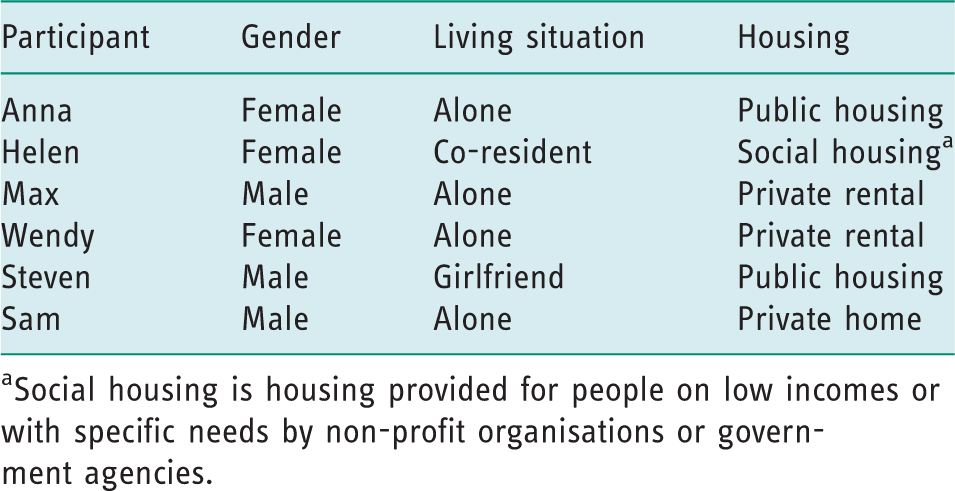
aSocial housing is housing provided for people on low incomes or with specific needs by non-profit organisations or government agencies.
Data collection
Two data collection methods were used: a semi-structured interview with each participant, and observation of their home environments using the Residential Environment Impact Survey – Short Form (REIS-SF) (Parkinson et al., 2011).
Semi-structured interview
The semi-structured interview focused on the following topics: participants’ experience of their homes (previous and current), their engagement in daily activities and other occupations, and their experiences of support through social services. Examples of questions include: ‘how does this place you are living in compare with previous places?’; ‘do you feel like you can make decisions and choices in your life?’; ‘do you feel that you are independent?’; and ‘can you describe a usual day for me?’ The questions were designed to ensure focused responses, but also to enable participants to share their views in their own words. Interviews were conducted in environments familiar to participants, being their homes, except for Sam, who was interviewed at his support service. To support participant engagement in the interview, distractions were minimised; the interview was conducted at a pace to suit them, with regular breaks taken; and communication aids were used, including visual aids and an iPad for someone who had reduced verbal skills (Cambridge and Forrester-Jones, 2003; Perry, 2004). A support worker was present during one interview. The semi-structured interviews lasted between 30 and 60 minutes and were audio-recorded, with the participants’ consent, to document responses in their own words and to facilitate subsequent analysis (Liamputtong, 2013).
The REIS-SF
The REIS-SF (Parkinson et al., 2011), used in this study, is a shortened version of the original, non-standardised Residential Environment Impact Survey (REIS) (Version 2.0) (Fisher et al., 2008), which has subsequently been superseded by the Residential Environment Impact Scale (Version 4.0) (Fisher et al., 2014). Development of the REIS and REIS-SF was guided by the theoretical framework of the Model of Human Occupation (Taylor, 2017) due to its recognition that both the environment and volition impact a person’s occupational performance and disability (Parkinson et al., 2011). While the REIS was originally designed to evaluate the impact of the environment in community residential facilities on adults with mild to moderate intellectual disabilities, the shorter version (REIS-SF) was created for use with a wider range of people and living environments, including private homes (Parkinson et al., 2011). The REIS-SF facilitates the gathering of information about 17 features of the environment, organised in four categories: physical space, resources, social support, and opportunities (Parkinson et al., 2011). Information gathered about the physical space relates to the person’s access and use of spaces in their environment, whether there are physical environmental features that cause difficulties, and the person’s perception of the safety and comfort of the environment (Parkinson et al., 2011). Resources includes consideration of whether objects required for occupational engagement are available or not, and whether there are unmet needs due to a lack of resources (Parkinson et al., 2011). Consideration of the social support for people within their homes consists of understanding the types of interactions that occur with support staff and others within the home, the appropriateness of the support provided, and whether there are opportunities for decision-making (Parkinson et al., 2011). Finally, information gathered about opportunities pertains to understanding a person’s current engagement in activities, whether there are other activities they would like to participate in, and potential barriers to participation (Parkinson et al., 2011).
To complete the REIS-SF (Parkinson et al., 2011) in a person’s home, information is gathered using multiple methods, including interviewing the participant and observing the environment. A four-point scale is then used to rate how each feature of the environment meets the person’s individual needs, and the level of support and opportunities provided. As explained in the REIS-SF (Parkinson et al., 2011), a score of 4 identifies the item as a strength with exceptional opportunities and support; 3 identifies appropriate opportunities and support; 2 identifies the need for some improvement based on some limitations in opportunities and support; and 1 identifies the need for major improvement due to limited opportunities and support.
No specific training is required to complete the REIS-SF (Parkinson et al., 2011). Prior to commencing this study, the first author read the assessment manual and associated scoring criteria. To complete the REIS-SF, the first author observed the participant’s home during the interview, documented her observations immediately after the interview was completed, and then scored the REIS-SF, so as to ensure data accuracy (Merriam and Tisdell, 2016). The REIS-SF was not scored for Sam since his home environment was not observed.
Data analysis
Useful data analysis strategies in case study research include descriptive statistics, visual presentations of quantitative measures, and inductive analyses of the qualitative information (DePoy and Gitlin, 2011). Data analysis was initially undertaken for each case, followed by cross-case analysis to enable understanding of the similarities and differences between the cases (Merriam and Tisdell, 2016). The REIS-SF scores were calculated for each participant and converted to a bar graph to assist with comparison between them. An inductive approach was used to analyse the transcribed interviews, whereby data analysis was guided by the categories of the REIS-SF, which identified the primary domains and topics to be investigated as relevant to the study aim (Thomas, 2006). The first author coded the interviews after multiple readings of the interview transcripts, and sections of text containing meaningful, relevant data were then selected and categorised under the four REIS-SF categories, along with evidence of contradictory experiences or different viewpoints (Thomas, 2006). These were discussed with the research team so as to further develop, test, and refine them. Given the use of a concurrent triangulation mixed methods design (Creswell, 2009), data analysis also consisted of comparing and contrasting the quantitative results of the REIS-SF with the qualitative interview data.
Findings
Overall, the findings highlight that participants’ environments generally enabled limited engagement in daily activities at home or in the community. The barriers encountered by participants included minimal social support, limitations of the physical environments of their homes, and little access to resources and opportunities within the environment. The qualitative and quantitative findings are presented using the four headings of the REIS-SF: physical space, resources, social support, and opportunities.
Physical space
Participants were satisfied with their home environments: Sam described his current unit as ‘the best’ place he had lived, while Helen described feeling ‘happy and good’ about her current accommodation. For Max, Steven, and Anna, their current homes provided experiences of independence and safety: Oh, Dad was a bit funny. They wouldn’t let me do things … See, I couldn’t get a job, I couldn’t live by myself, I couldn’t do this and that, being independent … Yeah, I’m happy where I’m living at the moment … I’ll stay here forever in this house if I can. (Max) [It’s] small [current flat]. But it’s better than the last place I lived so … I guess it’s good. I’m not going to leave this place because there’s so much worse places. (Steven) They’re all very well secured. Very nice units. A lot older people than me here … Yeah. And I’m lucky to have this unit … I’m in a safe environment. (Anna)
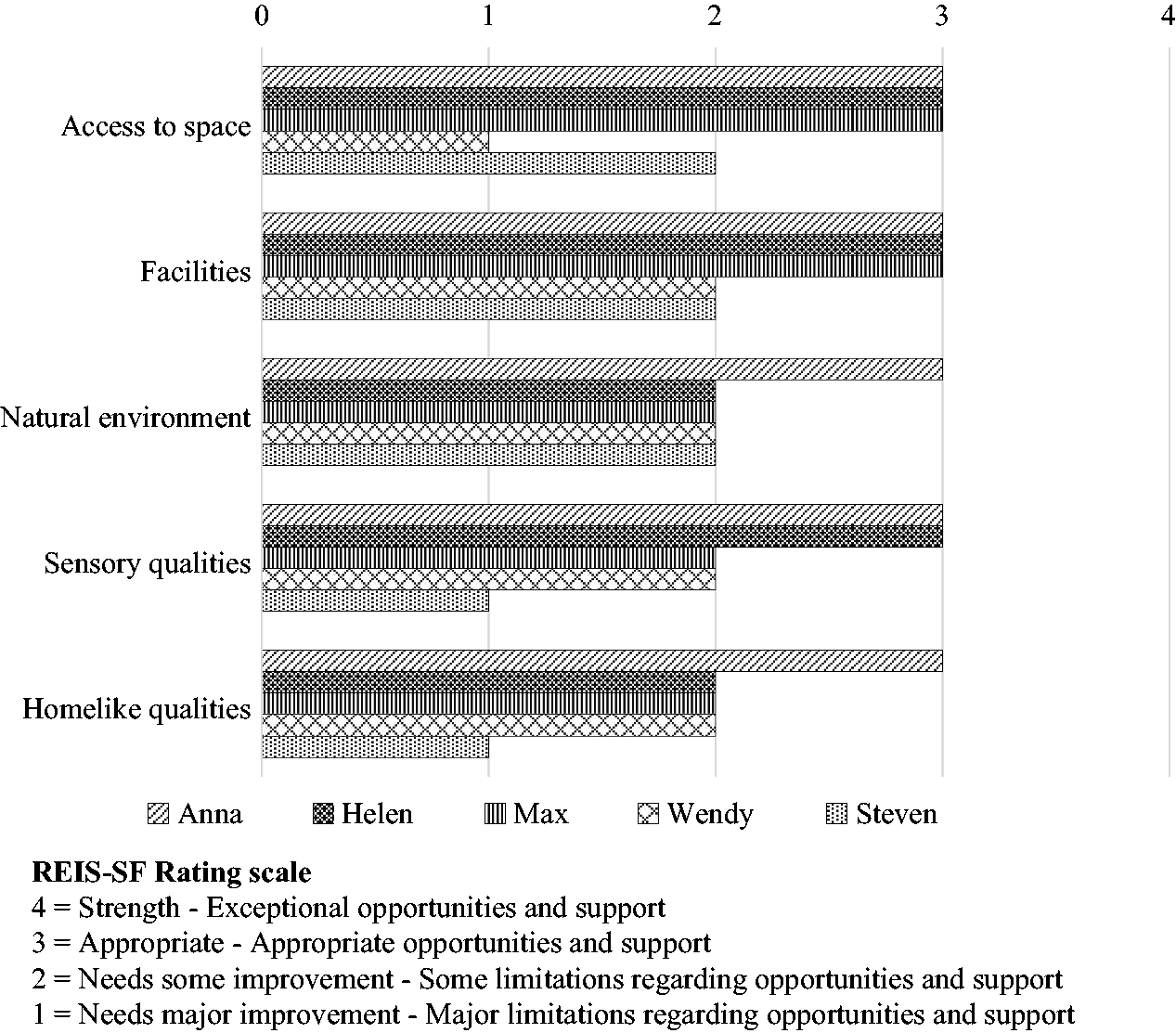
REIS-SF ratings of physical spaces for each participant.
For some participants, the small size of their homes was described as a barrier because it limited the objects that they could have in their space, and contributed to cluttering, as Steven described: Yeah. Well, it’s meant for one person … It’s supposed to be a single bed and one couch and stuff like that but because there’s two of us and stuff …. We got more stuff than we’re supposed to. (Steven)
Regarding their homelike qualities identified as in need of some improvement (Figure 1), most participants’ homes contained worn and mismatched furniture, and few photographs or personalised items. Exceptions were: the small number of photographs in the lounges of Wendy and Anna, who both spent time showing them to the interviewer; and Helen’s home, where she had personalised her bedroom but not other shared areas.
Resources
Participants generally had access to the basic objects necessary to complete their activities of daily living, as presented in Figure 2.
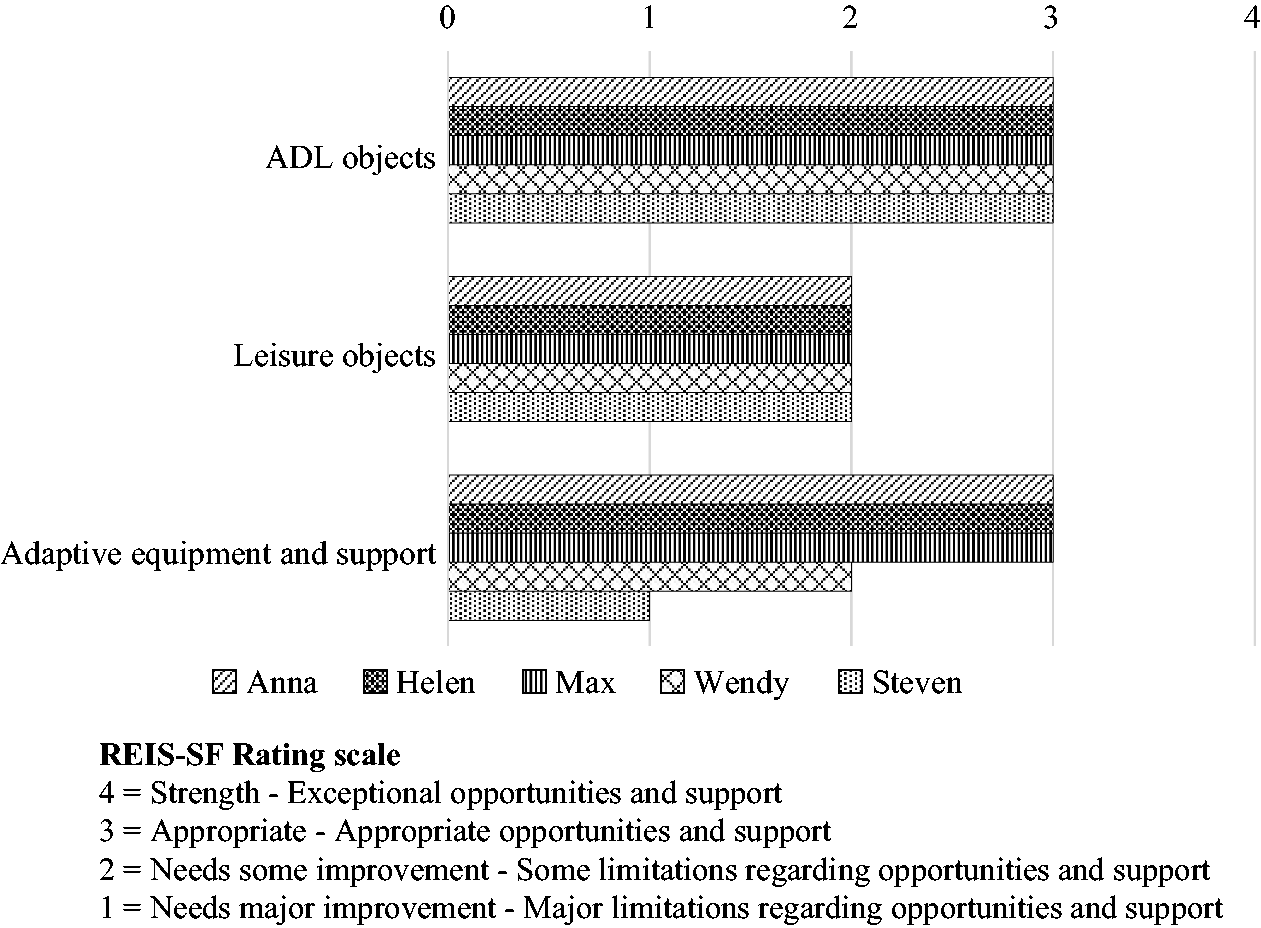
REIS-SF ratings of resources for each participant.
Participants made few comments about access to resources during their interviews, and most were in relation to leisure or communication. While Helen and Wendy both had computers at home, neither used them. Helen’s was not working, and she accessed the internet on her iPad to use social media and communicate with family and friends, and Wendy said about hers: That’s [computer] going … It’s just taking up too much room, that’s why. It’s sitting there not doing nothing, so I’m not even touching it and using it. (Wendy) I’m bored of sitting around and reading books and watching TV and playing X-Box. I’m sick of it. (Steven) Yeah, I’d like a snooker table, I’d like table tennis. (Sam) Because to me things go around in my brain so I can’t think or something else has cropped up … I forget an appointment … I like to not to forget about things though. (Anna)
Social support
All participants had received outreach support, usually on a weekly basis. However, Steven’s support service had recently been withdrawn. Participants’ views of the assistance they received and their interactions with support workers and others suggested their support limited rather than increased opportunities for engagement in daily occupations, as illustrated in mostly low scores for ‘worker/carer interaction’ and ‘peer interaction/interaction with others’ in Figure 3.
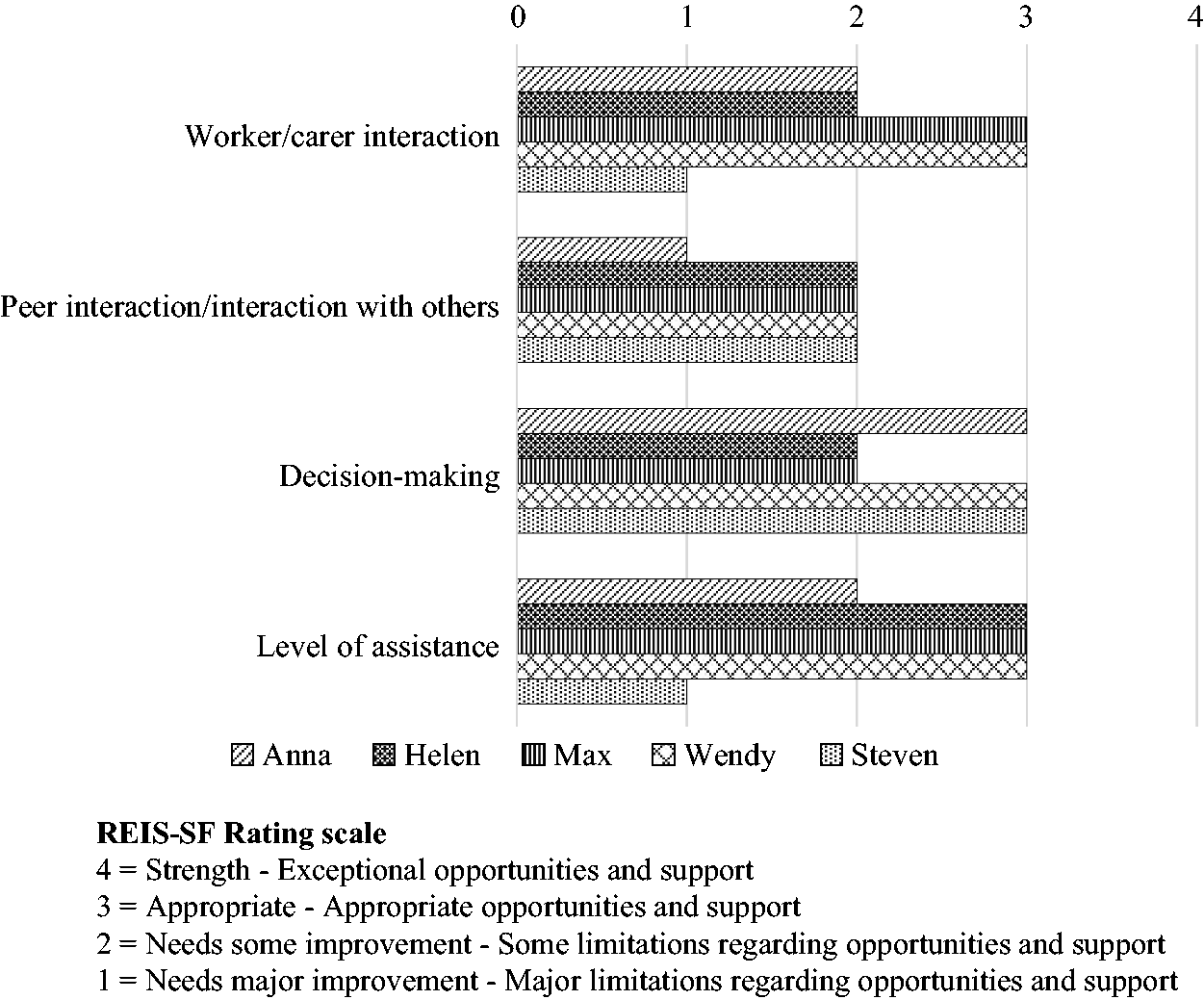
REIS-SF ratings of social support for each participant.
Participants described support workers as supporting them to complete practical tasks (for example shopping, meal preparation, skill development), and checking on their general wellbeing. Mixed scores were evident for ‘level of assistance’ (Figure 3), with some participants continuing to experience difficulties with some daily tasks, and their strategies could leave them vulnerable or less independent: All my worker do he just write down what I need for shopping … Yeah, I tell him … But he’s there [at supermarket] … He tell me what, what I need to get. (Sam) Any mail comes in I just give it to him [support worker], but I have to sign it and give it to him, if the mail comes in. (Wendy) I haven’t got very good reading skills … I take them [mail] over to next door neighbour … I have difficult adding up money … Bought some milk and some bread … No. I wouldn’t know how much change to get back. I have a look at the docket. (Max) See, a lot of support workers they’ve got to listen to you. If they don’t listen to you, they’re not doing their job properly … Yeah, he does [listen] … I rang him this morning about something. He listened to me on the phone, he rang me back. (Max) They [support workers] don’t care … I know that, I tell them I want that, they walk away. (Sam) Sometimes I do [feel lonely]… It’s when all my friends are busy… Some of them work. Some of them are just dealing with emotional things… so that’s when I feel lonely because I got no one to talk to. (Steven) Be nice if I could have a bit of one or two friends … I’d like to have good friends. I like to go somewhere where they can understand what I’m on about or what I’m saying … But they ring up and say, ‘How are you? You alright? Do you need anything? You okay?’ So it’s like if I’m talking to walls, you know what I mean? (Anna)
Opportunities
When exploring participants’ opportunities to engage in occupations and activities, they expressed that being independent and engaging in community activities was important to them. This included engaging in leisure and vocational pursuits. However, the opportunities to engage in these occupations and activities were not necessarily available to them, as shown by the mostly low scores in ‘daily activities’ and ‘community activities’ in Figure 4.
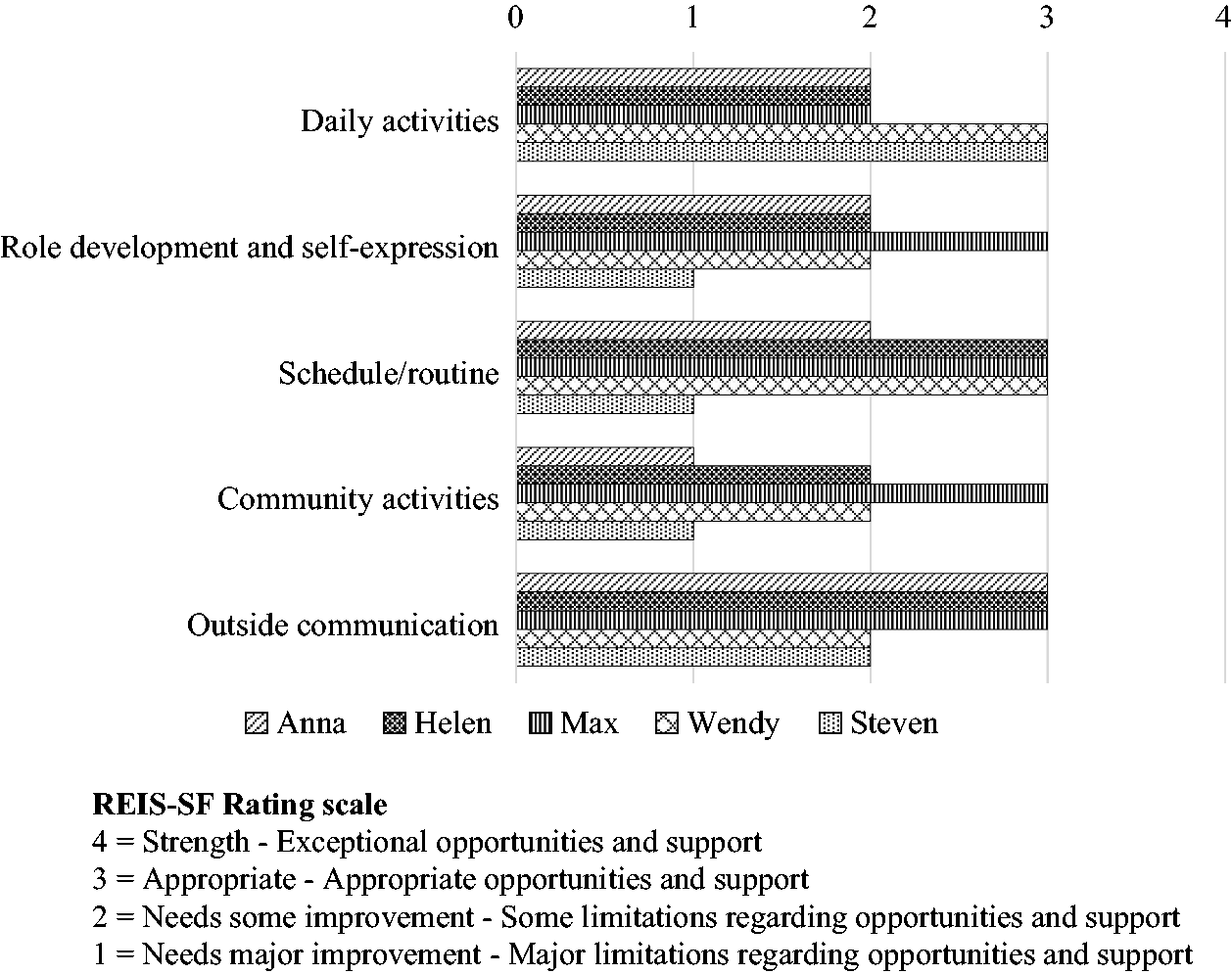
REIS-SF ratings of opportunities for each participant.
Participants valued the opportunity for independence and autonomy in their participation in daily activities and in making their own decisions: Not really [feel independent]. I do and I don’t … Well, I don’t live at home. I’m controlling my own money, stuff like that. [But] I don’t because I don’t really have any money to speak of, and I’m mostly stuck here [home]. (Steven) I think I am independent more. I’ve got power over my own self. I’ve got willpower … I love being independent. You don’t have people saying what to do all the time. You make your own decisions in life. (Max) I don’t want too much [support] though because it’s not going to get me anywhere. I got to be independent, because if I get that too much, I’m not going to be independent. I’d like someone to come in and see how I am. (Anna) I don’t sleep that well … I never really have. And now that I don’t have a job I have no reason to go to sleep or wake up so, no, I don’t have a routine. (Steven) Because at times I don’t think about myself, which I must admit that. Sometimes I don’t have breakfast. Sometimes I don’t have lunch and I sure should have lunch. I sit down a bit more or something like that. (Anna) But since I don’t have a job, I don’t do all those hobbies and stuff. I don’t relax. (Steven) We’ve got the swimming pool here, we’ve got a table tennis court over here, we’ve got everything, we’ve got buses if we want to go to [suburb] for the day. (Max) I’m a volunteer … so help people out … Just help people … I don’t get paid for it. I just help people out, that’s all I do. (Wendy) We work in the office, do the computer, making sure people have got the same rights as everyone else in the community … When I go to work tomorrow morning, I’ll go to bed early. Then I’ve got a good night’s sleep thinking about the morning. (Max) I’ve already made a new friend there [new job] too … On Monday when I saw the worker and they tell me your boss is happy with me … He said I done a good job … Not complain, nothing. (Sam) It’s something I can do but I’m getting really bored … Because my friend’s not there and everyone’s so old, so I got bored. (Steven) Well, my goal is to get a good job. Start up all the things I like to do. (Steven) Probably to get another job would be good in a way. It would be really good to not still working two days a week … Yeah. I already asked them [for more hours] … No. I went down to the employment officer at Disability. They said I not really can work any more hours. I already getting the pension and already working, what I’m doing now. (Max)
Discussion
The overall findings highlight that having their own place to live and being self-reliant were important to participants in this study. More specifically, while some participants identified some negative aspects of their home’s physical environment (such as space and sensory qualities), they highly valued having their own home as it enabled self-reliance, safety, and security. This finding is not so surprising, given that having their own home generally allows an individual control over decisions, freedom to act, security, privacy, and a space for reflection of self (Heywood, 2005; Imrie, 2004). Further, the personal meaning attributed to a particular space contributes to understanding how it informs self-identity (Harrison et al., 2016). Yet, within participants’ homes, there was limited personalisation of the physical space or reflection of themselves in their surroundings, including: few or no photos of family, friends, or places; few objects reflecting their particular interests; and little coordination of decor. This is suggestive of a lack of resources, as well as minimal expression of their identity. In one of the few other studies to consider the homelike qualities of the living environments for people with intellectual disabilities, Felce et al. (2008) found no significant differences between the qualities of fully staffed group homes and semi-independent living situations other than garden space. Given most participants in the current study had previously lived in group residences, they likely had minimal input into personalising their space and consequently may lack knowledge about how to personalise their homes, in addition to having limited financial resources and supports for doing so.
Participants had access to the necessary objects to complete at least some daily activities, despite the limited personalisation of their homes. The objects available within participants’ homes generally enabled engagement in personal and domestic activities of daily living. Further, participants’ access to objects, such as televisions and stereos, supported engagement in passive leisure but few more challenging leisure pursuits. Reflective of the restricted occupational demands within participants’ home environments was their limited access to technology. Two participants owned computers that were not operational, one of whom was also the only user of the internet at home. This is consistent with previous research findings that people with intellectual disabilities do not access technology and the internet to the same degree as others in society due to economic and educational barriers, societal attitudes, and lack of governmental support (Chadwick et al., 2013). It also further excludes people with intellectual disabilities from technology-based means to access information, carry out everyday tasks such as banking and shopping, and form social connections.
Just as participants in the present study received support within their homes, they also received support to engage in occupations within the community. However, the limited social support received by participants likely reduced their ability to engage in a broader variety of occupations, including engaging more in community-based occupations. Participants expressed desires to be self-reliant, to engage in productive occupations such as work, to develop friendships, and to spend more time in community occupations, and yet they experienced underemployment, limited engagement in leisure activities, and loneliness, as reported elsewhere (Gilmore and Cuskelly, 2014; Grant, 2008; Trembath et al., 2010; Verdonschot et al., 2009). Similar to those without disabilities, identity for people with intellectual disabilities commonly reflects the social roles that they occupy and the social relations in which they are engaged (Dorozenko et al., 2015), so that when provided with opportunities to engage in meaningful roles, people with intellectual disabilities are able to develop more positive, included identities (Anderson and Bigby, 2017). While participants spoke about the practical and social support provided by support workers, they seemed to receive little support focused on developing an identity through engagement in valued roles, interests, and occupations, or on how this is expressed within their homes. Enabling people with intellectual disabilities to develop identities grounded in a richer range of occupations and social relations is crucial to improving their social inclusion and participation in the community.
Limitations and implications
Limitations of this case study include its small sample of six people with intellectual disability living in supported living in Victoria, Australia, reducing the generalisability of its findings. Additionally, interviewing people with intellectual disabilities can present some challenges in comprehension and expression, potentially resulting in acquiescence and less reliable responses (Perry, 2004). As outlined in the method, consideration was given to the environment in which the interview occurred, pace of the interview, and use of communication aids, to support participants’ engagement in the interviews. One participant requested that their support worker attend their interview, and whilst this may have impacted the information they shared, it was deemed an appropriate request to have someone familiar accompany them during the interview. Further, triangulation of interview and observational data aimed to limit potential inaccuracy, but it was not possible to undertake member checking with participants so as to gain feedback on the authenticity of the analysis (Merriam and Tisdell, 2016). An additional limitation is that the REIS-SF is a subjective measurement tool and only one author completed the scoring.
This study has provided some preliminary findings about the home environments of people with intellectual disabilities in supported living. It suggests the need for future research to explore how people with intellectual disabilities experience their home environments and engagement in occupations, so as to better understand potential facilitators and barriers to social inclusion. Extended use of the REIS (Fisher et al., 2014) in supported living settings could also inform the design of tailored supports for people with intellectual disabilities. The kinds of support needed to enable people with intellectual disabilities to personalise and enrich their homes and engage in meaningful roles also merit investigation.
From a practice perspective, whether by collaborating directly with people with intellectual disabilities or through a consultative role, occupational therapists must work to increase the range of occupational opportunities available to people with intellectual disabilities to enrich their home lives, and more broadly to achieve their full participation and inclusion in society. This is important in the context of policy changes in Australia, with the introduction of the National Disability Insurance Scheme (NDIS) (National Disability Insurance Scheme Act, 2013). Aligned with promoting their human rights and social inclusion, the NDIS seeks to provide access to high quality and innovative supports that enable people with disabilities to exercise choice and control in pursuing their goals and to facilitate their social and economic participation (National Disability Insurance Scheme Act, 2013). Pivotal to its success will be a support workforce that understands how to actively support people with intellectual disabilities to participate in occupations of daily life. In the context of the NDIS and more broadly within occupational therapy practice, the findings of this study suggest a consulting role for occupational therapists to enhance the capacity of support workers to provide active support focused on enabling people with intellectual disabilities to participate in valued occupations. More specifically, support workers may also benefit from education in how to support people with an intellectual disability to personalise their homes and increase the occupational demands of their home environments to promote more varied and engaging options for participation.
Conclusion
This study aimed to describe the home environments of six people with intellectual disabilities in supported living, whilst exploring their experience of how their living environments impacted their occupational engagement. The opportunity to be self-reliant and to have their own homes was valued by participants. Whilst they had adequate means to engage in basic daily activities, participants’ homes lacked expression of their occupational identity, and had minimal occupational opportunities and demands, resulting in limited occupational engagement. Occupational therapists can support the social inclusion of people with intellectual disabilities through increasing opportunities for participation in valued occupations that foster included identities, as well as adequate supports and demands to enable sustained occupational engagement.
Key findings
The opportunity to be self-reliant and have their own place to live was important for participants. Homes lacked expression of participants’ occupational identities, and afforded minimal occupational opportunities and demands, limiting occupational engagement.
What the study has added
This study has provided an insight into the home environments and occupational engagement of people with intellectual disabilities in supported living. It has identified that occupational therapists could play a key role in increasing the occupational opportunities for people with intellectual disabilities, to support their participation and social inclusion.
Footnotes
Acknowledgements
The authors would like to thank the participants of the study for sharing their experiences and for their time. This study was completed as a partial requirement for the Master of Advanced Occupational Therapy at La Trobe University.
Research ethics
Ethical approval was received from La Trobe University Human Ethics Committee in 2014, reference: HEC13-007 mod 3.
Consent
All participants provided written informed consent to participate in the study.
Declaration of conflicting interests
The authors declared no potential conflicts of interest with respect to the research, authorship, and/or publication of this article.
Funding
The authors disclosed receipt of the following financial support for the research, authorship, and/or publication of this article: This study was funded with assistance from a funding grant offered under the National Disability Research and Development Agenda, jointly implemented by disability representatives from Commonwealth, state, and territory governments. However, the information and views contained in this research are not intended as a statement of the Australian Government or any jurisdictional policy and do not necessarily, or at all, reflect the views held by the Australian Government or jurisdictional government departments.
Contributorship
Danielle Ashley, Ellie Fossey, and Christine Bigby researched literature, applied for ethical approval, and contributed to the development of the data. All authors contributed to the methodology of the project, and the data analysis plan. Danielle Ashley carried out the data collection and analysis, and all authors interpreted the data. Danielle Ashley wrote the first draft of the manuscript. All authors reviewed and edited the manuscript and approved the final version.