




Abstract
As young Indigenous Kichwa men begin working as local tour guides in the small city of Tena in the Ecuadorian Amazon, they go through complex processes of transition and adjustment navigating entanglements of tourists’ expectations, familial obligations, and desires for socioeconomic mobility. For many, there is the additional challenge of emphasizing their Indigenous identities, given the pervasive anti-Indigenous racism to which they are subjected within Ecuadorian society. I argue that work in tourism has provided young Kichwa men with opportunities for self-transformation, at once attractive and fraught with contradictions. On one hand, they have come to perceive their Indigeneity as an asset rather than a liability and are increasingly able to contest long-standing racism at the local level. On the other hand, their urban lifestyles, pursuit of intimate relationships with foreign tourists and sometimes dismissive attitudes towards rural Kichwa people have distanced them socially from the broader Kichwa population. By exploring these complex affective processes, their impacts on local dynamics, and the multiple and often conflicting understandings of Indigeneity that are constantly being produced and negotiated in these spaces, I seek to broaden the scope of scholarly debates on the impact of cultural tourism in Indigenous communities. I also engage with recent scholarship on Indigenous masculinities to discuss the possibilities and limitations of masculinity as a tool of decolonization for Indigenous peoples.
Introduction
When Jimmy
1
was growing up in the late 1990s and early 2000s, he used to dream of becoming a policeman or a military officer, like several of his uncles. He saw and admired the respect and prestige that these occupations commanded. And, unlike other professional occupations, they seemed achievable for a poor, Indigenous Kichwa (also spelled Quichua) boy like himself. Growing up in Tena, a small city of about 23,000 people in the Ecuadorian Amazon, Jimmy was also keenly aware of the hostility of its White/Mestizo
2
residents against Indigenous ones. While nearly half (45.7%) the residents of the city of Tena identify as Indigenous (INEC, 2022), Tena is still perceived as a White/Mestizo space (see Uzendoski, 2003, 2005; Wroblewski, 2021). Majority Kichwa neighborhoods are located either on the outskirts of the city, or in precarious settlements closer to the city center, along the Tena and Pano rivers, which are susceptible to regular floods and landslides. From a very early age, Jimmy had to endure racist insults and attacks: When a Kichwa student walked into a class of Mestizos they would say: Look! Here comes an “indio” [pejorative word directed at Indigenous individuals]. When you were waiting outside for the bus, they would say: Look at that “indio,” and they would spit at you.
Due to the hostile and racist environment in which he grew up, he, like many other Kichwa youth, developed a contentious relationship with his Indigenous identity, and, as a survival mechanism, tried to distance himself from his Kichwa upbringing, be it by refusing to speak the Kichwa language, or by imitating White/Mestizo ways of behaving and relating to others. Most of my Kichwa collaborators in Tena could relate to Jimmy’s experience and many told me that Kichwa families who move into urban settings avoid teaching the Kichwa language to their children, in the belief that assimilation into Mestizo culture will enhance their opportunities for economic and social mobility. It is important to note that most of my Kichwa collaborators were consistent in pointing out to me that racist attacks like the one described by Jimmy are uncommon nowadays, something they attributed to Kichwa people’s prominent role in the tourism industry, a point to which I will return later.
Upon graduating from high school, however, Jimmy found that he could not join the military or afford to enter the police academy. He pursued training programs in first aid and welding, but he was not able to secure steady employment in either field. Eventually, he realized that one of the few employment options left was local tour guide. Dozens of tourism agencies had sprung up throughout the region since the early 1990s, following the international push for “sustainable” forms of development of communities in biodiverse regions (see, for example, West et al., 2006), and native tour guides were in relatively high demand. It was difficult in the beginning, Jimmy confessed, not the least because he was not particularly knowledgeable about the things that (mostly foreign) tourists seemed to be interested in, such as medicinal plants or Kichwa spirituality. It was also hard for him in a more fundamental way: as a tour guide, he was expected to act as a representative of Kichwa people, despite his complicated relationship with Kichwa identity.
When I met Jimmy in the summer of 2018, however, he had been working as a tour guide for nearly twelve years, and his attitude towards his Indigeneity had shifted considerably across the stories he had shared with me from his childhood and early adulthood. He had grown out his hair (a distinctive feature of tour guides but extremely rare among other Kichwa men in this region) and had adopted the nickname “Machakuy” (Kichwa for venomous snakes). He, who once dreamed about becoming a military man, now condemned the military as a colonial tool of the state to submit Indigenous people, and Indigenous men in particular: I have long hair because it is a source of energy, power and manhood. Look at the greatest warriors of history! Look at Achilles, Samson, Hercules. They all had long hair! When the Spanish came, they forced Indigenous men to cut their hair. The military also forces Indigenous men to cut their hair, saying that this is how a man should look. They are supposed to make you into a man, but it’s the opposite, they take away your manhood.
The type of emasculation that Jimmy was alluding to here is related to the constraints placed on Indigenous men by prescriptive forms of masculinity and citizenship promoted by the military. Scholars have convincingly argued that Indigenous men are overrepresented in military service recruitment throughout Latin America, partly due to military service being one of the most effective avenues for Indigenous men to obtain basic citizenship rights. They also point out that the role of the military as envisioned by Latin American governments is not just to make Indigenous men into citizens, but, crucially, to shape them into their ideals of White/Mestizo masculinity and citizenship (Canessa, 2012a; Gill, 1997; Radcliffe, 1999). Canessa (2012a: 220), for example, notes that many Indigenous recruits in Bolivia were forced to change their last names to White/Mestizo-sounding ones, and that they were regularly beaten for speaking Indigenous languages. For Jimmy, cutting off Indigenous men’s hair was seen as another act of domination by the settler colonial state, thus disallowing him to be a man on his own terms.
In this article, I analyze the different processes of negotiation and adaptation that Kichwa tour guides like Jimmy, the vast majority of whom are young men, go through as they transition into service-based work in tourism. I discuss how, through engagements with the demands and expectations of the tourism/ecotourism industry, they produce and enact new and continuously shifting understandings of their ethnic, gendered and sexual identities that seek to challenge their historically marginalized positionalities within Ecuadorian society. A particularly challenging aspect of this self-transformation is working through the complex affects associated with indexing rather than concealing their Indigenous identities. As the stories of Jimmy and others suggest, this is a notable departure from how they related to their Indigeneity in the past. I am interested in what this reorientation may suggest about how emergent forms of subject formation “work to diversify the forms of being indigenous” (Radcliffe, 2018: 437), which speaks to the arguments of scholars like Graham and Penny (2014) that Indigenous cultural performances are themselves productive of Indigeneity and not just expressions of it (2014: 3).
Bunten and Graburn (2018: 2) have analyzed Indigenous tourism though the metaphor of “movement.” They argue that to understand the complex repertoires of meaning that produce and are produced by Indigenous cultural performances in tourism spaces, it is crucial to pay close attention to the flows and entanglements of bodies, ideas, and desires upon which Indigenous tourism (and the tourism industry in general) is built. I find “movement” to be an apt metaphor, not the least because it disrupts one of the most pervasive ideas that many Westerners still associate with Indigenous peoples and cultures: immobility. In this way of thinking, immobility is usually imagined in both literal terms, that is, physically bound in place, and in metaphorical terms, culturally frozen in a time past. Ideas of physical immobility tend to obscure urban or transnational Indigenous peoples and communities, and exacerbate their precarity and vulnerability, by imagining and treating them as “out of place” (for discussions of urban and transnational Indigeneity see Brablec and Canessa, 2023; Briones, 2007; de la Cadena, 2000; Holmes, 2013; Meisch, 1995). Ideas of cultural immobility tend to fix Indigenous people in their radical alterity with sparse attention or awareness as to how contemporary Indigenous identities have emerged through centuries-long processes of struggle with and incorporation into colonial and state productive and biopolitical regimes (scholars like Conklin and Graham, 1995; Fabian, 1983; Li, 2007; have written extensively on this topic). To understand Kichwa tour guides’ production and performances of Indigeneity, and the desires and anxieties that fuel them, it is necessary to discuss the various and sometimes dramatic forms of movement that they experience, and the historical contexts that shape the possibilities and constraints of those movements. Among them: transition into service-based work, relocation to urban centers, desires for socioeconomic mobility, and desires to contest and transcend their marginalized positionalities. My work thus joins scholarship that, in the past two decades, has moved beyond discussions of the impact of Indigenous tourism in terms of cultural destruction (Greenwood, 1989) versus revival (Cohen, 1988; Stronza, 2001), potentially reifying the notion of cultural “authenticity” (see MacCannell, 1999) as an analytical tool. However, I also heed Martin’s (2010) warning that, while authenticity is problematic if discussed in terms of fidelity to the past or to an essentialized form of identity, it would be irresponsible to ignore how authenticity has been deployed as one of the “most powerful ideological weapon[s] of counter-hegemonic movements of marginalised people” (2010: 539).
Tourism has provided other important, though contradictory, opportunities for movement, such as self-transformation as gendered and sexed individuals. Recent studies of shifting Indigenous masculinities around the world have documented that an increasing number of Indigenous men are organizing around the revival of ancestral forms of masculine warriorhood as part of a movement to decolonize Indigenous cultures and masculine identities (see High, 2010, 2015; McKegney, 2021; Tengan, 2008). It has been widely documented that strategies aimed at reaffirming settler colonial masculinity and virility vis-à-vis colonized men were integral to colonial projects (see, for example, Gordon, 1998; Schick, 1999; Stoler, 2002). Colonial constructions of the racial “Other” were systematically articulated through discourses about gender and sexuality (see, for example, Fernandez, 2010; Schick, 1999; Stoler, 1995, 2002; Weismantel, 2001). Tengan (2008), for example, argues that “loss of land, tradition, authenticity, culture, and power stems from the historical experience of colonialism and modernity” (2008: 8) and has “emasculated” native Hawaiian men. High (2010) has noted that young Waorani men in Amazonian Ecuador draw on fantasies about “violent warriors,” embodied by older generations of Waorani men, to construct and perform forms of masculinity that are “increasingly elusive in the communities where they grow up” (2010: 765). Similarly, Kichwa tour guides are reclaiming ancestral forms of Indigenous aesthetics such as long hair, body painting and jaguar fang necklaces to rebel against what they perceive as tools that perpetuate the domination of Indigenous men by White/Mestizos, who impose upon them their ideals of masculinity and citizenship. At the same time, increasing interest and opportunities for intimate relationships with (mostly White) foreign female tourists, have allowed Kichwa tour guides to disrupt long-standing perceptions of Indigenous men as unattractive as sexual partners. As Canessa (2012a: 280) has argued, “given that sexuality and desire have long been central elements in the colonial project […] anticolonial projects will inevitably have sexual as well as racial dimensions.”
Some authors, however, are not as sanguine about the decolonizing potential of these ancestral forms of Indigenous masculinities and sexualities. Indigenous theorist Brendan Hokowhitu (2015), for example, argues that “what we call ‘traditional Indigenous masculinity’ is in actuality a particular masculinity that has developed since colonization; in part, at least, mimicked on dominant forms of invader masculinity” (2015: 87). This has led Hokowhitu and others (see, for example, McKegney, 2021; Innes and Anderson, 2015) to argue that, to the extent that Indigenous men are able to reassert their masculinities by reproducing colonial heteronormative and patriarchal discourses and practices, sometimes to the detriment of female, queer, and gender non-conforming individuals, they will not do much to significantly disrupt the violent structures of domination upon which settler colonial projects depend and thus contribute in a meaningful way to the project of Indigenous liberation (see also Tengan, 2008: 160). I share these preoccupations in relation to my work with Kichwa men in the Ecuadorian Amazon. While Kichwa tour guides have been able to partially contest racist dynamics at the local level, as well as prevalent perceptions of Indigenous men as subservient and unattractive through invocations and embodiments of ancestral warriorhood, the ethnographic data suggests that this has been achieved in part by embodying forms of masculinity and masculine sexuality that reproduce, and sometimes even reinforce, settler heteropatriarchy and thus hegemonic (Connell and Messerschmidt, 2005) ideas and performances of masculine identities. Additionally, these emergent forms of masculinity and sexuality generate friction with many other Kichwa men’s and women’s understandings of appropriate, responsible Kichwa masculinity and sexuality. However, my work with tour guides has also shown that their understandings, aesthetics, and performances in relation to their masculine identities often exceed the hegemonic constraints of settler heteropatriarchy even as they operate within its logic.
Research for this article took place during my doctoral dissertation fieldwork in the Ecuadorian Amazon. I lived in Tena, for 14 months between 2018 and 2019, and I worked as a volunteer translator at a local tour agency, which was owned and staffed by Kichwa individuals. It is also informed by my three prior summers in the region, learning the Kichwa language at a field school that hosted several dozen North American college students.
The research setting and the rise of Indigenous tourism in the Ecuadorian Amazon
Most of my fieldwork took place in and around the small city of Tena (Figure 1), the provincial capital of Napo, which is located approximately 120 miles southeast of Ecuador’s capital city of Quito. According to the 2022 census, 65% of Napo’s population identifies as Indigenous (mainly Kichwa) as do, as mentioned earlier, about 45.7% of Tena’s residents (INEC, 2022). During the colonial period, and well after Ecuador became independent in 1830, this area remained a frontier region with a very scant presence of the Ecuadorian state. However, Upper Napo Kichwa people have a much longer history of interaction with and incorporation into colonial and state systems of production than most other Indigenous groups in the Ecuadorian Amazon, and had a heavy missionary presence since the early 1600s (Muratorio, 1991; Whitten et al., 1976). As a result, Upper Napo Kichwa people were perceived as a reliable and relatively “docile” (see Muratorio, 1991; Uzendoski, 2005) source of labor and thus classified as “mansos” (roughly, tame), in opposition to “Auca” (savage, uncivilized, non-Christian) Amazonian groups. For the purposes of this article, this transformation holds great significance. The ethnographic record shows that Napo Kichwa identities came to be defined, in part, by deploying colonial codes of rationality, morality, and sexuality against neighboring Indigenous groups. A Kichwa man, for example, should be a Christian one, who ate salt and covered his body with clothing like White men, unlike Waorani men who were known as “llushti (naked) Aucas.” He would also be monogamous, unlike Shuar and Achuar men from southeastern Ecuador, and he would be in control of his violent impulses, unlike Auca men who were perceived as forest savages who “killed readily” (Muratorio, 1991: 48). There is, thus, a tendency still prevalent among Napo Kichwa to see themselves as more “civilized” than other Amazonian peoples (see, for example, Benitez, 2021; Muratorio, 1991; Rival, 2002). Tena city center. Source: Photo courtesy of Misael Cerda.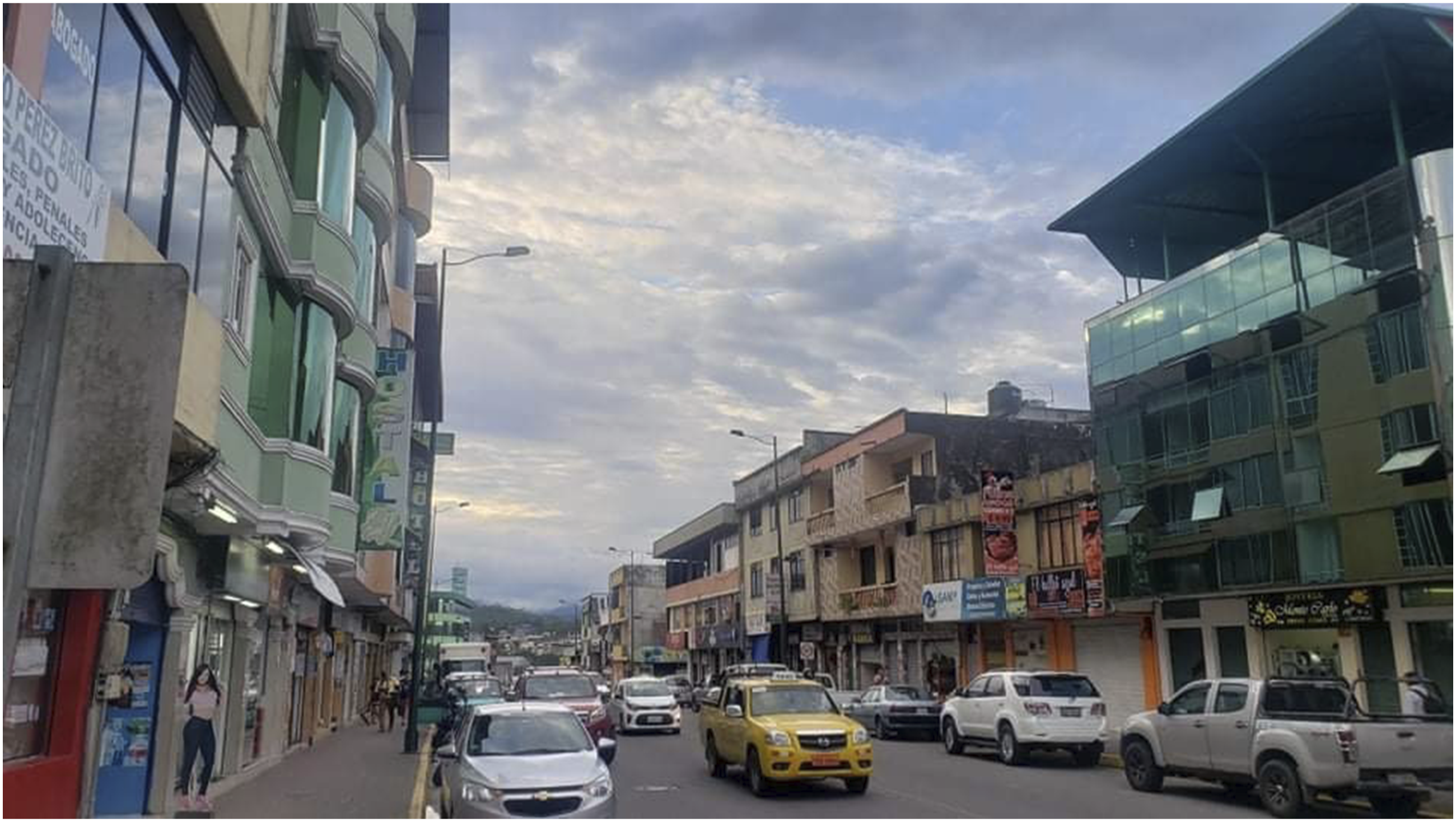
During most of the 20th century, Napo Kichwa people saw their lives impacted by and immersed in different projects of development and capitalist expansion, from rubber production in the early 1900s, to oil extraction beginning in the 1950s, to intensive agriculture and cattle ranching in the 1960s and 1970s (for a detailed discussion see Benitez, 2021; Erazo, 2013; Jarrett, 2019; Muratorio, 1991). The environmental turn of the 1980s, however, emphasized the need for sustainable forms of development in the global South and indexed the disastrous impact of industrialized development on the environment. Among them was tourism/ecotourism, in which the main attractions were “nature” itself and local and Indigenous cultures. The environmental turn also revived an old colonial myth of the Indigenous “Noble Savage.” The new iteration of this myth is known as the “ecologically noble savage” (Redford, 1991) and it presumes that “native peoples’ views of nature and ways of using natural resources are consistent with Western conservationist principles” (Conklin and Graham, 1995: 696). While environmentalist discourses have been a powerful tool employed by Indigenous peoples for their own purposes, they can be deeply problematic for Indigenous communities when these discourses do not conform to all Western expectations (Cepek, 2018; Conklin and Graham, 1995; Jackson, 1991). In the Ecuadorian Amazon, the rise of tourism was the result of several confluent and interrelated factors. First, the shift towards conservation-based discourses and policies in the 1980s diverted funds away from other forms of development, such as intensive agriculture or cattle ranching, towards what were regarded as sustainable alternatives. Some authors, moreover, argue that Indigenous people saw tourism as a tool to fight off the encroaching oil companies in the region (see Erazo, 2013). Others have argued that the rise of tourism in this area was also closely related to the rise of the Indigenous political movement in the 1980s and 1990s, which sought “a reconfiguration of the nation-state as plurinational and pluricultural” (Hutchins, 2010: 19).
In any case, the shift to tourism presented several difficulties, since most Kichwa people did not have much experience in service-based work, and the idea of “selling” their culture was a novel concept. Furthermore, due to the long history of Napo Kichwa groups’ engagement with missionaries and colonial and state apparatuses, they were perceived as less “authentically” Indigenous than more remote Amazonian peoples, which impacted the marketability of the Tena area as an Amazonian destination in the early days of tourism development (see Davidov, 2013). Tena was seen as the “last stop” before entering the “real” Amazon, especially areas in and around Yasuni National Park and Cuyabeno Reserve, home to Waorani, Cofan, Siona and Secoya peoples, who were imagined as being more “traditional” than Kichwa peoples around Tena. While many foreign tourists regularly passed through Tena, very few spent more than one or two nights there (see Hutchins, 2002). Regional and local governments soon began to articulate their development strategies around the tourism industry, which they saw as a promising source of revenue. They also developed strategies to socialize Indigenous people, particularly school-age children, on the importance of tourism for the development of the region, and about their role as representatives of their culture.
It was amid this push for tourism development that Jimmy and many of my Kichwa friends grew up and came of age. With the growth and promotion of tourism during this time, tour guide certification programs were heavily subsidized. Even those who had not undergone certification were regularly hired by tour agencies to lead tours in the surrounding communities. While entry into the industry was relatively easy, working as a tour guide involved complex and often contradictory processes of negotiation and adjustment. Most foundationally, working in tourism encouraged them to index rather than conceal their Indigenous heritage, and to emphasize aspects of their cultural difference vis-à-vis White/Mestizo society that their parents’ and grandparents’ generations had tried to overcome in previous decades (see, for example, Benitez, 2021; Erazo, 2013). This included adopting a more stereotypically Indigenous look (e.g. long hair), emphasizing their rural roots even as many of them grew up in urban centers, and otherwise embodying discourses of Amazonian radical alterity that seem closer to Western tourists’ eco-primitivist fantasies than to the lived realities of their family members.
“All great warriors had long hair”: How Kichwa tour guides attempt to redefine Indigeneity
Something that caught my attention as I began spending time in Tena in 2014 was that Kichwa tour guides were easily identifiable, particularly by their long hair (Figure 2). In fact, it is fair to say that most if not all long-haired Kichwa men in Tena either work as tour guides or are involved in tourism-related activities. Most Kichwa and White/Mestizo people in and around Tena expressed the opinion that tour guides were merely trying to project a more “authentically” Indigenous look in the eyes of tourists, and to attract the sexual attention of foreign (mostly White European and North American) female tourists. As a Kichwa woman in her mid-20s told me, “long hair is just a ‘moda’ [a fad] that they [tour guides] use to attract gringas. I don’t like it; it doesn’t look good in a man.” Kichwa tour guide. Source: Photo by the author.
Tour guides, by contrast, usually stated that this practice reflected their responsibility and desire to rescue ancestral Kichwa masculinity, which had been lost due to colonialism. As we have already seen, one of my main collaborators, Jimmy, referred to long hair as the embodiment of masculine warriorhood and virility, and asserted that the legacy of colonialism was the attempted emasculation of Indigenous men. My friend Sacha (Kichwa for “forest”), a tour guide in his early 40s, stated similar views in an early conversation: I have long hair because many years ago all [Indigenous] men had long hair, and women too. All the young people that live in the cities now only want to imitate “la gente moderna” [modern people]. Even out in the [rural] communities, young people don’t want to value their culture, “solo quieren perder” [they just want to lose it], they only want to speak Spanish, they want to become Mestizos.
As I came to know more Kichwa tour guides from various backgrounds, however, I learned that the desires and motivations behind the decision to adopt that particular look were much more complex than these explanations could fully capture. They reflected long-standing anxieties and frustrations related to Kichwa men’s positionality within the larger Ecuadorian society, which ranged from their rejection of hegemonic definitions of Indigeneity as a rural, farming-based identity, to their desires to reassert their masculinity and desirability within a society that has long deemed them feminine, subservient and unattractive. Indeed, as I will elaborate below, important opportunities for self-making and movement that arose from the embodiment of a particular look and demeanor within the confines of tourism spaces and encounters, spilled over into other parts of their lives as racialized individuals. There were important points of contention between the small tour guide community and the broader Kichwa population in and around Tena, many of whom viewed tour guides’ embodiments and performances less as a revalorization of ancient practices, and more as the expression of a lifestyle of which they disapproved. Specifically, they disapproved of the promiscuity, heavy drinking, and neglect of family obligations which they associated with the tour guide community. As Don Pedro, a 78-year-old Kichwa “yachak” (literally, “the one who knows,” referring to individuals with shamanic powers), told me: “these akcha sapas [a man with an affinity for long hair] look like women. Long hair makes you angry because it gets snared in tree branches while walking in the forest.”
These tensions arise from several, potentially contradictory, factors. On one hand are what I consider to be differently situated experiences of Indigeneity. For older, rural Kichwa like Don Pedro, cultural identity is tied to things that are considered important for their livelihoods and for their understandings of moral propriety and reciprocity. Priorities include having access to land and game, ensuring that the younger generations maintain their language and that they honor their obligations to their ayllu (roughly, extended family), and keeping their young away from what they viewed as moral flaws in mainstream Ecuadorian society (promiscuity and infidelity being two prominent ones). Additionally, as discussed earlier, a survival strategy for Kichwa people in this region since colonial times has been to distance themselves from the prevalent stereotypes of irrationally violent, uncivilized “Aucas,” associated with other Amazonian groups such as the Waorani. For many Kichwa, the aesthetic embodiment of Indigenous masculinity adopted by tour guides, such as long hair, facial paint, and other peculiar bodily adornments, uncomfortably resembled the very images of “uncivilized Indians” that their colonial history had pushed them to reject. As one of my tour guide friends explained, When you see a tour guide with long hair in a [Kichwa] community, even his own family criticizes him. They tell him, hey, cut off your hair, it looks ugly, “pareces de adentro” [literally, you look like you are from inside (the forest)], which is a euphemistic way to refer to remote and presumably less civilized Indigenous communities. They tell him: we are in the 21st century, you have to change.
Urban-based Kichwa tour guides, on the other hand, are heavily invested in promoting visual and aesthetic differentiations between Kichwa and non-Kichwa people, which in Tena are not as marked by clothing or other bodily adornments as in other parts of Ecuador (see, for example, Colloredo-Mansfeld, 1998; Meisch, 1995; Rival, 2002). Their ideas of cultural preservation, thus, were much more related to the incorporation of some of the most “folklorized” (Rogers, 1998) aspects of Kichwa culture promoted by the “economy of expectations” (Davidov, 2013: 15) that fuels the tourism industry, an industry which many of them believed could lift Kichwa families out of poverty. Also, importantly, urban tour guides’ emphasis on visual markers of cultural difference reflected particular anxieties about their urban identities and occupations not being perceived as sufficiently Indigenous by outsiders. Many of them insisted that rural Kichwa should also adopt a more distinctively Indigenous look so that their authenticity was not called into question by tourists. As Roberto, a 42-year-old tour guide, explained, rescuing Kichwa traditions such as traditional dress, traditional food, is extremely important because many communities depend on tourism. If they [rural communities] lose their customs and traditions, what will be left for tourists to see?
This quest for a more explicit embodiment of Indigenous difference resulted in many tourists expressing the opinion that urban tour guides seemed more committed to their cultural traditions than some of the members of the rural communities they visited. Furthermore, precisely because most Kichwa were generally indistinguishable from Mestizos/as in the eyes of foreigners (although local people in Tena were readily able to tell Kichwa people apart from non-Indigenous individuals), many foreign visitors struggled to understand that most rural residents around Tena identified as Kichwa.
Tour guides criticized rural Kichwa for not being effective at performing Indigenous alterity, as well as for not doing enough to contest their subordinate positions in Ecuadorian society. For centuries, Indigenous men in Ecuador and throughout Latin America have been portrayed as “dirty, lazy, irrational and backward” (Colloredo-Mansfeld, 1998: 186). By growing out their hair and wearing stereotypically Indigenous facial and bodily adornments while, at the same time, wearing fashionable Western clothes, speaking foreign languages, pursuing foreign lovers, and operating their own businesses, Kichwa tour guides were attempting to redefine Indigeneity by showing how modern, cosmopolitan, entrepreneurial, and sexually attractive Indigenous men can be. While arguably reproducing the dominant society’s stereotypes, they were also challenging them in two key ways. First, they were rejecting the image of Indigenous men as subservient, lazy, backward, and unattractive, while claiming cosmopolitanism superior to that of White/Mestizo society. At the same time, they were sending a loud message to their fellow Kichwa that they rejected what they perceived as a long-standing internalization by Kichwa men of those very stereotypes. As my friend Sacha explained: You see those men out in the [rural and majority Indigenous] communities, they are too shy; they used to hide from gringos when they first started showing up. They also avoid confrontation with Mestizos; they stay quiet most of the time and allow Mestizos to dominate them.
Tour guides saw their work in tourism not just as a source of income and cultural pride, but also as an effective tool to contest racist dynamics at the local level. Tourism activities had gradually become one of the main sources of revenue for the local economy since the early 1990s, and these economic shifts undoubtedly provided more visibility to Indigenous people in the region. This is not to say that racist attitudes and discrimination against Kichwa people do not persist. Tour guides themselves told me that they recognized how insidious anti-Indigenous sentiment continues to be. However, most of them agreed that overt, public expressions of racist hostility had dramatically decreased in the past two decades and that it could be attributed to Indigenous people’s prominent place in the tourism economy. As a veteran Kichwa tour guide explained: Before, during fiestas de Tena [celebrations for the anniversary of the foundation of Tena], there were always really nasty fights between Kichwas and Mestizos because they did not want us to participate in the fiestas. They would yell racial slurs at us, and they would beat up Kichwas, so we would always walk in large groups to defend ourselves if Mestizos provoked us. That was like 20 years ago; now is different. Now we are important, and tourists come to see us [Indigenous people], not them [White/Mestizos], so they know they must respect us because their businesses depend on us.
Tour guides were likewise effective at undermining the unacknowledged but pervasive spatial segregation of Indigenous and White/Mestizo spaces in Tena, through their ties to foreign tourists and confidence in navigating urban spaces. They were a regular presence at popular bars and clubs that very few Indigenous individuals outside the small tour guide community would feel comfortable walking into Once I was hanging out with my cousins in Tena and I started speaking Kichwa to them. They said “Hey, don’t do that, it doesn’t sound good, look at those Mestizos right there.” I told them “This is our language” and I have been trying to incentivize them little by little to speak more Kichwa.
Some scholars have identified avenues for Indigenous men in Latin America to contest and partially transcend their disempowered positions, such as enrolling in military service, working as miners, or “de-Indianizing” (de la Cadena, 2000) by moving to urban centers, and avoiding speaking their Indigenous language or dressing in distinctively Indigenous outfits (see, for example, Canessa, 2008). The problem, as Canessa (2005) convincingly argues, is that “they are never quite accepted because people have great difficulty in hiding their rural, indian roots even when they try: they will never speak Spanish well enough; they will never be white enough” (2005: 136). Canessa is referring here to the kind of “social whiteness” discussed by de la Cadena (2000: 11) and others (see, for example, Hale, 2004; Watanabe, 2016) throughout most of Latin America, whereby geographical location, socioeconomic status, language competence, formal education, and conformity to hegemonic ideals of citizenship function as racializing markers, often superseding phenotypical differences. Similarly, scholars have discussed the impact of ideologies and policies of “blanqueamiento” (whitening) on racial discourses in Latin America. These ideologies equated formal education and socioeconomic advancement with becoming “whiter” in cultural terms (see Whitten and Torres, 1998: 13), although they also influenced policies and discourses aimed at promoting the “literal” whitening of the population, such as passing legislations that encouraged European immigration (see Fernandez, 2010: 28) Some authors have appropriately alerted scholars to the perils of completely disregarding the insidiousness of entrenched phenotype-based discrimination in Latin American societies (see, for example, Ravindran, 2021). Tourism offers comparable spaces of contestation, even if it also generates tensions between differently positioned Indigenous individuals around issues of cultural and moral propriety. One crucial difference is that tourism spaces empower Kichwa tour guides to contest racialized local dynamics by indexing rather than concealing their Indigeneity.
Self-transformations as gendered, sexed individuals and the limits of settler heteropatriarchy
As mentioned earlier, a widely held opinion in and around Tena was that one of the tour guides’ main motivations for wearing their hair long and emphasizing Indigenous spirituality and profound connections to nature was to attract foreign White women. Indeed, some authors working in the Andean region have drawn similar links between Indigenous men’s embodiment of radical alterity, with specific mentions of hair style, and the pursuit of foreign lovers. For example, Lynn Meisch found that in the town of Otavalo in the Ecuadorian Andes, foreign female tourists marveled at Kichwa men’s distinctive appearance. As one of them stated: “These guys are so sexy! Long hair, high cheekbones, white teeth, well-built, nicely dressed, friendly. Sometimes I just like to sit and look at them. They’re Madison Avenue Andean Indians” (Meisch 1995: 449). Similarly, Babb (2012) has found that long hair is one of the main strategies that bricheros (men who pursue intimate relationships with foreign women) adopt in the Peruvian city of Cusco to attract the attention of foreign female tourists (see also, Vich, 2006; Ypeij, 2012). As Babb notes, “these ‘Andean lovers’ perfect the art of seduction of gringas, often by exaggerating qualities of indigenous difference, wearing their hair long, playing traditional flutes, and adopting a dress style evocative of “Inca culture”’ (2012: 39).
These works have provided invaluable insights into a phenomenon that remains understudied in the region. However, my work also illuminates some points of divergence with the findings of these scholars. In the case of male bricherismo, for example, authors tend to emphasize the instrumentality of indexing Indigeneity to seduce foreign women and obtain mostly short-term economic benefits. Bricheros distance themselves from contemporary Indigeneity even as they index their Inca heritage. As Canessa observes, “what is interesting about the bricheros is that even as they index Indianness to attract foreign women, they do not, in other contexts, identify themselves as indigenous at all” (2012b: 111). I argue that in the case of Kichwa tour guides, their socioeconomic mobility and their relationships with foreign women have not led to disidentification with Indigeneity. In fact, for many of them, as I showed earlier in the case of Jimmy, work in tourism and the opportunities associated with it, have provided spaces to embrace their Indigenous heritage in ways that previous generations of Kichwa had been pushed to disavow. Despite the tensions that exist between tour guides and many other Kichwa, there is a strong sense on both sides of a shared Kichwa identity. My work also addresses several issues to which, in my view, scholars writing on this topic have paid insufficient attention. First, while they have provided excellent discussions of the fantasies and desires that the shape the possibilities for these intimate relationships and the ways in which local men position themselves to fulfill those fantasies, we do not hear much from the men themselves. Second, I provide a more contextualized account of the complex and contradictory processes and affects that shape Indigenous men’s experiences as they begin working in tourism, and how they reimagine their identities as racialized individuals, but also as gendered and sexed ones. Finally, while scholars in the region have correctly pointed out the political possibilities of these emergent forms of local and Indigenous masculinities and sexualities, the ways in which settler colonial heteropatriarchy may constrain those possibilities have not been sufficiently considered.
Most people outside the small tour guide community similarly pointed to economic benefits or opportunities for foreign travel as driving tour guides’ motivations for establishing relationships with foreign women. Many tour guides themselves acknowledged that a foreign girlfriend or wife could provide financial assistance for foreign travel or for building tourism infrastructure in their communities. However, narrowly characterizing motivations for seeking out relationships with White foreign women as merely financial, overlooks another crucially important aspect of colonial racialized constructions of Indigeneity, which has to do with how Indigenous men in the Americas have been portrayed in terms of their masculinity and their sexuality.
As discussed earlier, colonial projects used discourses of racialized forms of sexuality as tools of domination. Colonial authorities and, later, settler colonial states, regularly stoked fears of native men’s “predatory” sexualities, especially during campaigns of intensified dispossession. However, contrasting the enduring hyper-sexualization of Black men (see Gordon, 1998; Schick, 1999), several authors have pointed out that colonial myths about native sexual degeneracy have not been equally consistent, and that in fact Indigenous men have often been portrayed as “nearly asexual” (Canessa, 2008: 53). Writing about portrayals of Indigenous masculinities in Bolivia, Canessa argues that while in many other parts of the Americas “Whites were concerned to the point of paranoia over the corrupting hypersexuality of subalterns, Bolivian elites considered indian men to be singularly lacking in their sexuality” (2008: 52). According to Peter Wade (2009) this could be attributed to several factors, from a larger presence of Black people in urban centers, which created an atmosphere of fear among White residents about Black sexual degeneracy and predation, to the fact that “black [African and African diaspora] sexuality became an international icon/fetish and a capitalist commodity” (2009: 185). In contrast, Wade argues, “[t]he figure of the indigenous male seems to carry a low erotic charge” (2009: 85). It is worth noting that some authors have shown that the colonial male gaze produced the opposite stereotype about native women. The hyper-sexualization of Indigenous women was the result of their imagined availability to White men, thus using sex as an instrument of subjugation (see Wade, 2009: 71) in which sexual desire was informed by “an erotics of power” (Canessa, 2008: 43). In the Amazon region, myths about “charapa ardiente” (hot charapa), a term that portrays Amazonian women as insatiable lovers (see Motta, 2011), as well as increasingly sexualized female performances in Indigenous beauty pageants (Erazo and Benitez, 2022; Rogers, 1998) are some examples of these imaginaries at work.
In Tena, Kichwa men usually found themselves at the bottom of the attractiveness/desirability hierarchy, even among Kichwa women. For example, Estefania, a young Kichwa woman who works for the local government, seemed to reproduce some of the most insidious stereotypes about Indigenous men as justification for her refusal to consider having a Kichwa partner: I have never dated a Kichwa man. Kichwa men are very machistas, they drink too much, and they don't do anything to better themselves. I want to see other things, have a different life.
Similarly, for White/Mestiza women, many of whom had at least some Indigenous ancestry themselves, dating or marrying an Indigenous man was seen as a “step backwards,” which is directly related to the ideologies of “blanqueamiento” discussed earlier. The rise of tourism, along with the increasing Western fascination with Indigenous cultures, has brought about important challenges to those perceptions. A growing number of foreign (mostly White) female visitors to the region seem to value and desire the very characteristics that are disparaged by Ecuadorian women, Indigenous and non-Indigenous alike, such as having an “Indigenous phenotype,” speaking an Indigenous language, and leading rural, forest-dependent lives. Being able to seduce an increasing number of White women afforded prestige and validation to Kichwa tour guides, as it showed that they were sexually attractive to the very women who, in Ecuadorian society, have been presented as the ideal of female beauty. This has been documented by several other scholars working in South America. For example, Canessa (2008: 48) argues that in Bolivia “[e]rotic female bodies are white female bodies”, as evidenced by their ubiquitous presence in advertisement posters, TV commercials, and virtually any space where female beauty was represented. Similarly, Meisch (1995) notes that in Ecuador, “advertisements, television, beauty contests, and books all contain far more blondes than their presence in the population would warrant” (1995: 451). Through relationships with White women, Kichwa tour guides seek to contest the long-standing notion that Indigenous men were not as attractive as White/Mestizo men. Interestingly, some of my Kichwa tour guide collaborators seemed to have themselves internalized some of the stereotypes espoused by the White/Mestizo majority. Several of them told me that the first emotion they experienced when they realized they were attractive in the eyes of foreign women was not so much excitement as surprise. As my friend Sacha confessed: You know, I’ve always wondered why gringas prefer Kichwa men over Mestizos. I have asked myself: why do they like me if there are “colonos” [Mestizo settlers] that are much more “guapos” [attractive]? They are taller, they have cars and good jobs. Some gringas have told me that it’s because we’re exotic, and because we are native to the Amazon.
Despite these expressions of self-doubt, the increasing realization by Kichwa tour guides that they are considered attractive as sexual partners by many foreign women has undoubtedly boosted their confidence. Unlike the reserved and rather shy demeanor that most of the Kichwa men I met during my fieldwork exhibited around women, especially foreign women, tour guides were notorious for their uninhibitedly flirtatious ways. In the tours I participated with my friend Jimmy, for example, I regularly witnessed him engage in markedly sexualized banter with both local and foreign women. On at least one occasion I saw him remove his shirt and start dancing and singing in an overly sexualized manner, rolling his hands down his naked torso, and emulating sexual moves with the movement of his hips, much the amusement of the foreign women present. Some tour guides also confessed that sexual relationships with foreign women had allowed them to experiment with new and exciting forms of sexual behavior. Edison, a tour guide in his late 20s, said that gringas are better in bed than Kichwa women because Kichwa women are not particularly interested in foreplay, whereas gringas “te hacen toda la huevada” (they do everything). He said this while rolling his hand down his body which indicated to me that he was referring to oral sex and other forms of foreplay. My friend Roberto shared similar views about foreign women. He told me that “gringas are wild in bed. They [foreign women] say that without receiving oral sex it feels like they did not have sex at all.” I thus argue that tour guides experienced these intimate relationships not as mere economic opportunities, as many local people alleged, but as opportunities for self-transformation into more appreciated and desired sexed and gendered individuals, as well as opportunities to experiment with new and exciting forms of sexual attitudes and behaviors. They also viewed these relationships as allowing them to pursue alternative ways of knowing and being in the world. This was stated quite explicitly by one of my collaborators: I didn’t want to be like those men in the communities, getting married young and having a bunch of kids. That’s not the life I want. Working in tourism I feel important, I feel exotic. Yes, when I had long hair, I mostly did it because gringas liked it, but it also provided me with other ways to learn, other ways to see society.
However, as indicated earlier, these desires often clashed with other Kichwa’s understandings of responsible masculinity and sexuality. As Don Pedro, the Kichwa elder mentioned before, complained: “tour guides have long hair because gringas like it. Sleeping with those women makes them weak and they forget about their families.” Some scholars have discussed Kichwa associations of immature sexuality (usually in the form of infidelity and promiscuity) with laziness and failure to fulfill one’s family responsibilities that Don Pedro alluded to. Swanson (2009) attributes this to a moral fault known as “quilla” (also spelled “killa”), which applies to both men and women: “the word quilla denotes what for Quichua speaking people is perhaps the greatest moral fault. Although it has no direct translation its meanings approximate English ‘lazy,’ ‘sexually loose,’ and ‘immature’” (2009: 48) Furthermore, Uzendoski (2005) argues that Kichwa men think that having sex makes them weak, as “[w]omen are said to drain the vital energy out of men” (2005: 133). Indeed, as Swanson notes, in contemporary Kichwa vocabulary the verb “quillachina,” which literally means “to make someone lazy,” “is also the verb which means ‘to flirt,’ ‘to bother’ or to ‘seduce’” (2009: 48). This has caused tour guides to not be perceived as reliable partners by local women, which is one of the reasons why many of them have remained single well into their 30s and 40s, something uncommon among Kichwa men in this region.
Furthermore, contesting anti-Indigenous stereotypes has not always been accompanied by a disruption of settler heteropatriarchy, which, ironically, is the project through which most of those stereotypes have been produced. Indeed, in some ways tour guides have reproduced and reinforced its logic. For example, Kichwa women are seldom hired as tour guides and are instead assigned to the kitchen, or to housekeeping activities. Additionally, local women sometimes complain that Kichwa tour guides exhibit behaviors that starkly contrast that of Kichwa men outside the tour guide community, such as promiscuity or catcalling. As one young Kichwa woman in Tena told me: Older [and rural] Kichwa men tend to be more respectful of women, at least when it comes to catcalling. The worst in that sense are [Kichwa] tour guides. Since they hook up with lots of gringas, “se creen superiores” [they feel superior] and they catcall everything that moves.
Finally, as tour guides reassert their masculinity, they also reproduce normative forms of heterosexuality that can be discriminatory towards queer and gender non-conforming individuals. Homophobic statements and attitudes were unfortunately not uncommon. Furthermore, tour guides would often jokingly accuse each other of getting a “marido” (husband) while leading tours, or they would tease each other about making one another their “warmi” (Kichwa for “woman”). The accused would usually laugh, but they would also feel the need to respond with some declaration about their commitment to heterosexuality. These seemingly playful interactions provided spaces for reaffirming and reinforcing heteropatriarchal discourses. Nevertheless, there are some small ways in which tour guides seem to have destabilized heteronormative expectations, such as growing out their hair and thus rejecting the masculine aesthetics that the dominant society promotes. Through their work in tourism, they have created spaces in which their masculinities can be appreciated for their spirituality and traditional forms of Indigenous knowledge and relationships, rather than material or financial wealth.
Conclusions
Kichwa male tour guides in Tena, Ecuador, serve as mediators between tourists and rural Kichwa communities and, as I have shown throughout this article, move through and occupy ambiguous and contested spaces between the two. Their more recent, urban lifestyles and their sometimes dismissive attitudes towards rural Kichwa people have distanced them socially from their villages. More profoundly, their choice to engage in sexual encounters with multiple foreign women and their failure to “settle down” with a Kichwa wife can contribute to fellow Kichwas’ dismissal of them as immature and irresponsible.
In the introduction, I discussed the aptness of analyzing Indigenous tourism through the metaphor of “movement” (Bunten and Graburn, 2018). Indeed, work in tourism has provided Kichwa tour guides with important opportunities for movement and self-transformation. They have achieved some socioeconomic mobility and have built and expanded social networks internationally. This has allowed them to challenge racialized dynamics at the local level and thus contest pervasive stereotypes that continue to shape how Kichwa men are imagined and positioned within the dominant society. Kichwa tour guides continuously and deliberately transgress unofficial but widely acknowledged spatial and linguistic segregation in Tena: they are a regular presence in establishments such as bars, restaurants and clubs that were and continue to be thought of as White/Mestizo and gringo spaces and they intentionally speak Kichwa within those spaces to disrupt the notion that Kichwa is a language of rural, impoverished people and that it is (or should be) mostly spoken in rural, impoverished spaces or, at best, that it should be confined to the arenas of tourism and Indigenous cultural performances. Additionally, through the embodiment and reclamation of forms of ancestral masculine warriorhood described in this article, they have been able to reassert their masculine identities within a society that has long perceived Indigenous men as unattractive and subservient. Their increased sexual attractiveness in the eyes of mostly foreign White women has thus been experienced as a deeply political and empowering development, subverting colonial sexual and racial built upon the erasure of Indigenous male sexuality and the availability of Indigenous female sexuality to European males.
Whether the embodiments of Indigenous masculinities being reclaimed by my tour guide friends can undermine the limits of settler colonial heteropatriarchy remains to be seen. The ethnographic data suggests that some of the opportunities that my tour guide friends experience as sexual liberation and masculine reaffirmation (having multiple short-term sexual partners, for example) are widely perceived by many other Kichwa to be at odds with their understandings of responsible masculinity, sexuality, and sociality. Furthermore, to contest their marginalized positionalities, tour guides sometimes reproduce and even reinforce aspects of settler masculinity that are detrimental to female, queer and gender-nonconforming individuals. In sum, although work in tourism has facilitated individualized and contentious forms of movement that appeal to my tour guide collaborators, I struggle to see the ways in which those could be crystalized in a movement, that is, in collective action that advances the cause of Indigenous decolonization. There are, however, various small forms of resistance and resignification that seem promising in this respect, especially as they relate to envisioning and articulating Kichwa masculinities around Indigenous ways of knowing and of relating to each other and to the land that have historically been targets of settler colonial erasure.
Footnotes
Acknowledgments
I would like to thank the generous people from the Kichwa Indigenous nation in Napo, Ecuador, for their time and support, and for their openness to share their perspectives and experiences on sometimes controversial and uncomfortable topics. Additionally, I want to express my sincere gratitude to the editors and anonymous reviewers at Critique of Anthropology for their thoughtful feedback on several drafts of this article. Finally, I want to thank Juliet Erazo and Jim Igoe for their insights, their mentorship and their friendship.
Declaration of conflicting interests
The author(s) declared no potential conflicts of interest with respect to the research, authorship, and/or publication of this article.
Funding
The author(s) disclosed receipt of the following financial support for the research, authorship, and/or publication of this article: Funding for this research was provided by a dissertation grant from the American Ethnological Society (AES) and two Doctoral Evidence Acquisition (DEA) Fellowships from Florida International University. Kichwa language training was funded by three Foreign Language and Area Studies (FLAS) Fellowships from the U.S. Department of Education.
