




Abstract
In this article, I examine the demand for spatial justice among shepherds in Highland Poland, focusing on the ‘misfit’ between the mobile, communal nature of traditional pastoralism and the static perceptions of landscape and property underpinning Polish and European agricultural policy. The movement of animals and people through a mountain environment increasingly dominated by infrastructure, private property and commercial activity, creates considerable social and spatial friction in Highland communities. Drawing on the work of legal scholar Andreas Philippopoulos-Mihalopoulos, I show how shepherds seek to address these frictions by lobbying for greater political and legal recognition of their right to move through the landscape. In this way, I argue, they propose an alternative vision of spatial justice as based in and enacted through custodianship and mobility, challenging dominant ideas of spatial justice based on property rights and resource redistribution.
In September 2015, I watched on the sidelines as four shepherds milked a flock of seven hundred sheep in the Pieniny mountains in southern Poland (Figure 1). That day, it took barely a minute to milk each sheep: some animals had already stopped producing milk, while others produced just ‘a syringe’s worth’, as the head shepherd, Marek, put it. That summer had been hot and drought had turned the grass on the mountainsides brownish yellow. September, in turn, dawned cold and misty, all the rain that had been missed over the summer coming down at once. Yet the low yield did not worry Marek, who was readying himself to bring the flock down from the mountain pastures. What did occupy his thoughts was the need to secure enough land and sheep for next year’s grazing season: like most other pastoralists in the Highlands, Marek did not own most of his flock, nor most of the pasture on which they graze. Every winter he renewed several leases on land owned by local householders and agreed which of their sheep he would include in his flock come the spring. This was becoming progressively more difficult, he explained, as more villagers were giving up on raising livestock and withdrawing access to their properties. While speaking to us, he received a phone call asking him to return home to deal with an urgent domestic matter. Leaving the flock with his junior colleagues, he laughed and said: ‘A shepherd owns nothing. Not even his own life.’ Sheep being milked by two juhasi (employee shepherds); Source: Photo by the author.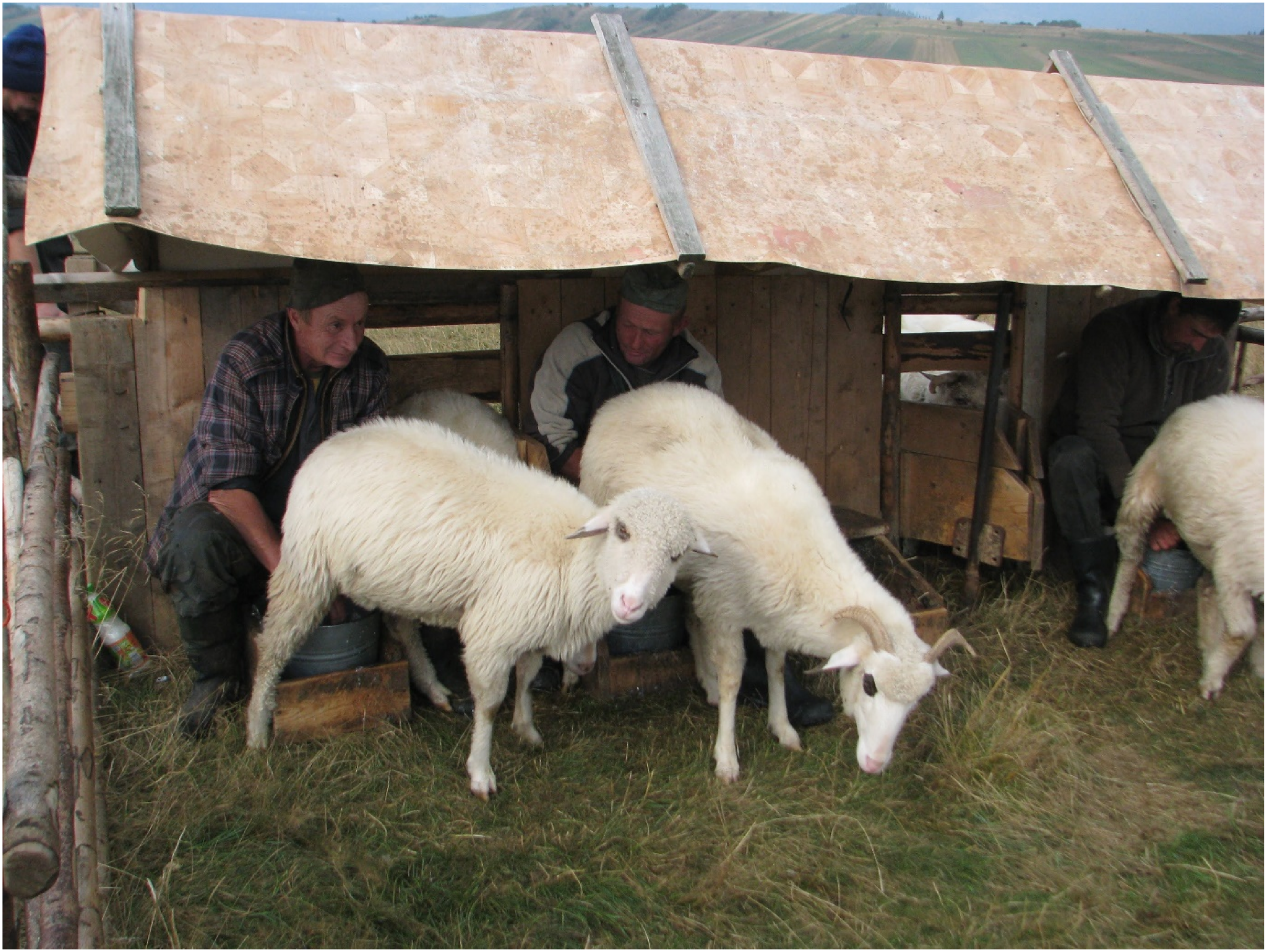
In this article, I examine the idea of – and demand for – spatial justice among transhumant shepherds in contemporary Highland Poland. Drawing on fieldwork among shepherds in the western to central Carpathians (from Lower Silesia to the High Tatras) (Figure 2), I shed light on the ‘misfit’ between the mobile, communal nature of traditional forms of Highland pastoralism and a mountain landscape increasingly dominated and organized by human infrastructure, private property, and commercial activity. Driven by the needs of the sheep and the seasonality of the pastoral cycle, the communal grazing of large numbers of sheep requires access to land and natural resources which are often held in private hands. Such spatial demands and practices conflict with the established property rights of local residents and the actions of other local stakeholders pushing for economic diversification. They also challenge contemporary legal and regulatory frameworks that treat the mountain landscape as either a passive container for agricultural production or a protected space for wildlife conservation. Focusing on the frictions that arise between shepherds, householders, and policymakers, I show how pastoralists have sought to (re)claim their right to move through the landscape by ‘re-fitting’ existing policy to their requirements, or through direct appeals for legal recognition from the Polish state. Yet, their demands for spatial justice are not based on a straightforward desire to claim territory or exclusive rights to natural resources. Rather, as I argue below, they rest on an alternative understanding of justice based on the acknowledgement of their need for movement across unbounded spaces and the central role of more-than-human relationships in pastoral practice. Map of the Polish Carpathians Source: Drawing by Alix Schaeffer.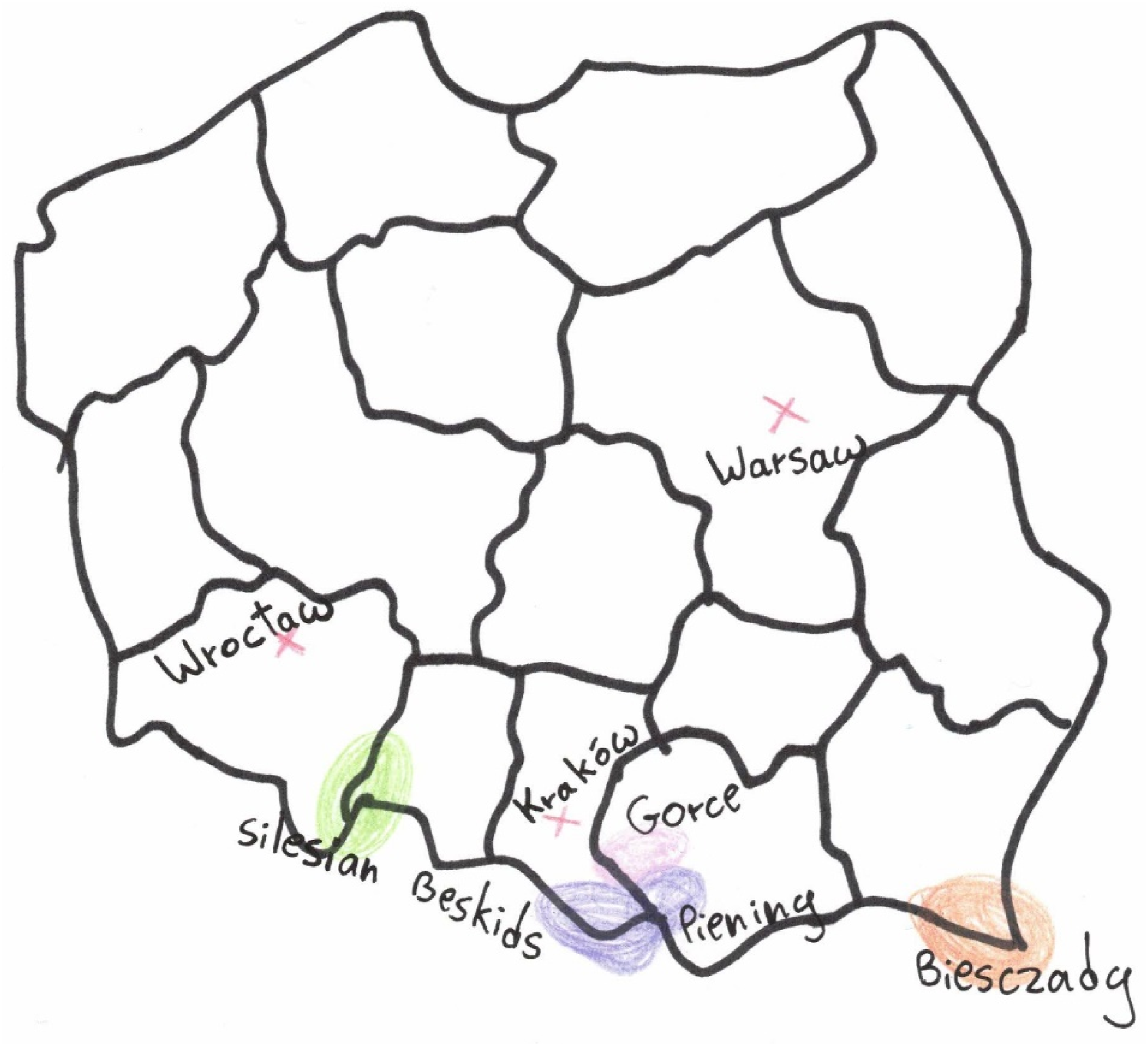
Anthropologists and geographers have traditionally approached spatial justice as a question of the fair and equitable distribution of space and resources (Low, 2017; Massey, 2005; Soja, 2010). Arguing that spatial arrangements both reflect and obscure existing power structures, they have uncovered how modes of political and economic government can act as mechanisms of socio-spatial exclusion, reinforcing class-, racial-, and gender-based inequalities (McDowell, 2018; O’Neill, 2017). In the post-socialist context, spatial justice has almost exclusively been studied as a problem of shifting property regimes, with ethnographers documenting how post-1989/90 processes of de-collectivization and privatization have reconfigured ownership, value, and wealth in urban and rural areas (Andrusz et al., 2011; Sikor et al., 2017; Verdery, 2003). While I also investigate how access to and control over spaces and resources are experienced and contested by shepherds in the Polish Carpathians, I borrow the idea of spatial justice from legal scholar Andreas Philippopoulos-Mihalopoulos (2014). Philippopoulos-Mihalopoulos approaches spatial justice not as a problem of (re)distribution of resources and rights but as tool for capturing the embodied and material experience of justice that unfolds in contested spaces. Spatial justice, he argues, ‘is not the answer to geopolitical, geophysical, property-based or population displacement conflicts, but a spatiotemporally positioned question: “What happens when bodies claim the same space at the same time?”’ (2014: 5). Answering this query, Philippopoulos-Mihalopoulos argues, requires a conceptual move away from both universal notions of law and Cartesian views of space. Drawing on the spatial philosophy of Deleuze and Guattari (1987), he approaches space as a plane containing both areas of bounded, hierarchical ‘striated’ space structured by power, and fluid, unbounded, ‘smooth’ space experienced through direct, embodied interaction. These spaces are not opposites, but interdependent and fluctuating: ‘smooth’ space can become striated through the imposition of organization and control, and ‘striated’ spaces can become ‘smooth’ through acts of resistance, subversion, or reappropriation.
In the following, I bring Philippopoulos-Mihalopoulos’ theoretical vocabulary to my ethnography, asking what a concept of spatial justice might look like if not based on the redistribution of property and resources. I take inspiration from the work of other ethnographers who have employed Deleuze and Guattari’s ideas to study alternative spatial imaginaries – especially those emanating from Indigenous perspectives – and to challenge the spatial hierarchies created by the economic and political power of state- and capital-driven property regimes (Povinelli, 2011, 2021; Tsing, 2015). I examine shepherds’ demands for the Polish state to construct a new legal framework which recognizes and protects the communal nature of Highland pastoralism. I argue that their spatial practices and imaginations are centred on a necessity to move across the landscape – rather than a desire to settle, possess, and exploit it. As a mechanism through which the politics of space is enacted and negotiated, law can be a way of claiming space (Blomley, 1994). Law regulates human–environment interactions and is materialized in the landscape as borders and boundaries, as infrastructure, as property markers, and even as affect and atmosphere (Blomley, 1994; Philippopoulos-Mihalopoulos, 2014). Faced with European and Polish regulatory frameworks which reward the possession of land and livestock – rather than their custodianship – pastoralists seek not only to protect their interests, but for the recognition of an alternative vision of spatial justice enacted through movement and mobility, unbounded space, and more-than-human relationships.
A history of more-than-human mobility in the Carpathians
In villages across the Polish Carpathians, milk is sometimes said to be ‘eaten’ rather than ‘drunk’. This expression bears witness to the historical importance of shepherding in the Highland regions of central and western Poland – the High Tatras, Podhale, Żywiec, and Beskid Śląsk – where a combination of transhumant pastoralism and subsistence farming formed the core of local rural economies between the 15th and 19th centuries (Dobrowolski, 1970). Introduced to the area by Wallachian populations who migrated from the Balkans into what is now southern Poland between the 15th and 16th centuries, this type of pastoral agriculture revolved around the seasonal grazing of sheep in the mountain pastures and production of cheese, wool, and sheepskins for sale (Jawor, 2016, 2018). To govern and tax this new population, the then Polish state developed new legislation known as the ‘Wallachian Law’ (Ius Valachicum) (Dobrowolski, 1970). It offered the new settlers greater autonomy than that extended to populations elsewhere in the Polish Lithuanian Commonwealth, limiting their financial and labour obligations towards local landowners (Jawor, 2019). Wallachian Law allowed judicial and administrative tasks to be undertaken by an elected leader from the local community (wojewoda wołoski) and residents to leave and return to area without the permission of the lord. Most importantly, it allowed for the communal ownership and use of land, and included specific regulations on pasturage, the exploitation of forests, and the allocation of plots for cultivation.
This history of communality and self-organization continues to shape pastoral practices and identities across Carpathian communities today. Adam, a head shepherd (baca) working in the Silesian Beskids, told me that the ancient Wallachian knowledge of ‘how to make cheese, how to process wood, how to make wool’ still formed the foundation of contemporary pastoral enterprises like his own. The heart of Adam’s business was a flock of approximately 1200 sheep which he managed with the help of six employee shepherds (juhasi). Only a small proportion of these animals were owned by Adam himself, the rest were owned by local households and were grazed together on private and public lands surrounding the community from around St Adalbert’s Day (23 April) until St Michael’s Day (29 September). At the end of the season, they were returned to their owners for overwintering and lambing. While the sheep were on the pasture, the everyday jobs of grazing, milking, and protecting the flock from predators were done by Adam’s juhasi. As baca, he took the lead on the manufacture and marketing of pastoral cheeses produced at the shepherd’s hut (bacówka or koliba), as well as the financial and legal management of the enterprise. It was his job to recruit juhasi, negotiate access to pasture with local householders (gazdowie), and agree which sheep to include in his summer flock. Adam was also responsible for maintaining hygiene and veterinary standards on the pasture and at the bacówka, and cooperating with official protocols (and controls) from the Polish food safety, sanitary, and veterinary inspectorates.
The complex – yet typical – set-up of Adam’s enterprise highlights the fact that transhumant pastoralism is not just an economic practice, but also a social institution which relies on certain forms of property, social relations, and structures of authority. Traditionally a male occupation, bacas typically operate in and around their native villages, and employ juhasi from the local community or the wider Carpathian region. Many are second- or third-generation shepherds (although the turbulent history of pastoralism means they rarely took over specific enterprises from previous generations). Others are locally born newcomers to the occupation, attracted to pastoralism by a desire to work with livestock and an aversion to conventional ‘desk jobs’. 1 Shepherding is therefore a practice embedded in local community relations: coming from local households and families, bacas are familiar with (the history of) local property and kinship relations, as well as the natural environment in their vicinity. Their position as community insiders underpins their ability to lease the land and graze the sheep owned by other local households.
Above all, however, pastoralism is an activity dependent on the cooperative labour of humans and animals: the sheep and their needs dictate the activities, movements, and whereabouts of shepherds during the grazing season; their milk supply determines the nature and size of the season’s cheese production; and shepherds and householders work together to facilitate the (biological) reproduction of flocks at different times of the year. Adam and his colleagues were not blind to the animal labour (Blattner et al., 2020; Chazin, 2023) which underpinned their enterprises. They spoke affectionately about their flocks, emphasizing that sheep were far more intelligent than most people assumed, that they had individual personalities, and developed mutual relationships with each other (and their human and canine guardians). In short, they spoke about sheep as non-human subjects, rather than as commodities or resources for exploitation (Stépanoff et al., 2017). As Adam put it: ‘In our country, a sheep is a sheep that has its own name, that has its own history; the connection to this sheep is completely different, it is not treated as something industrial.’ Indeed, he emphasized that pastoralism created important cultural values for the community, as well as economic profit: ‘The source of our culture is the traditional economy with sheep. If it is cut off, then as I say, all that will be left is an open-air museum.’
Adam’s conviction that transhumant pastoralism formed the root of Highland culture was shared by his friend, Michał. Styling himself as a modern day wojewoda wołoski, Michał was a former teacher who now worked full time managing projects supporting pastoralism and Highland cultural heritage across the Polish Carpathians. A man with fine political instincts, he mediated between shepherds and local, regional, and national authorities, and campaigned for greater recognition of traditional forms of pastoralism in Polish agricultural and fiscal policy. Speaking to me at length one autumn afternoon, Michał offered a poetic explanation for why such advocacy was important: One would have to go back to what some would call the biblical myth, or the biblical story of Cain and Abel. […] The first sentence of this parable is the basis, as it were, of civilization, of our Western European culture. It begins beautifully: Abel was a shepherd; Cain was a farmer. A beautiful delineation, with all the [resulting] consequences.
In the Polish Carpathians, he continued, shepherds first felt these ‘consequences’ with the abolition of feudalism in 1848. For centuries, Wallachian Law had allowed Highland communities to exploit the limited resources of the mountain environment by giving them usufruct of forests and clearings owned by local nobility. Shortly after the end of feudal relations, however, extensive land reforms saw both lowland peasants and Highlanders receiving titles to part (or all) previously leased holdings, at the cost of customary rights to forests, meadows, and pastures. In some areas, local peasants were able to negotiate access to forests and common lands used for grazing, in others these were appropriated by still operating estates (Chmielewski, 1995; Kierés, 2012). Michał saw this historical division of the land as unfortunate: not only did it reduce the overall area available for pasturage but it made access to sufficient pasture subject to the will of individual village households, rather than agreements with feudal landlords. The simultaneous introduction of a system of partible inheritance in the Carpathians created further complexities as properties were subdivided into ever-smaller plots as they were passed down the generations. Over the subsequent 175 years, he explained, households increasingly chose to cultivate, sell, or even abandon their plots as alternative ways of making a living became available (including wage labour, and out-migration to cities and abroad). By turning land into an abstract good which could be measured, valued, and traded, Michał argued, the Austro-Hungarian authorities thus caused a more fundamental shift in villagers’ relationship to the land: ‘Later, the Habsburgs began to, well, sell the land, trade in the mountains. And it was they who, in a way, abolished pastoralism by creating property rights in the mountains, right?’
The introduction of generalized property rights in the mid-19th century, in short, drew Highland villages into a modern spatial order, which challenged more fluid, pre-modern ideas and uses of space (Lefebvre, 1991; Scott, 1998). The registration of household parcels in official cadastres created new boundaries across existing forests and pastures and increased the Habsburg authorities’ oversight over land ownership, sale, and use in the mountains. Such official knowledge of the Carpathians and their inhabitants became key with their division between the new Polish and Czechoslovak republics after the First World War. As the new national frontier, mountain landscapes, and communities were subject to novel infrastructural projects, and economic and cultural development initiatives, as the Polish authorities sought to turn Highlanders into loyal Polish citizens (Cooley, 2005; Dabrowski, 2020). State intervention in the Carpathians only increased after the Second World War, when the communist-era agricultural and environmental policies led to the revalorization of the mountain landscape as a space for environmental conservation and mass tourism (Więckowski, 2023). While the post-war communist government did not collectivize agricultural land and livestock in the region, from the mid-1950s onwards, the authorities established several national parks in the Carpathians. This led to the expropriation of some privately owned land from local Highland communities and families, further restricting shepherds’ access to pasture in the local area. In turn, they made large tracts of land available for pasture in the Bieszszady mountains close to the border with Ukraine and in the Polish Sudeten mountains, both areas which had been forcibly (and sometimes violently) cleansed of their original Ukrainian and German populations. This move allowed the production of meat, milk, and animal skins at scale, in line with the goals of the socialist planned economy.
To use Michał’s biblical allusion, then, the gradual modernization of Polish society from the mid-19th century saw the victory of Cain over Abel. While transhumant pastoralism did not disappear from the Polish Highlands, the ‘misfit’ between its practice and the legal and normative conditions of (socialist and capitalist) modernity pushed shepherds and their flocks to the geographical and social margins of local society. This trend continued after the collapse of communist rule in 1989, when unfriendly agricultural and food-hygiene legislation introduced by the post-communist government complicated the adjustment of pastoral practice to a marketized economy (Sendyka and Makovicky, 2018). Falling prices for meat and wool, a loss of key pastureland in the Bieszczady, and legislation banning the production of unpasteurized cheeses led to a precipitous fall in livestock numbers and the end of many pastoral enterprises across the Polish Carpathians. These problems were somewhat alleviated with the country’s accession to the European Union in May 2004, and the subsequent harmonization of Polish agricultural and ecological policy with European Union policy frameworks. These frameworks regard transhumant pastoralism as a form of ‘High Nature Value’ farming, which supports sustainable land-use and biodiversity conservation, making the practice eligible for financing through regional environmental and rural development programmes (Sendyka and Makovicky, 2018). As I show below, pastoralists have made good use of these funding streams to secure economic support for their enterprises and gain (and retain) access to pasture. Engaging with regional governments, they have attempted to ‘re-fit’ agricultural policies and funding structures to their own requirements. These efforts, however, have not entirely addressed the frictions which exist between shepherds and other local stakeholders in Highland communities.
(Re-)Fitting pastoral landscapes
On a chilly September afternoon in 2016, I joined baca Jacek at his bacówka in the Gorce Mountains at the foothills of the High Tatras. Five years previously, he had given up his stable white-collar job to become a shepherd in his native village, motivated by a desire to live sustainably off the mountain environment. Making a batch of cheeses as we spoke, he explained that his life was now governed by the short-term and long-term cycles of pastoral agriculture. Jacek emphasized that not only the sheep, but also the landscape in which they moved, required his continual care and attention. Successfully grazing a flock required more than simply leading the sheep to adequate amounts of fresh grass and protecting them from disease, theft, and predators like wolves. It involved the mindful curating of the landscape through its use and re-use: the tread of the sheep’s hooves, their ingestion of specific plants, and their fertilization of the land as they moved was what created the right mix of vegetation which could sustain a flock year-on-year (Figure 3). As such, Jacek saw the mountains as a ‘taskscape’ (Ingold, 1993): a landscape created by the rhythm of interrelated human and animal activities over time. ‘Pastoralism is like making a painting’, he said as he worked on shaping his cheeses. ‘And what is beautiful is that you are the one to get to choose the colours (people, animals, grazing, pasture). And the way you’re going to paint this picture; that’s the way it is going to be.’ Pastoral landscape in the Gorce Mountains, southern Poland. Source: Photo by the author.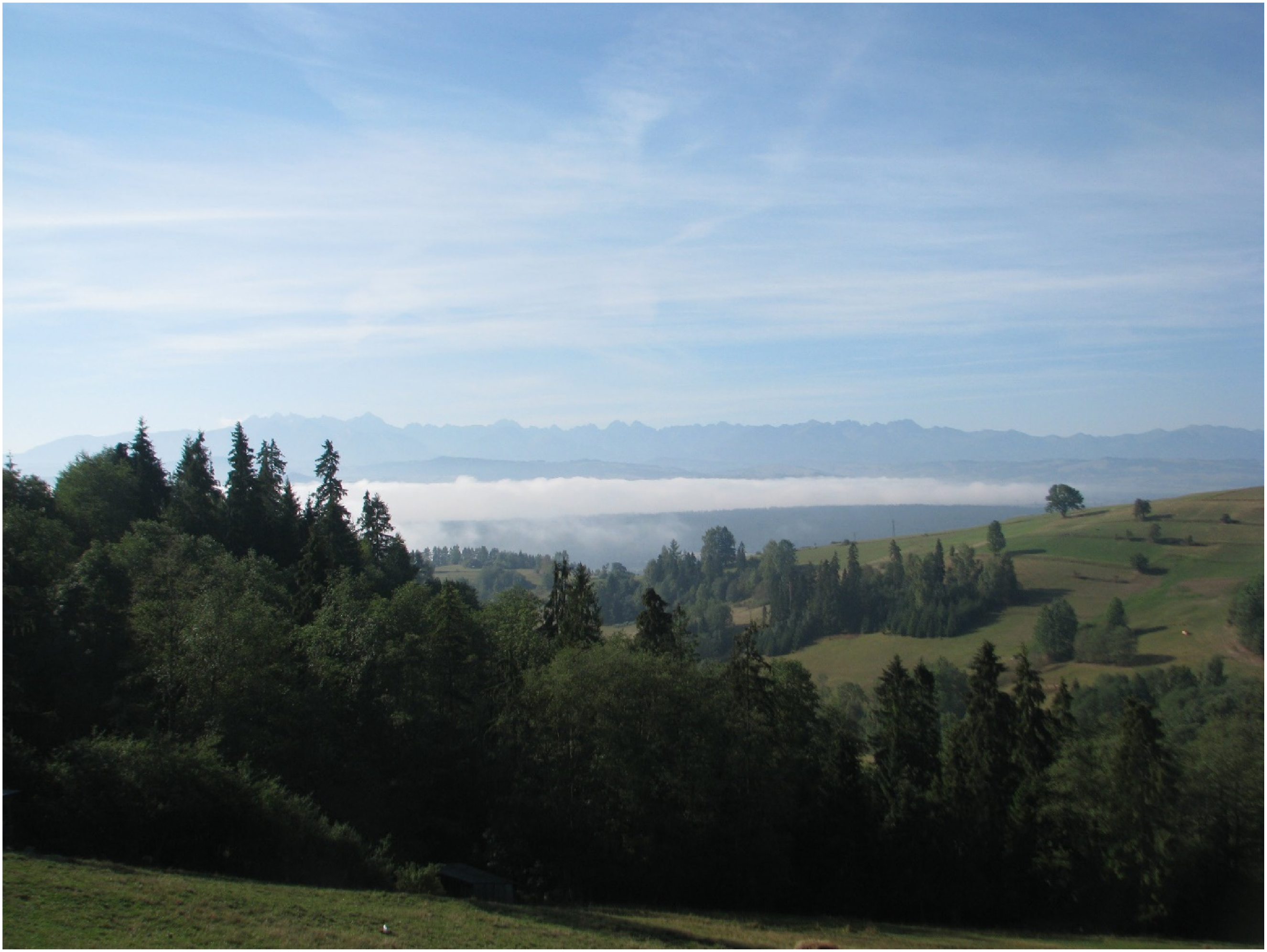
Speaking to Jacek, I was treated to a vision of the pastoral landscape as a ‘smooth’ space structured not by planning regulations and property laws, but shaped by climactic conditions, the morphology of the mountains, and the agency of the humans and animals which moved through it. It was shaped by his experiential knowledge of its topography and vegetation, and the behaviour of the (wild and domestic) animals that populated it. Yet, like his metaphor of pastoralism as a ‘picture’, this vision glossed over the many ways in which the ‘smooth’ space of the pastoral landscape was interrupted and wrinkled by economic, infrastructural, and legal factors. Such wrinkles were not always purely man-made. In fact, one of the biggest challenges faced by Jacek and his colleagues was the loss of pasturage through reforestation. The clearings and hay meadows which were historically maintained through pastoral activities have increasingly come under threat from changes in land-use and neglect by absent or uninterested owners (Lach and Bojko, 2022). Such fallow lands not only make for inferior pasturage for the sheep but may lead to a more permanent deprivation of resources if they are left ungrazed for longer periods. As Bartek, a juhas, explained: Nowadays, people have left either for America or abroad, to England and so on, the old ones have stayed or died, and the land lies fallow there. All manner of shit now grows there, nothing good, and the rest is invaded by bushes. That is how our pasture becomes overgrown.
To combat the encroachment of the forest on existing pasture, shepherds like Jacek and baca Adam have worked with the regional governments in Silesian and Małopolska to establish programmes co-funding the recovery and use of pasture. The longest running of these schemes, OWCA Plus (Sheep Plus), aims to identify, map, and bring (back) into use pastures in and around Highland communities in designated areas of the Silesian Beskids and Kraków-Częstochowa uplands. As one of the initiators of the programme, baca Adam explained that European Union and Polish agricultural funding made no direct provision for the communal use of land or livestock. However, it did offer modest subsidies to the owners of sheep and land willing to participate in the active grazing of livestock and the maintenance of traditional pastoral landscapes.
2
The scheme was therefore designed to entice local householders to buy more sheep and to turn over their land to pasture by offering them a financial incentive. Since its inception in 2006, the amount of land grazed under the OWCA Plus programme has doubled, while the number of sheep grazed by shepherds attached to the programme has risen five-fold (Karpeta et al., 2020). The reason more land was not being managed by the scheme, baca Adam told me, was that subsidies are calculated by the size of holdings. Given the small size of the average household plot in the region, he found it was a challenge to convince locals to do the necessary paperwork required to register for the scheme: We have a tremendously fragmented agrarian structure here. That is, plot by plot, homestead by homestead. What is more, all these homesteads have different owners, one by one, right? Franek, Staszek, Józek. And again Franek, Staszek, Józek all have 5, 10, 15 hectares scattered in plots [across the village] and so on. Well, it is simply a horror. As a result, for the most part these people do not go for subsidies at all.
Adam’s difficulties convincing householders to join the programme highlights the ‘misfit’ between the communal nature of local pastoral traditions, and the spatial regime which structured the access to financial support for agricultural activity. While shepherds experienced the pastoral landscape as a ‘smooth’ space created by the rhythms of people, animals, and climate, policy frameworks treated the same land as ‘striated’ space: as a series of fixed locations plotted on a topographical grid, bounded and controlled by the laws regulating their value and use. The OWCA Plus programme attempted to mediate between pastoralists’ understanding of the landscape and the abstract, Cartesian model of space embodied in European agricultural policy by translating the former into the latter. This was an imperfect translation at best. Focused on securing territory for grazing over facilitating the mobility of animals and humans across the landscape, the scheme created a patchwork of unconnected pastures between which shepherds and their flocks had to move to satisfy their hunger. As such, it ironed out the wrinkles in the landscape only in specific places and marked out active pasture as exceptional in the mountain terrain. More fundamentally, the scheme approached both land and sheep primarily as property: operating through a system of subsidies, it treated animals and plots as assets to which householders had the right to control access and from which they had the right to benefit (Verdery, 2003; von Benda-Beckmann and von Benda-Beckmann, 2009). Thus, while it aimed to ensure the recovery and continued operation of pasture across the Beskids, OWCA Plus nevertheless worked to strengthen the rights of property owners over any use rights (historically) negotiated by local shepherds.
The primacy accorded to private property in agricultural policy is reinforced by local demographic and economic conditions. Rural depopulation and a decrease in other types of agricultural activity mean that there are strong incentives for Highlanders to lease or sell their land for more lucrative purposes – typically small-scale construction and manufacturing activities, and the construction of hotels, holiday homes, and restaurants. The growth of tourism in the Carpathians has expanded the consumer base for pastoral cheeses but has also led to increasing amounts of land being given over to commercial activities which are incompatible with pastoralism. Shepherds operating partly and wholly outside programmes like OWCA Plus find that long-standing agreements with landowners can be terminated from one season to the next, and established routes to pasture can be blocked by new construction or fences. Such barriers not only force men and sheep to travel farther to find continuous stretches of pasture, but navigating several hundred sheep around blockages also requires extra manpower. The inconvenience and cost this causes sometimes leads pastoralists to take shortcuts across the properties where they have no grazing rights. As Bartek – an experienced juhas in his early sixties – explained, practicalities and the well-being of the sheep sometimes took precedence over property rights. He recounted a recent run-in with an elderly villager who had refused him access to a meadow in which she kept her own two cows, suggesting that he instead herd the sheep along the road. Reluctant to be the cause of a major traffic jam, he decided to drive the sheep across her property anyway, telling me that he figured that a ‘grandma’ would be ‘afraid to mess with a shepherd’.
Shepherds who are perceived to be encroaching on private property sometimes face harassment. One baca from the Pieniny area found that the haybales he had purchased for the overwintering of his personal sheep had been tipped into a nearby river. As wet bales were prone to rot, he was forced to buy a batch of new ones at extra expense. Another had a generator stolen, leaving his bacówka without power. Sometimes, the prospect of better financial returns can result in the complete, even violent, eviction of a shepherd from a locality. This was the case for baca Staszek, a second-generation head shepherd who lived and worked close to the Polish-Slovak border in the Pieniny area. After spending 15 years grazing a large area of land leased from a group of inhabitants from the nearby village, Staszek found that a local businessman had contacted the group with a proposal to build a tourist attraction on the land. Before any negotiations could take place, his bacówka mysteriously burned down one night, together with all his equipment for milking and cheese making which he had inherited from his father. When I met him, Staszek had been forced to move his herd to a new location and his old pastures had been turned into an outdoors activity park with zip-lines, climbing frames, and a paintball course. To add insult to injury, the park contained a reconstructed ‘bacówka’ surrounded by half-a-dozen sad-looking sheep, where guests were invited to buy pastoral cheeses from an unknown source.
The story of Staszek’s eviction shows what happens when property regimes and economic incentives come together, leading increasing amounts of land to be given over to commercial activities which are incompatible with pastoralism. The pastoral landscape, created by the movement of hooves and hungry mouths across the terrain, is gradually transformed into a ‘striated’ space organized around profit-making activities. These often take minimal account of either the natural environment or local histories of land-use in the region. In an effort to resist these transformations and maintain access to sufficient pasture, shepherds have tried to ‘re-fit’ existing agricultural policies around their needs using schemes like OWCA Plus. Yet, such schemes reward the possession, rather than the use of land. As such, they reinforce territorial boundaries, property ownership, and governance structures, embedding them in the landscape while promising to ‘smooth’ out spaces for pastoralism. Aware that such programmes offer only a partial solution to their problems, some shepherds have begun to seek political and legal recognition of the spatial practices which come with the communal traditions of pastoralism. As I show below, such calls for spatial justice involve not merely an assertion of the right to a share of the mountain landscape. Rather, they propose a radically different understanding of space which transcends traditional notions of ownership and exploitation, and seeks instead to embed spatial relationships between people, animals, and landscapes in a more equitable way.
The law of the periphery
In 2016, Poland experienced an outbreak of African swine fever. Spread predominantly by wild boar populations, it affected primarily regions in eastern Poland which had once been grazed by Highland shepherds during communism. Faced with the need to undertake mass culls of sick and at-risk pig populations, the Polish Ministry of Agriculture and Rural development proposed a surprising solution to the crisis: replacing pig farming with sheep farming in the affected areas. When the ministry announced its intention to fund a new national programme for the ‘Reconstruction and Sustainable Development of Sheep-Breeding’, my research assistant and I contacted Michał and baca Adam with the suggestion that they offer to consult with the ministry on the parameters of the programme. We suggested that they use this opportunity to emphasize the economic and environmental advantages of traditional communal pastoralism and highlight its specific financial and legal requirements. The resulting exchange between them and the ministry, however, was quite different from what we had imagined. Under the umbrella of the shepherds’ association ‘Transhumant Pastoralism’ (Fundacja ‘Pasterstwo Transhumancyjne’), Michał, Adam and a handful of prominent bacas from across the Carpathians produced an open letter which requested the ministry to develop legal mechanisms which would support communal pasturage and grant the pastoral enterprises the status of a beneficiary of the national Rural Development Programme (2014–20). At the end of the statement, the authors listed the ‘basic features’ of traditional Highland pastoralism which, they argued, needed to be protected by law, including the joint management of pastures, communal grazing activities, and the production of traditional cheeses.
In response to their appeal, the ministry informed the association that legal recognition of communal pasturage was not a requirement for gaining access to co-financing under existing rural development programmes. Rather, as with the OWCA Plus programme, funds were dispersed according to the property-based criteria for beneficiaries defined by the European Commission. As shepherds running their own pastoral enterprises, the authors of the statement undoubtedly already knew this. Their letter was thus a demonstrative act designed to draw attention to the lack of a legal and regulatory framework which could support the communality of grazing in the Highlands (rather than delivering any advice on how to reintroduce traditional pastoral practices in areas affected by swine fever). According to Michał, the pastoral project manager, Polish agricultural policy was skewed in favour of the large-scale, intensive farming which was common in the lowlands that make up most of the country. It did not differentiate between the conditions and needs of lowland framers and large-scale producers of livestock for meat, and those of Highland pastoralists, often leading to the implementation of legislation which was detrimental to traditional forms of pastoral practice in the region (see Sendyka and Makovicky, 2018). The solution, he asserted, was a ‘mountain’ or ‘shepherds’ law’ (ustawa pasterska) which would make legal provisions to govern the movement of flocks, access to and sustainable use of pasture, and the rights and obligations of herders: We would like a mountain law, along the lines of the law that has been in place in Austria or France for many years now. That is, a mountain law that protects us as pastoralists in this authentic version that does not forcefully adapt us to the rules and laws of the city or towns or even the agriculture of the lowlands. Such a mountain law could consider pastoralism in general, because as of today, there is no word about pastoralism in the entire statutes on Polish agriculture. There is animal husbandry, there is agriculture, but pastoralism is absent.
Echoing the historical Wallachian Law which had been used to govern the Polish Carpathians in the early modern period, Michał’s idea of a specific ‘mountain law’ reflected a general feeling among shepherds that they were rendered ‘invisible’ by current legal and regulatory frameworks. This was only reinforced by the ministry’s dismissal of their demands, which confirmed their conviction that policymakers were uninterested in engaging with and understanding the specificities of traditional pastoralism and the climatic and environmental conditions of the Highlands. Baca Kazek, the long-time director of the pastoral producers’ cooperative Gazdowie believed that the ministry was not only uninterested in supporting marginal and traditional agricultural practices, but that small producers were unable to compete against the power of national and global agri-businesses and their lobbyists. In place of Michał’s more poetic, historically informed call for a ‘shepherds’ law’, Kazek used more combative and strident language, calling the state an ‘apparatus of repression’ and arguing that the countryside ‘doesn’t really have much to say in the politics of the state’. Like Michał, he maintained that Polish agricultural policy needed to be regionalized to better address the specificities of the mountain environment and the specific needs and conditions of Highland shepherds: If the periphery is doing well, it means that the centre is doing well, no? And if the periphery is complaining it means that something in the centre is wrong. And these peripheries must be considered, and the consultation must be from the periphery, that is, from the most inaccessible, most unusual places.
Advocating for a creation of a ‘mountain law’ or ‘law of the peripheries’, Michał and Kazek thus sought to harness the power of the law to produce and naturalize social and spatial orders to their advantage (Blomley, 1994; von Benda-Beckmann and von Benda-Beckmann, 2009). Rejecting the universalist application of current agricultural policy, they imagined that a greater emplacement of Polish law would allow for the adjustment of the rules surrounding land-use and animal husbandry to fit the ecological and geographical specificities of the Carpathians landscape. It would also provide legal recognition for the customary rights, communal grazing practices, multi-species relationships, and structures of authority which underpin traditional forms of pastoralism in the region. Michał and Kazek’s appeal to the law was therefore not motivated by a simple desire to claim proprietorship of the mountain landscape and its resources on behalf of their fellow shepherds (and to the exclusion of others). Rather, like attempts to ‘re-fit’ existing policy around pastoral practice, it was based on their belief that – with the support of the Polish state – the ‘striated’ spaces which were currently organized around private property and profit-making activities could be turned into ‘smooth’ landscapes governed by the rhythm of pastoral activities. As such, their call for a new ‘mountain’ or ‘shepherds’ law’ was based in a rejection of the property-based spatial orders which underpin current Polish (and European) agricultural policy in favour of an alternative order based on an idea of free movement and an open-ended use of the natural resources of the mountain environment. If law is a tool for the production of space (Lefebvre, 1991), then the function of a new ‘shepherds’ law’ would be to produce space as something other than property.
At the heart of this alternative spatial order sat an idea of radical mobility which challenged not only economically and politically dominant norms of private property but also the ideas of localized culture which accompany them. According to baca Adam, this mobility was grounded in the spatial and temporal routines of pastoral practice, and their ancient Wallachian heritage too. Highland shepherds, he explained to me, were not simply ‘inhabitants of the mountains’, but more specifically those who ‘refer to pastoral culture’ and ‘build their identity on the base and source of a way of life that was created across the Carpathians’. Alluding to the historical migration of the Wallachian shepherds and their flocks across the mountaintop pastures, he pointed out that many contemporary practices of Polish shepherds are shared with pastoralists across the entire mountain range – among them, specific ways in which they process milk and cheese, and a shared material culture and technical vocabulary connected to pastoral practice itself. Seeing himself as heir to an ancient Balkan culture which had travelled westwards along the Carpathian Highlands into the heart of Europe, he sketched out a geographical imaginary which was oriented eastwards and southwards along the crescent of the Carpathian Mountains, rather than urban centres of culture and government in Poland. Collapsing the temporal distance between the migratory practices of Wallachian shepherds and the transhumance of their contemporary counterparts, he portrayed himself and his colleagues as nomads: ‘a Highlander is not a person connected to a certain place; he is person on the road. Because the shepherd is a person always in motion.’
Anthropologists have already shown how the movement of bodies poses a challenge to the ‘sedentarist metaphysics’ (Malkki, 1992) of the modern nation state, testing the political logics and social customs which link people to places, and rights to territories (Gupta and Ferguson, 1997; Malkki, 1992). Advocating for a different spatial order built around the necessity of and right to pastoral mobility, Adam, Michał, and Kazek all presented a vision of the Carpathian landscape which troubled these spatial conventions. Calling for a legal recognition of transhumant pastoralism and the emplacement of the law in the mountain landscape through the regionalization of agriculture policy, Michał and Kazek’s idea of a ‘shepherds’ law’ imagined a de-centring of existing relations of power and the property relations on which they are built. Adam’s vision of pastoral practices and landscapes, as rooted in the ancient migratory routes and nomadic practices of early modern shepherds presented even more of a re-orientation away from conventional ideas of how cultures and identities are localized. Although he presented pastoral culture as spatially rooted in the topography of the Carpathian landscape, what bound pastoral culture and identity to this landscape was precisely the historical and contemporary mobility of human and animal bodies across the terrain. Pastoral identity, he suggested, was grounded in the desire and the right to move, rather than a desire to settle, possess, and exploit. In the following, final section, I reflect on how the spatial imaginaries constructed by these men can tell us about demands for social justice which go beyond calls for redistribution.
Conclusions
In this article, I examined the idea of – and demand for – spatial justice among shepherds in Highland Poland, focusing on the ‘misfit’ between the mobile, communal nature of traditional pastoralism and the static perceptions of landscape and property underpinning Polish and European agricultural policymaking. A communal practice which relies on the pooling of livestock and pasture, as well as the mobility of humans and animals, traditional transhumant pastoralism requires access to land and natural resources which are often held in private hands. As an economic and physical practice, transhumant pastoralism thus creates spatial demands which sometimes conflict with local householders’ rights to control access to their properties, and the plans of entrepreneurial individuals who wish to use their land for more lucrative economic activities, such as manufacturing and tourism. It also sits uncomfortably within the current European and Polish legal and regulatory context which rewards land (and animal) ownership and fixed agricultural production, rather than extensive, mobile forms of agriculture. Conservation policies restrict grazing in protected areas, while agricultural subsidies are allocated based on property holdings and livestock ownership – even in schemes meant to facilitate the sustainable stewardship of pasturage. Thus, while shepherds see the local landscape as a living product of the long-term cycles of seasonal movement of animals across the terrain, they are forced to operate within a political and legal framework which approaches the mountain landscape as a static space for profit-making activities. Establishing possession as the basis of the right to access and extract resources from the landscape, this framework does not acknowledge the historical role of shepherds as custodians of land and livestock in the mountains.
Scholars have typically considered spatial justice a problem of fair distribution of land and resources, demonstrating how spatial inequalities reflect broader power structures (Albertus 2025). In the Eastern European context, scholars have primarily focused on documenting how private property became the dominant medium of socio-economic power after the end of communism, creating and reinforcing socio-economic inequalities in rural and urban contexts. Yet, the efforts of bacas like Marek, Jacek, and Adam to keep their pastoral enterprises running and profitable in a property regime which privileges private property and capitalist accumulation suggests that there is another question which should be asked: What if we think of spatial justice not primarily in terms of owning or redistributing land, but in terms of custodianship and mobility? What would an alternative spatial regime look like – one in which pastoral mobility was not merely tolerated by local property owners, but which offered a legal sanction for their movement through and use of the property of others in accordance with pastoral rhythms? By resisting the dominant legal frameworks that prioritize fixed ownership, shepherds highlight the limitations of property-based models of land governance and offer an alternative model of equitable spatial relations that emphasizes mobility, communal land-use, and ecological interdependence over fixed property rights. Calling for the establishment of a ‘shepherds’ law’ and emphasizing radical mobility as core to their (professional) identities, Highland shepherds articulate a vision of justice which is not conditioned by a desire to exercise exclusive control over land or resources. Ultimately, then, spatial justice for transhumant shepherds must be understood as a struggle over mobility and access, rather than a question of gaining (or depriving others of) property rights.
Footnotes
Acknowledgements
I would like to thank the two editors of this special issue and the anonymous reviewers for their comments. This research would not have been possible without the many frank and open conversations I have with my shepherd interlocutors, and the company, assistance, and input from my research assistant, Mr Paweł Sendyka.

Ethical considerations
This research was granted ethical approval by the Oxford School of Global and Area Studies Departmental Research Ethics Committee. The research design and data management followed the Association of Social Anthropologists (ASA) of the UK Ethical Guidelines 2021.
Funding
The authors disclosed receipt of the following financial support for the research, authorship, and/or publication of this article: The research for this article was funded by a John Fell Fund Grant from the University of Oxford.
Declaration of conflicting interests
The authors declared no potential conflicts of interest with respect to the research, authorship, and/or publication of this article.