




Abstract
Questions of belonging are especially acute for border dwellers, who do not easily fit the exclusivist logics of the nation state. This certainly has been the case for inhabitants of Sarpi ever since their village was cut in two by the border separating the Soviet Union from Turkey. In Soviet Sarpi, villagers had to navigate a state suspicious of their Muslim and ethnic minority Laz identity, and their potential loyalties to the other side. When the border reopened many decades later, these same villagers had come to see themselves as Georgian nationals and were converting to Orthodox Christianity. To capture their tumultuous trajectories of belonging, this article focuses on the village cemetery as a place where villagers’ social identities are both ‘engraved’ and ‘uprooted’. It is a place where older graves had become misfits – reminders of a past that needed to be forgotten – resulting in the refitting and repairing of graves. The material, social, and imaginary dimensions of graves illuminate the textured and fractured nature of collective identification on the state’s edge.
Introduction
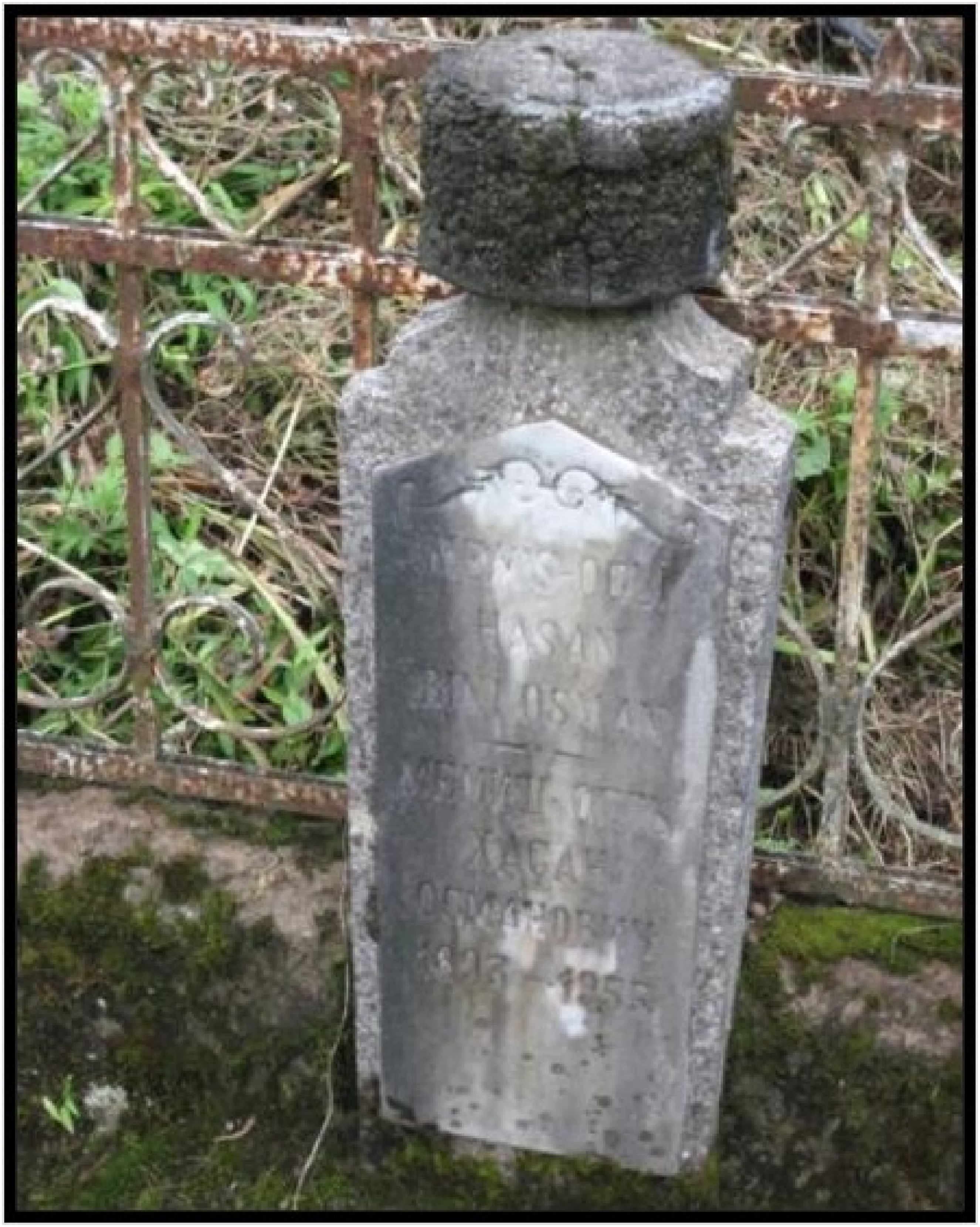
In August 2011, during a short visit to Sarpi, a village located on the edge of Georgia and Turkey where I previously had carried out fieldwork, I spent some time at the cemetery. Accompanied by a local friend, we gravitated towards the section where members of her extended family were buried. There, my attention was caught by an old grave onto which a new headstone was awkwardly planted (Figure 1). The grave had been there since 1959 and used to have an Ottoman-styled headstone with a fez-shaped
1
cone on top, bearing the name Memişoğlı, Shazie Hasan-kızı in the Latin as well as Cyrillic alphabets (Мемишогли Шазие Хасан кызы). The headstone, however, had been removed, replaced by a rectangular black granite plate that featured the deceased’s name in Georgian as შაზიე მემიშიში (Shazie Memishishi) alongside the years 1927–1959. When my companion noticed my curiosity about the gravestone, she explained that Shazie never married, had lived in her parental house with her youngest brother and his family, and that her nephews were the ones who had replaced the original headstone (which had looked like the one depicted in Figure 2). My companion approved of the removal of the old stone but added that the nephews should have done a better job, given that the new stone was awkwardly cemented into the grave’s concrete base, which made the alterations stand out, creating a grave that was neither here nor there. Work was to be done, but a complete makeover of the grave would not be cheap. The newly installed gravestone of Shazie Memishishi (see also Figure 3) A picture of the type of headstone that used to adorn Shazie’s grave – this one belongs to her father, Hasan Memishoghli (see also Figure 3)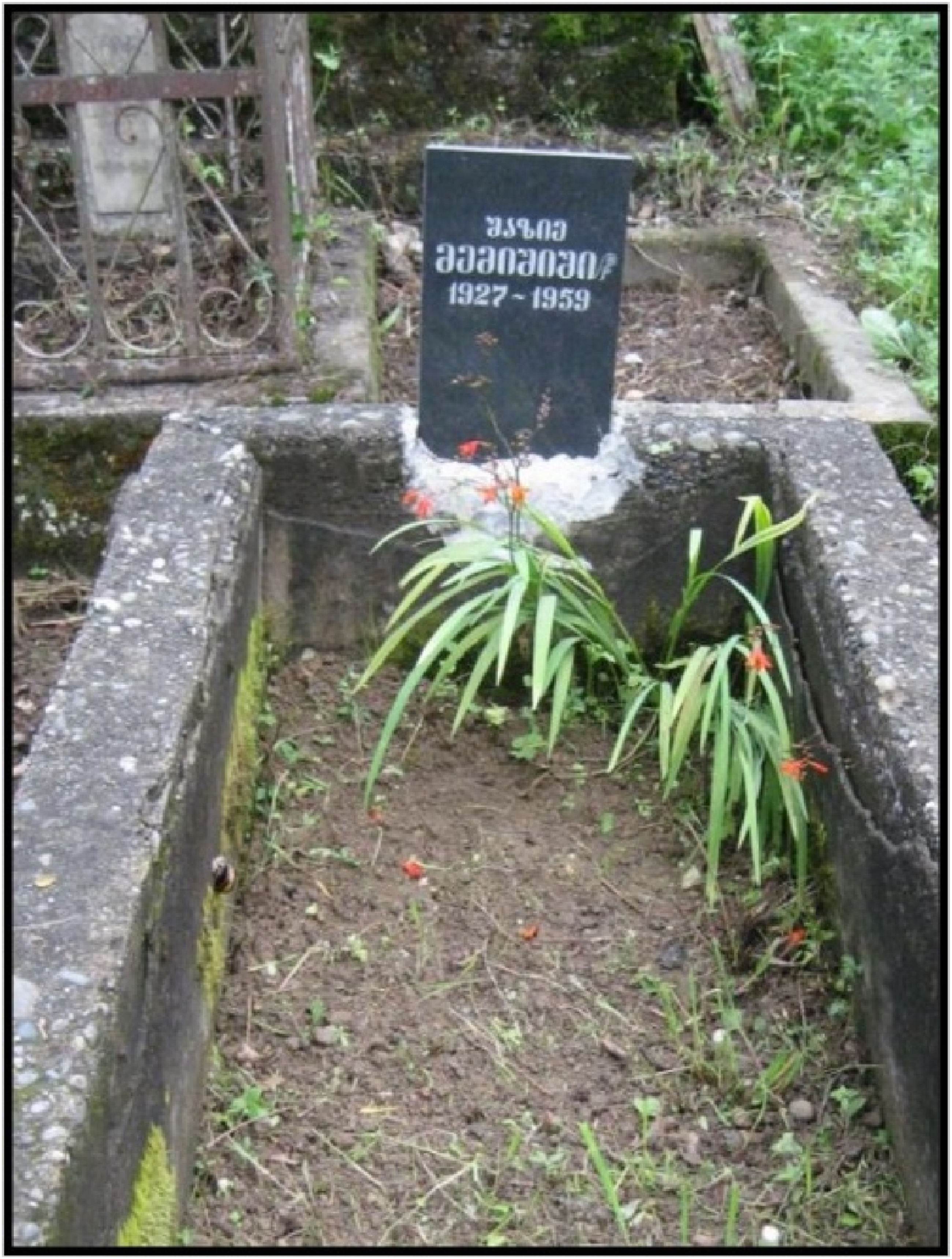
Even if we restrict ourselves to this single grave, it is difficult to miss the significance of the changes. Alphabets had been replaced, an Ottoman-looking stone had been removed, Shazie’s patronymic (Hasan-kızı) had been omitted, and the ending of her surname had been altered (the Turkish ‘-oğli’ had been replaced with the Lazuri ‘-ishi’). 2 These changes were indicative of much broader geopolitical changes and will be discussed more elaborately in the next sections but require a brief mention here. Sarpi had been part of the Ottoman Empire until 1878 when it was incorporated into the Russian Empire. Four decades later, in 1921, it was cut in two, with the border between the Turkish Republic and the USSR being drawn along a small stream running through the village, flowing into the Black Sea. At the time, Sarpi’s Laz residents spoke their own language Lazuri (as well as some Turkish), were Muslim, and maintained multiple relations with other Laz living mostly to the West (in what became the Republic of Turkey). However, these shared linguistic, ethnic, and religious features would develop differently on each side, as Turkish Sarp and Soviet Sarpi were incorporated into different and competing political and ideological formations. The almost violent changes to Shazie’s grave were a stark reminder of how deeply these changes were felt, with her younger relatives deciding to erase any sign of misfitting loyalties and orientations.
As such, the opening vignette highlights some of the complexities of fitting and misfitting along the border. The problem, for Shazie’s younger family members, was that the Turkish-looking grave did not fit how they wanted to remember their aunt, and, moreover, that its Islamic connotations clashed with their own Christian identity. Removing the headstone and rewriting Shazie’s name in the Georgian alphabet seemed an attempt to refit their aunt into the family, but because the new stone was poorly cemented into the grave’s concrete base, it stood out as an eyesore – a material misfit. We could also question how ‘fitting’ it is for someone who died as a Memishoğli to be posthumously renamed Memishishi decades later, even if by then this had become the family’s official surname. This recursive feature of misfitting – with each successive repair creating a new friction or misfit – highlights the fragile nature of belonging in a changing world.
The issue of misfitting was especially poignant at this specific cemetery due to its location on the border. The proximity of Turkey, only a literal stone’s throw away across the narrow valley, heightened the symbolic potency of references to nation, state, language, religion, and history. In fact, due to their proximity to otherness, border dwellers are often seen as misfits, looked at suspiciously from both sides. It is because of the implied frictions and tensions, that a border and boundary perspective can offer insight into how categorization works in practice, and how it shapes populations (see e.g. Barth, 1969; Sahlins, 1989). As we shall see, categorical divisions were constantly made in this border cemetery – by family members engraving the social identity of their loved ones, and by states attempting to anchor their subjects in national soil – but without permanently settling questions of belonging.
Cemeteries are, of course, also temporal portals. Graves connect the living with the dead and allow the past to be intimately experienced. As such, the cemetery is a place where the past is constantly revisited and, in the case of Sarpi, where graves are being fitted, refitted, and retrofitted. These efforts can be brought into dialogue with recent discussions that have lauded ‘repair’ as part of decolonial strategies aimed at overcoming traumas of the past (e.g. Prager, 2008; Thomas, 2019). As we shall see, although the refitting and repairing of graves in Sarpi should certainly be understood as efforts to overcome problematic pasts, not everyone agreed with the diagnosis of Soviet and Muslim pasts as problematic, or with seeing the future as Christian. Hence, if we posit that repair depends on brokenness, attention needs to be paid to the politics of diagnosis. And when we do so, we may discover that while repair is to be lauded for its capacity to heal, its potential darker sides should not be ignored.
By focusing on the frictions surrounding ‘materialities of belonging’ at the cemetery, this article also aims to understand how ‘internal’ subjectivities are tied together with the ‘external’ affects of landscapes (see Fontein, 2011: 714), and how they fit within an unfolding and changing political context on the state’s edge. 3 As we shall see, the material, social, and imaginary dimensions of graves illuminate the textured and fractured nature of collective identification on the state’s edge. The next section approaches these issues historically, treating the cemetery as a barometer of identity politics that registers the effects wrought by geopolitical change. Tracing these materialities of belonging across generations will show how villagers responded to changing ideological winds and carried out works of repair, thereby revealing important aspects of how life on the edge of states is lived.
Diverging timelines and the fitting of graves
During the second half of the 20th century, after the Stalinist terror had ended, but with the border between Soviet Georgia and Turkey still hermetically sealed, people in Sarpi occasionally participated in funerary processions that were locally described as beautiful and tragic. Whenever a relative had died on the other side of the border, this would be secretly ‘announced’ through loud wailing in Lazuri – which was unintelligible to border guards but audible across the borderline – to covertly communicate the identity of the deceased. And when it concerned a relative who had lived close to the border, relatives on the opposite side would dress in black and assemble at the time of the funeral, ready to join in the procession. They would walk along as the body was carried from the deceased’s home to the cemetery in the hills. But because they could not cross the borderline at the valley bottom, they did so on the opposite slope, effectively creating parallel funerary processions.
I had heard versions of this story during my half-year residence in Sarpi in 1999 and 2000, but at the time my interlocutors caveated this by saying it had only happened a few times. Interestingly, the story had entered conversations more frequently and unreservedly when, twenty-five years later, in 2024, I returned for collaborative fieldwork. 4 The story appeared to have garnered special appeal among a new generation of young adults, many of whom had developed cross-border friendships. To them, the story summed up the tragic history of their divided village and cast its residents as deeply caring for the relatives they had lost. But, while rooted in real historical events, the story also concealed that the parallels or similarities between Georgian Sarpi and Turkish Sarp had carried dangers of various kinds, and often had to be denied. Crucially, as villagers responded to those dangers over generations, the divide between the two villages increased, something that became especially evident after the border was reopened in the late 1980s. The history of the cemetery and its graves captures these changes.
In the early 20th century, when Sarpi was still an undivided village, its cemetery was located next to the mosque, down in the valley near the Black Sea shore, in an area called Nogha, or marketplace. But with the border delineation of 1921, the mosque and cemetery ended up on the Turkish side, while the village imam was placed under strict surveillance by the Soviet state on the opposite side. The cemetery nevertheless continued to be used for another decade, until border crossings were banned in the 1930s, and a new cemetery was created on each side. 5 The new cemetery in Soviet Sarpi, of primary interest here, is located approximately 1 kilometre inland, into the hills, about 50 metres from the borderline. Nowadays it is served by a narrow road winding its way up to the cemetery and continuing further into the hills where the village’s highest houses are located. According to the cemetery’s caretaker Aman Abuladze, only after this road was constructed in the 1940s was it been possible to transport larger gravestones here. Possibly because of this, not much can be said about the earliest graves, dating from the 1930s. Most of these graves are unmarked, apart from a handful to which headstones were added in later decades. But even if there are gaps in what can be known, an overview of how gravestone culture changed in subsequent decades is revealing of identity politics on the border.
The graves from the 1940s and 1950s stand out among the rest. Their headstones have the statue-shape described earlier, topped with a fez-cone. They resemble graves from the late 19th and early 20th century across the Ottoman Empire. In Sarpi, these headstones are seen to mark the deceased as Muslim, even though they do not include an inscription in the Arabic script or any reference to the Quran, as is common on gravestones on the Turkish side from this period. Also relevant is that the texts are rarely in one alphabet, but instead show combinations of the Cyrillic, Latin, and Georgian alphabets. This confusion of scripts suggests that the families were adjusting to new political realities, the direction of which was not entirely clear at the time, even while the shape of gravestones retained some reference to religious identity. 6 In their own uncertain manner, these graves befitted the radical changes that the deceased and their descendants were experiencing. It was only in later decades that these graves would come to be seen as material misfits.
By the late 1960s grave culture in Sarpi had changed radically. Gone was the wavering between alphabets – all names now written in the Georgian script. Moreover, virtually all graves from this period carried the official new surnames, with Lazuri (-ishi) or Georgian (-dze or -shvili) endings. 7 As villagers explained to me, these new surnames had gradually been adopted by families to signal their acceptance of Soviet Georgian reality, and to avoid drawing negative attention from the state. While these changes sometimes only affected the ending of a surname, in other cases names were changed beyond recognition. For example, the Bekiroğli family group ‘split’ into those adopting Bekirishi and those adopting Bakradze as their new surname, with the first staying closer to the root and adopting the Lazuri ending -shi, while the latter adopted the Georgian ending -dze as well as a name that was common in other provinces of Georgia. These choices were partly inspired by the relevant families’ standing, with those fearing negative repercussions or having career ambitions more likely to choose conventional Georgian names (Pelkmans, 2013: 48).
From an aesthetic and symbolic perspective, graves from this late-Soviet period are the most muted ones. The headstones are all made of rectangular granite plates, some larger, some smaller. They show little more than the names of the deceased (forename, patronymic, surname) along with the year of birth and death. 8 Arguably they are most revealing for what they lack. The graves make no reference to religion or ideology – no Islamic or communist symbols or signs can be found on these graves. As such, these graves signalled that people in Sarpi adjusted to the new secular Soviet reality, and to their village being an integral part of the Georgian Soviet Socialist Republic, but without having fully internalized the accompanying ideological messages.
The rather muted character of late-Soviet gravestones contrasts sharply with the more expressive ones that appeared from the 1990s onwards, after Georgia had regained independence. Unsurprisingly, the inscriptions on gravestones from this period are all in the Georgian alphabet and feature only the ‘new’ surnames. Frequently, this is coupled with various displays of Georgian-ness – inscriptions of lines of poetry or of a wine-glass to toast the deceased. Newly available technology allowed pictures of the deceased to be reproduced on black granite, sometimes accompanied by characterizing features such as a musical instrument or the deceased standing next to their car. Gone is the relative uniformity of graves, with economic differences being reflected in the size of gravestones and the quality of the accompanying pictures. From approximately 2000 onwards, an increasing proportion of gravestones feature Christian symbols, especially crosses, sometimes coupled with a picture or miniature model of a church. These changes reflect the rise of ‘religious nationalism’ in Georgia, and ongoing conversion to Orthodox Christianity in Sarpi, and also show that the cemetery had become a place where identities and loyalties were performed. Indeed, Christian and other symbols adorned the portraits of the deceased, portraits that were carefully chosen to highlight their character and virtue. Although this trend can be detected in cemeteries across Georgia, such declarative statements had heightened significance in Sarpi – the historical and geographic proximity to Turkey and the Muslim world made presentations of self both sensitive and vital.
To avoid the impression that things were changing only in (Soviet) Georgian Sarpi, let me briefly describe what happened in the cemetery across the border. In fact, and perhaps contrary to expectations, the Ottoman-style headstones and old surnames survived longer in Soviet Sarpi than in Turkish Sarp. There, a wave of modernizing reforms, not least of which was the Surname Law (Soyadı Kanunu) of 1934, resulted in a transformation of graves. 9 Thus, a 1943 grave of a man named Kadem does not feature his old (‘Ottoman’) surname Șainoğli but instead the new (‘Turkish’) one Özşahin. The headstones themselves are characterized by relative uniformity – made of grey or white marble plates, reminiscent of 20th-century graves across Turkey. They mention the patronymic, the given name and surname, plus the years of birth and death, followed by the phrase Ruhuna Fatiha (‘Fatiha to his soul’) in the Latin script, with an Arabic inscription on top of the stone reading in Ottoman Turkish, ‘[God] is the everlasting’. The format of inscription and the shape of grave and headstone have continued virtually without change into the present day. Which is not to say that there are no exceptions. For example, a small minority of recent graves feature a portrait of the deceased, and I was told that these headstones were imported from Georgia, where this technology is more widely available. Nonetheless, the vast majority of graves conform to the standard format, one that has minimized reference to the Ottoman past, and places the dead within their modern-named patriline. The graves mark the deceased unambiguously as Muslims and as subjects of the Turkish nation.
*
The cemeteries’ trajectories show some parallels and borrowings, most notably that names were changed on both sides, but they demonstrate more evidently how the two villages diverged over time, each side aligning with their respective nation-state. This divergence had struck me with some force back in November 1999, when I was made aware of a death across the border. My host mother Meri’s aunt Fadime had died at the age of 86. Fadime had come of age in Soviet Sarpi but married into Turkish Sarp in the early 1930s, when the border could still be crossed. Her entire adult life she had lived in a house overlooking the inaccessible Soviet Georgian side where her direct blood relatives lived. By the time the border reopened, in 1989, her declining health prevented Fadime from visiting her native neighbourhood. Since then, her one remaining brother had visited her each year, and naturally had also crossed the border to attend the funeral. However, he was the only person from the Georgian side to have done so. Meri had decided to attend her aunt’s funeral while staying on the Georgian side. Dressed in black, she walked up to a curve in the road from where her aunt’s house could be seen, and waited. After a while she watched as a small funerary procession left the house and disappeared from sight five minutes later as the road curved around the hillside on the way to the cemetery. I had accompanied Meri and, as we walked back, we talked about the momentous nature of this event, as it was the last direct cross-border brother–sister bond that had come to an end. But what the event also signified, at least to me, was that kinship relations connecting the two villages had already largely unravelled. Apart from Fadime’s brother Hasan who had crossed the border, we were the only ones on the Georgian side who ‘attended’ the funeral, from afar.
Which brings me back to the memory of the Soviet-era parallel funerary processions. That memory offered a beautiful image, but an unstable one. Not only had there probably never been more than a few of such parallel processions, the rough geography of Sarpi is such that they probably never looked very parallel to begin with. In any case, the parallel processions had become less parallel with the passing of generations, each side moving in a different direction. The memory of the parallel procession captured an important sentiment, one that honoured cross-border family relations, but without offering solid ground to stand on. The cemetery exhibited the same diverging pattern, acting as an ideological barometer of sorts, while also demonstrating the active role of villagers in shaping their history. In Soviet Sarpi, villagers found pragmatic ways to adjust to the times, to fit into Soviet Georgian society while still staying true to the values they held dear. Relevant here was the delay in gravestones catching up with ideological changes. As we saw, graves continued to feature Ottoman elements until the 1950s, and old names likewise several decades after these had officially changed. This indicated the lasting influence of tradition, as well as how it was reconciled with the needs of new generations.
In the post-Soviet period this toleration of ambiguity was being newly tested as we shall see more clearly in the next section. The materiality of graves is significant here, revealing a contrast with the malleability of stories. Consider that, in the ‘parallel funeral processions’ story, inconvenient details such as those pertaining to religion could be easily omitted to allow for celebrating cross-border relations. The physicality of graves made it trickier to read them selectively – their materiality stuck out, their misfitting elements undeniable. While the story could be easily modified, the gravestones needed physical uprooting.
Unstable ground and the refitting of graves
In the winter of 2000, I attended the funeral of Aishe – who had died at an advanced age – and joined the procession to the cemetery. The temperature was hovering around freezing point and, as we arrived there, a snowstorm arose. Aishe’s body was quickly lowered into the ground, after which two men placed wooden planks on top and started to cover it with soil. Some of the other men stayed on as the deceased disappeared under the soil, but most left quickly, making their way to the commemorative meal at a neighbour’s house. When later I met up with my acquaintance Khatuna, she told me: ‘It seems that God has given her [Aishe] this weather; you know, she was very religious, and probably didn’t want women to accompany her to the cemetery.’ Khatuna’s point was that in local Islamic tradition only men were supposed to join the funeral procession, a tradition that was no longer upheld but had been temporarily restored by the poor weather. Khatuna’s comments revealed that, despite the ideal that funerary rites should honour the wishes of the deceased, this was not without tension. The tension became even more palpable some days later, when I attended a commemorative meal hosted by Aishe’s son Tamaz, a proud and newly baptized Christian. The preparations appeared to be in accordance with Aishe’s wish to follow the Islamic tradition: men and women were seated separately, the dishes were strictly vegetarian, and, obviously, no alcoholic beverages were served. At the men’s table, however, not everything was as it seemed. Tamaz sat at the head of the table and served the male guests lemonade. Then, however, he took a bottle of Borjomi (mineral water) and poured it into long glasses, giving me and the other men a meaningful look. As it turned out, he had filled Borjomi bottles with chacha (a strong alcoholic drink), allowing us men to honour his mother ‘properly’ as a Georgian, rather than as a Muslim.
These funerary events bespeak the central tension that villagers struggled with during the first decades following the reopening of the border, namely the need to reconcile their Muslim past with their Georgian-Christian future. The struggle revealed that such reconciliation, or refitting, combines destructive and restorative elements. If, from one perspective, the alcoholic toasts defiled the integrity of Aishe’s Islamic funeral, from another they restored Aishe to her place as a member of the Georgian nation. Here, damaging and repairing appear as two sides of the process of refitting. My point is that while the act of repair requires brokenness, interpretations of brokenness will vary, with the result that repairs will produce new strains or even ruptures. This was also so because, in contrast to what Kader Attia refers to as ‘genuine repair’, in which ‘past injuries, scars, patches or wounds stay visible’ (2024, cited in Cousins, 2023), acts of repair on the Georgian-Turkish border aimed to overcome a problematic past by covering up the scars. To better understand how the destructive and restorative dimensions of refitting transpired at the cemetery, it will be useful to situate them in the broader border landscape, and the changes that unfolded there after 1989.
*
The sensitivities surrounding collective identity in Sarpi need to be seen against the backdrop of the border opening in 1989 in combination with the collapse of the USSR and independence of Georgia in 1991. During preceding decades, villagers of Soviet Sarpi had gradually adjusted to the realities of Soviet life and had come to see themselves as members of the broader Georgian nation. If the heavy-handed border regime had set the physical parameters, Soviet historians, linguists, and ethnographers, including those from Sarpi, had worked hard to provide the building blocks for integrating the Laz into the (imagined) Georgian nation. The resulting dominant narrative emphasized that Georgians and Laz had a shared history in the Colchis and then Lazica kingdoms, it stressed the linguistic links between Lazuri and Georgian, and dwelled on similarities in material culture and architecture. 10 And, crucially, during the Soviet period these links had been cemented through marriage, education, work, and friendship, thereby firmly connecting Sarpi residents with the Georgian hinterland (see also Pelkmans, 2006: 80). As a result, villagers of Soviet Sarpi valued their status as Laz, interpreting it as a sub-category of the larger Georgian nation.
This state of play was tossed into the air in the early 1990s. Following decades of militant secularism, Orthodox Christianity became a central pillar of national identity as Georgia moved to independence, putting pressure on Georgians with a Muslim background to reconsider their religious affiliation. While this discomfort applied to all such Georgians, the situation in Sarpi put the issue in sharp relief. Basically, the border opening made visible that the Laz (who mainly lived across the border) were mostly Muslim and loyal subjects of the Republic of Turkey. The sensitivities came into even greater focus in 1992 when a new mosque was built in Turkish Sarp, not in the village proper but rather on a rock sticking out into the sea, ensuring its visibility from across the border. To Christian-oriented residents of Georgian Sarpi this was a provocation, not least because it was regularly commented upon by visitors from elsewhere in Georgia, who would joke that arriving in Sarpi felt like they had already entered Turkey. Although differently from the suspicious gaze of the Soviet state, public attention to religion once again put the spotlight on villagers’ loyalties.
These pressures prompted many villagers to emphasize their loyalty to the Georgian nation, as well as to convert to Orthodox Christianity, which they presented as a return to their ancestral faith, that is, to the period before the Laz adopted Islam several centuries earlier. 11 During fieldwork in 1999 and 2000, approximately half of the population had already been formally baptized, with the process of conversion continuing apace since then. These religious changes also started to become manifest in the material landscape. By the mid-1990s, a group of villagers was looking into the possibility of constructing a church in Georgian Sarpi. The immediate impulse, as mentioned, was the new mosque on the other side, to which the new church would be a counterweight. But to do so properly, the church would have to be at least as big as the mosque, should be located near the border and, ideally, visible from Turkey. Otherwise, if ‘we build only a small chapel […] there would be no balance’, one of the men told me. The project was initially shelved, due to the costs involved and lack of available land. But it was revived a decade later, when the dismantling of a military compound freed up land near the border on the coastline, and cooperation with the eparchy of Batumi and Lazeti was secured. The new church, financed by the eparchy, was built to incorporate stones, sculptures and icons retrieved from many other eparchies of the Georgian patriarchate, thereby cementing the link to religion and nation.
Nowadays (in 2024), when arriving in Georgia through the Sarpi border crossing, it is hard to escape the impression that one is entering Christian territory. A contributing factor, of course, is that the new Georgian flag, adopted in 2005, features five red crosses against a white background. This Christian imagery is reinforced by several landmarks. As travellers leave the customs square, they pass along the side of the new church and soon meet a monument dedicated to Andrew the Apostle, commemorated for having first brought Christianity to these lands. Looking up into the hills one can see another church, privately funded and unfinished, with a large metal cross in front that is illuminated at night. Less visible, but still relevant, is that a convent has been founded at the site of a medieval church into the hills.
Reflecting on the tremendous labour that went into constructing these various symbols and monuments of Christianity, I am reminded of David Coplan’s (2012: 508) point that the performative effort invested in borders negatively correlates with the credibility of the state. In other words, such efforts can be interpreted as attempts to hide or counteract perceived weaknesses. Similarly, it is not far-fetched to interpret the investment in Christian infrastructure and symbolism as a ‘fiat infrastructure’ (Bovensiepen, 2024) that compensates for the village’s Islamic past and brings a Christian future into being. But while these efforts shed light on collective imagery and the sensitivities surrounding the image and pride of the village, they were especially intense at the cemetery, where collective and personal histories both converged and collided.
*
Earlier in this article I may have given the impression that the sediments of geopolitical change are more easily traceable in material gravestones than in malleable collective storytelling. Indeed, I documented trends in gravestone culture to reveal changes in the ideological climate, and how these were reflected on the cemetery ground. And yet, this had been a far less straightforward task than I had initially anticipated. The cemetery could be seen as analogous to an archive or museum, a place that provides a repository of old documents and artifacts, but is also actively curated, based on ideologically informed agendas, to ensure that these repositories retain relevance in the present (Zeitlyn, 2012). And this specific cemetery was subject to intense curating.
To an extent this was business as usual. When new bodies were added to existing graves, for example when husbands were placed next to their wives or vice versa, or when a child was placed in a family grave, old headstones were updated or replaced, financial resources permitting. In fact, during fieldwork in the summer of 2024 I was struck that on any given day, work was being carried out on several graves. And as new stones were added to renovated graves, these tended to conform to the latest gravestone fashion, featuring large portraits often accompanied by Georgian symbolism. But the alterations also included name changes that were somewhat unexpected. For example, a father who died as Ismail in 1982, appeared as Ilia in the patronymic on his son’s grave in 2020. A person widely known as Hemdi who had died in 1985 received a new stone several decades later in which he was named Amiran. A man born in 1894 and who was buried in 1975 under the surname Abduloghli, received a new plaque that commemorated him as Abuladze.
As far as I know, people who died as Muslims were never ‘made’ Christian by gravestone inscription, but their affiliation with Islam was often obscured. At most, such affiliation could be deduced from the wearing of a headscarf, hardly an unambiguous referent. This is worth mentioning because it contrasts so clearly with Christian affiliation, which was made hyper-visible on most of the graves from around 2000 onward. In several instances I was struck by the presence of a large cross on the gravestone, or the grave being decorated with a model church, especially when I had known the individuals to have been rather ambivalent about religion. But in the one case where I was able to follow up, a daughter mentioned that her father had been officially baptized not long before he died. His belated Christianity was, unsurprisingly, an integral part of how he was represented at the cemetery.
*
From an external perspective the removal of elements from graves may appear destructive, but they were seen as restorative by the people carrying out the alterations. It was seen as removing alien elements, including Turkish names, to allow Georgian names to surface. I discussed the matter with a stonecutter from a workshop where villagers often placed orders. Being aware of the practice, he pointed out that this was just normal: The people in question used to have two names, and it was the family’s prerogative to replace one name with the other. But perhaps the strongest argument in favour of making the changes was made by those emphasizing the value of commemoration. As one villager put it: ‘Think of someone who is buried as Kabamemedoğli, but the family name is now Kakabadze. Younger generations might not even recognize the name!’ In other words, it was not just that the graves were being refitted to fit a Georgian landscape, they were also being reintegrated into the families, being as it were future-proofed for generations to come.
A retrofitted grave
As discussed in the introduction of this article, Shazie Memishoğli’s grave had given me the impetus for documenting how trends in gravestone culture resonated with changes in political atmosphere. By replacing the Ottoman-looking gravestone and changing a Turkish-sounding name, the grave had been aligned with the Georgian present, even while refraining from adding Christian symbolism as had become the new standard. Moreover, its shoddy repair work alerted me to the refitting of graves, which turned out to be quite a common practice. It is useful to revisit Shazie’s grave in this penultimate section, also because my actual revisit of the grave revealed further transformations.
When visiting the cemetery in 2024 with the same friend who had accompanied me in 2011, I initially struggled to find Shazie’s gravestone. As it turned out, the grave had been merged with that of her father Hasan, thereby making room for a larger family grave, which now also included Omar – son of Hasan and brother of Shazie – who had died in 2021 (Figure 3). On the left was the Ottoman-looking stone of Hasan bini Osman Memişoğli (in Latin and Cyrillic) with the years 1893–1955. On the right was Shazie Memishishi’s stone (1927–1959), with engravings in the Georgian script, and which, in its irreligious appearance, could have been mistaken for a late-Soviet Georgian gravestone. And in between stood the stone of Omar Hasanis dze Memishishi, 1939–2021, featuring his portrait adorned by a cross, and the epigraph ‘His books speak of his long-term patriotism. He will remain as a bermukha [‘old oak’ or ‘master’] of the Lazuri language’. The retrofitted grave of Hasan Memişoğli, Shazie Memishishi, and Omar Memishishi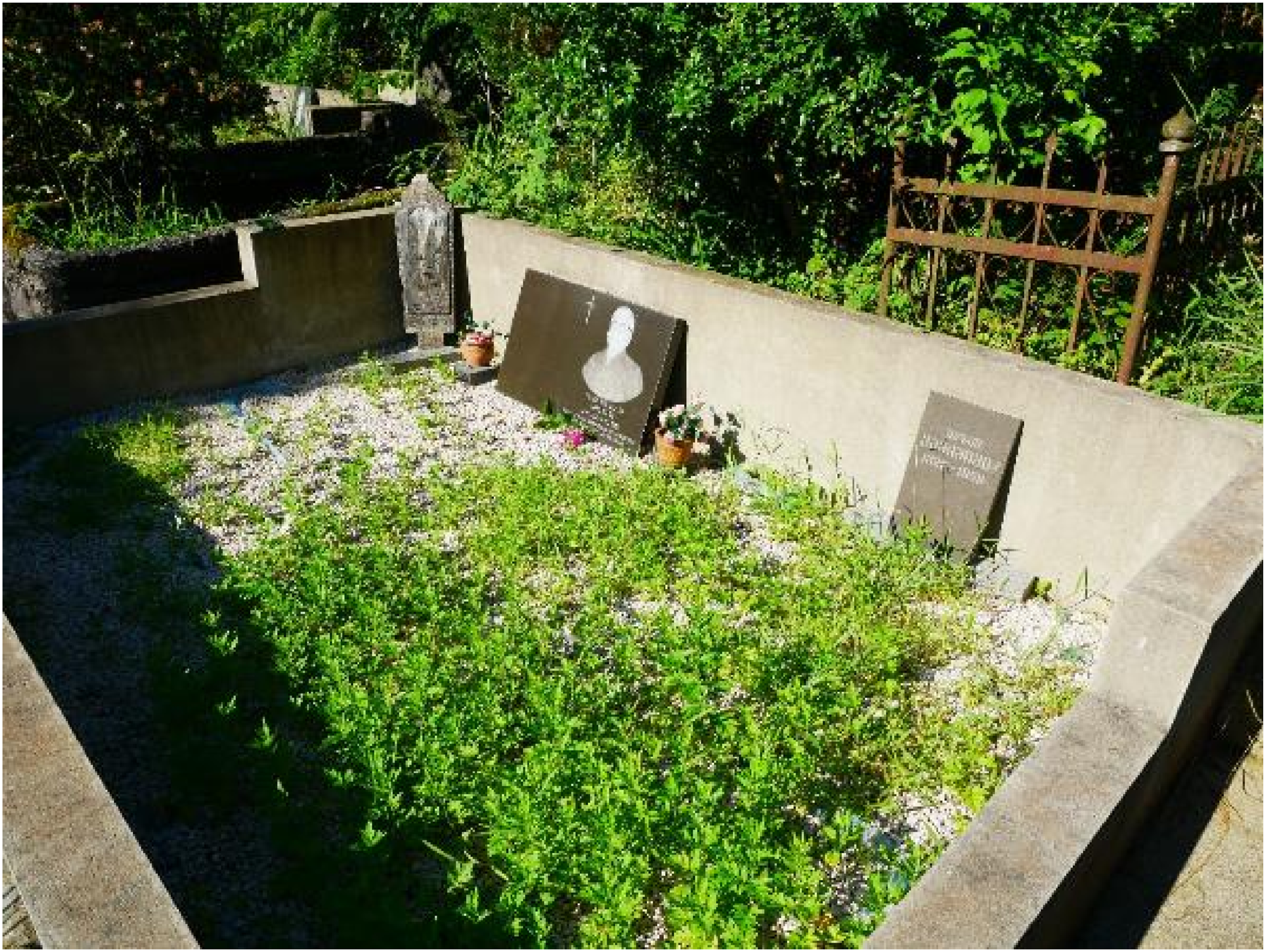
My companion mentioned that the grave had met with quite a few ‘raised eyebrows’ among villagers, partly because it contained several bodies (and not just husband and wife) in one grave, and partly because it featured gravestones from such different epochs, very different indeed from other new gravestones that projected a singular Christian Georgian vision. As a patchwork of sorts, this family grave pointed in an alternative and new direction, one that acknowledged the past, seemingly embracing a more decolonial form of repair as based on ‘active listening, a mutual recognizing, an acknowledging of complicity at all levels’ (Thomas, 2019: 212). It was in line with how I had known Omar, a specialist in Lazuri and Mingrelian grammar, who insisted on preserving rather than eradicating the traces of the past. But one could also argue that this toleration of traces of the past had been enabled by previous erasure. The grave appeared to ‘balance’ past and present modes of belonging precisely because Shazie’s gravestone had already been replaced, no longer displaying Muslim or Turkish connotations. Moreover, as I paid attention to the headstone of Hasan Memişoğli, it turned out that while it was the original stone, it had been ‘decapitated’, in that the ‘Ottoman’ stone was no longer topped with a fez-shaped cone. Even though I had a picture from 2011 in which the stone had a fez-cone (see Figure 2), I did not contradict my companion’s genuine explanation that the gravestone had never had such a cone. Here, the materiality of the grave and the memories of the past intriguingly converged, prompting comparison with the memory of the ‘parallel procession’ that omitted the most sensitive differences to enable a celebration of the two villages’ shared heritage. By creatively refitting and retrofitting the grave, new orientations for life on the border were carved out of stone.
Misfits on the edge of time and space
This article has shown that the issue of misfitting is especially potent on the state’s edge, for at least three reasons. First, the lives of border dwellers rarely fit the straightforward distinctions drawn up in far-away power centres. Here, the imposition of the border through the middle of Sarpi cut off economic and social ties with the other side, but could not immediately curtail actual or suspected border-transcending loyalties. Second, because of these suspected transcending loyalties, the state may be particularly ‘on edge’ at its territory’s edge, seeing misfitting elements as problematic and threatening. The state’s efforts to project and impose its vision onto the border can be seen in this light. In Sarpi this also applied to religious formations, as evident in the construction of Islamic and Orthodox Christian infrastructures as markers of territory. Third, being subjected to the evaluating national and religious gaze, border dwellers are sensitive to how their ‘misfitting’ features affect their lives. This article showed how border dwellers navigated this tense space, and how their tactics to fit in, and to refit elements of the material landscape, had played out over the past century.
These intersecting dimensions of misfitting illuminate the complex issue of belonging. There is a saying, in my native Dutch, that ‘the shortest road to the self passes through the other’ (De kortste weg naar jezelf loopt via de ander). The saying lines up interestingly with Gregory Bateson’s (1935) concept of ‘schismogenesis’, which he uses to theorize how competitive relationships between categorical equals can lead to the intensification of difference and the creation of divisions. In Sarpi, this logic was most clearly visible in the competitive construction of a mosque and a church, which illustrated how collective identity gains shape through othering. Crucially though, the villagers stood in relation not only to their cross-border ‘categorical equals’ but were also entangled in asymmetric relations with larger political and religious formations. In fact, the competitive urge was directed not just towards cross-border neighbours, it was also to be understood as an attempt to not be seen for the other by the evaluative gaze coming from the religious and political formations in which they were entangled. This was a fraught process because, by distancing themselves from their cross-border others, they unavoidably denied a part of their shared history, and thus of themselves.
Cemeteries are portals that take us into the past, fostering connections with the deceased, mediated by symbols chosen to decorate their past lives. At the border this temporal portal also had political significance, not least because borders attain new ideological connotations as time progresses. At the cemetery in Sarpi, this required a constant fitting and refitting of gravestones – efforts to avoid being seen for the cross-border ‘other’, while also adjusting to ideological shifts unfolding on one’s own side. Katherine Verdery has insightfully written that corpses are convenient symbols for rewriting history, because they are unable to contest ambiguous interpretations (1999: 28–9). This article described such efforts at reinterpretation: a pious Muslim woman was toasted by men drinking alcohol to commemorate her Georgian-ness; graves were altered to remove links to Islam and Turkey; and funeral processions were ‘made parallel’ to allow for the celebration of new cross-border relations. But the article also showed the limits of such reinterpretation. While stories could be easily adapted to changing discursive regimes, the materiality of graves resisted easy reinterpretation, and thus needed to be uprooted to refit the past into the present.
This article has argued that efforts aimed at refitting may combine destructive and reparative aspects, the evaluation of which will depend on perspective. The presented examples showed that the ‘refitting’ of graves could simultaneously be seen as violating the integrity of values held by the dead, and as enabling their reintegration into the social networks of the present. Moving beyond current discussions in anthropology that celebrate the restorative and reparative qualities of ‘repair’ (Cousins, 2023; Thomas, 2019), this article has shown that ‘repairing’ and ‘damaging’ can be two sides of the same coin, operating in parallel. 12 As we saw, the act of repair relies on ‘brokenness’, but views of what counts as broken unavoidably vary, especially so on the border. Moreover, on the border each ‘repair’ tended to produce new fractures, either because, as a form of ‘overwriting’ (Frederiksen, 2013), it erased or obscured histories, or because the ‘fixtures’ deployed in the present produced ‘misfits’ down the road. It is with these complications in mind that it is useful to invoke the work of Garland-Thomson (2011: 592) on disability, who emphasizes that ‘misfitting’ does not inhere in a body but is ultimately about the ‘encounter in which two things come together in … disjunction’. Efforts to repair or fix the strains produced by this disjunction highlight human creativity and ingenuity, which surely is to be celebrated, as long as we do not close our eyes to the potential erasures and new ruptures thereby produced.
Footnotes
Acknowledgements
I am grateful to the residents of Sarpi, for their willingness to share their stories and thereby allow me to see the complexities of living on the border. I thank Giorgi Cheishvili, for accompanying me on part of the fieldwork on which this article is based, and Florian Muhlfried, Maroussia Ferry, Tamta Khalvashi, and the reviewers for Critique, for their valuable comments on earlier versions of this paper.

Consent to participate
Informed consent with research interlocutors was obtained according to the ASA Ethical Guidelines 2021.
Funding
The research for this article was funded by Research Infrastructure Investment Funds from the London School of Economics and Political Science.
Declaration of conflicting interests
The author declared no potential conflicts of interest with respect to the research, authorship, and/or publication of this article.