



Abstract
Urban property taxes are primordial land value capture mechanisms that can potentially redistribute public income to underprivileged areas in a city. However, in Santiago, Chile, a city with considerable socio-spatial segregation correlated with significant disparities in municipal budgets, social welfare, and intergenerational reproduction of wealth, the property tax system is weak to address this issue effectively. This study analyses the potential redistributive capacity of property taxes in Greater Santiago, comparing the evolution of real estate surplus values with municipal budgets. These results show that a 2% increase in property taxes would suffice to equalize per capita municipal budgets, essential to redistribute social welfare. In Chiles’s neoliberal planning framework, we argue that weak property taxes are critical for the intergenerational reproduction of wealth and poverty in different municipalities. Property as capital is efficient for capturing unearned value in the long term and obtaining rental income, two mechanisms of inequality reproduction, as property accumulation is only feasible if it is not progressively taxed. In sum, this analysis of property taxes in Santiago contributes to the theoretical understanding of passive mechanisms of inequality reproduction in a neoliberal system and empirical support for a progressive increase of property taxes.
Introduction
Property taxes are crucial in capturing land surplus value and funding public services for sustainable urbanization (Germán and Bernstein, 2020). In socioeconomically segregated cities, property taxes can effectively capture land value and contribute to addressing disparities between municipalities (Smolka, 2013). Diverse critical research perspectives agree that land valorization is caused by external factors and, thus, unearned (Haila, 2016; López-Morales et al., 2023; Smith, 1979). Reciprocally, capturing this unearned value is a form of redistributive justice (Shih et al., 2019; UN-Habitat, 2013). Instead, leaving land value unclaimed in socioeconomically segregated cities could perpetuate inequality among urban areas.
In this study, we observe the Metropolitan Region (MR) and the Greater Santiago Metropolitan Area (GSMA), the capital of Chile, the most segregated functional urban area among OECD's (2013) member countries, to substantiate the vast disparities in property wealth accumulated over generations due to a low property tax regime. The MR comprises 52 municipalities, and the GSMA inside the MR is a conurbation of 36 municipalities closely integrated by commuting. Redistribution mechanisms among municipalities are inefficient, while municipal budgets strongly depend on their inhabitants’ income, which creates enormous budgetary disparities (Dazarolo, 2020; Smolka, 2013).
Consequently, the central question of this study is to assess the untapped potential of property taxes for wealth redistribution among the municipalities of the GSMA. We hypothesize that the potential of property taxes for budgetary redistribution among municipalities is mostly unexploited in Chile due to the elite’s capacity to protect their assets to facilitate the intergenerational reproduction of their wealth. We argue that Chile’s limited mechanisms for redistributing wealth among municipalities and their resulting unequal distribution of opportunities can be attributed to the enduring impact of neoliberal policies in Latin America. However, evidence from the United States also substantiates this argument. Variations in municipal fiscal capacities lead to inequality in public services, competition among municipalities exacerbates disparities, and fiscal disparities correlate with racial and economic segregation, and this context puts at risk the stability of metropolitan regions in that country (Orfield, 1997).
Still, during the 19th and 20th centuries, Latin American elites had different accumulation strategies than European and North American elites. Rather than accumulating productive capital, they amassed extractive power through land seizures that provided income from mining, forestry, agriculture, and housing rents (Garreton, 2017). To understand this process, we propose a theoretical variant of the value-transfer theory from the first (productive) to the second (reproductive) circuits of capital (Haila, 2021; Harvey, 2010, 2017), considering that in extractive economies, the predominant value transfer may occur directly from non-productive primitive accumulation processes (Glassman, 2006) to the secondary circuit of capital, notably in the form of private rental housing. We argue that the unproductive nature of Chile’s land value accumulation strategy makes it vulnerable to the smallest increase in the Property Tax because it accumulates wealth with unproductive means.
To examine this hypothesis, we will discuss descriptive statistics of the housing market and public finances in Chile with two specific objectives: (1) to describe property taxes and their relationship with municipal budgets, analysing their distribution across the Santiago Metropolitan Region, and (2) to estimate the potential of property taxes for redistribution by comparing them to (considerably more valorized) housing market transactions in Greater Santiago.
The following section provides background information on Chile’s shift towards neoliberal urban development since the 1970s. It delves into socio-spatial segregation, regulatory capture, property taxes, and municipal finances within this neoliberal framework. The second section outlines the methodology used in this study. Subsequently, the third and fourth sections present an analysis of property taxes in the MR and GSMA. The fifth section combines these findings to critically analyse how Chile’s neoliberal policies have impacted property taxes. Finally, the sixth section concludes with theoretical insights and recommendations for redistribution across municipalities.
Chile’s urban economic system under neoliberalism
Urban segregation and regulatory capture
A military dictatorship ruled Chile since the military coup in 1973 until the recovery of democracy in 1990. This authoritarian regime collaborated with the economic elite to impose experimental neoliberal practices promoted by the Chicago Economics School and notably by Milton Friedman (Harvey, 2005; Klein, 2007). These reforms weakened most State agencies, reduced officers to a third and budgets to a half, and had long-term impacts on the segregation of Chilean cities (Garreton, 2017; Garreton et al., 2020).
Under the neoliberal economic rationale, Santiago’s urban boundary was greatly expanded in 1979 to boost land supply, based on the assumption that urban land scarcity was causing an artificial increase in land prices. New shantytowns added to the already excessive urban land sprawl, with expansion reaching 1200 hectares annually between 1979 and 1984 (Hidalgo, 1999). These impoverished peripheries of social housing lacked access to education, healthcare, employment, and green areas (Rodríguez and Sugranyes, 2006; Rodríguez and Winchester, 2001).
By 1990, after democracy was recovered, 43% of Chileans suffered from overcrowding and poor housing conditions, 800,000 families were homeless, and 300,000 lived in substandard housing. Many resorted to living with relatives due to the government’s crackdown on land seizures and shanty town settlements. Socioeconomic segregation and concentration of jobs and services in Greater Santiago had produced elite urban enclaves, including private schools, top-earning jobs, underground highways, the best public and private services, and high land plus values (Méndez and Gayo, 2018). On the contrary, municipalities with little or no capacity to collect property taxes could not provide quality public services, creating local mechanisms of poverty reproduction (Garreton, 2017). These were opportunities for the neoliberal reforms to evolve.
Under the promise of market efficiency to resolve these problems, an emerging consensus between the economic elite and political leaders allowed pervasive regulatory capture (Dal Bo, 2006), reducing State capacities to regulate markets and redistribute welfare (Garreton, 2017; Silva, 2011). As a result, currently, the private sector accounts for 76% of Chile’s GDP, while the public sector accounts for 24%. This creates a situation where the Central Government is relatively weak compared to the private sector, which can lead to regulatory capture (Silva, 2011), and this is especially evident in the design of social housing and infrastructure franchises, where private investors demand advantageous financial conditions to participate in public works (Garreton, 2017).
Additionally, municipalities and regional governments, which play essential roles in welfare redistribution and planning, have scarce budgets, given the scope of their responsibilities. This is because centralism is an issue for Chile’s public budget distribution. Within the public sector, there is a considerable difference between the Central Government, which has a budget of 20% of GDP, and subnational governments, which collectively spend 4% of GDP. The diagram in Figure 1 symbolizes this situation.
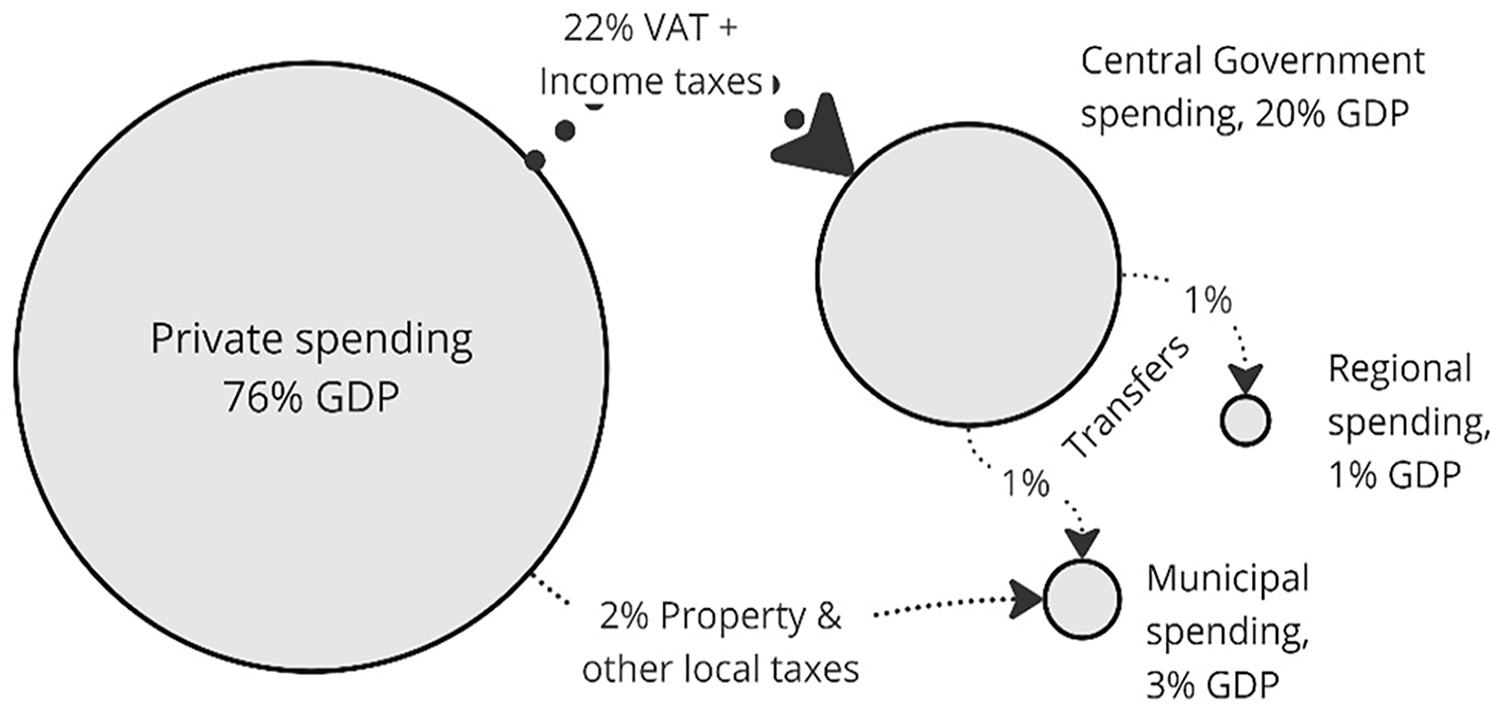
Private and public budgets in Chile.
In Chile, the Central Government collects and manages most of the public income, especially the Value Added Tax (VAT), the most significant fiscal revenue source (Engel et al., 1999). However, VAT is regressive because low-income individuals spend most of their earnings on consumption. Taxes on individuals’ income and enterprises’ profits are also collected but are weakly progressive due to various exemption mechanisms and evasion. Thus, Chile has an overall regressive taxation system (Agostini and Flores, 2010). Property taxes under municipal jurisdiction are progressive but make up a relatively small portion of public budgets, and they are applied only to the wealthiest 23% of households, implying that in poor municipalities, this revenue tends to be zero. Moreover, solidarity instruments among municipalities are insufficient, leading to a regressive capacity for welfare production (Otero et al., 2023). This issue is critical for understanding and counteracting Chile’s urban socioeconomic segregation, as explained in the following section.
Property taxes and neoliberal urbanism
Land surplus value is produced mainly by external factors such as public works and aggregated private investments (Haila, 2016; Jaramillo, 2009; Smolka, 2013). Harvey (2017) argues that land surplus value is a form of rent for property owners and developers that exploit a privileged position. Thus, land value capture can be understood as a tool for redistributive justice (Furtado and Smolkam, 2014; Sandroni, 2011). Property taxes are a form of land value capture that may enable local and regional governments to achieve municipal fiscal health and tackle the challenges of sustainable urbanization (Germán and Bernstein, 2020; Smolka, 2013).
However, by 2019, in Latin America, property taxes accounted for less than 4% of the total taxation on average, and there was ample room for a substantial increase in the share of added land value that should return to the public sector (Camagni, 2016). Organizations and global research centres, such as UN-Habitat (2013) and the Lincoln Institute (De Cesare, 2012; Smolka, 2013), stress the importance of ‘value recapture’ and ‘value sharing’ practices in developing nations that are grappling with urban deprivation. Countries like Brazil, Colombia, Ecuador, and Uruguay (Furtado, 2007; Sandroni, 2011) have implemented policies on land value sharing in their constitutions and generate substantial public revenue by taxing the increased property value that results from public investment in the city (Páramo Lopera and López-Morales, 2020).
Nevertheless, property taxes remain an effective means of supporting local public expenditures in Latin America and other regions (Furtado and Smolkam, 2014; Sandroni, 2011; UN-Habitat, 2013). Taxpayers are familiar with property taxes; they are fair compared to taxes on consumption (which can have regressive effects) and are difficult to evade. However, capturing land value can be less efficient if there is limited access to accurate data on property sales prices and other financial opacities. Chile is performing better than other countries in this regard but still struggles to recover enough unearned land value (Smolka and Amborski, 2003).
Vejchodská et al. (2022) categorize land value capture instruments into five groups: (i) recurring taxes and other taxes, (ii) one-time obligations associated with land development, (iii) charges related to added land value through planning, (iv) government ownership of land or development rights, and (v) miscellaneous methods. The Chilean property tax system falls into the first and third categories, as the property tax is paid four times a year and increases according to a regular process of property value reassessment.
However, most households in Chile are exempt from the Property Tax, which is paid only by the wealthiest 23% of households. Social housing policies are designed to facilitate home ownership with subsidies, so widespread exemption of property taxes is designed to help low-income households keep their properties long-term as a kind of welfare insurance. This might seem a reasonable mechanism for progressive taxation. However, in a context of large-scale segregation in a conurbation where municipalities tend to be homogeneously rich or poor (Garreton et al., 2020) and with weak budgetary redistribution among municipalities, this implies that public revenues obtained with this tax are primarily spent in affluent neighbourhoods.
In sum, property taxes’ potential for redistributing wealth among individuals and municipalities seems untapped in Chile, and it is worthwhile to measure it accurately. The following section gives more detail on the structure and instruments of the municipal system in Chile that allow the reproduction of intergenerational inequalities and highlights the central role that property taxes play in this process.
The neoliberal municipal system in Chile
Chile was the first nation to undergo systemic State reforms following a neoliberal economic ideology. Key economic advisors of the dictatorship were postgraduate students of Milton Friedman in the Chicago School of Economics in the early 1970s, and they successfully lobbied for an academic tour of their mentor to the country in 1975, which included a personal meeting with Chile’s dictator, General Augusto Pinochet (Harvey, 2005). This group of young economists rapidly rose to influential positions in the military government and elaborated a comprehensive economic policy report for elaborating the 1980 Constitution (Alemparte, 2022; Hardy, 1989).
Chile’s institutional redesign was essential for implementing neoliberal policies, as it moved away from laissez-faire market orientations. The 1979 National Policy of Urban Development enacted various land market deregulation measures that had been implemented a year earlier. The expansion of the urban limit of Santiago was expected to lower housing prices by increasing land availability, but it had the opposite effect due to speculative market prices set by peripheral landowners (Sabatini, 2000). In 1980, Chile’s Political Constitution was approved through an unclear referendum, and it included a definition of the subsidiary role of municipalities. By 1981, there was a redefinition of municipalities’ boundaries based on criteria of social homogeneity and focalization.
Municipalities were established as the leading provider of public goods and services, with a neoliberal approach to the provision of public goods through decentralized and competitive local governments (Friedman, 1962), following Tiebout’s (1956) Theory of Local Expenditures, which summarizes a mechanism of competitive choice among local public services providers as ‘voting with one’s feet’ (Peck, 2011). However, public services decentralization in Chile was coupled with a focalization ideology that established a sharp socioeconomic distinction between private services for the wealthy and public services for the poor. Notably, healthcare and education for the less affluent became dependent on each municipality’s budget, worsening the situation of poverty niches in boroughs with high shares of social housing and lacking effective presence of the State (Garreton, 2017; Solimano, 2012).
The reforms affecting municipalities between 1979 and 1981 included astounding pro-segregation public policies, notably the redefinition of municipal boundaries to increase social homogeneity within local governments under the assumption that public subsidies could be more efficiently allocated to homogeneously poor municipalities (Hardy, 1989). The homogenization of municipalities was also enforced by violent means. In the late 1970s, about 6% of Santiago’s population, or 250,000 people, were forced by the army to leave irregular settlements in high-income municipalities and relocated to precarious social housing in poorly serviced areas in urban peripheries (Morales et al., 1990). Rojas and Carreras (2021) found that this eradication policy had long-term impacts on educational and employment performance, with displaced people and their descendants having 10% less income and reduced social capital.
Thus, far from Friedman’s argument of increasing the freedom of choice between public service providers through decentralization (Tiebout, 1956), the municipal reform in Chile had strong segregation effects which accumulated over generations through the exclusion of middle and low-income households from high-quality private and public services in elite municipalities (Garreton, 2017). This two-tiered system of inequality reproduction, where individual and municipal disparities are reciprocally reinforced, is coupled with weak upward social mobility (Otero et al., 2023).
Since 1992, Chilean municipalities have been governed by democratically elected mayors. Their revenue is primarily based on property taxes, which are applied only to the 23% most expensive houses, exempting middle and low-income households and thus shrinking the fiscal revenue of municipalities without high-income populations. The Municipal Common Fund (MCF), established in the 1980 Constitution as a ‘mechanism for the solidary redistribution of own income among the country’s municipalities’, is a redistributive mechanism. However, it is too weak to compensate structural inequalities. Municipal revenues by inhabitant vary by a factor of 20 between the richest and poorest municipalities, while their budgets vary by a factor of 7 after redistribution (Garreton, 2017). The amount of redistributed funds to each municipality is determined by the so-called Organic 1 Law of Municipalities, following an algorithm that includes several socio-demographic and economic variables that account for social vulnerability, and it is not renegotiated nor governed in a way that would allow for adjusting these contributions over time.
The MCF is mainly financed with 60% of the property tax collected in each municipality and represents about 30% of the total municipal resources in Chile. 2 The other 40% of the property tax represents most of the autonomous income of municipalities, which is complemented with commercial and vehicle licences and other minor sources of revenue. In Santiago, economic activities, commerce, and vehicle ownership are concentrated in municipalities with high-income population, also increasing budget disparities
Although housing prices strongly correlate with municipal budgets, wealth accumulation in the real estate market has grown much faster than property taxes. Indeed, the fiscal valuation of properties, their taxation base, is much lower than their actual transaction prices. This supports the argument that real estate wealth has a vast untapped potential for increasing local government budgets in Chile.
Methodology
This article analyses property taxes and municipal budgets at regional and local levels in Chile, using demographic data from the National Census, housing data from the Real Estate Cadastre, transactions data from the Real Estate Conservators of Greater Santiago, and municipal budget data from the National System of Municipal information. These are public sources of information described below:
National Census 2017: This is the last exhaustive demographic survey elaborated by Chile’s National Statistics Institute (INE).
Real Estate Cadaster: An exhaustive database compiled by the National Revenue Service (SII) for property tax calculation. It includes information about all registered properties in Chile, including land and built surfaces, and their actual use, such as housing, commerce, offices, public services, industry, etc.
National System of Municipal Information (SINIM): An online platform (http://datos.sinim.gov.cl/datos_municipales.php) maintained by the Sub-secretary of Regional Development (SUBDERE), which provides information about budgets, public transfers, population and other variables for every municipality in Chile.
Property transactions database: A compilation of real estate transactions that have taken place in Greater Santiago and have been registered by local offices of the Conservador de Bienes Raíces de Santiago (CBRS), the Real Estate Comptroller of Santiago. This information has been transcribed from the public books of the CBRS into an electronic database by a data provider company called Inciti, who then sold it to the authors. This database is available for the 36 municipalities of Greater Santiago for the years 2008–2019.
In the first part of this study, we compare municipal budgets between the 52 municipalities of the Metropolitan Region (MR). In the second part, we focus on the 36 municipalities of the Greater Santiago Metropolitan Area (GSMA), which concentrate most of the housing transactions in the region. We compare the evolution of the Property Tax with housing market surplus values and property wealth growth.
Metropolitan region property tax comparison
Firstly, we analysed the distribution of Property Tax with information gathered from the Tax Revenue Service for the first half of 2021, grouping municipalities into five macro areas for clarity. These five groups are based on previous socio-geographical structure studies in the Metropolitan Region (Borsdorf, 2003; Ortiz and Morales, 2002). They have similar demographic and housing market characteristics and are geographically coherent (Figure 2 and Table 1).
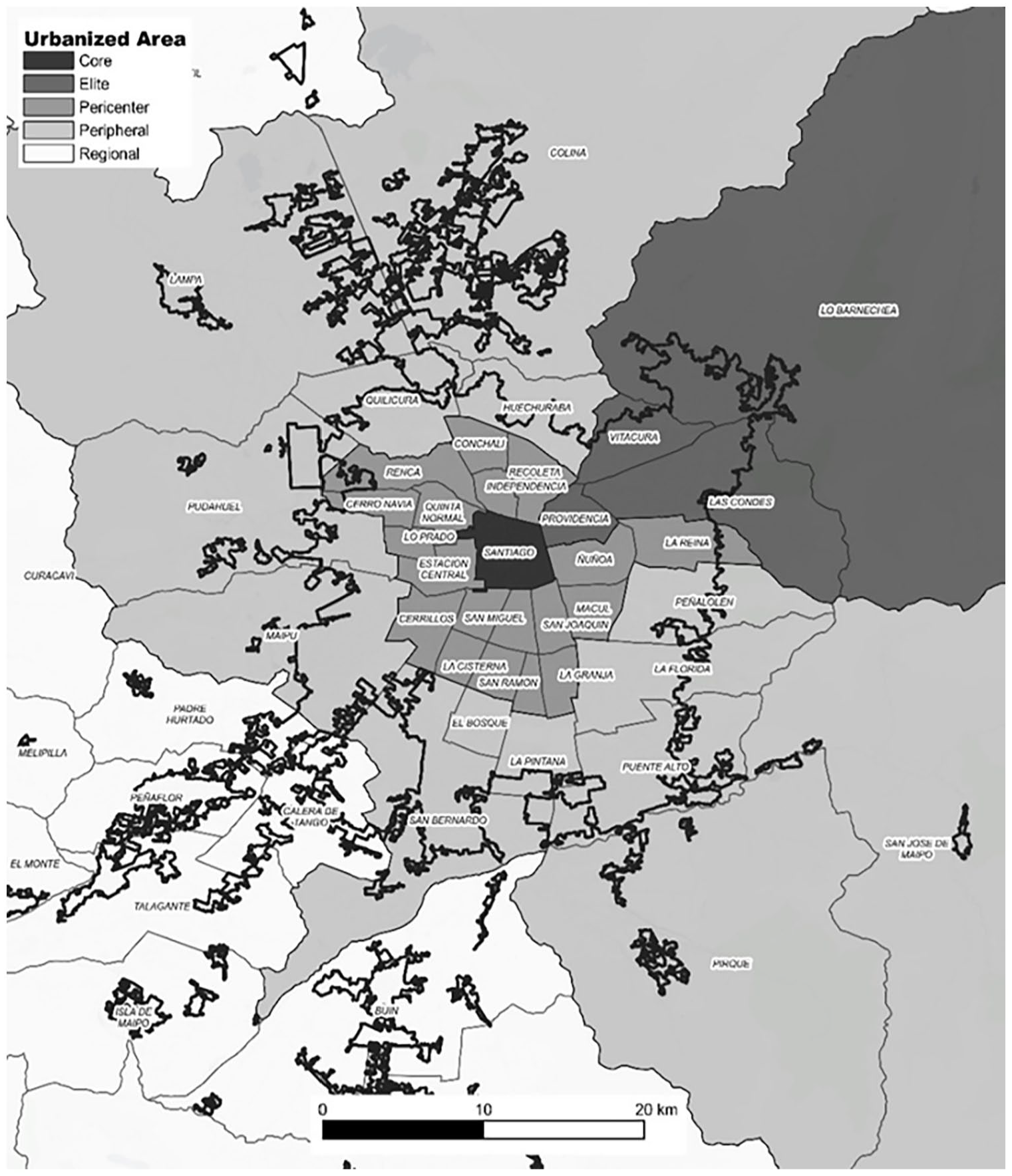
Macro-areas and municipalities in the Santiago Region.
Santiago macro-areas and municipalities.

Source: Authors based on Ortiz and Morales (2002).
The Core area is built around the first colonial neighbourhoods established by the Spanish Empire in Chile in the mid-sixteenth century. It contains other downtown districts and the central quarters of the National Government. The Elite area includes the neighbourhoods of intergenerational migration of the dominant social groups from the historical centre towards the Andes Mountains, upstream the Mapocho valley (Geisse, 1978). In the discussion section above, we explain how this intergenerational process allowed each generation to increase their property wealth through land-value capture of consolidated urban areas and acquisition of agricultural land for urban expansion (Garreton, 2017). The Pericentre area corresponds to Santiago’s first large-scale expansion a century ago (López-Morales, 2009) as a product of informal or illegal developments (Giannotti and Cofré-Schmeisser, 2021), formalized irregular settlements, and social housing estates built since the 1950s onwards. The Periphery is a heterogeneous expansion of social housing ghettos, industrial facilities, and mid-upper-income gated communities (Borsdorf, 2003). The Regional area is the most recent frontier of the GSMA’s urban sprawl, where agricultural land retreats to low-mid-income housing, conurbating small satellite towns.
These five areas are relatively homogeneous regarding population density, economic activity concentration, and income (Ortiz and Morales, 2002). They also provide a recent historical baseline used or adapted by different studies as a benchmark for an updated descriptive study designed as follows.
Greater Santiago’s property tax and housing market
Secondly, we analysed the changes in municipal budgets in relation to housing market stock and flow values from 2008 to 2019. Our analysis focussed on the 36 municipalities in the Greater Santiago Metropolitan Area (GSMA). The comparison is limited to this timeframe and territory due to the availability of property transaction data. Nevertheless, it offers valuable insights into the development of the largest functionally integrated urban area in Chile.
To simplify the analysis, we categorized these 36 municipalities into five groups (Figure 3) based on their average budget per capita (Mu_budget) from 2008 to 2019. The breaks between categories were determined using the knee criterion (Thorndike, 1953), which involves identifying the inflexion points in a ranked graphic of one variable. These groups are different but show remarkable similarities with those shown in Figure 2 and Table 1 above (Ortiz and Morales, 2002). We develop the latter group categorization in the discussion below.
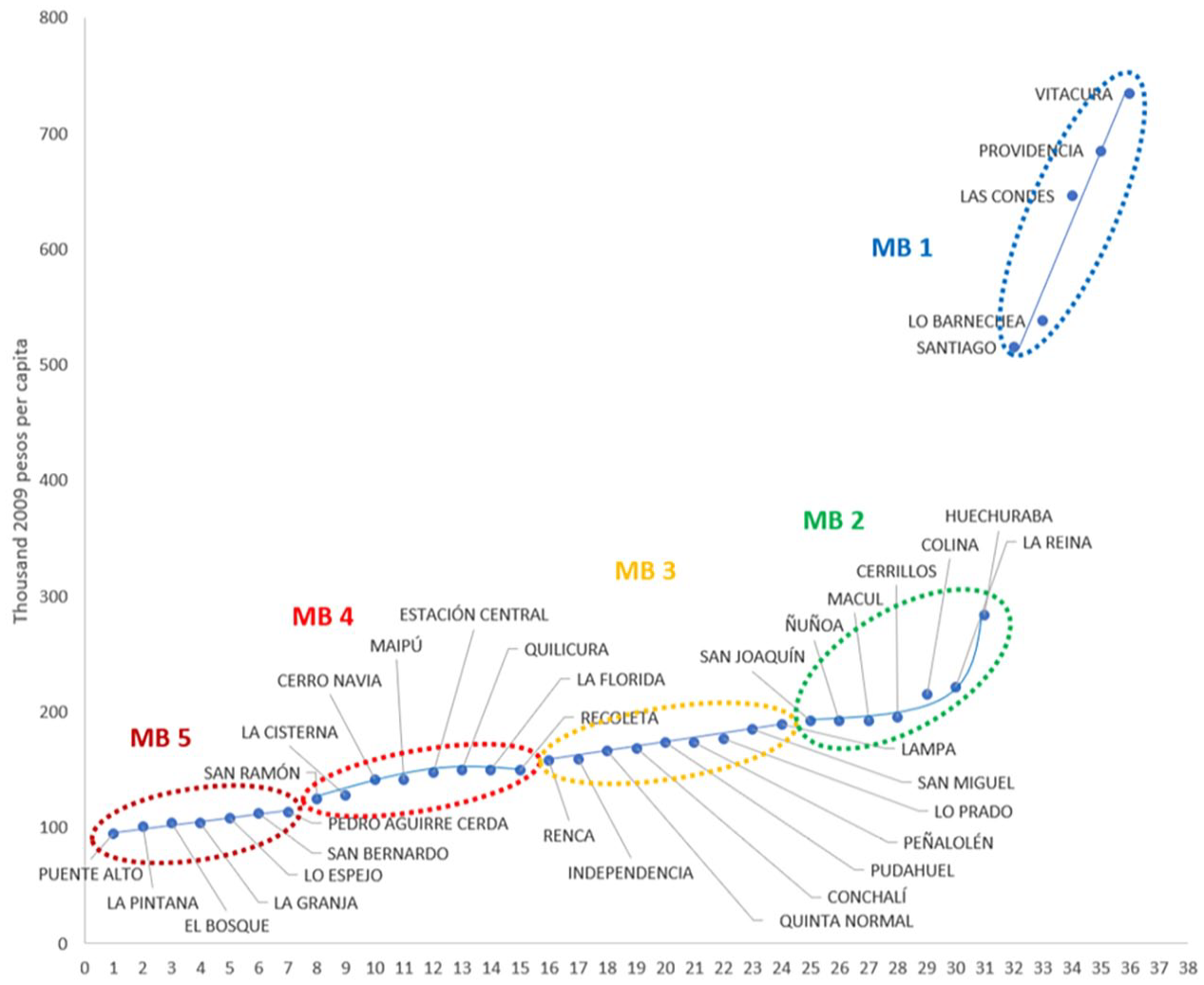
Municipal budgets per capita ranked and classified.
The relevant variables for this comparison include demographic, budgetary, and real estate market information, as described in Table 2. For practical purposes, monetary values are expressed in Unidades de Fomento, an inflation-adjusted index commonly used for long-term investments in Chile (One UF is about 40 US dollars in 2024).
Description of relevant variables.
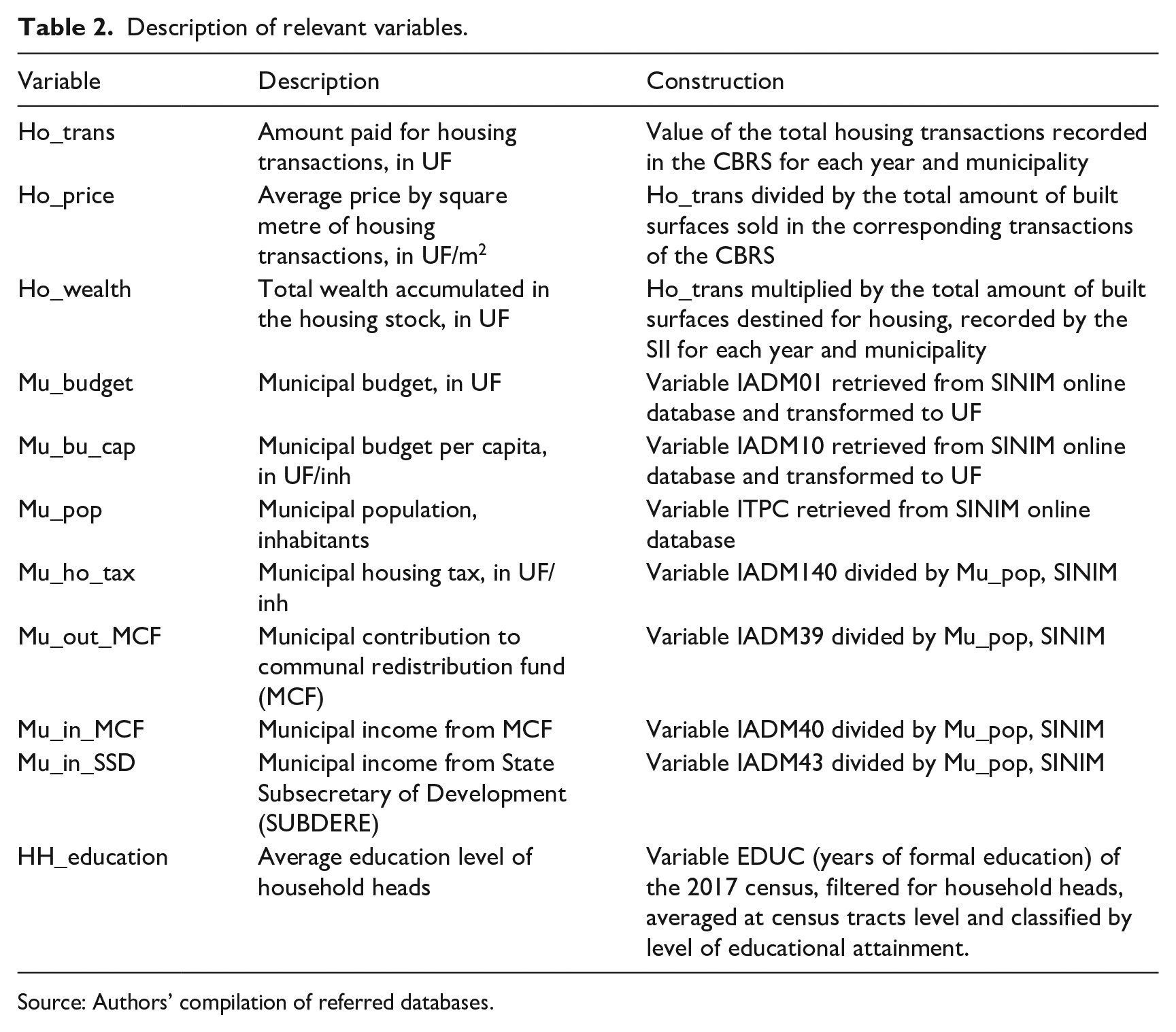
Source: Authors’ compilation of referred databases.
Employing this analytic framework, we compared the evolution of public budgets and private housing assets in the GSMA. As described in the following section, we observed stark contrasts between socially polarized urban regions and disparities between private wealth accumulation and public finance growth.
Property tax exemptions and redistribution in the metropolitan region
The Property Tax is the primary source of revenue for the 345 Chilean municipalities. Seventy-five per cent of the property tax corresponds to residential properties, while commerce, offices, industry, and other land uses pay the remaining. Chile’s urban housing market includes more than 6.6 million properties, of which 77% are exempt from property taxes. Moreover, many taxed properties receive substantial discounts due to regulatory laxity and fiscal undervaluation. For instance, places like churches, education, or health centres do not pay property taxes.
Land and construction are considered when determining a property’s value. The state uses a rough estimate of square metre values for homogenous areas to appraise the land, with deductions for smaller-sized lots, narrow street fronts, or low-rise areas, which receive a 10% discount. The construction appraisal is based on construction type, materials, and quality. Remarkably, buildings over 50 years of age have minimal impact on their properties’ taxed value due to a time-correction score reducing the construction appraisal value over the years.
Moreover, fiscal appraisals on properties are decoupled from market values because tax appraisals are only updated every 4 years, while the housing market varies every month. There are also limits on the increase of tax reappraisals; regardless of the actual increase of its market value, the contribution paid by property cannot be raised by more than 20% every 4 years. Thus, it is not rare that old but perfectly functional housing built on valorized land pays a relatively low property tax, which happens more often in the city’s core and elite urban areas (Figure 2).
The main instrument of Property Tax exemption in Chile is the 1959 DFL2 law, which applies to all residential properties under 140 built m2 and owned by natural persons. Since 2010, the DFL2 exemption applies to a maximum of two properties per owner, which must be new or first-transfer units. Chile’s ongoing policy adjustments reduce the size of the exempted properties but at slower rates compared to market trends, as shown in the next section. There are other exemptions, notably for property inheritance, that would be too long to consider in detail.
At the country level, only 20% of new-built apartments pay the property tax, while 77% of existing sites, houses, and apartments are legally exempted (Razmilic, 2019). By 2019, 53% of the new housing units added in the Metropolitan Region were exempted from Property Tax (Tax Revenue Service, 2021).
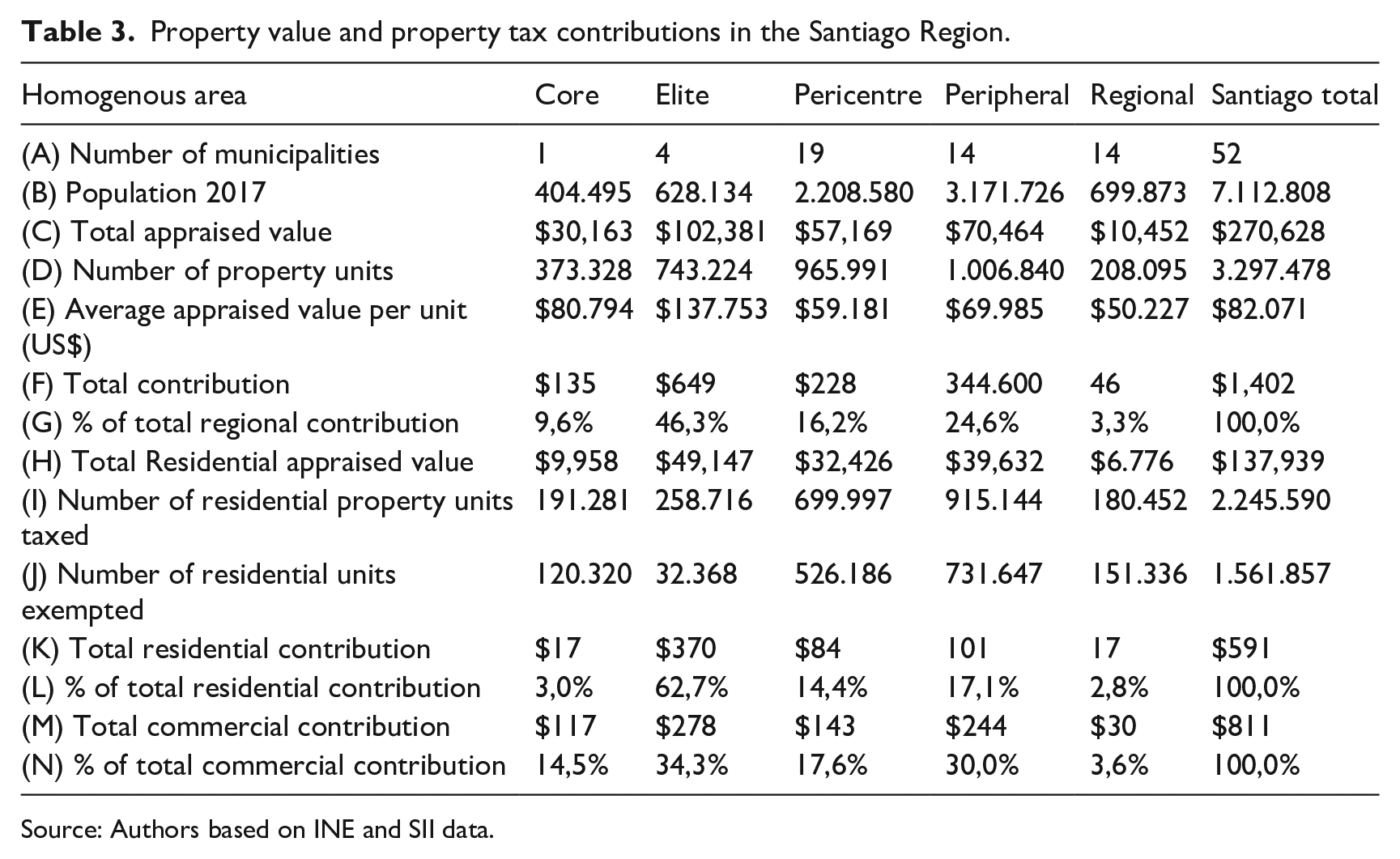
An analysis based on Table 1’s categorization shows that the Core and Elite municipalities account for over 55% of the total Property Tax collected in the Region despite only having 15% of the population and 34% of property units (Table 3). Additionally, non-residential properties in these areas contribute almost 50% of the region’s Property Tax. The Core and especially Elite municipalities also have the highest average property values, doubling that of the Pericentral, Periphery, and Regional areas. On the contrary, the Periphery and Regional macro areas contribute much less to the total property tax (27%) due to their lower property appraisal values. However, they house 55% of the regional population (Table 3).
Property value and property tax contributions in the Santiago Region.
Source: Authors based on INE and SII data.
Money values in US$ millions for all rows except (row E) in US$.
The uneven distribution of properties exempted from the property tax is a remarkable summary of the socio-geographical inequalities in the Metropolitan Region of Chile: 13% in Elite municipalities, 63% in the Core, 75% in the Pericentre, 80% in the Periphery, and 84% in the rest of the region (Figure 2).
In Chile, municipalities are classified as ‘contributors’ or ‘recipients’ based on the net amount they give to or receive from the Municipal Common Fund (MCF). Across the country’s 345 municipalities, 52 municipalities are net contributors to the MCF; thus, 293 municipalities receive more resources than they contribute. Ten out of the top 14 MCF contributors are municipalities in the core and elite areas of the Metropolitan Region. On the contrary, municipalities with numerous populations and high shares of social housing, such as Puente Alto and Maipu, are top net recipients in the country.
Most municipalities transfer 60% of their property tax to the MCF, except for Santiago, Providencia, Las Condes, and Vitacura, which give 65% and pay higher shares of commercial and industrial taxes. Municipalities also transfer 62.5% of the collected vehicle circulation tax to the MCF.
Acknowledging that this redistribution mechanism is essential for low-income municipalities, the MCF is not enough, by far, to attain fair budgetary conditions among Chilean municipalities. On the one hand, it has flaws in the redistribution algorithms and implies high operational costs in net receivers municipalities (Dazarolo, 2020). On the other hand, it redistributes a budget that is too modest to compensate for the extreme differences in revenue between high—and low-income municipalities, as will be detailed in the next section.
Municipal budgets and housing markets in the Greater Santiago
In Chile, disparities in municipal budgets (Figure 4) are amplified by three interrelated segregation processes (Garreton, 2017). First, residential segregation by income occurs due to selective access to the housing market, where only affluent households can afford strategically located accommodations in neighbourhoods with good accessibility, high social status, and well-funded municipal services. Second is functional segregation, which is caused by the clustering of commercial establishments and offices in areas that are more accessible and have higher-income populations. Third, educational segregation is vital for the intergenerational reproduction of social capital and enables the simultaneous spatial distribution of elite schools and high-income neighbourhoods (Méndez and Gayo, 2018; Otero et al., 2023).
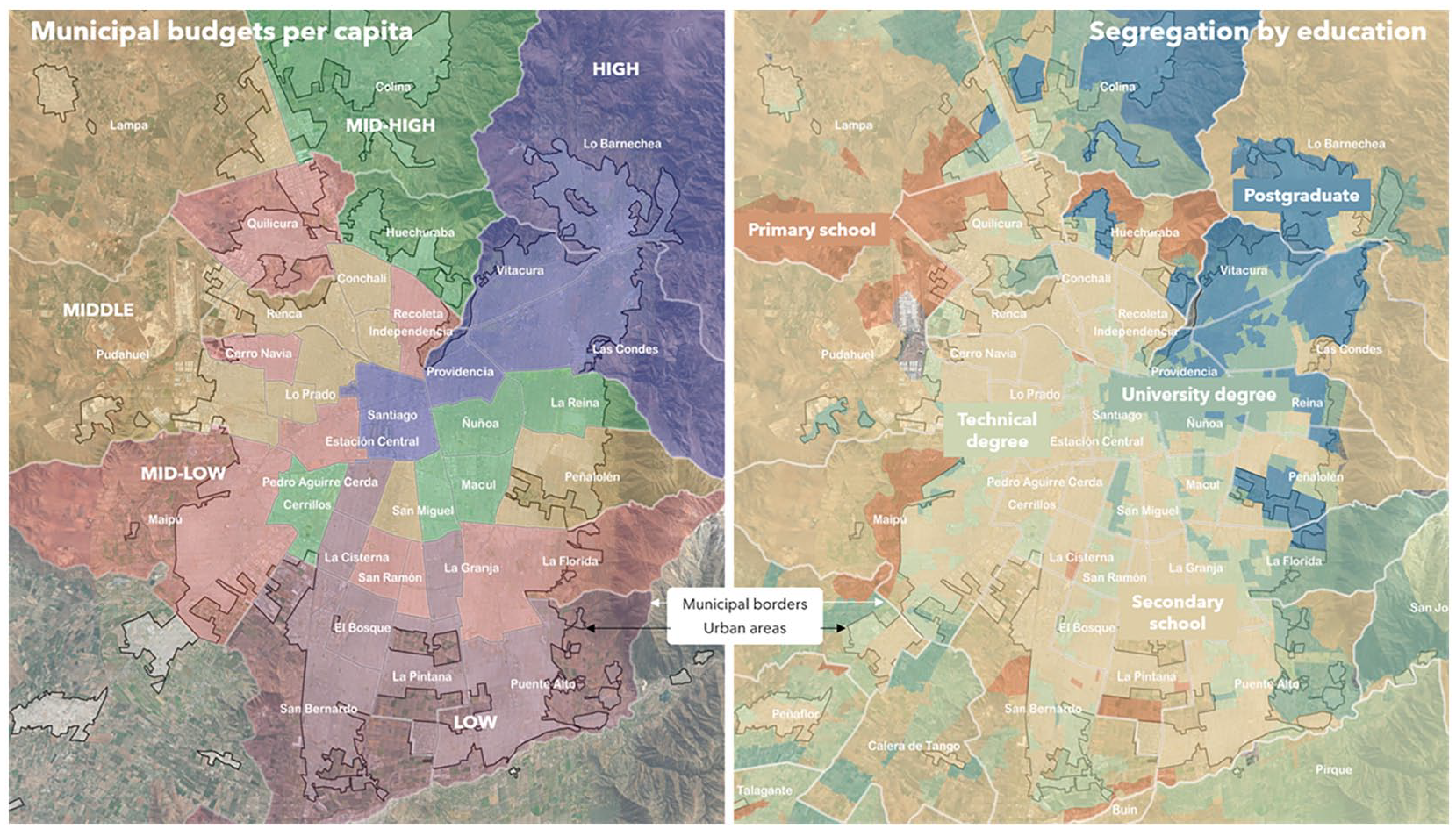
Municipal budgets and social segregation by education in the Greater Santiago.
In the 2008–2019 period, transfers from the central government to municipalities have increased significantly without a redistributive effect, since high-budget municipalities receive more SUBDERE contributions per capita than low-budget ones (Figure 5). This is due to the competitive nature of central-to-local transfers, where funding is granted based on the municipalities’ capacity to conceive and formulate projects, which are scarce in low-income municipalities.
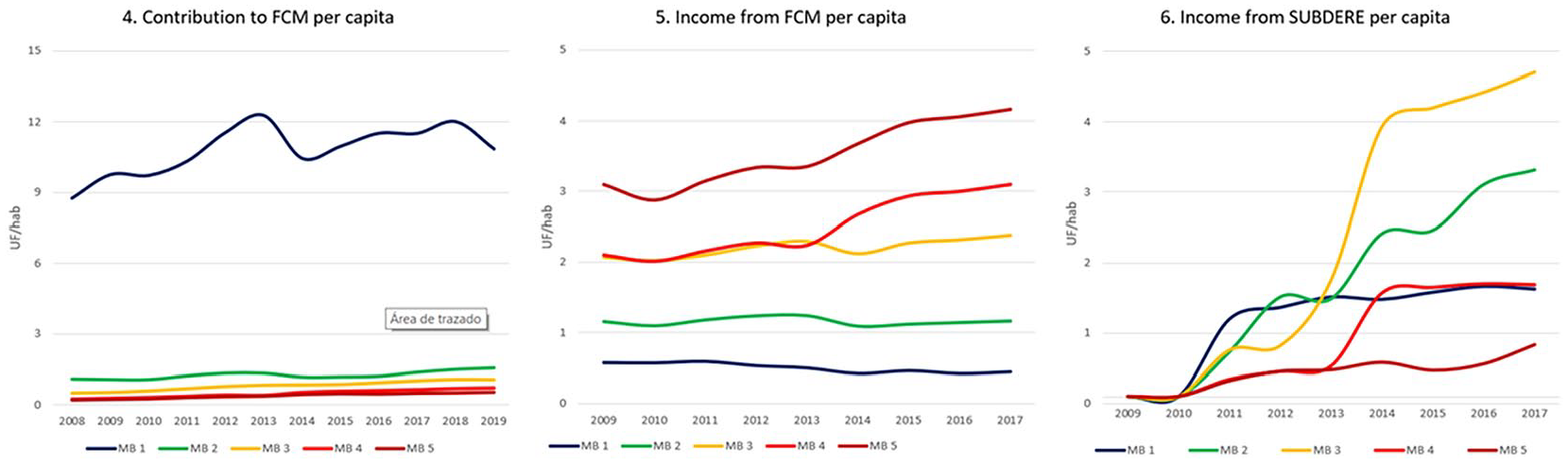
Evolution of public redistribution mechanisms in Greater Santiago.
This is an example of how Thiebout’s ‘vote with your feet’ can create a poverty trap for municipalities that experience decreasing property values over time (Peck, 2011). The connection between municipal budgets and housing prices is reciprocal, as households’ income determines access to privileged urban areas while providing enough municipal revenue to produce high-quality public services (Figure 6). However, in all Greater Santiago municipalities, housing prices have increased much faster than per capita municipal budgets. Property taxes per capita have remained almost constant, and local government budgets have not increased proportionally to the wealth and plus values of the real estate market (Figure 7).
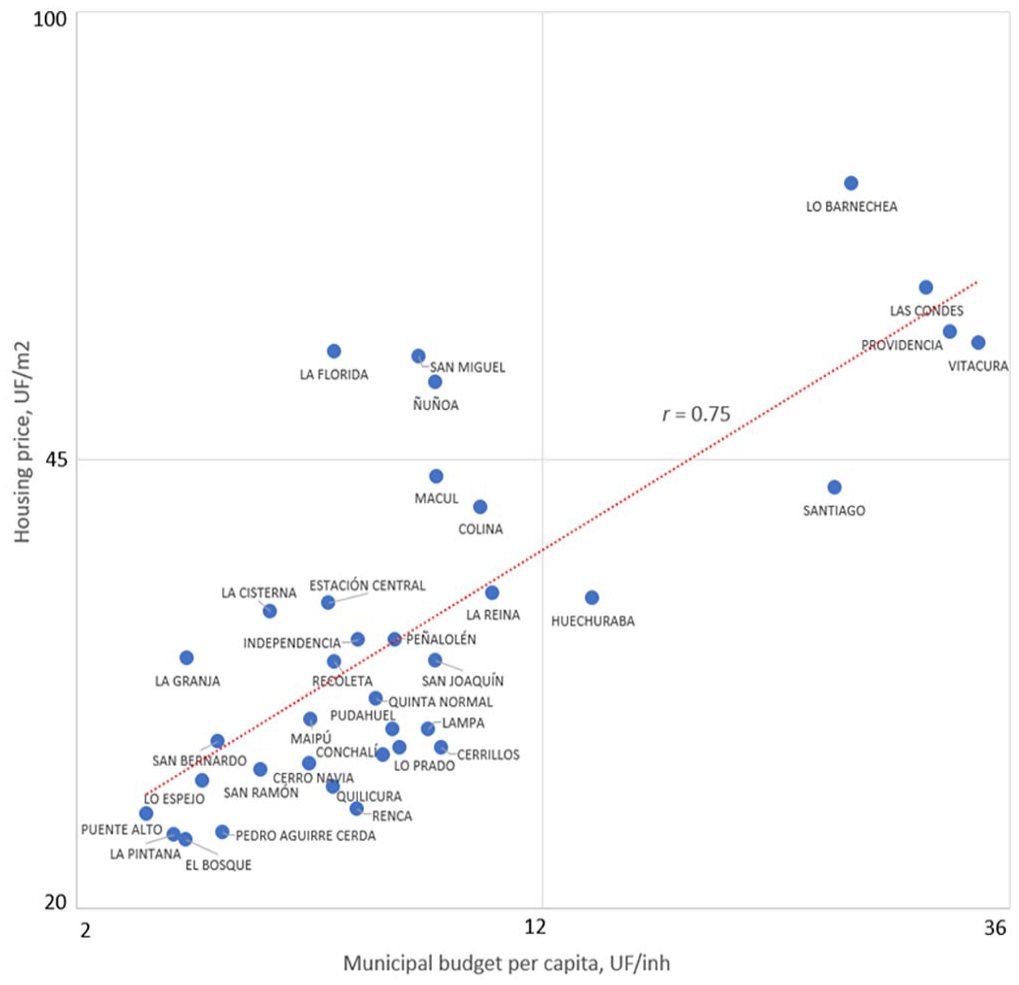
Municipal budgets and housing prices in Greater Santiago.
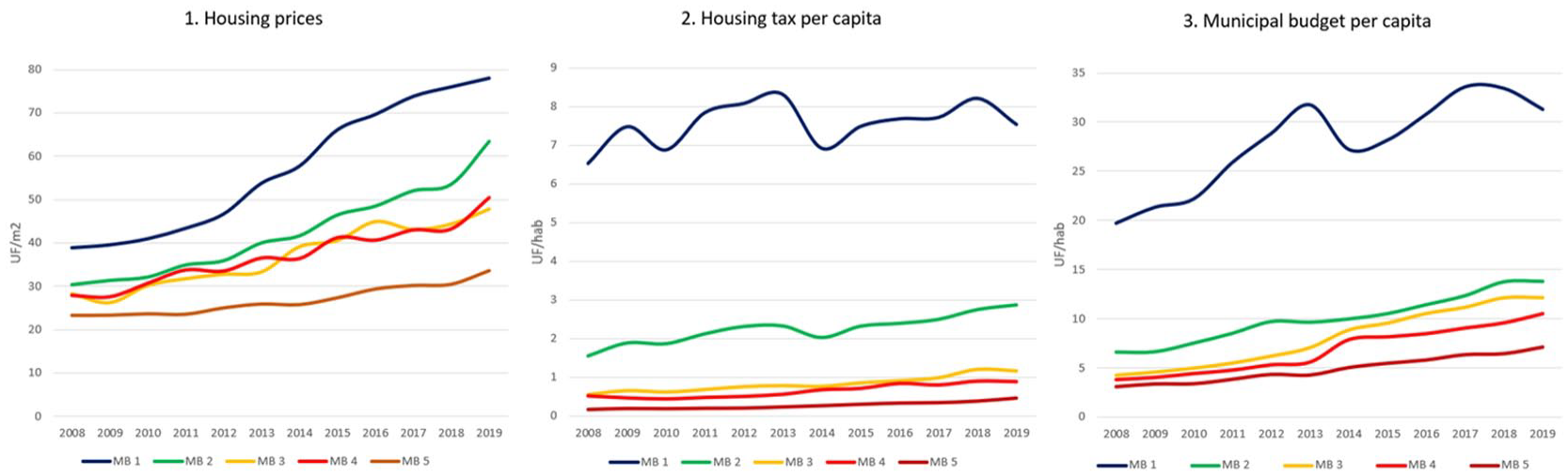
Evolution of housing prices, taxes, and municipal budgets in Greater Santiago.
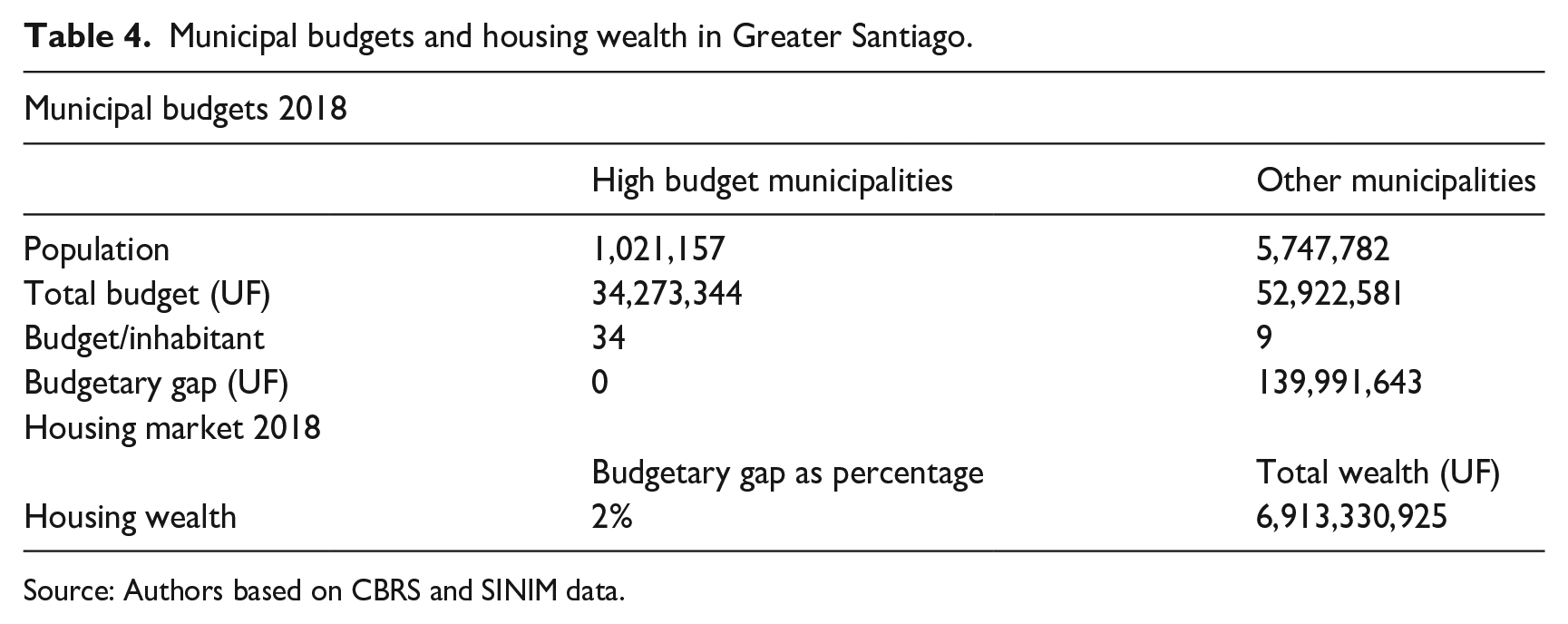
Notably, between 2008 and 2019, housing transactions grew substantially by 593%, compared to a 134% increase in municipal budgets (Figure 8). In Greater Santiago, wealth accumulation in housing property, which is taxable stock, was 66 times greater than the increase in the municipal budgets, which are revenue flows (Table 4). These differences highlight the huge equalization potential of a hypothetical private-to-public transfer design, redistributing unearned private wealth to low-income municipalities rather than relying only on redistribution from high to low-budget municipalities.
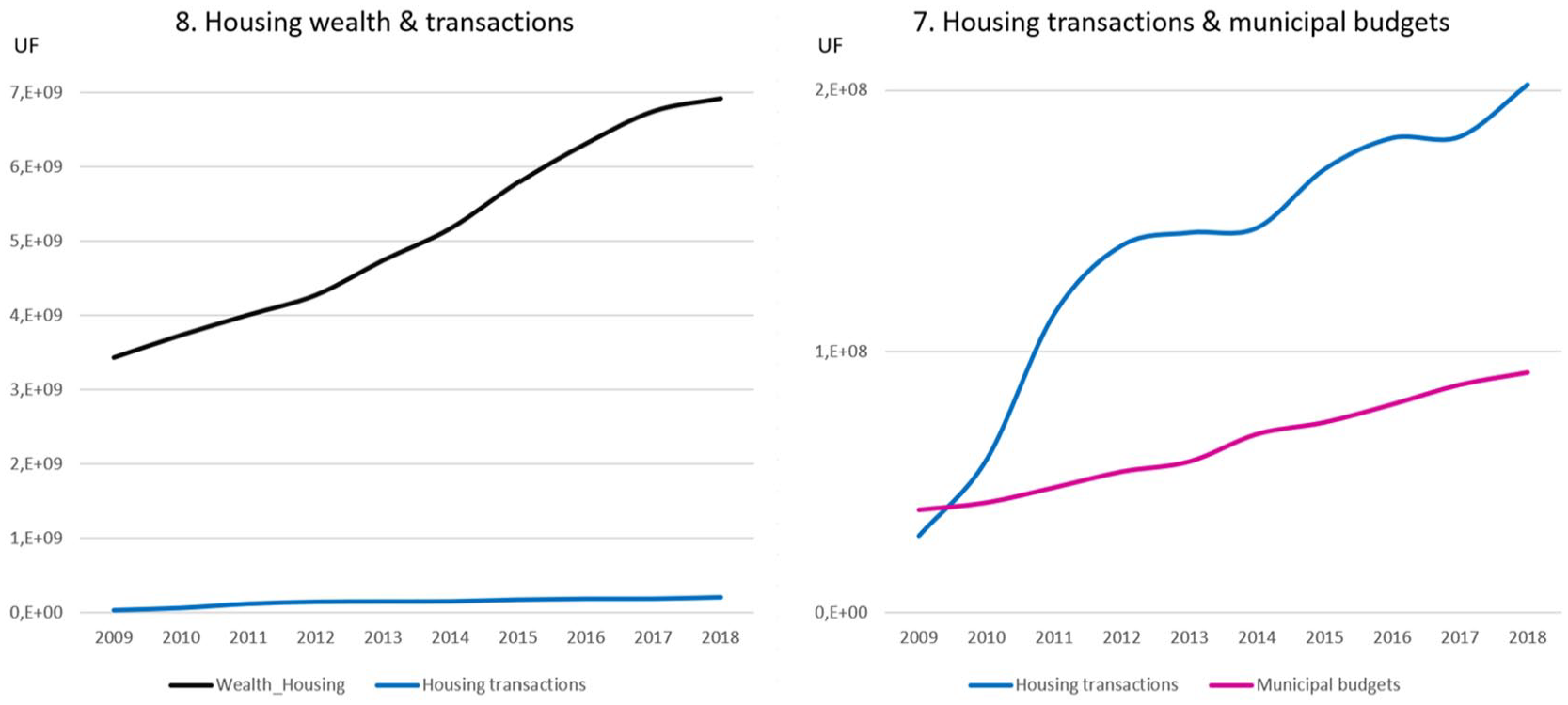
Evolution of housing wealth, transactions and municipal budgets in Greater Santiago.
Municipal budgets and housing wealth in Greater Santiago.
Source: Authors based on CBRS and SINIM data.
For instance, if we could raise housing property taxes by 2% of their commercial value and redistribute this revenue inversely to municipal budgets per capita, the per capita budget of the 36 municipalities of Greater Santiago could be equalized, as shown in Table 4. While some may see this tax increase as unjust, it is essential to note that it is relatively small compared to the average yearly surplus value of this wealth stock, around 8% between 2009 and 2018.
Acknowledging that increasing housing taxes is a delicate political issue, we argue that the available information in Chile would allow the design of a progressive increase of private housing taxes that would significantly help to equalize municipal per capita budgets. This additional contribution could be focussed on higher-valued properties, exempting elderly proprietors and other vulnerable social groups. In comparison, taxing housing transactions or commercial licences for this purpose is unfeasible, because the corresponding monetary flows are smaller than the budgetary gap among municipalities.
Discussion: Towards re-municipalization by finance
This study analysed the budgets of 52 municipalities in Santiago, Chile’s Metropolitan Region (MR), and compared them to property values in the 36 municipalities of the Greater Santiago Metropolitan Area (GSMA) between 2008 and 2019. We observed that the correlation between municipal budgets, the housing market, and property values strengthened with time, widening the gap between budgets and property wealth over the observation period.
Taxing land and property valorization is an efficient regulation mechanism for unearned wealth accumulation, mainly driven by public investments and planning, among other external factors (Haila, 2016; Smolka, 2013). Capturing this value is a fair way of financing public policies that aim to counteract segregation in spatially polarized cities, which are prevalent in Latin America (De Cesare, 2012; UN-Habitat, 2013). Neoliberal policies in Chile have resulted in significant welfare disparities due to the liberalization of the housing market, resulting in urban segregation and resistance to fairer property tax arrangements (Blanco et al., 2016; Garreton, 2017; Navarrete-Hernandez and Toro, 2019).
Regarding the actual magnitude of differences between private wealth and public revenue in Chile, we showed that a 2% increase in property taxes over a housing property stock that accumulated an 8% yearly surplus value between 2009 and 2018 could equalize budgets across the 36 high and low-income municipalities of the GSMA. These findings highlight the structural inequalities neoliberal policies of municipal finance produce in Chile and the relative weakness of Chilean municipalities compared to local governments in other world areas.
For instance, in Western industrialized countries, formerly privatized public assets and services have been taken back into public ownership in a progressive trend of re-municipalization (Cumbers and Paul, 2022). These transformations respond to the failures of neoliberal policies to produce social welfare fairly and sustainably and suggest ways to develop new state capitalism led by subnational governments (Paul and Cumbers, 2023). This trend also reveals a pragmatic shift towards the political reassertion of local governments that takes advantage of increased transfers from national governments since the COVID-19 crisis (Warner, 2023).
In China, local governments have supplemented municipal finances with land commodification, which currently accounts for 30% of their budgets (Lin and Zhang, 2015). This has allowed municipalities to actively engage in urban development and planning deregulation, which have fostered overbuilding, real estate boom-bust cycles, and the destabilization of an increasingly financialized real estate sector. However, progressive efforts to reinforce welfare and public ownership of real estate for redistribution outline possible ways for counteracting neoliberal failures (Su and Qian, 2022).
In Latin America, progressive local governments have made significant advances in welfare redistribution since the turn of the 21st century, mainly with housing and urban development plans (Sette Whitaker Ferreira et al., 2020). However, these efforts have been short-lived due to chronic institutional weakness in this region, the economic effects of the COVID-19 crisis, and the recent rise of conservative regimes in the region. Notably, the lack of institutional coordination in unstable decision-making structures frustrates long-term planning efforts for improving socio-spatial justice (Irazábal, 2021). Thus, Latin American municipalities have less capacity to counteract neoliberal urban policies than European, North American, and Chinese ones.
Chile is no exception in this regard and offers a grim picture of local governments’ weakness with respect to a global perspective. Here, the re-municipalization of privatized public services is not even a subject of debate, and municipalities do not have commodifiable land to increase their budgets, unlike, for instance, China, Singapore, or Hong Kong. The only powerful tool Chilean municipalities have to boost urban development is deregulating density restrictions, which has been used in a competitive way to attract investors (López-Morales, 2009), with dire consequences for urban quality of life and notorious high-rise buildings that have been dubbed ‘vertical ghettos’ by authorities and the media. In sum, Chilean municipalities are not following global trends of re-municipalization and are still immersed in a neoliberal planning ethos.
In Chile, the discussion about land value capture has centred on the flaws of existing public redistribution mechanisms, which reflect a typical emphasis on public inefficiency in the context of neoliberal policies (Peck et al., 2012) (see Figure 9, lower half). This focus on public inefficiency has been the basis for reducing the size and capabilities of the Chilean State since the mid-1970s (Harvey, 2005). On the other hand, we argue that it is more crucial to concentrate on the private wealth accumulation mechanisms that rely on deregulation, regulatory capture, and the intergenerational transfer of wealth (Garreton, 2017; Méndez and Gayo, 2018; Silva, 2011; see Figure 9, upper half). This is because these mechanisms involve a significantly larger amount of capital (see Figure 1).
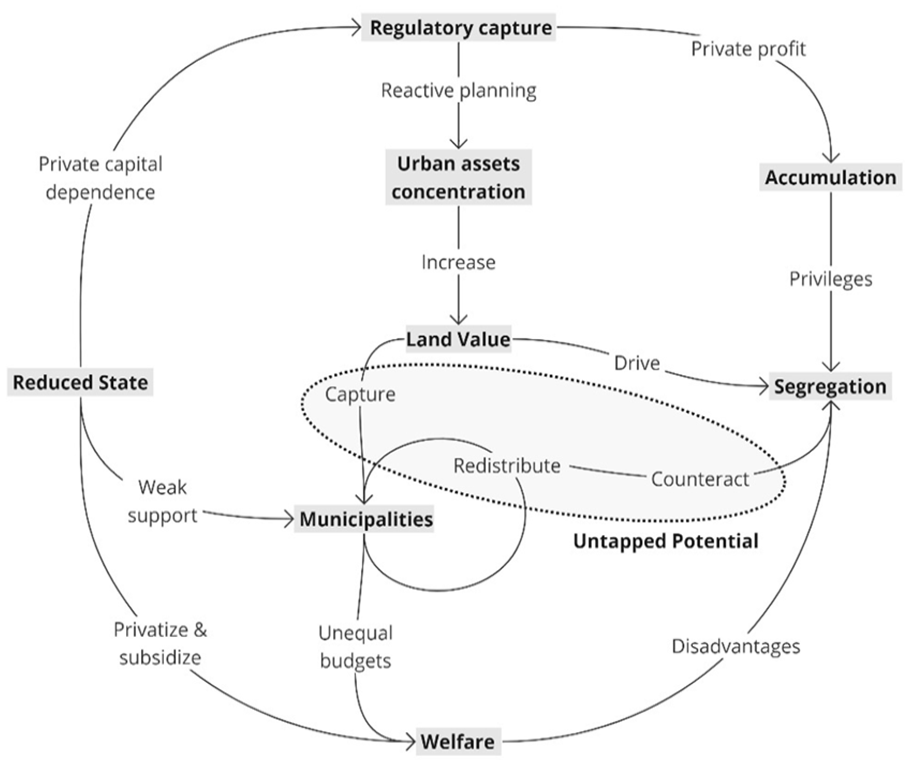
Segregation mechanisms and land value capture in Chile’s neoliberal framework.
These findings support the first part of our hypothesis, clearly showing that the potential of property taxes for budgetary redistribution among municipalities is significantly unexploited in Chile. However, understanding the connection between this apparent bureaucratic negligence and the plausible interest of the elites for the intergenerational reproduction of their wealth requires deeper examination.
Firstly, we argue that the unearned surplus value, which is created by exogenous public and private investments but is captured by property owners, is a form of primitive accumulation, defined by Marx as the ‘historical process of divorcing the producer from the means of production’, and is also an ongoing process in contemporary societies in variegated ways (Glassman, 2006, p. 610). Defending low property taxes is critical for the profitability of rental income, which directly exploits the reproductive labour of households (Mitchell et al., 2004). This source of passive income has become increasingly relevant for wealthy Chileans who have massively invested in high-rise rental developments in Santiago and other cities (Garreton, 2017; Navarrete-Hernandez and Toro, 2019).
Secondly, in a long-term perspective, even a slight increase in property taxes would compound a substantial rent loss over the years, making it more challenging to own and inherit property across generations. Chilean elites have shown a remarkable capacity to pioneer the creation of land surplus value in Santiago for the last century and a half. They migrated from their large estates in the countryside to the capital, Santiago, to lobby for agricultural subsidies that were paid with increased fiscal revenues after winning the Nitrate War (1879–1884) against Bolivia and Peru (Geisse, 1978). During the 20th century, they migrated from the historical centre upstream of the Mapocho River, developing successive high-income neighbourhoods while displacing elite jobs from the historical business district towards the northeastern quadrant of Santiago’s conurbation (Garreton, 2017). Generation after generation, they bought cheap agricultural land for new developments and sold it with huge profits after urban consolidation, densification, and proletarianization of formerly elite neighbourhoods. We lack consistent historical records to quantify the magnitude of this intergenerational primitive accumulation process. However, we speculate that it should be much greater than what we have been able to measure in this work.
Thirdly, there is the question of intent. Are elites aware of the strategic relevance of keeping low property taxes for reproducing its wealth through generations? The experimental neoliberal reforms that pioneered the financialization of real estate in Chile, within widespread deregulation, were negotiated between an authoritarian government and an influential economic elite (Alemparte, 2022), with substantial benefits for both. This allowed the elites to profit by privatizing state enterprises, speculating on deregulated land markets, subsidies for private urban development, and other privileges (Garreton, 2017; Matamala, 2015). Current law restrains Property Tax increases too much lower rates than actual surplus value accumulation trends (i.e. Law 17,235 on Property Tax; Figure 8) with an ever-widening rent gap that is larger in elite areas and high-value properties. In the second of Chile’s two recently rejected new constitutional proposals (the last one was voted on in a referendum in December 2023), hard-right representatives included an article that would have abolished the property tax entirely if they had won the referendum. This failed attempt suggests the elite’s interest in shaping property regulations in Chile to perpetuate wealth accumulation.
In sum, we have provided objective evidence of a substantial unexploited redistributive potential of the Property Tax in Chile and theoretically plausible arguments that support the conjecture that elites have agency to defend the weakness of this tax for purposes of intergenerational wealth reproduction. Further research is needed to explore these issues from intergenerational and legal perspectives.
Conclusion
This study has described how the neoliberal reforms that were implemented in Chile after the military coup of 1973 have evolved in democracy, adapting to the increasing subventions of the State with regulatory capture mechanisms that allow private accumulation through the production of public goods and services (Garreton, 2017; Silva, 2011). We examined property taxes’ role in reinforcing local budgets and solidary mechanisms among Chilean municipalities by capturing unearned land surplus values.
It is worth noting that the capacity development of local government in Chile and other Latin American countries is moving in a different direction compared to the re-municipalization processes in North America and Europe. These processes have been initiated to address past neoliberal failures. Unlike Chinese municipalities, which have commodifiable land and play a significant role in urban development, Chilean municipalities have opted to deregulate densification to attract private investments. This has led to competition among municipalities, resulting in negative consequences for urban quality of life. In this context, we argue that increasing the Property Tax has the potential to boost municipal budgets significantly. Moreover, implementing this increase from a technical perspective would be relatively straightforward.
In this context, we analysed the redistributive potential of property taxes as a land-value-capture policy in the Santiago Metropolitan Region, showing that a 2% increase of the Property Tax would allow to fill the budgetary gap of low-income municipalities up to the level of the wealthiest ones (Table 4). However, various legal and political measures resist increasing this tax, which has not kept up with the rapid land appreciation driven by the market, leading to widening disparities in private property wealth accumulation.
Land is a durable asset that accumulates surplus value and can provide passive income, making it ideal for intergenerational wealth transfer. Conversely, even small Property Tax increases could produce massive wealth transfers in the long term, with substantial rent losses for landlords and higher housing costs for homeowners. Consequently, they have a direct interest in defending weak property taxes. However, rent is a form of passive income, and the accumulation of wealth with land surplus value is unearned, so these are mechanisms for extorting value from the individual labour of tenants and the collective labour of urban development. Thus, there is a clear theoretical connection with the concept of ‘accumulation by extra-economic means’, defined by Glassman (2006) as a prerequisite to capitalistic production and as an ongoing mechanism of ‘primitive accumulation’ that is based on the exploitation of labour through variegated forms of power abuse.
Understanding property rent and wealth as forms of extra-economic accumulation implies a necessary theoretical complement to the critical analysis of the financialization of real estate as a mechanism for the efficient switching of surplus value between primary (productive) and secondary (reproductive) circuits of capital (Haila, 2021; Harvey, 2007). Indeed, the capacity of landlords to accumulate capital through property, without any productive contribution, produces ‘value that enters the circuits of capitalistic accumulation through the parasitization of formally non-capitalist processes’ (Glassman, 2006, p. 617). Notably, this accumulation process does not require the involvement of the primary (productive) circuit of capital, as it extracts value directly from primitive sources – individual and collective labour – and efficiently switches it to the secondary (reproductive) circuit.
The financial sector is vital in accumulating value through property rent and wealth, both as a lender of capital for housing and urban development and increasingly as a broker of property-based financial assets (Haila, 2021). The financialization of real estate directly affects the inflation of housing prices because it allows investors and speculators to compete with households in the housing market (López-Morales, 2009). As the gap between labour income and housing price widens, fewer households can own homes, and more pay higher rents. Thus, the financialization of real estate allows landlords to extract more value from their tenants and to accumulate more wealth in property. We believe that a robust Property Tax could be the Achilles’ heel of this neoliberal mechanism.
In sum, the theoretical frameworks of extra-economic accumulation (Glassman, 2006) and land financialization (Haila, 2016) converge on the central role of property as a store of value and as a source of passive income, which makes it ideal for the long-term reproduction of wealth. We argue that defending against the increase of the Property Tax is a critical neoliberal strategy for the intergenerational reproduction of privilege because it allows accumulation without production, directly transferring value from primitive sources – individual and collective labour – to the secondary circuit of capital.
Through this integrated analysis of public agency challenges and private accumulation strategies in the real estate sector in Chile, we also argue that the solution to municipal disparities can be found on the private side of the Chilean neoliberal equation rather than on the public side, based on two main arguments. From a quantitative perspective, simply observing the vast and growing gap between property surplus values and municipal finances. From a theoretical perspective, it underscores that weak property taxes are unfair because they favour the intergenerational reproduction of parasitic privilege.
This study’s comparison of property wealth and municipal budgets shows that Chile has ample opportunity to increase municipal revenue by capturing more land values through the Property Tax. Creating stronger redistribution mechanisms among local governments is an achievable and fair goal. Inspired by Georgist interpretations (Haila, 2016), we claim that as land valorization is unearned, its capture by the State seems a moral imperative.
Footnotes
Declaration of conflicting interests
The author(s) declared no potential conflicts of interest with respect to the research, authorship, and/or publication of this article.
Funding
The author(s) disclosed receipt of the following financial support for the research, authorship, and/or publication of this article: The ANID Fondecyt Regular Project Code #1210972 and the ANID Fondap Project Code #15130009.
