




Abstract

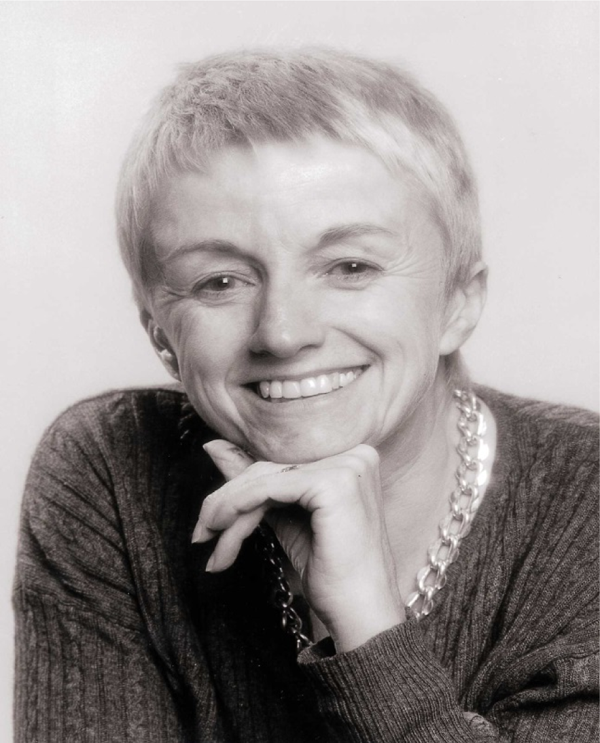
Great people not only make waves during their lifetime; they continue to influence and inspire others long after they have gone. Doreen Massey’s passing is hard to bear, but her large and extraordinarily rich legacy will endure. She was a truly exceptional geographer and one, moreover, esteemed far beyond her chosen discipline. She was a philosopher, empirical researcher, educator, political activist and, in recent years, a public intellectual. Her geography knew few topical bounds, spanning the economic, political, cultural and even physical parts of the subject. Her theoretical-political lenses were equally wide angle, but avowedly of the Left. She authored not just one or two formative publications but many; her numerous books, articles and chapters changed the way we understand the world and our place in it. She was a superb communicator: her lectures and seminars could be riveting, while her written English was full of memorable formulations. She was as committed to student education as she was to scholarship; she valued political commentary as much as abstract theorizing (and, to that end, helped set up Soundings with Stuart Hall and Michael Rustin in 1995). She was a high-energy, multi-talented individual and a frequent collaborator, generous with her time and ideas. She was also principled and – when occasion called for it – fearless. Throughout her remarkable life she showed us what it means to be a politically committed scholar for whom research, pedagogy, activism and public engagement are all connected organically.
Doreen Massey was raised on the outskirts of Manchester, England. Born into a working-class family as the Second World War ended, she gained entry to what then – far more than now – was one of Britain’s most famously exclusive establishments (Oxford University). She graduated with an honours degree in Geography in the mid-1960s. Later she undertook a masters in regional science at the University of Pennsylvania. By then she had joined a research-based think tank funded by the British government (the Centre for Environmental Studies, situated in London). There she began to formulate some of the ideas that would soon mark her out as a rising star in academic Geography. Her institutional route-way back into university life also began during her CES period, first at the Polytechnic of Central London (as it was then called) and later at the London School of Economics. She joined the Open University not long after the Centre lost its central funding in 1979. She remained there for the rest of her career, retiring in 2009 after 27 years of service.
It was during her initial period as a part-time LSE geographer that she published a germinal piece of writing, the paper ‘In What Sense a Regional Problem?’ (in Regional Studies, 1979). It connected political economy with geographical form and was among the key publications responsible for making Marxist geography a preferable approach to ‘industrial location theory’ when seeking to understand regional growth and uneven development. Three years later she co-published The Anatomy of Job Loss (1982) with her CES colleague Richard Meegan (the second book she authored with him). This text showed that unemployment could not be explained by looking chiefly at the locational characteristics of industries; much also depended on wider corporate strategy, overseas competition, broader government policy and a plethora of other extra-local factors. In 1984, building on this, she published the highly influential Spatial Divisions of Labour. It soon became one of the foundational studies for geographical political economy in its Marxian form, complementing without at all aping key works by David Harvey, Neil Smith and others in the early-to-mid 1980s.
Writing on a broader front, the next year she also published a now classic chapter on space and social relations in an equally classic edited book by Derek Gregory and John Urry (1985). That same year she and Richard Meegan co-edited the excellent Politics and Method (1985). This was an early demonstration of how geographical research is political all the way down and normatively implicated in that which it purports merely to ‘describe and explain’. Unlike some previous abstract claims to this effect by others in Geography, her and Richard’s contributors were able to show this concretely.
Doreen’s work during this period was infused with a deep concern about class inequality in the UK and beyond, and the geographical patterning of this inequality. A critic of empiricism and the idea of value-neutrality, she demonstrated the importance of making conscious theoretical choices and testing their robustness against bodies of (value-laden) evidence. But by the early 1990s, influenced by feminist thinking in Geography and beyond, she began to extend her own Marxism and challenge that of some of her peers both conceptually and politically. Her fine collection of essays Space, Place, and Gender (1994) was both a provocation and an incitement. It showed the limits of orthodox Marxism when applied to problems of inequality and injustice as manifested geographically. It encouraged older and younger ‘radical geographers’ (as they were still then called) to consider multiple axes of socio-spatial difference when seeking to both interpret and improve a world full of problems. Some of its themes had been trailed in her combative engagement with David Harvey’s historical-geographical materialism (her paper ‘Flexible Sexism’, in the journal Environment & Planning D [1991a]).
Around this time Doreen turned her attention squarely to the concept of place, elaborating ideas that, in nascent form, had appeared in her ‘regional problem’ paper and The Anatomy of Job Loss. She provided a way of thinking about place that was complex, porous and relational. Her way of approaching the subject, informed by involvement in ESRC-funded research into the restructuring of the British space economy, anticipated many of the later disciplinary debates about ‘glocalization’. She used a similar conceptual framework to understand regional change, specifically in the southeast of England (Allen et al., 1998), adding in lots of evidence to demonstrate the explanatory power of the ideas. Through all this she gave us a way to mediate the unique-general/idiographic-nomothetic dualisms so as to yield explanatory and political benefits for Left-leaning geography (by then becoming known as ‘critical human geography’). In the case of Rethinking the Region, this involved a powerful demonstration of how neoliberal policies had remade the greater London area as part of a global reconstitution of economic and social life.
In her many pivotal writings about place and region, she provided concepts that would soon become part of human geography’s analytical repertoire – notably a ‘global sense of the local’ and ‘power geometries’. But as the 1990s progressed she increasingly wove these constructs into a broader conception concerning the spatio-temporal constitution of life and matter. Here she elaborated ideas first expressed in a New Left Review paper (Massey, 1992, republished as the closing chapter of Space, Place and Gender) and in her chapter ‘New Directions in Space’ in Gregory and Urry’s book (Massey, 1985). Not only did she insist on the complex unity of space and time, but so too their inherence in objects, relationships and identities; she also detailed their political qualities over and above those that David Harvey, Neil Smith and other Marxist geographers had done so much to highlight. At the turn of the millennium she captured all this in what, for me, is her most stimulating (but perhaps least available) book, Power-Geometries and the Politics of Space-Time (1999a). It is a post-Marxist statement that represents her geographical engagement with the work of Ernesto Laclau and Chantal Mouffe, among others. It is both hard-headed and optimistic, having been written at a time of neoliberalism ascendant but also lots of citizen agitation in Seattle and elsewhere for a new world order.
In the years leading up to her retirement from the Open University, she remained extraordinarily active in all parts of her multifaceted life. She continued to co-edit Soundings until 2004, a British journal that bridged the academic and wider Left (and continues to do so). With OU colleagues she continued to produce first-rate degree modules, with superb supporting material (see, for instance, Material Geographies: A World in the Making [Clark et al., 2008]). Her long-standing interest in the politics of difference and the politics of geography found expression in Cities for the Many, Not the Few (with Nigel Thrift and Ash Amin, 2000). She continued to write insightfully about the geography of her adopted metropolitan region, at a time when her friend Ken Livingstone was mayor of London. World City (Massey, 2007a) attended to the specifics of England’s capital while offering a wider commentary on the ills of neoliberal capitalism. As if all this were not enough, she published her most complete statement on the nature and importance of geography, For Space (2005). This latter work moves beyond her previous attempts at conceptual weaving by stitching questions of physical environment and matter into her very large intellectual canvas. The enlarging of her worldview had been presaged six years earlier in a Transactions of the Institute of British Geographers article (Massey, 1999b), a pioneering essay that re-energized the tired debate about the relationship between the two ‘halves’ of academic Geography.
This list of her writings and activities across four decades is selective (see also essays in Featherstone and Painter, 2013). Difficult though it is to believe, she did more – a lot more (including, in her final years, co-authoring the Kilburn Manifesto for a new progressive politics in the UK and beyond: this saw her playing the role of public intellectual with aplomb). Yet she rarely published in Progress in Human Geography. Her most substantial contribution here was an essay on how the discipline of Geography, geographical thinking and public policy intersect (or, as she argues, fail to do so: Massey, 2001). It was based on one of the journal’s first annual lectures. It garnered a response and she, in turn, responded (Massey, 2002). Beyond this, Progress organized reflective commentaries on her books Spatial Divisions of Labour (first edition) 1 and For Space. In each case she penned graceful and interesting replies (see Massey, 2007). But of course the measure of Doreen’s influence on Progress and its many readers is not these four pieces: it is the countless others published in the journal that cite and utilize her many brilliant insights. Indeed, as I prepared to write this tribute, I was struck by how much more Doreen had shaped my own thinking than I had realized. Reviewing her many publications and lectures, I was reminded of how very much she had taught me over a great many years. What I consider to be two of my better publications simply could not have been written without her influence (Castree, 2001, 2009). Aside from the above mentioned Power-Geometries book, my personal favourites are her essays ‘The Political Place of Locality Studies’ (Massey, 1991b) and ‘Geographies of Responsibility’ (Massey, 2004).
In recognition of her prodigious talents and achievements, she received a great many accolades. Though not one for pomp and circumstance (she declined an OBE), she was awarded the Victoria Medal by the Royal Geographical Society (1994), the Lauréat Prix International de Géographie Vautrin Lud (1998), a Fellowship of the British Academy (2002), the Anders Retzius Gold Medal by the Swedish Society for Anthropology and Geography (2003), the Centenary Medal by the Royal Scottish Geographical Society (also 2003) and several honorary degrees. These awards collectively marked her wide and deep influence on Geography and social science more broadly. To quote from a famous beer advertising campaign, she reached the parts that most other academics cannot reach. It is no surprise that two of her former doctoral students saw fit to publish an edited volume in her honour subsequent to her retirement (Featherstone and Painter, 2013).
If Doreen Massey had never lived, critical social science – let alone international geography – would have been significantly poorer this last 40 years. That she taught so many people so much of profound significance is cause for great celebration. That she is now gone is, equally, cause for enormous sadness. Even in retirement, she remained intellectually and politically active. Shortly before her untimely death she was lecturing and writing with energy and purpose. Geography, a plethora of other disciplines, and the broader Left will never know what signal contributions she would have made had she been with us another 5, 10 or 15 years into the future. But we do, at least, have a treasure trove of brilliant writings and memories to mine as we try to steer a course through a turbulent world full of challenges and opportunities. Even though she is gone, Doreen Massey will remain one of our essential reference points long into the future.