



Abstract
The vertical axis wind turbine (VAWT) configuration has many advantages for an offshore wind turbine Installation. In this paper, the three dimensional (3D) computational fluid dynamics analysis of a large-scale 5 MW VAWT is conducted. At the optimum tip-speed ratio (TSR), the VAWT maximum inline force was 75% larger than the maximum lateral force. It was found the dynamic stall effects cause the VAWT flow field to become increasingly asymmetrical at the mid-span plane, when the TSR is reduced. The attachment of end plates to the blade tips, resulted in a performance improvement during the upwind phase with the average blade torque coefficient in this range being increased by 4.71%. Conversely, during the blade downwind phase a reduction in performance was found due to the increase in drag from the end plates and the average blade torque coefficient in this phase was reduced by 23.1%.
Keywords
Introduction
The growing need for energy, the limitations of fossil fuels and the increasing concerns over climate change has motivated the development of the offshore wind industry (GWEC, 2019). Wind energy conversion devices can be classified into two primary types of the horizontal axis wind turbine (HAWT) and the vertical axis wind turbine (VAWT). The VAWT is receiving renewed interest due to its suitability for the offshore floating environment. In comparison to the HAWT, the VAWT has a lower centre of gravity and is omni-directional negating the need for a complex yaw mechanism (Hand and Cashman, 2020; Hand et al., 2021; Thé and Yu, 2017). There exists a number of approaches to simulate the aerodynamics of a VAWT. Aerodynamic analysis of VAWTs has been conducted using streamtube models (Meana-Fernández, 2018), vortex models (Tescione et al., 2016), panel models (Zanon et al., 2012) and with Computational Fluid Dynamics (CFD) (Balduzzi et al., 2016a; Hand et al., 2017).
With the advancement of computing hardware, the utilisation of CFD has become increasingly popular in the numerical modelling of wind turbine aerodynamics by solving the Navier-Stokes equations (Balduzzi et al., 2016b). Ever since, the very first VAWT CFD studies were attempted over a decade ago, engineers and aerodynamicists have strived to perform 3D CFD investigations of these machines in order to understand in greater detail the generated complex flow physics (Vassberg et al., 2005). The 3D CFD unsteady simulation of the VAWT aerodynamics is seen as the most complete high fidelity analysis method, but also the most computationally demanding and is therefore reserved for the final analysis stage. In the last few years, thanks to the growth in computational resources (analogous to Moore’s law), an increasing number of 3D studies have been published. Lam and Peng (2016) investigated the near and far wake development of a H-type VAWT using 2D and 3D CFD simulations. It was demonstrated the 2D CFD model overestimated the turbine performance and this was similarly observed by Howell et al. (2010). A 3D Unsteady Reynolds-Averaged Navier-Stokes (URANS) study of a H-type VAWT operating in skewed flow was undertaken by Orlandi et al. (2015) and showed a performance improvement due to the reduced wake velocity effects on the turbine’s downwind region. Performance analysis of two interacting VAWTs was conducted by Mohamed et al. (2020). It was showed the average torque output of the downstream turbine was reduced by 25%. Balduzzi et al. (2017) simulated the 3D unsteady aerodynamic effects experienced by a single VAWT blade using computational hardware consisting of more than 16,000 processor cores. The study elucidated the generation of the blade tip vortices, dynamic stall phenomenon and blade/wake interaction. In a recent study, these CFD results by Balduzzi et al. (2018) were compared with the predictions from a lifting line free vortex wake model.
Previous studies have also concentrated on the aerodynamic design and optimisation of the VAWT design by using 3D CFD simulations. Marsh et al. (2015a) employed a 3D URANS model to compare the performance of a straight-bladed turbine with a helical-bladed turbine configuration. It was identified the straight-bladed turbine configuration was more efficient than the helical turbine. In the works by Alaimo et al. (2015) and Castelli and Benini (2012), VAWTs with helical blades were also examined. Subramanian et al. (2017) studied the effect of VAWT solidity and the airfoil profile on the performance of a small-scale VAWT with a 3D CFD model. It was established that thicker airfoils perform better at low tip-speed ratios (TSRs) due to a longer duration of attached flow and a high solidity turbine performs better at lower TSRs. Zamani et al. (2016) employed 3D CFD simulations to examine the influence of J-shaped blades on VAWT performance at low and moderate TSRs. It was found this unique blade shape improved the turbine self-starting and aerodynamic efficiency characteristics. Wang and Zhuang (2017) investigated the effect of sinusoidal serrations on the blade leading-edge at low TSRs in a low Reynolds number flow regime. The results showed the onset of dynamic stall can be suppressed by using leading-edge serrations and a performance improvement was achieved. Shahizare et al. (2016) utilised a 3D CFD model to examine the effects of various guide-vane setting angles on the performance of a shrouded VAWT for an urban installation. Elkhoury et al. (2015) used 3D Large Eddy Simulations to investigate the performance of a VAWT with an integrated variable-pitch system. It was established the four-bar-linkage variable-pitch VAWT gave better performance compared to a fixed-pitch VAWT design. So far, the limited number of 3D simulation studies have concentrated solely on small-scale VAWT aerodynamics and usually include only the VAWT’s blades in their simulations, therefore disregarding the inherent parasitic structural elements (i.e. the support struts and the tower). In this paper, the 3D CFD simulation of the 5 MW VAWT presented is described. It is worth noting here, that this is the first 3D CFD simulation study of a multi-megawatt scale VAWT to be conducted. This is particularly challenging as the with higher Reynolds numbers requires more CFD elements in the near wall region compared to low Reynolds number study.
Moreover, a thorough exploration of the literature, reveals that the majority of existing studies have predominately focused on the VAWT performance (i.e. key metrics such as efficiency and torque come to the fore), with little known about the immediate wake flow field developed by the VAWT at various operating regimes under tip-speed ratio control. The evolution of a VAWT wake contributes significantly to its operation and performance, as well as the VAWTs installed in the vicinity. The inherent unsteady and three-dimensional aerodynamics of VAWTs have hitherto limited the research on wake evolution. In particular, a good understanding of the VAWT wake is imperative in the design of a VAWT offshore floating wind farm, where downstream turbines can potentially be located in the wake of the upstream turbines and subsequently influence the performance of the whole wind farm. Furthermore, research on the VAWT blade tip vortex dynamics is limited.
Concerning the existing literature on VAWT wakes, Brochier et al. (1986) conducted one of the first experimental studies on the wake flow downstream of a VAWT with measurements from a H-rotor in a water channel. Bergeles et al. (1991) undertook wind tunnel experiments using a hot wire in the near-wake region of a Darrieus turbine. The mean wake velocity and turbulence level profiles at two downstream positions (
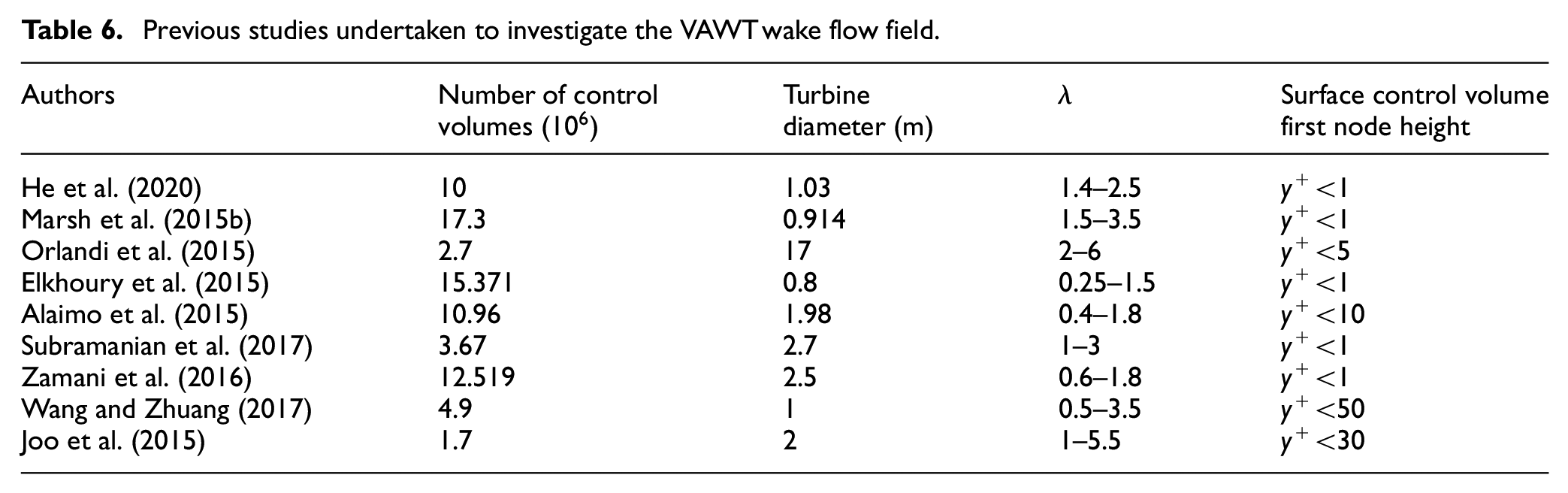
Previous studies undertaken to investigate the VAWT wake flow field.
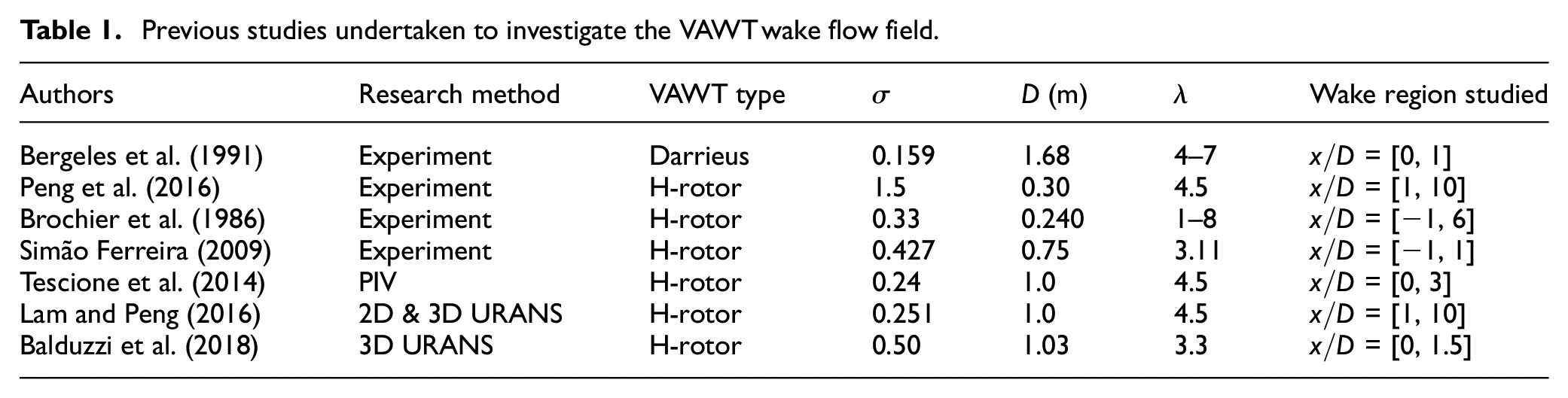
Energised by the growing availability of HPC, the results of a unique set of 3D CFD simulations conducted on a cluster of multi-core processors are reported. This chapter will elucidate the wake flow field developed and important aerodynamic phenomena created by the 5 MW VAWT at selected TSR regimes principal to its operating procedure. In particular, attention is given to the optimum and stalled regulated functioning cases. This chapter also provides a detailed description of the main 3D aerodynamic effects associated with the VAWT performance, including blade dynamic stall and the tip vortex generation, with important observations highlighted. To the best of the author’s knowledge, the present study represents the most detailed numerical solution of the flow field past a utility-scale VAWT undertaken to date.
CFD simulation methodology
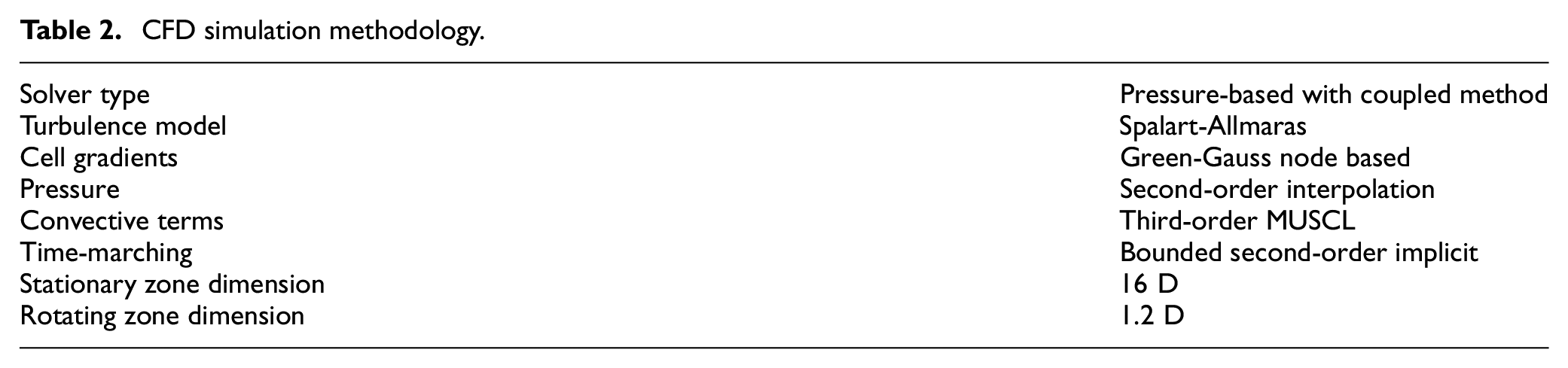
The software ANSYS Fluent 16.0 is used to solve the unsteady Reynolds-Averaged Navier-Stokes (U-RANS) equations. In previous work (Hand et al., 2017), a CFD simulation methodology to numerically model the unsteady aerodynamics of a large-scale VAWT blade at high Reynolds numbers is outlined and this methodology is utilised in this study. The aforementioned study extensively examined the most optimum CFD modelling approach by a series of sensitivity analyses and the validity of this method was assessed with wind tunnel experimental data by Wickens (1985). In particular, it was demonstrated the Spalart-Allmaras (S-A) turbulence model gave a representation of the VAWT dynamic stall event very similar to the more complex
CFD simulation methodology.
This CFD methodology was further validated with available mid-span VAWT experimental blade force measurements at high Reynolds numbers (Re

The SNL 17-m experimental Darrieus VAWT: (a) front view and (b) side view (Johnston, 1982; Reuter 1980).
Figure 2 shows the predicted blade normal force coefficient at the turbine mid-span plane at
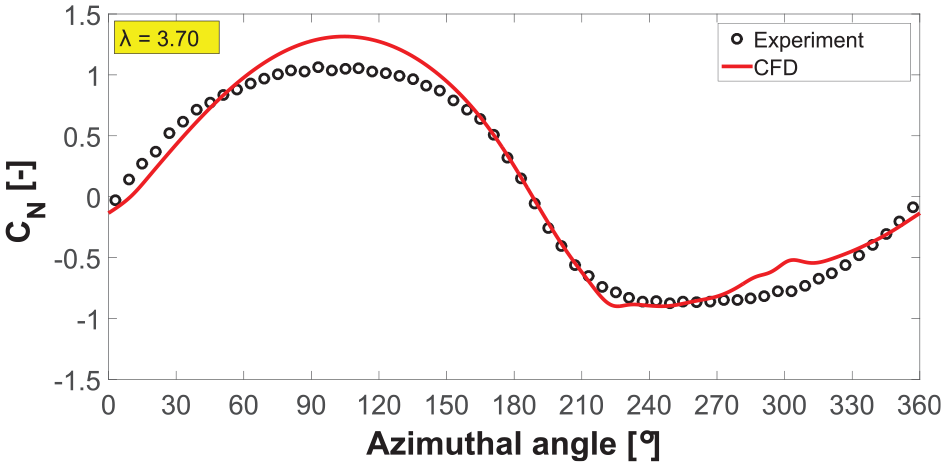
Predicted blade normal force coefficent with SNL-17m VAWT experimental measurements (Hand and Cashman, 2018).
3D CFD simulation
5 MW VAWT design
Geometrical details
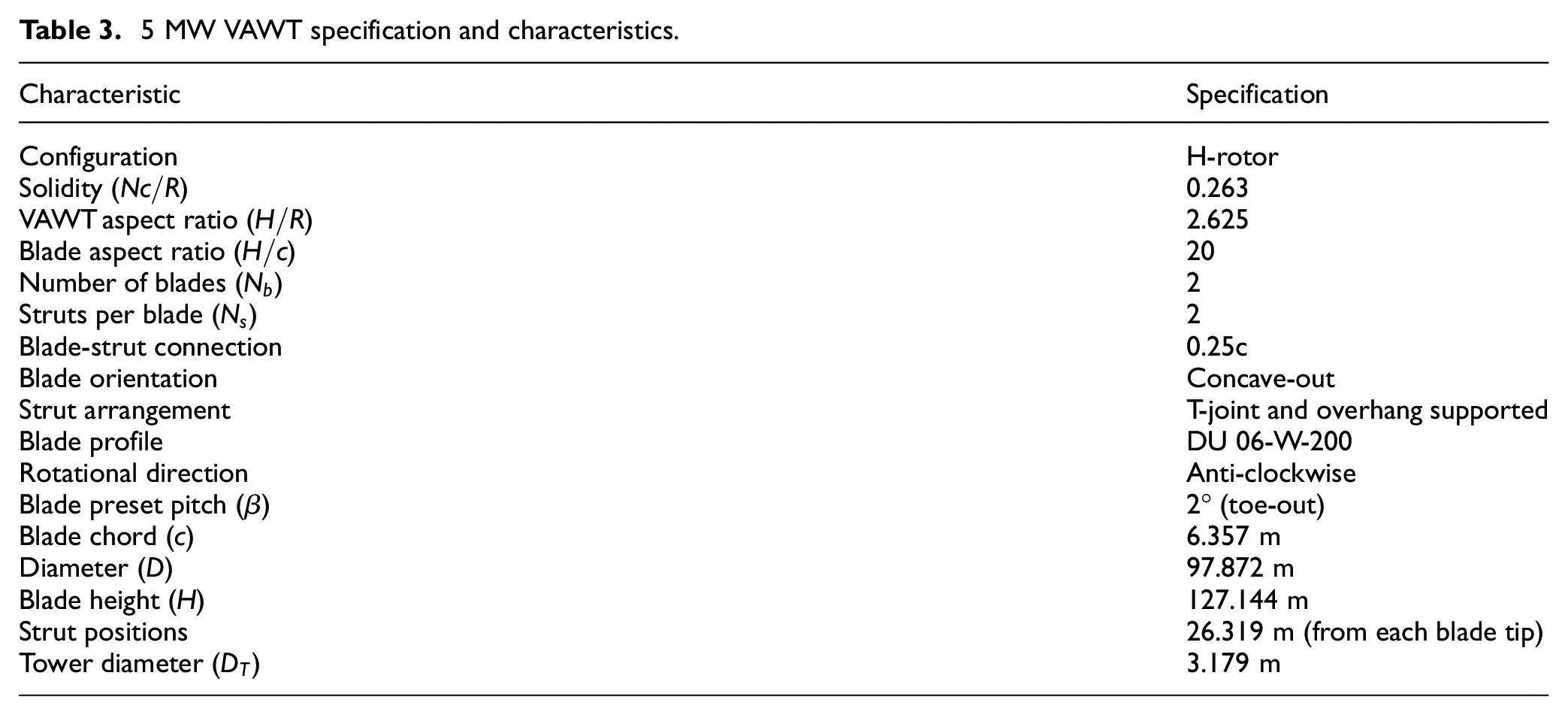
In previous work Hand and Cashman (2017), the conceptual design of a large-scale 5 MW VAWT was outlined. Table 3 outlines the geometrical details of the 5 MW VAWT and the 3D computer-aided design representation of the turbine is shown in Figure 3.
5 MW VAWT specification and characteristics.

5 MW VAWT 3D CAD views: (a) elevation (b) plan and (c) isometric with blade tip highlighted.
Computational domain and boundary conditions
In order to simulate the rotation of the VAWT, a 3D computational domain is created. Figure 4 shows a schematic of the computational domain where the 5 MW VAWT is situated at the domain origin.
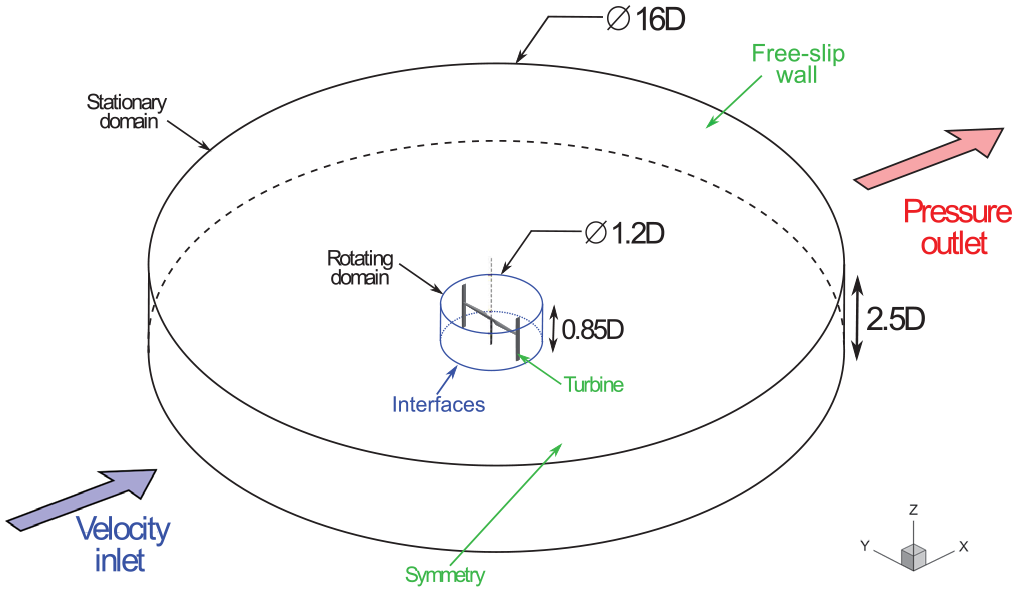
The 3D computational domain and boundary conditions (not to scale).
The computational domain is separated into two principal parts, namely a stationary sub-domain and a rotating sub-domain. The computational domain is a three-dimensional extension of the CFD domain specified in Hand and Cashman (2018), with an outer dimension of 16D. The height of the computational domain is set to 2.5D which is sufficient to have a negligible effect on the turbine performance (Marsh et al., 2015b). The turbine is encapsulated inside the rotating sub-domain and the contact surfaces between the two sub-domains are linked together by non-conformal sliding interfaces. A uniform air velocity inlet condition is imposed on the left-hand side of the domain. The inlet air turbulence intensity was defined as 10%, which was found to be the average turbulence intensity from offshore wind measurements (Sorensen and Sorensen, 2011). A pressure outlet condition is implemented on the right-hand side of the domain as shown in Figure 4. The top of the domain is defined as a free-slip wall, where the wall shear stress is zero (Lam and Peng, 2016; Marsh et al., 2015b). The bottom side of the domain is specified as a symmetry boundary condition which represents the mid-span plane of the turbine. Domain symmetry was employed to halve the computation resources required for the simulation. Previous numerical (Balduzzi et al., 2017; Lam and Peng, 2016; Marsh et al., 2015b) and experimental (Tescione et al., 2014) studies have demonstrated that the wake asymmetry about the turbine mid-span plane is very small.
Mesh dependency study
Figure 5 displays some details of the computational mesh utilised in this present investigation.
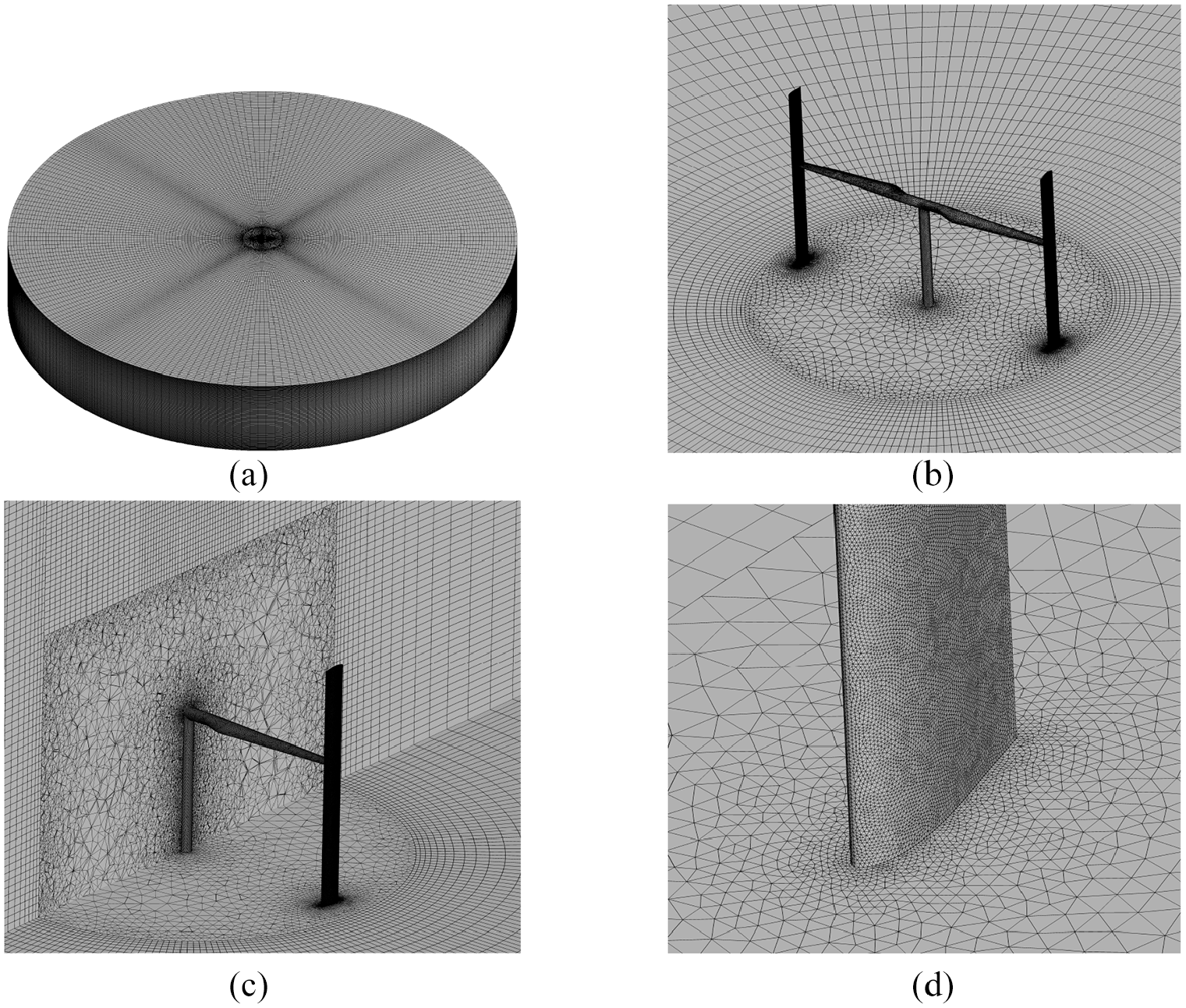
Details of the VAWT 3D computational grid: (a) computational domain grid, (b) mesh at the turbine symmetry plane, (c) rotating sub-domain grid, and (d) grid in proximity to the blade surface.
An O-grid type mesh topology is used for the stationary sub-domain which consists of structured hexahedral mesh volumes as shown in Figure 5(a). The rotating sub-domain utilises a hybrid mesh which is predominately composed of unstructured tetrahedral volumes to capture the intricate curvature of the turbine geometry as shown in Figure 5(b) and also in Figure 5(c). A tetrahedral mesh has been implemented around the turbine geometry due to the complex nature of its design. The mesh topology in the vicinity of the blade is highly refined as is displayed in Figure 5(d). On the surfaces of the turbine, inflated prismatic boundary layer control volumes are concentrated to resolve the viscous-affected sub layer region. Hence, the first layer control volume node height was defined to satisfy the requirement of
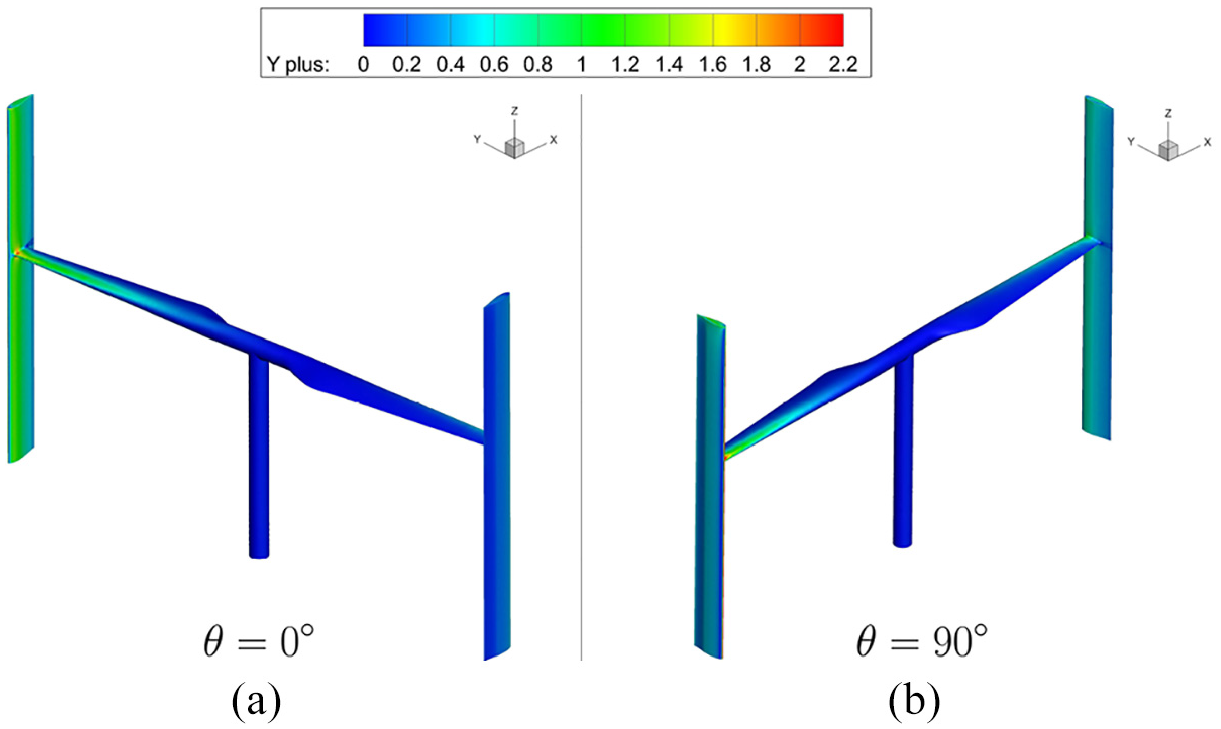
The instantaneous computed
It can be observed the

Average
Details of the mesh analysis study and computational resources required.

Furthermore, the employed number of processor cores, the wall-clock time needed per turbine revolution and the file storage size for each simulation are stated in Table 4. The file size refers to the combined size of the Fluent binary case and data file. The number of processor cores had to be increased as the mesh density was refined to allow sufficient RAM to conduct the simulations. Figure 8 shows the instantaneous torque coefficient and Table 5 states the power coefficient for each mesh created.
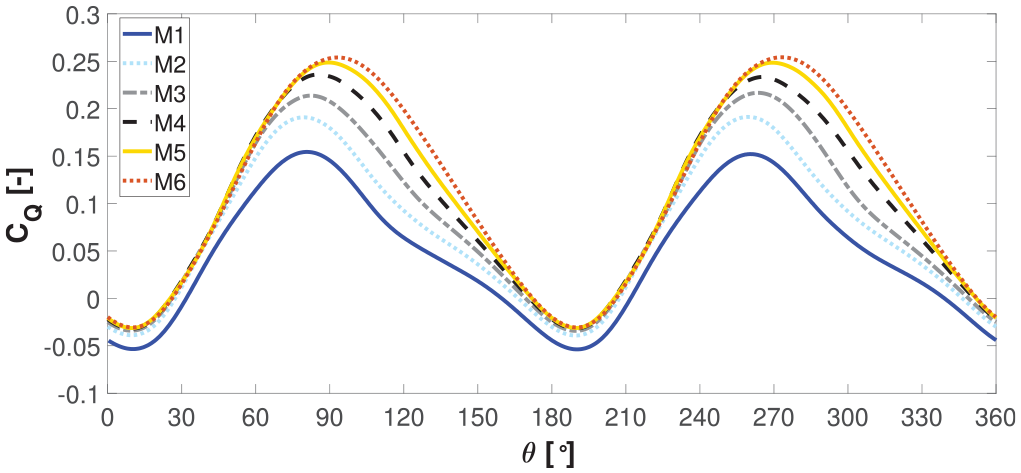
Impact of mesh density on the instantaneous turbine torque coefficient (
The computed power coefficient for each CFD mesh density.

A percentage difference of 3.83% in the power coefficient was noted between the solution from M5 and M6, which is less than the allowable difference used by Marsh et al. (2015b, 2017) (i.e.
Previous studies undertaken to investigate the VAWT wake flow field.
A time step size equal to an azimuthal increment of
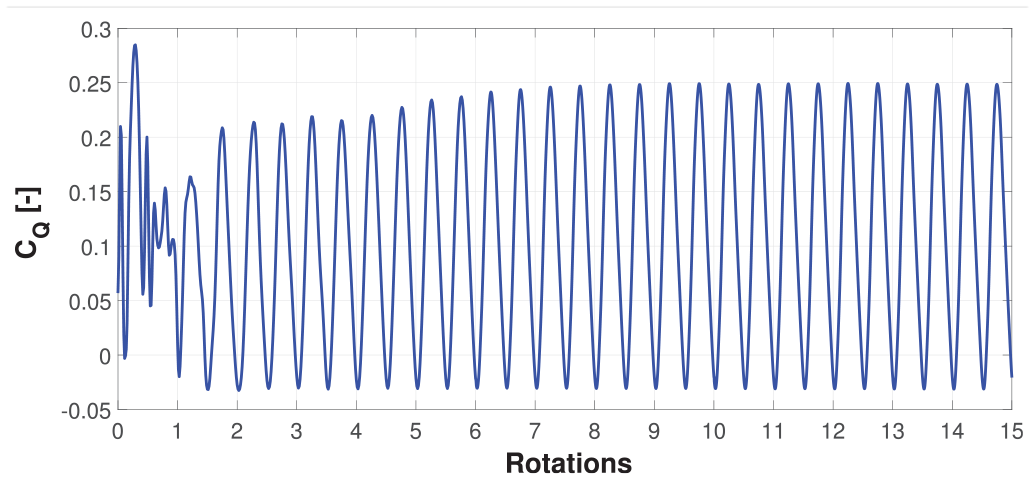
Instantaneous turbine torque coefficient as a function of the turbine rotations.
A fully periodic solution was attained when the difference in the mean torque coefficient between two consecutive turbine rotations became less than 0.1% (Balduzzi et al., 2017) as exhibited in Figure 10. It can be observed from the results in Figure 10, that this requirement was satisfied after 14 turbine rotations, which is slightly more than the 12 rotations reported in the recent 3D CFD study by Balduzzi et al. (2017). The total wall-clock time required for this single simulation (at
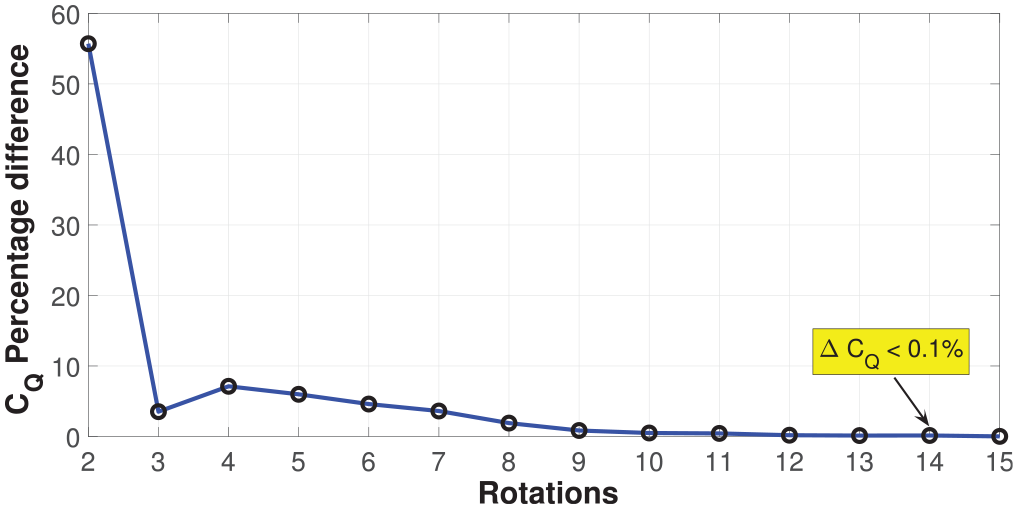
Periodic convergence of the turbine mean torque coefficient (
Results and discussion
VAWT aerodynamic efficiency
Figure 11 displays the 5 MW VAWT characteristic performance curve. It can be observed that the results computed by the 3D CFD model have a good correlation with the results predicted by the low-order model (LOM) outlined in Hand and Cashman (2018). The results of a 2D CFD model are also included in Figure 11. The 2D CFD model represents the aerodynamic performance at the mid-span plane of the VAWT shown in Figure 4. The grid requirements were defined based on the findings of a previous grid independence study reported in Hand et al. (2017) and are detailed in Table 7.
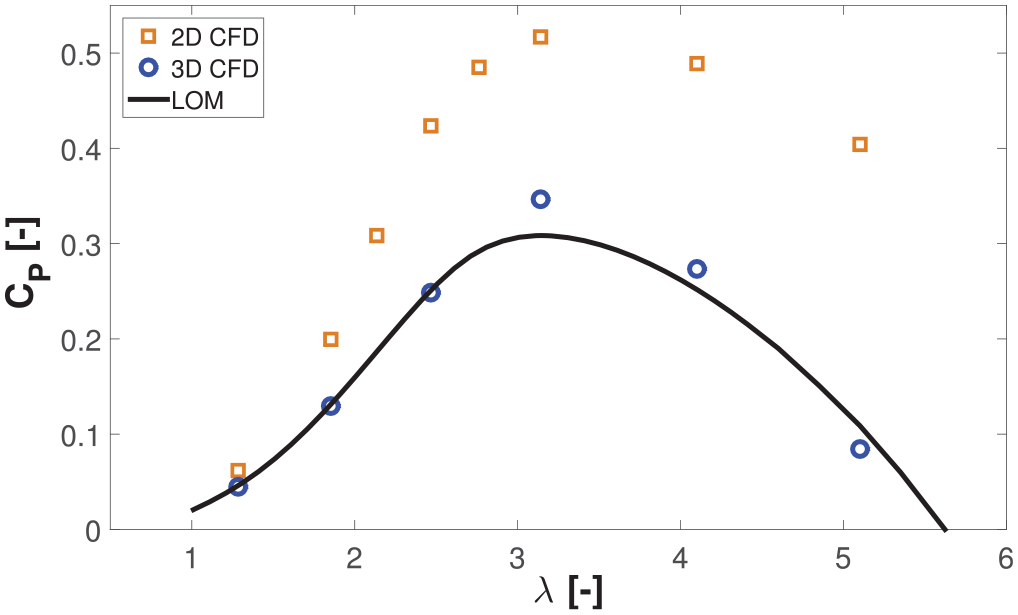
5 MW VAWT performance curve predicted by CFD and the LOM.
Reference grid requirements (Hand and Cashman, 2018; Hand et al., 2017).

It is evident that the qualitative shape of the performance curve is predicted by the 2D CFD, but however it overestimates considerably the aerodynamic efficiency values at all the simulated TSRs, with respect to the 3D CFD model and the LOM. Figure 12 displays the variation in the instantaneous turbine torque coefficient with the TSR. It can be observed that as the TSR is increased the regions of the negative torque become more pronounced and the peak torque coefficient is reduced.
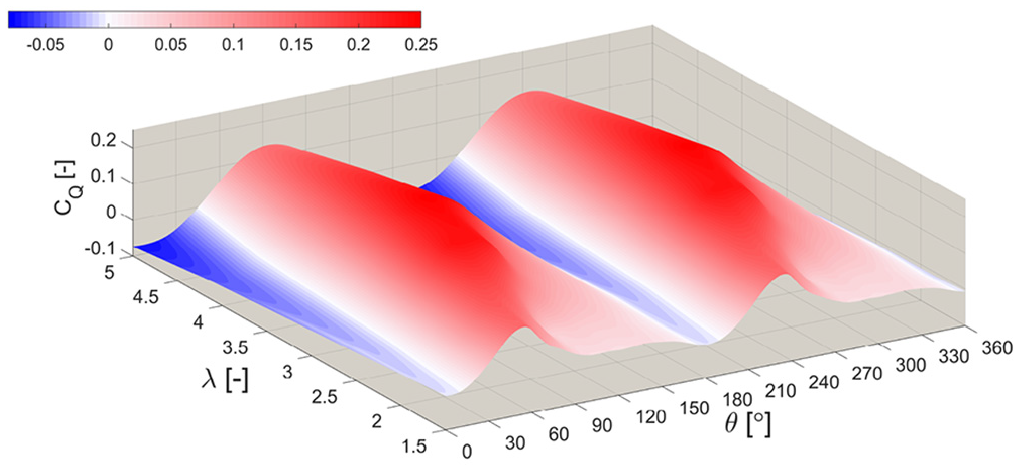
The instantaneous VAWT torque coefficient with respect to the azimuthal angle and the TSR.
There are two important functioning TSR regimes which are of most particular interest in the operation of this turbine. These two TSRs are stated below:
This TSR corresponds to where the VAWT achieves its maximum aerodynamic efficiency. The VAWT will operate most frequently at this stable TSR by exploiting tip-speed ratio control through the variable-speed generator. To simulate this TSR value, the freestream wind is set to 11 m/s and the VAWT rotational velocity is 6.810 RPM. The blade Reynolds number is in the range
This TSR corresponds to the point where the VAWT reaches its rated 5 MW power output. The freestream wind velocity is 14 m/s and the VAWT rotational velocity is maintained constant at 6.810 RPM. This TSR is located in the unstable part of the characteristic performance curve and will be influenced by the effects of blade dynamic stall. The blade Reynolds number is in the range
Figure 13 shows the instantaneous blade torque coefficient for the two aforementioned TSRs.
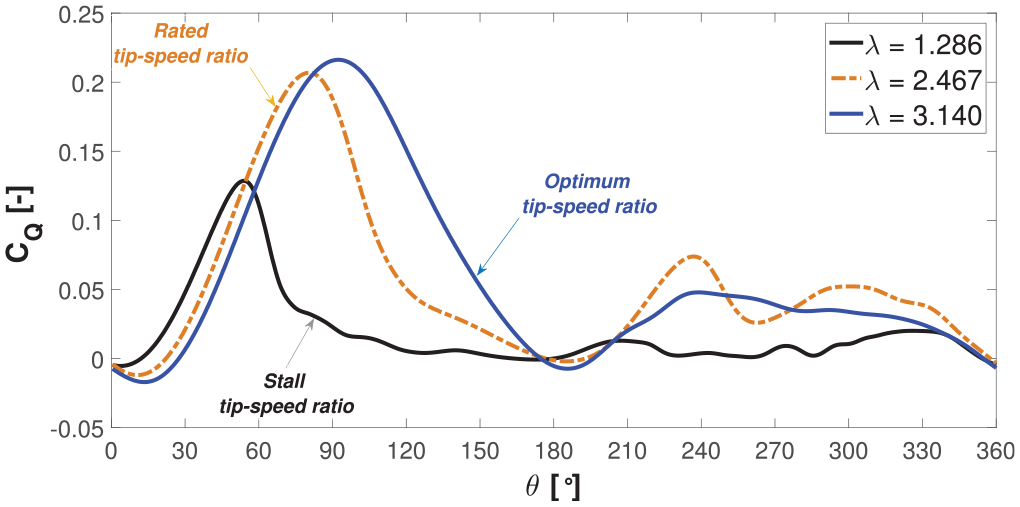
Instantaneous blade torque coefficient at the principal operating regimes, the optimum, rated and stall tip-speed ratios.
In addition, the blade torque coefficient for the stalled TSR at
Instantaneous turbine torque components
The turbine instantaneous torque coefficient for the functioning regime
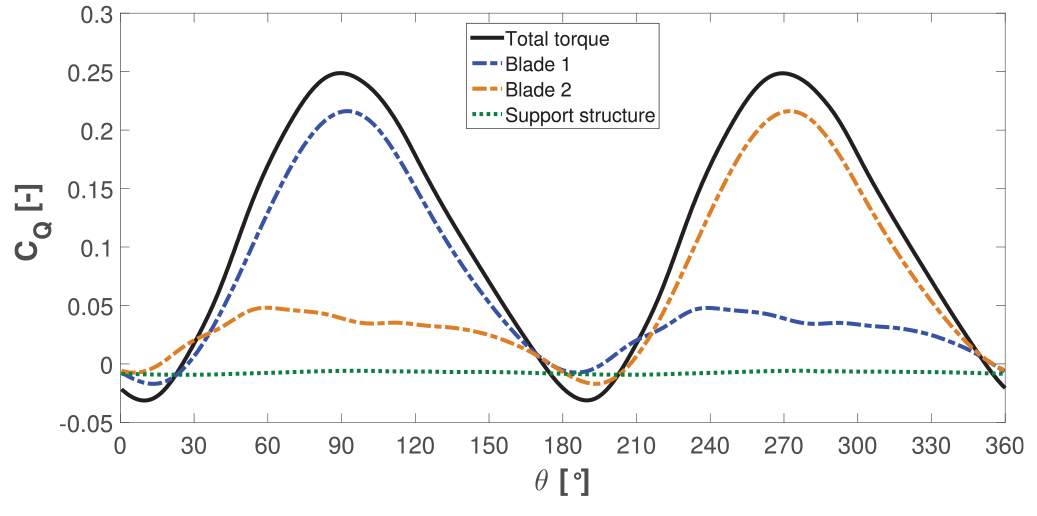
Components of the total turbine torque (
The total instantaneous torque coefficient is the sum of the torque contributed by its blades and also its support structure. The support structure creates a resistant or a negative torque, while its blades primarily produce a positive torque as can be observed in Figure 14. The resistant torque generated by the support structure reduces the turbine power coefficient by 6.54% at this TSR when compared to the power coefficient obtained from the blades only. Figure 15 shows the components which contribute to the support structure parasitic torque.
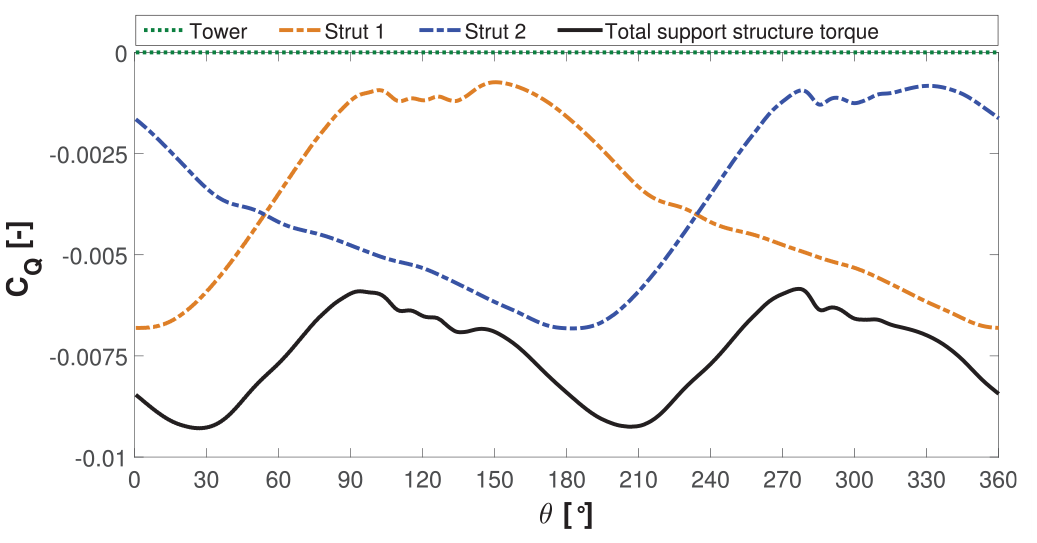
Components of the support structure torque (
The resistant torque created by the rotating tower is very small and appears to be negligible. Each of the turbine’s struts generates a fluctuating resistant torque which can be seen in Figure 15. The individual strut resistant torque is maximum when advancing directly into the oncoming flow at
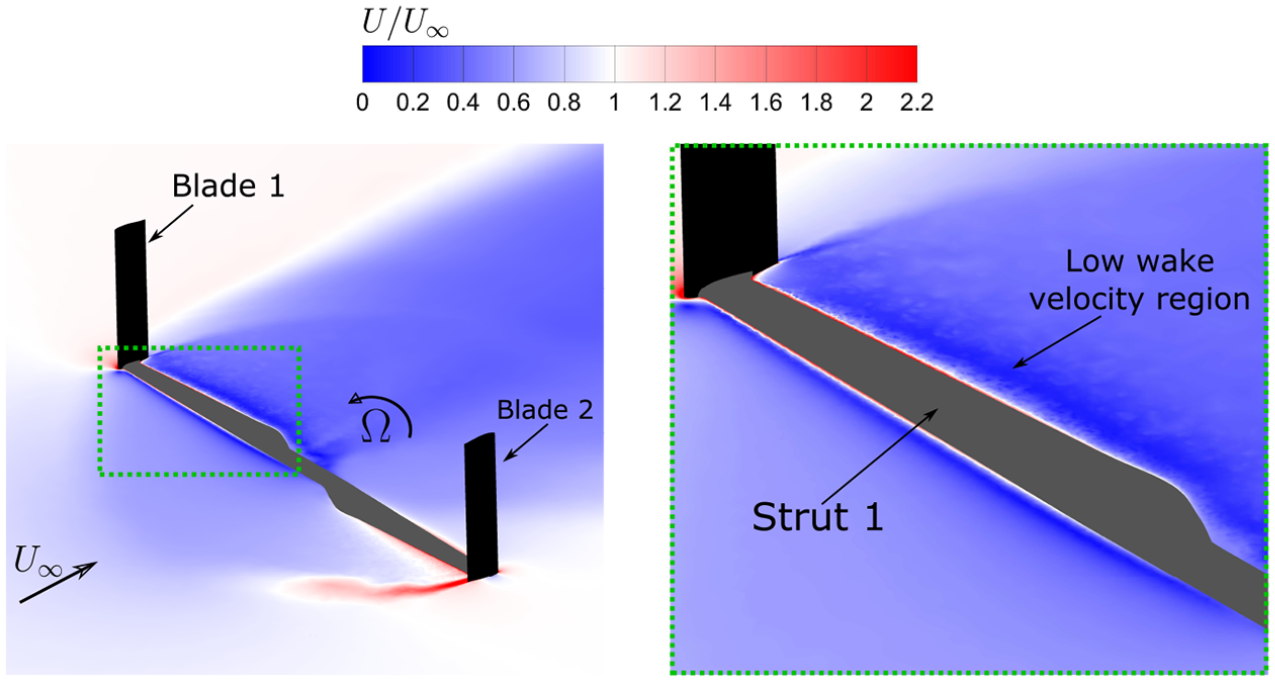
Velocity contour plot (normalised with respect to the freestream velocity) at the strut slice plane (
The VAWT blades are shown in black, while the struts are highlighted in grey colour. It can be observed in Figure 16 that the wake velocities behind the strut are much lower when compared with the rest of the turbine near wake flow field and indicates the generation of the high parasitic strut torque at this instant of the cycle. It is noted there is a series of ripples in the strut torque profiles between
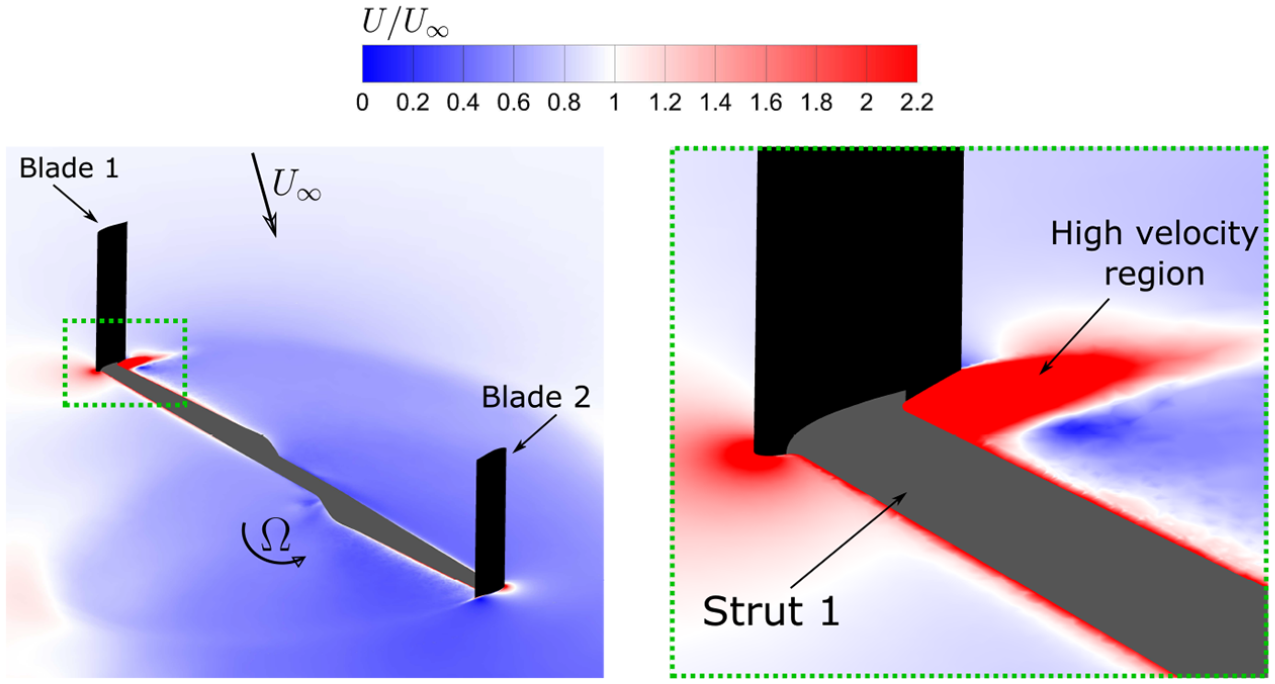
Velocity contour plot (normalised with respect to the freestream velocity) at the strut slice plane (
It is expected these ripples are caused by vortices being created and shed at the blade-strut connection junction. The total support structure resistant torque has an oscillating nature during the turbine rotation and becomes maximum at approximately
Figure 18 shows the turbine instantaneous torque coefficient for
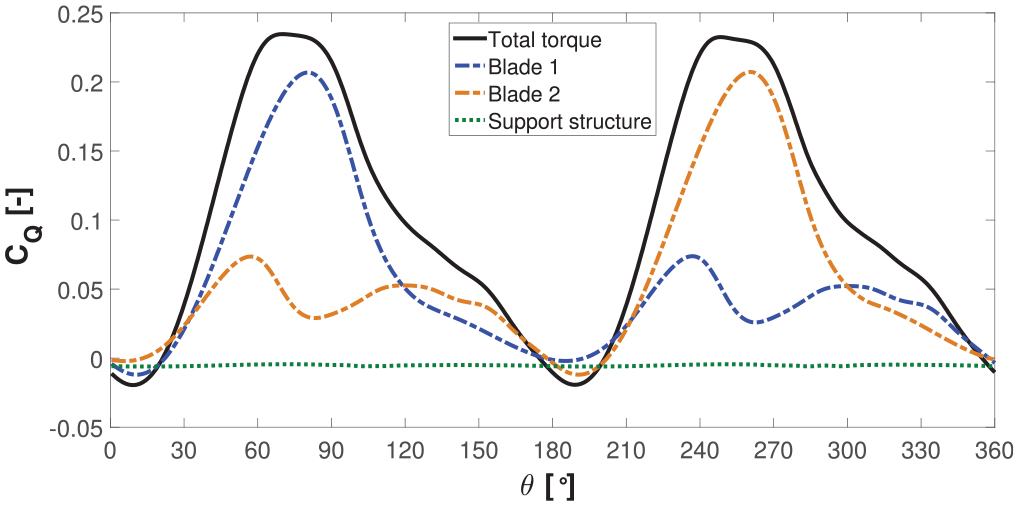
Components of the total turbine torque (
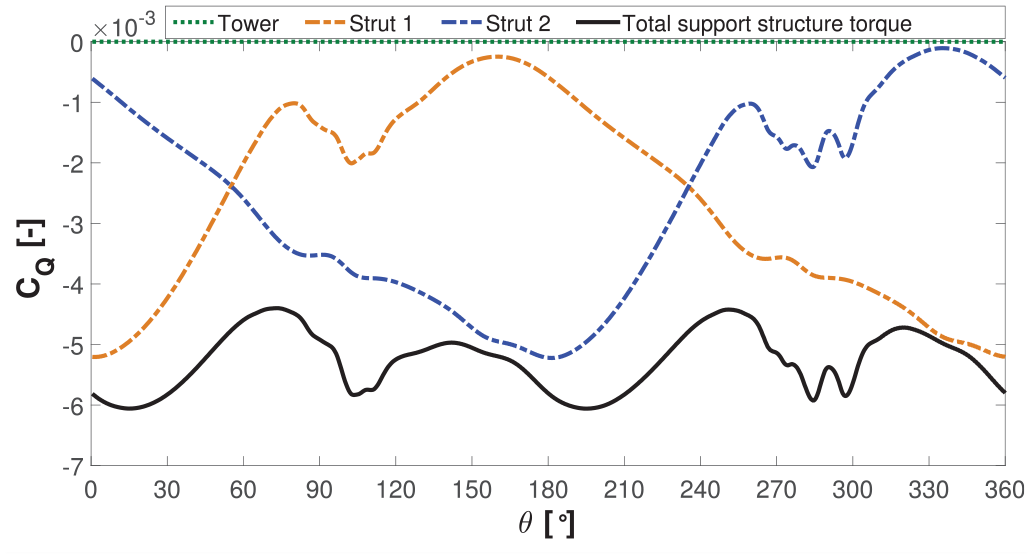
Components of the support structure torque (
In comparison to
Simulation of the VAWT forces
The VAWT forces in the inline and lateral directions were simulated. The turbine vertical force was not simulated due to the symmetry boundary condition specified at the turbine midspan. The inline force


Figure 20(a) displays the turbine inline force coefficient for

The VAWT: (a) inline and (b) lateral force coefficients during one rotation at different operational TSRs.
It is observed for the lower TSR, the inline force profile is skewed compared to the force coefficient at the higher TSR. It is apparent that the effects of dynamic stall cause this skewness at
The maximum inline and lateral turbine force coefficients for each considered TSR.

At
VAWT wake velocity field
The VAWT wake velocities at six downstream distances (1D-6D) were obtained from the computed flow field. The numerical results were extracted using virtual rakes at the defined locations in the computational domain and the wake velocity results were time-averaged within the CFD solver for the last turbine revolution. Horizontal virtual rakes were positioned at the VAWT mid-span plane (
Wake velocities at the VAWT mid-span
Figure 21(a) and (b) show the wake streamwise velocity at the symmetry plane (z = 0) for

Time-averaged streamwise wake velocities at the symmetry plane (z = 0) for (a)
The wake streamwise velocity is normalised with respect to the freestream velocity (
In comparison to the results shown in Figure 21(a), the streamwise wake velocity is more asymmetrical about the x-z plane at
Wake velocities at the tower centreline
Figure 22(a) and (b) show the wake streamwise velocity at the tower centreline (y = 0) for
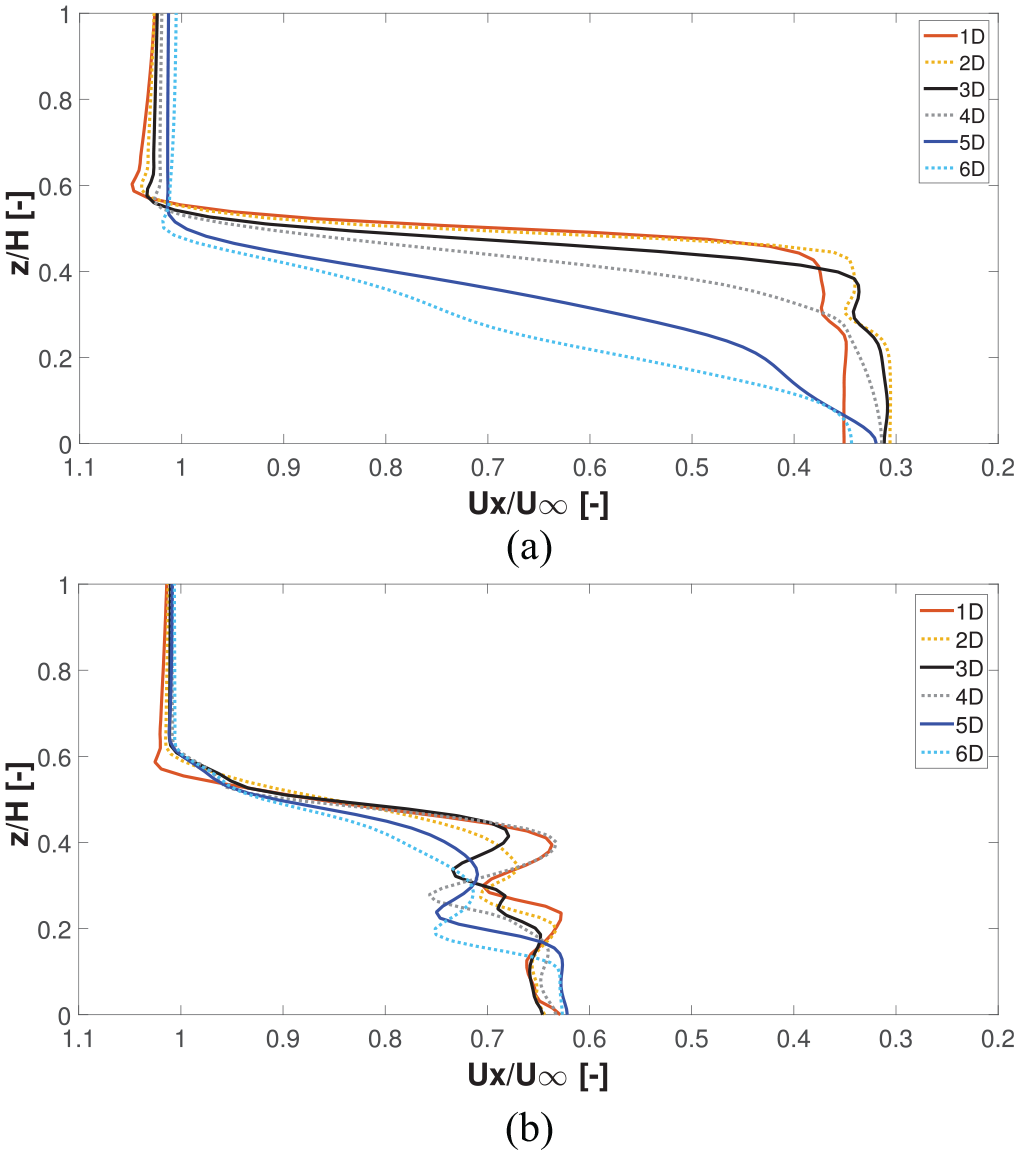
Time-averaged streamwise wake velocities at the tower centreline (y = 0) for: (a)
The wake streamwise velocity is normalised with respect to the freestream velocity (
Flow field visualisation
To gain an in-depth insight into the VAWT flow field wake, slice planes are employed to visualise the turbine wake at
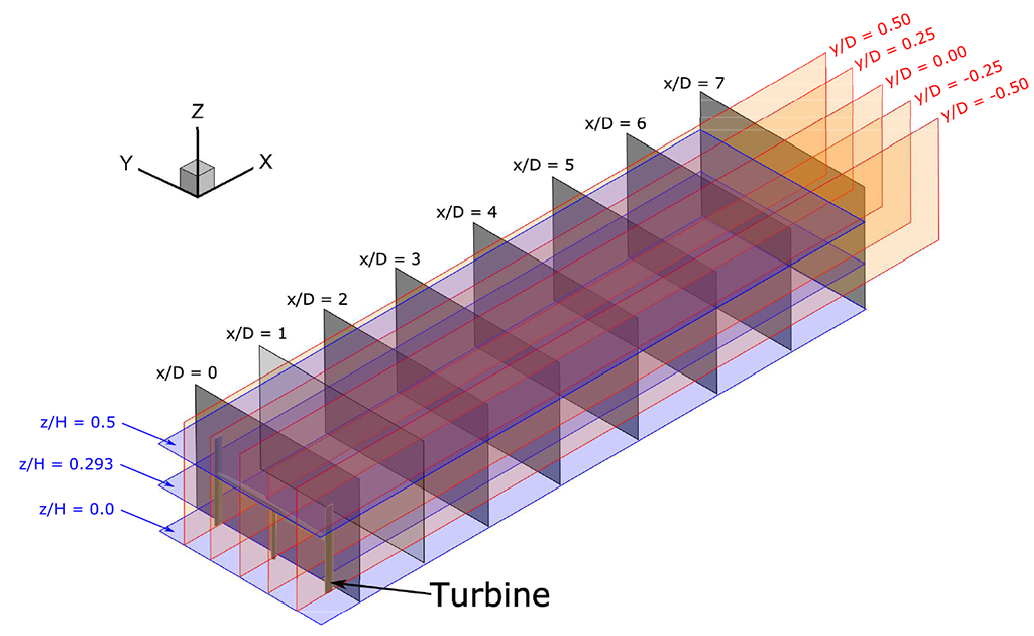
Schematic of the slice planes used to examine the VAWT flow field.
Slice planes are used in the following positions:
Spanwise planes
Figure 24 chronologically shows the instantaneous velocity flow field on the horizontal x-y planes for three turbine spanwise locations. Figure 24(a) shows the velocity contours at the turbine mid-span, while Figure 24(b) and (c) display the velocity contours on the strut plane and on the blade tip plane, respectively. The velocity flow field at the turbine mid-span plane is observed to be organised and subsequently leads to the development of a symmetrical near wake. The wake region produced behind the rotating tower diffuses rapidly as the flow is transported downwind in Figure 24(a). As highlighted earlier in Section 4.4.1, the rotating tower wake will eventually lead to the development of an asymmetrical region in the downstream wake velocity profiles where the maximum velocity deficit is achieved for this moderate TSR. The inclusion of the turbine struts is shown to decrease the turbine near wake velocity at the slice plane shown in Figure 24(b). More importantly, an accelerated flow region develops at the blade-strut junction which is clearly visible at
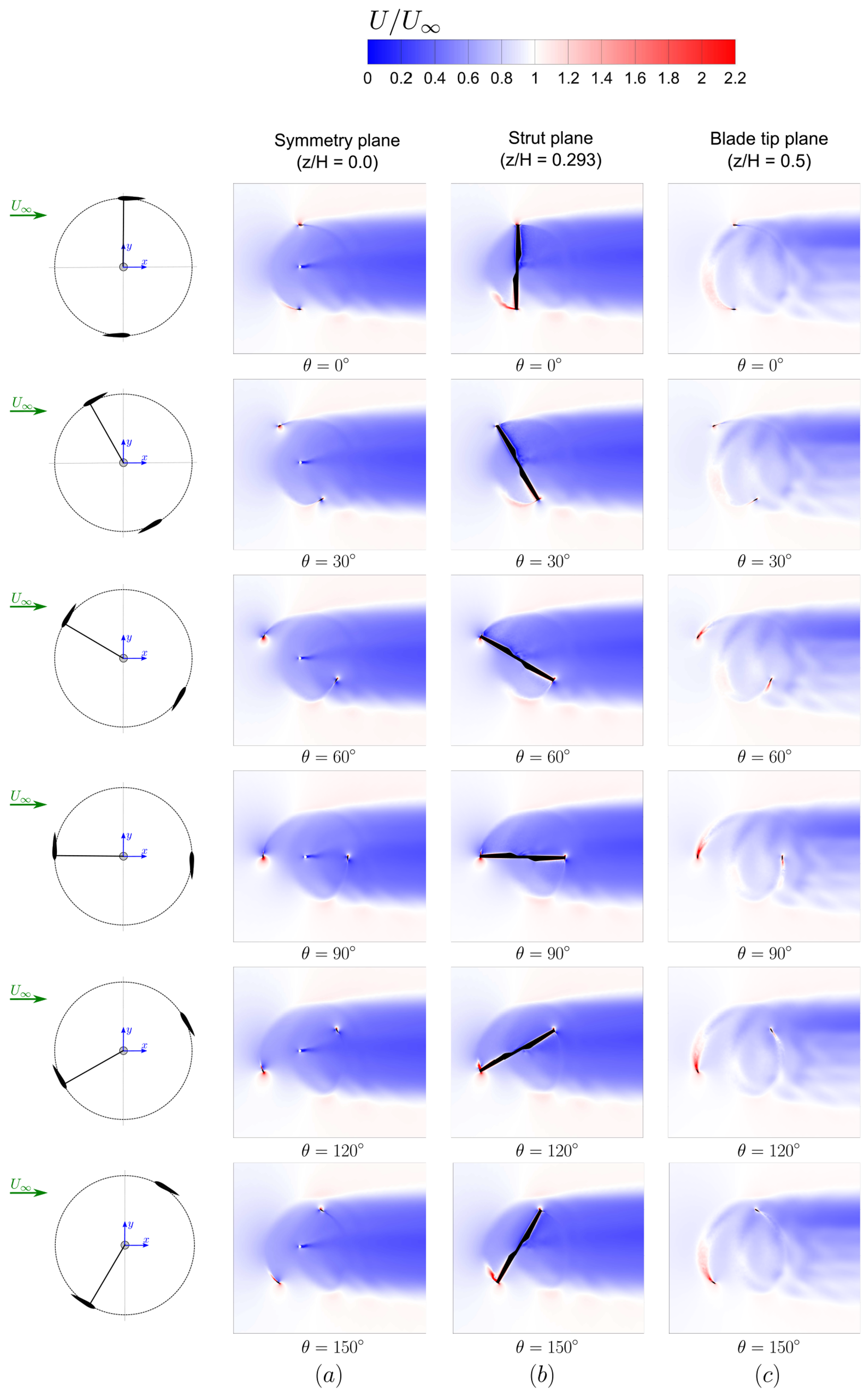
Normalised velocity contours from
The strongest blade tip vortex is created at approximately
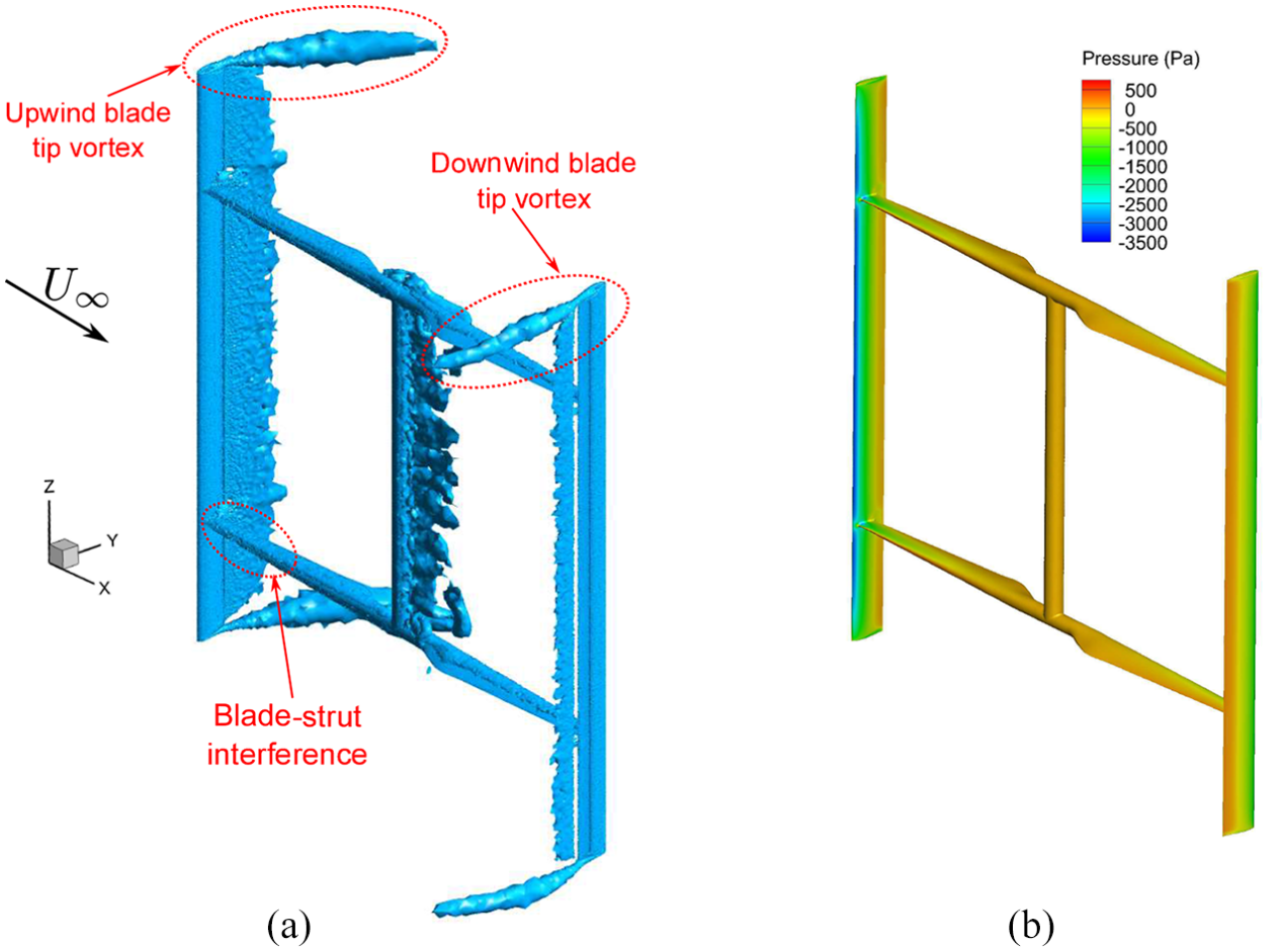
(a) Vorticity iso-surface visualisation and (b) turbine surface pressure distribution (
This isosurface plot displays the generated vorticity by the turbine blades and also by its support structure. The close-up plot in Figure 26, reveals that the upwind blade tip vortex is considerably larger in size compared to the blade tip vortex created by the downwind blade at this instant.
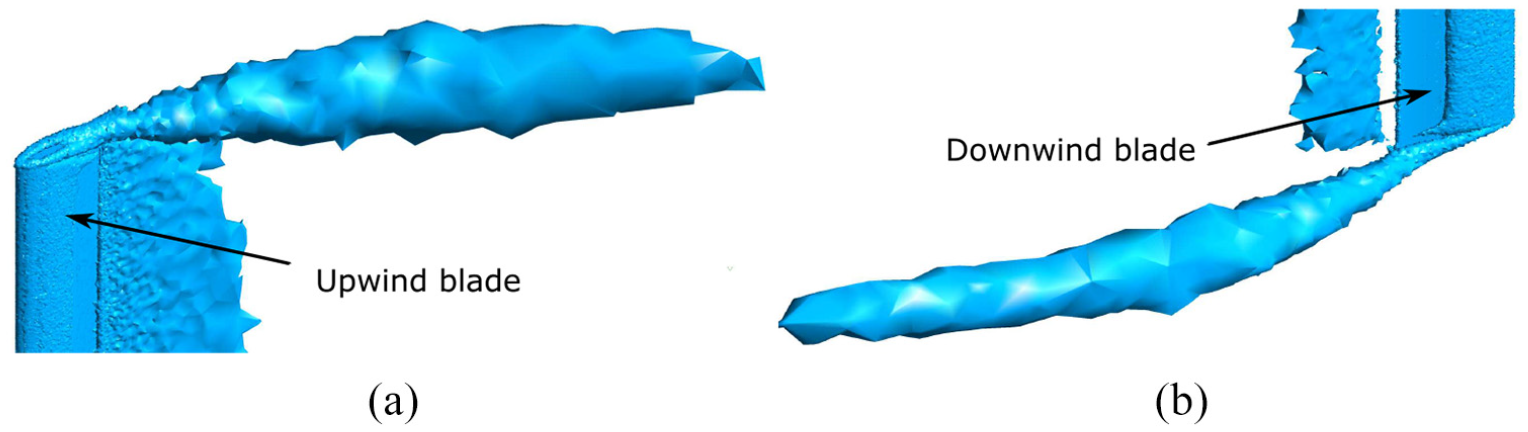
Comparison of the blade tip vortex size at
Moreover, the downwind blade experiences a lower effective angle of attack compared to the upwind blade, as it experiences lower incident flow velocities due to operating in the wake region produced by the preceding blade. Consequently, the pressure differential between the suction and pressure side of the downwind blade is lower compared to the upwind blade, which inevitably creates a smaller blade tip vortex structure, as can be observed in Figure 26.
Streamwise planes
Figure 27 displays the instantaneous velocity contours at various vertical traverse planes at
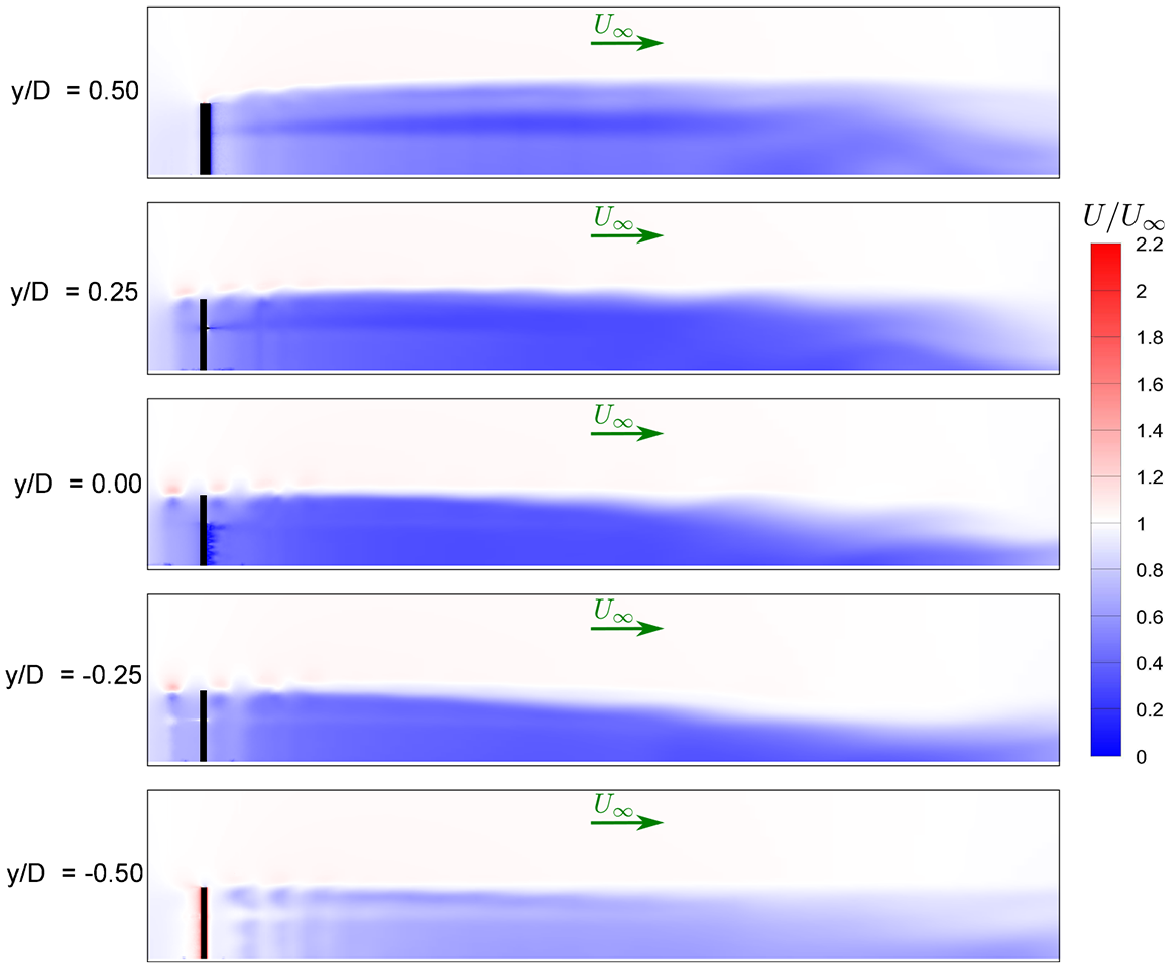
Normalised velocity contours at various vertical x-z planes at
Half of the turbine height is shown in these contour plots and the turbine is highlighted in a black colour to improve clarity. It is observed the turbine wake velocity varies considerably in the traverse direction and is asymmetric about the turbine centre plane (i.e. the
Downstream planes
The contour plots in Figure 28 display the evolution of instantaneous wake velocity at various downstream distances (
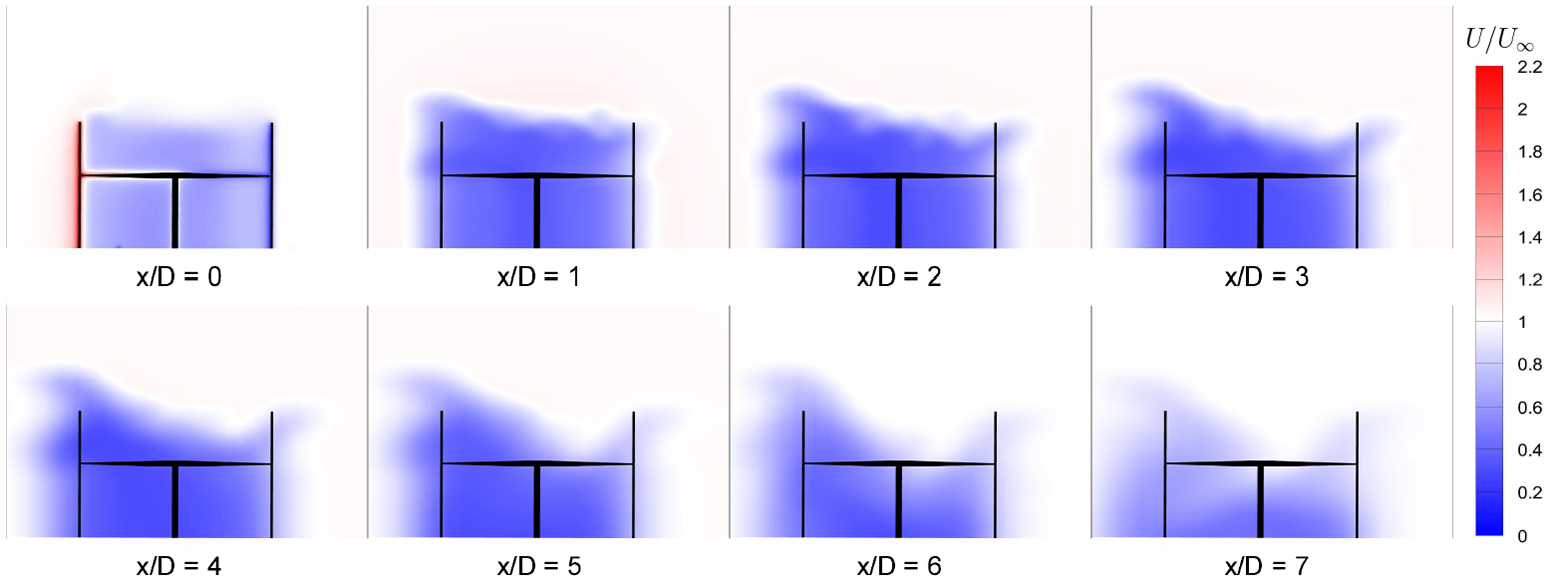
Normalised velocity contours at downstream y-z planes at
Half of the turbine structure is superimposed on the contour plots to assist this description of the downwind flow field. The wake velocity asymmetry about the x-z plane at the tower centreline is clearly apparent at each downstream plane. The minimum deficit wake velocity region appears to veer progressively towards the turbine windward side as the downstream distance is increased and this agrees with observation made by Lam and Peng (2016) and Simão Ferreira (2009). Furthermore, the windward wake region expands substantially more than in the horizontal and vertical directions compared to the leeward wake region as the downstream distance is increased in Figure 28. Beyond the downstream distance of
Insight into the VAWT dynamic stall regulation
Figure 29 displays the instantaneous torque coefficient produced by both of the VAWT blades at the stall TSR,
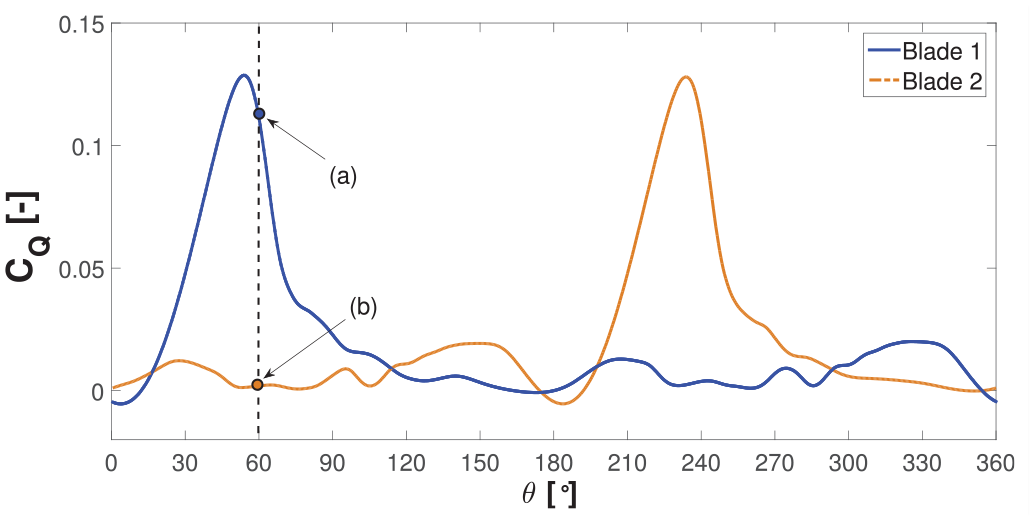
Instantaneous torque coefficient profiles for both VAWT blades at the stall TSR (
To explain in greater detail the stall regulation of the VAWT, Figure 30 shows the velocity flow field at the VAWT mid-span at an instant equivalent to an azimuthal angle of
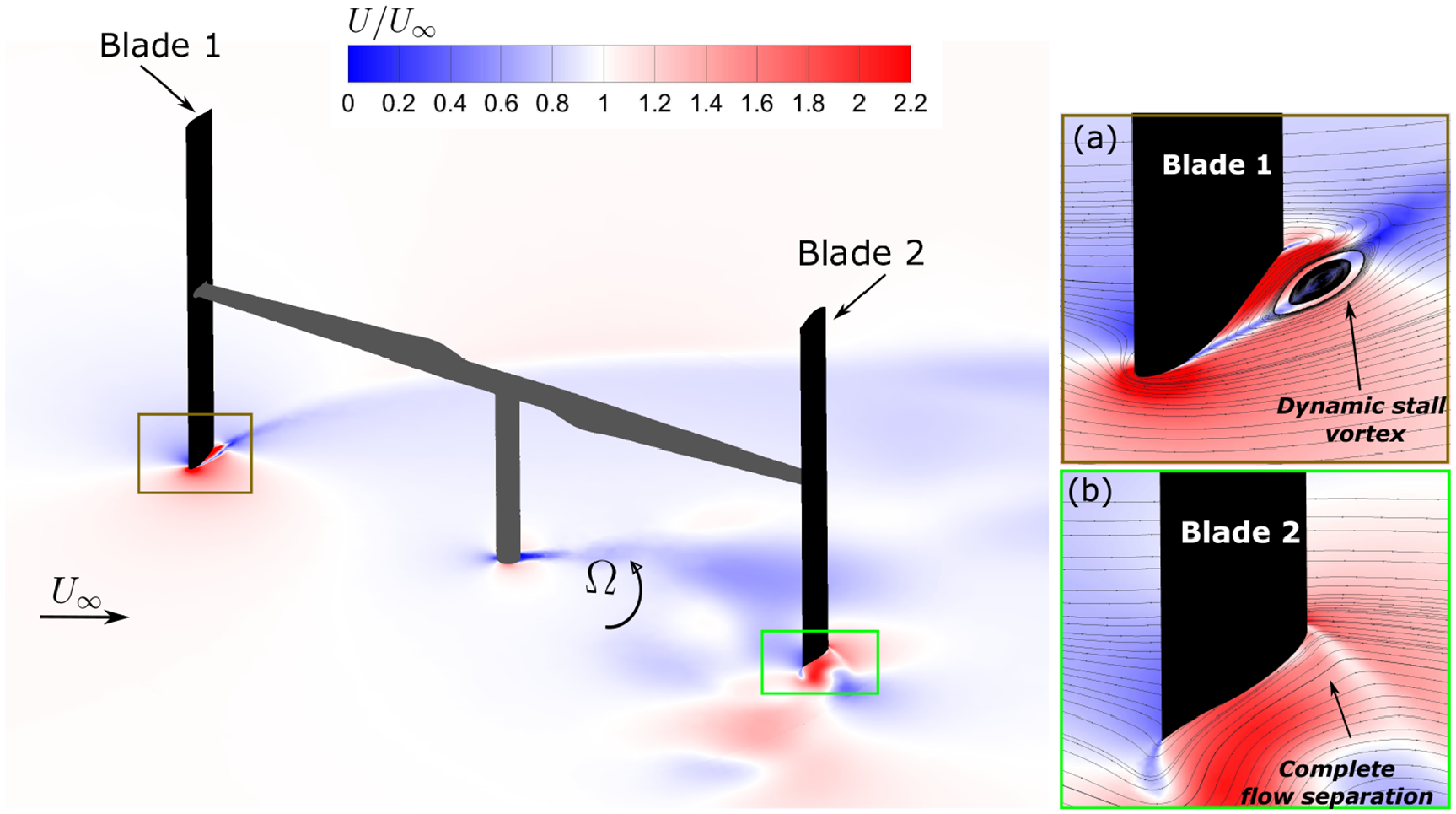
Velocity contour plot of the VAWT symmetry plane at
The localised flow regime in the vicinity of the individual VAWT blades is also shown in Figure 30(a) and (b), respectively. These highlighted plots correspond to markers labelled on the instantaneous torque coefficient profiles in Figure 29. It can be readily observed in Figure 30(a), that there is a dynamic stall vortex present on the upwind blade suction surface. It can also be noticed that the suction surface flow is not completely separated at this moment. In comparison, the downwind blade (blade 2 in this case) the flow is completely separated and this demonstrates why the blade produces such a low torque coefficient at this position in Figure 29 during the VAWT cycle. In comparison, to the optimum TSR flow regime (i.e.
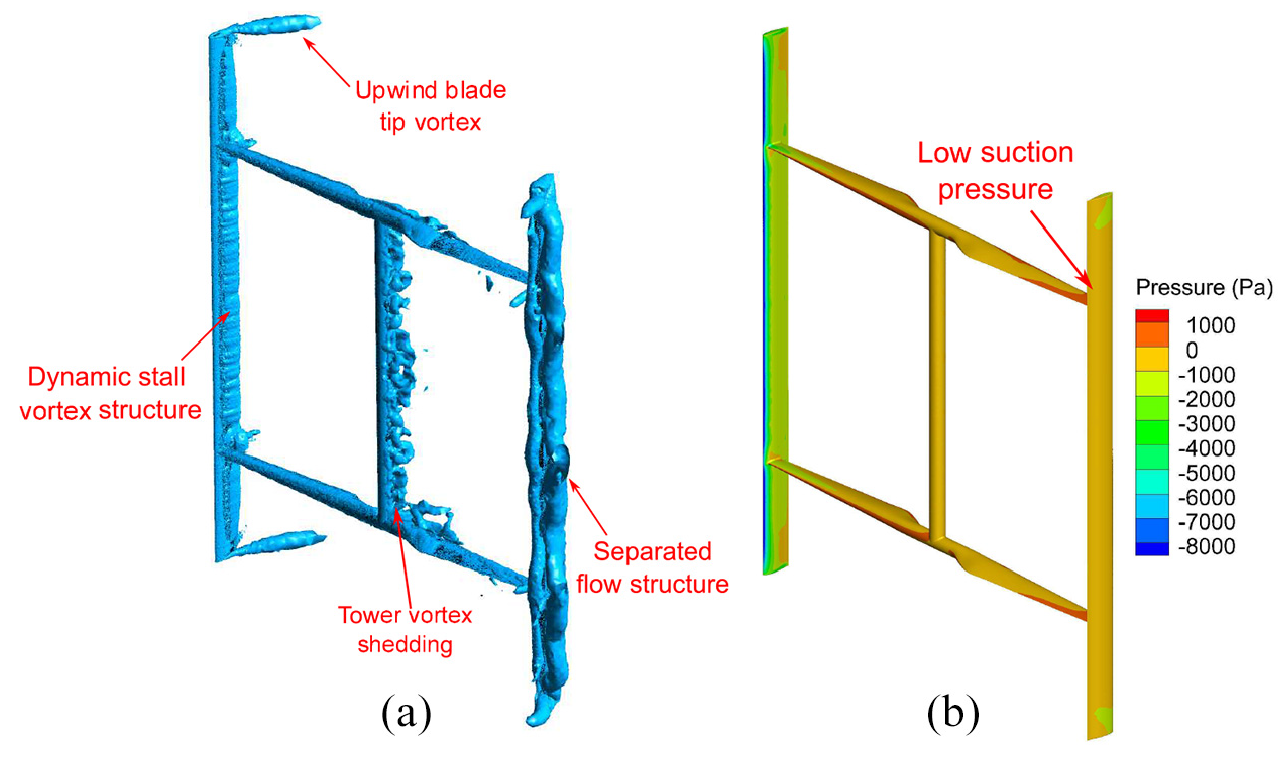
(a) Vorticity iso-surface visualisation and (b) turbine surface pressure distribution (
A low uniform pressure distribution is observed on the downwind blade surface, as the flow is entirely separated along the blade span as shown in Figure 31(b) and this explains the lack of the tip vortex structure. Upon further examination of Figure 31, it can be seen that the upwind blade does not experience a uniform dynamic stall vortex formation along its span. In other words, it is apparent that the size of the dynamic stall vortex decreases from the VAWT mid-span to the blade tip. To explain further, various blade spanwise sections are considered in Figure 32, to illustrate the reduction of the dynamic stall vortex magnitude from the VAWT mid-span (
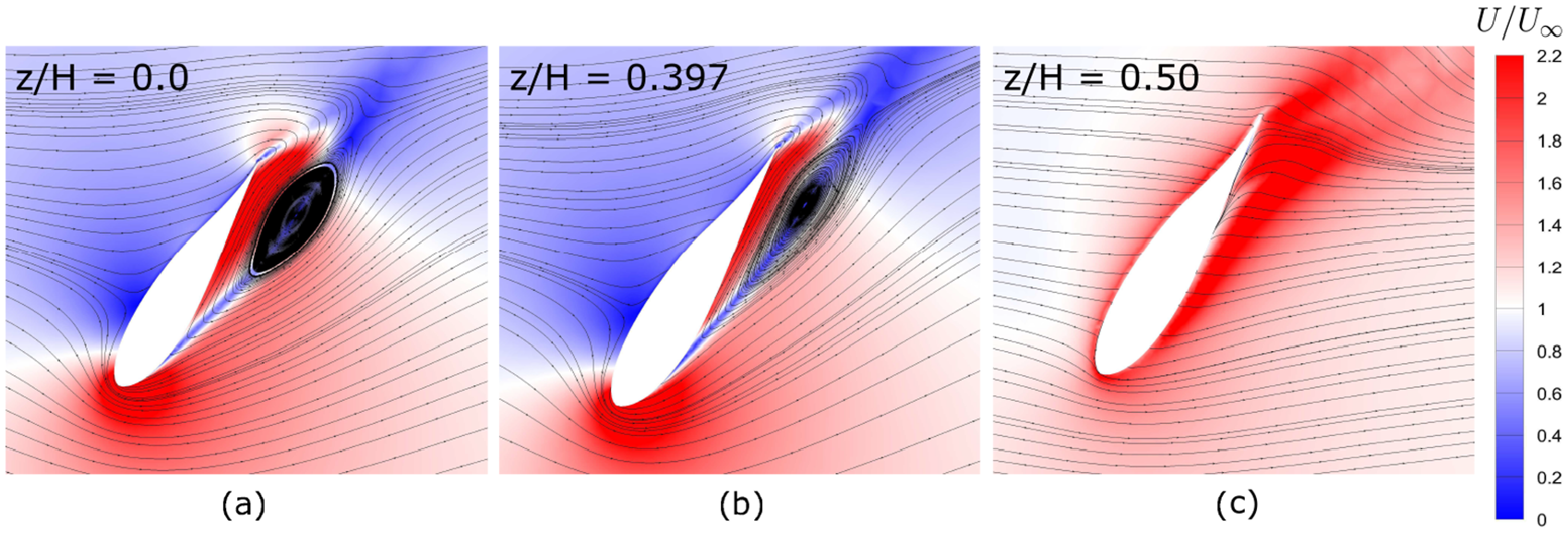
Various upwind blade spanwise section locations showing the dynamic stall vortex structure shape reduction (u = 608) (l = 1:286). (a) z/H = 0.0, (b) z/H = 0.397, (c) z/H = 0.5.
Comparing Figure 32(a) and (b), it can be clearly seen that the latter experiences a flatter and less prominent vortex compared to the former over the aft portion of the blade. At the blade tip in Figure 32(c), the downwash due to the blade tip vortex greatly reduces the blade angle of attack relative to the VAWT mid-span and consequently no dynamic stall vortex is present at the blade tip spanwise section. The flow streamlines are unable to follow the blade profile in Figure 32(c) and from further inspection, it is apparent that the flow instead travels over the blade tip from the pressure side to the suction side. Subsequently, this produces a circulatory fluid motion which forms the blade tip vortex and trails the upwind blade downstream as displayed in Figure 31(a). As highlighted in previous works by Zanforlin and Deluca (2018) and by Balduzzi et al. (2017), the blade tip vortex is responsible for the production of downwash and the subsequent variation in the angle of attack along the blade span, following the theory of finite wings (Abbott and Von Doenhoff, 1959).
Design enhancement investigation
Blade end plates
In this section, an investigation is undertaken to examine the impact of blade end plates on the performance of the VAWT. The end plates are positioned at the blade tips, in an attempt to reduce the power losses sustained from the creation of the blade tip vortices. A conservative end plate design is utilised and is similar to the design used by Kinsey and Dumas (2012) for an oscillating foil hydrokinetic turbine. Figure 33 presents the geometry of the blade end plate employed in this analysis.

(a) End plate geometry with respect to the blade chord and (b) 3D CAD representation of the blade end plate (shown in yellow).
The VAWT with the attached end plates was simulated at the optimum TSR
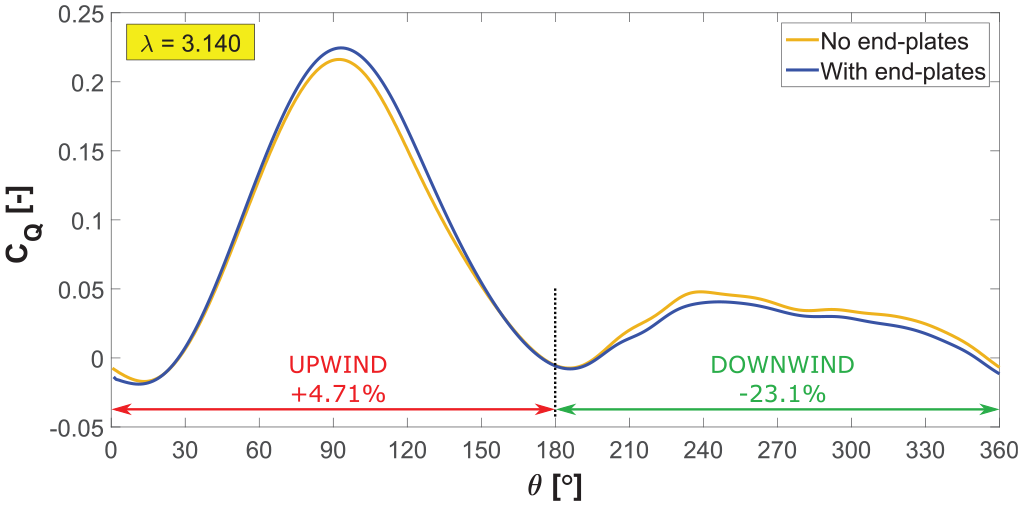
Effect of end-plates on the blade instantaneous torque coefficient with percentage difference in the mean torque coefficient for the upwind and downwind phases (
Firstly, examining the blade upwind phase in Figure 34 shows an improvement in the efficiency, with a 4.71% increase in the mean torque coefficient for this period. It can be observed the greatest increase in the upwind instantaneous torque occurs at
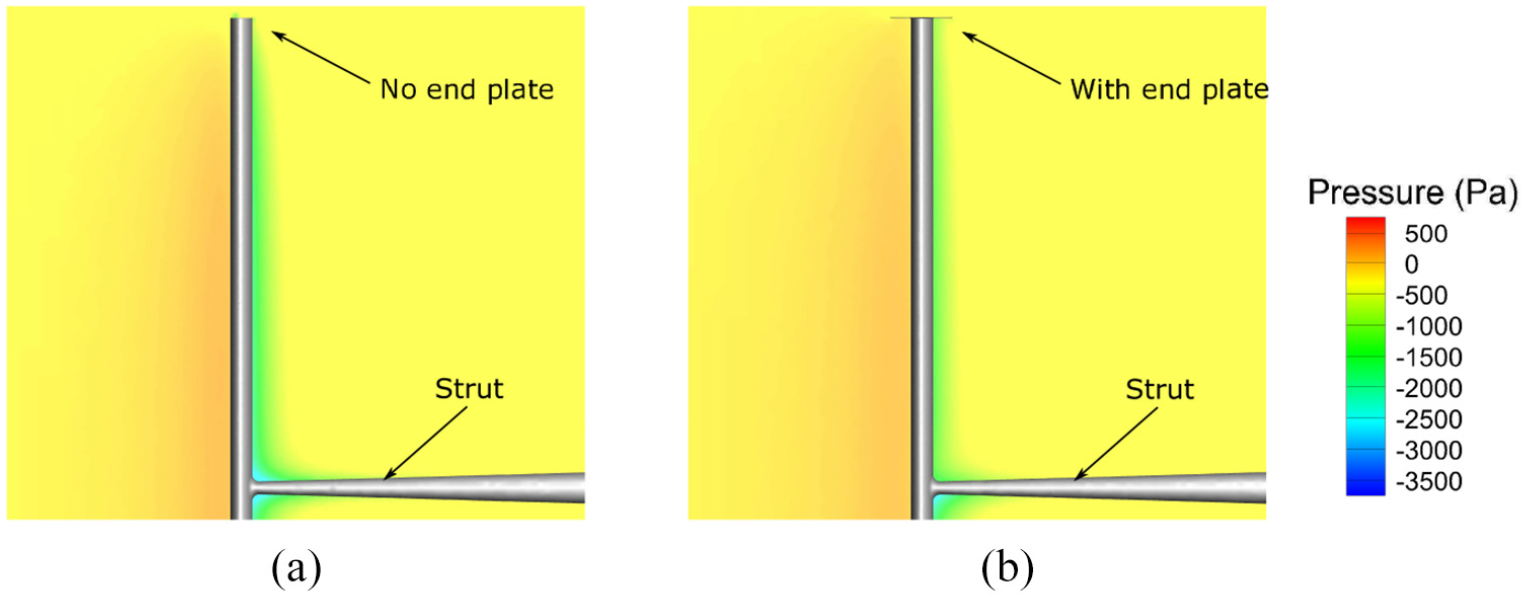
Pressure contour comparison of the upwind blade tip region with: (a) no end plate and (b) with end plate at
The blade without the end plate has a lower pressure difference between the two sides of the blade especially with a weaker pressure difference noted near the blade tip compared to the blade with the end plate.
Examination of the downwind phase in Figure 34 shows the blade instantaneous torque coefficient with the end plates is smaller compared with the blade without the end plates. The blade mean torque coefficient is reduced by 23.1% for this period. It is clear the end plates are more effective during the upwind phase compared to the downwind phase and overall decrease the global aerodynamic efficiency by 0.73% (i.e. over the complete revolution). The blade experiences a much lower pressure differential during the downwind compared to the upwind phase. The end plate introduces additional drag through an increase in the wetted area and interference drag (Gudmundsson, 2004), which causes this reduction in performance to be dominant during the downwind phase. From this analysis, it is important to state the design of the end plate is critical and their size should be reduced in order to decrease the added drag.
Conclusions
The primary conclusions from this study are:
The predicted characteristic performance curve by the 3D CFD model and the LOM showed good agreement with each other, but with the latter requiring a small fraction of the computational resources needed by the former. For completeness, the results of a 2D CFD model were included. The 2D CFD model predicted a 39.60% higher power coefficient at the optimum TSR, compared to its 3D counterpart. At the stalled TSR, a 31.83% higher power coefficient with respect to the 3D CFD model results was found. All the computational methods showed a similar value for the optimum TSR and the overall shape of the characteristic performance curves were qualitatively similar for the employed methods.
It was identified that the VAWT support structure reduced the turbine power coefficient by 5.1% and 6.6% for the rated and optimum TSRs, respectively. In particular, the strut creates a fluctuating resistant torque which becomes maximum when the strut proceeds directly into the oncoming flow and this is confirmed by visualisation of the VAWT flow field. The maximum support structure instantaneous resistant torque does not coincide with this azimuthal location and was found to shift azimuthally with the TSR value.
The resistant torque produced by the rotating VAWT tower is inappreciable and it can be inferred that its shadow effect on the downstream VAWT blade is a more important performance consideration.
A vortex is formed at the blade-strut connection point in the azimuthal range between
The turbine lateral force was found to become maximum and minimum at the same azimuthal angles irrespective of the TSR value. Moreover, the turbine inline force is considerably larger than the lateral turbine force and was found to be between 50% and 75% higher for the TSRs examined. The prediction of these turbine forces has an important impact on the floating platform design and the associated connected mooring system design.
At the optimum turbine TSR, the time-averaged streamwise wake velocity profile is weakly asymmetrical on the turbine mid-span plane. Although for the rated TSR, the influence of blade dynamic stall causes the wake velocity profile to be become increasingly asymmetrical. Furthermore, the creation of the blade tip vortices leads to the development of an asymmetrical wake profile on the blade tip plane.
While the 3D CFD simulation is resource intensive, it did allow the flow visualisation of some important 3D aerodynamic phenomena at this large-scale, which is not possible with the 2D CFD model or the LOM. In particular, the capture of the blade tip vortex is a significant feature of the 3D simulation. A qualitative analysis identified that the blade tip vortex varies in size and impact relative to the VAWT operational conditions. The upwind blade tip vortex is more intense compared to the downwind blade tip vortex. The magnitude of the tip vortex is dependent on the azimuthal position in response to the continuously changing blade suction pressure differential. It was observed the blade tip vortex is asymmetrical with respect to the vertical y-z plane. The tip vortex is strongest in the azimuthal range of
The dynamic stall vortex flow topology is not continuous over the blade span and it is apparent the vortex strength reduces towards the blade tip. Flow visualisation showed the vortex size reduction is not proportional to the distance from the VAWT mid-span and is influenced by the blade tip vortex circulation.
The addition of blade end plates was found to have a negative impact on the VAWT performance. The blade end plates reduced the VAWT efficiency by 0.73%, with contrasting performances found for the blade upwind and downwind phases. The mean torque coefficient was increased by by 4.71% during the upwind phase. Flow visualisation showed the end plate produced a higher pressure difference between the blade surfaces for the upwind region. Over the downwind phase the mean torque coefficient was reduced by 23.1% compared to the case without end plates.
In future work, the power extracted by the VAWT blade with respect to the spanwise position will be investigated using the 3D CFD model. This work will also investigate the potential of the CFD model to improve blade tip loss correction utilised in VAWT low-order aerodynamic models.
Footnotes
Acknowledgements
The authors would like to thank the Cork Institute of Technology Rísam PhD Scholarship Program for supporting this research. The author wishes to acknowledge the DJEI/DES/SFI/HEA Irish Centre for High-End Computing (ICHEC) for the provision of computational facilities and support
Declaration of conflicting interests
The author declared no potential conflicts of interest with respect to the research, authorship, and/or publication of this article.
Funding
The author received no financial support for the research, authorship, and/or publication of this article.
