




Abstract

This special issue is a tribute to the profound and lasting impact of Professor Jon McGowan, who has served as the distinguished Editor of Wind Engineering for over 25 years and now takes on the title of Editor Emeritus. Jon’s career has been dedicated to advancing the field of wind energy, and his leadership of this journal has been a cornerstone of its success. He has guided Wind Engineering with an unwavering commitment to quality and academic rigor, helping to establish it as an authoritative journal devoted to the technology of wind energy. Through his meticulous stewardship, the journal has served as a vital platform for disseminating groundbreaking research and fostering the growth of the wind energy community worldwide. This biography has two interwoven tracks. One is the academic portion, where I must be formal, and the second track is Jon’s hobbies and what his colleagues have said about him—for this part I will keep the tone conversational.
I will make this biography more engaging now! Try a little visualization exercise with me just for a second. In your head, picture the stereotypical academic. I think you know the type—tweed jacket, maybe some elbow patches, buried in a dusty library somewhere. The whole ivory tower thing, totally removed from the real world. Exactly. Now, just wipe that image completely. For the second image, I want you to picture a guy revving the engine of a Ford Shelby GT500. Or even better, a pilot in an open-cockpit biplane landing on a runway made of pure ice. That sounds less like a professor and more like an action hero, and yet they are the exact same person. The cars and the planes are, let’s be honest, a great hook—but the real story is how this wind giant basically built the foundation of the modern wind industry from scratch.
Jon’s influence extends far beyond the pages of this publication. A co-founder of the Renewable Energy Research Laboratory (RERL) and later the Wind Energy Center (WEC) at the University of Massachusetts, he helped create an internationally recognized hub for research and development. The legacy of these centers is not only in the numerous grants and technical papers he has authored, but also in the significant number of graduates who now form the technical core of the wind and solar energy industry in the United States. His pioneering work in renewable energy—which began in the early 1970s with some of the first grants from the National Science Foundation—laid the groundwork for a new generation of engineers and scientists. His dedication to education is further highlighted by his role as a visiting engineer at the Massachusetts Institute of Technology, where he has advised students and delivered numerous lectures since 1992.
Throughout his career, Jon has seamlessly blended academic research with real-world application. His consulting work with Alstom Power Plant Laboratories spanned 45 years and involved significant contributions to fundamental research in heat transfer, combustion, and fluid mechanics, as well as applied areas like environmental systems and heat exchanger design. His practical expertise is also evident through his co-founding of Wind Power Associates in 1979, a firm that took on important projects ranging from offshore wind system design to wind farm development at the U.S. Naval Base in Guantanamo—a harsh marine environment that stress-tested theory in the toughest conditions imaginable.
Jon’s expertise has been recognized with prestigious honors, including being named a Fellow of the American Society of Mechanical Engineers and recognition from the American Wind Energy Association. His co-authored textbook, Wind Energy Explained, is used in over 50 universities globally, further solidifying his role as an educator and thought leader.
Career milestones
Born on May 3, 1939, Jon G. McGowan earned his Bachelor of Science in Mechanical Engineering from the Carnegie Institute of Technology in 1961, his Master of Science from Stanford University in 1962, and his PhD from Carnegie in 1965.
After completing his doctorate, he joined E.I. duPont de Nemours as a Development Engineer (1965–1967), before arriving at the University of Massachusetts Amherst in 1967 as an Assistant Professor. He would eventually rise to Full Professor in the Department of Mechanical and Industrial Engineering.
The early 1970s marked a pivotal shift toward renewable energy. In 1969 he led the development of an Air Pollution Training Program, and by 1970 he was co-authoring papers on clean power and thermodynamic analysis. He was a co-principal investigator on two of the first renewable energy grants awarded to U.S. universities by the National Science Foundation’s RANN program—he wasn’t joining a field, he was pouring its concrete foundation. This led him to co-found the RERL, which later evolved into the Wind Energy Center. Throughout the 1970s and 1980s he developed and taught specialized courses in advanced energy conversion, solar thermal engineering, and wind engineering.
From 1970 to 2015, he served as a technical consultant to Alstom Power Plant Laboratories, with contributions spanning basic research and applied engineering. In 1979 he co-founded Wind Power Associates, undertaking significant projects in wind and renewable energy. He also provided consulting to General Electric Research Laboratories (1972–73), the Tennessee Valley Authority (1979–80), New England Power Company (1981), and the New York State Energy Office (1981–82).
From 1992 to 2016, he has held an appointment as a Visiting Engineer/Research Associate in the Energy Laboratory at MIT. The RERL received the American Wind Energy Association Award for Academic Achievement in both 1994 and 2006. He was elected a Fellow of the American Society of Mechanical Engineers in 1998 and received the Society of Automotive Engineers Ralph R. Teetor Award in 1969. He has served for over 35 years as an elected board member and chairman of the Northfield, MA public library, and contributed to numerous state and federal government review panels for energy programs.
In the 2000s and 2010s, his research focused on offshore wind systems, turbine materials degradation, and—under U.S. Department of Energy sponsorship—a new course on Offshore Wind Engineering (2010–2012). His book Wind Energy Explained: On Land and Offshore, now in its third edition (Manwell et al., 2020), is widely used in universities globally. Other notable publications include aerodynamics of wind turbines (Manwell et al., 2009) and a review of windpower (McGowan and Connors, 2000). His most recent publications include works on thermo-economic analysis of multi-generational systems and a review of ammonia as a potential fuel. After five decades, he is still asking: what’s next? For over 25 years he also edited Wind Engineering. As one colleague put it, editing is an ungrateful job—administrative pain, herding reviewers, managing egos. But McGowan did it with patience and a personal touch, building a community rather than just managing a queue of submissions.
The personal side of Jon—Trains, planes, and automobiles
But now we must get to the part that explains how his brain works: Trains, Planes, and Automobiles. It all fits. If your whole career is about how things move, of course you’re going to love machines.
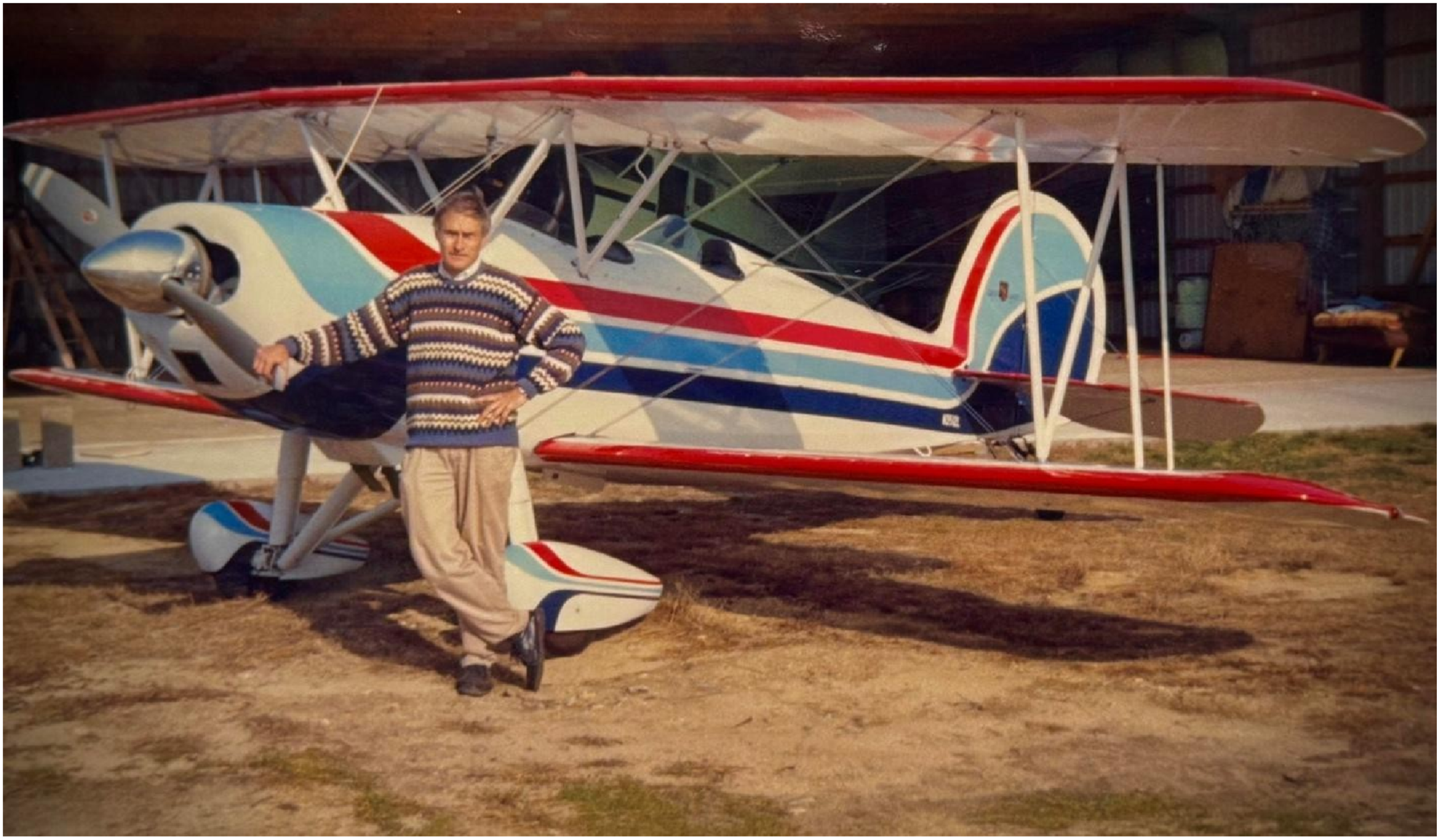
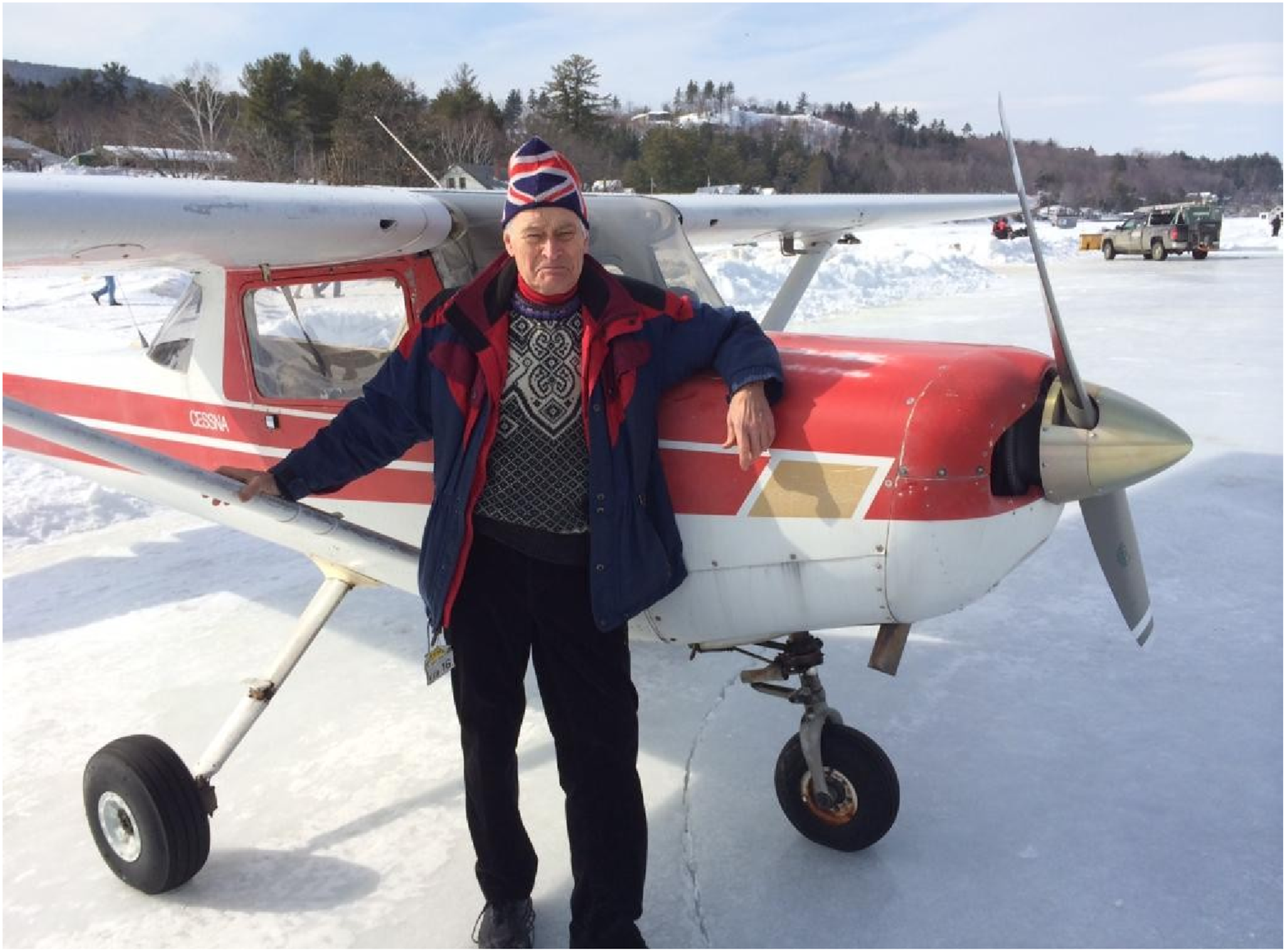
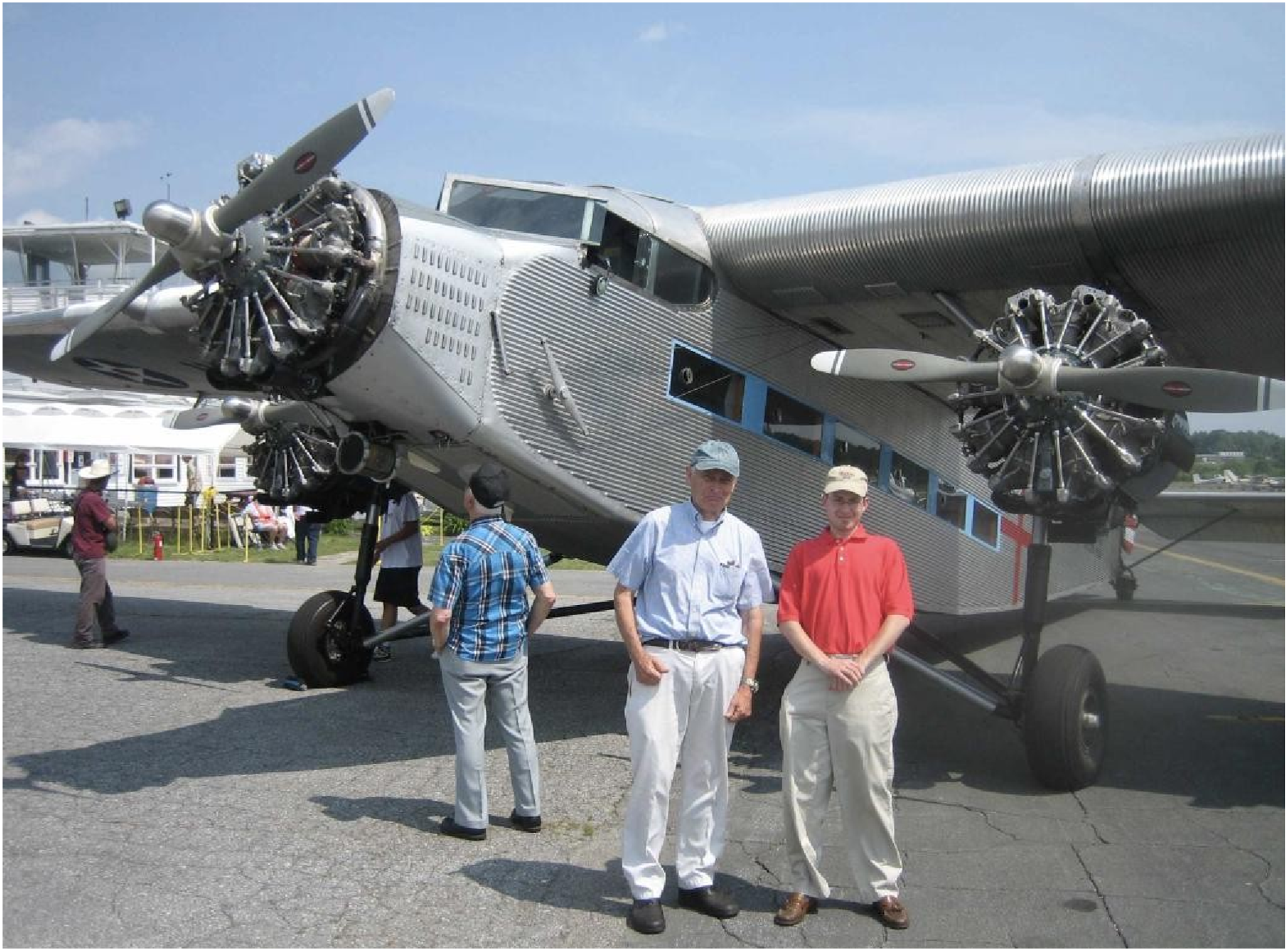
He has been a member of the Train Collectors Association for over 50 years—precision engineering in miniature. His extensive collection features prized American Flyer and British Bassett-Lowke model trains, and his passion for rail extends to firsthand experience through numerous long-distance train journeys across the U.S. and around the world (Figures 1 to 6). Jon with his wife Suzanne during one of their long train rides. He traveled extensively on trains globally. Jon was the proud owner of a Great Lakes biplane. Jon after having landed at the only ice runway in the U.S. Jon frequently did graduation present trips on airplanes for his graduate students. Jon with his British AC Bristol car at an automobile club show. Jon with his favorite Ford Shelby GT 500.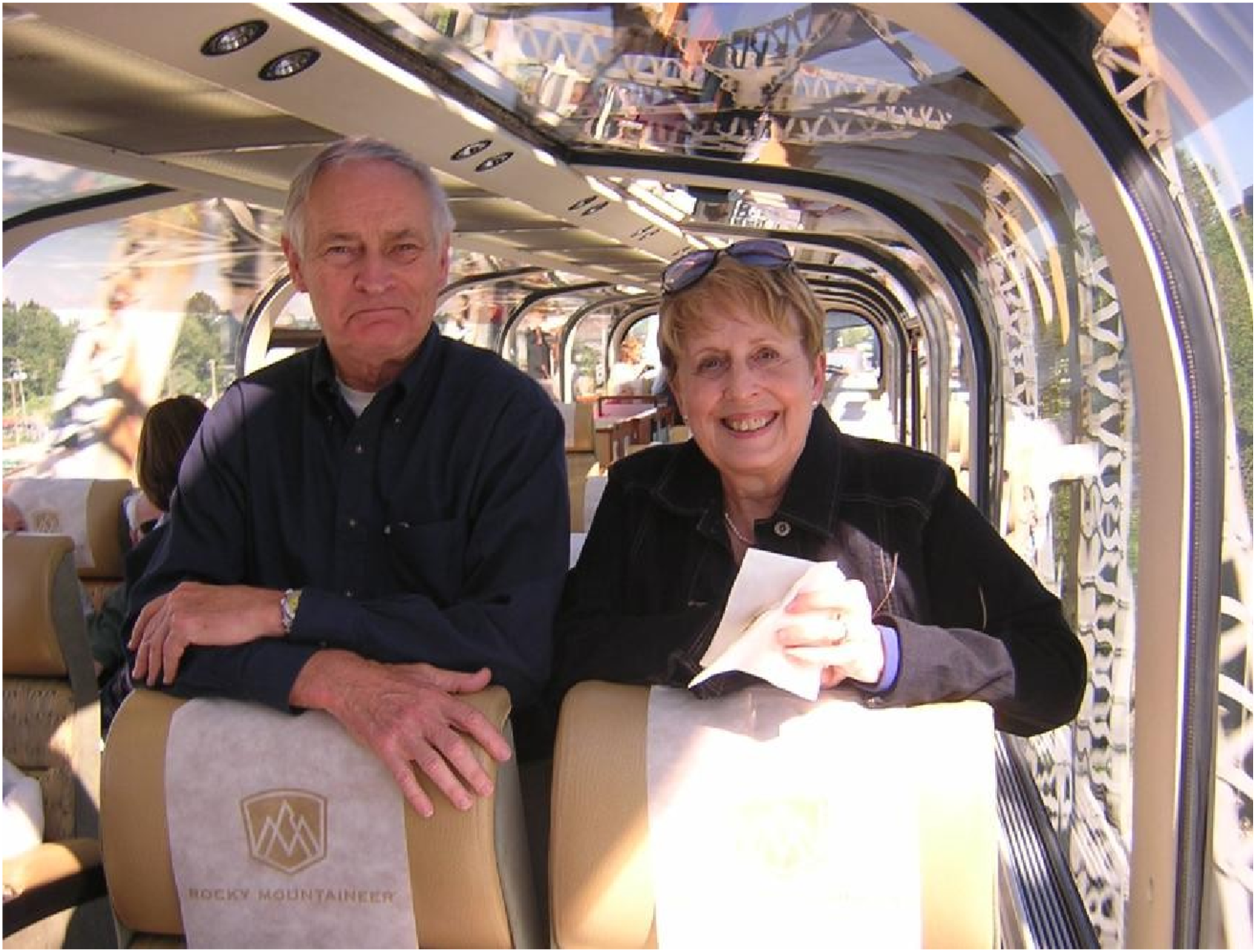
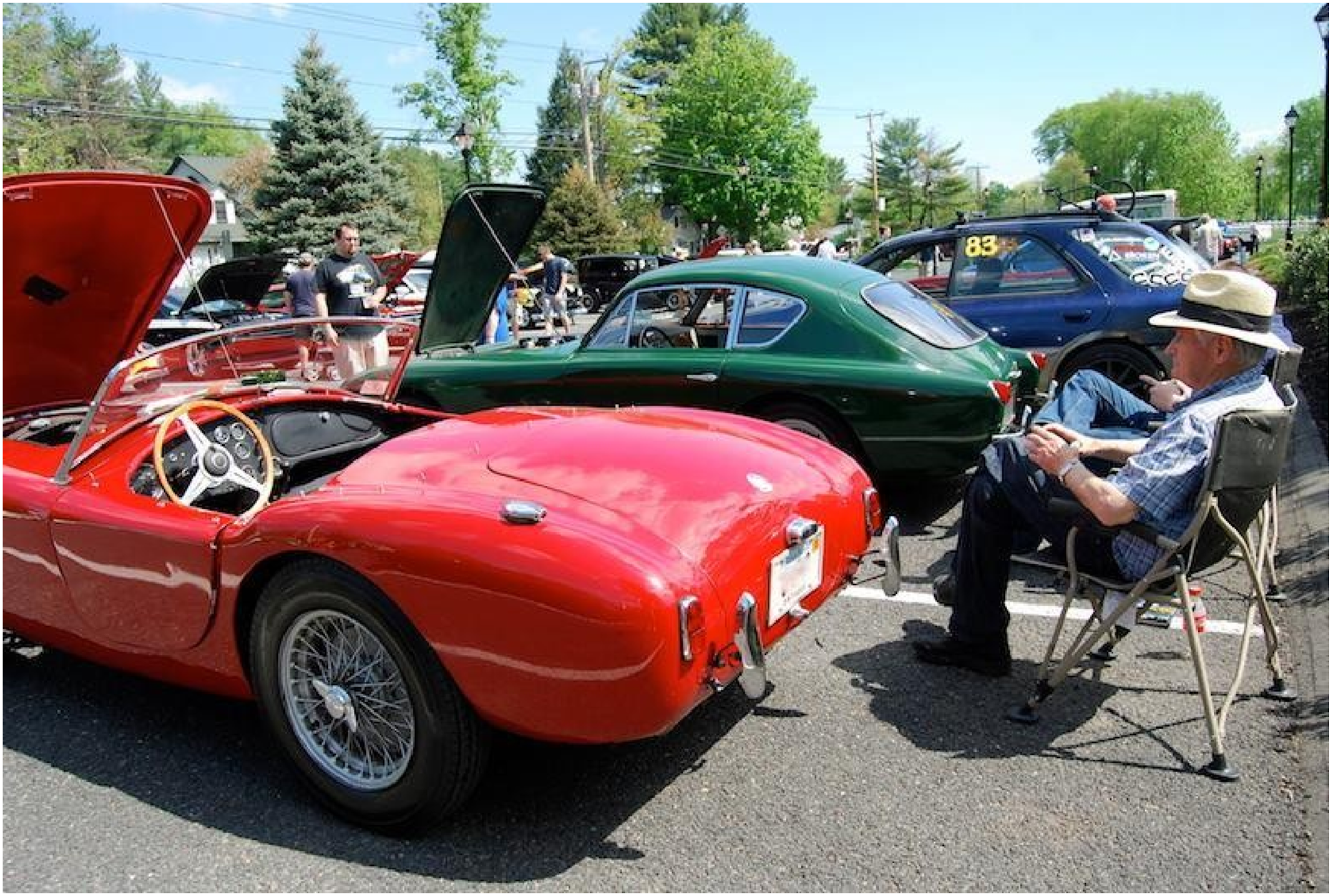
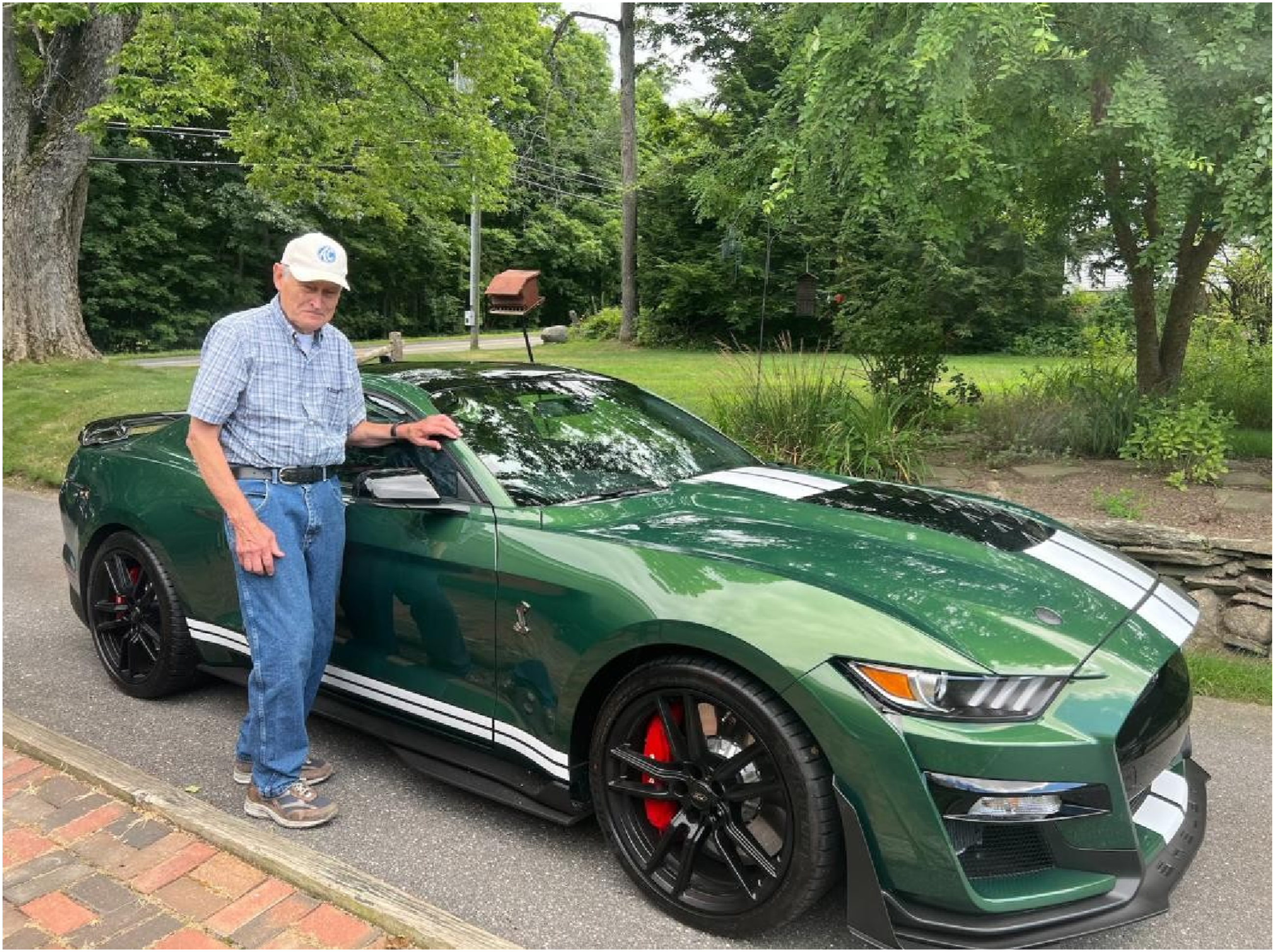
On the ground, Jon is a longtime member of the Antique Automobile Club of America and several other specialized automotive clubs. His collection is so vast it occupies his home barn, his garage, and his airport hangar. Among the highlights: two British AC Bristol cars, a 1941 Oldsmobile Station Wagon, and a Ford Shelby GT500. A Shelby is a masterclass in thermodynamics. For him, driving that car isn’t just getting from A to B; it’s experiencing science. It’s visceral.
Which brings us to the planes—a Great Lakes biplane and a Cessna Skymaster. He flies them on actual adventures, including landings on the only ice runway in the United States. Think about the trust you must have in your understanding of wind and friction to do that. He even has a graduation tradition where he takes his graduate students up in his plane. It’s a rite of passage—you’re not just a student anymore; you’re a co-pilot.
Tributes from editorial board members
You look at these giant wind turbines today and you just assume they were inevitable. But this is a man who became editor emeritus of Wind Engineering after a quarter century. To get his impact, you must go back to when wind energy wasn’t an industry—it was barely even a concept for most people. Let’s start with some tributes from colleagues.
Jonathan Miles
Jon has played many roles that have profoundly influenced my professional development and shaped decisions that have deeply impacted my life. Soon after arriving at UMass Amherst in the fall of 1988 as a young, eager, freshly minted graduate student—excited by the technical challenges ahead yet uncertain where the journey might lead—I met Jon. He was my teacher, advisor and mentor (still is), later a collaborator, and above all a dear and deeply respected friend. Although my doctoral research focused on non-contact measurements for process control, my interactions with Jon and the students he advised drew me increasingly toward wind energy, a field that helped shaped my own career over many decades. He may also have had something to do with my decision to pursue a private pilot’s license. Perhaps most impactful, however, was Jon’s presence, his care, and his wisdom as an educator which shaped my own approach in the classroom. For this, I am—and will always be—deeply grateful to Professor McGowan. Jon, thank you for your many contributions to the field, and to the lives of all of us so fortunate to have made your acquaintance.
Prof. Janaka Ekanayake
My earliest memory of Jon dates back to my first submission to the journal. On February 7, 2008, I received an email from him, which I’ve kept to this day. Despite his undoubtedly busy schedule, he took a moment to add a personal and encouraging note: “I will do my best to speed up the review and insure early publication of this paper.” That gesture, small as it may seem, exemplified his supportive nature and dedication to authors. Years later, on September 20, 2011, another email arrived that perfectly captured his collaborative spirit. He wrote, “I am short of qualified reviewers for electrical engineering subjects for Wind Engineering and, ah ha, I know of someone with lots of expertise in this area—you!” That cheerful “ah ha” made me feel genuinely seen and valued, transforming a review request into an invitation to join his mission. These interactions, bookending my early career, reflect the kind and insightful colleague Jon was—always fostering growth and community with a personal touch.
Rupp Carriveau
Jon McGowan is a Wind Giant. I can think of few that have been so far in front in terms of what’s next for Wind. He has long been a leader in over-the-horizon perspective in the sector. Jon couples this with rock solid technical credibility—I mean he “Co-Wrote The Book” on Wind. For all of his achievement he was never too big to help the little people. There were none littler than me. No matter how busy, Jon always had time for mentorship and strategic support of our efforts. Whether it was coming to Windsor to launch a new Offshore Energy and Storage Society, or supporting other events around the world, or generously supporting our endless funding pursuits he is always there for us. More important than all of it is that Jon is incredibly humble, warm, and wicked funny. He makes you feel good—is there anything better than that?
David Wood
Jon is one of the pioneers of modern wind energy who have seen the industry develop from small, hand-made turbines to huge modern machines made industrially by multinational companies all over the world. His involvement has helped the University of Massachusetts become a leader in the education and research and his co-authored book “Wind Energy Explained” is now in its 3rd edition. Jon’s long editorship of “Wind Engineering” enabled the journal to become another pioneer. I have only met Jon on two occasions from which I recall his infectious enthusiasm for all things aeronautical and many things engineering. Most of my contact with him has been by email; a typical message would start “This paper is right up your street, you will enjoy reviewing it” which is a much nicer invitation than the computer-generated ones now sent to reviewers. Jon can take enormous contentment and pleasure from his long involvement with many aspects of wind energy and I wish him all the best.
Lance Manuel
A quarter century ago, Professor Jon McGowan wrote in the 2000 Annual Review of Energy and the Environment: “The global wind power industry has never been in as good shape, technologically and financially, as it is today. Continued public and private stewardship will help it to improve and expand.” The decades since have proven him right. Jon McGowan and his colleagues at the University of Massachusetts helped place wind energy at the forefront of engineering research through bold and pioneering work. Through his lasting contributions to education, his generous and approachable mentorship, and his service as Editor of Wind Engineering and co-author of Wind Energy Explained, Jon inspired generations of students, researchers, and practitioners. This note honors and recognizes Professor Jon McGowan’s enduring impact on wind energy and the community he helped build.
Melissa Elkinton
Jon’s impact on the field of wind energy is a story of how the whole becomes far greater than the sum of its parts. Wind energy textbook author? Check. Wind Engineering editor? Check. Graduate thesis advisor, dedicated educator, mentor? Check, check, and check. Taken together, these roles reflect how Jon has shaped a generation of engineers and leaders who now work across—and lead—the renewable energy industry. Jon is endlessly committed to education and generous with his time, intellect, and humor.
From warmly hosting dinners for his graduate students to enthusiastically cheering them on as they build their careers, thinking of Jon always brings a smile to my face. He has a rare ability to challenge, encourage, and make you laugh—all in the same conversation. Just as memorable is his sharp wit and mischievous grin; his curiosity energizes, and his joy for life is infectious. I am profoundly grateful to have learned from him and proud to count myself among those shaped by his influence. Thank you, Jon!
Bob Hyers
Jon McGowan pulled me into wind energy with both hands. He has been a friend and mentor since he “adopted” me at the beginning of my faculty career. It is because of him that I hired students to work on materials for blades, particularly manufacturing, degradation, and condition monitoring. He also kept me engaged through thoughtful choice of papers for me to review for Wind Engineering. Just enough of them; not too many. Jon has been a key leader in the field since the 1970s. He drove the development of Wind Energy not only as an application area, but also as a discipline for study and research. That technical foundation was an essential part of the large, mature industry we have today. His contribution will be remembered by generations of wind engineers. Thank you, Jon. Now it’s time to “declare an air emergency”! (It’s a beautiful day to go flying.). Clear skies and smooth landings, Jon.
Lars Landberg
Professor McGowan or as I am 100% sure he would prefer to be called by: Jon, has done an excellent job as Editor of the Journal. I can think of many ungrateful jobs, but being an editor definitely makes the list! However, the way Jon has done it while he was our Editor, was with great patience and kindness, while at the same time, leaving one on in doubt that there was a job to be done. It might not be very obvious from paper to paper, but Jon, as the editor of a journal within Wind Energy, has moved the knowledge base of our industry forward in a very significant way. Thank you and congratulations on your 25 years of service, Jon!
Jon’s mentorship
The tributes above keep returning to the same word, in different forms: adopted. Pulled in. Made to feel like I belonged. Bob Hyers used “adopted” directly. Rupp Carriveau said Jon was never too big to help the little people. Melissa Elkinton described his mischievous grin and the ability to challenge and encourage you in the same breath—that perfect zone where he pushed because he knew you could take it.
For him, wind energy was never just about technology; it was about the people making it happen. Labs come and go, but the Wind Energy Center became a talent factory. Trace the family tree of senior engineers and technical leaders in the U.S. wind and solar industries today and a striking number of threads lead back to UMass, back to McGowan. You either learned from him, or you learned from someone who did. That is a generational impact you can measure in megawatts.
Then there’s the textbook—Wind Energy Explained: On Land and Offshore. It’s the Bible of the field, now in its third edition, used at over 50 universities. And even as a giant, he was never distant. Janaka Ekanayake’s story of that “ah ha” email captures it perfectly. David Wood noted the same thing: instead of an algorithm-generated reviewer request, Jon would send a personal note saying, “This paper is right up your street.” That’s how you build a community, not just a journal.
A quote from Bob Hyers captures his spirit as well as anything: “Now it’s time to declare an air emergency.” In McGowan-speak, that isn’t a real emergency. It just means it’s a beautiful day. Stop what you’re doing. Let’s go flying.
We live in a digital world now, where everything is a simulation. But Jon McGowan’s life is defined by a deep, physical, tactile understanding of the world—how gears mesh, how a wing creates lift. Maybe the best engineers are the ones who know when it’s time to declare an air emergency and go flying.
A note from the author and current editor of Wind Engineering
I would like to end the biography with a story about how Jon welcomed me to the Wind family. I started my career in the 1980s at NASA focusing on fluid dynamics and obsessing over the aeroacoustics of high-speed jets. Much later in 2010, while I was a professor at the Illinois Institute of Technology, I decided to point phased arrays and remote acoustic diagnostics at full-scale wind turbines to see if they had anything interesting to say. I reached out to Jon to explain my pivot into this new territory, half-expecting him to say that I should stick to my jet aeroacoustics expertise. Instead, Jon was so disarmingly kind and encouraging that within a year he used his friendly “aha” style to recruit me onto the editorial board of Wind Engineering. It was a perfect example of how a wind giant makes a newcomer feel like an expert, turning a simple introduction into a seat at the table. This personal touch is exactly how Jon built a global community that people wanted to belong to.
This special issue is a celebration of Jon McGowan’s remarkable career—one marked by innovation, mentorship, and a steadfast belief in the potential of renewable energy. His vision has not only shaped this journal but has also helped to build the very foundation of the modern wind energy industry. We are immensely grateful for his service and leadership and are honored to present this collection of papers in tribute to his enduring legacy.