




Abstract
Despite burgeoning interest in employees’ learning from errors in recent decades, the current understanding of the impact of leadership on employees’ learning from errors is still very limited. To fill this void, by integrating the role identity theory into the cost–benefit analysis framework, this study developed a moderated mediation model to investigate the effects of inclusive leadership on employees’ learning from errors and tested this model using data collected at two points in time from 206 employees in China. Consistent with our hypotheses, the results show that inclusive leadership was positively related to employees’ learning from errors and that this relationship was mediated by employees’ psychological safety. The results further demonstrated that employees’ power distance moderated the direct relationship between inclusive leadership and employees’ psychological safety and the indirect relationship between inclusive leadership and employees’ learning from errors through psychological safety in such a way that the relationships were stronger when the power distance was lower. These findings extend the relevant literature and have important implications for cross-cultural and diversity management.
JEL classification code:
Keywords
1. Introduction
In today’s dynamic and rapidly changing marketplace, employees’ learning from errors is essential for the development and success of organizations (Cannon and Edmondson, 2005; Gressgård and Hansen, 2015; Naveh et al., 2015; Zhao, 2011). However, despite its potential importance to organizations, learning from errors, which is defined as a process involving purposeful reflection on and analysis of errors and the application of new knowledge to make decisions or take actions that reduce the probability of future occurrences (Bauer and Mulder, 2008; Zhao, 2011), is not always welcomed by employees (Edmondson, 1999; Shepherd et al., 2011). Organizational barriers, such as hostile and punitive management practices, may constitute significant constraints that often discourage employees from learning from errors (Cannon and Edmondson, 2001), because learning from errors usually needs employees to disclose the limitations of their current thinking and openly discuss and seek feedback regarding their errors, which may lead employees to suffer from interpersonal risks and costs such as embarrassment or being judged as incompetent or even being humiliated (Detert and Edmondson, 2011; Edmondson, 2004; Yagil and Luria, 2010). According to the cost–benefit analysis theory, when employees consider engaging in such a risky behavior, rather than relying on purely impulsive and automatic decision-making processes, they are more likely to consciously consider the potential benefits and costs of the risky behavior (Maslowsky et al., 2011). This subjectively estimated costs and benefits determine whether employees will conduct the behavior (Zhan and Hample, 2016). Specifically, they will conduct the risky behavior when the perceived benefits outweigh the potential costs (Detert and Burris, 2007; Maslowsky et al., 2011; Morrison, 2011) but may refrain from such behavior when they perceive that the costs are greater than the benefits (Tangirala and Ramanujam, 2008).
From this perspective, leaders may have considerable influence on employees’ learning from errors, as they have the power to make decisions regarding employees’ job assignments, pay, and promotions (Dépret and Fiske, 1993), which are likely to affect employees’ perceptions and evaluations of the costs and benefits of learning from errors. Unfortunately, although some scholars have made great efforts in the last decades to elucidate various factors that can influence employees’ willingness to learn from errors, such as the characteristics of errors (Dillon and Tinsley, 2008; Sitkin, 1992), the sources of errors (Baum and Dahlin, 2007), and the organizational culture in which errors are made (Cannon and Edmondson, 2001), the current understanding of the impact of leadership on employees’ learning from errors is still very limited. The few studies that have noted the importance of leaders’ influence on learning behavior in organizations mainly focused on the overall supportive behavior of leaders and the general learning behavior of employees, without specifying the style of leadership and the type of learning behavior (Edmondson, 1999, 2004). Therefore, the primary purpose of this study is to address this gap by clarifying the influence of an emerging, but relatively understudied, form of leadership-inclusive leadership on employees’ learning from errors. Specifically, based on the cost–benefit analysis theory, we argue that inclusive leadership, which refers to leaders who exhibit openness, accessibility, and availability in their interactions with employees (Nembhard and Edmondson, 2006), will facilitate employees’ learning from errors by increasing their evaluation of the benefits and decreasing their perception of the costs of learning from errors.
Moreover, the cost–benefit analysis theory further argues that despite the expectations of benefits may play a role in predicting the occurrence of risky behavior, the personal fear of the potential risks is a more powerful consideration that keeps employees from engaging in a risky behavior (Zhan and Hample, 2016). This argument indicates that to facilitate employees’ learning from errors, it is necessary to alleviate and minimize their concerns about the personal risks involved in doing so. In this respect, psychological safety, which is defined as one’s belief that exhibiting risky behavior in organizations will not cause personal repercussions and costs (Edmondson, 2004; Kahn, 1990), is likely to be a salient enabler of employees’ learning from errors (Edmondson, 2004). According to previous studies, psychological safety is a context-specific state, and compared to other leadership styles, inclusive leadership has been found to lead to increased psychological safety among employees in work settings (Nembhard and Edmondson, 2006). Therefore, given the linkage between inclusive leadership and employees’ psychological safety, and the importance of psychological safety for employees’ learning from errors, we further propose that inclusive leadership will encourage employees to learn from errors indirectly by increasing their perception of psychological safety.
In addition, owing to individual differences, the effect of inclusive leadership is contingent on how a specific employee interprets and evaluates such leadership (Labianca et al., 2000). Initial evidence suggests that individuals’ cultural values can have substantial effects on how employees evaluate and react to leaderships (Kirkman et al., 2009; Walumbwa et al., 2007). In this study, we focused on power distance because some prior studies have indicated that compared with other cultural values (e.g. masculinity–femininity, individualism–collectivism), power distance, which represents an individual employee’s beliefs and values of the acceptance and distribution of authority and power in organizations (Farh et al., 2007; Hofstede, 1980; Kirkman et al., 2009), is more theoretically relevant to leadership reactions (Cole et al., 2013; Schaubroeck et al., 2007). Therefore, to develop a more comprehensive and precise understanding of the inclusive leadership–psychological safety–employees’ learning from errors relationship, we also include employees’ power distance as an important boundary condition in this study.
To summarize, by incorporating the role identity theory into the cost–benefit analysis framework, this study aims to answer the questions of whether, how, and when inclusive leadership affects employees’ learning from errors and proposes a moderated mediation model, as shown in Figure 1. In doing so, this study extends the relevant literature in several ways. First, by focusing on employees’ learning from errors, this study answers the calls for further research on the “micro-level” learning behavior in organizations (Diwas et al., 2013) and advances our knowledge regarding the specific style of leadership that is conducive to fostering employees’ learning from errors. Second, by exploring the effectiveness of inclusive leadership on employees’ learning from errors, this study contributes to Mor Barak’s theory of inclusive organizations and adds to the growing discussion on the importance of inclusive leadership in organizations (Carmeli et al., 2010; Choi et al., 2015, 2017). Moreover, by explicating the contingency role of employees’ power distance, this study augments recent efforts to examine the effects of individual cultural factors in the leadership research (Kirkman et al., 2009; Tepper, 2007). Third, given the accelerated workforce diversification in international organizations and the increasingly critical role of China in today’s economic globalization, this study also has important implications for cross-cultural and diversity management and will build a sound base to guide organizational leaders of international companies to manage their employees effectively.
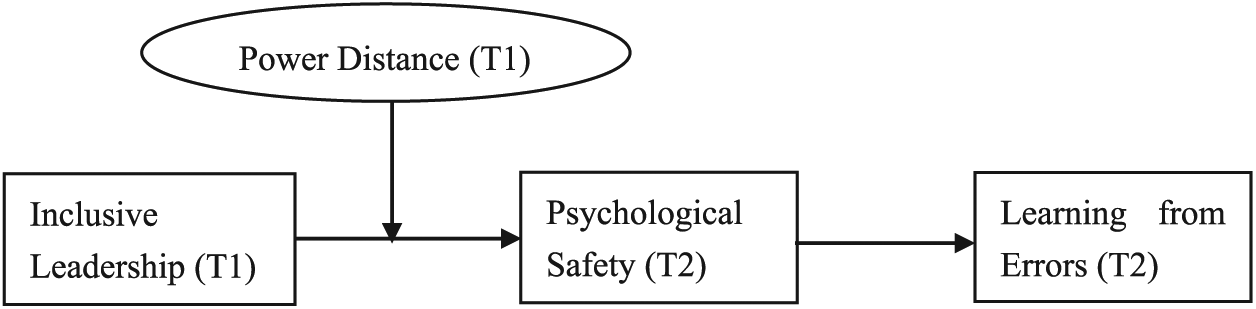
The research model.
2. Theory and hypotheses development
2.1. Inclusive leadership and employees’ learning from errors
As noted in the above definition, learning from errors is a mindful activity that often includes developing and experimenting with new or revised knowledge and action strategies that are aimed at reducing the possibility of future occurrence of errors (Bauer and Mulder, 2013; Rybowiak et al., 1999; Tjosvold et al., 2004; Zhao, 2011). As such, it is a risky behavior for which the outcome is uncertain and unpredictable. By learning from errors, employees may experience potential benefits, including formal (e.g. bonus or promotion) or informal (e.g. recognition or praise) rewards. But at the same time, learning from errors may result in substantial intangible costs for employees concerning their status and image such as embarrassment or humiliation (Detert and Edmondson, 2011; Edmondson, 2004; Yagil and Luria, 2010). In addition, by learning from errors, employees may incur some tangible costs, such as potentially jeopardizing promotion opportunities or other career development opportunities if their learning behaviors are not successful. According to the cost–benefit analysis theory, before conducting such risky behavior, employees are likely to engage in cost versus benefit deliberations (Detert and Burris, 2007; Morrison and Rothman, 2009). Based on this tacit calculus and assessment of the perceived consequences, employees will proceed or retract from the risky behavior (Edmondson, 2004). From this perspective, inclusive leadership is likely to have a positive effect on employees’ learning from errors due to its effect on employees’ evaluation of the costs and benefits of learning from errors.
Specifically, on one hand, inclusive leadership can reduce employees’ evaluation of the potential costs of learning from errors. Since leaders are often perceived as important authoritative figures and hold sanctioning power in organizations, employees are highly concerned with the behavior of their leaders and turn to them for information about what is acceptable and appropriate behavior in the organization (Tyler and Lind, 1992). In this regard, employees may rely on their leaders to look for cues as to whether learning from errors is personally dangerous. Inclusive leadership accepts the diversity of their employees and respects and values their uniqueness (Hollander, 2009; Shore et al., 2011), which may assure employees that there are few personal costs or negative consequences associated with their behaviors in organizations. In addition, inclusive leadership welcomes input and suggestions from their employees, offers employees sufficient freedom and discretion to perform their work, ensures that employees have access to organizational resources, and demonstrates the leader’s availability to help solve problems that employees may encounter (Carmeli et al., 2010; Choi et al., 2015; Hollander, 2009), all of which will make employees believe that their leaders will not criticize or punish them for their behavior. More importantly, inclusive leadership encourages employees to take challenging goals and shows responsive behavior in case of negative results (Carmeli et al., 2010; Hollander, 2009). As a result, employees are likely to perceive their costs of learning from errors as sufficiently low.
On the other hand, inclusive leadership can also increase employees’ evaluation of the potential benefits of learning from errors. Inclusive leadership is open to and interested in input from employees and proactively invites and encourages employee participation and contribution (Hollander, 2009; Nembhard and Edmondson, 2006), which is likely to give employees a sense that their ideas and opinions are highly valued and appreciated and that they are likely to receive recognition for their efforts and achievements. This sense of being valued and recognized is expected to bolster feelings of self-worth and eventually increase their evaluation of the benefits from exhibiting learning from errors. Moreover, inclusive leaders are accessible and available to their employees and are concerned with the interests, feelings, and expectations of employees (Carmeli et al., 2010; Hollander, 2009). Under such leadership, employees are likely to feel supported and believe that they are appreciated and respected in the organization. As a result, those employees will view themselves as valuable and important contributors to the organization and give more weight on the benefits of learning from errors.
Taken together, by reducing the perception of costs and increasing the evaluation of benefits, inclusive leadership is likely to be an important predictor of employees’ learning from errors. Therefore, we propose the following hypothesis.
Hypothesis 1. Inclusive leadership is positively associated with employees’ learning from errors.
2.2. Mediating role of psychological safety
Due to the risky nature of learning from errors, the fear and concerns of the interpersonal threats and negative consequences inherent in the process of learning from errors are subtle but powerful forces that will inhibit employees from learning from errors (Edmondson, 1999, 2004; Zhan and Hample, 2016). Therefore, we further posit that the link between inclusive leadership and employees’ learning from errors is better understood when the mediating role of psychological safety is considered. The concept of psychological safety is grounded in early research on organizational change and was first introduced by Schein and Bennis (1965) as the extent to which individuals feel secure and capable of changing. Subsequently, other researchers have explored this construct in work settings. Kahn (1990) defines psychological safety as an individual’s perception of whether it is safe and comfortable to be oneself without fear of negative results. More recently, this concept was further developed by Edmondson and colleagues, who conceptualize it as a state where employees feel that it is safe to take interpersonal risks in work settings (Detert and Edmondson, 2011; Edmondson, 2004). Although these definitions have some differences, they have all drawn from Schein and Bennis (1965) and emphasize the perceptions and beliefs related to the consequences of interpersonal risk-taking in the work environment. Therefore, in this study, psychological safety is considered to be an individual cognitive state which reflects his or her belief that exhibiting risky behaviors will not cause personal harm or interpersonal threats on his or her status, image, and career (Edmondson, 2004; Kahn, 1990).
We argue that inclusive leadership will enhance employees’ psychological safety for the following reasons. First, inclusive leaders attempt to solicit input on decisions from their employees, give employees the freedom to decide their work activities on their own, and make sure that employees will not be punished for undertaking challenging goals; thus, employees will experience greater psychological safety (Carmeli et al., 2010; Nembhard and Edmondson, 2006). In addition, by displaying a high level of availability and accessibility to employees, inclusive leadership sends a clear signal that it is safe to engage in risky behaviors without fear of negative consequences, which increases employees’ psychological safety (Carmeli et al., 2010). Moreover, as an important form of relational leadership, inclusive leadership emphasizes building a closer connection with employees and actively reducing the psychological distance and status gaps with employees, which have been shown to be beneficial for the development of employees’ psychological safety (Carmeli et al., 2010; Carmeli and Gittell, 2009; Nembhard and Edmondson, 2006). At the same time, inclusive leaders can engender feelings of psychological safety by showing employees that they can be trusted and they will not punish employees for their learning behaviors (Edmondson, 2004; Kahn, 1990). Furthermore, by explicitly modeling openness, inclusive leadership may contribute to a work environment characterized by high tolerance for differences existing among employees, thereby enhancing employees’ psychological safety (Edmondson, 2004). Empirically, some studies have found that leaders who are open-minded and people-oriented can facilitate the development of psychological safety among employees at work (Edmondson, 2004; Hirak et al., 2012; Nembhard and Edmondson, 2006). Therefore, under inclusive leadership, employees are likely to report high levels of psychological safety.
Psychological safety, in turn, is likely to promote employees’ learning from errors. As mentioned above, learning from errors often involves interpersonal risks and threats (Edmondson, 1999, 2004). In this respect, we argue that this type of learning is more likely to emerge when employees have a sense of psychological safety. Specifically, psychological safety can facilitate employees’ learning from errors by alleviating employees’ concern about the personal risks inherent in the process of learning from errors (Kark and Carmeli, 2009; Yagil and Luria, 2010). Employees with high psychological safety will feel secure and comfortable engaging in interpersonally risky behaviors, such as learning from errors, because they believe that they will not be ridiculed, humiliated, or penalized for doing so (Edmondson, 1999, 2004; Van Dyck et al., 2005). In addition, when one’s psychological safety is high, he or she will feel confident that the surrounding context is not threatening and that his or her behaviors will not be held against him or her (Edmondson, 1999, 2004; Kahn, 1990; Van Dyck et al., 2005). As a result, he or she is more likely to admit to and discuss errors and experiment with modified or new knowledge, therefore engaging in learning from errors (Carmeli and Gittell, 2009). Moreover, a perception of psychological safety will enable employees to overcome and minimize their defensiveness and anxiety related to engaging in risky behaviors (Edmondson, 1999; West, 1990), thus encouraging learning from errors. Conversely, employees who lack psychological safety often perceive high interpersonal risks of being embarrassed, criticized, or punished with conducting learning behaviors, thus they are more likely to feel “learning anxiety” and develop defensive tendencies (Argyris, 1982; Edmondson, 2004; West and Richter, 2008), which may ultimately inhibit their willingness to learn from errors. In other words, learning from errors will be obstructed when the employee experiences psychological threats and feels psychologically unsafe (Edmondson, 1999, 2004). Empirically, a number of studies have indicated that psychological safety is a vital catalyst to interpersonally risky behaviors in work settings (Edmondson and Lei, 2014), and research evidence has provided some support for linking psychological safety and learning behaviors in teams (Edmondson, 1999; Tucker and Edmondson, 2003).
Therefore, based on the above arguments, we expect that inclusive leadership will enable employees to learn from errors indirectly by increasing their psychological safety. Accordingly, we propose the following hypothesis.
Hypothesis 2. The positive relationship between inclusive leadership and employees’ learning from errors is mediated by employees’ psychological safety.
2.3. Moderating role of power distance
Power distance, as one of the five cultural values in Hofstede’s model, was originally conceptualized at the societal or national level (Hofstede, 1980, 1993), but a growing number of studies have shown that there are considerable variations in the power distance of individuals even within the same culture (e.g. Clugston et al., 2000; Farh et al., 2007; Kirkman et al., 2009; Lian et al., 2012). In addition, more recent research has indicated that individual-level variations in cultural values could be larger than societal-level cultural differences (Dulebohn et al., 2012), and individually held cultural values have more direct and powerful effects on how employees react to aspects of their work and particularly to their leaders (Kirkman et al., 2006; Lian et al., 2012). Therefore, in the present research, we examine power distance as an individual-level construct and define it as “the extent to which an individual accepts the unequal distribution of power in institutions and organizations” (Clugston et al., 2000: 9). As such, an employee’s power distance specifically deals with his or her underlying beliefs related to status and authority in organizations (Farh et al., 2007; Kirkman et al., 2009; Lam et al., 2002), which is pertinent to how the employee will perceive, interact, and respond to various leadership styles (Kirkman et al., 2009).
According to the rationale underpinning the role identity theory (Farh et al., 1997), power distance reflects employees’ expectations of the behaviors appropriate to their roles in the organizational hierarchy. Leadership that fails to meet these expectations will result in less positive responses from employees (Kirkman et al., 2009). Specifically, employees with lower power distance are egalitarian and are less likely to be constrained by their identity as a low-status employee (Lam et al., 2002). At work, they prefer to actively participate in decision making (Atwater et al., 2009), prefer leaders who empower them, and view self-direction and control as highly important (Chen and Aryee, 2007). In addition, low-power-distance employees tend to have closer personal and social connections with their leaders (Tyler and Lind, 1992) and expect frequent and open communication with their leaders (Kirkman et al., 2009), which may in turn make them more sensitive to how they are treated by their leaders during their interactions (Kirkman et al., 2006). In this regard, inclusive leadership, which involves caring about employees’ feelings, inviting employees to participate in decision making, being open to input from employees, and emphasizing high-quality relationships with employees, fits well with the expectations and needs of employees with lower power distance. Therefore, the motivational benefits of inclusive leadership are more likely to be appreciated, and the positive effects of inclusive leadership on employees’ psychological safety will be reinforced.
In contrast, for employees with higher power distance, the effects of inclusive leadership on employees’ psychological safety are likely to be attenuated. Employees with higher power distance are more receptive to organizational hierarchy, more committed to their role identity as submissive employees (Farh et al., 2007; Lian et al., 2012), and show more deference, loyalty, and obedience to authority (Chen and Aryee, 2007; Farh et al., 2007; Lam et al., 2002). At work, they tend to adapt to authoritative leaders and expect their leaders to give clear and explicit directions and requirements rather than empower and consult them (Kirkman et al., 2009). In other words, they display less concern about their leaders’ favorable treatment and are less likely to enjoy the participative leadership style (Kirkman et al., 2009). Moreover, higher power distance employees are likely to perceive leaders as detached authority figures and prefer to keep a greater social and psychological distance from their leaders (Farh et al., 2007; Kirkman et al., 2009). This extended distance will impede personal connections and interactions between employees and their leaders (Lee et al., 2000), thus reducing the influence of leadership on employees’ attitudes and behaviors (Farh et al., 2007). Inclusive leadership is typically characterized as a type of relational leadership, and emphasizes employee participation, which is not ideally suited for employees with higher power distance. Hence, those employees with higher power distance will evaluate inclusive leadership as less effective and are less likely to appreciate and respond to it. As a result, inclusive leadership will have less positive effects on the psychological safety of higher power distance employees.
Based on the above arguments, and given the behavior associated with inclusive leadership, it is likely that employees with lower rather than higher power distance would favor inclusive leadership and develop higher psychological safety. Thus, we propose the following hypothesis.
Hypothesis 3. Employees’ power distance moderates the relationship between inclusive leadership and employees’ psychological safety in such a way that the relationship is stronger for those employees with lower power distance.
Cumulatively, these hypotheses suggest a first-stage moderation (Edwards and Lambert, 2007), such that employees’ power distance moderates the indirect relationship between inclusive leadership and employees’ learning from errors through employees’ psychological safety. Therefore, we propose the following hypothesis.
Hypothesis 4. The indirect relationship between inclusive leadership and employees’ learning from errors through employees’ psychological safety is moderated by employees’ power distance.
3. Method
3.1. Participants and procedures
To increase the generalizability of the study, the employees who participated in this investigation worked in 20 organizations operating in various industries, such as the electronics, banking, and insurance industries. In all, 15 employees from different teams at each company were randomly selected, and 15 different leaders at each company were evaluated. To minimize the common method bias, two paper-based surveys were distributed with a 3-week gap. The questionnaire at Time 1 included items measuring inclusive leadership, power distance, and control variables, whereas the questionnaire at Time 2 included items measuring psychological safety and learning from errors. The surveys were completed on a voluntary basis. Finally, 206 matching questionnaires were collected, representing a response rate of 68.7%.
The demographic data of the sample were as follows. The average age of the respondents was 32.4 years, and 60.2% were male. The average organizational tenure of the respondents was 6.3 years. Overall, 4% of the respondents held a high-school diploma or the equivalent, 46.3% held a college degree, and 44.3% held a Bachelor’s degree, and the remainder held a Master’s degree or above. Most of the respondents were in the technical (46.6%), sales (18.3%), marketing (13.8%), and human resource/administration (13.2%) functions, but other functions such as accounting/finance (5.2%) and manufacturing (2.9%) were also represented.
3.2. Measures
All the measures used in this study were adapted from the existing literature. In addition to inclusive leadership, the measures of three other main constructs that demonstrated good reliability and validity in studies conducted in China were employed. The measure of inclusive leadership was translated from English through the translation-back-translation method (Brislin, 1990). All the measures used 5-point Likert-type scales, in which 1 represented “strongly disagree” and 5 represented “strongly agree.”
Inclusive leadership was measured with Carmeli et al.’s (2010) nine-item scale. Although this scale had never been utilized in China previously, many other studies conducted in other developing countries have verified its validity and reliability (e.g. Choi et al., 2015; Hirak et al., 2012). Sample items include “My supervisor is open to hearing new ideas,” “My supervisor is available for consultation on problems,” and “My supervisor is accessible for discussing emerging problems.”
Psychological safety was measured with Edmondson’s (1999) seven-item scale. This scale assesses the extent to which employees felt psychologically safe to take interpersonal risks in the workplace. A sample item includes “It is safe to take a risk in this organization.”
Learning from errors was measured with Rybowiak et al.’s (1999) four-item scale. This scale perfectly matches and covers the focus of our study by emphasizing learning from errors as a self-instructive and self-organized effort that includes not only the conscious analysis of and reflection on the root causes of errors but also the active implementation of changes to prevent or reduce the probability of future errors. Sample items include “Errors make me think and assist me to develop new knowledge” and “Errors can help me to improve my job.”
Power distance was measured with Dorfman and Howell’s (1988) six-item scale. This scale was used in several previous studies conducted at the individual level (Farh et al., 2007). A sample item includes “Employees should not disagree with management decisions.”
Based on prior studies, we controlled for several demographic variables that were not the main interest in this study yet had a potential influence on employees’ learning from errors, including the employee’s age, gender, functions, organizational tenure, and educational background. We measured gender as a dichotomous variable, with 0 for female and 1 for male.
3.3. Data analyses
To test our hypotheses, we conducted a series of statistical analyses. First, preliminary confirmatory factor analyses (CFA) were undertaken to ensure the distinctiveness of the constructs in this study. Second, the PROCESS macro developed by Hayes (2013) was used to examine the main effects of inclusive leadership on employees’ learning from errors (Hypothesis 1) and the mediating effect of employees’ psychological safety (Hypothesis 2). Specially, the PROCESS macro is based on Preacher and Hayes’s (2004, 2008) previous works regarding the analysis process, which provide highly sensitive estimates and do not require the assumption of normally distributed conditional indirect effect estimates (Hayes, 2013); thus, it is the preferred method of testing the mediation effect. Third, regression analysis was conducted to test the moderation hypothesis (Hypothesis 3). Finally, to further validate the moderated mediation effect proposed in Hypothesis 4, the bootstrap approach in PROCESS was utilized to examine the significance of the conditional indirect effect of inclusive leadership on employees’ learning from errors through employees’ psychological safety at high and low levels of power distance.
4. Results
4.1. CFA
Table 1 displays the results of the CFA. The results show that the hypothesized four-factor model fit the data relatively well (χ2/df = 1.51; root mean square error approximation (RMSEA) = 0.05; root mean square residual (RMR) = 0.04; Tucker–Lewis index (TLI) = 0.92; comparative fit index (CFI) = 0.93; incremental fit index (IFI) = 0.93) and better than any alternative model, thereby providing empirical evidence of the distinctiveness of the constructs studied. We therefore proceeded to test the hypotheses.
Summary of model fit indexes.
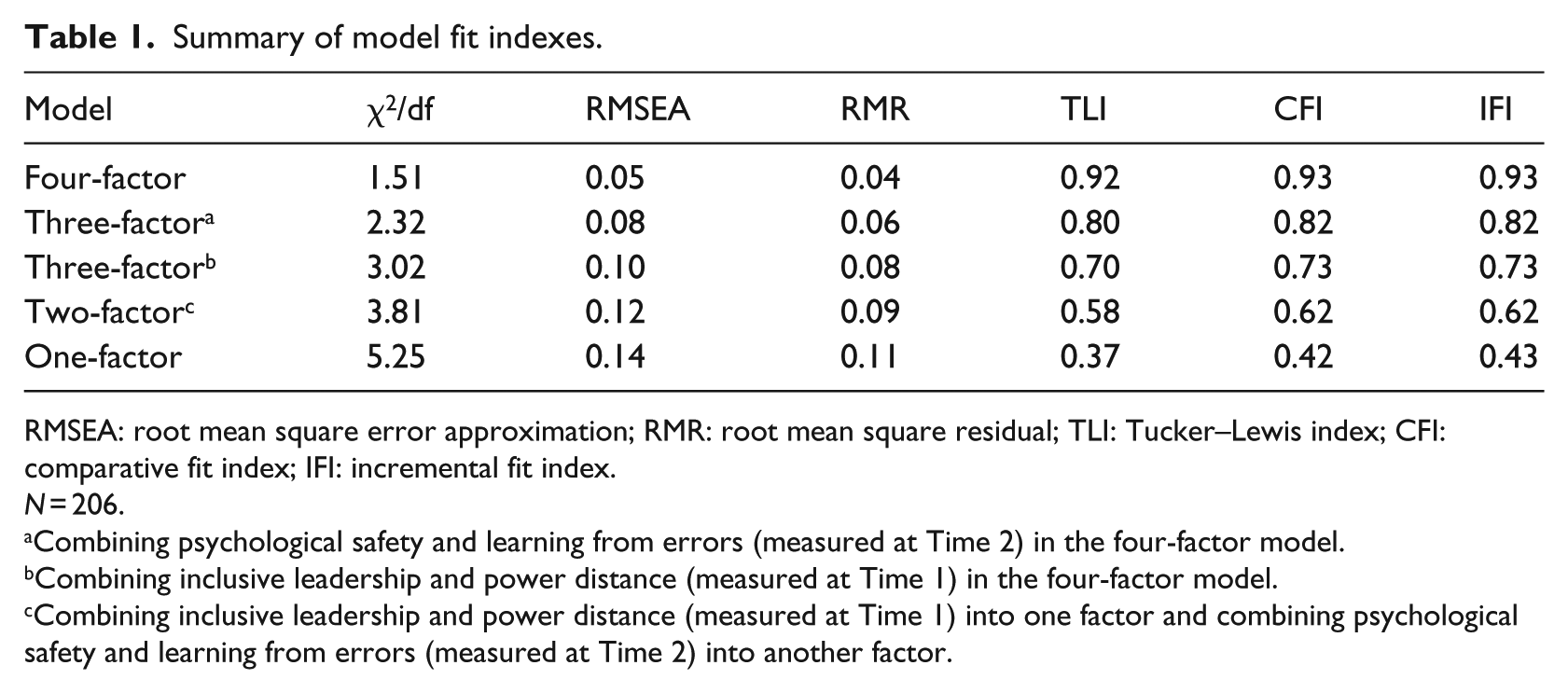
RMSEA: root mean square error approximation; RMR: root mean square residual; TLI: Tucker–Lewis index; CFI: comparative fit index; IFI: incremental fit index.
N = 206.
Combining psychological safety and learning from errors (measured at Time 2) in the four-factor model.
Combining inclusive leadership and power distance (measured at Time 1) in the four-factor model.
Combining inclusive leadership and power distance (measured at Time 1) into one factor and combining psychological safety and learning from errors (measured at Time 2) into another factor.
4.2. Hypotheses testing
The descriptive statistics, reliability estimates, and correlations for all the variables are presented in Table 2. All the reliability estimates exceeded 0.70 and ranged from 0.84 to 0.90. The correlations between inclusive leadership and employees’ learning from errors offered preliminary evidence to support Hypothesis 1 (r = 0.23, p < 0.01). The regression analysis provides further support for Hypothesis 1. As shown in Table 3, inclusive leadership was positively associated with employees’ learning from errors (β = 0.21, p < 0.01). Thus, Hypothesis 1 was supported.
Means, standard deviations, correlations, and coefficients for variables.
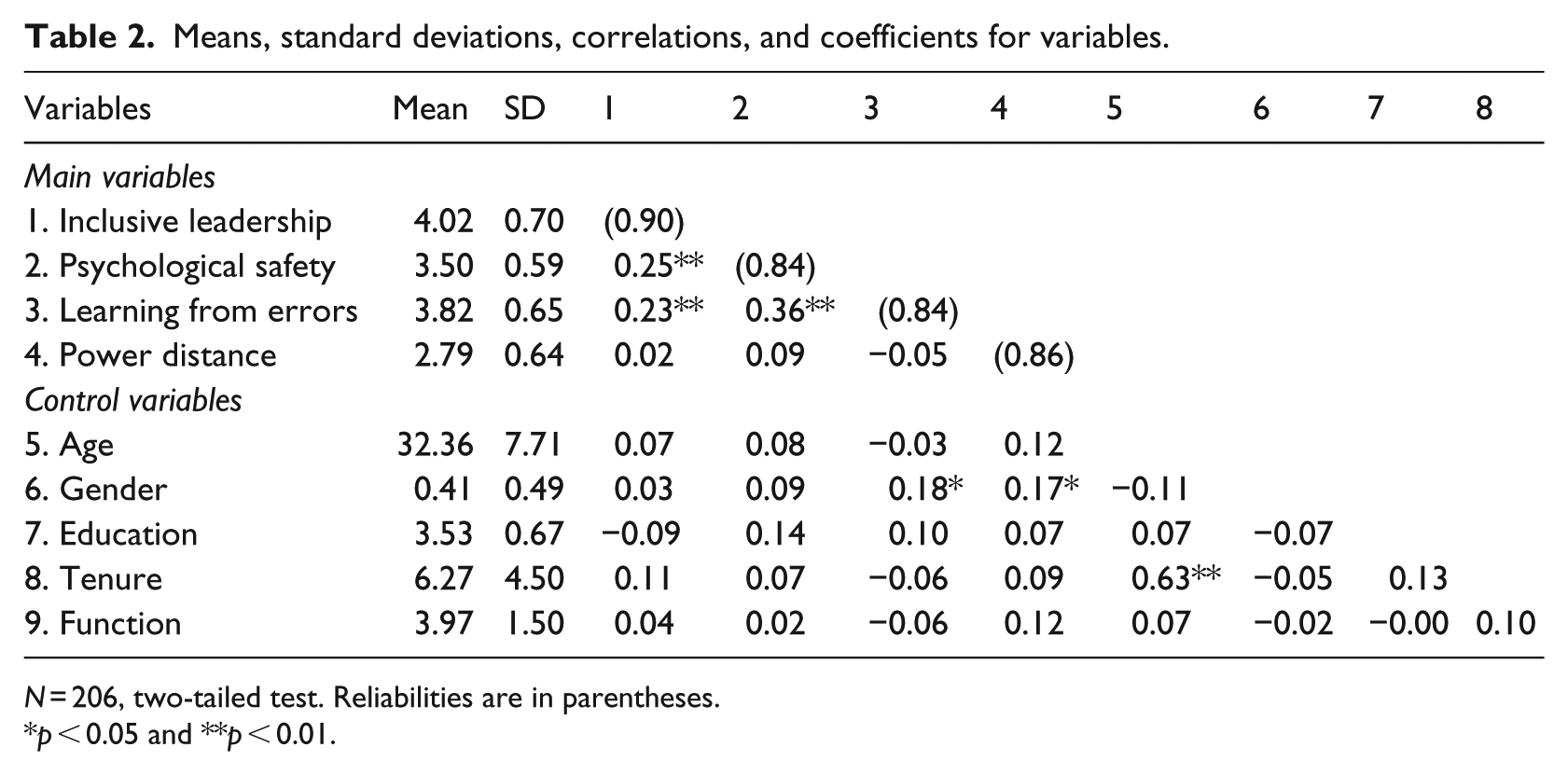
N = 206, two-tailed test. Reliabilities are in parentheses.
p < 0.05 and **p < 0.01.
Results for main effect and mediating effect.

LL: lower limit; CI: confidence interval; UL: upper limit; SE: standard error.
N = 206. Bootstrap size = 5000.
Hypothesis 2 proposed that employees’ psychological safety mediates the relationship between inclusive leadership and employees’ learning from errors. The PROCESS results in Table 3 showed that inclusive leadership was positively and significantly related to employees’ psychological safety (β = 0.24, p < 0.01), employees’ psychological safety was positively and significantly related to employees’ learning from errors (β = 0.35, p < 0.01), and inclusive leadership was indirectly related to employees’ learning from errors (the indirect effect = 0.08); the 95% confidence interval (CI) for the indirect effect did not include zero (0.04–0.15). Therefore, Hypothesis 2 was supported.
To examine the moderating effect of power distance on the relationship between inclusive leadership and employees’ psychological safety, we conducted regression analyses with employees’ psychological safety as the dependent variable. Following the recommendations of Aiken and West (1991), we centered inclusive leadership and employees’ power distance prior to running the analyses. As shown in Table 4, the interaction term of inclusive leadership and employees’ power distance was significant in predicting employees’ psychological safety (β = –0.16, p < 0.05). The additional proportion of variance in employees’ psychological safety explained by the interaction term was also significant (ΔR2 = 0.03, p < 0.05). We then employed Aiken and West’s (1991) procedures to plot the pattern of the significant interaction effects. As illustrated in Figure 2, the pattern was as predicted, and the relationship between inclusive leadership and employees’ psychological safety was stronger for employees with lower power distance. Therefore, Hypothesis 3 was supported.
Results of regression analysis for moderation by power distance.
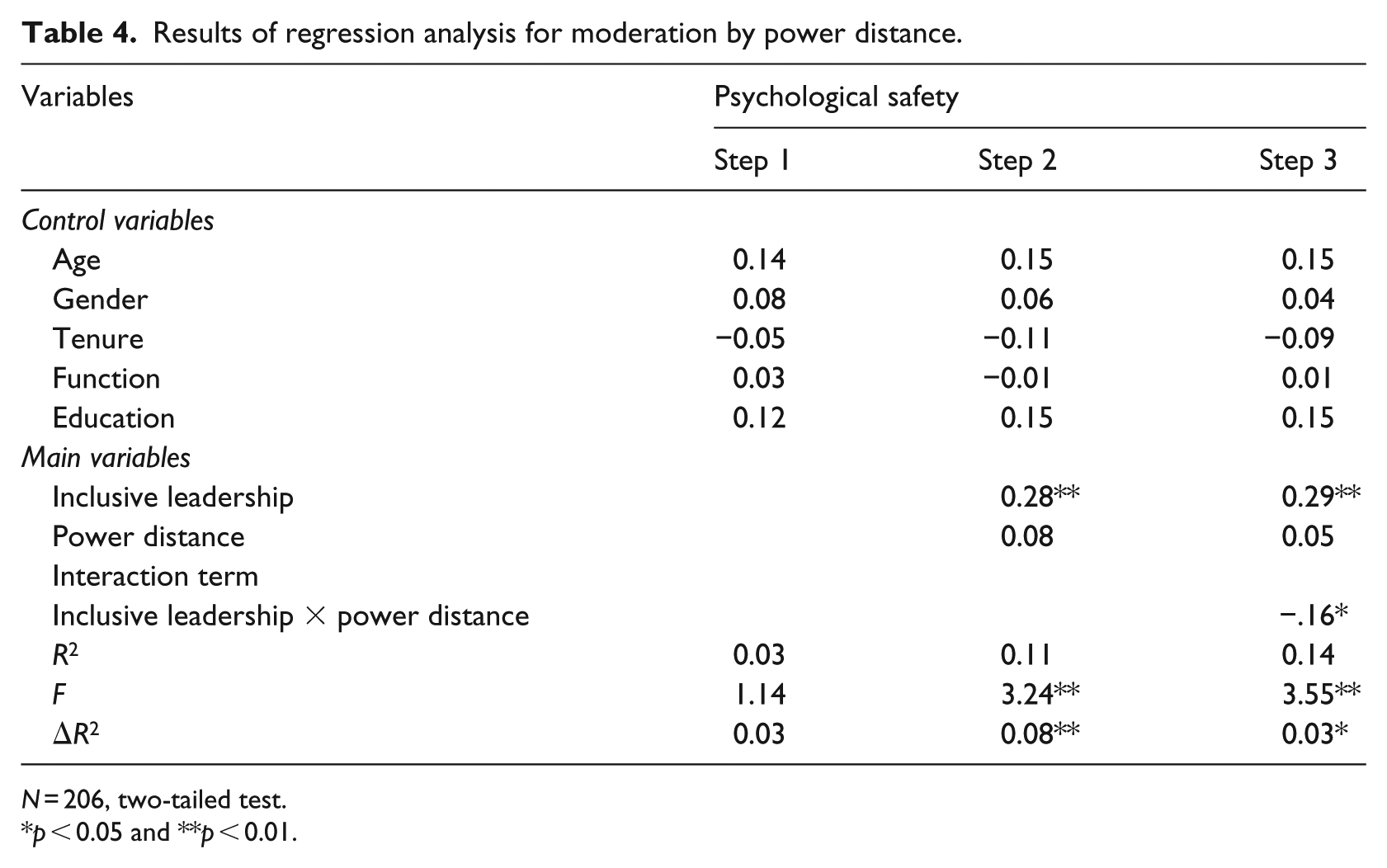
N = 206, two-tailed test.
p < 0.05 and **p < 0.01.
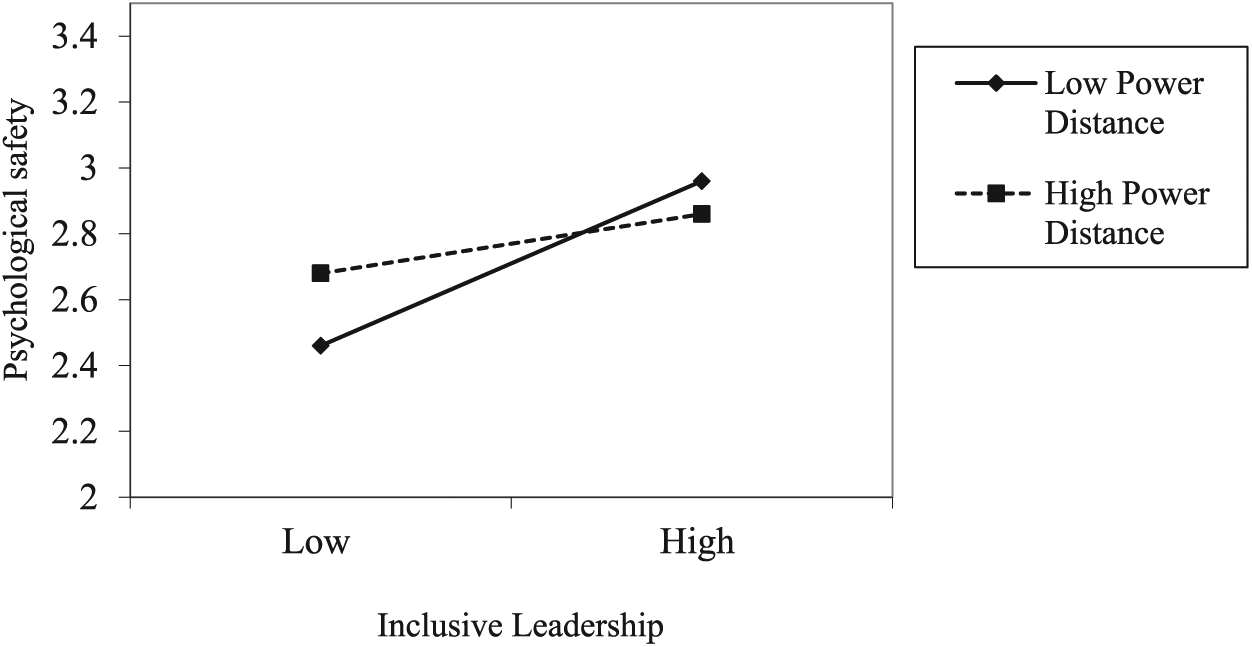
The moderating effect of employees’ power distance on the relationship between inclusive leadership and employees’ psychological safety.
Having supported the moderating effect of employees’ power distance on the relationship between inclusive leadership and employees’ psychological safety, we proceeded to test the moderated mediation effect proposed in Hypothesis 4. The PROCESS results revealed that for employees with lower power distance, inclusive leadership was indirectly related to employees’ learning from errors through employees’ psychological safety (indirect effect = 0.13; 95% CI = 0.06–0.23, not including zero). For employees with higher power distance, the indirect effect was not significant (indirect effect = 0.04; 95% CI = –0.01 to 0.11, including zero). Therefore, Hypothesis 4 was supported.
5. Discussion
5.1. Summary of results
Employees’ learning from errors is essential for the growth and success of organizations (Cannon and Edmondson, 2005; Carmeli et al., 2012; Naveh et al., 2015). However, although many studies have demonstrated the far-reaching importance of employees’ learning from errors for organizational effectiveness (e.g. Carmeli et al., 2012; Naveh et al., 2015; Zhao, 2011), previous research indicated that how to facilitate employees’ learning from errors is a big challenge that many organizations face (Baumard and Starbuck, 2005; Tucker and Edmondson, 2003). It is therefore not surprising that scholars and practitioners alike have become increasingly interested in exploring the factors that can promote employees’ learning from errors. By integrating insights from the cost–benefit analysis theory and role identity theory, this study seeks to extend the prior research on the role of leadership in facilitating employees’ learning from errors. Consistent with our hypotheses, the results of this study revealed that inclusive leadership was positively associated with employees’ learning from errors, and employees’ psychological safety mediated this relationship. The results also indicated that employees’ power distance moderated the direct relationship between inclusive leadership and employees’ psychological safety and the indirect relationship between inclusive leadership and employees’ learning from errors through employees’ psychological safety in such a way that the relationships were stronger when the power distance was lower. Therefore, by focusing on mediation and moderation together, this study provides a holistic view regarding how inclusive leadership relates to employees’ learning from errors, as well as for whom inclusive leadership will have stronger effects. In doing so, this study makes several meaningful contributions to theory and practice.
5.2. Theoretical implications
The findings of this study have a number of theoretical implications. For the literature of inclusive leadership, this study extends previous research in the following ways. First, although some studies have demonstrated the benefits of inclusive leadership on positive outcomes in organizations, such as employee involvement in creative work (Carmeli et al., 2010), employee well-being (Choi et al., 2015), and work performance (Hirak et al., 2012), less attention has been devoted to employees’ learning from errors. Thus, by theorizing and verifying the pivotal role of inclusive leadership in employees’ learning from errors, this study helps to expose meaningful synergies between the inclusive leadership and employee learning literature and provides additional support to the effectiveness of inclusive leadership in organizations. Moreover, since inclusive leadership is a critical aspect of inclusion in the workplace, this study also reinforces and offers empirical support to recent studies that highlighted the significance of organizational inclusion in today’s world (e.g. Azmat et al., 2015; Mor Barak, 2000). The second valuable addition of this study to the inclusive leadership literature is the exploration and inclusion of the contingency role of employees’ power distance in the research of inclusive leadership. Most of the prior studies examining the importance of inclusive leadership for facilitating positive employee behaviors tend to assume that it is applicable across employees. Worth noting, however, is that the results of this study suggested that employees’ power distance served as a critical contextual factor in shaping employees’ reactions to inclusive leadership.
In identifying and revealing employees’ psychological safety as a crucial mediating mechanism for reaping the benefits of inclusive leadership for employees’ learning from errors, this study not only extends our understanding regarding how inclusive leadership influences employees’ learning from errors but also provides significant contributions to the psychological safety literature. First, although some scholars have called for further studies on the effects of leaders in cultivating and shaping psychological safety in organizations (Edmondson, 2004), only a few attempts have been made to explicate this leadership–psychological safety linkage (e.g. Edmondson, 1999). By confirming that inclusive leadership is conducive to the development of an employee’s psychological safety, this study clarifies the leadership style that could enhance employees’ psychological safety. In addition, by highlighting the moderating role of employees’ power distance on the relationship between inclusive leadership and employees’ psychological safety, this study moves beyond the extant research that mainly focused on testing the moderators of psychological safety–outcome relationships and answers the calls of a recent review that indicated the need to explore the boundary conditions of the antecedent–psychological safety relationship (Edmondson and Lei, 2014). Second, while psychological safety has received some attention in the learning literature (e.g. Edmondson, 1999, 2004; Gibson and Vermeulen, 2003), previous studies have focused mainly on general learning behavior at the team or organization level (Wong et al., 2012), and surprisingly little attention has been devoted to investigating specific learning behaviors, such as learning from errors at the individual level. However, findings on learning behavior at the organizational or team level do not necessarily apply to individual employees. This study thus contributes to the psychological safety literature by extending its effectiveness to individual-level learning behavior, which is the building block of organizational and team-level learning. Third, previous studies that have demonstrated the important role of psychological safety on learning behaviors have always been conducted in healthcare organizations (e.g. Edmondson, 1999). By illustrating and validating the effect of psychological safety in mediating the relationship between inclusive leadership and employees’ learning from errors in various work settings, this study extends the application of psychological safety to other organizational contexts and suggests that psychological safety has wider relevance than just in the healthcare setting.
Third, although researchers and practitioners have shown increased interest in the topic of learning from errors recently (Gressgård and Hansen, 2015; Madsen and Desai, 2010; Naveh et al., 2015; Zhao, 2011), the relationship between leadership and employees’ learning from errors has not been fully established. By emphasizing and empirically testing inclusive leadership as an antecedent of employees’ learning from errors, this study has great theoretical implications for identifying the role of specific leader behaviors in promoting employees’ learning from errors. Moreover, while the previous research concerning the relationship between inclusive leadership and employee behavior has mainly relied on the social exchange or social learning theories, this study is based on the cost–benefit analysis rationale. Although the cost–benefit analysis theory is not tested empirically in this study, it is the fundamental theoretical rationale for our hypotheses. Indeed, due to the risky nature of learning from errors, this cost–benefit perspective may be a more proximal rationale to understanding its occurrence and may provide novel insight into why inclusive leadership plays a powerful role in promoting employees’ learning from errors. As such, the findings of this study broaden the concept and applicability of cost–benefit analysis theory in the workplace and lend further support to the prior research, which indicated that cost–benefit assessments explain one-third to one-half the variance in people’s engagement intentions of risky behavior (e.g. Hample et al., 2012; Maslowsky et al., 2011; Morrison and Rothman, 2009).
Finally, the findings of this study also contribute to the culture value literature and cross-cultural management literature by emphasizing individual-level power distance as a moderator that can shape the effectiveness of inclusive leadership. While most cross-cultural management studies on power distance have viewed it as a societal- or country-level cultural value (e.g. Gelfand et al., 2007), this study contributes to some recent studies emphasizing the importance of individual-level power distance in understanding the different effects of management practices on employee outcomes (Farh et al., 2007; Kirkman et al., 2009; Lian et al., 2012). According to the results of this study, there is considerable variance in the power distance among employees in our sample even though we conducted the study in a country that has been characterized as generally having a high level of power distance (Hofstede, 1980, 1993). In this regard, this study may provide an explanation on the mixed findings on the effects of power distance in the cross-cultural management literature and indicate that assuming homogeneity among all individuals of a society can cloud our understanding of the effects of power distance and lead to erroneous conclusions as to how the value differences affect employees’ reactions to organizational practices and leader behaviors. The results of this study suggest that employees react differently to inclusive leadership based on their individual power distance. Therefore, cross-cultural researchers should be cautioned against confounding societal and individual power distance. Differentiating individual power distance and societal power distance may allow a more nuanced understanding and greater clarity for the effect of cultural values on management practices.
5.3. Practical implications
Errors are prevalent in today’s complex business environment, and it is impossible to eliminate all errors in organizations (Bauer and Mulder, 2013; Putz et al., 2013; Zhao, 2011). Instead, to maintain competitiveness in a global environment, it is essential for organizations to strive to promote employees’ learning from errors. Moreover, given the multicultural nature of many countries and its workforce resulting from the increasing internalization and migration across nations, the development of inclusive organizations is crucial to manage and leverage workforce diversity effectively (Azmat et al., 2015). Inclusive leadership, as an important aspect in building inclusive organizations, has unique advantages in today’s multicultural societies. Therefore, the findings of this study concerning the relationship between inclusive leadership and employees’ learning from errors offered a number of valuable practical implications for managers and organizations.
First, based on the vital role of inclusive leadership in facilitating employees’ learning from errors, this study suggests that by strengthening and fostering inclusive leadership, especially when employees have a low power distance, the organization could make a substantial difference in promoting employees’ learning from errors. Since inclusive leadership as a managerial practice can be learned and developed (Allen et al., 2004; Eby et al., 2008), it is advisable that besides considering inclusive leadership traits as an important evaluating dimension when recruiting managers, organizations can also invest more in comprehensive training and leadership development programs to cultivate and enhance inclusive leadership in the organization. In addition, due to the negative consequences of errors, many organizations build a system that rewards success and punishes errors. This punishment-oriented system may result in an atmosphere in organizations that is conducive to blaming rather than to learning when errors occur (Tjosvold et al., 2004). According to the results of this study, managers must understand the important role of psychological safety for promoting employees’ learning from errors and need to actively attempt to create a safe atmosphere rather than a blaming environment in organizations to strengthen psychological safety among employees.
Second, the finding concerning the moderating role of power distance suggests that managers need to be aware of the varying cultural value orientations of their employees when developing their management practices and highlights that the differences in individual power distance should not be ignored in studies about the effectiveness of managerial practices for employee behaviors. Specifically, our research shows that the relationship between inclusive leadership and psychological safety is stronger for employees with lower power distance. This result suggests that employees do not uniformly interpret or appreciate the behaviors of their leaders. Therefore, rather than treating all employees in similar way, leaders should consider the individual differences of their employees and should modify and adapt their behaviors to better fit the different expectations held by individual employees. For instance, for employees with lower power distance, inclusive leadership may be a good way to increase employees’ psychological safety and promote employees’ learning from errors. But for employees with higher power distance, it may be more worthwhile for managers to engage in more paternalistic and authoritative behaviors in order to increase those employees’ psychological safety and then motivate them to learn from errors given that high-power-distance employees tend to prefer their leaders to give explicit and specific directions and requirements.
Finally, the findings of this study are relevant for international organizations to understand how to engage in business in the Chinese cultural context and how to manage Chinese employees. Because of the continued globalization of the world economy and the increasing importance of China in international business in recent years, many Western companies have established branches in China. Moreover, with the increased mobility of professionals from China to other countries, workforce diversification has become far more prevalent in many organizations in developed countries. For example, as Australia’s largest business partner, there are many Australian companies operating in China, and due to its international reputation as having a livable and enviable lifestyle, Australia is one of the most popular choices for migration of Chinese people. Nowadays, more and more Chinese are moving to and working in Australia. However, the well-recognized significant differences between the cultural values of Chinese and Western workers (Hofstede, 1993) represent major challenges for today’s mangers. Therefore, our effort to investigate the relationship between inclusive leadership and employees’ learning from errors in China is particularly important. Specifically, the findings of this study not only provide a more comprehensive picture of how employees are likely to react to inclusive leadership in China but also deepen the understanding of the underlying assumptions of Chinese employees and their implications to organizational behavior and leadership effectiveness, thereby helping managers to overcome the biases that result from their own culture and adapt management practices to Chinese employees more effectively. Moreover, by emphasizing individual-level power distance, this study also suggests that irrespective of the country-level cultural differences, managers should also acknowledge the individual differences in cultural values of specific employees.
5.4. Limitations and future research
Despite its implications, this study has several limitations that must be considered when interpreting its findings. First, although we attempted to mitigate the potential bias by collecting data at two points in time and separating the independent and dependent variables (Podsakoff et al., 2003), we acknowledge that the common method bias cannot be avoided entirely when using data from a single source. Thus, conducting a longitudinal study and collecting data from different sources would be desirable in the future. Second, we only used subjective measures of employees’ learning from errors (self-reported ratings) instead of more objective data from performance evaluations or other work-related outputs. This could have resulted in response biases, such as social desirability bias. Future research should use more objective measures to increase the objectivity and reliability of the results. Third, although cost–benefit analysis is the basic theoretical framework of this study, it is not empirically tested in the study. Therefore, future studies should directly test it in order to verify the validity of this framework more accurately. Finally, the findings from this study may not be valid in Western cultures because this study was conducted in the Chinese context and we did not control the national culture. Chinese people tend to exhibit strong uncertainty avoidance (Hofstede, 1993), pay a great deal of attention to “saving face” (Hwang, 1987), and are usually eager to maintain a positive public image (Hwang and Han, 2010). In such a culture, learning from errors may lead to more social costs, and employees may be more sensitive to psychological safety than their Western counterparts. Therefore, the beneficial effect of psychological safety on employees’ learning from errors may be more pronounced for employees embedded in the Chinese culture than in other cultures. In this regard, although examining psychological safety in the Chinese context will allow a more robust test of the predictive validity of psychological safety due to the greater variance between employees’ perceptions of psychological safety, the Chinese culture may influence the magnitude of some of the effects witnessed in this study. Future studies should take these possibilities into account and conduct cross-cultural research if possible.
6. Conclusion
By incorporating the role identity theory into the cost–benefit analysis framework, this study opens the “black box” between inclusive leadership and employees’ learning from errors and explicates the importance of psychological safety and power distance in this relationship. The results from a field study in China provide empirical support for the hypotheses that inclusive leadership has a positive relationship with employees’ learning from errors, employees’ psychological safety mediates this relationship, and employees’ power distance moderates the relationship between inclusive leadership and employees’ psychological safety and the indirect relationship between inclusive leadership and employees’ learning from errors through employees’ psychological safety. These findings shed light on the timely issues of inclusive leadership and learning from errors in the workplace and contribute to current literature and management practice.
Footnotes
Acknowledgements
This manuscript is an original work that has not been published anywhere else. All the authors listed have read and approved the manuscript that is enclosed and have met the criteria for authorship.
Final transcript accepted 10 September 2018 by Peter Jordan (AE Organizational Behavior).
Declaration of conflicting interests
The author(s) declared no potential conflicts of interest with respect to the research, authorship, and/or publication of this article.
Funding
The author(s) disclosed receipt of the following financial support for the research, authorship, and/or publication of this article: This work was supported by the National Natural Science Foundation of China (grant no. 71672175).