



Abstract
The rising level of childhood obesity across the globe has escalated the worries of World Health Organization (WHO), health practitioners, policymakers, and regulators. One of the most prominent factors that promote unhealthy eating habits of children is the heavy advertising of food and beverages (F&B) targeted at children. This has deepened the concerns of stakeholders about the persuasion ethics of firms aggressively promoting unhealthy foodstuff to young consumers. This article presents a systematic literature review of scholarly research on the advertising of unhealthy F&B targeted at children. A systematic review of 70 peer-reviewed articles is conducted through the theoretical lens to present their contributions. Synthesising the findings of empirical studies, the scholarly research is classified into six core research themes. We elaborate on directions for future research: Theory, Context, and Methods and distil specific research questions for future studies.
Keywords
1. Introduction
The current study was conducted against the backdrop of rising apprehensions about the impact of unhealthy food and beverage advertising targeted at children (ATC) on their health, consumption behaviour and eating habits. Although several factors contribute to childhood obesity, such as shifting consumption patterns, less physical activity, changes in socioeconomic elements impacting the lifestyle of families and so forth (Krishnamoorthy et al., 2006), ATC of unhealthy food and beverages (F&B) is one of the most prominent factors (Velazquez et al., 2020). The Convention on Rights of the Children urged governments and policymakers to protect children from the adverse impact of unhealthy food advertising, proposing a framework for protecting children’s legal right to health against aggressive advertising and marketing of unhealthy F&B (United Nations Children’s Fund (UNICEF) Report, 2018).
Because of the gradually increasing significance of advertising, higher expenses are attached to it (Çamlibel et al., 2019). The steady growth in media output has been majorly financed by advertising revenue (Barland, 2013). Contemporary advertising has been much more technologically refined and interactive (De Jans et al., 2020). In addition, with the increased use of the Internet, media consumption by children has changed, focusing on gaming websites and digital media, in particular (Livingstone and Haddon, 2009). In 2018, the expenditure for ATC via technology-enabled mediums was $900 million in the United States; however, it was $3.2 billion for nondigital with a similar trend in developing countries (Radesky et al., 2020).
Despite the increased concerns and ensuing debate, stakeholders’ views on the adverse impact of food ATC and the growing interest of scholars, the ethical framing of ATC has not been adequately examined (De Jans et al., 2020). Moreover, there is no consensus about the cause-and-effect relationship between food ATC and unhealthy eating habits of children. Articles on ATC have offered a large group of studies for review, providing an opportunity to pave the way for future developments in this research domain. Previous studies focused on specific aspects of ATC, for example, integration of psychological research with advertising research (Harris and Bargh, 2009), regulation or self-regulation of food advertising (Kassahara and Sarti, 2018) or ATC in general (De Jans et al., 2020). However, there is a dearth of reviews that classify recent scholarly research on food ATC. Given the uniquely venerable state of children to the persuasive effect of advertising in the digital era and growing concerns of health professionals about the increasing rate of childhood obesity, it is important to draw the attention of policymakers, technology companies and advertisers by synthesising the findings of scholarly research on F&B ATC over the last decade.
Unlike old advertising mediums, contemporary advertising offers numerous advantages to advertisers, such as the potential to access target consumers at any time and place, two-way communication between the advertising firm and the potential consumer, the ability to measure consumers’ responses by clickthroughs and tracking consumers’ buying behaviour, to name a few (Izquierdo-Yusta et al., 2015; Maneesoonthorn and Fortin, 2006). Furthermore, the potential of technology-enabled advertising empowers advertisers to show randomised advertisements to target children at the individual level, thus reducing the overall targeting cost (Goldfarb, 2014). These newer forms of advertising are usually powered by personal data and are not easily visible. Unlike traditional advertising, they happen in an unpredictable manner, often embedded in the content (Meyer et al., 2019). In fact, when a commercial message is communicated to children through a noncompany source like advergames, it directly influences them (An and Kang, 2014). Advertisers use emotionally loaded techniques to enthral children, who tend to ignore the product information and disclaimers (Wicks et al., 2009). Children below 12 years of age generally do not possess the cognitive and emotional capacities to critically and sceptically process persuasive messages. Thus, they have become soft target segments for advertising (Nairn, 2014). However, individuals are considered vulnerable until the age of 18 years; therefore, scholars have defined them as children (Nelson, 2018). Food is one of the most frequently advertised products targeted at children, and most of the advertised food items are the antithesis of nutritional endorsements (Boyland et al., 2011). These findings are worrisome because the regular and excessive consumption of unhealthy food may lead to health problems like childhood obesity (Lee, 2009).
1.1. Objective and contribution of the study
The significant changes as mentioned above have attracted scholarly attention, resulting in significantly high numbers of published studies recently. We expect that the research in the last decade will uncover new advertising strategies and persuasion methods, evolving modes and forms of advertising and new ethical and regulatory issues and their consequent impact on eating habits of children. However, since the diffusion of technology in ATC, very limited attempts have been made to systematically review the literature on ATC of F&B to examine their adverse impact on the eating habits of children. A systematic literature review (SLR) conducted in 2013 revealed that ATC research mainly focused on traditional media (Cairns et al., 2013). Thus, collecting the inputs from the recent scholarly research produced in the digital age can provide very useful inputs for regulators and policymakers to address concerns about unhealthy F&B ATC.
Building on the scholarly contributions in the last decade, the main objective is to conduct an SLR of scholarly research on F&B ATC, examine the changes in overall strategy of F&B ATC, their impact on eating habits of children, identify the research gaps and provide directions for future research. We aim to:
Capture the core research themes and describe the intellectual structure contributed by articles published in the last decade to track the adverse impact of ATC on children’s health and consumption behaviour (January 2009–February 2020).
Highlight what we don’t know by revealing research gaps in each core research theme, theoretical and conceptual underpinning, methods and contextual setting.
Provide directions for future research by distilling specific research questions for future studies to ensure meaningful contribution of scholarly research.
2. Systematic literature review
2.1. Review method
As suggested by Kitchenham (2004), we adopted a step-by-step process to select relevant research articles by developing a protocol, extracting the data from select articles and synthesising and reporting the results. Our selection entailed three criteria, as follows:
The paper should be published between January 2009 and February 2020.
It should be a peer-reviewed journal article published in English (Light and Pillemer, 1984) because the process of peer-reviewed paper publication helps screen for not only higher quality but also conceptual and methodological rigour (David and Han, 2004).
It should pass the keyword string test.
Different search strings were created to ensure no paper was missing. We used the Boolean ‘AND’ and ‘OR’ operators. The keywords used in the search string were ‘advertising’, ‘advertisement’, ‘promotion’, ‘marketing’ AND ‘children’, ‘child’, ‘kids’, ‘young consumers’ AND ‘unhealthy food’, ‘junk food’, ‘preserved food’ and ‘beverages’.
We primarily used three online databases – EBSCO, Scopus database and Google Scholar – to search for relevant studies because these databases provide wide coverage of peer-reviewed journals from multiple disciplines, with content from more than 5000 publishers and 39,500 peer-reviewed journals. This resulted in 213 articles.
Following the approach of previous review studies, as depicted in Figure 1 (Gupta et al., 2019, 2020), a three-step process was followed to select relevant papers from the 213 articles. First, the title and keywords of each paper were scanned independently by both authors. Nonrelevant papers were identified. Then, the abstracts of these papers were thoroughly reviewed to minimise the risk of excluding a potential paper (Gupta et al., 2019). After this, we were left with 184 potential papers. Thereafter, both authors simultaneously read the abstracts of all potential papers to get an idea of the research objectives and focus of each paper. Forty-eight papers were excluded after reading the abstracts (e.g. Etow, 2012; Zantides and Kourdis, 2013). The excluded papers had the search terms in the abstract, yet ATC was merely peripheral to their core research theme. Thus, 136 papers were left for full-text reading. During this step, we observed that in some papers, the above-mentioned search terms were present in their text, but the central focus was not ATC. Therefore, it was important to exclude these papers. However, before excluding them, both authors discussed exclusion (Gupta et al., 2019; Lincoln and Guba, 1985). As a part of our validation process, the following dual selection criteria were developed:
The core research theme of the paper should emphasise the key issues surrounding ATC.
One of the main objectives of the paper should be directly related to ATC.
The opinions of an independent domain expert, a professor and researcher of marketing and advertising were utilised before excluding papers. After doing this, the authors retrieved a sample of 70 papers.

Selection of articles.
The next step was to extract and synthesise the data from sample papers. Here, we developed a data extraction form (Appendix I, Supplemental material) to extract the data in a MICROSOFT EXCEL worksheet. Subsequently, the worksheets were compared, and mismatches were fixed by mutual consent (Gupta et al., 2020; Lincoln and Guba, 1985). A detailed profile of reviewed articles is provided in Appendix II (Supplemental material). To systematically provide insights into the intellectual structure of the core research themes, a classification scheme was developed. Following the ‘bottom-up’ approach (Glaser and Strauss, 1967), which is considered a rigorous method for reviewing and classifying the literature (Wolfswinkel et al., 2013), each sample article was first considered under specific subthemes, and then, all the subthemes were synthesised under more generic research themes, titled ‘core research theme’ (Figure 2). To start the process, the research problems, major objectives, findings and results of each paper were reviewed to generate a wide range of 28 codes (Strauss and Corbin, 1997). The next step was axial coding, in which the related open codes were reduced to 16 subthemes. Considering the diversified nature of open codes, multiple iterations were performed before the codes were reduced into subthemes. Subsequently, through affinity diagramming (K-J method), the subthemes were grouped into six core research themes (Kawakita, 1986). In the final stage, we conducted an affinity workshop to negotiate and achieve a consensus on the core research themes (Figure 2). During this process, we also identified some hybrid subthemes. Therefore, the core research themes extracted through this process are not mutually exclusive. The opinion of an independent expert was also utilised to authenticate each step and reach a consensus.
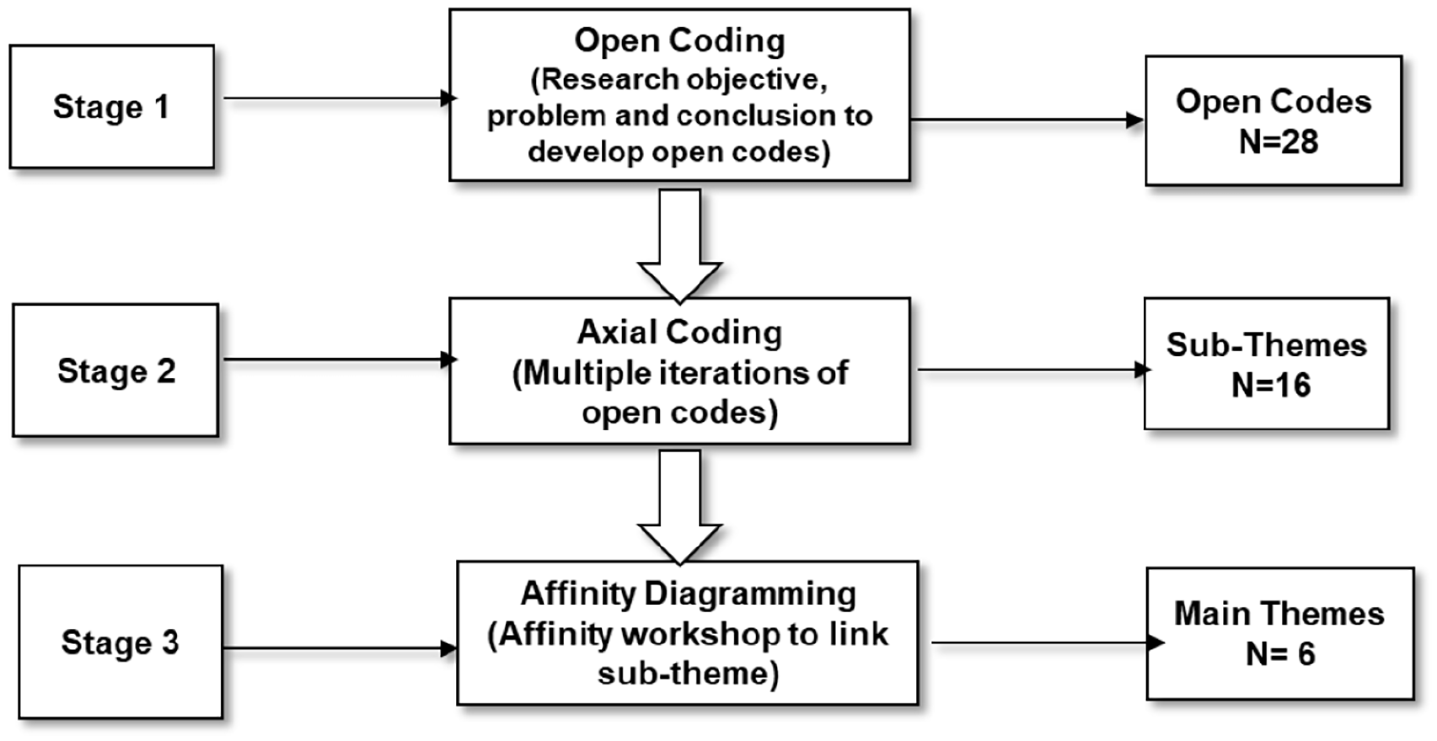
Extraction of main themes.
2.2. Review structure
The first section discusses the contextual settings and methods used by ATC studies, provides the narrative overview of six core themes of ATC research identified during the review process, reveals the research gaps in each theme and produces research questions for future studies. The next section reveals the research gaps in the theoretical underpinning, contextual setting and methods used by ATC studies in the last decade and directions for future research. The concluding remarks and limitations of the study are provided in the last section.
3. What we know about ATC – analysis and discussion
ATC has emerged as a research priority of multiple disciplines, such as paediatric research (Gearhardt and Brownell, 2013), marketing and advertising (Effertz et al., 2019), law and policy (Kunkel et al., 2014), psychology (Coates et al., 2019) and business ethics (Lee and Nguyen, 2013). ATC research provides empirical evidence to support the correlation between exposure to ATC through the different media and food preferences of children (Borzekowski and Pires, 2018); however, the causal link between food ATC and childhood obesity is still debatable (Handsley et al., 2014). The focal point is the unethical and exploitative nature of ATC, taking undue advantage of the limited ability of children to differentiate between entertainment and persuasive intent (Nairn and Fine, 2008). The debate regarding the adverse impact of ATC on the eating habits of children has picked up among the stakeholders, including academia. The growing scholarly interest in the social (Castonguay, 2019) and scientific domains (e.g. Henderson et al., 2009; Roberto et al., 2014) have uncovered the various aspects of this controversial advertising format.
3.1. Where and how – contexts, methods, and research approach
Although quantitative research techniques have been employed in ATC research since the early 2000s (e.g. Castonguay, 2019; Newman et al., 2014), most studies in the past decade have shown more reliance on qualitative techniques, particularly content and thematic analyses (Luján-García and Isabel, 2015; Roberto et al., 2014). Scholarly interest has shifted from pure experimental research designs to questionnaire surveys, focus groups and interview designs collecting data from non-probability samples (Harrison and Peralta, 2015; Motta-Gallo et al., 2013) (Table 1). There was a gradual shift in the research approach because scholars preferred advertisements aimed at children to collect data for their investigations (Padon et al., 2018). Thus, more reliance was demonstrated on determining the indirect impact of ATC. Moreover, research based on data collected directly from target units has high face validity, but it is mainly used in applied settings and is not usually subject to scientific evaluation. Except for a few notable studies (Roberto et al., 2014), most have investigated the impact of ATC from the perspective of advertisers or parents (Zeiss et al., 2019), not from the perspective of regulators or policymakers. Although most studies provided recommendations for effective regulation of ATC, only a few provided empirical inputs for evidence-based policymaking (Kunkel et al., 2014).
Methods used by reviewed ATC articles.

ATC: advertising targeted at children; ANOVA: analysis of variance; MANOVA: multivariate analysis of variance.
The studies determined that the impact of ATC was based on the respondents’ reported exposure to advertising: (a) their overall feeling about change in consumption behaviour (the self-labelling method) (Harrison and Peralta, 2015), (b) their perception of change in consumption behaviour (the behavioural experience method) (Jones, 2014) and (c) a combination of the two. In the self-labelling approach, the respondents were asked whether they felt a change in their consumption behaviour pertaining to unhealthy food items because of exposure to ATC. Most of the studies followed this approach (Harrison and Peralta, 2015; Zeiss et al., 2019). In the behavioural experience method, the participants were provided with an inventory of unhealthy food advertisements and various actions/liking/disliking pointing towards change in consumption behaviour; they then reported how frequently they watched different advertisements within a given period. Multiple sample studies have used this method in a pretest–posttest (Jones, 2014) or post test (Rifon et al., 2014) design to determine the impact of ATC on consumption behaviour. The experimental studies have generally focused on the adverse impact of ATC on young consumers’ physical health within a given time, but very few studies explored how this impact shows variation when the control variables such as peer group, parents or siblings intervene. The geographical spread of ATC research indicates that more than 60% of the studies were carried out in developed countries compared with only 21% in developing countries (Table 2). Moreover, we could find only a handful of cross-cultural studies (Newman et al., 2014).
Geographical spread of ATC research.
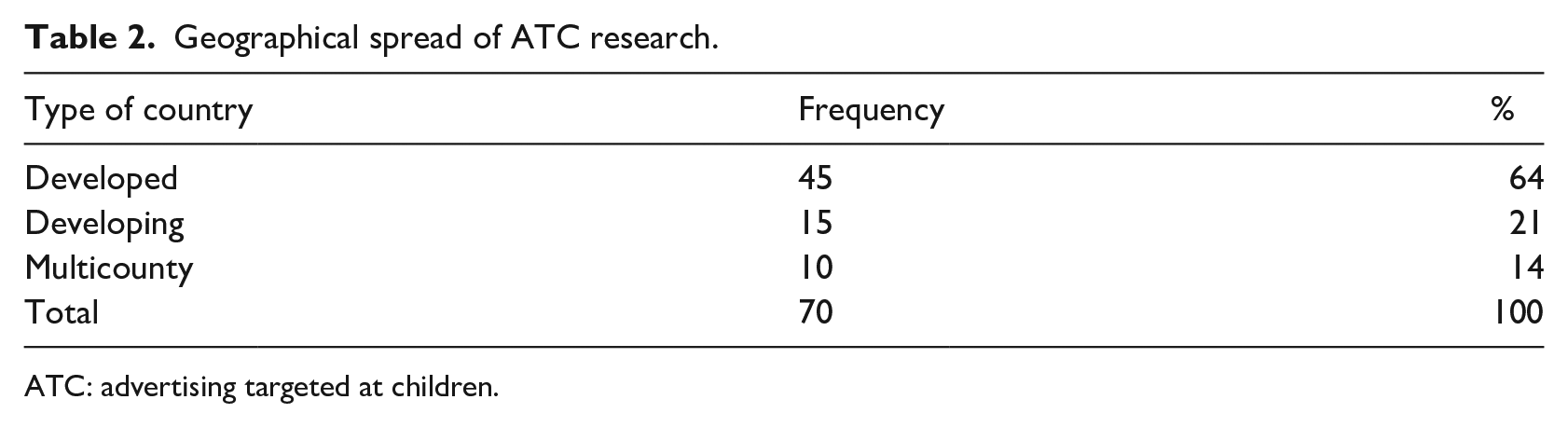
ATC: advertising targeted at children.
3.2. Core research themes and future research opportunities
After following the process of ATC research classification, we retrieved six core research themes. Table 3 maps the core research themes with their respective research focus, major findings and contributors.
Narrative overview of core research themes.
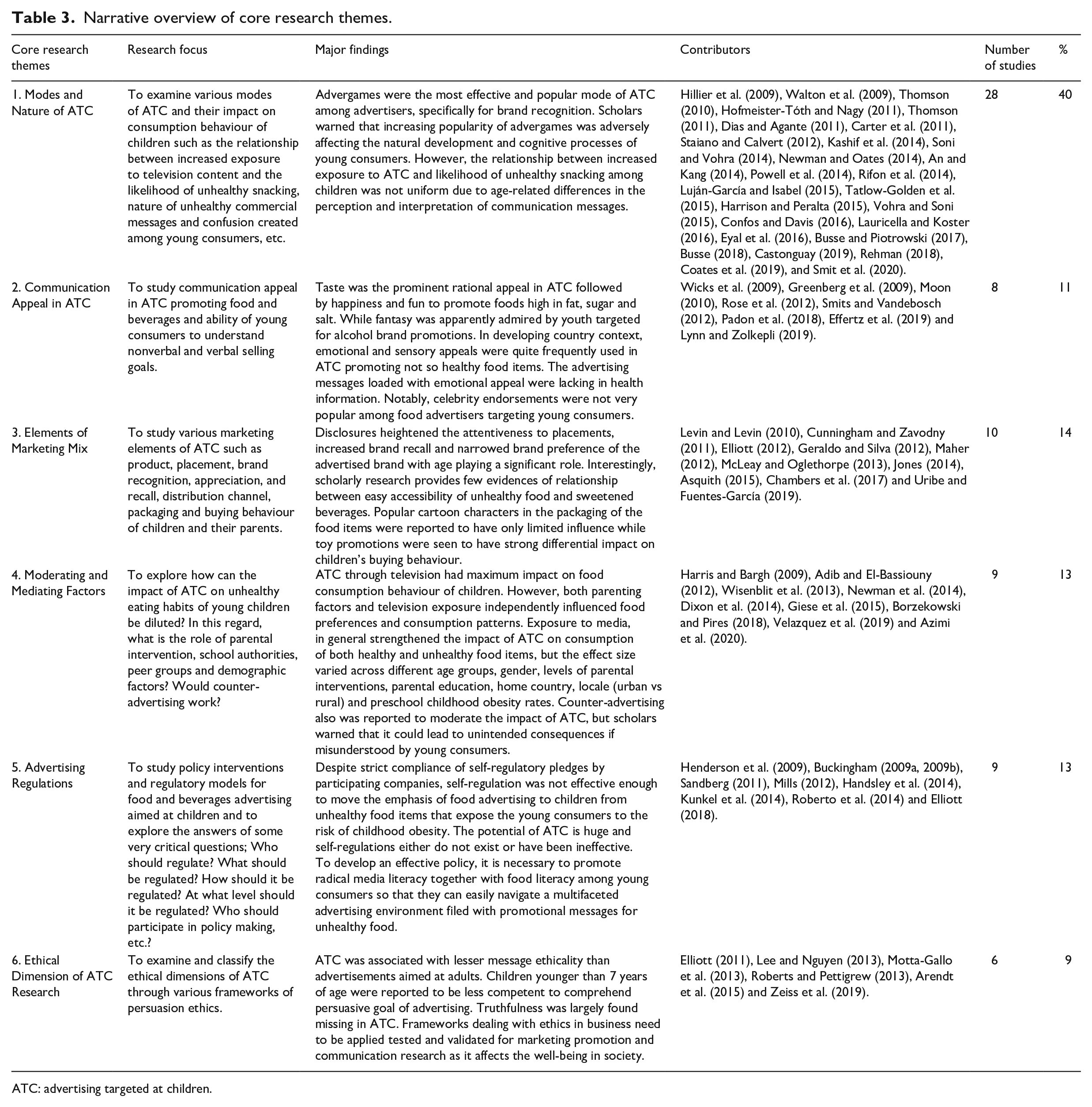
ATC: advertising targeted at children.
3.2.1. Modes and nature of ATC
ATC was traditionally performed through television, newspapers, magazines, telephone books and radio, here dominated by television advertising; the studies clearly showed the increasing popularity of interactive digital tools, specifically advergames and social media. Out of the 28 studies primarily focusing on the modes of ATC, 10 examined the impact of ATC through digital modes on unhealthy eating. In addition, scholars have attempted to examine the various issues related to the mode and nature of advertising campaigns and their effect on the consumption behaviour of children, such as the relationship between increased exposure to television content and likelihood of unhealthy snacking, regulations to guard children against contact with unhealthy commercial messages (Hillier et al., 2009), the interaction between ATC and primary school food environment (Walton et al., 2009) and the use of lexical anglicism concerning television advertisements (Busse, 2018; Busse and Piotrowski, 2017; Castonguay, 2019; Luján-García and Isabel, 2015; Rehman, 2018). Regarding the impact of digital ATC on children’s eating habits, scholarly research scanned a wide range of advertising modes, such as YouTube videos (Coates et al., 2019), digital games (Staiano and Calvert, 2012), Twitter handles promoting specific drinks (Lauricella and Koster, 2016), the impact of parental mediation (Newman and Oates, 2014), branding strategies in different digital marketing platforms (Confos and Davis, 2016; Smit et al., 2020) and the content of digital communication tools (An and Kang, 2014; Dias and Agante, 2011; Rifon et al., 2014; Thomson, 2010, 2011).
In the developing country context, ‘confectionery’ and ‘sugared and salty snacks’ comprised half of the total foods advertised (Soni and Vohra, 2014; Tatlow-Golden et al., 2015). Next to confectionery items, F&B with high sugar and fat content and games and toys had more commercials (Luján-García and Isabel, 2015). Here, frequent changes in the mode and nature of advertising campaigns created confusion among children (Rehman, 2018). Increased exposure to television content, leading to more exposure to ATC, increased the likelihood of unhealthy snacking (Busse and Piotrowski, 2017; Kashif et al., 2014). However, this relationship was not uniform because of the age-related differences in the perception of advertisements (Castonguay, 2019). Furthermore, the temporal delay between a commercial’s exposure and brand choice impacted the actual behaviour in children (Powell et al., 2014); point-of-purchase advertising also had a significant impact on F&B promotion (Busse, 2018).
Advergames were found to be the most effective and popular mode of ATC among advertisers, specifically for brand recognition. Scholars warned that the increasing popularity of advergames was adversely affecting the natural development and cognitive processes of young consumers (Hofmeister-Tóth and Nagy, 2011), but the causal relationship between ATC and unhealthy eating habits of children has yet to be established. Approximately 40% of the total reviewed studies focused on the mode and nature of ATC and their impact on the eating habits of children, without establishing cause-and-effect relationship. According to a recent World Health Organization (WHO) Report (2016), aggressive unhealthy F&B ATC is unequivocally related to childhood obesity, but the academic evidence to substantiate this argument is insufficient (United Kingdom’s Committee of Advertising Practice). This creates a difficult situation for policymakers to identify the base for new advertising regulations. Most studies relied on single observation, not repeated observations of the same variables for a shorter or longer duration, so we invite future studies to adopt longitudinal research designs. Furthermore, ATC research has adopted the ‘message effect’ approach, which explores ‘the effect of specific advertising content, in a specific medium, in a definite situation, on a particular audience’ (Chang, 2017), while the other prominent perspective in mass communication – consumer psychology – has been largely ignored. Given the stronger persuasion effect of two-way digital communication, this research prospect is even more promising. Future studies can bridge this gap by focusing on young consumers’ (children’s) cognitive and affective processes stimulated by digital media modes. We propose the following research questions for future studies:
RQ1. To what degree does digital advertising impact the unhealthy eating habits of children? Can the causal relationship between the two be established?
RQ2. How and to what extent does digital media communication trigger the perception and information processing of young consumers?
3.2.2. Communication appeal in ATC
Under this core theme, we found eight studies mainly focusing on communication appeals in ATC of F&B. The idea of using an ‘appeal’ dates back to Aristotle, who recognised the three main appeals of communication: ethos, pathos and logos, or credibility, emotion, and logic, respectively. There is a clear developmental progression in the ability of children to understand the advertising appeal and nonverbally and verbally elaborate on the selling goal (Carter et al., 2011). A wide range of appeals have been used to promote F&B through ATC, including adventure, fear, guilt, humour, love, sorrow, anger and so forth. Taste was the prominent rational appeal in ATC, followed by happiness and fun to promote F&B and high in fat, sugar and salt (HFSS) foods (Effertz et al., 2019; Greenberg et al., 2009; Lynn and Zolkepli, 2019). Fantasy was admired by youth targeted for alcohol brand promotions (Padon et al., 2018); additionally, positive attitudes towards advertisements were found when perceived manipulative intent was low and vice versa (Rose et al., 2012). In a developing country context, emotional and sensory appeals are quite frequently used in ATC. The advertising messages loaded with emotional appeals were lacking in health information (Moon, 2010; Wicks et al., 2009). Notably, celebrity endorsements were not very popular among F&B advertisers targeting children. Only two studies focused on celebrity endorsement appeals (Lynn and Zolkepli, 2019; Smits and Vandebosch, 2012).
Recent research on communication appeals in ATC have predominantly centred on emotional appeals. Other persuasive stimuli, such as functional, humour and self-expressiveness (consumption as an indicator of social status) (Sarkar et al., 2019), have not been used. Another promising research prospect emerges from the potential of self-expression in digital advertising modes. Self-expression is the degree to which the user finds the referred advertisement/advergame/brand to be expressive of his or her self-concept (Aaker, 1999). The literature shows that consumption behaviours serve as a means of self-expression, such as promoting an adopted brand through online conversations (Kokkoris and Kühnen, 2013). Here, sharing advertising videos of premium brands and online brand conversations is one of the most popular forms of self-expression among young consumers (Yang, 2018). Thus, the augmented potential of self-expression through promoting F&B online advertisements in digital advertising creates a challenge for regulators. To help policymakers, future studies can explore the impact of ATC loaded with a self-expressiveness appeal on the purchase intentions of children. We propose the following research questions:
RQ3. How does a self-expressiveness appeal in technology-enabled ATC trigger the purchase intentions of young consumers?
RQ4. What is the impact of a communication appeal in the digital mode if it changes from self-expressiveness to an emotional, humour or functional appeal?
3.2.3. Elements of marketing mix in ATC research
This cluster comprised 10 studies dealing with the various marketing elements of ATC, such as product, placement, brand recognition, appreciation and recall, and distribution channel. Packaging studies dealt with the image-related memory of the children and its correlation with nutritional position, school rank and sex, marketing supermarkets, obesity (Geraldo and Silva, 2012) and the role of packaging in shaping parents’ F&B buying behaviour (McLeay and Oglethorpe, 2013). Uribe and Fuentes-García (2019) found that an emphasis on disclosures heightened the attentiveness to placements, increased brand recall and narrowed brand preference, with age playing a significant role. A few studies measured children’s daily exposure to alcohol marketing within supermarkets (Chambers et al., 2017) and the factors predicting the buying behaviour of children in retail stores (Vohra and Soni, 2015). Interestingly, scholarly research has provided little evidence of a relationship between easy accessibility and unhealthy F&B (Cunningham and Zavodny, 2011).
Regarding the product category promoted through ATC, almost 91% of the ‘regular’ child-oriented products were found to be in the HFSS category (Elliott, 2012). According to Asquith (2015: 214), advertisers promoting the HFSS category extensively used specialised equipment to collect market-related knowledge to embed themselves in the children’s admired culture (Asquith, 2014). Emphasising the role of packaging and brand, Maher (2012) argued that children were misguided by F&B product brand names packaged with fruit-like cues and failed to differentiate between healthy and unhealthy F&B; here, healthy eating habits could be promoted when the product was of a familiar brand name. Popular cartoon characters on the packaging of F&B items had only a limited influence (Levin and Levin, 2010), while toy promotions had a strong differential impact on children’s buying behaviour (Jones, 2014).
Numerous studies focused on two marketing mix elements: product placement and brand recall; however, a number of questions remain unanswered, for example, how is ATC exploiting extensive opportunities of personalised product placement created by online data management platforms? By using ‘cookie IDs’, these platforms collect, analyse and segregate target segment data for advertisers, helping advertisers tailor the advertisements to the content viewed (contextual advertising) or characters and preferences of the target users (online behavioural advertising). Hoofnagle et al. (2012) claimed that ‘advertisers are making it impossible to avoid online tracking’. Increasing the use of cartoon characters, sports celebrities and tactics such as advergames illustrates the extensive consumption of individual child data in ATC. Therefore, we invite future studies to examine the adverse impact of personalised product placement tactics in ATC facilitated by user tracking methods. There have been some very successful placements tied with wishful identification, that is, the desire of a child to be like a sports star or TV show anchor. The advertising research has extensively explored the attributes that could be scripted to persuade target consumers (Shoenberger and Kim, 2019). However, ATC lacks these inputs from studies on the persuasive potential of wilful identification. Brand recall was usually tested through surveys and interviews by recording children’s responses. The moderating effect of some potential factors, such as moral and social norms, and socio-cultural orientation on the relationship between ATC and brand recall was not attended. Here, an individual’s response (brand recall) to advertising stimuli and resulting behavioural action (purchase intention) are significantly influenced by cultural orientation, life experiences and moral norms (Chukwu et al., 2019). To bridge these research gaps, future studies can explore the following research questions:
RQ5. What is the effect of the persuasive potential of wilful identification in personalised product placement tactics used in unhealthy F&B ATC?
RQ6. How do the cultural orientation and social norms of young consumers moderate the impact of personalised product placement tactics of ATC on the brand recall of unhealthy F&B items?
3.2.4. Moderating and mediating factors
This cluster included nine studies predominantly focusing on the variables/factors that moderate the impact of ATC on the eating habits of children. In the quest to identify the factors that could moderate the impact of ATC, scholars have attempted to answer some worthy questions: How can the impact of ATC on the unhealthy eating habits of young children be diluted? Would counter-advertising work? and so on.
Emphasising the moderating role of parental intervention, empirical research has reported that parents do not know much about the negative consequences that materialism could have on their children. Indirect mediation has the strongest prediction for child materialism (Adib and El-Bassiouny, 2012). Scholars have claimed that nurturing mothers were very aware of the impact of ATC on the eating habits of children; they discussed more with the children about ATC and consumption habits than authoritarian mothers (Wisenblit et al., 2013). Azimi et al. (2020) found that ATC through television had a maximum impact on the F&B consumption behaviour of children. However, both parenting factors and television exposure independently influenced F&B preferences and consumption patterns (Harris and Bargh, 2009).
Another factor impacting the association between ATC and the eating habits of children was ATC done in the schools. It has been found that secondary schools were predominantly used for outdoor F&B advertisements compared with elementary schools. Exposure to media, in general, strengthened the impact of ATC on the consumption of both healthy and unhealthy F&B, but the effect size varied across different age groups, genders, levels of parental interventions, parental education, home country, locale (urban versus rural) and preschool childhood obesity rates (Borzekowski and Pires, 2018; Giese et al., 2015; Newman et al., 2014). Counter-advertising was reported to moderate the impact of ATC, but it could lead to unintended consequences if misunderstood by young consumers (Dixon et al., 2014).
The use of moderators in ATC research has been limited to few factors, such as parental interventions, supervision of school authorities and peer pressure. The digital era itself has progressed from traditional websites and click link web browsers to integrated social media platforms and from desktops to tablets, mobile phones and smart watches. These developments have profoundly exposed young consumers to ATC on newer media platforms at any time and place. A recent study concluded that the primary choice of children for screen viewing is no longer television (Elias and Sulkin, 2017). Even among toddlers, watching online videos has been observed as a normative behaviour (Radesky et al., 2015). Future studies may consider contemporary media types as moderators to provide meaningful inputs for regulators. Similarly, product type can be another useful moderator because previous studies mainly focused on only one product category (Rhodes, 2017). It would be interesting to examine the variation in the impact of ATC across different product categories. Future studies can extend our knowledge about the ways to reduce the harmful impacts of ATC by exploring the following research questions:
RQ7. What is the moderating impact of digital media type and product type on the overall impact of ATC on the unhealthy eating habits of children?
RQ8. What is the mediating effect of exposure time of newer media platforms on the relationship between ATC and unhealthy eating habits of children?
3.2.5. Advertising regulations
This cluster of articles comprised seven publications from multiple disciplines, such as marketing, children’s rights, social science, consumer psychology and public policy. Policy and governance-related issues have been continuously attracting the attention of academicians. This cluster primarily discusses policy interventions and regulatory models for F&B advertising aimed at children. The studies attempted to answer the following: Who should regulate? What should be regulated? How should it be regulated? At what level should it be regulated? Who should participate in policymaking?
The policies and regulations of ATC have been deliberated on from the perspective of governance and public health strategies. Both viewpoints value the importance of informed policy and legal interventions while endorsing the significance of self-regulation and self-reflection on their marketing and advertising practices to meet their ethical obligations (Henderson et al., 2009). From the viewpoint of governance, children’s rights cannot be deliberated and implemented without knowing the basic lived realities of childhood. Therefore, the policy inquiry starts by asking what is being offered to children to eat every day (Mills, 2012). Handsley et al. (2014) raised a question regarding why advertisers should not consider developing children as consumers as a form of economic abuse; they strongly supported strict regulations of F&B advertising for the deterrence of its hostile impact on child health. Kunkel et al. (2014) found that despite strict compliance with self-regulatory pledges by participating companies, self-regulation was not effective enough regarding curtailing F&B advertising to children; they argued that the potential of unhealthy F&B marketing targeting children is huge, and self-regulation either does not exist or have been ineffective. Although some countries have enforced marketing and advertising laws, this domain remains self-regulated. The United Nations (2014) concluded that the self-regulatory approach leads to unsatisfactory implementation, discrepancies in enforcement and legal ambiguity for the industry and people. The World Cancer Research Foundation International (WCRFI, 2020) strongly argued to design a robust regulatory framework to implement governmental restrictions on unhealthy food ATC, for those who are under 18.
The literature reveals conflicting perspectives on the role of different stakeholders (the state, academicians, industry, parents and policymakers) in regulating the adverse impact of unhealthy F&B ATC (Henderson et al., 2009; Lawrence, 2004). However, the strength of probable policy solutions has been diluted by political expediency and the wider construction of young consumers (Buckingham, 2009b). It is now about 30 years since scholars sounded the need for pragmatic academic engagement with public policy in behavioural science and culture studies, particularly in the policymaking process. However, there is limited evidence of including academicians and expert groups in the policy formulation process (Buckingham, 2009a). Henderson et al. (2009) noted neoliberal principles in contradictory arguments that majorly supported governmental regulations while indorsing the significance of the ethical obligations of industry (self-regulation) and moral responsibility of parents. The partnership of behavioural scientists, legal experts and policymakers has tremendous potential to develop effective children’s health policy (Roberto et al., 2014). Because advertising policy aims to diminish the adverse effect of F&B advertising, understanding the competencies of young consumers and reflecting on the social and symbolic meanings of promotional messages and advertising items for them is key (Elliott, 2018). Furthermore, it is crucial to promote radical media literacy together with F&B literacy among young consumers so that they can easily navigate a multifaceted advertising environment (Elliott, 2018). However, regulating unwelcome advertising practices has become even more difficult. The variability and unlimited nature of the Internet poses tough questions for regulators and policymakers. How should national law monitor, sanction and regulate a transitional medium? Is it possible to regulate technology-aided advertising at a national level, or is a cross-border intervention is required? (Sandberg, 2011).
Policy and regulatory interventions here are extremely critical. Our analysis confirmed that most of the studies focusing on the regulatory aspects of ATC are limited to developed economies (Roberto et al., 2014), especially the United States (Elliott, 2018). Developing countries’ regulations are quite different and deserve the attention of scholars. Moreover, recent ATC research has overlooked the regulatory issues of amalgamated advertising formats (online and offline). This is another critical gap of ATC research because these formats dissolve the legal boundaries and complicate regulatory issues. We suggest that future studies answer the following research questions:
RQ9. In the digital era, what are the peculiar regulatory issues and unique considerations of ATC in developing countries? To what extent do advertising regulations make a difference in ATC’s overall impact on the eating habits of children?
RQ10. How can amalgamated formats of technology-powered ATC in a borderless legal environment be regulated?
3.2.6. The ethical dimension of ATC
Ethics has not yet been considered as an integral aspect of ATC research, with only a small cluster of only six studies being published in the last decade. Although few studies theoretically or empirically examined the ethical dimension of ATC, it has been a part of ATC discussion in a limited way. Many previous works have studied the ethical framing of ATC, emphasising the need to apply frameworks of ethics in business in ATC research (e.g. Lee and Cheng, 2010; Roberts and Pettigrew, 2013). Lee and Nguyen (2013) examined the ethical dimensions of ATC through the five main beliefs of the truthfulness, authenticity, respect, equity and social responsibility (TARES) (Baker and Martinson, 2001) framework of persuasion ethics. Through a five-part check, this framework establishes ethical margins for persuasive messages, including advertising and public relations. However, TARES does not address the ethical responsibility of the message receiver. Children younger than 7 years of age were reported to be less competent in comprehending the persuasive goal of advertising than older children (Zimmerman and Bell, 2010).
ATC was associated with less message ethicality than advertisements aimed at adults. Truthfulness was found to be missing here. Roberts and Pettigrew (2013) explored the features influencing children’s diets, especially those that could contribute to suboptimal eating and childhood obesity. ATC played a role in teaching/reinforcing psychosocial eating. Studies have reported the parent’s role based on their view of the inappropriateness of child-targeted food marketing (Zeiss et al., 2019). Elliott (2011) found that ‘kids’ food’ and ‘adult food’ can contain transgressive elements.
Frameworks dealing with ethics in business need to be applied, tested and validated for marketing promotion and communication research. Previous studies have questioned the teleological approach to ethics in persuasive communication because the main determinant of ethicality in a message is limited to the consequences or outcomes. Therefore, following the deontological approach of ethics in persuasive communication messages, which suggests that a message must be evaluated for its intrinsic moral worth instead of its outcome only, was recommended (Kirby and Andreasen, 2001). A deeper and clearer understanding of the deontology of ATC is critically important for elucidating the socially responsible behaviour of advertisers targeting children. Most recent research has followed the teleological approach and limited their work to just determining the outcomes of ATC on consumption behaviour or the health of children. Because children (Cawley, 2006) are not rational consumers, future studies should concentrate on the deontology approach to examine the ethical and moral responsibility embedded in the communication message of ATC. In addition, in the fast developing digital advertising era, scholars should raise caution of emerging critical ethical issues. There is ample evidence of the extraction and manipulation of children’s personal information by advertisers and data aggregator platforms. This information is used to maximise the impact of tailor-made, highly emotion-focused advertising on the most vulnerable audiences. Unlike traditional broadcast media, the decisions and data of these real-time online experiments on human behaviour are not known to either users or regulators because they are conducted in a nontransparent black box (Pasquale, 2015). Scholars can suggest methods and metrics to ensure external oversight of advertisers’ manipulation of the personal data and algorithm activities of platforms (Bolluyt, 2017). Future studies may explore the systems to ensure adequate transparency in the collection and use of personal user data for internal advertising research, whether personalised or contextual.
Overall, despite the public’s and regulators’ attention and the literature documenting the adverse effects of ATC – and even more serious ethical issues associated with digital ATC – there is a scarcity of research on the ethical dimension. We propose the following research questions for future studies:
RQ11. How can the deontological approach towards ethics be applied to determine the intrinsic moral worth of persuasive communication messages in ATC instead of its outcomes?
RQ12. How can business ethics frameworks such as ‘self-regulation’, ‘corporate social responsibility’ or ‘corporate citizenship’ be tested and validated in marketing and communication research?
RQ13. What are the ethical concerns of ATC in the digital era pertaining to the use of personal user data? How can we determine the ethical responsibility of businesses for in-house advertising research?
4. What we do not know
4.1. Future research directions – theory
The existing ATC literature dominated the persuasive/selling intent of advertising rather than informative/assistive intent (Azimi et al., 2020; Carter et al., 2011; Cunningham and Zavodny, 2011; Moon, 2010). There is a need to develop new communication frameworks with an interdisciplinary approach and that can be applied to the changing face of traditional to digital media. For example, cultural differences are prominently reflected in advertising practices and their impact on purchase intentions; it is pertinent to use social science models of culture to measure the true impact of ATC in different digital cultural contexts (Choi and Miracle, 2004). Scholars can use the six dimensions of Hofstede’s model of culture to facilitate cross-cultural research, as proposed by RQ6. Another potential theoretical area would be to study the impact of the speed of communication over distance to a point now negligible compared with earlier media options. This would create a difference in the way communication effects happen. The facets model of communication is an all-inclusive framework that could be used to study the communication effects of advertising and promotion on children. Perception, beliefs and attitudes have been touched upon for research on ATC through traditional mediums, yet there is a need to develop theoretical frameworks that can explain how these effects are created in digital mediums, especially questioning ritual theory, which suggests that audience attachment to a communication medium has an effect on consumption. ATC studies have refrained from using multiattribute models. Because attitude plays a crucial role in the causation of a behaviour (Desai and Desai, 2013), decision-making studies built on multiattribute attitude models can be helpful in exploring on the causation effect of ATC both regarding old and new media. The development of Web 2.0 as a platform has changed the nature of interactivity and unleashed a new universe of user-generated media. The impact of consumer-to-consumer communication in a many-to-many space has created new opportunities for researchers to study the impact of communication on ATC and organisational branding. There is a need to study the changes in consumer decision making. The five stages of the consumer decision-making model are the diagrammatic representation of the consumers’ cognitive stages of the purchase decision-making process; this model is particularly useful for emotional or habitual purchases, as in F&B purchase decisions by children (Solomon, 2002). However, the impact of digitalisation on the five stages needs to be taken up by scholars to help understand the psychological processes across each stage concerning the impact of ATC on stage-wise cognitive processes and the possible unusual changes occurring at different stages. Traditional consumer involvement models can be tested in the research on advertising and promotion directed at children’s food-related behaviour for both traditional and digital advertising. Future studies can analyse the best fit of the above recommended models and apply them to explore RQ1 to RQ5.
In line with previous studies (e.g. Confos and Davis, 2016; Hofmeister-Tóth and Nagy, 2011), future research should focus on theory building on brand engagement and F&B marketing regarding digital strategies. It is key to develop some theoretical models to study the purchase journey of children in response to different branding appeals made through digital modes such as gaming websites, Twitter handles and Facebook. Without a strong theoretical underpinning, it would be difficult to validate and generalise the findings of empirical studies across different products and contexts. Therefore, we propose RQ7 for future studies. Similar research directions have been set by Hofmeister-Tóth and Nagy (2011) and Castonguay (2019) about validation and generalisability.
4.2. Future research directions – context and method
Most recent scholarly ATC literature has been approached from the perspectives of advertisers and parents. There is a need to take a more holistic view. The ATC research domain should be explored from the perspective of other stakeholders, such as regulators, law and policymakers and young consumers. Most research used cross-section research designs. Despite providing useful information about the relationship between ATC and childhood obesity, this approach is limited because it does not establish a causal relationship (Nielsen and Einarsen, 2018). This is probably because cross-sectional studies may establish a concomitant variation in two variables, but they cannot conclude a causal relationship (Dalton et al., 2017). Previous cross-section studies based on one-time observations have shown a simultaneous increase in exposure to ATC and the intake of unhealthy F&B but cannot establish that ATC exposure preceded intake. Therefore, to validate causality, future research should attempt to conduct longitudinal studies in which the results are based on multiple sets of observations collected over a longer period.
Findings are inadvertently affected by the data collection process if the data are collected under inappropriate settings. For example, experiment/laboratory/control settings are inappropriate for studies in which there is a high probability of the researcher unintentionally influencing the experimental scoring procedure (experiment bias) (Gersten et al., 2005). Experimental studies on ATC in control settings fall in this category. Therefore, future investigations should be based on data collected in natural settings so that experiment bias can be controlled (Einarsen et al., 2011). Another difficulty in experimental studies is assigning the participants to experiment and control groups. The optimal way to do this is through random assignment. However, this is not possible in all situations (Gersten et al., 2005). In such cases, researchers can use quasi-experimental designs, assigning participants based on convenience, strata and so forth. This approach will help control the experiment and reporting bias.
Although past studies have focused on the moderating and mediating effects of interventions on the relationship between ATC and health hazards, very few attempts were made to develop a theoretical foundation. Future exploratory studies should direct their efforts towards the moderating effect of other potential variables, such as peer pressure and social and cultural orientation. Regarding parents, scholars have raised concerns about different F&B marketing campaigns that extend to non-mediated environments (Kashif et al., 2014; Newman and Oates, 2014). Parental strategies to deal with the potential adverse effects of advergames open up another potential area of research (Hofmeister-Tóth and Nagy, 2011).
The impact of advertising is subject to the constraints and opportunities offered by its contextual settings, and ATC is no exception. Future studies can employ the above suggested methodological tools and research design in a variety of contextual settings to examine the impact of ATC from different theoretical lenses. Despite being a socially fabricated phenomenon (Frith, 1998), the ATC literature is not adequately enriched by social and cultural insights (Emery and Tian, 2010). The culture orientation is critical in developing the perceptual and behavioural response of consumers towards advertising messages because it denotes their motivational mechanisms (Berger, 2015). More studies are required to obtain a complete view of competitive landscapes and forecast developments of global F&B markets (Effertz et al., 2019).
Another contextual setting is the country of origin of young consumers (e.g. developing countries/economies, developed economies). The country of origin determines the country/region-specific characteristics that either facilitate or restrict children’s exposure to different modes of advertising. We found only a handful of studies conducted in developing countries (21%). Once considered a high-income developed countries’ problem, childhood obesity is rapidly increasing in middle-low income developing countries (WHO, 2019). Therefore, future studies are warranted here. There is a need to develop preventive health policies in developing countries; hence, health educators and authorities should consider how to develop and run media literacy programmes to educate children and promote healthy eating habits. The integrated marketing communications approach proposed by Schultz and Schultz (1998) can be effectively used to emphasise features such as ‘one sight, one sound, one concept’ (Lynn and Zolkepli, 2019).
This contextual lens will uncover the varying challenges for regulators and policymakers of developed and developing countries/economies. Finally, studies can bring together a multitude of these contexts to study ATC, examining ethical framing, regulatory aspects, impact, the effectiveness of advertising modes and outcomes.
5. Conclusion and limitations
Our study has provided a holistic overview of the scholarly contributions on the ethical framing of ATC research published in the last decade. The current SLR has highlighted the various theoretical and contextual settings that scholars have used to examine the different modes and persuasive techniques in ATC and their impact on consumption behaviour, eating habits and overall health of children. Although the reviewed articles tackled unique aspects and research agendas, we found six core research themes that were extensively explored in the last decade.
Although these scholarly works have developed our understanding of the overall impact of ATC, there is a need to develop an interdisciplinary theoretical approach to obtain deeper insights. We reiterate the need for developing a holistic view of ATC research, including several stakeholders such as regulators, law and policymakers besides parents and advertisers. Future study designs should include longitudinal studies to understand the long-term effects on young consumers. Despite several studies and empirical findings, in an era of technological disruptions, ATC and its ethical framing remain a promising and contemporary topic for further exploration.
We produced potential research questions and concrete directions for future research. Our analysis underscores the use of the deontological approach of ethics in persuasive communication messages because the approach is ideally suited to study the ethicality of message content and intrinsic moral worth. Given the difficulty for policymakers in framing a generalised policy to regulate ATC, self-regulations for persuasive communication content are more pertinent. Therefore, we encourage future studies to study the deontology of ATC and provide recommendations to advertisers for effective self-regulation.
The current study has offered an overview of the research on ATC, along with research themes and gaps identified for future research. The study adopted a rigorous methodology to carry out the SLR, but there are some limitations. First, a protocol was made to extract a sample of articles from the appropriate online databases, and some keywords were used for this reason. Some potential articles might not have been filtered if the search keywords were not included in the text. Furthermore, other relevant articles published in journals not Social Sciences Citation Index (SSCI) indexed might not have been included. Also, the study considered only peer-reviewed articles published in high-impact factor journals. Books, book chapters and conference proceedings were not included. Despite these limitations, the present study provides a snapshot of ATC research over the last decade, highlights the research gaps and distils research questions for future studies on ATC.
Supplemental Material
sj-docx-1-aum-10.1177_03128962211059579 – Supplemental material for Research on unhealthy food and beverages advertising targeting children: Systematic literature review and directions for future research
Supplemental material, sj-docx-1-aum-10.1177_03128962211059579 for Research on unhealthy food and beverages advertising targeting children: Systematic literature review and directions for future research by Ritu Srivastava and Parul Gupta in Australian Journal of Management
Footnotes
Acknowledgements
Not available
Final transcript accepted 23 October 2021 by Nitika Garg (AE Marketing).
Declaration of conflicting interests
The author(s) declared no potential conflicts of interest with respect to the research, authorship, and/or publication of this article.
Funding
The author(s) received no financial support for the research, authorship, and/or publication of this article.

Supplemental material
Supplemental material for this article is available online
References
Supplementary Material
Please find the following supplemental material available below.
For Open Access articles published under a Creative Commons License, all supplemental material carries the same license as the article it is associated with.
For non-Open Access articles published, all supplemental material carries a non-exclusive license, and permission requests for re-use of supplemental material or any part of supplemental material shall be sent directly to the copyright owner as specified in the copyright notice associated with the article.
