




Abstract
Supply chain resilience (SCRES) plays an important role in dealing with disruptions in a highly turbulent business environment and has received a fair amount of attention from industry and academia. This study explores the relationships among control mechanisms (process, social, and outcome control), SCRES (proactive and reactive resilience), and sustainability performance (economic, environmental, and social performance). Structural equation modeling is used to analyze data collected from 322 Chinese manufacturing firms. This study finds that process control and social control have a positive impact on the two dimensions of SCRES, while outcome control has no significant impact on SCRES. Proactive and reactive resilience both have a significant positive impact on the three dimensions of sustainability performance. The results deepen the understanding of the enablers and performance of SCRES. They also provide managerial insights into how to use control mechanisms to build SCRES capability for sustainable development.
JEL Classification:
Keywords
1. Introduction
The COVID-19 pandemic in 2020 not only reduced the sales revenue and market value of enterprises but also interrupted most manufacturing supply chains. The large-scale supply chain fracture has affected the normal operation of enterprises globally both widely and deeply and has had an adverse impact on surrounding industries and even the overall economic situation of countries. The World Bank estimates that the supply chain disruption caused by COVID-19 will lead to a 5% reduction in gross domestic product (GDP), or approximately 3 trillion US dollars (Gu and Huo, 2020). According to Trend Force’s investigations of the impact of COVID-19, light-emitting diode (LED) revenue decreased by a rarely observed magnitude, and global smartphone production decreased by a record-breaking 11% in 2020. Supply chain resilience (SCRES) is therefore attracting more attention, especially from companies with a global footprint (Ji et al., 2020).
SCRES refers to a fundamental attribute in firm management dealing with potential supply chain disruptions, such as factory fires or the loss of critical suppliers (Brusset and Teller, 2016). Scholars have analyzed SCRES from different perspectives, including the phases of resilience (preparation, response, recovery, and growth) (Cheng and Lu, 2017; Chowdhury, 2016), resilience strategies (proactive and reactive) (Cheng and Lu, 2017), and the capabilities needed for resilience (flexibility, robustness, agility, resistance, buffering, adaptability, and visualization) (Wieland and Wallenburg, 2013). This study identifies SCRES as the strategy of preparing for and responding to supply chain disruptions and divides SCRES into proactive and reactive resilience. Proactive resilience is the ability to maintain the function and continued operation of a supply chain despite disruption through advanced planning (Stonebraker et al., 2009), and reactive resilience refers to the capability to respond quickly once unexpected changes and contingencies occur (Wieland and Wallenburg, 2013). In practice, because organizational resources are limited, comprehensively improving all aspects of supply chain resilience is impossible. This study provides great practical significance in exploring how and which strategy (proactive or reactive) works and in guiding firms to effectively allocate resources.
Meanwhile, as increasing attention is being paid to environmental protection and resource savings, firms are driven to incorporate sustainability into their strategy formulation. Sustainability—including economic, environmental, and social aspects according to the TBL (triple-bottom-line) principle—has become increasingly prominent in the field of supply chain management (Kusi-Sarpong et al., 2019). Scholars have attempted to establish the relationships between SCRES and sustainability performance. Most studies have shown that SCRES can improve financial (Li et al., 2017), operational and economic (Ruiz-Benitez, 2018), and product innovation performance (Brusset and Teller, 2016), while some studies have indicated that resilience implies the building up of inventories, which may lead to higher costs (e.g. Fahimnia et al., 2019). Perera et al. (2017) indicated that agility and elasticity, as two SCRES dimensions, have no impact on economic sustainability, but have a positive impact on environmental and social sustainability. Negri et al. (2021) pointed out that a resilient response to some disruptions (e.g. COVID-19) may result in further sustainable development. Therefore, this paper empirically explores the relationship between two SCRES strategies and three dimensions of sustainability performance comprehensively and systematically. Overall, the first research question is as follows:
RQ1. What are the effects of proactive and reactive resilience on sustainability performance (including economic, environmental, and social performance)?
Because SCRES is important for improving performance, how to improve SCRES has become a hot research topic. The extant literature has indicated that joint and coordinated supply chain relationships are essential for developing stronger SCRES capabilities (Durach and Machuca, 2018; Scholten and Schilder, 2015). However, based on governance theory, supply chain relationships are always characterized by inconsistent goals, conflicts of interest, and opportunistic behaviors, which require control mechanisms to ensure interorganizational relationship development and effective coordination between supply chain partners (Li et al., 2010; Liu et al., 2010; Schultz et al., 2013; Stouthuysen et al., 2012) and thus resist supply chain disruptions. Previous studies have recognized that some attributes of the relationship influence resilience. For example, communication can promote joint problem-solving and improve SCRES, and trust plays a significantly positive moderating effect (Faruquee et al., 2021). Jia et al. (2020) confirmed the effects of social capital on proactive and reactive resilience. How the control mechanisms of supply chain relationships affect SCRES is rarely discussed, which leaves us with a research gap.
The control mechanism refers to relationship arrangements between organizations that regulate partners’ behavior and encourage communication (Li et al., 2010; Liu et al., 2010). Generally, the literature divides control mechanisms into formal and social. Formal control relies on establishing and applying formal rules and procedures to monitor and reward performance (Germain et al., 2008). Social control involves socially based utilizing norms, mechanisms, shared preferences, and values (Li et al., 2010). Furthermore, formal control is divided into two types: process and outcome (Schultz et al., 2013). Firms applying the outcome control mechanism clearly stipulate to their supply chain partners appropriate targets, such as quality, functional specifications, delivery times, and budget. Firms adopting the process control mechanism usually specify the activities and procedures supply chain partners should use to achieve goals, observe and evaluate partners’ behavior through weekly progress reports and periodic meetings, and provide improvement suggestions through periodic evaluations (Liu et al., 2010). In summary, considering the important role of control mechanisms in supply chain relationships, this study empirically investigates the distinct effects of three control mechanisms on SCRES from a control perspective. Therefore, the second research question is as follows:
RQ2. What are the effects of process, outcome, and social control on SCRES (including proactive and reactive resilience)?
To answer the above research questions, the relationships among control mechanisms, SCRES, and sustainability performance were analyzed theoretically. A survey of Chinese manufacturing firms was then conducted to collect the data, and structural equation modeling (SEM) was applied to analyze the data and evaluate the relationships. The results indicate that process and social control have a positive impact on SCRES, while outcome control has no significant impact on SCRES. Proactive and reactive resilience both have a significant positive impact on the three dimensions (economic, environmental, and social dimensions) of sustainability performance. The findings contribute to the related research in two ways. First, based on the TBL principle, we explore the impact of SCRES on three aspects of sustainability performance: economic, environmental, and social sustainability. The results will deepen the understanding of SCRES performance implications. Second, we establish a connection between control mechanisms and SCRES. The results reveal the distinct role of three control mechanisms and therefore provide new insights into how a resilient supply chain can be established holistically.
2. Theoretical background and hypotheses
2.1. Control mechanisms and supply chain resilience
Firms adopting process control mechanisms specify and articulate the procedures and methods that their partners should follow to achieve a goal (Lumineau and Henderson, 2012). This situation implies that a focal firm needs to collect information and knowledge to reduce any ambiguity in supply chain entities, activities, and processes (Stouthuysen et al., 2012) and therefore better understand its partners’ operational structure (Kim, 2014). Structural clarification increases the visibility of risks along the supply chain. Visibility has been recognized as a key factor for the proactive capability of resilient supply chains; it enables the detection of potential disruptions and improves transparency before incidents occur (Mubarik et al., 2021a; Zouari et al., 2020). Generally, a supply chain with high visibility is considered better prepared for potential risks and disruptions. Thus, process control can improve proactive resilience capability by improving visibility (Jia et al., 2020; Liu, 2015).
Moreover, the process control mechanism, which includes developing specific rules and procedures and monitoring supply chain partners’ behaviors, can reduce the misinterpretation of various actions (Kim, 2014), unrealistic optimism, opportunism, and conflicts (Lumineau and Henderson, 2012). Stouthuysen et al. (2012) point out that process control supports the timely detection of small deviations in the production process. Thus, early signals of possible disruptions can be identified and addressed before they escalate into uncontrollable events (Zouari et al., 2020). Through feedback and modification, the operational system can begin to run efficiently again (Mubarik et al., 2021a), and proactive resilience can be ensured. Therefore, the following hypothesis is proposed:
H1a. Process control has a positive impact on proactive resilience.
Reactive resilience requires a focal firm to think and act quickly when it encounters disruptions. Process control focuses on monitoring suppliers’ behaviors and activities through direct observation, weekly progress reports, and periodic meetings. These control arrangements provide a constructive and periodic dialogue (Stouthuysen et al., 2012) to enable quick recognition of a disruptive event once it occurs (Jia et al., 2020). Process control can also enable firms to respond and change quickly because the feedback from the focal firm necessitated by process control provides access to timely, high-quality information and practical business advice (Langer and Mani, 2018). This information supports the response to disruptions by facilitating the joint development of solutions for managing unanticipated changes (Jia et al., 2020). Moreover, process control creates a common understanding of who is responsible for a specific task through standard procedures and comprehensive plans (Langer and Mani, 2018). Consequently, through timely information exchange and clear responsibilities, process control can improve the capability of a supply chain to respond to unexpected events, and quick response capability is an element of reactive resilience (Jia et al., 2020). Therefore, we formulate the following hypothesis:
H1b. Process control has a positive impact on reactive resilience.
Firms that employ outcome control in buyer–supplier relationships need to specify targets—such as quality, functional specifications, delivery times, and budget (Stouthuysen et al., 2012)—to minimize the moral hazard of partners and reduce internal disruption (Langer and Mani, 2018). A clear description of performance goals forces supply chain partners to proactively find all possible ways of avoiding errors and delays (Rijsdijk and Van den Ende, 2011). In addition, a focal firm can link rewards or punishment to goal achievement (Liu, 2015), which drives supply chain partners to take responsibility for their performance. A focal firm gives supply chain partners an incentive to prepare for potential disruptions (Jia et al., 2020). Hence, supply chain performance should not be seriously off target even in emergency situations, which is an important characteristic of proactive resilience (Cheng and Lu, 2017). Therefore, we formulate the following hypothesis:
H2a. Outcome control has a positive impact on proactive resilience.
Outcome control allows supply chain partners to decide how to achieve specified goals (Stouthuysen et al., 2012). A focal firm provides partners considerable discretion (Langer and Mani, 2018) and delegates them decision-making authority. Without redundancies or unnecessary management activities across organizational boundaries, outcome control can improve the speed with which supply chain partners deal with unexpected events (Rijsdijk and Van den Ende, 2011) and then enable partners to quickly find solutions that minimize the effects of disruption. Moreover, as outcome control focuses on final results, supply chain members do not fall into aimless chaos; rather, when they face disruptions, they focus on key performance indicators and develop coping strategies oriented by the final goal (Liu et al., 2017). Consequently, clear outcome targets and flexible decision-making processes support quick responses to disruptions and enable firms to recover from disasters in a timely manner ( Jia et al., 2020; Li et al., 2017), which is a manifestation of reactive resilience. Therefore, the corresponding hypothesis is proposed as follows:
H2b. Outcome control has a positive impact on reactive resilience.
Social control facilitates the flow of reliable and diverse information by establishing a relationship characterized by a high frequency of interactions and communication among partners (Mubarik et al., 2022). Since information exchange enables firms to proactively identify potential disruptions that may hamper their performance (Jia et al., 2020; Li et al., 2017; Rijsdijk and Van den Ende, 2011), firms are better prepared to retain operating stability and robustness (Li et al., 2017), which reflects the proactive resilience of the supply chain to some extent. A high level of trust is another major characteristic of social control. It allows a focal firm to assume that supply chain partners will act in accordance with the interests of both parties and will not exhibit opportunistic behavior. In contrast, the absence of trust among supply chain partners leads to less transparency. Therefore, social control can reduce the occurrence of conflicts and further facilitate supply chain stability. A supply chain that can maintain its operational stability is more proactively resilient (Li et al., 2017). According to these arguments, the following hypothesis is proposed:
H3a. Social control has a positive impact on proactive resilience.
Social control advances the transfer of valuable, reliable, and even tacit knowledge and information through close communication among supply chain members (Ji et al., 2020; Stouthuysen et al., 2012). On the one hand, knowledge and information sharing can enhance decision-making capabilities so that firms can respond rapidly to supply chain disruptions (Mubarik et al., 2021). On the other hand, interorganizational learning from acquired experience and knowledge generates creative and innovative ideas to deal with the unexpected events that occur in a supply chain (Ji et al., 2020). Reactive resilience highlights the capability to quickly respond to and bounce back from disruptions (Jia et al., 2020). Therefore, the enhanced decision-making capability and innovation competence resulting from social control are beneficial for building reactive resilience.
In addition, by adopting the social control mechanism, supply chain partners embrace similar cultures, values, and visions; adopt similar problem-solving approaches; and commit to achieving common goals. Once disruptions occur, a strong sense of identification between supply chain partners supports timely collaboration (Jia et al., 2020), and any disagreements on quality standards, specifications, time, or price can be addressed quickly (Wieland and Wallenburg, 2013). Furthermore, a mutual understanding and strong communication among partners simplify decision-making processes by preventing tedious and unnecessary procedures and rules (Kim, 2014). This situation allows firms to act faster and more effectively in coping with unexpected events, that is, they become more reactively resilient. Therefore, the following hypothesis is presented:
H3b. Social control has a positive impact on reactive resilience.
2.2. Supply chain resilience and sustainability performance
The implementation of proactive resilience generally occurs in the preparation stage, before disruptive events occur (Wallace and Choi, 2011). To maintain supply chain function and continuous operation, firms need to enhance their capability to prevent disruptions or to withstand the impact of potential changes (Tang, 2006). A firm with a high level of proactive resilience has made sufficient supply chain preparations, such as the formulation of emergency plans. Such a firm can avoid economic losses caused by emergencies (Christopher and Peck, 2004). In addition, proactive resilience often requires supply chain partners to jointly take measures against disruptions in advance toward a common goal (Bode and Macdonald, 2016). Once risk events occur, partners collaborate to optimize value creation at the supply chain level (Carvalho et al., 2012). Furthermore, a firm’s economic performance can be improved. The following hypothesis is proposed:
H4a. Proactive resilience has a positive impact on economic performance.
Proactive resilience typically involves the establishment of an early warning system for disruptions (Stonebraker et al., 2009), which is highly effective for preventing and controlling environmental accidents. An early warning system works in the preparation stage before potential disruptions occur. Relevant environmental information is collected, the evolution of environmental risks is monitored, and deviations caused by risks are identified. Then, decision-making departments are alerted, and corresponding control measures are taken before an environmental accident occurs. This system can guarantee environmental performance (Mubarik et al., 2021). Moreover, a firm equipped with proactive resilience can transform the processes of production and operation to ensure emergency preparedness (Cheng and Lu, 2017). Lee and Min (2015) point out that firms can reduce their negative impact on the natural environment by transforming their production processes, thereby improving their environmental performance. Emergency plans related to production and operation processes improve work efficiency and reduce resource loss (Huang and Li, 2017). Thus, we propose the following hypothesis:
H4b. Proactive resilience has a positive impact on environmental performance.
Firms that value proactive resilience can enhance their social value, improve employee satisfaction and sense of belonging, increase social recognition, and promote social performance (Simpson and Power, 2005). For example, labor relations are a common attribute used to evaluate social performance and a common source of disruptive risk (e.g. a labor strike). A firm with high proactive resilience pays close attention to labor relations by providing sufficient guarantees in labor contracts and protecting the health and safety of employees in the production process (Singh et al., 2012). Proactive resilience involves continued operation despite disruptions (Cheng and Lu, 2017). Firms can differentiate themselves from their competitors when firms are unaffected by disruptive events such as man-made and natural disasters. A well-prepared firm that survives disruptive events can win the public’s trust and praise. Therefore, we propose the following hypothesis:
H4c. Proactive resilience has a positive impact on social performance.
Reactive resilience positively influences economic performance by enabling firms to cope with disruptions quickly and effectively. A firm’s reactive resilience capability can be reflected in its response stage after disruptions occur (Fiksel, 2006). In contrast to proactive resilience, reactive resilience highlights the dynamic adjustment to unexpected changes or emergencies in a quick but temporary manner (Harland et al., 2003). When an emergency occurs, firms can quickly adopt measures to avoid economic losses. When reactive resilience is high, firms can simplify their operation and supply chain processes to reduce product development cycles and delivery time, increase on-time delivery, and actively respond to customers in accordance with the changes caused by disruptions. Therefore, firms’ economic performance will be ensured (Blome et al., 2013). Therefore, we propose the hypothesis below:
H5a. Reactive resilience has a positive impact on economic performance.
A firm with good reactive resilience can identify and cope with environmental issues (e.g. sudden pollution accidents) in a timely manner. Environmental pollution negatively affects a firm’s environmental performance. When environmental problems arise, reactive resilience enables a firm to respond immediately and prevents negative effects. Furthermore, a quick response implies the adjustment of operation and supply chain processes or the upgrading of production technologies to decrease the usage of hazardous substances, reduce pollutant emissions, improve the efficiency of resource use, and recycle waste (Chiou et al., 2011; Scholten and Schilder, 2015). After environmental issues have been solved, optimized processes and technologies will continuously improve environmental performance in future production processes. Therefore, we propose the following hypothesis:
H5b. Reactive resilience has a positive impact on environmental performance.
Supply chain disruptions can cause many social problems, such as wage cuts, layoffs, and rising unemployment. A firm with strong reactive resilience actively adjusts to disruptive factors and prevents the negative effects of disruptions. Such a firm ensures the basic welfare and employment of employees, thereby improving its social performance. For example, the outbreak of an epidemic not only threatens the health and safety of employees but also interrupts a firm’s operations and business. A reactively resilient firm engages in activities to address employees’ health and the effects of an epidemic and provides guidance and assistance to employees. Moreover, some firms choose to donate medical materials to the general public and safeguard basic supplies for people’s lives in extreme circumstances. All of these behaviors performed after disruptive events increase public confidence in a firm’s strength, establish a good business image, enhance public loyalty to the brand, and improve the firm’s social performance (Soana, 2011). Therefore, a hypothesis is proposed as follows:
H5c. Reactive resilience has a positive impact on social performance.
Figure 1 presents the conceptual model in our study.

The conceptual model.
3. Research methods
3.1. Data collection
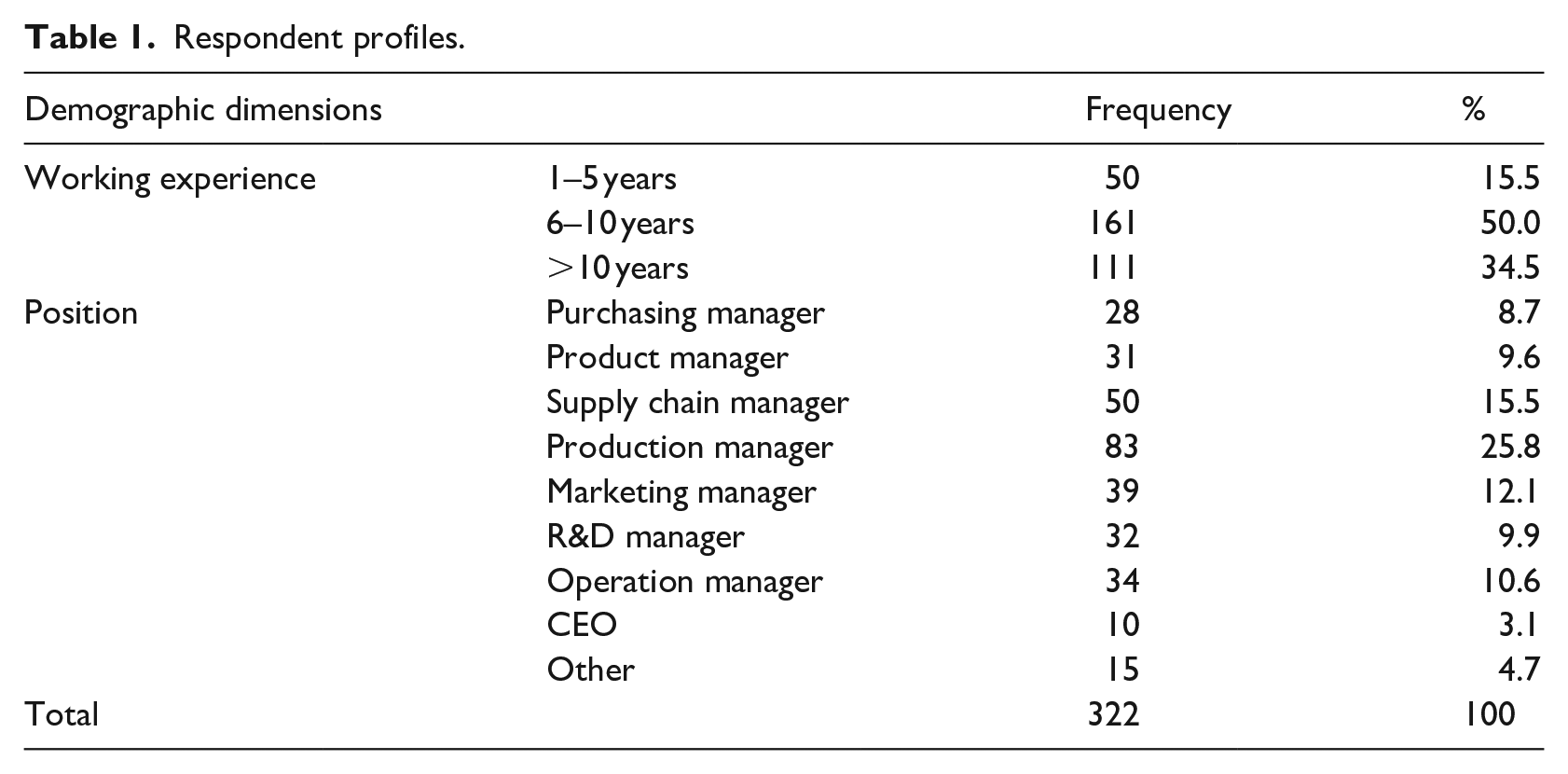
This study collected data through a questionnaire survey administered in 2021 to a random sample of 2591 manufacturing companies in China. Based on prior literature, we designed a self-administered questionnaire about control mechanisms, SCRES, and sustainability performance. The questionnaire was translated and cross-checked by 4 bilingual researchers and pretested with 20 managers. According to feedback from the researchers and the pretest results, we modified some item descriptions to ensure conceptual equivalence and facilitate easy understanding. Then, an online survey was created in accordance with the proposed sampling procedures (Dillman, 2007). To ensure data quality, we emailed the survey link to middle- or senior-level managers in the sample companies. The email clearly introduced the survey goals and included a declaration of confidentiality. Follow-up reminder emails were also sent to encourage participation. Finally, we received 322 usable responses, for an acceptable 12.43% response rate (Dillman, 2007). Tables 1 and 2 show the demographic information of the respondents and companies. The respondents were all middle or top managers, and most of them (84.5%) had worked for the company for more than 5 years. In particular, these managers should cooperate to cope with supply chain disruptions. Therefore, they were knowledgeable about the questions in our survey.
Respondent profiles.
Responding company profiles.

Nonresponse bias was analyzed by comparing the differences between the late and early respondents. The results of a t test on firm sectors indicated no significant difference (t =−1.381, p = 0.168). Hence, nonresponse bias was not serious in this study. Moreover, procedural and statistical methods were applied to control for common method bias (Podsakoff et al., 2003). First, as shown in Table 1, data were collected from middle- and senior-level managers who possessed relevant knowledge. Of the respondents, 84.5% had more than 5 years of work experience. We made a commitment to data confidentiality to the managers so that they could complete the questionnaire honestly and accurately. Second, the questionnaire was formulated to be simple and direct, and the measurements for each construct were presented in distinct sections. Third, we performed single-factor test to evaluate the problem of common method bias (Harman, 1967). An eigenvalue unrotated exploratory factor analysis revealed seven distinct factors that explained 57.70% of the total variance. The first extracted factor accounted for 32.49%, which was not the majority. Therefore, common method bias was not a serious problem.
3.2. Measures
In the research model of this study, SCRES was divided into proactive and reactive resilience. The influencing factors of SCRES were process, outcome, and social control. The outcomes of SCRES include economic, environmental, and social performance. All measures for the constructs were derived from the relevant literature and measured using 7-point scales; among them, 1 meant “strongly disagree” and 7 meant “strongly agree.” In addition, the control variables in our study included firm size measured by the number of employees and firm nature characterized by dummy variables (Jia et al., 2020).
The measures of process and outcome control determined the extent to which processes and outcomes were specified, monitored, and rewarded (Chen et al., 2009; Kang et al., 2014). Social control was measured by four items related to common culture and values, shared goals, collaboration, and adaption to contingencies (Chen et al., 2009; Kang et al., 2014). Proactive resilience was measured by four items indicating the ability to maintain supply chain function and continued operation despite disruption (Cheng and Lu, 2017). The four items included: operations would be able to continue, our performance would not deviate significantly from targets, we would still be able to meet customer demand, and the supply chain would still be able to carry out its regular functions. Reactive resilience was measured by four items and was defined as the capability to quickly respond to and recover from unexpected disruptions (Jia et al., 2020). The four items included quickly recognizing a threatening situation, assessing the probability and impact of potential supply chain disruptions, formulating a set of possible responses to supply chain disruptions, and coping with the changes created by supply chain disruptions. The economic performance construct contained four items (Li et al., 2020; Szász et al., 2021). The measures for environmental performance were from the study of Li et al. (2020) and Szász et al. (2021) and included four items. Social performance was measured by three items, which were from Li et al. (2020) and Szász et al. (2021).
3.3. Data analysis technique
This study applied partial least-squares structural equation modeling (PLS-SEM) to analyze the data. PLS-SEM can deal with complex inter-relationships among several constructs by establishing measurement and structural models (Hair et al., 2016; Henseler et al., 2016). The method is suitable for handling data from perception-based measurement items with unknown distributions (Hair et al., 2016; Hair et al., 2019; Henseler et al., 2016). PLS-SEM is “becoming an increasingly visible approach for theory testing in a plethora of academic disciplines” (Chin et al., 2020) (p. 2162), particularly in the study of operations and supply chain management (El Baz and Ruel, 2021). In our study, all latent variables are the causes instead of the consequences of manifest variables (Henseler et al., 2016). Hence, a reflective measurement model was established. All analysis procedures were conducted following the guidelines of Hair et al. (2016). We first evaluated the measurement model to confirm the reliability and validity and then examined the structural model to test the hypothesized relationships. A bootstrapping procedure with 322 cases and 10,000 subsamples was run to further verify the significance of the factor loadings and path coefficients.
4. Analysis and results
4.1. Measurement model assessment
The measurement model was assessed in line with indicator and internal consistency reliability and with convergent and discriminant validity. The model assessment results are shown in Tables 3 and 4.
Construct reliability and validity analysis.

Fornell–Larcker criterion and the HTMT ratios.

PR: Proactive Resilience; RR: Reactive Resilience; PC: Process Control; OC: Outcome Control; SC: Social Control; EP: Economic Performance; ENP: Environmental Performance; SP: Social Performance; AVE: average variances extracted; HTMT: heterotrait–monotrait.
Values of the square root of AVE, correlations, and HTMT were presented along the diagonal, below the diagonal, and in parentheses.
Table 3 indicates that all factor loadings were higher than 0.55 and significant at p < 0.001. The reliability of the items is established. For all constructs, composite reliability (CR) values exceeded the 0.70 threshold. The values of Cronbach’s alpha were higher than the 0.7 threshold for six constructs and slightly below 0.70 but above 0.60 for two constructs (Hair et al., 2016). We assert that internal consistency reliability was ensured. Finally, the average variances extracted (AVEs) were all above 0.50, which indicates acceptable convergent validity.
Two approaches were used to check discriminant validity. First, according to the Fornell–Larcker criterion, the square root of the AVEs of each construct (diagonal in Table 4) was higher than their correlations with the seven other constructs (values below the diagonal in Table 4) (Fornell and Larcker, 1981; Hair et al., 2016). Second, all the heterotrait–monotrait (HTMT) values of the respective constructs (in parentheses in Table 4) were below the 0.90 threshold (Hair et al., 2016; Henseler et al., 2016), ranging from 0.516 to 0.892. All of these results indicate adequate discriminant validity.
4.2. Structural model analysis
Before assessing the hypothesized relationships in the structural model, we computed the variance inflation factor (VIF) to examine collinearity. All VIF values were below the threshold value of 3 (Chin et al., 2020; Hair et al., 2019). Then, we assessed the quality of the structural model based on the R2 and Q2 values. Coefficient of determination R2 was calculated for all endogenous variables. The R2 values, ranging from 0.219 to 0.469, were all satisfactory and appropriate, suggesting that the structural model has moderate explanatory power. The values of blindfolding-based cross-validated redundancy measure Q2 were all larger than zero, ranging from 0.106 to 0.245, further indicating the predictive relevance of the structural model (Hair et al.,2016, 2019). Moreover, the standardized root mean square residual (SRMR) was assessed to examine the overall model fit. The SRMR value was 0.064, which was less than the 0.08 threshold, indicating significant model quality (Henseler et al., 2016).
The bootstrapping method was applied to test each hypothesized relationship in the structural model. The results are presented in Table 5. Process control had a significant positive impact on proactive resilience (β = 0.369, t = 5.634) and reactive resilience (β = 0.378, t = 6.219). Hence, H1a and H1b are supported. However, since the path coefficients connecting outcome control to proactive and reactive resilience were not significantly different from zero, H2a and H2b are not supported. H3a and H3b are also supported, with path coefficients of 0.324 (t = 5.271) and 0.368 (t = 6.476), which indicate that social control can facilitate proactive and reactive resilience. Furthermore, proactive resilience had a significantly positive effect on environmental (β = 0.205, t = 2.473), social (β = 0.144, t = 2.038), and economic performance (β = 0.261, t = 3.357). H4a, H4b, and H4c are supported. Reactive resilience had a significantly positive effect on environmental (β = 0.303, t = 3.229), social (β = 0.460, t = 6.140), and economic performance (β = 0.377, t = 5.077). H5a, H5b, and H5c are supported. In addition, the results indicate that firm size only negatively affects social performance (β =−0.097, t = 2.038; p = 0.042). We argue that the public could have higher expectations of larger companies in terms of their social responsibilities. The positive side of taking social responsibilities might hardly satisfy the public for larger companies, while the negative events related to social responsibilities would result in a terrible reputation for them.
Hypotheses testing results.

n.s. not significant, *significant at 5%, **significant at 1%, ***significant at 1‰.
5. Discussion
5.1. Theoretical implications
This study first validates the relationship between SCRES and sustainability performance. SCRES is identified as the strategy of preparing for, responding to, and recovering from supply chain disruptions and is divided into proactive and reactive dimensions (Cheng and Lu, 2017). The results of this study contribute to the resilience and sustainability research by revealing the distinct effects of proactive and reactive resilience on economic, environmental, and social performance and thus establishing an integrated resilience–sustainability relationship.
Specifically, proactive and reactive resilience positively influence economic, environmental, and social performance, which indicates that firms can deal with sustainability-related affairs by developing preventive capacity and a quick response to unexpected disruptions (Jia et al., 2020). Furthermore, our results indicate that the effects of reactive resilience on sustainability performance are stronger than those of proactive resilience based on the higher effect size (f2). In terms of economic performance, proactive resilience always implies upfront investments that weaken financial performance, particularly when expected disruptions do not occur. In addition, proactive resilience emphasizes the strategy of preplanning for unexpected changes in operation management (Jia et al., 2020) while neglecting preparation for major environmental issues. Hence, firms can better deal with environmental issues through reactive responses. We also argue that firms can make a more profound impression on the public by swift actions and favorable results when disruptive risks occur, so reactive resilience leads to better social performance. Moreover, Freise and Seuring (2015) point out that the key reaction of companies to disruption risks, such as safety issues in factories, low minimum wages, and forced labor, “is often driven by a rather reactive approach based on stakeholder demands” (p. 3). Overall, this study provides empirical evidence for the relationships between SCRES and sustainability performance.
The results also enhance the understanding of factors enabling SCRES from a control perspective. Previous studies have recognized that some attributes of supply chain relationships contribute to SCRES (Bai et al., 2021). Scholars have concluded that extensive communication (Wieland and Wallenburg, 2013), cooperation and integration (Ji et al., 2020), and social capital (Jia et al., 2020) can yield a significant improvement in SCRES. However, these influencing factors relate to only one attribute of the supply chain relationship. This study extends the relevant research by focusing on the process, outcome, and social aspects of the control mechanisms applied in supply chain relationships from a holistic view.
Specifically, we find that process control facilitates SCRES. This result is in accordance with the argument of existing studies that both parties’ involvement in improving the production process supports the proactive preparation for potential disruptions and immediate responses to unexpected changes (Cheng and Lu, 2017). Surprisingly, stronger outcome control does not improve proactive or reactive resilience. A plausible explanation is that outcome control focuses on established goals, reducing the flexibility to adjust to disruptions (Lechler et al., 2019). Unexpected disruptions may require final target changes. Since outcome specification and performance measurement are mainly enacted through formal agreements or contracts, renegotiation under emergency conditions is costly and time-consuming (Langer and Mani, 2018), which limits the development of both proactive and reactive SCRES. This study finds that social control promotes SCRES, which is consistent with previous investigations. In various study contexts, social control appears to be closely associated with trust (Tiwana, 2010), and trust has been demonstrated to strengthen the resilience capability of a supply chain (Dabhilkar et al., 2016; Stouthuysen et al., 2012). The findings provide further empirical evidence for the link between social control and SCRES.
5.2. Managerial implications
Our study establishes the relationship between SCRES and sustainability performance and identifies a method for sustainable development. An increasingly complex, dynamic, and uncertain operating environment creates more challenges for global supply chains. Chinese manufacturing companies face disruptive supply and demand risks caused by upstream and downstream partners in today’s turbulent environment. SCRES from a proactive and reactive perspective should be emphasized to cope with potential disruptions in supply chains. Meanwhile, companies are required to pursue environmental, social, and economic goals to satisfy different stakeholder requirements. Sustainability has become an integral part of the corporate strategy for manufacturing firms (Fahimnia and Jabbarzadeh, 2016). The results suggest that firms seeking to improve sustainability performance should establish capabilities to prepare for unexpected changes (i.e. proactive resilience) and to quickly respond and adapt after a break occurs (i.e. reactive resilience).
This research also provides new insights into the way supply chain systems that are more resilient can be built. The findings suggest that firms should devote more efforts to process and social control in supply chain relationships to coordinate business activities, maintain business continuity, and modify their operational processes according to the changing environment in a timely manner. Manufacturing firms must pay attention to activities through actions such as specifying standards for process execution as well as monitoring and reporting suppliers’ behaviors (Langer and Mani, 2018). In addition, firms should learn to develop cooperative relationships with supply chain partners by facilitating close interaction and communication, building trust, and propagating common values (Tiwana, 2010). However, outcome control is not suggested. In a business environment characterized by volatility, uncertainty, complexity, and ambiguity, goal setting is becoming more difficult and less effective. Because the implementation of control mechanisms is costly, managers should prefer suitable control mechanisms. By investigating the effectiveness of each control mechanism, this study provides guidance to help managers make business decisions and manage supply chain relationships to achieve high resilience.
5.3. Limitations and future study
There are also some limitations in this study that require further research. First, as SCRES is considered a dynamic capability, the cross-sectional data in this study may have limited our exploration of the dynamic effects of resilience. Thus, further research might apply a longitudinal research methodology. Second, the generalizability of this study may be limited, as our data were collected from Chinese manufacturing firms. Firms in different countries may present distinct characteristics in terms of cultures, values, and institutions. For example, Chinese companies may place more emphasis on the establishment of social relationships between partners than may companies in many Western countries. Therefore, the research model should be verified empirically in other underdeveloped and developed countries. Third, this study did not consider contextual factors. Further research might enrich the model by exploring the influence of possible moderators such as environmental uncertainty.
Footnotes
Final transcript accepted 24 November 2021 by Yunting Feng (AE Special Issue Sustainable Supply Chains).
Funding
The author(s) disclosed receipt of the following financial support for the research, authorship, and/or publication of this article: This work is supported by National Natural Science Foundation of China (71902102; 72102029), China Postdoctoral Science Foundation (2018M630791; 2018M631826), and the Fundamental Research Funds for the Central Universities (DUT21RW102).
