



Abstract
Limitations in the field of preservation of library collections have resulted in the destruction of many important documents, including rare books and manuscripts that, until recently, have not been sufficiently addressed. Although scientific approaches to document preservation have been developed, successful application has been met with substantial constraints in practical application. The Scientific Library of Tomsk State University is one of Russia’s major libraries, storing approximately 3.8 million items including manuscripts and rare books. However, there have been significant challenges in preserving the library collection and remediating damaged documents. Knowing that this ‘book treasure trove of Siberia’ was at risk of continuing degradation and in some cases complete loss due to various sources of decomposition, Russian authorities have increased emphasis on preservation, including additional funding. With this increased focus, researchers have revisited the approach to preservation and conservation including improved monitoring of storage facilities and collections, and deployment of better practices of preservation and restoration. In addition, the team rolled out a process to create electronic versions of the library collection to reduce physical access, thereby minimizing further damage. The purpose of this article is to describe the practical application to conservation, using the Scientific Library of Tomsk State University as a case study to demonstrate the successful outcome of an enhanced approach. While environmental conditions at the library were specific to a single location, the approach is believed to be applicable with similar efficacy to conservation efforts more broadly. However, additional funding, for which there is currently insufficient budget related to this specific study, will be necessary to fully complete these enhanced practices.
Keywords
Introduction
The degree of commitment and allocation of resources to preserve rare documents varies greatly in different countries depending on the degree of economic development and the perceived importance, by government and non-governmental organizations, of retaining such documents. The issue of low prioritization of document preservation has been widely discussed by UNESCO, the International Committee of the Blue Shield and IFLA, to name a few. To address this issue, many leading libraries of the world now participate in the IFLA Preservation and Comservation long-term program of preservation improvement. 1
In Russia prior to the 21th century, document retention and preservation was of little importance, resulting in the destruction of a significant number of highly important and valuable documents associated with Russia’s national cultural heritage. 2 However, at the beginning of 2000, awareness of document preservation increased significantly due to increased focus on the importance of the country's national heritage and the fact that so many culturally important works were lost. Responding to this issue, in 2000 the Ministry of Culture of the Russian Federation adopted the National Program for the Preservation of Library Collections. This program greatly heightened the importance of document preservation, resulting in a substantial increase in funding to carry out research in this field and the enactment of standards, practices and procedures by which to implement preservation techniques in libraries throughout the country. 3
The Scientific Library of Tomsk State University, opened in 1888, is one of the largest university libraries in Siberia and the Far East. It is considered to be the ‘book treasure trove of Siberia’. The library is unique in content and has more than 3.8 million publications in storage, of which more than 118,000 are rare books and manuscripts. Many publications are of Russian and Western European origin, having not only federal or regional, but also global significance.
In addition to environmental deficiencies in storage that led to decomposition of the library collections, frequent use by students, researchers and other users of the library also exacerbated the issue of poor preservation via mechanical, physical-chemical and biological contributors. The leading contributor to physical document destruction was an antiquated heating, ventilation, and air-conditioning (HVAC) system, which led to poor ventilation, high levels of dust and fungi infestation.
In 2004, specialists from the Federal Library Conservation Center of the Russian National Library (St. Petersburg) evaluated storage conditions at the Tomsk library and determined that the library air quality was 5–7 times beyond tolerable limits for dust, 2–5 times above limits for destructive microorganisms in the air and as much as 7 times above tolerable limits of microorganisms on the surface of library collections.
The extent of the problem was so significant that a complete re-evaluation of the approach to storage conditions was required. This approach was documented in the Strategic Preservation Plan of the Scientific Library and included remediation steps to not only implement a digitization initiative of physical collections but also, and most importantly, improve storage conditions of original documents. More specifically, the plan included the following objectives:
4
Develop measurements and monitoring practices of storage facility. Address lack of appropriate measurement of facility conditions and implement regular and frequent monitoring of environmental and microbiological conditions of storage facilities with additional oversight over rare collections. This included the development of relevant measurements from both a qualitative and quantitative perspective of temperature, humidity and air quality in terms of dust and microbiological agents. Improve conditions at storage facilities and adopt better methods of storage, preservation and restoration based on research conducted by the Scientific Library. Initiate a document digitization program to scan collections and allow access to electronic versions of documents via the library website (http://www.lib.tsu.ru).
Essential to the Plan is that it captures the entire lifecycle of document preservation including document arrival and receipt, storage, maintenance and access or usage.
Achieving these objectives required close collaboration of several departments within the library, including administration, engineer services, the Regional Center of Conservation of Documents (RCCD), the Department of Main Holdings (DMH), the Department of Manuscripts and Rare Books (DMRB), specialists in microbiology and members of the university.
Develop measurements and monitoring practices of storage facility
Participants included: Members of RCCD, including a specialist in microbiology, who were responsible to develop procedures to conduct inspections,
5
educate assistants of DMH and DMRB, prioritize activities including processing and analyze statistical data. Assistants of DMH and DMRB who were responsible for the physical inspection.
Monitoring of the microbiological conditions of the library collection and storage premises
Objectives: Assess microbiological conditions of rare books and manuscripts before and after disinfection. Provide an account of documents with biological damage. Lower impact of aqueous biocide on documents. Identify the extent of microbiological infestation in rooms including DMH and DMRB archives, the Scientific Library Museum of the Book and ventilation chambers.
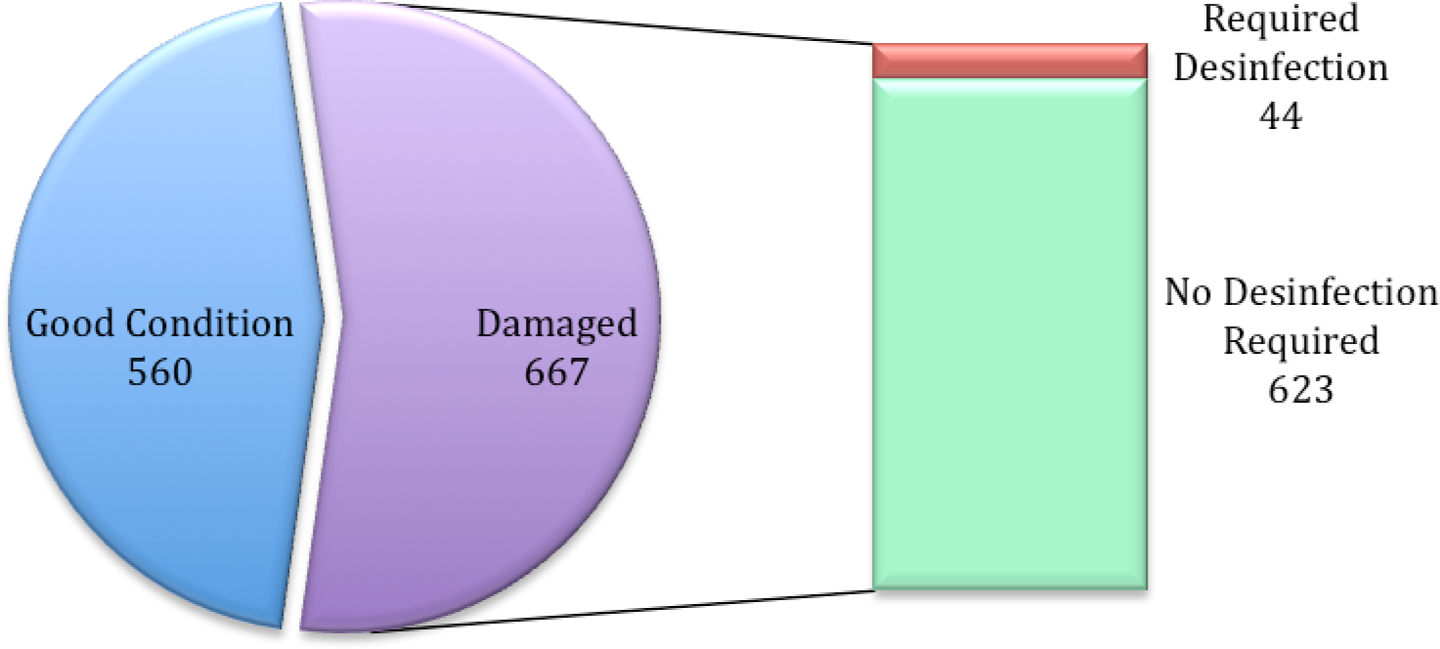
Highlights the results of microbiological inspection of the manuscript collections.
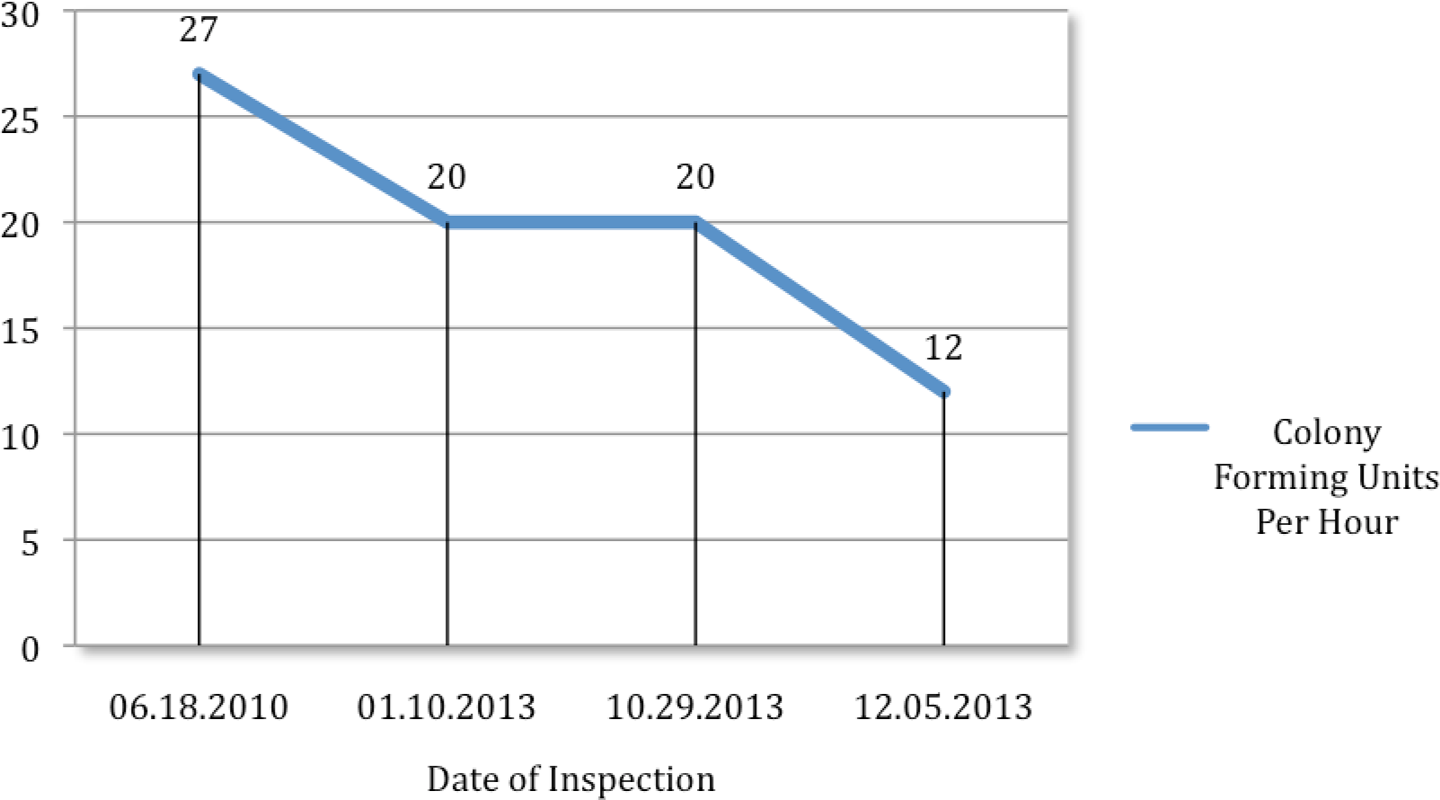
Depicts the results of plenum inspection.
Methodology
The total amount of microorganisms was defined by the sedimentative method. The inspection of collections and selection of books is performed throughout the year while inspection of storage rooms is conducted four times a year.
Results
Results of this analysis revealed microbiological conditions in collections and storage facilities, including air quality, amount of microorganisms in the air, the degree of biological damage in walls (plaster and paint coating) and types of fungi, along with the detrimental impact of fungi to books and library employees.
Of the 1227 manuscripts inspected, 560 items were in good condition. However, 667 were affected by microorganisms, including 44 containing active microorganisms. These manuscripts were immediately disinfected. The remaining 623 items had no activity and were sent for phase conservation with a plan to monitor their condition going forward. As a result, we avoided treating these 623 documents with aqueous biocide.
Results from a 2010 microbiological inspection of plenums found a significant excess of microorganisms, i.e. colony forming units (CFU). Twenty-seven CFUs were found in the air. To reduce the excess micromycetes, filters were installed in plenums and are replaced on an annual basis. In addition, tiles were installed on floors, walls and ceilings to improve the sanitary conditions. As a result of these actions, from 2010–2013 there was steady improvement in conditions due to reduced microorganisms in plenums.
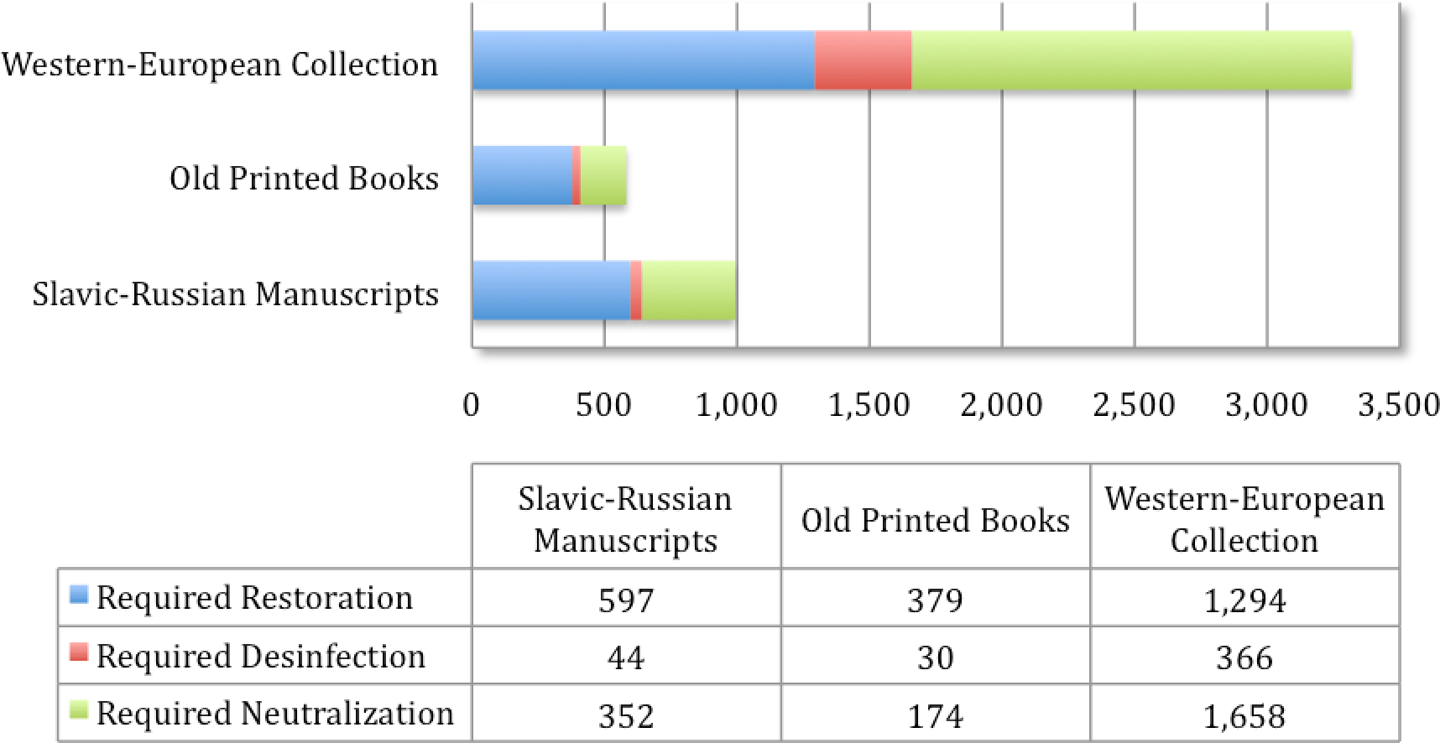
Illustrates the inspection results of DMRB documents inspection by method of conservation. 6
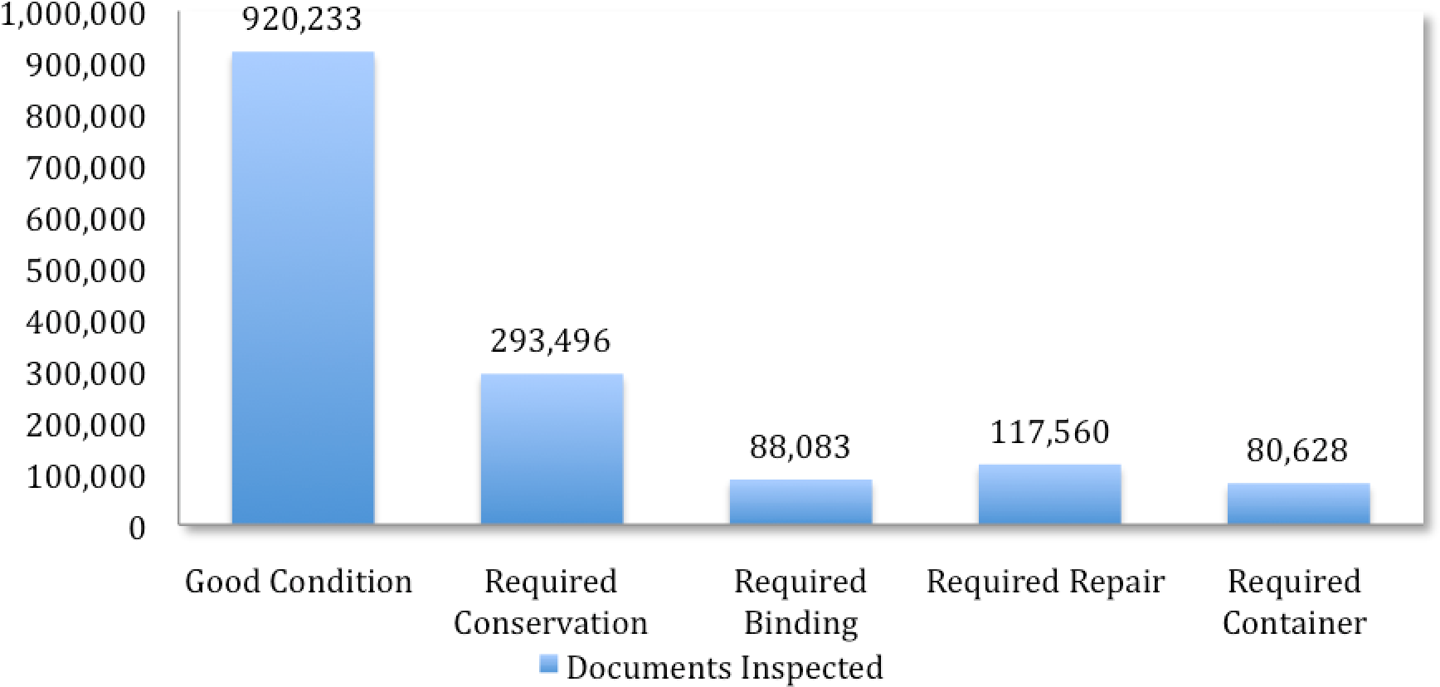
Illustrates the inspection results of DMF documents inspection.
The Scientific Library is currently conducting research by utilizing nanotechnology to determine how effectively different types of biocides influence certain microorganisms. Preliminary results have been obtained but the work is still in progress.
Monitoring of the physical condition (qualitative and quantitative estimation of document condition)
Objective: The purpose of this activity is to gather the following information: General condition of library collections (percentage ratio). Quantity of documents in need of conservation. Types and extent of damage. Determine the order of conservation activities (repair, binding, restoration, disinfection and phase preservation).
Location
Archives of DMH and DMRB.
Methodology
Physical inspection of all documents and rare books with an inspection ratio of 1 to 20 for the main library book collection. During the inspection process, specialists visually estimated the physical integrity of book components: book cover, book block and binding connections to book block. Specialists then noted the type and degree of deterioration (mechanical, physical-chemical, biological) and determined the most appropriate method and order of conservation. For each document inspected, information related to physical condition was written into each book’s documentation, i.e. book passports. In addition, the condition of all library collections (by floor in some circumstances) was recorded, based on the statistical sampling of the documents inspected.
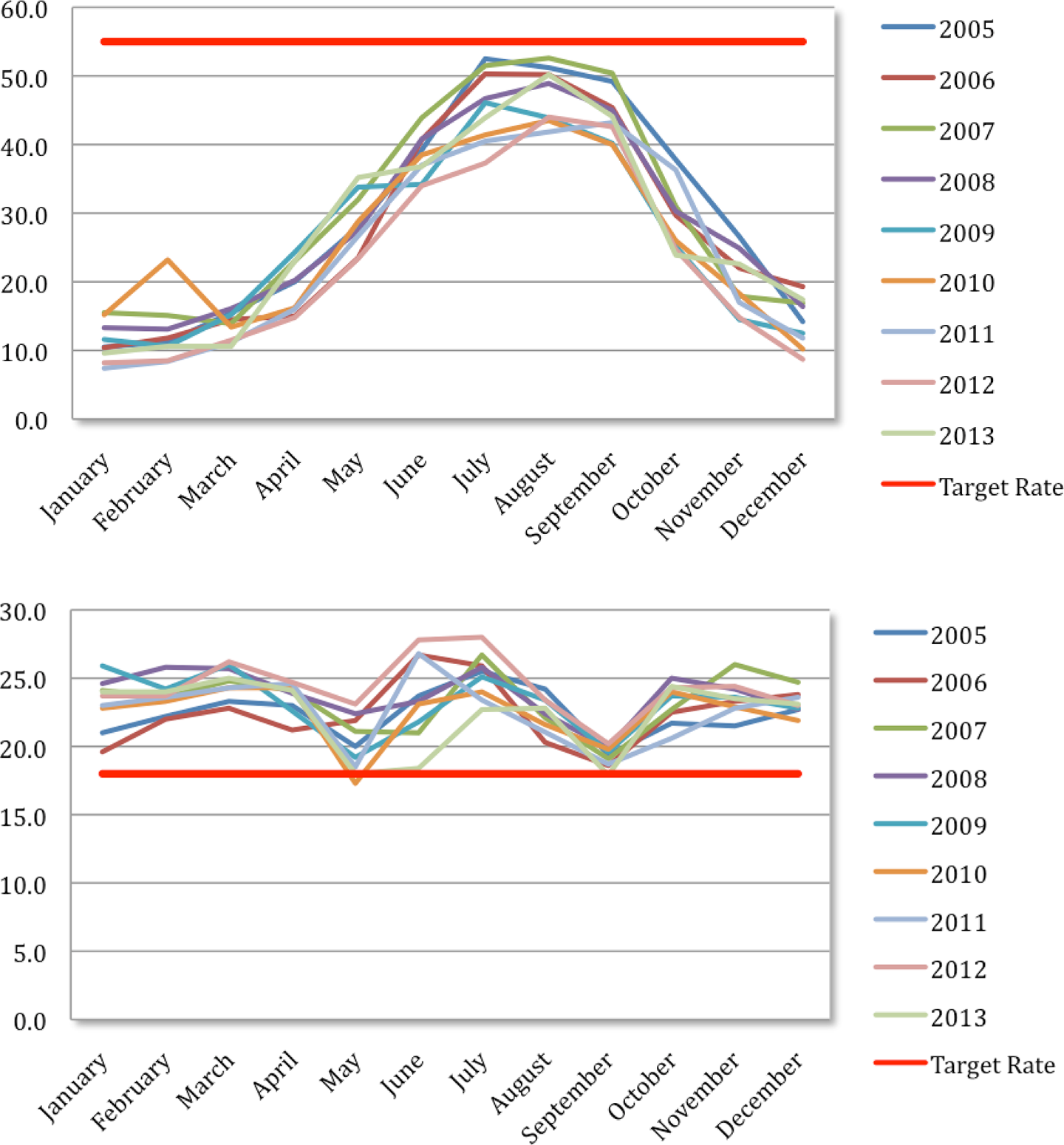
Show the results of the measurements for the period 2005–2013.
Results
The results of the sampled population that was physically inspected represented the entire population of documents containing 5000 pcs. from DMRB and ∼1,500,000 pcs. from DMH, including Slavic-Russian manuscripts (1034 pcs.), foreign manuscripts (193 pcs.), old printed books (820 pcs.), the early Western-European collection (2713 pcs.) and a small number of graphic collections.
Monitoring of temperature and humidity conditions
Objective: The purpose of monitoring is to track the changes of climate parameters during the year and to compare these parameters to statutory requirements.
Location
Archives of DMF and DMRB.
Methodology
Temperature and humidity measurements were taken by the following equipment: BONECO 7054, TESTO 605-H1, TKA-chranitel at specific locations. Conservators took measures of temperature and air-humidity each day and documented test values. Each month an assistant of RCCD collected data for analysis.
Results
After statistical data processing, conclusions were derived for each building and floor.
The results of monitoring storage climatic conditions for the period 2005–2013 revealed continued poor conditions in the surveyed areas. This situation was caused by the lack of funding for the reconstruction of obsolete environmental systems. Annual humidity levels in the library were significantly below target rate of 55 percent, while temperature was above target level of 18°C. In addition, dry winter climate led to over-drying of documents, which decreases linear dimensions of materials, deformation and destruction of documents.
Improve conditions at storage facilities and adopt better methods of storage, preservation and restoration
Since 2010 there has been a differentiated approach to the preservation of library collections and rare books. One of the objectives of the Scientific Library is to improve the utilization of research results to develop more effective preservation techniques, as theory does not always translate into effective practice. The changes were aimed at improving operational efficiency in preventative conservation and the need to establish control of the overall microbiological condition of documents before and after the disinfection process. Efforts also aimed to better organize operational coordination of DMRB custodians, restorers, a microbiologist and a disinfector to improve the management of the library collection. Procedures were developed to maintain a database of DMRB documents, including information about microbiological and physical condition as well as any conservation and restoration activities that have taken place. This database is instrumental in facilitating the work of restorers in the accounting, control and analysis areas. In addition, data from monitoring is used in the library to conduct a comprehensive analysis to identify problem areas and the quality of the storage facility. This enables us to objectively assess the condition of the collection while also providing an opportunity to identify priorities and develop current and strategic plans. We can also focus on operational activities needed to address existing deficiencies.
Based on our research and data analysis, we implemented changes associated with disinfection, phase preservation of documents and restoration. Disinfection of rare books is now included as a part of the pre-restoration phase. Disinfection of documents, including new documentation procedures known as ‘the restoration passport’, is now approved by the Restoration Committee and required to be completed by disinfection staff. The biocide solution Metatin GT is used for disinfection of damaged documents. Document treatment is performed based on the results of the microbiological analysis for specific parts of the book recommended by the biologist.
Control processes to ensure no recurrence of infection of treated documents are now conducted every quarter (sampling). Mandatory labeling of microclimate containers was implemented for documents after disinfection. Labels included inventory document number, date of treatment, type of the biocide, percentage of dilution, and name of the individual who conducted the disinfection.
Phase preservation of documents is now conducted manually by staff from the RCCD, DMH, DMRB and independent contractors. Phase storage of documents in microclimate containers was introduced as a new method of phase preservation for rare manuscripts, dilapidated books, graphic works, decrepit documents and documents that were treated and restored.
Restoration practices have existed in the Scientific Library of TSU since 1988. In 2013, within the federal program ‘Culture of Russia’, the Regional Center of Rare Book Conservation was created. Financing from the program provided the Regional Center with an opportunity to focus on the education of professionals in the restoration and fine arts fields. Employees of the Regional Center now perform their work at a higher professional level, applying modern and sophisticated restoration, stabilization and conservation methods.
Initiate a document digitization program to scan collections and allow access to electronic versions of documents via the Internet
Since 2000, the collection at the Scientific Library of TSU has been digitized in order to create full-text electronic versions. Digitization is performed using special scanning equipment including SMA 1 6650 in A1 printing format and Kirtas ART BookScan 1200 scanner.
Rare documents, depending on their physical condition, are fully or partially restored before being digitized. Then, they are scanned in the Electronic Library Department in order to provide back-up and accessible digital copies for users. Access to digital versions of these documents can be found on the library website (http://www.lib.tsu.ru). In addition, originals are stored in microclimate containers and are not accessible by readers.
Conclusion
In order to improve the processes and procedures for restoration and conservation, we applied a systematic approach consisting of the following objectives: develop measurements and monitoring practices of the storage facility, improve conditions at storage facilities and adopt better methods of storage, preservation and restoration, and preserve collections digitally. However, there are still very difficult problems including insufficient financing that will prevent continuation and refinement of the program.
Footnotes
Acknowledgment
The article was written within the Tomsk State University Competitiveness Improvement Program.