



Abstract
These are times of economic disruption globally, nationally, regionally, and locally. This ongoing turbulence will inevitably have an impact on your library regardless of the type of organization you support. The consequences of ongoing economic instability are exacerbated by what seems to be an extraordinary turnover in library leadership. This turnover requires a steady supply of new leaders to fill the shoes of those who retire or for other reasons leave their positions. Today our profession is confronted with the question of whether or not we will have enough new leaders or existing managers stepping up to leadership roles to drive the sustainability of information services? This question will be addressed through examination of four domains where the need for existing and aspiring leaders in the information profession is critical, regardless of the type of library: finance, fundraising, organizational politics, and evaluation. Equally important is understanding the role of the leader (as opposed to that of the manager) as the strategic thinker, visionary, and motivator, who inspires their team to excellence in these four areas and through demonstrating contribution to the organization’s success, achieves sustainability. Using case studies as well as insights from past research and from colleagues around the world in different kinds of libraries, we will be looking at why these four domains are important to sustainability and what you as a leader needs to do in thinking through how to adapt them to the specific needs of your organization.
Keywords
Introduction
The impetus behind the writing of this article comes from the authors’ realization that in these difficult times, fraught with disruption at all levels in all types of organizations, the leadership of libraries continues to experience frequent turnovers. This turnover requires a steady supply of new leaders to fill the shoes of those who retire or for other reasons leave their positions. Today our profession is confronted with the question of whether or not we will have enough new leaders or managers stepping up to leadership roles to drive the sustainability of information services.
We have chosen to address this question by looking at four domains where, we believe, the need for leadership in the information profession is critical: finance, fundraising, organizational politics, and evaluation. To further help us understand the challenge this question poses, we asked several accomplished information professionals from around the world to share their thoughts and pragmatic lessons on this topic as sidebars to this article.
Leader and manager are not interchangeable roles
There are a myriad of ways in which the terms leader and manager have been defined. The following seem as good as any for the purposes of this article. Defining these roles is, however, different from describing the characteristics needed to fulfill each successfully. Sometimes these roles might overlap depending on the size of one’s organization. By their complementary nature they must work hand in hand. However, sustainability typically cannot be achieved if one individual is consistently expected or attempts to accomplish both. In her sidebar, Chris Flegg of Oxford University’s Saïd Business School Library, suggests that in times of stability “what is most required of a ‘leader’ is largely a managerial role, utilizing predominantly managerial skills to ensure services are delivered”. Stabile environments, however, may well be a thing of the past; if they ever truly existed for any length of time in the library world. The authors agree with Flegg that those seeking to be library leaders today must not forget about the tried and true leadership tools that have been successful in the past and must exercise sound judgement in creating a commitment to longer term sustainability. (See Sidebar 1)
What is library leadership?
Ms Chris Flegg Bodleian Business Librarian, Saïd Business School, University of Oxford, UK
Leadership
As we in the higher education sector must increasingly feel the need to grapple with how we are to demonstrate and argue our value proposition, and do so by virtue of the way we can help our respective institutions be better at what they do, so is it becoming increasingly important that we evolve some understanding of how we are to do “leadership” to conceptualize, design, and deliver that value.
This is partly – but only partly – because in stable environments in which values are self-evident or assumed, what is most required of a “leader” is largely a managerial role, utilizing predominantly managerial skills to ensure services are delivered, while in more turbulent and fractious times those skills will rarely suffice.
More critically, as we find ourselves positioned where the goalposts that have defined scholarly enterprise can not only quickly shift but incinerate and vaporize out of sight, remaining a valid and relevant member of the collective team requires knowing how to redefine and realign who and what we are, and to do so with great speed and agility: and it is here that we have a sense that leadership as a distinct function needs to come most into play.
But while most of us can intuitively recognize good or effective leaders, developing a practical leadership “formula” can be surprisingly difficult. Evidence the vast cornucopia of leadership literature which we have ourselves amassed and which – by kilo weight alone – could suggest that leadership frameworks, rather than provide sure footings, exist predominantly as persistently contested areas of management theory and practice. They are articulated, pulled apart, scrutinized, analysed, questioned, reassessed, and finally, reconstructed into evermore new paradigms, with each discarded paradigm much like Leo Tolstoy’s unhappy families – each unhappy in its own unique way and unlikely to be prescriptive of anything other than what to avoid.
So what of library leadership? Extraordinarily, decades of good stewardship by those preceding us has gifted us a set of finely hewn tools which have a place supporting any leadership table – specialist knowledge; unrivalled service orientation; ability to create chaos-busting structures; deep organizational skills; and commitment to the longer term.
Perhaps in the end, the challenge for the library leader will be in applying sound judgement to choose the destinations and how best to harness the tools to get there.
Within the context of this article, a library leader is defined as the individual who articulates a vision for the organization/task and is able to inspire support and action to achieve the vision. In the word map in Figure 1 (Peters, 2016) we see some of the characteristics common to library leaders.
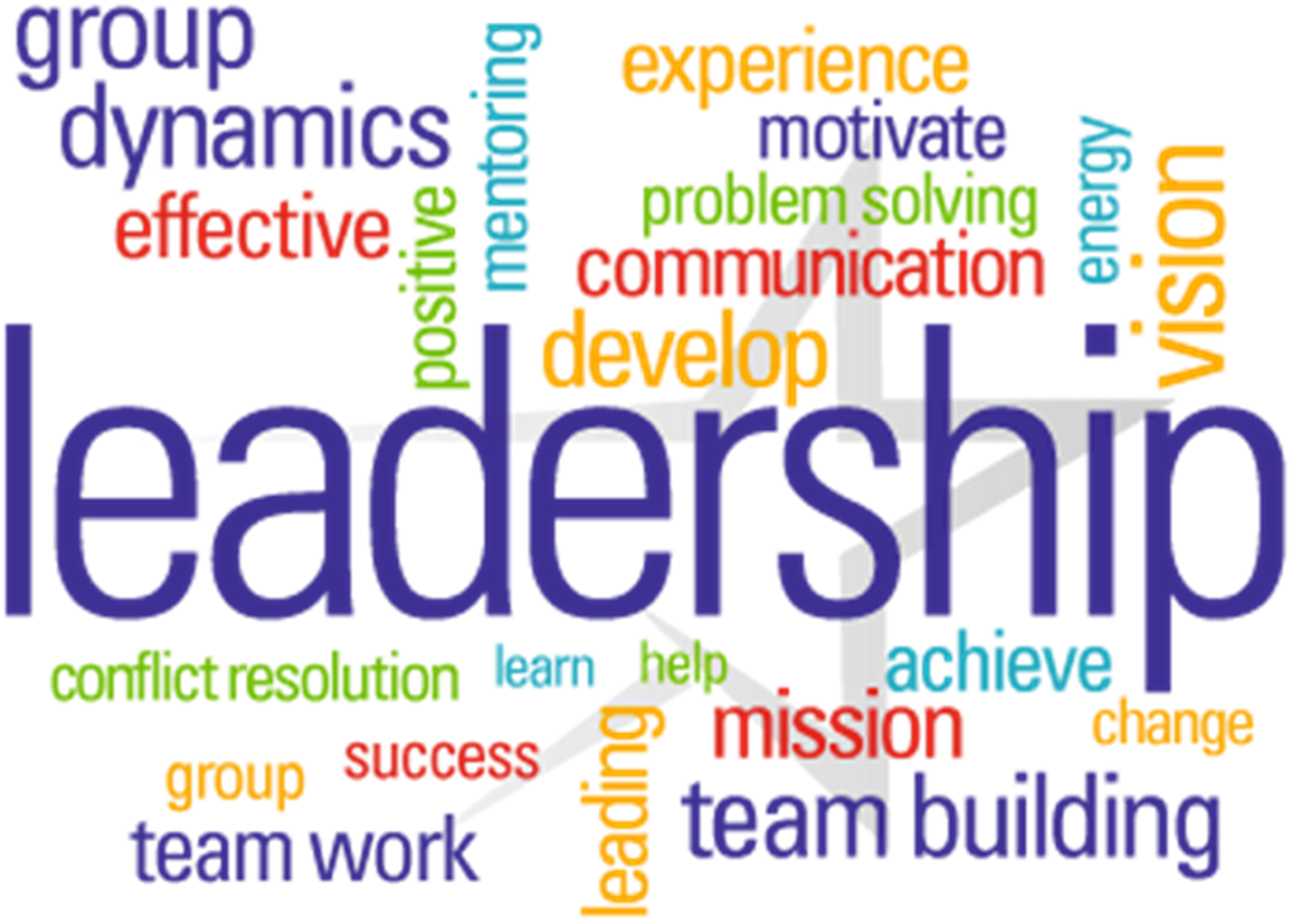
Leadership word map.
A manager, on the other hand, is the individual tasked with organizing and carrying out the day-to-day operational activities to achieve the vision. In the word wall in Figure 2 (Palmer, 2011) above it is easy to pick out the many day-to-day tasks a library and information center manager might be responsible for carrying out and the diverse vocabulary that swirls around these tasks.

Management word map.
The density of these respective illustrations gives us some insight into how complex the life of the manager can be in terms of simple quantity and diversity of activities required to keep a library or information center operational on a daily basis versus the somewhat less definitive activities a leader must engage in which require time to strategize and reflect as well as to build consensus. Obviously there is some overlap. Both leader and manager, however, must work separately and together for sustainability to be achieved, especially in disruptive times.
While the focus of this article is not to answer the question of whether leaders are born or made or what it might take to become a great leader or a great manager, it is a question we want the reader to consider. In our second sidebar, “Qualities of Leadership from Job Experience”, Eva Semertzaki, Head of the Library at the Bank of Greece, provides her perspective on leading and managing, including highlighting those “assets” which “distinguish qualitative leadership”. (See Sidebar 2)
Qualities of leadership from job experiences
Eva Semertzaki
Head of Library, Bank of Greece
“If your actions inspire others to dream more, learn more, do more and become more, you are a leader” – John Quincy Adams, sixth President of the United States (1767–1848).
Leadership is both a research area and a practical skill, regarding the ability of an individual or an organization to “lead” or guide other individuals, teams, or entire organizations.
Management in businesses and organizations is the function that coordinates the efforts of people to accomplish goals and objectives by using available resources, efficiently and effectively. 2
Work places are organized in hierarchical and in team structures. Managers are appointed to administer business units or organizations whereas leaders may emerge from all levels of the hierarchical structures. Within a volatile climate the need for strong leadership is essential. The leadership culture contributes to the increase of the organizational value.
Leaders are developed and educated within the working environment where they act and co-work with their partners and colleagues. Effective leadership complies with the mission and goals of the organization. Several assets distinguish qualitative leadership:
Mentoring. The issue of human touch and the people-centered approach are crucial considerations in leadership. Leaders respect and understand the staff recognizing that they are the important resource of the organization. Each staff member is regarded as a unique personality with specific traits and competencies. Charismatic leaders encourage staff to reveal their potentialities and take advantage of their expertise and knowledge hidden in their brains. Leaders amalgamate the expertise and knowledge of the senior with the fresh ideas of the young staff to boost the organizational growth. Existing and new staff may combine all skills necessary to perform a function.
Motivation
Leadership fosters the creation of ideas and motivates people to share. Thus, the feeling that people work at a safe, secure, and trustful work place is cultivated. In a confident environment the individual is convinced to articulate and share ideas and knowledge for the benefit of the person, the team, the department, and the entire organization. In such climate, the professional’s productivity increases.
Personal development and skills
Efficient leadership requires the ability to evaluate personnel’s skill sets
3
which are relevant to the functions performed and to make the most out of them. Therefore, effective leaders should know (Fitsimmons, 2009: 53): what functions need to be covered; what skills are required to complete each function; what skills each individual has.
Leaders give the staff the chance to use their unique combination of skills in parallel to pursuing job quality, accountability and cohesion of the team. Leaders promote the idea that in addition to formal training, personal professional development is important for the advancement of the existing and the acquisition of new skills.
Inspiration and collaboration
Key for the success of a leader is to inspire people with the ability to work with others in teams. Leaders encourage cooperation, collaboration, partnerships, synergies, and building networks. To collaborate is a new way of working. By joining forces the team becomes stronger and more effective. Synergies are required among diverse professions in different levels of the organization and among peers outside the organization. Leadership fosters a spirit of noble emulation among staff where each one complements each other in teamwork, like pieces of a mosaic. So, professional identity becomes stronger. The complementarity of the roles of professionals and non-professionals are vital issues.
Engagement
A quality of leadership is to engage staff and embed them in the process of change, to infuse the process with their ideas and to raise staff self-confidence. The business unit, e.g. the library, pursues opportunities to get involved and embedded in the operations of the organization. Behaving so, the unit raises its visibility.
Success and failure
Although the success of a business unit is shared between the leader and the staff, pitfalls and mistakes are usually coined to the leader. In the latter case, the leader defends the staff outside the unit but guides them inside it to learn from mistakes. This behavior raises confidentiality and accountability among the staff.
Risk taking
A key leadership capability is the willingness to work with risk and to be prepared to work with risk (O’Connor, 2014: 85). Risk is a readiness to deal with uncertain conditions and engage with difficult issues while calculating the probability of success and failure. Effective leaders should not be afraid to confront risks. It is better to take a risk instead of staying inactive. Though, it is not necessary to take resonant risky decisions but small steady steps.
Attributes of leaders
Communication is a basic characteristic for leadership towards top and bottom management (Sidorko, 2007: 13). Strategic thinking and listening, accountability and humility, the ability to analyze new ways of the working environment; creating successors; being open-minded, persuasive and persistent, driver of change, quick-thinker and forward-thinking decision maker and calm in stressful circumstances are some of the attributes of a leader (O’Connor, 2014: 79).
Conclusion
Leaders require having creative minds in shaping strategies and solving problems. They are mentors for the staff, work hard and inspire them to do more with less and to start small and grow big. Staff need to be motivated to work at their optimum performance level. Leadership entails awareness of the responsibilities inherent to the roles of a leader. However, effective leadership requires the support of the upper management.
References
Fitsimmons G (2009) Library leadership column: resource management: People: skills management. The Bottom Line: Managing Library Finances 22(2): 52–54. O’Connor S (2014) Leadership for future libraries. Library Management 35(1/2): 78–87. Sidorko PE (2007) Fostering innovation in library management and leadership: The University of Hong Kong Libraries Leadership Institute. Library Management 28(1/2): 5–16.
Leaders in the information profession need to understand how someone in a leadership role must position themselves to help sustain their organization in disruptive times. But what does the phrase “disruptive times” actually mean? Given the turbulence rampant in our profession and in the information world in general, perhaps disruption is the new constant. In the sidebar entitled “Leadership in Disruptive Times: A Case Study at a Professional Services Firm”, a retired director of knowledge management for a professional services firm offers some insight from the Canadian perspective on the current disruptive environment. The sidebar addresses the challenges facing the leaders of information- and knowledge-related teams in figuring out how they could support their parent organization as it confronted the “enormous competitive pressures of globalization, regulatory reform and control, commoditization of services, downward pressure on fees, and the need to differentiate themselves”. (See Sidebar 3)
Leadership in disruptive times: A case study at a professional services firm
Retired Director of KM for a professional services firm, Canada
The theme for the 2016 World Economic Forum (WEF) in Davos is “Mastering the Fourth Industrial Revolution”. What does this mean? Well, according to the WEF, the “Fourth Industrial Revolution is distinct in the speed, scale and force at which it transforms entire systems of production, distribution, consumption – and possibly the very essence of human nature” (http://www.weforum.org/agenda/2015/11/what-is-the-theme-of-davos-2016). And according to WEF Founder and Executive Chairman Klaus Schwab, this Revolution is “a fusion of technologies that is blurring the lines between the physical, digital and biological spheres” ushering us into an era that will transform the “economic, social, ecological and cultural contexts in which we live”. Clearly, the WEF believes that we will all be affected – and already are affected – by this Revolution: governments and how they lead; consumers and how and what we buy; and, of course, business and how it succeeds.
So, we find ourselves in an era of constant transformation and change. As we distill these global drivers of change into industry specific situations, what are the particular challenges facing, for example, professional services firms that aspire to provide trusted business advice to clients in a variety of areas, including legal, engineering, accounting, tax and consulting services?
Professional services firms operating in the knowledge economy are confronted with enormous competitive pressures. Globalization, regulatory reform and control, commoditization of services, downward pressure on fees and the ultimate goal for large accounting and consulting firms – differentiation – are now every day considerations for leaders. And of course, these concerns inevitably trickle down to both client-facing and internal functions within these firms. How can we continue to offer high quality services and resources to solve clients’ issues, while increasing revenue? How can internal firm services such as business development, marketing, information and technology and knowledge management support the firms’ goals and objectives?
Let’s look at how a national professional services firm began to respond to these pressures. The firm is a partnership: a particular organizational structure that adds an additional layer of challenge to any transformation initiative. It is medium-sized, with over 450 partners and 6000 total staff, including partners. It provides services to a variety of clients in a smorgasbord of industries, from large public companies to private, family controlled enterprises. The firm is innovative and forward thinking and has embraced a number of initiatives to control cost, including outsourcing of back office functions and the usual accompanying layoff of selected staff. However, it’s clear that cost cutting can only take the firm so far and that revenue growth is key. How can internal services support innovation and transformation to help drive this “winning work” mentality? How can knowledge management (KM) be a leading part of this transformational change? How can KM avoid the pitfalls of cost containment?
As with knowledge management as a discipline, KM at this particular firm (let’s call it PSF) had an up and down history. From a governance perspective, it had been fragmented and was “owned” by different areas of the business at different times. From a leadership perspective, it seemed clear that KM needed to be as close to the “coal face” as possible, i.e. as close to the client as possible. The first move was to position KM within the Sales & Marketing function. At the same time, three “arms” of KM were defined: Research Services; the process-oriented knowledge manager program, embedded in the various industry groups and practice areas of the firm; and KM Operations, the team that looked after firm wide KM technology, tools and applications, including the firm’s intranet. Next, the focus of KM planning was aligned squarely with “winning” work. KM priorities were aligned with the strategic priorities of the firm.
What did this mean at an operational level? It meant that some of the traditional aspects of research and KM disappeared. Research Services concentrated on proactive support of firm strategic priorities, e.g. key clients and industries, while at the same time implementing a 3-tier research support model that included the use of an offshore support team. Knowledge managers focused on developing processes and content to support business development, e.g. citations, business cases, bios, and other proposal-related material. KM Operations worked on streamlining intranet content and improving the content management processes, as well as working to develop new apps to support collaboration among sales staff, marketers and knowledge management. And of course, all this change happened while continuing to manage the existing demands from the business and working to implement successful change management both within KM itself and with our internal KM clients. Also, time did not stand still; the business continued to evolve and transform.
What did this mean at a leadership level? First of all, I must emphasize that leaders are found at all levels within not just entire organizations, but also discreet functions. Change initiatives can only succeed if these potential leaders are identified, engaged, supported, motivated, given responsibility and accountability. Secondly, at the KM functional leadership level, the focus was on providing this structure for transformation and change and supporting the team and leaders who would implement and execute. This is not to say that financial, human resources, governance, measurement, or political aspects were ignored. It simply means that as a leader, the focus was on managing both up and down to provide the framework for transformation.
Each of us also has key values and principles that are our own personal change drivers. Now that non-stop change is the new norm, these values are, if possible, even more important when managing and leading a team. In my case, I believe implicitly in a few critical fundamentals: Transparency – objectives and scope of change and plans must be clear. Rewards for success, standards for measurement, expected support and any barriers to execution should be communicated and mitigated, if possible. Trust – this goes hand in hand with honesty, integrity and transparency. Constant ongoing communication and support from leaders to team members - and from team members to leaders - goes a long way to building trust. Your team must believe implicitly in you and in what you tell them. Collaboration – no silos! Bring team members together; mix diverse experiences and knowledge; provide opportunities for sharing and learning from others, especially on-the-job. Relationships – nothing is as critical to the success of any change or transformative initiative as building, growing, and sustaining relationships. Identifying and assessing your stakeholders – peer, up, down, and outward – is the first step. Proactively managing these stakeholders is the next step and cannot be neglected. When significant change hits an organization, if you cannot depend on relationships you have built, individually and as a team, you are toast.
Finally, we need to remember that change – even successfully managed change – does not stop. New pressures on the business emerge; new leaders are appointed; new technologies become feasible; and the next cycle of transformation begins. As the saying goes, “if you can keep your head when all about you are losing theirs” (Rudyard Kipling) and believe in values-based leadership, then change will not be disruptive to you.
Library leadership in the four domains
Finance
The authors have written a good deal on the subject of sustainability and survival, especially in the context of economic shifts over time. There is no question that the cyclical performance of the economy has an impact, both direct and indirect, on budgets allocated to information services in all types of organizations. Turbulence is, indeed, a constant in our profession. To not be aware of this, worse, to deny it, will not put or keep you on a road to sustainability. One of your key concerns has to be the state of the economy in general and the specific situation at your institution. Our interest in the economy is not new but peaked in 2013 when a global economic survey was published by Bain & Company, Inc. (Rigby and Bilodeau, 2013). In this report, managers were found to be risk averse and focused on revenue growth, cost reductions, and increased profits. These priorities have serious implications for information management and for the leaders in the profession. More recently (Rigby and Bilodeau, 2015), Bain reported that the executives surveyed seemed more upbeat but wondered why since the economy was not improving at the rate predicted.
Another management consulting firm, McKinsey & Co. issued a series of reports in 2014 and 2015 (Enriquez et al., 2015, McKinsey & Company, 2014a, 2014b, 2015a, 2015b, 2015c). In brief, they concluded, worldwide economic conditions were challenged at best in most if not all parts of the world. Money is tight and the decision makers in the academy, in our cities, corporations, and the like will not only be risk averse but also concerned about budgets for a whole host of worthy projects that require funding.
Leaders in information management need to pay keen attention to this critical issue. In fact, the authors examined the forces pressing on the future of one type of library, corporate/special libraries. We found these libraries immersed in a harsh economy with a parent organization interested in reduced head count and cost reduction. Somehow, a great many leaders in special libraries did not or did not want to see the realities before them. As a result of the movement to scale back on expenses, to reduce headcount and to reassess need, many corporate/special libraries have been forcibly reduced or eliminated with no input from the leaders of information management (Matarazzo and Pearlstein, 2014).
This topic, the larger global economic impact on library budgets, is not often addressed in our professional literature. A good example is the Annual Business Survey of British Corporate Libraries published by Alan Foster (2015). This is a terrific report with lots of insights from library managers that any reader would find of use. In the past Foster reported on a large number of libraries but more recently has changed his research method to include only 15 to 20 firms with more depth than in the past. While this is a useful study for its treatment of many variables, even Foster gives scant consideration to the economy and its impact on information management.
A case in point: The University of Connecticut (UConn) libraries, USA
Warburton (2015) reports on budget cuts coming to the University of Connecticut libraries. In 2016 the reduction will amount to $1.2m. This would mean a loss of seven and one-half full-time equivalents. Further cuts are in the works for 2016 and expected in 2017 as well. Both faculty and library staff knew budget cuts were coming in light of the projected cut in the University’s overall budget and had been planning for how these cuts would impact the libraries. If you knew something like this was going to happen to your library, the need for planning similar to what has gone on university-wide should seem obvious. How is your library planning for any eventual reductions? Libraries tend to make cuts in reaction to an economic downturn and/or reduced funding. By that point, however, it is usually too late to identify, plan, and implement a thoughtful response. While at the University library leadership is doing what they can to be in control of how cuts are being incorporated, this is not to say they are satisfied. One key takeaway from their experience is that they continue to work with stakeholders and present their financial situation in the larger context of both the university and their peer institutions to hopefully affect how future cuts may be mitigated.
How might you proceed?
If it is not already too late in your organization, you must create a strategic vision for how your library will deal with these inevitable reorganizations and cutbacks. Never forget it is at least a two-way street with yourself and your team as key stakeholders committed to achievable solutions. As a leader it is your job to get your team motivated towards accomplishing this vision through managers responsible for operationalizing it. This must be an aggressive and robust approach with a laser focus on those activities that will best support your parent organization’s sustainability. For example, we know there have been significant changes in how all libraries handle ready reference. Recognize and accept this and build a new approach to the needs of your customers. Other programs/services which made sense 10 years ago may not be yielding the benefits anymore and can and should be discontinued. There are already several examples in all types of libraries where these changes are being made by networking and consulting the literature for examples you can adapt to your own organization, engage your stakeholders so you know what they need, not necessarily what you want them to have. Scenario planning is a great tool to use in this effort and with the right mindset and motivation you can position yourself to be as in control of the fate of your information services as possible during disruption (Matarazzo and Pearlstein, 2009).
Are costs being cut at your organization?
Look around and assess the situation. In the past, academic libraries, a very expensive operation on most campuses, had not seen serious reductions. This is no longer the case. Nor is it the case for public, private, and special libraries. When the authors are asked to conduct an evaluation of a library and its services, we often turn to the two-by-two graphic in Figure 3. On the left-hand side, the darker side, is the demand portion of our mental model. The top left is reserved for what organizational management wants from its services. The lower left represents the wants/needs of customers. The right-hand side represents the supply side with Information Services (IS) management in control. At the bottom right are the resources made available to the clients. In the middle is the all-important available dollars offered to fund the supply side. As this figure illustrates, creating a healthy and sustainable financial environment for your information service requires the understanding that you are in constant competition for an ever-dwindling pot of money.

Competition for resources.
True leadership requires asking the “what if” questions early and often. Disruptive times will always be just around the corner. It is up to the leadership of the library to recognize economic conditions and formulate strategies to counter/adapt to whatever cuts must be made by not being caught unaware.
Fundraising (it’s not just about grants and golf tournaments)
When we think about leadership in establishing a vision for ensuring economic stability in a library we have to focus on how important strategy, creativity, and political savvy are. A strategy for keeping your library financially viable obviously requires more than simply being able to develop a budget. The budget itself is the end game and only results from the extremely hard strategic thinking about sources of funding and their long-term availability. What a leader never wants to have happen is a reliance for significant portions of the operating budget to be on “soft dollars”. 1 Further, fundraising should not be seen only to be about raising money, it can also be approached from the perspective of cost recovery and this should not be a tool discounted out of hand.
Strictly speaking, though, all budget dollars might have to be considered soft in today’s turbulent economy since leaders are annually put in the position of having to make the business case for their libraries to secure funding in competition with other internal departments. When we think about fundraising we tend to think about this as a topic for public or even academic libraries but in its broadest definition, acquiring resources to sustain operations, it is also a topic for special libraries even in for-profit settings.
On the public side it is not unusual for libraries to seek out grants that would help them with construction of new spaces or remodeling of older spaces to be more conducive to new needs or for specialized programming. Public libraries are also getting very creative about experimenting with new revenue streams such as in-house cafés or full restaurants partnering with third party vendors for a share of the profits, vending machines that sell more than just food and drink and might include such items as flash drives and charging cords, and even renting out space for weddings or corporate events. Some public libraries hold annual golf tournaments and regular sales of weeded/donated materials to augment their budgets and enable them to respond more rapidly and be more agile in providing programming to meet a variety of community needs.
On the academic side grants both from faculty projects and directly can also be a lucrative way of augmenting the library’s budget. Likewise, gifts from alumni (as noted below) are a great source of both endowment funds and support for one-off major purchases (e.g. the new 3-D printer is a gift of the class of …). Many academic libraries carve out a role for a development officer while in others this role falls to the leader. Whichever way your organization chooses to handle development, the scope of undertaking fundraising can be daunting in terms of skill set (not everyone has the fortitude or personality for this kind of activity) and travel time (someone must take the time to go to where the donors are). Ensuring alignment with the University’s development priorities is also no small feat. As Susan K. Martin (1998: 4) notes: “whether working independently or together with academic schools or departments, the library’s development priorities must flow more or less directly from the university’s priorities”. Reinforcing library fundraising as supporting academic programming rather than competing with them and regularly persuading the campus community of the “legitimacy” of the library’s fundraising activity is a full-time job.
A case in point: The Dean and the Director
The Director of the Library sought a partnership with the Dean of the Library School to explore options for raising funds. They decided to approach the Development Office and make the business case for including the library as a targeted recipient of development funds. Despite the Development Office’s initial skepticism, the library was included and was quickly adopted by one of the alumni groups as its class development mission. Had the Director and Dean not been willing to educate the Development Office about the likelihood that alums might welcome the opportunity to support the library, this potentially lucrative avenue of support would have been missed.
A related example
A dean recognized that the School’s library was heavily used and resources were increasingly under pressure. He worked with the Finance Office to start a fund for the library to augment its budget and in a short period of time they were able to create an endowment to sustain the effort. Recognizing that a “high touch” acknowledgment of donations would continue to build relationships that might lead to further donations, the Dean made a habit of contacting alumni to thank them personally for their gifts. While this was extremely time consuming, many of those called gave additional gifts leading the Development Office to request that the dean spend even more time on such calls. So, while the “high touch” interaction was instrumental and additional funds were raised, it also took a significant amount of time away from the daily duties of the Dean. The warnings given by Martin (1988) in her splendid essay on this topic referenced above, and which is a must for all library leaders to read, are not to be taken lightly. Fundraising and its related activities can be and usually are all encompassing of a leader’s time.
Regardless of the type of library, though, creating the best structure to support fundraising is the job of the library leader and can result in an internal disruption of staff and resources that must be dealt with if the development program is to be successful. When internal disruption is coupled with external disruption driven by the economy or other organizational challenges, the ability to get team buy-in for the vision becomes even more critical.
Something to consider
In his forward-thinking article “The entrepreneurial imperative: Advancing from incremental to radical change in the academic library”, Jim Neal (2001: 1), now University Librarian Emeritus at Columbia University, went beyond the now somewhat obvious fundraising activities discussed above and called on the academic library to redefine itself as a “virtual resource not limited by time and space, and therefore not dependent on buildings for the housing, use, and servicing of information”. This was a much more ambitious call for action that would reposition the academic library as a “successful competitor in the information marketplace …”. Neal continues and forcefully expands on this theme in the accompanying sidebar in which he writes not only of the qualities needed of a leader during disruptive times to which they must react, but of the qualities needed of that leader to drive radical change and initiate disruption going forward. In calling for library leaders to secure resources, be entrepreneurial, ask hard questions, have a strong professional voice and create new and systemic partnerships, Neal echoes the overall focus of this article and clearly describes the qualities needed by academic library leaders to ensure sustainability and contribution. (See Sidebar 4)
Leadership dynamics in the academic research library
James G. Neal
University Librarian Emeritus, Columbia University
Leadership for me embraces several key elements: working in the organization to set a vision and a direction; hiring and developing really great people; securing the resources; building an entrepreneurial culture; asking the hard questions; creating new and systemic partnerships in the library, information and campus communities; advancing a strong professional voice; and then, just getting out of the way, because leadership must permeate the organization.
Leaders must have a clear sense of mission … why did I join this profession? A self-vision … what do I want to accomplish? A base of knowledge … what tools will enable me to be effective? Strategic positioning … what will be my career path? Commitment to continuous improvement … how will I grow and advance? And a powerful professional engagement … how will I serve the profession?
Leaders understand that in order for the organization and the profession to be successful, we must transform. We must change in composition and structure, that is, what we are, and what we do. We must change our outward form and appearance, that is, how we are viewed and understood. We must change our character and condition, that is, how we do it.
Leaders promote innovation. They systematically apply new knowledge to new resources to produce new goods and new services, that is, develop the market. They focus on lowering the costs and increasing the benefits, that is, add value. They think deliberately about existing challenges and unmet needs, that is seek solutions. They understand the importance of achieving a balance between evolutionary, incremental change and revolutionary, disruptive change.
The academic research library is being driven by five fundamental shifts: primal innovation, creativity as an essential component of our organizational and individual DNA; radical collaboration, new, drastic, sweeping and energetic combinations across and outside libraries; deconstruction, taking apart traditional axioms and norms, removing the incoherence of current concepts and models, and evolving new approaches and styles; survival, persistence and adaptation which focuses more on the “human” objectives of our users, that is, success, productivity, progress, relationships, experiences and impact; particularism, deep specialization and responsibilities in the face of rampant shared and open resources.
How do we navigate these trends through our shifting geography, our essential expertise, and our advocacy of the public interest? That is the fundamental challenge to academic research library leaders.
Organizational politics and leadership: Politics is everywhere, ignore it at your peril
Whether you are at an academic institution, a for-profit, or a public setting, your organization is political. To be a leader you must become a very good politician in order to get things done. Often, most of us depend on people outside of our responsibility areas to assist us in navigating the politics of our organization. A leader needs to recognize who in the organization is essential to aid the library. For example, at academic institutions faculty are natural allies; in public settings, the Friends of the Library can and do exert political pressure for the good of the library. In for-profit environments there needs to be a champion allied with the library who acts as an advocate.
Change (i.e. disruption or turbulence) is a constant
The authors have worked with or studied several organizations where no one seems to really know who the key decision makers are for the library. This is often the result of the library leader’s position on the organizational chart or of frequent personnel changes in the position of library leader as well as the position/individual to whom the library leader reports. The challenges in these positions are many and the pressures can be intense. Turnover in leadership both in the library and in the reporting upward structure are not unusual. New personnel in the position to which the library reports, will often exacerbate turbulence by driving a change in direction. Sometimes, though not always, the library can roll with this turbulence. In one instance, for example, the person to whom the library manager reported told us she was leaving. She had been with the organization for six years and was highly regarded for her expertise with people and resources. She said this firm changed every year and she could no longer take the radical changes of course. On the other hand, she said with great admiration, the library leader and her staff changed direction easily, likening them to a field of grain which bends with the wind but does not break. Is this the result of luck or good leadership?
Leadership is a contact sport
The role of the library leader is to decide on the group’s goals, identify who above or beside them in the organization is needed to help achieve these goals, then motivate them to action. Leaders need to develop tactics to influence those in power to come over to their side, especially in the budget process. Those in power likely have no reason to vote against the library’s budget except to ensure that there are enough funds left to fully support their areas of responsibility. If, for some unfathomable reason, at this juncture of your leadership career, you are not aware of the internal competition for funding, let this be your wake-up call.
In our work on this subject, the authors hear reports from library leaders that this university president or that city manager was partial to libraries while other organizational leaders were ambivalent. The library’s funding and its place in the hierarchy was often dependent on the ultimate head of the organization which changed with some frequency. One corporate library leader shared with us that she had reported to six different managers in five years, some who cared about the library and were engaged, others who could care less and simply saw the library as something they had to deal with. Such disruptions place the library in any organization in a constant state of catch-up from one favorable/unfavorable person to the next making the political acuity of the library leader even more essential.
Those in the know: Building your leadership power
Any organization has its unique culture of information sharing. Our experiences and research suggest that certain people at every location seem to know what is going on overall as well as who is responsible for making decisions. As a result, these individuals are able to be prepared before any announcements are made that might affect their department. Others with no role to play in decision making and no one to alert them to fundamental change must scramble and simply resign themselves to doing whatever is demanded. You cannot call yourself a leader if more often than not you find yourself in the latter situation.
The leader in charge of the library has to be at the top of their game in the profession. They must be recognized as a leader in the field by all at the organization. This is the foundation of the leader’s power in their workplace. Leaders can then decide which individuals are influential and important to them in achieving their goal. What are their points of view likely to be? How do they feel about what you are trying to do? Are there others with power and influence who would oppose you? What other bases of influence can you develop to gain more control. After all of this, a leader can decide a course of action and work towards their goals.
Generally speaking, understanding the context within which you as a leader work and within which your information services/library team operates is a critical component of being able to successfully lead and especially so during disruptive times. To whom you report, who controls your budget, who is your champion, how you demonstrate your contribution are all key components in an environment where the players are constantly competing against one another for resources and in which players come and go with regularity. Not recognizing the reality of your role in this competition can mean career suicide for yourself as well as for your IS team. As our colleague Yasuyo Inoue confirms in her sidebar on leadership in Japanese libraries, regardless of your country and/or corporate culture, there are definite commonalities of thought and action shared by good leaders. (See Sidebar 5)
What is expected of leadership in library and information fields in Japan?
Yasuyo Inoue
Professsor, Faculty of Economics, Department of Management Science, Dokkyo University, Japan
The Japanese way of management in business fields demands that a leader be a “coordinator” among organizations through “Hoh-Ren-Soh” (report, contact, and consult with the company’s higher-ups) among workers. The same leadership qualities are expected of librarians in leadership positions in business organizations. They are not required to have strong character like Shima Kosaku, a protagonist in business Manga.
However, an active librarian as a leader among library and information workers and communities needs to have basic and advanced knowledge of librarianship, legal and political information, and have a strong passion for library and information works and communication skill. As for librarianship, leaders should recognize and demonstrate what libraries are for and whom librarians are working for.
Once a middle-aged woman library activist asked young librarian-to-be students, “Do you like books? Do you like people? Do you like libraries?” If you can answer those simple questions, and explain why and persuade the people who don’t like to read books, don’t like talking with unknown people, and never come to libraries you can be a good leader.
The politics of organizational health
Michael Bazigos et al. (2016) writing in the McKinsey Quarterly on the topic of leadership in context, noted that their research identified being able to recognize and respond to your organization’s health as far more important than trying to follow some textbook formula for how to be a good leader. While there are constants such as demonstrating concern for people and offering a critical perspective that will always be part of being a great leader, the McKinsey authors note that the importance of other elements such as keeping groups on task and bringing out the best in others will vary depending on the organization’s circumstances. Effective “situational leadership”, they argue, adapts to changes in organizational health by “adapting and marshaling” the kinds of behavior to transition to a stronger, healthier state.
For library leaders this means not only understanding the overall economic situation impacting your organization and working as effectively as possible to contribute to its financial health, as we have discussed above, but also being able to anticipate, recognize, and react with honest self-reflection and a robust assessment of where IS can contribute to helping the organization move forward sustainably.
Obviously not all reasons for failing organizational health can be remedied by the library leader. In a “sickly” organization, however, there will be many behaviors necessary to help a leader identify the best antidotes. A library leader who is savvy about the political environment within their organization, fosters strong alliances across the organization through networking and champions, and makes sure that their constituencies understand how they contribute to the greater good of the organization, will be better positioned to both weather the disruption caused by the illness that has threatened the organization’s health and will also be able to contribute to the remedy in a very visible way. The McKinsey authors provide an excellent roadmap based on an extensive survey of leaders in multiple industries and geographies that library leaders might adapt for just this purpose.
Evaluation (demonstrating contribution, you are what you measure)
With geopolitical and economic pressures affecting revenues, profits, endowments, tax receipts and the like, one of the most awkward questions asked by organizational management has to be what is the value of the library and its services? This question leads to other questions: “What is value”? and “How do we measure it”? An important corollary to these questions of value and measurement is the notion that if you cannot measure something, i.e. you cannot determine its contribution to the success of your organization, you should not be doing it.
Information professionals have been trying to put the definition of value in a context that their customers can appreciate for as long as there has been a need to compete for budget dollars and other resources; in other words, for at least the past 100 plus years, or since Andrew Carnegie convinced cities and towns that a public library was a benefit to the community, and John Cotton Dana convinced businessmen of the same. For the purposes of this article we define the domain of “evaluation” as the role of the leader in understanding and conveying to myriad audiences what is being done and why it matters.
Defining value and demonstrating contribution are but two of the tools leaders must utilize as they work toward sustainability of their services. The authors would be foolish to argue that there is only one “correct” definition or one “best” tool for achieving this end. Context and alignment are what drive the definition and the choice of tools and it is up to the leader, especially during disruptive times, to choose the most relevant path to sustainability.
The strategic approach
The traditional way for most studies to approach evaluation is to estimate the economic replacement cost or to ask the customer directly to judge the utility of the service. In our view, both of these approaches have problems. Replacement costs could lead to an over-estimate or under-estimate of the value of the service. Conversely, asking the customer to evaluate avoids the cost issue but creates other problems of objectivity and comparability. Two individuals may perceive the same service differently.
In our view, as we have discussed above, library leaders, especially in disruptive times, would do well to create value and demonstrate contribution by aligning information services to the strategic goals and objectives of the institution served. Given the circumstances at your organization, what are the most effective services the library leadership needs to design and deliver in the most efficient manner possible? An excellent example of this is illustrated in the accompanying sidebar from our colleagues in New Zealand through their interview/profile of Judy Taligalu McFall-McCaffery. In describing her “gentle thought leadership – the Pacific way”, the reader is given to understand the choices this leader has made to ensure that disruptions stemming from migration, immigration, and the need for cultural relativity and respect are addressed using an approach that is both contextual and aligned with the mission of providing her “customers” with sustainable services in the areas of education and literacy, and her colleagues and other stakeholders with an understanding of why it matters. The strategic thought process and lessons gleaned from Ms. McFall-McCaffery’s approach to dealing with her particular kind of disruption can be adapted to any type of library environment. (See Sidebar 6)
Gentle thought leadership the Pacific way
Gillian Ralph
Fellow, Library and Information Association of New Zealand Aotearoa, Auckland, New Zealand
Julie Sibthorpe
Fellow, Library and Information Association of New Zealand Aotearoa, Bribie Island, Australia
In the world today, there are large-scale migrations. This is not something new. People are leaving their homes, countries, and families to escape wars, famine, and poverty. Whether for political, economic, social, or religious reasons, people leave or migrate in the hope of a better future. From the 1960s onwards, Pacific Island people have migrated to New Zealand, particularly from Samoa, Tonga, Tokelau, Cook Islands, and Niue. In 2013 the current population of Pacific Islanders makes up 7.9% of the population of New Zealand. Of the total Pasifika population 38% is under the age of 18 so this is a very youthful population which is growing rapidly.
New Zealand is a bi-cultural and multi-ethnic nation, giving an equal significance to the indigenous Maori people. Pacific Islanders have a special constitutional and historical relationship with New Zealand, different from other migrant groups. The people of Tokelau, Nuie, and Cook Islands are New Zealand citizens and Samoa was administered by New Zealand from 1914 to 1962.
How then, does a member of a large community of Island- and New Zealand-born Pacific Islanders develop the kind of leadership to inspire their people to take part in important areas of education and literacy so critical to their future well-being? Traditionally Pacific Island communities are oral societies and many Pacific Islanders are still not engaging with libraries and reading, but rely on word of mouth, family, and relationships to make their way in New Zealand. One option could be to mount a crusade with flag flying, or to politicize, preach and demand attention to the challenges of first and second generation migrants from the Islands.
But one particular leader has emerged who leads with Island values and is to be credited with leading important developments in libraries and literacy. Her name is Judy Taligalu McFall-McCaffery and she is of Samoan ancestry. She is a librarian, fluent in Samoan and Tongan, with an understanding of other Pacific Island languages and was the first convenor and co-founder of the Pacific Information Management Network (PIMN).
Born as a middle child of 12, she quickly learned both to fit in and to put others first and believes you cannot achieve on your own compared with working with others. Personal and family honour is important in Samoan culture. Judy is working consciously with island values and leads by example. This is a not a conventional style of leadership, but involves a more persuasive “thought leadership”. She is using these values to further librarianship, literacy, and Pacific Island recruitment into special and education libraries, an area which is so important for her people both in New Zealand and in the Islands.
Early in life Judy learned these island principles when dealing with people: Fa’aaloalo = Respect, Tautua = Service, and Va Feiloai = Relationships. She is also effective through academic scholarship. She organizes activities which involve sharing and reciprocity, practical help, and food! The Samoan and Tongan way is small talk first/talanoa and have food and get down to business later. Through talanoa you learn more about people and even your business is often done before you know it!
Fa’aaloalo = Respect. “You take people on a journey with you, before and after you meet them.”
Many of Judy’s activities tie in island traditions which instruct at the same time as you are entertained. Judy has a gentle approach and combines warm welcomes, and hospitality at all meetings. She speaks in the Pacific languages, dances for us, tells stories, wears island clothing. Everyone sings – while she interests and educates librarians about the Island viewpoint. Judy uses each occasion, email, and meeting to greet you in the beautiful Pacific languages of Samoa or Tonga as well as Maori and often other Pacific Island languages.
Tautua = Service. “Service is the pathway to authority if you are leading people.”
An important activity every year is to return something to the Islands. Judy collects donations of unused text and other books in New Zealand and sends them to libraries in Samoa, Tonga, and other Pacific Islands. Judy has gently inspired a new way of looking at the islands as a place where we can go to obtain interesting and valuable printed materials for our libraries. Formerly the University of Auckland sent collection trips to obtain as much material as possible, but Judy would prefer New Zealand librarians see this as a chance to reciprocate and deliver materials, offer digitization and donate books to support the future of Island libraries. A book in the Islands may not last longer than a few years as the climate and humidity have a way of exhausting them! Ongoing sustainable reciprocal relationships are established and such networks are invaluable not only for collections but for Pacific researchers and other doing Pacific research at university.
Va and Va Feiloai = Relationships. “The more the University does to reach out to communities, the better its reputation will be.”
Judy is highly regarded for her knowledge on matters concerning Pacific people. Her advice and thoughts are sought and valued by Pasifika communities both within and outside of the university. Working through professional and formal networks, such as the Library and Information Association of New Zealand Aotearoa (LIANZA), enables her to advocate and lobby for digitization and access of Pacific Islands materials by Pacific communities, e.g. for Pacific Islands newspapers to be included in the New Zealand Papers Past digitization project. A significant part of New Zealand history would be missing if the New Zealand citizens of Tokelau, Niue, and Cook Islands ethnicity were excluded. Judy networks in a subtle way, building respect and trust, and obtains assistance for furthering her projects by persuasion, and by inspiring and mentoring librarians in New Zealand and Pacific Islands libraries.
Through scholarship Judy shares Pacific knowledge by writing articles and presenting papers at seminars. She is an expert in the education of Island students, and their style of learning and is the Pasifika Advisor for the Open Polytechnic Library and Information Management undergraduate qualification, to review modules to be inclusive of Pasifika library users. A keen advocate of bi-literacy Judy presents at international conferences on bilingual education. The latest, the Oceania Comparative and International Education Society OCIES Conference held 3–6 November 2015 at the University of the South Pacific Emalus Campus in Port Vila, was a Pan Pacific event. In 2011 Judy organized and submitted a petition to the New Zealand Parliament with 7,000 signatures to have Pacific languages and literacies recognized in education and civic society.
New Zealand librarians now acknowledge a multicultural society and reach out to Pacific Island communities in a number of ways. They create reciprocal relationships with Pacific island groups and individuals, holding events in their libraries and focusing on encouraging Pacific people to come in and use their services. Public and academic libraries are setting up strategic programs to enhance Pacific Island language use in the staff, as well as building collections in Pacific languages in print and digital form.
The Pacific Information Management Network (PIMN) works with Pacific communities and educators, emphasizing the importance of collections, information and academic literacies, and the use and preservation of Pacific languages. The group also supports Pacific Island librarians who work with heritage and cultural materials in the Galleries, Libraries and Museums sector.
A critical factor in the success of Pacific Island peoples’ use of libraries is for there to be Pacific Island staff working in them as role models and leaders. In 2013 there were 207 people of Pacific origin working in libraries compared with 156 in 2006. PIMN is strategically working to build capacity and capability for its members and those working with Pasifika peoples and information.
A Pacific Island librarian, leading from the middle, with persuasive and gentle Island ways of working, can take much of the credit for these developments. How does Judy achieve so much, besides working fulltime, with extended family, community and church responsibilities?
She says by “Having the vision in play – you do things with a purpose, and it will have an impact, if not now, somewhere later, it will happen.”
The Balanced Scorecard
Regardless of the type of organization, one of the most effective tools a leader can use to demonstrate alignment and contribution is the Balanced Scorecard. It is a well-established tool both within and outside the information profession. The Scorecard can be used to track and evaluate all the domains we have discussed above and can be customized as needed. Matarazzo and Pearlstein (2007) have explored this approach in an article for one type of library which could be expanded to cover all library types. For instance, recall Figure 3 above and the role of IS management on the supply side. In the competition for resources, the primary and ongoing task of the library leader is to understand the strategy and goals of the parent organization. It is also critical to understand the information needs of IS customers within their work context. Whether this information is garnered from interviews with top management or ongoing networking with other decision makers and department heads and/or through focus groups or surveys with customers, the Scorecard provides a construct through which this data can be analyzed and incorporated into the leader’s strategy.
The most important aspect of implementing the Scorecard, however, is that it is a strategic tool and its use must be ongoing. The leader and manager must put in place mechanisms to collect the data that populates the scorecard and regularly analyze that data for insights that drive sustainability.
The reality information services professionals face is that disruption is either imminent or already upon us. A successful library leader recognizes this and creates a strategy that incorporates ongoing data collection that anticipates the “what if” scenarios as well as the value of having the ability to demonstrate contribution in the context of achieving the parent organization’s success, however that is defined and however often it might change.
Key takeaways
These are turbulent times. According to a recent McKinsey Global Institute report (Dobbs et al., 2015) “this is a moment for companies to rethink their organizational structures, products, assets, and competitors”. If you are currently a leader in the information profession, or someone who aspires to a leadership role, you need to recognize that this “rethinking” must not be confined just to companies. Library leaders in all types of libraries and other information management-related situations need to be thinking about the “value” of the information and services that flow through their enterprise and how that value can be demonstrated to be aligned with the enterprise’s definition of success. This is not the time for resting on laurels or waiting to see what might happen. Nor is it the time for information professionals to define their capabilities according to the strictures of a job description. Rather, leaders throughout the information professions must be focusing their longer term strategies on contributing to the sustainability of their employers and how the IS skill set supports that sustainability despite the disruptive times. Here are some ways you can do that: Successful leaders understand the impact of the economy at all levels on their organization and anticipate how to adapt to achieve sustainability; Information professionals from around the world, from all types of environments, have provided Insights into how to lead in disruptive times. To benefit from these insights leaders must take the time to read their professional literature and network with peers; Regardless of the type of organization supported, the competition for all resources is fierce so IS leaders who align their services with their employer’s definition of success and who demonstrate how IS contributes to that success will be more likely to achieve sustainability; The four domains of finance, fundraising, organizational politics, and evaluation are inextricably linked. Understanding their ebb and flow in your organization and mastering each domain are essential to formulating a sustainability strategy and to inspiring your team to operating on a daily basis in a way to help move toward the agreed upon goals; Just as there is no one “right” model of service, there is no one “right” way to ensure financial sustainability for your IS. Creativity around fundraising (including the idea of cost recovery), and being willing to take risks are leadership qualities; The leadership skill that underpins sustainability is political savvy; If you cannot measure something you should not be doing it. Evaluation provides the ammunition you need to demonstrate your value (i.e. your contribution, what you bring to the table). Using the Balanced Scorecard, or some similar tool, incorporates into your strategy for sustainability the accrual and analysis of data in all the areas important to the success of your organization; A leader needs to be guided by the answers to three questions: How can we align our services with what our employer defines as success? Who will make change happen? How will we get there?
Footnotes
Declaration of conflicting interests
The author(s) declared no potential conflicts of interest with respect to the research, authorship, and/or publication of this article.
Funding
The author(s) received no financial support for the research, authorship, and/or publication of this article.