



Abstract
This study examines the present status of open access repositories in Bangladesh. The main aim of the study is to find out the characteristics of open access repositories, their development scenario and ranking in web repositories as well as to recommend some suggestions for the development of open access repositories in Bangladesh. The methodology includes a quantitative approach. The data were collected from OpenDOAR from 20 to 29 August 2017. The scope of the study is confined to Bangladeshi repositories indexed in the OpenDOAR database. The findings of the study show that the Bangladeshi repositories are embodied in the Ranking of Web Repositories. The study also clearly indicates the very slow progress of open access repositories in Bangladesh. The repositories in Bangladesh listed in OpenDOAR are mostly institutional in nature. The study also reveals that a maximum number of repositories are small in terms of collection. It can be easily summarized that there is a need for public awareness regarding the concept of open access repositories in Bangladesh to support research and development. This paper is the first attempt in Bangladesh to discuss and analyze the overall scenario of open access repositories. It also suggests some recommendations for developing the open access repository system in Bangladesh which will surely add value to the future research of open access in Bangladesh.
Introduction
One of the basic underlying principles for the development of a country is research. Research leads to breakthroughs and communicating the results of research is what allows us to turn breakthroughs into better lives to provide new treatments for disease, to implement solutions for challenges like global warming, and to build entire industries around what were once just ideas (SPARC, 2016). The invented or discovered facts from research influences the overall progress in every field. In research, access to the information is crucial. Brand (1987) stated that “Information wants to be free.” Although, there are different patterns of access to information. One of the recent and most popular terms regarding this issue is “open access.” The concept of open access (OA) is not very old and it is largely influenced by the advancements in information and communication technologies (ICTs). The advancement in the field of ICTs resulted in the dramatic increase of journals, other educational resources and easy availability of the research outcomes to a wider audience (Singh, 2016). The term “open access” is present in three public statements in the 2000s: the Budapest Open Access Initiative (2002), the Bethesda Statement on Open Access Publishing (2003), and the Berlin Declaration on Open Access to Knowledge in the Sciences and Humanities (2003) (Singh, 2016; Suber, 2012). However, these sources define the term open access differently.
The Budapest Open Access Initiative defined OA as: [….] By “open access” to this literature, we mean its free availability on the public internet, permitting any users to read, download, copy, distribute, print, search, or link to the full texts of these articles, crawl them for indexing, pass them as data to software, or use them for any other lawful purpose, without financial, legal, or technical barriers other than those inseparable from gaining access to the internet itself. The only constraint on reproduction and distribution, and the only role for copyright in this domain should be to give authors control over the integrity of their work and the right to be properly acknowledged and cited (Budapest Open Access Initiative, 2002).
Open access initiatives in Bangladesh
Bangladesh emerged as an independent and sovereign country on 16 December 1971 following a nine-month war of liberation (Banglapedia, 2016). Bangladesh has a low literacy rate, estimated at 61.5% of total population (for males 64.6% and for females 58.5%) in 2015 (CIA, 2016) but the positive side is that the Government of the Peoples Republic of Bangladesh gives emphasis to the education sector. They allocated 490,090m takas for the education sector, which is 14.40% of the total budget (New Age, 2016).
The concept of OA is not very new and yet not popular at all. The OA movement in Bangladesh is being developed to reduce the huge pressure on library budgets from subscription to journals (Uddin et al., 2014). With the advent of ICTs in every sector, library and information professionals have also come to understand the needs and prospects of open access. The Government of Bangladesh has also encouraged OA initiatives through the Right to Information (RTI) Act, 2009.
A number of scholarly journals covering a wide spectrum of subjects are published in Bangladesh. Many of these journals are peer-reviewed, indexed and abstracted in premier indexing and abstracting periodicals (Islam and Akter, 2013). The matter of regret is that this huge amount of scholarly works has not been globalized due to the lack of open accessibility of these resources. To minimize this problem, BanglaJOL (Bangladesh Journals Online) was initiated in 2007, primarily aiming to promote the awareness and use of Bangladesh-published journals in all disciplines by providing access to tables of contents (TOCs), abstracts and full text on the Internet. BanglaJOL uses the Open Journals System created by the Public Knowledge Project based in Canada (BanglaJOL, 2016). Among these, Bangladeshi journals, only 17 have been indexed in the Directory of Open Access Journals containing 1813 articles (DOAJ, 2017). Again, Islam and Akter (2013) considered institutional repositories as the first step towards OA for research output. Uddin et al. (2014) identified that OA initiatives had been started in Bangladesh by the international health research institute, the International Centre for Diarrhoeal Disease Research, Bangladesh (icddr, b). The attempt was made in 1997 by making publicly available icddr, b research in the Journal of Diarrhoeal Diseases Research (JDDR). Some other notable OA-related activities in Bangladesh as mentioned by UNESCO’s GOAP (2017) are: Organized Journal Quality Workshop 22–24 June 2014 which was organized by Bangladesh Academy of Sciences and facilitated by INASP’s Sioux Cumming and Andy Nobes. Arranged workshop on “Monitoring and Evaluation of Electronic Resource Use (MEERU)” 18–20, March 2014. The workshop provided participants with the skills to collect usage data from their institution to inform the selection and renewal of online resource subscriptions. Arranged workshop on “Developing Research Communication Skills and Ethical Considerations” 18–20 February 2014 by Chittagong Veterinary and Animal Sciences University. Organized workshop on “Improving research Communication Skills” 23–24 February 2014 by Bangladesh Association of Plant Taxonomists. This was an AuthorAID workshop aimed at young researchers in Bangladesh.
The most recent addition to OA initiatives in Bangladesh is the launching of “Open Access Bangladesh.” This is a platform for promoting, sharing and advocating the success stories of the OA movement in Bangladesh as well as in the other countries of the world. This initiative would work for influencing the policy makers, managers, researchers, scholarly societies to adopt an OA policy for their research and to take forward the OA movement in Bangladesh. In Bangladesh, both public and private sectors are not fully aware of the importance of OA, especially the green route that is an OAR for promoting research and development. There are some leading public and private academic and research organizations who have their own institutional repositories. However, information regarding all these repositories is not available through any international directory and they are sometimes also not accessible themselves.
Literature review
Numerous studies have been done on the topic of open access which has been one of the hot issues for the past few years (Björk, 2013; Fox and Hanlon, 2015; Joint, 2008; Loan and Sheikh, 2016; Pinfield, 2005; Sahu and Arya, 2013; Shin, 2010; Singh, 2016; Utulu and Bolarinwa, 2009; etc.). Geographically, scholars have researched OA initiatives in the following countries: Bangladesh (Islam and Akter, 2013; Uddin et al, 2014), India (Singh, 2016), Zimbabwe (Kusekwa and Mushowani, 2014), Korea (Shin, 2010), Nigeria (Utulu and Bolarinwa, 2009), Greece (Chantavaridou, 2009), Spain (Bravo and Díez, 2007) and more. Considering the large volume of research on OA, the literature review of this study is purposely confined mostly to literature that discusses OAR practices in different areas around the world; although, for conceptual aspects and related issues, other literature is too consulted.
The introduction of the Internet and ICTs in the 1990s revolutionized the entire scholarly communication environment (Singh, 2016). The open forum for sharing knowledge and resources increases in popularity day by day. An OAR collects and preserves the intellectual output of a given institution in digital form and makes it accessible to end users. It includes materials such as research journal articles, preprints, post-prints, articles undergoing peer review, and theses and dissertations (Sahu and Arya, 2013). Different academic, government, private, and research organizations and institutions are coming forward to embrace the OA concept and try to establish their own repositories for sharing and communicating their respective research and knowledge. Over the past few years, the number of OARs have been growing at an average rate of one per day. There are approximately just over 1400 repositories around the world (Chan, 2016) while according to OpenDOAR (2017) there are more than 3000 OARs available. These are playing a vital role in publishing institutions’ gray literature (Chantavaridou, 2009). These OA initiatives enhance the possibility of knowledge sharing among institutions crossing borders and eliminating time constraints; although, OARs have not been popularized yet in many areas of the world. Bravo and Díez (2007) identified that there is insufficient development of OARs in Spain; although it is possible to detect a growing tendency to create them. They also stated that these digital collections seem to be seeking visibility for scientific output such as theses, journals, works in progress, preliminary results and other fringe or unconventional literature at the present moment, without currently making use of academic teaching and learning materials or corpora relating to the cultural heritage. Shin (2010) revealed the challenges associated with Korea’s national repositories and also provided some strategies to solve those challenges. Chantavaridou (2006) also identified the present status of OARs and the behavioral aspect regarding this issue in Greece. The fact is that the international research information environment has been dramatically shaped and developed by the contribution of OARs: an outcome that in itself has significant impact and influence within the organization, as well (Joint, 2008).
Fabian (2013) described and evaluated the OA adoption in the environment of the Czech Republic, from both the green road and gold road points of view. The issues related to the OA system is another issue of concern. Lee et al. (2015) explored the extent to which an institutional repository makes papers available and accessible on the open Web by using 170 journal articles housed in DigiNole Commons – the institutional repository at Florida State University. The trends towards the development of OARs are increasing among higher education and research institutions (Singh, 2016). He argued that they serve as a means for the dissemination of the intellectual output of the institutions that may be a research organization or university to communities and to the public at large. OAR systems have been widely used in different institutions. Leng et al. (2016) guided an overview on OAR practices and also identified how two web portal repositories on Open Educational Resources (OER) materials were developed adopting a Japanese open source software, called WEKO. The findings of the study also revealed positive results emanating from university OAR development. These results showed how it strengthened the role of the librarian as manager of institutional assets by successfully making the content freely available from this open knowledge platform for reuse in learning and teaching. Loan and Sheikh (2016) assessed OARs in the field of the health and medicine (H&M) available in the Directory of the Open Access Repositories (OpenDOAR) by analyzing their various facets like geographical distribution, language diversity, collection size, content types, operational status, interoperability, updating policy and software used for content management.
Uddin et al. (2014) highlighted the importance of OA and institutional repository initiatives to the system of scholarly communication in Bangladesh. The paper explains research communities’ benefits from OA, salient features of ICTs in Bangladesh, initiatives of institutional repositories in Bangladesh, and OA movements in Bangladesh. Islam and Akter (2013) provided an overview on the present status of institutional repositories in Bangladesh and also mentioned different OA initiatives that are developed to promote research and disseminate knowledge. They also proposed some suggestions for the respective authorities of different institutions to improve the present scenario. Shuva and Taisir (2016) also identified the present attitude regarding OA in Bangladesh. They attempted to detect Bangladeshi faculty members’ awareness, perceptions, and use of OA journals. They also explored the motivational factors that influence the faculty members to choose OA journals for publication.
The above review of the literature shows that there is different and diversified literature on OARs all around the world. In Bangladesh, there is also some literature (Islam and Akter, 2013; Shuva and Taisir, 2016; Uddin et al., 2014) on the OA system. But there is still no work on the present status of OARs in Bangladesh as an independent issue. Thus, this study is an initiative to provide an overview of the current scenario of OARs in Bangladesh.
Objectives of the study
The main objectives of the study are to: Find out the year wise development of open access repositories in Bangladesh; Identify the geographical distribution of repositories in Bangladesh; Analyze the characteristics of open access repositories of Bangladesh; Identify the web presence of Bangladeshi open access repositories; State some possible recommendation for overall development of the open access repositories in Bangladesh.
Methodology
The methodology includes a quantitative approach. The data were collected from OpenDOAR from 20 to 29 August 2017. OpenDOAR (Directory of Open Access Repositories) is supervised by SHERPA services which are based at the Centre for Research Communications at the University of Nottingham, United Kingdom and carried out initially in partnership with Lund University, Sweden. OpenDOAR is primarily a service to enhance and support the academic and research activities of the global community. OpenDOAR provides a quality-assured listing of OARs around the world. OpenDOAR includes over 2600 comprehensive and authoritative lists of institutional and subject-based repositories which is one of the largest online directories of repositories. It has also clear and constructive criteria for inclusion and exclusion of repositories (OpenDOAR, 2017). The scope of the study is confined to Bangladeshi repositories indexed in the OpenDOAR database. From the list of repositories mentioned in OpenDOAR, “Bangladesh” under Asia was selected and analyzed. The OpenDOAR listed 12 repositories of Bangladesh during the period of study (20–29 August 2017). The requisite data about these repositories were collected manually and transferred to a Microsoft Excel file for tabulation and generating statistical graphs and tables. The present study also consults with Ranking Web of World Repositories (RWWR) to identify the visibility of Bangladesh’s OARs. RWWR uses web indicators to measure the global visibility and impact of the scientific repositories.
Findings of the study
Growth of open access repositories in the world
Figure 1 shows that Europe is the major contributor of OARs with 1558 repositories among 3448 repositories that are listed in OpenDOAR. The second highest number of repositories are from Asia (701) which clearly indicates that the awareness regarding OARs in this region is increasing. The North America continent has 614 repositories, and the least number of repositories are in Central America and Caribbean (19) which constitutes only a small part of the total repository.

Extent of open access repositories around the world.
Trends of open access repositories in Asia
From Figure 2 it is clear that Japan has the highest number of repositories (217) among other countries in Asia, followed by India (79), Turkey (75), Indonesia (69), Taiwan (69), and China (40), while Bangladesh has only 12 OARs. Some other countries have only one repository, e.g. Afghanistan, Iraq, Kuwait, Laos, Nepal, Qatar, and Vietnam.

Open access repositories in Asia.
Year-wise growth of open access repositories in Bangladesh
The first repository in Bangladesh was enlisted in OpenDOAR in 2008 (Figure 3). Figure 3 shows the gradual development of repositories in Bangladesh from 2008 to 2017. The linear line indicates a steady development in increasing the number of OARs in Bangladesh. The rapid transition occurred during the 2012–2014 period. In this time, a maximum number of repositories had been listed in OpenDOAR.

Growth of open access repositories in Bangladesh.
Open access repository types in Bangladesh
There are mainly five types of repositories enlisted in OpenDOAR: Undetermined (a repository whose type has not yet been assessed), Institutional (an institutional or departmental repository), Disciplinary (a cross-institutional subject repository), Aggregating (an archive aggregating data from several subsidiary repositories), and Governmental (a repository for governmental data). Figure 4 reveals that there are mainly three types of repositories available in Bangladesh among which the number of institutional repositories is the highest (10).

Types of open access repositories in Bangladesh.
Open access repository size in Bangladesh
Size of the repository is also one of the most important characteristics for consideration (Singh, 2016) in determining the present status of the OARs in Bangladesh. Table 1 shows that there are only three repositories (ICDDRDRB, BRACUIR, and KR) which have more than 5000 records in their repository; although a number of repositories (6) have 100–1000 records.
Open access repository size in Bangladesh.
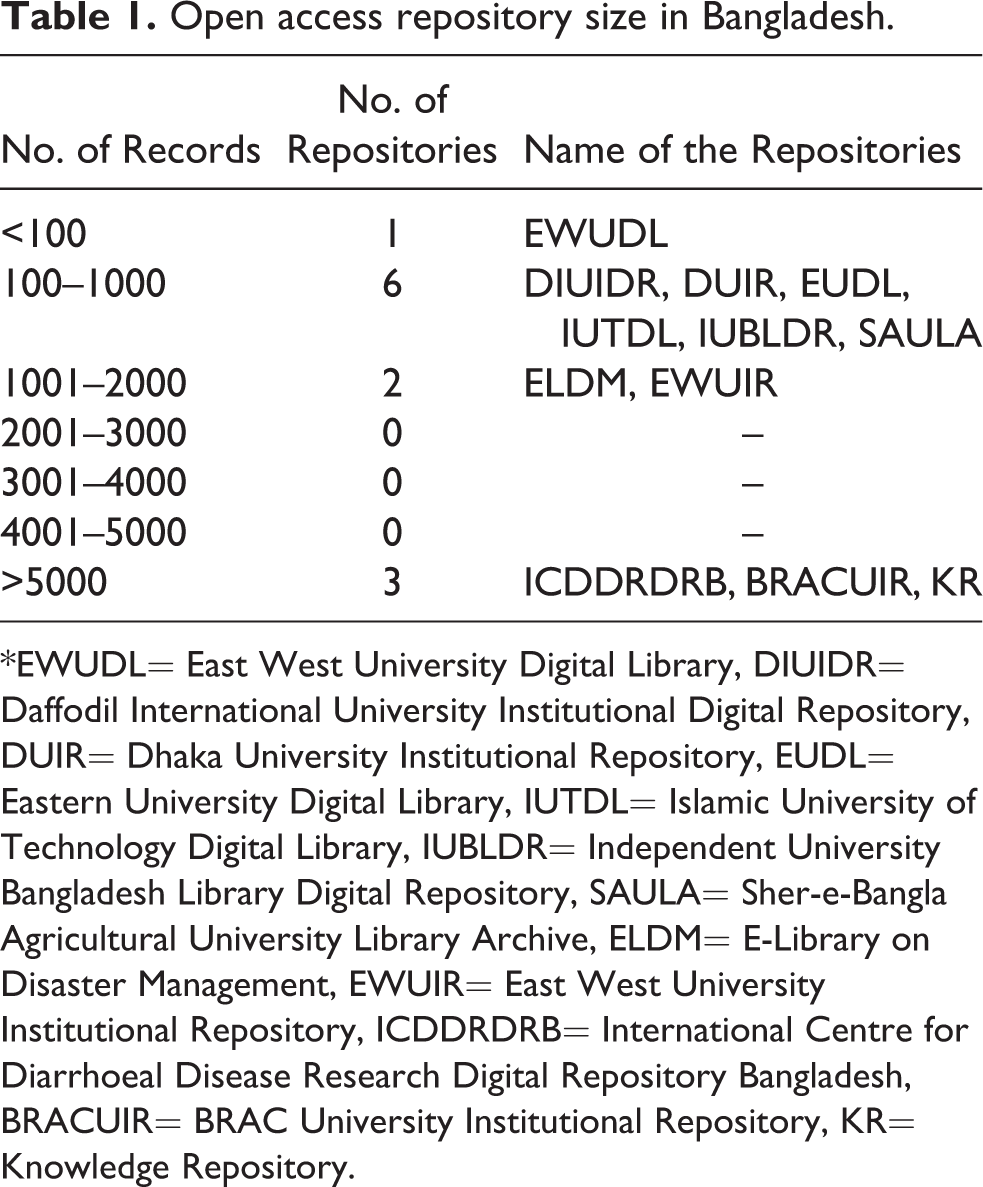
*EWUDL= East West University Digital Library, DIUIDR= Daffodil International University Institutional Digital Repository, DUIR= Dhaka University Institutional Repository, EUDL= Eastern University Digital Library, IUTDL= Islamic University of Technology Digital Library, IUBLDR= Independent University Bangladesh Library Digital Repository, SAULA= Sher-e-Bangla Agricultural University Library Archive, ELDM= E-Library on Disaster Management, EWUIR= East West University Institutional Repository, ICDDRDRB= International Centre for Diarrhoeal Disease Research Digital Repository Bangladesh, BRACUIR= BRAC University Institutional Repository, KR= Knowledge Repository.
Software used in open access repositories in Bangladesh
Figure 5 reveals that there are mainly two types of software used in OARs within different institutions in Bangladesh: i.e. Greenstone (9) and DSpace (3). Although in a neighboring country like India there at least four other softwares (i.e. Nitya, CALIBRE, Eprints, and Architexturez) used along with Greenstone and DSpace for maintaining their repositories (Singh, 2016).

Types of open access repositories software in Bangladesh.
Operational status of open access repositories in Bangladesh
Figure 6 indicates that among 12 repositories in Bangladesh, only one repository is running on a trial basis and other 11 repositories are fully operational in terms of service delivery and access.
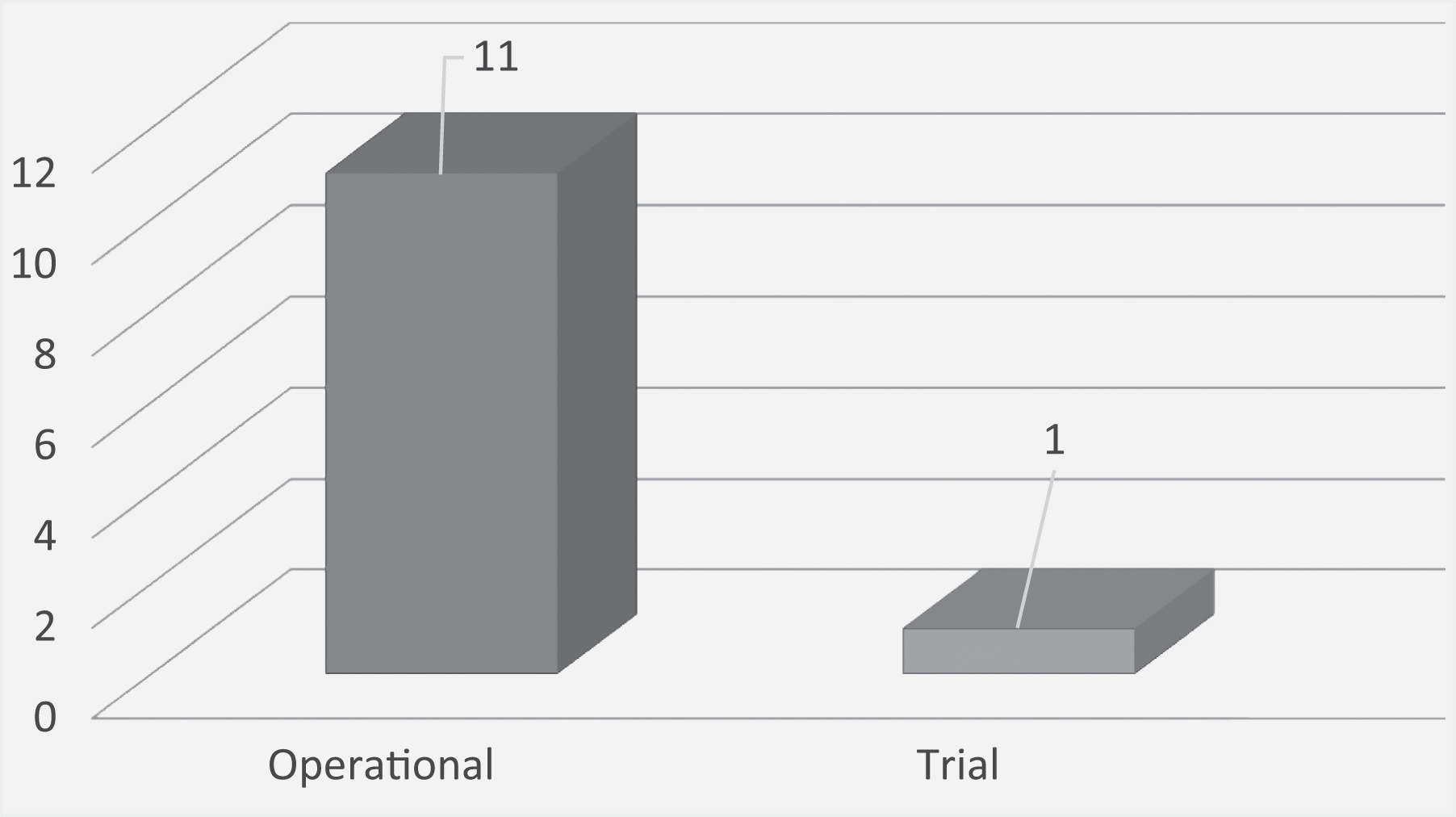
Operational status of open access repositories in Bangladesh.
Content pattern of open access repositories in Bangladesh
From Figure 7, it is clear that the most common content type in the repositories of Bangladesh listed in OpenDOAR is journal articles, theses and dissertations (23%), followed by unpublished reports and working papers (20%), and then conferences and workshops (11%).
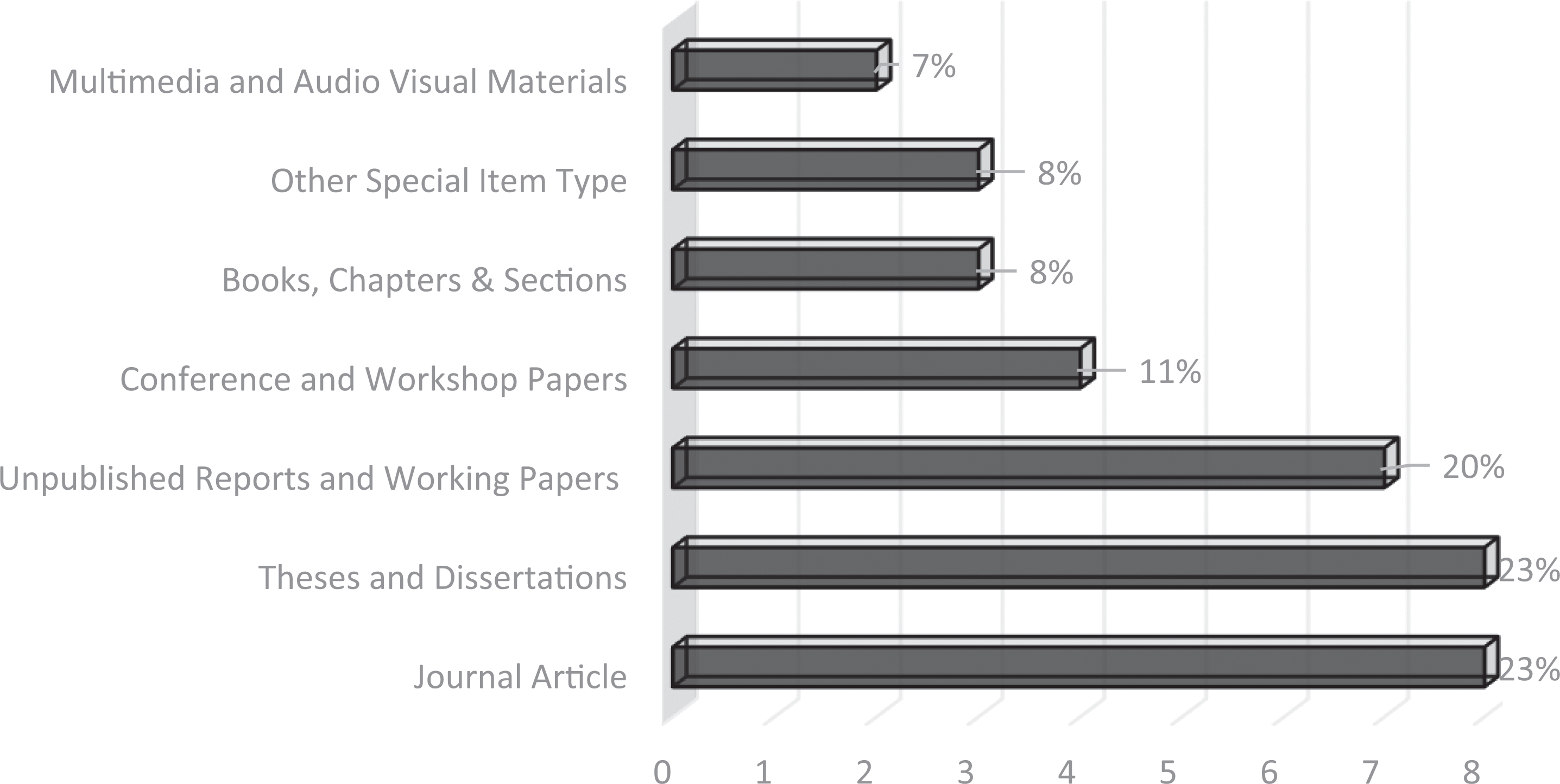
Content pattern of open access repositories in Bangladesh.
Subject diversification of open access repositories in Bangladesh
Most large institutions effectively hold all subjects in their repositories. They are therefore categorized as “Multidisciplinary” in OpenDOAR. On the other hand, specialist institutions (e.g. engineering and agricultural colleges) and disciplinary repositories only cover a few subjects, and these have been indexed individually (OpenDOAR, 2017). Most of the repositories in Bangladesh take a multidisciplinary subject approach. Table 2 shows that the multidisciplinary collections constitute 25% of the total repositories followed by Health and Medicine, Business and Economics (9.38%), Library and Information Science, Language and Literature, Arts and Humanities General, and Computer and IT (6.25%).
Subjects of open access repositories in Bangladesh.

Policies of open access repositories in Bangladesh
In OpenDOAR, policy information includes metadata reuse policy, content policy, submission, and preservation policy. Table 3 indicates that the most covered topics are undefined regarding metadata (87.5%), content (75%), submission (62.5%), and preservation (87.5%). Again, only 12.5% of policies regarding content and 25% of policies regarding submission are defined.
Policies of open access repositories in Bangladesh.

OAI-PMH compliance of open access repositories in Bangladesh
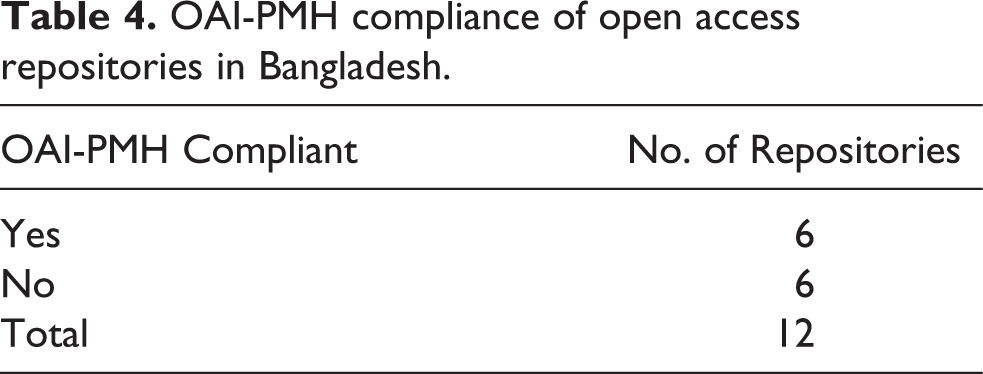
OAI-PMH (Open Archives Initiative-Protocol for Metadata Harvesting) is the protocol used for harvesting the metadata descriptions of the records from the archives (Singh, 2016). OAI-PMH is a low-barrier mechanism for repository interoperability and provides an application-independent interoperability framework based on metadata harvesting (Lagoze et al., 2016). The Protocol has been developed by the Open Archives Initiative, thus setting interoperability standards in order to ease and promote the broader and more efficient dissemination of content within the scientific community (INTECH, 2016). OAI-PMH compliancy makes all the repositories work together as a single entity and can search and retrieve desired documents all at once. From Table 4, it is clear that six out of 12 repositories follow the OAI-PMH protocols and other six repositories do not.
OAI-PMH compliance of open access repositories in Bangladesh.
Bangladesh's open access repositories visibility on RWWR
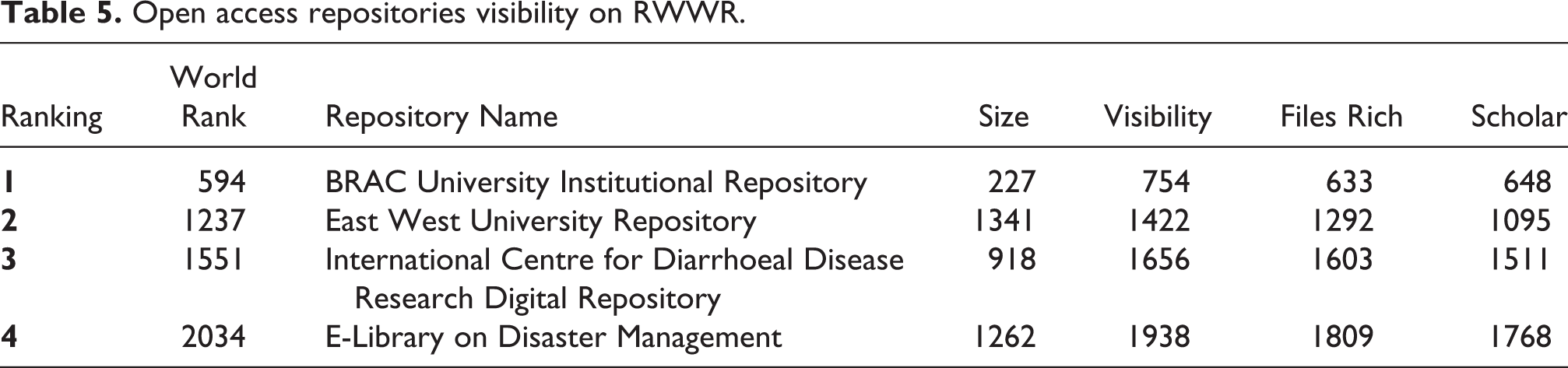
The RWWR is an initiative of the Cybermetrics Lab, a research group belonging to the Consejo Superior de Investigaciones Científicas (CSIC) and the largest public research body in Spain (Ranking Web of World Repositories, 2016). RWWR indexed around 2275 repositories all around the world. Table 5 shows that only four repositories in Bangladesh are indexed in RWWR. Again, not all the repositories that are indexed in OpenDOAR are included in RWWR. This is a very low rate for any country and indicates a negative approach in terms of research and development.
Open access repositories visibility on RWWR.
Discussion
This paper is one of the first attempts of its kind to express the present scenario of OARs in Bangladesh. The study finds a positive vibe for establishing an OA platform for promoting research and development. Although the number is relatively low (12), it is satisfactory considering the socio-economic condition of Bangladesh. Neighboring countries like Pakistan, Afghanistan, Iran and other countries with similar socio-economic conditions also have a lesser number of repositories. Credit goes to iccdr, b which attempted to establish an OAR by making its journal publicly available (Uddin et al., 2014). After that most of the initiatives were undertaken by the academic institutions, especially the private university libraries. The study indicates a steady development of OARs in Bangladesh. The Government of Bangladesh also issued the Right to Information (RTI) Act 2009 in the Bangladesh Gazette on 6 April 2009, encouraging OA libraries and information centers (Islam and Akter, 2013). The number of records among these repositories also generates a clear idea regarding the positive attitude of the stakeholders in creating and managing OARs in this region. After establishing an OA platform, it is necessary to make it operational. The study clearly shows that a high number of OARs (11) are operational. Content and subject pattern of these OARs also covers a wide spectrum of knowledge which is essential for the overall development of the society instead of being developed in only one sector. Among these repositories, six repositories have OAI-PMH compliance while in 2013 this number was only two (Islam and Akter, 2013). But the visibility of these OARs on RWWR is not satisfactory at all. The organization and institutions should take necessary steps to be visible on RWWR.
Recommendations
The present status of OARs in Bangladesh is not really satisfactory. Although this research is limited to the repositories that are indexed in OpenDOAR, it clearly indicates poor awareness and initiative from certain institutes. Open access to scientific and technical information is a door for unlimited usage of these resources but most often this initiative is hindered by fear, negative thinking, lack of innovative thinking, administrative discouragement, lack of sharing mentality, etc. (Shuva and Taisir, 2016). It is important to take the following initiatives for promoting OARs in Bangladesh. A massive orientation regarding the advantages of OARs should be initiated to encourage academic and other institutions. Open access to other repositories will not only enhance the research and development activities but also enable individuals and institutions to build a culture of “free-flowing information”. To overcome the negative thinking regarding OA is a huge challenge. A majority of senior researchers and academicians have not accepted the concept which was also indicated by Shuva and Taisir (2016). Action is needed to make them understand the whole concept of OARs. The narrow mentality among different institutions to not share their knowledge and practices should be changed. Knowledge is something that, if confined to one individual or institution, will never flourish and be developed. The predatory OARs and publication should be properly identified and banned to rescue the lost reputation of the open access system. Repositories with excellent content should be awarded annually to promote OAR practices. By creating institutional repositories, libraries can also define their leadership role in the present ICT era (Baron and Walters, 2004). This philosophy and positivity should be adopted by the information professional to develop an OA platform for different institutions.
Conclusion
This paper presented an overview on the present state of the art of OARs in Bangladesh. The study shows that the number of repositories indexed in OpenDOAR is lower in comparison to other countries of Asia. It clearly indicates the very slow progress of OARs in Bangladesh. The repositories in Bangladesh listed in OpenDOAR are mostly institutional in nature. The study also reveals that a high number of repositories are small in terms of collection. Only three repositories have more than 5000 records in their repositories (i.e. ICDDRDRB, BRACUIR, and KR). In Bangladesh, for maintaining these repositories DSpace and Greenstone software has been widely used while in neighboring countries like India, other software is used. This study also enumerates that many repositories are in operational nature and the majority of the content includes journal and articles, theses and dissertations, and unpublished reports on multidisciplinary fields. Again, one of the basic features of an OAR system is OAI-PMH compliance which is also not available for six repositories. The visibility of OARs of Bangladesh is also not at a satisfactory level. Since Bangladesh is a developing country, OARs are needed at this time to boost research and innovation. For this purpose the free flow of information and knowledge practices is a must without any doubt. Thus, the institutions should come forward to take initiatives for creating open access platforms for each other.
Footnotes
Declaration of Conflicting Interests
The author(s) declared no potential conflicts of interest with respect to the research, authorship, and/or publication of this article.
Funding
The author(s) received no financial support for the research, authorship, and/or publication of this article.
