



Abstract
This study investigates researchers’ current practices for managing and sharing research data. An online survey was conducted among researchers from three Arab universities in Egypt, Jordan, and Saudi Arabia. In total, 337 participants filled out the questionnaire. The study shows that 97% of researchers were responsible for their research data, and 64.4% of researchers shared their data. Contributing to scientific progress and increasing research citations and visibility were the key factors that motivated researchers to share data. However, confidentiality and data misuse were the main concerns among those who were reluctant to share. Finally, some recommendations regarding the improvement of data management and sharing practices are presented.
Keywords
Introduction
The scientific community has witnessed a significant shift towards open science, which prioritizes collaboration and open access in scientific research. Research data management and sharing have become critical because of their valuable role in enhancing science through building on previous works by reusing data produced by other researchers. As mentioned by Tenopir et al. (2011: 1), ‘research data is the infrastructure of science’.
Research data includes every piece of data acquired and generated during the research process, and may comprise, among others, text, spreadsheets, questionnaires, photographs, films, test responses, slides, laboratory notes, statistics, observations, results of experiments, measurements, samples, algorithms, scripts, and workflows. It can be defined as ‘any information, in particular facts or numbers, collected to be examined and considered as a basis for reasoning, discussion, or calculation’ (Directorate-General for Research & Innovation, 2016: 3).
Data sharing is not a new phenomenon in scholarly communication. It refers to the movement towards a new data publishing and exchange model that began in the 1960s. An example is the UK Data Archive (2017), which was launched in 1967 as the Social Science Research Council Data Bank, to solve the problem of sharing information and data generated by social and economic surveys, by capturing these data and make them available to researchers. The mid-1970s witnessed the rising of data banks, especially in the field of health science; a distinctive model of this decade is the GenBank (Cinkosky et al., 1991) database which was established in 1979 by Walter Goad in Los Alamos to provide open access among biologists to DNA sequence data on a daily basis, and today some genetics journals require researchers to submit the DNA sequences they reference in GenBank. Concurrently, a conference for sharing social science research data was held by the Committee on National Statistics in which participants presented many recommendations in order to make their data accessible for other researchers (Fienberg et al., 1985).
During the 1980s, the concept of sharing research data with external researchers seemed risky because of the fear of data theft or scooping, but this situation changed by the 1990s. For example, the US Long-Term Ecological Research Network site had data-sharing policies in 1993 and its data catalog was publicly available online, which consisted of only a summary description of data sets (Porter, 2010).
Recently, there has been a growing awareness of the management and reuse of research data, due to the shift from open access to scientific publications alone to open access to both publications and research data. In March 2001, during the OECD Committee on Scientific and Technology Policy meeting, scientists from the Netherlands recommended that a working group on issues of access to digital forms of research data be established (Arzberger et al., 2004). At the same time, funding bodies encouraged researchers to openly publish their data. For example, the National Institutes of Health added a data management plan requirement in 2003 for grants over $500,000 (Borgman, 2012). Also, the European Commission launched the Open Research Data Pilot initiative in 2015 to have scientific publications and research data in projects supported by the European Research Council under Horizon 2020 freely accessible for reuse (OpenAIRE2020 project, 2016).
Many articles assert that studies which make their data available receive more citations than similar studies that do not (Piwowar and Vision, 2013: 2). Therefore, some higher impact journals implemented data-sharing policies and required data sharing as a fundamental part of the publication of articles (Vasilevsky et al., 2017). In May 2013, the Nature Publishing Group (2013) implemented a checklist for life science articles that included data deposition in a public repository.
The new technological context has promoted a culture of research data sharing, as a large number of online platforms have been designed as open science tools to publish and share all types of scientific research output, including data sets. One example is the evolution of research data repositories of many types: institutional, single-discipline, and multidisciplinary. Until April 2016, the most comprehensive web registry of data repositories, ‘re3data.org’, indexed 1500 repositories, the majority of which are from non-profit institutions (Pampel, 2016). Academic social networks constitute another example; these networks are specialized platforms designed for researchers, aimed at the communication, dissemination, and exchange of science-related information among the members involved (Elsayed, 2016).
Scientific research in Arab States
Governmental bodies, especially higher education institutions, are at the forefront of scientific research in the Arab world. However, this scientific research faces many challenges (Zou’bi et al., 2015). First, there is a lack of focus with respect to research priorities and strategies. Second, funding is insufficient to meet research goals, with the Arab world contributing just 1% of global spending on research and development (R&D) in 2013, and with scientific research expenditures representing 0.2–0.4% of the national gross domestic product (GDP). Other challenges include a lack of awareness of the importance of good scientific research, inadequate networking, limited collaborative efforts and brain drain.
In 2014, the Arab Strategy for Science, Technology and Innovation (ALECSO, 2016) was approved at the 14th Congress of Ministers of Higher Education and Scientific Research in the Arab World in Riyadh (Saudi Arabia). It is believed that this strategy will play a pivotal role in economic and social development in Arab countries. The strategy aims to build scientific research capacity, encourage scientific cooperation regionally and internationally, and set up a network of science centers of excellence. It intends to turn universities in Arab countries into regional hubs that will facilitate cooperation through joint research projects. However, the strategy does not include any initiatives for how to facilitate the management and sharing of research data among researchers in Arab states.
For the last 25 years, the need to share research data has been recognized as an urgent problem (Borgman, 2012). However, several Arab scientific research efforts, such as the Arab Strategy for Scientific and Technical Research and Innovation (ALECSO, 2016); the National Policy and Strategy for Science, Technology and Innovation 2013–2017 in Jordan (Higher Council for Science & Technology, 2013); the Science, Technology & Innovation Policy in the United Arab Emirates (United Arab Emirates Government, 2015); the National Strategy for Science, Technology and Innovation 2015–2030 in Egypt (Ministry of Higher Education and Scientific Research, Egypt, 2015), have limited their discussion to how to benefit from research outputs such as patents, theses, and published articles, and how researchers in Arab states can exchange published research outputs. They have not yet discussed the topic of unpublished data sets or raw data.
Despite the foregoing, there is light at the end of the tunnel. First, there is the Research Output Management through Open Access Institutional Repositories in Palestinian Higher Education (ROMOR) (2016), a recently funded research project that was launched in 2016 under the auspices of the European Union’s Erasmus Plus program. The current phase of the project involves a research data pilot study to assess research data and output management at the managerial levels of Palestine’s higher education institutions. Second, two Arab data repositories were listed in ‘re3data.org’ – the first being a government data repository in Egypt named Egypt’s information portal, and the second being Open data for Africa in Tunisia.
The present study is important in that is it is the first Arab study designed to explore not only researchers’ current practices for managing and sharing research data in Arab universities, but also the obstacles these researchers have encountered. This study will contribute to current knowledge about research data management and sharing and will support the future strategic development of Arab higher education institutions and research centers’ research data.
Literature review
During the past few years, much literature on research data has been devoted to its definition, benefits and barriers, the role of the university library, training, cataloging and technical issues, management, repositories, policies and guidelines, infrastructure, and services. The present study will discuss only the literature concerning researchers’ practices and perceptions about data management and sharing. The objective of this review is to provide background information about the topic and point out shortcomings in the literature.
Many studies have investigated researchers’ attitudes regarding research data management and sharing. For example, a survey of 6958 research initiatives in the humanities and social sciences submitted by Canadian researchers found that researchers actively shared data, but only 18.7% planned to archive their research data in a repository (Perry, 2008). Another study by Griffiths (2009) analyzed a report produced by the Research Information Network and indicated that, although researchers archived data in a haphazard manner on their computers or on transportable storage media, with no idea of what will happen to them in the future, there was a tradition of sharing data.
Along the same lines, Cragin et al. (2010) interviewed a sample of 20 scientists across 12 different fields from two large research universities who had an interest in data management and sharing. They reported that participants generally had positive views of data sharing and expressed openness to sharing their own data, particularly with people in their field. But 60% of them identified a need to restrict some or all of their data from public access for any length of time. A similar study by Tenopir et al. (2011) surveyed a total of 1329 scientists from America, Europe, and Asia, and revealed that 85% of them were interested in using other researchers’ datasets; 46% reported that they did not make their data electronically available to others. This finding implies that there is a gap between what scientists say they want and their actual practices. Another survey done by Schöpfel and Prost (2016), which investigated 270 researchers in the social sciences and humanities at the University of Lille (France), pointed out that most of the respondents (83%) preferred local solutions for storing their research data, and that most of the respondents (64%) did not share their research data with colleagues or others.
To understand researchers’ data-sharing practices, Youngseek and Jeffery (2012) conducted 25 interviews among science, technology, engineering, and mathematics (STEM) researchers at three research universities in the Eastern US. The results showed that most researchers reported internal data sharing within their research teams or among collaborators, and about half of the interviewees chose altruism as the factor most influencing data sharing. A study by Parsons et al. (2013), aiming to gather 366 researchers’ requirements to create research data management infrastructures at the University of Nottingham, showed that only 13% said that they would deposit their research data in a public repository. Another study by Kvale (2014), which explored researchers’ attitudes and experiences with data sharing at the Norwegian University of Life Science, concluded that the processes of data sharing was far from optimal because researchers primarily retrieved data from colleagues and a collegial network. Also, the study by Van den Eynden and Bishop (2014), which interviewed 22 researchers from five European countries, revealed that data sharing was seen by most researchers as part of the normal scientific process. Of the same opinion, Koopman and De Jager (2016) revealed that some researchers already archived their digital data in repositories and that 88% of the 163 participants believed that their data should be made available for future research.
Research data can be shared in multiple ways. Ferguson (2014) found that more than half of interviewed researchers used various methods to share their data publicly, notably via supplementary material in journals. Journal requirements were the primary factor motivating them to allow public access to their data. Another study by Youngseek and Jeffery (2016) found that regulative pressure by journals, normative pressure at a discipline level, and perceived career benefits and scholarly altruism at an individual level had significant positive relationships with data-sharing behaviors.
Despite the positive attitude towards sharing research data, there are considerable reservations. An early study by Martinez-Uribe (2007) in which 37 researchers from Oxford were interviewed concluded that few of them had deposited any data in domain-specific data archives; rather, researchers preferred to use their departmental website. The top three requirements expressed by them were: having a secure and user-friendly solution, a sustainable infrastructure, and advice on practical issues related to managing data across its life cycle. Cheah et al. (2015) conducted 15 interviews and three focus group discussions. They identified potential harms to research participants or their communities and the researchers themselves as the most important reservations when sharing data. In addition, the study by Jao et al. (2015) indicated that health researchers in Kenya worried about the risks of harm for study participants and misuse of data. A survey conducted at Virginia Tech found that 57% of researchers considered their data to have long-term value but concluded that there was a significant gap between the rather limited sharing activities and the positive perception of reuse or repurpose values regarding research data (Shen, 2016). In India, a study by Tripathi et al. (2017) showed that 30% of 40 researchers and faculty members interviewed at two Indian universities had no culture of sharing data in their fields.
From the above review, the following observations can be made: (1) many of the researchers in the studies cited failed to use optimal research data management practices; (2) most of the studies revealed similar findings, i.e. that despite researchers’ recognition of the importance of data sharing, they lacked the capability to actually share data; (3) universities and scientific journals motivate researchers towards public access to their research data; (4) researchers prefer to share research data among internal staff rather than with external communities; (5) most studies used interviews as a means of data collection, as it was easier for participants to discuss their perceptions and views about a given subject; and (6) our current study is quite similar to that of Tenopir et al. (2011) in many aspects, as will be seen in the discussion section, except for the fact that they discussed data management and sharing among researchers globally and focused on organizational support, fair use, rights, citation credits, and access to research data.
Arabic literature
To survey studies on research data in the Arabic literature, the researchers consulted three databases in the field: (1) the El-Hadi database (AFLI, 2017); (2) the EduSearch database (Dar Almandumah, 2017a); (3) HumanIndex in Arabic (Dar Almandumah, 2017b). Unfortunately, the three sources showed that no Arabic studies had explored the topic.
Therefore, this study is the first in the Arab world to explore how research data is managed and shared among researchers in Arab universities. Its importance comes from the fact that no comprehensive studies exist on this topic.
Research purpose and methodology
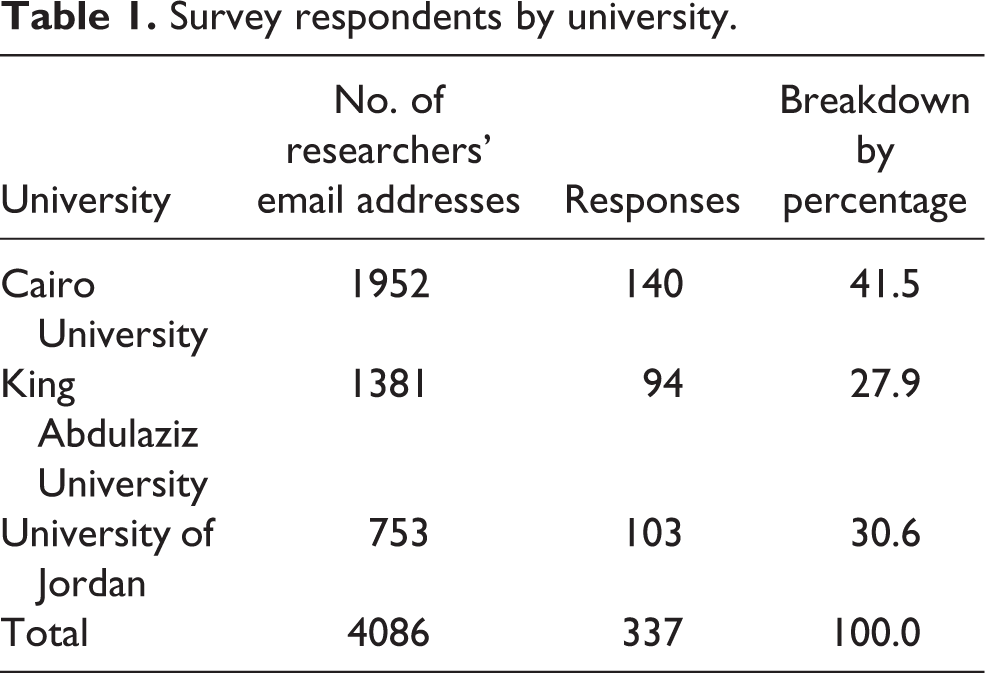
According to the 2011 Thomson Reuters Global Research Report (Adams et al., 2011: 7), Egypt, Saudi Arabia, and Jordan were the most prolific Arab countries in terms of annual research publication output in the region. Each of the three countries produced more than 1000 papers annually, indexed on the Thomson Reuters Web of Knowledge over the last few years. The report also showed a common focus in the fields of engineering, agricultural sciences, chemistry, pharmacology, materials science, and mathematics. It should further be noted that the Web of Science tends to skew towards these disciplines in general and that they are not specific to the Arab states. With this information in mind, a questionnaire was created, along with an introductory cover letter, and sent to 4086 academic faculty researchers at three Arab universities in the sample (see Table 1), selected because they are among the 10 best universities in the Arab World (QS World University Rankings, 2016).
Survey respondents by university.
Survey data was collected over the period from March to July 2017. The web-based questionnaire was created in English using Google Docs. Given that a UNESCO science report stated that from 2008 to 2014, Arab States published mostly in the life sciences, followed by engineering and chemistry (Zou’bi et al., 2015), the questionnaire targeted the faculties of Agriculture, Engineering, Medicine, Pharmacy, and Science. It should be noted that King Abdulaziz University’s faculty of agriculture goes by the title of Faculty of Meteorology, Environment and Arid Land Agriculture.
Research questions
This study will address four main research questions: What are research data management practices employed by researchers in Arab universities? Why did researchers in Arab universities share their research data, and how? What are the critical challenges facing researchers in Arab universities with respect to sharing their research data? What are researchers’ requirements concerning managing and sharing their data more effectively?
Results and discussion
Researchers’ demographic profiles
This section will discuss the demographic characteristics of participants, including age, academic job title, and discipline. Several of these characteristics are used later in the study to draw relations among variables.
The questionnaire contained 25 questions encompassing three main sections, namely: information about researchers, research data management practices, and research data-sharing activities (see Appendix A). To increase the response rate, a reminder was sent out to participants after the initial contact. A total of 4086 email invitations were distributed (to both personal and institutional email accounts) and 337 responses were received. Statistical analysis was performed by using Chi-square tests, which show the relationship between demographic factors and researchers’ current practices for managing and sharing research data. The response rate was 8%. A low response rate is a major problem encountered by most surveys in the Arab world, especially for web-based questionnaires. This rate is in line with Schöpfel and Prost’s findings (2016), which revealed that the response rate for other surveys in the same field is partially unknown or ranges from 7% to 24%.
Despite the relatively low response rate, it was possible to compile information concerning respondents, including the following characteristics: (1) most of the respondents (41.5%) were from Cairo University, as a large number of academic staff from this institution were contacted; (2) the sample consisted predominantly of males (55.5%) – the female minority (44.5%) is not surprising, as females account for just 28% of researchers globally, and only 37% of researchers in the Arab world are women. In Egypt, females constitute 42.8% of all researchers, while in Jordan the proportion is 22.5%, and in Saudi Arabia it is 1.4% (Zou’bi et al., 2015). Only nine (2.6%) of the respondents were non-Arab, seven from King Abdulaziz University and two from the University of Jordan.
The age ranges of the 337 respondents were as follows: almost 3.3% were 25 and under; 11.3%, 26 to 30 years old; 12%, 31 to 35; 14.2%, 36 to 40; 12.5%, 41 to 45; and 14.2% were 46 to 50 years of age. Most of the respondents were older researchers (32.6% over the age of 50). It is worth mentioning that the average production of publications among scientists increases with age, with the highest publication productivity occurring in the 50–59 age bracket (Royal Swedish Academy of Engineering Sciences, 2012: 4). On the other hand, research data availability declines with article age (Vines et al., 2014: 94), which means that the longer authors hold on to their data, the greater are the chances of the data being lost over time; therefore, we can assume that older researchers may be more concerned about the loss of research data than their younger counterparts. It is not surprising that this age group responded in greater numbers to the questionnaire.
Researchers were asked to indicate their academic job title. Nearly 34.4% of faculty members were professors, with the bulk of respondents holding other teaching positions – associate professor (19%), assistant professor (22%), lecturer (11.3%) and teaching assistant (12.5%). Finally, a small proportion held a non-teaching position (researchers – 0.3%). The three Arab universities use almost the same terms for job titles, with the exception Cairo University, which, like all Egyptian universities, uses the term ‘assistant professor’ to designate a professor with the same credentials as an associate professor in Jordan and Saudi Arabia.
We shall see that academic discipline is an important variable in explaining some aspects of managing and sharing research data, according to the scale provided in the questionnaire. The responses were: one-third of respondents (29.7%) were from the field of health and medical sciences and 21.7% were from pure sciences (see Figure 1). This was expected, as research data management and sharing have a long history in health and medical sciences among scientists who collected it. Openness in the health sciences reached a milestone 20 years ago when scientists agreed to deposit genetic sequences in public databases (Chretien et al., 2016: 2).

Survey respondents by broad discipline.
Researchers’ data management practices
There are various kinds of digital research data, including texts, numbers, and audio and video streams, which were generated through scientific experiments, models or simulations, observations, derived data, and canonical or reference data (Research Information Network, 2008).
It can be observed that the researchers in this study generated a broad spectrum of data types, including experimental measurements (66.8%), statistical data (54.9%), sample data (32.9%), and other types (8%) including data models, computer simulation results, designs, and predictions of mathematical models. These findings are in accordance with Tenopir et al.’s (2011) study, which emphasized that experimental data was the type most frequently used. The responses for the various types of data generated are presented in Table 2.
Type of research-generated data.

Note: Multiple answers were permitted.
The formats in which research data are created usually depend on how researchers plan to analyze data, the hardware used, the availability of software, or discipline-specific standards and customs (Van den Eynden et al., 2011: 12). Respondents indicated various formats used for the digital data generated. Figure 2 shows that text documents (85.5%) and spreadsheets (60.5%) were the formats most frequently used. This is in accordance with the findings of the study by Meadows (2014), which showed that 82% of respondents produced data in spreadsheets and CSV files, and a small proportion (11%) generated video/audio recordings.
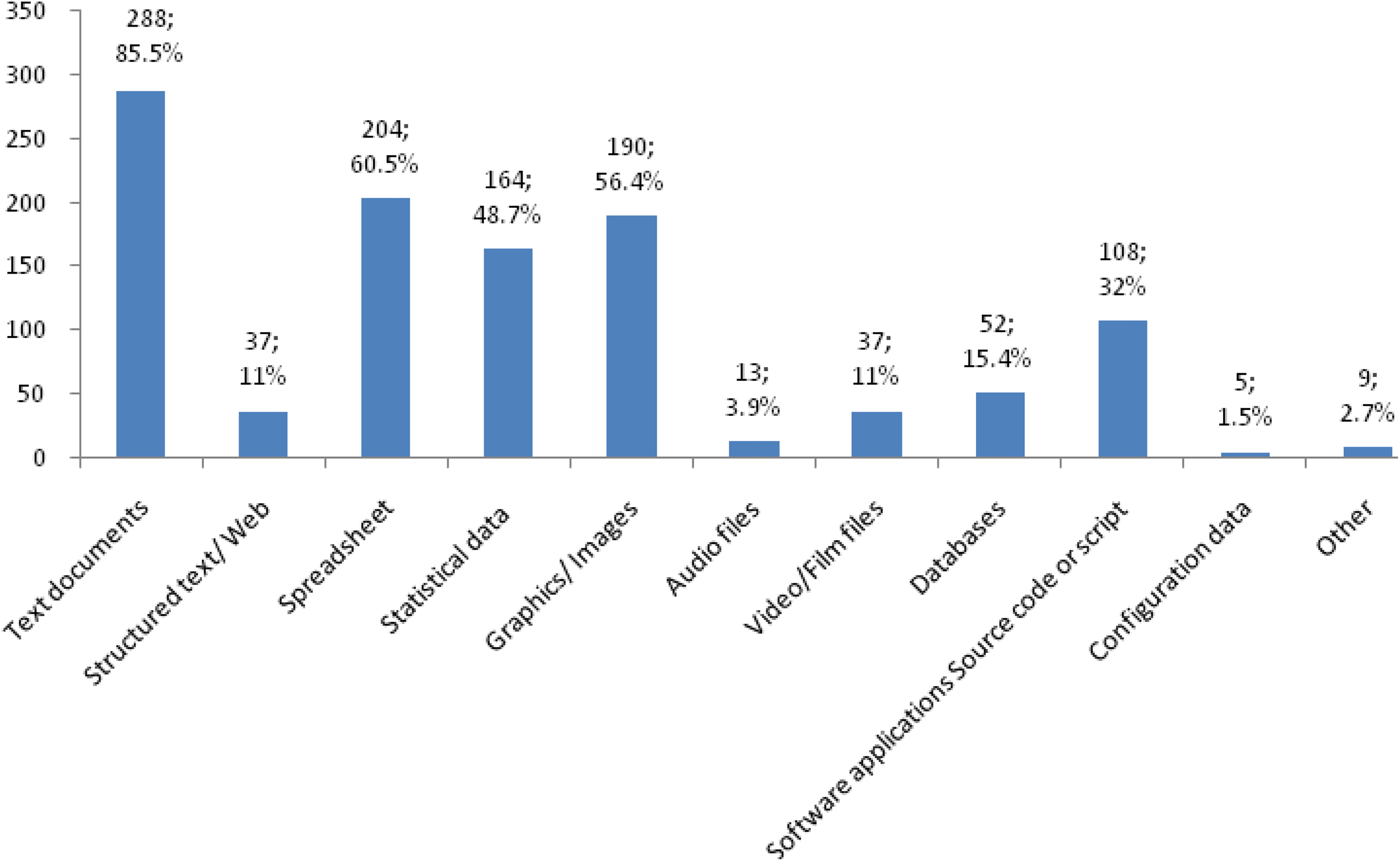
Format of research data generated.
Researchers were asked to determine the expected preservation period for their data. As Figure 3 indicates, more than one-third of the researchers (36.2%) preserve their data for more than six years, and 24.6% from one to three years. However, about one-fifth (20.5%) of the respondents stated that they did not know. Of the latter group, 40.5% were from the field of engineering.

Research data preservation period.
The chi-square test to evaluate the independence of variables was applied, using a 0.05 significance level to study the relationship between disciplines and preservation period. The results showed a correlation between the two variables, as seen in Table 3. It was found that of the 36.2% who chose the data preservation period of more than six years, 28.6% were from health and medical sciences, and 27% from engineering.
Chi-square tests between disciplines and preservation period.
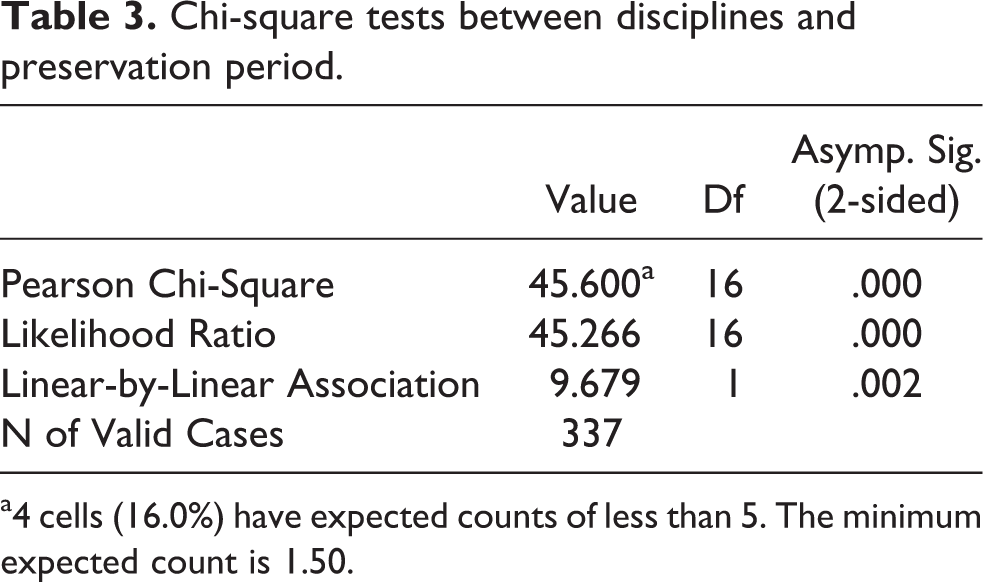
a4 cells (16.0%) have expected counts of less than 5. The minimum expected count is 1.50.
The chi-square test for the variables of data preservation period and gender showed a correlation between them (see Table 4). It was found that male researchers preserved research data for longer periods than their female counterparts: 65.5% of male researchers had preservation periods of more than six years. This result is not surprising, as female researchers are less productive in scientific publishing than their male colleagues (Aksnes et al., 2011: 628).
Chi-square tests between preservation period and gender.
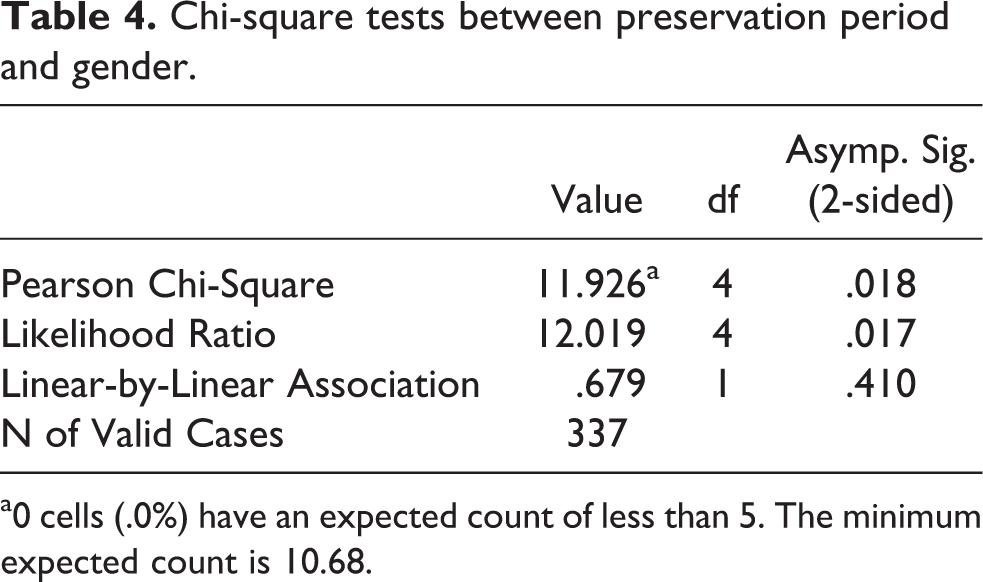
a0 cells (.0%) have an expected count of less than 5. The minimum expected count is 10.68.
When asked whether they had a data management plan, 48.4% of respondents responded in the affirmative. Those who answered ‘no’ (51.6%) were given an opportunity to provide more information for their answer, using the scale provided in the questionnaire. This yielded the following data: 42% said they did not know what a data management plan was; 40.8% stated that they did not know how to create such a plan; 12.6% thought it was not necessary; 16.7% said they had no time for it; and a smaller proportion (1.7%) reported other reasons, such as the fact that the university did not provide facilities to create the plan. It is also important to note that in the questionnaire, the authors explained what a research data management plan meant for those who had not used one before.
As disciplines vary in their need for a research data management plan, the chi-square test to evaluate the independence of variables was applied, using a 0.05 significance level, to study the relationship between disciplines and having a research data management plan. The results showed a correlation between the two variables, as seen in Table 5. It was found that, of the 48.4% who had a plan, nearly 26.3% were from the pure sciences; 22% were from each of the following disciplines: agriculture sciences, engineering, and health and medical sciences; and 7.3%, the lowest, were from pharmacology.
Chi-square tests between disciplines and having a research data management plan.
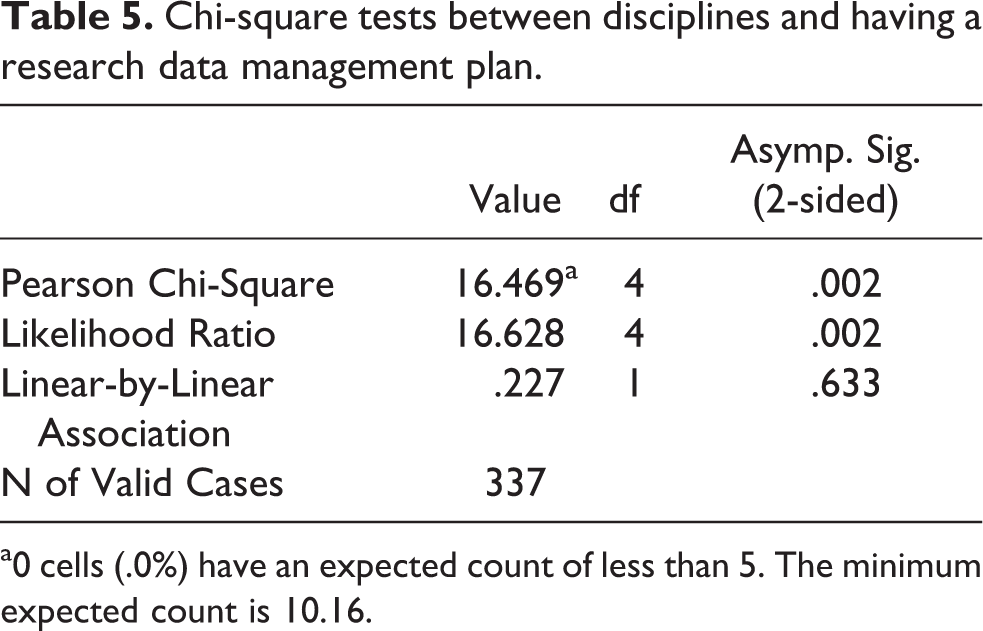
a0 cells (.0%) have an expected count of less than 5. The minimum expected count is 10.16.
According to Vines et al. (2014), the availability of research data fell 17% per year after initial publication due to outdated storage devices. In response to one of the survey questions which asked how respondents stored data, most (93.2%) responded that they used personal storage devices, with other storage methods being: hard copy (print) media (34.1%); cloud-based storage (32.9%); university’s server or repository (11.3%); research data repositories (1.2%); and other (2.4%), chosen by eight respondents. Among the later percentage, two researchers stated that they sent their research data to their email account regularly as a backup, and one researcher used Research Electronic Data Capture (REDCap), the web application service, to manage online surveys and databases.
Data documentation provides information regarding how data was collected, what it means, codes, abbreviations, and the structure of the data, to facilitate retrieval by researchers and others. Despite the usefulness of data documentation, only half (50.1%) of the respondents answered ‘yes’ to the question ‘Do you document your research data?’ For those who document their data, we asked them to identify the metadata standards they use. A large proportion (60.1%) reported that they did not use any metadata standards; however, 26.2% indicated that they applied informal metadata. This correlates with the findings of previous studies (Averkamp et al., 2014; Steinhart et al., 2012; Tenopir et al., 2011; Tripathi et al., 2017), which found that researchers generated and preserved different types of data but did not pay much attention to its metadata. See Figure 4 for the metadata standards used.

Metadata standards used.
As research data is generated through various stages of the research life cycle, participants were asked to indicate the volumes of data needing to be preserved: 40.7% of the researchers said that 75% of their data deserved preservation. Research data volumes are shown below in Figure 5.
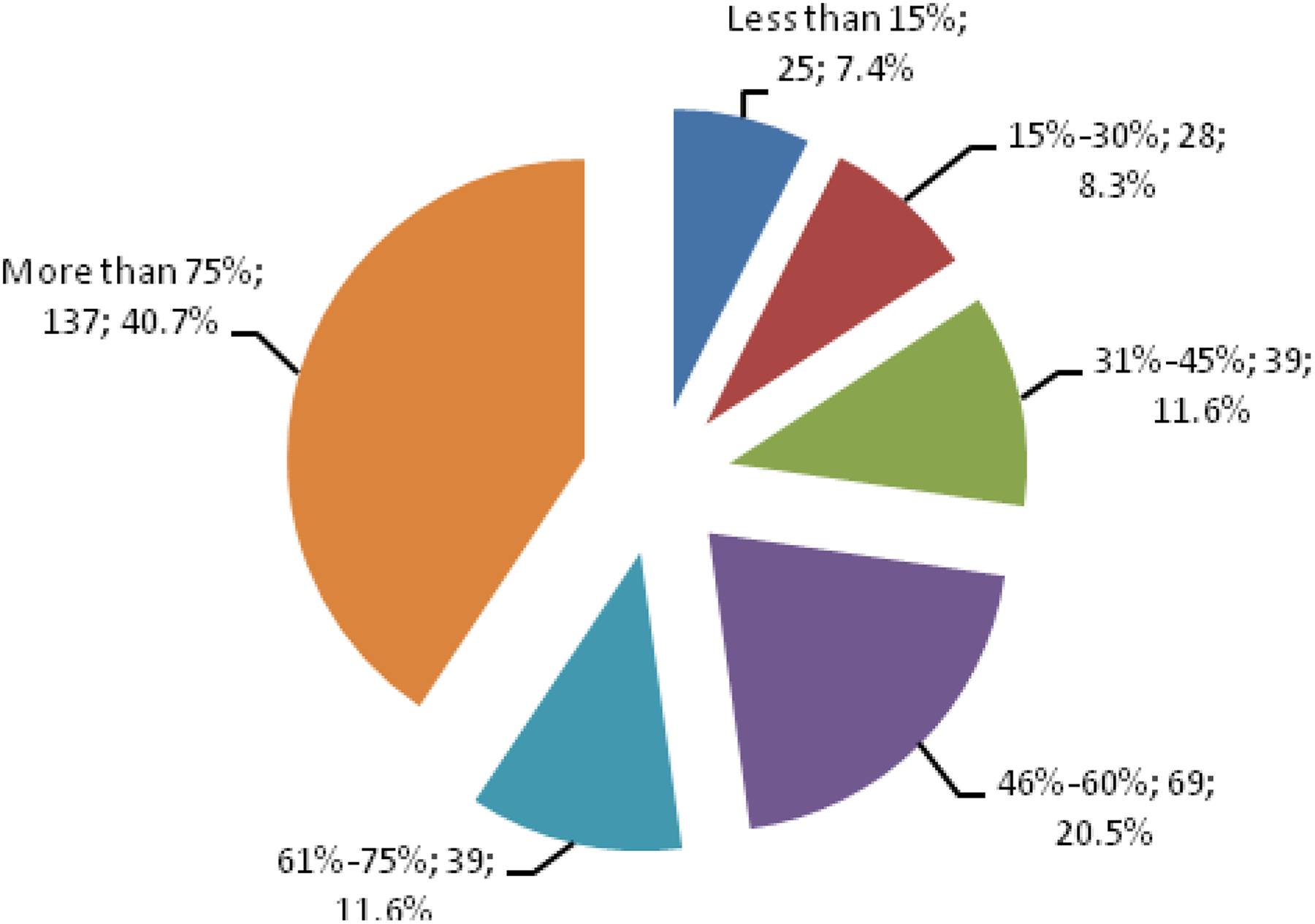
Volumes of research data needing preservation.
Although a recent study by Vines et al. (2014) concluded that research data cannot be reliably preserved by individual researchers, Figure 6 shows that most of the respondents (97%) chose ‘I, myself’ when they were asked to indicate who was responsible for preserving their research data. A smaller group of researchers (4.5%) chose the university computer/IT center. This correlates with the findings of a study by Scaramozzino et al. (2012), which reported that 97% of respondents were personally responsible for data preservation.

Research data preservation responsibility.
Interestingly, respondents generally did not choose the university library as an entity responsible for preserving their research data; this may have to do with the fact that the academic libraries in the three universities in the sample are in the very early stages of participating in research data management, as could be gathered from their websites (Cairo University Central Library, 2017; King Abdulaziz University Library, 2017; Library of the University of Jordan, 2017).
Researchers’ data-sharing activities
Participants were asked whether they had shared their data with others or not. Nearly 64.4% reported that they had already shared their data, and 35.6% said they had not. This result is in accordance with the study of Tenopir et al. (2011), which reported that fewer than half (46%) of respondents did not make their data electronically available to others.
For researchers who responded in the negative, many reasons were given, as shown in Table 6. The main reason cited by respondents was data privacy and confidentiality concerns (45.8%), followed by fear of data misuse (29.2%). Only 2.5% of the researchers reported other reasons, including the fact that nobody had requested their data. These responses correlate with the findings of Perry (2008), which stated that Canadian researchers worried about issues of confidentiality when providing access to their data, as well as those of Meadows (2014), which showed that 68% of respondents cited confidentiality issues as a reason for not sharing data. But this differs from the results of Tenopir et al. (2011), which stated that insufficient time (54%) was the main reason for not sharing data.
Reasons preventing researchers from sharing data.
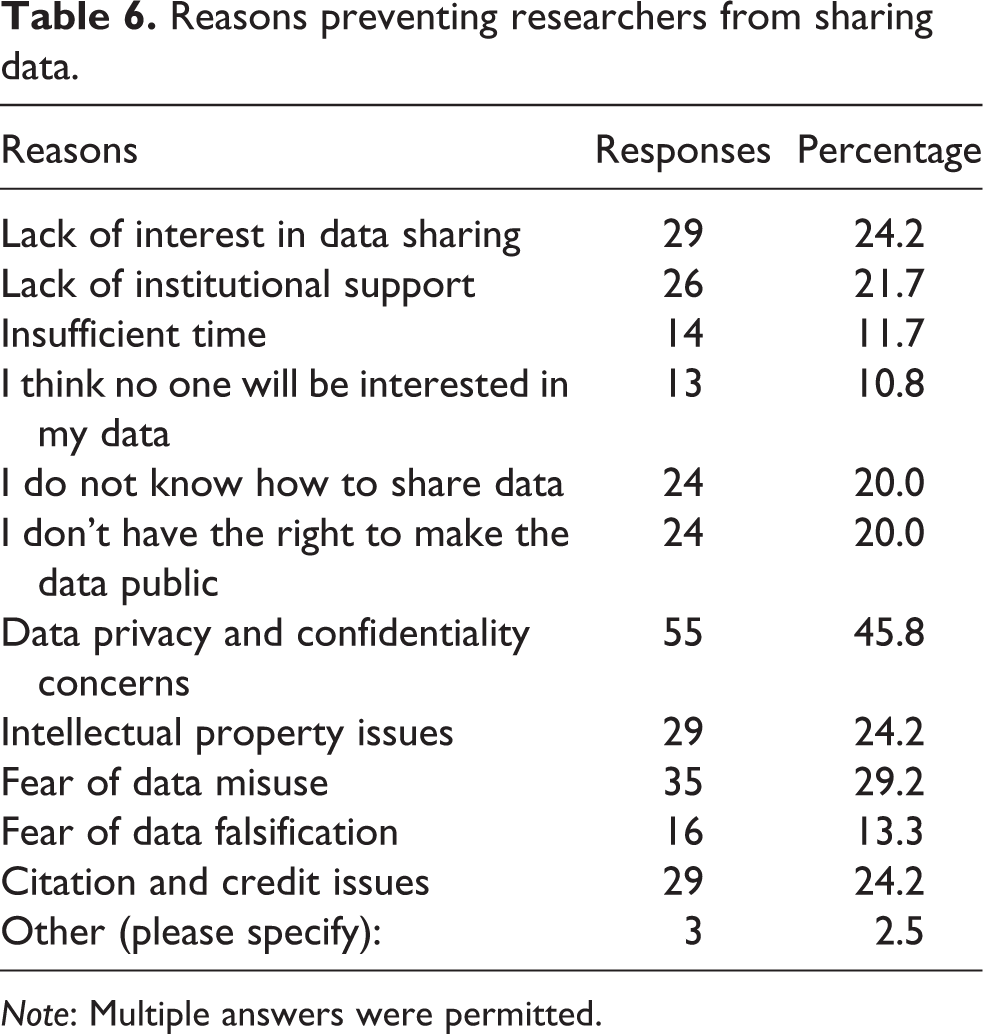
Note: Multiple answers were permitted.
It may have been expected that younger researchers would be more likely to share data; on the contrary, older researchers were more supportive of the idea of data sharing. The chi-square test to evaluate the independence of variables was applied, using a 0.05 significance level to study the relationship between academic job title and the sharing of research data. The results showed a correlation between the two variables, as seen in Table 7. It was found that, of the 64.4% who shared data, 41% were professors. This correlates with the findings of Tenopir et al. (2011), who found that younger scientists under the age of 50 were less likely to make their data available to others without restrictions than older scientists over the age of 50.
Chi-square tests between academic job title and the sharing of research data.
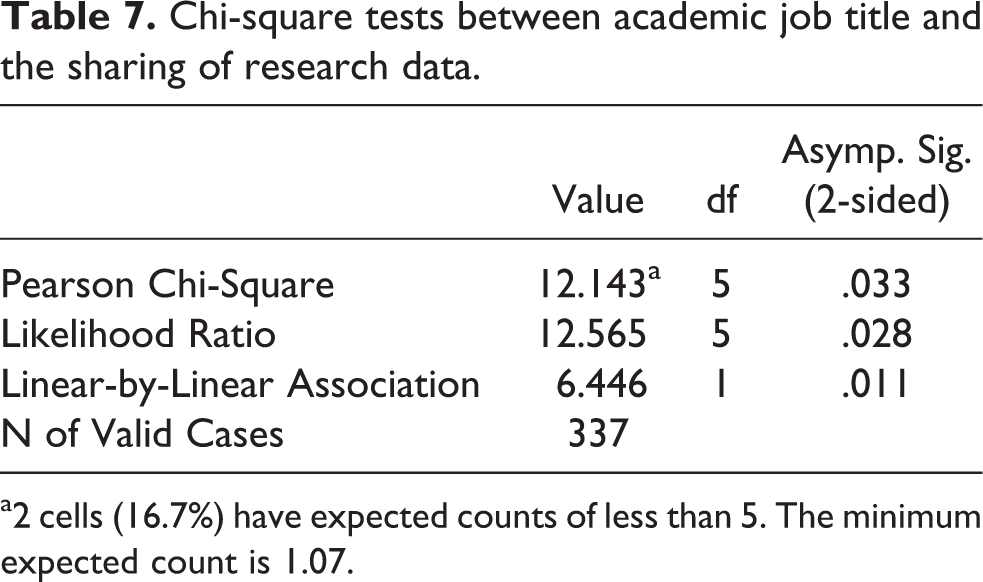
a2 cells (16.7%) have expected counts of less than 5. The minimum expected count is 1.07.
According to Lämmerhirt (2016), sometimes the nature of a discipline makes it scientifically necessary to share the data underlying research publications. The chi-square test to evaluate the independence of variables was applied, using a 0.05 significance level, to study the relationship between discipline and the sharing of research data. The results showed a correlation between the two variables, as seen in Table 8. It was found that, of the 64.4% who shared data, 25.8% were from the pure sciences, 22.5% were from health and medical sciences, the lowest proportion (6.9%) being from the field of pharmacology.
Chi-square tests between discipline and the sharing of research data.
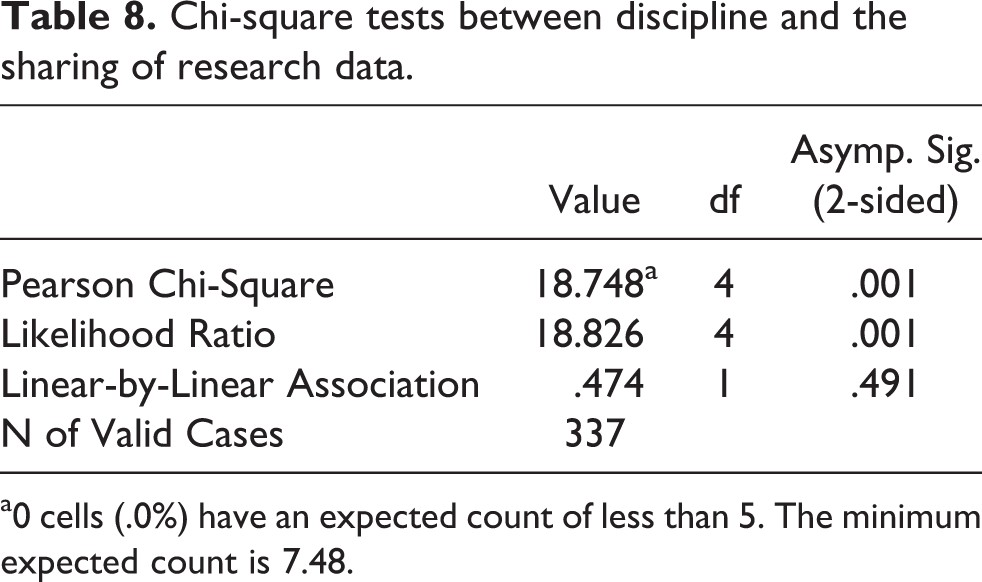
a0 cells (.0%) have an expected count of less than 5. The minimum expected count is 7.48.
It is also noteworthy that, of those (64.4%) who stated that they shared data, 44.7% were from Cairo University, 30% from the University of Jordan, and 25.3% from King AbdulAziz University. Participants who said that they shared their research data with other researchers identified many factors motivating them to do so: 81.6% of researchers shared data in order to contribute to scientific progress, 53.5% did so to increase research citations and visibility, and the lowest proportion (3.2%) mentioned other factors such as ‘to help students improve their research outcomes’, and ‘this step is required by the research team’. All the factors are provided in Table 9.
Factors motivating researchers to data share.
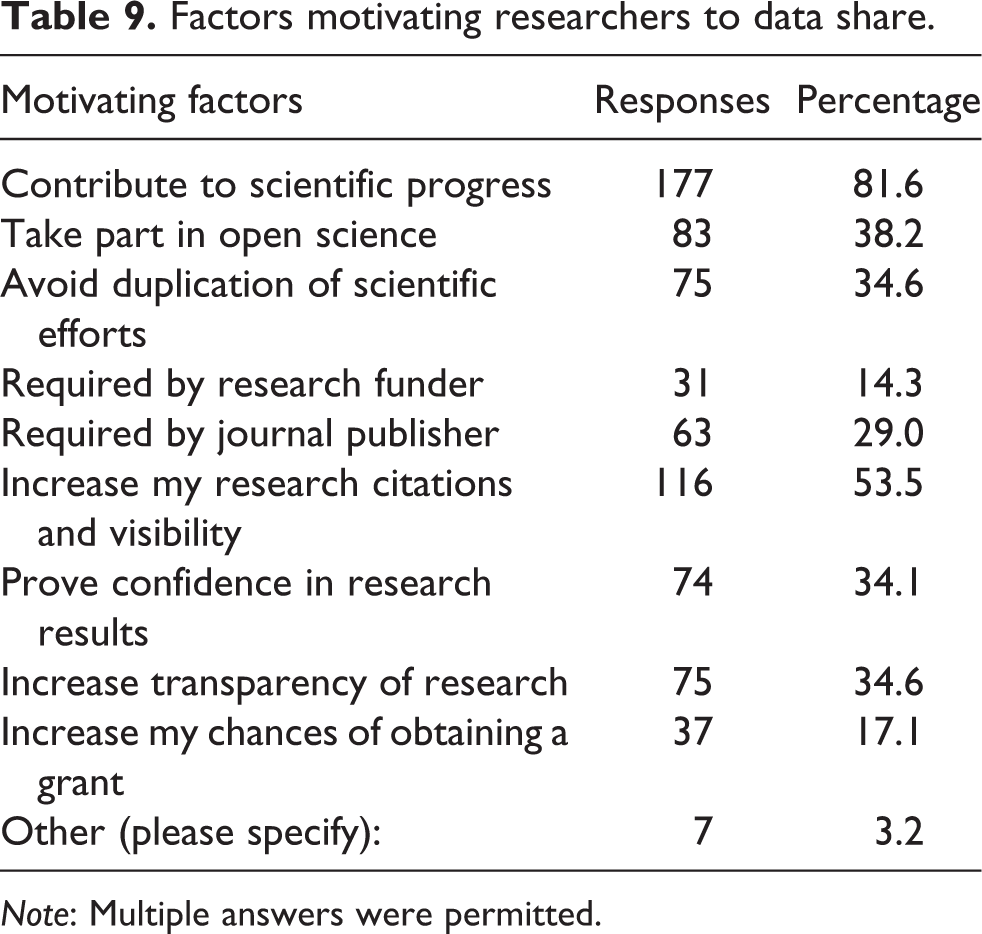
Note: Multiple answers were permitted.
When asked about the types of shared data, respondents reported that they shared various types of data. It is not surprising that experimental measurements (59.9%) and statistical data (52.1%) were the types most frequently shared (see Figure 7), as both represented the greatest amounts of data among participants.

Types of shared research data.
Researchers used a number of different data-sharing methods: 57.6% stated that they shared their data by publishing in a research data journal; 49.3%, through academic social networks (ResearchGate, Academia, etc.); and 43.3% said that they made their data available to peers on request. Depositing data in open data repositories (Dataverse, OpenAIRE, etc.) is the least preferred way of making data electronically available to others among participants (5.1%). The findings from this question correlate with the findings of a study by Meadows (2014), which found that over two-thirds (67%) of the 52% who reported sharing did so as supplementary material in journals, while only 6% used a general repository. These findings are quite different from those of Tenopir et al. (2011), which showed that 78% of the respondents were willing to place at least some of their data into a central data repository with no restrictions. Table 10 presents the data-sharing methods.
Methods used to share research data.

Note: Multiple answers were permitted.
It should be noted that for researchers in the sample who chose to publish in a research data journal, we interpreted their response as meaning the traditional publishing of study findings and results as a journal article and not as an article’s supplementary material or as an article in a data journal.
Respondents who chose to publish data through academic social networks such as ResearchGate or Academia (49.3%) were asked to indicate how many research data files had been uploaded to their academic social network profile. As seen in Figure 8 a large proportion (40.4%) indicated that they had published from one to five data files on their profile page, which means that researchers published a small amount of their research data freely online. This correlates with the findings of the study by Elsayed (2016), in which she found that raw data represented a small proportion of the types of publications uploaded by Arab researchers in ResearchGate.
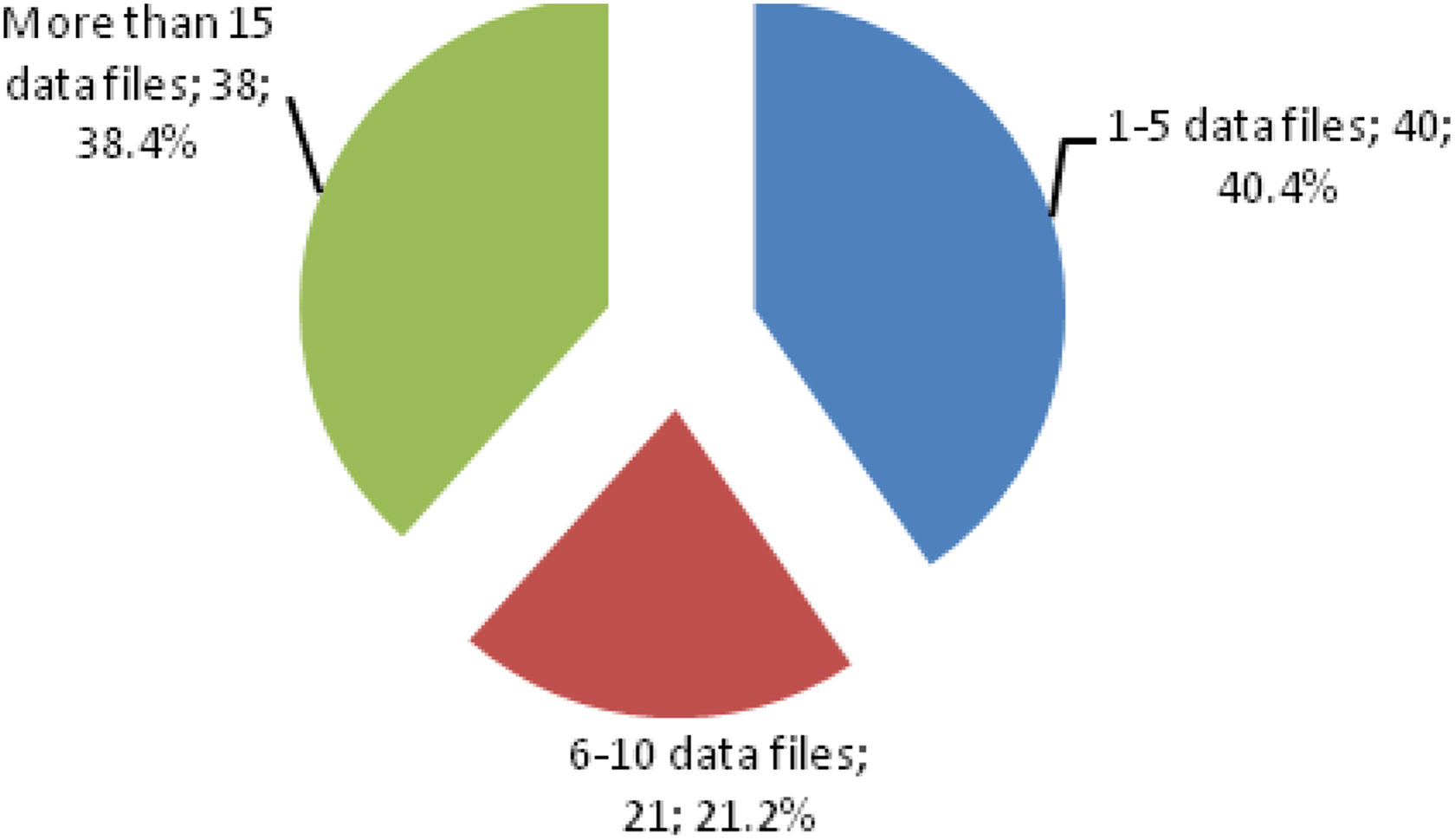
Research data files uploaded to academic social network profiles.
Many factors motivated researchers to reuse other researchers’ data, including: reducing time, effort and the cost of data collection, and making new discoveries which contribute to the development of science (Curty, 2015). When participants were asked about reusing research data generated by other researchers across their research field, more than half (53.5%) of the respondents replied that they did this, while 46.5% of researchers said that they did not. This correlates with the findings of Tenopir et al. (2011), which showed that most respondents (85%) were interested in using other researchers’ datasets when easily accessible.
To address challenges, participants were asked to indicate obstacles they encountered in sharing their research data. The leading obstacle was data privacy and confidentiality (57.1%), followed by the time and effort required to share data (37.3%). Confidentiality seems to be a common concern among both researchers who share and those who are unwilling to share (see Figure 9).

Obstacles preventing the sharing of research data.
Researchers’ requirements
In the final survey question, to overcome the barriers preventing the management and sharing of data, we asked researchers about research data services they would like to see at their university. The respondents stated that their universities needed to play a significant role in supporting data management and sharing. More than half (56.9%) indicated that they needed training in research data management, followed by services for data storage and backup (55.1%), a university research data repository (46.8%), research data policies and guidelines (36.6%), while 3.7% mentioned other services such as the establishment of data journals to publish research data in the Arab States.
Conclusion
This study has highlighted the practices of researchers from three Arab universities for managing and sharing of research data, and the challenges facing them. It has also explored services needed by researchers that universities could provide to help them handle their data. It has underscored that researchers’ personal experience is their only source of guidance for data management, as more than half of them had no data management plan and 42% were unfamiliar with data management plans. This implies that this step of the research life cycle is a new concept for survey participants who work with data, whether in the collection, description, storage, preservation, or sharing of data. As expected, it was found that personal storage devices were widely used to store data, and that only half of the researchers documented their data. Most researchers were responsible for preserving research data by themselves.
Concerning sharing data, researchers at the three Arab universities demonstrated a positive attitude towards sharing research data, especially older researchers; but this attitude is in its infancy, as about 64% of the researchers stated that they had shared their data. Publishing in a data journal is the preferred way of sharing data. We discovered that, despite the fact that more than half of the researchers reused other researchers’ data, the practice of depositing data in open data repositories was not prevalent. Privacy and confidentiality were found to be the leading reasons that prevented researchers from sharing data. Researchers seemed to recognize the need to be trained in order to become better informed about data management and sharing issues, as the majority of them mentioned training as an important service university must offer.
In addition to the low response rate, a non-functional email address was a major problem encountered during this study, as a large number of email addresses found in the three universities’ websites generated many error messages. Many email invitations to take the survey bounced and could not be delivered. Also, it would have taken a good deal of time and effort to explain every term in the questionnaire that the researchers may not have been familiar with, such as the meanings of research data, data management plan, data documentation, data repository, etc.
The transition towards a culture of data management and sharing among researchers at Arab universities should start with training in data management and sharing practices; encouraging funded research projects to deposit research data in the funding agencies’ repositories at least; providing infrastructures, including repositories, policies, guidelines and best practices, and tools supporting backup and accessibility; and finally, rewarding data sharing within and beyond universities. This will require joint efforts among university academic staff, research centers, academic libraries, journal publishers, and universities themselves, which will be in the forefront, playing a pivotal role in this regard.
Finally, this study did not examine the services of research data repositories and their use by researchers, the policies of Arabic-language journals regarding research data, the rankings of Arab universities with respect to data-management practices, research data and Arab academic libraries, or the impact and value of research data in Arab countries. These topics are areas for further research. Also, it would be interesting to repeat this study using samples from social science and humanities researchers in Arab countries. Expanding the study to more Arab countries and universities would produce more representative results.
Footnotes
Declaration of Conflicting Interests
The author(s) declared no potential conflicts of interest with respect to the research, authorship, and/or publication of this article.
Funding
The author(s) disclosed receipt of the following financial support for the research, authorship, and/or publication of this article: This Project was funded by the Deanship of Scientific Research (DSR) at King Abdulaziz University, Jeddah, under grant no. (G-65-246-38). The authors, therefore, acknowledge with thanks DSR technical and financial support.
