



Abstract
The 2020 COVID-19 pandemic introduced significant information challenges for older adults worldwide. Given the widespread disparities in information infrastructure and access between developing and developed countries, the challenges presented during this period may be even more grave in the developing world. This interview study examines how older adults (age 65+) in two countries—the USA and India—experienced information needs, sources, and barriers. The results indicate distinct experiences among the two populations, with individuals in the USA expressing more diverse needs, while Indian respondents focused on the impact of COVID-19. The American respondents also indicated much greater use of Internet resources compared to the Indian respondents, who used television and print resources more frequently. Far more Indian respondents reported significant challenges finding information to satisfy their information needs. The findings of this study have important ramifications for the design of intervention, education, and support for the information-related needs of older adults worldwide.
Keywords
The coronavirus pandemic has created tremendous distress in the lives of much of the world’s population. As a result of this crisis, large-scale behavioral changes have occurred, including in the seeking of information by individuals impacted by the pandemic condition. Information related to the threat of this pandemic is vital for people to protect themselves and combat the spread of this contagious and deadly virus. As such, the strategic initiatives taken by governments and various non-governmental organizations and health agencies to stop the spread of the virus in communities—like awareness campaigns on COVID-19, quarantine protocols, the mandating of lockdown measures, and supplies of essential commodities—are vital to ensuring that citizens remain healthy and informed. Depending on the existing information infrastructure—which may be drastically different among developing and developed nations—the quality of information and capacity to address information needs may differ greatly.
Older adults are at a higher risk of severe illness from COVID-19, as aging is one of several factors that correspond with advanced symptomology. According to a report from the Centers for Disease Control and Prevention (2020), 8 out of 10 COVID-19 deaths reported in U.S. have been senior adults of age 65 or more. Various independent studies have also shown that coronavirus produces worse outcomes and a high mortality rate among older adults who contract the disease (Liu et al., 2020; Shahid et al., 2020). In such crisis conditions, the information-seeking behavior of older adults, particularly those who generally suffer from ageing-related diseases like frailty, disability, chronic disease, physiological changes, psychological distress, and cognitive decline, can be limited by a lack of physical interaction with other human beings and greater reliance on information and communications technology. Factors including traditional literacy, information literacy, computer literacy, mobility, and dexterity play an important role in the ability to seek trustworthy and reliable information.
The purpose of this study is to investigate how older adults in the USA and India have made sense of their changing information environment during the COVID-19 pandemic, focusing particularly on information needs that have emerged and the sources utilized in addressing them. Due to the significant socio-economic differences between the USA and India, as well as similarities in terms of the high number of cases and mixed quality of the pandemic response, a comparative analysis of information needs and sources utilized during the time of the pandemic may offer insight into the inequities present between developing and developed nations.
Literature review
Following the outbreak of the coronavirus pandemic, awareness efforts related to this contagious disease were initiated by the World Health Organization. Many countries initiated their own local efforts as well, utilizing a variety of authoritative information sources to convey important updates, such as political leaders, doctors, researchers, and celebrities (McCloskey et al., 2020). Many regions of the world—including both the USA and India—announced lockdowns, which led to a break in the global supply chains, transportation, and industry, and thus affected the global economy and access to traditional sources of information (Ebrahim et al., 2020).
Global health crises are also information crises. Attention must be paid to this by information science professionals, who can play a lead role in their study field through education, research, and practice (Xie et al., 2020). The COVID-19 pandemic disproportionately affected poor and vulnerable populations (older adults), and caused substantial harm to those suffering from mental illness. These individuals were doubly susceptible to harm, both from the physical impacts of the virus and from the digital divide and lack of quality information (Xie et al., 2020). The “digital divide” is defined as a gap between those who have access to information and communications technologies and those who do not (Bernhardt, 2000). In present times, the concept of the digital divide has changed from “have” and “do not have” Internet access to disparities in searching and finding information from myriad sources on the Web and the amount of time spent in finding this information (Hargittai, 2002). Hargittai and Dobransky (2017) discovered that people’s socio-economic status (i.e. higher education and higher income group) correlates with the level of Web-using skills among individuals. Berkowsky et al. (2017) found that factors such as the ability to self-assess one’s efforts, computer/Internet skills, and technology ratings have a strong association with the extent of technology adoption among older adults.
COVID-19 has introduced fundamental changes to the information worlds of older adults, many of whom relied on interpersonal information sources that are no longer feasible to access during the pandemic. However, the population of older adults is also quite diverse, with individuals having differing levels of comfort and skill in using a variety of information sources, particularly the Internet (Hunsaker and Hargittai, 2018; Van Boekel et al., 2017). The digital divide is even more pronounced among such a population, often depending on comfort with using the Internet, educational attainment, and socio-economic status (Friemel, 2016; Hall et al., 2014; Hargittai et al., 2018). Older adults who were more comfortable with using the Internet before the pandemic are likely to have experienced less of an impact when it hit.
Van Boekel et al. (2017) identified diversity among older adult groups in their use of the Internet and observed that, among those who did use the Internet, they mainly used it for searching for general information, banking, comparing products, and social and leisure-related activities. Levy et al. (2014) observed the direct relationship between health literacy and the use of the Internet among older American adults. Chu et al. (2009) found that older adults residing in low socio-economic communities are often deprived from accessing Internet health-care information; efficacy in using the Internet will reduce anxiety and increase confidence and interest in retrieving health-related information. Chu (2010) further addressed the importance of family support (tangible and emotional) and Internet self-efficacy (general and communication influences) related to perceived effectiveness of e-learning. Low socio-economic status (such as living in a developing nation), lack of interpersonal support, and lack of Internet access could all constrain the information-seeking ability of older adults.
Because of the information gaps presented by the COVID-19 pandemic, people affected by serious mental illness are at significant risk when left without up-to-date and accurate information about strategies for mitigating risks and knowing when to seek medical treatment for COVID-19 (Druss, 2020). Overwhelming news stories and limited knowledge about coronavirus may lead to experiences of loneliness, denial, anxiety, depression, insomnia, fear, irritation, and boredom among those with severe mental illness (Li et al., 2020). Newman and Zainal (2020) advocate for the value of maintaining social connections for mental well-being among older adults in order to prevent depression, anxiety, loneliness, and the need for friendship, and promote a sense of belonging, though the virus itself makes these connections difficult to maintain. Cotten et al. (2012) highlight the importance of Internet use in reducing depression and having an impact on the mental well-being of older adults.
Dervin’s sense-making approach
This study’s design is informed by Dervin’s (1998)sense-making approach. The advantages of sense-making theory, as noted by Savolainen (1993), include that it easily and closely reflects our daily experiences; it is universally applicable to multiple disciplines, such as communication studies, cognitive science, sociology, and information studies; it can include any type of entity, such as individuals, groups, organizations, and societies; and it can be used to analyze information-seeking in virtually any kind of context. This approach and its associated model can be used to inform what types of questions are important to ask when conducting information behavior research.
Dervin’s (1998) sense-making explores individuals’ experiences based on the gaps in understanding in which they interact, with situational factors (an individual’s background and habits), contexts (power dynamics, culture), information sources (internal and external), communicative exchanges, and activity shaping the bridges between these gaps. To understand how individuals in the USA and India differ in their information behavior during the time of the COVID-19 pandemic, it is important to consider the role that the information infrastructure, access (Internet reliability and affordability, developing versus developed economy), and cultural practices (collectivism versus individualism) play in the information needs that develop, the information sources that are consulted, and the ways in which individuals respond to a lack of information.
The questions used for the interview protocol in this study are informed by the sense-making methodology. The questions were designed such that the participants were asked to consider situations in which they faced an information need (or a “gap”), about bridging that gap (sources and behaviors), what factors led to their use of these particular bridges, and how they used that information once they had received it. Both positive experiences, where gaps in knowledge were successfully bridged, and negative experiences, where the individual was not successful, were explored. Using Dervin’s model to inform the interview protocol enabled the researchers to better understand the process behind information behavior, rather than only listing information needs and sources. This provides additional dimensions whereby the behaviors of older adults in the USA and India can be compared, and the environmental factors that influence those behaviors evaluated (e.g. access to technology sources, Internet reliability, cultural practices).
Research questions
Based on significant gaps in information access observed among developed and developing countries, and a lack of existing research pertaining to how the COVID-19 pandemic has impacted information behavior, the following research questions were developed to guide this study: What differences exist among the information needs and sources used by older adults in the USA and India during the time of the COVID-19 pandemic? How has the experience of increased difficulty in finding information impacted the attitudes and behavior of older adults in these countries?
Methods
This study consisted of interviews with 60 older adults (age 65+) in two countries: the USA and India. Both of these countries have large populations (the second and third largest worldwide), are constitutional democracies, invest heavily in higher education, and have a large segment of the population that speaks English (as one of the nation’s official languages). However, there are also many distinctions between the countries, perhaps chiefly among them being their economic standing. While the USA is a highly developed country with a per capita gross domestic product of US$67,000 (10th worldwide), India has a per capita gross domestic product of US$9000 (116th worldwide and nearly seven times smaller than the USA) and is labeled a developing country. Additionally, while English is an official language of both countries, it is spoken by virtually all Americans and as the primary language of nearly 80%, whereas in India only about 10% of the population speaks English, while there are dozens of primary languages scattered regionally across the country.
Considering that a larger percentage of the population speaks Hindi (about 60%) than speaks English, the interview questions for this study were translated into Hindi before being administered. In the copy of the interview protocol provided in Appendix 1, both the English and Hindi versions of the questions are included.
The interviews were conducted in July and August 2020 in a variety of formats offered with the participants’ safety in mind: Zoom (video), telephone, and email interviews. The participants were recruited from the towns in which the researchers’ institutions are located—one in eastern India and one in the Midwest of the USA, and both with moderately large populations (about 300,000). The participants were identified through a variety of means, including online advertisements in Facebook groups, local (print) advertisements/flyers, and word-of-mouth recruiting among community members. A total of 30 participants were recruited: 35 in the India cohort and 25 in the USA cohort.
Following each interview, the responses were transcribed in a secure Microsoft Excel spreadsheet, with access restricted to the researchers. The resulting data was analyzed using qualitative content analysis. A seven-step integrated analytic-inductive approach was adapted from the work of Marshall and Rossman (2006): (1) both researchers read all the survey responses to get a sense of the responses; (2) the researchers reread the data; (3) all direct responses to the questions were marked; (4) looking for patterns in the data, the direct responses were organized into categories that emerged; (5) each response was sorted into the appropriate category using the respondents’ actual words; (6) the results were reviewed, looking for overlap and redundancy, and to refine and revise the category titles; (7) from the survey, instances of verbatim narrative were selected to illustrate the categories.
Results
Figure 1 displays the results for the types of information for which the participants expressed a need during the pandemic. There are several notable distinctions between the USA and India responses. By a margin of over two-to-one, the Indian respondents indicated a pressing information need relating to COVID-19 and associated health concerns. An additional 9% indicated that their most pressing information need related to lockdown restrictions in their city. The American respondents, conversely, indicated that political and economic issues were the most pressing area of information need, while one-third indicated that COVID-19 information was needed most, and 27% expressed a general need not related to recent world events (e.g. “I’d like to know when the new grocery store is opening”).
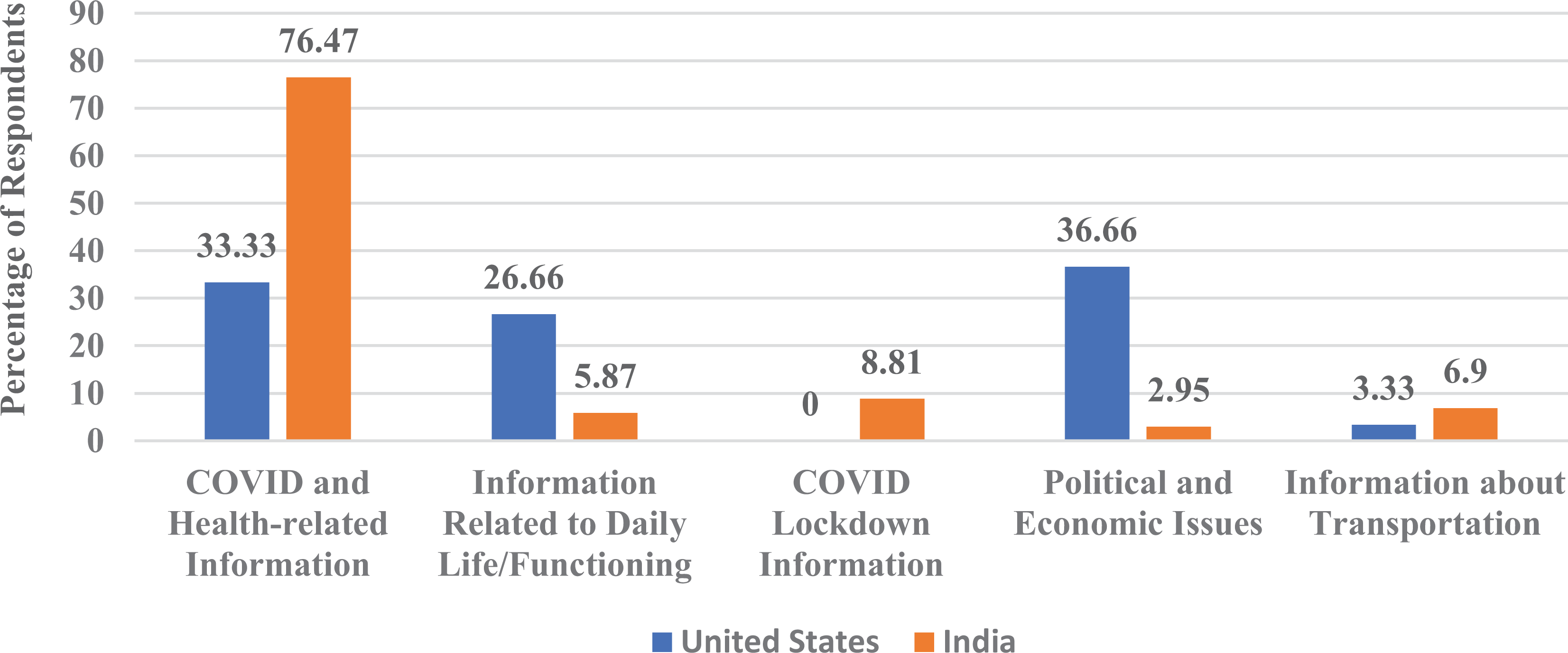
Types of information sought.
Shown in Figure 2 are the reasons the respondents gave for needing the information indicated in Question 1. For both country cohorts, a general desire to know was the most significant reason. However, the American respondents indicated a concern related to personal health much more frequently, while the Indian respondents reported a larger variety of reasons.
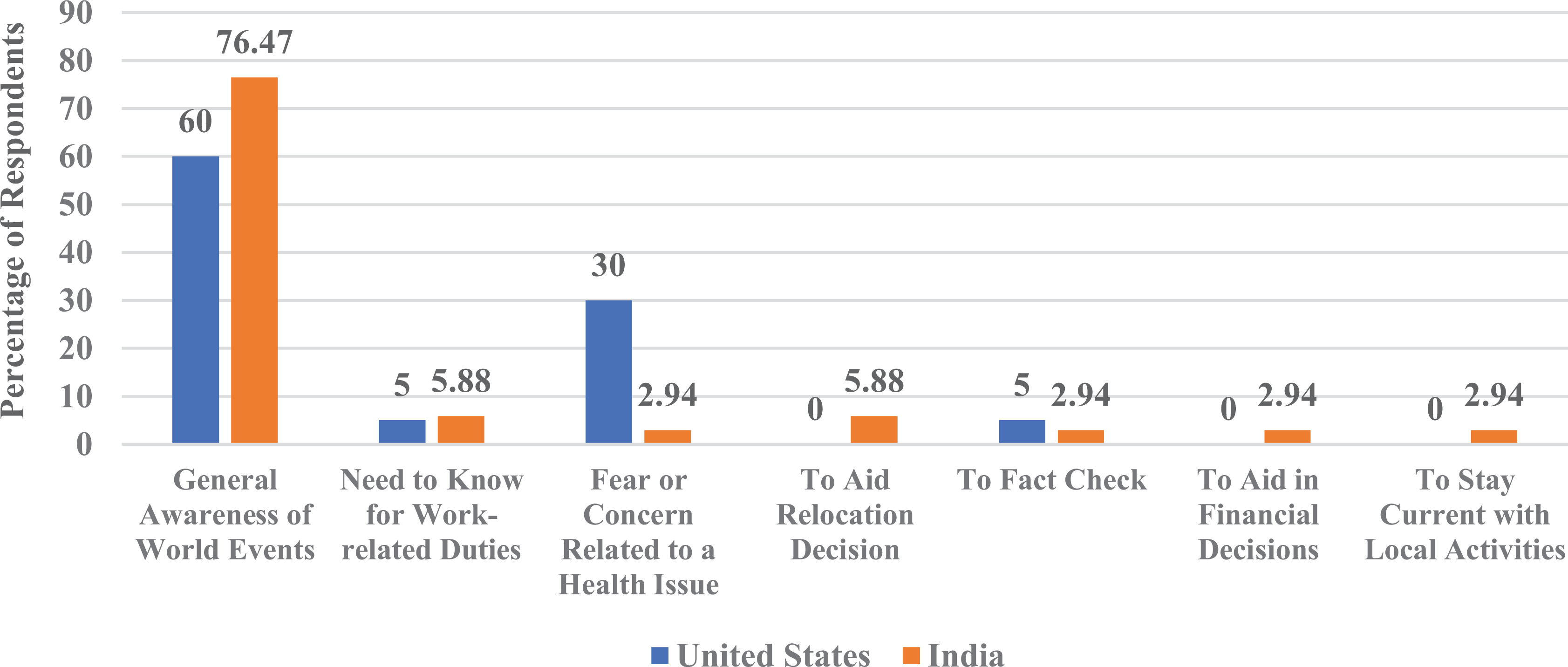
Purpose of information sought.
In Figure 3, the information sources consulted by the respondents in an attempt to satisfy their information needs are listed. These results illustrate significant differences between the two cohorts. Web-related resources (social media, websites, search engines) comprise 65.5% of the responses for the American respondents, compared to only 31.7% of the responses of the Indian respondents. Television is overwhelmingly more popular as an information source among the Indian respondents. Newspapers are moderately popular information sources among both cohorts.

Sources used to find information.
Figure 4 shows the reasons why the respondents selected the information sources they did in order to satisfy their needs. Again, the responses are quite distinct among the two cohorts. While the American respondents emphasized the level of ease or comfort in using a particular information source, the Indian respondents valued availability and reliability more highly. The American respondents indicated a higher level of confidence in being able to access the information they needed, particularly those individuals with a college degree. The Indian respondents indicated a greater reliance on whatever sources were available—with there not always being a wide range of options from which to choose.
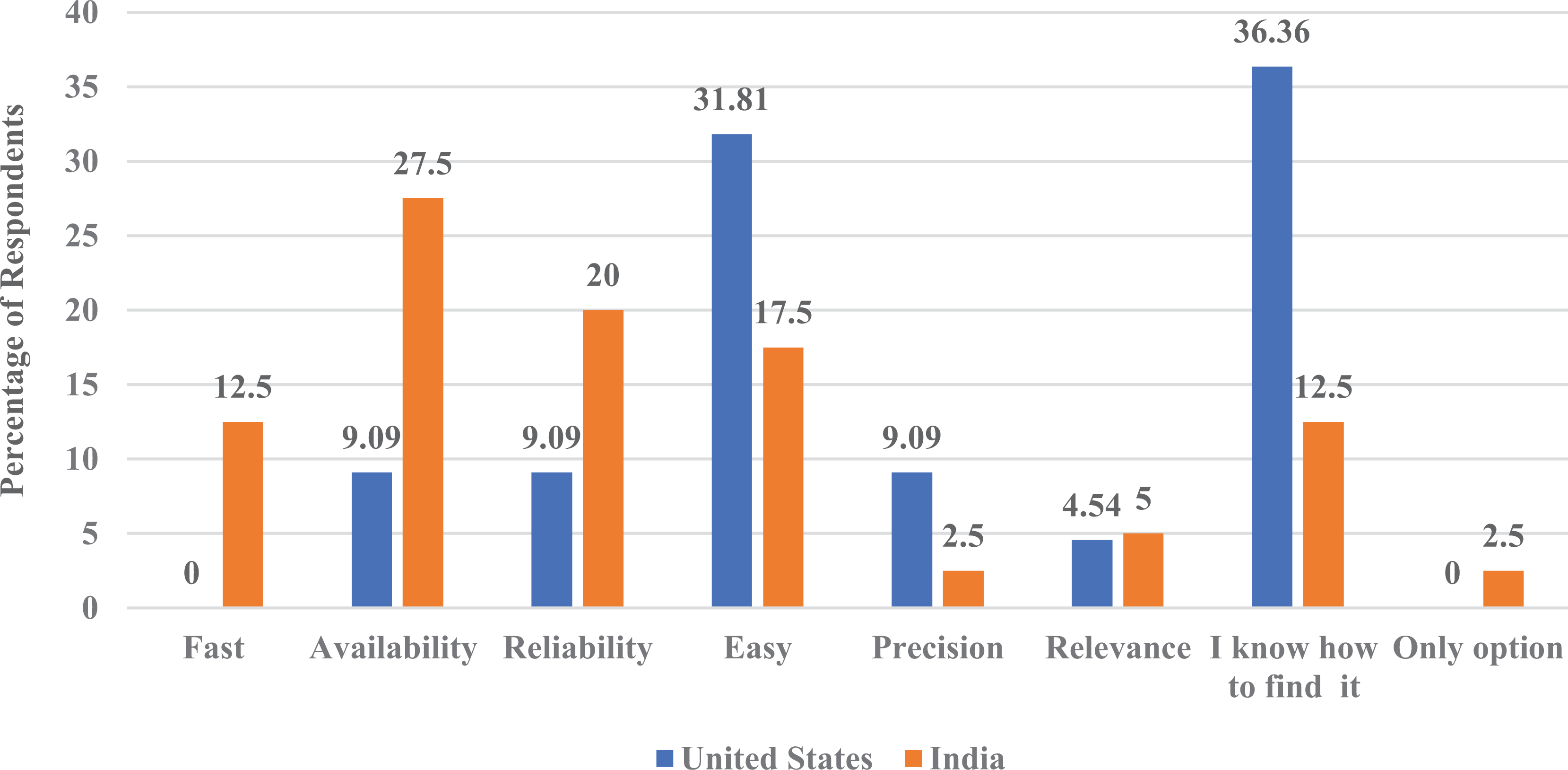
Reasons for using an information source.
The responses to what changes COVID-19 caused for the respondents in their information-seeking behavior are shown in Figure 5. The majority of the American respondents said that they made no changes. Approximately 19% indicated that they had to become more self-aware about their information needs and how to find answers; this compares to 24% of the Indian respondents who said the same. Both cohorts had a sizable number of respondents who indicated that they used the Internet more frequently. The Indian respondents—but not the American respondents—indicated greater contact with experts and professionals, such as doctors, or family, friends, and community members.
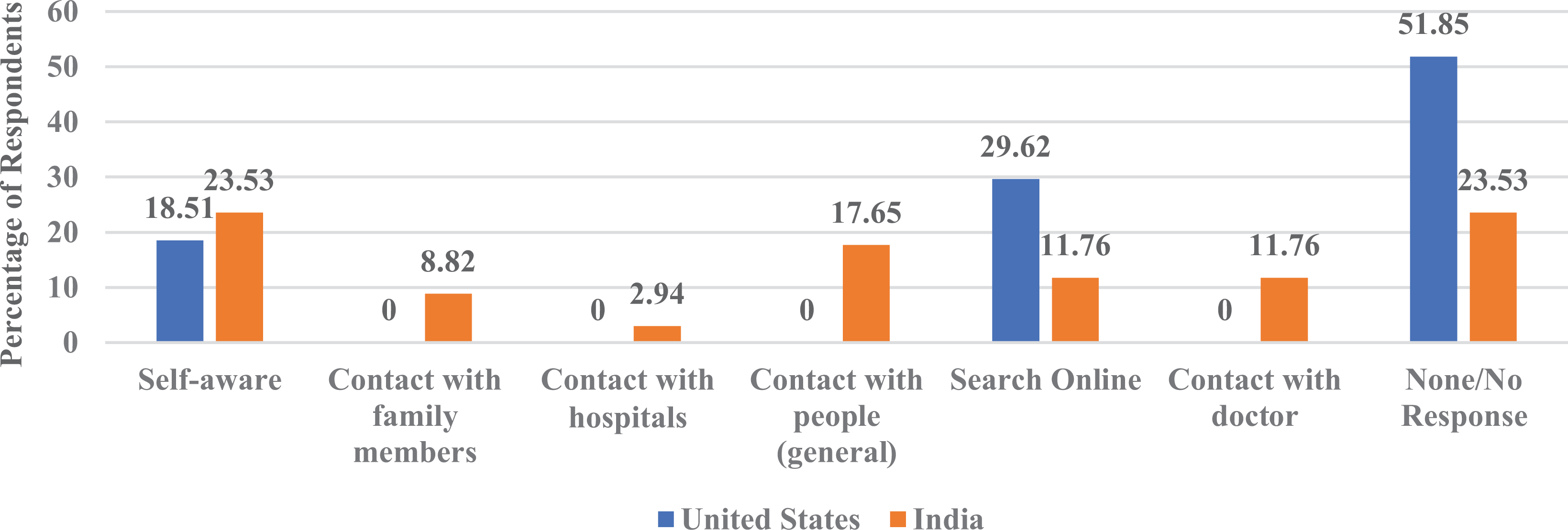
Adjustments made in seeking information during the pandemic.
Figure 6 displays the findings for the information needs the participants had that they were not able to satisfy through any available sources. The most significant difference is regarding whether the participants had any such experiences, with 43% of the American participants stating that they had no information needs that were not met, compared to just 3% of the Indian respondents. Both populations indicated unsatisfied information needs regarding the existence of any treatment or vaccine for COVID-19. The Indian participants also expressed greater concern about the lack of information about the spread of COVID-19 in their community.
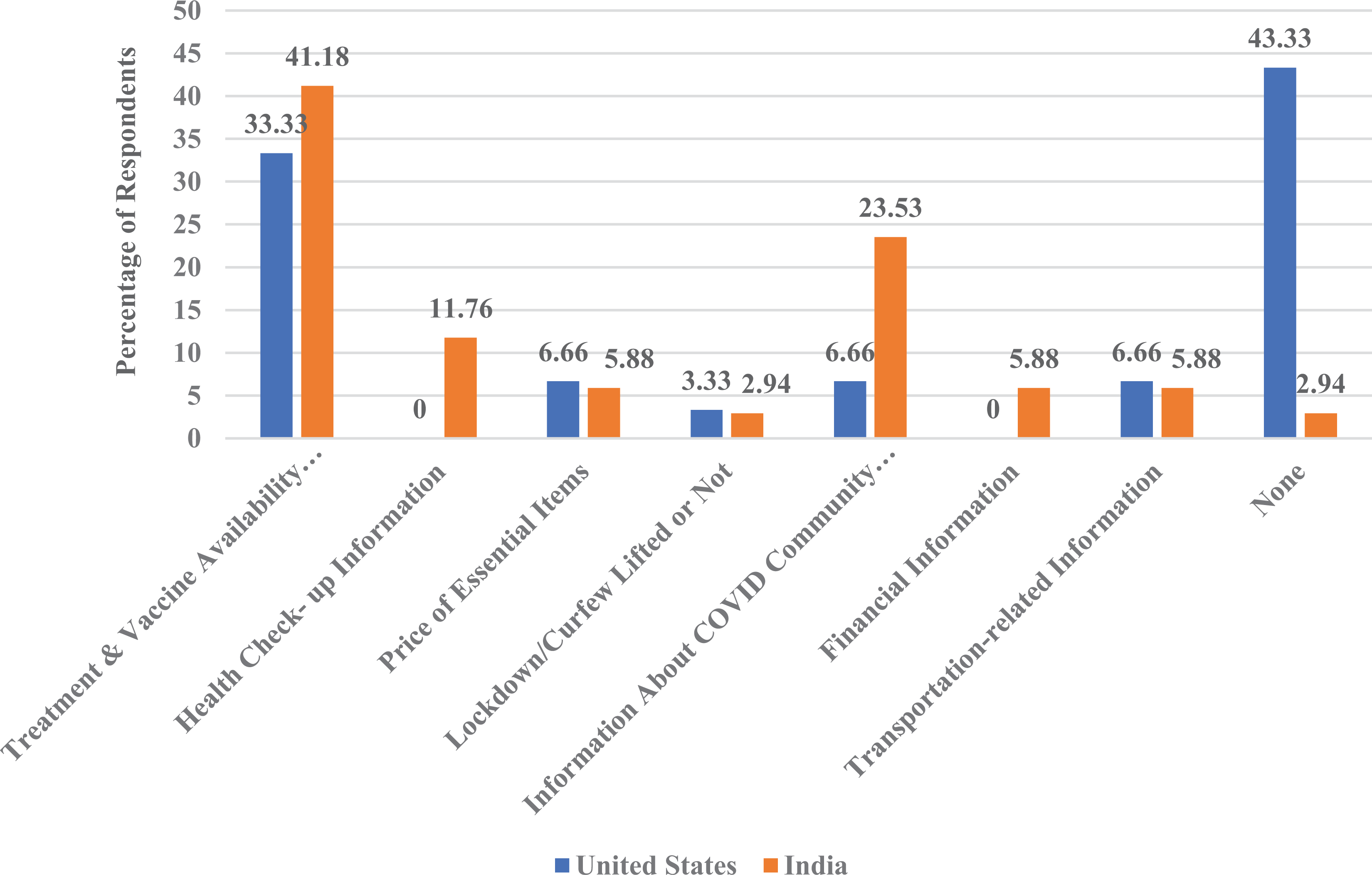
Types of unsatisfied information needs.
Figure 7 shows how the participants responded to an unsatisfied information need. While the largest percentage of the American participants remarked that they kept searching, the largest percentage in India said that they stopped looking. A significantly larger proportion of the American respondents said that they felt indifferent and/or had no response to their unmet information needs compared to the Indian participants. Conversely, the Indian respondents noted feeling regret or anxiety due to their failed searches at a higher rate than the American participants.
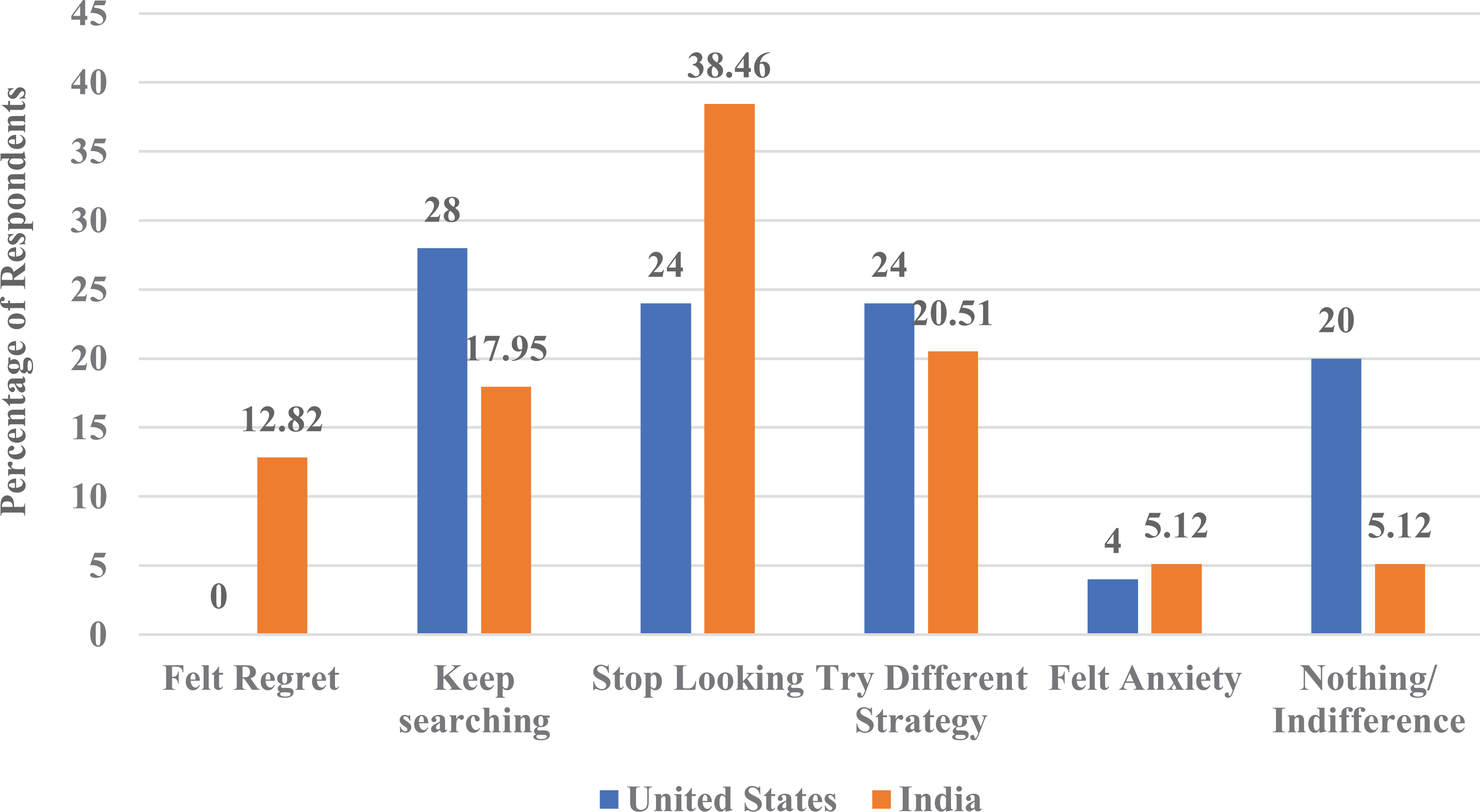
Responses towards unsatisfied information needs.
In response to a question about their interest in attending a class on how to find information, 97% of the Indian participants expressed interest compared to only 32% of the American participants. Overall, the American participants indicated much greater confidence in their ability to find information (whether this confidence is justified is another matter and is not examined in this study). Figure 8 shows the reasons why the participants were concerned about the possibility of such a class. All of the Indian participants either expressed no concern or did not provide a response for this question. Among the American participants, the greatest concern expressed was that the class was not necessary, followed by the amount of time required and the possibility of a cost to attend.
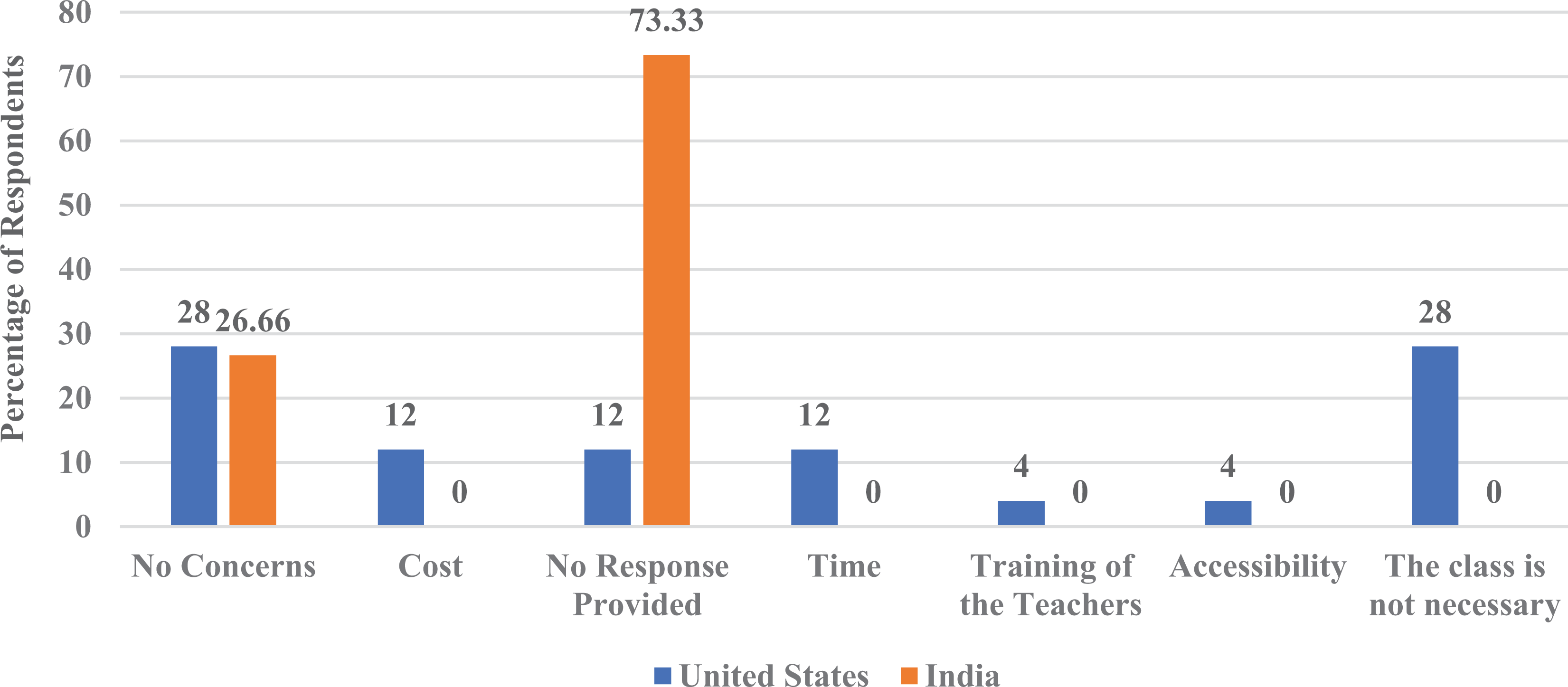
Concerns about attending an educational class on how to find information.
Lastly, relative to cases where information was not successfully found, Figure 9 asks what made successful cases different. Both cohorts indicated that they knew where to look for the information they successfully found, compared to less clarity about where to search for information in unsuccessful searches. The Indian participants indicated that they felt less frustrated when seeking information successfully, while this was not a major concern among the American participants.
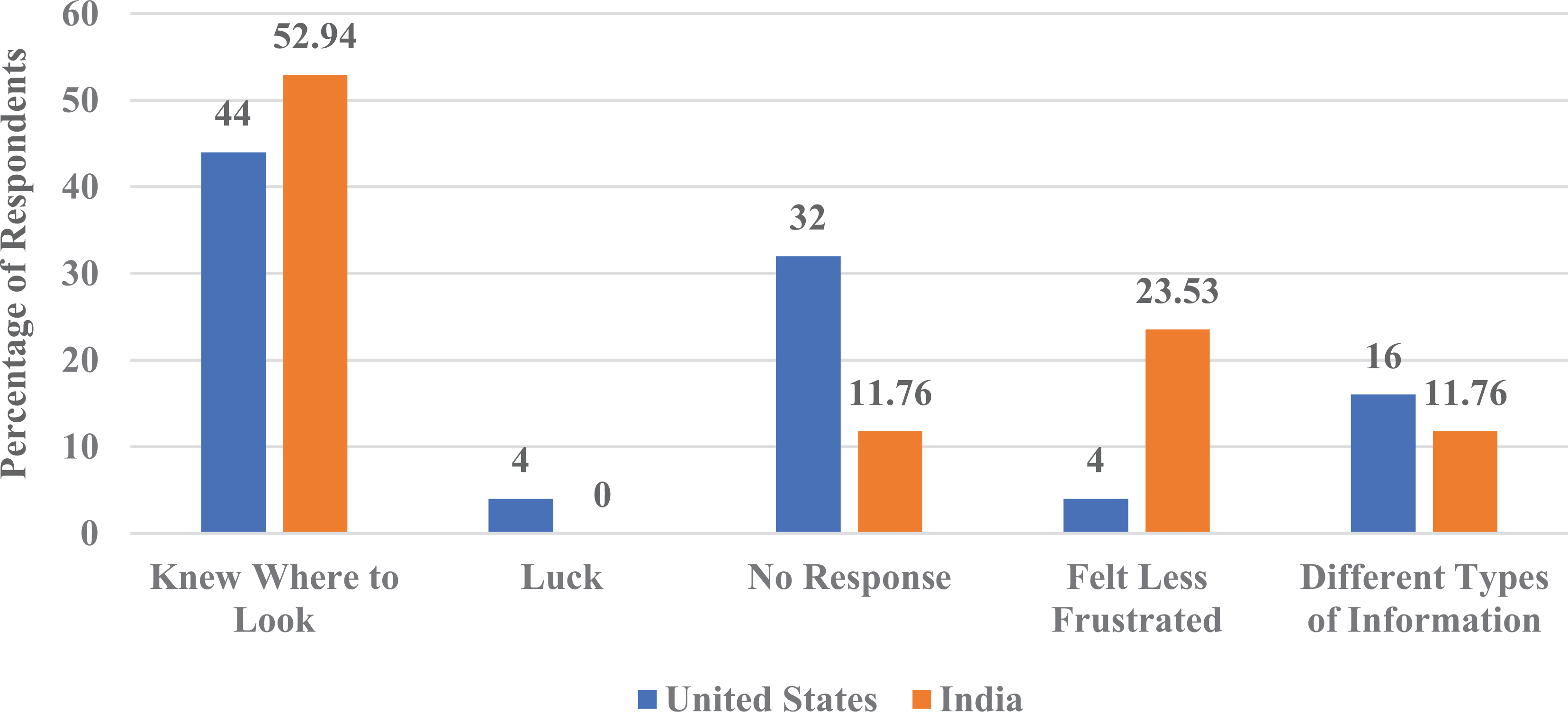
Factors that made successful searches different.
Discussion
The responses to each of these questions demonstrate significant differences among the participants from developing (India) and developed (USA) nations. The types of information needed, the sources from which it was sought, and the challenges faced are all unique in frequency, though the basic categories in which these results may be sorted are similar among the two cohorts.
The Indian participants indicated greater concern about COVID-19 compared to the American participants, who appeared more concerned with everyday-life information and information related to an economic downturn and politics during this period than the virus itself. The American respondents shared concerns about the November 2020 presidential election in particular, while often downplaying the role that COVID-19 had played in their lives. As one interviewee stated: “I already spent most of my time at home and used my computer to look up news. The only major change was that I see less of my friends and go out to eat less often.” One frequent everyday-life information need related to hobbies—for example, bird watching, fishing, and literature. Comparatively, the Indian respondents expressed information needs to this effect hardly at all, as they emphasized the need to curb the spread of the virus. At the time when this study was conducted, the USA and India ranked first and second in the world in terms of the number of cases, each with 50,000+ new cases per day on average.
The variance in where information was sought may reflect the infrastructure differences between the two nations. Only about half of the population of India has regular access to the Internet and, even then, it can be inconsistent. Access to certain websites may also vary due to intermittent censorship as well as language differences among the population. These challenges were not nearly as pronounced among the American participants. The American participants were often very specific about the sources they used, naming the websites they frequently used (most commonly, Google). Educational attainment predicted the number and variety of sites consulted among both cohorts (individuals with a higher level of education among both cohorts used more sites expressing a variety of conflicting perspectives on issues).
The American participants demonstrated a greater preference for easy-to-find information, whereas the Indian participants expressed limitations related to access and the quality of information. The American respondents also demonstrated more confidence in their information-searching ability, as nearly half suggested that there was no information that they struggled to find. There was also more persistence demonstrated when confronted with an unsatisfied information need among the American participants, but also more indifference about this situation.
Although the COVID-19 pandemic presents unique challenges to libraries in offering services to the older adult population, findings like those of this study provide insight for library services, as well as demonstrating the divides in library service needs among countries. In the USA, many older adults choose not to seek help when they face challenges, owing, in part, to the strong individualism that characterizes American culture (Tata and Leong, 1994; Westerhof et al., 2000), while this may not be the case in other countries. This highlights that it is necessary to develop different approaches to outreach and instruction in different countries during the COVID-19 pandemic. Library administrators must understand their service population and how cultural and infrastructure constraints may alter service needs.
There are several limitations and avenues for future research to note with respect to this study. One limitation relates to the study sample. While 60 participants (35 for the USA cohort and 25 for the India cohort) are sufficient for an interview study, a broad-based quantitative survey based on the findings of this study may offer statistical strength to the differences observed. These interviews offer a snapshot in time, during one of the peak periods of the COVID-19 pandemic, but the results may look different during other periods of time early in the pandemic or longitudinally across the entirety of the pandemic.
Conclusion
This study indicates significant distinctions in the information behavior of older adults in the USA and India during the COVID-19 pandemic. From the types of information sought to the sources used and the challenges faced, older adults in developing and developed countries described disparate experiences. This distinction may have implications for the design of information interventions (e.g. information literacy instruction) in these countries. Furthermore, it highlights the systemic inequities in access to information and information technologies that exist between countries of vastly different economic standing, and has identified key areas for improvement.
Footnotes
Declaration of conflicting interests
The authors declared no potential conflicts of interest with respect to the research, authorship, and/or publication of this article.
Funding
The authors received no financial support for the research, authorship, and/or publication of this article.
