



Abstract
This study maps the domain of indigenous librarianship. It conceives this field as constituted by theoretical, applied, and advocacy components. Indigeneity is theorized as an instrument that advances principles of indigenous rights in professional fields such as librarianship.
The study offers the prospect of a revision of the traditional theory of librarianship by applying to this theory a notion of “living knowledge,” which is prominent in indigenous scholarship. It overviews culturally sensitive practices of knowledge organization and management that constitute an applied component of indigenous librarianship.
Keywords
Introduction
The practices of librarianship within any culture are not universal, though they may be normative within that culture. They reflect culturally conditioned notions of knowledge and its representations. When it comes to decisions regarding the representation of indigenous knowledge in the libraries of the cultures to which indigenous people have been subordinated, differences in theories of knowledge between the cultures can come into conflict. At the moment, there is a pressing need in traditional librarianship practices of dominant cultures to develop theories and practices corresponding to the interests of diverse indigenous communities in representing indigenous knowledge and culture.
Indigenous librarianship is a developing branch of library and information science (LIS) (Brown, 2017; Burns et al., 2015), and addresses this requirement. It emerged in the 1970s in response to indigenous advocacy movements and the reconciliation efforts of states’ governments, primarily in the USA, Canada, New Zealand, and Australia. As a theory, indigenous librarianship examines how the cultural practices, empirical conditions, and political aspirations of indigenous communities shape the notion of knowledge, and the practices of knowledge organization and management that rest on this notion. It utilizes the categories and research procedures developed by LIS, and extends these using insights regarding the origins and forms of knowledge derived from indigenous scholarship. This combination enables indigenous librarianship to “unite” the librarianship field and indigenous perspectives on knowledge, theory, and methods (Burns et al., 2015). Indigenous librarianship is also a political project—a form of social action supporting the interests and aspirations of indigenous communities. Indigenous librarianship seeks to advance the rights of indigenous communities to knowledge and, by so doing, supports the struggle of these communities’ developments toward self-government, stewardship of land, and revitalization of languages.
As a set of practices, indigenous librarianship operates along two parallel tracks. The first focuses on preserving and revitalizing indigenous library institutions and knowledge systems. The second fosters procedures and norms to guide responsible and respectful care for materials with indigenous content that are preserved outside of indigenous communities.
This study explores the origins of indigenous librarianship and maps its domain. It builds on the bodies of literature produced by scholars with expertise in two fields—namely, LIS research and studies examining the contemporary issues of indigenous communities. This literature is produced by authors from English-speaking countries, specifically the USA, Canada, Australia, and New Zealand. Therefore, the findings of this study are limited to the sociohistorical conditions of these countries, with a primary focus on North America. At the same time, this study constructs an analytical framework to support research across geopolitical and linguistic spaces. By so doing, it aims to stimulate more research in this area from non-English-speaking countries.
Background: indigeneity defined
In the contemporary LIS field, comprehensive theoretical accounts of indigeneity remain rare. The available accounts have been compiled primarily by scholars examining LIS services to disadvantaged populations, ethnic communities, and racial minorities. These scholars tend to classify diverse indigenous communities as groups and/or populations constituting an ethnic or racial minority, and attribute to indigenous communities a homogeneity that does not exist (for further critique, see Doerksen and Martin, 2015). These scholars also omit examination of a legal notion of indigeneity and the ways in which it shapes the individual and collective identities of indigenous women and men. While the prominence of addressing indigenous issues suggests a pronounced “indigenous turn,” leading the LIS community to recognize and appreciate indigeneity, theoretical accounts of this phenomenon are rare, incomplete, and confusing. This study attempts to provide some clarity on the subject. It draws from legal studies and indigenous scholarship.
Discussion of the content of the idea of indigeneity is controversial. One the one hand, indigeneity captures the personal identities of peoples. These identities are products of diverse experiences that originate in specific sociohistorical, political, economic, and linguistic circumstances, and cannot be generalized under one category. At the same time, indigenous women and men experience similarities in how they view and experience the world, despite the linguistic and sociohistorical particularities among and within their communities. For example, the situatedness of indigenous communities in contemporary scholarly, political, and economic spaces makes indigenous identity a tool of struggle, unfolding in defiance to the mainstream cultural, political, and educational realities. As a result, a number of North American scholars emphasize the meaning of indigeneity as an inherently political form of existence (Alfred and Corntassel, 2005; Callison, 2014; Duarte and Belarde-Lewis, 2015; Littletree, 2018; Roy, 2015, 2016). A number of North American scholars also emphasize the significance of a person’s relationships with community, land, and language as a core component of indigenous identity (Champagne, 2010; Roy, 2016). These scholars recognize the significance of communities’ connections with “plants, animals, stones, trees, mountains, rivers, lakes and a host of other living entities” (Alfred and Corntassel, 2005: 609), which for a number of communities function as kinship networks, shaping understanding of how the world works.
Indigeneity also and simultaneously captures the collective identities of communities, which in turn influences the choices indigenous women and men face. For example, a legal notion of “indigenous peoples,” which originates in international law, affords communities falling under an “indigenous” category the right to a self-determined existence (see Kingsbury, 1998; Martínez Cobo, 1986; United Nations, 2019). This right and the privileges associated with it are unobtainable by other ethnic or racial minorities. At the same time, international law (or, more specifically, human rights instruments affording indigenous communities this bundle of special rights) does not provide a detailed, globally applied definition of indigeneity. Instead, it functions to guide the relationship between state governments and communities claiming indigenous status or recognized by governments as eligible to benefit from the rights and privileges associated with indigenous status (Kingsbury, 1998). The most recently published estimate approximates the total population of indigenous peoples at 370 million globally, living in about 90 countries (United Nations, 2019).
At the level of individual states, state governments decide on the criteria that differentiate indigenous communities from the rest of the state’s population. In the USA, for example, indigenous peoples are communities falling within a category of “Indian Tribe.” In Canada, indigenous peoples are populations with the status of “Aboriginal” communities. In Russia, the “indigenous” category comprises communities with the status of korennie malochislennie narodi (“indigenous small-numbered peoples”) in the north, Siberia, and the Far East (Russian Federation, 1999, 2000). Within non-federal and/or unitary states, indigenous communities may constitute one group of people, such as the Ainu in Japan or the Māori in New Zealand. Some indigenous nations may have settled across multiple states, such as the Sami, who live across the borders of three Nordic states and in Russia.
The functioning of indigeneity as a marker of state recognition shapes the political aspirations and realities of contemporary communities. In the USA, for example, federally recognized entities comprise 574 communities of Native Americans, Alaska Natives, and Native Hawaiians (United States Bureau of Indian Affairs, 2020). Members of these communities receive benefits provided by the federal government, and may practice the right of self-determination within their territories, though to a limited degree. More than 300 communities in the USA are currently seeking such recognition. While under international jurisdiction these communities may fall into the “indigenous peoples” category, they do not enjoy the benefits allocated to federally recognized tribes. In Russia, likewise, out of more than 120 cultural groups, only 40 communities qualify for the benefits that the Russian federal government guarantees for communities falling under the “indigenous” category or, to use the legal term, considered as korennie malochislennie narodi. The political potential of indigeneity helps advance local communities’ political projects. These projects differ, depending on the specificity of the history of the relationship between the state government and the community advancing these struggles. Indigenous sovereignty struggles in the USA, for example, target recognition of tribes as independent political units with their own systems of governance. In Russia, since the dissolution of the Soviet Union, indigenous struggles have primarily focused on attaining a greater degree of representation in the state system of politics and the promotion of indigenous institutions of governance (Gosart, 2017).
Indigeneity offers an advocacy framework for LIS professionals to advance principles of human rights and the norms codified in state laws in LIS discipline and practice. For example, the right of communities to adequate library services is a fundamental obligation of federal governments to tribal communities, and is codified in treaties that, in turn, recognize tribal self-determination. Hence, indigenous librarianship offers an opportunity for LIS professionals to revisit federal obligations to tribal communities and advocate advancing the state of tribal libraries, most of which continue to face hardship (see Burns et al., 2009; Jorgensen, 2012). Indigeneity also offers an opportunity to assess current LIS theories and practices from an indigenous perspective. Indigenous librarianship, therefore, may be conceptualized as a space to conduct a critical assessment of contemporary LIS ideas and practices, and also an opportunity to develop new practices informed by indigenous values and perspectives, and supporting indigenous patrons and scholars. The remainder of this article offers a framework supporting this development.
Indigenous librarianship: theory
As a theory, indigenous librarianship builds on the fundamentals of the traditional theory of librarianship. The traditional theory, as captured by Margaret Egan and Jesse Shera (1952: 133) in their classic work, is an inquiry that seeks to understand both the processes and the tools of “the production, distribution, and utilization of intellectual products” (see also Van der Veer Martens, 2015: 321–325). The traditional theory draws from the idea of knowledge as representations of mental and/or linguistic processes illustrated/captured as units of content. Knowledge as representation can be examined, developed into a product, and utilized.
Similarly to the traditional theory, indigenous librarianship seeks to understand how specific qualities of knowledge shape the generation, dissemination, and preservation of knowledge. Unlike the traditional theory, indigenous librarianship applies a conception of knowledge as events or processes. Indigenous librarianship scholars treat knowledge as happenings, as “coming to knowing” (Aikenhead, 2001) or “ways of knowing” (Little Bear, 2000). Some scholars use a conception of relational knowledge as specified in Shawn Wilson’s explanation below. This notion, however, should not be confused with the idea of “relational knowledge,” which is prominent in computer sciences and has a different meaning (as theorized in Halford et al., 2010): Knowledge is shared with all creation. It is not just interpersonal relationships…but it is a relationship with all of creation. It is with the cosmos; it is with the animals, with the plants, with the earth that we share this knowledge. It goes beyond the idea of individual knowledge to the concept of relational knowledge…[hence] you are answerable to all your relations when you are doing research. (Wilson, 2001: 177)
Living knowledge
It is worth examining the concept of “living knowledge” a little further to explicate its potential to revise traditional LIS theory. The origins of this concept can be traced to indigenous world views when articulated in indigenous languages. For example, the Potawatomy and Blackfoot languages of the Algonquian family (North America) allow the representation of reality unfolding as happening in a state of continuous transformation. These languages, unlike English where only 30% of the words are verbs, are verb-rich and verb-dependent. Nouns are also present in these languages. However, instead of providing objects with a stable identity, as nouns do in English, nouns in Potawatomy and Blackfoot function to represent temporary states or aspects of processes constituting the world (Peat, 1994: 237). Given these differences, there is a fundamental mismatch between the picture of reality when articulated in English and when the same reality is represented in Potawatomy or Blackfoot, as Kimmerer explains: A bay is a noun only if water is dead. When bay is a noun, it is defined by humans, trapped between its shores and contained by the word. But the verb wiikwegamaa—to be a bay—releases the water from bondage and lets it live. “To be a bay” holds the wonder that, for this moment, the living water has decided to shelter itself between these shores, conversing with cedar roots and a flock of baby mergansers. Because it could do otherwise—become a stream or an ocean or a waterfall, and there are verbs for that, too. To be a hill, to be a sandy beach, to be a Saturday, all are possible verbs in a world where everything is alive. (Kimmerer, 2013: 55)
Examination of the practices of knowledge preservation of certain communities provides further insight into the notion of “living knowledge.” In a number of indigenous communities, oral methods of preserving knowledge continue to be prominent, although not exclusive. Scholars associate oral means of preserving knowledge with safeguarding traditional knowledge, especially sacred creation stories (Bastien and Kremer, 2004: 15). Creation stories constitute the foundational corpus of communities’ living history primarily because of their role in forging a sense of communal identity. These stories narrate in symbolic terms the place of people in the universe, helping a community to heal by renewing and revitalizing the values of being a community (Champagne, 2010: 2, 39–40). For the Navajo, for example, healing ceremonies function as a framework for repairing the poor health of a community and of its individual members (Zion, 2002: 578).
Creation stories are handed down to the next generations during ceremonial gatherings (Bastien and Kremer, 2004: 5; Lyons, 2016). Their meaning cannot be documented because, similar to that of pan-ultimate truth, it is beyond representation. The Cherokee scholar Christopher Teuton (2010: xiii) terms the Cherokee creation story an allegory that is open to interpretation, where one of its meanings captures a process of creation of new knowledge for a community “to stand, grow and live.” The ceremony of reciting a creation story invokes and weaves together the diverse experiences, knowledge(s), and memories of individual community members, yielding different interpretations of this story for each person participating in the event. The knowledge generated during this event is manifested in what may be better described as “rotation in consciousness,” to borrow from a medical practitioner (Kabat-Zinn, 2013: 191). It is revealed in the manner of physiological and physiological changes in a person’s body that are conducive to healing, functioning as part of the emotional and bodily experiences of a living organism (Gallagher, 2005; Ignatow, 2007), and cannot be fully articulated in (or needs to) to gain its healing power.
Scholars have attempted to document the knowledge associated with the rituals of the Navajo and have categorized some components of the ceremony as “taboo” (secret knowledge), others as “ritual” (sacred knowledge), and the remainder as “synthetic knowledge” (i.e. information content extracted from the event; Zion, 2002: 597). By so doing, these scholars have misrepresented the factors shaping ceremonial knowledge because these factors go beyond classification as social, cultural, spiritual, political, personal, or communal, or factors related to the time, place, and history of the ritual. These factors depend on the specificities of the unique changing contexts of a ceremonial event, which cannot be frozen in time and space. Such documentation practices are resented and resisted by the Navajo (Zion, 2002: 597).
Examination of certain indigenous record-keeping practices provides additional means of illuminating the notion of “living knowledge.” The Haudenosaunee (North America) practices of using wampum belts and strings provide a good example here. Historically, wampum remained prominent among the Haudenosaunee for record-keeping. Wampum records derive their living character in part from their materiality; they are made of living beings: clams. The processes of making wampum and their use add to their identity of bringing living evidence of Haudenosaunee history. To commemorate a treaty agreement, for example, the people entering into this agreement weaved a piece of clam shell into a belt, using the shell as a means to carry their words and intentions into the future (Onondaga Nation, n.d.). This ritual solidified a person’s consent to the terms of an agreement by literally and symbolically binding their will and their promise to the terms of the agreement. This ritual also made the belt more than a record; it was a materialized form of the agreement itself, which would live as long as people remembered how to read the message embedded in the belt. The belt would be reread when the time came to renew the terms of the agreement and to share it with the next generation (Teuton, 2010: 49). Today, wampum belts continue to function as components of the living history of the Haudenosaunee (Onondaga Nation, n.d.). Amongst the most well-known wampum belts are the Hiawatha belt and the Two Row Wampum belt. The Hiawatha belt commemorates the creation of the Haudenosaunee Confederacy (also known as the Iroquois Confederacy) and was recently returned by the State of New York to the Onondaga nation (Hamer, 2016). The Two Row Wampum belt records the moment of the establishment of the relationship between the Haudenosaunee and the Europeans (Haudenosaunee Confederacy, n.d.).
The Iroquoian terms signifying wampum belts further reveal the living character of these records. A Mohawk term for “wampum belt” is kayó: ni or kahionni. While scholars often use kayó: ni to refer to a belt as an object, this term is rooted in a verb—yQni—signifying a process of something being stretched out (Michelson, 1991: 111) or existing in a state of change. One of the better interpretations of kayó: ni is Jean André Cuoq’s 1882 translation as “a navigable water course which facilitates mutual relations among nations” in the Lexique de la Langue Iroquoise (quoted in Johnston, 2004: 43). This reading captures the materiality and the water origins of the wampum, and its social function of capturing the process of the unfolding of diplomatic relations. Similarly, a specific term signifying the Two Row Wampum treaty—guswenta (or kaswentha)—captures the process of continuous negotiation or, as interpreted by one scholar, signifies “one mind, many paths in a circle of life” (Eastham, 2016: n427). This interpretation corresponds to the pattern of the belt, weaved as two parallel lines of beads resembling the movement of waves and ripples (Parmenter, 2013: 84). It also emphasizes how the meaning of the message unfolds with time. Instead, it continues to be revealed in response to changes in the relationships between the Haudenosaunee and the Netherlands, traveling down the River of Life together.
Indigenous librarianship: toward constructing a theory
The notion of “living knowledge” is specific to the experiences of indigenous speakers, similar to the notion of knowledge as representation constituting a product of the theorizing of western scholars. Both concepts, however, capture the same phenomenon, only from different perspectives. Given their similar focus, it may be possible to apply indigenous perspectives on knowledge to revising and expanding traditional LIS theory and practices. One potential area explored in this study deals with the field of knowledge organization.
Current schemes of knowledge organization used in Library of Congress and Dewey Decimal classification systems represent knowledge as existing in a fixed form—that is, recorded on paper or digitally. Despite their functionality, these schemes obscure the process of assigning meanings to specific terms that describe and represent their content. As a result, indigenous realities continue to be catalogued under subject headings that are irrelevant and/or inappropriate for describing indigenous intellectual and cultural legacies. The indigenous notion of knowledge suggests the possibility of organizing content by focusing on the contexts of meaning-making (rather than depending on a predetermined set of terms). Such a system, if created, could emphasize the relationship between a specific meaning associated with a term and the contexts within which the meaning originated. Such a system may be able to capture the diversity of the possible meanings associated with a word or a concept in correspondence with the factors or forces that shaped them, leading to more fruitful and less discriminatory search processes. The following section shares a few examples of how this insight may be put into practice.
Indigenous librarianship: practices
Practices that employ indigenous insights in the setting of contemporary libraries constitute an applied component of indigenous librarianship. Two interrelated sets of factors contribute to the development of these practices: (1) those related to the sociohistorical, legal, political, and linguistic realities of indigenous communities and (2) those arising from issues surrounding the management of indigenous collections in non-indigenous institutions. This section provides an overview of the two major types of practices: the construction of models of knowledge organization and culturally sensitive collection management. Services for indigenous populations and indigenous libraries demand a separate discussion, which cannot be offered in this study. Among the substantive studies on this subject are the report of the Association of Tribal Archives, Libraries and Museums (2014) and Sandra Littletree’s (2018) PhD thesis.
Indigenous knowledge organization
The development of instruments to organize indigenous knowledge began in the 1970s. This time marked the emergence of critique of the major LIS classification systems—the Library of Congress and the Dewey Decimal classifications—as instruments that misrepresent indigenous content. Since then, scholars (Bone and Lougheed, 2018; Littletree and Metoyer, 2015; Reyes-Escudero and Cox, 2017; Roy, 2017; Webster and Doyle, 2008) have identified four major categories of problems associated with the application of the Library of Congress and/or Dewey Decimal schemes in classifying indigenous knowledge: Misplacement of indigenous content, leading to representing diverse communities as parts of a homogenous population and/or relics of the past; Application of inaccurate, inappropriate, and/or discriminatory subject headings; Exclusion of aspects of indigenous realities that are impossible to represent in the English language and/or outside of community contexts; and Incorrect spelling.
These problems continue to affect access to and the organization of indigenous knowledge in non-indigenous libraries. In response, indigenous librarianship professionals have devised and continue to develop mechanisms that help to remedy these difficulties. Their efforts may be categorized as falling within three major types: The construction of instruments that aim to balance diverse collections as a part of one repository, with prominent examples being the Māori Subject Headings Thesaurus and the Aboriginal and Torres Strait Islander Thesaurus. The creation of in-house systems targeting the organization of the local indigenous collection, with a prominent example being the Brain Deer Classification System. Devising instruments that capture the indigenous theory of knowledge, with a prominent example being the Mashantucket Pequot Thesaurus of American Indian Terminology (for a detailed categorization of these systems, see Doyle, 2013).
The instruments falling under the first category have been constructed in response to the difficulties surrounding the management of indigenous content in non-indigenous settings. They rest on existing LIS and/or institutional standards while also expanding and/or revising existing files by introducing indigenous topics, places and people’s names, and terminology related to indigenous realities in order to improve access to the content. Prominent examples include the Aboriginal and Torres Strait Islander Thesaurus and the Māori Subject Headings Thesaurus. The application of both thesauri has helped to improve access to and the organization of indigenous materials in Australia and New Zealand. These thesauri also compliment the Library of Congress Subject Headings, supporting global access to materials associated with Australian and New Zealand indigenous communities. The application of the Aboriginal and Torres Strait Islander Thesaurus has also shaped the construction of protocols supporting bicultural practices in Australian libraries (Doyle, 2013). Projects falling within this category may begin with the reclassification of local collections. The well-documented cooperative revision of archival descriptions by members of the Association for Manitoba Archives (Bone and Lougheed, 2018) and collaborative cataloging between University of Hawai’i Libraries and the Library of Congress (Matsuda, 2015) offer guidance on how to start a similar initiative on a level of more than one institutional collection.
The creation of the instruments of the second category originates in an objective of organizing materials pertinent to a particular indigenous community. The pioneering work of a Mohawk librarian, Brian Deer, remains a prominent example and provides guidance on how to conduct a similar initiative. Deer devised a few schemes during his library career. His schemes, which were revised and widened, provided the foundation for the Brian Deer Classification System, which is currently being used by the University of British Columbia’s Xwi7xwa Library, the Cree Cultural Institute in Quebec, and the Union of British Columbia Indian Chiefs Resource Centre (Cherry and Mukunda, 2015; Lee, 2008). The system uses local names and community spelling and vernacular, and emphasizes the issues surrounding land claims, treaty rights, resource management toward supporting communities’ political struggles, and economic development. It applies a collocation order responding to the geographical and cultural specifics of the categorized communities (Cherry and Mukunda, 2015: 552–554). While prominent in Canada, the Brian Deer Classification System may be difficult to adapt outside of Canadian settings, given the specifics of the content. Nevertheless, the experiences of the construction and application of this scheme may help other indigenous communities that are unable to hire a trained professional to make useful the collections they possess.
The creation of the third type of instruments originates in the objective of classifying indigenous content in accordance with the indigenous notion of knowledge. While the instruments addressing this objective remain in development, a revolutionary step in this direction has been the construction of the Mashantucket Pequot Thesaurus of American Indian Terminology. Originally, the thesaurus was envisioned as an instrument that would represent the history of the Mashantucket Pequot communities. It grew to become an effort to support the development of the Library of Congress’s classification of indigenous content and was constructed in compliance with national and international standards, similarly to the Australian and New Zealand thesauri. At the same time, Cheryl Metoyer, a Cherokee scholar who led the construction of the thesaurus, departed from the Library of Congress’s hierarchical schemes and constructed a scheme of knowledge organization using the Medicine Wheel model (Littletree and Metoyer, 2015).
The Medicine Wheel model, which is prominent across communities of North America, graphically represents the core elements of indigenous world views, with the wholeness and interrelated nature of all beings constituting reality. The Wheel is prominent in indigenous healing ceremonies (Mazzola, 1988) as it suggests the circular shape of the Medicine Lodge structure (Figure 1) and the shape of the Big Horn Medicine Wheel sacred site in Wyoming (Figure 2; Eddy, 1974: 1035–1037; Portman and Garrett, 2006: 457) and its application in medical practices. Recently, the Wheel was applied to guide the writing of the Canadian Federation of Library Associations’ “Truth and Reconciliation report and recommendations,” serving as a LIS research instrument (Callison, 2017: 4–5).

The floor plan of the Medicine Lodge, and the drawing of Medicine Lodge.
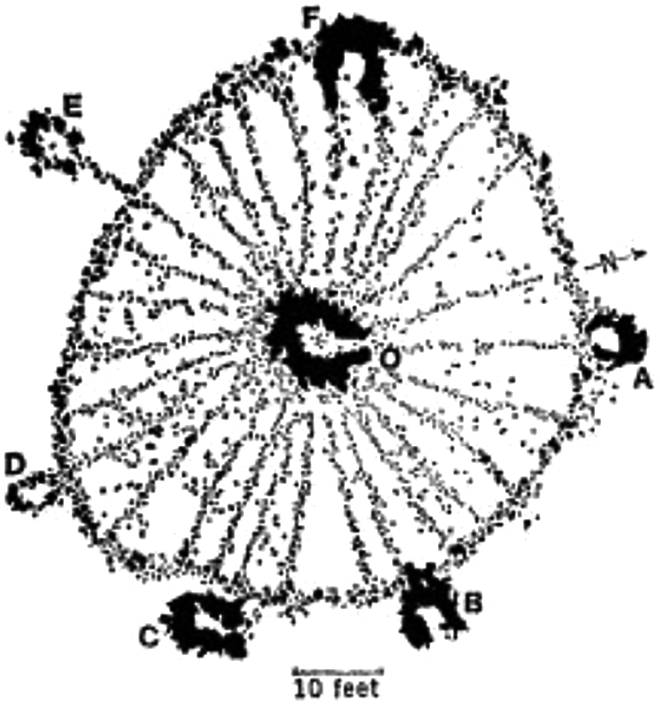
Plan of the Big Horn Medicine Wheel (Big Horn Mountains, Wyoming, USA) by D. Grey (1958) as reproduced by Eddy, 1974; 1037.
The authors of the Mashantucket Pequot Thesaurus developed its structure by replicating the four domains of the Medicine Wheel—south, north, west, and east—which correspond to the domains of personal being (Figure 3). By so doing, they represented knowledge as having more than one manifestation and meaning, which exist as parts of one whole. For example, tobacco, when placed within the Physical Domain, gains the identity/meaning of being a plant. When the term enters the Spiritual Domain, it becomes a manifestation of sacredness while retaining its identity as a plant. An association of a specific meaning with a particular point on the circumference of the Wheel captures the notion of knowledge as “getting to know.” The revolving nature of the Wheel further represents the process of knowing as events of associating specific terms with the contexts of their origination. The model emphasizes the functioning of contexts as meaning-making mechanisms and locations and, by so doing, articulates graphically the relational and fluid identity of knowledge as processes. While the usefulness of the Mashantucket Pequot Thesaurus is still to be seen, it offers an exciting perspective in the area of knowledge organization.
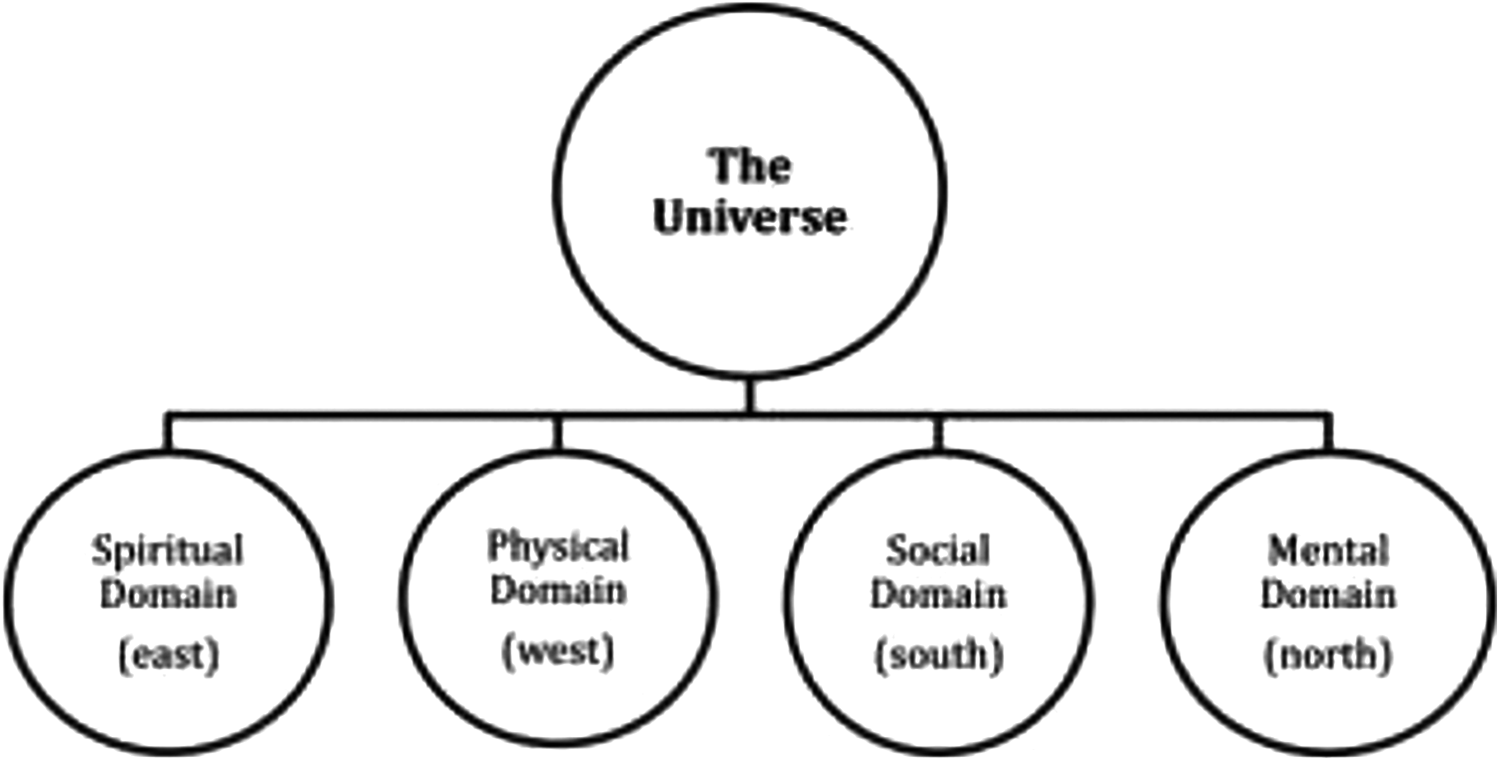
The four domains of the Thesaurus, by Littletree and Metoyerm 2015; 644.
Culturally sensitive collection management
Culturally sensitive (and/or responsive) collection management constitutes the second category of practices of indigenous librarianship. Culturally sensitive collection management targets the management of indigenous collections housed in non-indigenous settings in light of the values and interests of the source communities. Similar to the revision of the instruments of classification of indigenous content, culturally sensitive collection management practices emerged in response to the implications of the inappropriate care of indigenous content in non-indigenous institutions. These problems are manifold and range from placing materials in the public domain, and, by so doing, enabling the misappropriation of indigenous cultural and intellectual heritage, to services for indigenous patrons, who continue to feel unwelcome in non-indigenous libraries (Callison et al., 2016; Cherry and Mukunda, 2015; Duarte and Belarde-Lewis, 2015; Garwood-Houng and Blackburn, 2014; Gilman, 2006; Hurley et al., 2017; Moulaison and Bossaller, 2017). The efforts of dedicated professionals suggest a path toward change.
A pioneering project at the Arizona Libraries Special Collections is a particularly well-documented effort that sets an excellent precedent in culturally sensitive collection management. This project helps to identify the major areas constituting culturally sensitive collection management practices and the difficulties associated with these practices. Verónica Reyes-Escudero and Wendel Cox, who led the project, suggested three interrelated steps associated with culturally sensitive collection management: the critical assessment of a collection; the documentation of indigenous content; and the steps toward engaging communities with culturally sensitive collection care. Given that each of these steps demands specific expertise, and raises particular kinds of concerns and difficulties, they may be identified as the core components of a culturally sensitive collection management methodology. The primary issue with the first step—the assessment—is related to the lack of mechanisms to locate indigenous content across multiple disciplines and sources of information. Reyes-Escudero and Cox (2017) worked with catalogs and finding aids. They applied varied ethnonyms associated with different communities to find material and conducted searches within texts. They reported that their approach was laborious and complicated by the difficulties of documenting their findings.
The difficulties surrounding the second step—the documentation of indigenous content—reveal a different set of issues. For example, what, the authors asked, would be the best strategy to represent thematic diversity and the interrelatedness of the themes constituting indigenous content? What would help with the sharing of the description of indigenous content thus constructed with other institutions that might be holding copies of the materials examined? What can serve as a set of standards for identifying a source community given the historical changes a community might have gone through since the moment of publication of a specific source, and the complexities of the sociopolitical organization of communities? If, for example, one is to classify the content by using a community’s status, how would it be possible to organize materials of federally non-recognized tribes? On the other hand, what would be a solution to organizing the materials of communities constituted by diverse groups, such as the Colorado River Indian Tribes, consisting of the Mohave, Chemehuevi, Hopi, and Diné (Reyes-Escudero and Cox, 2017)?
Finally, with regard to the last step—engaging and collaborating with communities—what would be the best strategies to reach out to communities? For example, an institution may have no previous relationships with tribes, and no funds to invest in fostering and supporting partnerships, and offer no training to staff in this area. While Reyes-Escudero and Cox (2017) did not provide responses to these questions, the experiences in Australia suggest that one way of addressing these issues is approaching them from a position of revising institutional policy (Garwood-Houng and Blackburn, 2014) toward fostering interinstitutional collaboration. If a collection is a part of a US academic institution, it might be appropriate to approach a NAGRPA (Native American Graves Protection and Repatriation Act [1990]) officer who may already be collaborating with tribal communities.
Fundamentally, culturally sensitive collection management is a norm-setting project toward conducting indigenous knowledge management by prioritizing source communities’ interests and norms over the institutional and/or legal standards shaping professional practice. At present, two major professional instruments support the implementation of this goal: the Aboriginal and Torres Strait Islander Protocols for Libraries, Archives and Information Services, adopted by the Australian Library and Information Association in 1995 (Australian Library and Information Association, n.d.; Garwood-Houng and Blackburn, 2014), and the Protocols for Native American Archival Materials (originally drafted in 2006), endorsed by the Society of American Archivists in 2018 (Christen, 2011; O’Neal, 2015; Society of Amercian Archivists, 2018). The status of these protocols as ethical/moral provisions affects the scope of their application (Callison et al., 2016; Joffrion and Fernandez, 2015; Roy and Frydman, 2013). Australian experiences also suggest that the country-wide enforcement of protocols is directly related to states’ reconciliation efforts (Garwood-Houng and Blackburn, 2014). Thus, in states like Russia, where infringement of indigenous rights remains a reality, the implementation of these standards would be unlikely. The available scholarship from Russia supports this suggestion (e.g. see Russian Academy of Sciences, 2019).
Nevertheless, some professionals are pioneering the application of human rights norms at their institutions and, by so doing, are setting standards for best practice in the culturally sensitive collection management of indigenous materials. For example, the archivists at the American Philosophical Society have been partnered with representatives from indigenous communities since the early 2000s, to the benefit of the communities, scholars, and the American Philosophical Society’s library. This collaboration has allowed for the more accurate description of the Society’s indigenous content. It has helped to identify culturally sensitive materials and manage access to them according to tribal norms and wishes, and the library has produced its own protocols shaping the management of indigenous content (see Carpenter, 2019). Given the public access of this document, it may potentially instruct other institutions on the issues of balancing professional responsibilities, indigenous rights, and institutional priorities.
Another pioneering effort constituting culturally sensitive management of indigenous content presents a strategy of non-collecting. For Joy Holland, a steward of the indigenous collections at the American Indian Studies Center at the University of California, Los Angeles, this strategy allows for supporting the aspirations and needs of communities. Non-collecting efforts are an exception to traditional LIS practices that center on acquisition and access. However, they support adequate care of indigenous content because they help to avoid the violation of indigenous rights to knowledge and privacy, and the issues surrounding disrespect of indigenous cultural agency. Non-collecting may also allow for investment in forging relationships with communities toward the stewardship of collections that already exist within an institution. This strategy must be considered by professionals when faced with limited funds for managing indigenous content (Joy Holland, personal communication, May 2020).
These indigenous librarianship practices introduce innovative measures for organizing and managing collections in contemporary libraries. While developed in response to the difficulties of managing indigenous content, they can be applied as instruments for caring for other types of materials. These practices also suggest venues for collaborative, community-led librarianship, where services to communities require librarians to escape the confinement of their library walls and enter communities for collaborative planning to grow collections and consider how knowledge should be represented within and by these collections.
Conclusion
The research presented in this study is an effort to comprehend a variety of projects as components of one domain: indigenous librarianship. It conceives of indigenous librarianship as constituted by theoretical, applied, and advocacy components. It reveals a powerful dynamic between contemporary indigenous self-determination struggles and the strategies indigenous librarianship scholars use to assert their position within the professional and scholarly spaces that are not of their own making.
This research also reveals the potential of indigenous librarianship to function as a critical methodology. Indigenous librarianship questions the major proposition of LIS, supporting a notion of knowledge as “units of content,” and introduces a notion of knowledge as practices in response to indigenous perspectives. Indigenous librarianship promotes the significance of instruments that recognize the rights and interests of communities and, as such, is a step toward developing the collaborative management of content and community-based librarianship. Fundamentally, indigenous librarianship offers a way to revolutionize LIS to become a discipline that serves communities’ interests and needs as defined by them, and not by the state or an institution or professional body.
Footnotes
Acknowledgements
The author expresses her gratitude to the students in her Indigenous Librarianship class at UCLA (spring 2020) and her colleagues Wendy Teeter, Joy Holland, and Elsa Stamatopoulou for their insights and support in developing this subject. She is also grateful to Richard Anderson and Dave Adelson for their support in developing this article.
Declaration of conflicting interests
The author declared no potential conflicts of interest with respect to the research, authorship, and/or publication of this article.
Funding
The author received no financial support for the research, authorship, and/or publication of this article.
