



Abstract
Environmental protection is an increasingly pressing issue all over the world. Ozone depletion, the greenhouse effect, global climate change and global warming are among the rising environmental concerns. The increasing number of environmentally conscious consumers has resulted in numerous Go Green campaigns and a Go Green movement, along with solutions and calls for consumers, corporations and governments to be more proactive in going green in every aspect. Libraries are no exception. Although it is so important, little is known about the green-library concept in the African context and among Kenyan libraries. Like some other developing countries, Kenya has responded to climate change in various ways because of its adverse impacts. It is important to explore how libraries are planning for a sustainable future. Subsequently, this study aimed to explore the adoption of green-library concepts in Kenya for environmental sustainability with a view to proposing strategies that can be used to guide libraries in going green. The study adopted a qualitative approach. A sample of 12 libraries was purposively drawn from a population of 227 academic, public and special libraries in Kenya. Data was collected using semi-structured interview schedules complemented by observation and a document review, and analysed using grounded theory. The findings show that libraries in Kenya, under their umbrella organizations, have taken advantage of their knowledge of green concepts through adopting and implementing green practices and coming up with strategies to enhance green libraries and promote environmental sustainability. They have done this mainly through redesigning and renovating to meet ever-changing user demands in line with green-library standards. The study concludes that librarians in Kenyan libraries understand green-building concepts and have adopted different green initiatives, albeit partially to reposition and maintain their position globally. The study proposes three strategies for fully going green: active user involvement in green initiatives; improving performance and growth measuring metrics; and maintaining green-library standards in accordance with the IFLA’s Environment, Sustainability and Libraries Section (ENSULIB) green-library checklist.
Introduction
Climate change is real, and human activity is the leading cause. Notably, since the Industrial Revolution, average global temperatures have been increasing steadily, resulting in climate change threatening life on Earth. In 2019, for instance, there was extraordinary global heat, retreating ice and record sea levels due to heightened human activity. The average temperatures for 2015–2021 and 2010–2021 are the highest ever recorded, and 2019 was the second hottest year on record (Olhoff and Christensen, 2019). According to NASA Release 22-006, the last eight years have been the hottest ever recorded, with 2021 coming in at sixth place. The latest figures from NASA and the National Oceanic and Atmospheric Administration show that global temperatures are 1.1 °C above pre-industrial levels and creeping ever closer to the 1.5 °C limit set by politicians at the United Nations Climate Change Conference (COP26) in Glasgow in November 2021 (NASA, 2022). Unfortunately, even with the increasing destruction of the environment due to climate change, there are no adequate global commitments to lessen climate change (Nunez, 2019). The 2019 projected that, by 2030, emissions will reach 56 gigatonnes of equivalent carbon dioxide, which is double what they should be. Thus, there is a need to prevent global warming beyond 1.5 °C and reduce emissions by 7.6% annually until 2030 (Christensen & Olhoff, 2019).
Currently, many governmental and non-governmental institutions are endeavouring to address the problem of global warming, which requires urgent attention. Nations agreed to a legally binding commitment in Paris to limit the global temperature rise to no more than 2 °C above pre-industrial levels (UNEP, 2022). They also offered national pledges to cut or curb their greenhouse gas emissions by 2030. The Paris Agreement commitments have been updated as they have become ineffective. The update was reviewed at COP26, resulting in the Glasgow Climate Pact, which is meant to drive action across the globe on mitigation (reducing emissions, adaptation) and help those already affected by climate change financially (enabling countries to deliver on their climate goals) and to work together to deliver even more significant action. The success of this pact will have great significance for the world. If countries cannot agree on sufficient pledges, in another five years, the reduction in emissions necessary will leap to a near impossible 15.5% annually (UNEP, 2022). The unlikelihood of achieving this far steeper rate of decarbonization means that the world is facing a global temperature increase of above 1.5 °C. Every fraction of additional warming above 1.5 °C will bring worsening impacts, threatening lives, food sources, livelihoods and economies worldwide (United Nations Environment Programme, 2020).
Libraries have not been left behind and are engaging in green initiatives to reduce global warming and safeguard the environment (Singh and Mishra, 2019). Librarians are slowly becoming eco-conscious and developing a sense of creating libraries that minimize power consumption and are energy-efficient and environmentally friendly, and are sustainable libraries or green libraries. Green libraries are library structures that are designed, built, renovated, operated or reused in an ecological and resource-efficient manner (Meher and Parabhoi, 2017). Green-library initiatives emerged around 1990 and libraries have since been adopting several practices to reduce the negative impact of libraries on the environment (Fedorowicz-Kruszewska, 2020).
Aytac (2019) underscores that the opportunity for libraries to be directly involved in environmental sustainability was bolstered by the IFLA’s push for libraries to be joint custodians of the United Nations 2030 Sustainable Development Goals, with specific targets addressing the environmental dimensions of sustainable development (Christensen & Olhoff, 2019). However, there has not been much follow-up to see if all libraries are following the IFLA’s directive. In its 2015 resolution on sustainable libraries, the American Library Association stated: libraries that demonstrate leadership in making sustainable decisions that positively address climate change, respect and use natural resources, and create healthy indoor and outdoor environments will stabilize and reduce their long-term energy costs, help build more sustainable communities, and thereby increase community support for the library. (American Library Association, 2015)
The environmental changes that are a result of population growth and human activity are altering the world in ways that are threatening the existence of life on Earth. Evidence shows that the threat from environmental changes is bound to increase in the coming years if additional proactive action is not taken (Tong and Ebi, 2019). A press release from the United Nations Environment Programme in 2016 noted that the scenario is even worse in developing countries such as Kenya, where, because of weak governments and environment regulatory systems and a lack of awareness and goodwill on the part of organizations, there is high environmental degradation, which has exposed these countries to severe environmental changes.
According to Cobbinah et al. (2019), climate change has increased in the past three decades, with adverse effects on the poorest countries in the world. Managing environmental change is thus a global concern, requiring not only international bodies and governments, but also action by local institutions, such as libraries, which can intervene to ease or avert the adverse effects of environmental changes. Library institutions, especially in developed countries, have devised environmental sustainability interventions. One of these actions is the green-library initiative. This concept has been embraced within library management with an emphasis on environmental sustainability, the health of library patrons and staff, and providing for the needs and interests of tomorrow’s generation of users (Datta, 2015). The main concern of green libraries is to decrease libraries’ environmental impact (Kurbanoğlu and Boustany, 2014).
Like some other developing countries, Kenya has responded to calls for climate action in various ways because of the adverse impacts of climate change and environmental degradation. It is important to explore how libraries are planning for a sustainable future. However, as much as environmental sustainability is so important, little is known about the adoption of the green-library concept in the African context, and especially among Kenyan libraries. Apart from the United States International University Africa Library, there is little knowledge on how other libraries in Kenya are adopting green concepts and, if they are not doing so, why they are reluctant to participate in environmentally sustainable practices. Consequently, this knowledge gap prompted the current study to explore the adoption of green-library initiatives in Kenya for environmental sustainability, and thereby outline their importance and propose strategies that can be used to guide libraries in going green. Another motivation for the study was the disproportionate impact of climate change on developing nations such as Kenya, caused by environmental degradation, with very little being done to ensure a sustainable future. Recent trends indicate that rainfall is becoming increasingly rare and inconsistent, and communities are already bearing the brunt of climate change in their everyday lives. This study seeks to fill the gap by identifying what can be done by libraries in their small capacity as organizations impacting communities to secure the environment and reduce their carbon footprint.
The objectives of this study were to establish the comprehension and perception of Kenyan librarians with regard to the concept of making libraries green for environmental sustainability; analyse the green methods/practices adopted by Kenyan libraries; determine the factors driving and impeding libraries’ embracement and implementation of the green concept; and propose strategies to guide libraries in transforming into green libraries.
The going-green movement
The green-building movement was inspired by Victor Olgyay’s 1963 book Design with Climate and Ralph Knowles’ publication on form and stability, published in 1967 (Uhl and Anderson, 2001). Green building refers to practices that make buildings sustainable and resource-efficient throughout their life cycles, from siting to design, construction, operation, maintenance, renovation and demolition (Buys and Hurbissoon, 2011). Green buildings are designed to have a reduced overall impact on human health and the natural environment. The Go Green movement recognizes that there is only one Earth, and that it should be taken care of. It means protecting the Earth and promoting a healthy environment.
The philosophy of sustainable development was being promoted in the 1980s and, by then, libraries in the developed world had already started to attempt sustainable practices. According to Abbey (2012: 11), several library organizations spearheaded initiatives to respond to ‘concerns about prevalent mismanagement of natural resources and effluence in the United States’ in the 1960s. According to Antonelli (2008): ‘The Green Library Movement emerged in the early 1990s and gained popularity in the library profession around 2003’; it ‘comprised a growing number of librarians, libraries, cities, towns, college and university campuses committed to greening libraries by reducing their environmental impact on the planet’.
Abbey (2012) asserts that the green-library movement focuses on four distinct areas: the sustainability of scholarly communication; measuring and improving sustainability; green libraries and facilities; and green libraries and practices. According to Abbey (2012), the greening of libraries not only calls for greener library spaces, but also for greener library strategies that allow for the integration of ecologically friendly practices in a platform that guides future decisions regarding library buildings, equipment, digitization and the efforts of library networking.
Importance of libraries going green
When thinking about issues like climate change and global warming, libraries do not come to mind, despite their contribution to the problem due to their large consumption of energy in the delivery of services. According to Prasanth and Vasudevan (2019), having a healthy natural environment is essential for the quality of life and human survival. Librarians have a crucial role to play in ensuring the betterment of the library environment, as it is crucial in minimizing its negative impacts on the natural environment. Moreover, this also improves the internal environment in terms of quality by conserving resources such as energy, water and paper, and using natural and biodegradable products and construction materials (Hauke and Werner, 2013). Greening libraries will help reduce their carbon footprint, which is defined as the total amount of greenhouse gases produced indirectly and directly in support of human activities.
Libraries are community organizations, which gives them a social responsibility to reduce their harmful environmental effects. Shah et al. (2015) are of the opinion that economic benefits can be achieved through greening libraries, recycling waste materials, reusing water and using efficient lighting systems. According to Hauke and Werner (2013), most energy resources are finite, making it necessary to use them with care. It is therefore vital for library budgets and the planet’s health that the available energy resources are used prudently. Khallar (2015) notes that libraries require a significant amount of resources, water and energy; thus, it is necessary to adopt the concept of going green. Notably, this can contribute to tackling the issue of environmental challenges such as energy depletion and climate change.
Kurbanoğlu and Boustany (2014) identified that libraries act as gateways to knowledge, making them particularly responsible for leading by example and disseminating the idea of sustainability. Libraries have a role in providing popular services and communicating a clear green identity. Their improved daily operations and procedures can help educate the community about responsible environmental practices (Choudhury, 2014). Libraries should incorporate ecological sustainability in their marketing plans as socially responsible bodies. According to Hauke and Werner (2012), green libraries are crucial for maintaining the ecological balance in the environment and preserving the planet’s natural resources and systems. Scherer (2014) observes that going green can be influential in bringing environmental awareness to a community by teaching environmental sustainability.
In the quest to go green, libraries have adopted resource recycling strategies and energy-saving practices to recoup the tradition of sustainability. Antonelli and McCullough (2012) assert that having a green image allows a library to improve and strengthen its environmental consciousness. Other steps towards the greening of libraries that have been adopted include: locating the library building centrally in a densely populated area with accessible transportation services (Hauke and Werner, 2013); the adoption of underground parking and vegetative roofs to reduce the heat-island effect; water conservation strategies, including the collection of rainwater and use of waterless urinals and low fixtures (Antonelli and McCullough, 2012); the use of glass technology to reduce the harmful effects of the sun’s ultraviolet rays; and the use of solar energy and wind energy for the conservation of energy (Pangail, 2015).
Similarly, the structural designs of libraries are now consciously being considered along with the going-green concept. Some examples include library designs which ensure that the air is recycled and does not remain stagnant, to avoid trapping harmful toxins in the building (Antonelli and McCullough, 2012); the use of large windows to allow for the entry of both sunlight and fresh air into the building or the use of wide corridors to provide a buffer against the entry of humid and hot air (Pangail, 2015); the use of environmentally friendly, renewable materials such as cork, bamboo, wood and linoleum to renovate existing libraries that are not yet green (Binks et al., 2014); and the continued incorporation of open spaces as well as potted plants, which are eco-friendly.
According to Abbey (2012), the push for building green libraries continues to grow, with cities incorporating environmentally friendly practices in public buildings. The green movement has seen libraries adopt green features such as solar panels, bamboo flooring, natural daylight and shades to filter direct sunlight, among other features. Choudhury (2014) attributes the adoption of green features when building libraries to the perceived benefits, such as reduced costs and making libraries affordable. Choudhury (2014) cites the example of the Delhi University Library in India, which has incorporated broad openings to allow for natural light, resulting in a cool and pleasant environment. The building has coolers made from pads of indigenous materials that help prevent the desert heat from coming inside. Moreover, the library has a lot of greenery, with potted plants and trees both inside and outside the building.
In Kenya, the United States International University Africa Library has a garden with trees and plants that creates a green environment and provides fresh air for staff and library users as part of its enormous green building (Mwanzu, 2018). A flat roof allows for the collection of rainwater to water the garden. According to Ogola (2018), the design of this library indicates that the green-library movement has been embraced all over the globe and is now used as a benchmark for new buildings.
Methodology
This study was founded on two theories and a standard rating system. The two theories are the norm activation model and the value-belief-norm theory of pro-environmental behaviour. The standard rating system is the Leadership in Energy and Environmental Design (LEED) standards.
Schwartz’s (1977) norm activation model explains the altruistic and environmentally friendly behaviour of individuals and organizations. The norm activation model ascertains that individuals may significantly affect the environment through other behaviours, such as influencing the actions of the organizations to which they belong. However, it is not strange that it is taking libraries a long time to become aware of environmental problems, consider the benefits of green initiatives and acknowledge the consequences before they decide to adopt the concept of a green library. This may explain why, in Africa and Kenya in particular, there are not as many libraries adopting the green concept.
The value-belief-norm theory was proposed by Stern et al. (1999) to account for the effect of human values in an environmental context. Proponents of the value-belief-norm theory are convinced that individuals’ subjective norms and normative beliefs regarding the environment influence their intent to behave ecologically. This proposition stems from an understanding that our environmental values can make us pursue green building. The value-belief-norm theory complements and builds on Schwartz’s norm activation model by holding that altruistic and pro-environmental behaviour occurs in response to personal moral norms that are activated in organizations which believe certain conditions pose threats to others. With such awareness of the unfriendly consequences, institutions and organizations can initiate actions and resolutions, such as acknowledging their responsibilities and forging solutions that could avert those consequences.
The norm activation model speaks to librarians’ awareness of possible detrimental consequences and their acknowledgement of responsibility for not acting pro-environmentally. Pride and guilt cause librarians to act in a manner in line with their personal norms. Environmentally significant behaviour indirectly shapes the context in which choices are made to directly cause environmental change. The value-belief-norm theory informs the behavioural definition of environmentalism, which is the propensity to take actions with pro-environmental intent. In the context of green-library initiatives, environmentalism is the idea that flows from adopting a new environmental or ecological paradigm, within which librarians’ and architects’ actions, designs and environments are perceived as indistinguishably interrelated.
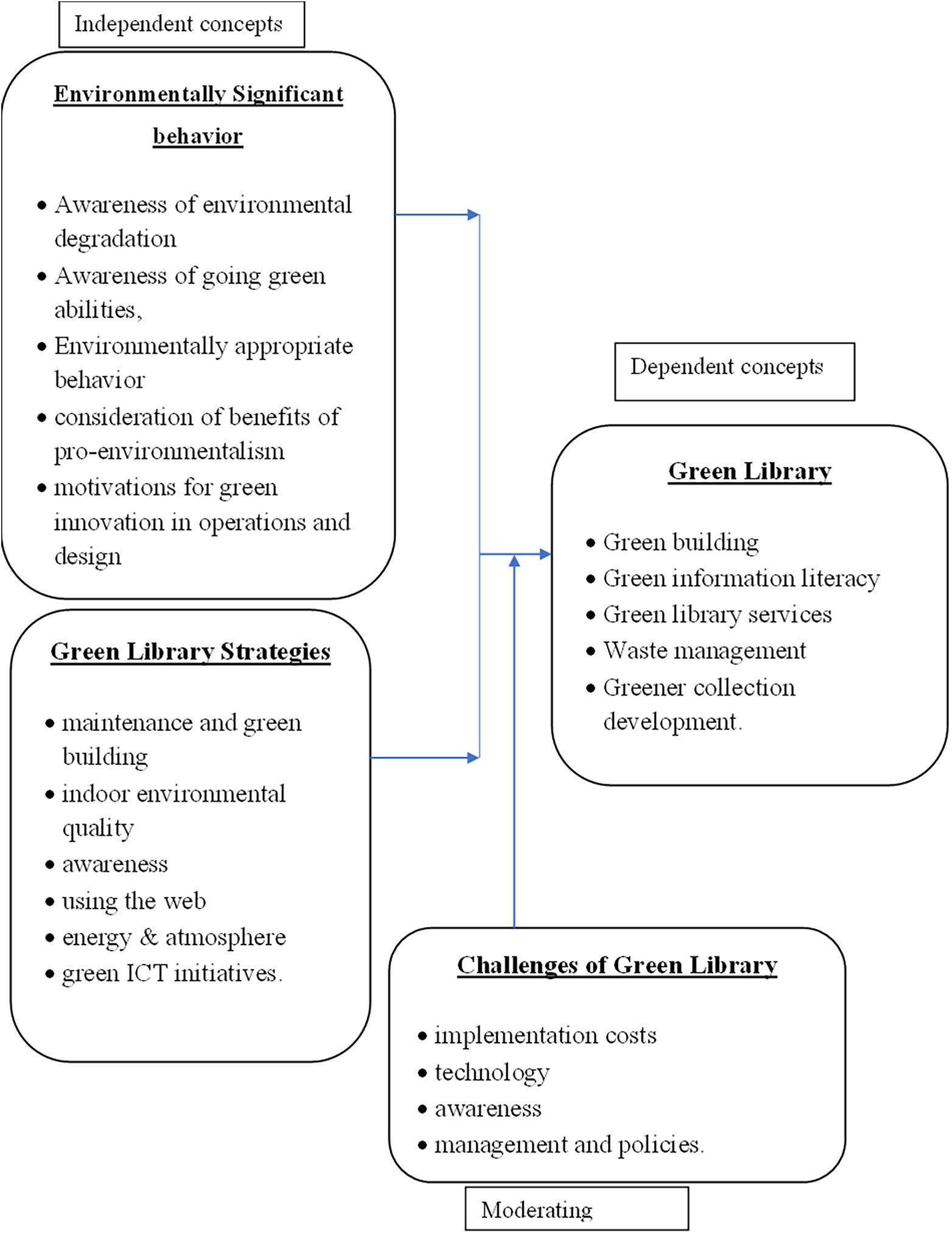
Figure 1 illustrates the conceptual framework of this study. It shows the relationship of the concepts used in the study. The researchers conceptualized that green libraries result from library environmental sustainability practices and strategies that guide libraries to transform into agents and actors of the United Nations Sustainable Development Goals. However, some factors impede libraries’ embracement and implementation of green concepts, which affects the implementation of green libraries.
The conceptual framework.
The study adopted a subjectivism ontology and interpretivism epistemology, and a case study research strategy. Data was collected through face-to-face interviews, observation and a document review. A purposive non-probability sampling technique was employed. Purposive non-probability sampling is congruent with an explanatory research design, allowing the researcher to perform a sound study of a small sample that is selected purposively to provide an information-rich qualitative context to answer the research questions and meet the study’s objectives. The libraries were purposively selected based on their appropriate infrastructure, green architectural design and procedural practice related to environmental sustainability concepts. With this method, the sample selection criteria were based on maximum participant variation in the extent of adoption of new or renovated library buildings that incorporated the green-library concept, size and their ability to be a fair representation of libraries in Kenya.
The selected libraries were deemed to have met the inclusion criteria as they had recently renovated their buildings or relocated to new buildings incorporating the green-library concept. The libraries included five public university libraries (University of Nairobi Graduate Research Library, Kenyatta University Post-Modern Library, Moi University Margaret Thatcher Library, Masinde Muliro University Library and University of Embu Library); three private chartered university libraries (Catholic University of Eastern Africa Library, United States International University Africa Library and Adventist University Library); two public libraries (Kenya National Library Service – Upper Hill and Kenya National Library Service – Nakuru); and a school library and a special library (Mpesa Foundation Academy Library and International School of Kenya Library).
The researchers viewed this variation as a strength of the research strategy since patterns that arise in the data between different institutions are of great value in drawing conclusions from the entire population. The head librarians of each institution were targeted. The data collected was qualitative, and its validity and the understanding gained from the data had more to do with the researchers’ analytical and interpretation skills than the sample size, which is common in the adopted research design of a qualitative explanatory study. Purposive sampling was used since it was the most appropriate for the study to ensure that only libraries that had embraced the green concept participated. Framework analysis was used to analyse the data during the collection process. NVivo, a qualitative data analysis tool, was used to aid the data analysis. In the analysis, the gathered data was sifted, charted and sorted in accordance with the critical issues and themes of the study. Indexing was used, whereby the researchers identified the portions of data that corresponded to the study themes.
Findings
Librarians’ comprehension and perception of the concept of green libraries
The concept of green libraries was adapted from the green movement initiative concerned with environmental sustainability. The green-library movement in local libraries is still taking shape. However, it has been widely embraced in the business world. It is thus critical to understand how librarians comprehend and perceive green libraries. First, the study inquired whether the librarians perceived their library to be green. Most of the librarians considered their library to be green to some extent, as illustrated by some of the green-library practices in their libraries. One of the librarians, while explaining the green concept of their library, stated: I can say that our library is green because the library building is made with enough lighting to minimize electricity use. We also encourage our users and even the staff during the day to put off lights and only switch on when it is dark.
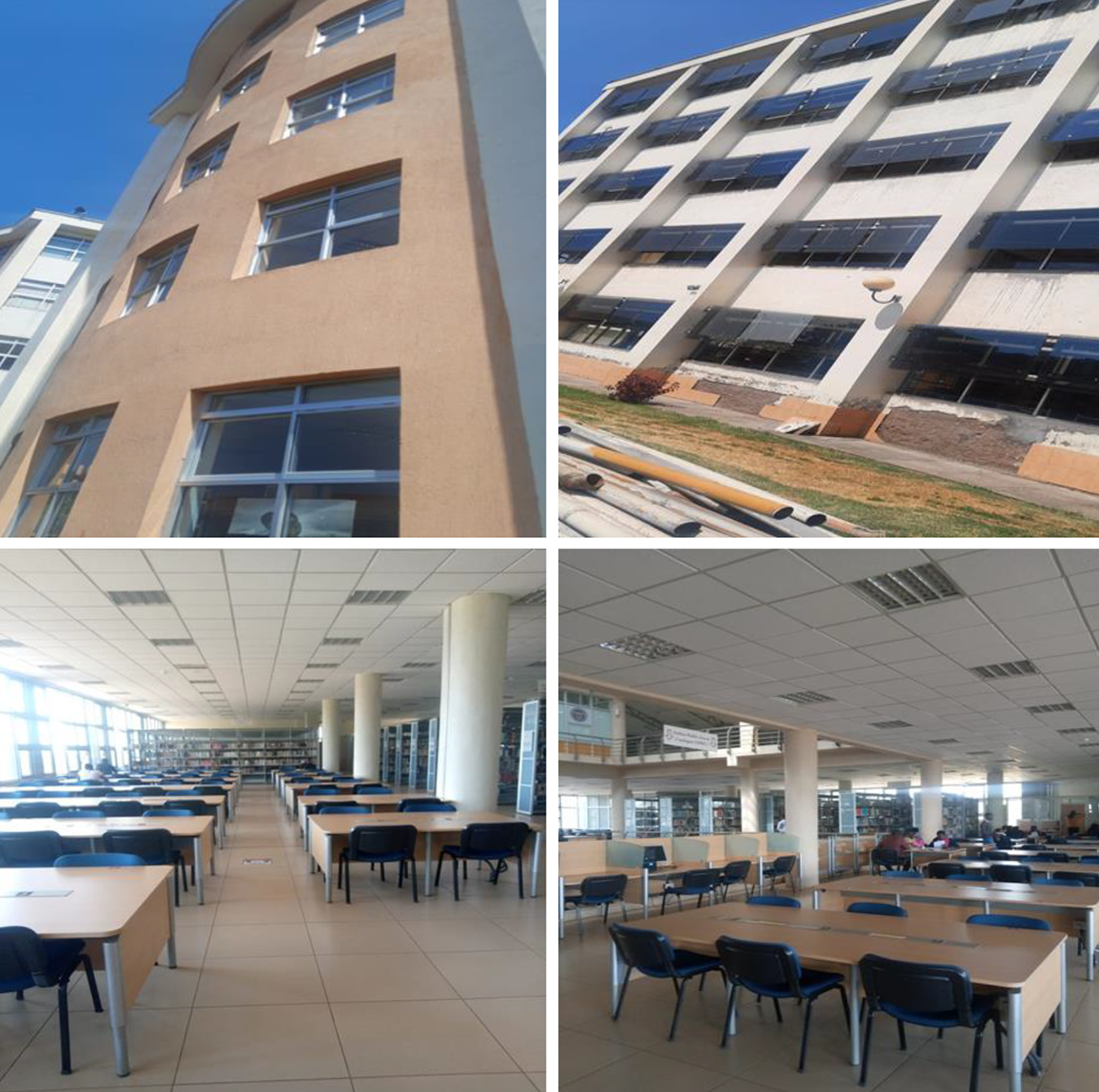
Use of natural light in libraries.
With regard to adopting greening aspects in libraries, the interviewees explained the areas where green initiatives were evident. These included environmental elements that involved energy, the harvesting of water, limiting the use of resources and the use of digital libraries. The concern over the environment was mainly linked to natural lighting, tree planting (Figure 3) and the proper use of the available resources. These environmental factors were considered an integral part of the library model, and there have been many strategies to incorporate greening in all library activities. One librarian said: ‘When this library was being commissioned, the plants to be planted were considered to make it green and make the library more environmentally friendly. We planted some trees here within the library community’.
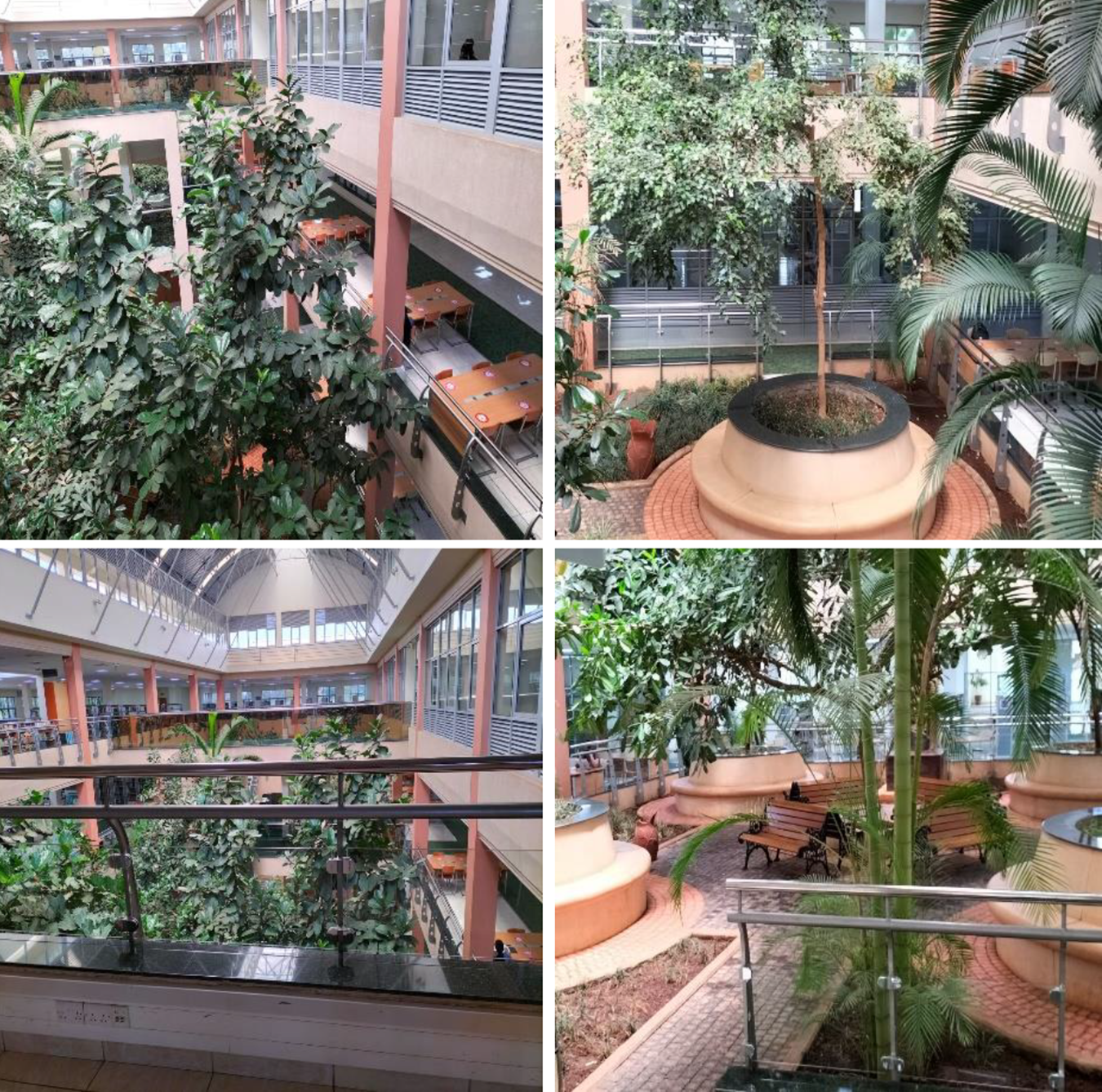
Tree planting inside libraries.
Natural light
The buildings had large windows to allow in natural light and minimize electricity use. The libraries also encouraged users and staff to switch lights off during the day. One librarian pointed out that: ‘The architectural make-up of the buildings is done to allow for natural light, including using more windows and constructing atriums or transparent roofs’. Another stated: ‘I think we have used natural light most of the time by having glass walls and part of the roof roofed using a transparent material. We have more natural light coming in’.
Planting trees
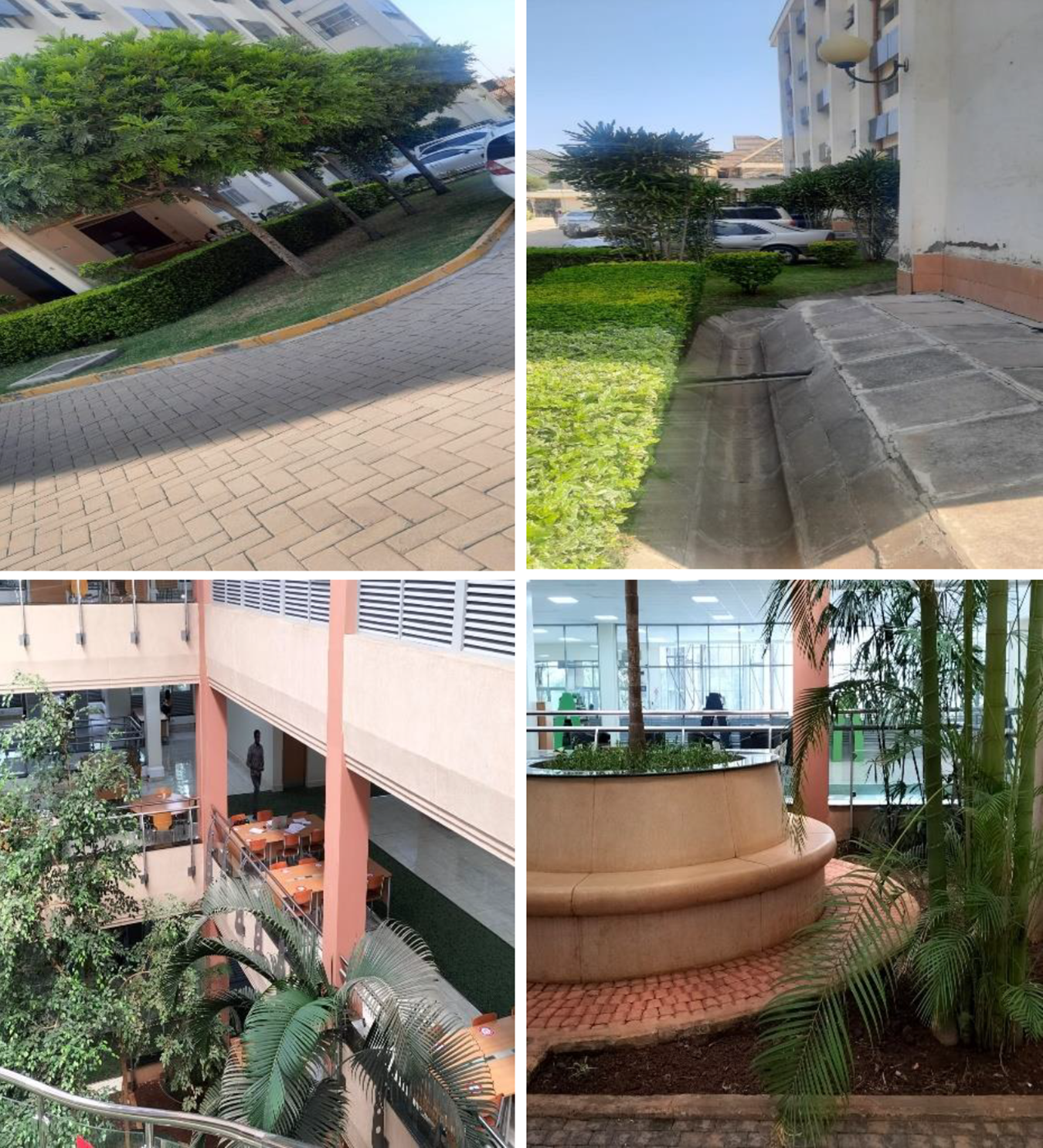
Another aspect that was reported was the planting of trees. The interviewees mentioned that libraries planted trees as an aspect of greening (Figures 4).
Planting trees.
Harvesting water
The harvesting of water included collecting rainwater, dealing with running taps and other aspects. One librarian reported that they put up notices urging users to turn off taps after use. They also had sensor taps that automatically produced water (Figure 5).
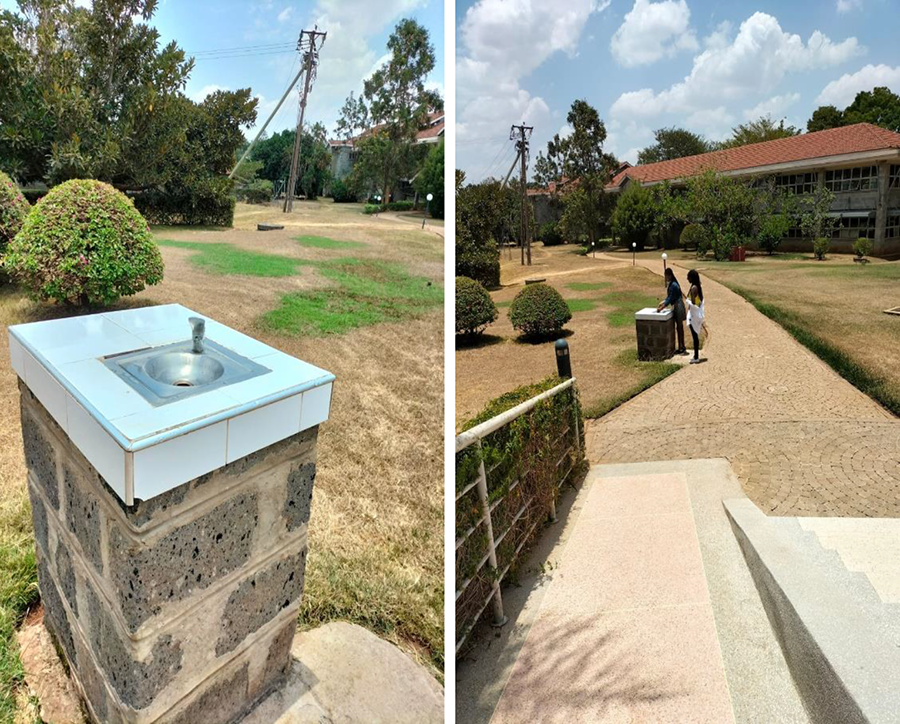
Automatic taps.
Some of the librarians reported collecting water on their roof and using it to irrigate the green gardens around the library: ‘We have water harvesting whereby we have huge water tanks surrounding the library to tap rainwater and irrigate plants. We have put gutters that collect water into our underground tanks’.
Limiting the use of resources
With regard to limiting the use of resources, some of the libraries reported that they failed in this respect since they lacked policies that guided the library in resource use. People tend to waste resources when there are no policies on using natural resources like water and acquired resources like electricity and paper. However, the libraries were trying to minimize the use of power. Various strategies were used – for example, controlled switches where the library official had total control of the lighting system. Another element of the proper utilization of the resources available in a library is minimizing the use of paper:
We do not print on paper; we always encourage working online. We just print when it is essential. We do not encourage printing of everything. Minimizing the usage of paper saves on the resources as libraries use less paper, meaning fewer trees are cut, creating environmental sustainability.
Use of digital libraries
The libraries reported migrating to digital tools. In other instances, old books were being converted to digital formats. This allowed for no further dependence on hard-copy books, which ensured that libraries no longer needed to reprint hard copies, even of old books. Some of the libraries reported that they were now producing more electronic resources than hard-copy books. The libraries were also subscribing to e-journals to offer their readers a variety of online resources, instead of relying on print versions.
Further probing sought to determine the extent of the greening of the libraries. Some of the participants considered their library to be partly green. One librarian indicated: I think our library is partially green because of how it was built. Certain things in its structure make it partly green, such as the garden in the middle, the way the roof is built, and the way the building was designed, making me feel that it’s a partially green library. And then also the way the windows let in natural light. I would not, of course, consider our library to be fully green. For our library, I would call it partially green because, from the environmental part, we have managed its appearance. For example, we have a lot of green plants all over, and that really makes our lives very green.
Green services in Kenyan libraries
The librarians acknowledged having some green-library services to promote environmental sustainability. Services linked to greening imply specific considerations to ensure that greening occurs. Some of the libraries had established an energy management committee that provided information on environmental sustainability. One of the librarians remarked: We have an energy management committee comprising of librarians. One of the things that we do through this committee is to offer information on environmental sustainability. Secondly, the librarians also provide environmental literacy services. Once in a while, some of our librarians are called upon to participate in workshops related to environmental literacy.
Another element related to the services offered by green libraries is designated library staff who train users on best practices in environmental sustainability. One university librarian said: ‘We have a librarian in charge of training users on best practices in environmental sustainability. This librarian prepares programmes for users on how to use the library sustainably and access and use the services sustainably’. In another example, e-library services were considered to be part of green-library services. According to one of the chief librarians: ‘The other service that enables greening is migrating library services to online platforms. This enables librarians to serve their users online, reducing the use of many other resources like energy, water and paper’.
The libraries also conducted targeted training, identifying specific groups with which to share the message of greening initiatives and environmental sustainability. It was stated that: ‘We have an outreach programme that engages the community. In this programme, we teach society about improving their reading culture and integrate tree-planting aspects around the library’. However, some of the libraries did not have any initiatives offering services linked to greening. One reported: ‘Our greening library initiative comes in a tiny aspect where we plant trees, but when it comes to a service, I think that we have not initiated any green services in the library’.
Libraries’ contribution to eco-friendly/environmental sustainability
The contribution of Kenyan libraries to eco-friendly/environment sustainability was considered with regard to three components: reusing and recycling materials, reducing waste and toxic products, and developing alternative technologies.
The librarians were questioned about the strategies their libraries adopted to reuse and recycle various materials. Some reported reusing materials while others had not reached that level of reuse and recycling. Libraries have had to go beyond their usual mandate and try to engage with people outside the realms of their parent organizations through conservation. One instance was a library hosting a collection point for recyclers on their premises: ‘We have been encouraging people to put the plastic bottles in one place, where slum dwellers collect them and reuse them to make chairs and lampshades and things like that’. Other libraries reported that they gave used cartridges to recyclers instead of disposing of them where they could be harmful to the environment. One of the librarians stated: ‘First of all, what we do with spent cartridges is, once we remove them from the machines, we normally give them to someone else who is recycling them instead of throwing them away. We give them out for recycling’.
Greening practices adopted by Kenyan libraries
This objective was tested under the libraries’ greening methods and environmental sustainability practices. The results indicate a sufficient understanding of environmental sustainability with greening methods and techniques as part of environmental sustainability. All of the participants, representing different libraries, demonstrated adequate knowledge of ecological sustainability and its diverse facets. Most of the participants understood ecological sustainability as preserving the environment by reasonable use of natural resources while minimizing waste. One of the respondents noted: ‘Environmental sustainability is ensuring the cleanliness of the environment and making use of readily available natural resources’. Another respondent asserted: ‘Environmental sustainability is using, maintaining, and preserving existing natural resources. We should stop degrading the environment and regenerate the resources for the future generation’. Another said: ‘Environmental sustainability ensures no wastage of resources in our daily activities. For example, when the library has water leakages, the water is wasted and not redirected for other uses; hence, we don’t contribute towards sustainability’.
Libraries’ involvement in environmental sustainability and its practices
The results confirm that the libraries were fully involved and concerned with environmental sustainability. They show that most libraries adopted different practices in ensuring the greening of libraries as a form of ecological sustainability. It was noted that the methods discussed below were used by most libraries and recognized as the most effective tools for environmental sustainability.
Architectural design
The results indicate that the architectural designs that most libraries adopted to ensure environmental sustainability were an atrium and green roofs. An atrium is an elongated roofing design that is transparent and made of fine sheets or glass. An atrium is essential for ensuring that enough natural light enters a building, thereby helping to minimize the use of artificial light and electricity during the day. Most of the libraries reported that they had an atrium, although some did not. One of the participants said: ‘Our library has an atrium. It can be seen immediately after entering the library since it is elongated and transparent. The atrium has been very helpful since the library can access natural lighting all day’.
A few of the libraries had to redesign and replace their old asbestos roofing with an atrium, ensuring that they were being environmentally friendly. One of the respondents from a library with a redesigned roof noted: ‘We had these roofing called asbestos which is not environmentally friendly. Later the library changed them and replaced them with the atrium design, which allows natural light in’. Another noted: ‘Our library currently has a Cano base, which usually looks very beautiful and allows natural light. Before, we used to have the translucent ones, and these were replaced’.
Although not commonly used, the results reveal that several libraries had green roofs for environmental sustainability. A green roof is where there are plants on the top of the building to help maintain the room temperatures and keep the rooms cool. Conversely, some libraries did not have green roofs: Oh no, we do not have a green roof where the plants are planted on the rooftop. However, I have seen this kind of roof in another library. I think it would be a great idea if we also adopted this since we have sufficient space at the top.
Maintenance-friendly construction
The results indicate that most of the librarians understood a sustainable library to be one that did not need many resources to maintain it. When libraries are being constructed, it is essential to leave enough space for growth or future upgrades. Many of the libraries were reported to be maintenance-friendly. This was characterized by the way they had been constructed: the walls had large windows, which allowed the light to come in. One of the participants confirmed: Yes, our library is maintenance-friendly. It is made up of stone with very many aluminium windows. Partitioning was done on the first and second floors and used bolts instead of stone. We are planning to expand in the future, and due to the nature of the building and how it was built, we will not interfere with the floor when removing the partitioning.
On the other hand, some of the libraries stated that they rarely carried out maintenance. They replaced items in the library when the need arose: No, we don’t do maintenance. After a long time, the only thing we have done is the carpet replacement. The carpet was incorporated since it reduces the noise as people walk in or around the library. Therefore, this was the only significant kind of maintenance I could say we have done so far.
Redesigning
The results reveal that most of the libraries had been redesigned or planned to redesign using intelligent arrangements to make maximum use of the space available. One of the respondents confirmed: ‘Yes, we have redesigned severally to create and utilize space in our library. For example, the space the tanks have occupied used to be the medical book space. However, we removed them to create space for the tanks’. Another noted: ‘We have redesigned severally. Recently, we rearranged the library into different sections according to users. This was in different sections such as the kids, pre-teen, teen, and adult sections’. A further participant commented: ‘Before, we used to have offices in sections. However, since we redesigned, we now have open area offices, which has helped utilize a lot of previously wasted space’.
Zoning of lights according to requirements
According to the results, the component Zoning of lights was also considered among the best practices for environmental sustainability. The results indicate that many libraries incorporated the zoning of lights in line with their requirements. This meant that in cases where there was enough natural light, the replacement of bulbs was minimal, whereas if libraries used artificial lighting, bulbs would be replaced regularly. On the other hand, a few of the libraries reported that they did not do zoning. One of the participants stated: Yes, we do zoning. Most of the time, we use natural lighting following the big windows that have been fixed in our library. The different bright colours are painted on the walls, enhancing the natural lighting…We have put the energy-saving bulbs and removed the old ones. In sections with natural lighting, we have set more miniature bulbs or none in a standardized manner.
Bicycle parking
The findings show that almost all of the libraries did not have designated spaces to leave bicycles compared to other types of transport, such as cars. A significant percentage of the libraries noted that they had car parking spaces that could be shared with bicycles but did not have a designated space for bicycles. This meant that the most common mode of transport was still cars, which use petrol and have a significant carbon footprint. On the other hand, a few of the libraries confirmed that they did have space for people to leave their bicycles, although it was limited: Out there, the bicycles are trendy, but apparently, we do not have parking spaces designed for them…No, we do not have a parking space designated for bicycles. We had identified a place to set it, but the government procurement procedures and processes are very long and have not approved payments for the rails used to lock the bicycles.
Environmental impact on immediate surroundings
The findings confirm that efforts to go green by libraries majorly affected their surrounding environment, creating a better environment. Efforts to build environmentally friendly buildings affected the surroundings either positively or negatively. As much as there were participants who confirmed that they were affected, others said that they were not aware of any effects resulting from greening activities. The participants noted cleaner air as one of the impacts of greening activities in their library. Air pollution around the library was reduced, creating a more pleasant environment: ‘There is no pollution in the library surroundings; there is clean air’.
The results reveal that the noise from ongoing greening activities, such as renovations and building work, also affected the librarians and library users. One participant revealed: ‘When construction is ongoing, there is a lot of noise and dust’. Additionally, an excessive number of wild trees was noted as one of the effects of greening activities in library surroundings. Others included accidents from falling trees and cold temperatures: ‘I remember one time there was a storm, and one of our walls was completely brought down. This maybe leads to the question of what type of trees should be planted around the library’.
The findings also show that greening activities were extended to the libraries’ neighbours. Such services included the planting of trees, flowers and even bushes. One participant commented: ‘We have planted in a school a kilometre away…we have been cleaning the roads around us and collecting garbage, and therefore our neighbours enjoy walking on clean roads’.
Document review
This study reviewed three key types of library documents: library strategic plans, library-building blueprints, and library budgets. However, apart from the public libraries, which had clear strategic plans, the university libraries, school library and special library did not have a strategic plan document. Nevertheless, some of these libraries had well-articulated visions and mission statements, as well as values. It was widely observed that green-library implementation was missing in these libraries’ visions and mission statements. This could account for the low performance of green-library initiatives, since such plans did not feature in the strategic documents of these libraries.
Regarding the blueprints of the library buildings, most of the libraries provided their blueprint with strict confidentiality conditions. In contrast, others could not offer their blueprint due to their policy, and some could not locate the document at the time of data collection. The blueprint documents that were examined showed that only the modern library buildings were designed with environmental sustainability in mind – for instance, these libraries were designed with provisions for rooftop rain harvesting. The blueprints also included designs for atriums, which ensure that natural light is allowed to enter the building, and help save on the use of electricity during the day. From the blueprints, it was also observed that libraries had designed bicycle parking spaces to encourage their users to use their bicycles instead of cars, thereby reducing carbon emissions. Some of the buildings were also designed with indoor garden spaces, allowing for trees and flowers to grow inside the library.
Regarding the budget documents, it was observed that the libraries were failing to budget for green-library initiatives. The libraries did not have any special funds in their budgets to establish or promote a green library. However, libraries with indoor gardens had some funds set aside for garden maintenance, including watering and removing weeds.
Insights from the research findings
The green concept in Kenyan libraries is still taking shape compared to the business world, where it has already become established. Most of the participants described their libraries as partially green in accordance with the practices they were involved in, and revealed that their libraries had many good plans for the future in going fully green while also influencing the mindset of library users and the surrounding communities. The results also reveal that libraries in Kenya offer green services, such as user training on environmental sustainability by designated librarians, green collection and lending services, digital library services, and awareness campaigns spearheaded by energy management committees.
Libraries in Kenya have adopted greening initiatives such as building designs with atriums and green roofing, maintenance-friendly and eco-friendly construction, the zoning of lighting, redesigning in accordance with LEED standards, parking for bicycles, recycling and the reuse of resources. Moreover, the findings confirm that efforts to go green in libraries have majorly affected the surrounding environment by providing a better climate through cleaner air for reading and having a smaller carbon footprint.
Regarding the participation of libraries in greening initiatives, the results reveal that all libraries in Kenya recognize participation in greening initiatives as a good strategy for supporting the United Nations Sustainable Development Goals for preserving natural resources for a sustainable future. However, most of the libraries did not participate in such endeavours. The small percentage that participated in greening initiatives reported to have done so through umbrella organizations such as their parent universities, which had a school of environmental science or climate control. Many libraries had embraced the green concept to be on a par with the world order. In doing so, they ensured that their redesigns and upgrades conformed to LEED standards for green buildings. In Kenya, Vision 2030 was acknowledged as one of the policy factors that influenced libraries to embrace the green concept. Libraries have been embracing and implementing green initiatives in line with the policies of Vision 2030.
While implementing the green concept, some challenges prevented the libraries from effectively going green. These included: inadequate financial support; a lack of awareness and understanding of the green concept; a lack of clear policies and strategic plans to guide implementation; the organizational culture; and a lack of interest from the library users and management. Some of the projected solutions to these challenges included: increasing green information literacy; emphasizing the role of leadership in setting up eco-friendly buildings; local practical solutions such as improving lighting; the development and adoption of policies and standards such as the LEED building standards; and better waste management.
Notably, many libraries had used strategies such as architectural innovations and renovations to transform into green libraries. The libraries had adopted other methods, such as attending special greening events, setting targets for tree-planting days, and raising awareness while incorporating many stakeholders. The architectural innovations and renovations that guided the libraries in their efforts to achieve greening included green garden spaces, green roofs and provisions for natural lighting. Remarkably, many libraries achieved less energy consumption through natural-lighting provisions enabled by installing large windows, creating open spaces within the library and using atriums on their roofs. Further, the libraries recorded that they were using solar energy and light-emitting diode bulbs to help conserve energy.
The libraries were more intent on finding ways to reduce electronic waste. The Kenyan libraries reported using technology to reduce electronic waste, which has become the hardest type of waste to dispose of. This was characterized by more Internet usage for communication purposes and the use of refurbished computers. To further cut electronic waste, libraries in Kenya reported partnering with companies that refurbish or dispose of outdated computers and machinery.
The libraries in Kenya confirmed that participating in annual greening events aimed at environmental sustainability, such as tree planting and cleaning the nearest towns and marketplaces, contributed to their going-green initiatives. They were also involved in partnerships and networks with international bodies such as the IFLA and United Nations Environment Programme that strategically promote environmental sustainability through green initiatives. The libraries have partnered with local forest service departments to encourage tree planting and international bodies to observe world environment or tree-planting days. According to the results, Kenyan libraries intend to be strategic by incorporating more partnerships in the future that can support them financially and in terms of capacity-building to create more awareness around environmental sustainability.
The libraries in Kenya reported that they had run campaigns to create awareness of their greening initiatives for a sustainable environment. Most libraries reported using information and communications technologies (ICTs) in creating awareness of environmental sustainability. Green information literacy and user education have helped library users understand the direction the libraries are taking globally in using green initiatives. Notably, the green concept is effectively and successfully taking shape in Kenya, specifically in public and academic libraries. As a result, the respondents reported that many libraries that used them as benchmarks had indicated their desire to build fully green libraries or renovate their existing buildings to incorporate environmental sustainability as a standard for measures and quality control. All of the libraries in this study confirmed that they intended to improve their structures and policies to go fully green, like libraries in developed countries. Some of the libraries’ plans to achieve this include adopting solar energy, green roofs, improved water systems, more partnerships on greening and proper waste management.
This takes us back to the theories applied in this study to help achieve the study’s objectives: the norm activation model and value-belief-norm theory. According to the norm activation model, people significantly affect the environment through their behaviours or greatly influence the actions of the organization they represent. This means that managers refuse to adopt greening strategies on behalf of their organization because they do not believe in them. Evidence of the application of the value-belief-norm theory is notable in the beliefs and values of management and individual employees, including users. If they have values and beliefs in environmental sustainability, they will act personally to ensure it is achieved. However, those who do not possess such values tend most often to go against any policies that are proposed.
Conclusion
Under their umbrella organizations, libraries in Kenya have taken advantage of their knowledge of greening concepts by adopting and implementing greening practices and developing strategies to enhance green libraries and promote environmental sustainability. They have done this mainly through redesigning and renovating to meet ever-changing user demands in line with the green concept. Therefore, this study concludes that librarians in Kenyan libraries understand the green-building concepts and have embraced and adopted different green initiatives, albeit partially to reposition and maintain their position globally.
Policies should not be measured and judged by their meaning but by their performance. The traditional assessment system of measurement mainly evaluates the level of adoption of green initiatives rather than the achievement of the results of the objectives that are already in place. This is wrong, and most libraries continue using it. Thus, this study concludes that libraries are not able to determine and show if they have achieved, or not achieved, the full adoption of green initiatives and their end objectives because the metrics being utilized cannot ascertain the level of satisfaction and the impact of going green. The respondents noted that going green through adopting electronic resources was meant to reduce the carbon footprint created during the process of producing print material. However, most online resources are cloud-based and, although their carbon footprint was not investigated by the respondents, the study recommends that libraries need to examine the environmental impact of the cloud technologies being used to power electronic resources and whether they have measures in place such as green technology or ICT to reduce their carbon footprint.
Achieving green libraries is not a distinctive project; rather, different stakeholders should come into play and library users are among these stakeholders. This study concludes that overlooking stakeholders such as library users, for whom the reason for greening libraries is essential, is detrimental to achieving the greening concept. They should be involved through education, creating awareness, and participating in programmes and conferences aimed at environmental sustainability. Despite libraries in Kenya fully or partially adopting the green concept and initiatives that promote it, library users are reluctant to do so. They have persistently shown a lack of awareness concerning greening initiatives. For libraries to achieve their greening objectives, users are stakeholders and have a role to play. Therefore, this study shows that users lack involvement in libraries’ greening practices. This has delayed the efforts made by libraries to achieve green standards fully.
In the process of the adoption of green initiatives in libraries, challenges are anticipated. Most of these challenges stem from the goodwill and buy-in of management and the operations that make up the environmentally sustainable practices of a library. Most of the processes and decisions concerning environmental sustainability adhere to the proposed theories – the norm activation model and value-belief-norm theory – where most decisions are made depending on the beliefs and behaviours of managers and staff and not in the institution’s best interests. Most of the challenges noted are internal, meaning that the organization can devise mechanisms to solve them. The challenges realized did not alter the adoption of the greening initiatives in a significant way. Therefore, the study concludes that challenges encountered are part of any scheme if they are internal. The study proposes three strategies for fully going green: active user involvement in green initiatives, improving performance and growth measuring metrics, and maintaining green-library standards as guided by the IFLA’s Environment, Sustainability and Libraries Section green-library checklist.
Footnotes
Declaration of conflicting interests
The authors declared no potential conflicts of interest with respect to the research, authorship and/or publication of this article.
Funding
The authors received no financial support for the research, authorship and/or publication of this article.
