




Abstract
A survey of more than 1700 library staff worldwide identifies how libraries contribute to five of the United Nations Sustainable Development Goals. The similarities between academic and public libraries’ adoption, contribution, and use of the Sustainable Development Goals are reported. The results indicate that library staff do substantial work around all five of the selected Sustainable Development Goals. Sometimes the activities are a result of integrating the Sustainable Development Goals into strategic planning, but at other times the activities are a result of programming that library staff undertake as part of their mission. The majority of the respondents have not incorporated the Sustainable Development Goals into their strategic planning. However, the libraries’ support of the Sustainable Development Goals is demonstrated by the activities the library staff are engaged with and the respondents’ comments. The activities identified here can be used to inform library strategic planning and to help library staff maximize their library’s impact on sustainable development.
Keywords
Introduction
Libraries play an important role in shaping the United Nations’ Sustainable Development Goals (SDGs). During the IFLA Congress in Lyon, France, in 2014, the Lyon Declaration on Access to Information and Development was signed by more than 600 libraries, library organizations, and others. It called on the United Nations to include access to information in the post-2015 Sustainable Development Agenda. The Declaration emphasized the importance of access to information in order for people to exercise their rights, engage in economic activities, learn new skills, express their cultural identity, and take part in decision-making within their communities (IFLA, 2014).
The SDGs were adopted in 2015 and include 17 overarching goals for global development by the year 2030. According to the United Nations (2022), the SDGs “are the blueprint to achieve a better and more sustainable future for all. They address the global challenges we face, including poverty, inequality, climate change, environmental degradation, peace and justice.” Each goal has several subgoals, with targets to measure progress attached. The Lyon Declaration influenced the creation of Subgoal 16.10, which seeks to protect and promote public access to information (Garrido and Wyber, 2019). Our research contributes to the literature by addressing whether the SDGs are integrated in libraries’ strategic planning. If so, what library activities do staff perceive impacting the SDGs? The research questions were: R1: Are library staff aware of the SDGs? R1a: If aware of the SDGs, are library staff integrating them into their strategic planning? R1b: If not aware of the SDGs, are library staff considering the integration of the SDGs into their strategic planning? R2: Which of the five specifically identified SDGs do staff perceive libraries impacting the most? R3: What activities are library staff doing to further the five specifically identified SDGs? R3a: To what degree (i.e. do on a regular basis; do on occasion; used to do this but no longer do; never done this; not sure) has the library participated in activities to support the five identified SDGs? R4: What other SDGs do staff perceive libraries impacting the most, and why?
Here, we present some of the findings from this survey. In particular, we discuss library staff’s awareness of the SDGs, the extent to which the SDGs have been incorporated into strategic planning, and some of the most common library activities for each of the five selected SDGs. The results indicate that, whether intentionally or incidentally, some libraries incorporate the SDGs into their planning and include SDG-related activities through their programs and offerings. Overall, library staff saw Quality Education as the top goal where they felt that libraries could have an impact. There was, however, variation in SDG activity based on region and library type. This is not surprising, as library staff serve their own unique communities and structure activities based on their communities’ needs.
Review of literature on libraries’ impact on the SDGs
Libraries play an important role in achieving the SDGs. As Omona (2020: 15) explains, “building an ideal nation requires a holistic approach and all facets of human activities and indices of nation building must be taken care of if all SDGs are to be achieved.” In some cases, libraries contribute to the SDGs through activities based on explicit strategic choices. More commonly, however, it is as a result of their overall mission, with activities that they were conducting long before the SDGs were adopted. Gayshun (2016) provides examples of how libraries have impacted all 17 of the SDGs—for instance, they have contributed to ending hunger (SDG 2) by helping farmers apply for subsidies; fostered innovation (SDG 9) through supporting open science; and helped the climate (SDG 14) through providing conservation education. Library associations have shown that the SDGs can act as a framework for evaluating library impact. For example, the European Libraries and Sustainable Assessment Working Group called for indicators of library impact to be framed around the SDGs (European Bureau of Library, Information and Documentation Associations, 2022). Similarly, IFLA (n.d.) created a storytelling manual to help libraries describe their activities in the context of the SDGs.
One of the main ways that libraries have been involved in furthering the SDGs is through providing access to information. This directly contributes to SDG 16, which, as mentioned above, has access to information as one of its subgoals. Garrido and Wyber (2019: 7) argue that access to information is “not an end in itself, but rather a driver of progress across the board. It empowers people and communities, laying the foundations for equality, sustainability and prosperity.” They argue that there are four important dimensions for access to information to be meaningful in promoting development: an infrastructure for access to information; a positive social context for its use; community members capable of accessing information; and a favorable legal and policy landscape (Garrido and Wyber, 2019).
Libraries also are essential in bridging the digital divide—or inequality in access to computers and the Internet and the skills and confidence to use them—that exists globally. In many parts of the world, libraries are the only source of computer and Internet access (Sey et al., 2013). Even when individuals have private Internet access, public Internet access remains an important complement to it. In a study of teenagers in South Africa, Walton and Donner (2012) found that teenagers had different forms of Internet access (e.g. mobile phones and library computers) and developed use patterns around the strengths and weaknesses of each of these forms of access. A study of libraries working to bridge the digital divide in Lithuania found that libraries are important for creating digital inclusion, not only because they loan out materials, but also because they conduct digital literacy training and work with users to help increase their information capabilities (Manžuch and Macevičiūtė, 2020).
Chowdhury and Koya elaborate on the necessity of digital literacy to achieve the targets in the SDGs: While these [data management] skills are essential for information professionals, some of these may also be helpful for students, researchers, professionals and managers in every discipline and sector so that everyone becomes familiar with the basic data skills…[These] can be promoted through education and training in sustainable data and information practices. (Chowdhury and Koya, 2017: 2133–2134)
As one of the few centers within the community that can be considered a welcoming environment, where people can congregate with no expectation of spending money, libraries can help bring members of a community together. In a 2020 survey of Danish citizens, Lauersen (2021) developed four dimensions for understanding the impact of this: libraries can be a haven for people to immerse themselves; they can offer perspective; they can stimulate creativity; and they can form and maintain community. Libraries’ connections within the community have allowed them to generate social capital within parts of the community that other organizations are not always able to reach. A study of refugee integration by Oduntan and Ruthven (2021) highlighted the importance of information professionals in this regard, showing that people are an important source of information as refugees navigate integration systems and legal processes.
This role as a community center can help generate social capital by fostering bridging and bonding between different parts of the community. This topic received widespread attention in 2018 when Klinenberg wrote a popular book arguing that libraries can be a third place, or a place where members of the community can come outside of home and work, which can bring people together to generate social capital. Klinenberg (2018) was building on a larger body of academic literature that focuses on the role that libraries play in generating social capital.
Varheim (2007) was an early proponent for research into how public libraries create social capital. Varheim (2011) has shown that libraries are able to generate social capital among immigrant communities through activities that are designed to appeal to immigrant populations, such as English for Speakers of Other Languages classes and civics programs. He has also demonstrated that libraries were a key part of the recovery efforts after a tsunami in Japan (Varheim, 2015). Cox and Streeter (2019) have reported that Americans who live close to amenities like libraries feel greater levels of social connection with their communities. Ferguson (2012) argues that libraries can generate additional social capital through community outreach, provision of meeting spaces, and provision of universal spaces. All of these studies provide examples of the different ways that libraries benefit community development through creating social capital.
There are also studies addressing green libraries and environmental sustainability. For example, Mathiasson and Jochumsen’s (2022) recent literature review indicated that the number of research publications on the topic of libraries and librarians working with or contributing to sustainability and sustainable development has grown since the late 1990s, with notable increases since the 2010s. However, they contrast the vast number of publications on green libraries with the few reviews of research on libraries, sustainability, and/or sustainable development. The literature on sustainable architecture (e.g. Hauke et al., 2021) and green information literacy (e.g. Kurbanoğlu and Boustany, 2014), and best practices for environmental sustainability in academic libraries (e.g. Jankowska, 2014), is beyond the scope of this article. This research addresses the five specific SDGs that were identified by the OCLC Global Council delegates as the ones that libraries are most likely to impact.
Kosciejew (2020) noted that the emerging library and information science literature addressing the Sustainable Development Agenda concentrates on case studies of the role of libraries or librarianship in specific countries related to the SDGs. Edwards (2018: 7) concluded that the research indicates that quite a bit of what libraries are already doing aligns with the SDGs but “librarians and information professionals need to find better ways to communicate and assess their contributions as well as new ways to build partnerships and collaborations towards SDG achievement.”
While previous research provides evidence that libraries perform essential functions in the achievement of the SDGs in general, little work has been done to identify the ways in which the SDGs are used in library planning and how library activities could impact the SDGs. The sparsity of research in this area provided the impetus for the survey that OCLC conducted to identify the library activities that can further the SDGs, and if and how the SDGs are being considered and integrated into library strategic planning.
Research design
The OCLC Global Council is made up of 48 member-elected library leaders from around the world to represent library interests from each of OCLC’s three Regional Councils and help inform OCLC strategic directions. In March 2020, the Global Council selected the SDGs as its 2020–2021 area of focus. Activities around this area of focus included research and engagement events that were designed to identify how libraries can further the SDGs and to help library staff include the SDGs in their strategic planning. As part of this activity, OCLC disseminated a survey to library staff worldwide to identify the specific activities that they are doing to address the SDGs.
Prior to the survey, researchers at OCLC conducted three virtual focus-group interviews (for the Focus Group Protocol, see Appendix 1) with a total of 16 Global Council delegate participants and a survey that was completed by 40 OCLC Global Council delegates (Cyr and Connaway, 2020). One major goal from this was to identify the five SDGs that the Global Council believed libraries could have the greatest impact on, which would then be used to design the survey distributed to the broader library community. The five SDGs selected from this process were: SDG 4: Quality Education SDG 8: Decent Work and Economic Growth SDG 10: Reduced Inequalities SDG 16: Peace, Justice and Strong Institutions SDG 17: Partnerships for the Goals
For each of the five SDGs chosen, the researchers identified common library activities that support the goals based on a literature review of libraries and their impact on the SDGs, and the discussion in the virtual focus-group interviews. For example, under SDG 4 (Quality Education), some of the activities included in the survey were: “Offer training/instruction/classes/courses, etc. for students, faculty, and/or staff”; “Provide services and/or facilities specifically for remote learning”; and “Provide technology hardware for teaching and learning (e.g. Chromebooks, laptops, tablets).” Academic library respondents and public/other library respondents received different lists of activities, though many were similar.
A survey was conducted from 9 November 2020 to 30 January 2021 (see Appendix 2). An invitation to participate in the survey was shared with OCLC Global Council delegates on 9 November 2020, who were encouraged to share the survey link within their networks. Invitations to participate in the survey were also shared with previous IFLA/OCLC Fellows online, through the OCLC Community Center and through OCLC social media channels such as Facebook, LinkedIn, and Twitter. It was a purposive convenience sample that also relied on the snowball sampling technique to identify and include global library staff.
In the survey, the respondents were asked about the type of library in which they work, the community size, and the country where their library is located. They were given a list of between six and nine activities for each of the five SDGs (35 activities in total) and asked to indicate the degree to which their library participates in each activity. The choices for answers were: “We do this on a regular basis (e.g., daily, weekly, monthly, etc.)”; “We do this on occasion or as the need arises”; “We used to do this but no longer do”; “We have never done this”; and “Not sure.” For each SDG, the respondents also were given an open-ended text box where they were asked to provide and describe examples of activities that their library has done in the last five years related to the SDG.
In addition to being asked about library activities, the respondents were asked about their familiarity with the SDGs; where they first learned about the SDGs; the extent to which the SDGs are incorporated into their library’s strategic planning; how they would rank the five chosen SDGs in terms of the level of impact libraries could have on them; and which SDG not included in the survey they believed that libraries could most impact. If the respondents were not familiar with the SDGs, skip logic was used to omit any questions specific to familiarity with the SDGs or incorporation of the SDGs into strategic planning. The respondents were then asked questions about the perceived impact of the library’s activities on the five identified SDGs (for the complete survey, including skip logic, see Appendix 2).
The online survey had 1722 respondents in total. As shown in Figure 1, 65% (n = 1125) of the respondents came from the Americas; 26% (n = 448) from Europe, the Middle East and Africa; and 9% (n = 148) from the Asia-Pacific. Sixteen countries represent the Americas, with the majority of the responses coming from the USA (n = 973) and Canada (n = 75). Within Europe, the Middle East and Africa, the largest groups of respondents were in Italy (n = 69) and Germany (n = 46). The Asia-Pacific comprises 20 countries, with the most responses coming from Taiwan (n = 30), Australia (n = 24), and the Philippines (n = 24).
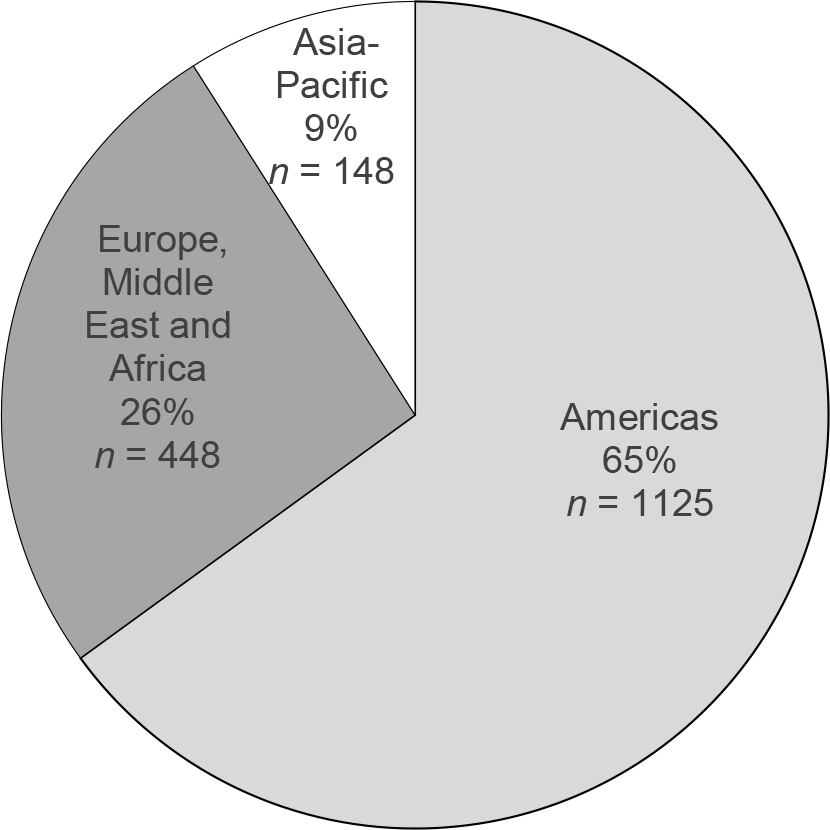
Respondents by region (N = 1722).
Fifty percent (n = 866) of the respondents represented academic (or educational) libraries. As shown in Figure 2, nearly a third (31%, n = 533) were from public libraries and 19% (n = 323) were from other library types, such as national, government, corporate, law, museum, and medical libraries, as well as research centers/institutes and consortia.
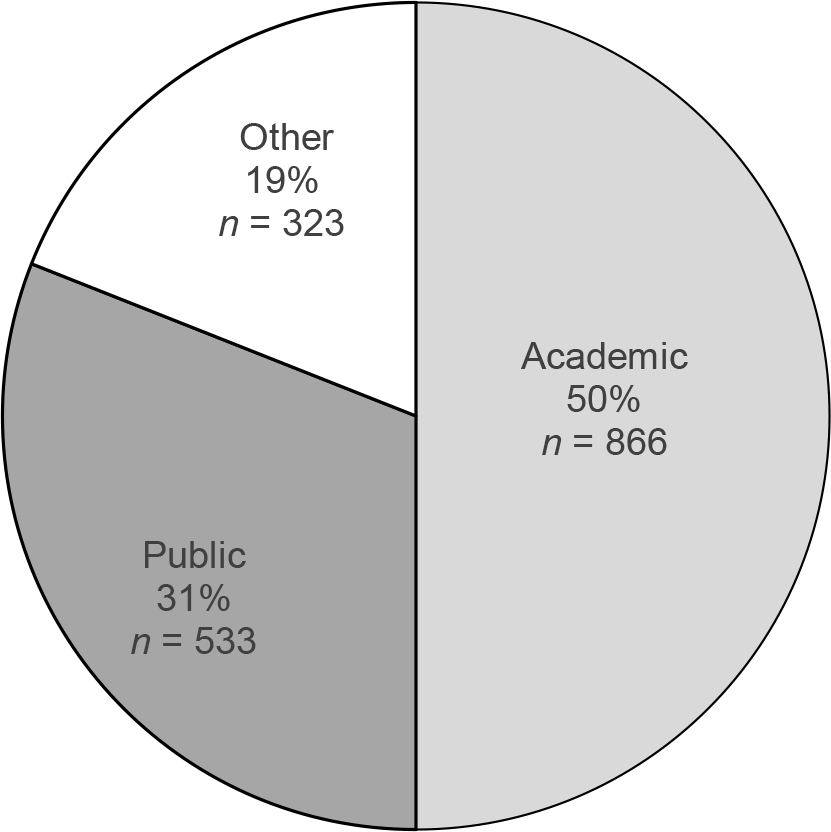
Respondents by library type (N = 1722).
Results and discussion
To answer question R1 (Are library staff aware of the SDGs?), the respondents were asked: “How familiar are you with the United Nations’ Sustainable Development Goals (SDGs)?” Nearly two-thirds (63%) of the total respondents reported that they are at least somewhat familiar with the SDGs. The respondents in the Asia-Pacific region (82%) and Europe, the Middle East and Africa region (78%) are more likely to be at least somewhat familiar with the SDGs compared with those in the Americas (54%). The respondents also were asked how they first learned about the SDGs. More than a quarter learned about the SDGs from OCLC (28%) and IFLA (27%). About a fifth learned about them from news sources (20%), the United Nations (18%), at a conference or other event (17%), or from a colleague (16%). One percent (n = 17) of the respondents first learned about the SDGs from the Association for Information Science and Technology.
To answer questions R1a (If aware of the SDGs, are library staff integrating them into their strategic planning?) and R1b (If not aware of the SDGs, are library staff considering the integration of the SDGs into their strategic planning?), the respondents were asked: “To what degree, if any, has your library incorporated the SDGs into your strategic planning?” While fewer than a tenth (6%) of the total respondents have explicitly referenced the SDGs in their strategic plans, 30% have considered the SDGs as part of their strategic planning efforts even though they do not explicitly reference them; 41% have not incorporated the SDGs and just under a quarter (23%) are not sure (Figure 3).
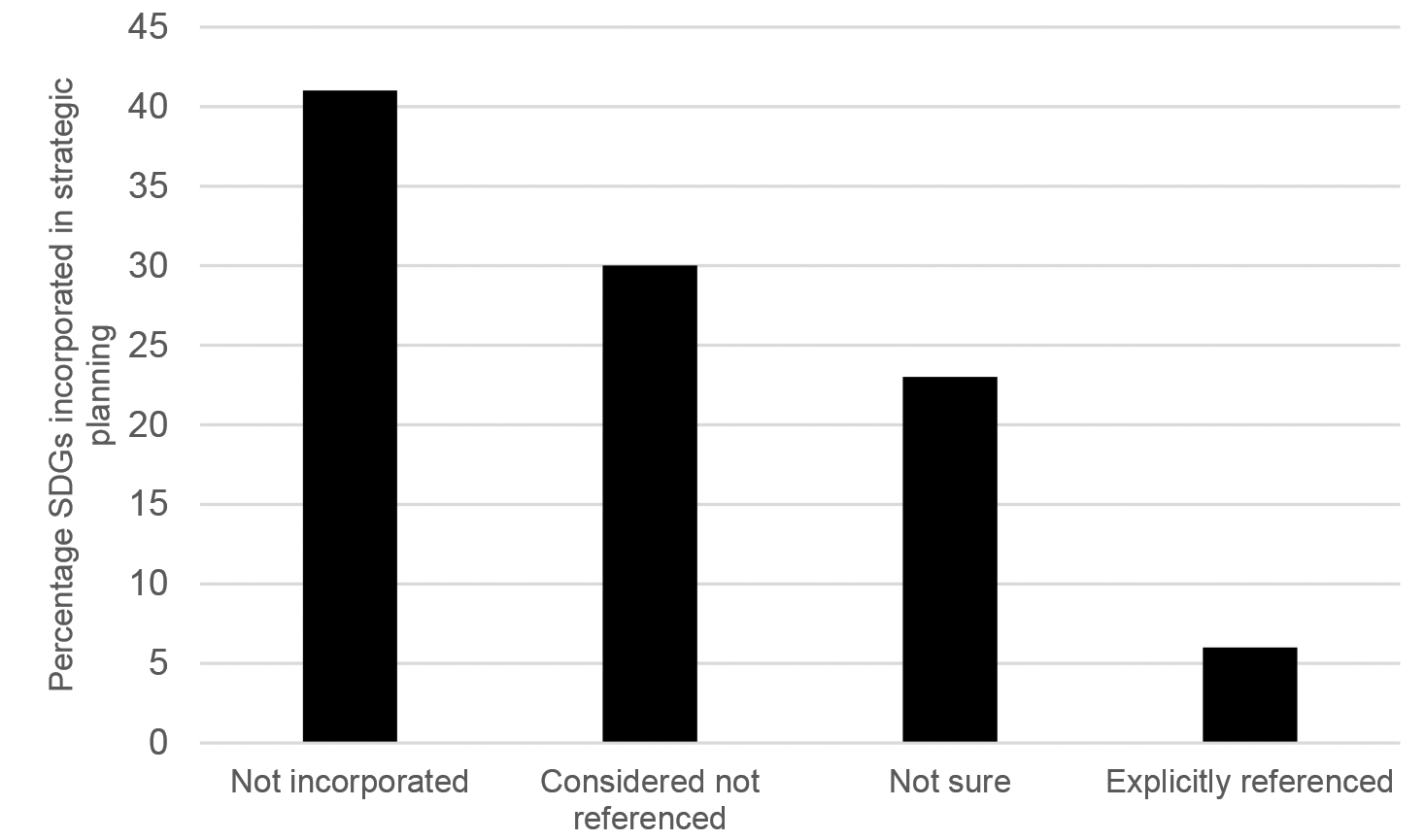
Use of the SDGs in strategic planning (N = 1023).
Some variation by region is worth noting. The Americas had the highest percentage (52%) who did not incorporate the SDGs in their strategic plans, compared to 26% in Europe, the Middle East and Africa and 28% in the Asia-Pacific region. Similarly, the Americas had the lowest percentage (2%) who explicitly referenced the SDGs in their strategic plans, while the Asia-Pacific region had 9% and Europe, the Middle East and Africa had 13%.
Figure 4 shows the average number of SDG-related activities that academic and public library staff regularly do in relation to how the SDGs are incorporated in their strategic planning. On average, academic library staff who explicitly referenced the SDGs in their strategic planning did almost 13 activities regularly. Those who did not explicitly reference the SDGs but considered them as part of their strategic plan did a little more than 11 activities on average, while those who did not incorporate the SDGs did a little under 10 activities. For public library staff respondents, there is a similar relationship, though the impact is not quite as strong. Public library staff who explicitly referenced the SDGs or considered them as part of their activities did an average of a little more than 11 activities regularly, while those who did not incorporate them did a little under 10 activities regularly. This data indicates that library staff who explicitly or implicitly consider the SDGs in their strategic planning also tend to carry out more SDG-related activities. There could be a relationship between SDG-related activities and the explicit or implicit consideration of the SDGs in strategic planning.
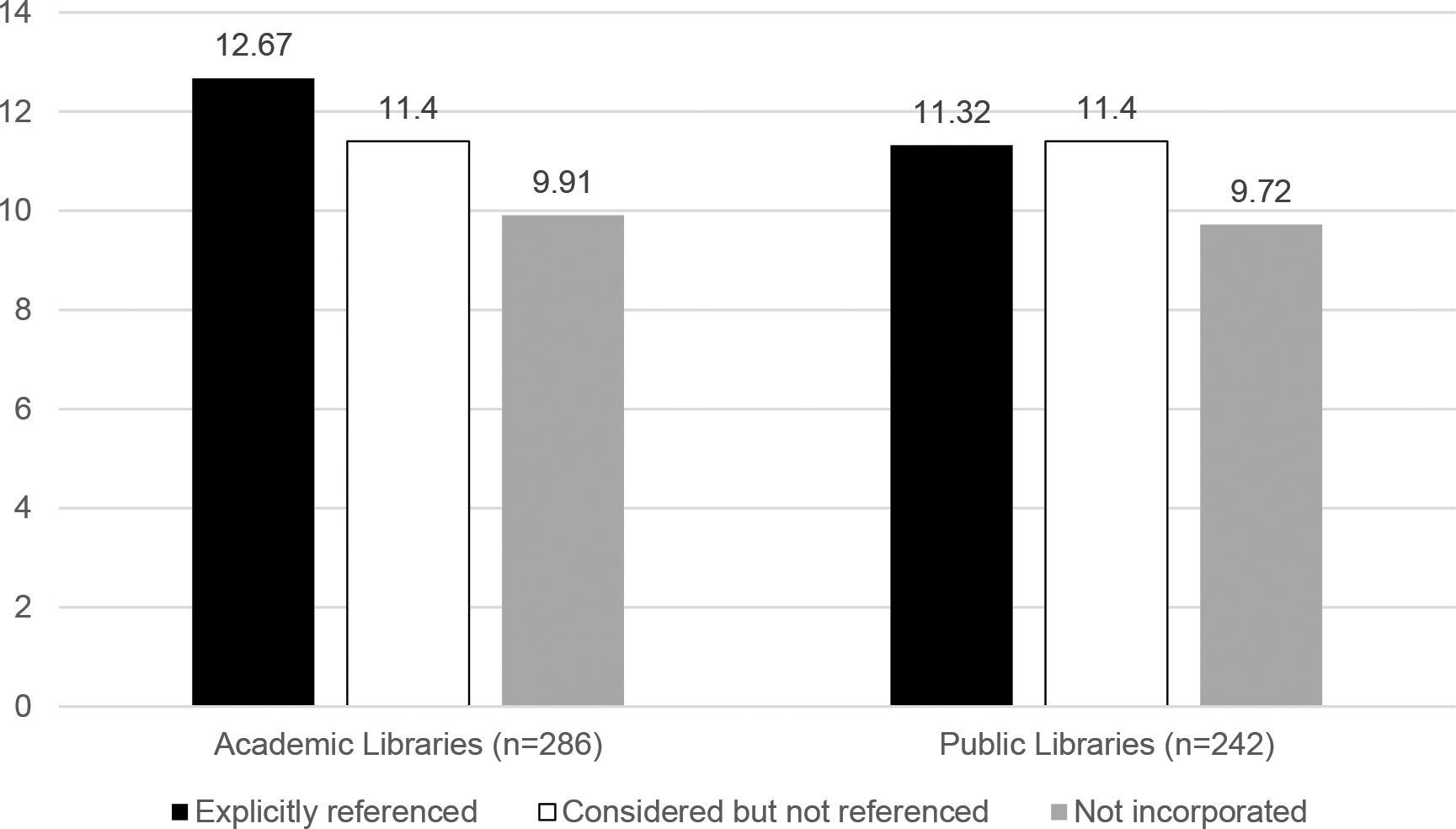
Average number of SDG activities by level of incorporation into strategic planning.
Library impact on top-five SDGs
To answer question R2 (Which of the five specifically identified SDGs do staff perceive libraries impacting the most?), the respondents were asked: “Out of the following five SDGs identified by your elected OCLC Global Council delegates, please rank where you think libraries could have the greatest impact.” As shown in Figure 5, the respondents from all regions and library types ranked SDG 4 (Quality Education) the highest. This goal has an average ranking score of 4.5 out of 5. SDG 10 (Reduced Inequalities), SDG 16 (Peace, Justice and Strong Institutions), and SDG 8 (Decent Work and Economic Growth) were all ranked similarly near the middle, with SDG 17 (Partnerships for the Goals) having the lowest average ranking of any of the five SDGs.

Average ranking of impact that libraries can have on SDGs (N = 1396).
To answer question R3 (What activities are library staff doing to further the five specifically identified SDGs?) and R3a (To what degree has the library participated in activities to support the five identified SDGs?), for each of the five identified SDGs, the respondents were asked how frequently their library participated in a list of activities identified from the literature and the virtual focus groups conducted by OCLC. The results and discussion follow.
SDG 4: Quality Education
Quality Education was the top SDG that respondents of all library types thought libraries could have an impact on. Almost all of the respondents said they offered training, instruction, classes, or courses (see Figure 6).

Percentage of respondents reporting regular or occasional activities to support SDG 4: Quality Education (N = 629 academic libraries, N = 615 public libraries).
Seventy-six percent of the academic library respondents said that they regularly offered training, instruction, classes, or courses for students, faculty, and staff, and another 21% said that they did so on occasion. In the open-ended section of the questionnaire, the respondents were asked to describe examples of their library’s activities that related to Quality Education. The most mentioned example was library or information literacy instruction, which 59% of the academic library respondents discussed. One academic library staff member in the Bahamas described the diverse types of instruction that their library provided: We provide new students with Library Orientation classes. We also provide research assistance for students completing course assignments. We offer lecture series [on] relevant, historical and current events in our country. We have students visit other countries for worldview exposure, during their course of study.
Among the public and other types of libraries, the top activity for Quality Education also was providing training, instruction, courses, and classes for the community, with 56% of the respondents doing this regularly and 28% doing it on occasion. A majority of the public and other library type respondents also said that they provided services or facilities for remote learning, with 40% doing this regularly and 35% doing this on occasion. As one Canadian public library staff member explained: “The public library is the cornerstone of equal access to education and learning in any community. We work with our communities to offer free and relevant programming and collections that meet our community needs.”
When describing examples of activities, the top example, by a large margin, was outreach and programming (72%) for things like English-language classes, computer literacy, book clubs, and finance. Thirty-three percent also discussed providing educational support and resources—for example, online training websites and test proctoring services.
A regression analysis to test for the relationship between awareness of the SDGs and the number of library activities supporting them was conducted. The results indicate that the public library respondents who were aware of SDG4 were expected to do 11.5% more activities related to the goal than those who were not. However, the effect size for academic libraries was not strong (3.3%), indicating that awareness of SDG 4 does not impact the academic library activities supporting this SDG. No other test indicates that awareness of SDGs supported activities in public or academic libraries.
SDG 8: Decent Work and Economic Growth
The most commonly reported activities by all library types to support Decent Work and Economic Growth were library involvement in various types of strategic planning (Figure 7). As one academic library staff member from the USA noted: We are currently finalizing our library strategic plan in alignment with the campus strategic plan…Career Services reserves multiple rooms early each spring for mock job interviews in the library and students have used library study rooms for virtual interviews for internships and jobs after graduation. We have partnered with Financial Aid to provide financial literacy programs and we are looking to be more involved in business development, entrepreneurship, and innovation in our new strategic plan. We train our student employees to articulate the transferability of skills and experience working in the library to future job opportunities e.g. students should understand that they are engaged in customer service rather than just checking out books at the circulation desk.

Percentage of respondents reporting regular or occasional activities to support SDG 8: Decent Work and Economic Growth (N = 576 academic libraries, N = 533 public libraries).
Hosting office space or workspace for other campus departments was among the most frequently reported activities by academic library respondents to support Decent Work and Economic Growth. Forty-one percent indicated that they did it regularly and another 32% said that they did it on occasion. One academic library staff member in Japan described their activities in this regard: “Visiting scholars at the university are provided with (shared) offices and the use of a shared printer. Librarians are involved with any campus redevelopment project that involves expanding or moving a library or student reading room.” Academic library staff also frequently participated in campus strategic planning, with 33% of the respondents doing this regularly and another 50% doing it on occasion. Fifty-nine percent of the respondents also either regularly or occasionally held strategic planning meetings with other campus departments.
In the open-ended question, the most frequently mentioned example of academic library activity (28%) to support Decent Work and Economic Growth was hosting events like job fairs, author visits, or industry events. One academic library staff member in Hungary explained that their library “developed LGBT [lesbian, gay, bisexual, transgender] health research to promote decent work and economic growth of LGBT youth and persons.” Twenty-one percent of the respondents also mentioned that they helped prepare résumés or job applications, or helped students develop interview skills.
Among the respondents from public libraries and other library types, the top activity was offering job-preparedness, job-searching, and job-seeking advice. Twenty-four percent of the respondents at public and other libraries said that their library did this regularly and another 33% said that they did this on occasion. Participation in community-wide strategic planning and strategic planning with other community organizations was also common for these libraries, with 56% and 50%, respectively, doing it either regularly or occasionally. One public library respondent in Australia listed several different examples of activities that they did at their library: Create a CV [curriculum vitae], cover letter workshops Help to apply for jobs online Small business workshops Youth workshops related to obtaining safety certificates, first aid certificates, learning how to budget and manage adulthood for school leavers
SDG 10: Reduced Inequalities
Of all the SDGs in the survey, the activities in support of SDG 10: Reduced Inequalities were most similar across library types (Figure 8). The most common activity was to offer programs, services, or collections to promote awareness and education around equity, diversity, and inclusion. However, a majority of libraries also reported providing employee training around equity, diversity, and inclusion; providing inclusive facilities; implementing policies to ensure diverse staffing and leadership; and implementing services or programs designed to reduce inequality. Note that some questions were only applicable to public libraries and others only to academic libraries, so some responses only have data from one type.
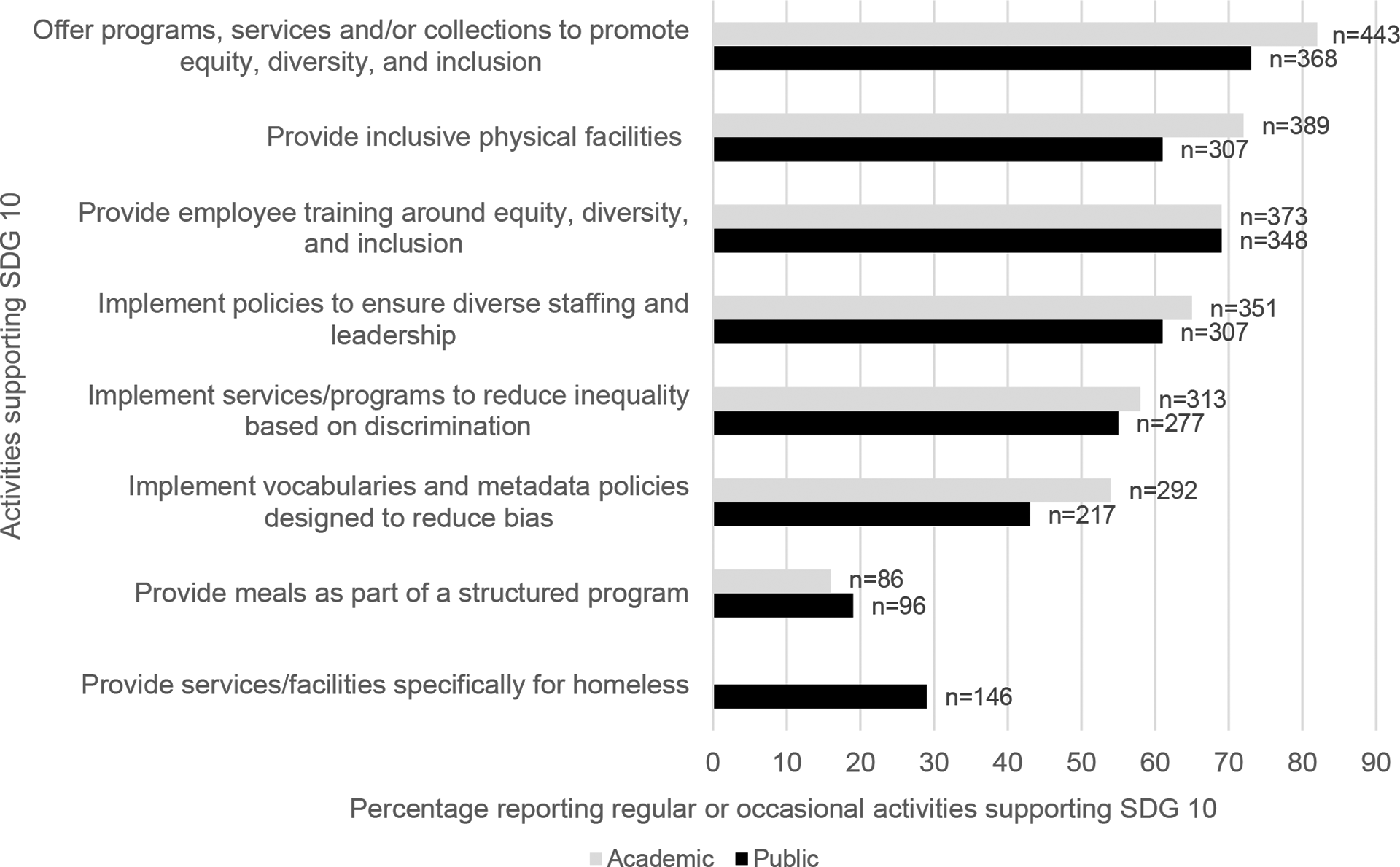
Percentage of respondents reporting regular or occasional activities to support SDG 10: Reduced Inequalities (N = 540 academic libraries, N = 504 public libraries).
Academic library staff worked to reduce inequalities for their communities. One activity that the respondents did regularly was providing inclusive facilities. These could be, for example, gender-neutral restrooms, feminine hygiene products, or physically accessible facilities. Forty-nine percent of the academic library respondents said that they did this regularly and another 23% said that they did this on occasion.
Most academic library respondents also offered programs, services, or collections to promote awareness and education around diversity. Forty-eight percent (48%) of academic library staff in the survey did this regularly and another 34% did this on occasion. One academic library staff member in the USA described the breadth of these activities at their library: Campus activities have been ramped up this year with virtual programming several times a month tackling subjects of racial injustice, sustainability, white privilege, digital divide, ethnicity, gender bias, politics and race, health and race, girls in STEM [science, technology, engineering, and mathematics], etc. We have a food pantry and community garden on campus. Our Office of Student Diversity and Inclusion has been spearheading many of these events in cooperation with student groups on campus.
Among the public and other types of libraries, the most common activity to reduce inequalities was to offer programs, services, or collections to promote awareness and education around diversity. Forty-two percent of the public and other library type respondents did this regularly and 31% said that they did it on occasion. A majority of the public and other library type respondents also either regularly or occasionally provided employee training around equity, diversion, and inclusion (69%); implemented policies to ensure diverse staffing and leadership (61%); provided inclusive facilities (61%); and implemented services or programs designed to reduce inequality (55%). One US public library staff member explained: We have formed an Equity, Diversity and Inclusion task force that is taking a close look at our collections, buildings, programs, services, policies and hiring practices through an EDI [equity, diversity, and inclusion] lens and making changes where necessary to ensure our materials, programs and services are representative and equitable.
SDG 16: Peace, Justice and Strong Institutions
There was a large degree of commonality between the activities reported by academic libraries and public and other library types to support SDG 16: Peace, Justice and Strong Institutions (Figure 9). The most common was providing a welcoming space for all members of the community, followed by providing an environment to facilitate engagement between different populations and allowing the use of library facilities for open discussion.
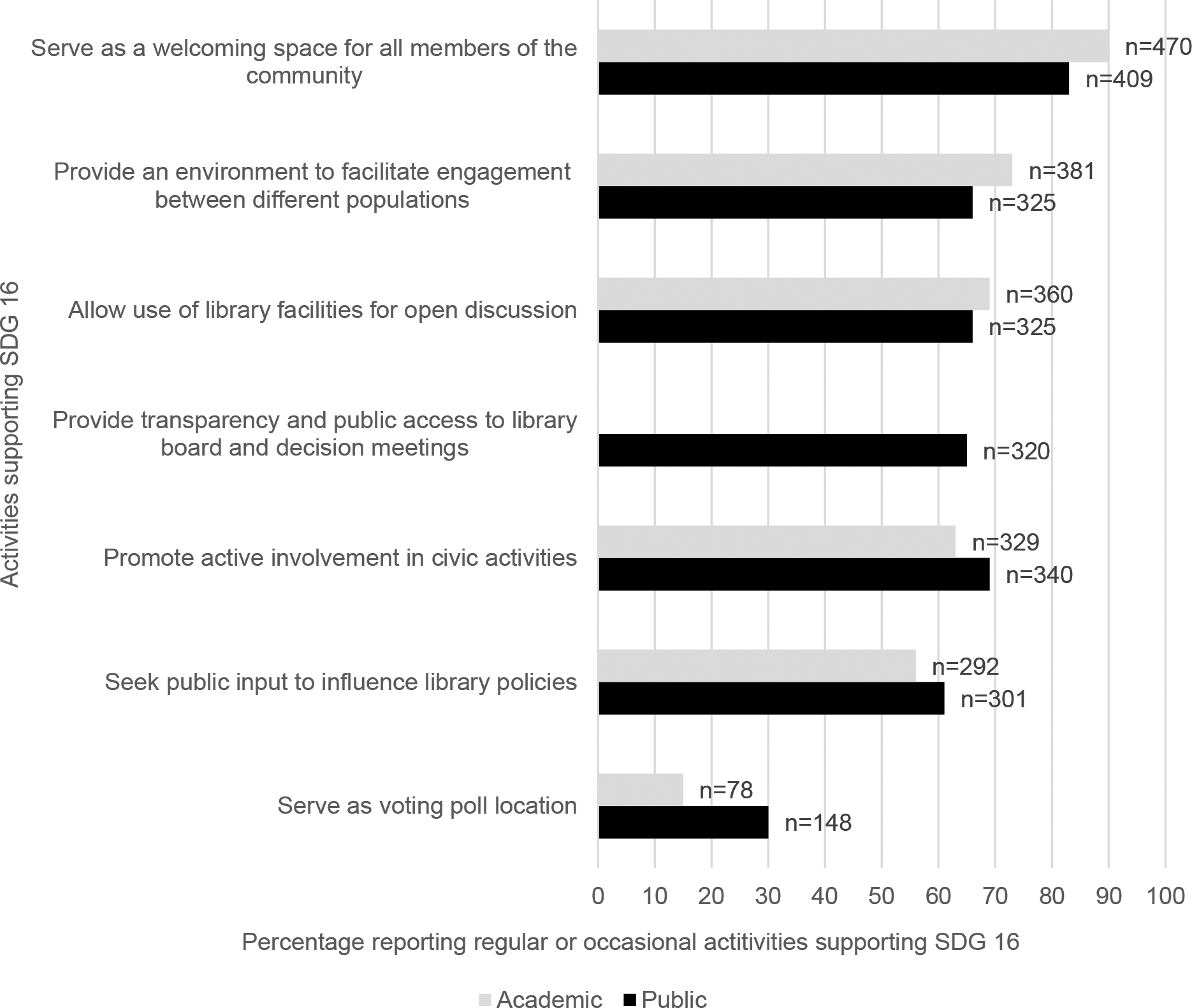
Percentage of respondents reporting regular or occasional activities to support SDG 16: Peace, Justice and Strong Institutions (N = 522 academic libraries, N = 493 public libraries).
When promoting Peace, Justice and Strong Institutions, providing a welcoming space on campus was the most common activity for academic library staff. Seventy-six percent of the respondents said that they did this regularly and another 14% said that they did it on occasion. As a museum library staff member in the USA explained: We invite all members of our local community into our library free of charge…We have partnered with our public library colleagues in order to present programs to underserved communities in order to make sure that these patrons understand that they are welcome in our special collections environment.
Public and other types of libraries similarly worked to serve as a welcoming space for all members of the community, with 69% of the respondents saying that they did this regularly and 14% saying that they did it on occasion. The majority of public and other libraries also either regularly or occasionally promoted active involvement in civic activities (69%) and allowed the use of library facilities for open discussion (66%). This was articulated by a public library staff member in the USA, who responded: The library serves as an early voting location, hosts commission workshops and city council workshops, has hosted community wide civic events that are timely and address hot topic civic issues. The library also hosts a variety of community civic group board meetings and group meetings. We have a series of events called “Living Books”. Here we bring people from different fields together in conversation. We always offer these “books” on specific topics: Fugitives, disabled people, care workers, we have also had Holocaust survivors or former GDR [German Democratic Republic] citizens etc. There are always new topics.
SDG 17: Partnerships for the Goals
Libraries tend to be collaborative institutions (Horton and Pronevitz, 2015), so it is perhaps unsurprising that almost all of the respondents worked to create partnerships to further the SDGs (Figures 10 and 11). This included developing partnerships with other libraries as well as collaboration with other academic departments and/or community agencies. The other activity options differed fairly significantly between academic libraries and public and other library types, as detailed below.
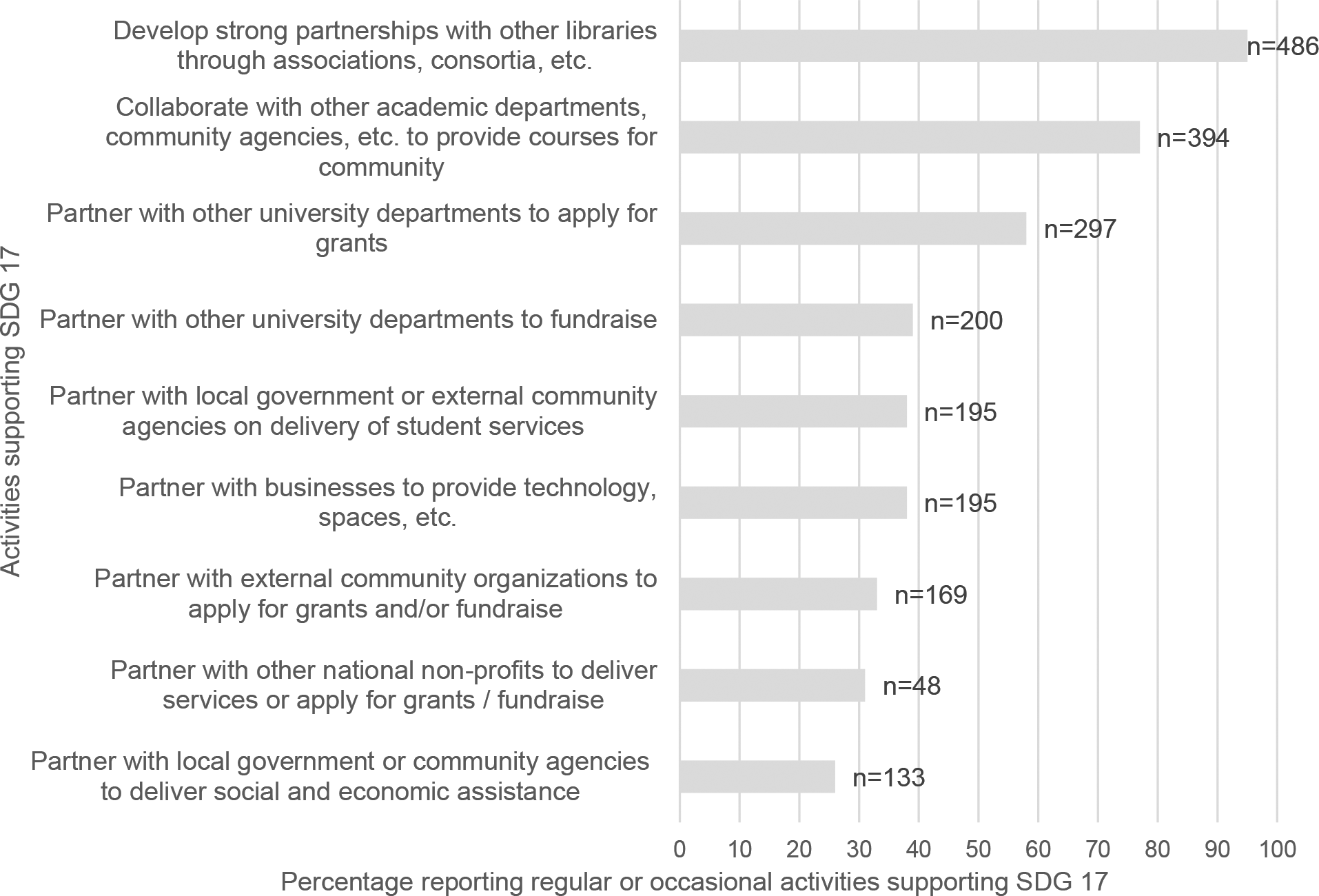
Percentage of academic library respondents reporting regular or occasional activities to support SDG 17: Partnerships for the Goals (N = 512).
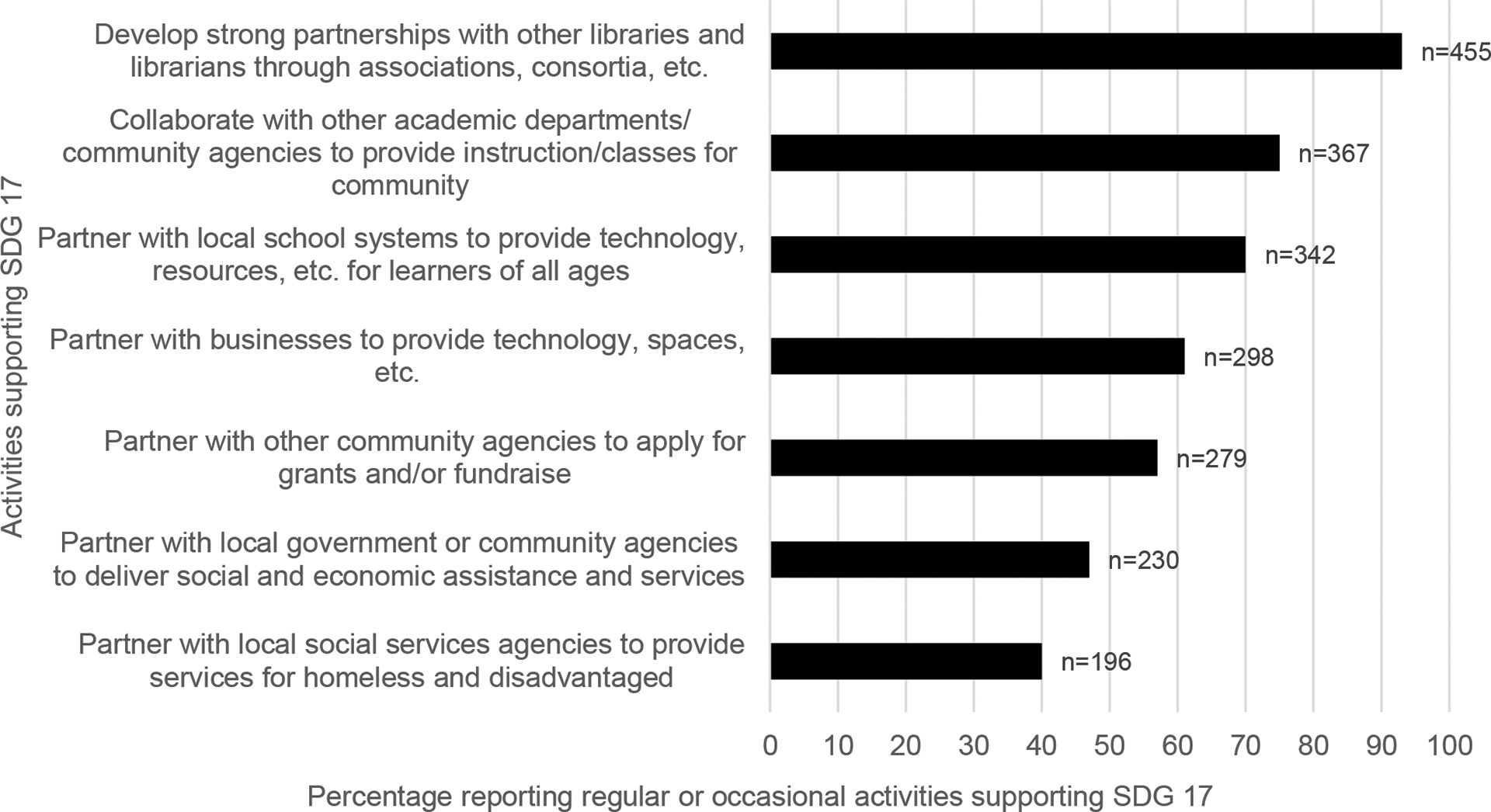
Percentage of public and other library respondents reporting regular or occasional activities to support SDG 17: Partnerships for the Goals (N = 489).
Seventy-four percent of the academic library respondents regularly developed partnerships with other libraries and 21% did this on occasion (Figure 10). As one academic library staff member in the Philippines explained: “We forged partnership through Memorandum of Agreement to the different State Universities and Colleges in our region to collaborate and help ease the accessibility of resources not available in…[some] academic libraries in the region.” The academic library respondents also commonly collaborated with other academic departments or community agencies to provide instruction for the community. Forty-two percent of the respondents did this regularly and another 35% did it on occasion. Fifty-eight percent of the academic library respondents also regularly or occasionally partnered with other university departments to apply for grants. One academic library staff member in the USA offered a view of what such partnerships can look like: We partner with organizations to promote awareness of reliable health information, such as that offered by the National Library of Medicine. Through grants from the National Network of Libraries of Medicine, we have offered programming on consumer health information and the NIH [National Institute of Health] All of Us research initiative.
Public and other library staff similarly sought partnerships with other libraries, with 72% doing this regularly and 21% doing it on occasion (see Figure 11). Seventy-five percent of the public and other library type respondents also either regularly or occasionally collaborated with community agencies to provide instruction. Seventy percent either regularly or occasionally partnered with local school systems to provide technology, and 61% partnered with local businesses to provide technology and spaces (as shown in Figure 11). Fifty-seven percent also regularly or occasionally partnered with other community agencies to apply for grants or to fundraise. As one public library staff member in Latvia explained: “We have very good connection with other public libraries in Latvia as well as National Library of Latvia. We provide space and computers for entrepreneurs. We closely collaborate with local museum, municipality, youth centre, schools, kindergardens.”
Library impact on other SDGs
To answer question R4 (What other SDGs do staff perceive libraries impacting the most, and why?), the respondents were asked which other goal they thought libraries can most impact. The results, reported by region, are shown in Figure 12.
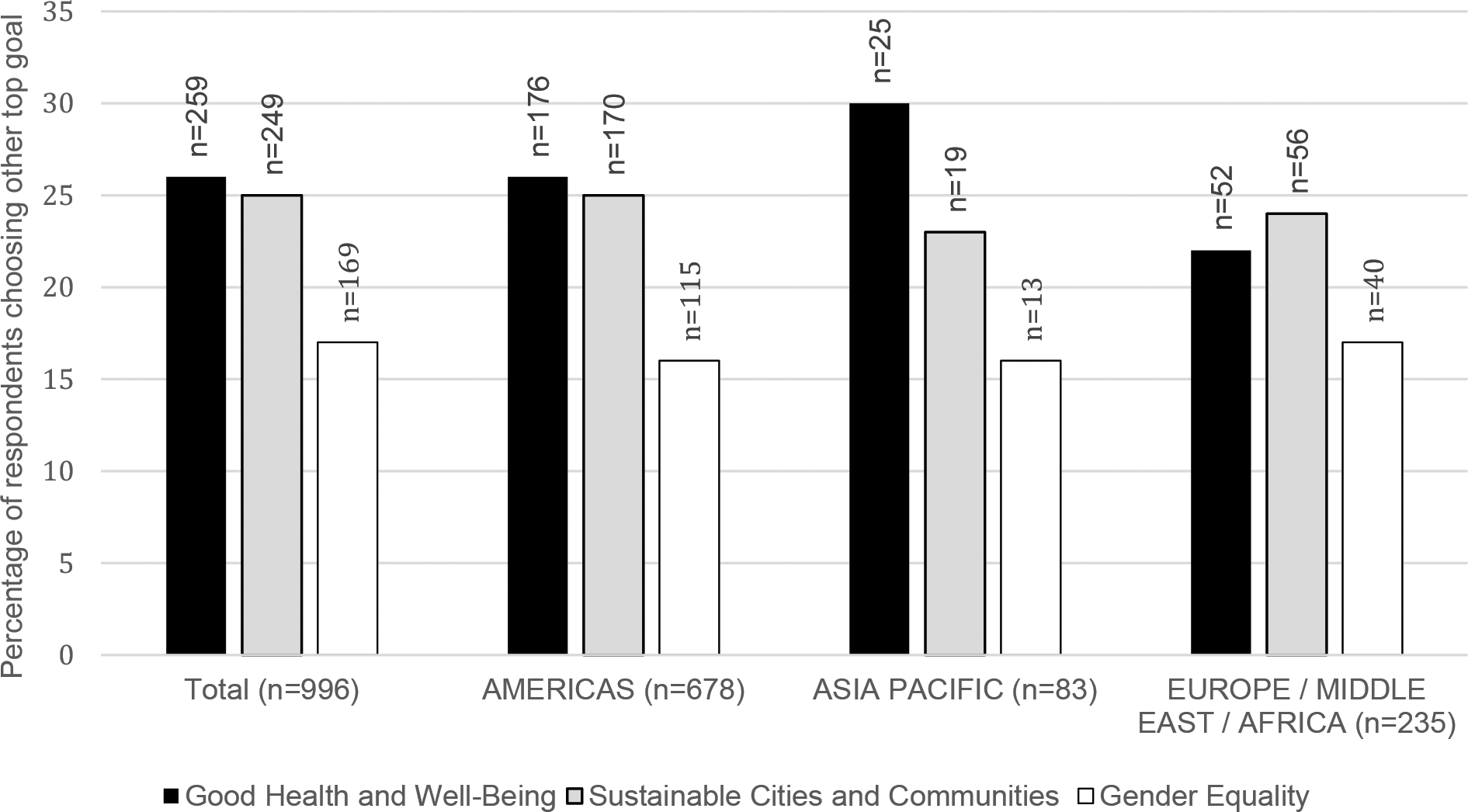
Top other SDGs where libraries can have an impact.
Overall, the largest number of respondents (26%) selected Good Health and Well-Being (SDG 3). One academic library staff member in Canada outlined several ways that a library can impact health and well-being: Improving social isolation Providing access to information Providing access to technology Building literacy and digital literacy Providing equal access to services Helping to address and mitigate the social determinants of health
Sustainable Cities and Communities (SDG 11) was the second choice, with 25% of the respondents seeing it as the top goal outside of the five mentioned. The world’s cultural and natural heritage is protected, safeguarded, and made accessible to all through libraries. Support for this is heard in the following quote from an Australian academic library staff member: “Libraries can play a role in providing the infrastructure to facilitate innovation (for example, research data stores, institutional repositories, archives, etc.).”
Gender Equality (SDG 5) was the third most commonly chosen goal, with 17% of the respondents selecting it. A public library staff member in the USA described their library’s activities related to gender equality: Our department provides investing and basic finance for women. Women need to know about money and how to manage money to be able to become more independent…Also, we introduce a variety of careers for women, for example careers in trades. We offer coding sessions for young girls so they can start thinking about careers in [the] computer field. We support women who own a small business in our city.
Another major theme in the comments was the idea of the library responding to the specific needs of the community. In many cases, this is through the services that the library staff provide. As one public library staff member in the USA explained: “The library serves as an amplifier and connector in the community it serves.” One Puerto Rican academic library staff member mentioned that their institution “has staff such as counselors, nurses who work in collaboration with other agencies of the public and private community. They use the library facilities to carry them out.” An academic library staff member in the USA echoed this sentiment, commenting that their library “is a ‘jack of all trades’. If we can find a way to help, we will.” Library staff have also worked hard to serve populations who might be underserved by other public institutions. For example, one Greek public library staff member described having a mobile library at refugee camps, exemplifying the reach of the library so that no one is left behind.
Conclusion, limitations, and future research
This survey has several limitations: the use of snowball and convenience sampling means that this is a purposive sample with limited generalizability. Since the survey was only offered online, the sample was limited to people with Internet access, with a social media presence, or connected to library staff through professional virtual networks. However, with a large, global sample size and respondents from different library types, the results provide information about the activities that library staff are conducting, and the respondents’ perception of the impact these activities have on the SDGs. To our knowledge, these findings have not been reported in the literature to date.
The survey results paint a picture of the ways library staff have embedded the library within their communities and how staff are working to promote sustainable development in different ways. Even though the majority of the respondents have not incorporated the SDGs into their strategic planning, the libraries’ support of the SDGs is evident by the activities the library staff are engaged with and the respondents’ comments. Libraries are particularly involved with Quality Education (SDG 4) and, by and large, library staff see it as the SDG where they can have the greatest impact.
The results from the survey highlight that library staff, whether through strategic planning or through their everyday activities, are doing much to further the SDGs. The activities identified here can be used to inform library strategic planning and to help library staff maximize the library’s impact on sustainable development. This research builds on the writing of Edwards (2018), who encourages all libraries to link their work to the global agenda as a way to demonstrate their value. The SDGs are a logical place to begin. Edwards notes that connecting libraries and sustainable development in the library’s own governing documents helps the SDGs become more institutionalized and part of the culture. Edwards also suggests reviewing the library’s strategic plan and finding ways to make explicit links between the goals and action items with the SDGs. Finally, Edwards (2018: 7) challenges library staff “to find better ways to communicate and assess their contributions as well as new ways to build partnerships and collaborations towards SDG achievement.” IFLA’s Library Map of the World can be a place to start. 2 It can be used as an advocacy tool to demonstrate how libraries in different countries contribute to the SDGs and serve as partners in meeting local development needs.
To include the SDGs and their impact on the community in library strategic planning, further research is needed that builds on this work. Future research could identify how library staff integrate the SDGs into their planning and how they develop activities to support the SDGs, such as the activities highlighted in these survey results, and how these contributions can be evaluated to assess their impact on this ecosystem. A case study approach with library staff who have integrated the SDGs into their strategic plans could be a logical next step. A content analysis of library strategic plans could be conducted, followed by interviews with leaders and staff to identify the impact of the SDGs on the community.
Through their work in the community and collaboration with other institutions, library staff create an environment that is an important part of a larger economic, social, political, and information ecosystem. Identifying and articulating the role the library can play in advancing and impacting the SDGs to demonstrate libraries’ value within the larger ecosystem is an important next step.
Supplemental material
Supplemental Material, sj-pdf-1-ifl-10.1177_03400352221141467 - “Libraries model sustainability”: The results of an OCLC survey on library contributions to the Sustainable Development Goals1
Supplemental Material, sj-pdf-1-ifl-10.1177_03400352221141467 for “Libraries model sustainability”: The results of an OCLC survey on library contributions to the Sustainable Development Goals1 by Lynn Silipigni Connaway, Brooke Doyle, Christopher Cyr, Peggy Gallagher and Joanne Cantrell in IFLA Journal
Supplemental material
Supplemental Material, sj-pdf-2-ifl-10.1177_03400352221141467 - “Libraries model sustainability”: The results of an OCLC survey on library contributions to the Sustainable Development Goals1
Supplemental Material, sj-pdf-2-ifl-10.1177_03400352221141467 for “Libraries model sustainability”: The results of an OCLC survey on library contributions to the Sustainable Development Goals1 by Lynn Silipigni Connaway, Brooke Doyle, Christopher Cyr, Peggy Gallagher and Joanne Cantrell in IFLA Journal
Supplemental material
Supplemental Material, sj-pdf-3-ifl-10.1177_03400352221141467 - “Libraries model sustainability”: The results of an OCLC survey on library contributions to the Sustainable Development Goals1
Supplemental Material, sj-pdf-3-ifl-10.1177_03400352221141467 for “Libraries model sustainability”: The results of an OCLC survey on library contributions to the Sustainable Development Goals1 by Lynn Silipigni Connaway, Brooke Doyle, Christopher Cyr, Peggy Gallagher and Joanne Cantrell in IFLA Journal
Footnotes
Declaration of conflicting interests
The authors declared no potential conflicts of interest with respect to the research, authorship, and/or publication of this article.
Funding
The authors received no financial support for the research, authorship, and/or publication of this article.

Supplemental material
Supplemental material for this article is available online.
Notes
References
Supplementary Material
Please find the following supplemental material available below.
For Open Access articles published under a Creative Commons License, all supplemental material carries the same license as the article it is associated with.
For non-Open Access articles published, all supplemental material carries a non-exclusive license, and permission requests for re-use of supplemental material or any part of supplemental material shall be sent directly to the copyright owner as specified in the copyright notice associated with the article.
