



Abstract

Introduction
In this article, the Dutch National Organising Committee of the 2023 World Library and Information Congress: 88th IFLA General Conference and Assembly (IFLA WLIC 2023) presents an overview of the current state of the Dutch library system. Its origins are briefly described before focusing on the role of Dutch libraries in the 21st century, from local public libraries across the country to larger institutions such as the National Library of the Netherlands (the Koninklijke Bibliotheek, hereafter KB) and university libraries. Special attention is also given to the Dutch model, where public libraries and bookstores cooperate closely with educational institutions and other partners to promote reading.
Our libraries strive to contribute to a more inclusive society, where everyone has the opportunity and feels welcome to participate. We are proud of the strides we have made and are eager to achieve our ambitions for the future. Would you like to know more? Then please join us at the IFLA WLIC 2023 in Rotterdam this coming August.
Beginning of publicly funded libraries
The current landscape of publicly funded libraries in the Netherlands has its roots in the Age of Enlightenment. In this era, spanning the late 18th and first half of the 19th century, there was a widespread sense in the Netherlands that free access to information and culture for everyone was essential to a well-functioning society. It was in this spirit that the KB was founded in 1798, as a gift from King Louis Napoleon to the Dutch citizens. This spirit also resulted in the formation of reading societies by citizens who were eager to enlighten themselves, and subsequently in the establishment of public reading rooms for those who could not afford to read otherwise. The citizens of Rotterdam have always excelled in these initiatives (Figure 1). These citizen initiatives spawned the first publicly funded libraries at around the turn of the 20th century. Their number has now grown to 139 local library organisations in approximately 1250 locations across 342 municipalities, covering the whole of the Netherlands and serving 3.8 million library members, of which 64% are under the age of 18.
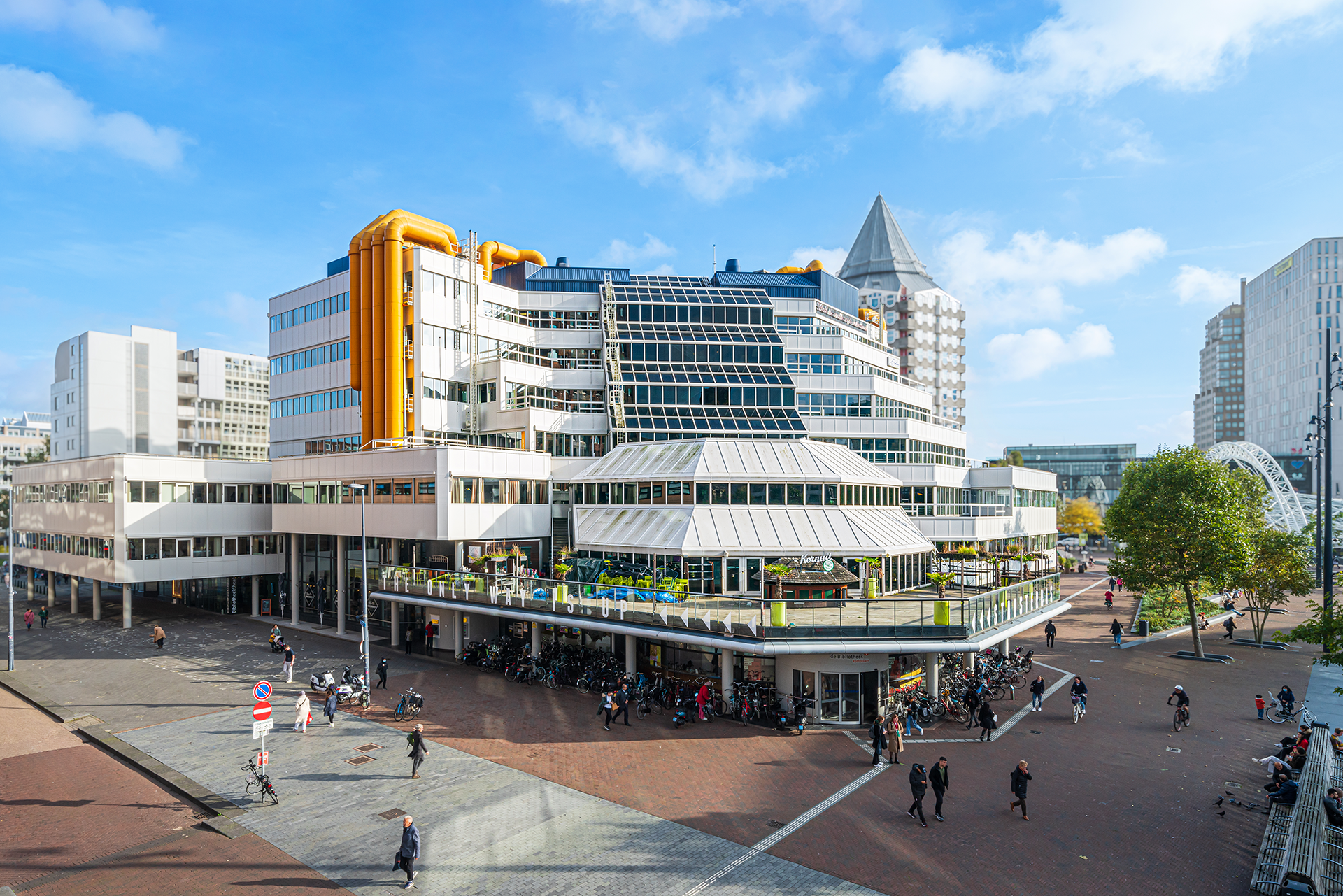
Photograph of Rotterdam Public Library (main branch), by Rene Castelijn.
Public libraries in the 21st century
Thanks to their wide reach and general accessibility, public libraries play an important role in the dissemination of information, knowledge and culture in the Netherlands – perhaps now more than ever. The Dutch government plays an important role in this. The government’s involvement in public library services is generally based on Article 7 of the constitution, in conjunction with Article 10 of the European Convention on Human Rights and Article 19 of the Universal Declaration of Human Rights. These articles safeguard freedom of thought and speech, which entails the possibility for every citizen to obtain information freely. In its Library Manifesto, UNESCO (1994) translates these general principles into duties for governments and the library sector. These general provisions are reflected in the Library Act of 2015, which positions public libraries as gateways to information, education and culture. As such, public libraries fundamentally stand apart from other providers of information by working on the basis of a number of public values: reliability, independence, authenticity, multiformity and accessibility. These public values apply to both the physical and the digital domains.
Visiting and using the services of a library thus contributes to the democratisation of society. Of course, people can still borrow books and other materials from libraries, and find information both offline and online, but the purpose of a library is no longer just to lend books. As a ‘third place’, libraries offer many more facilities and possibilities. They are a place where people can meet and engage in discussion, and thus become acquainted with other cultures and art. Libraries collaborate with schools and organise a multitude of activities, such as reading hours, exhibitions and language lessons for non-native speakers, including refugees and asylum-seekers. There are often many volunteers to support these activities. In the Netherlands, public libraries offer facilities that can be found in every library, but they also offer resources and activities in response to local demand.
Libraries are also a place to work on the Sustainable Development Goals. Sustainable development is a broad theme, encompassing different areas ranging from climate change to social inequality. There is a huge amount of knowledge and information produced and shared on all of these topics every day – and much of this can be found in libraries. It is not easy for the average citizen to become familiar with the issues and all the associated information. The United Nations has therefore taken on an important role in generating international attention with regard to sustainable development. In its 2030 Agenda for Sustainable Development, which was drawn up to promote worldwide cooperation towards a better world, the United Nations focuses on 17 key goals. These are the Sustainable Development Goals, which libraries want to help realise. Considering these 17 Sustainable Development Goals, libraries feel that the following three best fit the agenda of the sector currently: reducing inequality, good education, and good health and well-being. Of course, libraries are also continuing to make efforts in other areas relevant to the Sustainable Development Goals.
The KB: our world is built with words and shaped by people
The KB connects people and words, thereby contributing to a smarter, more skilled and creative country, both now and for the future. The KB makes research, reading, discovery and lifelong learning possible for everyone in the Netherlands. As a broad and multifaceted organisation, the KB ensures that its collection remains visible, usable and sustainable for all people and every type of use. In addition to tasks in the domains of science and heritage, in 2015 the KB was assigned a role in the domain of public libraries.
Founded in 1798, over the course of the past 225 years, the KB has grown into a nationally and internationally renowned scientific institution with almost 500 employees (Figure 2). Since 1974, the KB has collected one copy of every publication (book, magazine and newspaper) published in the Netherlands. Its repository contains 125 kilometres of books, newspapers and magazines, and it was the world’s first institution to boast a digital archive for publications. The KB stores an ever-growing number of digital publications in its e-Depot – the repository for all digital publications managed by the KB. It now contains over 40 million publications. Over 6 million Dutch people use the KB’s digital services, including the online library, Delpher and the Digital Library of Dutch Literature.
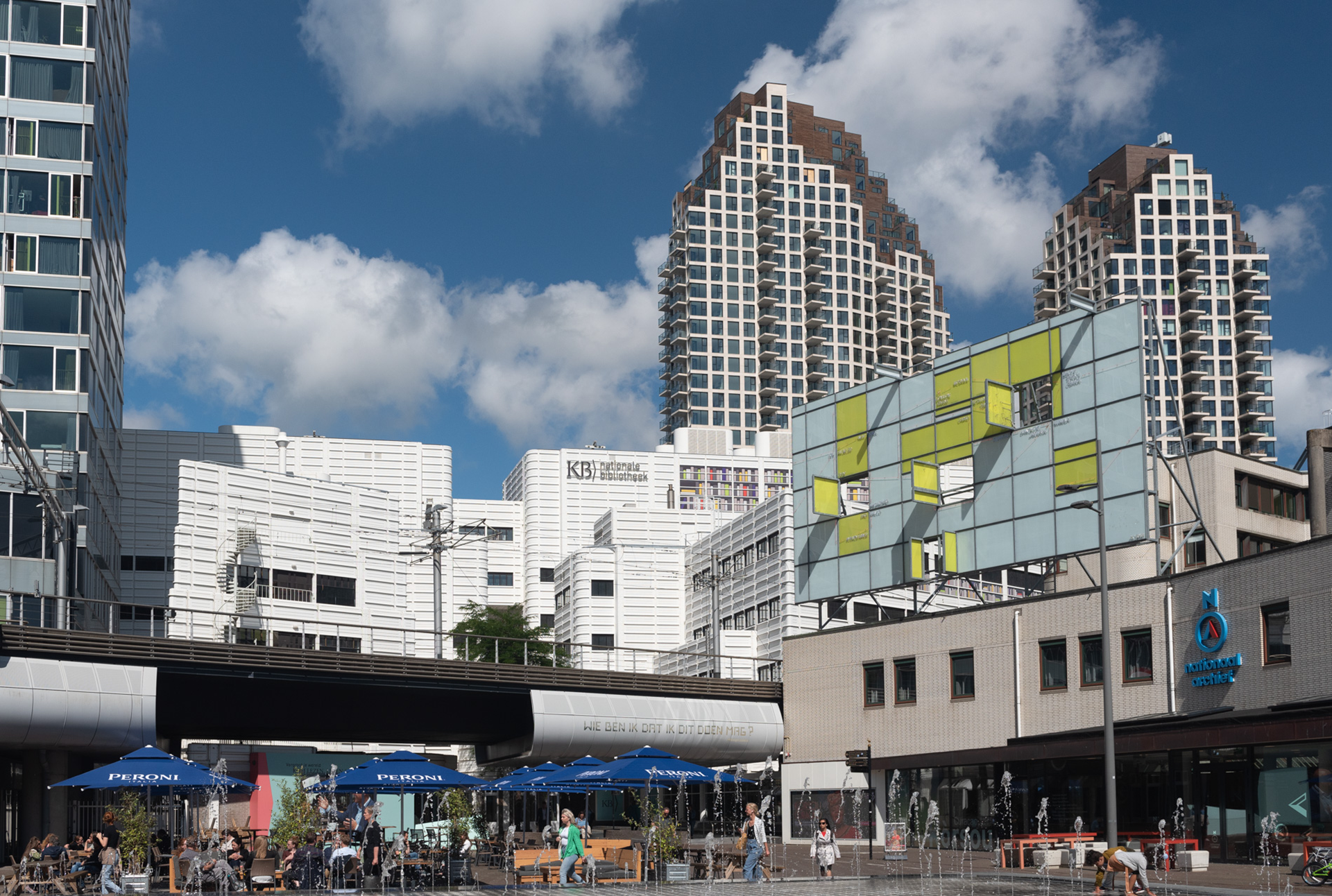
The KB National Library in The Hague, The Netherlands.
The KB plays an important coordinating role in the network of public libraries. Dutch library organisations differ in scale, in size of territory, and in their level of administrative control (local, provincial, national), but they are not entirely separate organisations. They are connected in a network as part of a greater whole. Working together in a network is an essential characteristic of the Dutch library system, and this has been intensified in the past few years. At the same time, the KB has shifted its approach to network collaboration from an institutional purpose towards a human-centred purpose, based on three major societal challenges: to preserve a literate society, to stimulate participation in the information society, and to empower people through lifelong learning. Public libraries, provincial support institutions and the KB jointly determine the course of the collective efforts in the ‘Network Agenda’.
The KB supports academic research in the Netherlands by providing access to its physical and digital collections, and the relevant knowledge it has acquired and recorded since its foundation. It is a partner in CLARIAH-PLUS, an infrastructure that offers researchers in the humanities access to large collections of digital text and innovative, user-friendly applications for data processing. Both the data and the applications are managed sustainably so that they will be of use to academics in the future – from literature experts, historians and archaeologists to linguists, speech technicians and media scientists.
The KB promotes open science and, more specifically, open access, making publicly funded academic publications freely available for people to consult and reuse. Together with other organisations – including the Netherlands Organisation for Scientific Research, the Association of Universities in the Netherlands, the Association of Universities of Applied Sciences, the Royal Netherlands Academy of Arts and Sciences, and the information technology innovation cooperative SURF – the KB is working on its open access ambitions through the National Platform Open Science, which promotes the transition towards open science.
University libraries
The Netherlands has 14 universities and therefore as many university libraries. The libraries differ in nature, mainly due to the history of the universities. Universities were established in the Netherlands in the late 16th and early 17th century. A number of them still exist: the universities of Leiden (1575), Groningen (1614), Amsterdam (1632) and Utrecht (1636; see Figure 3). Specialised universities emerged in the 19th century – namely, Delft University of Technology (1842) and Wageningen Agricultural University (1876). Between 1850 and 1949, the Dutch population tripled and the number of universities grew. The youngest universities are the Open University (1984) and the University of Curaçao (1979). These historical developments are reflected in the collections of the university libraries. The older universities have libraries with extensive special collections, some of which are internationally renowned. Several pieces from the university collections are part of the UNESCO Memory of the World Register.
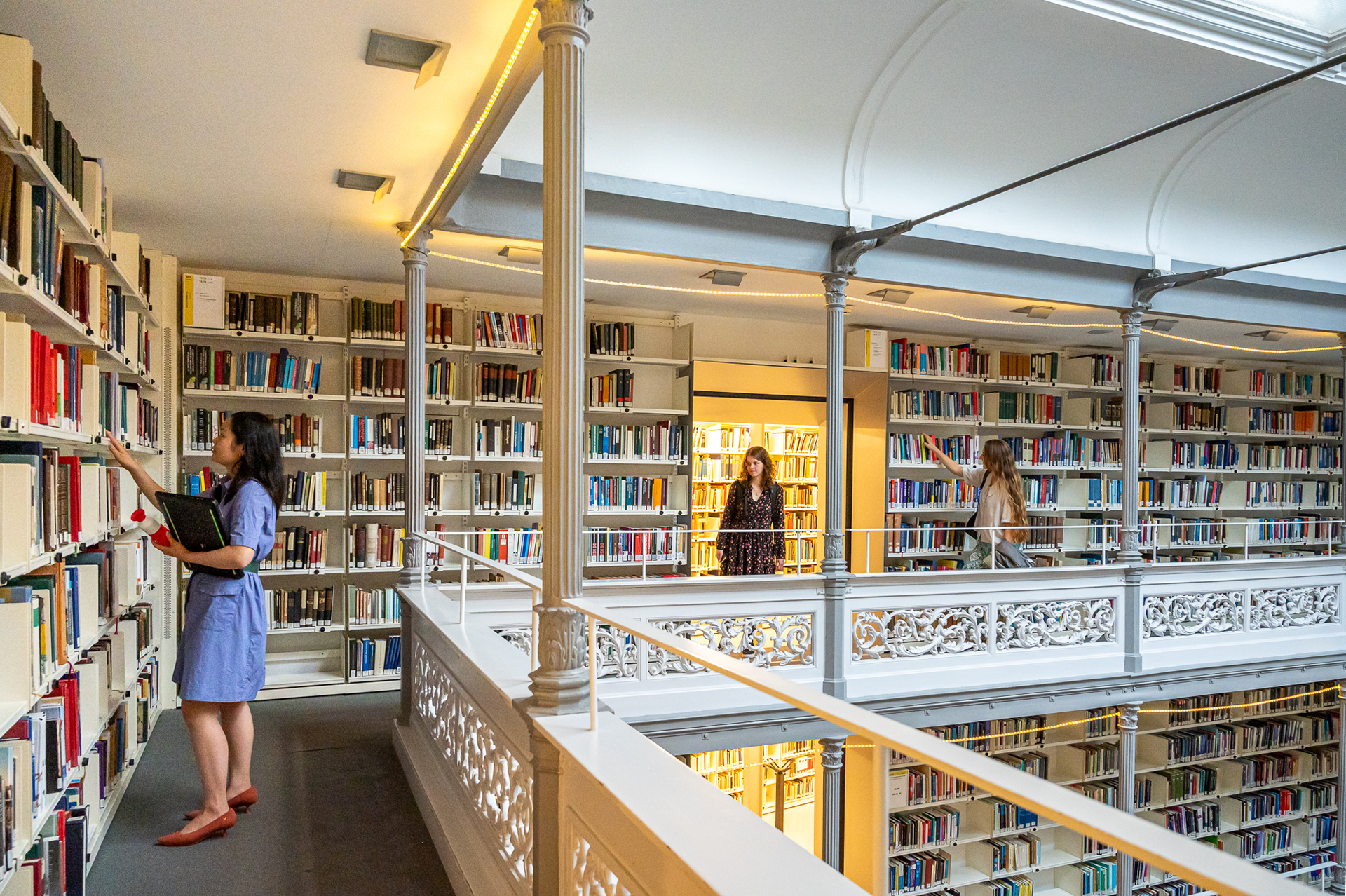
Photograph of University Library Utrecht, by Annemiek van der Kuil.
Most Dutch universities have a strong focus on research, and supporting open science is one of their key ambitions. Together with the KB, they make up the Universiteitsbibliotheken & Nationale Bibliotheek (UKB), the Dutch academic library consortium. The UKB aims to support and expedite scholarly and scientific advances by sharing, concentrating and bringing together expertise in national and international networks. The UKB's focus areas are as follows:
Sustainably accessible collections and their utilisation: intensifying nationwide cooperation with respect to facilitating education and research by finding relevant scientific information in digital and physical sources and making this information accessible in a sustainable way, as well as enhancing (digital) information literacy among students (and scholars).
Innovation in a shared knowledge infrastructure: using smart search technology and a linked open data infrastructure that helps students, lecturers and researchers to obtain the knowledge they are looking for. This ranges from sharing knowledge to jointly developing knowledge, and makes use of new technologies such as artificial intelligence.
Promotion and facilitation of open knowledge for and by Dutch universities: promoting open science and education, as well as helping researchers, lecturers and students make optimum use of this knowledge; in addition, giving the outside world access to the scientific knowledge of Dutch universities, and demonstrating and highlighting the societal relevance of Dutch education and research.
Inspiration and innovation in user applications: sharing knowledge and inspiring each other to work towards improving users’ experiences – for example, by creating inspirational hot spots for learning, production and research (both on campus and online), and by jointly developing new services.
Development of competencies and skills: working towards the sustainable employability of its employees and promoting its innovation role through knowledge sharing, direct collaboration and joint competency development.
The UKB and its individual members also attach much importance to the exchange of knowledge and experiences with international colleagues. The IFLA WLIC 2023 will offer a perfect opportunity to present the results and outcome of the developments in the Netherlands regarding these topics, and to share and discuss them with international parties, so that we can all learn and benefit from each other.
The Dutch model
Libraries have been highly regarded in the Netherlands for many centuries. Publicly funded library collections emerged at the beginning of the 17th century. Historical events explain the strong tendency towards equality and democracy, which have become an integral part of the national character. Information and education for every citizen to improve society has long been an important national creed. It is not surprising that libraries have such a respected status in the Netherlands. The core functions of public libraries are even laid down in the law. The Dutch library system has many unique characteristics.
The strengthening of nationwide collaboration has the aim of broadening the significance of libraries in close consultation with all participating parties in the field. The cooperation in this system has many of the characteristics of the well-known Dutch ‘polder model’ – the decentralised investment of responsibilities and a joint agenda based on consensus.
Public libraries and bookstores in the Netherlands have been working closely with educational institutions to promote reading for many years. Several national programmes have been developed. Examples are the annual Children’s Book Week, launched in 1955, and the annual National Reading Aloud Contest, which recently celebrated its 30th anniversary. Funded by the Ministry of Education, Culture and Science, Stichting Lezen (the Reading Foundation) is devoted to promoting reading in both Dutch and Friesian (the second official language of the Netherlands). Stichting Lezen wants to ensure that all children and young people have an environment that offers them the opportunity to discover the pleasure of reading and to choose books that suit their interests. In this way, they can grow up to be lifelong readers.
One of Stichting Lezen’s programmes is Kunst van Lezen (the Art of Reading), a national reading-promotion programme targeting children and youngsters from birth to age 18 (with an emphasis on birth to 12). Kunst van Lezen consists of three components: BookStart (preschool), The Library in School (primary and secondary schools), and strategic reading-promotion networks. In this programme, which is implemented jointly with the KB, public libraries play a central role in engaging their audience, promoting reading and preventing illiteracy. This includes a digital system to monitor the impact of the programme on pupils’ reading behaviour and teachers’ reading-promotion behaviour.
The Reading Coalition was founded in 2012 and now comprises Stichting Lezen (chair), Stichting Collectieve Propaganda van het Nederlandse Boek, Stichting Lezen en Schrijven, the Literatuurmuseum and Kinderboekenmuseum, the KB and Vereniging van Openbare Bibliotheken, and the Nederlands Letterenfonds. The Coalition has announced its ambition that, by 2025, no child will leave primary school with a reading-skills deficit and all adults will be literate or on the way to becoming literate.
In 2019, the Dutch Education Council and Council for Culture jointly released a report titled ‘Lees! Oproep tot een Leesoffensief’ (‘Read! A call for a reading campaign’). The report was motivated by a worrying decline in reading results among Dutch young people – also in comparison to other countries. In October 2020, 18 organisations in the education, culture and youth health-care sectors raised the alarm in a collective manifesto. They urgently called on both the education and culture departments of the Ministry of Education, Culture and Science to jointly pursue an active and inclusive reading policy, with a focus on the pleasure of reading.
Similarly, in the ‘Bibliotheekconvenant 2020–2023’ (‘Library Covenant 2020–2023’), the library system and the municipal, provincial and national authorities pledge to concentrate collectively on the promotion of reading, digital inclusion and lifelong learning. Various regional reading campaigns have been launched since – for instance, in the cities of Rotterdam and The Hague and the provinces of North Holland and North Brabant.
Conclusion
The Dutch library system rests on a solid historical foundation and is growing and changing every day to keep up with the times. In addition to the traditional role of providing books and information to all citizens, libraries have become institutions at the centre of the public domain, helping citizens find their way in the digital world and enhancing their language, reading and digital skills. Libraries offer activities to broaden citizens’ horizons, and a place to work and study or to meet new people.
IFLA WLIC 2023, Rotterdam
It is hoped that this article will inspire you to reflect on your own library system and to come to IFLA WLIC 2023 to meet not only Dutch librarians, but also librarians from across the world. The Dutch National Organising Committee is honoured to host this year’s IFLA WLIC in the Netherlands. We look forward to welcoming you to Rotterdam and to discuss the similarities and differences between our systems. Learning from each other and finding new inspiration is an important part of the congress experience.