




Abstract
This article examines university students’ perceived skill levels in utilizing internet resources and library tools, as well as accomplishing specific information-skills tasks, and assesses the impact of information literacy training in Bangladesh. The study involved two phases: first, a survey was administered to a sample of 257 students and, second, an experiment was conducted with 28 students to examine the effectiveness of training. The survey results show that the students perceived their skills with internet resources and library tools to be at a high level, with significant differences found in skill levels based on gender and age. Additionally, the students reported a high level of perceived skills in completing information tasks, with no significant differences found across the demographic variables. In the experimental study, the participants exhibited low task performance on a set of 22 task questions prior to training, achieving an overall correct score of 28.4%. However, a significant improvement in correct scores (57.1%) was observed after participating in the skills training.
Keywords
Introduction
In today's digital landscape, the explosion of information and rapid evolution of technologies used for storing and accessing information has presented significant challenges for university students. With the exponential growth of information, students are often overwhelmed by the sheer volume of information available to them, making it difficult for them to discern reliable and credible information from inaccurate or misleading content. The constant evolution of technologies used for information storage and retrieval has further complicated the task of effectively navigating and utilizing information resources. As a result, the acquisition of information literacy skills has become indispensable for students in academic settings.
The concept of information literacy, first introduced by Paul Zurkowski in 1974, has undergone significant evolution over the years. The US National Forum on Information Literacy (1989) defines it as the ability to recognize when information is needed and to locate, evaluate and effectively use information to address issues. The American Library Association (2006) defines it as the ability to recognize the need for information, and locate, evaluate and use it effectively. According to the Association of College and Research Libraries (2016), information literacy is a ‘set of integrated abilities encompassing the reflective discovery of information, the understanding of how information is produced and valued, and the use of information in creating new knowledge and participating ethically in communities of learning’. These skills are essential for university students to access reliable information resources, evaluate them critically, make informed decisions, participate in academic discussions and conduct meaningful research.
Studies conducted worldwide have consistently demonstrated a gap in information literacy skills among university students in both developed and developing countries. While developed countries have made significant strides in incorporating information literacy education into university curricula, the information literacy situation remains challenging in many developing countries due to the lack of formal information literacy instruction in universities. In Bangladesh, several research studies have revealed a widespread gap in basic knowledge and skills in identifying, accessing and evaluating information among university students (Ahmed and Hossain, 2022; Ferdows and Ahmed, 2015). Despite these findings, little attention has been paid to assessing the perceived self-efficacy for information literary among university students in Bangladesh. Moreover, the influence of demographic variables such as gender, age and study level on perceived information literacy skill levels has not been adequately examined in these studies. Furthermore, limited research on the impact of information literacy training in Bangladesh has resulted in a significant gap in understanding the potential benefits of such initiatives. Therefore, this study aims to explore university students’ perception of their proficiency in utilizing internet resources and library tools, as well as accomplishing specific information tasks, and to assess the impact of information literacy skills training on enhancing their skill levels. The findings from this study can provide valuable insights for developing effective strategies to improve information literacy skills among university students in Bangladesh.
Literature review
This literature review covers research studies on university students’ information literacy across various regions and contexts, examining the influence of demographic variables on their skill levels, the impact of information literacy skills training, the integration of information literacy into academic curricula, and the role of librarians in teaching information literacy.
Information literacy skills of university students
Numerous research studies have assessed the information literacy skills of university students, consistently identifying that many lack basic knowledge and awareness of these skills. Mittermeyer (2005) constructed a test consisting of 20 multiple-choice questions, which was administered to over 3000 undergraduate students from 15 universities in the province of Quebec, Canada. The findings of this study reveal that many students exhibited limited knowledge of basic information literacy skills. Thirion and Pochet (2009) discovered that students entering higher education in Belgium had even poorer information literacy, using the same set of questions as Mittermeyer (2005). Recent studies (Dann et al., 2022; Hinchliffe et al., 2018) have also revealed that first-year university students in developed countries lacked essential information literacy skills and held misconceptions about them. However, it is worth noting that universities and their libraries in developed countries have made significant strides in improving students’ information literacy skills by integrating information literacy education into their academic curricula (Banik and Kumar, 2019; Reddy et al., 2022).
Some studies have examined information literacy skills among university students in developing countries. Shoeb (2011) surveyed undergraduate business students at a private university in Bangladesh and found that only about a quarter of them were able to answer information-literacy-related questions correctly. Ferdows and Ahmed (2015) conducted a task-based analysis of the performance of undergraduate students at a public university in Bangladesh and found poor information skills among them.
Friday and Joshua (2019) reveal that the majority of nursing students in Nigeria lacked basic skills in identifying, accessing and evaluating information resources. Amegashie and Ankamah (2020) identify two major challenges for students in two business schools in Ghana when accessing information in the library: the unavailability of information in the library and a lack of knowledge in effective information searching. Studies have shown that library and information science (LIS) students in developing countries also struggle with information literacy. Islam and Tsuji (2010) found that postgraduate LIS students at a public university in Bangladesh had a limited understanding of information literacy as a concept. Anunobi and Udem (2015) found that postgraduate LIS students in Nigeria had a moderate level of information literacy, and their skill levels differed significantly between two universities offering such programmes.
Impact of demographic variables on information literacy
A number of studies have investigated how demographic variables, such as gender, age and study level, impact students’ information literacy. Baro and Fyneman (2009) identified gender differences, revealing that male students demonstrated a higher level of information literacy and greater utilization of library resources compared to their female counterparts. These findings are consistent with several other studies (see Bazrafkan et al., 2017; Liu and Sun, 2012) that also report higher information literacy skills among male students compared to female students. Conversely, a number of studies (Atikuzzaman and Ahmed, 2023; Kwon and Song, 2011; Michalak et al., 2017) indicate that female students tend to have higher confidence in their perceived information literacy than their male counterparts. Other studies (Mahmood, 2013; Pinto and Pascual, 2016) report no significant gender differences in information literacy skills. The role of age in information literacy skills has been examined in some studies. For example, Kwon and Song (2011) found that older students tend to have lower levels of information literacy compared to younger students. On the other hand, Atikuzzaman and Ahmed (2023) reveal that older students had a higher information literacy self-efficacy belief than younger students. Other studies (see Inan Karagul et al., 2021; Mahmood, 2013) report that age is not a significant predictor of information literacy. Study level has also been identified as an important factor influencing information literacy. Conway (2011) reveal that postgraduate students had better information literacy skills compared to undergraduate students. A study conducted by Kale (2016), however, found no significant differences in skill levels based on study level.
Impact of information literacy skills training
Several studies have examined the effectiveness of information literacy training on improving students’ skill levels. Korobili et al. (2009) assessed the impact of information literacy courses and library seminars on students’ information literacy skills development. They found that a significant number of students were not using library resources and were unaware of available information sources. However, students who attended information literacy courses or library seminars showed significant improvements in their skill levels compared to those who had not attended these programmes. Recent studies (e.g. Zhao et al., 2023) also indicate the positive impact of information literacy training on acquiring such skills.
There have been some studies that have assessed the effectiveness of information literacy training by comparing pre-test and post-test results. Fain (2011) analysed first-year students’ information literacy skills at the beginning and end of a semester, finding improvements in their post-test results after they had participated in at least one library instruction session. In another study, Kavšek et al. (2016) compared a group of first-year students’ information literacy across three assessment periods: prior to training (pre-test), immediately after training (immediate post-test) and few months after training (delayed post-test). This study reports significant improvements in the students’ skills over time, with the most substantial improvements observed in the delayed post-test, indicating the long-term effects of the training. Weber et al. (2018) found that students who attended an information literacy workshop increased their use of academic databases and cited more scholarly articles following the workshop. In Bangladesh, Shoeb (2021) compared pre- and post-test results to assess the impact of information literacy skills training on students’ perceptions and opinions regarding research practices, revealing enhanced awareness of research practices after the training. All these studies suggest introducing information literacy instruction early during university studies to effectively utilize information resources from the beginning.
Integrating information literacy into academic curricula and the role of librarians
Higher education institutions in developed countries play a significant role in fostering information literacy, with numerous studies indicating that integrating information literacy into academic curricula benefits students. Meldrum and Tootell (2004) found that such integration significantly improved students’ basic information literacy skills, including those of students from non-English-speaking backgrounds, at both the undergraduate and postgraduate levels. According to a study conducted by Squibb and Mikkelsen (2016), students in a curriculum incorporating information literacy demonstrated superior academic performance, utilized relevant information sources effectively, and integrated them into their arguments and viewpoints. Recent studies (see Faber et al., 2022; Tsunekage et al., 2020) have also reported on the benefits of integrating information literacy into the curriculum within specific academic environments.
Some studies have indicated that higher education institutions in developing countries generally lack formal instruction in information literacy. Nyamboga (2004) investigated university libraries in India that provided basic information literacy through library orientations, tours and programmes. The study recommends the integration of a comprehensive information literacy programme across all Indian universities, making it mandatory for students at all levels. Choudhury et al. (2013) conducted a survey across universities in India, Nepal and Bangladesh, which revealed the absence of formal teaching of information literacy in all universities. However, the surveyed universities recognized the need to incorporate information literacy into academic curricula. Studies conducted in other parts of the developing world (Anunobi and Ukwoma, 2016; Ozor and Toner, 2022) have also reported inadequate information literacy initiatives in universities, suggesting their integration into university curricula.
Some studies have highlighted the importance of involving librarians in teaching information literacy skills within classroom settings. Bowler and Street (2008) discovered little improvement when librarians were present in academic classrooms – but they did not interact with students regarding information literacy skills practices. The findings of this study emphasize the crucial role of librarians in implementing information literacy instruction within academic curricula. Moreover, several studies (Ferrer-Vinent and Carello, 2008; Junisbai et al., 2016) have shown that collaboration between classroom faculty and librarians in providing information literacy instruction can have a significant impact on the development of students’ information literacy. These findings collectively reinforce the significance of librarian involvement and collaboration in fostering information literacy education for students.
The literature review highlights the importance of information literacy in academic settings, revealing widespread deficiencies in information literacy among students across both developed and developing countries. While studies on the impact of demographic variables on information literacy skills have yielded mixed results, gender, age and education levels could potentially influence information literacy levels. The effectiveness of information literacy training in improving students’ skills is evident in studies emphasizing the importance of the early integration of information literacy instruction in university studies. Additionally, integrating information literacy into academic curricula has been shown to have beneficial effects, including improvements in students’ academic performance, research skills and critical thinking abilities. Collaborative efforts between librarians and faculty members in classroom settings have also been found to enhance students’ information literacy skills, attitudes and academic performance. However, there is a significant gap in delivering information literacy skills training, particularly in many developing countries like Bangladesh, where it is notably absent from university curricula. Moreover, there is a lack of empirical evidence regarding the impact of information literacy skills training on students from the perspective of developing countries. Therefore, this study aims to address this gap by evaluating university students’ self-perceived skills in using internet and library tools, their self-efficacy in performing specific information tasks, and the potential effectiveness of brief information literacy skills training in enhancing their skill levels.
Study objectives
The objectives of this study are to:
Assess university students’ self-perceived skill levels in using Internet resources and library tools, as well as conducting specific information tasks; Identify significant differences in the perceived information skills among students based on demographic variables; Evaluate the effectiveness of information literacy skills training by conducting assessments through pre- and post-training test sessions.
Methodology
This study was conducted at the University of Dhaka, Bangladesh. The methodology employed two data collection procedures to investigate students’ perceived information skills and the impact of a training intervention on enhancing their skill levels. In the first method, a questionnaire survey was conducted from July to September 2021 to gather data on students’ perceived proficiency levels in utilizing internet resources and various library tools, as well as completing specific information tasks. The printed questionnaire was distributed across various locations on the university campus, including academic departments, university libraries, students’ halls of residence and seminar libraries. The questionnaire consisted of demographic questions, such as gender, age and study level, along with questions on students’ perceived skills in using the internet and library tools, as well as accomplishing certain information tasks. The participants provided their responses to the skill questions on a 5-point Likert scale (1 = very poor to 5 = very good). Mann–Whitney and Kruskal–Wallis tests were conducted to examine the significance of the differences in the students’ perceived skill levels among different demographic groups.
The second method involved assessing the effectiveness of information literacy skills training on a group of 28 students who had not previously received such instruction. These participants were initially selected through email invitations sent to the first author's peers and friends. Subsequently, the snowball method was used to expand the participant pool. All of the students participated voluntarily in the experiment, which was conducted in the Department of Information Science and Library Management at the University of Dhaka on 18 October 2021. The experiment comprised two test sessions. In the first session, the students were given a set of 22 task questions (see Appendix 1) covering various aspects of information literacy skills. Some of the test tasks used in this experiment were adapted from previous research studies conducted in Bangladesh (Ferdows and Ahmed, 2015; Yesmin and Ahmed, 2020). Following the completion of the first session, all of the participants received a one-hour hands-on training session covering topics such as information sources and services, search strategy formulation and search techniques, which was run by the second author. In the second session, which took place immediately after the training, the same set of task questions was utilized. However, the tasks were arranged in a different order to encourage the participants to approach them from a fresh perspective. The answers to the task questions were manually checked and translated into numeric scores. A correct answer was assigned a score of 1, while an incorrect answer was assigned a score of 0. To examine the differences in the correct scores between the pre- and post-training sessions, a related-sample t-test was conducted. The total number of correct scores for each student in the two test sessions were computed separately. A mixed-model analysis of variance (ANOVA) was performed to compare the total correct scores between the two experiment sessions. In this analysis, the total number of correct scores in the pre- and post-training sessions were considered as within-subject factors, while demographic variables such as gender, age and study level were treated as between-subject factors. The statistical tests were conducted using IBM SPSS Statistics.
Results
This section analyses the data collected from both the survey and the experimental methods.
Survey
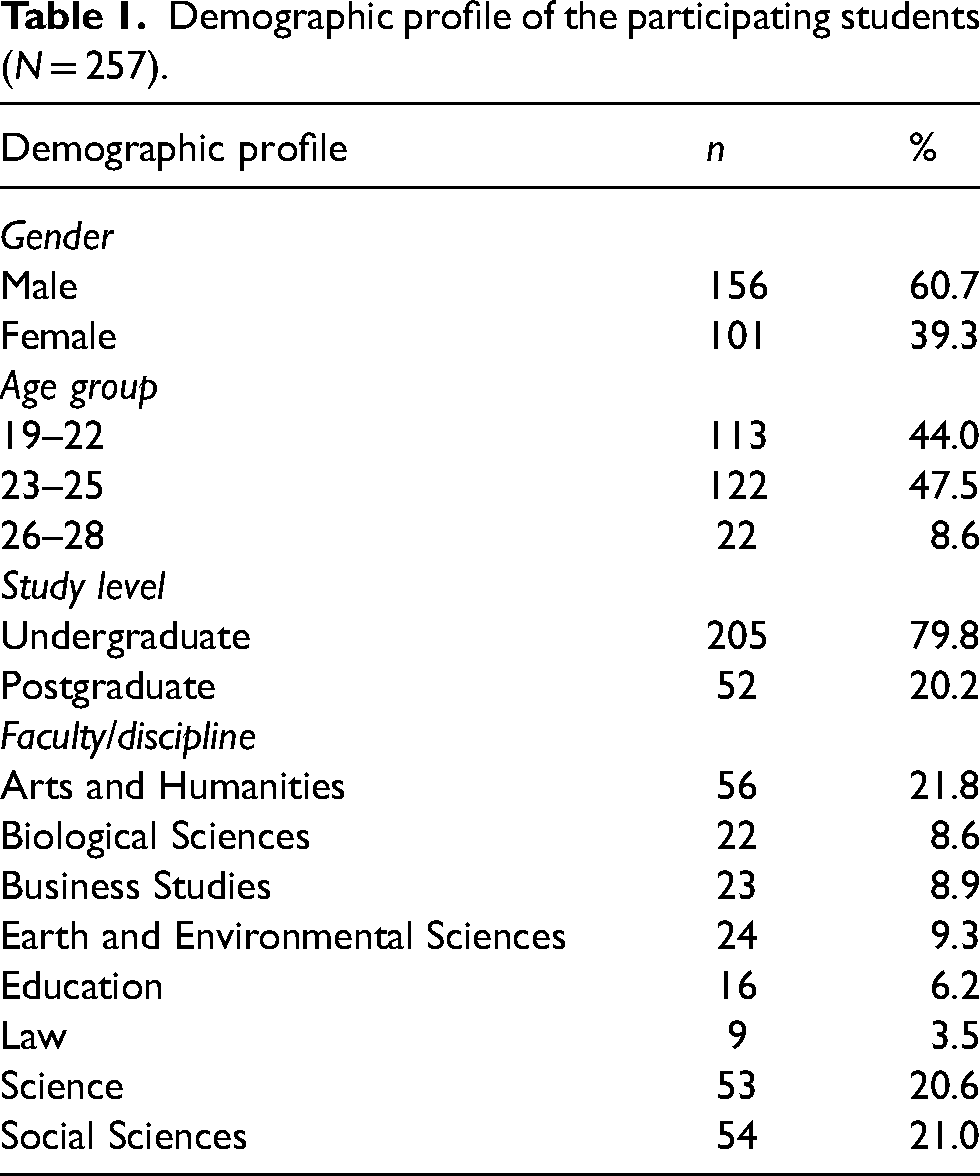
A total of 257 students participated in the questionnaire survey. The majority were male and most of the students were in the 23–25 age group and pursuing undergraduate studies. The survey asked about the students’ academic departments, which were categorized according to their respective faculties or disciplines. However, due to the insufficient participation of several departments, this data was not subjected to further analysis. Table 1 presents the demographic data of the survey participants.
Demographic profile of the participating students (N = 257).
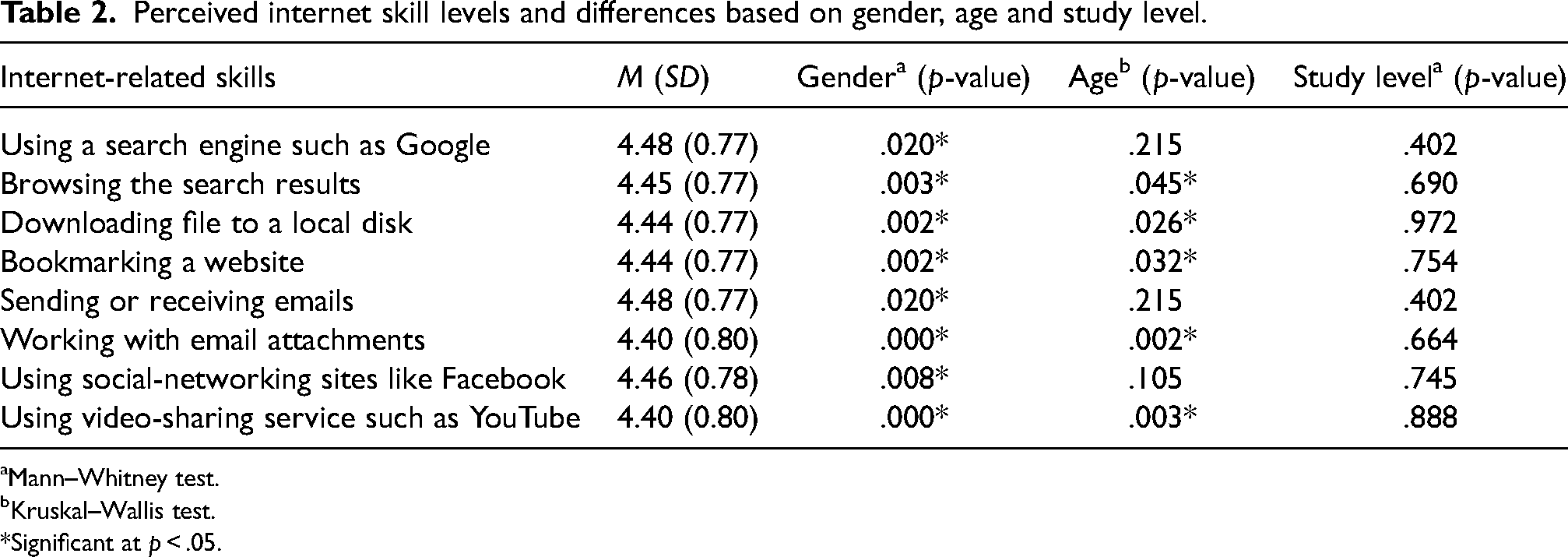
The participants were asked to indicate their proficiency levels in using different internet-based resources. Table 2 shows that the students perceived their internet skills as being at a high level, as evidenced by all of the mean scores falling above 4.40 on a 5-point scale. These high mean scores suggest that the participants in this study perceived their internet skills positively, indicating a strong sense of self-confidence in utilizing internet resources effectively.
Perceived internet skill levels and differences based on gender, age and study level.
Mann–Whitney test.
Kruskal–Wallis test.
*Significant at p < .05.
The results of the Mann–Whitney test indicated significant differences in the perceived internet skill levels between male and female students. Female students exhibited higher mean rank scores compared to males. However, the Mann–Whitney test results did not reveal any significant difference between undergraduate and postgraduate students. On the other hand, the Kruskal–Wallis results showed significant differences among the age groups in their perceived proficiency levels in five out of eight internet-related skills (see Table 2). The mean rank scores of students in the 19–22 age group were higher than other age groups, indicating that younger students held a higher perception of their competency levels.
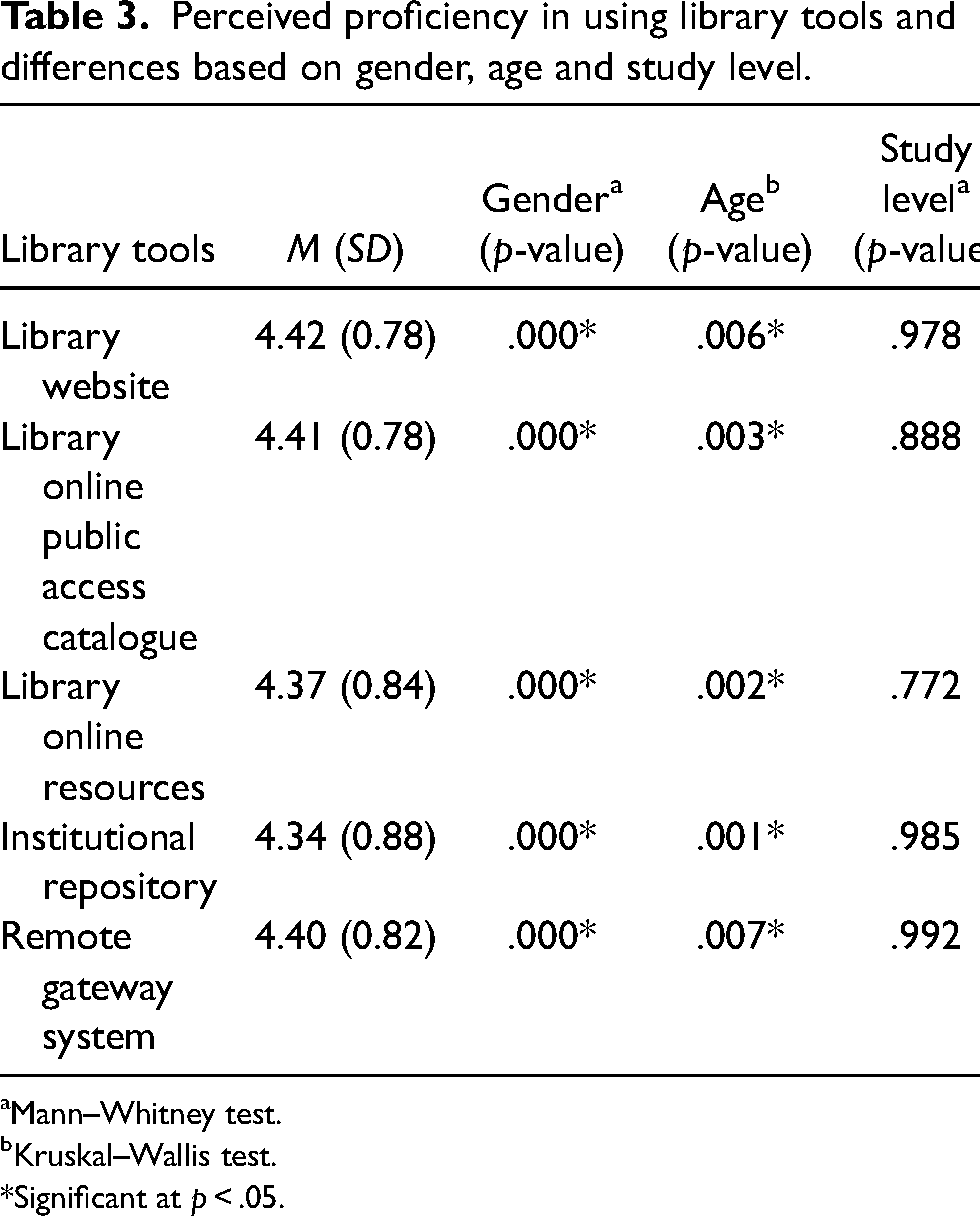
The students also indicated their perceived skill levels in utilizing different library tools on a 5-point scale. The ratings provided by them are presented in Table 3. Similar to their internet-related skills, the students reported a high level of self-efficacy in using library tools, as evidenced by the mean scores ranging from 4.34 to 4.42.
Perceived proficiency in using library tools and differences based on gender, age and study level.
Mann–Whitney test.
Kruskal–Wallis test.
*Significant at p < .05.
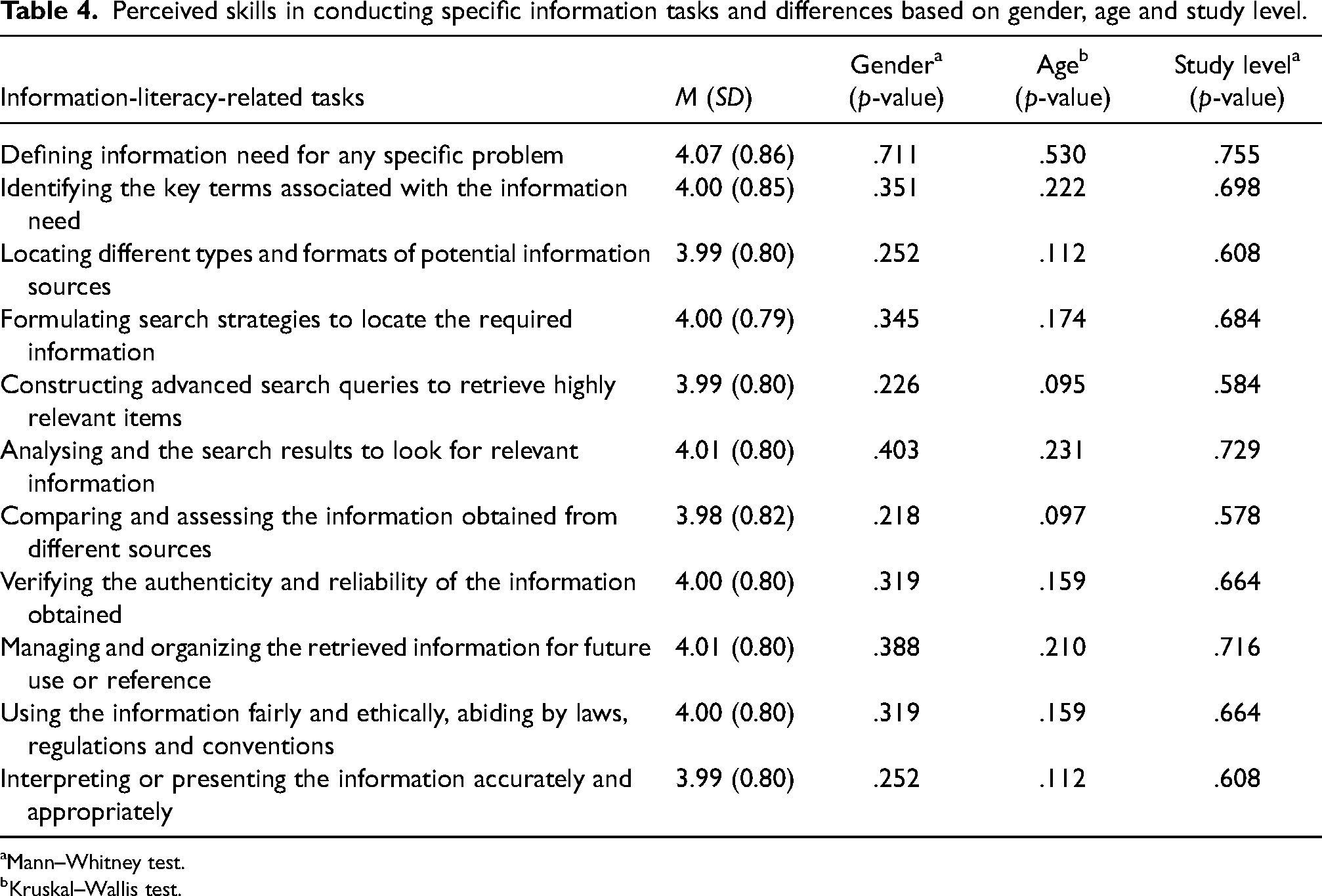
Perceived skills in conducting specific information tasks and differences based on gender, age and study level.
Mann–Whitney test.
Kruskal–Wallis test.
As shown in Table 3, the Mann–Whitney test found significant differences in the perceived skill levels between male and female students in using various library tools. The mean rank scores of the female students were higher than those of the male group. However, the Mann–Whitney test results for differences between undergraduate and postgraduate students did not find any significant difference between these two groups. On the other hand, the Kruskal–Wallis test showed that there were significant differences in perceived skill levels in using library tools among the different age groups. Younger students exhibited higher mean scores in utilizing these tools compared to the other age groups.
In the survey, the participants assessed their self-perceived skill levels in carrying out specific information tasks using a 5-point scale. The findings in Table 4 indicate that students consistently reported higher self-efficacy levels across various tasks, ranging from a mean score of 3.98 to 4.07, including defining information needs, analysing search results, managing retrieved information, identifying key terminologies, formulating search strategies, locating information sources, verifying information authenticity and using information ethically. They also showed a high level of proficiency in constructing advanced search queries, comparing information from different sources, and interpreting or presenting information accurately. The Mann–Whitney and Kruskal–Wallis test results revealed no significant differences in the perceived skill levels for these tasks among the participants based on their demographic background.
Experimental study
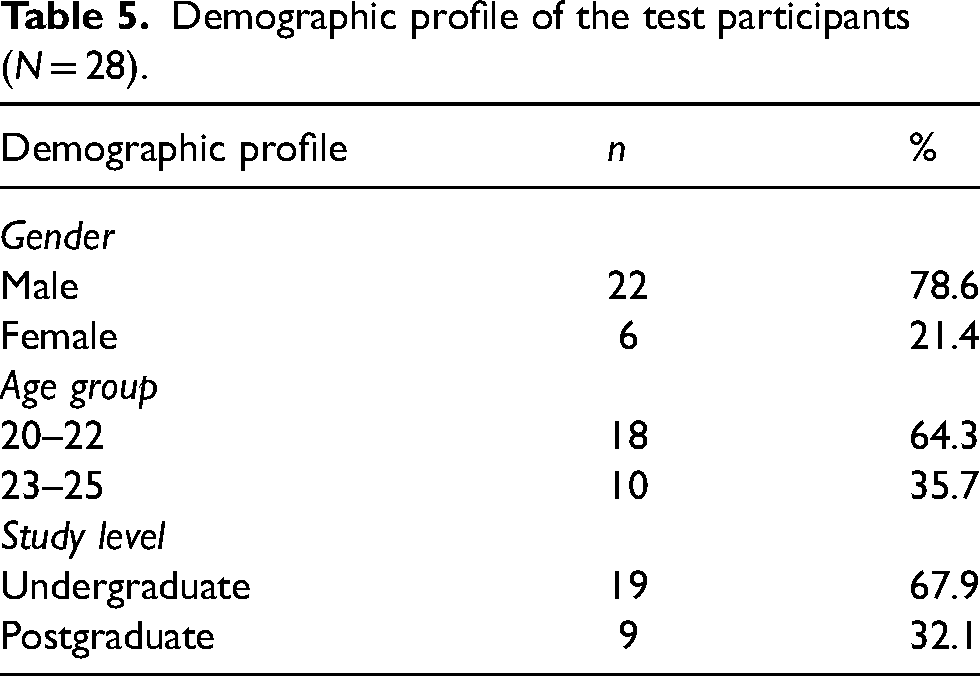
The experimental study involved a group of 28 students who participated in two test sessions, pre- and post-training, to identify the differences in correct scores before and after the training on a set of 22 task questions. The participants in the experiment represented a wide variety of subjects and disciplinary groups at the University of Dhaka. The demographic data of the test participants indicates that the majority were male (78.6%), in the 20–22 age group (64.3%) and undergraduates (67.9%). Table 5 presents the demographic profile of the participants.
Demographic profile of the test participants (N = 28).
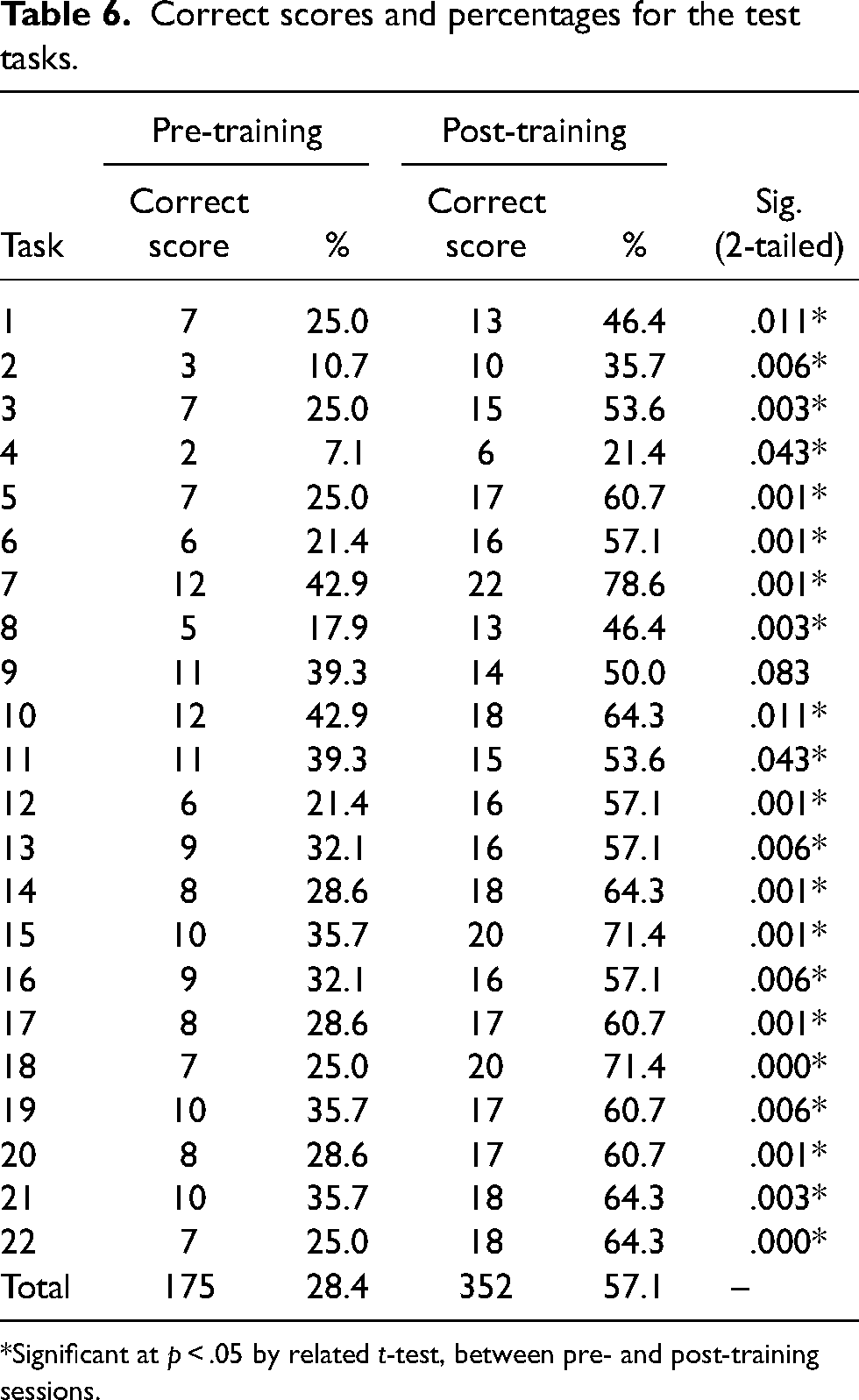
In the experiment, the participants were given 22 task questions and asked to write down the answers on their own. Their responses were evaluated and assigned a score of 1 for a correct answer, while incorrect responses received a score of 0. Table 6 shows the number of correct scores and their percentages for both the pre- and post-training sessions. The data clearly shows improvement in performance across all tasks in the post-training session. Prior to training, the percentages of correct scores were relatively low, ranging from 7.1% to 42.9%. However, the correct scores increased significantly in the post-training session, with percentages ranging from 21.4% to 78.6%. This indicates that the training was effective in enhancing the participants’ information skills in relation to the task questions.
Correct scores and percentages for the test tasks.
*Significant at p < .05 by related t-test, between pre- and post-training sessions.
The 22 task questions administered during the test sessions can be grouped into five distinct skill areas: library skills (Tasks 1, 5 and 14), information skills (Tasks 2, 9, 11, 17, 18 and 19), research skills (Tasks 3, 4, 8 and 13), academic writing and integrity (Tasks 6, 7, 21 and 22) and information sources and formats (Tasks 10, 12, 15, 16 and 20). Within the ‘library skills’ category, determining the content of a book (Task 14) and function of a call number (Task 5) showed the highest improvements in the post-training session. Similarly, the ‘information skills’ tasks, including evaluating the reliability of an information source (Task 19), defining an abstract and its role (Task 17), and identifying citation styles (Task 18), demonstrated higher levels of improvement after the training. Furthermore, in the ‘research skills’ category, understanding the content of a full-text database (Task 13) showed significant development in the post-training session.
The ‘academic writing and integrity’ category exhibited improved performance in task questions such as outlining the peer-review process (Task 7), identifying related articles from a scholarly paper (Task 21) and citating sources in assignments (Task 22). Additionally, defining and addressing misinformation (Task 15) and identifying the reference resources of a library (Task 10) showed the greatest improvement in the ‘information sources and formats’ tasks. Overall, the average number of correct scores during the pre-test was only 28.4% (175 out of 616). In the post-training session, the average rose to 57.1% (352 out of 616). However, lower numbers of correct scores were still observed for Task 4 (21.4%), Task 2 (35.7%), Task 1 (46.4%) and Task 8 (46.4%). These results collectively indicated a remarkable increase in correct scores during the post-training phase. The related t-test results in Table 6 further confirmed a significant improvement in correct scores across all task questions in the post-training session, except for Task 9.
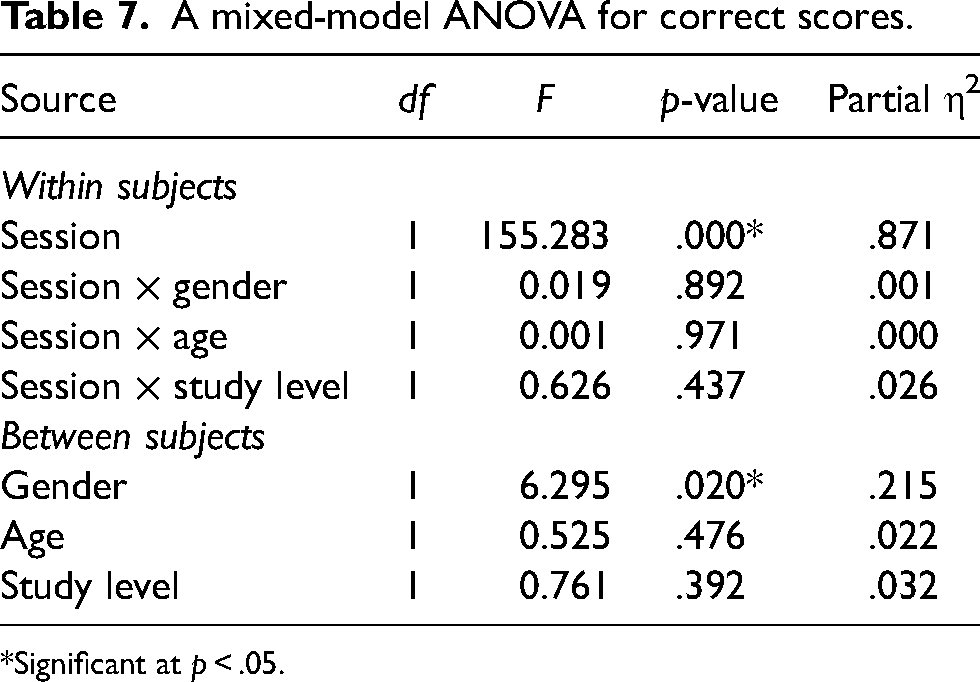
The total number of correct scores for each participant were computed independently for the pre- and post-training sessions. A mixed-model ANOVA with estimated marginal means was conducted to compare the total correct scores between the two test sessions. In the model, the test sessions were treated as within-subject factors, while gender, age and study level were between-subject factors. Assumptions of normality, homogeneity and sphericity were confirmed through the Shapiro–Wilk, Levene and Mauchly test statistics, respectively. The findings shown in Table 7 indicate that there were no significant interactions between the test sessions and gender, age or study level. However, the main effect of the test sessions was statistically significant (p < .001), with a large effect size (ηp2 = .871). This indicates a significant difference in correct scores between the pre- and post-training sessions. Furthermore, the effect of gender on correct scores was significant (p < .05), with a moderate effect size (ηp2 = .215), suggesting that gender had an impact on task performance. However, there were no significant effects on correct scores with regard to age or study level.
A mixed-model ANOVA for correct scores.
*Significant at p < .05.
Figure 1 illustrates the average correct scores categorized by the demographic variables during the pre- and post-training sessions. The vertical axis presents the estimated marginal means of the correct scores, while the horizontal axis represents the progression of the two test sessions. In the pre-training stage, the test participants exhibited relatively lower correct scores across all demographic variables. This indicates that prior to the training intervention, the students did not have the required skills to answer the task questions correctly. There was a significant improvement in the correct scores across all demographic variables after the training intervention. This improvement signifies that even brief information literacy skills training was effective in enhancing the participants’ skills, enabling them to answer the task questions with significantly higher accuracy. The comparison between the pre- and post-training sessions clearly demonstrates the value of the training intervention in filling the knowledge gaps identified in the pre-training stage.
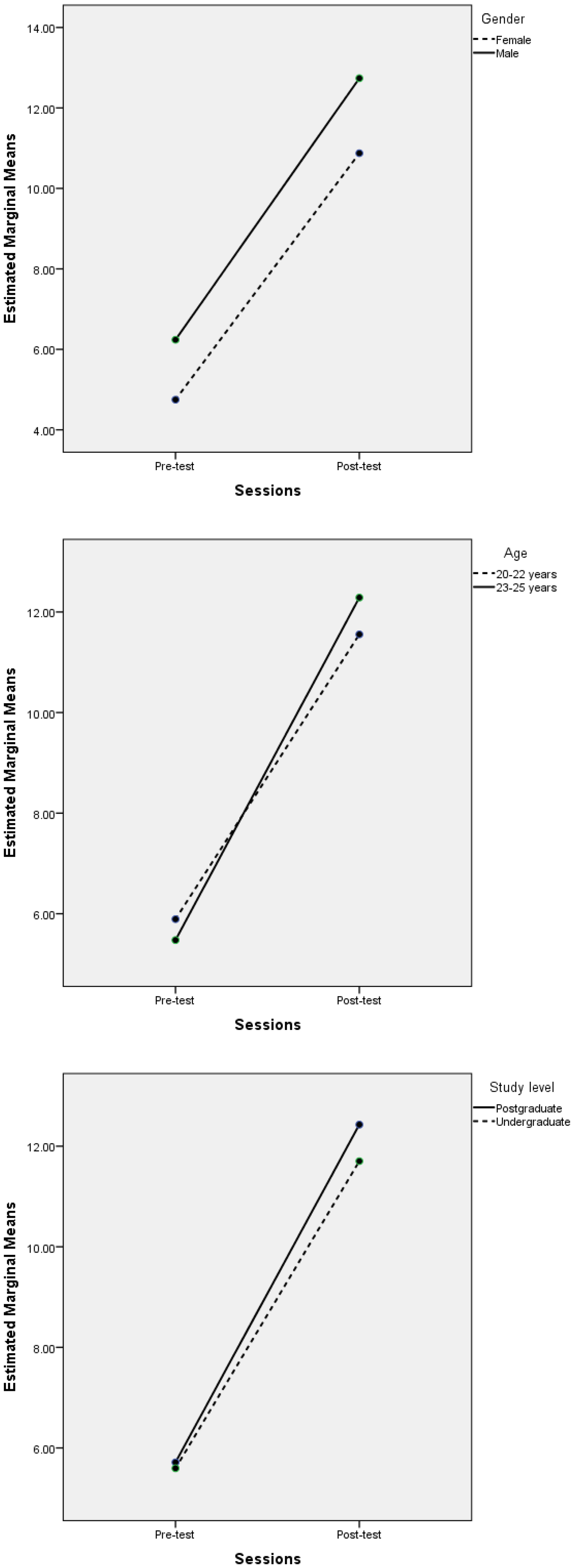
Average correct scores in pre- and post-training sessions by gender, ages and study level.
Discussion
This study investigated how university students perceived their proficiency in utilizing internet resources and library tools, as well as their competencies in undertaking particular information tasks. It also assessed the effectiveness of information literacy training in enhancing their skill levels. As part of this study, a survey was conducted with a group of 257 students at a public university in Bangladesh. The results of the survey reveal that the students reported their skill levels in using internet sources and library tools to be high. There were significant differences between male and female students in their perceived skill levels in utilizing internet and library tools. Female students exhibited a higher level of self-efficacy belief in using these resources. These findings align with previous studies (Atikuzzaman and Ahmed, 2023; Kwon and Song, 2011; Michalak et al., 2017), which also indicate that female students tended to have higher confidence in their perceived information literacy compared to their male counterparts. Age was another factor found to influence students’ self-perceived skill levels in using internet and library tools. Younger students exhibited higher self-efficacy in utilizing these tools compared to older age groups. This finding is also consistent with Atikuzzaman and Ahmed's (2023) study, which reveals that older students exhibited higher levels of information literacy self-efficacy compared to younger students. The study level of the students did not appear to have any effect on their perceived skill levels in using internet resources and library tools. This finding aligns with the study conducted by Kale (2016), which also found no significant difference in information literacy skills based on educational level. When examining perceived skills in performing specific information tasks, the students rated their skill levels highly, although the mean scores were slightly lower compared to skill levels in using internet resources and library tools. However, no significant differences were observed in self-efficacy beliefs regarding the performance of particular information tasks based on any of the demographic variables examined in the study.
Overall, the study’s findings reveal that the students rated their perceived skill levels in using internet resources and library tools, as well as their proficiency in accomplishing specific tasks, as high. It is worth mentioning that previous studies (e.g. Gross and Latham, 2012; Mahmood, 2016) have emphasized that students often tend to overestimate their information literacy skills. Several factors may contribute to this trend, including limited knowledge or understanding of the essential competencies required for the effective use of information resources. Moreover, students’ reliance on previous experiences or familiarity with various information resources can also positively influence the rating of their skill levels, even if this rating is not objectively accurate.
In the experimental study, a group of 28 students participated in two test phases, before and after a training session, to assess the difference in their correct scores on a set of 22 task-based questions. In the pre-test session, the average percentage of correct answers was very low (28.4%), with large variations across tasks. However, the percentage of correct answers rose to 57.1% in the post-training session. An improvement in performance was observed across all tasks. The results of the related-sample t-test showed statistically significant differences in correct scores between the pre- and post-test sessions. Consistent with studies employing pre-test and post-test assessments (Fain, 2011; Kavšek et al., 2016; Shoeb, 2021), this study revealed significant improvements in the students’ information literacy skills following the brief training session. The results of a mixed-model ANOVA further revealed that there were no significant interactions between the test sessions and gender, age or study level. However, the main effect of the test sessions was significant, indicating that there was a significant difference in correct scores between the pre- and post-training sessions. The effect size was also large, demonstrating the significant impact of the training intervention on the participants’ correct scores. Furthermore, there was a significant effect of gender on correct scores, indicating a moderate effect size and implying the potential influence of gender.
Conclusion
This study provides valuable insights into students’ perceived information skills and the effectiveness of information literacy training in enhancing their skill levels. The findings clearly show that while students believed they possessed high levels of skill in utilizing internet resources and library tools, as well as completing specific information tasks, their actual correct scores in task questions were low prior to training. Furthermore, this study demonstrates that training interventions can effectively enhance students’ information literacy skills. Therefore, incorporating such training can significantly contribute to equipping students with the necessary skills for both academic and practical success. Integrating information literacy into the academic curriculum can significantly enhance these skills in students, which is vital in the rapidly changing digital environment. Acquiring information literacy skills is no longer an option; it has become essential for university students to thrive academically and in various practical aspects of their lives.
Recommendations
Based on the findings of this study, several recommendations are made for imparting information literacy skills to students.
Ongoing training and support
The findings of this study highlight the positive impact of the training intervention on enhancing the students’ information literacy skills. Universities should therefore establish comprehensive frameworks that enable students to continuously improve their information literacy skills. This can be achieved through a variety of initiatives, such as conducting workshops, seminars and specialized training sessions on information literacy. Additionally, personalized guidance from librarians and faculty members is essential to facilitate students’ information literacy skills. By offering continuing support and guidance, universities can ensure that students have regular opportunities to sustain and expand their information literacy skills throughout their academic journey.
Integration of information literacy instruction into the curriculum
The inclusion of instruction in information literacy skills in the academic curriculum at the tertiary level is a rare occurrence in many developing countries. Universities in these countries should therefore prioritize the integration of well-structured and comprehensive information literacy courses in their academic curricula to equip students with the necessary skills for navigating the information landscape. These courses should cover a broad spectrum of competencies, such as internet skills, the proficient utilization of library tools and resources, and the overall development of information skills. The integration of an information literacy programme in the academic curriculum can be facilitated through collaborative partnerships between faculty members and librarians. Such collaborative approaches will ensure the effective incorporation of essential information skills within the educational framework.
Fostering collaboration between universities and libraries
A strong partnership between universities and their libraries can provide comprehensive support for students’ information literacy development. University libraries house a wide range of resources, such as books, journals, databases and digital materials, along with having trained personnel who can guide students in locating, evaluating and using information effectively. Libraries can also extend valuable support and resources to faculty members, aiding them in effectively incorporating information literacy skills into their classroom teaching. Moreover, libraries can collaborate with universities in organizing workshops or training sessions focused on using library tools and services.
Increasing awareness of students’ potential overestimation of their information skills
Students should be made aware of the potential gap between their perceived information literacy skills and the actual competencies required for proficient information use. Educating students about the complexities and essential competencies needed for information literacy can help them develop a more accurate understanding of their skills. Universities can empower students to actively seek opportunities for growth and improvement in their information literacy by fostering a deeper understanding of the competencies needed and encouraging critical self-evaluation of their own proficiency levels.
Limitations
There are several limitations to this study. First, the survey was conducted with a sample of 257 students from a single university, which may limit the generalizability of the findings to other universities or settings. Moreover, the study relied on students’ self-assessment of their information skills, revealing a tendency for students to overestimate their skill levels. Second, the study focused on the demographic variables of gender, age and study level to identify differences in perceived skill levels, while potentially influential factors, such as socio-economic background, frequency of library and internet use, and utilization of online resources, were not considered in the analysis. Third, the experimental study included a relatively small sample of university students. Although multiple research studies have stated that experimental designs require a minimum of 10 participants per condition (see Spyridakis, 1992), the inclusion of a relatively small number of female and postgraduate students in the sample may have limited the findings of this study. In contrast to studies that featured longer training interventions (Kavšek et al., 2016), this study provided participants with only a single one-hour session, potentially limiting the benefits of the training. Fourth, the experimental study assessed the immediate effect of the training without following up on the participants’ task success over an extended period of time to understand the long-term effects of the training intervention. Furthermore, the study selected the task questions from previous research studies instead of real-life task scenarios, which may limit the validity of the findings.
Future research directions
There are several potential areas for future research. To enhance the generalizability of the study’s findings, future studies should include a broader and more diverse group of students in conducting surveys and experiments across multiple universities and countries. Moreover, future research should consider socio-economic backgrounds, the frequency of library and internet use, and the utilization of online resources to determine perceived and actual information literacy skills. Furthermore, to address the limitation of self-assessment, future studies should incorporate objective measures of information literacy rather than solely relying on self-reported skills. This could include performance-based assessments or standardized tests in addition to self-reported measures. To assess the long-term impact of information literacy training, future research should also include longitudinal studies that follow participants over time to understand the sustainability of training interventions. Additionally, future studies should aim to design experiments that mirror the actual information tasks students encounter in their academic and personal lives. Furthermore, exploring the impact of different training methods can provide insights into the most effective approaches for improving information literacy. Addressing these issues in future research will allow researchers and practitioners to build on the current study's findings, overcome its limitations, and contribute to a more comprehensive understanding of information literacy skills among university students.
Footnotes
Declaration of conflicting interests
The authors declared no potential conflicts of interest with respect to the research, authorship and/or publication of this article.
Funding
The authors received no financial support for the research, authorship and/or publication of this article.

Author biographies
Appendix 1 Information literacy task questions
Please answer all the questions below. Your responses should be brief and directly provide explanations or definitions as requested.
Name the major tool used to locate books in the library. Mention the type of information found in primary sources. Explain the characteristics of a scholarly article. Explain the purpose of Boolean operators in online searches. State the function of a call number in a library. Define plagiarism and mention how it can be avoided. Outline the peer-review process. Identify sources for searching journal articles on a given subject. Give an example of an in-text citation. Mention the types of resources commonly found in the reference section of a library. State the nature of information generally obtained from an encyclopaedia. Identify suitable information sources to gather geographic information. Explain the content of a full-text database. Mention the methods for quickly identifying the subject of a book. Define misinformation and discuss the ways to deal with it. Mention the purpose of an ISBN. Define an abstract and mention its role in assisting readers. Identify a commonly used citation style in academic writing. State the criteria for assessing the reliability of an information source. Explain the advantages of online resources over print publications. Mention the methods to identify related articles from a scholarly paper on a given topic. Show how to cite other works in your assignment.