




Abstract
Asphalt emulsion is the most widely used tack coat material in the U.S. The objective of this study is to investigate factors that may affect the interlayer bond shear strength of asphalt emulsion tack coats of both laboratory and field compacted samples. The laboratory study included six types of tack coat materials applied on two surfaces with two residual application rates. The field study phase involved validation of the interlayer shear performance findings using field cores extracted from paving projects. The field study included taking cores of the existing layer, emulsions used for interlayer bonding, and loose mixes of new asphalt layers. Materials were collected to produce the laboratory prepared specimens for comparison with the field cores. Results of the laboratory study demonstrate that there is a direct relationship between the roughness (texture) of the existing surface and the interlayer shear strength (ISS) between two surfaces. Statistical analysis provided a strong correlation and indicated that 79% of the data variance can be explained with surface texture, emulsion type, application rate, and replicate effects. Comparing field cores with laboratory produced samples showed no clear relationship between the shear strength of laboratory and field specimens. It is speculated that the difference in compaction of the upper layers in the laboratory and field, and effect of shearing during coring of the samples from the field, resulted in higher laboratory shear values relative to field core values. The study highlights major challenges in using laboratory prepared samples to predict field behavior of tack coats.
Hot-mix asphalt (HMA) lifts compacted days or even years apart from each other are expected to behave as a monolithic structure to carry the anticipated traffic load. Proper bond strength between the layers is a prerequisite for a sound pavement structure. Most tack coats used today are asphalt emulsions, which consist of a paving-grade asphalt binder blended with water and an emulsifying agent to keep these dissimilar materials in suspension together. Tack coats, when properly selected and applied, can be effective in preventing premature failure in the form of debonding, mat slippage, and potentially fatigue cracking, which may lead to reduced pavement life. Conversely, applying too heavy of a tack coat has been reported to result in low shear strength between adjacent layers ( 1 , 2 ).
In the laboratory, interlayer shear strength (ISS) has been found to be a useful parameter to express the effectiveness of tack coat in increasing interlayer bonding ( 3 ). However, tack coats can affect ISS differently in different conditions such as tack coat type, application rate and coverage, pavement surface type and age, testing temperature, humidity, and aggregate gradation. The optimum tack coat application rate typically corresponds to the maximum ISS although some researchers report that the application of any tack coat rate in specific conditions does not improve bonding since tack coat introduces a slippage plane. The conditions under which tack coat may create a slippage film may include extreme high application rate, high existing pavement density, inability of the tack coat to thoroughly penetrate into the pavement surface, poor construction practices such as dusty or dirty pavement surface, and low ambient or construction temperature in which the tack coat may not be totally cured when the overlay mixture is placed on it ( 3 ).
Researchers have proven that ISS can be affected by many factors such as emulsion type, residual application rate, temperature, moisture, condition of surface, and type and texture of the surface. Mohammad et al. quantified the effects of tack coat type, tack coat application rate, and surface type on the interface shear strength based on full-scale test application ( 4 ). Both milled and unmilled surfaces of HMA and Portland cement concrete (PCC) were evaluated. Five types of tack coat materials (SS-1h, SS-1, CRS-1, trackless, PG 64-22) were used at three application rates: 0.03, 0.06, and 0.15 gal/yd2. Interface shear strength was measured using the Louisiana Interface Shear Strength Tester (LISST) and AASHTO TP 114 “Standard Method of Test for Determining the Interlayer Shear Strength (ISS) of Asphalt Pavement Layer” after the samples were cored from the constructed test lanes. Researchers found a direct relationship between the roughness of the existing surface and the measured shear strength at the interface. The milled HMA surface provided the greatest interface shear strength followed by the PCC surface, existing HMA, and new HMA surface. It was not possible to identify an optimum residual application rate since the interface shear strength increased as the residual application rate increased continuously. Trackless tack coat exhibited the highest shear strength at the application rates of 0.06 and 0.15 gal/yd2 for both existing HMA and PCC surfaces, while CRS-1 and SS-1 exhibited the lowest. The study also found that a small amount of water on the surface of existing pavement seemed to negatively affect interface shear strength in the case of the use of PG 64-22 as a tack coat material, but the effect was minimal for emulsion-based tack coat materials.
Findings from NCHRP Project 09-40 using three surface texture conditions (open graded friction course [OGFC], sand mixture, and stone mastic asphalt [SMA]) found a pronounced effect of texture, with a spread in ISS of approximately 20 pounds per square inch (psi) between surface texture extremes and at relatively similar residual application rates to those used in this study ( 1 ). The field prepared specimens tested during the NCHRP study exhibited substantially lower ISS values for the same application rate and the same mixture materials ( 1 ). Further, results of NCHRP Project 9-40A demonstrated that the ISS values measured with test method AASHTO TP 114 correlated well with short-term cracking performance at six field sites with different climatic conditions and traffic levels ( 5 ). Research also verified that a minimum ISS of 40 psi was required for satisfactory tack coat performance.
A recent research by the University of Oklahoma investigated the effect of different surface types (i.e., new HMA, aged and surface conditioned HMA, milled HMA, and grooved PCC), residual application rate (i.e., 0.031, 0.062, and 0.155 gal/yd2), and different tack coat materials on the ISS of laboratory compacted specimens. The researchers concluded that, in general, ISS of the laboratory compacted specimens decreased as the residual application rate increased. Only the two non-tracking tack coats (NTHAP and NTQS-1hh) showed slightly higher ISS values when their application rates increased. The study has also confirmed the dominating effect of surface texture conditions on the ISS values, in which the HMA specimens showed significantly higher ISS values than the PCC cores ( 6 ).
Some researchers attempted dynamic shear testing devices to simulate cyclic loading conditions at different frequencies and temperatures in the field, which is not possible in the static laboratory shear testing. Tozzo et al. investigated dynamic interface shear behavior by developing a simple device named Sapienza Dynamic Shear Testing Machine (SDSTM). They tested several combinations of normal pressure and shear load amplitude and proposed a new model to join the contributions of normal stress and shear stress to the interface fatigue behavior. Although an attempt was made to compare monotonic and fatigue loading modes because of the great difference in testing modes and loading application, the correlation between monotonic and dynamic tests has not been found and further investigation was recommended ( 7 ). Another approach of experimental characterization of interfaces shear fatigue behaviour through dynamic shear fatigue test was undertaken by Diakhate et al. ( 8 ). Samples consisting of asphalt concrete mix layers with tack coat interface were subjected to a cyclic symmetrical alternate shearing load at the interfaces, aiming interfaces failures within the range of 104–105 cycles of loading. Finding from the research showed that the interface shear strength increases linearly with the decimal logarithm of the displacement rate and this result may be explained by the viscoelastic behaviour of the emulsion. No direct comparisons of static shear tests over dynamic shear tests were made, and more interface testing at several shear displacement rates for the direct shear tests, and at several frequencies of loading for the shear fatigue tests, was recommended to determine their influences on the interface model parameters ( 8 ).
Objectives
The objective of this study is to investigate the factors that affect shear strength performance of asphalt emulsion tack coat materials of both laboratory and field compacted samples. In addition, the study attempts to identify the reasons behind the discrepancies between laboratory and field ISS values.
Materials and Methods
The study was divided into two phases. The first phase involved a laboratory evaluation of some commonly used tack coat for interlayer shear performance. The second phase involved validation of the interlayer shear performance findings using field cores extracted from paving projects in Wisconsin during the 2017 and 2018 paving seasons. Emulsion types, residual application rates, and testing temperatures were selected to encompass materials, methods, and pavement temperatures commonly encountered in the state of Wisconsin. Trackless emulsion is not commonly used in Wisconsin and is included to compare with standard materials. Asphalt mixtures were sampled from field production to ensure that samples prepared in the laboratory simulated field conditions as much as possible. Table 1 presents the laboratory test matrix used for this study.
Test Factorial for Laboratory Prepared Samples

Note: MTD = mean texture depth; psi = pounds per square inch.
During the field study, materials from active paving projects were collected to produce the laboratory prepared specimens for comparison, which included field cores of the existing layer, emulsions for the interlayer bonding, and loose mixes of the new asphalt layers. A materials collection worksheet was requested for all projects to record relevant project information. Initially 16 combinations of surface type, application rate, and emulsion type were requested for this study. In all, nine of 16 combinations were sampled from five projects.
Preparation of Laboratory Compacted Samples
Laboratory compacted samples consisted of two layers, top and bottom, with a tack coat at the interface of these layers. The bottom layers were compacted to a height of 50 mm at 135°C using the Superpave gyratory compactor (SGC) with a target air void of 7% ± 1% and allowed to cool to laboratory temperature. Emulsion was then applied to the surface of the bottom layer after measuring the surface texture; a laboratory balance was used to ensure the correct amount of tack coat was applied. Tack coat was uniformly applied to the top face of the specimen by using a 2-in. bristle brush. Then the tack coat material was allowed to cure for 30 min at room temperature after which the sample was placed in the gyratory compactor mold. Finally, the top half of the sample (fresh mix) was compacted by placing the bottom half in a preheated SGC mold and compacting loose mix on top of the tack-coated bottom half, again targeting a 50 mm thick compacted sample at 7% ± 1% air voids.
ISS Test Procedure
Shear testing for this study followed AASHTO TP114 procedure ( 9 ). The compacted specimens were conditioned at the test temperatures (25°C and 46°C) for 2 h before testing. A testing temperature of 25°C was chosen according to the AASHTO standard ( 9 ). A temperature of 46°C was specifically selected as the 50% reliability high pavement temperature in the southern part of state of Wisconsin at 2 in. below the pavement surface according to the Long-Term Pavement Performance (LTPP) database. The 150 mm diameter samples were loaded in the ISS tester device in such a manner that the interlayer is located directly in the middle of the gap between the loading and the reaction frames. The shear tests for the initial laboratory study were conducted at one laboratory using 7 psi confining pressure, while the shear tests for field study were conducted at another laboratory using a different shear testing device that allows 0 psi confining pressure. The 7 psi confining pressure was applied using a normal load actuator and calibrated dial gage to hold the two-part specimen together during testing. This was required because the test fixture cannot hold the two parts of the sample without confinement. It is worth noting that the same confinement pressures have been used in other ISS Studies ( 1 , 10 ). The shearing load in all cases was applied at a constant rate of 2.54 mm/min on the sample until failure. ISS was calculated from the maximum shear load applied on the test sample at failure.
Texture Measurement using the Modified Sand Patch Method
Surface textures of the compacted bottoms were measured using a modified volumetric technique using natural silica sand (sand patch method) ( 5 ). The initial mass of the bottom sample was measured and a small amount of sand was poured on the surface and it was spread with a rubber disc into a circular patch until the surface depressions filled to the level of the peaks. Sand was added until the depressions on the surface of sample were totally filled by silica sand. The sample mass was again taken and the difference (sand mass) was converted to volume. Since volume of added sand and area of the circular sample were known, mean texture depth (MTD) was calculated dividing the volume by the area.
Result and Analysis
ISS was measured for different asphalt emulsions, residual application rates, and existing surface textures. Additionally, the effect of testing temperature and coring was investigated for a subset of material combinations. Triplicate samples were tested and mean ISSs, along with their standard deviations and coefficients of variation (COVs), were obtained for each defined test condition considered in the test factorial. COVs in the test results were less than 10% for all test conditions. The ISS test results were analyzed to evaluate the effects of the selected variables considered in the test factorial on ISS.
Effect of Emulsion Type and Residual Application Rate on ISS for the Laboratory Study
A confining pressure of 7 psi was applied during the ISS test to investigate the effect of residual application rate. The four emulsions chosen for this portion of the study (CSS-1, CQS-1h, CSS-1hL, and trackless) were selected to represent commonly used emulsions. As such, it would be expected that if residual asphalt properties significantly affect shear strength, a significant difference between the ISS values for the emulsions would be noted. Figure 1 shows the results of the laboratory experiment for the four emulsions for both low-texture and high-texture surfaces at both residual application rates. The low-texture surface was created using a dense graded mixture, while the high texture was created using an SMA mix design. The compacted top layer was always of the dense graded mixture.
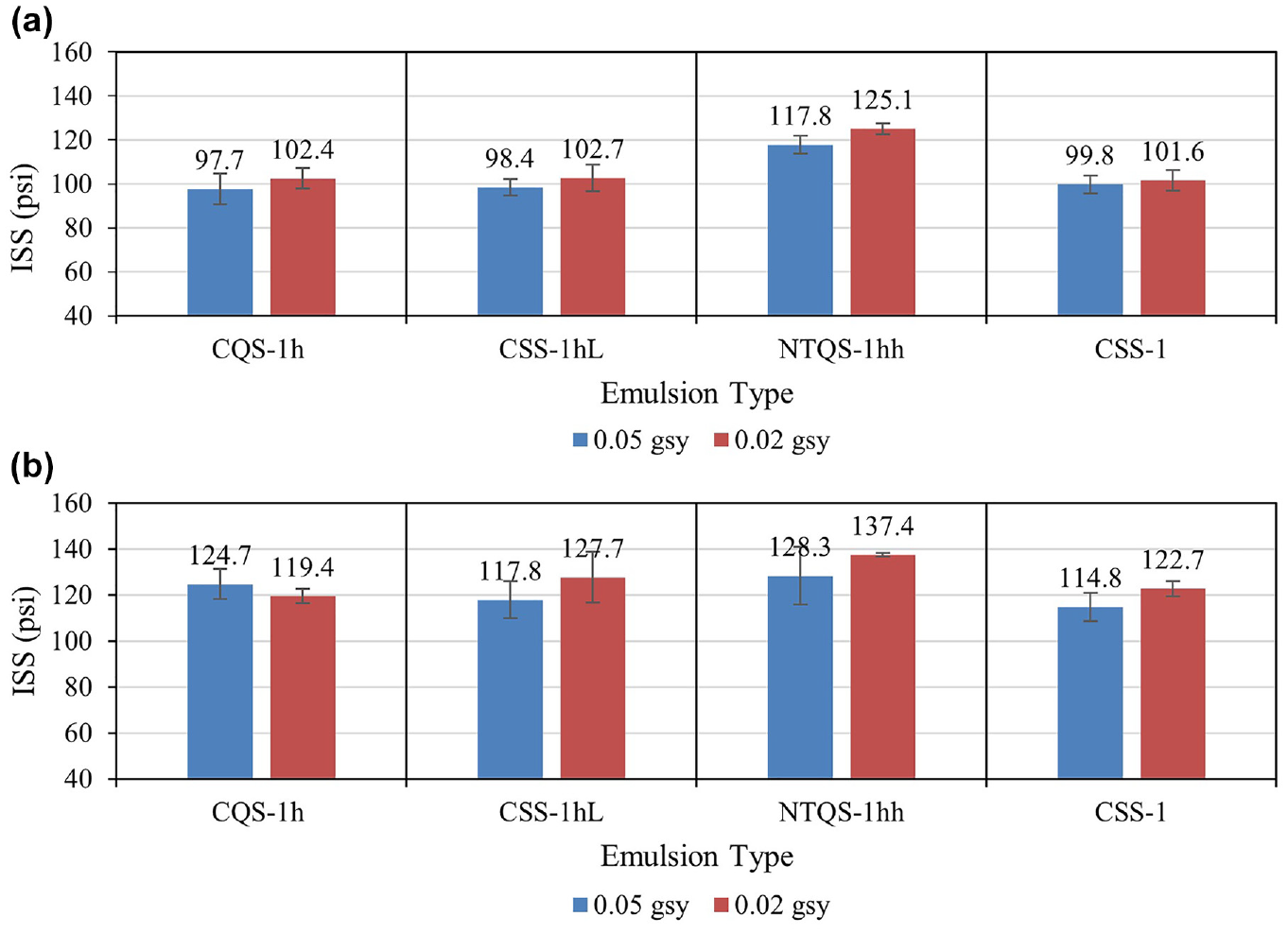
Effect of emulsion type and residual application rate: (a) low-texture existing surfaces at 25°C, and (b) high-texture existing surfaces at 25°C.
The results in Figure 1 show that there does not appear to be a significant effect of residual application rate on ISS for the two application rates evaluated at the specified confining pressure of 7 psi and testing temperature of 25°C. In all but one case, the higher residual application rate resulted in marginally lower average ISS values. Similarly, ISS values for the mixtures with various emulsions vary within a very narrow range for each texture level with the exception of the trackless product (NTQS-1hh) which shows slightly higher ISS values for the low-texture mixture, but it gives similar strength to the other three emulsions for the high-texture mixture. These findings suggest that under the laboratory testing conditions used, the selected application rate and emulsion types do not have significant effects, and other variables (such as surface texture) are dominating the ISS response. It is noted that ISS tests were conducted at a specified confining pressure of 7 psi, and therefore a different level of confining pressure may alter the values of ISS at different tack coat application rates depending on the test temperature ( 11 ).
Effect of Surface Texture on ISS for the Laboratory Study
To investigate the effect of surface texture, a 7 psi confining pressure was applied during the ISS test. Results shown in Figure 1 were re-organized to compare the low and high texture for each emulsion, and a sample with no tack coat is included, as shown in Figure 2. The mixture used to prepare the top half of all ISS specimens tested during this study is the same for all combinations of emulsion and residual application rate. The results re-organized in Figure 2 show that surface texture effect is clearly evident, with increasing texture resulting in increased ISS. Interestingly, the average spread between the high-texture and low-texture ISS value for a given emulsion at a given residual application rate is approximately 20 psi for most cases, which is the approximate largest spread between the two extreme types of emulsion (CSS-1 and NTQS-1hh). It should also be noted the same spread between the textures is observed without application of tack coat. These findings suggest that for newly compacted specimens in the laboratory, surface texture dominates ISS performance.
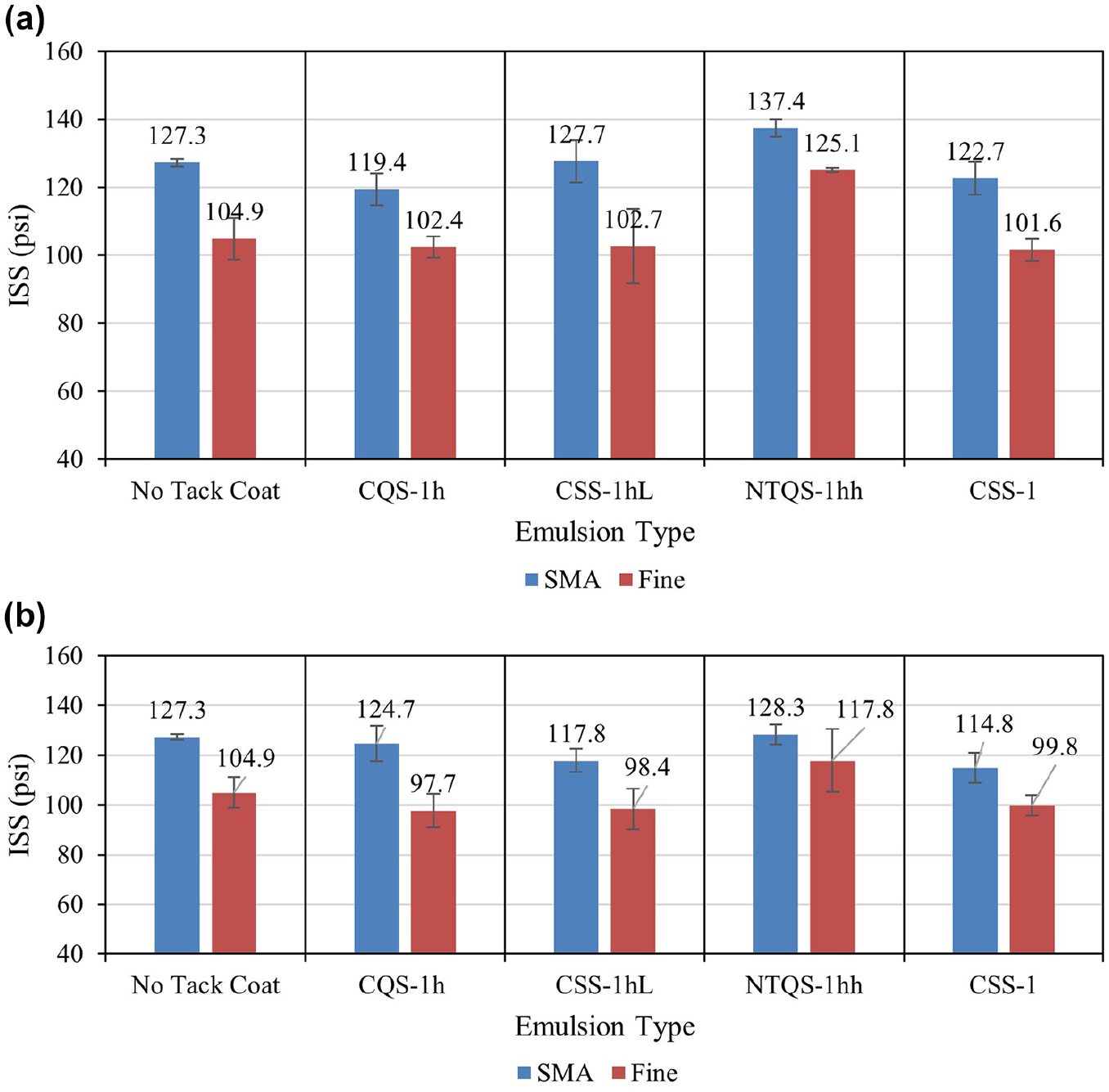
Effect of existing surface texture on ISS for: (a) 0.02 gal/yd2 residual application rate at 25°C, and (b) 0.05 gal/yd2 residual application rate at 25°C.
To further evaluate the effect of surface texture, fine mix samples were prepared and cut using a wet saw to create a smooth surface. The top portion compacted on the smooth surface included both fine and SMA mix, and CSS-1hL at 0.05 gal/yd2. ISS testing results of these samples are shown in Figure 3, which indicate that reducing the texture of the bottom portion for the two mixture types (i.e., fine mix and SMA mix) resulted in a significant reduction in the ISS value. The reduction in surface texture of the bottom part caused a 27% drop in ISS value for the low-texture mix (i.e., fine mix) and 52% for the high-texture mix (i.e., SMA mix). These findings confirm that surface texture dominates ISS performance in the laboratory.
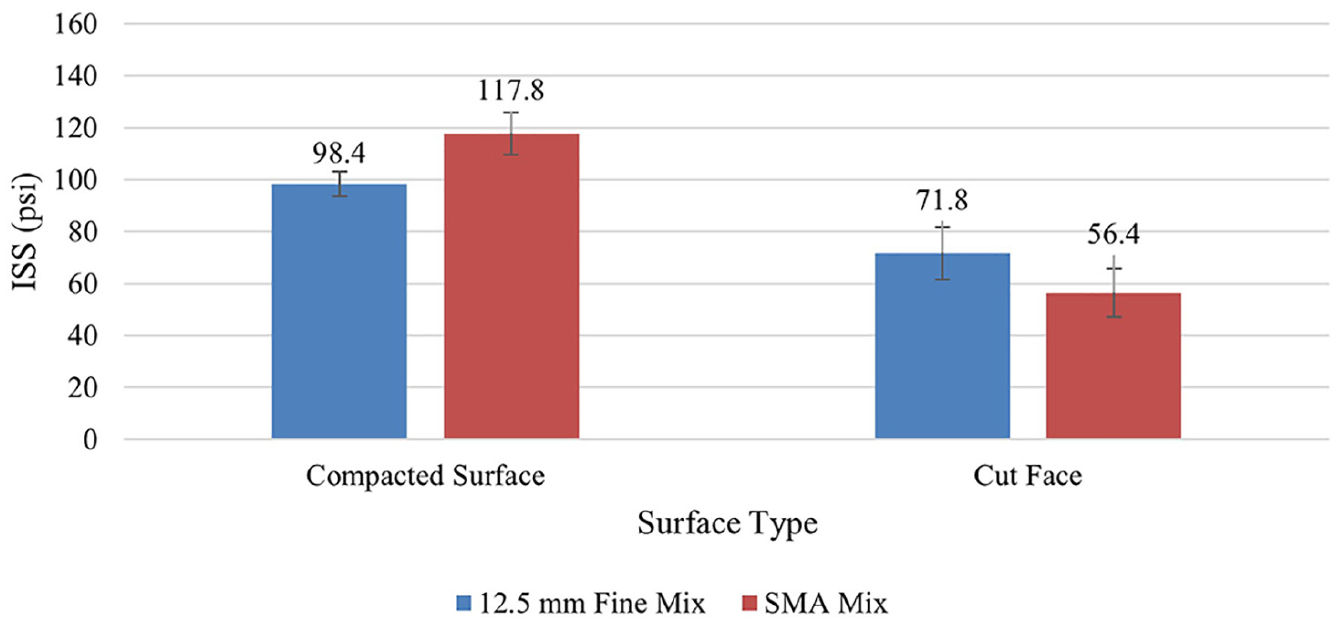
ISS values of samples with cut faces (no texture) with CSS-1hL tack coat at 25°C.
Further confirmation of effects of texture is also reported in European studies. In a comprehensive study by the Swiss Federal Laboratories for Materials Science and Technology (EMPA) ( 12 ) it was found that the use of tack coats does not necessarily result in a better ISS, but the different surface textures do influence ISS, and tack coats could lead to better adhesion. The study also indicates under conditions of wet surfaces, and in cases where test specimens are oven heated at 60°C for 75 h, the use of tack has the potential to increase ISS as compared with “no tack” conditions.
Effect of Testing Temperature on ISS
To evaluate the relative effect of testing temperature on ISS values, laboratory compacted test samples were conditioned at 46°C before testing; this temperature was specifically selected as the 50% reliability high pavement temperature in the southern part of state of Wisconsin at 2 in. below the pavement surface according to the LTPP database. All other testing conditions were held constant (see Table 1).
The effect of test temperature is pronounced for both levels of surface texture, but the relative ranking of ISS remains the same (high texture provides higher ISS) at the higher test temperature (see Figure 4). The percent decrease in ISS with increased temperature is approximately the same for both mixtures and among asphalt emulsion types; this finding suggests surface texture is again the most important factor controlling ISS, independent of temperature. For practical purposes, this finding also suggests that testing at 25°C alone is reasonable to screen emulsion or surface types when an application rate of 0.02–0.05 gal/yd2 is used.

Effect of test temperature on ISS using: (a) low surface textures for the bottom layer (0.05 gal/yd2), and (b) high surface textures for the bottom layer (0.05 gal/yd2).
Statistical Analysis of Laboratory ISS Testing
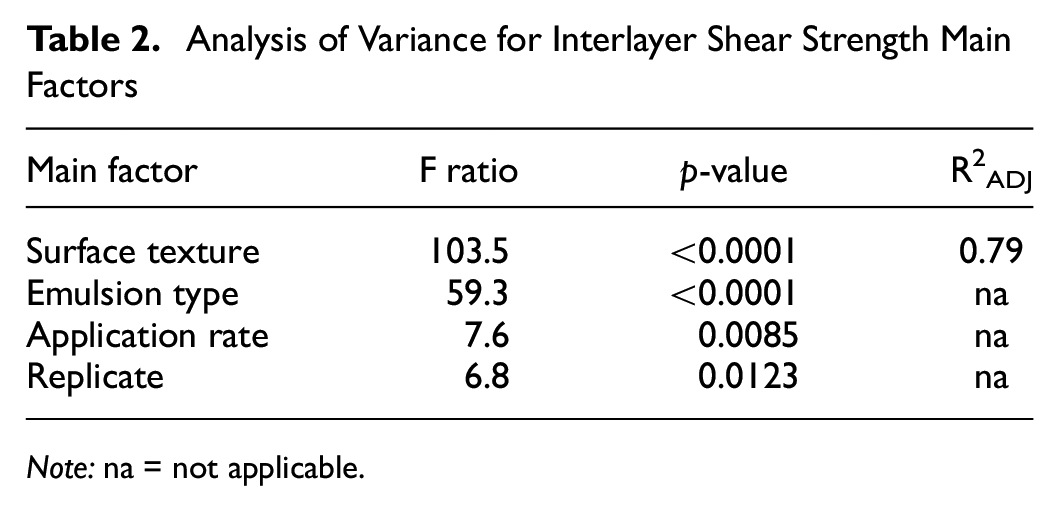
An analysis of variance (ANOVA) was conducted to determine the statistical significance of the ISS results presented above. To conduct the ANOVA, the emulsion type is quantified using the ER-DSR Test (AASHTO TP123) tested on the emulsion residue at 25°C. The ER-DSR subjects the emulsion residue to a monotonic shear strain rate while recording shear stress up to a predefined shear strain, then applies a zero-stress condition while recording shear strain recovery. The log of the maximum observed shear stress was used in this study to quantify residual asphalt properties of the emulsion. Surface texture is quantified using the MTD as described in earlier sections of this paper. The replicate factor was included to provide information in relation to the variability of the test method itself relative to varying other factors. The statistical software used to generate the ANOVA was JMP®. Results of the ANOVA are given in Table 2.
Analysis of Variance for Interlayer Shear Strength Main Factors
Note: na = not applicable.
All controlled factors are found to be significant at the α = 0.05 level. Based on the results of F ratio in Table 2, it is found that surface texture is the most significant factor influencing ISS, as expected based on the results presented earlier in this section. Emulsion type shows the second highest influence on ISS, followed by application rate and the replicate factor. The R2ADJ for the regression equation including only these four main factors is relatively strong at 79%, indicating that 79% of the data variance can be explained with these four factors alone. Including interactive factors in the model improves the R2ADJ by only 1%, indicating interactive factors are not significantly influencing ISS. It should be noted that the replicate factor is found to be somewhat significant, indicating the test method variability should be considered when comparing results.
Field Study Results
The ISS test at 0.0 psi (no confinement) was used to test road cores and field materials sampled from active paving projects during the 2017 and 2018 paving seasons to validate the laboratory study findings. Two emulsions, SS-1h and QS-1h, were used in these projects. It should be noted that QS-1h is the same emulsion as SS-1h, only for QS, an additive was added to the emulsion tanker before applying the tack. (QS [anionic quick set] emulsion is not a recognized AASHTO emulsion designation. CQS [cationic quick set] is recognized.) The actual residual application rates differed between projects and are listed in the associated data plots. For all combinations except the 25 mm new surface, three road cores and three laboratory prepared specimens were tested for each combination; two samples were tested for each of the 25 mm surface combinations.
Three sets of semi-laboratory compacted specimens were prepared (i.e., laboratory compacted top layer on field core bottom layer). Field cores were obtained from new or milled HMA pavement surfaces and trimmed to a height of 50 mm. Tack coat was uniformly applied to the top surface of the trimmed specimen by using a 2-in. bristle brush. Then the tack coat material was allowed to cure for 30 min at room temperature after which sample was placed in the gyratory compactor mold. Finally, the top half of the sample (fresh mix) was compacted by placing the bottom half in a preheated SGC mold and compacting to a target air void of 7% ± 1%.
The ISS test for the field versus laboratory comparison was conducted by applying a confining pressure of 0 psi. The summary of the ISS results of the field validation study is shown in Figure 5. Samples are grouped by existing surface type. The intended (target) residual application rate is listed with each sample; note that the field actual residual rate was not verified on site at the time of application, but the residue percentage was verified for each emulsion type and section in the laboratory. The error bars in Figure 5 represent ±1 SD from the mean value of the ISS. All samples were tested in one laboratory by one technician to eliminate testing bias from the analysis.
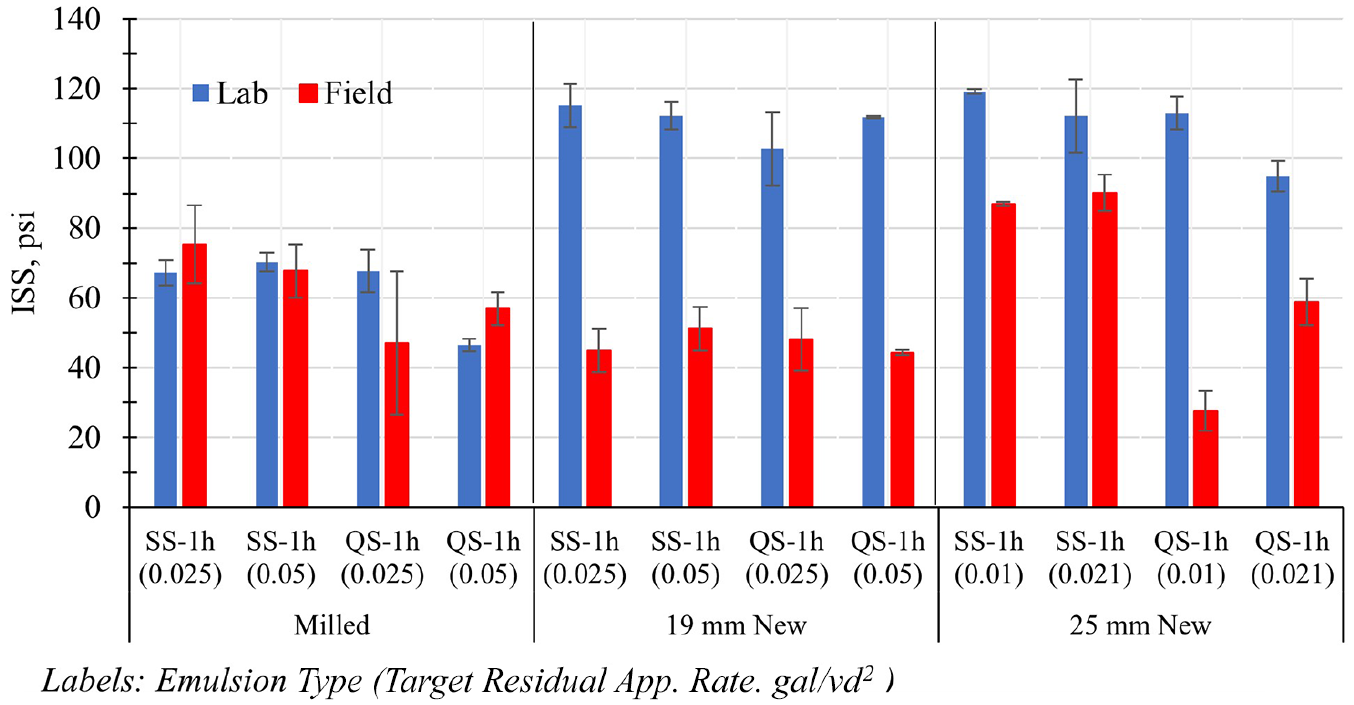
Comparison of laboratory and field ISS for field validation study at 25°C.
A series of statistical t-tests was performed at the 95% confidence level to determine the significance of application rate, emulsion type, and compaction method on the ISS. The resulting p-values from this analysis are shown in Table 3; values that are bolded are groupings that show statistical significance at the 95% confidence level.
p-Values from t-Tests on Groupings of Interlayer Shear Strength Data for Field Validation Study

Note: Bold indicate groupings that show statistical significance at the 95% confidence level.
If application rate is not found to be significant, data from both application rates is used to compare emulsion type; if application rate is significant, the data is separated by application rate to compare emulsion type.
For all three existing surfaces, the effect of target residual application rate is not statistically significant at the test temperature of 25°C and confining pressure of 0 psi for all combinations tested, except the unique case of the laboratory prepared milled surface using QS-1h (0.050 gal/yd2>0.025 gal/yd2) and the field core 25 mm surface QS-1h (0.021 gal/yd2>0.01 gal/yd2). It should be noted that range of residual application rates for all samples is relatively narrow, and application rates significantly higher or zero could affect results, as was the case for the findings of the NCHRP Project 09-40 ( 1 ).
The effect of tack coat material type was analyzed with respect to the significance of residual application rate. If application rate is not found to be significant, data from both application rates is used to evaluate emulsion type effect; if application rate is significant, the data is separated by application rate to evaluate emulsion type effect. The results show emulsion type effect is not statistically significant for five of the eight combinations tested. This finding can be partially explained because the residual asphalt used for both emulsions is the same. A liquid additive was added to the SS-1h to create a QS emulsion. In the cases where emulsion type is significant, it appears to be caused by the low values of ISS when using the QS-1h emulsion, which was reported to have incomplete coverage, and perhaps a dirty existing surface noted during the testing. Based on the limited scope of the field study, the effect of tack coat type cannot be reliably verified.
The effect of compaction method (laboratory versus field) is inconsistent, but statistically significant for nine of 12 combinations and all combinations for the 19 mm and 25 mm surfaces. For the milled surfaces, the effect is not statistically significant for three of the four combinations. For the 19 mm and 25 mm surfaces, the laboratory ISS is statistically higher than the field ISS.
For this data set, it is clear that laboratory prepared samples cannot be used to reliably predict field ISS values using the same materials. However, the effect of surface type is still pronounced, although the milled samples exhibited lower ISS relative to the new surfaces. This is unexpected, as milled surfaces are expected to provide greater texture relative to the new surface. Several noteworthy observations were made during the testing of these samples that could provide some explanation for this finding. First, the direction of travel (milling) was not noted on the samples, so a bias could have been introduced based on the direction of milling. Second, it was noted that during the testing, several of the samples broke in the lower layer away from the tack interface.
One sample combination (25 mm new, QS-1h, 0.01 gal/yd2 residual) exhibited non-uniform tack coat coverage and dusty/dirty interface surfaces following testing. These samples exhibited an average reduction in ISS of over 50% relative to the next lowest field ISS value for this surface type, demonstrating the potentially severe negative impacts of non-uniform coverage and dirty surfaces during tack coat application. This finding agrees with ones reported in NCHRP Project 09-40 and is consistent with the language in the WisDOT Construction and Materials Manual (CMM) and Standard Specification.
Effect of Coring on Laboratory Prepared Samples
Assuming surfaces in the field were clean and substantially dust-free, two prevailing theories explaining the laboratory-to-field shift are offered. Laboratory testing results of laboratory prepared, laboratory cored specimens (a 4-in. core is cored out from a 6-in. diameter gyratory sample) are shown in Figure 6. The results indicate a negative impact of coring on ISS, with a reduction in ISS of approximately 25%. The second possible cause of lower ISS values in the field is hypothesized to be the difference in compaction method and effectiveness between the laboratory and field. Compaction in the laboratory is 100% confined, and pore structure at the layer interface may be substantially different than what is observed in the field.
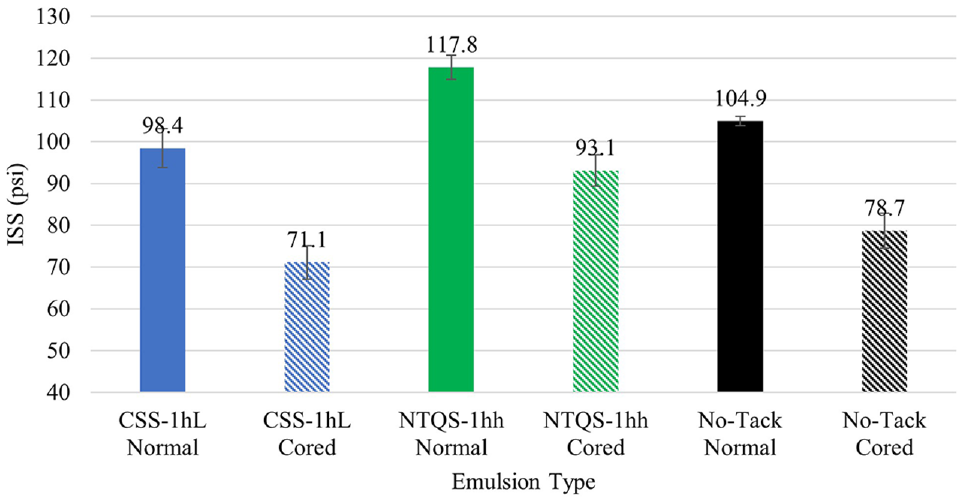
Effect of coring on ISS of laboratory prepared and cored samples.
Summary of Findings
The objectives of this study are to investigate the factors that affect shear strength performance of asphalt emulsion tack coat materials of both laboratory and field compacted samples and identify the reasons behind the discrepancies between laboratory and field ISS values. To attain these objectives, four types of tack coat materials were applied on three types of surfaces with residual application rates of 0.05 gal/yd2 and 0.02 gal/yd2. Further, field and laboratory compacted specimens were evaluated and compared at 0.01, 0.021, 0.025, and 0.05 gal/yd2 residual application rates. Texture of the compacted bottom surfaces was measured by a modified sand patch method. The difference of ISS between field extracted and laboratory prepared samples was also investigated. Based on the analysis of test results derived from the ISS test performed in the laboratory on both laboratory and field prepared samples, the following findings can be summarized:
Laboratory Shear Strength using ISS
The ISS at 7 psi confinement is primarily a function of surface texture and emulsion residue properties. The surface texture, quantified using volumetric techniques, has a pronounced effect and appears to dominate shear response in the laboratory at the specified confining pressure and test temperature. Considering only conventional tack coat materials currently specified by WisDOT there is not a significant effect of emulsion type on shear strength. Only the trackless tack coat showed a higher shear strength.
Within the range of residual asphalt rates used in this study (0.02–0.05 gal/yd2) at the specified confining pressure of 7 psi, the change in ISS because of application rate is not practically significant and no clear trend between residual application rate and ISS is observed.
Testing temperature is found to significantly affect ISS, with higher temperatures resulting in lower ISS; surface texture, however, is still found to dominate ISS at higher testing temperature.
Samples prepared with no tack coat exhibited similar, and in some cases higher, ISS values compared with those prepared with tack coat application. This finding agrees with limited prior literature and is hypothesized to be the result of surface texture and compaction methods in the laboratory. This finding represents a critical challenge associated with using ISS in the laboratory to determine optimal application rates and emulsion types.
Accounting for test method variability, all of the combinations of surface texture and emulsions tested during this study achieved ISS values of 100 psi or greater in the laboratory. Proposed limits in the literature vary between approximately 40 psi and 100 psi. This finding may suggest that a laboratory-to-field shift factor needs to be applied if evaluating ISS on laboratory compacted specimens is used.
All the laboratory shear testings performed for this study were static. It is recommended to check the effect of cyclic loading with consideration of the temperature and frequencies for future study.
Validation of Laboratory ISS using Field Cores
There is not a clear relationship in ISS values between field and laboratory prepared samples, even when the same materials are used for both samples at the test temperature of 25°C. If bond strength needs to be tested or verified in the field, cores must be taken.
Field cores taken from various projects throughout the state of Wisconsin show that for unmilled surfaces, the ISS values of field cores are significantly lower than the ISS of laboratory compacted specimens. For the milled surface, the ISS of the laboratory and field were found to be similar, although ratio between laboratory and field was inconsistent. It should be noted that residual application rate and surface texture were not measured and verified in the field portion of this study.
Within the range of application rates reported, ISS is not significantly affected by application rate for nearly all of the combinations tested.
Emulsion type is not found to significantly affect ISS for most combinations, since both emulsion residues used in this study are similar.
There is evidence that poor construction practice can significantly reduce ISS in the field, as evidenced by one sample which exhibited a reduction in ISS of over 50% relative to the next lowest value. After testing this sample, it was noted that the existing surface exhibited non-uniform tack coat coverage and significant surface dust was present. This finding highlights the need for a clean surface and uniform coverage. Comprehensive construction control is recommended to minimize the implications from these variables.
Assuming existing surfaces in the field are substantially dust-free, two prevailing theories explain the difference between laboratory and field samples. Testing of laboratory prepared, laboratory cored specimens showed that coring can have a negative impact on ISS, with a reduction in ISS of approximately 25% noted in this study. The second cause of lower ISS values in the field is hypothesized to be the difference in compaction method and effectiveness in the field. Compaction in the laboratory is 100% confined in the gyratory compaction mold, and pore structure at the layer interface may be substantially different than what is observed in the field.
Footnotes
Acknowledgements
Support of the project oversight committee is acknowledged.
Author Contributions
The authors confirm contribution to the paper as follows: study conception and design: A. Sufian, D. Swiertz, H. Bahia, L. Mohammad; data collection: A. Sufian, M. Akentuna; analysis and interpretation of results: A. Sufian, D. Swiertz, H. Bahia, L. Mohammad; draft manuscript preparation: A. Sufian, D. Swiertz, H. Bahia, L. Mohammad. All authors reviewed the results and approved the final version of the manuscript.
Declaration of Conflicting Interests
The author(s) declared no potential conflicts of interest with respect to the research, authorship, and/or publication of this article.
Funding
The author(s) disclosed receipt of the following financial support for the research, authorship, and/or publication of this article: This study was funded by the Wisconsin Highway Research Program of WisDOT (WHRP 0092-17-06).
Data Accessibility Statement
Raw data were generated at the Modified Asphalt Research Center of University of Wisconsin Madison and at the Louisiana Transportation Research Center of Louisiana State University. Derived data supporting the findings of this study are available from the corresponding author (Abu Sufian) on request.
The results and opinions presented are those of the authors and do not necessarily reflect those of the sponsoring agency.