



Abstract
The importance of advancing transportation equity has become more visible as other structural inequities in our society have received increasing attention. Articulating approaches that practitioners use to address equity in their work, including experience-based strategies and research-developed equity metrics, contribute to supporting the achievement of transportation equity goals. However, a gap exists between knowing these approaches and integrating them into regular professional practice, in part because of barriers that span across different transportation-related contexts. To investigate practitioners’ approaches to transportation equity, as well as barriers they encounter in trying to achieve improved equity, interviews were conducted with 59 transportation practitioners from the public, private, non-profit, and academic sectors. Findings revealed that a majority of the transportation practitioners in the study engaged in addressing equity in their work, including through collaborating with other organizations and sectors, integrating non-transportation-related data, and considering the contextual needs of vulnerable communities. They identified key barriers to their implementation of transportation equity approaches, including the lack of sufficient and quality equity-related data, challenges with accessing and collecting data, and a lack of standards and metrics for measuring equity-related outcomes. These findings can guide work that supports the explicit integration of transportation equity approaches into practitioners’ practices.
The availability and quality of transportation has profound impacts on social equity, as people’s lives are directly affected by the accessibility of destinations and the associated travel costs. Because transportation can be conceptualized as the movement of people to resources ( 1 – 3 ), individuals who cannot travel out of “food deserts” are left with options that can lead to long-term health issues ( 4 ), disabled individuals and those with chronic medical concerns who cannot get to the doctor will not receive adequate care ( 5 ), and students in under-resourced school systems who are unable to travel are forced to attend poorly funded schools ( 6 ). These types of transportation inequities are a testament to how policy, infrastructure, and planned transportation systems are not impervious to the structural and systemic inequities that are ingrained in the history and culture of the United States. Clear examples of oppression in transportation contexts throughout history include the Montgomery Bus Boycott spearheaded by Claudette Colvin and Rosa Park’s protest of segregated busing ( 2 ), the racialized shooting of Oscar Grant by Bay Area Transit System police officers at Fruitvale Station ( 7 – 9 ), and the planning of many highways that have divided neighborhoods predominantly populated by black communities, immigrants, and low-income individuals. Black Bottom and Paradise Valley were two such neighborhoods in Detroit that were cut off from crucial resources to support their quality of life by the Chrysler Freeway ( 10 – 13 ). Like hostile architecture, which restricts and discourages the equitable use of public spaces ( 14 ), hostile civil engineering discriminates, oppresses, and segregates, exemplified by Robert Moses’ design of highway overpasses that discourages transit usage ( 15 ). Less visible oppression resulting from transportation inequities manifests as exclusion from employment ( 16 ), racial bias in pedestrian safety ( 17 ), and indirect barriers to healthcare access ( 18 ).
Transportation decisions have the ability to perpetuate injustice, but also to mitigate the discriminatory harms of past services, infrastructure, and investments. As dimensions of social equity continue to come to public attention through reactions to acts of violence and ideological movements, including the police brutality that sparked the Black Lives Matter movement, intersectional feminism emerging from the MeToo movement, solidarity for Asian Americans and Pacific Islanders in response to the dramatic rise in hate crimes during the COVID-19 pandemic, as well as long-standing efforts for LGBTQ+ and disability rights, there is increased visibility of oppressed communities. This increased visibility may translate to a broader recognition in the field of who and what should be considered when addressing transportation equity. Furthermore, transportation is directly bound to policies that emphasize social equity, such as Title VI of the 1964 Civil Rights Acts, which prohibits discrimination on the basis of race, color, and national origin, and applies to federally funded transportation programs and activities ( 19 ). Transportation programs and activities are also subject to Executive Order 12898, an environmental justice order that protects minoritized and low-income populations ( 20 ). The growing prominence of social justice in the public sphere as well as pre-existing transportation equity policy requirements demonstrate that it is the responsibility of transportation practitioners to actively reduce the ways current systems oppress vulnerable and historically under-resourced people and communities.
Transportation equity scholars describe equity as the fair distribution of costs and benefits across society ( 2 , 21–23). While scholars vary in what they name as transportation costs and benefits, across the literature costs include but are not limited to monetary fairs, detrimental health impacts, and time, while transportation benefits focus on the opportunities and resources communities and individuals can access such as employment, social inclusion, and education ( 24 , 25 ). Within this definition, transportation equity is also framed as having vertical and horizontal dimensions. Horizontal equity evaluates the transportation costs and benefits across individuals and communities who are of equal ability and wealth, while vertical equity assesses transportation costs and benefits across communities that have different needs and abilities ( 11 , 26 ). These definitions provide a foundation for developing approaches for considering potential and existing equity impacts of transportation planning, policy, investments, and systems.
There are multiple transportation equity approaches developed within and outside of academic research contexts that are documented in a body of literature consisting of scholarly articles and public reports. This literature provides some consensus on the relevant types of structural inequities: race, ethnicity, gender, ability, national origin, citizenship status, and class. Several scholars describe a cost-benefit analysis framework as an approach to transportation equity ( 23 , 26 , 27 ). For example, Martens ( 22 ) applied a justice theory framework to propose a cost-benefit threshold relative to social class. Another method developed and explored by scholars such as Grengs ( 28 , 29 ), Levine ( 30 ), and Hansen ( 31 ), focuses on measuring accessibility quantitatively as a means of evaluating transportation equity. Accessibility considers the level of choice individuals and communities have based on their proximity to necessary resources and the affordability and variety of mode options to travel to those destinations ( 28 , 31 ). Other scholars, such as Karner and Niemeier ( 1 ), suggest critical adjustments to four-step activity-based modeling, while also providing policy approaches such as participatory budgeting, which gives communities the agency to self-determine how capital investments are distributed ( 32 ). Other scholarly efforts have continued to advance ways to measure transportation equity ( 33 ), identify gender variations in travel ( 34 ), and recognize the relationships among race, accessibility, and life outcomes ( 28 , 35 ). However, this body of work has focused primarily on measurement and does not attend to other aspects of holistic approaches to transportation equity ( 36 ).
Beyond literature-based metrics that can be leveraged to support transportation equity, approaches developed outside of academic research contexts, such as within non-profit organizations ( 37 – 39 ) and public agencies ( 21 , 40 ), have their own methods and goals for application to addressing equity that often differ from each other, but sometimes include elements from theory- and metric-based research. Across approaches developed outside of the academic sector, common premises include centering efforts on racial inequities ( 37 – 39 ), framing transportation as community-focused, and translating socially informed equity approaches to transportation planning language. Table 1 outlines key characteristics from five non-academic approaches developed outside of academic research contexts.
Summary of Transportation Equity Approaches Developed Outside of Academic Research Contexts
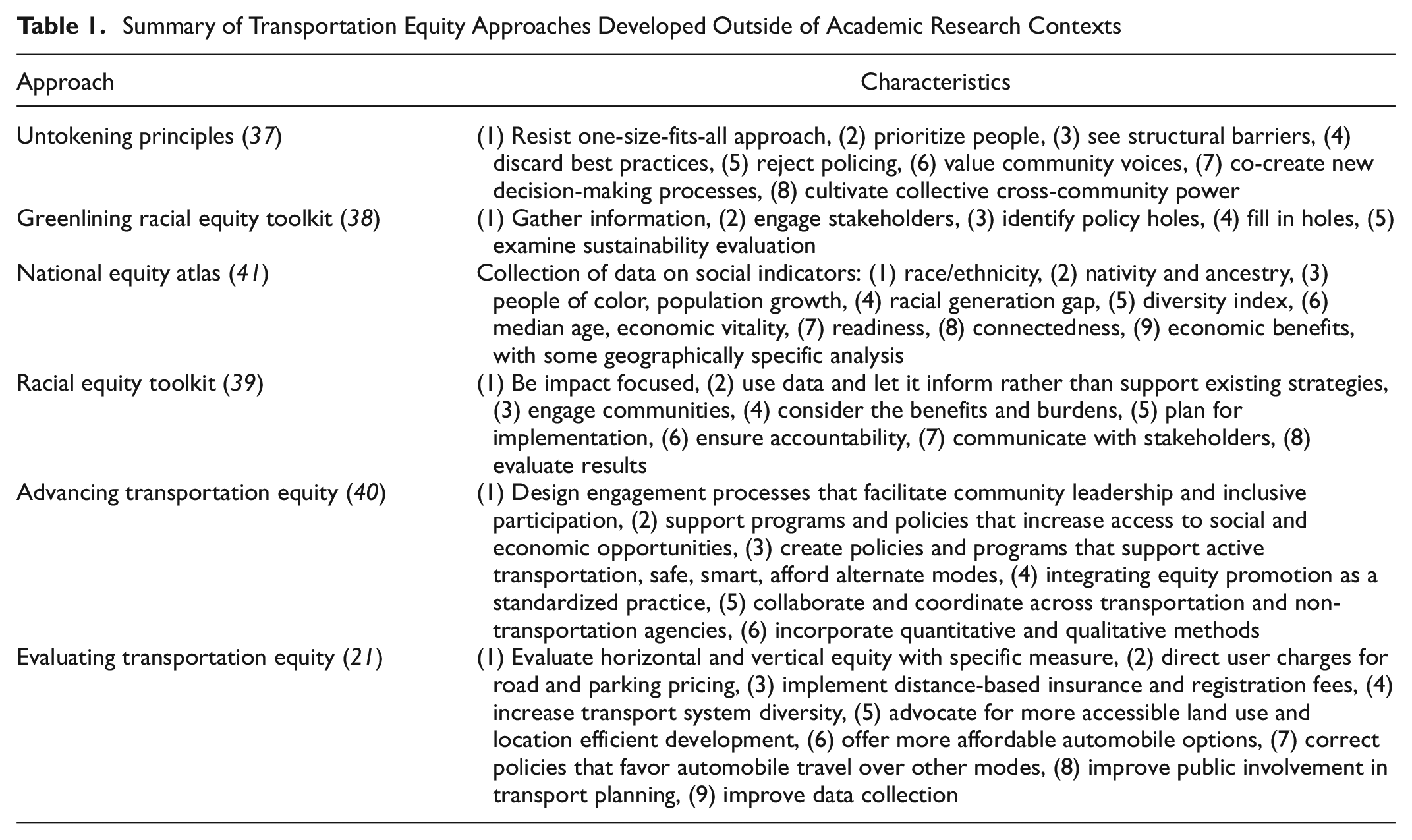
Though the literature and non-academic examples detailed above outline several approaches to addressing transportation equity, little research has been conducted to evaluate how applicable and appropriate these tools and frameworks are to transportation practitioners. Another concern is that although approaches and definitions of equity are well established in the discussed literature, it is unclear how they can be utilized within the constraints of the existing traditions, structures, and systems of transportation practitioners’ organizations, disciplines, and sectors. Further, though prior research has explored the current state of transportation practitioners’ experiences, these efforts have primarily focused on the experiences of transportation planners and the environmental considerations within their planning practice ( 42 ). Beyond this work, limited research has explored the experiences of transportation practitioners with regard to transportation equity. This study contributes to a better understanding of equity practices in transportation work through in-depth interviews with transportation practitioners about their experiences addressing equity.
Methods
This study investigated ways transportation practitioners address equity, the approaches they used to address equity, and the barriers that hinder them. The study was guided by the following research questions (RQ):
To what extent do transportation practitioners address equity?
What transportation planning, policy, and management approaches are used to address equity?
What barriers do transportation practitioners face in their efforts to address equity?
To answer these research questions appropriately, best practices in qualitative research were used ( 43 , 44 ) to gather rich descriptions of the experiences of transportation practitioners. One goal of qualitative research is to capture descriptive accounts of experiences and perspectives as well as the contexts that shape these accounts ( 43 ). Using rigorous qualitative approaches, the research questions were addressed using semi-structured interviews.
Participants
Interviews were conducted with 59 participants from four sectors of the transportation industry which included a diverse set of occupations: (i) academic (n = 10); for example, university professors and research faculty, (ii) private (n = 9); for example, automotive company project managers and transportation network company policy analysts, (iii) public (n = 33); for example, urban planners and city transportation managers, and (iv) non-profit (n = 7); for example, special interest policy advocates and special issue consultants. Participants represented a diverse set of occupations within the transportation space. Fourteen (24%) of the participants were women and 45 were men. This gender imbalance is a reflection of the disproportionate number of men in the transportation field across all sectors ( 45 , 46 ), but the relatively few women mean that one cannot compare responses by gender.
Participants were recruited through primarily purposive sampling methods by leveraging existing networks of the research team and researching contacts from online public records. In addition, some recruitment happened through snowball sampling where participants were asked if they could recommend other transportation practitioners as potential participants. Participants were invited to participate in the study through email after they were strategically screened for adequate power to make equity-related decisions, the potential ability of their professional position to engage in equity issues, and their prior use of transportation related equity data. The selection process for inviting participants also considered diversity in geographical location including all regions of the contiguous United States as categorized by the United States Census Bureau and a bordering Canadian province. Other diversity criteria included city sizes, types of transportation companies, and types of transportation related non-profits. Participants from the academic sector were selected based on their expertise in transportation equity.
Data Collection
Data were collected using semi-structured interviews. A semi-structured interview approach follows a sequence of predetermined questions but allows for follow-up questions and “deep dives” based on participant responses ( 47 ). Compared with a fully structured interview or survey, this approach provides flexibility to collect important details in participants’ descriptions of experiences ( 43 , 44 , 48 ). The interview protocol design for this study was based on these best practices as well as others: asking open-ended questions, pursuing depth in relevant topics, and building trust and rapport ( 49 ). Protocol approaches used in other qualitative transportation research were also reviewed to include discipline-specific practices ( 8 , 50 ). The interview protocol included other questions that were not focused specifically on equity approaches, but an equity subsection was explicitly designed to ask questions focused on participants’ background, general experiences in their daily roles as transportation professionals, and their specific experiences related to the three research questions. The interview protocol also included other questions that did not relate to equity approaches but a main subsection was focused directly on a definition of equity that was derived from foundational literature—the fair distribution of cost and benefits across a population( 2 , 23 , 26 )—that was provided to participants near the beginning of each interview and was used consistently throughout. Questions were refined through four rounds of pilot testing, revising the questions for clarity and alignment with the goals of the research. Pilot participants included transportation faculty and industry partners who had professional positions similar to the intended participants.
Interviews were conducted by six members of the research team via telephone and video conference. Interviews lasted an average of 40 min each. All interviews were recorded; in total, the data collected consisted of 3,786 min of audio yielding 664 transcript pages.
Data Analysis
All interview recordings were transcribed by a commercial service with additional verification and error checking by the research team. Interview transcripts were de-identified at this stage as well by removing names and other potentially identifying information.
Because the protocol included some questions that did not relate to equity, the first stage of analysis consisted of identifying instances of the word “equity” in the transcripts as an initial step in identifying the relevant parts of the interview to analyze for answering the three research questions posted for this study. In addition to the keyword search, other parts of the interview transcriptions that supported answering the research questions were included by identifying instances in the transcripts where equity-related topics were discussed without the use of the specific word “equity.” For example, these portions were primarily continuations of the same topics that participants were discussing when they initially said the word “equity,” but did not continue to repeat the word as they elaborated. The transcript excerpts surrounding, but not necessarily containing, the “equity” keywords included content such as the detailing of equity-related projects, explanations of equity-related difficulties, and rationale behind an equity-related decision.
After identifying relevant parts of the interview data to support answering the posed research questions, these parts were analyzed using an inductive analysis approach, where common themes, called codes, among parts of the transcripts were identified, labeled, and categorized for each research question ( 51 , 52 ). Analysis reliability was established through three rounds of an identification process that consisted of noting evidence to support the themes. A code book was refined during each round of analysis that represented the themes discovered and included a definition of the theme based on the data patterns. A distinct codebook was developed for each of the three RQs. For RQ2 (equity approaches) and RQ3 (equity barriers), individual participants could have responses coded in more than one theme, while for RQ1 (addressing equity), participant responses could only satisfy one of the four codes. The frequencies of all codes were tabulated and analyzed based on the participant sector.
Results
RQ1: Addressing Equity
A large majority of the participants (93%) said they addressed equity in their work, while only 7% reported that they did not address equity. Within the yes response, two themes emerged that divided the responses: participants who said they yes, directly addressed equity, and participants who were yes, indirectly motivated by equity needs or core understandings but did not report specific projects or initiatives with explicit equity considerations. Participants who directly addressed equity used language that aligns with existing tools and definitions of equity. Examples of the code yes, directly show some of these equity-related keywords such as “racism,”“privilege,” and “white supremacy.” Participants who indirectly addressed equity also used this type of language but included rationalization or explanations of how or why equity was not addressed directly. Participants who did not address equity because they were unable to had similar responses to the yes, indirectly participants, but they expressed more barriers, and an explicit statement that noted they were not doing equity-related work. Examples of how participants reported addressing equity are shown in Table 2.
Results for Research Question 1: Addressing Equity
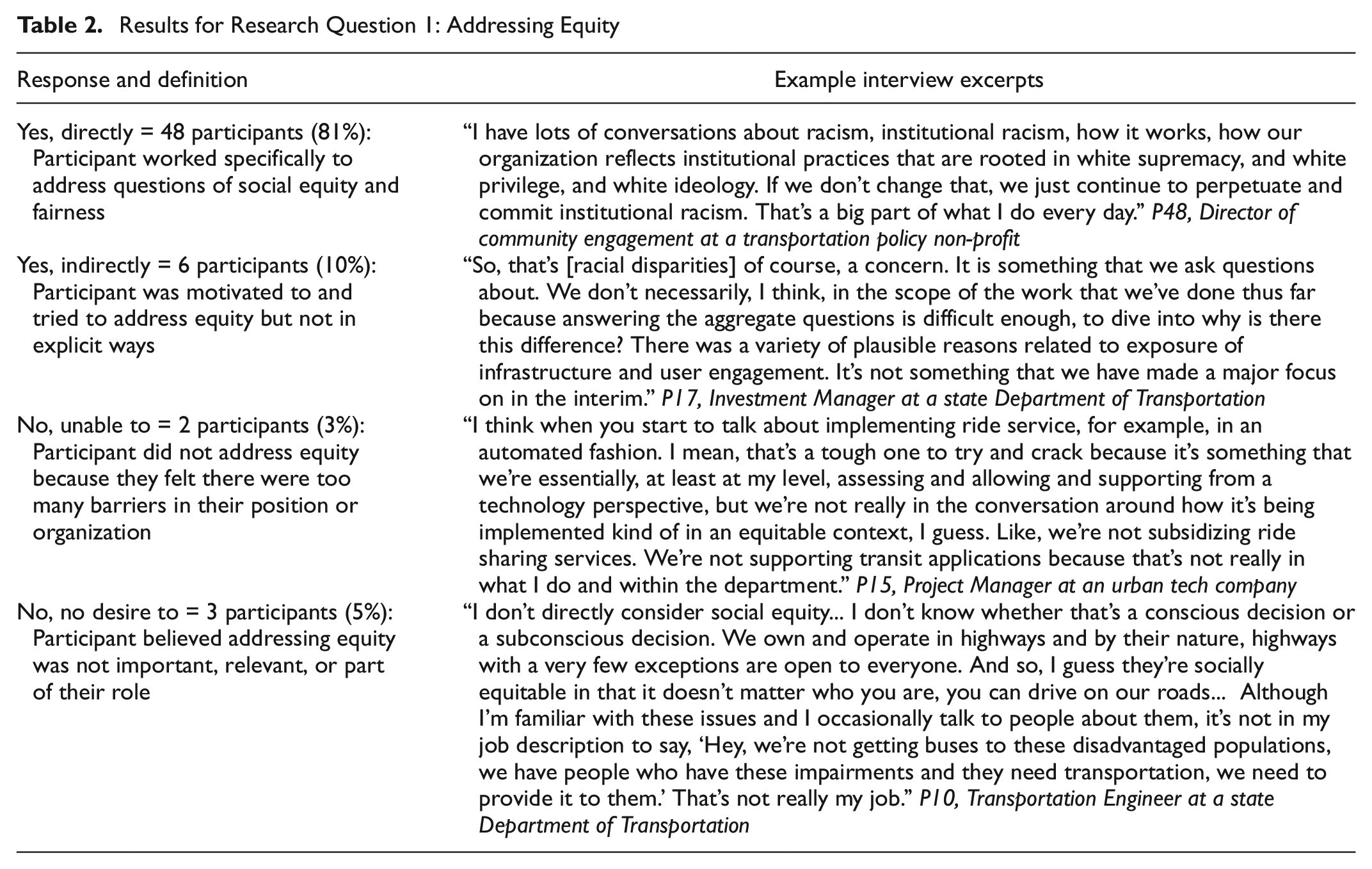
All the non-profit sector participants responded that they yes, directly addressed equity. All private sector participants also responded yes but were divided between yes, directly, and yes, indirectly, with most of them responding as yes, directly. The public and academic sectors were the only two sectors where both no themes appeared, with participants in the public sector the only ones who reported that no, they were unable to address equity.
RQ 2: Approaches for Addressing Equity
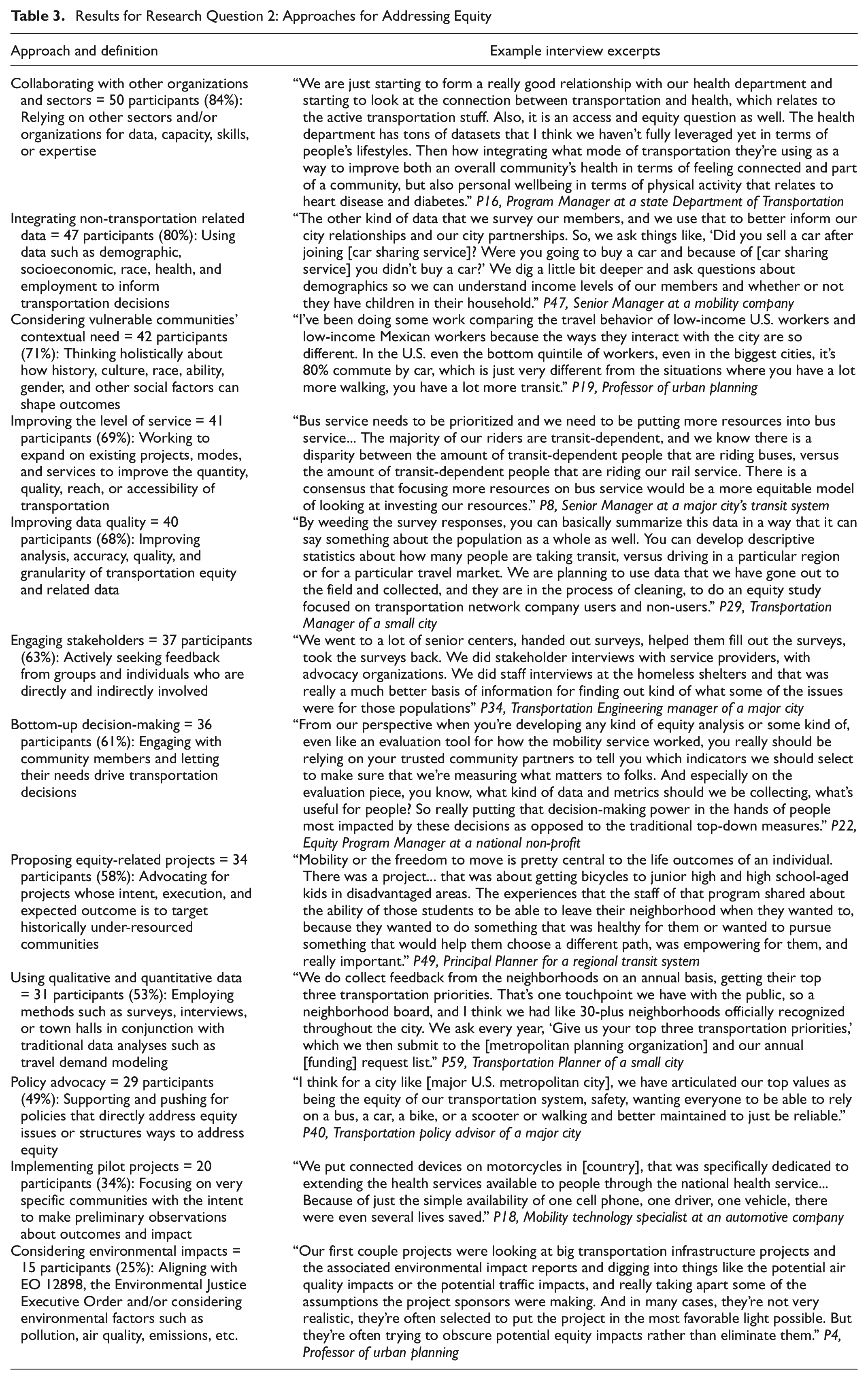
Twelve distinct approaches were identified from participants’ descriptions of how they addressed equity in their work. These approaches are named and defined in Table 3, with example excerpts from the interviews. Two approaches were named by most of the participants: collaborating with other organizations and sectors (84%) and integrating non-transportation related data (80%). Participants who described the collaboration approach did so through sharing data, or co-investing in projects, where both groups had an incentive to collaborate on their shared goals. Often, participants in the public sector described collaboration with entities that managed non-transportation-related issues. Six approaches—considering vulnerable communities’ contextual needs (71%), improving level of service (69%), improving data quality (68%), engaging stakeholders (63%), bottom-up decision-making (61%), and proposing equity-related projects (58%), also had high reports by participants. Fewer than half of the participants reported using the four remaining strategies: using qualitative and quantitative data, policy advocacy, implementing pilot projects, and considering environmental impacts. Participants from all sectors engaged in each of these approaches, except implementing pilot projects, where no participants from the academic sector reported it.
Results for Research Question 2: Approaches for Addressing Equity
The frequencies of these approaches reported by participants in the study from each sector (public, private, non-profit, academic) are illustrated in Figure 1. Public sector participants (n = 26) most frequently (79%) engaged in two approaches: collaborating with other organizations, disciplines, and sectors and integrating non-transportation related data. These two approaches were also the most frequent across all sectors. Four approaches that were reported least by public sector participants were using qualitative and quantitative data (39%), policy advocacy (45%), implementing pilot projects (30%), and considering environmental impacts (27%). All private sector participants (n = 9) commonly named three approaches. These included the two most frequent approaches used by the public sector participants, and also engaging stakeholders (100%). All non-profit sector participants (n = 7) employed four approaches: collaborating with other organizations, disciplines, and sectors, improving data quality, proposing equity-related projects, and policy advocacy. The approaches with the least number of total occurrences by non-profit participants were using qualitative and quantitative data (52%), policy advocacy (49%), implementing pilot projects (34%), and considering environmental impacts (25%).
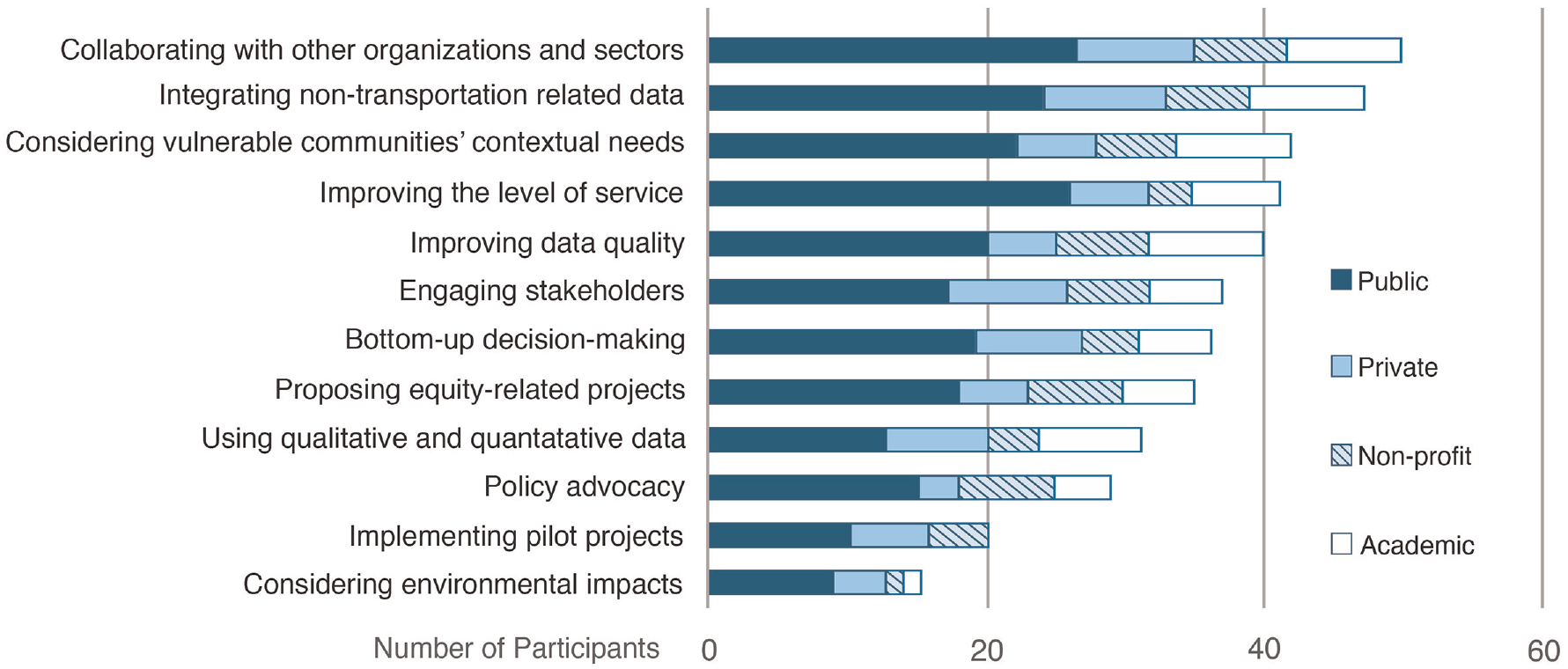
Participant counts for research question 2: approaches used to address equity.
RQ3: Barriers to Addressing Equity
The 10 barriers participants described facing when trying to address equity are listed in Table 4. Two barriers—more or better data is needed than available (80%) and challenges with accessing or collecting data (78%)—had higher frequencies than the other barriers. A majority of the same participants who faced the barrier more or better data is needed than available also experienced challenges with accessing or collecting data. Examples of these two barriers suggested a potential relationship between them. For example, P23 not only expressed that there were no data about individuals with disabilities, but that there were no data because there were challenges with collecting it.
Results for Research Question 3: Barriers to Addressing Equity

Frequencies of responses by sector (public, private, non-profit, academic) are illustrated in Figure 2. Public sector participants most frequently named the two barriers: challenges with accessing or collecting data (85%) and more or better data is needed than available (76%). Though not high in frequency, there were three barriers that 42% of public sector participants encountered: lack of skills or tools for data integration and analysis, little to no inter-organizational and/or broader systemic support, and not enough allocation funding. For the barriers not enough allocated funding and not part of the job, the frequency of public participants was higher than all other sectors. Private sector participants responded most frequently to three barriers: challenges accessing data, better data is needed than available, and no standards or clear metrics for outcomes. No private sector participants experienced barriers related to job description and motivation. The barriers with the lowest frequencies that private sector participants did experience were not enough allocated funding (22%) and not enough capacity (22%). Nearly all non-profit participants (86%) experienced three barriers: more or better data is needed than available, little to no legislative support or public process, and lack of skills or tools for data integration and analysis.
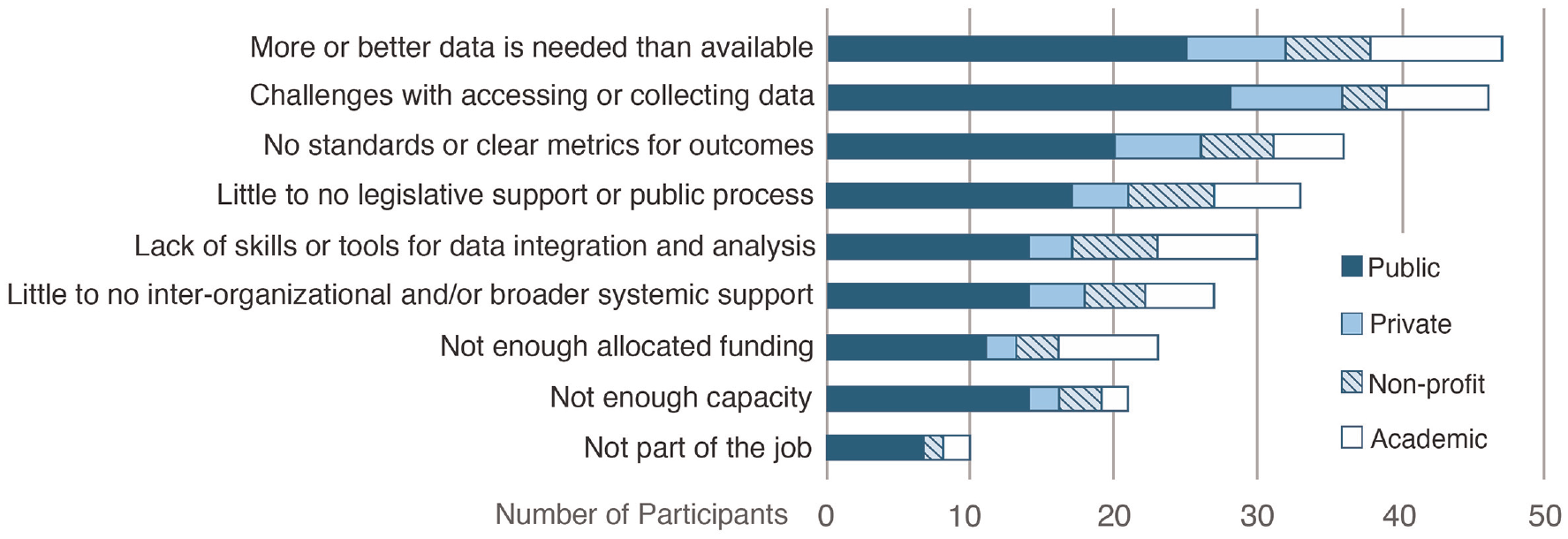
Participant counts for research question 3: barriers to addressing equity.
Discussion
Findings for RQ1 revealed that almost all participants believed that transportation equity was important and made efforts to address it. A majority (81%) of these participants addressed equity directly, while 10% of the participants described addressing equity indirectly. The two participants who reported being unable, despite expressing a desire, to address equity because of existing barriers were both from the public sector. This finding may be explained by how difficult and complex the landscape of public transportation funding can be ( 53 ). In addition to these structural factors, public transportation investments are becoming increasingly difficult to fund ( 54 ). In contrast, private and non-profit entities may have greater freedom and flexibility to shift organizational approaches.
All participants in the private sector addressed equity. Several private sector participants were part of smaller groups that specifically worked on equity-related projects, including demonstrations of how their technology or services could mitigate inadequate transportation resources in specific communities. Other private sector participants noted that they directly addressed equity because it increased their user base and improved the geographical distribution of the service they provided.
All of the non-profit practitioners in the study addressed equity directly, consistent with the sampling approach of inviting participants from non-profit organizations established to address problems of access or inadequacy in systems, services, and technologies. This explanation is consistent with the purpose of the non-profit groups named and described in the introduction, which were all organizations that have an explicit mission to address equity.
Three participants, two from the public sector and one from the academic sector, reported that they did not engage in transportation equity work and had no desire to engage in it. Though the participants were from different sectors, all three held engineering technology-specific positions and described equity as an important social issue but not related to their work or day-to-day responsibilities. The literature describes (mis)conceptions of engineering as excluding social dimensions ( 55 , 56 ), which aligns with these three participants’ rationale for not engaging in transportation equity work.
Findings from RQ2 revealed that there were 12 approaches participants reported to address equity. The approaches most frequently reported were collaborating with other organizations and sectors (85%) and integrating non-transportation related data (80%). These approaches were commonly linked, as many participants reported needing data shared from other organizations, which included non-transportation related data. The approach of considering environmental impacts (25%) had the least number of responses. This finding could be concerning, particularly in the public sector, where federal equity guidelines focus primarily on environmental impacts. However, another explanation could be that transportation practitioners who primarily consider environmental impacts were not explicitly recruited for this study. Practitioners who specifically address environmental impacts are often employed in environmentally-focused organizations such as the U.S. Environmental Protection Agency, or environmental justice-focused advocacy groups instead of traditional transportation organizations like metropolitan planning organizations or state departments of transportation. The specification of “social” equity in the interview protocol might have also caused an unintentional distinction between environmental justice and social equity which otherwise are often identified as linked in the literature ( 32 , 57 , 58 ).
Some approaches that participants reported, including stakeholder engagement (63%), bottom-up decision-making (61%), using qualitative data (52%), collaborating with other organizations and disciplines (85%), and identifying vulnerable communities contextual needs (71%) are similar to the named approaches developed outside of academic contexts, for example, valuing community voices ( 37 ), communicating with stakeholders ( 39 ), and collaborating and coordinating across agencies ( 40 ). Additionally, collaborating with other organizations and disciplines and identifying vulnerable communities’ contextual needs were both among the approaches most frequently reported by the participants, and similar to characteristics of the named approaches developed outside of academic contexts. A similar approach from the study, collaborating with other organizations and sectors, in particular, relates to collaboration as a broader characteristic found in several of the named non-academic approaches. This similarity could support the notion that collaboration involving organizations co-investing funding, capacity, and resources could make overcoming barriers easier.
Other approaches that emerged in this study have not been commonly named in either the literature or the approaches developed outside of academic contexts, including policy advocacy (49%), implementing pilot projects (34%), proposing equity-related projects (58%), and improving level of service (69%). The current study likely identified these strategies because policy advocacy and pilot projects are more general activities that can potentially include any of the approaches named in this study, approaches from scholarly literature, as well as approaches developed outside academic contexts. Though policy advocacy and pilot projects were employed by several participants who held positions such as policy advisors, non-profit project managers, and mobility strategists, policy advocacy and pilot projects are both activities in which engagement is less likely in specific disciplines. For example, a transportation engineer is unlikely to engage in policy advocacy, or a transportation equity researcher may not regularly run pilot projects. This discrepancy could suggest that policy advocacy and implementing pilot projects should not be considered individual approaches, but rather activities where multiple approaches from the findings and from literature can be applied.
The approach supporting equity-related projects that target historically under-resourced communities was reported by 58% of the participants but is distinct from how transportation equity approaches are framed in the scholarly literature and the named non-academic approaches. While this difference in framing should be noted, the approaches from the literature do highlight related methods such as: seeing structural barriers, cultivating cross-community power ( 37 ), designing engagement processes that facilitate community leadership and inclusive participation ( 40 ), and collecting data on the racial generation gap, and using a diversity index ( 41 ). These methods target specific inequities and groups that align with the recognition that equity-related projects targeting historically under-resourced communities are necessary.
Findings from RQ3 revealed that the most frequent barriers that all sectors faced were more or better data is needed than available (80%), challenges with accessing or collecting data (78%), and no standards or clear metrics for outcomes (61%). Several participants who experienced challenges with accessing or collecting data not only said that they faced issues of access, but also expressed the concern that no large efforts were being made to collect the necessary data. Among the data types that participants felt were missing were: transportation data for indigenous communities, origin and destination data for disabled populations, and information on aging rural populations. Participants also named the inaccessibility of data from transportation network companies as a barrier, which was the result of high costs, legal anonymization concerns, and the unwillingness of these companies to collaborate. The frequency of the barriers related to problems with data could be a reflection of how reliant practitioners across sectors are on using data in their jobs. A lack of appropriate data can lead to predictions, models, and investments that do not meet the needs of stakeholders. These results align with calls for more work similar to the National Equity Atlas ( 41 ), which supplies expansive non-transportation datasets on social indicators.
Participants who expressed no standards or clear metrics for outcomes (61%) as a barrier explained that having no metrics to measure and model equity outcomes directly affected their ability to communicate the importance and efficacy of equity-related work to decision-makers and governing bodies. Other participants explained that a lack of standards in metrics caused difficulties when sharing data across sectors, cities, and jurisdictions. In some instances, participants disclosed that difficulties sharing data prevented them from learning details about external equity-related efforts which might have improved their present work. Participants who experienced problems with sharing data because of a lack of standards indicated that processing and translating data can require additional costs and resources such as software literacy, employing staff with specialized data skills, or outsourcing data management.
Though data-related barriers had financial implications, fewer than half of public sector participants mentioned lack of funding (42%) as a barrier. The frequency of this barrier is inconsistent with the perception that public sector organizations do not often have operating budgets that include the cost of starting equity programs, purchasing data, and hiring staff to do more than basic operations. From the transcripts, participants noted that there was funding to do projects, but the difficulty was in building enough support within the organization to reorient project goals to include equity. Based on these responses, addressing the barrier no standards or clear metrics for outcomes might also simultaneously address some of the nuances surrounding lack of funding. One public sector participant noted that diverting project funding was difficult because the traditional design of transportation funding structures ensures that “legacy” investments such as highway management consistently receive attention, even if there are more urgent transportation equity issues directly affecting under-resourced communities. This could align with the theory that barriers are often embedded in systems and structures that continue to perpetuate inequities even if practitioners make sincere individual efforts to address equity ( 59 ). Consequently, addressing equity is not only an issue relative to individual practitioners, transportation networks, or communities and stakeholders, but also to the changes that need to be made to the culture surrounding equity in transportation organizations and institutions ( 60 ).
One limitation of this study was the relative lack of gender and racial diversity across the participants. While the transportation field is predominately comprised of white men, a more diverse group of participants might have reported or prioritized other approaches and barriers than those found across participants in this study. The researchers acknowledge the importance of conducting research with a diverse set of participants so as to not perpetuate the historical over-representation of white male participants in research. Further, a more diverse group with regard to geographical location, sector, and position types could also result in additional or altered frequency of reported approaches and barriers. Participants included in the study only included those that were willing to engage in conversations about equity, were available to participate and worked in organizations that would permit their involvement. Practitioners who would have wanted to participate, but could not, may have contributed unique barriers and approaches distinct from those reported by the participants in this study. Another limitation was that the interviews were done by a small team of six individuals; differences in interviewing style or social relationship with the interviewer may have affected participants’ responses. Also, data analysis was completed by a single member of the research team.
As this study followed best practices in qualitative research, the goal of the work is transferability over generalizability, which means providing rich descriptions to facilitate an understanding of the extent to which the research can be applied in another context ( 61 ). For this study, transferability is supported through the detailed descriptions of approaches and barriers as well as excerpts of participants’ interviews about their experiences. These descriptions can facilitate, for example, practitioners in transportation work that were not included in this study in their evaluation and work toward transportation equity as well as practitioners in related fields in understanding their own approaches and strategies to address equity.
Many of the transportation practitioners in this study expressed concern for equity across job types, sectors, and geographical location. The prevalence of attention on equity could imply that transportation equity is not just an interest in theory, but a growing part of practice. The findings from this study add to a growing body of research on transportation equity that continues to shape the approaches to transportation decision-making and analysis. Practitioners seeking to address equity in city government, planning organizations, equity-focused teams in private organizations, and non-profit policy organizations might benefit from this research, as the identification and description of potential barriers can improve the planning for new initiatives and projects. This study adds valuable insights into practitioners’ experiences by naming and collecting approaches and barriers to addressing equity, advancing existing transportation equity research, and contributing a foundation for future related work.
Conclusion
Although numerous studies have suggested changes in policy, planning, and management to address transportation equity, little research has been done to consider how new approaches compare and contrast with current practices. Though some participants engaged in approaches that were similar to those reported in the literature and in the named developed approaches, no participants in this study directly cited the use of metrics and measures that researchers have established, such as accessibility measurements, cost-benefit style equity analyses, and a context specific equity threshold. Given that transportation equity continues to be a significant consideration during transportation decision-making processes, the transportation equity approaches such as metrics, frameworks, and tools developed by scholars are becoming more relevant for widespread use. However, few systems are in place to communicate directly the best practices in transportation equity research literature and integrate them into the approaches currently used by transportation practitioners.
The study findings identified approaches and barriers that can serve as a foundation for further understanding of the existing landscape of transportation equity as addressed by practitioners, with the intent of highlighting potential knowledge gaps between literature and practice. Through in-depth interviews it was found that a large percentage of these practitioners are interested in addressing transportation equity, but several barriers deterred them from doing so. This study categorized approaches to addressing equity and identified three common approaches to address transportation equity used by practitioners: (i) collaborating with other organizations and sectors, (ii) integrating non-transportation data, and (iii) considering vulnerable communities’ contextual needs. Other approaches from the study could increase in frequency as more practitioners become familiar with them. Barriers most frequently reported by transportation practitioners were: (i) the necessity of better or more equity-related data, (ii) challenges with accessing or collecting data, (iii) and the lack of metrics to measure the outcomes of addressing equity. Key unanticipated observations were the lack of participants who cited considering environmental impacts as ways they addressed transportation equity, the low emphasis of funding as a major barrier, and the potential interrelationship of the three data-related barriers. This study provides a broad understanding of transportation practitioners’ experiences addressing equity from which future work can be done to normalize conversations surrounding equity in all transportation decision-making processes.
Footnotes
Acknowledgements
The authors express their thanks to the member discovery team—Tayo Fabusuyi, Erik Rodriguez, Avril Prakash, Maggie Shannon, Vivian Jiang, and Eleanor Sullivan—for their support during the data collection phase of this study. The authors are grateful to all the project team members.
Author Contributions
The authors confirm contribution to the paper as follows: study conception and design: Kaylla Cantilina, Matthew P. Reed, Robert C. Hampshire; data collection: Kaylla Cantilina; analysis and interpretation of results: Kaylla Cantilina; draft manuscript preparation: Kaylla Cantilina, Shanna R. Daly, Matthew P. Reed, Robert C. Hampshire. All authors reviewed the results and approved the final version of the manuscript.
Declaration of Conflicting Interests
The author(s) declared no potential conflicts of interest with respect to the research, authorship, and/or publication of this article.
Funding
The author(s) disclosed receipt of the following financial support for the research, authorship, and/or publication of this article: This material is based on work supported by the National Science Foundation under Grant No. OIA-1936884: Convergence Accelerator Phase I: Network for Equity in the Era of Driverless Vehicles.