



Abstract
Facing challenges in parking demand-and-supply imbalance and severe road traffic congestion during peak periods in Shanghai, in this paper we develop an SP-off-RP (stated-preference-off-revealed-preference) choice model to analyze relations between parking fee and commute mode choices based on survey data collected there. The survey questionnaire collects information about travelers’ daily commute, travel choices in the SP context, and personal socioeconomic and demographic attributes. The road network and public transportation network data are also used for model development. The model includes three main travel modes: car, public transit, and non-motorized mode. Variables that significantly influence mode choice and the reasons behind it are discussed, including the parking fee, the level-of-service (LOS) of the three modes, and socioeconomic and demographic variables. In the process of model development, a random sample of full-mode commute trips in Shanghai is integrated to improve model precision. The study reveals that the new random disturbance in the SP context is relatively large. The direct elasticity of the parking fee is estimated at −0.85, which means that when the parking fee increases by 10%, the average probability of choosing a private car for the commute will decrease by 8.5%. It is also found that transit LOS improvements have potential to reduce auto use in Shanghai. The study provides references on parking pricing as an alternative policy for travel demand management in Shanghai.
With rapid socioeconomic growth and the growth of motor vehicle ownership in China, the construction of urban parking facilities can hardly meet the needs of motor vehicle users, and the imbalance between parking demand and supply has become increasingly prominent. The problem in first-tier cities of China is especially serious. For instance, there were about 3.9 million registered motor vehicles in Shanghai by the end of 2017 but only about 650,000 commercial public parking spaces to be allocated. As a result, only one such parking space is available for six vehicles on average ( 1 ). The shortage of parking spaces will increase searching time, intensify traffic congestion, bring about parking violations causing parking chaos, and thus negatively affect quality of life. The parking demand-and-supply imbalance is particularly prominent during peak periods, in which commute trips account for a large proportion of travel demand, and significantly influence the operation of urban transportation systems ( 2 ). At present, many cities around the world, especially big cities, are facing challenges brought by commute traffic to various degrees. As one of the important means of travel demand management, parking fee management can restrain the growth of parking demand and alleviate parking and road traffic pressure by altering travelers’ behavior; this is in line with the concept of modernization and refinement in urban transportation governance. In this context, a study on private car commuters’ response to parking fee management can assist the government in formulating parking fee policy to solve the problems.
Since the mid-1990s, many scholars have carried out empirical studies on this subject. For example, the study by Dueker et al. ( 3 ) showed that the parking fee had a significant effect on reducing lone-driver commutes, and would greatly increase public transit use. Peng et al. ( 4 ) developed a nested logit (NL) model, through which they found that travelers who chose to drive alone were more significantly affected by parking rates than those who preferred carpooling. Stieffenhofer et al. ( 5 ) collected the feedback of residents on a proposed parking management strategy and found that a quarter of respondents expressed willingness to avoid or reduce the cost of parking by carpooling. Hess ( 6 ) developed a multinomial logit (MNL) model and evaluated the probability of commuters in Portland choosing to drive alone, carpool, and use bus under conditions of free parking and paying for parking. The research results showed that parking charges would greatly reduce the proportion of car commutes and increase that of bus commutes.
Most relevant studies used single revealed-preference (RP) or stated-preference (SP) survey methods to collect data for model development. RP surveys can reflect the actual mode choice of a traveler, but there are also some shortcomings. For example, there is a challenge in the acquisition of urban parking fee data in the RP context since non-driver respondents do not necessarily have enough knowledge about the parking fee of workplaces. There are few cases analyzing the impact of parking fee on mode choices by collecting travel data in RP contexts. Willson ( 7 ) used an MNL model to analyze the impact of employers’ payment of parking fees on mode choice and parking demand for commuters arriving in downtown Los Angeles. The results showed that the number of self-driving trips in the central area would be reduced by 25% to 34% and some trips would switch to public transit if employees needed to pay parking fees on their own. In that study, the average market parking prices in subareas were used to approximate the actual parking price based on a survey of market parking prices at all 240 public parking facilities in downtown Los Angeles. There existed a certain limitation considering that parking prices could vary considerably with the parking space type, parking subsidies, and many other factors in different locations or even in the same area. In fact, the SP survey method is widely used in the majority of empirical applications to test the sensitivity of commuters and it has the advantage of exploring potential behavioral changes in response to a wide range of proposed changes. Washbrook et al. ( 8 ) conducted an SP survey and measured suburban “single occupancy vehicle (SOV)” commuters’ preferences for driving alone, carpooling, or express bus services when alternatives varied in terms of time and cost attributes. The results showed that increases in parking costs would bring about greater reductions in SOV demand than other changes such as increases in travel time or in both in-vehicle time and cost beyond a base level of service. However, SP data may not produce reliable forecasts of real choices because the hypothetical scenario is not exactly the same as the choice scenario in the real world. Although there are numerous studies using a combination of RP/SP data, it is rare to see similar ones designed to evaluate the impact of parking fees on travel behavior. Only a few studies have attempted to explore the use of a data-integration approach to overcome the limitations of each single type of data; one is the study by Espino et al. ( 9 ), in which they estimated the parameters of an NL model based on RP and SP survey data of individual trips. The results indicated that travelers were more sensitive to the increase in parking fee than to the improvement in service level of public transit.
Despite the great interest in the impacts of parking fees on travel behavior, little research attention is given to the idea that SP contexts with various parking fee levels can be constructed based on those in the RP choice scenario. This kind of survey method is called “SP-off-RP” survey by Train and Wilson ( 10 ), who state that “SP-off-RP” survey data suffers from endogenous issues and propose a special mixed modeling technique to overcome endogeneity. The current paper attempts to employ this survey method, whereby various factors in the hypothetical scenario are changed based on the data in the real choice scenario, so that the respondents are enabled to transfer the actual selection mentality to the hypothetical scenarios. The traditional SP-off-RP choice experiment consists of two parts: an RP part and an SP part. The RP part aims to collect the travel information of respondents under RP conditions. In the SP part, hypothetical scenarios are designed according to the RP choice, and respondents need to report their possible chosen alternative. Given that parking fees only affect the mode choice of private car commuters, in this study the SP-off-RP survey focuses only on that group of commuters. The survey aims to collect information on their daily commutes and possible mode choice under SP scenarios with different parking fee increment levels, and therefore it can be regarded as a special case of an SP-off-RP survey.
The other substantial effort in this paper is that a joint SP-off-RP model integrating full-mode RP choice data is developed to greatly improve model precision. Note that the discrete choice model is generally developed based on a completely random sample but the SP-off-RP survey only involves private car commuters, which is essentially a choice-based sample. Thus, full-mode RP commute mode choice data collected by random sampling process are integrated to improve precision of model coefficients and adjust the constant biases arising from the nature of the SP-off-RP sample.
The rest of this paper is organized as follows. The second section gives a detailed introduction about the methodology of the SP-off-RP model structure, followed by a description of the choice-based sampling method. Data sources and sample descriptive analysis are then given in the third and fourth sections. In the fifth section, efforts are made to screen factors with potential impacts on mode choice based on statistical inferences of coefficient estimators, and to explain and analyze the empirical results of the model. The last section summarizes the results of this study and provides some future research recommendations.
Methodology
SP-off-RP Model
This study aims to quantify the impact of parking fees on mode choice probabilities. Three travel modes are mainly considered: private car (AUTO), public transit (PT), and non-motorized mode (NMT), where private car includes both driving alone and carpooling, public transit includes metro and/or bus, and non-motorized mode includes both bicycling and walking. The main modes are so classified to obtain sufficient observations in each category for model development.
The SP-off-RP model consists of an RP part and an SP part. A standard MNL model can be used to describe actual mode choice in the RP part. In the SP part, the parking fee increment is introduced as a new variable. Since SP scenarios are designed according to the mode choice in the RP context, the random component of utility (denoted as
The new error of alternative “
Utility in the SP part can be expressed as

where
The SP choices can be modeled as standard logits with

where “
Since

where
This probability is a mixed logit which is mixed over the conditional density of

where “
Draws of the Random Component
Draws of




where
Choice-Based Samples
In practice, to facilitate data acquisition and guarantee data quality, we often collect data directly from travelers using one or more specific travel modes for mode choice analysis. For example, in studying commute mode choice, it is often more convenient to survey transit users at stations and car users at parking lots than to interview commuters at their homes. This method of random sampling in a particular mode is called a choice-based sampling method. In this study, the SP-off-RP sample is essentially a choice-based sample since it consists of only auto commuters in the RP scenario. The data from this sample is called “Data 1” in the paper.
Considering that the discrete choice model needs to be developed based on a random sample, it is necessary to modify model coefficients estimated based on a choice-based sample. Manski and Lerman ( 15 ) proposed the exogenous sampling maximum likelihood (ESML) estimation method for MNL models using choice-based samples. The ESML method holds that the logit model estimation produces consistent estimates for all the model parameters except the alternative-specific constants, which are biased by a known factor and can be adjusted, so that the adjusted constants are consistent ( 13 ). The equation of ESML to adjust alternative-specific constants is written as

where
In the RP part of the SP-off-RP model in this paper, only the commute information of private car drivers is included. Therefore, another random sample of full-mode RP commute data in Shanghai, which is called “Data 2,” is integrated to improve precision of estimators. For Data 2, the traditional MNL model can be used. Parameters of the two samples are consistent except for constants according to the choice-based sampling theory mentioned above, and the probability of individual “
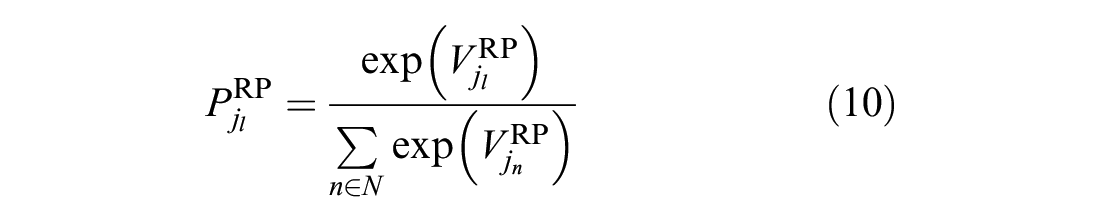
where “
Since it is difficult to collect parking fee data from non-driver commuters in the RP context, this variable is regarded as a part of the random error term in “Data 2.” It is undeniable that this may have a certain impact on the estimation of the coefficients of other variables. However, the utility of AUTO in the mode choice model is commonly assumed not to contain this variable while the estimation results are still widely accepted. That is to say, ignoring this variable should not have an unacceptable impact on other coefficients. However, “Data 1” provided by auto commuters contains the original parking fee in the RP context and the extra parking fee added in the SP scenario, so the coefficient of the parking fee can therefore be estimated in the SP-off-RP model.
There will be differences in alternative-specific constants between models developed based on Data 1 and Data 2. For the SP-off-RP model, it is a logit model solely based on auto commuters, where the constants are biased. In this study, two sets of constants are respectively estimated for comparisons but the constants in the MNL model based on Data 2 are used as constants for the final joint model.
Joint Model Formulation
To sum up, in this study, an SP-off-RP model is developed based on Data 1 including RP and SP parts. The choice probability is simulated by taking draws of

A flowchart for Data 1 and Data 2 integration.
Model parameters (including the scale parameter


where “
In this study, the universal choice set is defined to contain the following three main modes, including AUTO, PT, and NMT. Since not all travelers can choose a mode from the universal choice set, the choice set needs to be differentiated for each traveler. The choice set is developed in the following ways. In Data 1, AUTO is available for all the travelers obviously. In Data 2, AUTO is not available to a traveler who does not have a private car or a driver’s license. In the two samples, if both in-vehicle times of rail and bus from the zone-to-zone network skim take a missing value because the trip origin or destination does not have good access to a rail/bus station, the traveler cannot take PT for this trip. NMT is available for all the travelers in both samples.
Data for Empirical Study
Web-Based Travel Survey
The main respondents in this study were Shanghai private car drivers. The questionnaires were distributed to the private car drivers by the Internet survey company called “Wen Juanxin” in Chinese, which has a database with contact and basic information of about 200,000 registered residents in Shanghai. About 20% of them are licensed drivers, indicating that there are about 40,000 potential drivers in the contact list. With the help of the survey company, all of them could be contacted and invited to take the survey. Researchers could screen the completed questionnaires for ones that met all the requirements for this study. This screening process continued until a target number of questionnaires had been collected. First, in May 2018, 55 valid preparatory questionnaires were collected and then the questionnaire was improved based on the analysis of this pre-survey sample. After that, from July to September 2018, 535 valid formal questionnaires were collected. Because of the challenge in obtaining basic statistics of driving commuters in Shanghai, the income distribution was used to roughly examine the sample representativeness. The sample income distribution seemed reasonable and the average monthly income could be estimated at around 11,000 yuan, which is somewhat higher than workers’ average monthly income of 8,400 yuan but was considered a reasonable number for driving commuters who can own a private car in Shanghai. Then, 509 valid questionnaires were further selected as the basic data (i.e., Data 1) for modeling purposes.
In this study, three main commute modes were considered, including driving, public transit, and non-motorized mode. The survey mainly included three parts: the RP part, the SP part, and personal information. The RP part collected respondents’ daily commute trip information, including the location information of residence and workplace, the number of companions, the type of parking space used at residence and workplace, the duration and cost of parking at work, and so forth. The SP part gathered the mode choice and companions under one of three hypothetical scenarios occurring at equal probability randomly, which enabled the researchers not only to reduce the complexity of questionnaire and improve the quality of response, but also to collect choices in scenarios with different levels of parking fee increment. The scenarios were formed by having 10-, 20-, and 30-RMB yuan increases per day, which were designed according to the actual charging situation in Shanghai. Based on pilot survey data, the average daily parking fee was estimated at about 20 yuan per day and 10- and 20-yuan increments corresponded to 50% and 100% increases relative to the average parking cost. A dramatic 150% increase, corresponding to the scenario with a 30-yuan increment, was also considered to enlarge the variance of the parking fee in the SP data and improve precision of the coefficient estimator, while the hypothetical increase was still considered reasonable compared with the average wage rate of about 50 yuan per hour in Shanghai. The SP scenarios were not designed with percentage changes relative to the current parking cost since a considerable portion of driving commuters do not need to pay any parking fee and their current parking cost is zero. The third part of the survey collected the socioeconomic and demographic characteristics of drivers, including gender, age, income, employment type, marital status, residential type, and residence members, and so forth.
Zone-to-Zone Travel Impedance Matrix
In addition, zone-to-zone travel impedance matrices of all the travel modes are important for mode choice model development. A total of 5,432 traffic analysis zones, road, and transit networks of Shanghai were integrated on the TransCAD/GIS platform, as shown in Figure 2.
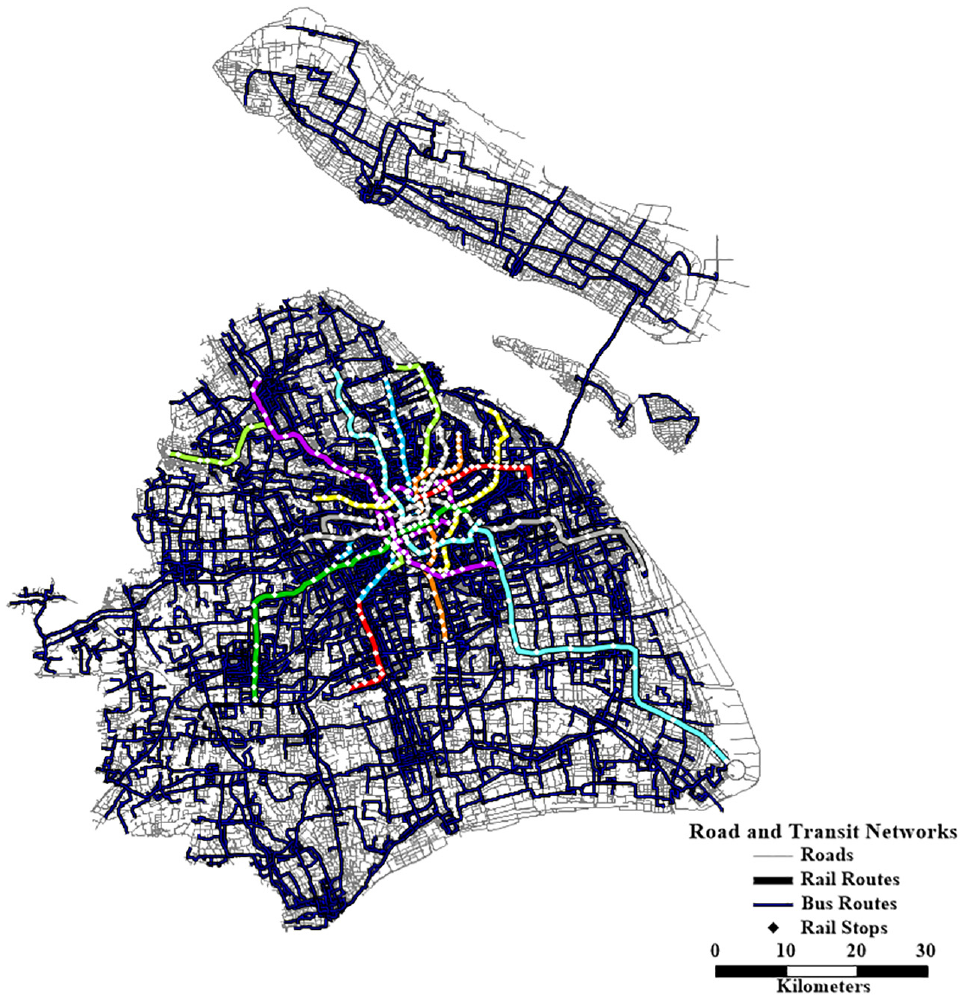
Shanghai road and transit networks map.
The residents’ committee, called “Juweihui” in Chinese, is the basic administrative unit of residents in Shanghai, and the boundary of each residents’ committee forms a traffic analysis zone in this study. The integrated data were used to generate zone-to-zone level-of-service (LOS) attributes for all the travel modes. Traffic speed on roads was estimated using the floating taxi GPS data by time-of-day periods. The zone-to-zone network skims were generated by five time-of-day periods (before the morning peak: 0:00–7:00; morning peak: 7:00–9:00; flat period: 9:00–17:00; evening peak: 17:00–19:00; and after the evening peak: 19:00–24:00). Major attributes involved in-vehicle time, access/egress distance to public transit stations, initial waiting time, transfer waiting time, walking distance and number of transfers, and so forth. The LOS data were merged into mode choice data by zone ID and trip beginning time period.
Random Sampling Data of Full-Mode Commutes in Shanghai
Finally, to estimate the parameters of the SP-off-RP model more precisely, RP full-mode commute data (Data 2) were integrated in this study. The sample was collected by a random sampling of full-mode commute in Shanghai from May to June 2017 by team members ( 16 ), including travelers’ daily commute information and their socioeconomic and demographic characteristics.
Sample Description
Data 1 and Data 2 are both used for estimating model coefficients. Data 1 focuses on SP-off-RP choices of private car commuters, with a sample size of 509. Data 2 includes commuters of all modes with a sample size of 840.
According to Data 1, spatial origin–destination (OD) distributions of private car commutes in the morning peak period (7:00–9:00) are depicted in Figure 3. The plot shows that residential and work locations are most densely distributed in the central area and sparsely distributed in the peripheral area, which reflects that the traffic pressure in the central area is high during the morning peak. In this context, the study on the impact of parking pricing policy on the commute mode choice of auto drivers may have certain positive significance for travel demand management.

Private car commute OD distributions (Data 1).
From Data 1, 170, 173, and 166 commuters are randomly selected to face 10-yuan, 20-yuan, and 30-yuan increased parking fee scenarios, respectively. The actual characteristics and preferences of each scenario group are not included as they are random samples selected with no prior information or stratification. Thus, descriptive statistics are provided only based on the overall sample. The statistical results of socioeconomic and demographic characteristics of Data 1 and Data 2 are shown in Table 1. Since Data 1 only includes private car commuters, while Data 2 is a random sample of all modes, it is easy to understand the existence of certain differences.
Descriptive Statistics of Personal Characteristics
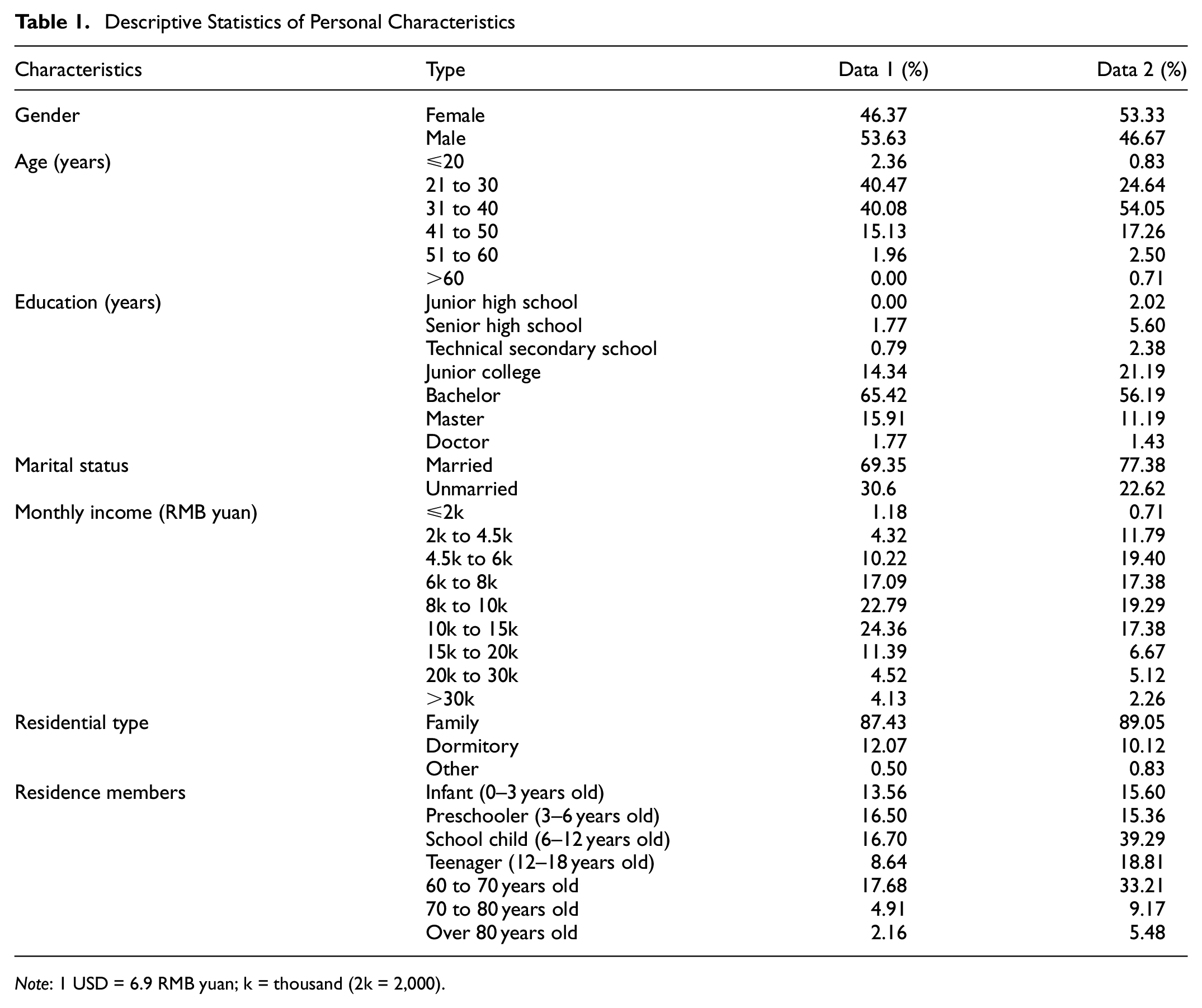
Note: 1 USD = 6.9 RMB yuan; k = thousand (2k = 2,000).
Female commuters are slightly greater in number than male commuters in Data 2 but men form a larger proportion in Data 1, possibly as a result of more men owning and using cars. Commuters in Data 1 are younger, indicating that more young people choose to commute by private cars. Respondents have higher education and income levels in Data 1, probably because the higher the education and income levels, the higher the probability of owning and using private cars to commute in general. “Residence members” provides information about commuters’ residences with different types of sharing members (seniors and/or minors in various age groups).
The mode shares in the two data sets are displayed in Figure 4. It can be seen that with the increase of parking fees, the proportion of commutes by private cars declines gradually, indicating that increasing parking fees may effectively reduce the demand for commutes by private car. It is interesting to see that the proportion of public transit in scenario 3 is larger than that in scenarios 1 and 2, possibly a result of some psychological factors. When there is a large increase in parking fees, the choice of public transit may lead to greater satisfaction, with much lower cost than driving but better experience than the non-motorized mode.
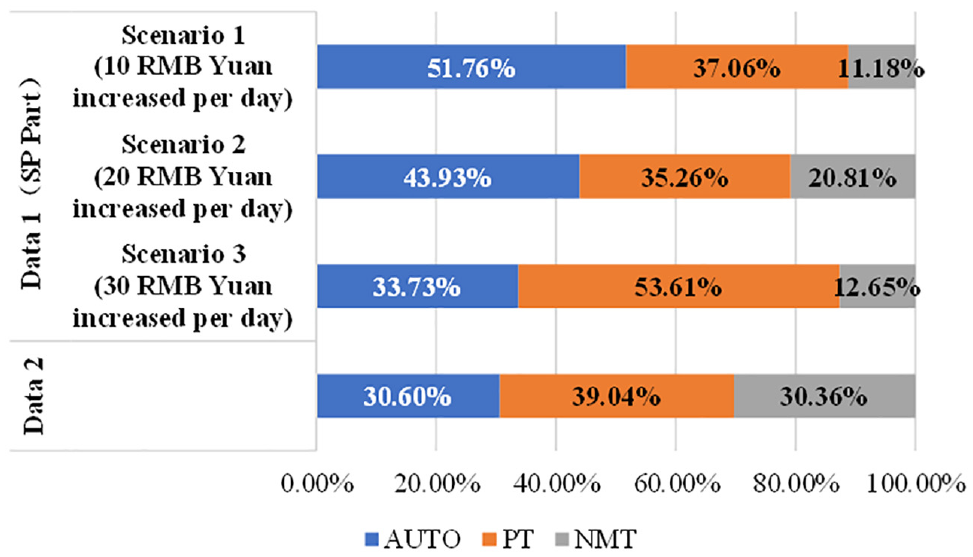
Market shares of three modes in Data 1 and Data 2.
Based on zone-to-zone skim matrices and observed commute trip OD pairs, LOS attributes of each commute mode are matched with each trip in the sample. Descriptive statistics of major attributes are shown in Table 2. The average commute distance of non-motorized mode is 6.27 km in SP contexts and 3.68 km in the RP context. In practice, the commute distance by car is generally longer than that of the non-motorized mode. Therefore, travelers who are willing to switch to the non-motorized mode because of the increase in parking fee may be those whose commute distance is relatively short.
Descriptive Statistics of Level-of-Service Attributes (Data 1 and Data 2)

Note: SE = standard error; RP = revealed preference; SP = stated preference; 1 USD = 6.9 RMB yuan.
In addition, the average access/egress distance is less than 1 km, and the transfer waiting time and walking distance are short, which indicates that the public transportation network in Shanghai covers the city well and can be conveniently used. If the parking fee can be adjusted within a reasonable range, private cars will be less attractive and a certain proportion of private car commuters will switch to public transit or non-motorized mode.
Empirical Estimation Results
Model Coefficient Estimation Results
The model estimation of the joint SP-off-RP commute mode choice model is completed by using GAUSS ( 17 ). The results are displayed in Table 3.
Model Estimation Results
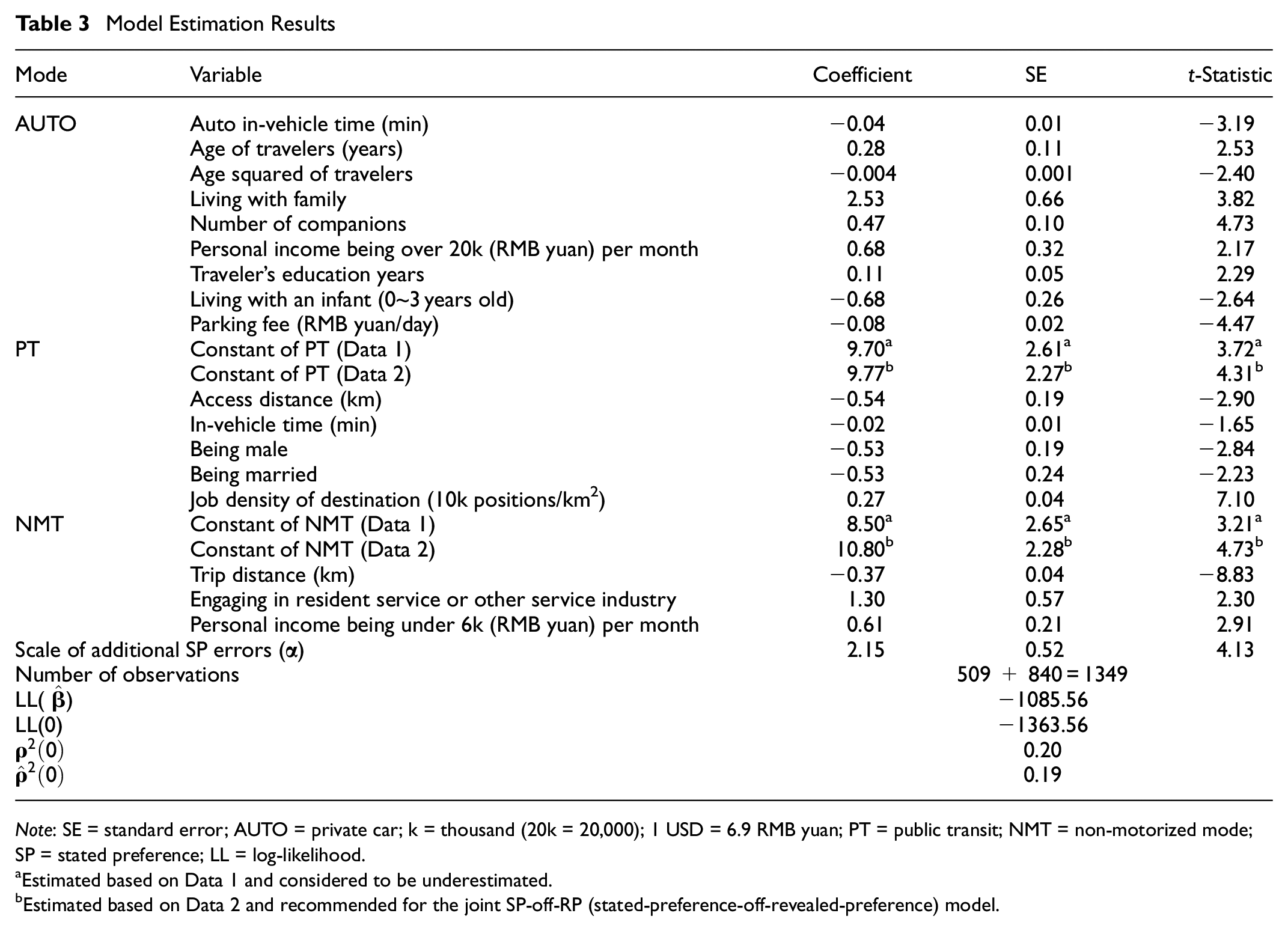
Note: SE = standard error; AUTO = private car; k = thousand (20k = 20,000); 1 USD = 6.9 RMB yuan; PT = public transit; NMT = non-motorized mode; SP = stated preference; LL = log-likelihood.
Estimated based on Data 1 and considered to be underestimated.
Estimated based on Data 2 and recommended for the joint SP-off-RP (stated-preference-off-revealed-preference) model.
There are two pairs of constants. As we stated earlier, Data 2 is integrated to increase the sample size and improve the estimation precision. On the other hand, it is used to provide alternative-specific constants. Considering that the car mode is mainly applied to medium- and long-distance travel, the constant in the NMT utility function estimated based on Data 1 is smaller than that estimated based on Data 2 which contains commute information of all modes. Therefore, constants estimated based on Data 2 are eventually adopted as the constants in the joint SP-off-RP model, as they ought to be closer to real constants and reflect true market shares.
The scale parameter (
Diverse LOS attributes as well as socioeconomic and demographic attributes are specified in the utility functions. The implications of LOS attributes in all the utility functions are presented below. (1) Both coefficients of AUTO in-vehicle time and parking fee are significantly negative, indicating that commuters are sensitive to these two factors. (2) The coefficient of AUTO in-vehicle time is two times greater than that of PT in-vehicle time, which implies that people are more sensitive to AUTO in-vehicle time, partly because of the increasingly serious traffic congestion in the city. What’s more, driving for a long time is likely to cause mental fatigue, and time on public transit can be easily accepted since it does not need mental concentration during long journey times. Similar findings were also reported in Habib ( 20 ) and Zhang et al. ( 18 ). However, in a study by Hensher et al. ( 21 ) in Australia, the result reported was the opposite and the coefficient magnitude of PT-mode in-vehicle time was larger than that of AUTO in-vehicle time. It is possible that the private car plays a more dominant role in Western countries than in Shanghai and travelers in those cities with lower population density enjoy car driving more than riding transit, given a better sense of freedom and control along with a pleasant driving experience. On the other hand, the omission of car operating cost, because of their high correlation with AUTO in-vehicle time and insignificant coefficient estimator, may cause a certain level of overestimate in the coefficient of AUTO in-vehicle time. (3) The access distance of PT is also an important factor affecting mode choice, which may inspire the government to take the location of residences into account and set the public transit stations as close as possible to make transit more attractive. The coefficient of the PT fare appears insignificant, which may be caused by a high correlation between PT fare and PT in-vehicle time in the sample. (4) The coefficient of non-motorized commute distance is significantly negative, implying that the non-motorized mode will be less attractive when the commute distance increases.
Differences in mode choice probabilities of drivers with various socioeconomic and demographic attributes are discussed as follows. (1) In the AUTO utility function, the coefficients of age and age squared are significantly positive and negative respectively, suggesting that middle-aged people tend to use private cars most, probably because of the higher requirement for travel efficiency. People living with family tend to drive a car since they may need to serve their spouses/children during a commute trip, and driving is able to satisfy their needs for flexibility and convenience. The number of companions positively affects the choice of car, presumably because travelers can share the parking cost together while retaining the advantages of driving. Commuters with higher education often have higher incomes, and those people whose monthly income is over 20,000 RMB yuan show a greater tendency to drive since owning a car requires relatively high purchase cost, fuel consumption, and maintenance costs. People living with an infant aged 0 to 3 years old at home have lower willingness to commute by private car, possibly because they may tend to leave the car at home for the family who need to cope with various situations while caring for infants. (2) In the PT utility function, it can be found that females show a greater tendency to choose transit than males. Unmarried people are more willing to use public transit, possibly because most married people live with their family and the complexity of activity-travel patterns may prevent them from using public transit. Furthermore, the density of jobs at workplaces has a positive effect on public transit, probably a result of the serious traffic congestion in such areas and the relative convenience provided by public transit. (3) As for the non-motorized mode, people engaged in residential services often need to pass through residential areas with poor road conditions and respond to customer needs in time, and the non-motorized mode can meet their needs for great flexibility. In addition, the non-motorized mode does not cost much and is therefore favored by people whose monthly income is less than 6,000 RMB yuan.
Elasticities, Marginal Effects, or Probability Differences
Both direct and cross elasticities, marginal effects of policy-sensitive variables or choice probability differences across various personal attributes, are computed based on Data 2, as shown in Table 4. Note that Data 2 does not include parking fee data; Data 1 is therefore used to compute the elasticity of the parking fee. The result may deviate somewhat from the actual parking fee elasticity but it still has reference value.
Elasticities, Marginal Effects, or Probability Differences
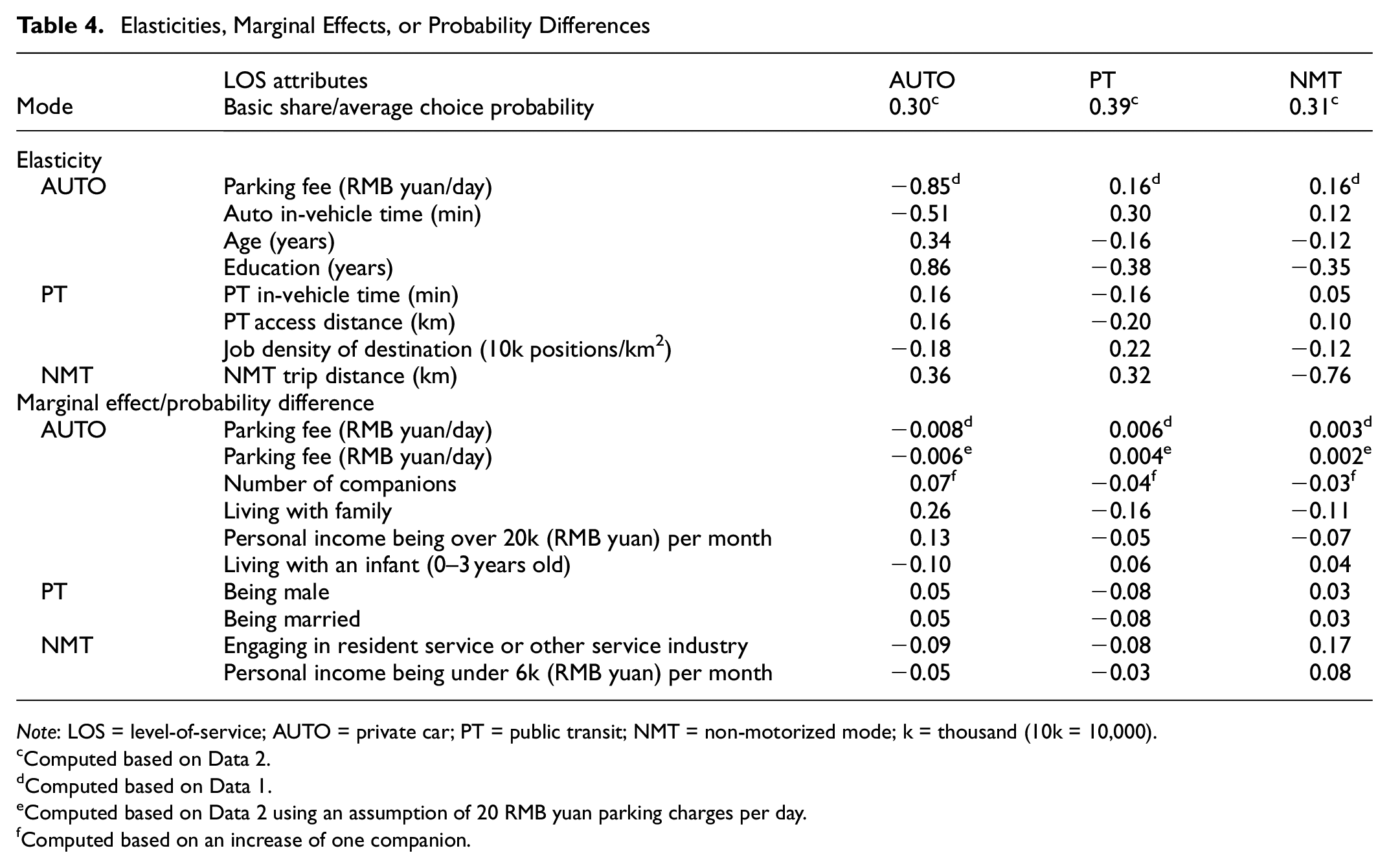
Note: LOS = level-of-service; AUTO = private car; PT = public transit; NMT = non-motorized mode; k = thousand (10k = 10,000).
Computed based on Data 2.
Computed based on Data 1.
Computed based on Data 2 using an assumption of 20 RMB yuan parking charges per day.
Computed based on an increase of one companion.
The direct elasticity of parking fee is −0.85, which means that when parking fee increases by 10%, the average probability of choosing private car commute will decrease by 8.5%. This estimate is larger than the range of −0.1 to −0.3 reported in early parking studies ( 22 ) but closer to those in more recent studies ( 23 , 24 ), which may be caused by the differences in demographic, geographic, and environmental characteristics. Considering the extensive mode choices and the wide coverage of public transit network in Shanghai, drivers may easily switch to other modes with the increase of the parking fee. The direct elasticity of AUTO in-vehicle time is −0.51, and that of PT in-vehicle time is −0.16. This implies that travelers are more sensitive to AUTO in-vehicle time. The most elastic attribute is education, which has a direct elasticity of 0.86, and cross elasticity of PT/NMT is −0.38/−0.35. The direct elasticity of PT access distance is −0.20, which is relatively small, and so is the elasticity of job density of destination. For the non-motorized commute distance, the direct elasticity is −0.76, and the cross elasticity is 0.36 and 0.32 for AUTO and PT, respectively.
The marginal effect of parking fees can be computed based on an assumed average of 20-RMB yuan parking charges per day in Data 2, and the computational result shows that a 1-RMB yuan increase in the parking fee is associated with a 0.6% (i.e., 0.006) reduction in the average probability of driving a personal vehicle (2.0% decrease relative to the average choice probability given in the first row of Table 4), while this value is 0.008 (2.7% decrease) when computed based on Data 1. For other personal variables, the probability differences are mostly smaller than 10%. Travelers living with family are 26% more likely to commute by driving than others. Commuters with monthly income over 20,000 RMB yuan are 13% more likely to choose AUTO for the commute than those with monthly income less than or equal to 20,000 RMB yuan. People engaged in residential service or other service industries are 17% more likely to choose a non-motorized mode for their commute.
Conclusions and Discussions
This paper attempts to develop a joint SP-off-RP model to quantify the impact of parking fees as well as other influential factors based on SP-off-RP and RP surveys conducted in Shanghai. The RP full-mode commute data is integrated to improve the estimation precision and adjust the model constants. The model aims to associate the RP choice and SP choice of individuals and identify the difference of random errors in RP context and SP context. It is concluded that the standard deviation of the additional unobserved portion of utility in the SP choices is about two times larger than the standard deviation of the unobserved counterpart in the RP setting. That is to say, the new random disturbance in the SP context is relatively large, which is different from that in a previous study using the same modeling method.
The model also contains a set of explanatory variables, including LOS variables and socioeconomic and demographic attributes, which can better explain the commute mode choice behaviors. Through empirical analysis of the model, the following main conclusions are drawn: (1) Private car commuters are sensitive to parking fees. When the parking fee increases by 10%, the average probability of choosing private car commuting will decrease by 8.5%. This indicates that increasing the parking fee may encourage many drivers to switch to public transit and non-motorized modes. Given the wide coverage of the public transportation network in Shanghai, the regional differential parking fee standards can be adjusted appropriately to attract some car commuters to switch to public transit, which can reduce the traffic pressure during the peak period in the central area. (2) Commuters are more sensitive to AUTO in-vehicle time than to PT in-vehicle time. The coefficient of the public transit cost is not significant because of the high correlation between public transit cost and in-vehicle time in samples. (3) People living with family are more willing to use cars for commute, which can enlighten the government on formulating appropriate strategies, such as giving preferential policies on parking space or parking charging for carpooling. The results can effectively assist in the formulation of parking fee policy for government.
In future research, additional efforts can be made in respect of the following aspects. (1) The sample size can be enlarged for better estimation precision. (2) More detailed classification of car mode can be carried out, such as making a distinction between SOV and HOV (high occupancy vehicle). (3) The location of parking areas can be considered in the model so that more refined suggestions on regional differential parking fee strategies can be put forward. (4) Since unequal extra parking fees seem to have different impacts on alternative travel mode choices of car drivers, the mechanism and policy implications of this are worth more in-depth studies in the future. (5) The effect of parking fee adjustment on alleviating traffic congestion and imbalance between supply and demand can be quantified and decisions can be made based on performance evaluation, so as to form a long-term parking fee management plan.
Footnotes
Acknowledgements
This research is partially supported by the key project of “Research on the Theories for Modernization of Urban Transport Governance” (No. 71734004) and the general project of “Study on the Mechanism of Travel Pattern Reconstruction in Mobile Internet Environment” (No. 71671129) from the National Natural Science Foundation of China.
Author Contributions
The authors confirm contribution to the paper as follows: study conception and design: Zhang, Ye; data collection: Zhang and Wang; analysis and interpretation of results: Zhang, Ye; draft manuscript preparation: Zhang, Ye, and Wang. All authors reviewed the results and approved the final version of the manuscript.
Declaration of Conflicting Interests
The author(s) declared no potential conflicts of interest with respect to the research, authorship, and/or publication of this article.
Funding
The author(s) disclosed receipt of the following financial support for the research, authorship, and/or publication of this article: This work was supported by the National Natural Science Foundation of China (No. 71734004 and No. 71671129).

The authors are responsible for any mistakes and omissions.