



Abstract
Calcium-based stabilizing materials (CBSMs) such as lime and fly ash are extensively used in subgrade primarily to enhance mechanical strength and improve resistance to chemical attack, resulting in more durable roadway. The soluble sulfate phase contained in some soils, however, can react with CBSMs and form ettringite minerals. If the soil is compacted before the end of this reaction, large, unstable, and volumetric swelling can occur. Among several methods to control sulfate-induced swelling, a “mellowing” approach is typically used because of its efficient, economical, and practical benefits when dealing with calcium-based stabilization of soils with significant soluble sulfate contents. Although the mellowing method is one of the frequently used methods, little data is available on the characterization of the specified mellowing process in the high-sulfate-bearing soil during the mellowing period. A research program investigated key factors influencing the mellowing process during the mellowing period, explaining how stabilizer type and content, remixing interval, mellowing period, and temperature play a role in reducing soluble sulfate content. Moreover, for selected mixtures, the 3-dimensional volumetric expansion and retained strength were measured after the mellowing process. Laboratory test results have revealed that a single mellowing process with higher lime content and daily remixing at high temperature leads to the rapid reduction of sulfate content in the soil. Moreover, after the mellowing process, additional soil treatment with fly ash or a combination of lime and fly ash leads to lower expansion and higher retained unconfined compressive strength of the soil mixture.
Keywords
Expansive soils are normally associated with shrink and swell behavior, causing localized stresses and non-uniform movements of the structure, and eventual defects such as excessive heave and damage, in pavements constructed on these soils ( 1 , 2 ). To improve the poor quality of expansive soils and meet the desired end performance criteria, calcium-based stabilizing materials (CBSMs) such as lime, Portland cement, and fly ash, are extensively used in the expansive soils ( 3 , 4 ). When the CBSMs are added to expansive soils, the pH of the soil quickly increases to above 12, which enables the clay particles to break down and start the stabilization process. Flocculation and agglomeration processes induced by the cation exchange between the metallic ions from the surface of clay particles and the calcium ions of the CBSMs take place instantly to form very small aggregates. This process decreases the plasticity of the clayey soil and improves its workability. Simultaneously, the calcium hydroxide produced from the hydration of CBSMs promotes a pozzolanic reaction with silica and alumina of the CBSM-treated soil system. This reaction leads to a progressive increase in strength resulting from the existence of cementing products such as calcium silicate hydrate (C-S-H) or calcium silicate aluminate hydrate (C-S-A-H) (3–8).
However, the soluble sulfate phase contained in some soils can also react with CBSMs, resulting in volume stability problems. The expansion in CBSM-stabilized soil in the presence of sulfates is a result of the growth of calcium-sulfate-hydrate products (ettringite and/or thaumasite minerals) on the clay particle surfaces through a highly expansive chemical reaction between the sulfates, alumina, calcium, and water (9–11). If the soil is compacted before the end of this reaction in the pavement construction, large volumetric swelling can occur and eventually lead to loss of strength and failure of the pavement structure.
Among several methods to control sulfate-induced swelling, a “mellowing” approach is typically used because of its efficient, economical, and practical benefits when dealing with calcium-based stabilization of soils with significant soluble sulfate contents. The mellowing process is a modified construction technique to avert the harmful reaction of sulfate-induced heave (12–14). Basically, soil containing sulfates, CBSMs, and plenty of water is homogeneously mixed. Ample time for all components to mellow is allowed between mixing components so that the formation of ettringite/thaumasite minerals has to occur rapidly under appropriate conditions before compaction. Once formed, ettringite/thaumasite minerals are relatively stable and are unlikely to cause deleterious future problems (15–17).
Despite being one of the most frequently used methods to prevent sulfate-induced heaving in soils, little data is available on the characterization of the specified mellowing process in the high-sulfate-bearing soil during the mellowing period. For construction cost and schedule, Texas Department of Transportation spends large amounts of budget on the annual maintenance and repair costs of distressed pavement. The reconstruction and repair costs incurred in the stabilization of sulfate-bearing soils have been a topical issue for many years. For this reason, the in-depth characterization and addressing of the mellowing process should be of significant interest to field engineers and should influence the overall construction cost and schedule. Therefore, in this paper, key factors affecting the mellowing process during the mellowing period were investigated in conjunction with the type and content of stabilizers, remixing interval, mellowing period, and temperature.
Research Scope
The research aims to identify key parameters influencing the mellowing process to minimize sulfate-induced damage. This goal was accomplished by three-phase, comprehensive laboratory evaluation: (i) basic soil characterization for mix design; (ii) identification of factors affecting the mellowing process; and (iii) sulfate swelling test. Soil characterization is the first step of this project. Soil samples were collected from a full-scale road-lane-widening project, and soil properties such as moisture content (MC), plasticity index (PI), and sulfate content (SC) were determined. The formulation of mix design(s) was accomplished by determining optimum moisture content (OMC), maximum dry density (MDD), unconfined compressive strength (UCS), and lime and/or fly ash contents.
The identification of key parameters influencing the mellowing process was intended to provide a better understanding of the mellowing process to minimize the potential for sulfate-induced heave caused by the use of CBSMs in sulfate-rich soil. Furthermore, it was also intended to find good construction practices such as mellowing days, type and content of stabilizers, and remixing intervals. Such practices can prevent a worst-case scenario caused by a potentially deleterious post-stabilization reaction after the pavement is placed in service.
Finally, once an appropriate mellowing process had been established, a 3-dimensional (3-D) swelling test and UCS test prescribed by the Texas Department of Transportation (TxDOT) were conducted to verify the effect of mellowing on suppression of swelling caused by ettringite formation.
Experimental Program
Basic Soil Characterization
Fifteen soil samples were collected from the US82-Sherman County line located in the Paris District in Texas. It has been reported that the soils in this area contain a considerable concentration of soluble sulfate. Gypsum is the most common sulfate form in this area ( 15 ). Five basic soil properties, including in-situ MC, PI, SC, soil classification, and clay mineral, were measured (Table 1). The MC of the soils ranged from 29% to 36% and did not vary significantly with the location. The PI of these soils also ranged from 45 to 57 and was relatively high. The SC of the soils, determined using the colorimetric method ( 18 ), ranged from 8,440 to 27,440 parts per million (ppm) and these soils were classified as sulfate-rich soils. The soil was determined to be sandy fat clay with gravel according to USCS (Unified Soil Classification System) classification, where clay minerals in soils mainly consist of montmorillonite, kaolinite, and illite. Because there are various chemical compositions and structures and preferred orientation effects, the quantification of clay minerals is still a challenge and possibly involves large analytical errors. In this study, the Rietveld method (TOPAS) was used to quantify minerals in soil.
Basic Soil Properties
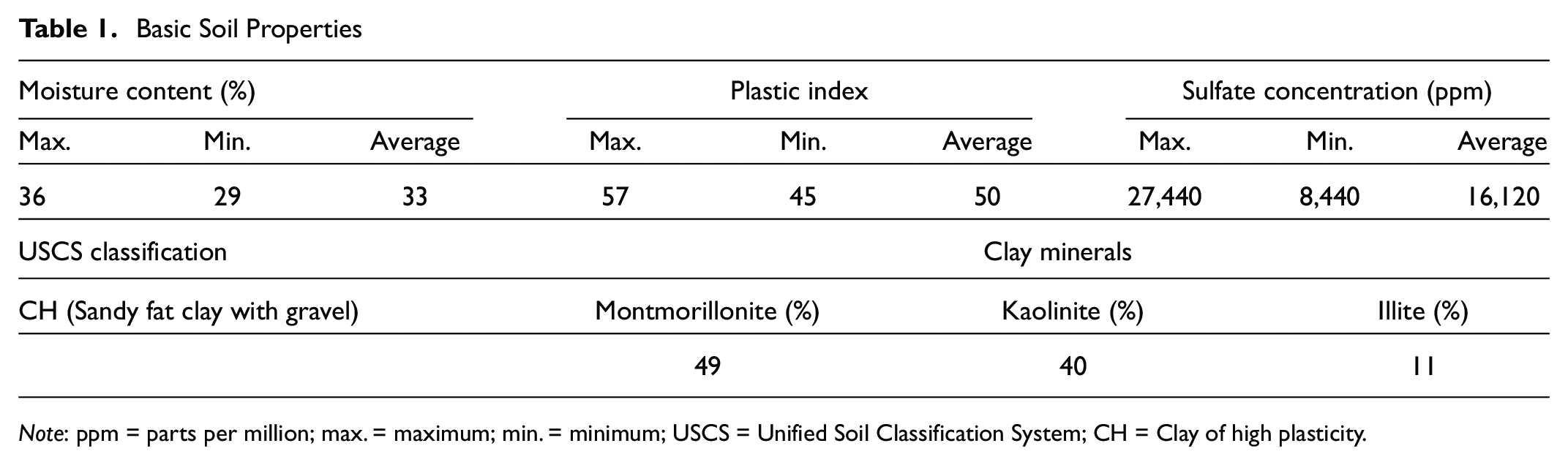
Note: ppm = parts per million; max. = maximum; min. = minimum; USCS = Unified Soil Classification System; CH = Clay of high plasticity.
To formulate mix design(s), the OMC, MDD, and lime and/or fly ash content were determined using the Tex-114-E Laboratory Compaction Characteristics and Moisture-Density Relationship of Subgrade, Embankment Soils, and Backfill Material test (proctor compaction test) and Tex-121-E Soil-Lime Testing (Eades and Grimes test), respectively. The moisture–density relationship revealed the following characteristics of the soils: OMC = 25.1% and MDD = 93.1 lb/ft3 (1,491.2 kg/m3). The optimum and lowest lime content for the soil was determined by the Eades and Grimes test and its value was 6.0% by dry weight of the soil.
Mellowing Process
To identify key parameters influencing the mellowing process in high-sulfate-bearing soil, the stabilizer’s type and content, mellowing temperature, and remixing interval were considered as mellowing parameters depending on single mellowing and double mellowing processes (Table 2). The single mellowing process indicates that soil was mixed with 6% lime or the combination of 3% lime and 3% FFA (class F fly ash) and allowed to mellow until the SC dropped to 3,000 ppm, whereas the double mellowing process indicates that the soil was mixed with 3% lime first. The OMC was used for the mellowing process. Because a chemical reaction between soil and CBSMs consumes water during the mellowing process, the OMC was maintained by the addition of water when the soils were remixed. When sulfate concentration dropped to 5,500 ppm, the other 3% lime or 3% FFA was added to the mixture and allowed to mellow until the SC in the soil reached 3,000 ppm. Based on these two mellowing processes, the parameters influencing the mellowing process are more finely characterized.
Mellowing Parameters Variables

3-D Volumatic Swelling Test and Unconfined Compressive Strength Test
As presented in Figure 1, a 3-D volumetric swelling test was conducted to determine the vertical and radial volumetric expansion of selected and mellowed soil samples. This test is used for assessing the volumetric expansion of the sample caused by ettringite formation when exposed to prolonged capillary soak conditions. Because the swell test samples are exposed to deionized water free of sulfates, the only source of the sulfate ions comes from within the soil samples themselves. For fabricating 4 in. (101.6 mm) diameter by 4.5 in. (114.3 mm) height specimens, oven-dried soil samples were pulverized and sieved first. The controlled, lime-treated, and lime-fly-ash-treated samples were mixed with targeted MC levels and then exposed to the mellowing process.
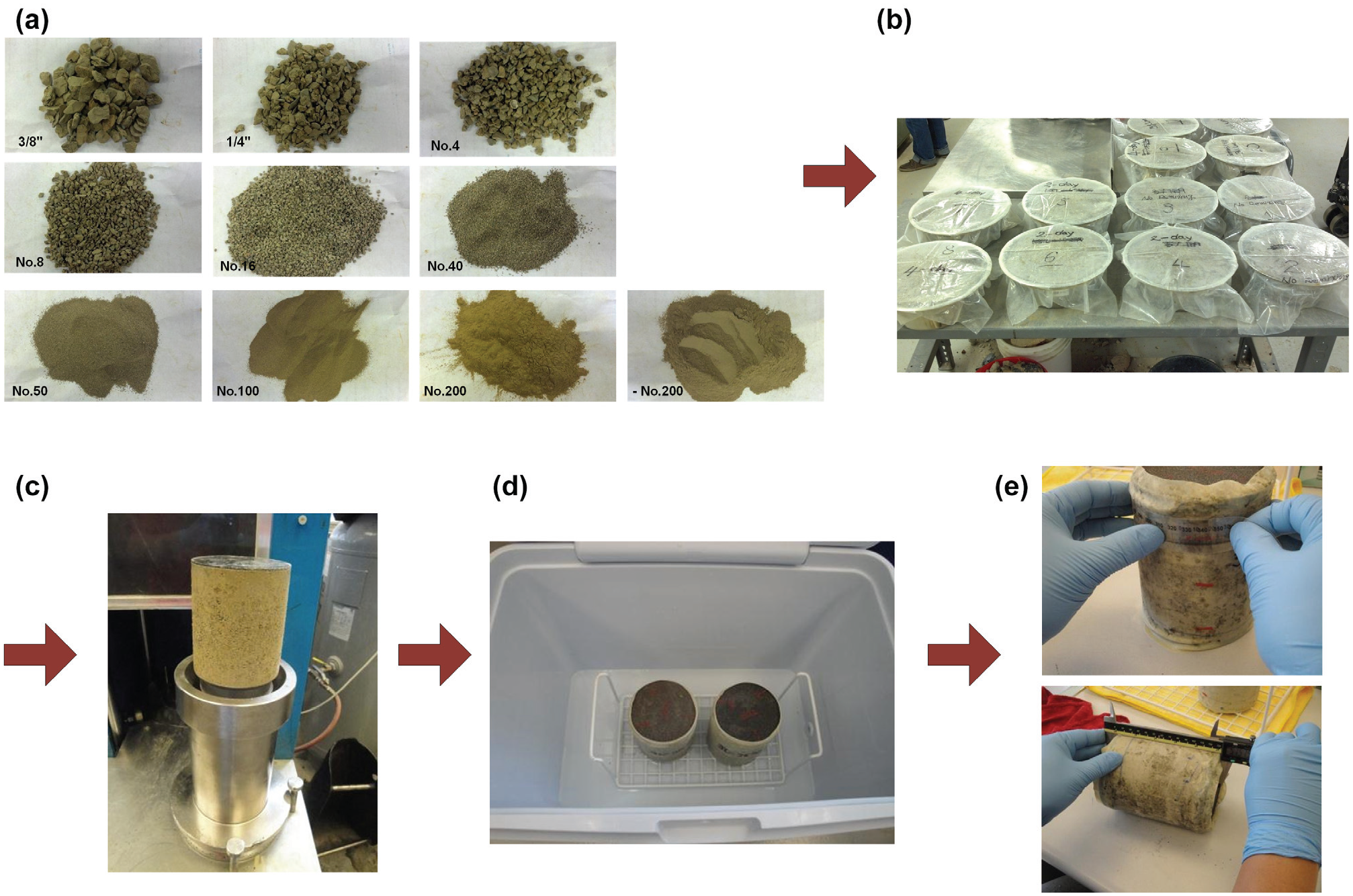
Sample preparation and 3-D volumetric swell test measurement: (a) soil sample preparation, (b) mellowing process, (c) fabrication of 3-D swell sample, (d) 3-D swell samples in a distilled water bath, and (e) 3-D swell expansion measurement.
After a certain period of the mellowing process, the mixed soil samples were compacted using a gyratory apparatus. For 3-D swelling and UCS tests, three specimens from each mixture were cast. The gyratory compaction delivers a uniform compacting pressure throughout the sample and yields a specimen free of a layer-like structure. The target density of a 3-D sample using a gyratory machine was 1,491.2 kg/m3 to achieve the required size of 3-D swell test sample. Porous stones were placed at the top and bottom of the specimens and the specimens were exposed to a capillary soak for 28 days. This provides for less biased capillary rise conditions within the sample from bottom to top under the controlled humidity and temperature box. The 3-D volumetric swelling test consists of periodic volume measurements during the soak period. Vertical and radial swells were measured three times per sample using a caliper and a Pi tape, respectively. A UCS test to calculate the residual strength was conducted at the end of the term. The material is considered stable if the volumetric expansion of the sample does not exceed 6.0% by the end of the testing period ( 19 ).
Test Results
Key Parameters Influencing Mellowing Process
The selection of an appropriate CBSM in both mellowing and soil stabilization processes depends on many factors such as soil mineralogy, soil classification, desired engineering properties, and environmental conditions. Guidelines for modification and stabilization of soils and base for use in pavement structures ( 20 ) published by TxDOT provide a good rule of thumb for selecting an initial stabilizer according to soil gradation and plasticity. If subgrade soil has more than 25% passing fine particles through No. 200 sieve (75 ≤ μm) and PI value is more than 35, one of three options for stabilizer can be used (lime, lime-cement, lime-fly ash). Therefore, lime and lime-fly ash were selected to investigate the mellowing process in this study. Moreover, TxDOT also provides guidelines for the treatment of sulfate-rich soils and bases in pavement structures ( 21 ). If sulfate concentration is less than 3,000 ppm, regular mix design and construction practices can be implemented along with the recommendation of a minimum 24 h of mellowing. For sulfate levels between 3,000 and 7,000 ppm, soil mixture containing OMC and a single application of lime will be exposed to the mellowing process until the SC is less than 3,000 ppm. After that, normal mix design procedure and construction practices can be implemented along with recording the minimum required mellowing time and satisfying project requirements. For sulfate concentrations exceeding 7,000 ppm, removal and replacement of soil or changing the pavement design are required.
As previously determined in the “Basic Soil Characterization” section, the initial average sulfate level of soil used in this research was 16,120 ppm. The individually recorded soluble SC for each soil sample at 0 days was 16,600 ppm for 6% lime, 16,520 ppm for 3% lime, 16,080 ppm for 3% lime and 3% FFA, 16,280 ppm for 3% lime and 3% lime (double mellowing), and 16,480 ppm for 3% lime and 3% FAA (double mellowing), respectively. If changing several parameters for the normal mellowing process can reduce the sulfate concentration below 3,000 ppm, it can be one of the best options to minimize the risk of sulfate heave in the subgrade stabilization. The following results indicate key parameters affecting the mellowing process.
Effect of Remixing Interval on Mellowing Process
Figure 2 illustrates the effect of remixing time on the mellowing process. All soil mixtures treated with 6% lime were remixed at zero, 1-day, 2-day, and 4-day intervals until total soluble sulfate level was below 3,000 ppm, continuing for up to 30 days. As the remixing interval decreases, the time when the SC drops to 3,000 ppm decreases. For instance, the soil mixture that was remixed every day took only 8 days to reach 3,000 ppm, while the soil mixture subject to a 2-day interval required 18 days to obtain 3,000 ppm. Furthermore, neither the soil which was remixed at a 4-day interval nor the soil which was not mixed (i.e., stayed as it was) reached 3,000 ppm within the 30 days. It should be noted that additional moisture was added to the soil mixtures during the remixing mellowing process. This means that sulfate ions in the soil become more soluble and react away as a result of more ettringite formation. To reduce the SC during the mellowing process, therefore, it is recommended to remix the soil every day. This sequence was applied to investigate the effect of the type and content of CBSM on the mellowing process.
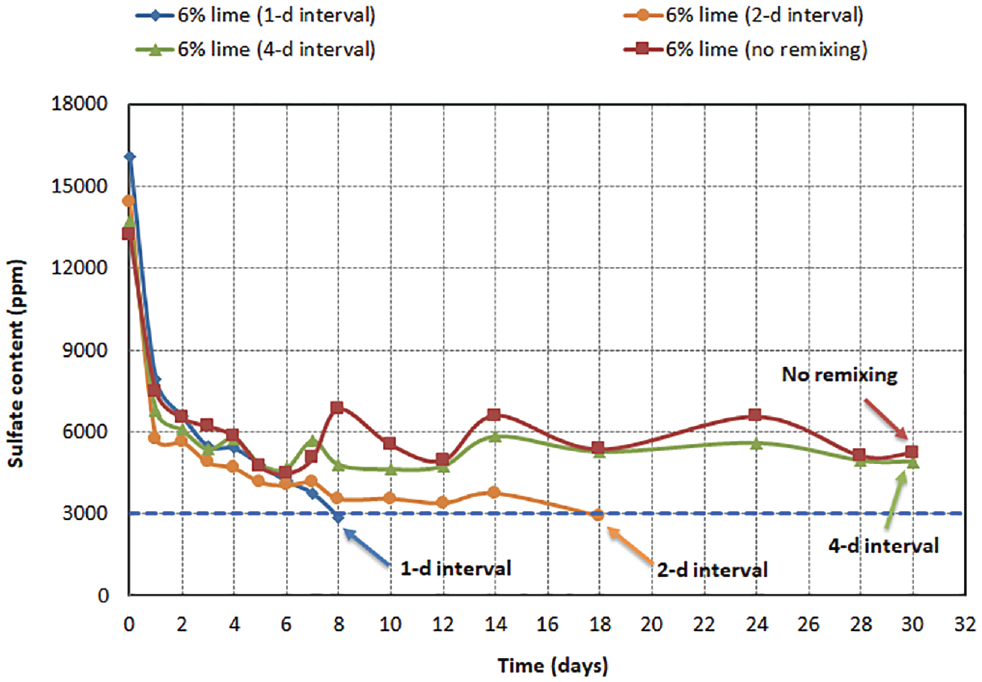
Effect of remixing intervals.
Effect of Type and Content of CBSM on Mellowing Process
As expected, the SC in the soil reduced over time as shown in Figure 3. The rate of sulfate reduction seems to be a function of applied CBSM content. For example, the sulfate concentration of soil treated with 6% lime reached 2,880 ppm at 8 days while that of soil with 3% lime was 4,040 ppm even at 20 days. Moreover, when the total soluble SC of 3% lime-treated soils reached about 5,500 ppm, the addition of an extra 3% lime or 3% FFA (called the double mellowing process) reduced the sulfate levels to 3,000 ppm at 20 days. The reduction of SC may be attributed to the formation of ettringite minerals. The anions of sulfate combine with the available alumina and calcium and then form insoluble ettringite in the soil system ( 22 ). Therefore, sulfate ions are consumed by ettringite formation.
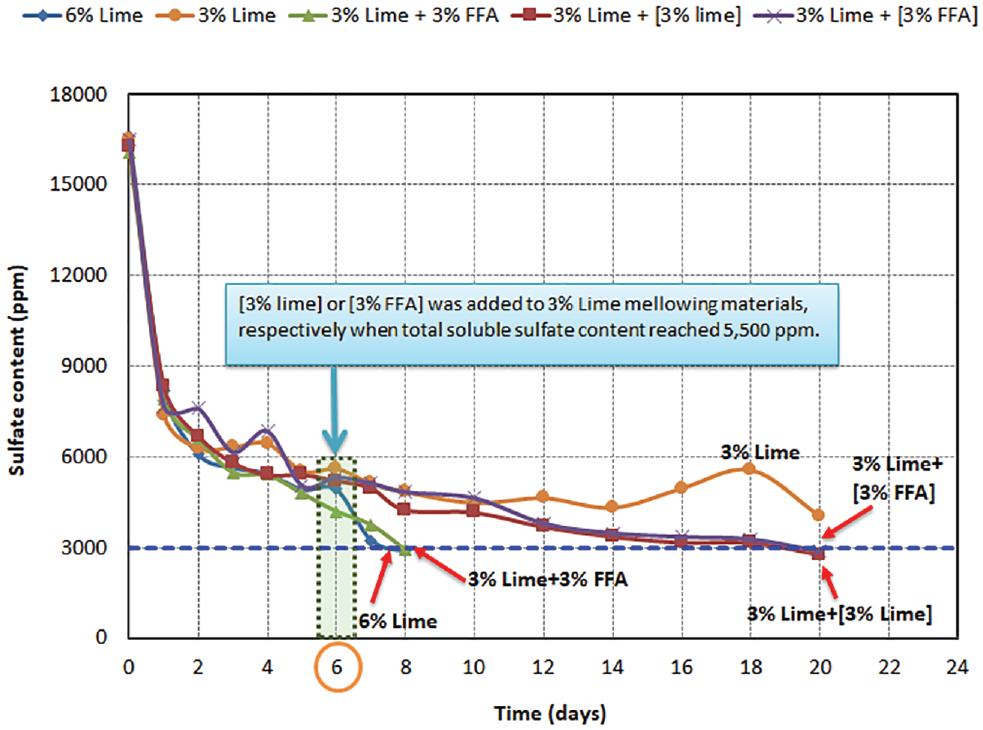
Effect of stabilizer type and content on reducing sulfate content.
Figure 3 also presents the effect of CBSM types on the mellowing process. The reduction in sulfate concentration of soil treated with 6% lime is slightly larger than that of soil with the combined 3% lime and 3% FFA. But, the overall trend curve for the reduction of SC is almost the same and the difference in SC between 6% lime and [3% lime and +3% FFA] soil mixtures is minimal—2,880 ppm and 2,920 ppm, respectively. Despite the small difference in SC at each day, the double mellowed soil samples have the same trend regardless of the addition of 3% FFA and 3% lime to the initial 3% lime-treated soil. For example, the SC of the soil mixture having the 3% lime initially and additional 3% lime at 6 days was 2,760 ppm at 20 days, while that of the soil mixture having an additional 3% FFA at 6 days was 2,880 ppm.
Effect of Temperature on Mellowing Process
The effect of temperature on soluble SC during the mellowing process is presented in Figure 4. As expected, increasing mellowing temperature leads to decreasing mellowing time for the sample to reach 3,000 ppm. In fact, the main source of sulfate ions in soils used in this study is gypsum (CaSO4·2H2O). Gypsum is soluble in water and its solubility depends on several factors, including grain size of gypsum, temperature, pH, the concentration of complexing ligands, and the ionic strength of the solution. Most minerals are more soluble at higher temperatures. James ( 23 ) reported that increasing temperature from 10°C to 43°C increased the solubility of gypsum by 20%. Blount and Dickson ( 24 ) and Van Driessche et al. ( 25 ) also reported that the solubility of gypsum in water increased until the temperature increased up to 58°C, but beyond that temperature, the solubility of gypsum started to drop.
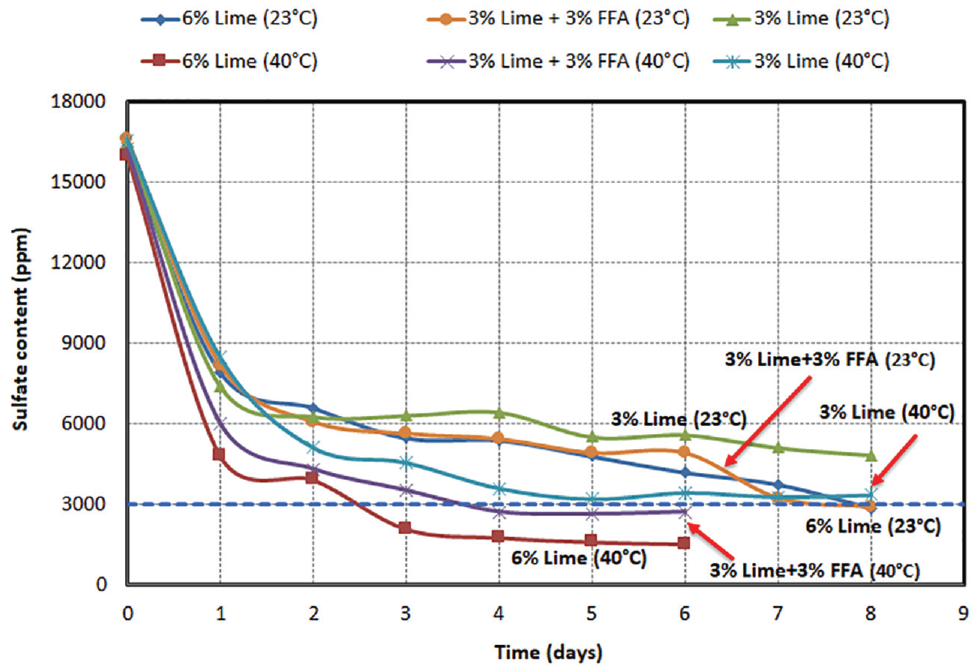
Effect of temperature.
Furthermore, the addition of hydrated lime, Ca(OH)2, to soil neutralizes the acid, which turns the H+ into water molecules, thereby decreasing their concentration in the process. This, therefore, increases the pH of the soil eventually. Moreover, another primary cause of the increase in pH is the release of OH- ions from Ca(OH)2. The increased pH in the soil mixture results in increasing the solubility of gypsum slightly because of the increase in concentration of CaOH− and HSO4− complexes ( 26 ). In other words, as the mellowing temperature increases along with the addition of lime, the solubility of sulfate ions in the soil increases. The more available sulfate ions, the more ettringite forms. Therefore, within a short period, the SC in soils reaches 3,000 ppm. However, the formation of ettringite in a stabilized soil system including the temperature effect is composed of a complex set of reactions. In this study, only two temperature ranges (23°C and 40°C) were examined. Therefore, more research is needed to investigate the influence of more varied temperatures on the mellowing process.
3-D Swelling Test
A comparison of volumetric expansion development over time for soil mixtures with three different 3-D swelling test conditions is presented in Figure 5. The first group samples (control sample and soil mixture containing 6% lime without mellowing process) were directly exposed to the 3-D swelling test. The second group consists of soil mixtures compacted after finishing a single or double mellowing process at room temperature. The last group indicates soil mixtures that were mixed with additional CBSMs after completing a single or double mellowing process.
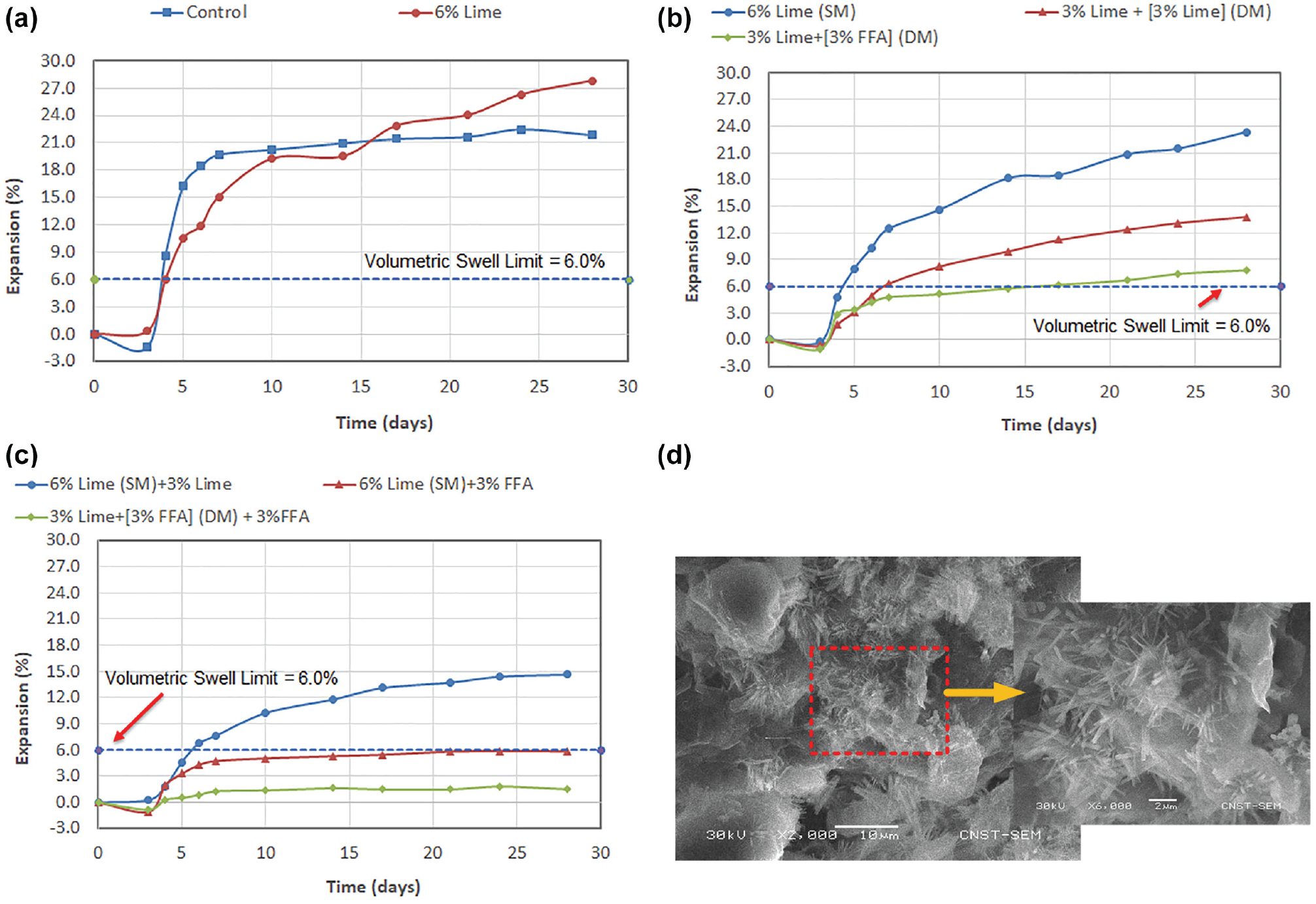
Volumetric expansion development and scanning electron microscope image of soil mixtures, showing (a) group 1 soil mixtures, (b) group 2 soil mixtures, (c) group 3 soil mixtures, and (d) ettringite crystals in soil treated with 6% lime.
At an early age, all soil mixtures showed a decreasing volumetric swelling trend during the first 3 days, which can be attributed to the drying shrinkage of the mixtures caused by the consolidation and hydration of lime and fly ash. After that, the expansion for group 1 soil mixtures rapidly increased up to 10 days, and then, at later ages, the rate of increase became slow. The 6% lime-treated mixture has a higher expansion value than the control mixture after 15 days. This is probably because of the formation of ettringite minerals that is initiated by the addition of lime. Ettringite crystals in soil treated with 6% lime are shown in Figure 5d.
As presented in Figure 5b, the expansion of group 2 soil mixtures except for the fly-ash-treated soil sample steadily increased over time regardless of single and double mellowing processes. For lime-treated mixtures, double mellowing produced lower expansion than the single mellowing. The lowest expansion in the group 2 mixtures was observed in the double mellowed and fly-ash-treated mixture. However, all mixtures in group 2 exceeded the 6.0% volumetric swell criterion corresponding to potential swelling damage.
Figure 5c shows the expansion characteristics of group 3 mixtures. Mixtures that were treated with an additional 3% fly ash after a single or double mellowing process demonstrated good performance characteristics with the corresponding average volumetric expansions well under 6.0%. The {6% lime (SM) + [3% FFA]} mixture had relatively high average expansion of 5.8%, whereas the {3% lime + [3% FFA] (DM) + 3% FAA} mixture stayed below an average of 1.5%. However, regardless of a single or double mellowing procedure, the soil treatment of an additional 3% lime did not work for reducing expansion because of the ettringite formation. For instance, the {6% lime (SM) + 3% lime} mixture exhibited higher average expansion of 14.6%. The lower expansion behavior in the mixtures containing additional fly ash may be attributed to the pozzolanic reaction between free calcium, amorphous silica, and alumina which are provided by both soil and fly ash. The calcium silicate hydrate (C-S-H) or calcium silicate aluminate hydrate (C-S-A-H) gel obtained from hydration and pozzolanic reaction can bind soil particles together, therefore reducing the expansion of soil mixture ( 27 , 28 ).
Moisture Content and Unconfined Compressive Strength before and after 3-D Swelling Test
Table 3 presents the average MC and UCS of the mixtures before and after the 3-D swelling test. The soil mixture containing 6% lime without the mellowing process has the highest UCS before the 3-D swelling test but has only 11.6% of retained UCS after the 3-D swelling test. This is the second-lowest retained strength. This is probably a result of it losing bonding strength between soil particles. It should be noted that the 6% lime mixture has high MC after the swelling test.
Moisture and Unconfined Compressive Strength (UCS) Results in 3-D Swelling Test
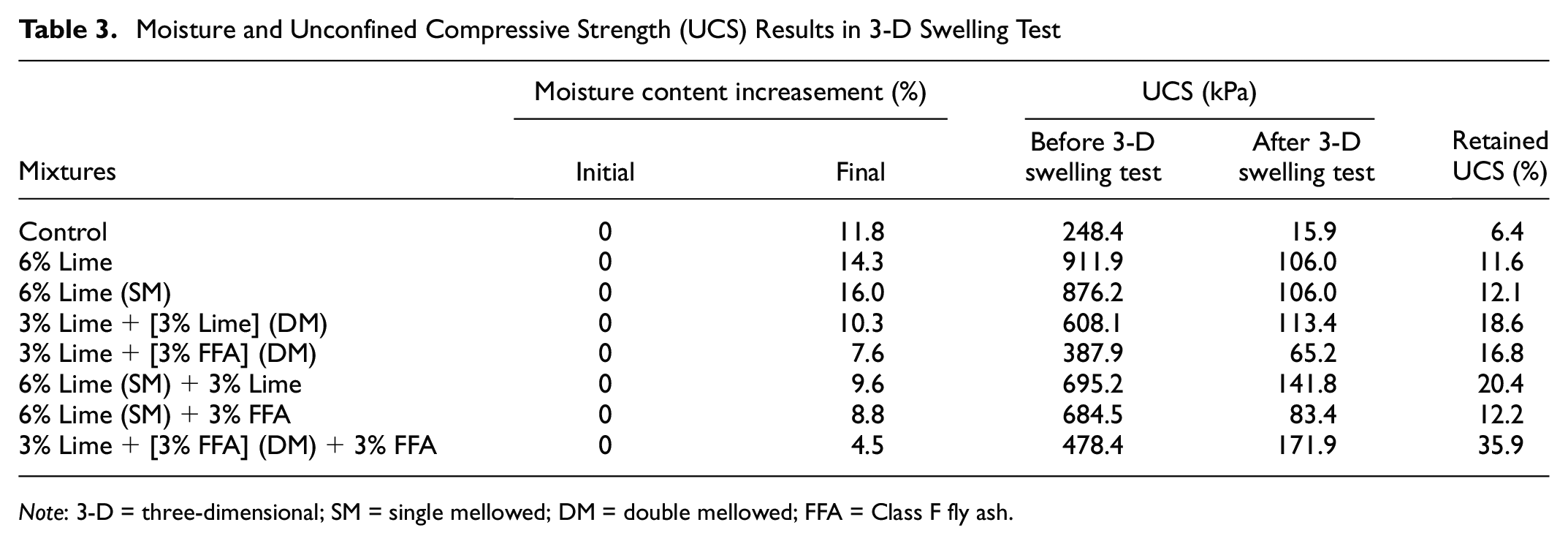
Note: 3-D = three-dimensional; SM = single mellowed; DM = double mellowed; FFA = Class F fly ash.
On the other hand, soil mixtures treated with fly ash have lower MC and lower initial UCS (before the 3-D swelling test), but have relatively higher retained UCS. In addition, mixtures that were double mellowed seem to be less sensitive to water than a single mellowed mixture regardless of the type of CBSM. Compared with the double mellowed mixtures {3% Lime + [3% Lime] (DM)} and {3% Lime + [3% FFA] (DM)}, for example, the {6% Lime (SM)} mixture had higher MC, higher initial UCS and lower retained UCS.
Discussion
The mellowing process in soil stabilization is a temporary construction process whereby the mixed, treated material is sealed for some duration of time to allow initial reactions to occur between the treatment material and the soil containing sulfate- and organic-bearing materials. During the mellowing process, soil properties can be modified and improved by reducing the PI in soil and reacting away sulfate. As previously stated, the normal recommendation for soils with SC higher than 7,000 ppm is to remove and replace soils. This way, however, is very costly because very high SC is easily found in many areas in Texas. Therefore, if other options to reduce the SC to less than 3,000 ppm and satisfy volumetric swelling limitation and appropriate strength requirements are suggested, they can be a cost-effective way. Experimental results produced by this research reveal that many factors affect the mellowing process for high-sulfate-bearing soil. Basically, a single mellowing with 6% lime treatment reduces SC from 16,000 ppm to below 3,000 ppm in a short time. Daily remixing along with the addition of moisture under a high-temperature condition also accelerate the rate of drop in the total soluble SC. After mellowing, the compacted sample needs additional lime and/or fly ash to reduce swelling more and achieve enough strength.
Based on findings in this study, the following treatment strategy protocol is recommended to control the swelling potential in high-sulfate-bearing soils for a soil stabilization construction process as shown in Figure 6. The first step in the protocol is to collect soil samples. The TxDOT guideline ( 14 ) recommends that soil samples should be collected at least from the top 10 in. (25.4 cm) of subgrade. After collecting soil samples, basic soil characterization tests should be conducted. These include MC, sieve analysis, Atterberg limits, soil classification, OMC, SC, organic content, and Eades and Grimes test. In particular, the Eades and Grimes test is used to determine optimum lime content for the mellowing process. If SC is greater than 3,000 ppm, a strategy to reduce SC will be implemented. A single mellowing process is applied with OMC and lime content that is obtained from the basic soil characterization step. During the mellowing process, water evaporation typically occurs because of the hydration of lime. Thus, water should be added to the soil mixture to keep it fluffed up. It is recommended to remix the mixture each day for at least 7 days. Because the mellowing process is accelerated under high-temperature conditions, the mellowing process would be better conducted during the summer season. After 7-day mellowing, the SC of the mixture should be determined. If the SC still exceeds 3,000 ppm, the mellowing process will be continued. If the SC is less than 3,000 ppm, a normal mix design procedure will be applied. When the mellowing process is completed, the new OMC based on a moisture–density relationship is determined in the normal mix design process. After that, it is recommended to add CBSMs such as fly ash and a combination of fly ash and lime to the mixture to prevent sulfate-induced heaving and obtain proper strength. Then, after applying a minimum 1-day mellowing, the mixture will be compacted. Finally, it will be verified that the treated, mellowed mixture meets strength and swelling limits.
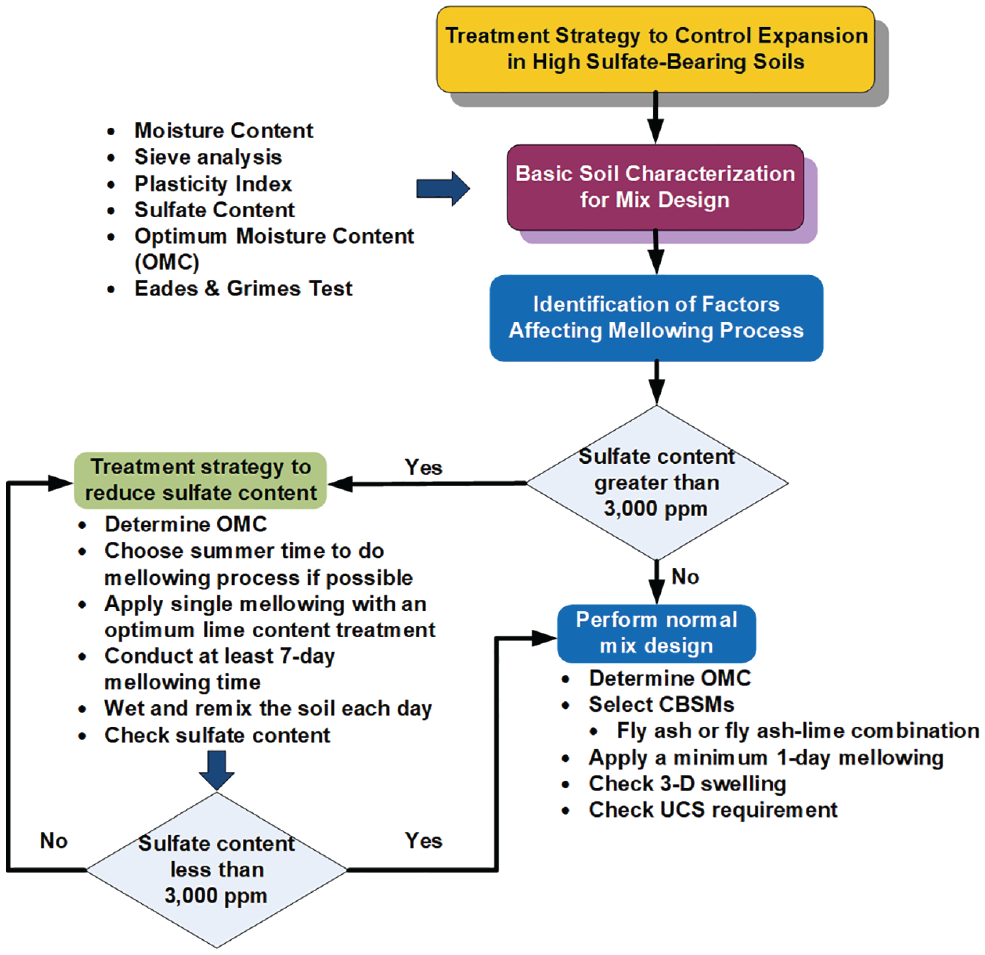
Treatment strategy to control expansion in high-sulfate-bearing soils.
Conclusions
The main purpose of this study was to identify key parameters influencing the mellowing process to minimize sulfate-induced damage in high-sulfate-bearing soil. The following conclusions can be made based on the results:
A single mellowing with 6% lime treatment reduced SC below 3,000 ppm at 7 days, at which point it is possible to apply a traditional treatment of sulfate-bearing soil having a minimum 24 h of mellowing.
Daily remixing along with adding moisture helped reduce SC easily and rapidly.
The rate of drop in the total soluble SC was accelerated at higher temperatures.
After mellowing, the compacted sample without additional lime and/or fly ash did not have either a reduction of sulfate-induced expansion within the 6% swelling limit or enough UCS.
The double mellowed mixtures containing additional fly ash were less moisture sensitive and had a higher retained strength.
To maximize the mellowing process result to control the expansion in high-sulfate-bearing soil, it is recommended that practicing engineers use a combination of lime and fly ash; apply daily remixing, maintaining OMC, for at least 7 days; and apply the mellowing process under a high-temperature condition.
Footnotes
Acknowledgements
The authors acknowledge Zimmy Si of TxDOT for helping with the studies. The authors thank Texas A&M Transportation Institute for the support and use of its infrastructure.
Author Contributions
The authors confirm contribution to the paper as follows: study conception and design: CSS, TS; data collection: CSS, WB; analysis and interpretation of results: CSS, TS, DZ; draft manuscript preparation: CSS, TS, JK. All authors reviewed the results and approved the final version of the manuscript.
Declaration of Conflicting Interests
The author(s) declared no potential conflicts of interest with respect to the research, authorship, and/or publication of this article.
Funding
The author(s) disclosed receipt of the following financial support for the research, authorship, and/or publication of this article: The authors thank the Texas Department of Transportation (TxDOT) for funding the project. This research was also supported by the Nazarbayev University Research Fund under grant # 021220FD1351.
