




Abstract
In the bid to stay competitive, online shopping platforms often offer a variety of shipping options to meet the preferences of consumers. While faster delivery might be desirable for consumers, this may be detrimental to the environment. Limited studies have evaluated the comparative environmental impact of different shipping options offered by e-commerce platforms. To fill this gap, this study aims to conduct a comparative carbon footprint assessment of the shipping options available in Taobao, a highly popular Chinese online shopping website. The case of cross-border e-commerce is evaluated, where goods are ordered from China to Singapore as the shipment destination. Thereafter, a shipping choice preference survey is conducted to evaluate the impact of carbon labelling on consumers’ shipping preferences. From the perspective of the consumer, when offered a variety of shipping options to choose from, there is always a trade-off between the cost and the speed of delivery. Additional information on the carbon impact of different options could influence consumers’ decision-making. The shipping options from Taobao are referenced to determine the cost, speed, and carbon emission values for the scenarios presented in the survey. Out of 188 survey respondents, slightly more than half (55%) were found to be willing to compromise the speed of delivery for a less carbon-intensive alternative. Given this finding, the study advocates for carbon labelling to be introduced for e-commerce shipping options.
Keywords
The e-commerce boom has brought significant changes to the global supply chain network, and online shopping platforms are constantly striving to improve their operations and provide higher quality service for their customers. To satisfy consumers’ desire for faster delivery services, these platforms (e.g., Amazon, AliExpress, Taobao) often offer multiple delivery or shipping options to choose from in a bid to stay relevant in a hyper-competitive market environment. Since these shipping options are typically priced according to the quality of delivery service that the platform can provide, the consumer’s decision is dependent on the perceived trade-off between delivery speed and shipping charges ( 1 ). Whether the customer would opt for the faster delivery option would depend on their willingness to pay for the extra shipping fee ( 2 ).
However, offering the consumer the choice to opt for faster and more convenient shipping alternatives may promote unsustainable consumption. In a study conducted by Dotcom Distribution, despite not having an immediate need for the items, 47% of online shoppers were willing to pay more for the sake of receiving their items sooner ( 3 ). As more people seek faster delivery, the delivery lead time for logistics companies shortens, resulting in more frequent and carbon-intensive delivery trips ( 4 ). This situation could be worsened by the surge in popularity for cross-border e-commerce, since international freight travel over longer hauling distances generates considerable carbon emissions ( 5 ). This lifestyle habit and desire for more instant gratification has a marked implication on the environment, of which consumers may be unaware.
This research therefore aims to examine the following research questions: (1) What is the estimated carbon footprint of various cross-border e-commerce shipping options? (2) Will carbon labelling have an influence over consumers’ cross-border shipping preferences? For this purpose, the relative carbon emissions of shipping options on Taobao (a popular e-commerce platform for cross-border purchases in Asia) will be assessed. Based on the estimated emissions, a stated choice (SC) survey is then designed to understand how online shoppers would react to carbon labelling.
Since consumers who are interested in sustainability have been found to be strongly influenced by the labelling of sustainability information in products, the hypothesis is that, apart from informing consumers of the delivery time and the shipping cost, it can be environmentally beneficial if consumers are also informed of the carbon impact of different shipping options to aid in their decision-making process ( 6 ).
The remainder of this paper is organized as follows: The next section reviews the relevant literature. In the following section the carbon footprints of cross-border shipping options are assessed. Finally, the impact of carbon labelling on consumers’ shipping preferences is examined.
Literature Review and Approach
The emergence of digital payment methods and e-commerce platforms or marketplaces provide consumers with the means to purchase from both local and international sellers. This has accelerated the development of both domestic and cross-border delivery operations worldwide. “Domestic deliveries” or “domestic shipping” refer to the delivery of the items sourced from within the country’s border. This differs from “cross-border deliveries,” which refers to the delivery of items imported from other countries and jurisdictions. Cross-border operations are often deemed to be more complicated and less efficient as compared with their domestic counterparts ( 7 ). Consumers who have avoided cross-border purchases cite concerns over longer delivery time and higher associated shipping cost ( 8 ). Despite the unfavorable delivery attributes, cross-border purchases have continued to gain massive popularity in recent years. Sales generated from cross-border purchases contributed to 20% of global e-commerce spending, which amounted to US$404 billion in 2018 ( 9 , 10 ). According to a PFS e-commerce white paper, 67% of people who purchase items online from overseas have done so because the prices for the items are lower, even after accounting for the additional shipping and customs fees ( 8 ). As cross-border e-commerce demand surges, more research is required to understand the environmental implications.
There are currently few studies on the comparative environmental impacts of different shipping options offered by e-commerce platforms. The existing literature has focused on the carbon implications of short-haul domestic deliveries and has mainly sought to identify more sustainable alternatives that can reduce the impact on the environment (4, 11–14). In comparison with domestic deliveries, cross-border deliveries are more carbon-intensive because of their longer and more complex supply chain operation ( 15 ). Given the surge in cross-border trading, the International Transport Forum has estimated that the average hauling distance would increase by 12% from 2010 to 2050, leading to growth in carbon emissions from international trade-related freight transport by 290% ( 5 ). Despite the detrimental environmental impact associated with cross-border shipping, this topic is largely under-researched. A review of the literature revealed that many studies have only considered a single stage of the cross-border operations which is an inaccurate representation of the impact of the entire supply chain network. This paper aims to fill this gap by focusing on the carbon assessment of different shipping options for cross-border e-commerce purchases. The outcome of this study can be valuable in empowering consumers to make more informed decisions about their online purchases.
However, as compared with the scrutiny when examining the environmental implications of common consumer products, there has not been as much attention given to the shipping options offered on e-commerce platforms. Even if consumers were to be provided with additional information about the carbon footprint of shipping alternatives, it remains uncertain whether this will be considered. Shipping cost and delivery speed may still take precedence in their decision-making. This led to the question about the value and attention paid toward labelling of carbon information on shipping options. Brunetti et al. conducted a survey on the perception of e-commerce and its impact on the environment ( 16 ). It was observed that 64% of the 215 millennials surveyed indicated a willingness to wait for an order with greener logistics operations, while only 25% of them indicated willingness to pay for greener shipping. However, the research was acknowledged to still be exploratory with a limited survey sample. Further validation will be required to understand the impact of carbon labelling on consumers’ shipping preferences.
To study consumer preference, stated preference surveys or SC experiments are regularly applied across various disciplines and, among which, transportation is one of the fields with the most established research on choice analysis ( 17 ). With the rising concerns over the environmental impact of transportation, several studies have incorporated carbon footprint in their experimental designs ( 18 – 20 ). For instance, Amenta and Sanguinetti applied a stated preference survey presenting different hypothetical flight scenarios with different prices and carbon dioxide emission levels ( 21 ). Their study reported a potential annual savings of 79,000 kg CO2e (carbon dioxide equivalent) if carbon labelling were to be made available on travel booking websites. This paper will adapt a similar methodology in the investigation of consumers’ perceptions toward the carbon labelling of cross-border shipping options. The SC experiment will be implemented to validate if the underlying preference of consumers would change with the inclusion of carbon labelling. In addition to estimated carbon emissions, three critical attributes of e-commerce shipping would also be incorporated in the design of the SC experiment: (a) shipping cost, (b) delivery time, (c) order value. Their relevance to the study on shipping preferences are discussed below.
Nguyen et al. found that consumers’ preferences are predominantly driven by the cost of shipping, followed by delivery speed, and subsequently by other non-cost attributes ( 22 ). This is supported by other studies which similarly concluded that the shipping cost is the most important decision variable for consumers’ shipping choice ( 23 – 25 ).
Previous studies have found that delivery time has a significant impact on customer satisfaction ( 26 ). Parcel Perform and iPrice Group found a 10%–15% decline in the satisfaction rating of the customer with each unit increase in the delivery time bracket (e.g., deliver within 3 h, deliver within 1 day, deliver within 3 days) ( 27 ). Their finding was supported by a study conducted by Unni et al. where customers who indicated that they are satisfied with the delivery time are 1.95 times more likely to also be satisfied with the e-retailer ( 28 ). Just as satisfaction would increase with faster delivery, the converse is true. Al Karim reveals that delay in delivery time is one of the main inhibitors among e-commerce shoppers ( 29 ).
Several studies have gathered that order value is capable of influencing purchasing behavior to a great extent. Order value refers to the amount of money (excluding shipping cost) that the consumer spends in each online transaction. For instance, Koukova et al. found that people can have different perceptions of flat-rate and threshold-based free shipping depending on whether the order value is higher or lower ( 25 ). In another study by Lewis et al., the order value was found to be lower for cases where unconditional free shipping is offered ( 30 ).
Apart from cost, speed, and order value, other potential delivery attributes that were considered in previous studies include the availability of order tracking services, the ability to choose a carrier (logistics provider), delivery date, and delivery time slot ( 22 , 24 , 31 ). These are excluded from this study since not all options are available on every e-commerce platform.
Case Study
The first objective is to conduct a comparative assessment of the different e-commerce shipping options for cross-border purchases, evaluating their carbon footprint, delivery time, and shipping cost. This assessment will focus primarily on the carbon impact created by the consumers as a result of their shipping decisions. The online shopping platform, Taobao (https://world.taobao.com), will be analyzed as a representation of a typical online platform.
Taobao specializes in business-to-consumer (B2C) and consumer-to-consumer (C2C) retailing where the businesses and the individual merchants are based in China. The choice was made to focus on Taobao since it has a dominant influence in the Asian e-commerce marketplace and is ranked as one of the top ten e-commerce sites in the world ( 32 ). As a subsidiary of Alibaba, Taobao operates in over 200 countries and has more than a billion products listed on the website ( 33 ). Taobao’s customers are given options to customize their deliveries for every stage of the logistic operations and the following shipment-related options are provided:
Shipping the parcel from China to the destination country via air or sea freight mode
After the parcel reaches the destination country: delivering the parcel directly to the receiver’s address—for example, home address (home)—or to a collection point (CP). (A CP is a pre-arranged destination that the consumer can opt for to temporarily store their items before collection.)
If multiple orders from different sellers are made in the same transaction, whether the consumer would want the orders to be consolidated into a single parcel before being shipped to the destination country, or not. (If a customer chooses to ship their items via sea freight, the option to ship the items to a CP is not available.)
With these different options available to consumers, the onus is on them to make informed choices at the point of purchase. This case study into Taobao undertakes an analysis into the parcel delivery operations from China to Singapore. E-commerce transactions in Singapore are the topic of interest, since Southeast Asia has been, and will likely continue to be, one of the world’s fastest-growing regions for e-commerce. Southeast Asia’s Internet economy reached US$100 billion in 2019, tripling in size over the previous 4 years ( 34 ). As emphasized in the introduction, cross-border e-commerce transactions deserve focus since they make up more than 40% of the total e-commerce market in this region. Within Singapore, 55% of e-commerce sales arise from cross-border purchases ( 35 ). Given the prevalence of e-commerce and the sheer volume of cross-border transactions, the carbon assessment could provide meaningful insights into the carbon intensity of such purchases.
Carbon Footprint Assessment
Methodology
In a multiple-order transaction, the logistics process required to fulfill the online orders is broken down into different stages to facilitate the assessment of the carbon footprint, cost, and delivery time for each shipping option (see Figure 1). The study scope will include the following stages:
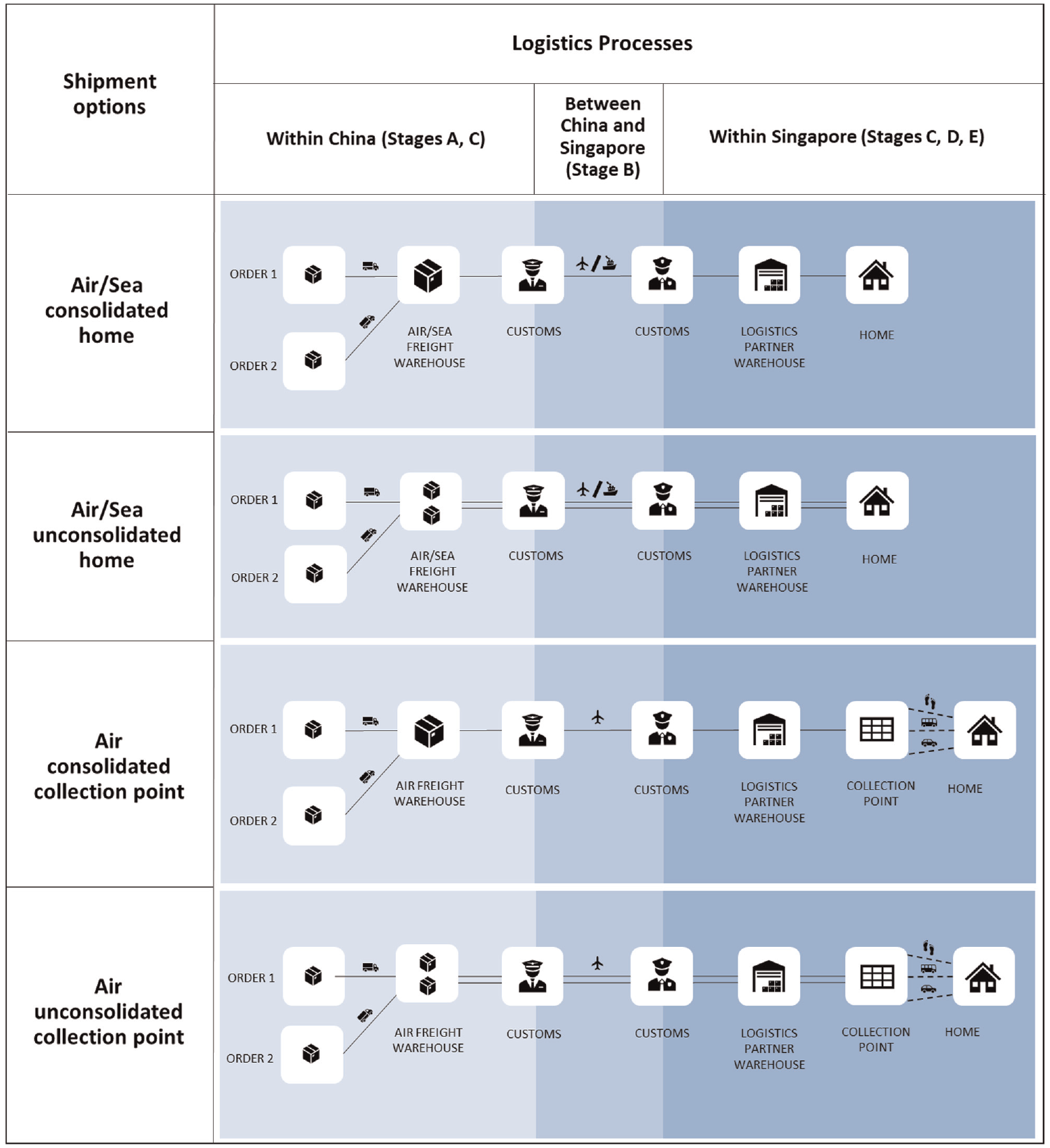
Cross-border logistics process for each shipping option.
For freight transport segments of the logistics process (stages A, B, D), the carbon footprint in relation to carbon dioxide-equivalent emissions (kg CO2e) will be estimated in accordance with the activity-based approach proposed in the ECTA guidelines ( 36 ). These are based on the mode of transportation, the distance traveled, and the weight of the items purchased:

The supplier locations are randomly selected from a list of 24 Chinese cities which have been demarcated as the New Cross-Border E-Commerce Zones (Figure 2) ( 37 ). The carbon emission factors for the different modes of transportation listed in Table 1 are obtained from UK BEIS and MEWR ( 38 , 39 ).
Carbon Emission Factors for Various Transport Modes

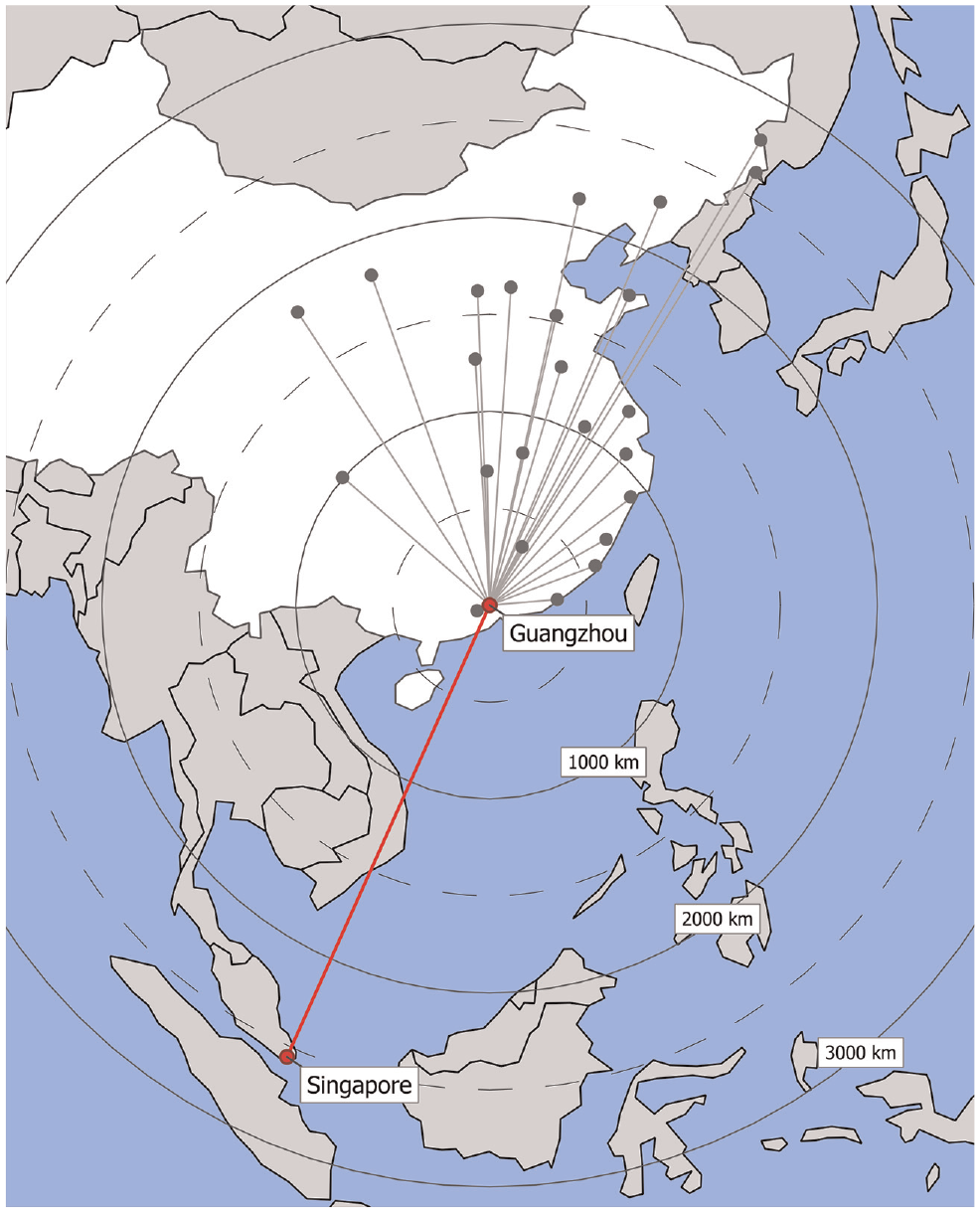
Map showing Singapore and Guangzhou, the main departure city from China, and assumed supplier locations in China as grey dots.
For the last-mile delivery to a consumer’s home or CP (stages D and E), conventional diesel delivery vans are assumed to be used for transporting parcels from the warehouses to their destinations. This research utilizes the carbon audit approach employed by Edward et al., where carbon emissions for last-mile deliveries are calculated on a per drop basis ( 11 ). “Average emissions per drop” refers to the average carbon emissions sustained by the carrier per parcel delivered. For doorstep deliveries, this study will account for potential delivery failures which result in a need for repeat and multiple delivery attempts. The failure rates for up to three delivery attempts, the average distance to CPs, and the emissions per parcel delivered are estimated using data obtained from an e-commerce carrier in Singapore for the period from February to April 2019. Failure rates for the first three delivery attempts are estimated to be 5.9%, 26.2%, and 47.1%, respectively. The carbon emissions are subsequently computed for parcels delivered to the respective destinations, including the impact of passenger travel (stage E), if the parcel is destined to a CP.
The carbon emissions for warehouse operations (stage C) is also considered in this study. Since the size of e-commerce parcels is mostly small, it is assumed that the parcel will not exceed the dimensions of 42 x 37 x 61 cm, which is the size restriction for a parcel to be delivered to a CP in Singapore ( 40 ). The warehouse emission factor per parcel per day is estimated to be 0.026 kg CO2e/parcel-day after accounting for this parcel size restriction ( 41 ).
Shipping costs are estimated based on Taobao’s published shipping rates. The estimated delivery time in number of days between placing the order and parcel arrival will be estimated based on observations of transactions made on Taobao.
Results
The impact of different shipping options was compared for various scenarios of online orders placed (Table 2). Scenarios include the placement of single (one) and multiple (two) orders, which represent the average number of e-commerce orders observed in Asia per shopper, with the possibility of the latter being consolidated ( 42 ). Each scenario results in a single parcel being delivered to the receiver.
Scenarios of Shipping-Related Options Selected on Taobao and the Estimated Impacts


Note: “na” = not applicable.
According to International Post Corporation (IPC) research on cross-border e-commerce deliveries, 63% of the cross-border parcels were found to weigh between 0.2 kg and 2 kg ( 40 ). The scenarios were thus designed with the assumption that the weight of each order is 1 kg. For shipments waiting for consolidation, it is expected to add one more day to the warehouse operation. For a parcel shipped via sea freight, the parcel is expected to arrive in Singapore customs in 4 to 7 days; via air freight, the parcel is expected to arrive in a single day. For a parcel arriving at the Singapore warehouse, it is expected to be delivered by the next day, which is based on the operating procedures of a popular local e-commerce carrier.
The “sea-home” shipment option is found to be the least carbon-intensive option for a single-order scenario, while the “sea-consolidated-home” shipment option is the least impactful option for a multiple-order scenario. The associated carbon emissions are estimated to be 0.67 kg CO2e and 1.19 kg CO2e, respectively. In general, shipment consolidation, slower freight transport mode (sea versus air), and cleaner passenger transport mode (walk versus car) can reduce emissions. From the carbon footprint breakdown in Figure 3 (stages A–E), it is observed that carbon emissions are most sensitive to the choice of sea or air shipment for cross-border transport (stage B). The emissions generated from shipment via air are found to be 65 times greater than the emissions from sea shipping.
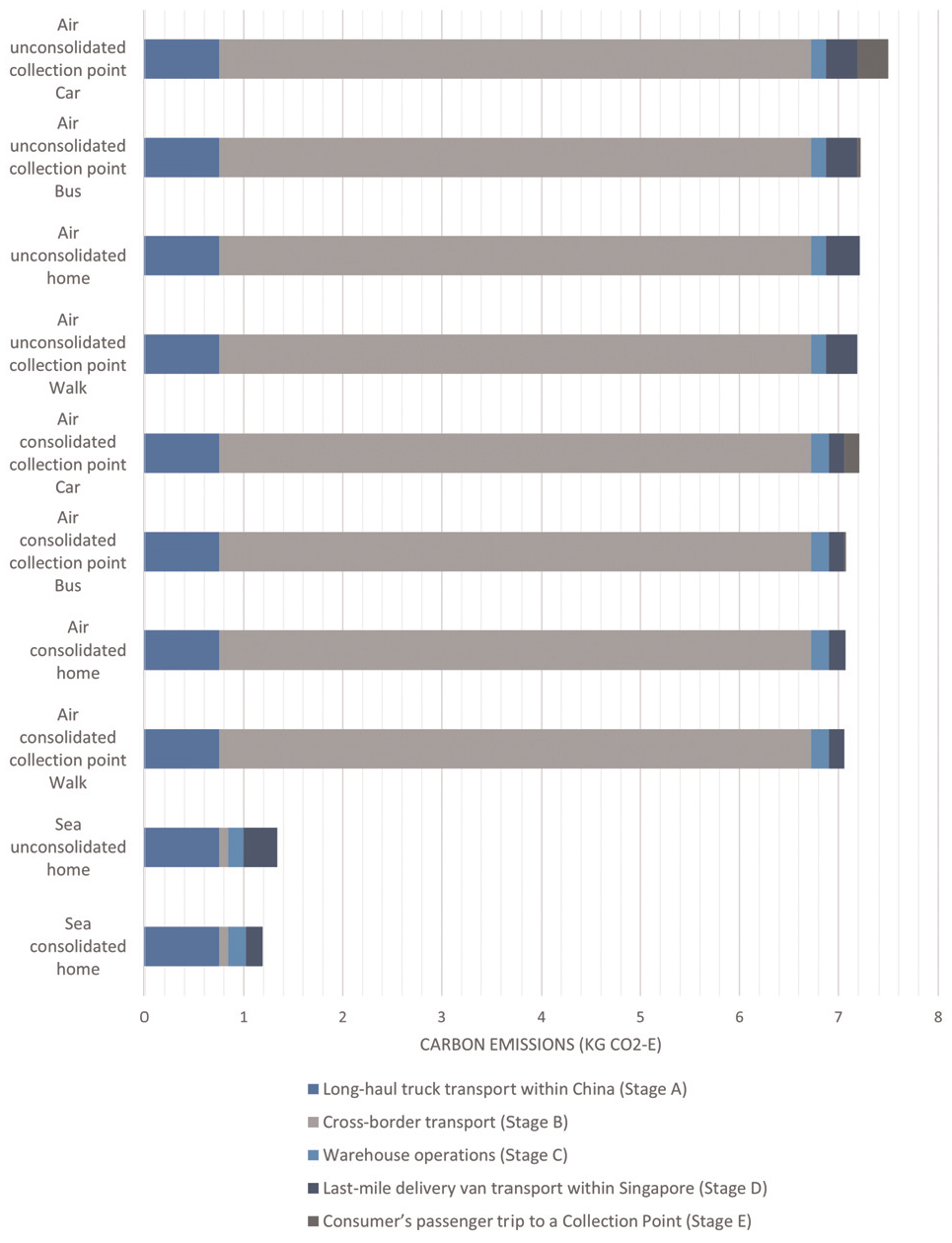
Carbon footprint compared for different shipment options for the two-order scenario.
By comparing the delivery time with the associated carbon footprint, it can be established that the least carbon-intensive shipping option is both the slowest and the cheapest option. If consumers do not have an immediate need for the items purchased, they can reduce carbon emissions associated with the delivery by at least 81% by opting for sea instead of air freight. This switch would entail an additional waiting time of around +5 days (50% increase in waiting time).
Examining the carbon footprint breakdown for last-mile delivery (stages D and E), it is found that the overall emissions generated for home delivery are greater than delivery to a CP by only 0.012 kg CO2e (Figure 4). This small difference is a result of the low first-attempt delivery failure rate. The emissions sustained for traveling by bus to the CP was also found to be negligible (0.016 kg CO2e) because of the low public bus emission factor estimated for Singapore.
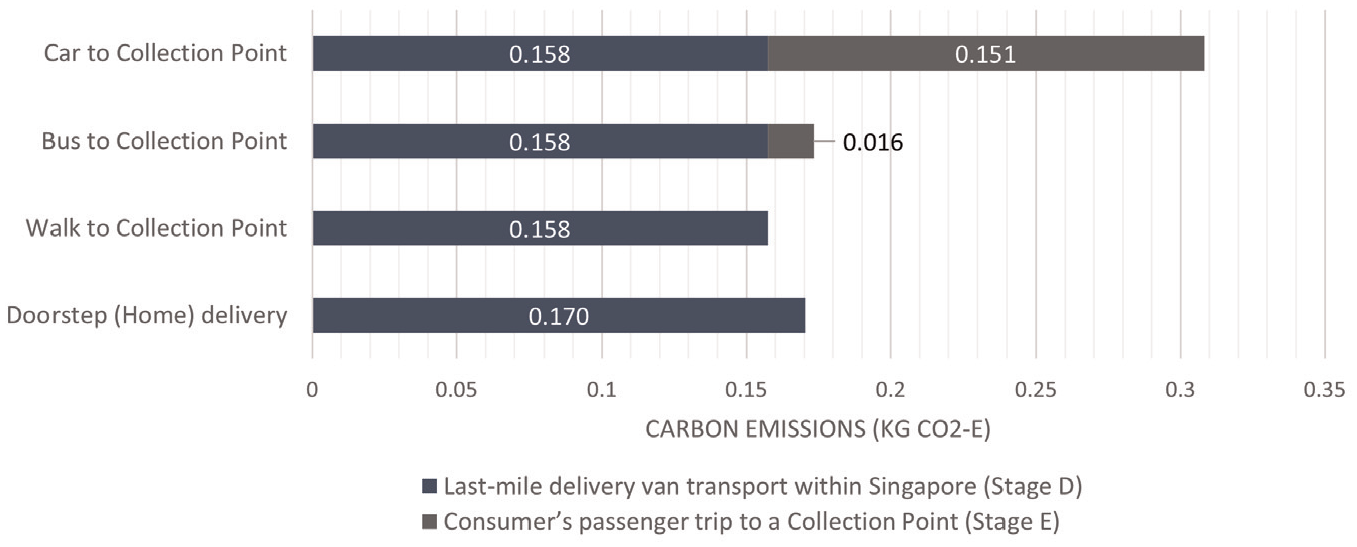
Carbon emissions associated with last-mile delivery per parcel.
Shipping Choice Experiment
Methodology
The previous section has revealed the relative carbon emissions of alternative shipping options on a popular e-commerce platform for cross-border purchases in a region experiencing dramatic growth in the Internet economy. If such information is made more readily available, consumers can potentially make more-informed choices, and consider the environmental implications more carefully. To validate this hypothesis, a shipping choice survey is conducted to investigate consumers’ willingness to wait for their orders, as well as consumers’ willingness to pay more for a less carbon-intensive option. The choice experiment will examine how consumers would trade-off shipping cost and additional waiting time if they were provided with additional information about associated emissions.
The shipping options from Taobao are referenced to determine realistic cost, speed, and emission values for the cross-border delivery scenarios. The focus is on the cross-border transport mode decision since this results in the largest variation in the carbon footprint generated. Since consumers’ sensitivity to different threshold levels is not being examined, the trade-off between the shipping cost and delivery time will be determined by comparing only two shipping cost levels and two speed levels. Apart from the trade-off between cost and speed, the factors of order value and carbon information will be utilized in the design of the survey. For simplicity, only a single-order transaction is considered, and each order is assumed to have the same size (small, within 42 x 37 x 61 cm) and weight of 1 kg. Home, or doorstep, delivery is chosen as the preferred delivery destination in all the scenarios, since online purchase intention is found to be the greatest for this ( 43 ). Based on these assumptions, the carbon footprint, delivery time, and cost levels for a single order are obtained from Table 2, while the order values for the “low” and “high” scenarios were assumed to be S$30 and S$400, respectively. There are 12 scenarios in this survey—the full factorial design of each scenario is elaborated in Table 3.
Full Factorial Design of the Scenarios

Note: O = scenarios with carbon information; X = scenarios without carbon information.
The experimental design is important as it affects whether the respondents can wholeheartedly participate as if they were the one purchasing the item in the scenario. Apart from using realistic attribute values, the survey questions should also be presented to the consumers in a simple and intuitive manner. To ensure that respondents are not overwhelmed by the amount of information, the shipping alternatives were introduced in sets of two. Furthermore, to enhance the realism of the survey, symbols and colors were used in the design of the choice options to mimic the interface of an e-commerce check-out page (see examples in Figure 5).

Choice options for: (a) scenario 7 (without carbon information), and (b) scenario 8 (with carbon information).
Results
The online survey was carried out in Singapore over the period of June to July 2020. Adult Singapore residents with prior experience of making cross-border Internet purchases were recruited. There was a total of 220 completed questionnaires and, after filtering away irrational responses, 188 valid responses remain. The demographic and online purchasing profile of respondents are shown in Figure 6. This sample does not deviate greatly from the known profile of online shoppers in Singapore. In 2019, Picodi.com reported that more women (57%) shopped online than men (43%) ( 44 ). According to another consumer survey by iPrice, the majority of online shoppers are between the ages of 18 and 34 years (52%) ( 45 ).
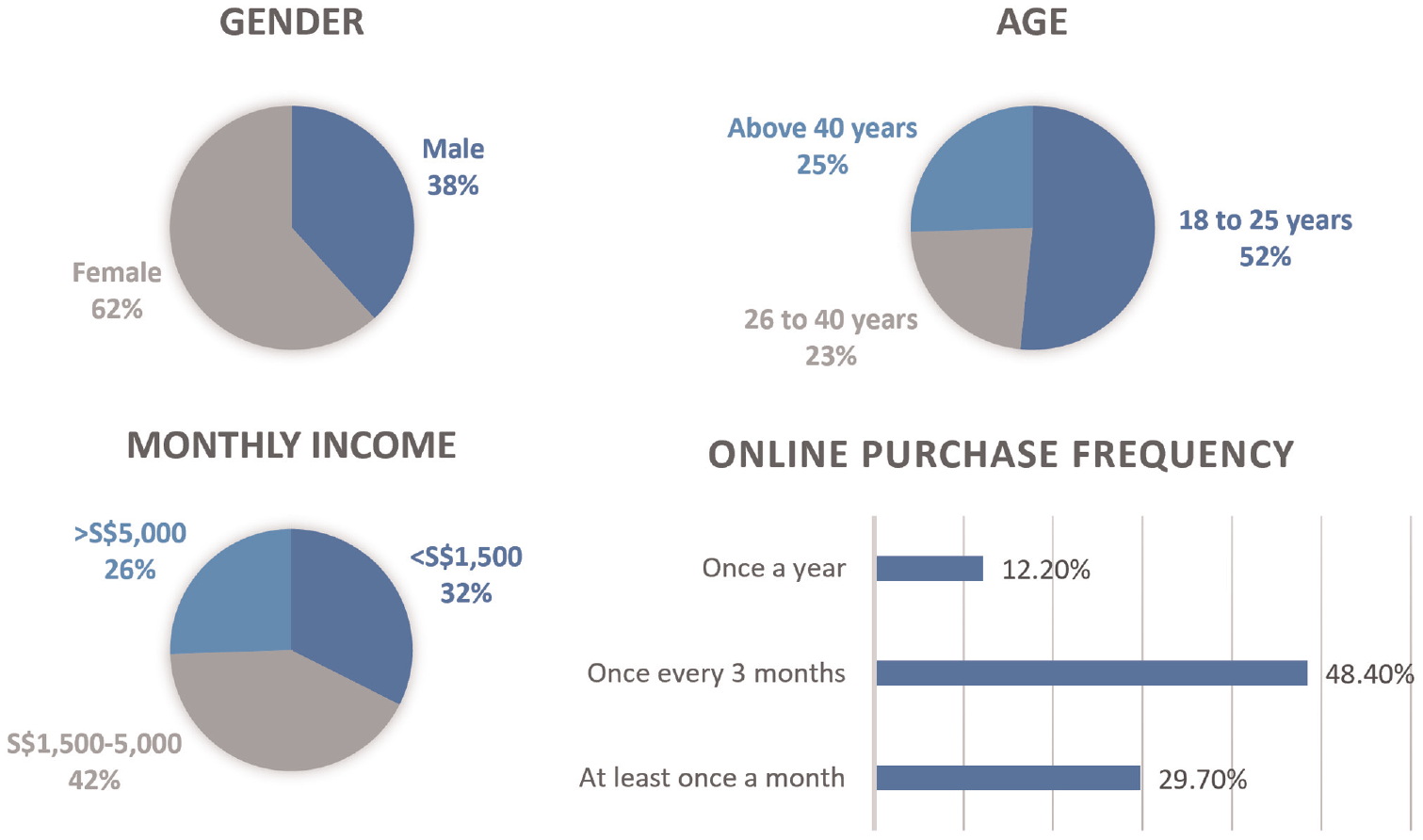
Profile of survey respondents (n = 188).
Table 4 below represents all the possible options and the number of respondents who have opted for these options in each of the three contexts. For instance, in the context where the slower shipping option is cheaper, 120 of 188 respondents (64%) preferred lower shipping cost over faster delivery for a high-value order. This observed behavior is denoted by “type P.” Based on the indicated choices, their preferential rankings with regard to the cost, speed, and carbon factors can be determined.
Summary of the Options Selected by Survey Respondents

Since shipping cost was found to be the dominant decision factor, the respondents are expected to opt for the cheaper alternative in the context where price differentiation exists. Based on the survey results, there is indeed a high proportion of people with behavior types “P” and “U.” The discussion and analysis of the choice selection for each of the three contexts is further elaborated below:
In the context where the slower option is cheaper, it is observed that there is a smaller proportion of respondents with behavior type “P” in the high-value order scenario (64%) than the low-value order scenario (90%). This signifies that more people will opt for the faster option if the order value is higher. Out of those who have initially opted for the faster option, 56% of them switched to the slower option for their high-value purchases after being informed of the carbon footprint, while only 31% switched in the low-value order scenario. This indicates that the people who favor the faster option for low-value purchases are unlikely to be influenced by information about the carbon implications.
Even though the proportion of respondents who displayed behavior type “U” is smaller for the high-value order scenario (83%) than the low-value order scenario (89%), the difference is marginal, indicating that most people are unwilling to pay for greener shipping no matter the value of their purchases. The respondents in this survey have shown a higher willingness to pay for faster shipping than for greener shipping.
For the case where there is no price differentiation, 40% of the respondents have opted for faster shipping (behavior type “B”) despite not having an immediate need for the items. The willingness to wait for greener shipping is slightly lower for high-value orders, which is expected, since it has been established that there are some people who only value speed for higher-value orders.
The consumers could thus be segmented according to their purchase behavior. There can be up to 12 (3 x 2 x 2) different consumer archetypes for each order value level. For instance, consumers with the overlapping set PWA are those who will opt for the greenest option regardless of the trade-off between the shipping cost and the delivery timing. The factors that influence their shipping choices are thus ranked in the following order: carbon > speed > cost. On the other hand, consumers who belong to the archetypes CUA, CUB, CWB, PWB, and TUA are classified to have no strict preferences, since their indicated choices are inconsistent. To put it simply, these respondents have indicated that A > B, B > C, and C > A. Table 5 summarizes the number of respondents that belong to each consumer archetype for the high-value order and low-value order scenarios, respectively. The zero overlapping sets are excluded from this table.
Summary of Discovered Consumer Archetypes and Number of Respondents (Percentage of Respondents in Brackets)

Despite the small sample size, findings in Table 5 provide initial insight into the general distribution of the top and minority consumer archetypes. The proportion of respondents with the archetype PUA (41%) is surprisingly larger than the respondents with archetype PUB (26%) and TUB (11%). PUA refers to those who are willing to wait for greener shipping provided that the greener option is also the cheapest option; PUB and TUB refer to those who disregard carbon labelling and rely only on shipping cost and delivery speed in their decision-making. The preference for greener shipping is similarly reflected in respondents with the overlapping set PWA, which is also the fourth-largest archetype (10%). By combining the statistics for consumers with archetype PUA, PWA, and CWA, a significant fraction (55%) of respondents is found to be willing to compromise the speed of delivery for the greener alternative.
The portrayal of such high willingness to wait for greener shipping could be because half of the survey sample is composed of a younger demographic (age 18–25 years) who may tend to be more environmentally conscious. Based on these results, there is evidence that the presence of carbon labelling can potentially influence the choice of e-commerce shipping options.
Conclusion
Global trade interconnectedness provides consumers with greater accessibility to products worldwide and this has perpetuated the growth of cross-border e-commerce. To achieve their revenue-maximizing objectives, most online shopping platforms offer differentiated shipping options to cater to consumers’ unique preferences. As a result of the increasingly competitive e-commerce market, consumers may be presented with alternative shipping options. Since emissions vary considerably for different options, consumers may remain unaware of the relative impacts and unwittingly opt for less-sustainable outcomes. This situation could be avoided if consumers can make more informed choices. This study provides a novel assessment of the carbon footprint of cross-border e-commerce shipping options. The results from the assessment were then utilized in a shipping choice experiment to examine the impact of carbon labelling on consumers’ shipping decisions.
With regard to the carbon footprint assessment, it was observed that carbon emissions for cross-border e-commerce orders placed on Taobao from Singapore range widely from 0.67 to 7.49 kgCO2e per parcel shipped. Emissions are most sensitive to the choice of air or sea shipment for the cross-border transport. If consumers do not have an immediate need for their products, they could reduce their shipping carbon footprint by at least 81% by waiting around +5 days longer for their shipment to arrive. Emission reductions were also observed with freight consolidation and when passengers opt for cleaner transport alternatives (walk versus car) if needed to pick up their parcel, although to a much smaller extent.
From the shipping choice experiment, more than half (55%) of the respondents were found to be willing to wait for greener shipping if carbon labelling was presented. While the sample size is small, the results suggest interest in carbon labels on e-commerce platforms, which have the potential to influence online shopping decisions. Therefore, this study advocates for consumers to be informed of the carbon footprint implications at the point of purchase on the e-commerce platform. Future research can look into scaling up the survey efforts and better understanding demographic and socioeconomic characteristics that influence online shopping behaviors and underlying preferences.
While the case study presented looks into the options offered for cross-border deliveries to Singapore, the framework of analysis is a general approach that could be applied to online shopping platforms in any region. This is applicable so long as the supply chain operations can be determined to facilitate the allocation of carbon footprint across each stage of the supply chain, including consideration of other cross-border transport modes like truck or rail.
This study gathered interest from the consumers’ perspective toward sustainable e-commerce, which provides basis for further research. Beyond the environmental impact and demand-side reception, it would be important to consider the economic impact of lower-carbon shipping initiatives. For instance, with greater willingness to delay shipments, this permits opportunities for freight consolidation and delivery route optimization. However, in reducing the frequency of carbon-intensive delivery trips, this may result in higher storage cost and slower-moving inventory. Carbon labelling could also influence the freight transport demand, thereby affecting overall logistic cost and operations. Further supply-side analysis will be required to develop a more comprehensive understanding of the trade-off between environmental impacts and economic viability, ultimately to achieve more sustainable freight and consumption.
Footnotes
Acknowledgements
The authors thank an anonymous carrier in Singapore for sharing data and insights on e-commerce parcel deliveries.
Author Contributions
The authors confirm contribution to the paper as follows: study conception and design: L. Cheah; data collection: L. Cheah; Q. Huang; analysis and interpretation of results: L. Cheah; Q. Huang; draft manuscript preparation: L. Cheah; Q. Huang. All authors reviewed the results and approved the final version of the manuscript.
Declaration of Conflicting Interests
The author(s) declared no potential conflicts of interest with respect to the research, authorship, and/or publication of this article.
Funding
The author(s) received no financial support for the research, authorship, and/or publication of this article.

Any findings, conclusions, recommendations, or opinions expressed are those of the authors only.