



Abstract
The Chinese government has released plenty of incentive policies to stimulate the diffusion rate of electric vehicles (EV) and the number of public charging stations, such as charging parking lots (PLs). This paper explores cooperative relationships between regional governments and PL owners in the process of investment in EV charging equipment, and a bi-level optimization model is built to examine their hierarchical relationships. Karush-Kuhn-Tucker conditions are utilized to solve the NP-hard problem. Five PLs in Chengdu are selected as examples to examine the validity of this model. The optimal allocation decision of the government and the optimal investment decisions of PL owners are concluded through the calculation results. Compared with non-graded subsidies, the priority of the graded subsidy rules is confirmed. In line with the calculation results, subsidies can promote investors to provide more charging services, and a graded allocation rule can maximize the incentive performance of subsidies.
Keywords
Numerous measures have been enacted globally to reduce greenhouse gas emissions in response to severe ecological and environmental issues ( 1 ). Electric vehicles (EV) are an effective way of reducing greenhouse gas emissions ( 2 ). However, the shortage of EV charging services may cause hesitation when customers make choices between EV and fossil-fuel powered cars ( 3 ). The Chinese government has released a package of policies on the EV charging industry to promote the acceptance of EVs ( 4 ). The hierarchical relationships between government and investors when considering the effect of these policies deserve to be explored.
To describe the inter-relationships between the government and investors, this paper abstracts the EV charging investment problem into a mathematical model. By applying the proposed model to an empirical case, some general regularities are concluded in this paper. According to the theoretical and empirical analysis, this paper puts forward targeted policy suggestions for both the government and investors. More specifically, the interactive relationships between government and parking lot (PL) owners are comparable to the leader–followers game theory presented by von Stackelberg ( 5 ). Classical bi-level programming is a useful instrument for these situations as it can represent the hierarchical interactions between government and investors ( 6 ). The environmental goal of the government and the financial goals of PL owners will both be satisfied through this methodology. To maximize the effectiveness of the subsidies, we also design a suitable subsidy allocation rule based on reality.
The contribution of this paper can be summarized as follows. First, we propose an efficient solution to compute the strategic equilibrium between the government and PL owners in the EV charging area. The upper-level macro-control force from the government was more in correspondence with reality, which differentiated this research from others. Secondly, a novel boundary ratio between a high update ratio and a low update ratio is introduced in this paper to establish an effective graded subsidy rule. The superiority of the graded subsidy rule was verified by comparing it with a homogeneous subsidy. Lastly, we give examples of five PLs of different scales and 21 possible charging demand scenarios in the future supported discussions, which provided decision supports both for government and PL owners.
The remainder of this paper is organized as follows. The literature review is given in the next section. The modeling process is detailed in the methodology section. An example from the city of Chengdu is given in the case study section. Calculation results are given in the results and discussion section. That is followed by the discussion and recommendations section. The conclusion summarizes the main structure and future development of this paper.
Literature Review
Electrifying transportation is one of the most effective tools for alleviating environmental pressure ( 7 ). Extensive efforts have been made in promoting the acceptance of EVs. The proper supply of EV charging services is the foundation of the widespread adoption of EVs ( 8 , 9 ).
Many problems have been explored in the field of EV charging, including the charging schedule, the energy constitution of the charging supply, smart charging, and the location of charging stations ( 10 – 13 ). In all these aspects, public charging is a representative one, which effectively stimulates the diffusion of EVs ( 14 , 15 ). Gong et al. ( 16 ) designed a dynamic spike pricing policy for residential charging stations to reduce the cost of charging EVs and ensure the normal operation of the distribution transformer. Haidar and Rojas ( 17 ) utilized mixed-effect regression to analyze separately the relationships of 21 socio-demographic, technical, and economic factors on Battery Electric Vehicles (BEV) and Plug-in Hybrid Electric Vehicles (PHEV) market shares, and the results indicated that density of ultrafast chargers is positively related to EV sales. In these different types of public charging services, the Level 2 charging station, where vehicle owners can park for long periods, is one of the main supports ( 18 ). Evidence has shown that PLs within the urban public infrastructure play an important role in providing EV charging services ( 19 ). Also, installing more chargers at existing charging stations, such as those in PLs, is more economical than building new stations ( 20 ). Considering the convenience and the economic advantages of PLs, the PL owners are treated as investors in this paper ( 21 ).
More related to our research, the influence of policy on EV charging services has also been explored widely. At the beginning stage, the incentive policies were mainly aimed at EV purchases, which considerably stimulated the purchase preferences of price-sensitive consumers ( 22 ). However, the purchase subsidy policy in China has experienced a withdrawal process ( 23 ). To maintain the promotion of EV sales, subsidies for EV charging services are necessary ( 24 ). Zhang et al. ( 25 ) proposed EV charging infrastructure via public–private partnerships between government and investors based on a realistic program. Li et al. ( 26 ) used a complex network evolutionary game method to explore the diffusion of EVs, finding the importance of subsidy policies in promoting EVs and related industries. Brozynski and Leibowicz ( 27 ) verified that the development of the EV industry can be difficult without policy promotion. Reasonable infrastructure construction policies can promote the EV diffusion rate markedly ( 28 ).
Although many researchers have discussed the EV charging problem, some problems still exist in this area. Firstly, most research has focused on helping private sector organizations achieve the highest profits when investing in the EV charging area ( 29 ). Government is usually seen as a parameter rather than a macro-control force in this investment process, which is different from the reality in China. Regional authorities play an important role in the EV charging market ( 30 ), especially in China ( 31 ). Secondly, a regional charging market needs to be explored since the EV charging supply cannot be satisfied by a single PL ( 32 ). The establishment of charging infrastructure is an important public policy concern ( 33 ). Lastly, the scheme of subsidy has received continuous attention in the EV-promotion field ( 34 ). However, the influences of different kinds of subsidy schemes are barely discussed. As there is no unified subsidy allocation policy in the EV charging market, it is necessary to determine the priority of various subsidy policies.
Methodology
Problem Statement
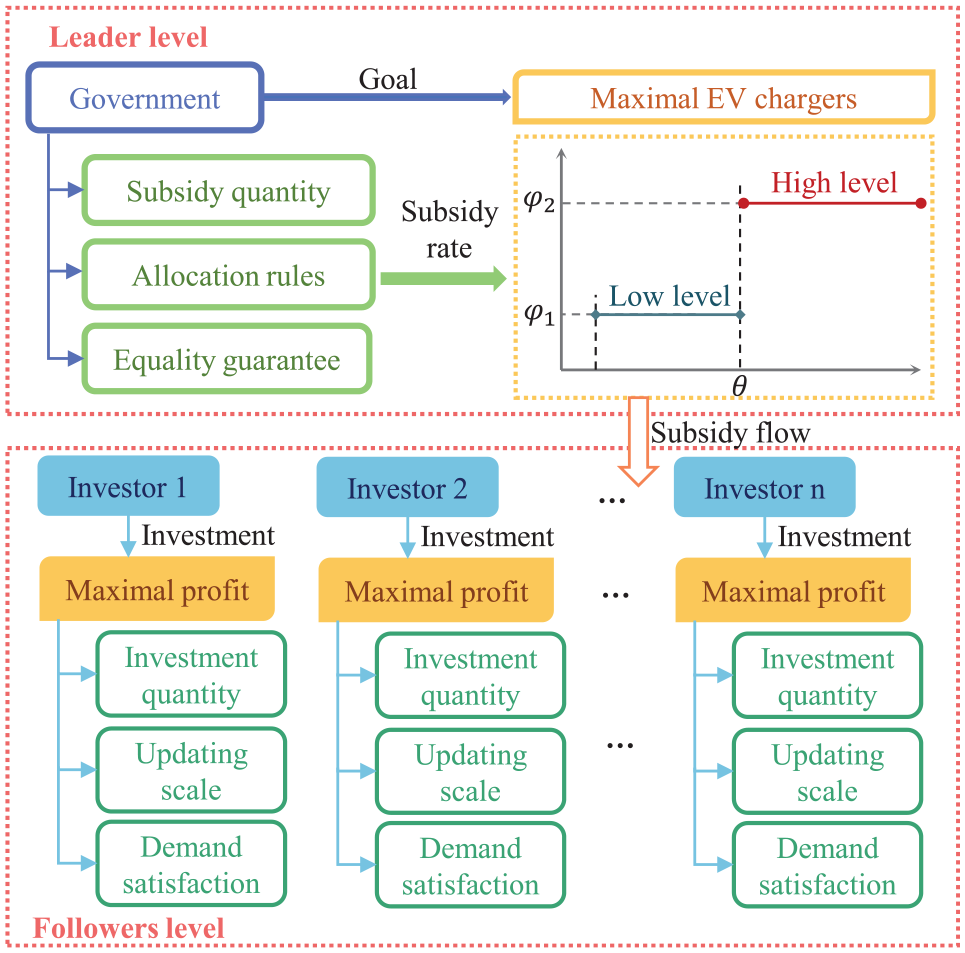
This section introduces the background information and the logical relationships between the government and PL owners. For environmental and social welfare goals, the government expects to increase the proportion of EV charging services so that car emissions can be reduced effectively. However, the EV charging market is not sufficiently mature for investors to receive sufficiently large returns because of the uncertain risks in this newborn market. Financial and tax support through allocating subsidies from the government can promote the development of this new technology industry (
35
). There are both macro-policy supports and unknown investment risks for PL owners. There is a conflict between the limited funds available for subsidies and optimal investment decisions. For investors, it is better to gain maximal subsidies as they can reduce their costs considerably, which means larger profits. For the government, too much allocation of subsidies will strain their fiscal budget, while too small subsidies are not attractive enough for potential investors. To improve the efficiency of subsidies, a heterogeneous subsidy rule is designed, in which
Framework of the decision system.
In Figure 1, the hierarchical relationships between government and PL owners are visually depicted. At the leader level, the government sets subsidy rules to gain the maximal EV chargers by considering the fiscal budget and allocation equality. With the subsidy flow information, investors at the followers level will make their optimal decision to chase the maximal profit. When making investment decisions, the limitations for investors mainly come from physical constraints and customers. In this process, the information mainly flows from the government to PL owners because the subsidy standards are usually clearly stated in the related policy document. However, it is difficult to supervise the possible investment behaviors of PL owners, let alone the later maintenance of EV chargers. To this end, this research mainly explores the possible collaborative process between the government and PL owners in the investment stage.
Modeling Process
This paper proposes a method to determine optimal decisions both for the government and investors by considering relative constraints. The objectives and constraints of decision-makers are detailed in the following subsections.
Government Decisions
Subsidy policy is a traditional macro-control measure applied in many areas, especially in newborn green technology industries ( 36 ). In China, a series of policies have been established to develop the EV and EV charging industries. How to enact a more efficient subsidy policy with a limited fiscal resource is the main problem this paper aims to solve.
Charging Supply Goal for the Government
Emissions reduction as the main objective of the government is hard to measure in a region. This paper selects maximal charging service as the measurable objective for the government so that the growing EV charging demand can be satisfied ( 37 ). As the EV charging demand is much larger than the charging supply, fulfilling the charging demand is an urgent problem currently ( 38 ). The objective function of the government is in Equation 1.

where
The objective of the government is to attract more investment into the EV charging market so that the EV industry will flourish and the market share of EVs will improve. With this objective, there are limitations on the fiscal budget caused by limited resources. A subsidy ceiling, shown in Equation 2, is necessary to control government spending.

This paper establishes the subsidy rules by segmenting the investment levels illustrated by existing research (
39
,
40
). The subsidy is influenced by the equipment updating scale, which means a graded subsidy scheme for different updating scales is needed to motivate the PL owners to update more chargers. The allocation method
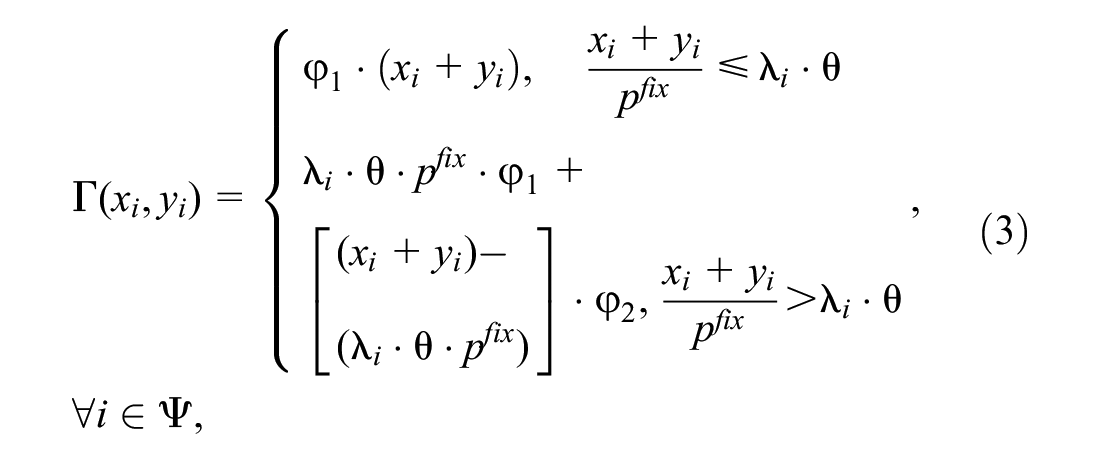
The subsidy is depicted as the ratio of total investment
Besides the economic limitations, the equality guarantee limitation is also necessary to ensure sustainable development, which is described in Equation 4.

where
As equality degree methods have not yet been unified, this paper uses a similar method proposed by Xu et al. ( 41 ) to calculate the satisfaction degree. The details can be found in Equation 5.
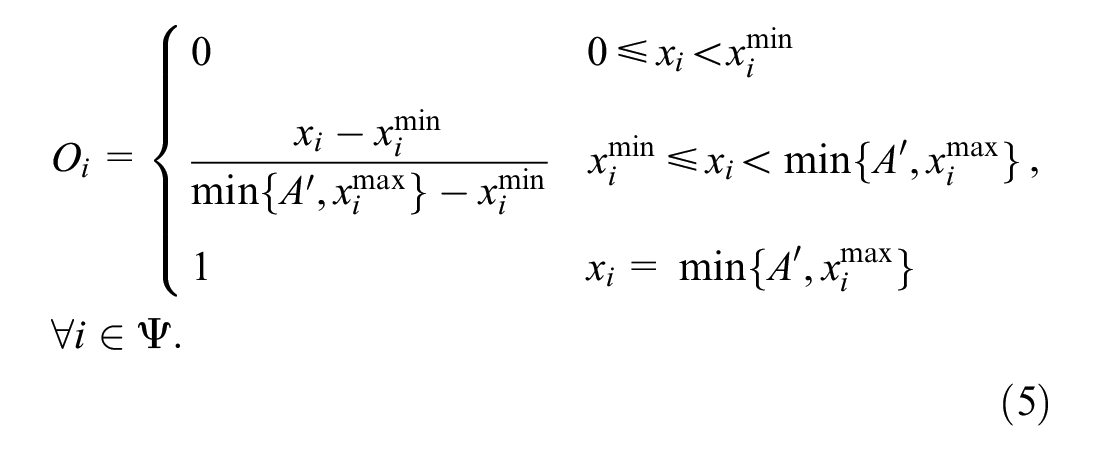
PL owners will receive minimal subsidies when their updating ratio is at the lowest limit

Decisions of PL Owners
PL owners will make investment decisions by considering the incentive of subsidies. The objectives and limitations for PL owners are discussed as follows.
Profit Goals
The economic goal of the
Fuzzy theory is an efficient method to determine these uncertain parameters, which has been discussed in many areas (
42
). The trapezoidal fuzzy number expected value operator method proposed by Xu and Zhou (
43
) can be used to determine indeterminate values. This method divides the uncertain data into four parts. Between the considered minimal value

where
This paper only considers the revenue brought by providing charging services, which means the operating revenue could be taken as the charging fee. The total profit for the

The first part in Equation 8 is the operating return in the

where
Investment cost
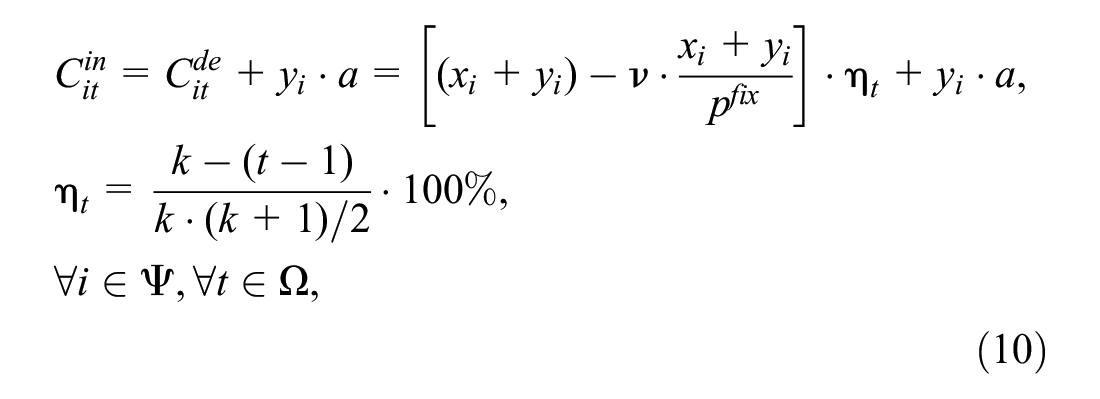
where
Sales tax and extra charges associated with the operating revenue are calculated in Equation 11.

where
Considering the time value of money ( 47 ), we calculate the annuity value of the subsidy in Equation 12.

For simplicity, Equation 12 can be written as
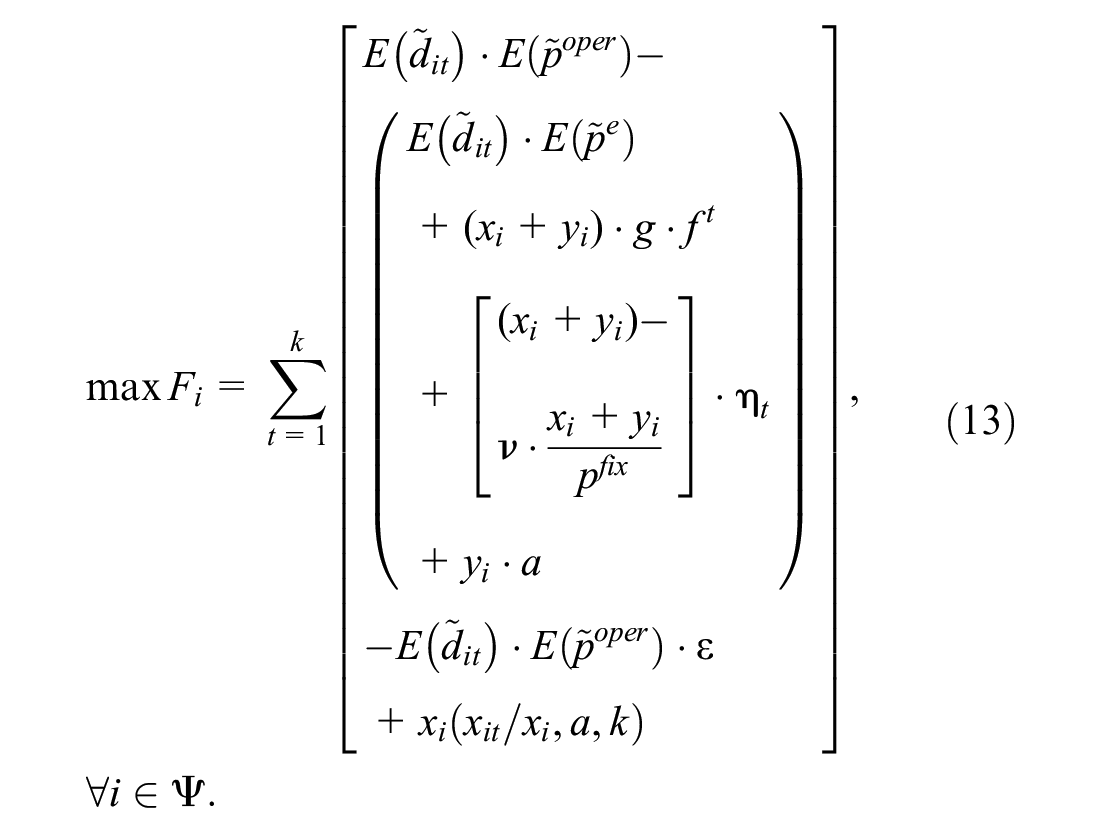
For investors, there are mainly three different limitations. First is the investment quantity, which is related to the ability of the investor. In another hand, the physical limitation of each PL restricts the updating scale. At last, the charging demand must be satisfied.
Similar to the fiscal budget, there are also resource limitations on the investment.

where
Equation 15 indicates the updating scale must be less than the total parking spaces but exceed the minimal updating demand. There also exists a size relationship between the minimal limitation scale and the separating size.

From a long-term prediction perspective, the charging service provided by PLs should satisfy the charging demand. For simplicity, this paper only considers a fast-charging environment as it can alleviate the “range anxiety” for the drivers of passenger EVs ( 48 ).

where
Global Optimization Model
Based on the descriptions above, the cooperation relationships between the government and PL owners in the EV charging equipment investment process are described by Stackelberg game theory in the bi-level optimal model with establishing innovative allocation rules. In this investment process, the government as the upper-level decision maker needs to enact more efficient subsidy policies to stimulate more charging services. Therefore, car emissions can be reduced with a higher EV market share. To accomplish this objective, there exist resource limitations and satisfaction guarantees. On the other hand, PL owners make investment decisions to chase maximal profits by considering the economic parameters and policy assistance. Constraints such as limited resources and basic demand satisfaction are also considered. The optimal equilibrium state determined by this model can provide decision support for both the government and PL owners. The global optimization model is built in Equation 17.
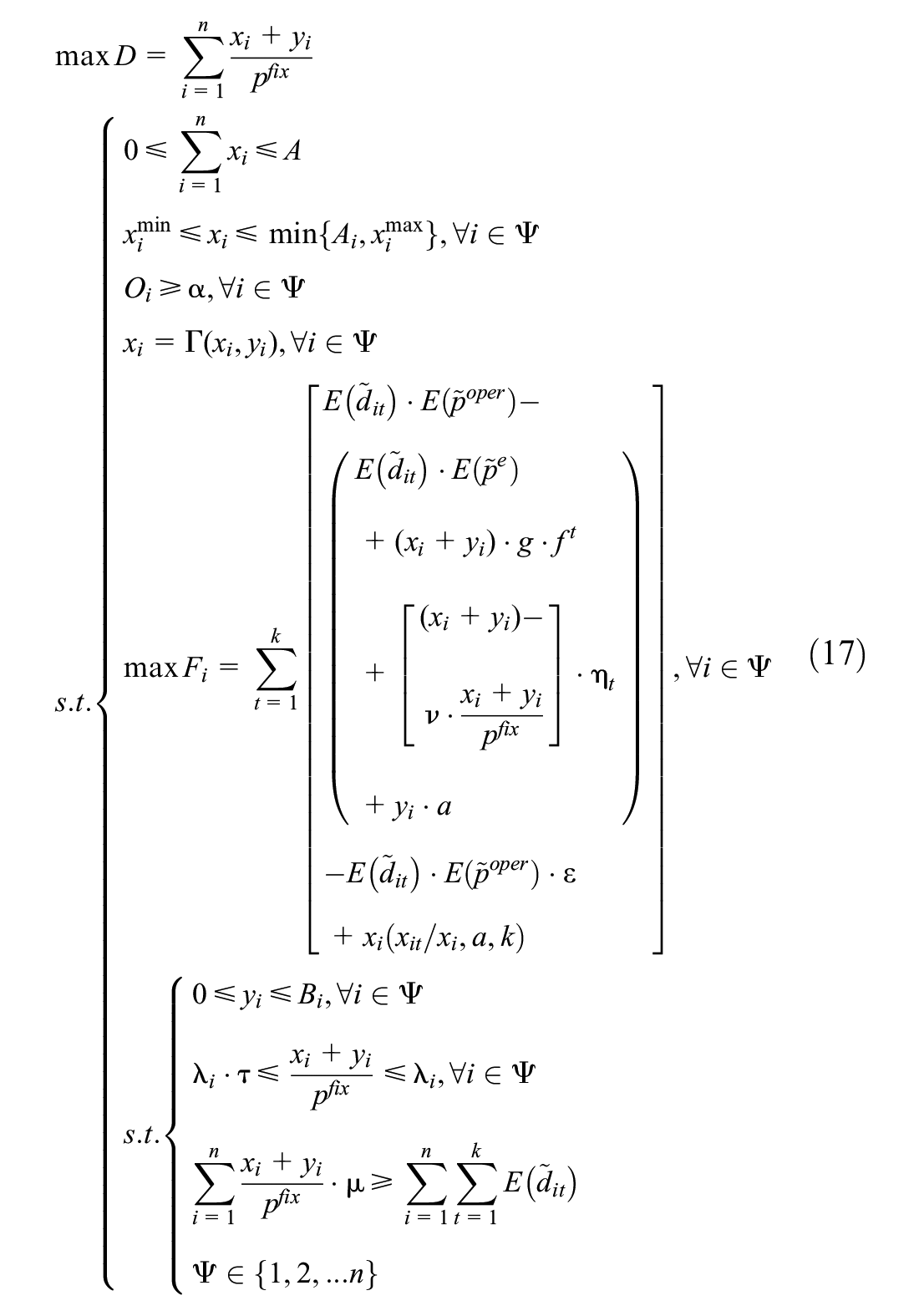
The bi-level programming problem, even at the easiest possible state when all functions are linear and all variables are continuous, is NP-hard, which has been widely demonstrated ( 49 , 50 ). As an NP-hard problem, it is difficult to find a solution for this bi-level model. Fortunately, this issue has been widely discussed and many feasible methods have been proposed. Karush-Kuhn-Tucker (KKT) conditions have been one of the most popular approaches ( 51 ). The details of KKT conditions are shown as follows.
Considering a general optimization problem,

where
Assuming
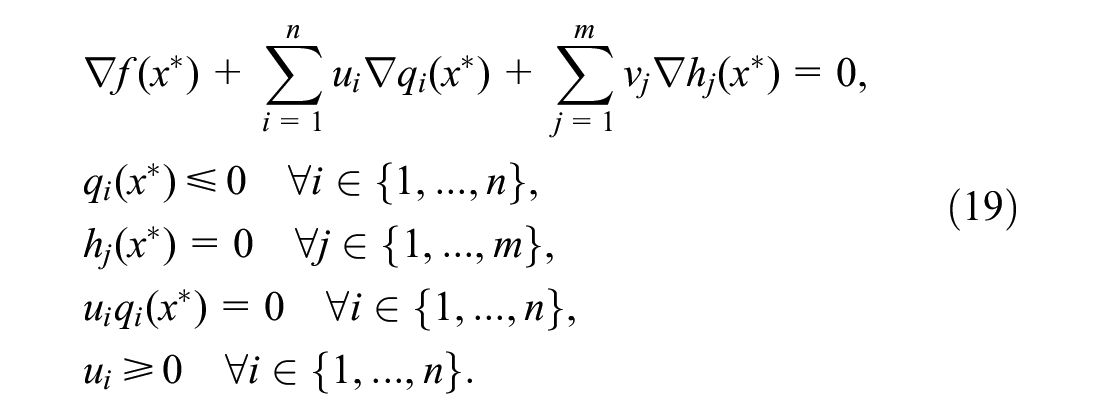
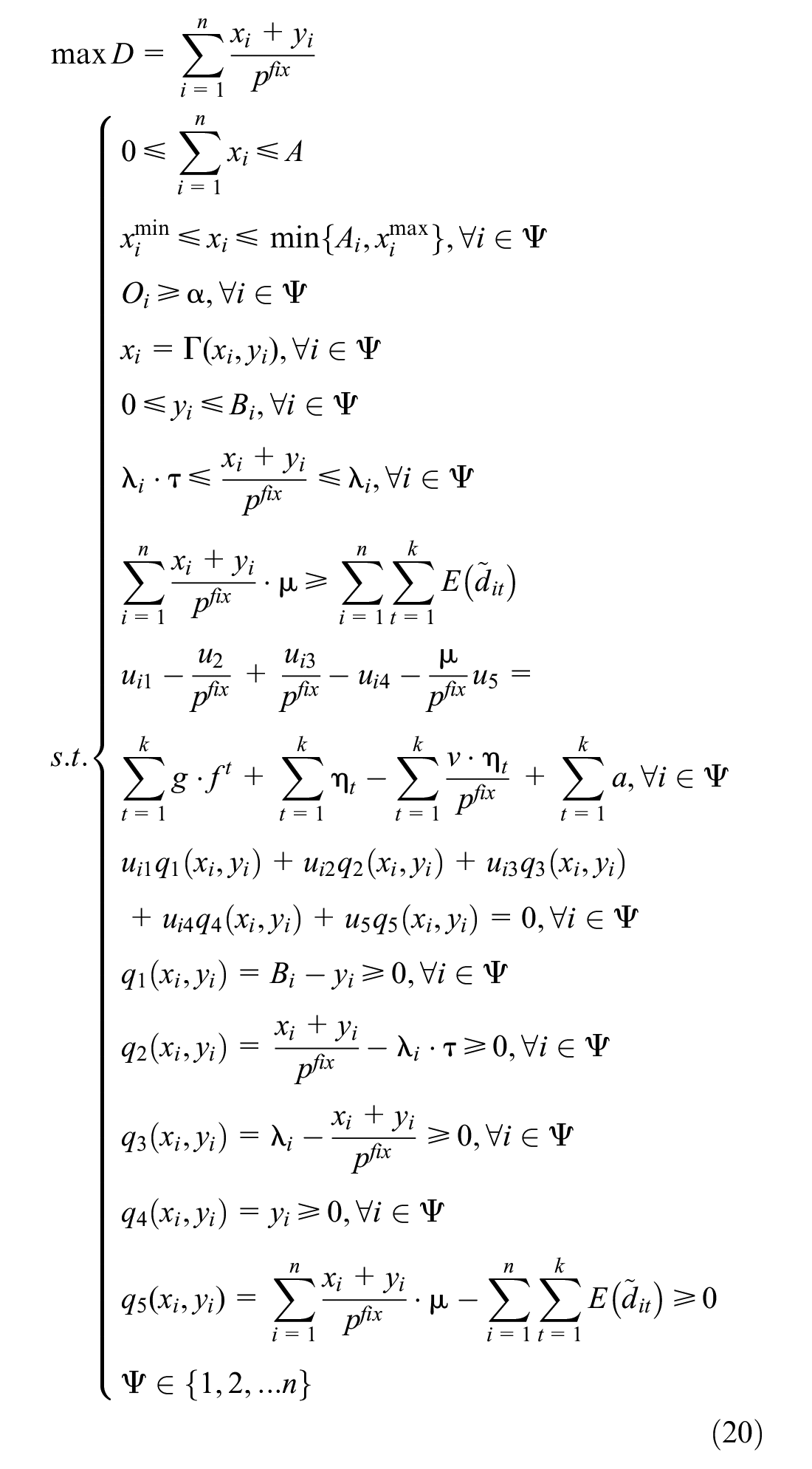
As the constraints of the follower level in Equation 17 are unequal, only
Case Study
In this section, a small central region in Chengdu, China, is chosen as an example to demonstrate the feasibility of the proposed bi-level programming model.
Case Description
Chengdu is one of the most polluted cities in the Sichuan Basin ( 52 ). The terrible air quality of Chengdu requires the adoption of green technologies such as EVs and EV chargers. The government in Chengdu has a plan for construction of EV charging equipment in which the public charging service radius should be less than 1 km in the downtown area ( 53 ). A district including business centers, universities, and museums with five PLs is chosen as the example. The geographic positions of these PLs are shown in Figure 2.

Framework of updated charging system in case study location.
Data Collection
The input data are divided into fuzzy data and crisp data. The set of uncertain data (i.e., the charging demand at each PL
Fuzzy Data Collection
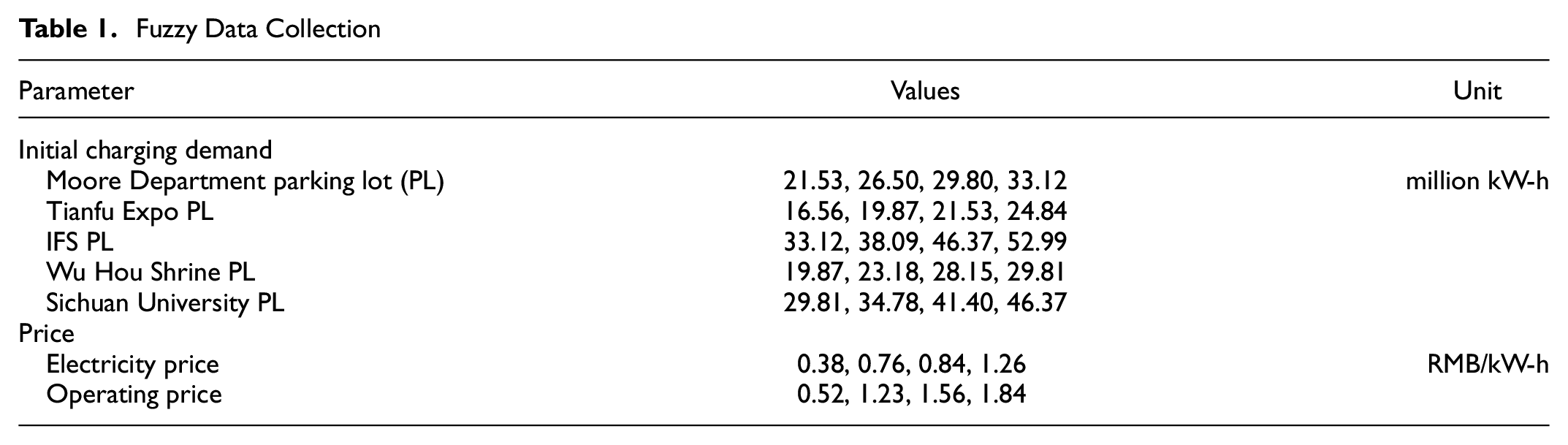
Crisp data for the EV charging industry and PLs are shown in Table 2. The subsidy limitations and minimal updating requirements in part 1 of Table 2 were collected from documents released by the government ( 58 , 59 ). The estimated net salvage value was determined from relevant laws. Part 2 of Table 2 includes three sales growth rates to estimate future demand, based on the China Passenger Car Association. Sales quantities in this part were illustrated by a related report ( 55 ). Part 3 of Table 2 includes some ratio data based on Chinese tax law and the provisional regulations for the implementation of enterprise income tax and bank websites ( 60 ). Part 4 of Table 2 shows different levels for the subsidy allocations, which are based on related regulation rules ( 58 ). The basic data for each PL in Table 3 were collected from public information on their websites. The investment limitations were based on the scale and the economic capacity of each PL.
Crisp Data Collection

Quantity of EV and EV sales means the number of EV and EV sales. Ratio parameters have no units. na = not applicable.
Crisp Parameters of Each Parking Lot.

Charging Demand Scenarios
Based on the service time for the charging equipment, the operating periods were set at 10 years, which are divided into five periods in this paper. Charging demand variation is a complicated uncertain dynamic problem influenced by numerous factors. Since this paper mainly concentrates on exploring the inner relationship between the government and investors, the charging demand in the future is determined based on the initial data collection and scenario analysis for simplicity. Three EV diffusion rates were assumed based on the real sales quantity in recent years. High speed diffusion is set at 200%, medium speed at 150%, and low speed at 120%. Considering all possible growth situations, the charging demand can be divided into 21 different situations as detailed in Table 4. For example, situation 1, which is “HHHHH,” indicates the sales increase rate in each period is at 200%. Charging demand in the initial period plus the sales of each period equals the final value. Other situations have the same meaning as situation 1.
Situations of Increasing Charging Demand

Note: Diffusion rates: H = high speed; M = medium speed; L = low speed.
Results and Discussion
The global optimal results for the bi-level model were calculated by Matlab after transferring the model through KKT conditions.
Results in Different Scenarios
The variation of profits for PL owners is first considered. The profits in Figure 3 are the net revenue for PL owners, which are calculated by Equation 13, taking

Profits of different parking lots.
Highly increasing demand will not only bring more profit but also bear more economic losses which can be seen in Figure 4a. The decreased quantity in Figure 4a represents the decreased value of profit under different charging scenarios for each PL owner. Similar decrease rates in scenarios 1 and 2 (extremely high increase scenarios) and scenarios 20 and 21 (extremely low increase scenarios) have the highest value, which can be seen in Figure 4b. The quantity and rate of decrease are calculated scenario by scenario. For example, the profit of MR PL will decrease 5.45% from scenario 2 to scenario 1 when the boundary value
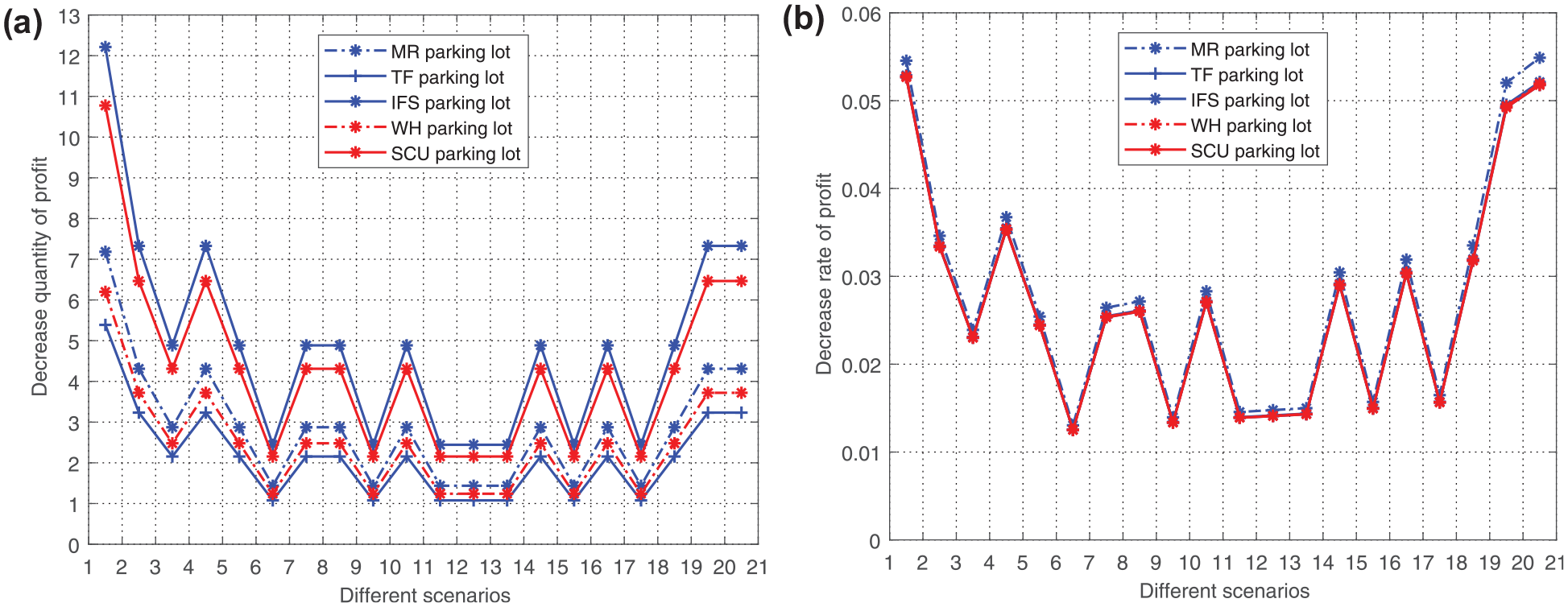
Profit decrease under different scenarios: (a) quantity of decrease and (b) rate of decrease.
From the government’s perspective, it is necessary to make the optimal decision under different fiscal budgets. As the direct influence parameter of this graded subsidy rule,

The variation of decisions and number of charging equipment units when
A lower value of the threshold
The charging service objective will be more realizable when government and investors both have environmental awareness, which cannot always be possible. The establishment of subsidy boundary value

Different satisfaction degrees of parking lots.
Satisfaction degree
Comparison Results
To verify the effectiveness of the graded subsidy rules chosen in the model, this paper also examines the investment process under homogeneous allocation rules under the charging demand scenario 1. The allocation ratio is set at the mean value of
Results Under Different Allocation Rules

Note: PL = parking lot.

Profits of parking lots (PL) under different policies: (a) Moore Department (MR) PL, (b) Tianfu Expo (TF) PL, (c) IFS PL, (d) Wu Hou Shrine (WH) PL, and (e) Sichuan University (SCU) PL.
It can be observed from Table 5 that the quantity of charging equipment under homogeneous allocation and no-rules allocation is basically at high levels compared with the graded allocation. However, considering charging equipment numbers without economic efficiency is not efficient enough. For example, the total subsidy of graded allocation increases by 6.33% from the homogeneous allocation but the number of equipment units increases by 1.26% (when
As for investors, Figure 7 shows the comparison of these three policies choosing scenario 1 as an example. The results after
Although there were no similar graded subsidy rules on EV charging investment in the existing research, the effectiveness of distinguishing incentive policies was discussed. Fang et al. ( 61 ) employed a balanced subsidy on promoting EV charging infrastructure, which was effective in reducing the fiscal pressure on the government. In the research of Yang et al. ( 62 ), there were four different kinds of subsidy standards in EV charging. Researchers have demonstrated the importance of subsidy in the EV charging investment process ( 63 , 64 ). The advantages of heterogeneous incentive subsidies were also verified. Baumgarte et al. ( 65 ) considered the regional differences in charging demand and found that relative subsidies made a better contribution to increasing investments in higher charging power than uniform and total subsidies. Srivastava et al. ( 66 ) utilized a non-cooperative game-theoretic approach to analyze the effects of different taxation, and the results indicated that differential taxation on EV and gasoline-fueled vehicles can reduce the price gap between them, which helped EV consumers. This paper considers both the importance of the initial entrance stage and the utility of heterogeneous subsidies. Aiming at the charging capacity investment of PL, a graded subsidy was designed to improve policy efficiency and help investors get more profits, which was demonstrated by the results in Table 5 and Figure 7.
Discussion and Recommendations
After depicting the calculation and comparison results, optimal results under different situations are determined. Discussions summarized from these results are shown as follows.
From Figures 3 and 4, the overlapping decrease rate curves indicate different scale PLs have similar charging demand sensitivity. However, PLs holding bigger scales will experience more profit or more economic losses in all charging scenarios. Combined with Figure 5, bigger PLs will always receive more subsidies and update more charging equipment than smaller PLs. The large parking capacity and plenty of money make large PLs become the main supports in the EV charging market.
From the bigger profit gap between no-rules and the rule schemes in Figure 7, it can be summarized that smaller PLs prefer policy with allocation rules. There is an interesting phenomenon of MR PL in Figure 5 as it has a tardy inflection point at
Summarizing the empirical results, some policy recommendations are provided. First, compared with homogeneous allocation and no-rules, graded subsidies are more attractive for smaller PLs. Although big-scale PLs are the mainstream of providing charging services, more and more small-scale PLs located in different places providing charging services will facilitate EV customers. Second, the government should set the boundary value at the inflection point when enacting the graded allocation rules. The inflection point is defined as the first flat point of the total subsidy in this paper. If the boundary value
Conclusion
This paper presents efforts to determine the optimal subsidy allocation for the government and the optimal investment decisions for PL owners in the EV charging equipment investment process. A bi-level programming model based on the Stackelberg game has been established to explain the cooperative relationship between these two stakeholders. KKT approach has been used to solve this NP-hard problem. A regional example in Chengdu has verified the validity of this optimal model. Scenario analyses have assessed the interaction between the government and PL owners in possible charging demand scenarios. The comparison process has determined the priority between graded, homogeneous, and no-rules allocation. Discussions were summarized from optimal results, which helps government enact more effective subsidies. With the prior subsidy rule, PL owners will be stimulated to invest in more charging equipment.
This paper only discussed the investment process of the EV charging area; the monitoring and audit for the PL owners will be discussed in future research. Furthermore, this study will also explore the EV charging areas such as how to determine the load impact of the EV charging process. Besides, there are many types in the EV charging piles market requiring exploration. Future discussion may be necessary to develop a more comprehensive methodology by considering more details.
Footnotes
Author Contributions
The authors confirm contribution to the paper as follows: study conception and design: W. Zhang, J. P. Xu; data collection: W. Zhang; analysis and interpretation of results: W. Zhang, J. P. Xu; draft manuscript preparation: W. Zhang. All authors reviewed the results and approved the final version of the manuscript.
Declaration of Conflicting Interests
The author(s) declared no potential conflicts of interest with respect to the research, authorship, and/or publication of this article.
Funding
The author(s) disclosed receipt of the following financial support for the research, authorship, and/or publication of this article: The author Wen has received the scholarship from the China Scholarship Council. This research has received a grant from the China Scholarship Council.
Data Accessibility Statement
All data have been included in the manuscript.