




Abstract
While sustainable aviation research has primarily focused on the airline industry, aircraft manufacturing, and airport responsibilities, the aircraft maintenance, repair, and overhaul (MRO) industry’s contribution to achieving sustainable aviation goals has been overlooked. This study examines the approaches to corporate sustainability practices used by aircraft MRO companies worldwide. The methodology used to investigate the sustainability actions of major MRO companies globally was mainly based on observational data gathered from multiple data sources, such as environmental, social, and governance (ESG) and investor relations documents. Four companies out of the 13 major MRO companies whose sustainability reports were found are examined as a case study analysis. Each MRO company adopted different definitions and practices of sustainability. The findings show that the aircraft MRO sustainability definition varies among the major companies studied, but some commonalities can be used to develop a proposed definition. The authors propose that aircraft MRO sustainability be defined as the ability to conduct MRO business that positively affects all stakeholders while emphasizing safety, quality, and integrity values, using technology and innovation to make growth, and constantly stabilizing and/or diminishing the impact on the environment. This study contributes to the understanding of sustainable aviation by highlighting the role of MRO companies in achieving sustainable goals.
Keywords
Aviation has evolved into a trusted and dependable form of transportation for both people and goods. Increased air travel implies more flights, which may lead to higher greenhouse gas (GHG) emissions as well as a more significant impact on environmental, economic, and social aspects ( 1 ). The International Civil Aviation Organization (ICAO) has increased its concern for the sustainable growth of international aviation by adopting various solutions, including “aircraft technology improvements, operational improvements, sustainable aviation fuels, and market-based measures” ( 2 ). The aviation industries need to operate sustainably to reduce the industry’s detrimental impacts while increasing social benefits.
Aircraft maintenance, repair, and overhaul (MRO) companies are a vital part of the aviation business, primarily because of their significant role in ensuring continued airworthiness and upgrades to aircraft. Sustainable aviation research has focused mainly on the airline industry, aircraft manufacturing, and airport responsibilities, but has paid little attention to the area of aircraft maintenance. Aircraft maintenance operations contribute to achieving sustainable aviation goals, such as how to treat waste products, how to conduct more efficient engine test runs, and how to maintain and upgrade aircraft to have a longer life. Aircraft MRO companies rarely display a sustainability section on their web page compared with most airlines’ websites. Therefore, it is not easy to understand the definition of sustainable MRO and measure the sustainability efforts of MRO companies comprehensively by considering the environmental, social, and economic impacts.
Early on, a lack of defined reporting frameworks and standards were two of the biggest challenges with reporting sustainability ( 3 ). Currently, corporation performance is measured not only from financial aspects but also from sustainability performance, which some corporations report as environmental, social, and governance (ESG) performance. Unlike financial reports, reports related to sustainability are still a voluntary corporate responsibility practice; not all countries have regulations in place that mandate the disclosure of ESG reports as compulsory requirements ( 4 ). However, sustainability reports are likely to become compulsory in the future ( 4 ). There are publicly held airlines that include ESG information in their annual reports and identify risks related to ESG. Previous research on sustainability in aviation has focused on quantitative analysis of sustainability in air transportation, airlines’ corporate social responsibility (CSR) issues, and sustainability reporting practices in U.S. airlines ( 5 – 7 ). In this paper, an exploratory study provides an in-depth analysis of the approaches to sustainability practices in major worldwide aircraft MRO companies.
Literature Review
Sustainability in Aviation Industry
Traditionally, the term “sustainability” in the aviation industry concentrated on environmental issues such as GHG emissions and noise pollution ( 8 ). Over the years, the concern for aviation sustainability has evolved into a broader definition. Sustainable air transportation implies its continuous development, adding economic benefits while at the same time alleviating its adverse social and environmental costs ( 9 ). In addition to environmental concerns, the air transportation sector is at the front line of people’s lives and safety while it continues to serve global travelers and incorporates huge and varied groups of workers ( 10 ). Economic and social sustainability are extremely important to the sector. Sustainability extends beyond protecting the environment ( 11 ).
ICAO agreed to a long-term aspirational goal aiming for net-zero CO2 emissions from international aviation by 2050 ( 12 ). ICAO has formulated an international aviation carbon offsetting program called CORSIA ( 13 ). During the pilot and first phase of the program, CORSIA participation is voluntary. In January 2024, 126 ICAO members decided to voluntarily take part in implementing the scheme.
The Air Transport Action Group (ATAG) is an independent, non-profit aviation organization focusing on sustainable development concerns. Through ATAG, aviation industry executives made a notable commitment, the Aviation Benefits Beyond Borders, concerning the aviation world’s future development that focuses on economic growth, social development, and environmental efficiency ( 14 ). Based on ATAG’s definition, sustainable development is “taking the three priorities of the economy, society and the environment and finding ways of balancing these to produce the results that will benefit most people” ( 15 ). ATAG set a long-term objective to achieving net-zero carbon emissions by 2050 ( 16 ).
The International Air Transport Association (IATA) is an association of worldwide airlines. IATA does not explicitly define aviation sustainability; however, IATA creates initiatives to enhance aviation’s environmental performance ( 17 ). IATA shares the same long-term goal as ATAG ( 18 ).
Sustainable Aircraft Maintenance
Aircraft maintenance activities may have environmental consequences, such as the results of processing waste and end-of-life parts. The life cycle assessment of aircraft indicates that the impact of the maintenance phase on the environment is substantial and cannot be disregarded, contributing 5%–10% GHG emissions per aircraft life ( 19 ). Based on an evaluation of the U.S. Environmental Protection Agency 310-R-97-01 Air Transportation Industry topic document, the environmental impact of aircraft maintenance is comparable with the manufacturing stage and needs to become an important concern ( 20 , 21 ). Parts replacement, maintenance operations, and waste management are the three most critical main activities that must be managed because of the significant environmental impact ( 21 ).
Sustainable maintenance aspect can be defined as a combination of proactive technical, financial, and managerial operations carried out during a technological facility’s lifecycle to fulfil its functions while simultaneously assuring the attainment of objectives and the capacity to provide economic, environmental, and social aspect for all stakeholders over the long term ( 22 ). Singh and Gupta identified 14 factors that support the achievement of a sustainable maintenance entity ( 23 ). Top management commitment, comprehensive planning and execution, and a continuous improvement maintenance process to minimize production lead-time and costs are the essential components in ensuring a maintenance company’s sustainability advantage ( 23 ). No MRO companies have expressed a definition of sustainable MRO or use a sustainability framework explicitly designed for aircraft MRO entities.
Corporation Sustainable Actions
Since the Brundtland Report provided a widely recognized concept of sustainable development, many industries have started to adopt measures related to sustainable development and include them in their company reports ( 24 ). However, several industrial sectors have not fully reported their sustainability actions. In the past, the growth in sustainability reporting in industries other than air transportation was likely driven by regulatory compliance needs and public attention ( 25 ).
In recent years, there has been a considerable growth in the number of corporations reporting on sustainability efforts, driven not only by regulatory requirements but also by a growing understanding in the finance sector of the power that sustainability concerns—commonly called ESG concerns—have on financial performance and company value ( 26 ). According to legitimacy theory, businesses must always strive to guarantee that they operate within the boundaries and standards of society ( 27 ). Companies may use sustainability practices disclosure approaches to indicate that they include community expectations in their actions as a legitimizing tool. Additionally, the most powerful stakeholder groups affecting a company’s sustainability reporting transparency are investors and employees, because shareholder expectations can only be met if stakeholders are satisfied to some level beyond profitability ( 28 ).
Sustainability Reporting Framework
Sustainability or ESG reporting is now broadly expected by stakeholders, and the corporations that do not currently report may fall behind global norms ( 29 ). While sustainability is now mentioned in the objectives of some profit and non-profit organizations, determining the extent to which an organization is sustainable or pursues sustainable development can be complicated. One of the first sustainability reporting concepts used, claimed by Elkington, is the triple bottom line (TBL) ( 30 ). TBL is a framework that considers three aspects of sustainability performance: social, environmental, and financial concerns ( 30 ).
As an independent organization, the Global Reporting Initiative (GRI) has developed a standard for sustainability reporting that corporations and governments can adopt to publish their sustainable activities related to the economic, environmental, and social impacts ( 31 ). GRI offers a comprehensive and detailed reporting framework that meets all three aspects of the TBL framework ( 32 ). GRI was founded to create a standardized mechanism to ensure companies have attention to environmental impacts in their activities, which was then expanded to social, economic, and governance concerns ( 33 ). GRI underlines the “significance of the corporation’s role in climate change, human rights, governance, and social well-being” ( 34 ).
Based on the KPMG Survey of Sustainability Reporting 2020, GRI is the most commonly used sustainability reporting standard, with users being about 66% of the 100 largest corporations in 41 countries and around 75% of the world’s 250 largest corporations by revenue ( 26 ). Larger corporations are reviewed by the public and special interest groups that are likely to mount intense criticism about environmental and social welfare impacts. As a result, the size of the company significantly and favorably affects the publication of an ESG GRI-based sustainability report ( 35 ). GRI established essential criteria for the publication of a sustainability report in accordance with the GRI Standards. GRI mentioned that accuracy, balance, clarity, comparability, completeness, sustainability context, timeliness, and verifiability are the eight reporting principles that determine appropriate report content and quality ( 36 ). GRI did not publish specific sector standard for the aircraft MRO industry but has sector standards for specific industries such as oil, gas, and coal, as well as agriculture, aquaculture, and fishing ( 36 ). In general, large companies in the world use the sector standard in GRI to adapt the sustainability practices to the issues that need to be addressed.
Objectives and Research Questions
The goal of this research is to conduct an exploratory qualitative analysis of the application of sustainable action projects in major worldwide MRO companies. Publicly available ESG or related reports published by the major MRO companies worldwide were examined. The research questions addressed in this study are:
What are the conceptions of aircraft MRO sustainability used by major worldwide MRO companies?
What sustainability aspects have been undertaken by the major worldwide MRO companies?
Methodology
The exploratory study purpose is “to examine a little-understood issue or phenomenon to develop preliminary ideas and move toward refined research questions by focusing on the ‘what’ question” ( 37 ). The study’s two research questions are addressed using an exploratory multiple-case methodology with a single unit of analysis ( 38 ). The case study technique focuses on researching a phenomenon in its actual environment inside a constrained system, making it suited for exploratory studies where little or no hypotheses are known ( 38 ).
According to Yin, the multiple-case study is important work “to consider multiple cases as one would consider multiple experiments” ( 38 ). It means that a multiple-case study is similar to the replications process in multiple experiments. In this research, replication is the major MRO companies in the world that have published sustainability reports, web pages, or both, while the MRO sustainability practices is a single unit of analysis. The researchers identified definitions of sustainability by using narrative terms and ideas mentioned in the companies’ sustainability or ESG report documents. The methodology used to investigate the condition of sustainability actions of major MRO globally was mostly based on observational data gathering from multiple data sources, such as the available corporation public release or investor relations document. In further depth, the following steps of the researchers’ study procedure are carried out:
Identify the major MRO companies in the world based on different criteria such as airframe person-hours, total person-hours, and total revenue from several sources.
Compile several major MRO companies’ lists into a single list.
Identify the sustainability or ESG report and the year of publication from the official MRO company’s website on the list.
Select only the major MRO companies with a sustainability or ESG report and web page. Review the documents to find the sustainability definition, check their initiatives, and identify how to measure the initiatives and their long-term targets related to sustainability issues.
Identify similar themes and words used in the documents to define sustainable actions. Based on the statements provided, harmonize and formulate a definition of aircraft MRO sustainability.
Identify the focus areas utilized in the documentation for sustainable initiatives, such as environmental, economic, and social responsibilities.
Group the similar themes of sustainability actions that MRO companies have reported.
Construct an affinity diagram for sustainability activities and priority areas.
Develop a cross-case sustainability practice conclusion and report.
Data Collection
In this study, the sustainability and ESG data studied were those of MRO companies included in the world’s major MRO companies list. There are several versions of major categories from various market research sources based on different criteria; thus, the researchers present several lists for comparison. The criteria include annual airframe maintenance person-hours, total annual maintenance person-hours, and annual revenue. Data collection was carried out from September 1 to October 15, 2022, by exploring related websites. Table 1 presents the major MRO companies lists. From the lists of the major MRO companies available, researchers compiled a single list to explore their sustainability actions based on their ESG or sustainability report.
Major Maintenance, Repair, and Overhaul Companies in the World from Various Sources
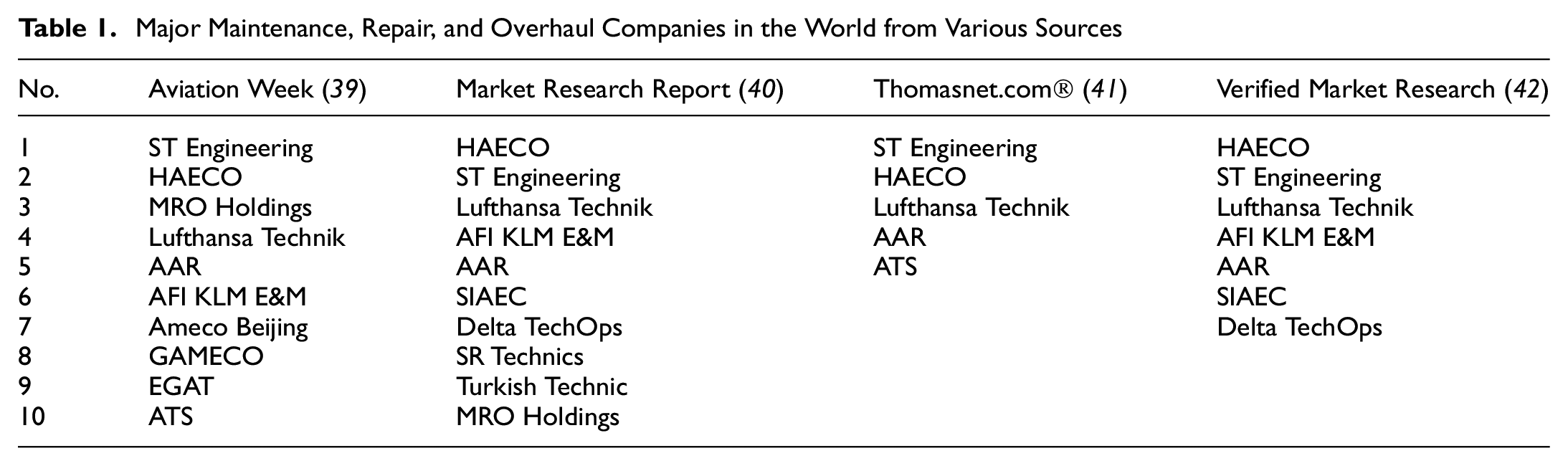
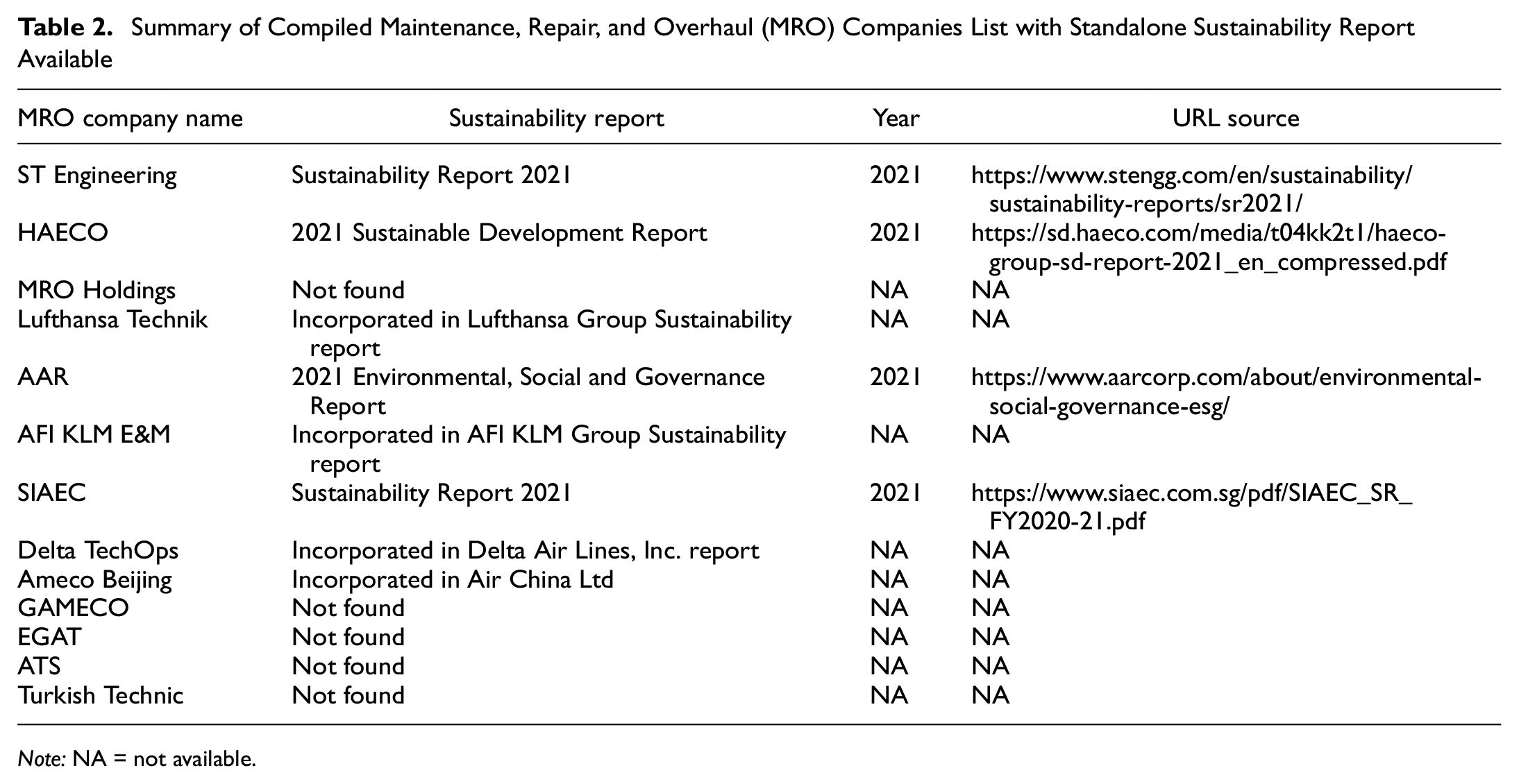
Of the 13 major MRO companies, sustainability reports were found for only four companies. Two MRO companies, AFI KLM E&M and Lufthansa Technik, each associated with airline companies, combined their sustainability reports with their parent companies’ reports. Therefore, determining the MRO company’s part of the company’s group report is complicated. Table 2 shows a summary of MRO companies where the researchers found a sustainability report.
Summary of Compiled Maintenance, Repair, and Overhaul (MRO) Companies List with Standalone Sustainability Report Available
Note: NA = not available.
The four companies we found that have publicly available sustainability-specific reports are ST Engineering, HAECO, AAR, and SIAEC. A sustainability report was released once a year alongside the company’s annual financial report. Each company has a different format for reporting its initiatives into documents, so it is necessary to undertake a more extensive examination of descriptive terms to validate the actions made.
Results
This section presents a summary of data collected from the four MRO company sustainability reports or web pages which refer to the definition of sustainability, target priority areas, and current initiatives. This study follows the steps in the Methodology section, which was created using the multiple-case study replication logic technique to present individual case studies ( 38 ). The definition of sustainability in each company is identified by searching for keywords such as “sustainable development,”“vision,”“sustainability goal,”“ESG focus areas,”“sustainability,” and “CEO message” on the main page of the sustainability report or web page. After that, the target areas of each company and current sustainability practices are summarized from the published sustainability report.
Definition of Aircraft MRO Sustainability
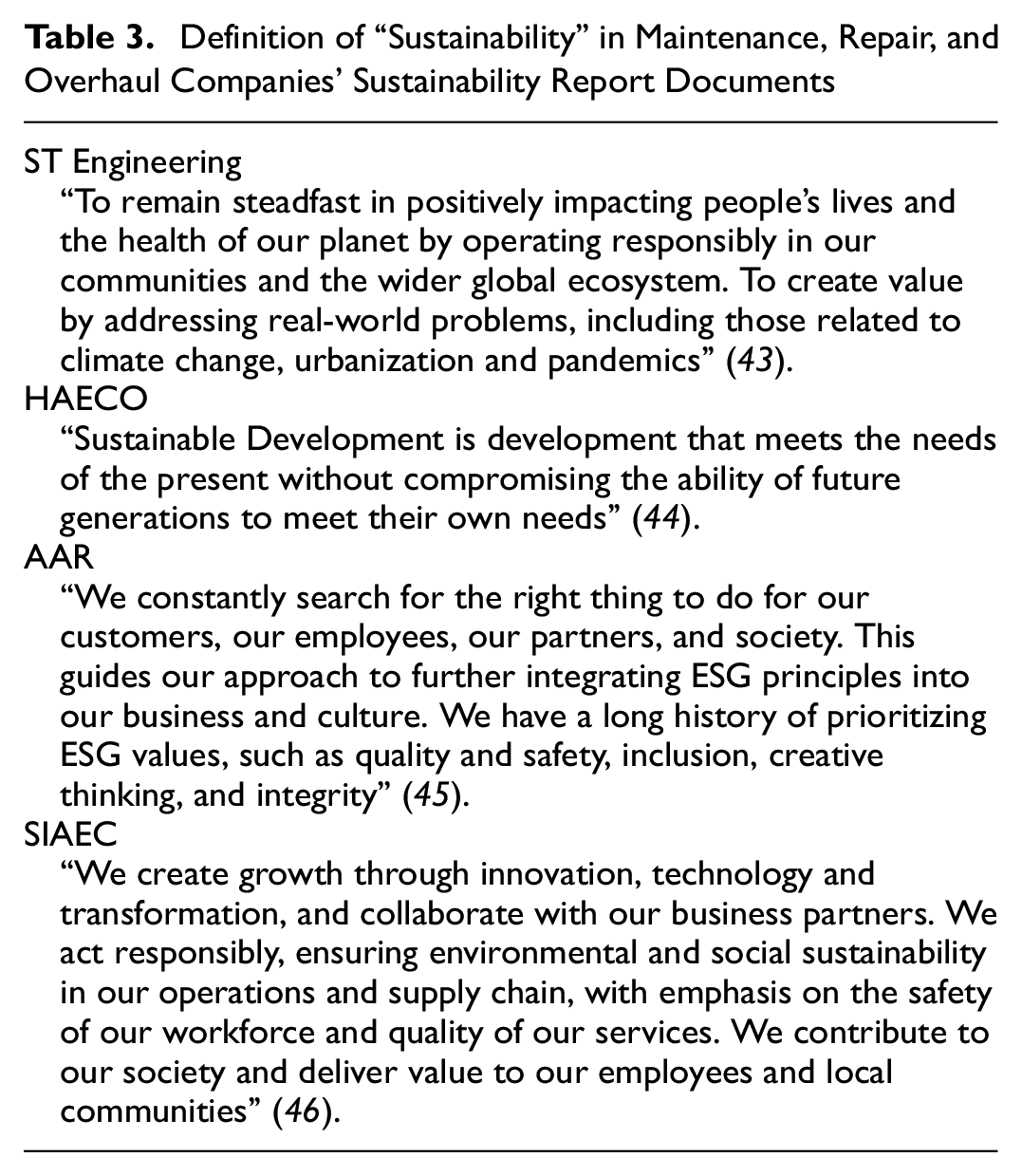
The researchers studied the four MRO companies’ publicly available documents and found the definition of sustainability contained in their sustainability report or ESG report. Although none of them specified the definition of sustainability explicitly, the researchers identified definitions of sustainability by using narrative terms and ideas mentioned in the companies’ sustainability or ESG report documents to construe the definition of sustainability. Table 3 shows the statements related to the sustainability concept of each company used in the ESG or sustainability report.
Definition of “Sustainability” in Maintenance, Repair, and Overhaul Companies’ Sustainability Report Documents
Before this study, there was no literature found describing clearly what comprises aircraft MRO sustainability. The authors used the meaning and approach of sustainability after reviewing the available documents on sustainability from four MRO company cases to develop a general definition of sustainability in aircraft MRO companies. The new definition of aircraft MRO sustainability among worldwide MRO companies presented in this section answered Research Question 1.
Although the explicit definition of sustainability is not stated, ST Engineering has a vision of a sustainability approach with an emphasis on having an impact on human life and the environment, in the Group President and CEO statement. The statement implicitly reflects TBL’s elements: people, planet, and profit.
HAECO does not define sustainability their own definition, but they adopt the definition of sustainable development in the Brundtland Report (24). Sustainable development is defined as “development that meets the needs of the present, without compromising the ability of future generations to meet their own needs” ( 24 ). This broad idea does not explain precisely more in the context of HAECO’s MRO operations; consequently, the researchers must investigate further what action items they accomplished in the sustainability focus areas of the last sustainability report.
AAR takes a different approach in adopting the definition of sustainability. The researchers used descriptive words on the main page of the AAR website related to ESG and sustainability. The sustainability values emphasized in the AAR approach are “quality and safety, inclusion, creative thinking, and integrity” ( 45 ). In addition, AAR also stated that “the intended impact is on customers, employees, and society” ( 45 ).
SIAEC writes clearly its sustainable vision and action items overview in its sustainability report. In particular, they mentioned three main things in their sustainability framework: “creating change, responsible change, and delivering change” ( 46 ). Furthermore, SIAEC includes its main business aspects as the basis in its sustainability statement by mentioning, “We create growth through innovation, technology, and transformation, and collaborate with our business partners” ( 46 ).
Sustainability Targets and Initiative Areas
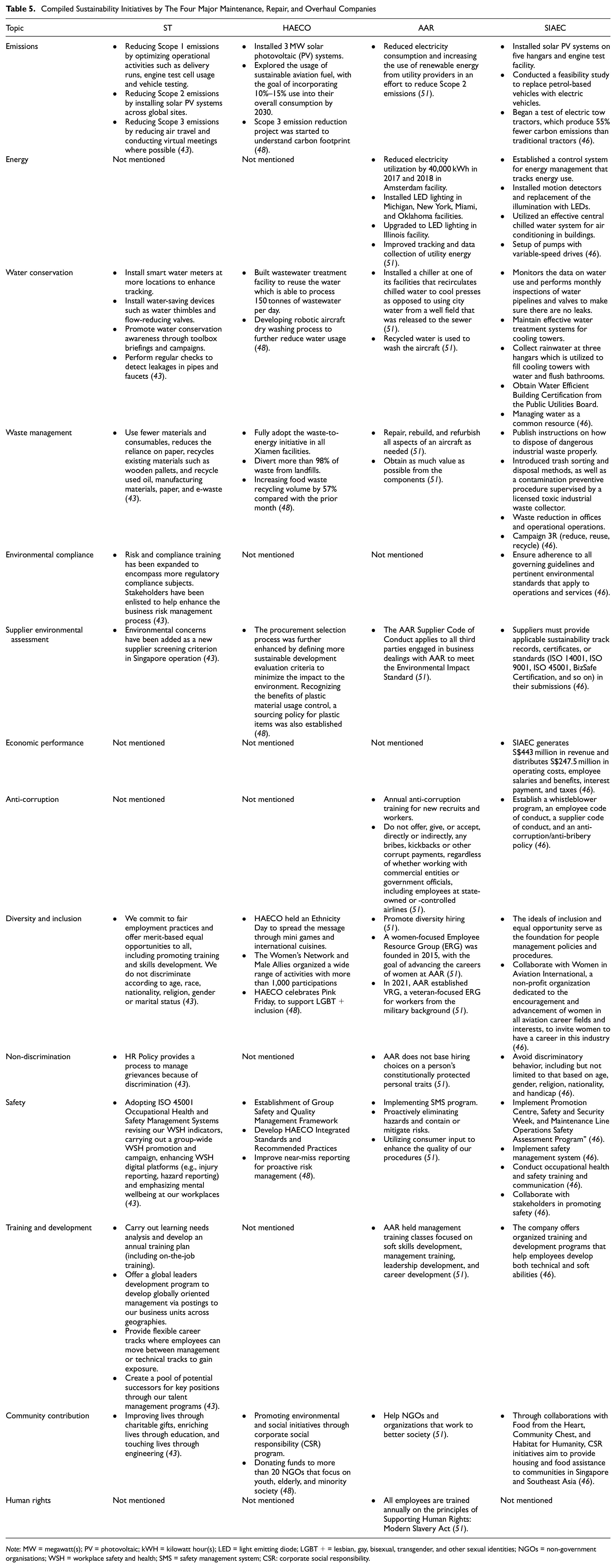
Sustainability practices are intended to accomplish goals in certain areas of each MRO company’s primary business and operations. Each company has a different structure and format in the sustainability report. A GRI index is included at the end of each report to refer to the pages they mention about the material topic. The researchers recognize descriptive words to define each of the four MRO companies’ sustainability program areas. The focus areas present a generalized group of sustainability goals that match with some standard sectors in the GRI framework. Tables 4 to 6 show, respectively, a list of sustainability targets, initiatives, and the latest conditions for actions that four MRO companies have taken.
Compiled Sustainability Targets by The Four Major Maintenance, Repair, and Overhaul Companies

Note: CO2e = carbon dioxide equivalent; kg = kilogram(s); L = liter(s); kWH = kilowatt hour(s); h = hour(s).
Compiled Sustainability Initiatives by The Four Major Maintenance, Repair, and Overhaul Companies
Note: MW = megawatt(s); PV = photovoltaic; kWH = kilowatt hour(s); LED = light emitting diode; LGBT+= lesbian, gay, bisexual, transgender, and other sexual identities; NGOs = non-government organisations; WSH = workplace safety and health; SMS = safety management system; CSR: corporate social responsibility.
Compiled Recent Sustainability Condition by the Four Major Maintenance, Repair, and Overhaul Companies
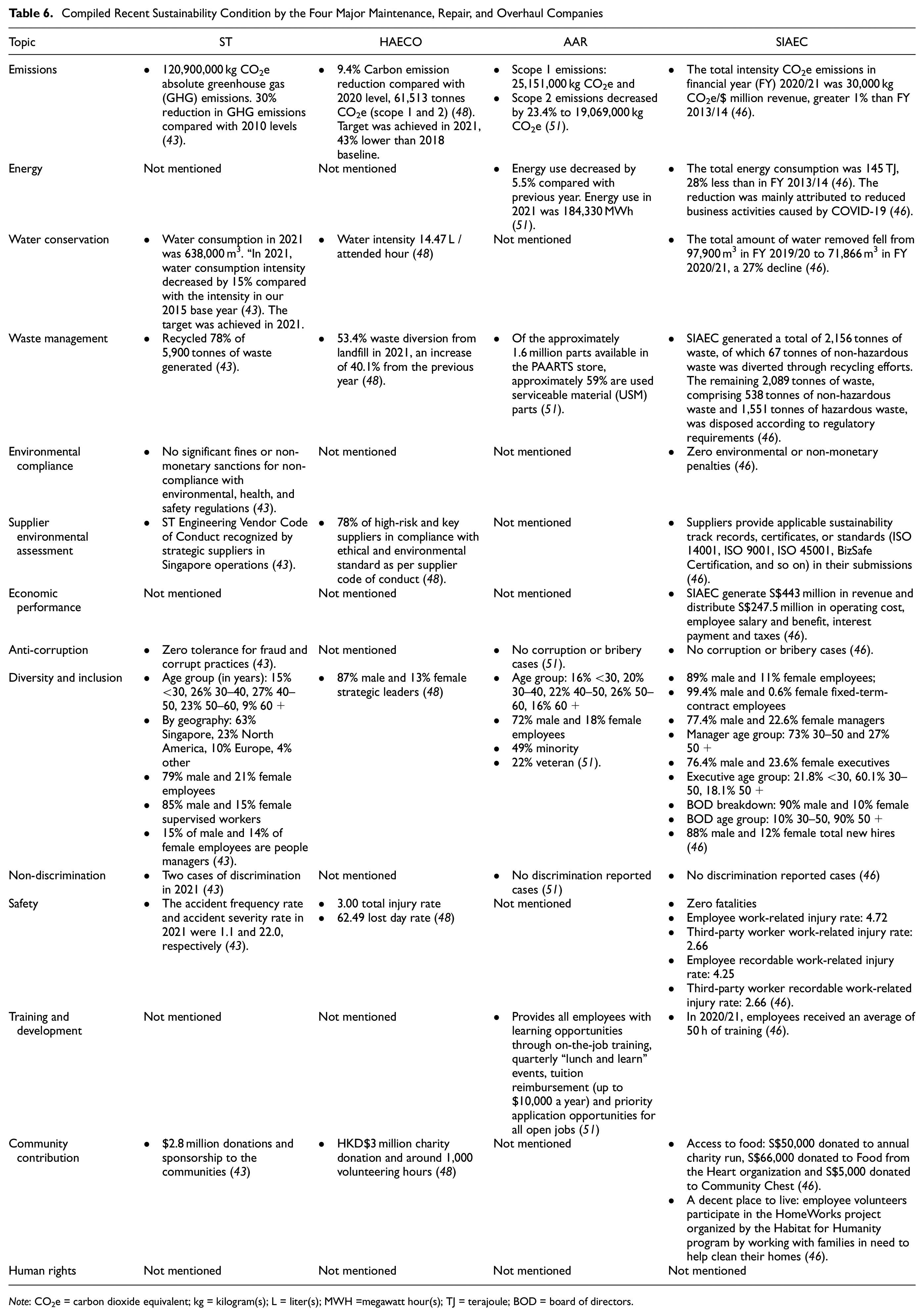
Note: CO2e = carbon dioxide equivalent; kg = kilogram(s); L = liter(s); MWH =megawatt hour(s); TJ = terajoule; BOD = board of directors.
In their MRO sustainability reports, each of the four MRO companies developed their sustainable focus categories that represent their interests based on the specific needs and elements essential to the company and their external impact. By analyzing the categories of sustainability action and the targets they want to achieve related to MRO operations and other relevant content, the researchers identified the thematic areas of sustainable initiatives and carried out the note-taking process for constructing an affinity diagram. The researchers then re-reviewed the documents to double-check the information retrieved from these and ensure this is displayed correctly in individual case studies. An affinity diagram was developed based on the key terms and phrases of sustainability actions; the researcher combined and aligned them into several thematic areas and their associated subareas that cross the four cases, as shown in Table 7.
An Affinity Diagram of Sustainability Practices in Worldwide Major Aircraft Maintenance, Repair, and Overhaul Companies
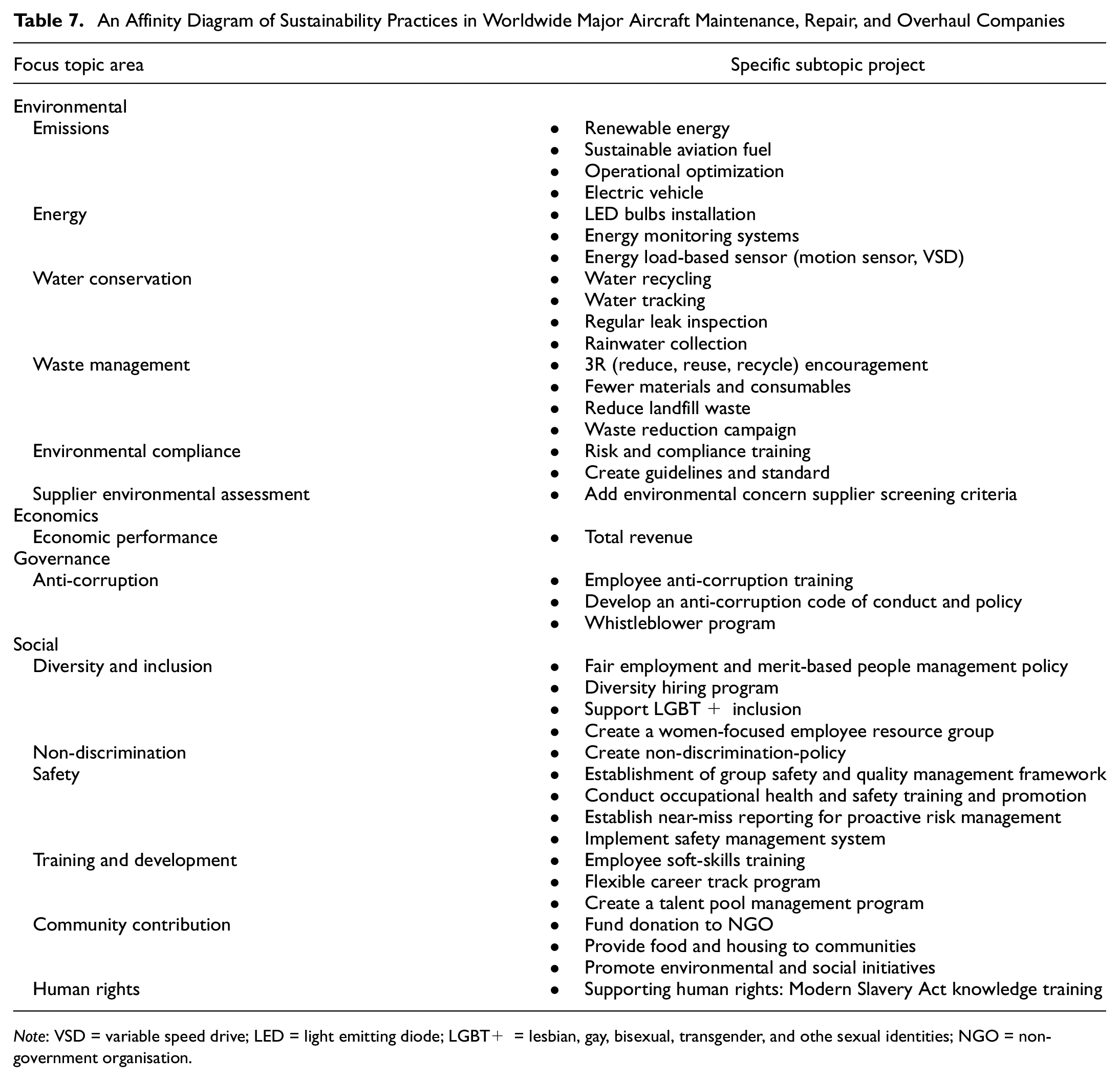
Note: VSD = variable speed drive; LED = light emitting diode; LGBT+ = lesbian, gay, bisexual, transgender, and othe sexual identities; NGO = non-government organisation.
The environmental theme is a significant concern for MRO companies in sustainability issues. The four companies’ most adopted sustainability goal and the action focus area are: emissions, water conservation, and waste management issues. Reducing GHG emissions to certain levels and different target years for each company has become one of the main issues widely discussed in the four MRO companies’ sustainability reports. The implementation of renewable energy, such as installing solar photovoltaic systems, is one widely adopted action taken by the four companies to reduce the emission figures. Water conservation is also one of the aspects that the four companies have undertaken in pursuing sustainability business. However, only ST Engineering and HAECO specifically mention targets they want to achieve and the time target. The four MRO companies are concerned about waste management while “reduce, reuse and recycle” (3R) is the popular framework they use to minimize the amount of disposal waste. In this case, only HAECO has the exact figure to achieve.
The four companies also have concerns about the environmental impacts caused by their supply chain process. The companies may be involved in adverse environmental consequences because of business partnerships with suppliers or other parties. All companies have a standard screening process for their suppliers to comply with environmental impact standards. For example, suppliers must provide a sustainability track record to get accepted.
The companies also focus on social themes to maintain a sustainable business. Diversity and inclusion are principles they hold to support their employees, either in the recruitment process or while already working in the company. MRO companies have similar concerns about women’s involvement in aviation by supporting women-focused resource groups. Furthermore, the age demographic and the proportion of men and women are shown in the sustainability reports of the four companies. Moreover, aligned with diversity and inclusion concerns, all companies have a goal of zero discrimination issues.
Safety is a social core value in the aviation business and is mentioned by the four MRO companies in their sustainability documents. The MRO companies want to minimize the number of fatalities as a target. Initiatives taken by ST Engineering, such as adopting the ISO 45001 Occupational Health and Safety Management System, and the implementation of the SMS program by AAR and SIAEC, are examples of programs for minimizing work accidents. Other common social sustainability actions taken by MRO companies include training and development for their employees and community contributions through CSR programs. One company, AAR, touched on the issue of human rights—human trafficking and forced labor—in its sustainability initiative and target.
All MRO companies in this case study are concerned with implementing good governance with the specific goal of zero cases of corruption in their organizations. Establishing a whistleblower program and anti-corruption training are initiatives undertaken by AAR and SIAEC, respectively.
Discussion
The definition of aircraft MRO sustainability is varied, and the four companies exhibit differences in their perspectives. However, there is some commonality in their definitions. Based on the study conducted in this paper, the viewpoints are harmonized by the researchers. The researchers propose this definition of aircraft MRO sustainability:
Aircraft MRO sustainability is the ability to conduct MRO business that positively impacts all stakeholders—customers, employees, partners, and society—making growth through technology and innovation by emphasizing safety, quality, and integrity values while constantly stabilizing and/or diminishing the impact on the environment.
The phrase “positively impacting all stakeholders—customers, employees, partners, and society” represents the sustainable impact aim in ST Engineering and AAR ( 43 , 45 ). The statement “making growth” is paraphrased from the desire to grow in all selected MRO companies in this study, while the phrase “through technology and innovation” is taken from the SIAEC statement ( 46 ). The words “by emphasizing safety, quality, and integrity values” are included because these values are a widely recognized priority in maintaining aviation safety; these values are also explicitly stated in the AAR and SIAEC statements ( 45 , 46 ). The phrase “constantly stabilizing and/or diminishing the impact on the environment” represents efforts to reduce environmental impact, as mentioned by ST Engineering ( 43 ). However, it is essential to note that, while ST Engineering prioritizes this goal, the primary objectives of ICAO, ATAG, and IATA are in reducing GHG emissions. The researchers hold the viewpoint that aircraft MRO sustainability should be defined and that the definition should represent the priority purposes of aircraft MRO and associate with the other three aspects; economic, social, and environmental.
In performing sustainability projects, the four MRO companies took different approaches. The emphasis areas chosen by each MRO company gave an idea of what the MRO company deems priority areas. All four MRO companies have common initiatives to reduce GHG emissions. Reducing GHG emissions is a 2030 target for ST Engineering, HAECO, and SIAEC, while AAR does not mention specific targets for reducing emissions by 2030. This topic is in line with ICAO and ATAG’s concern about the aviation industry’s support to the achievement of the United Nations 2030 Agenda for Sustainable Development (UN SDG) ( 53 , 54 ). As far as target metric is concerned, units in ratio scale, such as CO2e/$ million revenues set by SIAEC, clearly describe their environmental impact compared with the economic performance. This metric may be an appropriate reference for other MRO companies. However, the four MRO companies do not report an operational strategy for reducing emissions through performing more efficient aircraft engine run-up tests during the maintenance event. Aircraft engine operations are a significant contributor to GHG emissions in the aviation industry.
Energy-related actions are another common topic of focus in the environmental sustainability area adopted by MRO companies. Energy-related projects, such as installing motion sensors or installing LED lamps to reduce building power consumption, are easier to implement and have lower capital costs than other projects ( 11 ). Simultaneously, energy reduction projects are known to have a positive impact on reducing emissions.
As far as water conservation and waste management are concerned, ratio scales such as “L/attended hour” and “divert 60% waste from landfill,” as set by HAECO, may be implemented by all MRO companies. Uniformity of water conservation and waste management targets need to be established to measure sustainability performance. All selected MRO companies have projects to reduce water use and waste, although not all of them have targets. As an operational improvement effort for aircraft, engine water wash is a maintenance item to reduce engine exhaust emissions; on the other hand, it consumes considerable water ( 55 ). This study finds that no major MRO companies have a reported strategic project to perform aircraft engine wash tasks and aircraft cleaning more efficiently to reduce water consumption.
The research findings indicate that the sustainability reports lack clear representation of economic benefits for the community. Most of the selected MRO companies in the GRI index section refer to the annual financial report to see the economic performance. This economic or financial performance should be accommodated along with any initiatives that support long-term financial stability, which will create value for communities in future sustainability reports.
The social sustainability theme was widely adopted by the four companies and is a critical part of the MRO business, which is labor-intensive and has great potential effect on the surrounding community. From this study, the safety focus topic stood out in all companies. Safety is widely known to be a fundamental principle in air transportation. Therefore, all companies highlight safety issues concerning both targets and initiatives they undertake. Other social sustainability themes that focus on employee stakeholders are non-discrimination, diversity, and inclusion. The projects carried out by the four MRO companies, such as encouraging women and supporting diversity hires, align with the issue of inclusiveness in UN SDG No. 5: Gender Equality ( 56 ). MRO companies need to improve their progress toward the UN SDG No. 5 and consistently carry out this effort sustainably for years to come.
The findings of this study indicate that aircraft MRO companies are making an effort in community contributions through CSR activities. Of the four companies, only HAECO has specific goals in this focus by setting a target of 1 volunteering hour per employee by 2030 and establishing a CSR fund of at least 1% of annual profit. Quantitative targets for communities like this should be adopted by each MRO company to enhance measurability in assessing the provided impact.
The affinity diagram (Table 7) developed by the researchers explains what measures were taken by major worldwide MRO companies in achieving sustainability goals in 2021. This diagram can be an initial reference for starting sustainability initiatives with additional items such as economic sustainability performance. Moreover, in this study, it was found that, in all sustainability reports, only a few aspects of sustainability had quantitative target parameters. In contrast, most aspects were described without specific targets and were referred to as commitments. While targets and goals are inherently commitments, in this context, “commitments” refers to statements without quantifiable parameters. An MRO company management team should consider the benefits of setting metrics using quantitative data because this can be a baseline parameter that is easy to compare with future progress.
Conclusion
Aircraft MRO sustainability has become an essential part of the aviation industry to consider when aiming to achieve the common goal of sustainable aviation. MRO companies strive to provide airworthy, safe, high-quality service for the aircraft customer. To do so sustainably, they must do it economically without negatively affecting the environment and society. Currently, there is no specific research on sustainability for the aircraft MRO industry, while the airlines and airport industry have been widely researched. This research initiates the exploration of aircraft MRO sustainability by establishing an initial definition applicable to all MRO companies and relevant sustainability themes within the industry. This exploratory qualitative research employs a multiple-case study methodology to investigate definitions and topics of sustainability initiatives adopted by major worldwide aircraft MRO companies. An understanding of aircraft MRO sustainability was developed based on each company’s sustainability viewpoints in relation to MRO sustainability initiative categories, targets, planned actions, and related parameters.
The findings show that only 4 of 13 major worldwide MRO companies have published a specific sustainability or ESG report. No single sustainability or ESG framework was adopted in all reports. Each MRO company adopted multiple sustainability definitions and practices. A proposed definition of aircraft MRO sustainability was developed based on integrating the viewpoints of four major aircraft MRO companies. A set of sustainability initiative focus areas that the MRO companies have carried out is shown in an affinity diagram, and suggestions to improve are presented in the Discussion section.
The definition of aircraft MRO sustainability in this study is a foundation for future research and may encourage aircraft MRO companies to expand their sustainability views and initiatives. As discussed in this study, quantitative sustainability metrics should be used to measure sustainability performance and set targets. Future research on this topic may include by creating a sustainability concept that regulators and aircraft MRO companies can agree on, developing a set of quantitative sustainability targets to help MRO companies measure sustainability performance and develop technique to assess and select appropriate sustainability projects.
Footnotes
Author Contributions
The authors confirm contribution to the paper as follows: study conception and design: G. Swastanto, M. Johnson; data collection: G. Swastanto; analysis and interpretation of results: G. Swastanto; draft manuscript preparation: G. Swastanto, M. Johnson. All authors reviewed the results and approved the final version of the manuscript.
Declaration of Conflicting Interests
The author(s) declared no potential conflicts of interest with respect to the research, authorship, and/or publication of this article.
Funding
The author(s) received no financial support for the research, authorship, and/or publication of this article.
