



Abstract
As technology advances, there is a growing demand for understanding the fundamental concepts of connected and autonomous vehicles (CAVs) and their relative impact on different aspects of transportation engineering. Various transportation courses are regularly offered in civil engineering programs, including but not limited to an introduction to transportation engineering, transportation planning/modeling, highway design, transportation safety, traffic engineering, traffic simulation, and intelligent transportation systems. Instructors often face challenges in identifying critical CAV topics for these courses, making it necessary to explore critical course content related to CAVs. The objectives of this study are (1) to identify critical CAV topics for different transportation engineering courses and (2) to emphasize upcoming CAV topics crucial for a successful transition into the CAV system. To achieve these objectives, a national survey was conducted among transportation educators and practitioners. The survey was distributed with the assistance of Transportation Research Board Standing Committees to ensure broad participation. Among the 48 respondents from 33 states, faculty members who had already integrated CAV topics into their courses and practitioners were prioritized while estimating the weighted average of each topic. The findings of this research can serve as valuable resources for redesigning transportation engineering courses by incorporating CAVs. The identified high-priority CAV topics can play a crucial role in raising awareness among undergraduate and graduate students about the diversity of transportation engineering and motivating them to explore emerging CAV technologies and opportunities within the field.
Keywords
With the advancement of technology, there has been an increasing demand for learning the fundamental concepts of connected and autonomous vehicles (CAVs). Graduates entering the transportation engineering field need knowledge of diverse topics, including CAVs. University civil engineering programs regularly offer various required and elective transportation engineering courses, including, but not limited to, an introduction to transportation engineering, transportation planning/modeling, highway design, transportation safety, traffic engineering, traffic simulation, and intelligent transportation systems (ITSs). Instructors often face challenges in identifying critical CAV content for these courses, making it necessary to explore critical course content related to CAVs. This paper focuses on a national survey of transportation educators and practitioners to determine and prioritize CAV topics for different transportation engineering courses. The study results provide valuable insights and course improvement opportunities, such as expanding the content of transportation courses to incorporate evolving CAV-related knowledge.
Background and Study Objectives
This section of the paper is organized into four main parts. The first part provides a concise overview of CAVs, including their deployment status and the challenges they may pose. The second part synthesizes studies of the potential impact of CAVs in various aspects of transportation engineering. The third part highlights the current course structures and content related to CAVs offered by renowned engineering academics. The last part outlines the objectives of this study.
Brief Overview of CAVs
CAVs refer to vehicles with transformative technology that incorporate both autonomous vehicle (AV) and connected vehicle (CV) capabilities. CVs utilize wireless technologies (e.g., commercial wireless services, Bluetooth) to facilitate the exchange of information between vehicles (V2V), vehicles and infrastructures (V2I), vehicles and electronic devices (V2D), vehicles and networks (V2N), vehicles and grids (V2G), vehicles and pedestrians (V2P), and other traffic systems (V2X). The primary reason for developing such a robust communication system is to enhance traffic safety and improve traffic flow by providing vehicles with information about nearby vehicles and roadside objects ( 1 ). In contrast, AVs rely on advanced technologies (e.g., adaptive cruise control) to control steering, acceleration, and braking functions with minimal or no human involvement. The level of human monitoring required for AVs depends on their level of automation ( 2 , 3 ). For those interested in understanding the six levels of automation, further information is available on the Society of Automotive Engineers (SAE) website ( 3 ).
Research indicates that CV technology has a limitation in relying solely on message exchange for mutual awareness between vehicles ( 4 ). On the other hand, AVs rely on onboard sensors, embedded software, and artificial intelligence, which can reduce the need for external infrastructure or communication. However, AV technologies are not yet completely reliable and face challenges in extreme weather conditions or unpredictable road situations. Recognizing these limitations, the U.S. Department of Transportation (U.S. DOT) emphasizes the importance of converging CV and AV technologies, as seen in CAVs, to overcome these challenges and achieve transportation system benefits through cooperation ( 5 ).
The U.S. DOT actively supports the development of CV technology through pilot deployment programs ( 6 ). This initiative aims to identify barriers, find solutions, document insights, and provide a blueprint for future CV technology deployments. Examples of such programs include the Tampa Hillsborough Expressway Authority Pilot, New York City Pilot, and Wyoming Department of Transportation (WYDOT) Pilot. In relation to AVs, modern vehicles are equipped with at least one advanced driver-assist system (ADAS) ( 7 ). Level 2 features, offering partial automation, are commercially available in vehicles manufactured by Audi, Tesla, Lexus, Porsche, BMW, and Volvo. Furthermore, Audi has developed a traffic jam pilot system that enables steering, braking, and acceleration on highways, qualifying as a Level 3 feature ( 8 ). Meanwhile, Waymo has successfully deployed Level 4 self-driving taxis on public roads in Arizona, accumulating an impressive driving experience of over 10 million miles within a year. In addition, the development of fully AVs is currently progressing rapidly, showcasing substantial growth ( 9 ). As of February 2024, 19 out of 50 states have introduced/implemented AV legislation related to infrastructure and CVs ( 10 ). Although CAVs have several operational and safety advantages ( 11 , 12 ), the main challenge lies in aligning the existing physical and digital infrastructures to fully leverage the benefits ( 2 ). Other challenges include public acceptance, appropriate investment in CAVs, smooth technological transitions, and updating the existing policies and regulations ( 13 ).
Potential Influence of CAVs in Transportation Engineering
The potential impact of CAV technologies on highway engineering is contingent on state transportation policies and practices, and road operations. The experimental studies cited in the following discussions have provided evidence supporting the significant influence of CAV deployment across various domains of transportation engineering, including transportation planning, road geometric design, traffic safety, traffic operation, traffic simulation, and ITSs.
Transportation Planning
The convenience and productivity gains associated with CAVs may incentivize individuals to travel more, potentially increasing travel demand ( 14 ). Individuals who find CAVs comfortable and convenient may be more willing to travel longer distances ( 15 ). CAVs can enhance road capacity by enabling closer vehicle spacing and communication with traffic infrastructure ( 16 ). However, increased travel demand can also contribute to congestion and reduce the performance of the road network ( 17 ). In one study, the capacity enhancements provided by CAVs have been observed to offset the growth in demand, resulting in minor reductions in average speed ( 18 ). It should be noted that the extent of these effects is heavily dependent on factors such as AV ownership and household mobility classifications. A survey conducted in the Dallas-Fort Worth-Arlington Metropolitan Area found that a small percentage of respondents were willing to purchase a self-driving car at a higher cost than a human-driven vehicle ( 19 ). In light of this, integrating multiple transportation modes can be a more practical approach to reducing overall trip costs and congestion, and minimizing transfer inconveniences ( 18 ). According to the National League of Cities, the inclusion of CAVs in the primary planning documents of metropolitan planning organizations (MPOs) saw a significant rise from 6% in 2015 to 61% in 2017 ( 20 , 21 ). State departments of transportation (DOTs) prioritize scenario-based planning programs when incorporating CAVs into transportation planning processes ( 22 ). This approach allows participants to compare diverse CAV scenarios, examine potential operational and safety outcomes, question assumptions about the future, and make more informed decisions.
Road Geometric Design
Efficiency and safe operation of the surface transportation system greatly depends on the geometric design. The design encompasses the dimensions and arrangements of visible road features. The potential impacts of CAVs on road design elements are summarized in Table 1.
Impact of Connected and Autonomous Vehicles (CAVs) on Geometric Design Control Criteria

Note: AV = autonomous vehicle.
Road Safety
CAV technologies have the potential to save more than US$70 billion annually and preserve over 700,000 functional life-years per year ( 38 ). However, the actual effectiveness of these technologies could vary depending on market penetration and utilization rates. In a mixed-traffic environment, the conventional method of assessing safety effectiveness for a specific treatment might underestimate or overestimate its true impact ( 39 ). For example, rumble strips have proven effective in reducing run-off-road crashes. Since CAVs rely less on human reactions and decision-making, their likelihood of veering off the road is reduced. Consequently, as CAVs constitute a larger portion of the vehicle fleet in the future, the crash modification factor (CMF) associated with rumble strip treatment is expected to increase. This implies that the anticipated benefits of installing rumble strips might be diminished in scenarios where a significant proportion of the vehicle fleet is automated.
Several studies utilizing microscopic simulation models integrated with surrogate safety assessment models have found that as the proportion of AVs in the traffic stream increases, there is a reduction in crash frequencies and their associated severities ( 5 , 11 ). Since 2014, the California Department of Motor Vehicles (CA DMV) has been responsible for collecting crash data from AV manufacturers operating in California. Novat et al. ( 40 ) analyzed these AV crashes between 2017 and 2020 to compare the characteristics of AV crashes with those involving conventional vehicles. The analysis revealed that AVs were more likely to be involved in rear-end collisions and less likely to experience sideswipe or broadside incidents. Moreover, these rear-end crashes were more common at intersections. Expanding CAV testing in more complex driving environments and average roadways is essential to gain a comprehensive understanding of their safety performance.
Traffic Operation
In recent years, AV manufacturers have undertaken numerous pilot studies to develop advanced traffic sign recognition (TSR) systems with on-board sensors. However, these trials have yielded unsatisfactory results, particularly when dealing with specific road and environmental complexities. For example, camera-based recognition in support of the LiDAR system occasionally shows erroneous results in rainy weather and dark-not-lighted conditions ( 41 ). On a global scale, the diversity of traffic signs further complicates the TSR system's operation ( 42 ). Pike et al. ( 43 ) conducted a comprehensive study to explore the reliability of machine systems in detecting longitudinal pavement markings. The outcomes indicated that markings were less detectable in sun glare, specifically in wet surface conditions. To address these challenges, the National Committee on Uniform Traffic Control Devices (NCUTCD) has made efforts to identify necessary modifications to existing traffic control devices to accommodate the operation of CAVs. The CAV Task Force of NCUTCD has provided several recommendations concerning pavement markings and traffic signs ( 44 ), including increasing the contrast of painted markings, mandating restriping at specific intervals to prevent fading, ensuring good retroreflective backgrounds, and so on.
CAVs are expected to improve freeway capacity by reducing the gaps between consecutive vehicles and forming platoons through integrated speed management ( 45 , 46 ). However, these theoretical results are based on microscopic traffic simulation studies, and real-world operational data or field tests have yet to validate these hypotheses. Furthermore, the benefits of CAVs may be diminished in mixed traffic conditions because of longer platoons and rapid shock wave occurrences ( 47 ). Zmud et al. ( 48 ) proposed physically separating CAVs from manually operated vehicles to fully leverage road capacity-enhancing operations. The seventh edition of the Highway Capacity Manual (HCM) has introduced updates to capacity adjustment factors to evaluate the influence of CAVs on freeway operations, signalized intersections, and roundabouts ( 49 ).
Traffic Simulation and ITSs
Two approaches exist for modeling CAVs in VISSIM: adjusting the internal parameters of behavior models (car-following models, lane-changing models, etc.) or utilizing external interfaces such as the component object model (COM) application programming interface (API), external driver model (EDM), and driving simulator interface ( 50 , 51 ). Among these options, the external interfaces for CAV modeling are preferred because of their greater flexibility, overcoming the limitations of the built-in CAV behavior editor, such as the inability to simulate V2V and V2I connectivity ( 52 ). A crucial aspect to consider in the simulation of CAVs is how these vehicles interact with their operating environment. This entails considering various factors, such as infrastructure modeling, including links, connectors, and other network elements, as well as the behavior of CAVs at signalized and non-signalized intersections. Various factors are considered when generating different scenarios, including the market penetration rate at different levels (0%, 20%, 40%, 60%, 80%, or 100%), weather conditions (clear or adverse), traffic density (peak hours or off-peak hours), and the condition of the road infrastructure (upgraded or deteriorated infrastructure). This helps to assess how well CAVs perform under varying conditions and establish the necessary measures to integrate CAVs on roads safely.
CAV technology is expected to significantly affect traveler information, available traffic management strategies, and crash rates, leading to a demand for expanded data management and security, as well as new operational policies and practices ( 53 ). In the context of CAVs, ITSs focus more on routing techniques to establish an efficient transportation system in urban environments ( 54 ). The architecture reference for cooperative and intelligent transportation (ARC-IT) has been developed to offer guidance and standardization for developing and implementing cooperative ITSs. It includes multiple physical object diagrams for various ITS functional objects, including CAV applications ( 55 ). Within the category of vehicle safety, the ARC-IT provides physical diagrams for several CAV technologies, such as AV safety systems, situational awareness, curve speed warning, pedestrian and cyclist safety, cooperative adaptive cruise control, and AV operations.
CAV Courses Offered by Academic Institutions
Identifying the specific CAV topics covered in basic transportation engineering courses can be challenging because of limited access to the course materials. This section discusses the outline details, including specific topics in some instances, of a few CAV courses offered by renowned academic institutions. These details can be readily accessed on their institutional websites. Northwestern University offers an academic course (COMP_ENG 395/495) dedicated to CAV technologies ( 56 ). The course focuses on current trends, opportunities, limitations, and potential future directions in the field. Purdue University's Civil Engineering Department introduced a graduate-level course (CE 597: Machine Learning and Artificial Intelligence) in 2020 ( 57 ). The course focuses on applying machine learning (ML) algorithms in the context of AVs to evaluate resilient and sustainable mixed traffic streams. The course consists of instructor presentations, algorithm demonstrations, project reports, student presentations, group discussions, and guest speaker sessions. A graduate-level course (CE 8930: Autonomous Vehicle Systems) on AV systems has been continued since 2019 at Clemson University ( 58 ). The course aims to comprehensively understand AV system concepts, the current deployment status, operation, and evaluation. Key topics covered in the course include introduction to AVs, AV technologies, AV control design aspects, evaluation of AV systems, and policies, laws, and regulations for AV systems. The University of California San Diego has developed a course called “Introduction to Autonomous Systems” that is open to undergraduate students and professionals in embedded systems engineering (ESE) ( 59 ). This course aligns with Purdue University's approach, which combines ML and AV systems in real-world professional settings. Furthermore, Johns Hopkins University offers a cybersecurity program tailored explicitly for CAVs, intended for graduate students with prior experience in the field ( 60 ). The course's format highlights the significance of AV safety and the precise operational requirements of intelligent vehicles throughout their technological lifespan.
Study Objectives
The practical implementation and functioning of CAVs greatly depend on a knowledgeable, trained, and skilled workforce. As CAVs progressively replace conventional vehicles, offering various safety and operational benefits, the need for updated roadway infrastructure supporting advanced electronic assistance features and communication technologies becomes evident. The ITS Professional Capacity Building (PCB) Program is a comprehensive approach of the U.S. DOT to educate present and future transportation professionals about current and upcoming intelligent transportation technology. This program has already incorporated various educational resources on CAVs, such as hands-on learning kits and system design documents ( 61 ). Therefore, it is crucial to update and revise current transportation engineering curricula to equip students with the necessary knowledge about emerging CAV technologies and their potential impacts on different aspects of transportation engineering. The objectives of this study are (1) to identify critical CAV content for different transportation engineering courses within the civil engineering curriculum and (2) to emphasize upcoming CAV topics that are crucial for a successful transition into the CAV system. To accomplish these objectives, a national survey was conducted among transportation engineering educators and practitioners. The prioritization of CAV topics was determined based on the estimated weighted average of importance scale. The outcomes of this research can serve as valuable resources while redesigning transportation engineering courses. Moreover, the identified high-priority CAV topics can play a crucial role in raising awareness among undergraduate and graduate students about the diversity of transportation engineering and encouraging them to explore emerging CAV technologies and opportunities within the field.
Methodology
Selection of Preliminary Critical CAV Content
Initially, a comprehensive list of potential critical CAV topics is compiled based on previous CAV studies and descriptions of CAV courses offered in various universities, as briefly outlined in the preceding section. In the past one to two decades, two transportation engineering fields that have experienced significant advancements and wide-ranging impacts are traffic simulation and ITSs. Therefore, these courses have been included in the list of transportation engineering courses, along with other traditional ones. In total, 36 CAV topics have been selected to be integrated into seven transportation engineering courses. Table 2 provides an overview of these topics categorized by course. Each topic is assigned a unique identification number (ID) to facilitate easy identification and reference.
Preliminary Selected Critical Connected and Autonomous Vehicle (CAV) Topics by Course

Note: CV = connected vehicle.
Online Survey Design
A national survey was conducted to identify high-priority CAV topics for transportation engineering courses and gather professional input. The survey was designed for three groups of respondents.
Group 1: Transportation engineering educators who have already incorporated CAV topics into their courses.
Group 2: Transportation engineering educators who have not included CAV topics in their courses.
Group 3: Transportation engineering practitioners.
The survey targeted transportation faculty members and practitioners with expertise in transportation planning, roadway geometric design, traffic operations, highway safety, and related areas. However, faculty members and practitioners primarily focused on pavement materials, construction management, and other branches of civil engineering not related to transportation systems were excluded from the survey. It is anticipated that Group 1 and Group 2 participants have a higher level of knowledge with respect to CAV issues than others. This is because they are more enthusiastic about CAVs and possess professional experience working with or dealing with CAVs. As a result, these individuals are likely to be more familiar with the latest developments, challenges, and solutions related to CAVs. The initial questions in the survey gathered basic participant information, including their location, job position, background, and experience. Participants were also asked if they had previously attended/instructed any CAV workshops or short courses, with the option to attach relevant materials from those events. Subsequently, participants were asked to evaluate the level of importance of each selected CAV concept in different transportation courses. A rating scale from “1” to “5” was used, where “5” indicated the highest priority for inclusion in the course and “1” denoted the lowest priority. In addition, educators had the opportunity to indicate if they already covered any of the identified CAV topics in their teaching. In each transportation engineering course, the survey provided options for participants to provide critical feedback. This included attaching lecture notes, providing references, and suggesting additional CAV topics. The survey was conducted online and designed to be completed within approximately 10 min.
Participants and Survey Distribution
The survey aimed to rank and identify the most relevant and up-to-date CAV knowledge that can be incorporated into transportation engineering courses. The target respondents were transportation engineering educators and practitioners who hold at least a bachelor's degree in civil engineering and specialize in transportation engineering, including CAVs. The survey was conducted between May 2022 and August 2022. For survey delivery, the internet-based survey tool Qualtrics was chosen. This platform provided flexibility in utilizing different question and response formats, ensuring that meaningful and representative information could be gathered from the respondents.
The Transportation Research Board (TRB) Standing Committee on Transportation Education and Training (ABG20), reorganized in 2021 into Workforce Development and Organizational Excellence (AJE15), has a common goal of improving communication and collaboration among academic, private, and government transportation communities. Its mission includes aligning educational practices with workforce needs and fostering awareness of the transportation engineering profession. The Institute of Transportation Engineers (ITE) Transportation Education Council shares similar objectives, aiming to raise awareness and support transportation educators by addressing emerging issues and alignment gaps between educational institutions and the profession. Furthermore, several TRB committees, such as the Traffic Simulation Committee (ACP80) and Freeway Operations Committee (ACP20), focus on advancing research and technology transfer in the areas of traffic simulation. To ensure broad participation, these committees helped distribute the survey among their members. In addition, several educators and practitioners with experience in CAVs were identified by exploring university and transportation research institute websites. Once identified, these individuals were contacted via email and invited to participate in the survey. Non-respondents received follow-up emails approximately three weeks after the initial survey distribution.
Results and Discussion
Number of Respondents and Their Characteristics
A total of 48 out of 65 recipients completed the survey. Among these respondents, 20 belonged to Group 1, 16 were in Group 2, and the remaining 12 were in Group 3. To ensure accuracy, the IP address of each participant and their responses were checked to prevent duplicate submissions. The geographic distribution of the respondents is depicted in Figure 1, showcasing their locations across the U.S.A. The survey respondents were from 33 states, indicating a well-distributed representation throughout the country. Multiple responses were received from recipients in 10 different states, namely California, Florida, Mississippi, Missouri, Nebraska, Pennsylvania, Texas, Utah, Virginia, and Wisconsin. Furthermore, it is worth noting that the responses received from the same state mostly covered different counties or cities, enhancing the diversity of the data.

Geographic distribution of respondents.
Among transportation engineering educators who have already incorporated CAV topics into their courses (Group 1), 35% (7 out of 20) held the position of associate professor, while 30% were professors, 30% were assistant professors, and the rest of the percentage were instructors (Figure 2). The range of experience among these faculty members varied from a minimum of 1 year to a maximum of 29 years. Some 50% of these faculty members had less than 5 years of teaching experience. The 25th percentile of experience was 3 years, the median was 5.5 years, and the 75th percentile was 9 years. This distribution aligns with the increasing popularity of CAV concepts and related research over the last decade. In addition, 6 out of the 20 respondents had previously attended or instructed CAV workshops.
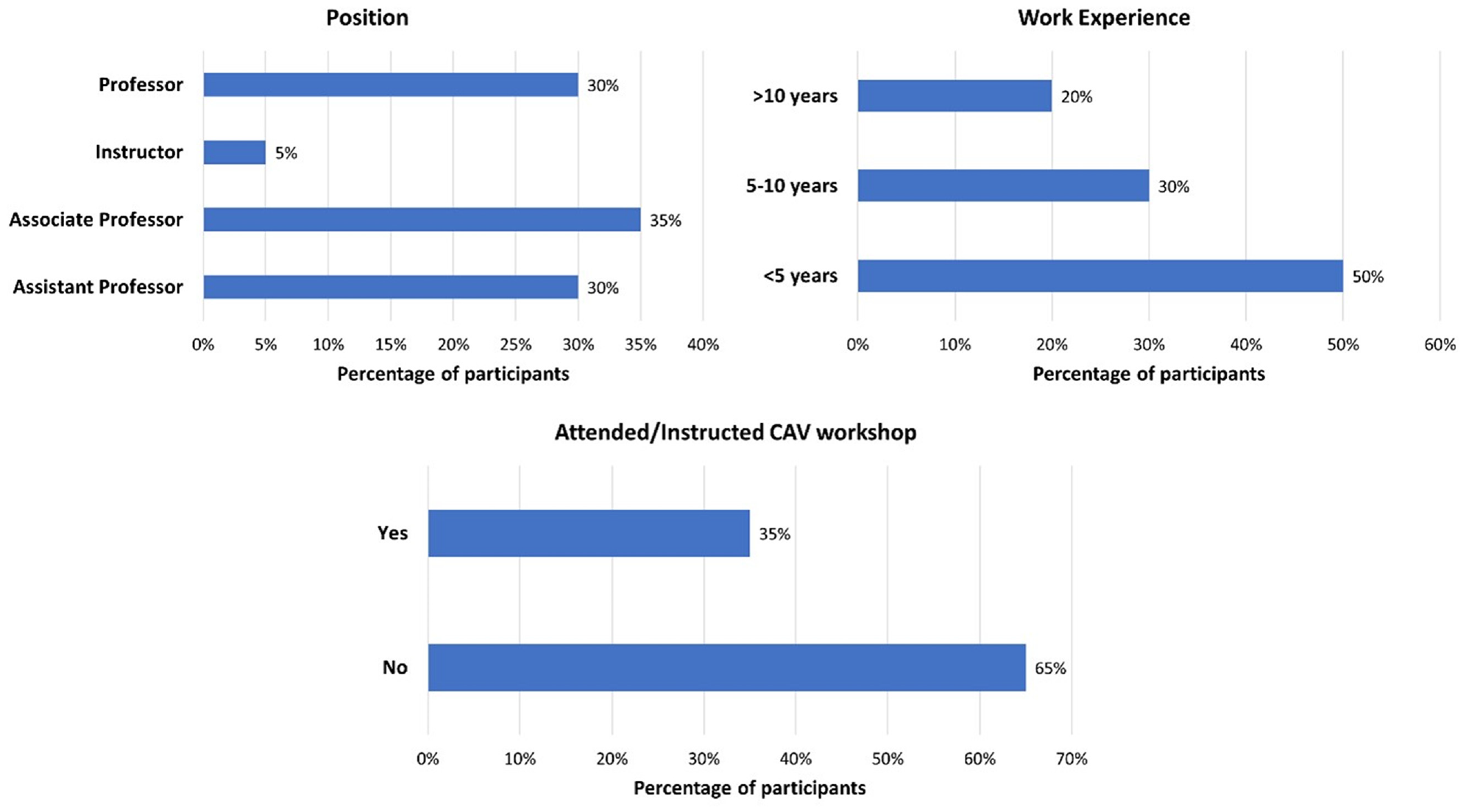
Distribution of respondents belong to Group 1.
Of the transportation engineering educators who have not integrated CAV topics into their courses (Group 2), 43.8% (7 out of 16) held the position of associate professor, while 37.5% were professors, and 12.5% were assistant professors (Figure 3). The range of experience among these faculty members ranged from a minimum of 1 year to a maximum of 20 years. The 25th percentile of experience was 5.8 years, the median was 8 years, and the 75th percentile was 17.3 years. Notably, more than 80% of these faculty members had at least 5 years of teaching experience. In addition, 6 out of the 16 respondents had previously attended or instructed CAV workshops. The collective attributes of Group 2 respondents suggest a hypothesis that senior faculty members with significant teaching experience are less inclined to integrate the CAV concept into their academic courses, even if they have attended or instructed any CAV workshops or short courses.
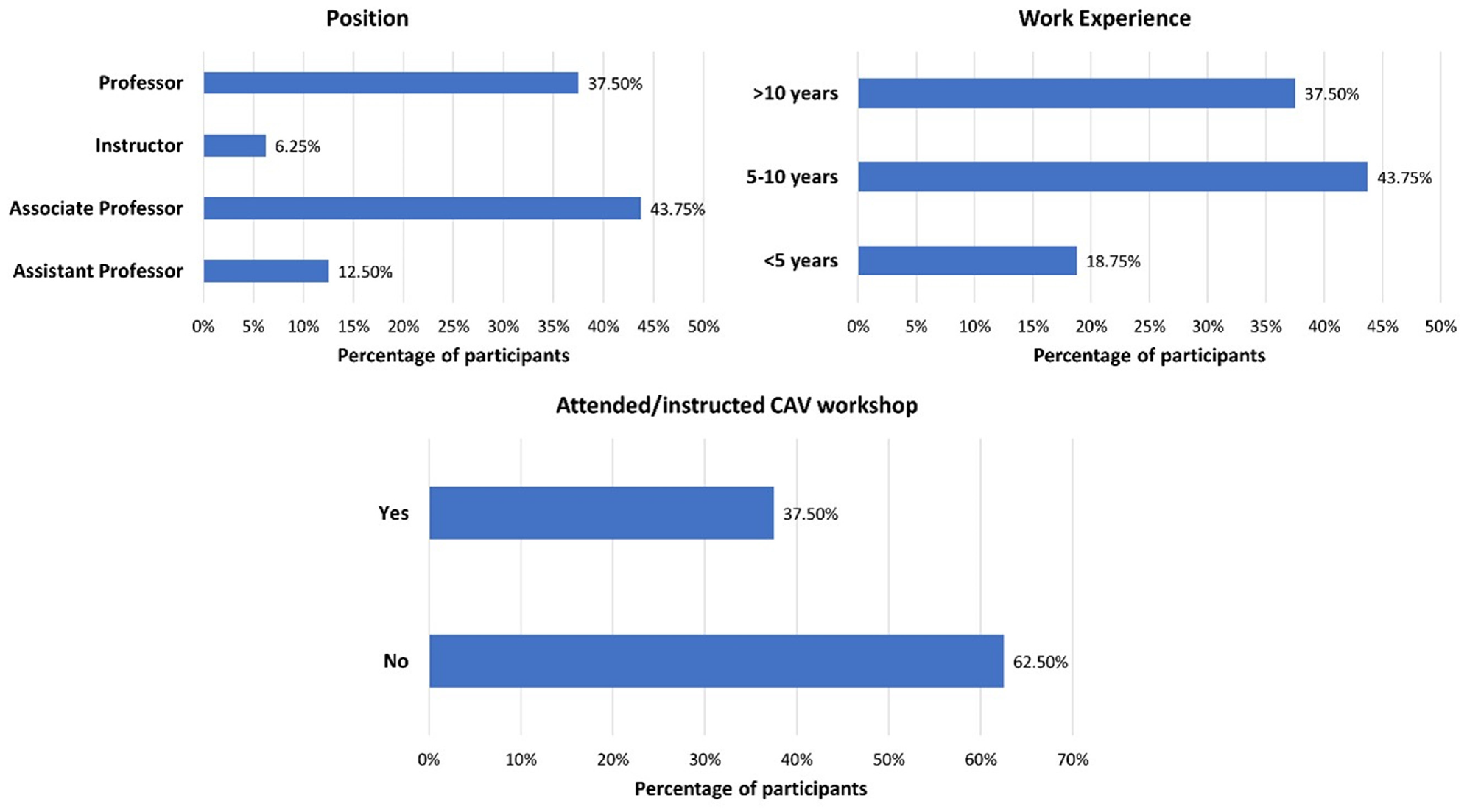
Distribution of respondents belong to Group 2.
Among the transportation engineering practitioners in Group 3, 58.3% (7 out of 12) were employed by state government agencies, while 25% worked for federal government agencies, and 16.7% were associated with consulting firms (Figure 4). Furthermore, 5 out of the 12 respondents in this group had prior experience attending or instructing CAV workshops.

Distribution of respondents belong to Group 3.
CAV Topics Already Incorporated in Transportation Engineering Courses
In the survey, Group 1 respondents were queried about whether they had already included any CAV topics in their transportation engineering courses. Of the 20 respondents in this group, 17 reported including the CAV definition in their “Introduction to Transportation Engineering” course (Figure 5). Among the top 10 topics, six were from “Introduction to Transportation Engineering” (What are CAVs?; Levels of automation; CAV control concept; Brief intro of potential CAV impacts on highway infrastructure, geometric design, transportation planning, road safety, and environment; Overview of CAV pilot deployment; CAV legislation), two were from “Transportation Planning/Modeling” (Potential changes to travel demand modeling components from CAV impacts; Impact of CAVs on state/local transportation planning), and the remaining two were from “Traffic Simulation” (Simulate CAV using common traffic simulation tools) and “Transportation Safety” (Contribution of CAV technologies in improving road safety) courses.

Top 10 connected and autonomous vehicle topic identification numbers already included in academic courses.
Critical CAV Topics by Ranking
As previously mentioned, the survey used a scale of “1” (lowest priority) to “5” (highest priority) for each topic. A weighted average was calculated to determine the high-priority CAV topics. Practitioners (Group 3) and educators who have already integrated CAV topics into their course materials (Group 1) tend to be more enthusiastic about CAV concepts and show greater interest in staying updated with the latest information on CAVs. Taking this into account, a weight of 1.5 was assigned to both Group 1 and Group 3, while Group 2 had a weight of 1. If respondents had not selected an importance scale for a particular topic already included in their teaching, the highest priority scale (“5”) was assigned. Topics that scored a weighted average of 4 or more were considered critical as well as high-priority. It is essential to note that the scale used for selecting high-priority topics was intentionally kept high in this study. The objective was to identify the most crucial CAV topics that need to be included in course lectures and short notes. Often, educators are faced with the challenge of covering a variety of course content within the total course duration. Because of time constraints, it might only be feasible to allocate one detailed lecture to discuss CAV topics. Therefore, prioritizing the most important topics becomes crucial for effective integration into the curriculum. Out of the 36 topics, a total of 16 critical CAV topics were selected that need to be included in various transportation engineering courses. These selected topics are highlighted in the shaded rows of Table 3. In addition, Table 3 provides the mean and standard deviation calculated for each preliminary selected topic by respondent group, along with the estimated weighted average. The estimated weighted average was used to rank each topic in relation to transportation engineering courses. For instance, in the “Highway Design” course, the topic “impact of CAVs on geometric design components” obtained the highest weighted mean of 4.25, ranking it as number 1. Among all the topics for this course, no other topic achieved a weighted mean of 4 or higher, indicating that “impact of CAVs on geometric design components” was the sole critical component selected for the “Highway Design” course. Table 4 provides a comprehensive list of potential critical CAV topics for transportation engineering courses, which includes the results obtained from the national survey. This compilation serves as a foundation for shaping potential lecture objectives concerning CAVs, providing guidance for transportation engineering educators to deliver impactful lessons. Table 5 illustrates the potential lecture objectives of CAVs for various transportation engineering courses based on the identified critical CAV content.
Weighted Mean of Potential Critical Connected and Autonomous Vehicle Topics
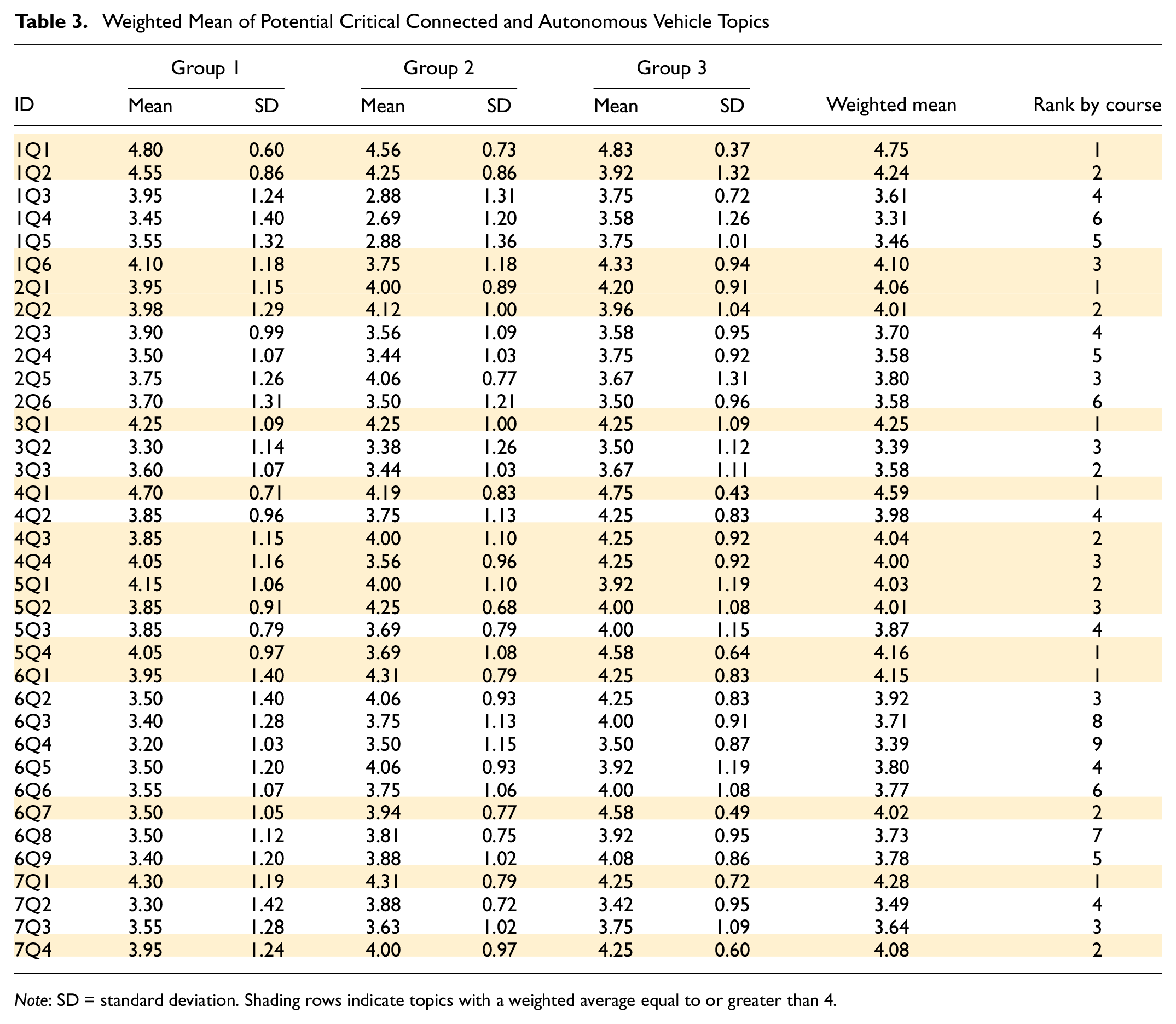
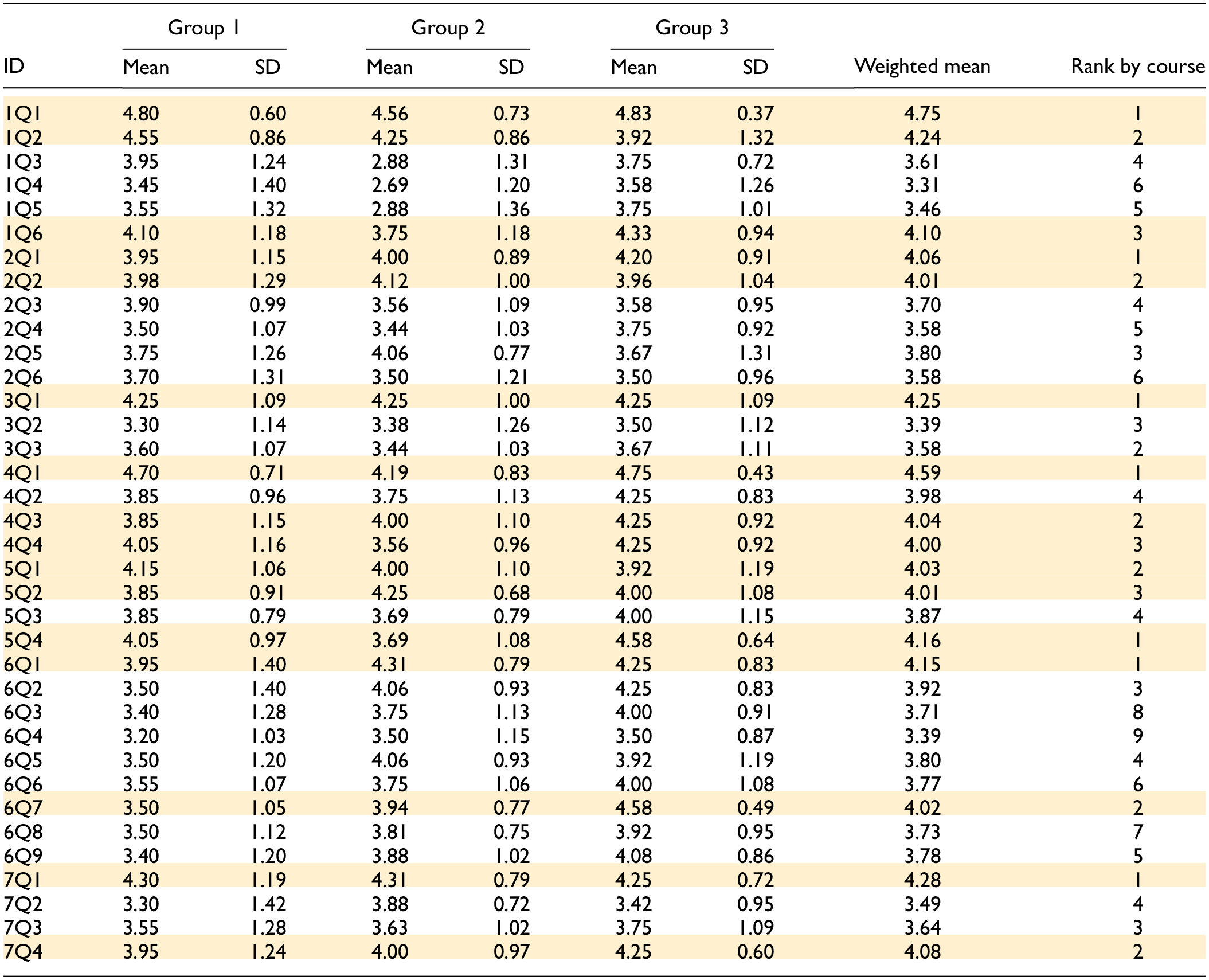
Note: SD = standard deviation. Shading rows indicate topics with a weighted average equal to or greater than 4.
High-Priority Connected and Autonomous Vehicle (CAV) Topics Based on the National Survey Results
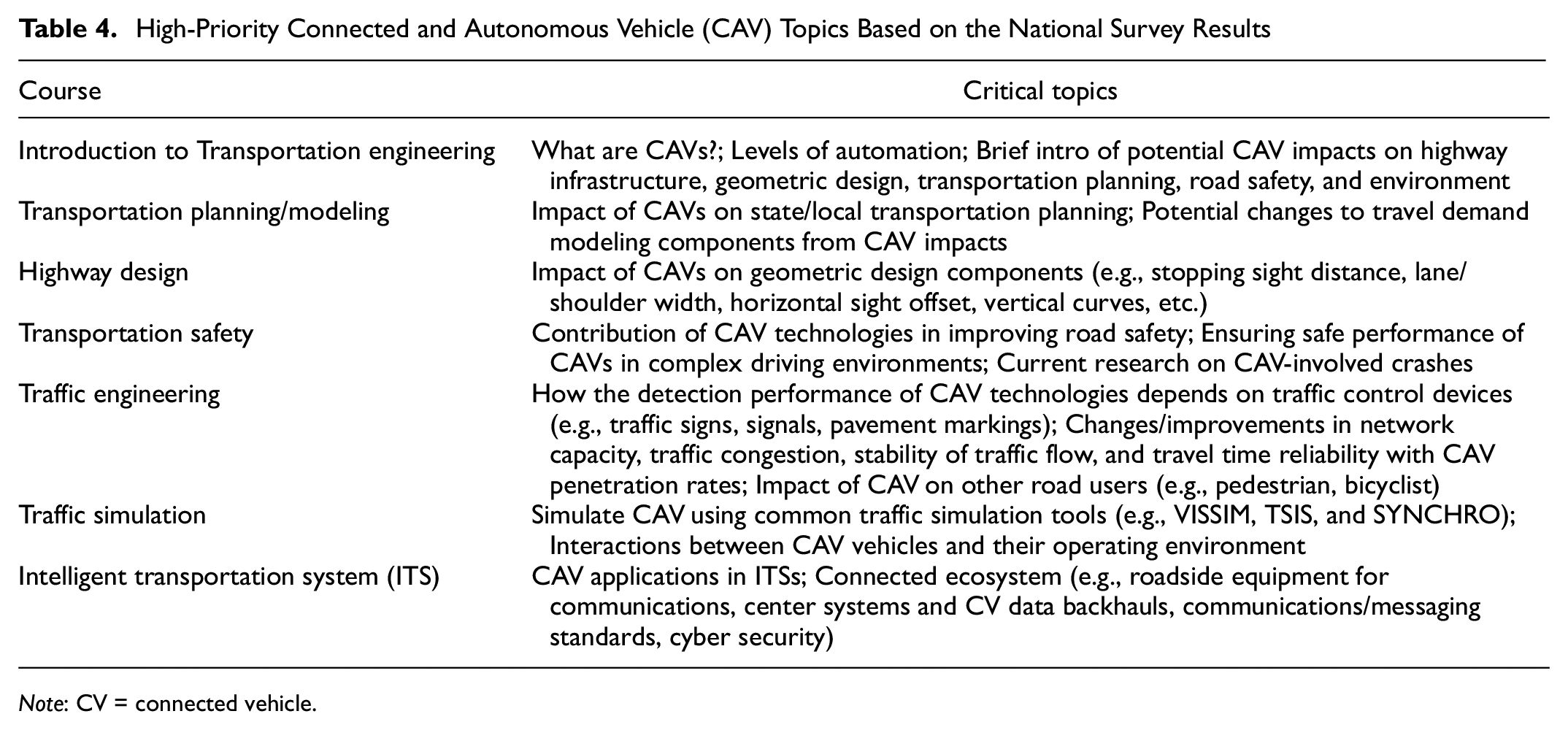
Note: CV = connected vehicle.
Study Objectives of Lectures Concentrated on Connected and Autonomous Vehicles (CAVs)

Note: AVs = autonomous vehicles; CVs = connected vehicles.
Recommended CAV Topics
In the national survey, both practitioners and educators recommended several upcoming CAV topics that could be included in future surveys to assess their importance across various courses. Table 6 shows the recommended CAV topics for future consideration. Incorporating these suggestions into future research initiatives can contribute to a more comprehensive understanding of CAV technology, its implications, and potential applications, thereby facilitating advancements in the field and informing future educational content.
Recommended Connected and Autonomous Vehicle (CAV) Topics for Future Related Studies

Note: MUTCD = Manual on Uniform Traffic Control Devices.
Conclusions
In light of emerging technologies and the challenges faced by traffic networks, the need for a focused and relevant transportation engineering curriculum has become increasingly important. The integration of CAVs into transportation planning, design, safety, and operations presents the opportunity to address overall traffic management systems in the future. However, attempting to cover all potential CAV topics and address all associated concerns in a single course is unrealistic. The national survey results of this study identified crucial CAV topics that offer significant benefits in setting specific objectives for lectures concentrated on CAVs within transportation engineering courses. By incorporating these topics, lectures can be enriched, leading to greater quality and relevance for students. The updated course materials can provide valuable insights into the rapidly evolving field of CAVs and their profound impact on fundamental transportation engineering elements, creating opportunities to equip students with skills and knowledge necessary for the competitive job market. It is worth noting that there is no definitive answer to what should be included in these courses. The specific mix of follow-up courses, graduates' career destinations, and local and regional contexts, as well as the needs of the profession, contribute to the selection of unique CAV topics for different transportation engineering programs.
This study has a few limitations that may be addressed in future research. One area of improvement could be the introduction of a better justified weight factor and ranking scale to analyze the feedback and comments from both educators and practitioners, to draw more robust conclusions. Comparing the findings between educators and practitioners could also be a promising avenue for further investigation. CAVs represent a convergence of various technologies, including computer science, electrical engineering, and communication. To effectively teach CAV concepts, there is an urgent need for engineering faculty to swiftly adapt their curriculum and establish essential prerequisites. Traffic courses should encompass both traditional and emerging aspects. To broaden the scope of study, future surveys could incorporate a wider array of CAV topics, extending beyond transportation engineering, given the rapid evolution of related technologies and infrastructure. In addition, the current study covered 33 states in the U.S.A., and expanding the outreach efforts in future research could increase the sample size, leading to more comprehensive analyses and increased confidence in the results.
Footnotes
Author Contributions
The authors confirm contribution to the paper as follows: study conception and design: M.M. Hossain, H. Zhou; data collection: M.M. Hossain, H. Zhou; analysis and interpretation of results: M.M. Hossain, H. Zhou; draft manuscript preparation: M.M. Hossain, H. Zhou, R. Turochy. All authors reviewed the results and approved the final version of the manuscript.
Declaration of Conflicting Interests
The author(s) declared no potential conflicts of interest with respect to the research, authorship, and/or publication of this article.
Funding
The author(s) disclosed receipt of the following financial support for the research, authorship, and/or publication of this article: This study is a part of a research project funded by the Southeastern Transportation Research, Innovation, Development and Education (STRIDE) Center (Project I5).
