



Abstract
Although the link between fat talk and body dissatisfaction is well established, the link between fat talk and other body image disturbance components remains underexplored. Our meta-analytic review explored the cross-sectional, experimental, and longitudinal relations between fat talk and body dissatisfaction, body surveillance, body shame, pressure to be thin, thin-ideal internalization, body checking, and appearance-based comparisons. We identified 35 relevant studies via electronic databases. Meta-analyses provided effect size estimates based on study design and whether fat talk was the predictor or outcome of body image disturbance. Results showed that fat talk is related to a broader range of body image constructs than just body dissatisfaction and that accumulated evidence from longitudinal and experimental studies—although limited in number—suggests it is more plausible that fat talk is a risk factor for these body image constructs, rather than a consequence of them. Nevertheless, the suggestion that fat talk may play a role in the causal sequence of body image issues highlights this as a potential area of intervention for researchers and clinicians. Given that fat talk is common and often well intentioned, awareness-raising exercises for parents and peers may be necessary to curb its incidence and impacts. Online slides for instructors who want to use this article for teaching are available on PWQ's website at http://journals.sagepub.com/page/pwq/suppl/index .
Body image disturbance is a broad construct that captures a range of maladaptive perceptions and attitudes regarding one’s body (Gardner, 2011). These disturbances include (1) cognitive factors, such as the overvaluation of physical appearance in one’s sense of self-worth and striving for a societally prescribed yet unattainable physique; (2) evaluative components, such as feelings of (dis)satisfaction with, and shame toward, one’s appearance (often in relation to the ideal one aspires to); and (3) behavioral aspects, such as appearance self-checking and comparison tendencies as well as behaviors designed to enhance or hide one’s appearance (Cash, 2011; Cash, Fleming, Alindogan, Steadman, & Whitehead, 2002; Tiggemann, 2011).
Although body dissatisfaction is perhaps the most commonly assessed of these body image disturbances (Grogan, 2008), it is clear that these disturbances are common, often co-occur, and seem to influence each other (Fitzsimmons-Craft et al., 2015; Fitzsimmons-Craft et al., 2012; Grabe, Ward, & Hyde, 2008). Moreover, these body image disturbances have been associated with a number of negative health consequences, including the onset of depressive symptoms (Benas, Uhrlass, & Gibb, 2010) and the development and maintenance of eating disorders, such as anorexia nervosa and bulimia nervosa (Delinsky, 2011; Ward & Hay, 2015). Thus, understanding of the determinants of body image disturbances is an area of research priority.
Common models of body image disturbance, such as objectification theory (Fredrickson & Roberts, 1997) and the tripartite influence model (Thompson, Heinberg, Altabe, & Tantleff-Dunn, 1999), emphasize the role of sociocultural influences in the development and maintenance of body image disturbances. A key feature of these models is their attempt to clarify the interrelations among body image disturbances and, in particular, the temporal sequence through which sociocultural pressures regarding appearance manifest as the various forms of body image disturbance. Objectification theory proposes that in a society in which women are valued highly for their appearance, continual exposure to sexual objectification from others leads to women adopting these appearance ideals and, ultimately, taking on a third-person perspective of their own bodies (self-objectification); they view, monitor, and judge their own appearance against the ideal appearance standard. Given that the socially prescribed appearance standard (the “thin ideal”) is unrealistic for most women to attain, evaluations of one’s appearance promote feelings of dissatisfaction, shame, and anxiety about one’s appearance (Moradi & Huang, 2008; Tiggemann, 2011). Furthermore, the self-objectification process is reinforcing, as the dissatisfaction and shame felt as a result of this self-evaluation may increase anxiety about how one looks in the eyes of others, thus perpetuating further self-monitoring, comparison, and behaviors that change one’s body.
The tripartite influence model (Thompson et al., 1999) expands on the objectification process by elucidating the specific sociocultural influences that promulgate internalization and pursuit of appearance standards. According to Thompson and colleagues, there are three main sources of influence—an individual’s parents, their peers, and mass media. These three sources can exert their influence directly, through explicit comments regarding the individual’s weight/appearance, and indirectly, via widespread media portrayals, associations between appearance and heightened happiness, success, confidence, and romantic possibilities (Engeln-Maddox, 2006; Evans, 2003) as well as modeling of maladaptive behaviors such as negative appearance attitudes, weight concerns, and weight control techniques (Carey, Donaghue, & Broderick, 2013; Rodgers, Paxton, & Chabrol, 2009). Another form of indirect influence on body image, “appearance conversations,” centers on broad appearance-related issues, which tacitly or explicitly promote the importance of one’s appearance, and encourage the construction and reliance upon appearance ideals (D. C. Jones & Crawford, 2006).
One specific type of appearance conversation that has received increasing attention of researchers in recent years is fat talk, which refers to making disparaging remarks about one’s appearance, and/or that of others, in an attempt to alleviate one’s own or a peer’s body image concerns (Nichter & Vuckovic, 1994). “Fat talk” serves a number of other functions, including absolving oneself of guilt, marking group affiliation, providing social validation, masking other underlying issues, and enabling social control. Not only are women with high body dissatisfaction more likely to engage in fat talk, but the relation between body image disturbance and fat talk appears to be bidirectional, with findings demonstrating that engaging in fat talk also increases body dissatisfaction and thin-ideal internalization levels (Arroyo & Harwood, 2012; Salk & Engeln-Maddox, 2011). Despite these and similar findings, fat talk’s appropriate place within the context of the aforementioned models of body image disturbance has received limited attention and has been narrowly focused on body dissatisfaction.
A recent meta-analysis investigated the relation between fat talk and body dissatisfaction (Sharpe, Naumann, Treasure, & Schmidt, 2013). Reviewing 24 studies involving children, adolescents, and adults, Sharpe and colleagues found a significant, positive cross-sectional association between fat talk and body dissatisfaction. There was also a significant prospective association between fat talk and subsequent body dissatisfaction for studies with long-term follow-up periods (e.g., 1 year), but no significant associations for short-term prospective studies (e.g., 2–3 weeks). The review included only one experimental study, which showed a significant, small effect size. Sharpe and colleagues (2013) concluded that fat talk is a correlate of body dissatisfaction, but the limited number of longitudinal and experimental studies prevented them from making strong conclusions regarding the causal role of fat talk.
Given the exclusive focus on one aspect of body image (body dissatisfaction) in Sharpe and colleagues’ review, it remains unclear whether fat talk also relates to other body image disturbance components. A systematic appraisal of the relation between fat talk and a broader range of body image disturbances will help to (1) identify the broader relevance of fat talk to body image, (2) examine causal relations among fat talk and body image disturbance, and (3) identify underresearched areas and/or inconsistent findings in need of further empirical testing. Collating and examining the cross-sectional studies will show whether fat talk is broadly related to other body image constructs, while longitudinal and experimental studies may clarify the processes that influence, as well as the temporal sequence of, the relations among constructs. Evaluating the existing literature in such a comprehensive way will facilitate a more nuanced understanding of how fat talk fits into the current models of antecedents and consequences of negative body image. This will, in turn, provide clarification on how fat talk may be targeted for both prevention and intervention techniques.
The aim of the present meta-analytic review is to extend Sharpe and colleagues’ findings by quantifying the association between fat talk and key components of body image (body dissatisfaction, body surveillance, body shame, perceived pressure to be thin, internalization of the thin ideal, body checking, and appearance-based comparisons). Based on the nature and frequency of fat talk (it is a highly common experience for women within social interaction contexts; Salk & Engeln-Maddox, 2011), we anticipated that fat talk would relate to the aforementioned range of sociocultural body image components, not just body dissatisfaction as explored by Sharpe and colleagues. Our review was guided by the following research questions: (1) Is fat talk correlated (cross-sectional or longitudinal) with the key components of body image disturbance? (2) Does existing evidence from experimental and longitudinal studies suggest that fat talk is a causal factor for the key components of body image disturbance? And (3) is there evidence to suggest that heightened levels of the key body image disturbance components causally influence fat talk?
Method
Eligibility Criteria
Studies were eligible for inclusion in the meta-analysis if they met the following criteria: (1) samples were all-female or mostly female (>50%); (2) articles were published in English between January 1990 and April 2016; and (3) articles were cross-sectional studies that included at least one measure of fat talk and one other measure of body image (body dissatisfaction, body surveillance, body shame, perceived pressure to be thin, thin-ideal internalization, body checking, and/or appearance-based comparisons), longitudinal studies that measured the independent and dependent variables at baseline and involved one or more follow-up time points for the dependent variable, or experimental studies that manipulated body image or exposure to fat talk to examine the impact on the other.
Although men also experience body image disturbance (McCabe & Ricciardelli, 2004; McKinley, 2006), these experiences appear qualitatively different, more common, and more severe for women (Cafri & Thompson, 2004; Grogan, 2008; Murnen, 2011). For these reasons, as well as the limited exploration of fat talk in male samples (e.g., Engeln, Sladek, & Waldron, 2013), we limit this review to all-female or mostly female studies. As disturbed body image can be present from an early age in childhood and continue throughout adulthood (Holub, 2008; Miller & Halberstadt, 2005), all age ranges were included in this review. We selected the start date of 1990 because, although the seminal research on fat talk was published in 1994, it is possible there may have been earlier work. To meet our criteria for inclusion, longitudinal studies needed to involve at least one measure of both fat talk and body image; however, for the sake of being able to conclude which variable preceded and predicted changes in the other, all measures needed to be implemented at both baseline and at least one follow-up time point. We grouped longitudinal studies that did not control for baseline levels of the dependent variable with the cross-sectional studies. To ensure that any group differences postmanipulation were due to the effect of manipulation, experimental studies needed to assess the dependent variable both pre- and postmanipulation.
Information Search and Study Selection
The electronic databases that we searched were Academic Search Complete, PsycARTICLES, PsycEXTRA, Psychology and Behavioral Sciences Collection, and PsycINFO, using the following search terms: “fat talk” OR “negative body talk” OR “appearance conversations” OR “appearance-related comments” OR “appearance-related commentary” OR “negative comments” OR “negative commentary” OR “weight-related conversations” AND “body dissatisfaction” OR “body satisfaction” OR “body image” OR “body image disturbance” OR “disturbed body image” OR “body surveillance” OR “body shame” OR “body esteem” OR “body concerns” OR “body checking” OR “thin ideal” OR “thin ideal internalization” OR “comparisons” OR “appearance-based comparisons” OR “appearance-related comparisons,” with “?” indicating the databases were searched for both the UK and U.S. spelling. The publication year was limited to 1990–2016 and we selected the option to exclude dissertations. The search was conducted on April 8, 2016. In addition, we checked reference lists of located articles.
Both authors conducted the study selection process individually and performed an interrater reliability analysis using Cohen’s κ statistic to determine consistency among coders (McHugh, 2012). Studies were screened at two stages: (1) title and abstract and (2) full text. Over half of the articles initially found were excluded at the title and abstract phase, leaving just under half of the results to be screened by reading the full text. The full study selection process was reported using the Standards Statement (Moher, Liberati, Tetzlaff, & Altman, 2009).
The first author extracted the data from the eligible studies with a standardized table for the following categories: author, date of publication, journal, study design, sample size, gender of participants (% female), age of participants (mean, standard deviation), country where study was conducted, fat talk measure used, body image measure used, and, where relevant, length of follow-up period and experimental paradigm. The researchers of five studies were contacted for additional output or original data but only three responded.
The first author assessed risk of bias in individual studies in a nonblind manner. The checklist used was based on the Fowkes and Fulton (1991) checklist (as used in the previous systematic review and meta-analysis by Sharpe et al., 2013) and was modified to include measures of other body image components. An evaluation of bias was also conducted, using the following criteria: (1) use of nonrandom sampling, (2) percentage of nonresponders greater than 65%, (3) use of nonvalidated measure of fat talk, (4) use of nonvalidated measure of body image disturbance, (5) use of nonvalidated measure of thin-ideal internalization, (6) use of nonvalidated measure of appearance-based comparisons, (7) use of nonvalidated measure of body surveillance, (8) use of nonvalidated measure of body shame, (9) use of nonvalidated measure of perceived sociocultural pressure to be thin, (10) use of nonvalidated measure of body checking, (11) missing data not missing at random, (12) participant attrition not random, (13) significant differences between experimental groups at baseline, and (14) participants not blinded to experimental condition. Criterion (12) was only relevant for longitudinal studies, whereas Criteria (13) and (14) were only relevant for experimental studies.
Summary Measures and Planned Methods of Analysis
For cross-sectional studies, the authors extracted the sample size and unadjusted value of the correlation coefficient (r) of the relation between engaging in fat talk and body image disturbance ratings. This information was also taken for the baseline cross-sectional associations in longitudinal studies as well as the overall correlation from any ecological momentary assessment studies. We applied a Fisher’s (1915) z-transformation to these correlations to normalize the distribution of effect sizes and facilitate both significance testing and confidence interval calculation. For longitudinal studies, we took semipartial correlations (sr) assessing the relation between engaging in fat talk at baseline and body image disturbance levels at follow-up (or baseline body image disturbance levels and fat talk frequency at follow-up), controlling for the level of the outcome variable at baseline.
We calculated the standardized mean difference (d) as the principal summary measure for experimental studies. Depending on what data were provided, we calculated Cohen’s d using either the mean and standard deviation for both the fat talk group and the control group, and the pooled standard deviation, or using Morris’s (2008) guidelines for pretest–posttest control group designs. Morris’s measure is based on the difference between intervention and control group in mean pretest-to-posttest change, divided by the pooled standard deviation of both groups at the pretest level.
We converted all effect estimates into r values to provide a common metric for interpretive purposes. Any scales that had been reverse-scored (i.e., scales measuring body satisfaction where a low score indicated high body dissatisfaction) were amended to make scoring consistent across all studies. We assessed the effect size estimates under the random effects model, as the studies were assumed to differ in terms of participant factors such as age as well as study design (Borenstein, Hedges, Higgins, & Rothstein, 2009). Cohen’s (1988) guidelines for interpreting r values suggest values of .1–.3 represent a small effect, .3–.5 indicate a moderate effect, and values greater than .5 suggest a large effect. We tested heterogeneity using I 2 to assess the proportion of variation in estimates in cross-sectional, longitudinal, and experimental studies. I 2 values range from 0% to 100%, where 0 indicates no observed heterogeneity, not requiring further investigation, and 100 means all the variation across studies is due to heterogeneity instead of chance and should be explored further with meta-regression. Higgins, Thompson, Deeks, and Altman (2003) proposed guidelines for interpreting I 2, where values of 25, 50, and 75 indicate low, moderate, and high levels of heterogeneity, respectively. We calculated Rosenthal’s (1979) fail-safe N for all statistically significant associations that involved a sufficient number of studies (i.e., greater than 3; Borenstein, Hedges, Higgins, & Rothstein, 2006) to further check for publication bias. Rosenthal’s fail-safe N indicates the number of new or unpublished nonsignificant studies, not included in the meta-analysis, that are required to render a significant effect estimate to nonsignificance (.05). All analyses were conducted using the Comprehensive Meta-Analysis computer software (Version 2.2.027; Borenstein et al., 2006).
Study Selection and Characteristics
A total of 144 citations were returned in the literature search (Figure 1). After adjusting for duplicates, 106 remained. Of these, 27 studies were removed after reviewing the title and/or abstracts and finding the studies to be irrelevant. Eight were removed because they used an all-male sample. Eight conference presentations were removed, along with seven books, book chapters, and book reviews. Four qualitative studies and three reviews were also excluded. The full text of 49 articles were then assessed. A total of 19 records were then excluded; 12 for not assessing fat talk, 3 for not assessing body image disturbance, 2 for not including a premanipulation measure of body image disturbance, 1 for conflating fat talk with food influences, and 1 due to the author not responding with relevant data. Hand searching the references of the remaining 30 articles led to three additional relevant studies being found. A total of 35 samples/studies (33 articles) met the inclusion criteria and were included in the systematic review. When comparing the study selection process between authors, there were only four articles the authors differed on. The first author had excluded them on the basis that they were interventions and not considered relevant, while the second author included them for their baseline data. All four discrepancies were resolved upon discussion. The interrater reliability for the authors was found to be κ = 0.93 (p < .001), and rater agreement was 96.23%, indicating strong agreement between the two authors.
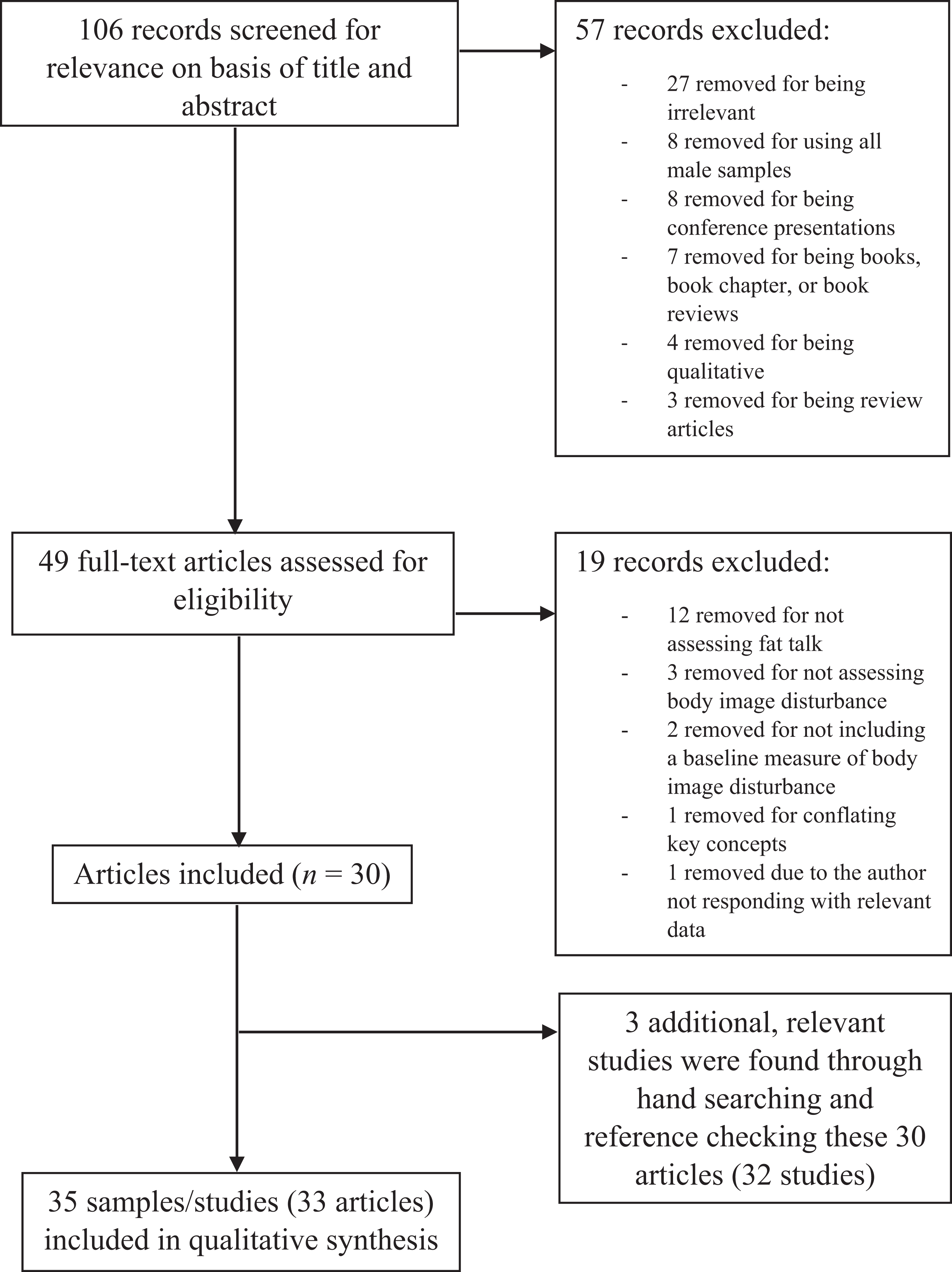
Flow diagram showing study search and selection process.
Body dissatisfaction was measured in all but 2 of the 35 samples (Garnett and colleagues’, 2014, measure of body dissatisfaction was a measure of body surveillance and was relabeled as such for the purposes of the analyses). Internalization of the thin ideal was used in 12 studies, appearance-based comparisons in 10, body surveillance in 10, body shame in 5, perceived pressure to be thin in 4, and body checking in 1. Nineteen studies used a sample of adult women, nine used adolescent girls, and a further seven used children. Overall, the age of all the samples used ranged from 5 years to 60 years. The majority of studies used all-female samples (32 studies), while three samples had a mix of both genders, though all three were predominantly female.
Risk of Bias Within Studies
The results from individual studies assessing risk of bias are shown in Table 1 and indicate that the studies were fairly similar overall. None of the studies used random sampling; without random selection, the samples may not accurately represent the population. Nonresponse reporting was also an issue; only seven (20%) studies provided this information. Eleven (31%) studies used nonvalidated items to measure fat talk, with seven of these using adapted versions of preexisting (but not validated) measures. Overall, measures of body image disturbance were unlikely to be a source of bias within studies, with only two (6%) studies using a nonvalidated measure for body dissatisfaction and one (3%) study using a nonvalidated measure for thin-ideal internalization. Only one study provided information on missing data and how it was dealt with. Two of the five longitudinal studies did not include information about whether participant attrition was random. Participants were randomly allocated in all three experimental studies. Participants were blinded to the experimental condition in two of the experimental studies and the other study was unclear in reporting that information. Overall, the likely risk of bias is moderate, considering the use of nonvalidated fat talk measures in a considerable number of studies and the consistent use of nonrandom sampling.
Assessment of Risk of Bias Within Individual Studies.
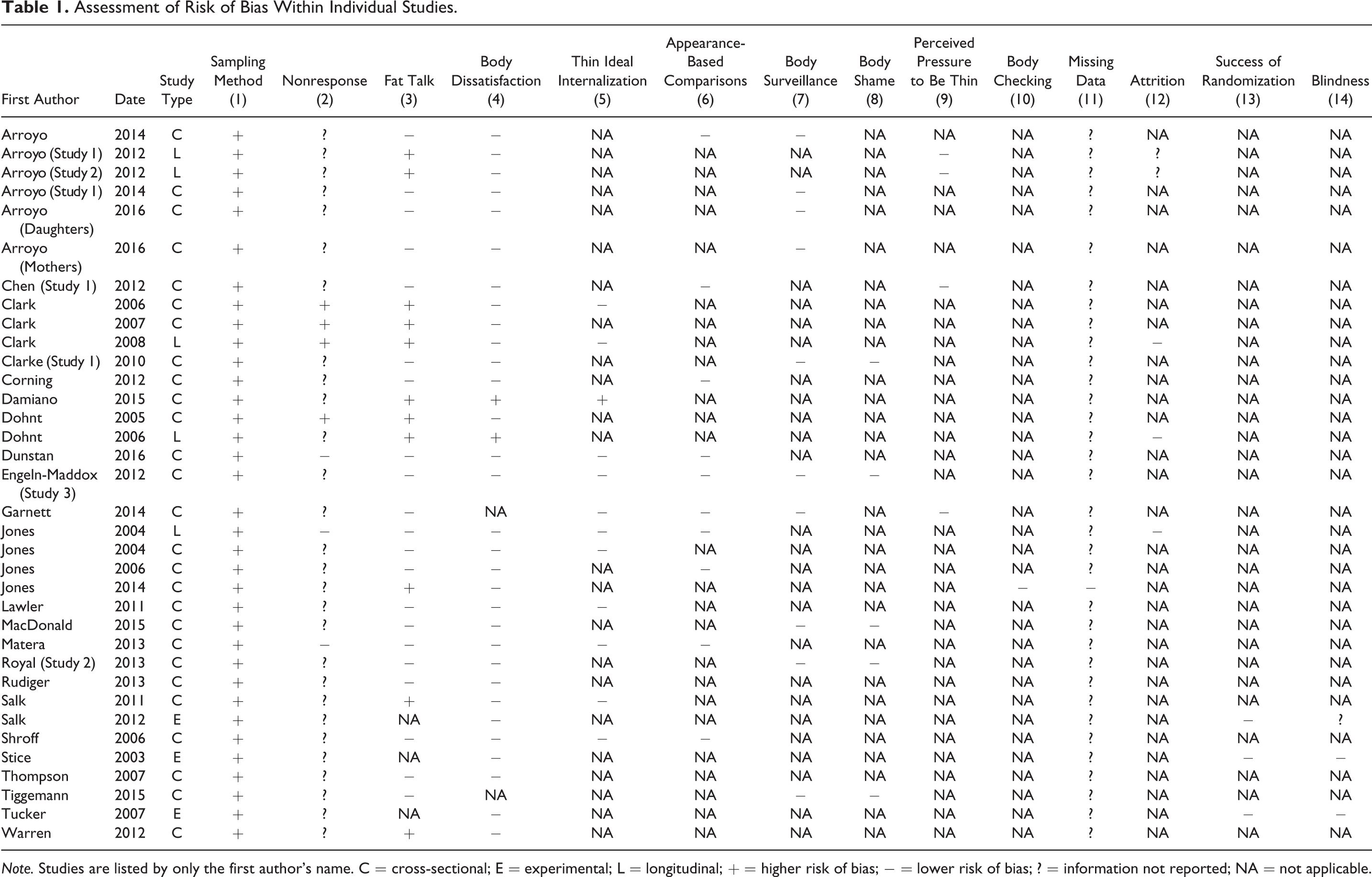
Note. Studies are listed by only the first author’s name. C = cross-sectional; E = experimental; L = longitudinal; + = higher risk of bias; − = lower risk of bias; ? = information not reported; NA = not applicable.
Results
Fat Talk and Body Dissatisfaction
Cross-sectional estimates of the relation between fat talk and body dissatisfaction levels are shown in Table 2. There was a positive association between engaging in fat talk and body dissatisfaction levels and a moderate effect size, r = .34, 95% CI [0.25, −0.42], p < .001. Furthermore, there was substantial heterogeneity between the effect size estimates (I 2 = 92.32). We visually inspected the funnel plot, which confirmed the study effects were not considerably asymmetrically distributed. A further 4,782 studies would be required to render the observed effect nonsignificant, as per Rosenthal’s (1979) fail-safe N.
Cross-Sectional Studies Assessing the Association Between Fat Talk and Body Image Disturbance Variables.
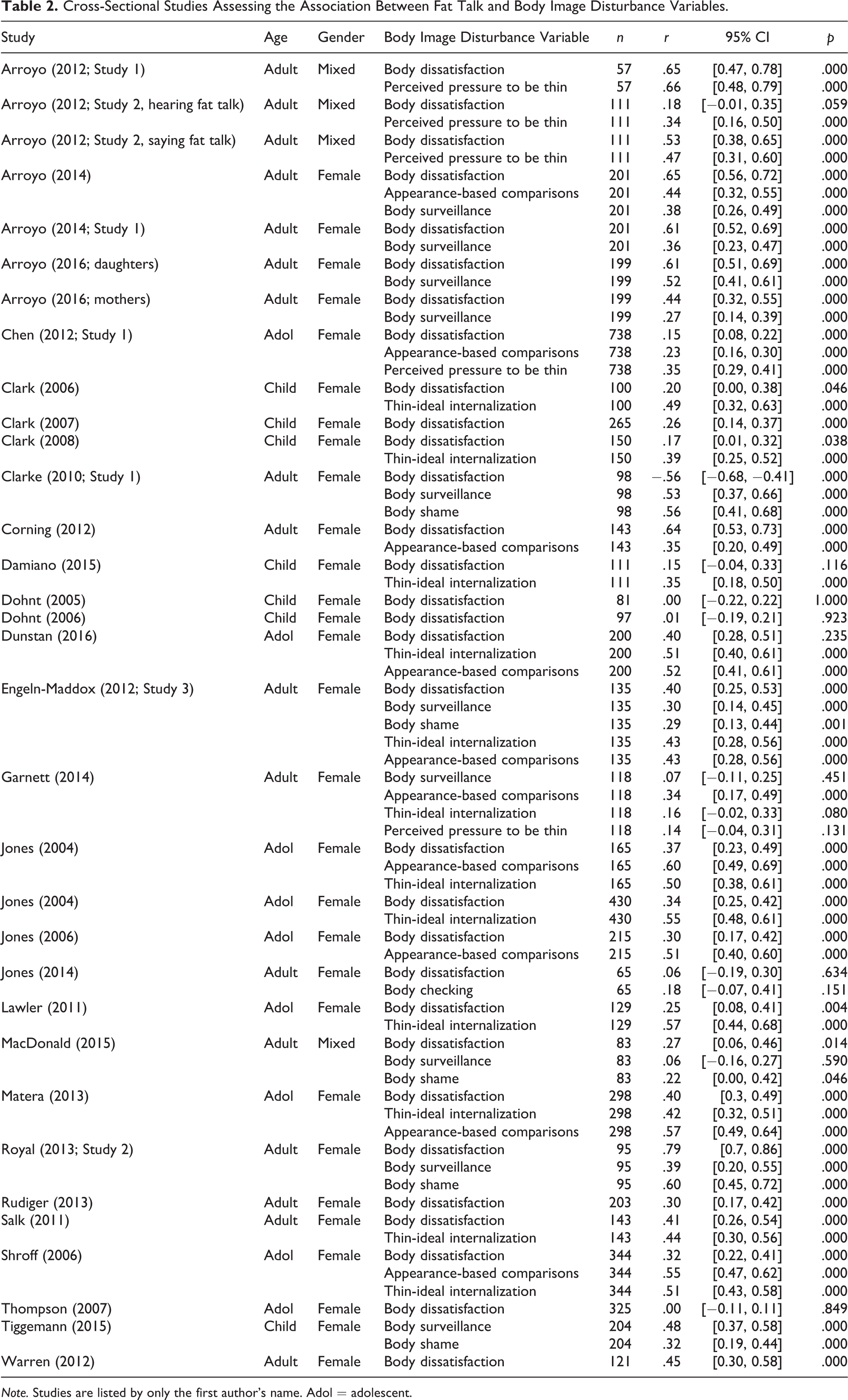
Note. Studies are listed by only the first author’s name. Adol = adolescent.
Three experimental studies provided associations between fat talk and body dissatisfaction, as shown in Table 3. Tucker, Martz, Curtin, and Bazzini (2007) did not include a clear control group with which to compare the fat talk condition, only a self-accepting group and a self-aggrandizing group. Self-acceptance (“I feel pretty comfortable with my body”) was selected as the condition most closely approximating a control, as it was considered more neutral in nature than self-aggrandizing (“There are a lot of things I love about my body”). All studies had adult female participants. The association between engaging in fat talk and body dissatisfaction levels was not significant and the effect size was trivial, r = −.01, 95% CI [−0.37, −0.36], p = .978. Heterogeneity was high among the estimates of effect sizes (I 2 = 88.42). Due to the lack of a clear control group, we conducted the analyses again, without the study by Tucker et al. The association between engaging in fat talk and body dissatisfaction levels was still not significant but showed a small, nontrivial effect size, r = .17, 95% CI [−0.08, −0.41], p = .180. The heterogeneity was moderate (I 2 = 64.64).
Experimental Studies Assessing the Association Between Fat Talk and Body Image Disturbance Variables.
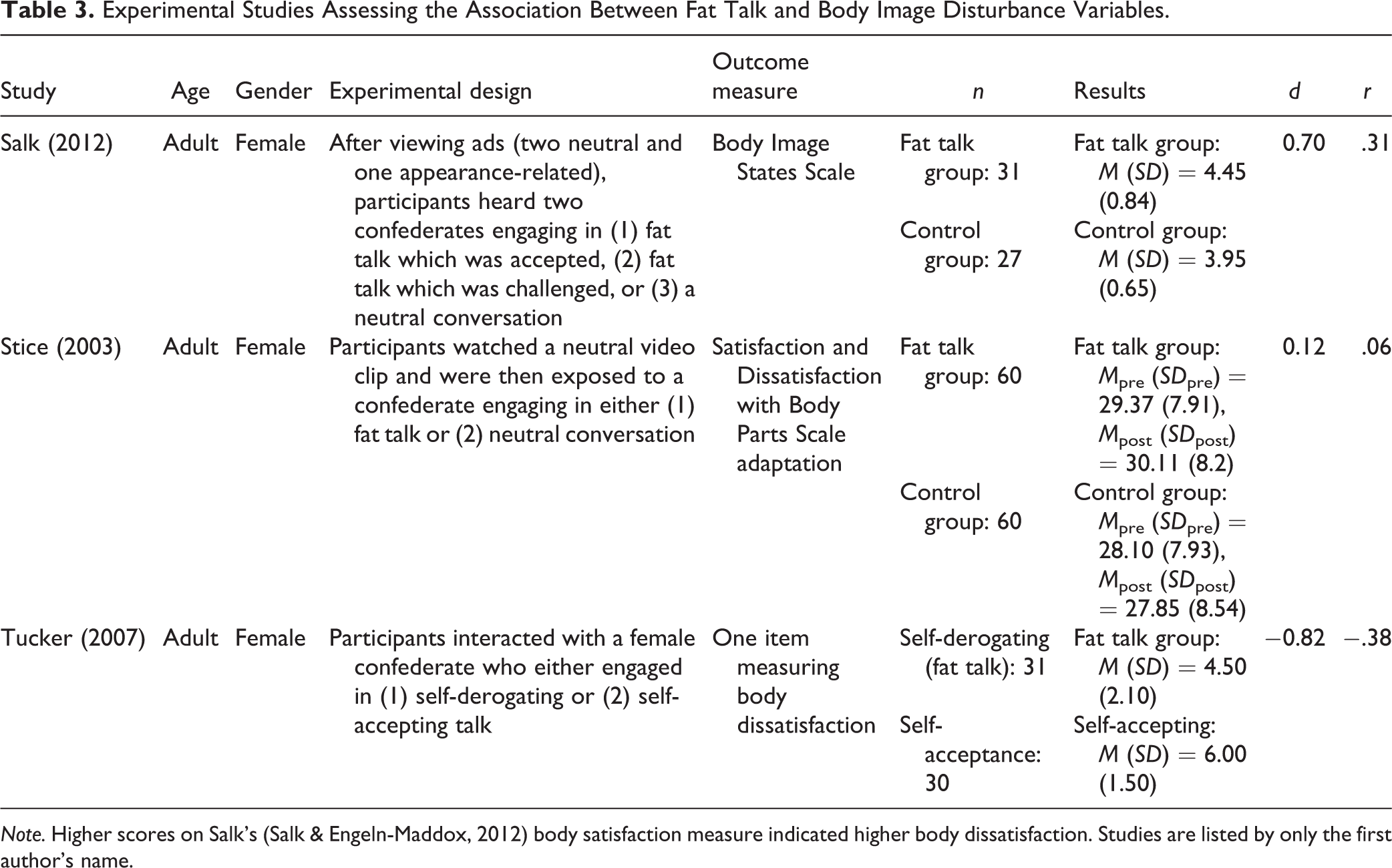
Note. Higher scores on Salk’s (Salk & Engeln-Maddox, 2012) body satisfaction measure indicated higher body dissatisfaction. Studies are listed by only the first author’s name.
The estimates for the prospective relation between fat talk and body dissatisfaction are shown in Table 4. There was a significant association between engaging in fat talk and later body dissatisfaction but a trivial effect size, r = .08, 95% CI [0.00, −0.17], p = .046. There was no heterogeneity between study estimates of effect sizes (I 2 = 0.00). The studies that investigated the relation between body dissatisfaction levels and future fat talk are shown in Table 4. There was a nonsignificant correlation between initial body dissatisfaction levels and engaging in fat talk at a later date, with a trivial effect size, r = .01, 95% CI [−0.10, −0.12], p = .877. There was a low-to-moderate amount of heterogeneity between the effect size estimates (I 2 = 31.85).
Longitudinal Studies Assessing the Bidirectional Association Between Fat Talk and Body Image Disturbance Variables.
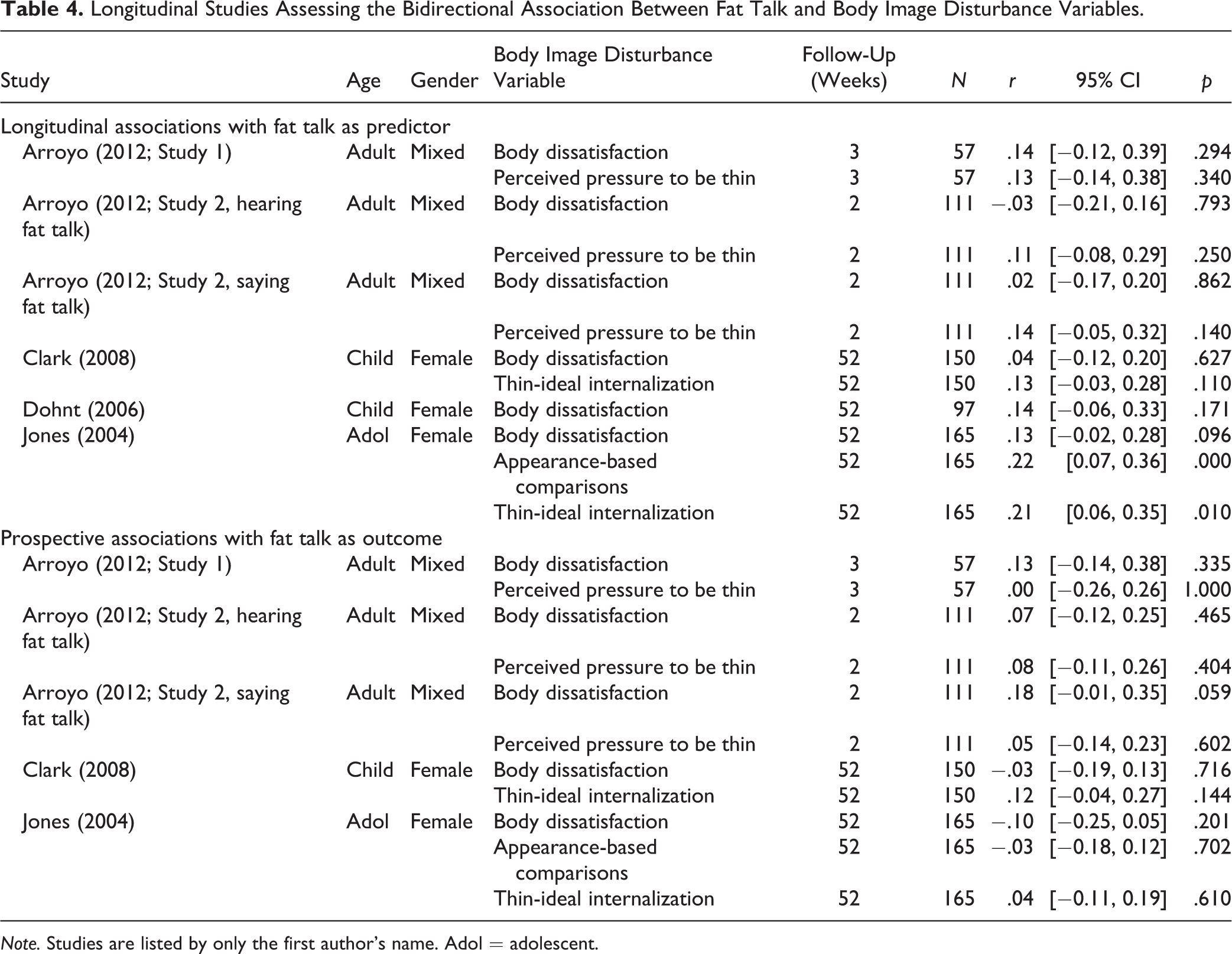
Note. Studies are listed by only the first author’s name. Adol = adolescent.
Fat Talk and Body Surveillance/Body Checking
The cross-sectional estimates for body surveillance were combined with one cross-sectional estimate for body checking, as we considered the two variables to be conceptually very similar. These estimates are provided in Table 2. There was a significant association between fat talk and levels of body surveillance/checking, with a moderate effect size, r = .34, 95% CI [0.25, −0.43], p < .001. The heterogeneity was high in the effect size estimates across studies (I 2 = 75.24). It was shown through Rosenthal’s (1979) fail-safe N that a further 547 studies would be required to render the observed effect nonsignificant.
Fat Talk and Body Shame
The cross-sectional estimates for fat talk and experiences of body shame are shown in Table 2. There was a significant positive correlation between engaging in fat talk and body shame experiences and a moderate effect size, r = .41, 95% CI [0.25, −0.54], p < .001. Furthermore, heterogeneity was high between the effect size estimates (I 2 = 77.45). It was found that a further 133 studies would be required to render the observed effect nonsignificant, according to Rosenthal’s (1979) fail-safe N.
Fat Talk and Perceived Pressure to Be Thin
The cross-sectional estimates for the association between fat talk and perceived pressure to be thin are shown in Table 2. The correlation between fat talk and perceived pressure to be thin was significant, positive, and moderate in size, r = .36, 95% CI [0.16, −0.53], p = .001. Heterogeneity was high between the estimated effect sizes (I 2 = 85.32). A further 83 studies would be needed to reduce the observed effect size to nonsignificance, as per Rosenthal’s (1979) fail-safe N.
The studies that investigated the longitudinal association between fat talk and changes in perceived pressure to be thin are shown in Table 4. The association between fat talk and perceived pressure to be thin was not significant and the effect size was small, r = .13, 95% CI [−0.03, −0.27], p = .105. The estimates for the relation between perceived pressure to be thin and fat talk are also shown in Table 4. There was a nonsignificant relation between perceived pressure to be thin and fat talk and a trivial effect size, r = .04, 95% CI [−0.11, −0.20], p = .581.
Fat Talk and Thin-Ideal Internalization
The cross-sectional estimates for the relation between fat talk and internalization of the thin ideal are shown in Table 2. The correlation between engaging in fat talk and thin-ideal internalization was significant, with a moderate effect size, r = .46, 95% CI [0.40, −0.51], p < .001. Heterogeneity was moderate among the effect size estimates (I 2 = 61.45). Upon visual inspection of the funnel plot, we confirmed the study effects were not significantly asymmetrically distributed. According to Rosenthal’s (1979) fail-safe N, a further 1,642 studies would be required to render the observed effect nonsignificant.
Table 4 shows the estimates for the prospective association between engaging in fat talk and thin-ideal internalization levels. There was a significant correlation between fat talk and internalization of the thin ideal, but the effect size was small, r = .17, 95% CI [0.06, −0.28], p = .002. The estimates for the relation between thin-ideal internalization levels and engaging in fat talk are also shown in Table 4. The correlation between thin-ideal internalization and fat talk was not significant and the effect size was trivial, r = .08, 95% CI [−0.03, −0.19], p = .168.
Fat Talk and Appearance-Based Comparisons
The cross-sectional estimates for the relation between engaging in fat talk and the tendency to partake in appearance-based comparisons are shown in Table 2. There was a significant correlation between fat talk and appearance-based comparisons and a moderate effect size, r = .46, 95% CI [0.37, −0.55], p < .001. Heterogeneity among the estimates of effect sizes was high (I 2 = 87.62). A further 1,418 studies would be required to render the observed effect nonsignificant, as per Rosenthal’s (1979) fail-safe N.
The prospective relation between fat talk and engaging in appearance-based comparisons was investigated in one study, with this association being shown in Table 4. The association between fat talk and appearance-based comparisons was significant, with a small effect size, r = .22, 95% CI [0.07, −0.36], p = .004. This same study provided a cross-sectional estimate for the relation between appearance-based comparisons and engaging in fat talk, as shown in Table 4. The correlation between appearance-based comparisons and fat talk was not significant and the effect size was trivial, r = −.03, 95% CI [−0.18, −0.12], p = .702.
Discussion
Although prior research has established that body dissatisfied individuals are more likely to engage in fat talk (Sharpe et al., 2013), there has been considerable conjecture about the nature of this association (e.g., Gapinski, Brownell, & LaFrance, 2003; D. C. Jones, 2011; Salk & Engeln-Maddox, 2011). We evaluated cross-sectional, longitudinal, and experimental evidence to better understand this relation, testing the plausibility of a bidirectional association; we also incorporated a wider range of body image constructs in order to explore the extent of fat talk’s influence on body image. Overall, it was shown that fat talk is cross-sectionally associated with a broader range of body image components than simply body dissatisfaction. Furthermore, despite several concerns about the limitations of extant longitudinal studies (as detailed below), the existing experimental and longitudinal findings suggest it is more plausible that fat talk is a risk factor for body image disturbances than an outcome of them.
Several researchers (e.g., Engeln-Maddox, Salk, & Miller, 2012; Tucker, Martz, Curtin, & Bazzini, 2007) have speculated that fat talk arises in order to reduce the dissatisfaction an individual is feeling toward their appearance. It is argued further that this approach is unsuccessful in this goal because the act of disparaging one’s appearance draws attention to one’s perceived flaws, hence encouraging negative reflections about one’s appearance (Gapinski et al., 2003; Salk & Engeln-Maddox, 2012). While, in a recent review, Sharpe and colleagues established cross-sectional, experimental, and longitudinal effects of fat talk on body dissatisfaction—findings replicated in the present review that included more recent studies (an additional six cross-sectional, one longitudinal, and two experimental studies)—there was limited investigation of, and evidence for, body dissatisfaction promoting fat talk. In the five studies that investigated the longitudinal relation between body dissatisfaction (as predictor) and fat talk (as outcome), none found a significant association, and these effects were modest at best. Effect sizes were similarly underwhelming in the few longitudinal studies testing the impact of other body image constructs on fat talk.
These null findings from longitudinal studies may be a genuine reflection of the nature of the body image–fat talk relation. It is also possible that design characteristics promoted this null result. Whereas Arroyo and Harwood (2012) and Salk and Engeln-Maddox (2011) discuss an instance of body dissatisfaction promoting an episode of fat talk, prior longitudinal studies explored whether general tendency toward body dissatisfaction predicts subsequent increased frequency of fat talk. Unfortunately, although intensification of body dissatisfaction (or other body image constructs) over time may lead to a subsequent increase in frequency of engagement in fat talk, none of the longitudinal studies in the present review measured change in body image leading to change in fat talk frequency. Further, both the time frame for such effects and the impact that accumulation and/or severity of body image experiences may have on fat talk remain unclear.
These longitudinal studies also involved variable time intervals between measurement of independent variable (IV) to measurement of change in the dependent variable (DV), with some studies using a shorter term follow-up of 2–3 weeks and others much longer, with follow-up at 52 weeks. There appears to be no clear pattern of either shorter or longer intervals having a greater effect for the relation between body image disturbance and fat talk, which may be caused by inappropriate time intervals leading to inaccurate estimates of effect size. As Timmons and Preacher (2015) highlight, time intervals between assessments are typically chosen arbitrarily as the time course for causal effects are rarely known a priori. Thus, effect size estimates are likely to be influenced by variation in lag: Setting the time lag too long will underestimate the effect size, whereas intervals that are too short may not meaningfully differ from cross-sectional associations. In addition, exploring the relation between body image disturbance and fat talk in short time frames, such as moment to moment in daily life, would assist in clarifying these issues of severity and cumulative or cascading effects.
Despite these limitations, longitudinal effects were typically stronger when body image variables were modeled as an outcome than as a predictor of fat talk, and experimental findings also showed the impact of fat talk on body image (specifically, body dissatisfaction). This pattern of findings is consistent with the notion that fat talk—like other social influences on body image—(inadvertently) places greater attention on appearance (rather than alleviating this focus) and may, in turn, promote negative body image in several different ways. First, exposure to fat talk may also be a way for transmission of the thin ideal to those individuals who were previously uninitiated. As proposed in the tripartite influence model (Thompson et al., 1999), and demonstrated in empirical studies (e.g., Shroff & Thompson, 2006; Yamamiya, Shroff, & Thompson, 2008), unhealthy values toward, and experiences of, body image are commonly shared and discussed within friendship groups (Carey et al., 2013; Paxton, Schutz, Wertheim, & Muir, 1999), and these friends are seen as a key source of influence on internalization of the thin ideal (Matera, Nerini, & Stefanile, 2013; Tiggemann, 2011).
Second, insofar as fat talk is a response to negative body image experiences, it seemingly serves to prolong focus on appearance, thus enhancing likelihood of activation of unhealthy appearance-related schema and behaviors. For instance, the act of disparaging oneself or another person for failing to meet the thin ideal reinforces the importance of the thin ideal when, instead, it should be challenged (Stice, Butryn, Rohde, Shaw, & Marti, 2013; Stice, Mazotti, Weibel, & Agras, 2000). The focus on negative aspects of another person’s appearance may encourage reflection on the areas of concern that the listener has for her own appearance. Further, the act also involves scrutiny of one’s own appearance or that of others, and thus it is not surprising that those who engage in fat talk should also commonly engage in these body surveillance and comparison behaviors.
Recent attempts have been made to revise common sociocultural models of body image to expand the sources and nature of social influence on body image. For instance, there has been growing interest in the role that Facebook and other social media platforms play in perpetuating the thin ideal and provoking feelings of dissatisfaction in users (e.g., Puccio, Kalathas, Fuller-Tyszkiewicz, & Krug, 2016; Rodgers, Melioli, Laconi, Bui, & Chabrol, 2013). Similarly, there is increasing awareness that ambiguous and even positively worded comments about appearance may also have negative impact on body image, extending from prior concerns about teasing and modeling of negative body image behaviors as key modes for transmission of the thin ideal. Given the diffuse network of associations found in this review between fat talk and an array of body image constructs, consideration should perhaps be given to how fat talk may fit within models of social influences on body image. The present authors noticed the distinct lack of studies in which fat talk and other social influences were simultaneously tested for their ability to predict body image disturbances, either in cross-sectional or longitudinal contexts. Such analyses would help to evaluate these conjectures about where fat talk fits within the body image models, and whether it makes a meaningful contribution after controlling for other, known social influences on body image.
Limitations
While a reasonable amount of research has investigated fat talk and its relations with body image disturbance, a number of gaps remain. The overreliance on cross-sectional designs means that we have extensively evaluated how a general tendency to engage in/experience fat talk is associated with a general level of body dissatisfaction, and a general tendency to engage in internalization of the thin-ideal and appearance-based comparisons. Less research attention has been devoted to exploring whether these variables influence each other causally and, if so, over what time frame (including the duration of influence). Further studies are required to investigate how body image disturbance variables, especially those other than body dissatisfaction, relate to fat talk and explore the plausibility of bidirectional relations among them.
An additional limitation is that, in cases of high heterogeneity, meta-regressions were not conducted to attempt to explain the high variability in effect size estimates. The Cochrane Handbook (Higgins & Green, 2011) stipulates a minimum of 10 studies for meta-regression analyses, but this criterion was rarely met, given the small number of studies relevant to the majority of the associations. Also, due to the lack of studies investigating a vast number of the body image disturbance variables, the effect sizes reported for those relations should be interpreted with caution.
A further possible limitation is the fact that a small subgroup of the included studies involved mixed samples of both males and females. Typically in body image research, samples are separated according to gender, as women’s experiences are thought to be considerably different from those of men (McKinley, 2006; Murnen, 2011). Although there has been somewhat limited research into men’s experience of fat talk, it has been shown that men report lower frequencies of negative body talk and that there is a weaker association between fat talk and disordered eating symptoms for men than for women (Tzoneva, Forney, & Keel, 2015). It is therefore possible that the inclusion of the few mixed-gender samples may have diminished the associations found in the current review and meta-analysis. More broadly, the lack of research and understanding around negative body talk among men highlights the need for further investigation and clarification.
Practice Implications
The findings from this current systematic review have important implications for the current conceptualizations of body image disturbance development and maintenance. The current systematic review and meta-analysis suggests that fat talk is common among women with body image issues (body dissatisfaction, thin-ideal internalization, body surveillance, etc.) and that it is at least as strongly associated with body image disturbance as other social influences (Ferguson, 2013; Grabe et al., 2008; Menzel et al., 2010). Furthermore, in conjunction with the findings from Sharpe, Naumann, Treasure, and Schmidt’ (2013) review, the results from this current systematic review suggest that fat talk is more likely to be a risk factor for, rather than an outcome of, body image disturbance. Based on the stronger longitudinal findings for constructs such as thin-ideal internalization and appearance-based comparisons than for body dissatisfaction, it also appears that fat talk’s influence on body image may be early in the causal sequence outlined in sociocultural theories of body image, such as objectification theory and the tripartite influence model.
There are also strong practical implications for these findings. Despite the negative impact on body image associated with fat talk, it remains a common and expected feature of social interactions for young women (Britton, Martz, Bazzini, Curtin, & LeaShomb, 2006; M. D. Jones, Crowther, & Ciesla, 2014). This, coupled with the fact that women often engage in fat talk with the positive intention of making either themselves or another person feel better about their appearance (Salk & Engeln-Maddox, 2011), suggests fat talk is a particularly concerning aspect of young women’s social interactions. Consequently, fat talk should be included as a component of specific prevention/intervention programs designed for both adolescent and adult women. By focusing on educating women about fat talk, preventative and treatment-focused programs could help to lower its incidence and potency. More specifically, programs should emphasize teaching adolescent and young women about what constitutes fat talk, how to identify fat talk, and how engaging in fat talk can negatively affect their body image experience. Doing so is likely to reduce body image disturbance in a variety of ways, ranging from less frequent appearance-based comparisons to decreased body dissatisfaction and shame, based on the findings from this review and those from Sharpe and colleagues. Furthermore, by focusing on decreasing the frequency and impact of fat talk, it is also possible for there to be flow-on effects that reduce eating disorder symptomatology.
Conclusions
Overall, this systematic review provides support for the notion that fat talk is a correlate of body image disturbance as well as preliminary evidence for fat talk being a predictor of body image disturbance. These findings have important implications for current models of disturbed body image, whereby fat talk should be incorporated as an additional, key manifestation of social influence on appearance-related cognitions and behaviors. There was some evidence from prospective findings for fat talk being a causal risk factor for body image disturbance, with stronger associations being observed for thin-ideal internalization and appearance-based comparisons rather than body dissatisfaction itself. However, there are insufficient data to date to strongly conclude whether a bidirectional relation between fat talk and disturbed body image exists. Additional experimental and prospective (both short- and long-term) studies investigating the relations between fat talk and a range of body image disturbance variables could assist in clarifying these findings. Once our understanding of how fat talk relates to body image disturbance improves, this knowledge could inform both prevention and treatment options to target negative body image more effectively.
Footnotes
Declaration of Conflicting Interests
The author(s) declared no potential conflicts of interest with respect to the research, authorship, and/or publication of this article.
Funding
The author(s) received no financial support for the research, authorship, and/or publication of this article.
References
Supplementary Material
Please find the following supplemental material available below.
For Open Access articles published under a Creative Commons License, all supplemental material carries the same license as the article it is associated with.
For non-Open Access articles published, all supplemental material carries a non-exclusive license, and permission requests for re-use of supplemental material or any part of supplemental material shall be sent directly to the copyright owner as specified in the copyright notice associated with the article.
