




Abstract
In research using self-report measures, there is little attention paid to how participants interpret concepts; instead, researchers often assume definitions are shared, universal, or easily understood. I discuss the self-anchored ladder, adapted from Cantril’s ladder, which is a procedure that simultaneously collects a participant’s self-reported rating and their interpretation of that rating. Drawing from a study about sexual satisfaction that included a self-anchored ladder, four analyses are presented and discussed in relation to one another: (1) comparisons of sexual satisfaction scores, (2) variations of structures participants applied to the ladder, (3) frequency of terms used to describe sexual satisfaction, and (4) thematic analysis of “best” and “worst” sexual satisfaction. These analytic strategies offer researchers a model for how to incorporate self-anchored ladder items into research designs as a means to draw out layers of meaning in quantitative, qualitative, and mixed methods data. I argue that the ladder invites the potential for conceptual disruption by prioritizing skepticism in survey research and bringing greater attention to how social locations, histories, economic structures, and other factors shape self-report data. I also address issues related to the multiple epistemological positions that the ladder demands. Finally, I argue for the centrality of epistemological self-reflexivity in critical feminist psychological research. Additional online materials for this article are available on PWQ’s website at http://journals.sagepub.com/doi/suppl/10.1177/0361684317725985
One of the key interventions of feminist psychology has been to interrupt dominant assumptions about how concepts are defined (Unger, 1983). Rather than assuming that concepts are simple, universal, or singular, feminist psychologists have consistently drawn attention to the often messy, incoherent, and different perspectives individuals bring to research (Fine, 1992; Weisstein, 1968). The stakes are high when these differences go unrecognized: Groups and individuals not included in conceptual definitions are routinely ignored, even pathologized, in favor of those that fit well within (often androcentric, racist, and classed) definitions. Examples of what has come to be called conceptual analysis in feminist research include examinations of domestic violence (Smith, Smith, & Earp, 1999), body image (Cole & Sabik, 2009), and sexual function (Tiefer, 1996).
Feminist researchers who aim to disrupt the taken-for-granted and to introduce elements of plurality and polyphony into empirical research often face the question of exactly how to include these elements. This brings the feminist researcher to a fork in the road: on the one hand, use the available theories and methods to develop critical insights or, on the other hand, develop new methods that challenge, perhaps even undermine, existing theories, definitions, and models (Unger, 1993). This second path includes developing what I am referring to as “disruptive methods” that challenge the status quo and rupture the taken-for-granted. This might entail, for example, developing methods that reveal the limitations in research designs—even feminist designs—that make assumptions about what is considered “natural,” “human,” or “universal.”
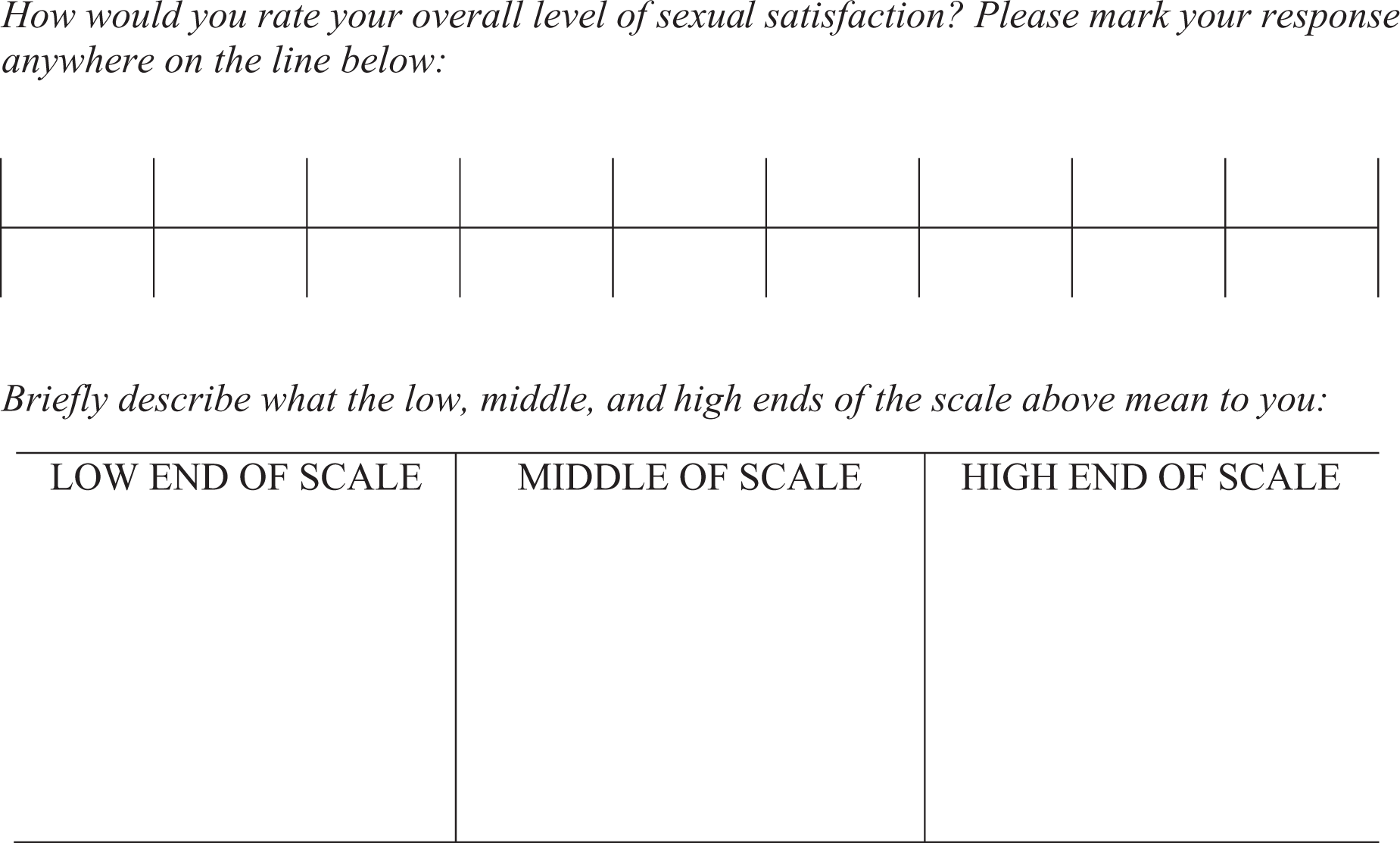
The self-anchored ladder.
In this article, I describe the development and use of a self-anchored ladder, an adapted form of Cantril’s ladder (1965). When using a self-anchored ladder, participants rate themselves on a 10-point scale and define the anchors (i.e., the low, middle, and high points) of the scale (see Figure 1). This procedure produces numerical data (a score) and binds that score to an interpretation (seen in the scale definitions provided by each participant). Rather than assume a psychological concept is understood or experienced similarly across individuals, the self-anchored ladder disrupts assumptions about how individuals imagine the range of possibilities available to them when evaluating a question on a survey. The ladder requires that the researcher contend with a variety of forms of epistemic difference, the influence of social locations on meaning-making, and definitions and meanings that, far from demonstrating coherence or stasis, may be continually destabilized.
My argument, and the accompanying method, sit squarely in a lineage of feminist researchers from across the humanities and social sciences who have developed strategies for conceptual analysis in their own disciplines (Bal, 2009; Barad, 2007; Unger, 1983). In the social sciences, arguments for creating disruptive methods have been central for the past 40 years. Adele Clarke (2005, p. xxix) argued for methods that “intentionally aim at capturing complexities rather than aiming at simplifications…detangle agents and positions sufficiently to make contradictions, ambivalences, and irrelevances clear.” Warner, Settles, and Shields (2016, p. 173) called for “subversive methods” that ask destabilizing questions and “dismantle dominant knowledge production.” Patti Lather (1993, 2007) argued for “doubled science”—that is, science that develops after the critique of science. She described this doubling as the awareness one has of the “impossible certainty and an interminable deconstruction” of science and, from this critical perspective, creating a science of “both reverence and mistrust, the science possible after our disappointments in science” (2007, p. x). These arguments indicate the extent to which feminists have argued for methods that can keep doubt and uncertainty central to empirical research, rather than something that is overcome or glossed over in the design process. In the Discussion, I return to this idea of uncertainty in feminist research and imagine how methodological procedures, such as the ladder, bring skepticism from the margins to the center of feminist survey designs.
Here, I discuss findings from a study of sexual satisfaction in order to demonstrate several ways that researchers might work with the data produced by the self-anchored ladder. First, I give an example of an analysis of quantitative scores; second, in a series of analyses, I examine how participants interpreted the concept of sexual satisfaction; and last, I discuss connections between interpretations and self-reported scores. This article offers theoretical and methodological interventions in feminist research by arguing for the importance of conceptual analysis broadly construed, as well as the utility of the self-anchored ladder as an example of a method that offers a dualistic approach—weaving together survey data with ways to query the interpretations, comparisons, and generalizability of data. In the literature review below, I discuss psychology’s history of conceptual analysis, review examples of feminist research that have relied on conceptual analysis, and present the history of the self-anchored ladder and its use in research over the last 60 years.
Conceptual Analysis
The term “concept” is used to demarcate an abstract idea that holds some importance to a researcher. Concepts are often imagined as the “building blocks of scientific knowledge” (Botes, 2002, p. 23). “Conceptual analysis” is often described as originating in philosophical traditions that examine how meanings are determined and deployed (e.g., Laurence & Margolis, 2003). As the philosophical practice of conceptual analysis moved into psychological research, researchers developed a set of methods and theoretical inquiries that could “reveal unacknowledged assumptions and steps in arguments” (Machado & Silva, 2007, p. 671; see also Unger, 1983). Conceptual analysis remains central to psychological research because, without it, researchers risk remaining naive to the oversights in their models, measures, and analysis. This can result in misclassification of persons or ideas, misinterpretation of results, and miscommunications with participants and readers.
Survey researchers, for example, examine how survey items are interpreted by diverse samples and have critiqued research designs that assume construct equivalence across groups (e.g., Harachi, Choi, Abbott, Catalano, & Bliesner, 2006; Landrine, Klonoff, & Brown-Collins, 1992). In response to these and related concerns, statistical procedures have been developed to explore measurement equivalence such as testing moderating effects of group membership, computing reliability coefficients, and conducting an item response analysis (see Hui & Triandis, 1985; Knight & Hill, 1998). Other strategies to examine measurement issues include using cognitive debriefing methods to capture the cognitive and emotional processes that participants experience while answering items (Galasinski & Kozlowska, 2010; Rosenbaum & Valsiner, 2011).
Although these measurement and analysis strategies share some motivations with the self-anchored ladder, the intention of these validity procedures is often to find the item or scale that can accurately measure group-level variance by assessing how groups differ in relation to a shared prompt. These procedures often discard any qualitative data that may have been collected, seeing the survey item as central and the qualitative data as not useful past the item development stage. Rather than aiming to reduce group variance in measurement, my development of the self-anchored ladder is aligned with Cantril’s (1965) original goal to investigate the constant presence of difference in individual meanings. Thus, rather than moving toward conceptual coherence, I argue that the self-anchored ladder invites the potential for conceptual disruption. In other words, when item scores and interpretations are put into constant relation with one another, they will always serve to disrupt one another (and, in turn, disrupt researchers’ assumptions).
Feminist Interventions in Conceptual Analysis
The self-anchored ladder extends the work of social scientists who have prioritized conceptual analysis as a primary goal in feminist psychological research. There are several examples in survey research in which feminist scholars have focused on developing critical questions about how meanings are deployed in quantitative designs. For example, Landrine, Klonoff, and Brown-Collins (1992) asked a sample of women of color and White women to rate themselves on gender-stereotype attributes (e.g., “I am sensitive to the needs of others”; “I am feminine”; “I am assertive”) and, in addition, had participants circle the definition of the attribute that best matched what they had had in mind when they rated themselves. Landrine and colleagues (1992) found that groups did not rate themselves differently when evaluating their gender-stereotype attributes; however, there were important differences in how terms such as “assertive” and “sensitive to the needs of others” were defined. For example, Latina women and Asian women were most likely to define assertive as “say whatever’s on my mind,” White women were most likely to define it as “standing-up for myself,” and Black women were most likely to define it as either “say whatever’s on my mind” or as “aggressive” (p. 160). The authors also found that ratings were affected by these definitional differences. For example, women of color who defined “passive” as “laid-back/easy-going” rated themselves as less passive than those who defined it as “let people take advantage of me.” White women who interpreted the term “sensitive” as “doing what others demand” rated themselves as significantly less sensitive than those who had other definitions in mind. Landrine et al. (1992) argued that researchers must take these differences seriously and must develop methods that can better account for these differences or risk deeply misinterpreting those whose interpretations differ from their own: “Did the white women differ from the women of color in this study in their self-ratings?” If our answer to this question is “yes,” or even “yes and no,” then the complexity and diversity of women’s behavior, the role of culture in it, and the need for alternative methods to assess these is clear. (p. 162)
Scholars have relied on other methods to ask questions about people’s interpretations. Muehlenhard, Humphreys, Jozkowski, and Peterson (2016, p. 458) analyzed the concept of “consent” and asked, “What is meant by sex being consensual or nonconsensual?” They traced the deployment of definitions in existing literatures and the implications of these ideas in research and university educational programming. They analyzed and highlighted the varied meanings of consent, including (1) an internal state of willingness, (2) an act of explicitly agreeing to something, and (3) a behavior that someone else interprets as willingness. With this attention to definitional issues, the authors discussed elements of the term, such as the temporal parameters of consent (i.e., is it a discrete event or a continuous process?) and drew attention to the limits of methods that do not attend to these kinds of parameters. Muehlenhard et al. (2016) reported that when participants answer questions about consent, they often want to note that “it depends” on contexts, relationships, individuals, and timing, and available methods simply do not account for these details. For example, they explained, “One participant wrote that ‘a smile does not mean consent in a bar to a guy I hardly know, but it does with my boyfriend’” (Hickman & Muehlenhard, 1999, p. 271). However, Muehlenhard et al. (2016, p. 470) also noted, “there was no way for participants to convey such nuances on the 7-point rating scale provided.” This draws attention to researchers’ desires to better understand the nuances of what participants imagine when responding to scale items as well as the need for methodological tools to address these kinds of questions about the contours of concepts.
Stephanie Sanders and colleagues (Sanders & Reinisch, 1999; Sanders et al., 2010) used survey methods to highlight the various definitions of the concept of “having sex.” The researchers examined responses to the prompt, “would you say you ‘had sex’ with someone if the most intimate behavior you engaged in was….” Their examination of how many individuals perceived the concept of “sex” to include activities as varied as mouth–genital contact, penetrative intercourse, and intercourse without orgasm allowed Sanders and colleagues (1999, 2010) to argue that there was no universal consensus on which behaviors constituted having “had sex.” For example, Sanders et al. (2010) found that manual-genital contact was believed to be sex more often when it was received, compared with when it was performed, indicating that there were differences not only about the parameters of “sex,” but that these parameters changed based on one’s assumptions about whether “doing” something was akin to having something “done” to one. Sanders et al. drew out the implications of these variations in definition; they cautioned that, “Researchers, educators and medical practitioners should…not assume that their own definitions of having ‘had sex’ are shared by their research participants or patients” (p. 31).
In addition, feminist researchers have offered theoretical interventions that aim to disrupt assumptions about how terms are defined. Fine and McClelland’s (2006) argument for “thick desire” offers one such example. They argued that “thick desire” is a necessary intervention in (feminist and non-feminist) definitions of desire because psychological and physiological evaluations must account for structural contexts or risk imagining desire as simply a person-level issue. They illustrated “thick desire” using abstinence-only-until marriage education as an example of how desire develops over time, in neighborhoods, in families, and classrooms, and is necessarily rooted in public policies that do (or do not) distribute resources within these environments. Fine and McClelland’s (2006) chosen metaphor of “thickness” signals how bodies are always linked to “social arrangements, politics, yearnings, deprivations, and betrayals in public settings and that these connections—both supportive and restrictive–inform how young people learn to develop a sense of desire” (McClelland & Fine, 2014, p. 12). Without conceptualizing this thickness, they argued, researchers studying desire in singular bodies risk overlooking prior social and political lessons on how much one can want, or how much one can imagine as possible.
My examples of feminist conceptual analysis take different forms, suggesting that analysis of relevant literatures, critical analysis of survey data, and underscoring the role of political landscapes are each useful options for researchers who might aim to weave together disparate (and often competing) epistemological positions concerning the role of data, what counts as truth, and how meanings can be investigated. Each example emphasizes conceptual messiness in its own way: by making unusual group comparisons, by turning to participant interpretations over and over, by highlighting contradictions between and among groups, and by theorizing the role of history in data collection. The impact of this kind of work, however, remains uneven. Researchers still use terms like “assertive,” “consent,” “sex,” and “desire” without attention to varied definitions or concern for the implications of ignoring these differences. A lack of interest in conceptual analysis may be a result of several forces, including the lower value attributed to conceptual analysis, as compared to work that produces compelling group differences, the difficulty of recognizing one’s own limited standpoint as a researcher, the intellectual burden of conceptual analysis, and the paucity of theoretical and methodological tools to make conceptual analysis more engaging for researchers.
The Self-Anchored Ladder
Initially used by Kilpatrick and Cantril (1960), the self-anchored ladder was more fully developed by Cantril (1965) in his nationwide study of American well-being, and the procedure became known as Cantril’s ladder. Across several studies, Cantril and his colleagues investigated participants’ criteria for their “best possible life” and “worst possible life” using a 10-point ladder. They argued this method of having participants provide the “best” and “worst” options themselves avoided, “artificially structuring the respondent’s replies, distorting his thoughts, and putting words into his mouth” (Cantril & Free, 1962, p. 8). In several studies, Cantril and colleagues (Cantril, 1965; Cantril & Free, 1962; Kilpatrick & Cantril, 1960) found that wildly different sets of criteria anchored how different groups imagined their level of life satisfaction. For example, “Negroes, immigrants, and farmers” mentioned poverty and deprivation as defining their worst possible life. In contrast, college teachers worried most about curtailment of their freedom and White junior executives worried most about dependency and insecurity (Kilpatrick & Cantril, 1960). The authors saw these interpretations of the best and worst possible life as indicative of the racial and class histories individuals brought to their evaluation processes and interrupted assumptions about the universality of experience. They referred to the ladder’s ability to provide a “first-person point of view,” as opposed to the third-person point of view, “which assumes an objectively definable reality which, except for error, is the same for all” (Kilpatrick & Cantril, 1960, p. 158).
Cantril (1965) pursued several analytic strategies using the ladder. For example, he transformed anchor descriptions into categories that could be directly compared (e.g., how many people noted fears about poverty in the ladder). While others have pursued research using the ladder, 1 Cantril’s ladder did not catch on as a popular method in psychological research. Psychology increasingly prioritized speed and efficiency when assessing people and the rating scale—without additional interpretative elements—rose in popularity due to its simplicity; many people could be assessed, in a short time, at low cost (Igo, 2007). As a result, the mixed methods possibilities of the self-anchored ladder have largely been overlooked in the 60 years since its initial development (cf. Lefcowitz & Wallston, 1973). In contrast to how Cantril (1965) described the ladder, contemporary researchers using the ladder (e.g., Morrison, Tay, & Diener, 2011) often collect participants’ subjective numerical appraisals using the same prompt of “the bottom rung (zero) representing the worst possible life and the top rung (10) the best possible life,” but rarely collect (or report) how participants defined the anchors of their ladders. This limits the ladder to a quantitative, subjective appraisal method. I argue, in line with Cantril’s original design, that the self-anchored ladder demands that researchers make comparisons across definitional differences. This requires a great deal of attention to conceptual analysis throughout any study, not merely once a standardized measure is designed.
Method
The Current Study
To discuss and illustrate use of the self-anchored ladder, I draw on a study of sexual satisfaction in a sample of young adults. The larger multi-method study (McClelland, 2011, 2014) relied on interviews, Q sorts, and survey methods. The current analysis focuses on how the study sample responded to one self-anchored ladder item included in the survey portion of the larger study. The ladder was included in the larger study in an effort to understand how individuals defined sexual satisfaction. Most studies assume that sexual satisfaction is either universally defined (Štulhofer, Buško, & Brouillard, 2010) or leave “satisfied” undefined (Heiman et al., 2011). Examples include items that ask participants to rate statements such as “I think our sex is wonderful” (Hudson, 1998) or “I am satisfied with my sex life” (Neto, 2012). Some researchers have argued that leaving the concept undefined allows respondents to determine their own criteria for judgment (Pavot & Diener, 2008). This decision, however, does not enable a researcher to understand the variations in criteria used by individuals and assumes that all variability is equal and, ultimately, not meaningful. I have argued elsewhere (McClelland, 2010) that this decision overlooks individuals and groups who have developed within social and political spheres that routinely limit their rights, voices, behaviors, and expectations. In other words, not all variability is equal and research on meaning-making and its relation to quantitative measures is critical.
Researchers have begun to argue that sexual satisfaction research must attend to issues of power, violence, and the opportunity structures surrounding sexuality, intimacy, and partnership (Fahs & Swank, 2011; McClelland, 2010, 2011, 2014). In this emergent body of work, researchers document the array of meanings associated with sexual satisfaction in diverse samples and across the life span (Chatterji et al., 2016), sometimes with a focus on what participants think about when evaluating their sexual satisfaction (Holmberg, Blair, & Phillips, 2010; Pascoal, Narciso, & Pereira, 2014). For example, McClelland (2011) found that when reporting on their sexual satisfaction, some participants reported on their own experiences, while others reported on the satisfaction of their sexual partners, raising the question of who exactly was the “self” in self-reports of satisfaction. Critical analysis of sexual satisfaction research has largely relied on interview studies (e.g., Fahs & Plante, 2017) and has less frequently tried to understand how qualitative interpretations and quantitative scores relate to one another. The use of the self-anchored ladder contributes to this missing piece of the puzzle.
Sample and Procedures
Participants were recruited for the current study, as well as the larger study, using a university subject pool at a large urban public university in the United States and received course credit for participating in the study. I used purposive sampling strategies to recruit young adult participants diverse by race and ethnicity and sexual orientation (see McClelland, 2014, for details on recruitment). The current study sample (N = 34) consisted of 17 women and 17 men. Nearly half of participants (n = 16) identified as sexual minorities (including definitions of “undecided,” “all sexualities,” and queer) and the remainder identified as heterosexual (n = 18). Over half (n = 18) identified as racial or ethnic minorities including Black and African American, Latina or Latino, Asian or Asian Pacific Islander, and multi-racial; the remainder identified as White (n = 16). Participants were asked about their mother’s education; nearly one quarter (n = 8) reported that their mother received less than a high school education or a high school degree. The remainder (n = 26) reported their mother had some college or a college/graduate degree. The mean age was 21.06 (SD = 3.12, range = 18–28 years).
In the survey portion of the larger study, participants individually responded to a series of scales and individual items using a paper and pencil format. The self-anchored ladder, used in the current study, was the first item in the survey and took 1–2 minutes to complete. The self-anchored ladder consists of a single horizontal line divided by 10 smaller vertical lines, in effect, creating a visual analogue scale (see Figure 1). No textual anchors were provided. Participants were asked, “How would you rate your overall level of sexual satisfaction?” and asked to mark their response anywhere on the ladder. They were then asked, “Briefly describe what the low, middle, and high ends of the scale above mean to you” and space was provided to write about these three areas of the ladder. Participants’ handwritten responses were transcribed, and numerical responses (range = 2.50–8.50) were recorded in Excel for analysis.
Four Analytic Strategies
I model four potential ways researchers might use the ladder (other analyses are possible as well). In the first, I conduct a numerical comparison of sexual satisfaction ladder scores. In the second, I examine the types of ladder organization strategies that participants used when ordering the ladders from low to high. In the third analysis, I focus on how frequently specific concepts appeared across the data when referring to the construct under investigation (i.e., sexual satisfaction). In the fourth analysis, I examine the experiences and feelings participants report they imagined as characterizing the “worst” and “best” possibilities for their own sexual satisfaction. This multi-pronged approach is meant to demonstrate how each analysis both reveals and conceals aspects of participants’ lives. While it offers a complex set of findings which might prove challenging for researchers, I present these four approaches to draw out several possible layers of meaning in the quantitative and qualitative data and as a means to reveal conceptual complexity. In the discussion below, I return to the multiple epistemological positions that the ladder demands and I argue for the importance and fruitfulness of this kind of epistemological self-reflexivity in critical feminist psychological research.
Results
Ladder Scores
In the first analysis, I examined sexual satisfaction scores. To prepare data for analysis, I transformed the mark on the ladder that participants made into numerical values from 0.0 to 9.0. The distance between each vertical line was 17 cm long; this distance was divided into 10 equal parts and used to approximate scores that fell between two lines (e.g., between 7.0 and 8.0) to best represent each participant’s mark on the ladder. The range of numerical responses for this study was from 2.50 to 8.50 (M = 6.30, SD = 1.66).
In order to examine possible group gender and sexual orientation differences in sexual satisfaction scores, I conducted a one-way analysis of variance (ANOVA) in SPSS v. 24. In sub-group analyses of ladder scores, I found no significant group differences for gender, F(1, 31) = 0.038, p = .846; sexual minority status, F(1, 31) = 0.786, p = .382; or racial or ethnic minority status, F(1, 31) = 0.747, p = .394. The comparative analysis highlights how satisfaction scores were largely similar across the groups. It does not, however, tell us anything about how participants defined the construct of sexual satisfaction or what was important to them in choosing their numerical scores.
Ladder Organizations
In the second analysis, I examined the strategies that participants used to organize the un-marked ladder from low to high. When filling out the ladder, participants had to imagine for themselves how sexual satisfaction increased (i.e., what changed or grew as satisfaction increased?). Most sexual satisfaction scales use a unipolar scale which progresses from not at all satisfied to very satisfied, meaning the progression of the scale moves from less (satisfaction) to more (satisfaction). This kind of progression can be thought of as increasing according to the degree of satisfaction the person reports feeling. The question remains: If no scale structure is provided, how do participants cognitively organize the progression of the ladder?
The author and a trained research assistant read ladder descriptions of low, middle, and high satisfaction in sequence. Using an iterative content coding procedure (MacQueen, McLellan, Kay, & Milstein, 1998), we determined six types of ladder sequences using the data from the current study by independently reading the ladder descriptions, revising potential codes, and applying codes to the data (coding manual available in Supplemental Materials). The final six codes were degree, time, outcomes, emotions, partners, and who is satisfied (each is described in more detail below). Krippendorff’s α (Hayes & Krippendorff, 2007) served as the reliability coefficient for inter-rater reliability. When calculating rater agreement, we assessed how frequently the two coders applied the same code to the same ladder. Our average agreement was high (Krippendorff’s α = .90). In part due to the small number of codes (six) and coders (two), all 34 ladders had greater than 85% rater agreement.
Ladders often contained multiple structures and were coded to reflect as many progressions as were present in each case. In the current sample, ladders contained as few as one and as many as four progressions (i.e., ladders that increased based on emotions or based on outcomes, described more fully below), demonstrating how individuals can rely on simultaneous and multiple ladder organizing structures. In addition to imagining the degree of satisfaction as increasing, five other ladder progressions were present: (1) the amount of time one is satisfied (increasing from “I am satisfied 50% of the time” to “100% of the time”); (2) desired sexual outcomes (increasing from less to more desirable outcomes); (3) emotional outcomes (increasing from less to more desired feelings); (4) types of sexual partners (increasing from strangers to intimate partners); and last, (5) who is described as satisfied (increasing from no one, to one, to both partners).
The two most commonly appearing ladder structures were emotions (n = 16) and sexual outcomes (n = 24). For example, a ladder that used an emotions structure progressed from “horrible, painful, scared, mad, frustrated, unhappy, depressed” on the low end to “happy content, orgasm, good sense of self” on the high end. A ladder that used a sexual outcomes structure progressed from “it was boring, I wasn’t in the mood, no orgasm, no variation” on the low end to “strong orgasm…could tell my partner enjoyed it, with someone I love, orgasms for both of us.” In this case, the mention of “no orgasm” increasing to “strong orgasm” demonstrates how orgasm was imagined as an important sexual outcome and one that determined how sexual satisfaction was imagined to increase from low to high. Both examples highlight how multiple ladder organizational structures were often interwoven with each other. Other progressions reported by participants were used less frequently: type of partner (n = 12), degree of satisfaction (n = 8), who was satisfied (n = 7), and time (n = 4).
As most Likert scales that measure sexual satisfaction rely on the degree of a person’s satisfaction increasing (e.g., from not at all satisfied to highly satisfied), the second analysis raises questions as to whether (and how) these other structures may invisibly and implicitly shape responses. In other words, when participants report “highly satisfied” on a traditional Likert scale, are they interpreting this high end of the scale as relating to their degree of satisfaction, their frequency of satisfaction, their sexual outcomes, their emotional state, or the type of partner they are imagining—or perhaps some combination of these?
Frequency of Anchor Terms
In the third analysis, I examined the frequency of terms participants used to define their anchors. I made no distinction in this analysis between the low, middle, or high locations on the ladder; instead, I focused on the number of times that certain ideas, concepts, or words were included anywhere on the ladder. This decision allowed for a global perspective on which concepts participants associated with sexual satisfaction and comparisons of how often conceptual elements were invoked, regardless of where they appeared in the ladder. In line with content analysis strategies, the frequency with which an idea or topic occurs was taken to indicate the importance of that idea or topic (Krippendorff, 2004, p. 59).
Using an iterative thematic analysis (Braun & Clarke, 2013), which entailed reading the textual data closely and repeatedly, I identified six categories: (1) partners (e.g., “extremely comfortable with the person”); (2) sex acts (e.g., “anal”); (3) evaluations (e.g., “mind blowing”); (4) orgasm (e.g., “no one has an orgasm”); (5) emotions (e.g., “depressed”), and (6) body (e.g., “painful”). I included both positive and negative mentions in each code. For example, both happy and sad emotions were included in the emotion category. Following the content analysis procedures as outlined by Krippendorff (2004), instances of a term were only coded once for each person: If a word featured prominently in any particular ladder, this was coded as present, but the frequency within a singular ladder was not captured in this analysis. This enabled me to analyze how frequently a term appeared across the sample to avoid the tendency to make assumptions when a specific term might have appeared many times in one person’s description. On average, each ladder contained about three coded terms (M = 2.82, range = 1–6 categories).
In this sample, emotions and partners were prioritized most frequently in sexual satisfaction descriptions. Seventy percent of the sample used terms or ideas that related to emotional elements, including overall positive feelings (feeling happy and fulfilled), as well as negative emotions, such as “feeling sad” or “depressed.” Nearly two thirds of the participants (58%) mentioned aspects related to a partner, including the quality of partner’s experience (“partner very happy”) or the partner’s level or type of sexual experience (“partner has many orgasms”). These two categories were distinguished from one another as follows: Any mentions of emotional connection to a partner were included in the emotions category, since these were described as being felt by the participant (“feeling sexually and emotionally connected”). In contrast, the partner category contained references to the partner’s experience, as perceived by the participant (“my partner was satisfied too quickly”). Evaluations appeared in just over half (52%) of the ladders, such as “great sex,” “OK, not great,” and “boring.” Evaluations focused on how the person and/or their partner perceived the quality of the sexual encounter, the quality of the couple’s closeness, and/or the level of enjoyment or pleasure that was assessed. Mentions of sex acts appeared in 42% of the ladders. Several types of sexual behaviors were included within the sex acts category, including “kissing and embracing,” “no foreplay,” and “anal.”
The least frequently occurring categories were orgasm (39%) and body (21%). References to orgasm included the frequency of orgasm (“every time”) as well as the size or strength of an orgasm (“small orgasm”), but most commonly referred to the presence or absence of orgasm. These data demonstrate that while orgasm as a concept was included in over a third of the ladders, it was not specifically referenced by all participants. This echoes other researchers’ findings that orgasm may be a poor proxy for sexual satisfaction (Fahs & Plante, 2017). The category of “body” largely referenced physical pain or discomfort. Examples included “experience was painful,” “painful,” and “forced, uncomfortable.” While the other categories included positive associations to pleasure, this closer analysis of the physical, embodied experience of sexual satisfaction mainly reflected the ways that (some) participants imagined terrible physical experiences rather than positive ones.
Sexual satisfaction may be the result of a global evaluation of these six categories, but participants used these elements inconsistently. For example, not every ladder included the evaluation of a partner’s experience; some focused on specific sexual acts, while others evaluated the person’s emotions but did not include any mention of a partner. Without this kind of attention to definitions, researchers may incorrectly assume that these six elements (or some aggregate of them) are similarly imagined by participants when responding to an item about sexual satisfaction. The findings from the third analysis indicate otherwise.
Qualities of Low (Worst) and High (Best) Sexual Satisfaction
In the fourth analysis, the anchor descriptions and ladder scores were examined in tandem. I developed two questions to guide analyses that relied on the qualitative and quantitative data provided in the ladders; the questions mirrored Cantril’s original ladder: (1) What were “worst” possible expectations of satisfaction? and (2) What were the “best” possible expectations of satisfaction? I analyzed several elements of the ladder to examine these questions, including ladder scores, anchors, and how they related to one another within a singular ladder, as well as descriptive elements within the anchors and how these differed by race and gender. The fourth analysis enabled me to ask several inter-related questions of interest: How much and how little did a person expect and how did expectation relate to their self-reported satisfaction score?
My focus on participants’ associations with the worst and best possible sexual satisfaction highlights the role of how (and how much) a person imagines positive and negative sexual experiences for themselves. The “low end” of the ladder represents the baseline from which a person is working to cognitively organize satisfaction. From this lowest point, a person imagines what is undesirable, but possible, and then imagines more as they progress to the higher end of the scale. The “high end” of the ladder, in contrast, captures elements of how a participant imagines what potentially can be achieved in one’s sexual life. Together, a qualitative analysis of the low (worst) and high (best) end anchors offered insight into those elements that were shared among individuals as well as patterns that illustrated the scope and scale that individuals used to organize their sense of what might be, can be, and should be in their sexual life (McClelland, 2010).
While the quantitative and qualitative data from the ladder can be analyzed in isolation from one another (as seen in the first, second, and third analyses described above), the fourth analysis linked a thematic analysis of the anchor descriptions with individuals’ ladder scores. Because of this somewhat unusual procedure, I conducted a thematic analysis that focused on the low and high end of the ladders first, then progressed to a more holistic examination of thematic elements across the data set, with the goal of examining how qualitative data related to self-reported scores. In this analysis, my focus was on interpretations and the relationship between meanings and scores. As outlined by Braun and Clarke (2013), several thematic aspects of the data were considered important. I focused on the semantic content of the qualitative data and, in addition, the implicit meanings participants relied on when providing ladder definitions. For example, participants used similar terms (e.g., “mind blowing”), which signaled some shared values among the ladders at the semantic level; a constructivist perspective also provided insight into how the same term took on different meanings when compared to others who used the same term. In addition, I relied on a constructivist perspective, as race and gender were imagined as important and influential in shaping individuals’ perspectives on sexuality. This range of analysis decisions required (and was supported by) employing a range of epistemological perspectives (see discussion for further elaboration on this point).
Worst possible sexual satisfaction
When describing the low end of the scale, participants varied widely in what they considered their baseline for sexual satisfaction. In particular, women expressed qualitatively different types of expectations than their male counter-parts. Female participants consistently used terms like “forced,” “depressed,” “sick,” “pain,” “hurt,” and “degradation” to describe their baseline expectations. For example, a 25-year-old White lesbian woman described the low end of her ladder as “horrible, painful, scared, mad, frustrated, unhappy, depressed.” This finding was put into greater relief when female participants’ ladder scores were considered alongside these descriptions. Women in the sample who relied on a baseline comparison of pain and distress also often reported higher ladder scores. For example, a 24-year-old heterosexual Asian woman defined her low-end of the ladder as “emotionally sad, depressed, sick, feel like your partner just satisfied him/herself” and rated her current satisfaction as 8.0. This relatively high score should be interpreted alongside these descriptors—her baseline appraisal relied on negative experiences such as feeling “depressed” and “sick.”
Men of all races in this study did not imagine their sexual satisfaction as including these types of severe negative experiences. Among men, the low end of the ladder included references to the potential for less satisfying sexual outcomes, such as loneliness, having an unattractive sexual partner, and insufficient sexual stimulation. In contrast to images of “force” and “humiliation” found in women’s ladders, men’s ladders contained phrases such as “not sexually attracted to my partner,” “not having anyone to have sex with,” or “person not experienced.” For example, an 18-year-old queer Latino man described his low-end of the ladder as “caressing, fondling, cuddling, kissing, masturbation, not getting what I want.” He indicated that his level of sexual satisfaction was 5.5.
These examples illustrate a pattern found across the current sample: Women’s descriptions of the worst sexual satisfaction they could imagine included references to potential for sex to be painful, humiliating, and dangerous. When sex was not any of these things, satisfaction scores were often high. This was in contrast to those participants who relied on a baseline where the sexual encounter was, at worst, unfulfilling but did not contain elements of pain or distress and whose scores were often lower. These data demonstrate how male and female participants imagined their worst sexual satisfaction very differently. This finding is not surprising, given that women’s sexual vulnerability is well documented; the inclusion of pain and humiliation as possible (bad) sexual outcomes mirrors the gender and violent norms that women navigate throughout their sexual lives (Gavey, 2005). What has been less studied is how these expectations shape sexual satisfaction appraisals.
Taking a close look at thematic elements within the ladder descriptions, “comfort” and “discomfort” were found to be important elements of sexual satisfaction, particularly for women of color. Comfort in these cases did not signal feelings of physical ease but instead suggested avoiding vulnerability. For example, a 19-year-old, heterosexual Latina woman (see Table 1) imagined her own sexual satisfaction with an orientation toward comfort. Her low-end anchor contained elements of when “comfort” was imagined as absent; these included a partner who is “selfish” or sex that is “painful, forced, uncomfortable.” As satisfaction increased, so did comfort, which was associated with “love,” passion, and a partner who is “not too dominant.” This participant rated her sexual satisfaction score as a 3.0.
Example #1 of “Worst” and “Best” Sexual Satisfaction.
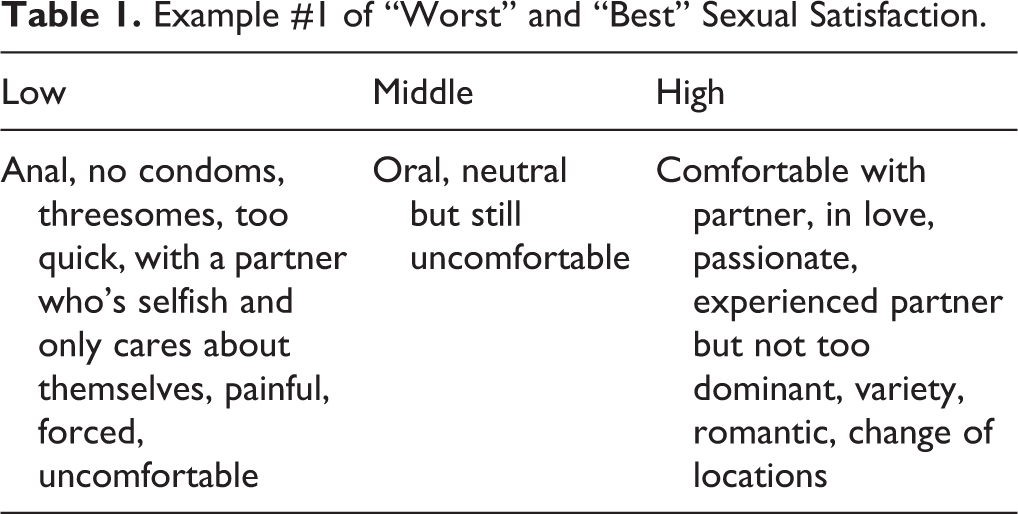
The thematic element of comfort in the ladder descriptions underscored how feelings of sexual, physical, and emotional vulnerability were central to female participants’ evaluations of satisfaction. Women’s articulations of the need to feel “safe” in order to feel sexually satisfied are not included in most theories or measures of sexual satisfaction; there is a need for researchers to explore the role that management of vulnerability plays in women’s sexual lives (Muehlenhard & Peterson, 2005).
Best possible sexual satisfaction
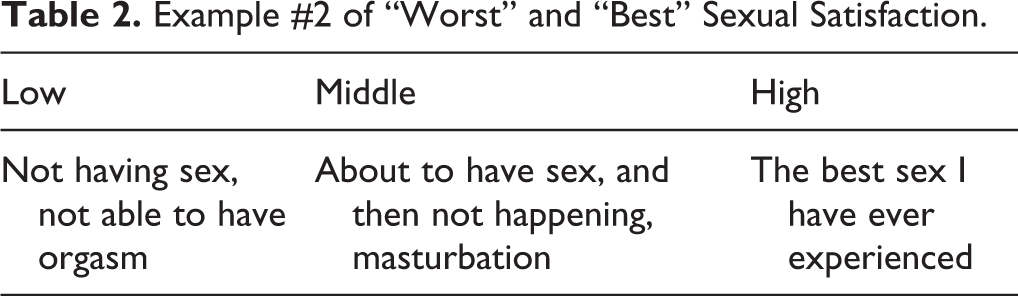
Looking to the high end of the ladder, other patterns stood out about the expectations participants held about the “best” possible sex. One term stood out and was repeated throughout the sample: “mind blowing.” This term signaled how participants imagined the best possible sexual satisfaction for themselves. For example, an 18-year-old heterosexual Black male participant rated his satisfaction as 4.6 and described the high end of his ladder as “mind blowing” and being “overly satisfied.” Another example from an 18-year-old heterosexual White male participant who rated his satisfaction as 4.4 looked similar; his high end was “the best sex I have ever experienced” (see Table 2). These “best possible” scenarios help to understand how some participants imagined their future—as young people, their ideal sexual experiences were often still ahead of them.
Example #2 of “Worst” and “Best” Sexual Satisfaction.
Women also included descriptions of “mind blowing,” but when this term appeared, the low end of these ladders was often different than their male counterparts. A 25-year-old bisexual White woman who rated her satisfaction as 5.5 similarly reported that the high end of her ladder was “out of this world” and “mind blowing” (see Table 3). However, in this case, the female participant imagined this “mind blowing” sex in contrast to sex in which she “was rejected or hurt.”
Example #3 of “Worst” and “Best” Sexual Satisfaction.

One is left to wonder about the contours of “mind blowing” sex. Is the experience being compared to “not having sex” (as seen in Table 2) or is it being compared to feeling rejected or hurt in the course of sex (as seen in Table 3)? We, in fact, don’t know if “mind blowing” is the same concept across these examples; however, these findings produce further questions that should be more fully understood by those studying sexual satisfaction. In my analysis, a clear focus on how participants imagined their baseline expectations and the best possible sex revealed how much (or how little) people expected when conceptualizing their satisfaction.
Discussion
In the current article, I have discussed a self-anchored ladder and argued for its utility in bringing increased attention to conceptual analysis in psychological research. I presented the ladder as an innovative tool that can enable further study of how people see, experience, and interpret the world around them by taking seriously how self-reported scores and interpretations are linked. Without this attention, survey researchers risk making erroneous or incomplete assumptions about conceptual definitions and overlooking how social, political, and economic inequality are routinely masked in data collection and analysis procedures. Moments of profound misunderstanding and misinterpretation often remain invisible. Fine (2016) has argued that those who do the research and make up the definitions “have a hard time imagining life in the shadows or believing what we hear; our affective responses to police shootings, school closings, evictions, and varied enactments of precarity differ wildly from those who live under the boot of oppression” (p. 348). Fine’s (2016) call for “just methods in revolting times” urges feminist and non-feminist researchers alike to carefully consider what one cannot see (what appears to be shared, but is not) when designing research on, with, and about oppression. The ladder, as I describe it here, demonstrates that interpretations cannot always be captured in demographic variables; instead, differences often hide in and among people’s imaginations and expectations. These elements shape data with an invisible hand that cannot be “controlled for” or predicted.
I drew on data from a larger study (McClelland, 2011, 2014) about sexual satisfaction to examine the relationship between satisfaction scores and participants’ experiences with gender, race, pain, violence, and expectations about future pleasures. In the analyses presented here, each finding tells four different stories. When evaluating findings from the four analyses together, the picture of what sexual satisfaction looks like—how it is imagined, evaluated, and reported—becomes both muddier and clearer; we know more even as we know less. Sexual satisfaction scores, in the first analysis, showed no significant group differences for gender, sexual minority status, or race. In the second and third analyses, differences were found in how participants organized the unanchored ladders and in how often they used specific terms when describing sexual satisfaction. In the fourth analysis, I examined the role of what individuals imagined as “worst” and “best” in their appraisals—and how these evaluations informed numerical scores. Across these findings, the ladder urges and enables researchers to contend with what is assumed when defining concepts, when asking for self-report data, and when developing interpretations about a sample. As a self-report procedure, the self-anchored ladder provides researchers with the kinds of data to do this necessary investigative work. The self-anchored ladder does not dispense with making comparisons across groups but, rather, insists on making comparisons with a great deal of attention to conceptual analysis as a function of any research endeavor. In the next section, I argue for several issues relevant to critical feminist psychology: the role of skepticism, the importance of disruptive methods, and moving amongst multiple epistemologies.
Skepticism and Disruptive Methods
The ladder is an empirical tool that emerges from a long history of skepticism in psychology and the social sciences more broadly (see Fisher, 2004; Hare-Mustin & Marecek, 1988; Henriques, Hollway, Urwin, Venn, & Walkerdine, 1984; Kitzinger, 1991; Marecek, 1995; Morawski, 1994). The ladder directs researchers to embrace skepticism when measuring psychological concepts in survey research. Skepticism, while often acknowledged as part of any research, is not often imagined as the engine of a study design. As seen in recent discussions of feminist psychology (e.g., Eagly & Riger, 2014), investments in skepticism remain marginalized, even in post-positivist feminist psychology. Skepticism is one of the elements that often differentiates feminist psychology from critical feminist psychology; skepticism animates critical feminist psychologists’ investment in questions about the “the long arm of the State and economic, racial, and gender arrangements in the everyday lives of women, men, and children” (Fine, 2001, p. 11).
Building from work in critical social science, there is increasing attention to developing more (and more) “disruptive methods” that translate skepticism into critical research methods. Examples include critical race methods (Barnes, 2016; Solórzano & Yosso, 2002), queer and dyke methods (Grzanka, 2016; Nash & Browne, 2012), participatory methods (Stoudt, 2016), as well as many others that aim to undo “prevailing assumptions about epistemic authority, legitimate knowledge, and the very meaning of research” (Ward, 2016, p. 71). The self-anchored ladder contributes to this larger project of developing empirical procedures that simultaneously prioritize developing knowledge claims (what do we know?) and developing deep skepticism about this very knowledge (who is missing? what have we missed?)—not just within a limitations section, not just in early development phases, not just while pilot-testing measures, not just when recruiting a “diverse sample,” but throughout every step of the research process. Disruptive methods insist on looking underneath assumptions to see what is hidden, kept out of sight, or difficult to integrate. This larger goal, of course, depends on how a researcher decides to use the self-anchored ladder and their own epistemological position(s).
Multiple Epistemologies
The self-anchored ladder, as I develop it here, includes several analytic procedures, including analysis of quantitative and qualitative data, as well as a form of “mixed” analysis. Unlike most mixed methods designs, the ladder is contained within a single item and does not combine, for example, survey items and qualitative responses in a concurrent mixed methods design (e.g., Daigneault & Jacob, 2014). The ladder, like other mixed methods designs, must contend with differences between quantitative and qualitative research, including the expertise demanded by each as well as the epistemological and political commitments often associated with each (Denzin, 2010). Marecek (2003) has argued that combining quantitative and qualitative data stretches the intentions of both methods too far without taking the epistemological positions of each into account sufficiently. Marecek warned that these different types of investigations would often produce disparate and even incommensurate outcomes. When this happens, those working with both methods must confront, as she says, “not simply, ‘Which is more true?’ but a more difficult [question]: ‘What kind of truth am I interested in hearing?’” (p. 54). In addition to concerns about different types of truth claims, Morawski (2011) worried that mixed methods represented an assimilationist move that abandoned the rationales for qualitative research in favor of being “epistemologically tolerant or scientifically opportunistic” (p. 266). Debates about mixing epistemological positions have been referred to as the “paradigm wars” and disagreements about these issues still remain (see Denzin, 2010; Else-Quest & Hyde, 2016; Tashakkori & Teddlie, 1998; Warner, Settles, & Shields, 2016). Within and amid these debates, some have argued that it is useful to consider how epistemological differences are rooted less in the type of method that is pursued (i.e., quantitative vs. qualitative), but rather the degree of investment a researcher has in positivism or interpretivism (Kidder & Fine, 1987; Lin, 1998). Does one look for better answers or better questions through the process of research? In terms of the ladder, can one do both at the same time, within a single item?
To offer a partial answer to these questions, I turn to Weis and Fine’s (2012) notion of “critical bifocality,” which they define as “dedicated theoretical and empirical attention to structures and lives [emphasis in original]” (p. 174). They argued that these two intertwined spheres—the person and the structures in which people live—are too often studied separately rather than in unison in psychology. I stretch Weis and Fine’s (2012) proposed intervention to argue for the self-anchored ladder as a strategy to accomplish critical bifocality on a smaller methodological scale: connecting the dots between the person, their structures, and their methodological “output” in research designs. My strategy aligns with Weis and Fine’s goal to refuse “representations of individuals as autonomous, self-contained units dangling freely and able to pursue their life choices unencumbered by constraint” (2012, pp. 175–176). The self-anchored ladder—as procedure and methodology—asks a researcher to put on bifocals, to see through several lenses at once, and to connect the dots.
The self-anchored ladder demands epistemological self-reflexivity. Self-reflexivity includes skills in multiple forms of data analysis, but perhaps most keenly, skills in developing critical insights about phenomena, while contending with more variability and more kinds of connections than are usually present in research about and toward concept measurement. Last, a researcher must be skilled in moving among epistemological positions regarding issues such as subjectivity, validity, meaning-making, and generalizability. The key element in this quarrel of positions is the potential to increase the ways that quantitative measures can reflect people’s lives. Maracek (2003) has argued that the “reliance (and even insistence) in standardized measures rests on the belief that the aspects of mental life they measure are constituted in the same way across different settings, different epochs, and different social groups” (p. 57). The ladder invites a response to this important critique; developing a self-report item to answer questions (i.e., how do individuals rate their sexual satisfaction?) and simultaneously asking better questions (i.e., do individuals imagine the possible range of satisfaction similarly and, if not, what are the implications of this?). The ladder is best suited for researchers who are interested in the possibilities and limitations of measurement, especially those who either already have, or wish to develop, critical awareness of how measures obscure diverse perspectives and are interested in bringing this critique to the practice of measurement. The ladder is a tool for researchers who sit at the complicated nexus between critique and measurement, feminism and psychology (Fine, 1985; Marecek, 1995; Rutherford & Pettit, 2015).
Practice Implications
The self-anchored ladder may provide a useful procedure for researchers and clinicians working with persons or groups where there may be unstated, unanticipated, and implicit differences in how terms are being defined and understood. There are a host of possible research applications, including developing thematic analysis of anchors alongside survey research results; creating adjusted survey scores to investigate group comparisons that build from similar anchor descriptions; and using the ladder to develop, amend, and adapt survey instruments. In research, critical psychologists may be drawn to the self-anchored ladder for its potential to bring heightened awareness of issues of inequality and other social justice issues to the forefront, with a commitment to disrupt the colonial, racist, and homophobic structures that undergird psychology’s theories and methods (Teo, 2015).
Researchers might also investigate additional ladder designs. The ladder I used had 10 points and three anchors (low, middle, and high). Cantril’s (1965) original design had 10 points and two anchors (low and high). I extended and adapted Cantril’s design that focused on overall life satisfaction ratings to ask about sexual satisfaction. I encourage future researchers to examine further adaptations of the ladder as well as additional concepts. Scholars might examine concepts that have been well developed and have a long history of use in psychological research (e.g., subjective well-being), as well as those that are less well-developed and require further analysis, perhaps due to emergent theoretical or empirical work (e.g., empowerment).
In addition, the ladder might serve clinicians who aim to communicate with clients from different social locations. Kelly’s (1955) development of “conceptual grids” to augment and guide a therapeutic relationship might be seen as a precursor to the self-anchored ladder and offers an analogous kind of tool for communicating about differences, rather than merely in spite of them. Clinicians might use the ladder to help themselves and clients reflect on meanings and interpretations—both shared and not shared—as a means to make personal meaning systems central to the therapeutic process.
Conclusions
I described an adapted form of Cantril’s ladder as a useful tool for critical feminist research. My intent in this article is to argue for the importance of conceptual analysis as part of feminist social science research and the ladder as a useful component of this larger project. At the heart of my argument is a call for developing skepticism and uncertainty as basic building blocks of survey-based research and increased understanding of how conceptual misinterpretation harms but does so invisibly. The ladder provides a tool to carefully consider what one cannot see (what appears to be shared, but is not) when designing research on, with, and about oppression. How, when, and why researchers take up this method—and its potentially disruptive possibilities—remain open questions as feminist psychologists decide what issues are pressing, what kinds of disruptions are necessary, and the level of skepticism that is needed to bring in alignment our calls for equality with our research processes.
Footnotes
Author’s Note
Anonymized data from participants who consented to data sharing are available by e-mailing the author.
Acknowledgment
Thank you to Michelle Fine, Abby Stewart, Valerie Traub, Victoria Pitts-Taylor, and the anonymous journal reviewers who provided feedback on earlier versions of the manuscript.
Declaration of Conflicting Interests
The author(s) declared no potential conflicts of interest with respect to the research, authorship, and/or publication of this article.
Funding
The author(s) received no financial support for the research, authorship, and/or publication of this article.
Note
References
Supplementary Material
Please find the following supplemental material available below.
For Open Access articles published under a Creative Commons License, all supplemental material carries the same license as the article it is associated with.
For non-Open Access articles published, all supplemental material carries a non-exclusive license, and permission requests for re-use of supplemental material or any part of supplemental material shall be sent directly to the copyright owner as specified in the copyright notice associated with the article.
