



Abstract
Nearly all research on the effects of women’s self-defense training examines college age or, less frequently, adolescent populations. This study broadens that focus by evaluating the effectiveness of self-defense training for an adult community population, ages 18–77 years, comparing students who completed a 9-hr community-based empowerment self-defense course to similar women who did not take the course. Participants who completed the empowerment self-defense course reported significantly less sexual assault at the 1-year follow-up as well as significantly greater self-defense self-efficacy, more accurate knowledge about sexual assault and the possibility of resistance, and less self-silencing than those who did not take the course. This research provides the first systematic evidence that empowerment self-defense training can be effective in preventing assault in adult populations outside of educational contexts. Empowerment self-defense training is therefore an important part of sexual assault prevention efforts. Online slides for instructors who want to use this article for teaching are available on PWQ's website at http://journals.sagepub.com/doi/suppl/10.1177/0361684319897937
The last decade has seen a major shift both in public attention to sexual assault and harassment and in approaches to preventing these harms. From old models of sexual assault “prevention” that focused only on women—either providing services after assaults (which, of course, does not actually prevent sexual assault from happening) or instructing them to limit their behavior, “improve” their communication skills, or rely on others for protection—advocates have rightfully moved on to explore “primary prevention” interventions that place responsibility for prevention on perpetrators and on society as a whole (Centers for Disease Control and Prevention, 2004; DeGue et al., 2014). Most of the attention has focused on two strategies: educating potential perpetrators and training bystanders to intervene (Orchowski et al., 2018). Both approaches are worthy. Clearly, changing the behavior of potential perpetrators would be the most effective way to prevent sexual assaults from occurring. Training potential bystanders—that is, everyone—to intervene not only would encourage people to interrupt assaults in progress but could transform the culture around sexual assault, making it, and the male entitlement and dominance that underlie it, less socially acceptable.
These approaches, however, present two problems. First, they are not yet supported by evidence. No intervention with men has demonstrated effectiveness in reducing the likelihood of perpetration, and some interventions actually seem to worsen men’s attitudes toward and sympathy for women (Berg et al., 1999; Breitenbecher, 2000; Gidycz et al., 2011). Bystander intervention programs show promise but have yet to demonstrate significant reductions in perpetration or victimization (Banyard et al., 2007; Coker et al., 2015; Orchowski et al., 2018). Moreover, even if perfectly effective, bystander intervention can never prevent 100% of sexual assaults because most assaults do not take place in the presence of other people. Men- and bystander-focused models can also reinforce rather than challenge attitudes that maintain rape culture and gender inequality (Masters, 2010; McCaughey & Cermele, 2015; Pascoe & Hollander, 2016).
Second, the rush to perpetrator- and bystander-focused prevention has largely abandoned one approach that does appear to reduce victimization without blaming victims: women’s empowerment-based self-defense (ESD) training. ESD training (e.g., Hollander, 2018a; Thompson, 2014; Wanamaker, 2017), sometimes also known as feminist self-defense training, is evidence-based, trauma-informed, and addresses the full spectrum of violence against women, from harassment to rape, perpetrated by known others as well as strangers. ESD courses explicitly hold perpetrators accountable for violence and aim to empower women and transform the social structures and relationships that make violence against them possible. Courses typically involve training in a mix of simple but effective verbal and physical self-defense techniques, assertiveness skills, and de-escalation strategies, as well as information about the incidence of violence against women, environmental and perpetrator warning signs, and the range of available options for prevention and self-defense.
Several recent studies have found that this kind of training reduces the risk of subsequent rape and sexual assault by approximately 50% over a 1-year follow-up period (Hollander, 2014; Sarnquist et al., 2014; Senn et al., 2015; Senn et al., 2017; Sinclair et al., 2013). 1 These reductions are far greater than those reported for any other type of prevention intervention. Thus, ESD is the only intervention with a track record of actually preventing sexual assault victimization. ESD and similar interventions also have a strong record of increasing women’s self-efficacy and self-confidence, ability to identify risky situations, willingness to report a future assault, assertiveness, and freedom of action, while reducing fear, anxiety, depression, and self-blame (see Brecklin, 2008; Hollander, 2018b for reviews of these effects).
To date, all published quantitative research on the effects of ESD training on subsequent victimization has focused on college or adolescent populations. Senn and colleagues’ (2015, 2017) research involved first-year undergraduate students at three Canadian universities; Hollander’s (2004, 2014) research focused on students at a public university in the Western United States (U.S.). Gidycz’s team’s research (Gidycz et al., 2015; Gidycz et al., 2006; Orchowski et al., 2008) has similarly focused on college students, as did Brecklin and Ullman’s (2005) reanalysis of the National Survey of Intergender Relationships conducted by Mary Koss (Koss et al., 1987). Finally, Sinclair and colleagues’ research involved high-risk adolescents in Nairobi (Sarnquist et al., 2014; Sinclair et al., 2013). A few studies of self-defense training have included women older than college age (David et al., 2006; McDaniel, 1993; Ozer & Bandura, 1990; Pinciotti & Orcutt, 2017). However, none included any assessment of post-course victimization, and several were methodologically limited. For example, David et al.’s (2006) study was based on a very small, self-selected sample of 10 female military veterans with PTSD and did not include a control group. Neither the McDaniel (1993) nor Pinciotti and Orcutt (2017) studies included follow-up assessments, and McDaniel did not collect posttest data on the control group. There have thus been no published studies of the effectiveness of ESD training for reducing victimization in an adult community population, begging the question of whether ESD training would be similarly effective in older populations.
Although rates of assault are lower for adult populations than for college-aged and younger populations, women still face significant risks of assault in their adult years, especially if they have been previously victimized. In the 2010 National Intimate Partner and Sexual Violence Survey (NISVS), most respondents who reported a completed rape said that their first victimization happened before age 25 (Black et al., 2011). However, more than 20% of first victimizations happened after age 25, and more than 35% of those who reported a completed rape before the age of 18 also reported a subsequent rape as an adult.
Assessing the effectiveness of a violence prevention intervention among adult populations poses several challenges. First, the lower rate of sexual assault in adult populations makes detection of any effects more difficult. Second, unlike college-based programs where the target population is well defined, community-based self-defense programs attract a much larger and more diverse group whose demographic profile is less well known. This diversity makes selecting an appropriate comparison group more difficult. Nonetheless, it is important to evaluate the effectiveness of this intervention in community populations. In addition to sustaining considerable sexual assault, adult populations are subject to sexual harassment, intimate partner violence, stalking, street harassment, and other types of gender-based violence that may be deterred by ESD training.
This research assesses the effectiveness of a 9-hr ESD course in an adult community population in Portland, OR. In addition to evaluating the participants’ experiences of victimization in the year following course participation, the study assessed several secondary outcomes: self-efficacy, knowledge, and self-silencing.
Self-efficacy beliefs have been shown to be key to behavioral effectiveness (Bandura, 1977a; Bandura, 1997) and are associated with a range of positive psychological and behavioral outcomes (Pinciotti & Orcutt, 2017). Self-defense self-efficacy, measured in this study, is associated with active resistance to sexual assault (Nurius et al., 2000) and is also linked to generalized self-efficacy (Weitlauf et al., 2001; Weitlauf et al., 2000). Previous evaluations of self-defense training have found consistent increases in self-defense self-efficacy (e.g., Hollander, 2004, 2014; Jordan & Mossman, 2017; Orchowski et al., 2008; Senn et al., 2017; Weitlauf et al., 2001).
Knowledge alone cannot increase safety. However, knowledge about the likely outcomes of sexual assault and the effectiveness of resistance may influence women’s awareness of risk, attention to warning signs of abuse, and perceptions of the potential consequences should they decide to resist. For this reason, a series of questions assessing participants’ knowledge about sexual assault outcomes and the effectiveness of resistance was included in this evaluation.
According to Norris et al. (1996), the tendency to silence one’s own needs and desires because of fear of embarrassment, conflict, or rejection can present a barrier to resisting sexual assault, so reducing self-silencing may increase women’s safety. Self-silencing has been assessed in only one small, unpublished evaluation of self-defense training (Dank & Ziv, 2015). A measure of self-silencing was included in the present study to explore whether ESD training may reduce self-silencing along four dimensions: (a) “externalized self-perception,” or the tendency to use external standards to evaluate the self, (b) “care as self-sacrifice,” or the tendency to put others’ needs before one’s own in order to maintain relationships, (c) “silencing the self,” or the tendency to suppress one’s own thoughts and behaviors to avoid conflict in relationships, and (d) “divided self,” or the experience of a disjuncture between an external presentation of self that complies with feminine gender expectations and an internal self that is angry and hostile (Jack & Dill, 1992).
Overall, it was hypothesized that women who participated in the ESD course would demonstrate lower rates of unwanted sexual experiences, higher self-defense self-efficacy, more accurate knowledge of sexual assault outcomes and resistance, and less self-silencing at the 1-year follow-up period, compared with women who did not take the course.
Method
Research Site
WomenStrength, a program sponsored by the Portland, Oregon Police Bureau, provides holistic self-defense training to women 2 in the Portland area. The WomenStrength program is located within the Portland Police Bureau, but the program’s directors and instructors are ESD experts, not police officers. Since its founding in 1978, the program has developed into a multi-faceted ESD education program with a staff of two and a large number of volunteer instructors who undergo 100 hr of training. WomenStrength teaches two to three courses per month in locations across the city. All courses are free and open to Portland area residents aged 13 years and over. Each course is co-taught by an average of five instructors, with one instructor for every five to seven students. All instructors are women, and as a group are generally similar to the students in terms of age, race, education, and income (WomenStrength program director, personal communication).
The 9-hr standardized curriculum is delivered in three weekly 3-hr sessions. Sessions include information about sexual assault, sexual harassment, and domestic violence, as well as instruction in a range of self-defense options. Non-physical skills include trusting one’s intuition, verbal assertiveness, and de-escalation. Physical skills include hand and elbow strikes, kicks, body grab escapes, choke hold escapes, and wrist grab escapes. Approximately 55% of course time is spent learning and practicing physical skills. The course fits the criteria for ESD courses (Hollander, 2018a; Thompson, 2014; Wanamaker, 2017) and also fits well with the “Assess, Acknowledge, and Act” strategy suggested by Rozee and Koss (2001) to help women recognize assaults as early as possible and respond effectively. It is consistent with social learning theory and social cognitive theory in its utilization of peer instructors who model the various self-defense strategies, followed by student practice (Bandura, 1977b, 1986). It is also consistent with Ajzen’s (1991) theory of planned behavior in that the course targets students’ beliefs about the prevalence of assault and women’s ability to resist it, and helps students develop new expectations for their own behavior in an assault situation, thus changing the way that they “do” gender (Fenstermaker & West, 2002; Hollander, 2013; West & Zimmerman, 1987). Finally, the course intervenes at multiple levels of the ecological model that underlies current approaches to prevention by addressing individual behavior, interactional patterns, and social norms (Centers for Disease Control and Prevention, 2004; Heise, 1998).
Like other sexual assault resistance interventions that have been the focus of systematic research (see Senn et al.’s [2018] comparison of three such programs), the WomenStrength program is an interactive, smaller group experience that encourages active student participation and discussion and provides opportunities for practice including the use of role-playing scenarios. Like these other programs, the WomenStrength program debunks rape myths, discusses risk factors and warning signs, and makes clear that responsibility for violence lies with perpetrators, not targets. It addresses barriers to resistance, and in so doing, challenges traditional gender expectations (e.g., niceness or prioritizing others’ needs). Rather than employing padded mock attackers for practice as do some popular self-defense courses, including IMPACT (Rosenblum & Taska, 2014), Model Mugging (Ozer & Bandura, 1990), and R.A.D. (Brecklin & Middendorf, 2014; Pinciotti & Orcutt, 2017), WomenStrength participants practice physical moves against large striking pads held by the instructors.
Research Design and Procedures
This study used a between-subjects, repeated measures, quasi-experimental design to assess the effectiveness of the WomenStrength course. WomenStrength staff invited all students who registered for a course between November 2013 and January 2016 to participate in “a research study to find out how learning self-defense affects our students.” Participation involved completing three surveys. The pretest was completed between the time they enrolled in the course and the first course session. The posttest was distributed within a week after the end of the course, and the follow-up survey was distributed one year after the end of the course. The vast majority (98%) of participants completed the surveys online on the Qualtrics platform; the remainder (n = 9) requested paper surveys, which were sent and returned by postal mail. Participants created a unique code number to allow for linking of the three surveys while maintaining their confidentiality.
Figure 1 summarizes the flow of WomenStrength participants through the study. Three hundred and forty-four women who registered for the WomenStrength course volunteered to participate and followed through by completing the first survey. However, at least 89 of those who completed the pretest survey canceled their WomenStrength registration before the first session or were unable to attend all three sessions because of illness, family emergencies, or other conflicts. These 89 participants became ineligible for further research participation. According to WomenStrength staff, this high number of cancellations and dropouts is normal. After the conclusion of the course, participants were invited to complete the posttest survey. Two hundred and twenty-one of the 255 women who completed both the course and the pretest survey completed the posttest. Thirty-four did not respond to the posttest survey invitation despite multiple reminders. Because only partial attendance information was collected by WomenStrength, it is possible that some of these 34 also failed to complete the course. Others may not have received the posttest survey invitation because of unreported changes in e-mail addresses or inappropriate capture by spam filters. Some participants may simply have decided not to participate further without informing the research team. Of the 221 who completed the posttest survey, 194 completed the 1-year follow-up survey; 27 did not, for unknown reasons. Overall, 87% of those who completed both the pretest and the course also completed the posttest, and 88% of those who completed the posttest also completed the follow-up survey. There were no significant differences between those who completed all surveys and those who did not in terms of age, race, education, sexual identity, family income, or prior assault experiences. Although those who participated in the research are not necessarily representative of all WomenStrength participants, there is no reason to believe that they differ in any significant way from WomenStrength students who chose not to participate in the research.
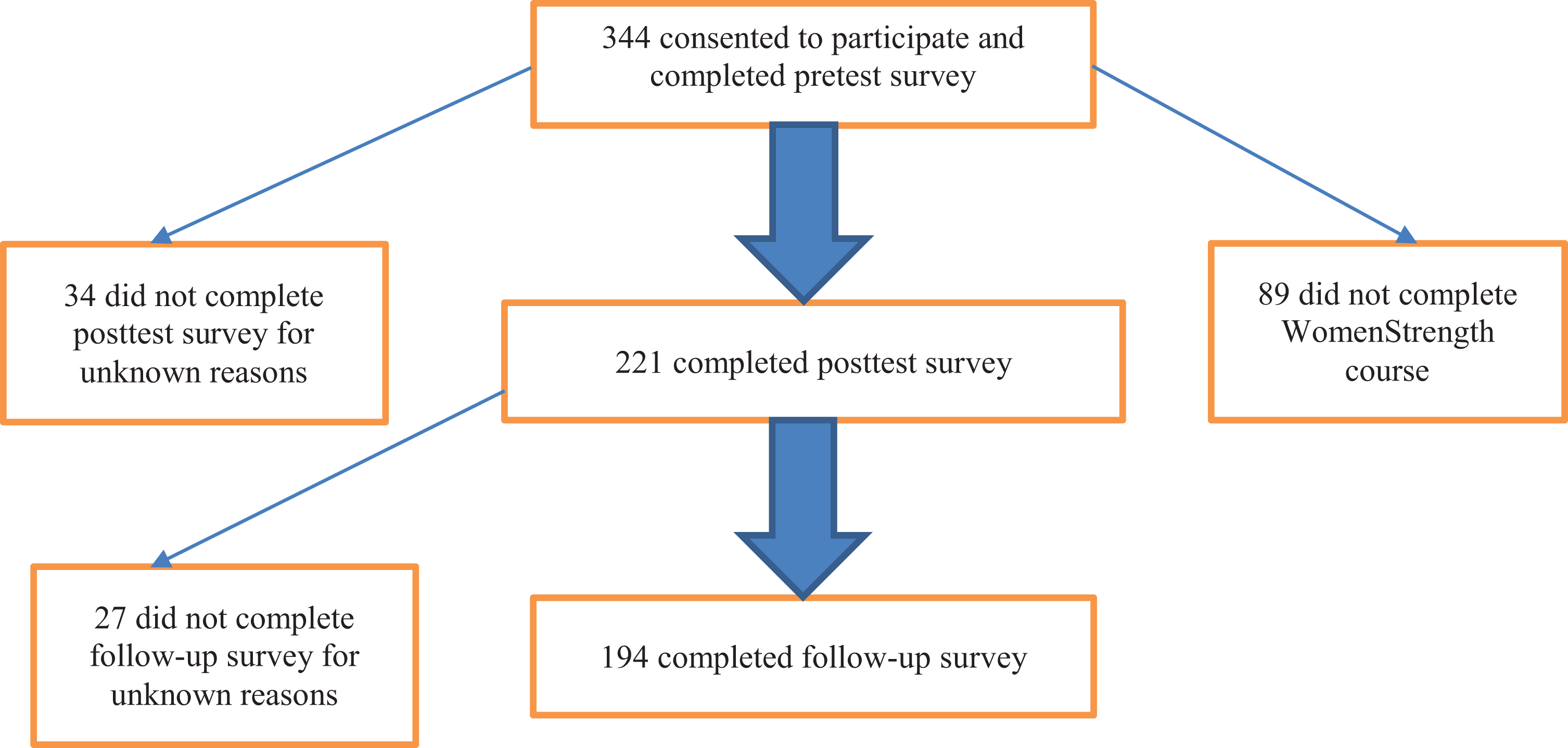
Flow chart of WomenStrength students’ research participation.
During the same time period, we also recruited a comparison group of women who had not previously taken a WomenStrength course and had no plans to do so in the near future, to assess whether changes seen in the WomenStrength students were due to the experience of learning self-defense or to other reasons (e.g., normal maturation or events occurring in the public sphere). Recruitment involved posting flyers at the same community centers where the WomenStrength courses were held and more broadly across the Portland area, asking teachers of other courses at the same community centers to invite volunteers, and posting invitations on social media. Potential participants were told that the study “focuses on women’s experiences around the issue of safety.” Participants in the comparison group completed two online surveys: a pretest at the initial time of volunteering for the research, and a follow-up survey approximately one year later. Surveys completed by the comparison group were identical to those completed by the WomenStrength students, except for questions directly related to experiences in the ESD course. Two hundred and seventy-four women volunteered to participate in the comparison group and completed the pretest survey; 214 (78.1%) of these women completed the follow-up survey. However, 25 of those who completed the follow-up survey reported that they had taken a WomenStrength or another substantial self-defense course between pretest and follow-up. These participants were excluded from analysis, bringing the total number in the comparison group to 189.
All participants who completed the full set of surveys received a $25 gift card for their participation. Although not discussed directly in this article, the research was further informed by participant observation in one WomenStrength course, review of the written curriculum, and in-depth, semi-structured interviews with 31 participants.
Participants
Overall, 383 of the 631 women who volunteered to participate in the research and completed the pretest also completed the full series of surveys and were therefore included in the study. Participants ranged in age from 18 to 77 years, with a mean age 3 of 37.9 years (median age 35.0). WomenStrength participants were slightly younger than comparison group participants (35.0 vs. 36.4), but this difference was not significant (χ2 = 5.2805, p = .383). Table 1 shows additional demographics for study participants and compares those enrolled in the ESD course and those in the comparison group. Like residents of the city of Portland more generally, most participants (82.8%) identified themselves as White. Over 80% identified as heterosexual; the second most common sexual orientation was bisexual. About two thirds had at least a 4-year college degree and just over half reported an annual family income of more than $50,000. Most were employed, although a significant minority were students at the time of their participation. Sixty-one percent reported that they were in a long-term relationship at the time of the first survey, and 37% reported having one or more children.
Demographic Characteristics of Research Participants.
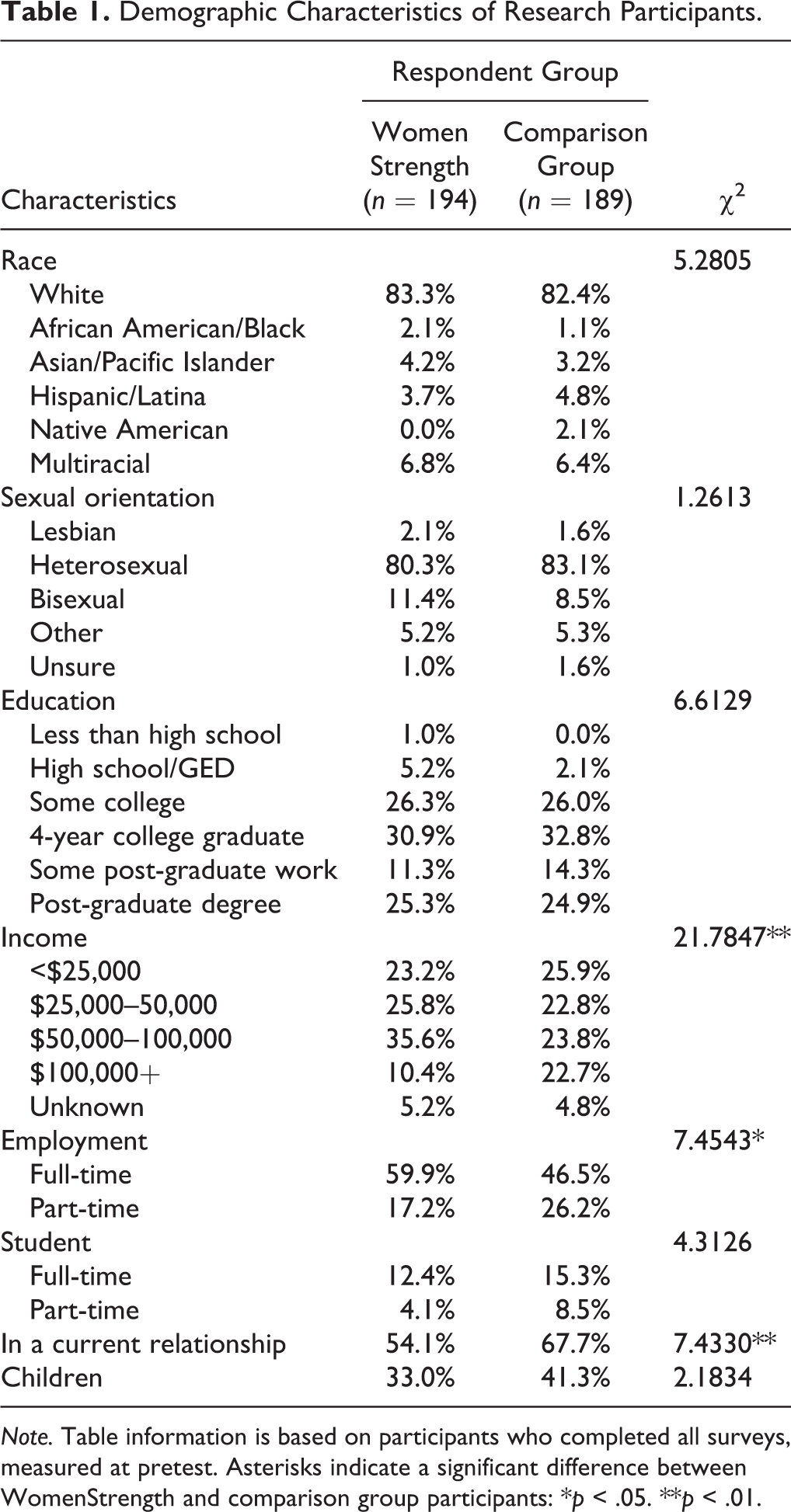
Note. Table information is based on participants who completed all surveys, measured at pretest. Asterisks indicate a significant difference between WomenStrength and comparison group participants: *p < .05. **p < .01.
Chi-square analyses found no significant differences between the WomenStrength and comparison groups on age, race, sexual orientation, education, or student status (see Table 1). WomenStrength participants were significantly more likely to be employed full-time (59.9% vs. 46.5%) and less likely to be employed part-time (17.2% vs. 26.2%). They were more likely to report a family income between $50,000 and $100,000 (35.6% vs. 23.8%) and less likely to report a family income over $100,000 (10.4% vs. 22.7%). They were also less likely to be in a current relationship (54.1% vs. 67.7%). WomenStrength participants were less likely than comparison group participants to report having children (33.0% vs. 41.3%), but this difference was not statistically significant.
Table 2 reports participants’ prior experiences of sexual assault. Many (n = 68.1%) reported at least one past unwanted sexual experience; for about a third of the participants, this experience met the legal definition of rape. WomenStrength students were somewhat less likely than the comparison group to have experienced any kind of sexual assault prior to completing the pretest (62.4% vs. 74.1%), and this difference was statistically significant (χ2 = 6.0402, p = .014). When types of previous sexual assault were disaggregated, WomenStrength students were less likely to report every type of sexual assault, though only differences in experiences of attempted rape were statistically significant (χ2 = 6.0488, p = .014). Differences in experiences of unwanted sexual contact (χ2 = 1.5355, p = .215), sexual coercion (χ2 = 0.2988, p = .585), and completed rape (χ2 = 0.3769, p = .539) were not statistically significant.
Participant Reports of Past Assault Experiences.
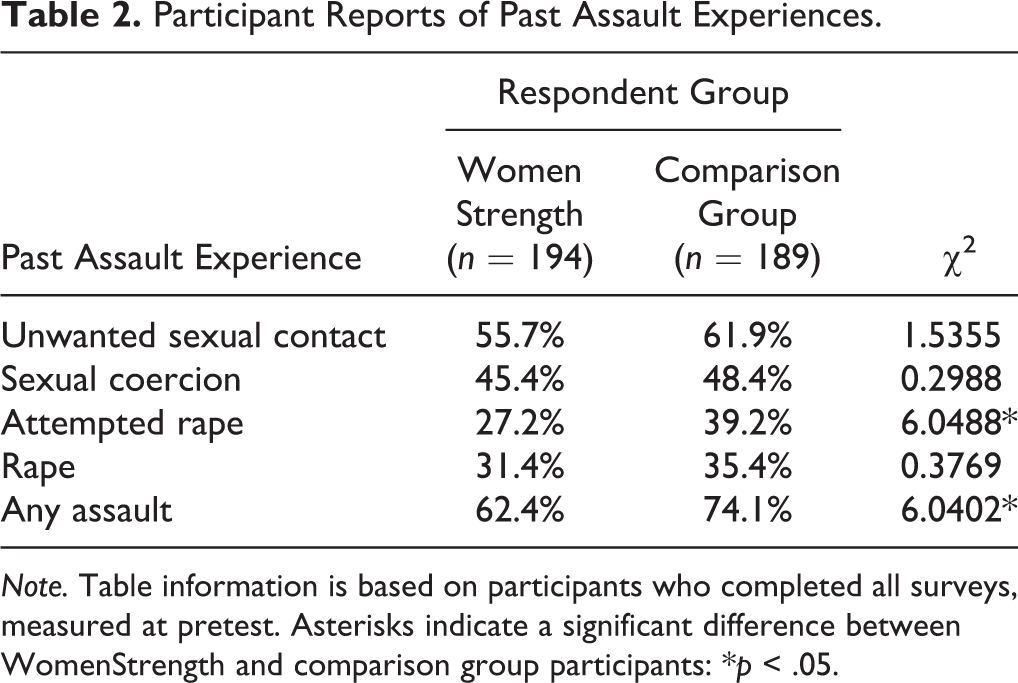
Note. Table information is based on participants who completed all surveys, measured at pretest. Asterisks indicate a significant difference between WomenStrength and comparison group participants: *p < .05.
Measures
Each survey asked a series of closed- and open-ended questions about participants’ experiences, beliefs, knowledge, and attitudes. The analysis in this study focuses on the following closed-ended measures (see Table 3 for descriptive statistics). Because missing data did not appear to be nonrandom at the item level, available item analysis was used to score all scales (Parent, 2013).
Descriptive Statistics at Pretest.
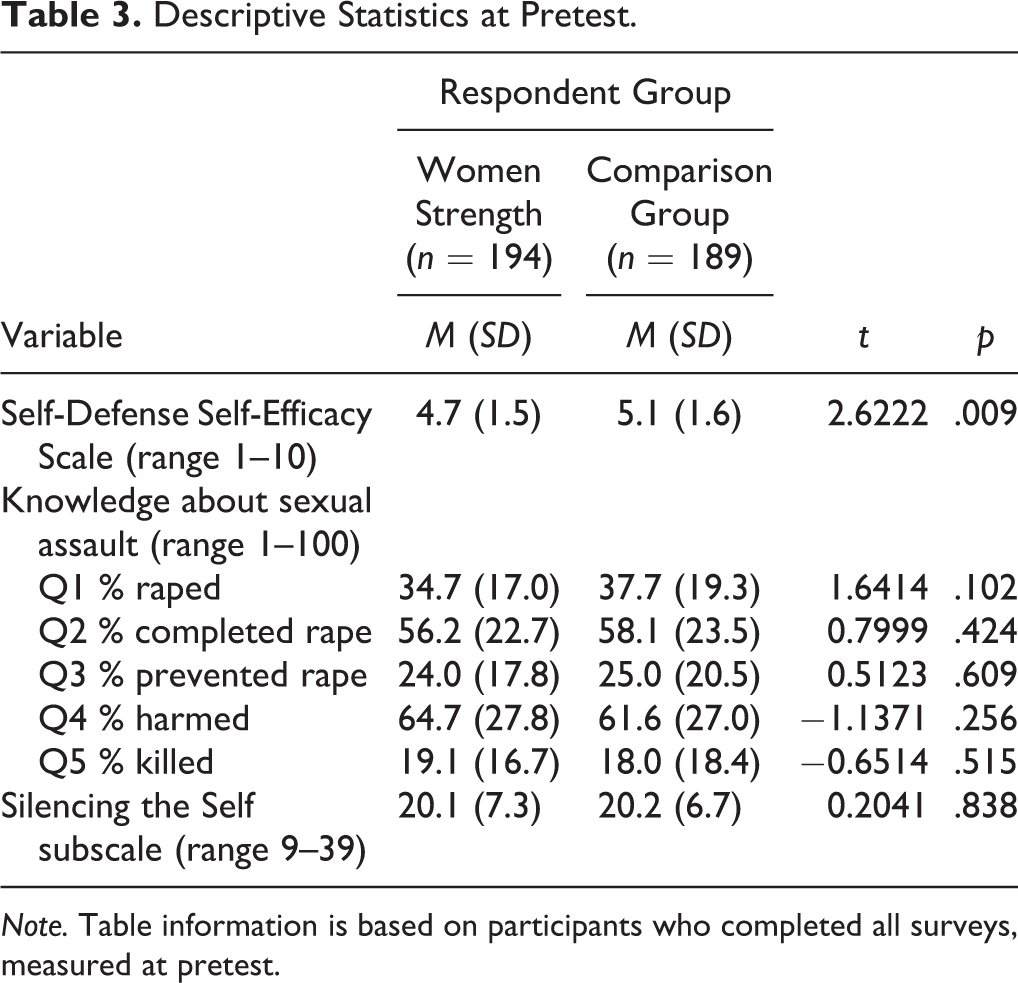
Note. Table information is based on participants who completed all surveys, measured at pretest.
Experiences of sexual assault
An adapted version 4 of the Sexual Experiences Survey (SES) was used to compare the rates of assault reported by WomenStrength students and the comparison group at two points: before entering the study (assessed at pretest) and during the 1-year follow-up period (assessed at follow-up). The original SES measure (Koss, Gidycz et al., 1987), rather than the more recently revised measure (Koss et al., 2007), was used so that the results could be compared to previous samples. Internal consistency (Cronbach’s α > .70) and validity of scores on the SES have been supported in previous research (Koss & Gidycz, 1985; Testa et al., 2004). Cronbach’s α for the SES in this study was .83 for the first survey administration and .81 for the 1-year follow-up assessment.
In line with best practices, the SES presents subjects with a series of behaviorally specific descriptions of different types of sexual assault, without ever using the words “rape” or “sexual assault.” Participants indicate whether they have or have not had these experiences by checking “yes” or “no.” Participant answers to these questions were summarized into four categories for further analysis: unwanted sexual contact (including contact obtained by coercion, the use of authority, physical force, or the threat of physical force), sexual coercion (giving in to sexual intercourse because of coercion or the use of authority), rape (sexual intercourse obtained via physical force, threat of physical force, or administration of alcohol or drugs), and attempted rape (an attempt to obtain sexual intercourse via physical force, threat of physical force, or administration of alcohol or drugs). Answering “yes” to any question within a category meant that participants were assigned a “yes” score for the entire category.
Self-defense self-efficacy
The Self-Defense Self-Efficacy Scale (adapted from Weitlauf et al., 2000) includes seven questions that assess different aspects of a participant’s confidence about their self-protective abilities: recognizing a dangerous situation (even if the potential assailant is an acquaintance), using punches or strikes, using kicks, preventing an assault, preventing injury by blocking or avoiding blows, freeing oneself from a grab around the neck, or getting needed medical and legal help. Participants responded to each item on a 10-point scale that ranged from 1 (not confident at all) to 10 (very confident). These responses were averaged to produce a final mean score, with higher scores indicating greater self-efficacy. Cronbach’s α for scores on the original scale ranged from .72 to .75 (Weitlauf et al., 2000). In this study, Cronbach’s α ranged from .84 to .89 across the three survey administrations.
Because the Self-Defense Self-Efficacy Scale does not distinguish between perpetrators who are strangers versus known to the target, two separate questions asked specifically about self-efficacy with these two groups of potential perpetrators: “How effectively do you feel that you would be able to defend yourself if a STRANGER attacked you?” and “How effectively do you feel that you would be able to defend yourself if an ACQUAINTANCE attacked you?” Response choices ranged from 1 (not effectively at all) to 7 (very effectively).
Knowledge about sexual assault
A series of four questions based on questions asked by Gordon and Riger (1989) assessed participants’ knowledge about the typical outcomes of rape and resistance in the U.S.: (1) Of those women who are attacked by someone who intends to rape them, what percentage do you think are actually raped? (2) Of those women who are attacked by someone who intends to rape them, what percentage do you think are able to prevent the rape? (3) Of those women who are raped, what percentage do you think are beaten or physically hurt in addition to the rape? and (4) Of those women who are attacked by someone who intends to rape them, what percentage do you think are killed? For each question, participants were asked to estimate a percentage between 0% and 100%. An additional, original question asked, “If a woman is attacked but fights back, how likely do you think it is that she will get hurt more than if she didn’t fight back?” This question addresses the common myth that resistance increases the likelihood of injury. Response options ranged from 1 (very unlikely) to 4 (very likely). Because the WomenStrength program provides general information on these topics, rather than detailed statistics, we would not expect participants to be accurate in their estimates of the prevalence of particular outcomes. Rather, it is the direction of the change—toward more accurate or less accurate knowledge—that is of interest here.
Self-silencing
The 31-item Silencing the Self Scale (STSS; Jack & Dill, 1992) measures women’s tendency to inhibit their own thoughts, feelings, and actions in order to maintain intimate relationships. The STSS has four subscales 5 : Externalized Self-Perception, Care as Self-Sacrifice, Silencing the Self, and Divided Self. Each subscale includes 6–9 items, such as “I don’t speak my feelings in an intimate relationship when I know they will cause disagreement” or “When my partner’s needs or opinions conflict with mine, rather than asserting my own point of view, I usually end up agreeing with him/her.” For each item, participants rate their agreement on a 5-point scale ranging from 1 (strongly disagree) to 5 (strongly agree). Scores are summed to determine subscale and total scale scores, with a maximum total score of 155. Higher scores “reflect greater pressure to fulfill the norms of the “good woman” (Jack & Dill, 1992, p. 99). Jack and Dill (1992) reported internal consistencies of .86 to .94 and test–retest reliabilities of .88 to .93 for scores on the full scale. In this study, Cronbach’s α for scores on the total scale and each subscale ranged from .87 to .93 across the three administrations.
Results
The analysis began by evaluating pretest/posttest/follow-up changes on each measure. The significance of these changes was assessed using a series of paired sample t-tests and chi-squared analyses. Finally, a logistic regression model was estimated to assess the effects of participation in the WomenStrength course on subsequent sexual assault.
Self-Defense Self-Efficacy
Figure 2 shows participants’ mean score on the Self-Defense Self-Efficacy Scale at pretest, posttest, and follow-up. At pretest, WomenStrength participants’ mean score was 4.7, below the midpoint of the scale and slightly below the mean score for the comparison group (5.1). At posttest, the mean score for the WomenStrength group had increased dramatically to 7.5, indicating that participants felt much more capable of defending themselves by the end of the course. This change was both substantively and statistically significant, t(186) = −23.9113, p < .001, d = −1.9. By the end of the follow-up year, there had been some regression to 7.0; however, the overall increase remained large and significant, t(182) = 19.6330, p < .001, d = −1.5. The comparison group also demonstrated an increase in self-defense self-efficacy from pretest to follow-up, but although this increase was statistically significant, it was substantively small (from 5.1 to 5.4), t(184) = 2.7881, p = .006, d = −0.2.
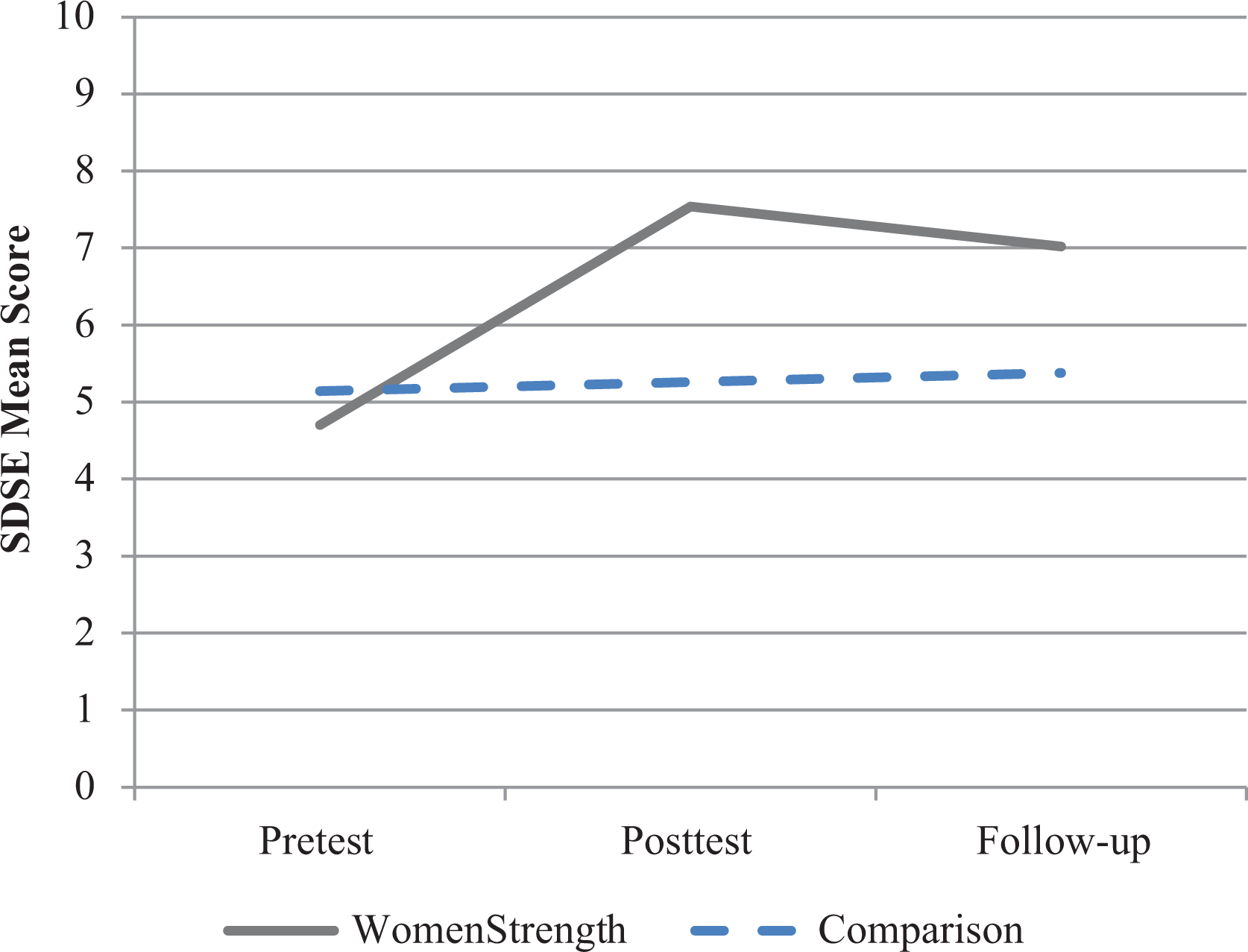
Changes in self-defense self-efficacy.
Parallel patterns were reported in participants’ projected self-defense effectiveness against two types of perpetrators: strangers and known others. As shown in Figure 3, WomenStrength participants’ mean projected effectiveness against strangers increased significantly, from 3.28 at pretest to 5.23 at posttest, t(192) = −21.0879; p < .001; d = −1.7. Between posttest and follow-up, their scores regressed somewhat (to 4.87); however, the overall change from pretest to follow-up remained large and significant, t(190) = −16.7007; p < .001; d = −1.4. Over the same time period, the comparison group showed only a small increase in their perceived ability to defend themselves against strangers (from 3.48 to 3.66), t(185) = −2.2898, p = .023, d = −0.2.
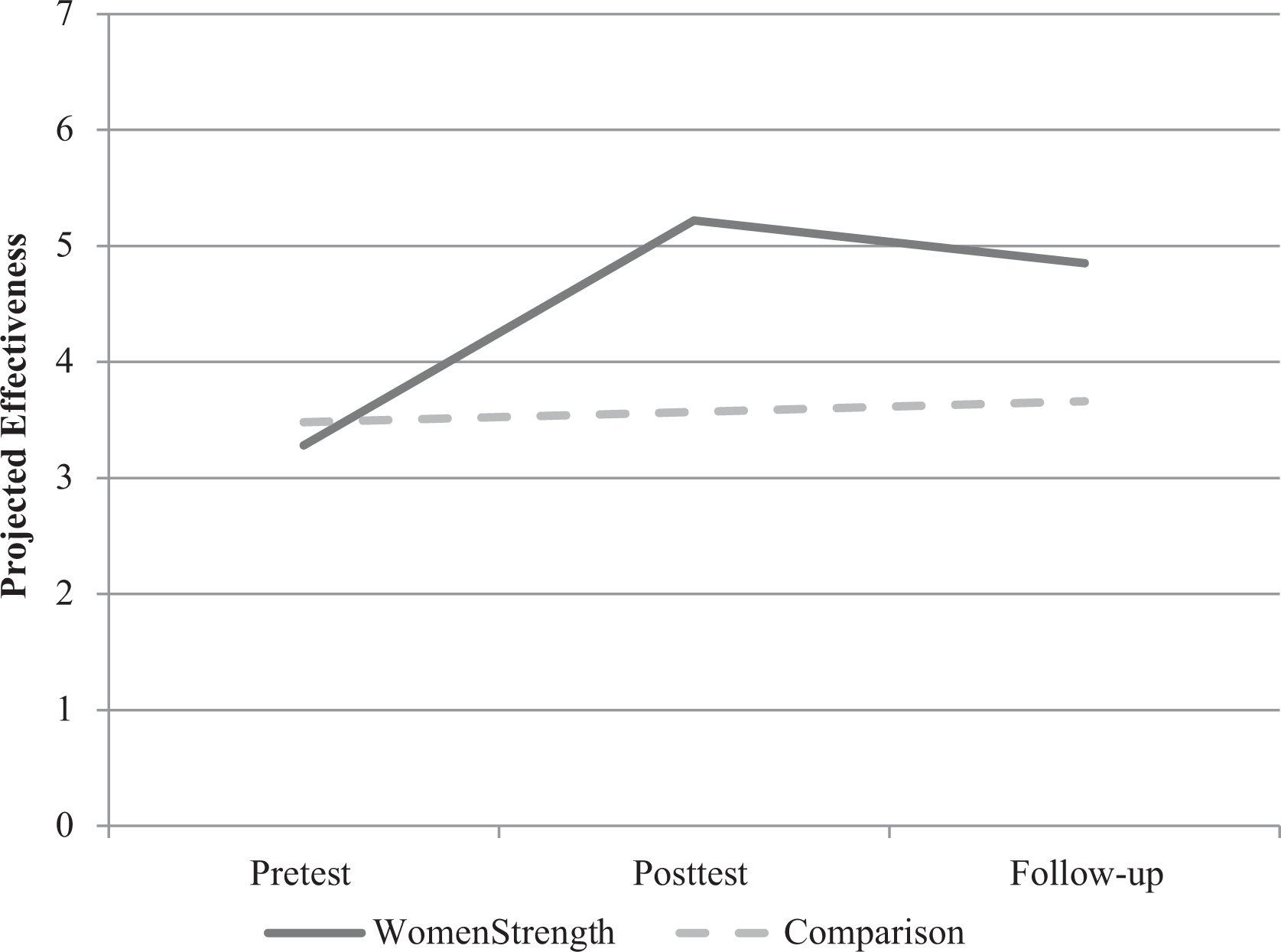
Projected self-defense effectiveness against a stranger.
Patterns for projected self-defense effectiveness against acquaintances are shown in Figure 4. Between pretest and posttest, WomenStrength participants’ mean response increased from 3.84 to 5.51, t(191) = −16.9050, p < .001, d = −1.3. There was some regression between posttest and follow-up (to 5.20); however, the overall change from pretest to follow-up was still large and significant, t(192) = −13.8630, p < .001, d = −1.0. Over the same time period, the comparison group showed no change in their confidence that they could defend themselves against an acquaintance, t(185) = 0.8360, p = .404, d = 0.04). Overall, WomenStrength participants felt significantly more confident that they could defend themselves against assaults from both strangers and acquaintances after completing the course.
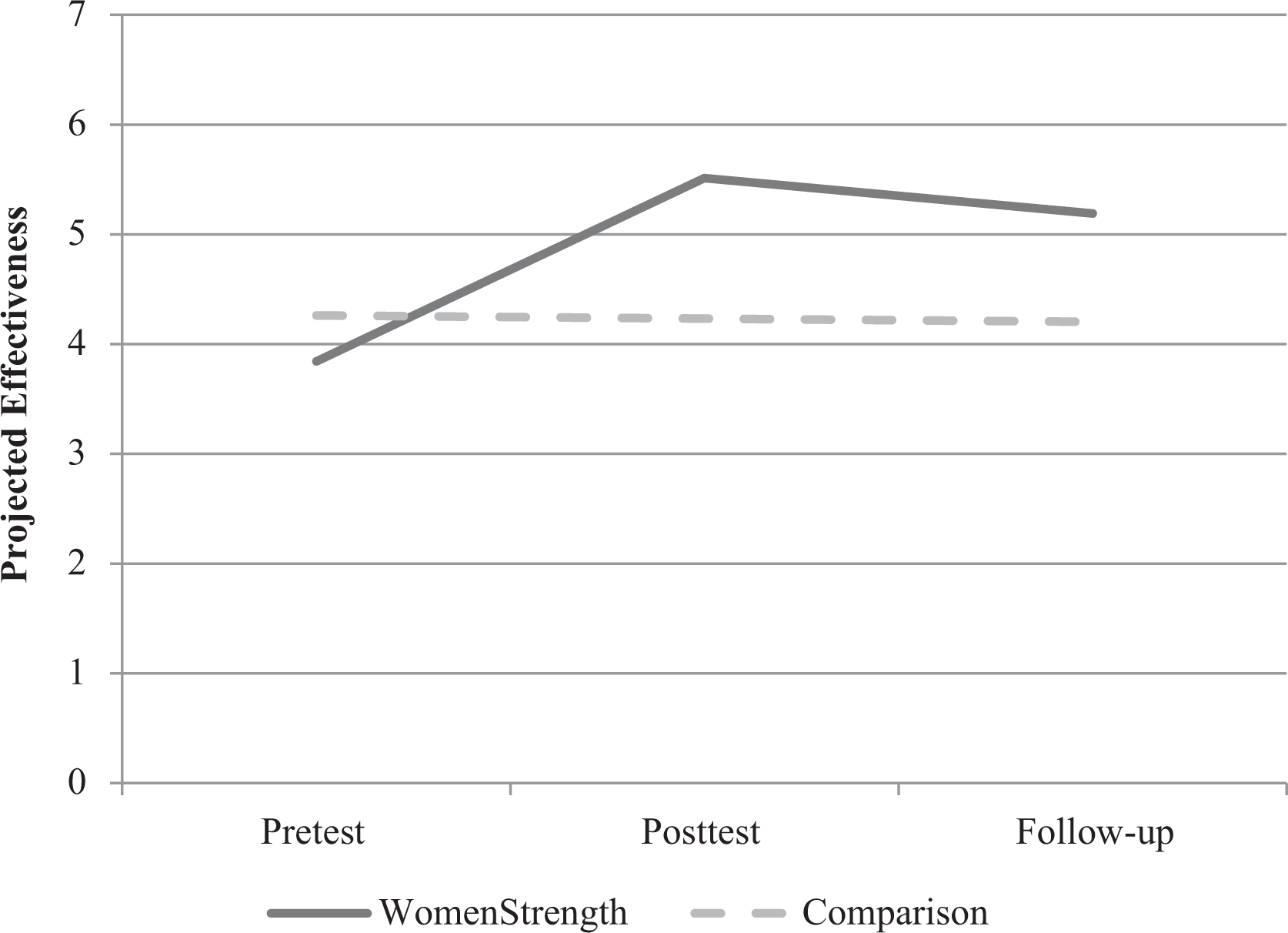
Projected self-defense effectiveness against an acquaintance.
Knowledge About Sexual Assault
Table 4 shows that participants’ knowledge about the outcomes of sexual assault and resistance improved on most measures after completing the WomenStrength course. Research has consistently demonstrated that resistance can deter rape (Dardis et al., 2018; Ullman, 1997, 2007). For example, Tark and Kleck (2014) found that when targets of rape did not resist, 88.1% of the assaults resulted in completed rape, compared with only 19.1% when targets resisted in any way. After taking the WomenStrength course, participants were significantly more likely to believe that women can prevent an assault: On average, they believed that fewer attacks result in rape (48.9% vs. 56.2%), t(193) = 3.7542, p < .001, d = 0.3, and that more women are able to prevent a rape (39.2% vs. 24.0%), t(193) = −8.2317, p < .001, d = −0.7. Changes in responses to the latter question were especially large. Although there was some statistically significant regression on this question between posttest and follow-up, t(192) = 2.0714, p = .040, d = 0.2, the overall change from pretest to follow-up remained large and significant.
According to Tark and Kleck (2004), only 4% of women sustain serious additional injury (i.e., injury more severe than cuts or bruises) during a rape. Moreover, contrary to popular belief, women’s resistance does not generally provoke additional injury. After taking the WomenStrength course, participants believed that significantly fewer rape victims are also beaten or physically hurt (52.5% vs. 64.7%), t(193) = 5.6659, p < .001, d = 0.4. WomenStrength participants were also less likely to believe that resistance would result in serious injury to the woman: Participants’ mean responses on this question declined from 2.57 to 2.23 on the 4-point scale between pretest and posttest. This change was statistically significant, t(193) = 4.8069, p < .001, and was sustained at follow-up.
Finally, WomenStrength participants’ mean estimates of the number of rape victims who are also killed declined significantly after taking the course (13.6% vs. 19.3%), t(193) = 4.7602, p < .001, d = 0.4. It is worth noting, however, that participants’ estimates are still much higher than reality. Tark and Kleck (2004) estimated that the target is killed in no more than .024% (or one in 4,208) of all rapes and sexual assaults.
Table 4 also shows that comparison group participants’ responses to the knowledge questions did not change significantly over the course of the follow-up year, with the exception of the question about the percentage of women who are killed in addition to a rape, where there was a small but statistically significant change toward more accurate knowledge (percent raped: t(189) = 0.3454, p = .730, d = 0.02; percent able to prevent rape: t(186) = 0.6316, p = .528, d = .1; percent hurt: t(188) = 0.9039, p = 367, d = 0.1; percent killed: t(189) = 1.9772, p = .050, d = 0.2). Overall, it appears that completing a WomenStrength course increases students’ knowledge about sexual assault and resistance.
Mean Knowledge about Sexual Assault.
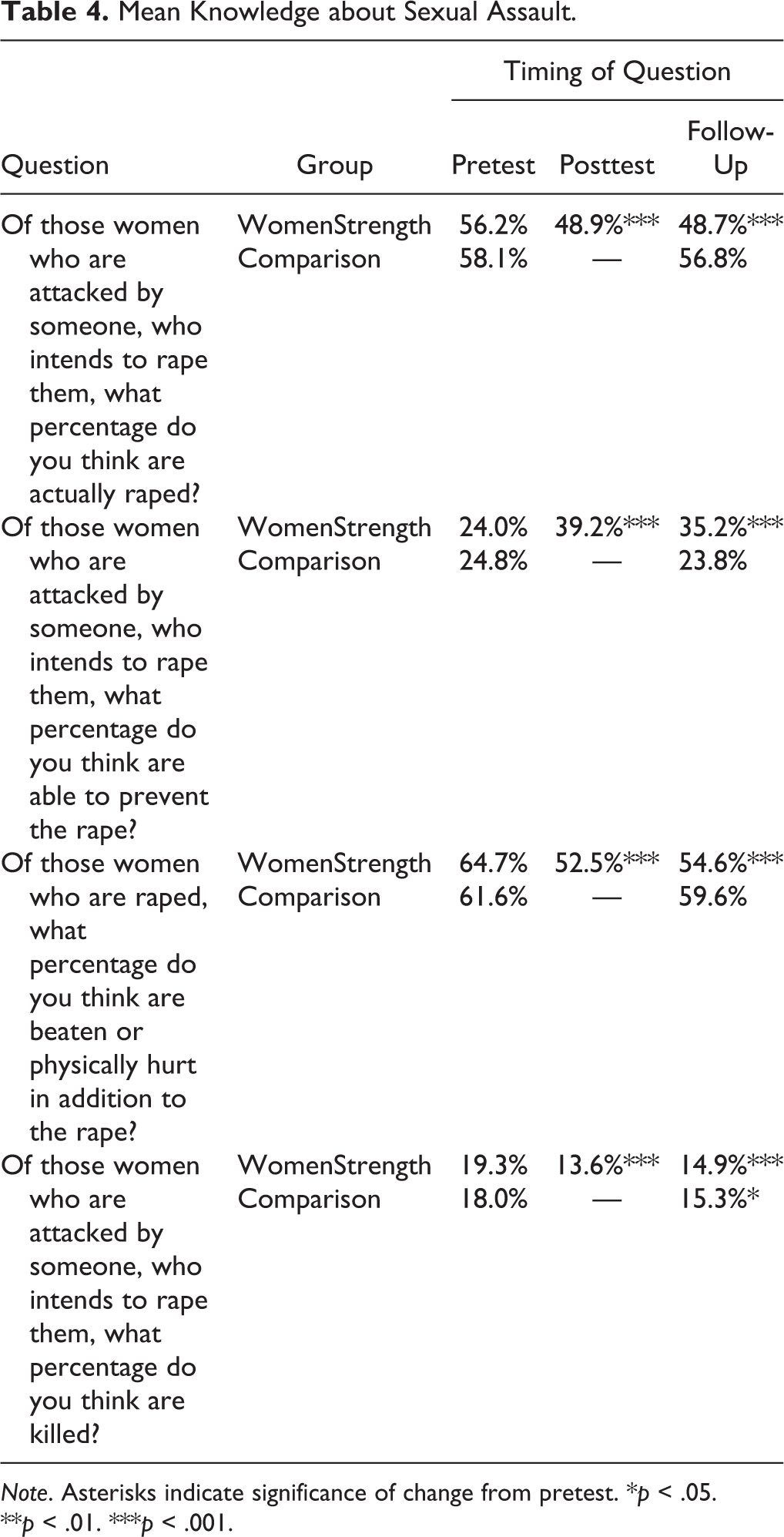
Note. Asterisks indicate significance of change from pretest. *p < .05. **p < .01. ***p < .001.
Self-Silencing
Overall, participants reported significantly less self-silencing after taking the WomenStrength course. Figure 5 shows WomenStrength participants’ responses to the four STSS subscales. The largest absolute decreases at posttest were seen for the Care as Self-Sacrifice subscale, t(186) = 6.4462, p < .001, d = 0.4, and the Silencing the Self subscale, t(185) = 4.1768, p < .001, d = 0.2, but the Externalized Self-Perception subscale, t(189) = 3.7696, p < .001, d = 0.2, and the Divided Self subscale, t(185) = 3.0347, p = .003, d = 0.1, also showed significant decreases, as did scores on the overall scale, t(170) = 5.9983, p < .001, d = 0.3. All changes were maintained at follow-up, and as Figure 5 shows, the decreases in the Care as Self Sacrifice, t(186) = 1.8294; p = .069, d = 0.1, Silencing the Self, t(181) = .6963; p = .8303, d = 0.05, and Divided Self, t(181) = .8359; p = .4043, d = 0.05, subscales continued between posttest and follow-up, although these additional changes were not statistically significant. The comparison group showed a small but still statistically significant decrease on the Care as Self-Sacrifice subscale, t(184) = 2.3874; p = .018; d = 0.1. Otherwise, their scores showed no significant differences between pretest and follow-up on the three other subscales: Externalized Self-Perception, t(180) = 0.2871; p = .774; d = −0.004; Silencing the Self, t(174) = 1.6788; p = .095; d = 0.1; and Divided Self SS, t(176) = 0.2667; p = .79; d = −0.009. On the overall scale, WomenStrength students showed a significant decrease between pretest and follow-up, t(164) = 5.4160; p < .001; d = 0.4, while the comparison group did not, t(161) = 1.1404; p = .2258; d = 0.1.
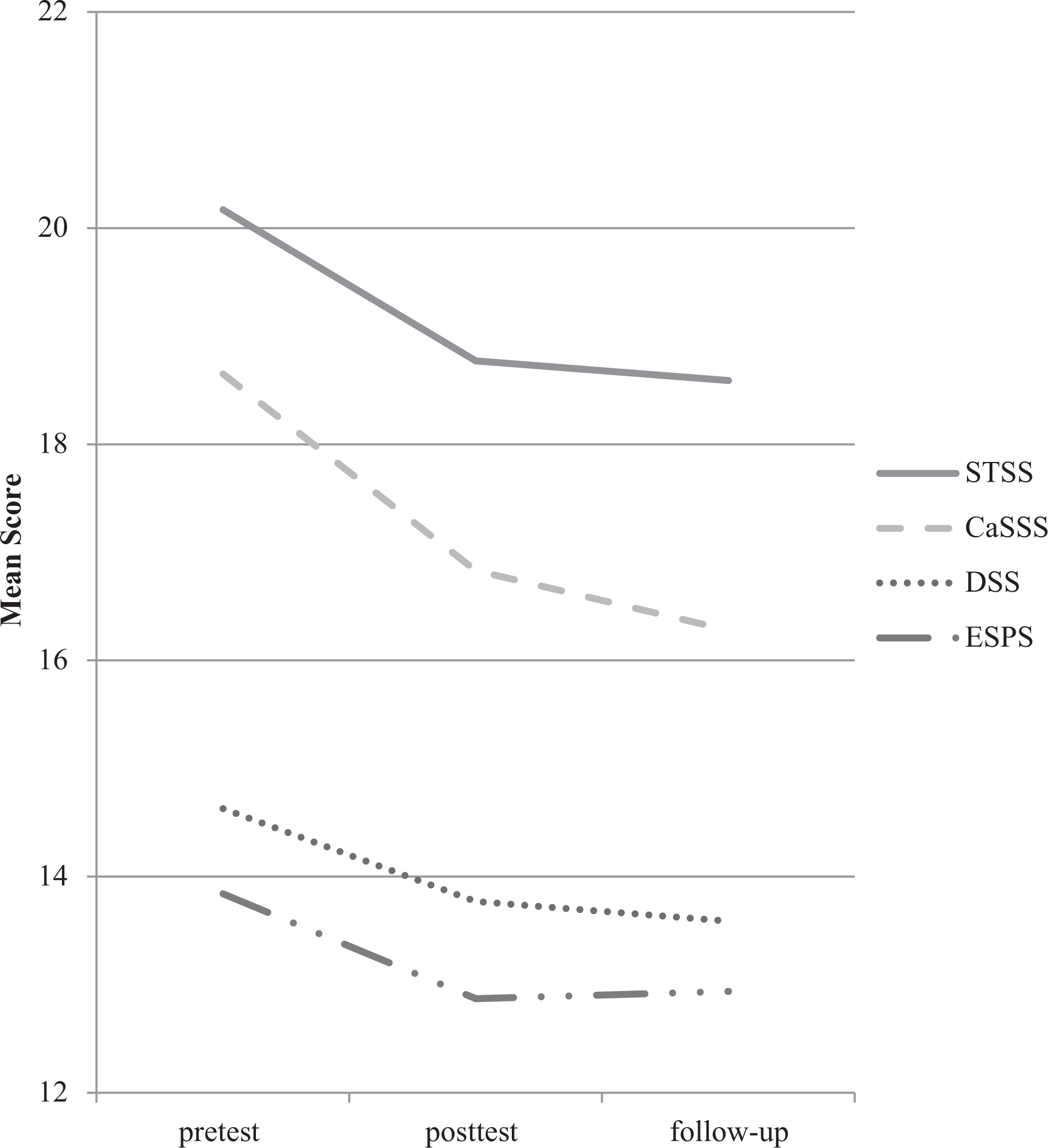
Silencing the Self Scale subscales (WomenStrength participants). STSS = Silencing the Self subscale; CaSSS = Care as Self-Sacrifice subscale, DSS = Divided Self subscale, ESPS = Externalized Self-Perception subscale.
Post-Intervention Experiences of Sexual Assault
Figure 6 shows the incidence of sexual assault reported by WomenStrength and comparison group participants over the follow-up year. In every category, WomenStrength students reported substantially fewer experiences of assault across the follow-up year than those in the comparison group: less than half as much unwanted sexual contact (6.2% vs. 13.8%; χ2 = 6.1400; p = .013) and attempted rape (2.1% vs. 4.8%; χ2 = 2.1284; p = .145), about one third as much sexual coercion (4.1% vs. 11.6%; χ2 = 7.4920; p = .006), and about one quarter as much completed rape (1% vs. 3.7%; χ2 = 2.9804; p = .084). Because of small cell sizes for attempted and completed rape, we combined all forms of assault into a single summary variable. Overall, 8.8% of the WomenStrength group, but 19.6% of the comparison group, reported a sexual assault of any kind over the follow-up year; this difference was statistically significant (χ2 = 9.2434; p = .002).
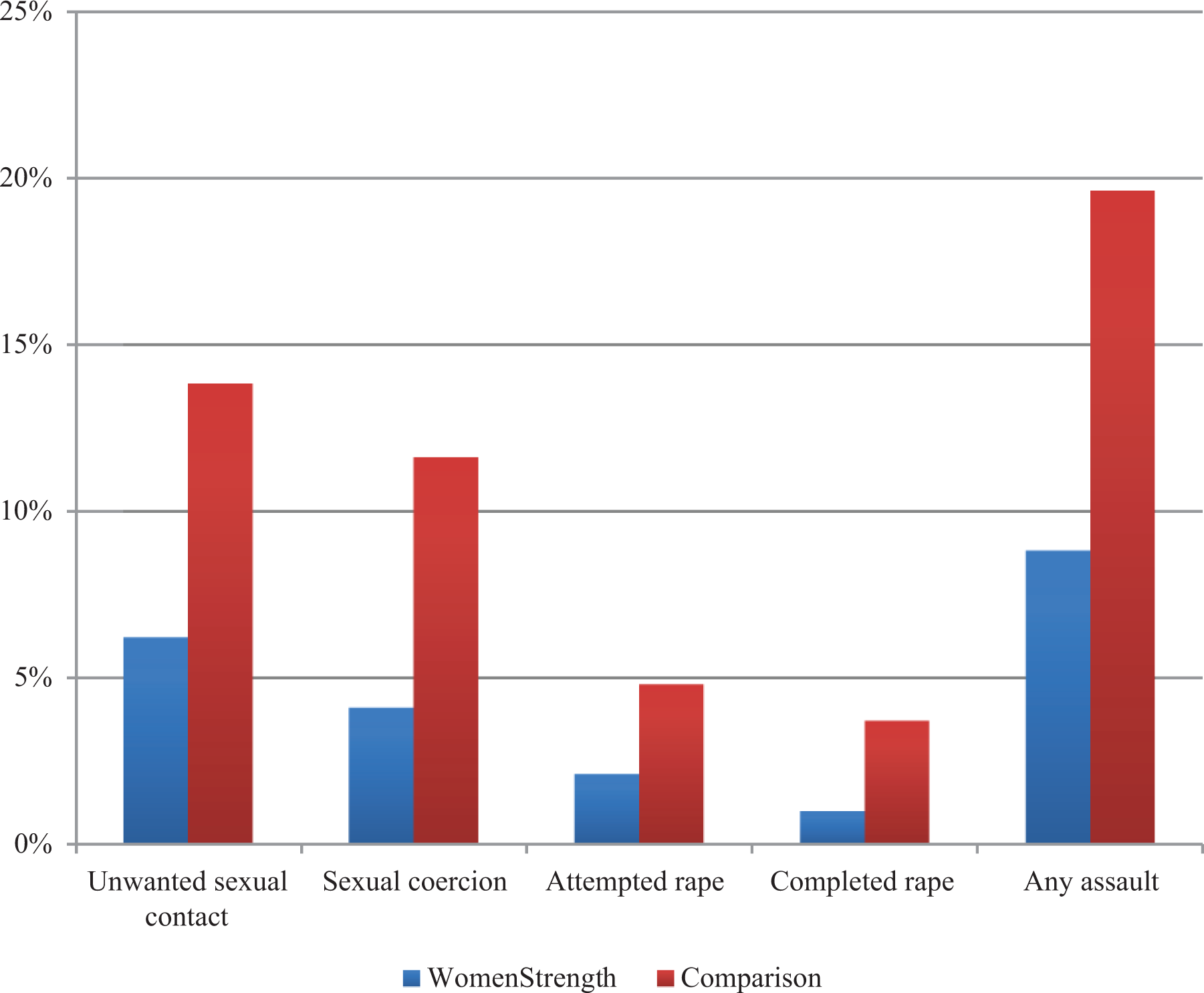
Percent of participants reporting experiences of sexual assault at follow-up, by type of assault.
It is important to note, however, that comparison group participants had reported higher levels of prior sexual assault before entering the research project. Because prior victimization is strongly associated with subsequent victimization, it was possible that the higher rate of sexual assault reported by the comparison group over the follow-up year could be the result of these pre-existing differences. Other differences between the two groups, for example, in self-efficacy or the tendency to self-silence, could also have contributed to differential experiences of assault. To account for this possibility, a logistic regression model was estimated (see Table 5) to examine the effects of taking the WomenStrength course on the odds of experiencing sexual assault, holding constant prior victimization and pretest scores on the Self-Defense Self-Efficacy Scale and Silencing the Self subscale. 6 Because the number of participants who had experienced attempted and completed rape during the follow-up year was quite small, we aggregated of all types of assault into a single measure.
Logistic Regression Predicting Assault Experiences Between Pretest and Follow-Up (Odds Ratios).
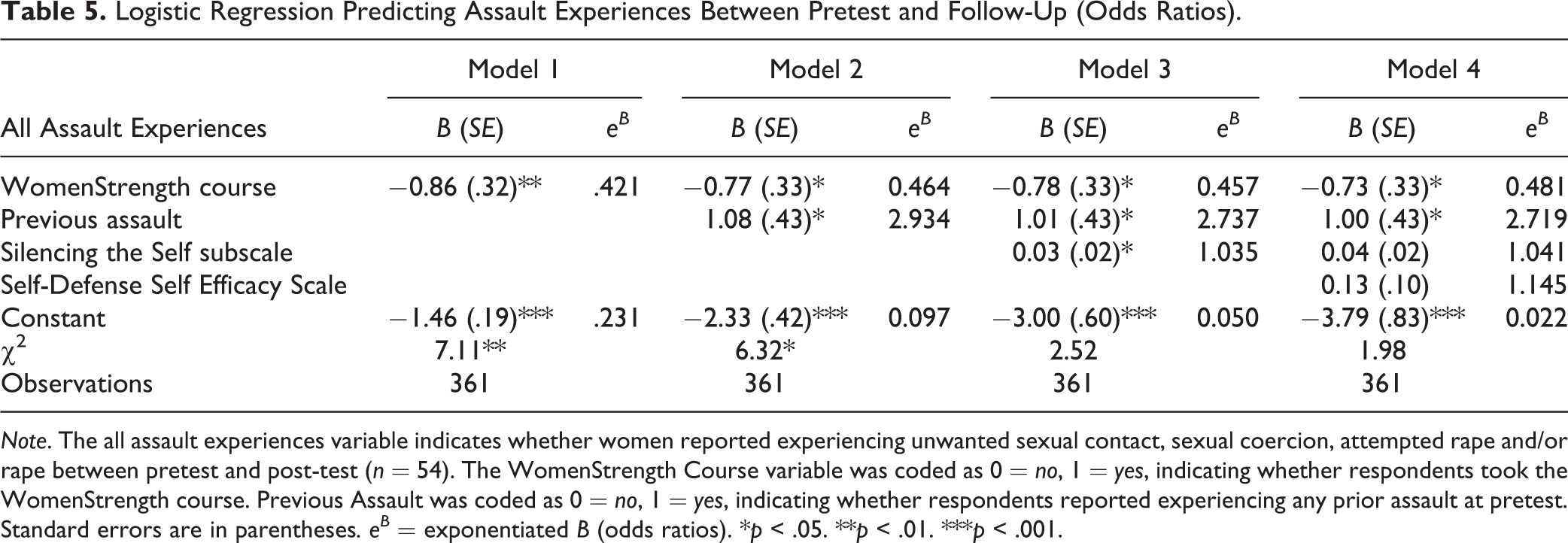
Note. The all assault experiences variable indicates whether women reported experiencing unwanted sexual contact, sexual coercion, attempted rape and/or rape between pretest and post-test (n = 54). The WomenStrength Course variable was coded as 0 = no, 1 = yes, indicating whether respondents took the WomenStrength course. Previous Assault was coded as 0 = no, 1 = yes, indicating whether respondents reported experiencing any prior assault at pretest. Standard errors are in parentheses. eB = exponentiated B (odds ratios). *p < .05. **p < .01. ***p < .001.
The results of the logistic regression make clear that, as in other research, prior victimization is the strongest predictor of future victimization: the odds of experiencing assault were 172% higher for respondents who had experienced an assault prior to the pretest (p = .021). Even controlling for previous assault, however, the odds of experiencing an assault in the year following the course were 52% lower for WomenStrength students than for women in the comparison group, and this difference was statistically significant (p = .027). Neither self-defense self-efficacy nor silencing the self scores predicted the likelihood of assault at follow-up, though silencing the self approached significance.
We also estimated a second model (see Table 6), focusing only on the experience of unwanted sexual intercourse (i.e., sexual coercion and rape). We reasoned that the categories of unwanted sexual contact and attempted rape could include both incidents experienced as assault and incidents experienced as successful self-defense; an attempted rape, for example, is by definition a situation in which rape was intended but did not occur. Focusing only on coercion and rape allowed us to see the effects of ESD training on situations in which the target was unable to prevent completed assault. As shown in Table 6, we found similar patterns here: Prior victimization increased the odds of experiencing unwanted intercourse by 509% (p = .015). Completing the WomenStrength course reduced these odds by 58% (p = .042), and self-defense self-efficacy and silencing the self were not statistically significant. Overall, then, these data suggest that taking a WomenStrength course significantly reduces women’s risk of assault, and specifically of unwanted sexual intercourse, during the year following the course.
Logistic Regression Predicting Unwanted Intercourse Between Pretest and Follow-Up (Odds Ratios).
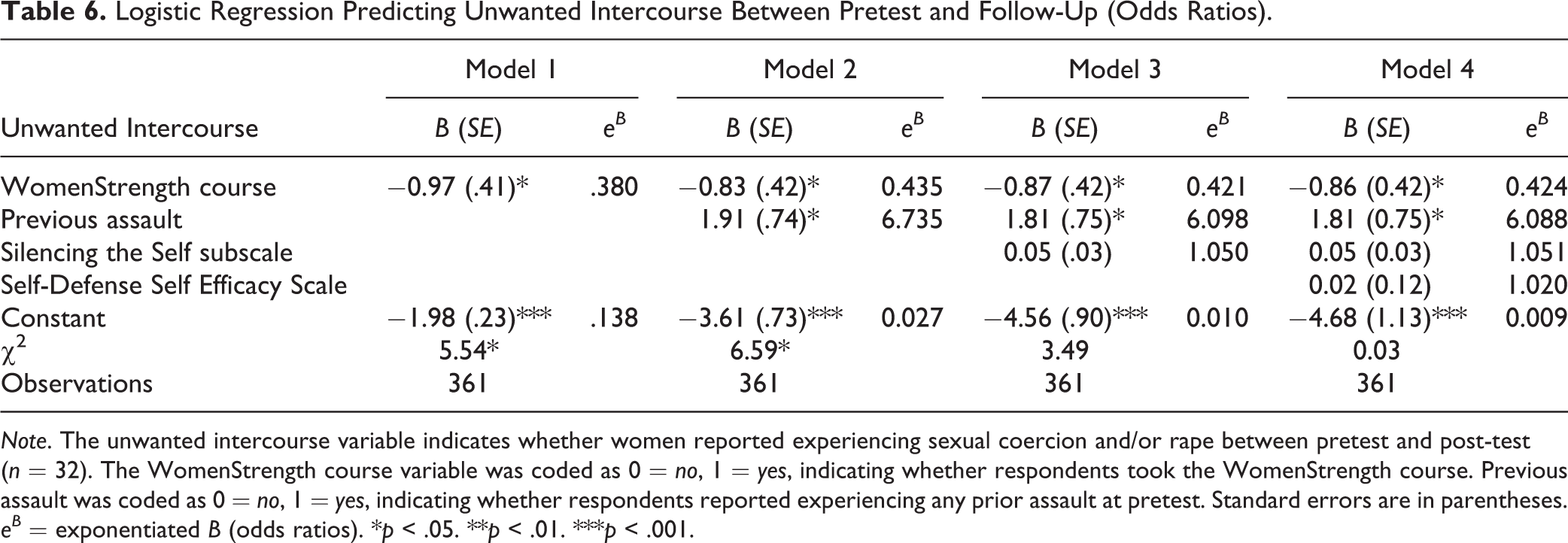
Note. The unwanted intercourse variable indicates whether women reported experiencing sexual coercion and/or rape between pretest and post-test (n = 32). The WomenStrength course variable was coded as 0 = no, 1 = yes, indicating whether respondents took the WomenStrength course. Previous assault was coded as 0 = no, 1 = yes, indicating whether respondents reported experiencing any prior assault at pretest. Standard errors are in parentheses. eB = exponentiated B (odds ratios). *p < .05. **p < .01. ***p < .001.
Discussion
The goal of this study was to evaluate the effects of a 9-hr ESD self-defense course on participants’ risk of sexual assault, self-defense self-efficacy, knowledge about sexual assault, and tendency to self-silence. Using a quasi-experimental pre/post/follow-up design, with a comparison group, all of these outcome measures showed significant change in the ESD group, but not in the comparison group.
Reducing victimization, of course, is the ultimate goal of any prevention program. It is also the most elusive, since very few prevention programs of any kind have been demonstrated to reduce victimization. Although detecting effects on patterns of sexual assault are more challenging in an adult population than among college-aged students, ESD participants reported approximately half as much unwanted sexual contact and attempted rape, one third as much sexual coercion, and one quarter as much completed rape as women in the comparison group during the follow-up period. Using a logistic regression model to hold constant the effects of prior victimization, pretest self-defense self-efficacy, and pretest scores on the Silencing the Self subscale, the odds of experiencing any kind of sexual assault during the follow-up year were 52% less likely for women who had completed the WomenStrength ESD course. Odds of experiencing unwanted sexual intercourse were 58% lower. WomenStrength participants reported much lower levels of all forms of sexual assault—unwanted sexual contact, sexual coercion, attempted rape, and rape—during the follow-up year, but the relatively low rates of assault in this population, together with the sample size, did not permit statistical analysis of individual types of assault.
Self-efficacy beliefs are central to personal empowerment and social change, as well as affecting levels of anxiety, judgments of risk, effective functioning, and freedom of action (Bandura, 1986; Ozer & Bandura, 1990). Self-efficacy also reduces psychological barriers to resisting sexual assault (Nurius & Norris, 1996). As in other evaluations of self-defense training, women’s self-defense self-efficacy increased dramatically for those who took the ESD course. Similarly, participants were much more likely to believe that they could effectively defend themselves if assaulted by strangers or acquaintances after taking the WomenStrength course.
Although knowledge about sexual assault alone cannot reduce women’s risk of victimization, it can contribute to their safety by directing their attention to the risks they are most likely to face and by providing them with an accurate assessment of the likely outcomes of resistance. Participants’ knowledge of sexual assault increased after taking the WomenStrength self-defense course. Most notably, they were more likely to believe that women who are assaulted are able to prevent rape, and less likely to believe that women who resist are seriously injured. These changes may increase women’s likelihood of resisting sexual assault.
Finally, the inclusion of a measure of self-silencing provides information on how ESD training may reduce victimization. Because most assaults happen within the context of existing relationships, the tendency to silence one’s own needs and desires and prioritize others’ comfort and preferences may increase women’s risk of assault. Self-defense participants, but not participants in the comparison group, reported that they were less likely to silence themselves in intimate relationships after taking the course. This change was immediately evident at posttest and was sustained at follow-up.
Overall, ESD students showed meaningful change on all dimensions: They were more self-efficacious, more knowledgeable about the possibilities of resistance, less likely to silence themselves, and most important, less likely to be sexually assaulted during the follow-up year.
Practice Implications
This research both adds to the growing body of research supporting the effectiveness of ESD training (Hollander, 2014; Sarnquist et al., 2014; Senn et al., 2015; Senn et al., 2017; Sinclair et al., 2013) and provides the first systematic evidence that ESD training can also be effective in preventing assault in adult populations, outside of educational contexts. Until this point, all published research on the effects of ESD training on subsequent victimization has focused on either university or adolescent populations. This project, in contrast, examined a self-defense course available to the entire adult population of a major metropolitan area. The fact that the course was free to students and offered at locations across the city made it more accessible to women from a range of socioeconomic backgrounds and diverse social groups. In addition to significantly lower levels of sexual assault reported at follow-up, similar secondary outcomes were seen in this population as have been observed in younger populations, particularly substantial increases in self-efficacy. Participants also reported a more accurate understanding of sexual assault, especially the fact that women can effectively resist violence, after completing the course. These changes expand women’s options in an assault situation, reduce psychological barriers to action, improve functioning, and expand women’s freedom of action. All of these effects were sustained until the 1-year follow-up survey, even without a booster session.
This project also examines additional effects of ESD training that have not been studied in previous research, notably consequences for self-silencing. ESD instructors posit that self-defense training reduces assault by helping women set clear boundaries and respond effectively when those boundaries are not respected. In addition, ESD courses encourage women to see their own needs and desires as equally important as others’; they come to believe that they are “worth defending.” The self-silencing measure taps into these changes, measuring women’s willingness to express their feelings to an intimate partner even when those feelings may lead to disagreement or conflict. Women’s tendency to silence themselves decreased significantly between pretest and follow-up, indicating substantial and sustained change on this dimension. Unfortunately, the STSS focuses only on interactions with intimate partners; in future research, it would be useful to assess whether similar changes occur in participants’ relationships with friends, acquaintances, strangers, family members, and authority figures.
Beyond the new populations and measures noted above, this research also helps to answer the question of the minimum “dose” of self-defense training needed for effective prevention (Hollander, 2018b; Senn et al., 2018). At nine hours across three sessions, the WomenStrength program is shorter than other programs that have been shown to reduce the risk of sexual assault, suggesting that it may be possible to achieve substantial effects with a somewhat briefer intervention. Of course, further research with randomized assignment and with different populations is needed to confirm this conclusion. Moreover, this result should not be interpreted to mean that a shorter intervention is necessarily better. Longer courses include more time for practice and more in-depth learning, which may prove more effective in the long run. The 10-session, 30-hr Self-Defense from the Inside Out (SDIO) course evaluated by Hollander (2004, 2014), for example, provided substantial time for role-playing a range of situations, especially with known others, and practicing physical skills. The four-session, 12-hr Enhanced Assess, Acknowledge, Act (EAAA) course designed by Senn (Senn et al., 2015; Senn et al., 2017) also includes a significant component of emancipatory sexuality education, which is hypothesized to boost women’s ability to understand their own sexual desires and values and, by implication, recognize and resist sexual interactions that they do not desire (Senn et al., 2011). We still need to understand which of these components are most important for the outcomes observed. However, in a context where many universities and other organizations are searching for time- and cost-efficient prevention programs, it is useful to assess the question of minimum dose.
Strengths, Limitations, and Directions for Future Research
The major strength of this study is its focus on a new population: residents of a major metropolitan area who are substantially more diverse in terms of age, education, employment, and socioeconomic status than the college students who have been the focus of nearly all previous research on ESD training. The pretest/posttest/follow-up mixed-methods design, including a substantially similar comparison group, provides a robust analysis given the quasi-experimental context. The novel use of the self-silencing measure begins to explore the mechanisms by which ESD training reduces sexual victimization. Finally, the WomenStrength curriculum is manualized and therefore replicable in other contexts.
Despite these strengths, the study was limited by its quasi-experimental structure. Because the course was pre-existing, no random assignment to treatment and control groups was possible. Although the comparison group appears to match the treatment group in important ways, it is possible that there could be unmeasured differences between the two groups. In addition, participants in the ESD group were aware that they were participating in research on self-defense training, and may have been more reluctant to report assaults that occurred during the follow-up period, perhaps thinking that these experiences represented a personal failure or might reflect negatively on the instructors of their course. On the other hand, the training might have made them more likely to report an assault because of the sensitizing experience of the course. Overall, it is impossible to know how the experience of the course might have affected reporting patterns, and this would be a useful topic for future research.
A substantial challenge for this project was the relatively low likelihood of sexual assault among adult populations, which makes detecting the effects of any intervention more difficult than in younger populations. Although it was possible to evaluate the effectiveness of this training on a composite measure of assault, it was not possible to assess its effectiveness for particular types of assault, or for particular demographic groups of participants. A much larger sample of participants would be necessary to carry out these more fine-grained analyses.
This study examines a single course taught in one urban area; the results therefore may not be generalizable to other populations or courses. Portland has less racial diversity than most U.S. cities, so we are unable to analyze results by race. This research should be replicated with more diverse populations in other locations. Finally, we need better and additional measures to capture some of the other postulated effects of ESD training, for example, assertiveness in non-intimate relationships, changes in psychological barriers to resistance, and gender expectations. These additional measures, together with more detailed qualitative data, could also help to start disentangling the mechanisms by which ESD training produces the effects described here.
Conclusions
Overall, our findings suggest that a 9-hr ESD course may effectively reduce subsequent rates of sexual assault in an adult population. Further, this research demonstrates the utility and the feasibility of ESD training for women in community settings. WomenStrength has been providing free training in ESD to Portland residents for more than 40 years. Women who have completed the course report significantly less sexual assault, including unwanted sexual intercourse, in the year following their participation than a comparison group, and report important gains in self-confidence, self-efficacy, and self-silencing, as well as more accurate knowledge of the frequency of sexual assault and resistance.
It should be clearly noted that this research examines the effectiveness of only one type of self-defense training, ESD, and should not be read as evidence for the effectiveness of any self-defense course. ESD training has distinctive features that distinguish it from other types of training, such as martial arts training or purely physical self-defense courses (Hollander, 2018a; Thompson, 2014; Wanamaker, 2017). Further research is required to assess whether non-ESD courses are similarly effective.
Moreover, the fact that ESD training reduces women’s risk of victimization must not be interpreted to mean that women are responsible for stopping or preventing violence. Although some observers have misunderstood calls for women’s ESD training to mean that the burden of prevention should fall on women, this logic is too simplistic (Hollander, 2009, 2016; McCaughey & Cermele, 2015). It is wise to drive defensively, but that does not mean that one shoulders responsibility for car accidents caused by other drivers. Similarly, it is wise to know how to defend oneself, but that does not mean that assaults are the responsibility of anyone besides the perpetrator. Other observers (e.g., Basile, 2015) have worried that women might feel more self-blame if they are trained in ESD yet are unable to defend themselves in a subsequent assault. As several recent studies make clear, however, women do not blame themselves more in this situation (Gidycz et al., 2015; Gidycz et al., 2006; Orchowski et al., 2008; Senn et al., 2016).
Finally, it is important to be clear that ESD training is only a part of what is needed for effective sexual assault prevention. A comprehensive approach to preventing violence against women should address the entire community, including programs to reduce men’s likelihood of perpetration and training for all community members to increase the likelihood of bystander intervention and delegitimize abusive behavior and gender inequality (Orchowski et al., 2018). Although these other types of programs have not yet shown significant effects on rates of perpetration and victimization, they hold the most hope for fostering real social change in patterns of sexual assault and inequality.
Although ESD training is only one part of a comprehensive approach to sexual assault prevention, it is nonetheless a crucial part. Most importantly, it is the only approach to date that has been shown to reduce rates of victimization. In addition, ESD training also has other benefits for participants, including increased self-confidence, greater freedom of movement and action, improved relationships, and less self-silencing. It also brings benefits for society, including less gender inequality and less violence. On these grounds alone, ESD training is worth pursuing.
Footnotes
Acknowledgments
Our deep thanks to the WomenStrength directors, Sara Johnson and Carolyne Haycraft, and to the WomenStrength students who participated in this research. Thank you also to the Center for the Study of Women in Society at the University of Oregon for their support of this project through a research grant to Jocelyn Hollander and to Clare Evans for her astute and generous methodological advice.
Declaration of Conflicting Interests
The author(s) declared no potential conflicts of interest with respect to the research, authorship, and/or publication of this article.
Funding
The author(s) received no financial support for the research, authorship, and/or publication of this article.

Notes
References
Supplementary Material
Please find the following supplemental material available below.
For Open Access articles published under a Creative Commons License, all supplemental material carries the same license as the article it is associated with.
For non-Open Access articles published, all supplemental material carries a non-exclusive license, and permission requests for re-use of supplemental material or any part of supplemental material shall be sent directly to the copyright owner as specified in the copyright notice associated with the article.
