




Abstract
In the present qualitative study, we analyzed voices of female sexual assault survivors to enhance the survivor-centered framework. We reviewed over 1,000 comments from a survey asking participants to share experiences following their sexual assault. Participants were 460 female survivors, including 163 reporters (those who reported their sexual assault to police officers) and 297 nonreporters. We identified four core themes (safety, empowerment and choice, collaboration, and explanation of procedures) as desired characteristics for the five key response personnel groups: patrol officers, detectives, sexual assault forensic examiner nurses, State's Attorney's Office staff, and victim advocates. We identified the strengths and weaknesses of each group based on the shared experiences of culturally marginalized and nonmarginalized reporters. A general free-text question answered by participants reflected on the four core themes, but also stressed the need for multiple layers of intervention in responding to sexual assault, as seen in two secondary themes (extra support and systemic change). Nonreporters also stressed barriers to reporting and regrets about not reporting. The power of survivors’ narratives can be used to guide the criminal justice system to uphold a truly survivor-centered approach. The complexities of gender and power inequality between the perpetrators, survivors, and response personnel should also be addressed.
Sexual assault (SA) is a form of gender-based violence in which victims are predominantly women (Rennison, 2002). Estimates indicate that between 25.0% and 43.6% of American women have experienced some form of sexual violence in their lifetime (Smith et al., 2018; WHO, 2021). SA harms women's health in many ways, including increased risk of depression, anxiety, sleep disorders, and hypertension (Thurston et al., 2019). Although most survivors do not report their experience to professional agencies, others come forward and engage in anti-sexual assault activism (Strauss Swanson & Szymanski, 2020). Despite the progress that society has made toward empowering women to report SA, many stories continue to remain unspoken due to a variety of internal and external barriers. In the present study, we examine these barriers and offer potential directions for reform.
In 2018, approximately 25% of survivors in the United States reported their encounter to police (Morgan & Oudekerk, 2019). Survivors often decide not to report for a variety of reasons, such as fear of revictimization and retaliation, mistrust of law enforcement, and feelings of shame and guilt, especially when substances were involved (Patterson et al., 2009; Spencer et al., 2017; Spohn & Tellis, 2012). Coming forward following a SA can be frightening as the reporting process can be invasive (Spencer et al., 2017). Additionally, qualitative research has shown that survivors often delay pursuing legal justice because they first reach out to their informal support providers (e.g., family, friends, and spouses), consider the perceived strength of their case, and possibility of institutional bias (Lorenz et al., 2019). The decision of whether or not to report SA is further complicated by rape myths, such as the idea that a “real” victim of rape will report the SA to police as soon as it has happened or that a SA did not occur if the victim does not have any bruising or other marks (O’Neal, 2019). Similarly, the occurrence of victim-blaming by society can make the reporting process intimidating and often ineffective (Bongiorno et al., 2020). Lastly, cultural factors—such as race, ethnicity, gender, and sexuality—further serve as barriers to engaging and succeeding in the reporting process because public perceptions of various cultural groups can often affect how a case is managed. For instance, researchers found that White female bystanders were less likely to feel a personal responsibility to intervene if the victims were Black women compared to White women (Katz et al., 2017). Additionally, researchers found that, when SAs are reported, prosecutors are less likely to file and pursue cases that involve Black female victims, compared to White female victims (Shaw & Lee, 2019). These barriers may hinder one's decision to report a SA or minimize one's credibility in the eyes of law enforcement officers (O’Neal, 2019) and limit survivors’ willingness to engage in the reporting process (Patterson et al., 2009; Spencer et al., 2017; Spohn & Tellis, 2012), which ultimately makes prosecution more challenging (Spohn et al., 2014).
Special Attention to Culturally Marginalized Groups
When attempting to increase the SA reporting rate, we must acknowledge additional barriers faced by culturally marginalized (CM) groups. According to Baah and colleagues (2019), marginalization is defined as a process through which certain cultural groups live amongst others who have different backgrounds and customs; as such, they experience margins/boundaries and vulnerabilities imposed upon them by mainstream society. Thus, marginalized groups (e.g., racial/ethnic minorities, sexual minorities, immigrants, and people with disabilities) experience discrimination and exclusion due to an imbalance of power within interpersonal relationships across economic, political, social, and cultural identities (National Collaborating Centre for Determinants of Health, 2021).
Gaining the trust of CM groups is no easy feat for law enforcement and other representatives of the criminal justice system, as CM groups have some of the highest rates of both SA and distrust in legal systems (Coulter et al., 2017; Runarsdottir et al., 2019). For example, people of color often have lower levels of trust and cooperation with police officers (Kochel, 2019). Moreover, survivors who identify as gay tend to experience harsher negative judgment and an increased burden of blame following an assault (Davies et al., 2012). Furthermore, those from lower socioeconomic statuses report less satisfaction with the police, making them less likely to report (Panditharatne et al., 2018). Considering these examples, it is vital to listen to the voices of all survivors, including both reporters (i.e., those who reported the assault to police officers) and nonreporters (i.e., those who did not report the assault to police officers). While listening to survivors’ stories is not a novel concept, our efforts to understand similarities and differences in the voices from CM and nonmarginalized (NM) groups is a unique way to address sociocultural identity factors and marginalization in SA reporting. In this study, we aimed to provide insight into earning the trust of these groups in the context of SA reporting. By doing so, we can begin to transform the existing U.S. criminal justice system to truly reflect survivor-centered SA practices.
A Survivor-Centered Approach in the Criminal Justice System
Survivor-centered approaches are thought to maximize SA survivors’ engagement in the process and improve prosecution and conviction rates as the National Institute of Justice (NIJ) stated in the National Best Practices for Sexual Assault Kits: A Multidisciplinary Approach (2017). This NIJ report is discussed here as representing one example of a comprehensive set of best practices for handling SA cases. It was generated by a special working group consisting of multiple stakeholders (e.g., law enforcement agencies, prosecutors, medical and forensic laboratory examiners, victim representatives and advocates) empaneled by the NIJ. The major aim of this group was to develop best practices for the collection and processing of DNA evidence in SA cases. SA survivors often interact with one or many SA response personnel (e.g., patrol officers, case detectives, State's Attorney's office [SAO] staff, SA forensic exam [SAFE] nurses, and victim advocates). Thus, effective coordination across this personnel is crucial in arriving at a just resolution for the survivor. With this emphasis, the working group stresses the implementation of multidisciplinary sexual assault response teams (SARTs) in various jurisdictions. The SARTs provide a framework for a survivor-centered and trauma-informed approach (NIJ, 2017). In sum, recommended best practices, such as those outlined in the 2017 NIJ report, guide each personnel within the SART to work closely with SA survivors by emphasizing the importance of collecting, processing, and storing DNA evidence, as forensic evidence is crucial to bringing offenders to justice.
Although the above-mentioned best practices are in place, as well as others across jurisdictions, reporting and prosecution rates are still low (Morgan & Oudekerk, 2019). Therefore, we believed it was important to assess previously collected survivors’ experiences to determine additional recommendations to enhance these survivor-centered approaches. Past research has shown storytelling to be a powerful tool for survivors of intimate partner violence because it fosters empowerment and social change (Dichter et al., 2022). Additionally, researchers have demonstrated the power of stepping out of silence and shame by highlighting how storytelling transformed survivors into proactive SA advocates as they regained power and freedom and moved further through their healing process (Strauss Swanson & Szymanski, 2021). Therefore, it is imperative to continuously seek direct, personal feedback from survivors who reported their SA as well as those who have decided not to report or legally pursue their cases. Listening to the stories of all survivors allows for improvement even with the current established best practices. Furthermore, input from CM groups addresses an even larger gap in the literature by providing voices to individuals who are under- and misrepresented in the SA reporting process.
Study Aims
In the present study, we conducted a qualitative exploration of SA survivors’ experiences and perceptions regarding the criminal justice system following their SA and their recommendations for improvement. We explored major themes regarding subjective experiences among SA survivors who reported their SAs to police. We compared responses between individuals from CM and NM groups to identify the strengths and weaknesses of each personnel group involved in the reporting process. Lastly, we explored the experiences and suggestions of nonreporters in addition to reporters from both cultural groups.
Method
Participants
In the present study, we used existing survey data, collected from April 2015 to February 2017, from a prior quantitative study on predictors of female SA survivors’ satisfaction with various response personnel (Henninger et al., 2020). In the original study, participants were 460 adult women who self-reported that they had experienced at least one SA in their lifetime. Participants were recruited via two methods: (a) a brochure distributed to organizations related to SA (e.g., advocacy centers, rape crisis centers, and online survivor forums) and (b) Amazon Mechanical Turk, an online data collection platform. Despite the differences in sampling methods and compensation amounts, there were no statistically significant differences found in the demographics or the data collected between these sampling methods (Henninger et al., 2020).
Participant ages ranged from 18 to 70 years old (M = 32.86 SD = 9.52). The majority (99.3%) identified as cisgender women, and three participants (0.7%) identified as transgender women. Racial demographics of the sample were as follows: White (77.4%), Black or African American (12.4%), Asian (5.7%), American Indian, Alaska Native, Native Hawaiian, and Other Pacific Islander (4.5%), two or more races or “Other” (1.9%). Most (93.0%) were not of Hispanic or Latinx origin, and 98.5% were United States citizens. Regarding sexual orientation, 81.3% were heterosexual, while 10.9% identified as bisexual, 2.8% as lesbian, and 0.5% as other sexual minorities (e.g., asexual, pansexual, queer, gay, “other”). Most of the sample had either some college education or a college degree (70.5%), while 10.6% had a high school level education or less, and 18.9% had at least some graduate level education.
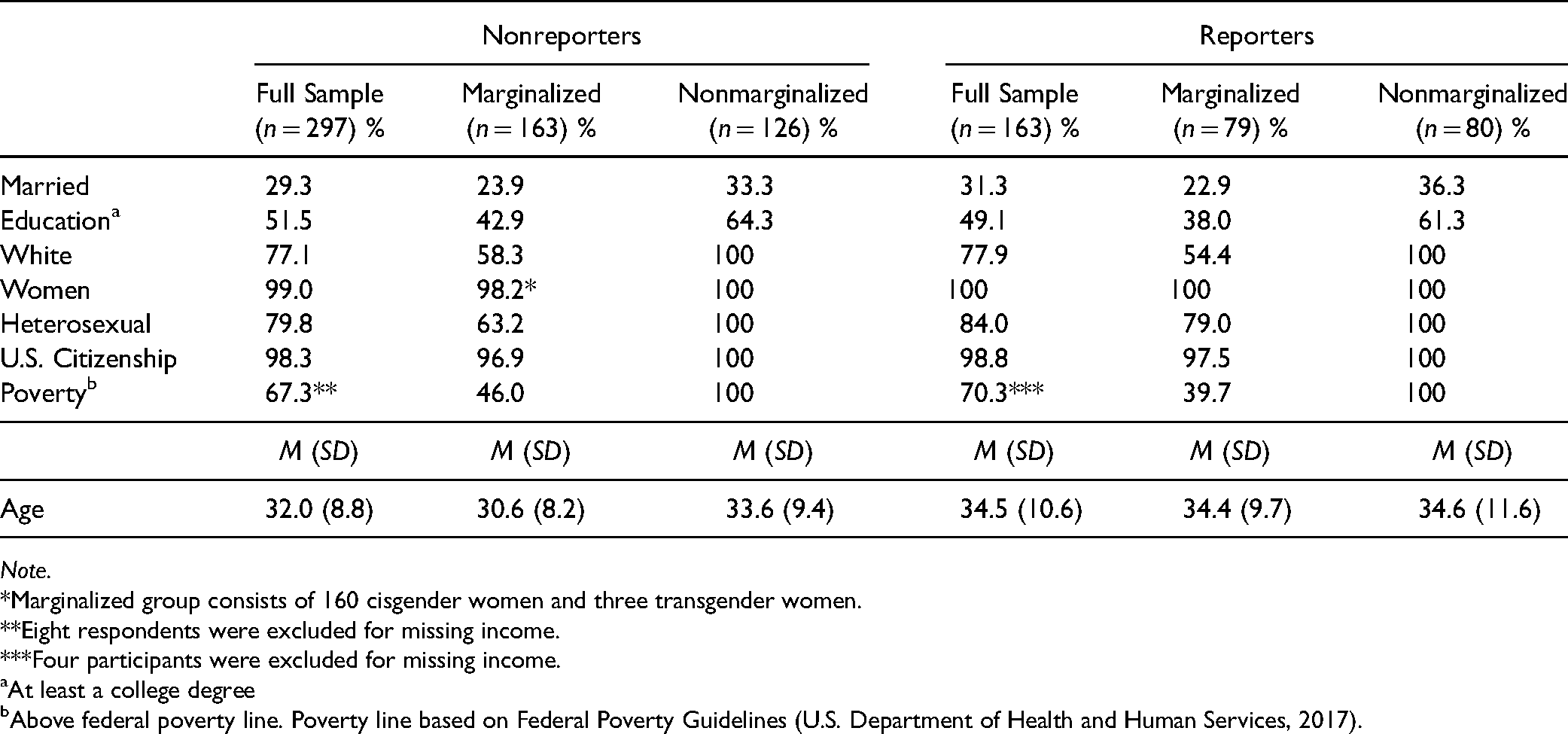
From the original study's survey (Henninger et al., 2020), we used one of the items (“Did you report the assault to the police?”) to classify participants into reporters (n = 163) and nonreporters (n = 297). We further divided these participants into two cultural subgroups, defined as culturally marginalized (CM) or NM, using five demographic items (race, sexual orientation, gender, citizenship, and poverty status). To determine poverty status, the prior study used self-reported income and household size to determine those above and below the federal poverty line in 2017. Twelve individuals were excluded due to missing income. Of the 448 total participants who reported income and household size, about one-third were below the federal poverty line (Henninger et al., 2020). Given this study's focus on cultural marginalization, our final sample size was 448 for whom we had all relevant demographic data. Of this sample, 242 survivors were classified in the CM group holding one or more of the five selected statuses (i.e., race, sexual orientation, gender, citizenship, and poverty status) whereas 206 survivors were in the NM group. Table 1 shows the demographic characteristics of these subgroups.
Descriptive Characteristics for Reporters and Nonreporters: Marginalized Individuals and Nonmarginalized Individuals.
Note.
*Marginalized group consists of 160 cisgender women and three transgender women.
**Eight respondents were excluded for missing income.
***Four participants were excluded for missing income.
At least a college degree
Above federal poverty line. Poverty line based on Federal Poverty Guidelines (U.S. Department of Health and Human Services, 2017).
Measures and Procedure
The present study was approved by Loyola University Maryland's Institutional Review Board. While the prior study utilizing this dataset analyzed quantitative data yielded from the survey (Henninger et al., 2020), the present study focused on qualitative responses to the survey's free-text prompts.
To examine subjective experiences among the reporter group, we used five items asking about participants’ experiences with the five different personnel groups involved in the reporting process: patrol officers, detectives, SAFE nurses, and SAO) staff, and victim advocates. Specifically, we used the free-text prompt stating, “Please use the space below to explain more about your experience or share any suggestions you have for what [patrol officers/detectives/SAO staff/SAFE nurses/victim advocates] could do to improve their treatment of sexual assault survivors.” In addition, we reviewed all responses from both the reporters and nonreporters to another free-text prompt at the end of the survey stating, “Please share any additional information which you think would help us to better serve sexual assault survivors in the future.”
Respondents’ free-response comments were analyzed using a modified consensual qualitative research approach which uses multiple individuals with different roles to arrive at consensus on the content of their coding (Hill, 2012; Spangler et al., 2012). The PI of this study, who is a psychology faculty member, took the role of an external auditor. The PI provided training on the consensual qualitative research approach to four undergraduate research assistants, two men, and two women, to prepare them to serve as coders. First, the team collectively reviewed comments about patrol officers for our coding practice because the greatest number of reporters (n = 100) entered their free responses about patrol officers. We began coding the text entries with the four categories that Henninger and colleagues (2020) found to account for 65% of the variance in survivors’ overall satisfaction with SA response personnel: respectful treatment, clearly explained procedures, believed their stories, and demonstrated cultural sensitivity (i.e., validating survivors’ cultural background or culturally specific experiences). New categories were also created if comments did not fit these four categories. Throughout this process, the external auditor checked the team's categorization decisions for accuracy. If multiple elements were presented in each narrative, we allowed multiple coding entries. Because the number of response personnel with whom they interacted varied (i.e., some survivors interacted with all five response personnel while others met only one), we examined all qualitative responses given to each personnel group separately. Thus, the number of coding entries exceeded the number of the study participants.
After the initial team coding, the coders were divided into two male–female pairs. Coders were paired this way to mitigate potential gender-based bias. One pair reviewed the comments for detectives and SAFE nurses while the other pair reviewed comments for the SAO staff and victim advocates. Within each pair, each partner first coded comments individually, then compared coding results with each other and differences were discussed to reach a consensus. Coding discrepancies that could not be resolved were brought to a team meeting, overseen by the external auditor, and including the other paired coders, to reach consensus. Upon final refinement of the response categories, we identified overarching higher-order themes within which these categories aligned. Coders identified whether a given comment was provided by a survivor in the CM or NM group. Additionally, coders determined whether each comment was descriptive of a positive experience, a negative or adverse experience, or neutral (i.e., unable to be determined).
The following steps were conducted when interpreting the free-text prompt at the end of the survey: (1) removed responses indicating no additional comments and/or appreciation for our study; (2) coded the free responses from CM and NM using the four core and two secondary themes identified in our analysis of the reporters’ subjective experiences; (3) reviewed narratives that did not fit within the six themes to identify additional themes.
Results
Subjective Experiences with Key Personnel in the Reporting Process
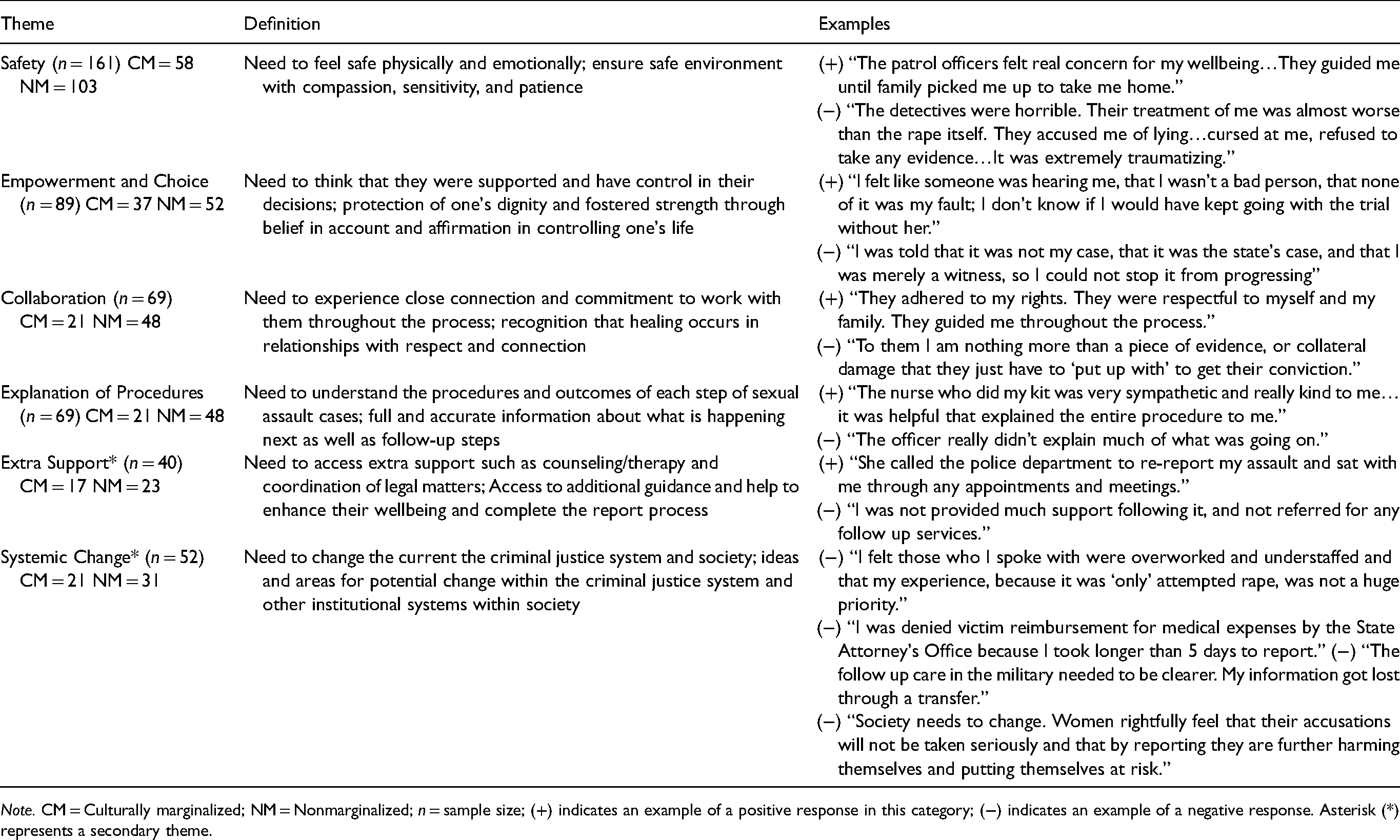
Among 460 participants, 163 reported their SA (reporters = 35.4%) and interacted with one or more of the five response personnel groups: patrol officer, detective, SAO staff, SAFE nurse, and victim advocate. From these reporters, we gathered a total of 530 comments and identified four major themes which addressed the nature of direct interactions with the five response personnel groups: safety, empowerment and choice, collaboration, and explanation of procedures. Although our initial coding categories included cultural sensitivity, we found only 25 comment entries related to cultural sensitivity/insensitivity for any of the five key personnel groups across both cultural groups. In addition, we identified extra support and systemic change as secondary themes. They appeared less frequently than the four core themes but capture additional aspects of SA response practice beyond the direct interactions with response personnel groups. The nature of the total comments split similarly between positive (n = 270) and negative (n = 260). Table 2 presents the number of coding counts for the four core and two secondary themes and the definition of each theme with examples of positive and negative narratives.
The Four Major Themes and Two Secondary Themes Discussed by Reporters of Sexual Assault.
Note. CM = Culturally marginalized; NM = Nonmarginalized; n = sample size; (+) indicates an example of a positive response in this category; (−) indicates an example of a negative response. Asterisk (*) represents a secondary theme.
After finding the overall themes, we identified which themes appeared more frequently in the comments entered for each personnel group by CM and NM reporters and if the themes emerged from positive or negative comments. As shown in Table 3, the number of reporters who entered comments about each personnel group varied from 40 for SAOs (76.9%) to 100 for patrol officers (87.0%). We categorized whether more than 25.0% of CM or NM comments addressing each personnel group were positive (indicating a strength) and negative (weakness). In the following section, we discuss the strengths and weaknesses that emerged for each personnel group and highlight the similarities and differences in comments between the CM and NM reporters.
Major and Secondary Themes of Reporter's Positive and Negative Comments About their Interaction with the Five Key Personnel.

Note. CM = Culturally marginalized; NM = Nonmarginalized; SAFE = Sexual assault forensic examiner; N = sample size; n = number of comment entries; % = proportion of comments for each theme. Asterisk (*) represents the number of individuals who interacted with each personnel group. Double asterisk (**) represents a secondary theme.
Patrol Officer
From the 115 SA survivors who interacted with patrol officers, 100 shared their experience (87.0% response rate), highlighting three primary themes: safety, empowerment and choice, and explanation of procedures. Safety emerged as both a strength and a weakness for both cultural groups. Survivors felt safe when they perceived that their patrol officers conveyed compassion and patience. For example, one NM survivor discussed two patrol officers with whom she interacted: “They were very understanding and very sensitive to the situation…they treated me very compassionately and let me know what happened wasn’t my fault…even though they were male, they made me feel comfortable.” A similar comment was made by a CM survivor: “The patrol officers felt real concern for my well-being.” At the same time, safety was also found to be a weakness by many others from the CM group (e.g., “Being yelled at and questioned by the two male officers made me uncomfortable”) and NM group (e.g., “They were rude and threatened to arrest me because I struck my estranged husband [we were separated] while he was holding me down and beating me”).
Clear differences were found between the CM and NM groups in their experience with patrol officers. Responses by the CM group identified empowerment and choice and explanation of procedures as two additional weaknesses of patrol officers. Regarding the first weakness, nine CM survivors described feeling as if the officers dismissed their accounts while they were attempting to reclaim a sense of control and their rights, with comments such as: “At one point one officer laughed at me and stated ‘when [name removed] kills you, then we will have evidence hahaha’” and “I wasn't really listened to and it was treated as ‘she decided not to have sex after the fact’ kind of case, so no one really believed my side of the story.” Regarding the theme explanation of procedures, seven CM survivors felt as if officers were not clear in discussing how SA cases unfold and what the next steps were: “The officer really didn’t explain much of what was going on” and “never heard a word after the initial visit to the [police] department after the assault.”
Detective
From the 113 reporters who interacted with detectives, 96 entered comments about their experience (85.0% response rate). Safety was perceived as a strength for detectives among both CM and NM groups. For example, one CM survivor described her positive experience with detectives: “I was upset and didn't want to remember the event, and I felt they could see that I was really damaged with the event… They gave me the space, and time to let me speak.” A NM survivor also said, “the detective was very kind and patient and never made me feel at fault. He was quiet most of the time and just let me speak. I felt safe and heard.” On the other hand, eight CM survivors shared the opposite experience: The detectives were horrible. Their treatment of me was almost worse than the rape itself. They accused me of lying…cursed at me, refused to take any evidence or to even interview the people who raped me. They said because I had sex before that I wasn’t innocent…It was extremely traumatizing.
Another difference between the two cultural groups emerged. More negative interactions reported by the CM group described detectives’ lack of interest, low prioritization of SA cases, diminished effort, and limited accountability, all of which calls for macro level changes in practices related to SA, described hereinafter as systemic change, as seen in the following comments: “The detective came to my apartment…all the evidence touched without gloves, didn’t take any evidence, didn’t take pictures or the fingerprints…The detective left just like that” and “My case was handled by the department my rapist worked for and was not referred to another agency. It was also not reviewed by an independent prosecutor.”
SAO Staff
Only 52 reporters interacted with the SAO, and 40 of them shared their experience (76.9% response rate). Neither CM nor NM groups raised enough positive comments about their SAO to make any of the six themes stand out as strengths. On the other hand, both groups identified a weakness that centered around the theme of empowerment and choice: “They [SAO] were rude and dismissive of my concerns that the detective on my case wasn't putting in the time I think my case deserved” (CM) and “…the woman [a female SAO representative] was rude and didn't want to help me out…I didn't think she believed me” (NM).
Another NM survivor also shared similar experiences: I did not want to go through a trial. It was explained to me that I would need to go before an entire courtroom and tell dozens of people what was done to me in excruciating detail…I was emotionally fragile at the time, and I did not want this…I was told that it was not my case, that it was the state's case, and that I was merely a witness, so I could not stop it from progressing…I didn't think it was possible to feel more violated, but they succeeded in doing that.
One NM survivor typed over 7,000 words to highlight the insensitivity of an assistant district attorney who called her at work to tell her about their decision for not prosecuting the case: She never offered an in-person meeting to me or further details or insight on my case, so that after our phone call, I felt not only emotionally devastated, but I felt left with many questions which she did not answer and frankly a strong desire never to see or speak to her again because of the damage she had already caused me emotionally.
Similar to their experience with detectives, the need for systemic change emerged from CM survivors’ responses. Four CM survivors reported that SAO staff was less interested in SA cases and did not take cases seriously: “I felt those who I spoke with [at the SAO] were overworked and understaffed and that my experience, because it was ‘only’ attempted rape, was not a huge priority.”
SAFE Nurse
Among 93 reporters who interacted with SAFE nurses, 60 provided comments (64.5% response rate), and many were positive. Neither CM nor NM groups wrote enough negative comments for any of the six themes to emerge as weaknesses for SAFE nurses. However, both groups shared many positive comments about safety. They delineated how a SAFE nurse could ensure a protected environment and help a survivor regain a sense of control in her life. In her long narrative, a CM survivor said: She [the SAFE nurse] was thorough with her task but went slowly, always telling me before she was about to touch me somewhere…When she was done, she said she was proud of my strength, and I'm not sure if she knew how much that meant in my most vulnerable of moments.
A similar experience was reported by NM survivor: She reassured me that every person that has gone to her after they have been raped had been caught. She sat with me for about 40 min to talk about what I went through. She got in trouble for not taking care of more patients during her shift but she didn't mind.
Another theme emerged from many positive comments about SAFE nurses made by the CM survivors who characterized their nurses as being respectful and able to connect with them. Thus, collaboration was identified as a strength for SAFE nurses, but only within the CM group: “They were very careful and attentive during a traumatic time” and “They were very professional and respectful, I don't think they could improve any more than they already are.” The collaboration theme was one unique difference between groups.
Victim Advocate
Sixty-four out of 87 reporters who interacted with victim advocates provided comments (73.6% response rate). No major weaknesses were identified for victim advocates by either CM or NM groups. Regarding strengths, different themes emerged between the groups: safety and extra support emerged for the CM group whereas only collaboration was found for the NM group. For safety, a CM survivor said, “My advocate was sure to clarify that I didn't necessarily have to give information to the police, that I ought to take time off if things are really bothering me, and that it wasn't my fault.” Other CM survivors stated, “Without the help of the advocate I would not be able to report on the assault at that time. I was very scared and insecure” and “The woman I dealt with was kind and helpful…. I felt like someone was hearing me, that I wasn't a bad person, that none of it was my fault.” Nine CM individuals also shared their appreciation for the extra support their victim advocates provided: “[the advocate] helped me deal with academic challenges I faced afterward, as well as offered to coordinate the switching of residence halls…” and “She called the police department to re-report my assault and sat with me through any appointments and meetings.”
Ten NM reporters highlighted collaboration as a strength for victim advocates (e.g., “she was with me for every step”). One NM survivor commented: [I] had a wonderful experience with an advocate who was especially compassionate, kind, and respectful…I really appreciated her communication and follow ups after my hospital visit. She gave me her contact information and was quick to answer her phone or call me back when I reached out…she was great about following up to see how I was doing emotionally and physically, and ensured [that] I had resources and information I needed. She was also great about making my options clear and providing support regardless of my choices in reporting.
Free-Response Comments: Barriers to Reporting and Suggestions for Improvement
Among the 460 survey respondents, 346 individuals (75.2%) commented on the last free response question placed at the end of the original survey: “Please share any additional information which you think would help us to better serve sexual assault survivors in the future.”
Similar response rates were found for both cultural groups. After removing 65 individuals who indicated no additional comments, we retained comments from 281 individuals (CM = 106; NM = 175). There was a total of 480 coding entries from both reporters and nonreporters when we analyzed their comments because some comments addressed multiple categories. The number of these coding entries were fairly equal between the two cultural groups (CM = 222; NM = 258). We then analyzed 377 coding entries after separating the extraneous entries (e.g., nothing to add, appreciation for our research, and details of own cases). Sixty-four percent of additional comments recaptured the six themes (four core and two secondary themes) that emerged in response to the key personnel discussed above: safety, empowerment and choice, collaboration, explanation of procedures, extra support, and systemic change. However, the last two themes appeared more frequently in the free-response comments entered by both reporters and nonreporters. The remaining comments were about barriers to reporting SA and regrets by nonreporters. In the following section, we will provide some examples of the themes of extra support and systemic change, as well as the barriers to report SA.
Extra Support
An additional 68 comments highlighted some areas in which SA survivors wished to receive extra support. Sixty percent of these comments were entered by the CM group. It is worth noting that CM reporters valued the extra support they received from their victim advocates as described earlier. In many comments, CM survivors stated a desire for follow-up calls and free counseling/psychotherapy with sexual trauma specialists (e.g., “Having a third-party counselor of some sort available would help so much; someone who can help the person reporting the assault the day of reporting, and check in with him/her a few times as a follow-up”). In addition, the importance of family and peer support was apparent in terms of survivors’ reporting decision: “…in my case, my mother was more concerned about any scandal or having the neighbors see a police car in her driveway” (NM). Support from friends and family members was also discussed as an influential element for their own recovery and healing process as found in the following comment made by a CM individual: “I didn't go to the cops at first because my peers didn't seem to care…I started to doubt myself and what happened.”
Systemic Change
A total of 130 comment entries included ideas about areas for potential change within the criminal justice system and other large institution's (e.g., academic universities) handling of SA cases. Although the systemic change theme was more apparent in the narratives from CM reporters in reference to response personnel (e.g., they often perceived their detectives and SAOs de-prioritized their SA cases), this theme was stressed more by the NM group within the open free-response question at the end of the survey. Fifteen NM individuals (and four CM survivors) raised the need for policy changes for SA cases at the larger criminal justice system: “You should be able to get anonymous care without parental signatures after a rape without the need to press charges.” Other examples which imply policy changes include “Lobby for counseling that is free and ongoing…” (NM), “I was denied victim reimbursement for medical expenses by the [state name removed] SAO because I took longer than 5 days to report” (NM), and “the SB2151 is one of the bills we are fighting to get passed so victims can have access to attorneys thru [sic] the victim compensation fund” (CM).
Nineteen CM survivors (and 10 NM survivors) called for other institutional change. For example, they reported victim-blaming responses at an educational institution: “I did report the crime to my law school at the time…I was treated terribly by the dean who claimed I must have been drunk and wanted to make me go to AA” (NM) and “I was very disappointed in the college's response to the situation and believe that the football player in question did not have any ramifications to his reputation” (CM). Three survivors also commented that the U.S. military needs to ensure anonymity of SA reporters, to be clear about follow-up care, and to take careful considerations for position or unit transfers: “Someone needs to work with the Army to make sure that assault survivors can report in anonymity and receive appropriate services” and: The follow up care in the military needed to be clearer. My information got lost through a transfer and I had to have the help of my VA [victim advocate] to get it right. Also, since the military post was closed, the transfer wasn't smooth.
Suggestions for institutional intervention included the need for more training, with comments from 15 NM and 8 CM survivors. Examples include sensitivity training (e.g., “Trainings for police officers on how to be sensitive to these types of issues, key things to be aware of in these interactions” - NM); trauma-informed care (e.g., “we need support and for people to be trauma-informed, not for people to treat us like we're glass roses” - CM); and cultural diversity training (e.g., gender identity, sexual minorities, disability, and age). Regarding accountability, 10 survivors reported the need for oversight to ensure accountability (e.g., “the officer did not fingerprint my car”) and eliminate misconduct (e.g., “my case was handled by the department my rapist worked for and was not referred to another agency”). Although there are a variety of reasons why a SA kit might not be used including budgetary reasons, the following story by an NM survivor explains why changes are needed at a systemic level: I think because of what happened to me…I became a Registered Nurse and work in trauma/ER. I also have […] done many SA kits and testified at trials…The fact is so many SA kits are never even tested. I was SHOCKED to realize that of all the ones I have completed, less than 5% are ever tested…. No woman, or man can get justice if the evidence is not even sent to the state crime lab for testing.
Further, participants noted that there needs to be educational efforts and response to SA at a societal level. In fact, public education/outreach was the most common area within the systemic change theme, with a total of 52 entries (33 NM and 19 CM). Examples included: “I was never taught that men are to respect women, their bodies, and their boundaries…Young women need to know that it is ok to say no, regardless if you are in a relationship or not” (NM) and “It's a conversation that needs to happen younger…[It is] heartbreaking to see how [rape] in popular culture is funny” (CM). Reducing stigma through community outreach about SA, specifically intimate partner violence and the effects of the trauma on their mental health is also needed.
Barriers to Reporting
Many comments (n = 75) discussed the internal and external challenges that survivors faced when considering whether to report their SA. These challenges included delayed processing due to traumatic reaction, self-blame/shame, stigma, and fear. Some differences were found between the two cultural groups regarding the salience of these barriers. For example, delayed processing (e.g., “I did not report the crime because I could not mentally process what had happened until more than a year later”) and self-blame/shame (e.g., “I thought [that] I somehow invited it or deserved it or gave him the wrong impression, so it was my fault”) were expressed more by the NM group. On the other hand, expressing stigma and fear were expressed more by the CM group. For example, a CM survivor reported, “I did not report this incident because the offender was connected to my social group, and I was afraid of the embarrassment and fallout that would ensue from this being made public.” Another CM survivor disclosed fear: “My rapist is in prison till [month and year removed] on other petty charges. When he gets out, I will be dead at his hands. He will be seeking me out for revenge.”
Regrets About Not Reporting
An additional 49 entries indicated survivors’ regrets that they did not report their assaults and emphasized the importance of reporting SA by both cultural groups. Those who expressed regret thought they could have prevented further damage to themselves (e.g., “don't make the mistake I did by not reporting the assault…It's something that never goes away”) or others (e.g., “I made the mistake in not telling anyone about my experience till years later…I found out that the person who violated me, raped my best friend”). Many others asserted the need to report SA quickly (e.g., “I would encourage survivors to report right away so they can get physical evidence”). In their encouragement for others to report SA, many also reflected on long-term suffering as seen in the following comment: Do not be afraid to report…Sexual assault affected me mentally and emotionally in ways I never would have imagined. Worse, the repercussions of it seemed to be spread out over time. There were moments, days/weeks/even years after my assault that something would trigger the memory. I'd find myself in a panic, unable to breathe…almost like I was being assaulted again.
Discussion
In the present study, we examined previously unheard voices of female SA survivors to enhance the current system for processing SA cases. Although there are many best practices currently in place (e.g., NIJ, 2017), we assessed feedback directly from survivors to understand whether these practices are experienced as truly survivor-centered and trauma-informed. Our qualitative analysis of reporters’ narratives revealed four core themes that captured desirable characteristics for the five key SA response personnel groups: safety, empowerment and choice, collaboration, and explanation of procedures. Two secondary themes, extra support and systemic change, were not endorsed as frequently by reporters; however, they arose when both reporters and nonreporters were asked to share additional comments. These secondary themes represent considerable aspects in the voices of female survivors as they hope to bring about positive changes in current SA reporting practices. The four major themes and two secondary themes that emerged in our qualitative study were similar to the four desired characteristics for SA response personnel outlined by Henninger and colleagues (2020): respectful treatment, clearly explained procedures, believed their stories, and demonstrated cultural sensitivity. These themes are also similar to the six guiding principles for a trauma-informed approach: safety, trustworthiness & transparency, peer support, collaboration & mutuality, empowerment & choice, and cultural, historical, & gender issues that was developed by Substance Abuse and Mental Health Services Administration (2014).
Cultural Influences on SA Reporting Experiences
A unique contribution from the present study was our close examination of voices from CM and NM SA survivors regarding their reporting experiences. We found some similarities and differences between these cultural groups. Regardless of sociocultural status, SA reporters emphasized safety. Both cultural groups presented safety as a strength for patrol officers, detectives, and SAFE nurses while CM also presented safety as a strength for victim's advocates. Alternatively, safety was presented as a weakness for patrol officers by both cultural groups while CM also identified safety as a weakness for detectives. SAs undermine survivors’ physical and emotional safety. Thus, response personnel groups, especially patrol officers and SAFE nurses who are more likely to serve survivors right after their SA, must focus on restoring a sense of safety with compassion and patience. In fact, a recent study of SA survivors who received a SA Nurse Examiner evaluation within 72 h of their SA stressed the need for assessment and restoration of sense of safety (Buchbinder, et al., 2021). Breaches in safety and mistreatment (e.g., yelling at, interrogating, or threatening the survivor) by police and medical personnel can lead to revictimization (Maier, 2008), which, in turn, increases anxiety, trauma-specific symptoms, dissociation, and problematic sexual functioning later in life (Smith & Freyd, 2013). Thus, ensuring survivors’ safety and physical well-being is critical, as these are basic human needs and indispensable to all survivors regardless of cultural identity.
Both cultural groups also stressed the importance of empowerment and choice. This theme was highlighted by more negative interactions with their SAO staff who were dismissive, skeptical, or forceful toward them. These interactions can be detrimental as empowerment helps prevent secondary victimization (Martin, 2005). When applying a survivor-centered approach, response personnel believe the survivor and affirm their choices (NSVRC, 2018). Yet, victim-blaming by response personnel appears to be a persistent problem (Lorenz et al., 2019) which was reiterated by some survivors in this study. In addition, the National District Attorneys Association (2018) states that SA is one of the most difficult crimes to prosecute, and it challenges traditional prosecution strategies because of some unique aspects involved in the process (e.g., SA kits, immediate vs. delayed reporting). SAO personnel, therefore, may fixate on whether cases can be successfully charged and prosecuted, which might disrespect and dismiss the survivors’ voices and desires.
Although collaboration and explanation of procedures themes appeared equally important in overall survivors’ interactions with the five personnel groups, we found that the two cultural groups stressed these themes differently. Significantly more NM survivors interacted with all five personnel groups in our study, therefore, both collaboration and explanation of procedures themes contained a higher number of entries from the NM group. However, in our group-based analyses, only the collaboration theme emerged as a strength of victim advocates for the NM group whereas the CM group stressed collaboration as a strength of SAFE nurses. Caring acts by victim advocates and SAFE nurses who allowed survivors to feel sincere connections and restore faith in humanity confirmed the value of procedural justice and fairness in the process, which promotes strong working alliances between those involved in the justice system (Lorenz et al., 2019). Conversely, explanation of procedures emerged as a weakness of patrol officers for only the CM group. Therefore, cultural factors may have some impact on officers’ approach to explaining procedures. We recommend that patrol officers should clearly explain all steps in the reporting process and consider providing information about their procedures in a way that all survivors can understand and follow.
Although CM female survivors highlighted significantly more themes than the NM group regarding the characteristics of the five response personnel groups, comment entries related to cultural sensitivity/insensitivity of any of the five key personnel groups rarely appeared from both cultural groups. They include a deaf individual who wished to have an interpreter while meeting patrol officers and detectives and a lesbian who believed that the SAO staff dismissed her case due to her sexual minority status. Many of these comments were about the gender of patrol officers and the detectives as they preferred a female officer being on the scene when an initial report was made. Surprisingly, we did not find race-related comments in any of the 163 reporters’ narratives (including 79 CM individuals) describing their interaction with any of the five personnel groups. Although nearly one-quarter (22.9%) of our participants were racial minorities, we found only five race-related comments (e.g., “I wouldn't have felt comfortable talking to anyone other than a woman of color”). Henninger and colleagues (2020) compared White survivors and survivors of color on their satisfaction with SA response personnel but found no significant differences. They found that cultural sensitivity had a statistically significant but small effect, independently predicting about 1% of the variance in overall satisfaction ratings.
In our qualitative study, we gathered an overwhelming number of comments which stressed the broader nonculturally specific themes; cultural sensitivity was not a dominant theme for CM survivors, this finding points to the importance of acknowledging all levels of a survivor's identity. For instance, the tripartite framework of personal identity, first proposed by Sue and colleagues (1982), acknowledges three levels of one's identity: (a) individual (nonshared unique aspects of the person), (b) group (multiple cultural groups to which the individual belongs), and (c) universal (the aspects shared by all human beings). Although attending to the group aspects of a survivor's identity (i.e., cultural sensitivity) should still be considered a key aspect of SA response, personnel should not underestimate the importance of attending to individual and universal aspects in their interaction with survivors.
Gender and Sexual Violence
The voices of the female SA survivors in our study stressed the notion of SA as gender-based violence. Many survivors were wary of male figures, and some were revictimized by male personnel who yelled or laughed at them during the reporting process. Such behaviors can likely be explained by accumulative research findings of significant associations between the degree of victim blaming, endorsement of gender inequality, and traditional gender roles (Burt, 1980; Grubb & Turner, 2012; Whatley, 2005) as well as the potential for greater empathy by men for male perpetrators because of their in-group perspective-taking (Bongiorno et al., 2020).
Alternatively, the presence of a female SA responder does not always guarantee a positive reporting experience for female survivors. In fact, a notable number of negative comments indicated unsympathetic, dismissive, or victim-blaming treatment by some female SA personnel (e.g., a female SAO representative). Albeit unexpected, a recent experimental study revealed that a sense of powerlessness among women increased their engagement in victim-blaming and sense of threat (Gravelin et al., 2019). The researchers concluded that powerlessness in women may trigger a defensive response that may increase victim-blaming. According to the U.S. Bureau of Labor Statistics (2022), about 85% of police officers, 75% of detectives, and 62% of attorneys were men. Therefore, it is possible that women working within a male-dominated workplace and the nature of the crime itself may consciously or unconsciously evoke powerlessness when working with SA survivors and lead to victim-blaming behaviors. Moreover, Bongiorno and colleagues (2020) examined gender effects on victim blaming by manipulating feelings of empathy from ingroup-outgroup perspective. They found that men were more likely to blame the female victim and women who took on a male respondent's perspective had more empathy towards a male perpetrator and greater victim-blaming towards a female victim. Therefore, it is possible that some female SART personnel may believe rape myths or hold negative beliefs about survivors and engage in victim-blaming because they internalize the socially dominant male perspective found within their place of work.
Taking a feminist perspective on SA, Canan and Levand (2019) stressed that a myopic view to the SA phenomenon does not lead to an effective solution to this deep-rooted social issue. As seen in the examples for extra support, systemic changes, and barriers to reporting, approximately 230 additional free-response entries mentioned that survivor-centered reporting and SA prevention processes require an ecological perspective. This change in perspective will reduce gender inequity in the criminal justice system (e.g., police, court, and correction) or other federal/private institutions (e.g., the military, universities, and corporations). It will also enhance public understanding of gender and intimate partner violence. For example, the criminal justice system can apply strategies suggested by Froehlicher and colleagues (2021) to promote gender equality in a corporate world: (a) gender-diverse recruitment teams, (b) increased representation of women at management levels, (c) systematically assessing and eliminating gender pay gaps, and (d) family friendly policies. A gender-equity initiative can be taken by creating a special unit within every jurisdiction's SART to adapt these strategies. These specialized units could also provide public education outreach in their communities because many SA survivors in our study asserted such need (e.g., “education needs to happen for both men and women…community outreach about sexual assault, specifically intimate partner violence”).
Power of Storytelling
Though our study was different from a qualitative interview method, which allows a dialogue between research participants and researchers, we were able to gather powerful voices with rich detail from the survey responses. The majority of participants (75.2%, n = 346/460) took extra time to share extensive narratives to the free-response question placed at the end of a multiple-item survey. In fact, most comments were more than a few words or sentences. There were many lengthy text entries over 300 words (the longest was 7,000 words). The opportunity to share additional comments also stressed the importance of extra support and systemic changes to promote survivor-centered SA report practice. We assert the notion that SA reporting practice begins with the contemplation stage at which survivors explore options, support, and legal information. Similar to Lorenz and colleagues’ (2019) findings of a qualitative inquiry, our SA survivors emphasized the role of family and friends in their decision-making, which can encourage or hinder reporting.
To change the low rates of SA reporting, it is critical to understand possible barriers to reporting SA incidents. By examining SA survivors’ narratives from another larger survey, Weiss (2011) presented an informative typology of nonreporting accounts, which included denying criminal intent, denying serious injury, denying victim innocence, and rejecting a victim identity. In addition to these elements, our study captured other barriers to reporting which we categorized as internal (e.g., blaming self, self-doubt about competence with legal matters) and external (e.g., social stigma, possible retaliation by the offender) factors. Furthermore, examining the free responses of nonreporters, we discovered that many regretted not reporting their SA. Over 50 nonreporters voiced a strong message to those who might be hesitant to report when they are simply asked for additional thoughts at the end of our survey. Their narratives underlined the importance of education for SART personnel and the public to inform about neurological disruptions in response to traumatic events leading to impairing or delaying the survivor's ability to process information (Mason & Lodrick, 2013). Therefore, incorporation of education-based interventions is one major recommendation we have for training SART personnel moving forward.
Two interesting findings emerged from the use of free-response items placed in a large survey. First, more than half (53.7%) of CM survivors shared their narratives. This should not be taken lightly because a systematic review of racial minority research pointed out that CM individuals are less likely to participate in research because of some shared barriers such as mistrust, stigma, and belief that their voices are less valued (George et al., 2014). Second, even though lengthy narratives tend to reflect disastrous experiences, there were plenty of rich stories highlighting positive interactions with various response personnel and their hopeful suggestions. About half (46.6% of CM; 54.7% of NM) of the comments entered by reporters were positive, and these positive stories were voiced without being asked to do so. Many positive stories expressed by both groups indicate that some response personnel were already doing what survivors found most helpful (e.g., male police officers who treated survivors with care and respect). Given that most of the existing literature focuses on problematic behaviors of SA response personnel, this is another striking finding from our study. The power of positive testimony is vital to a systemic transformation of SARTs, because the testimonials can be used as illustrative examples in training to reinforce desired behaviors and facilitate change through a strengths-based approach, rather than focusing on deficiencies and problematic behaviors.
Limitations and Future Directions
We acknowledge several limitations associated with our study. First, due to the use of existing data gathered through convenience sampling, the study does not guarantee the representativeness of female SA survivors, and the varying recruitment methods may have unintentionally introduced bias in the sampling procedure. Second, while the recruitment criteria required “SAs occurred at 18 years or older,” the duration between the time of SA incidences and the time of their survey responses vary widely, which may impact the accuracy of the survivors’ memories. Participants may have experienced multiple assaults, and there is no way to determine to which assault the participant is referring in their responses. Additionally, data was collected between 2015 and 2017, so survivors’ experiences may not reflect initiatives that have been made to improve the justice system since 2017. Third, because of the use of existing data, we were not able to clarify or obtain further information. Fourth, we were limited to the five personnel groups of interest in the original study. For example, survivors may choose to report their assault to another professional, such as a campus or workplace official, rather than a police officer. The original study selected the five personnel groups due to their direct representation of the criminal justice system, which was of primary interest in the study.
Fifth, the wording of the last open-text question (i.e., “Please share any additional information which you think would help us to better serve sexual assault survivors in the future”) might result in negatively skewed responses. Although close to half of the responses were positive, a more neutrally written question would be desirable. Finally, the categorizations used to identify two cultural groups may not adequately account for intersectionality and varied experiences across cultural identities. In addition to addressing these limitations, future studies should examine the effect of various sociocultural characteristics of response personnel (e.g., age, gender, race, and social-family roles) on their sensitivity and capacities to perform survivor-centered treatment. Such investigation could address differential power dynamics that already exists between response personnel and a survivor and may, therefore, contribute to a survivor's experience.
Conclusion
Advocating for the voices of female survivors from all cultural backgrounds is crucial to address the power dynamics within the legal system and our society. Listening to the voices of both reporters and nonreporters, we provided insight into possible improvement of current SA report practices. Similar to the systemic perspective seen in the narratives of survivors of intimate partner violence (Dichter et al., 2022), the voices of the SA survivors in our study highlighted the interconnectedness between survivors and SART members, social institutions/organizations, and the larger society. When positive changes occur at all levels, survivors will be more likely to report their assaults and stay engaged in the reporting process. We must listen to their voices, as they are the experts in their own lived experiences, and we must truly hold a survivor-centered approach; stated well by one of our participants, “Get the justice back by letting them speak their truth in public and let their voice be heard again!”
Footnotes
Author Note
We have no known conflict of interest or financial interest to disclose. Amy L. Henninger is now at Walter Reed National Military Medical Center, Bethesda, MD, United States. The views expressed are those of the author and do not reflect the official policy of the Department of the Army, the Department of Defense or the U.S. Government.
Declaration of Conflicting Interests
The author(s) declared no potential conflicts of interest with respect to the research, authorship, and/or publication of this article.
Funding
The author(s) disclosed receipt of the following financial support for the research, authorship, and/or publication of this article: This research was supported in part by Kolvenbach Research Grant from Loyola University Maryland.
