



Abstract
This article provides an account of how demographic conditions have shaped co-coresidence patterns in historic Eastern Europe. Census microdata from eighteenth-century Poland, Lithuania, Belarus, and Ukraine are confronted with the computer microsimulation of kin sets to show how the combined effects of fertility, marriage, and mortality influenced the availability of kin for coresidence. The enactment of demographic constraints on residential chances is illustrated by exploring two issues central to historical demographic interest: leaving home and intergenerational coresidence. This article closes with an agenda for comparative studies of historical household systems that takes demographic constraints on coresidence more seriously into account.
Keywords
Introduction
The assumption that all analyses of family structure or residence patterns should consider the potential impact of demographic conditions on the pool of available kin has been growing since the early 1970s. This conviction dictated that mortality, fertility, generation length, and age distribution may determine the number and characteristics of kin available for coresidence, and therefore can powerfully affect the households’ potential to include multiple marital units and individuals’ capacity to cohabit with certain types of relatives. 1 In a nutshell, one cannot reside with a parent if both of one’s parents have died; one cannot live with two married sons in old age, if one does not have them, unless adoption practices are called for, and so on. The insistence that nuclear households predominated or that most young individuals tended to live separately from their natal families in a given region could be indicative of a preference of the inhabitants for this type of arrangement over other types of arrangements; however, it might also suggest that the presence of demographic constraints (i.e., low fertility, high mortality, late marriage) sets limits on the type and number of kin available for coresidence.
These considerations remain rather poorly incorporated into historical studies of domestic structures and living arrangements. Most quantitative analyses of coresidence patterns conducted since the early 1970s have tended to compare societies without accounting for potentially divergent demographic conditions underlying them. 2 One reason for this deficit was that empirical data on the availability of kin were scarce. Although census and census-like microdata surviving in great supplies for many parts of historic Europe 3 describe fairly well the actual living arrangements of various individuals, they do not provide a direct correspondence between the observable residential configurations and their nonobservable determinants. Approaching this problem through more conventional methods, for example, through a combination of parish registers and census-like listings in order to trace a family tree and examining the situation of every person in terms of whether a particular kinsman or kinswoman was available to him or her at the relevant time, while feasible for some small populations, is practically unworkable when broader regional studies are at stake. 4 To evaluate certain characteristics of families that cannot be accessed using most types of available data, indirect methods had to be used.
The path to accomplishing that goal started with simple analytical models meant to account for the effects of demography on family patterns, especially the frequency of three-generation families, through simplified assumptions expressed in mathematical terms (works of M. Levy, A. Coale, D. Glass, and E.A. Wrigley). 5 This particular stage culminated in complex demographic microsimulation models, which, by applying the appropriate demographic parameters, made it possible to simulate the detailed characteristics of all kin available for residence for a given individual (usually in the form of frequency distributions), who could be further assigned to households according to a set of hypothetical rules governing residence decisions. 6 In those studies, demographic mechanisms were of interest not so much for their own sake, but rather for the purpose of isolating the effects of demography on family structure from the non-demographic sources of residential behavior. By determining what proportion of the living arrangements, which might have existed under specific demographic realities actually did exist, the intention was to rule out or control for purely demographic constraints before crediting economic or cultural explanations in the analyses of coresidence patterns. 7
While in the last thirty years or so microsimulation of kin sets has been increasingly used in historical studies of social structure and family, 8 it has never been applied to the study of populations from Central and Eastern Europe. To make up for this deficit, this article provides an account of how demographic conditions have shaped household coresidence patterns in historic Eastern Europe. An unprecedented collection of microdata on living arrangements from eighteenth-century Poland, Lithuania, Belarus, and Ukraine will be confronted with outcomes of the computer microsimulation of kin sets (CAMSIM) to show how combined effects of fertility, marriage, and mortality might have influenced the availability of kin for coresidence in various peasant subpopulations of those areas.
The subsequent sections first describe the Central European Family Forms Database (hereafter, CEURFAMFORM)—which forms the very basis of this work, in terms of its scope and structure, with special attention paid to information on living arrangements it provides. Next, CAMSIM will be introduced, showing how its “machinery” was applied in the Polish–Lithuanian context. Finally, the core part of this article illustrates the importance of accounting for demographic constraints when examining Polish–Lithuanian residence patterns by exploring leaving home and life-course patterns of intergenerational coresidence focusing on the living arrangements of the elderly. Leaving the parental home is one of the most important events of the family life course and a major component of the individual transition to adulthood. Both leaving home and coresidence with married children featured in various modeled classifications of family systems in the cross-cultural historic perspective. Therefore, the relevance of highlighting both phenomena’s demographic underpinnings brings us to the very core of the family history debates which go beyond the sole focus on Eastern Europe. This article closes with a suggestion of a perspective for comparative studies of historical family and household systems that takes demographic constraints on coresidence more seriously into account.
Empirical Data
The empirical data used in the analysis are provided by a database that includes information on 26,655 peasant households from late-eighteenth-century Polish–Lithuanian Commonwealth, belonging to 236 parishes and 900 settlements, and with an overall population of nearly 156,000 persons. 9 The data were derived from various types of cross-sectional nominative enumerations listing individuals by discrete residential units and providing a comparable set of demographic identifiers (age, sex, and marital status), as well as kinship relationship pointers. 10 The database comprises exclusively rural societies engaged in small- and middle-scale agriculture. An overwhelming majority of the population of all regions consisted of serfs living in personal and hereditary subjugation. The Polish (and Catholic) preponderance over western areas was diminishing in favor of large numbers of Belarusians and Ukrainians (mostly Uniates, i.e., Greco-Catholics) in the eastern provinces.
The investigated 236 parishes have been grouped into twelve regions, on the basis of either their administrative belonging or geographical proximity. Next, using statistical tests and data mining techniques, such regions have been aggregated into four larger clusters to represent discrete family systems (Figures 1 and 2). 11 The cluster called “West” encompasses all regions of Poland proper and Silesia, stretching from Warmia in the north to the Sudets and the Carpathian foothills in the south. The cluster East 1 encompasses a vast area spread concentrically around the Pripet Marshes in nowadays southern Belarus, covering central territories of the Grand Duchy of Lithuania (GDL), parts of Red Ruthenia, and northern Ukraine. East 3 comprises the Polessyan territories in the southern parts of the GDL. Due to a small number of cases, the cluster East 2 in Podolia was excluded from subsequent analysis.
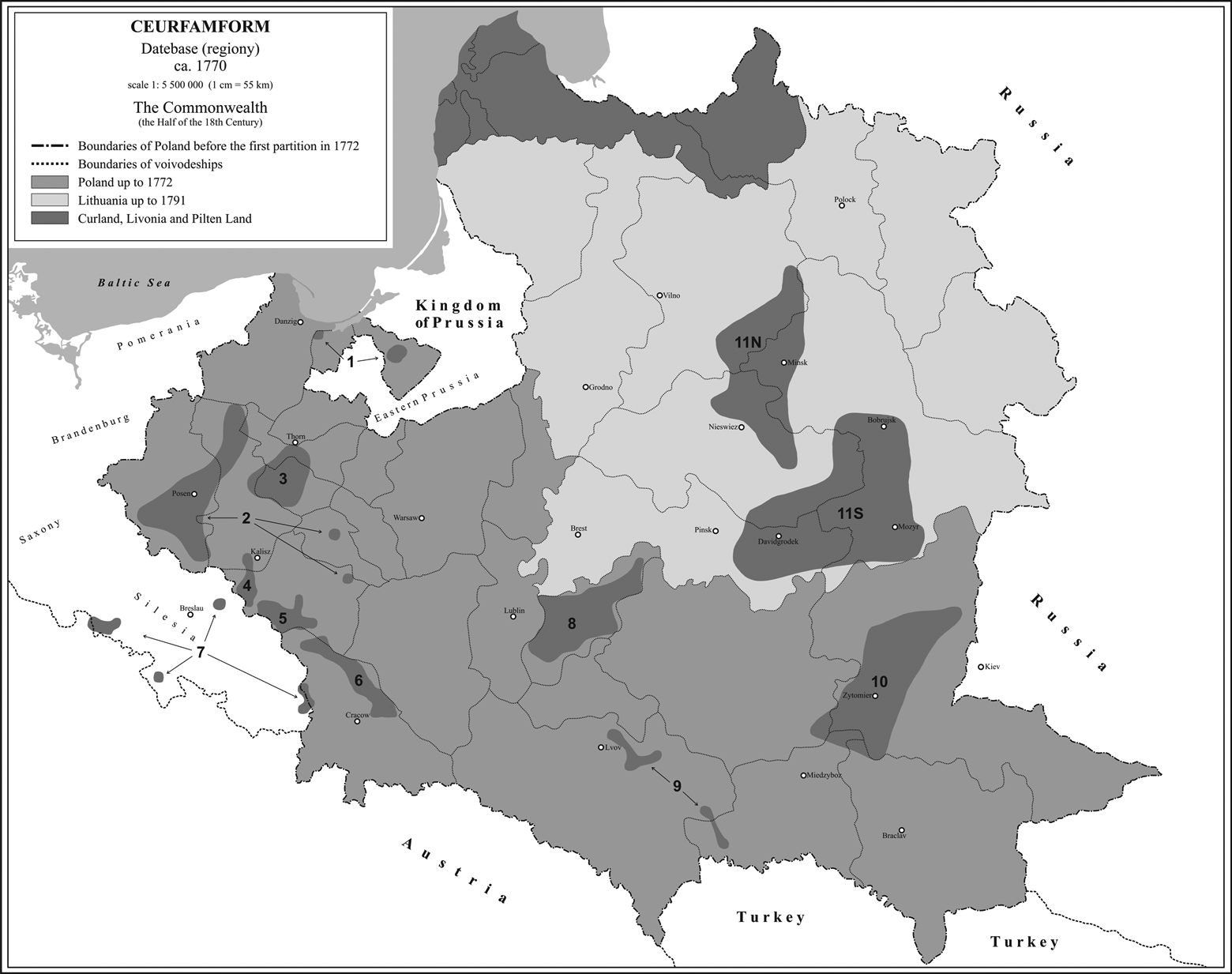
Regional grouping of parishes and estates included in the Central European Family Forms (CEURFAMFORM) Database (borders as of 1770).

Clustering of regional groups included in the Central European Family Forms (CEURFAMFORM) Database (borders as of 1770).
The regions in Poland proper (West) were characterized by a very high share of households of a nuclear structure (nearly 80 percent), moderately late age at marriage (27.3 years for men and 22.5 for women), but only a very negligible extent of permanent celibacy. Life-cycle service and lodging were pretty widespread. The share of each of these categories in the total population of the region reached 12 percent, and servants and inmates were present in at least every third household on average. The family formation system in the territories of the western cluster was predominantly neolocal, with only the periodic coresidence of two generations. 12
The structural progression in family characteristics within Poland–Lithuania has moved from less complex households in the West, where people married at a moderate age, to much higher levels of household complexity and strictly universal marriage on Poland’s eastern edges. The cluster East 1 exhibits the features of a transitional territory, with several “hybrid features—for example, a nearly perfect numerical balance of simple and complex families, and a decline in the occurrences of servants and lodgers, as well as in the age at marriage. The indicators of family system complexity increased dramatically in Polessya (East 3). Residential communities in this region were characterized by a clear predominance of extended and complex households (over 65 percent of the total, many of which containing married brothers or other lateral relatives managing the household conjointly), marriage occurred very early for both males and females (19.8 and 16.8 years, respectively) and was universal, and domestic servants and other unrelated coresidents were lacking.
To capture the relationships between immediate family members and their kin living under a single roof in the CEURFAMFORM database, links were created between individuals and their coresident spouses, children, siblings, and other kin within residential groups following international procedures for encoding historical census microdata. 13 Analyzed in combination (either cross-sectionally, or by breaking down individuals into age groups), these various dyads yield insights into the simultaneous presence of multiple kinship linkages at certain stages of a person’s life within the domestic domain. Supplementing a household-level classification scheme with measures accounting for relationship patterns among all of the coresident individuals meant that along with tabulating the proportion of domestic units with nuclear or multiple conjugal family units, it was possible, for example, to examine the percentage of married couples residing with their parents, or parents with their children, or to look at the relative share of older persons living with married offspring. 14 Relationships to non-coresident relatives were not provided in the listings.
CAMSIM
CAMSIM was chosen to explore the availability of kin in Poland–Lithuania, one of the three major demographic models of kinship used in historical research. 15 Since its conception, CAMSIM has continued to make frequent occurrences in historical studies of kinship, household, and residence patterns. 16 According to some practitioners in the field, CAMSIM remains the least complicated of the major models, as it is relatively “benevolent” given the data input parameters, and yields the desired results in a simple and straightforward manner. 17 Our choice of CAMSIM was also influenced by an anticipated convenience of regular cooperation with one of the designers of the program who, by the time this study was conceived, has been a coresident fellow scholar at Max Planck Institute for Demographic Research (MPIDR) in Rostock. Consequently, all Polish–Lithuanian simulations have been generously produced by J. Oeppen at MPIDR.
CAMSIM generates a model population by simulating the basic events of birth, death, and marriage in accordance with the age-specific schedules of those events as established by the demographic parameters of the stable population and their probability distribution according to the Monte Carlo experiments. 18 The procedure involves taking each ego through the life course month by month, from birth to marriage, through the fertile period, and to death, and then using the demographic parameters fed into the computer to define the probability of a given life event occurring in a given month. This results in a complete record of the demographic life course of the individual. After the demographic history of the ego is constructed, the system uses a combination of forward and backward simulations of the individual life course to obtain as many ascending and descending generations as desired, including the ego’s mother, father, siblings, grandchildren, and so on. Through this procedure, CAMSIM produces one kin set for each simulated ego, which contains the life history of each member of the kin set. For example, a simulation of the life histories of 100 males all living to the age of ninety would yield results concerning their life histories—for example, their marriage ages and numbers of children—that are representative of the life histories of a population of unrelated males who lived to the age of ninety. 19
Using CAMSIM, kin sets for three samples of each time 10,000 male and female egos were modeled, corresponding to three major population clusters detected on the Polish lands. Each pair represented birth cohorts subject to demographic conditions that were similar to those prevailing in major regions of historic Poland–Lithuania (West, East 1, and East 3). The sex-specific input parameters used to model mortality, fertility, and nuptiality were taken from existing regional and microstudies of relevant areas and included cohort death-age distributions, age at first marriage and the proportions never marrying, the fixed delay to remarriage and the probability of remarriage, parity progression ratios, and, finally, intergenesic intervals. 20
Standard CAMSIM kin-set outputs include three sets of tables: one with the mean number of living kin, by type of kin, and age of ego; the second with the proportion of egos who have any living kin of a specified type, by age of ego; and the third table which presents the average age of living kin (see Table 1 for an example).
Proportions of Living Egos with Kin from 0 through 95 Years Old.

Source: J. Oeppen/M. Szołtysek: CAMSIM Poland–Lithuania.
Note: Stable population. Egos are men of Polish western cluster. “.” indicates no occurrences.
An almost infinite number of additional outcomes can be produced by manipulating the system to group simulated individuals into more specific pairs of relationships, including age-specific distribution of males and females by gender, number, and marital status of their living offspring. Apart from creating individual life histories, CAMSIM generated the demographic parameters of the stable populations for the Polish regional populations, which themselves can be used to assess the reliability of the simulation’s outcomes against real world patterns. 21
After the kin sets for different regions of Poland–Lithuania were estimated, the determination of how the availability of kin affected living arrangements in a particular setting could be assessed. This meant comparing the preprocessed tabulations of simulated kin sets with variously organized empirical data on related individuals distributed among households in the listings. Since CAMSIM was designed primarily for the examination of kinship, residential experience in CAMSIM, unlike in SOCSIM (a SOCial SIMulation program created by UC Berkeley in the 1970s), is ordinarily examined from the perspective of each ego, rather than from the perspective of each household. 22 This feature of the system tallies well with an increasing tendency to move away from household-level analysis toward an examination of living arrangements from the perspective of individuals. 23 The advantage of this approach lies also in that it did not require any rigid assumptions about residential preferences normally necessitated by the convention of measuring residential patterns at the level of households (as means of allocating individuals to such households). 24 Individual-level measurement allows us to estimate residential preferences without an a priori knowledge of the mechanisms of household formation. 25
Although CAMSIM provides estimates for a great number of dyadic relationships (see Table 1), in the subsequent sections we restrict ourselves primarily to cases of intergenerational coresidence (i.e., to egos living with parents and married offspring), not only because these cases explicate differential patterns of demographic influence on living arrangements across Poland–Lithuania in sufficient detail, but also since they appropriately explore the key issues of stem- and joint-family arrangements employed in the typologization of Eurasian family systems. 26
Leaving Home
Leaving the parental home is one of the most important events of the family life course and a major component of the individual’s transition to adulthood. It incorporates both residential and economic transitions from dependence to independence—such as moving from the family of orientation to the family of procreation and moving from financial and economic subordination to independent livelihood. The home-leaving process is inherently “multi-stranded,” and its character, timing, and sequenced order have direct relevance for a broad range of social and demographic behaviors, including union formation, childbearing, social capital formation and accumulation of skills, labor force participation, and interactions between siblings. 27 In Hajnal’s well-known modeled proposition, leaving the parental home was one of the key distinctions between nuclear/stem- and joint-family systems in historic Europe. 28 Literature stimulated by his proposition has emphasized the importance of considering the age at leaving home as a key factor affecting not only the pace at which young adults accumulate the skills and assets that may potentially determine when and whom to marry but also the size and structure of families and households they are likely to form. 29
Cross-sectional census data predominantly used in historical studies of coresidence are, however, far from perfect for the purposes of studying home leaving, because the information they normally contain is static, whereas migratory movements are process driven. A common solution to this problem has been to formulate a synthetic cohort and assume that a person has permanently left the family of orientation if that person is not recorded in the listing as a child of the household head. 30 The starting point is to divide the population under observation into two groups: those who are living with one or both parents and those who are not. Individuals in the first groups can be equated with those who had not yet left parental home and those in the second group are assumed to have left home. 31 Finally, the respective distributions can be graphed by age, gender, and cluster membership (Figures 3 and 4).
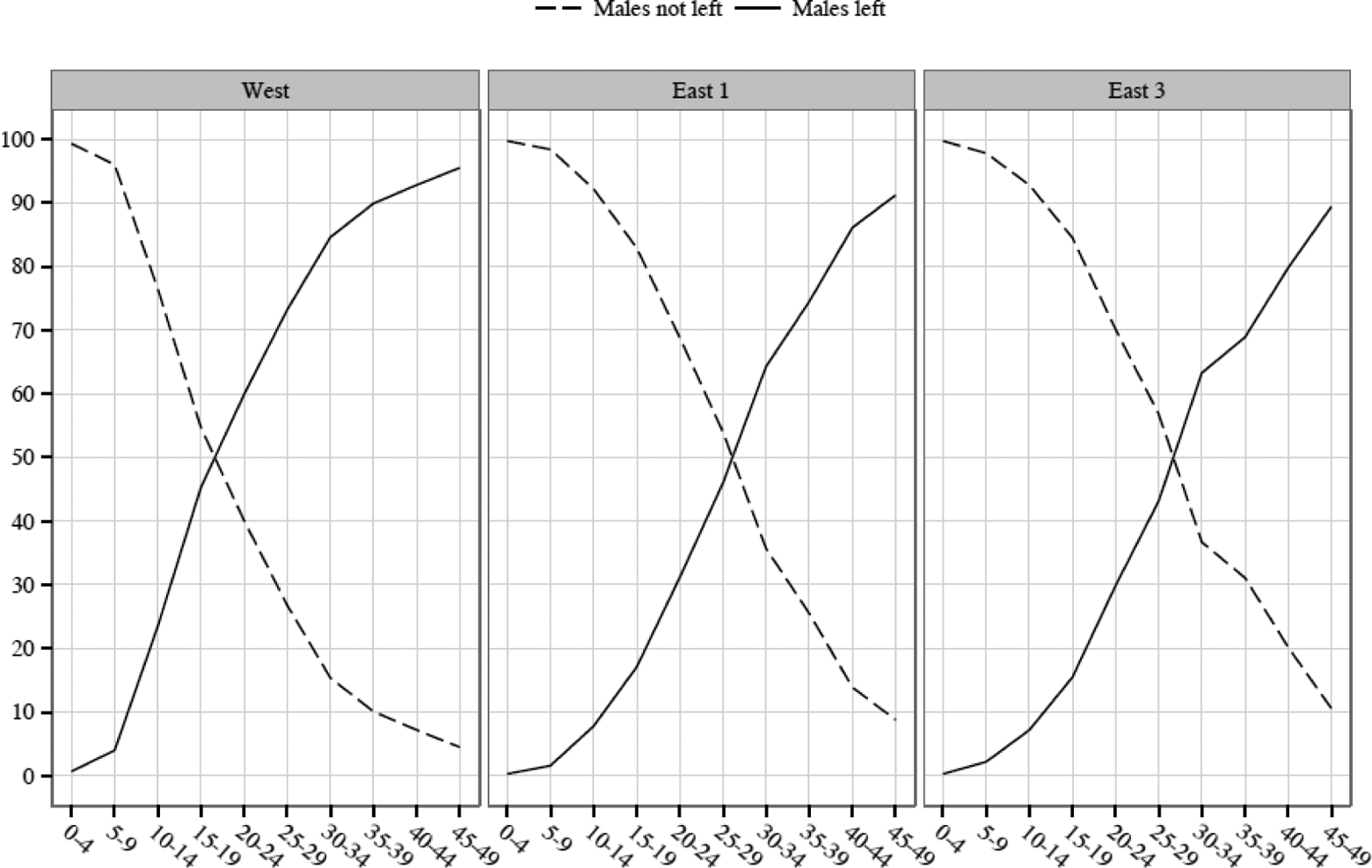
Age-specific proportions of parental coresidence, males by regions of Poland–Lithuania.
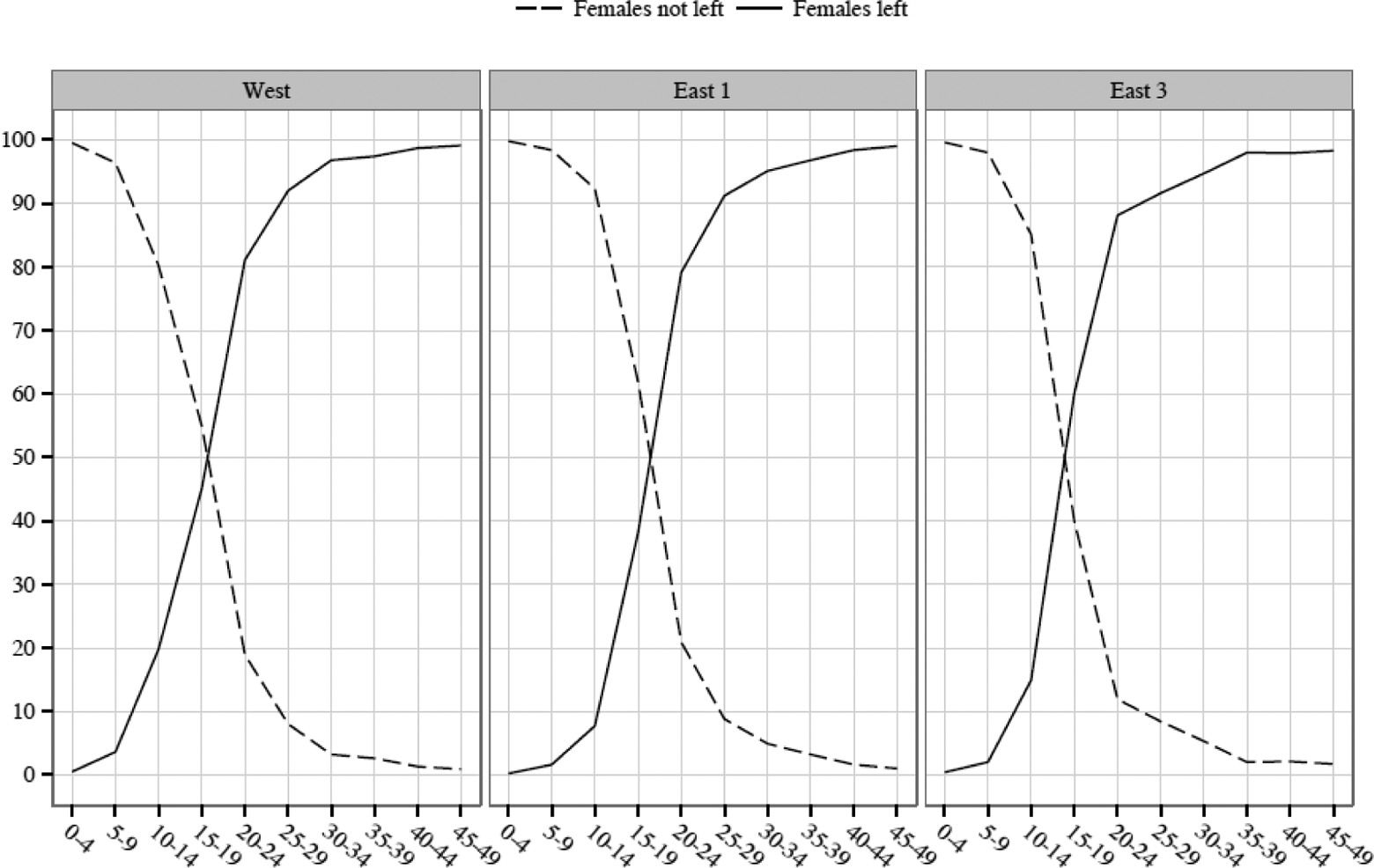
Age-specific proportions of parental coresidence, females by regions of Poland–Lithuania.
Inspection of Figures 3 and 4 suggests a striking discrepancy in the sex-specific patterns of home leaving between the western and eastern regional groupings, especially with regard to men. First, the “early home-leaving” population in the West might be distinguished from the “late home-staying” populations in the two biggest eastern groupings (East 1 and East 3). The western pattern was characterized by a particularly steep progression of the proportion of males presumably completing the transition, with the share of the potential “leavers” nearly doubling between the ages of ten to fourteen and fifteen to nineteen. Just after the age of twenty, the proportions of “movers” and “stayers” reached exactly 50 percent each. The depletion rates of the male residential offspring in the East were roughly three times lower during the teenage years. Accordingly, the point at which the majority of men from eastern populations passed from living at home to not residing in the family of origin seems to have been significantly delayed when compared to western Poland.
In all of the clusters, a mass movement of adolescent females away from the parental home was much more abrupt than among males. By age twenty-five, roughly 80 percent of the female offspring seemed to have already “left home,” whereas the respective figures for males were below 60 percent. The departure of the female progeny from parental households seems to have started earlier in western regions, but this trend was superseded by a pervasive tendency to leave home among Polessyan women (East 3). 32
Before we base any conclusions on these initial observations, it is necessary to consider more fully what the curves in Figures 3 and 4 tell us, and what they do not. Although it stands to reason that the distribution of the proportions illustrated with the curves is primarily influenced by the propensity to leave the parental home, this is not the only factor that will affect these figures. First, these estimates do not control for any effects of mortality, whereas including an allowance for deaths occurring during the teens would inevitably lower the exit rates from home. However, death rates normally diminished, while departures from home increased with age; hence, deaths can be thought of as a relatively unimportant source of contamination in the sample of older children. 33
A much more critical factor is the likelihood of “parental survivorship,” as an individual cannot live with his or her parents or parent if they are dead. The major challenge in this regard is to assess with some degree of reliability what share of those who could have coresided with at least one parent actually did so. To complete this task, it is necessary to estimate what number of primary kin individuals in different parts of historic Poland–Lithuania were likely to have had under the prevailing demographic conditions. While there is no way that such information could be derived from household listings alone, the problem can be addressed by referring to potential distributions of parental coresidence by age, gender, and cluster membership produced by CAMSIM (like in Table 1), which can then be compared with the age-specific rates derived from the listings. By plotting the expected rates against those observed in the enumerations, we can assess whether parental death—or, more generally, the entire plexus of mutually related demographic factors—was the primary influencing factor in the residence patterns registered in the listings. 34 The differences between the potential and the actual rates of parental coresidence can then be attributed to a propensity to leave the parental home.
Figures 5 and 6 plot rates of observed and expected parental coresidence for different ages of individuals, broken down by region, separately for men and women. Their inspection suggests that nowhere in Poland–Lithuania was adult mortality—or demography in general—the only factor that dictated the likelihood of children living with parents in the listings. While Figures 3 and 4 do not clearly show whether the presumed contrast in home-leaving patterns was a simple reflection of confounding demographic conditions, the correction provided by microsimulation gives us stronger grounds for assuming that there was an actual regional differentiation across Poland in this regard. Whereas the mass exodus of females from the parental home featured almost equally in all groupings, the approach assumed here revealed a dramatic divide between the East and West in terms of home leaving among males. Among men, the mutual arrangement of curves differs substantially across the West–East divide in Poland. The separation of curves for model and real populations is particularly visible in the western grouping. Whereas for the expected rates of parental coresidence the decline rate amounted to 12 percent on average, its value calculated for the curve with empirical data reached almost 30 percent. Meanwhile, in both eastern populations, the discrepancy between the model and reality was much less pronounced. Especially among adolescents and young adults, the gap between the East and West was particularly dramatic.
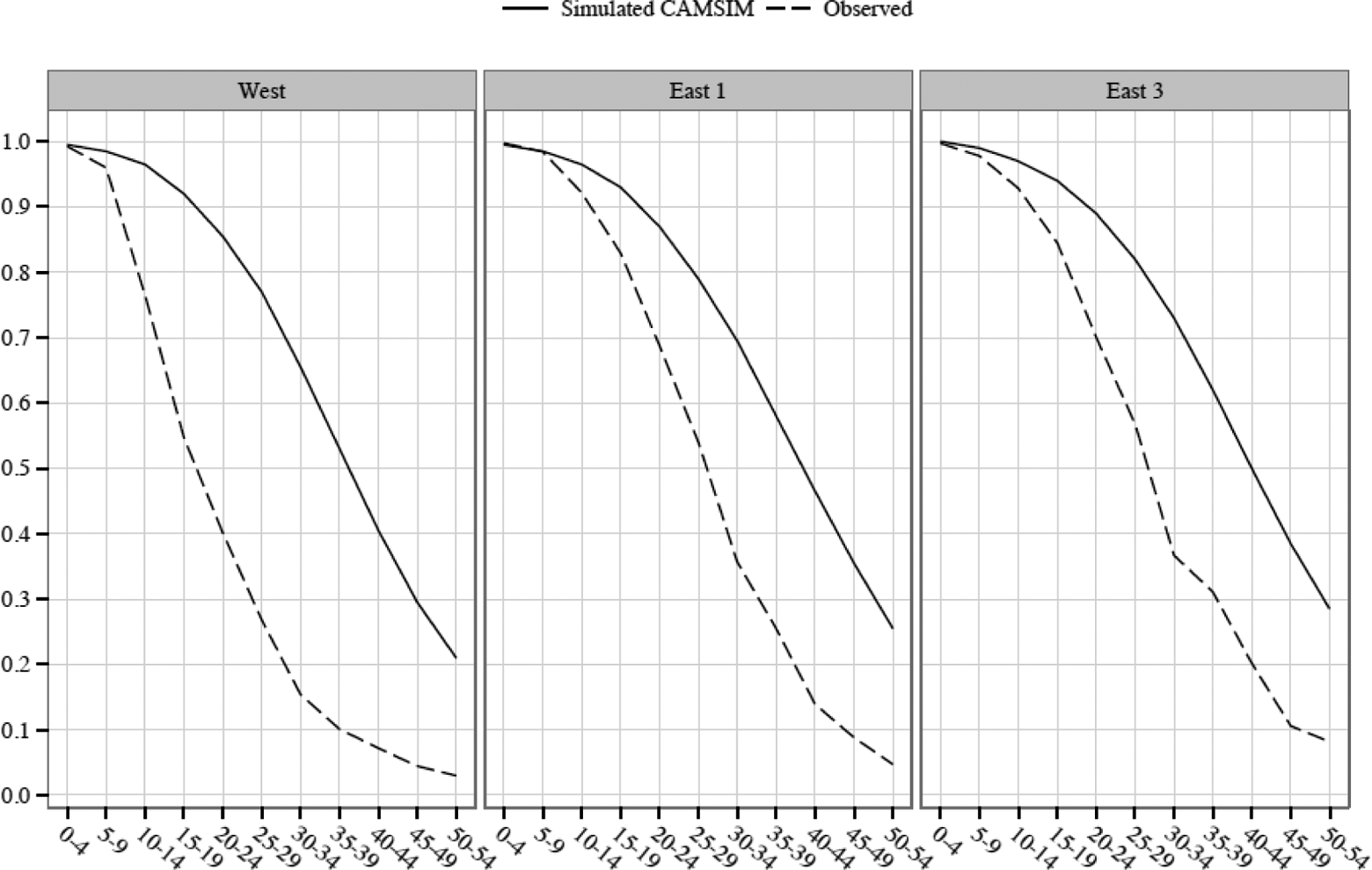
Age-specific rates of potential and observed parental coresidence, males by region of Poland–Lithuania.
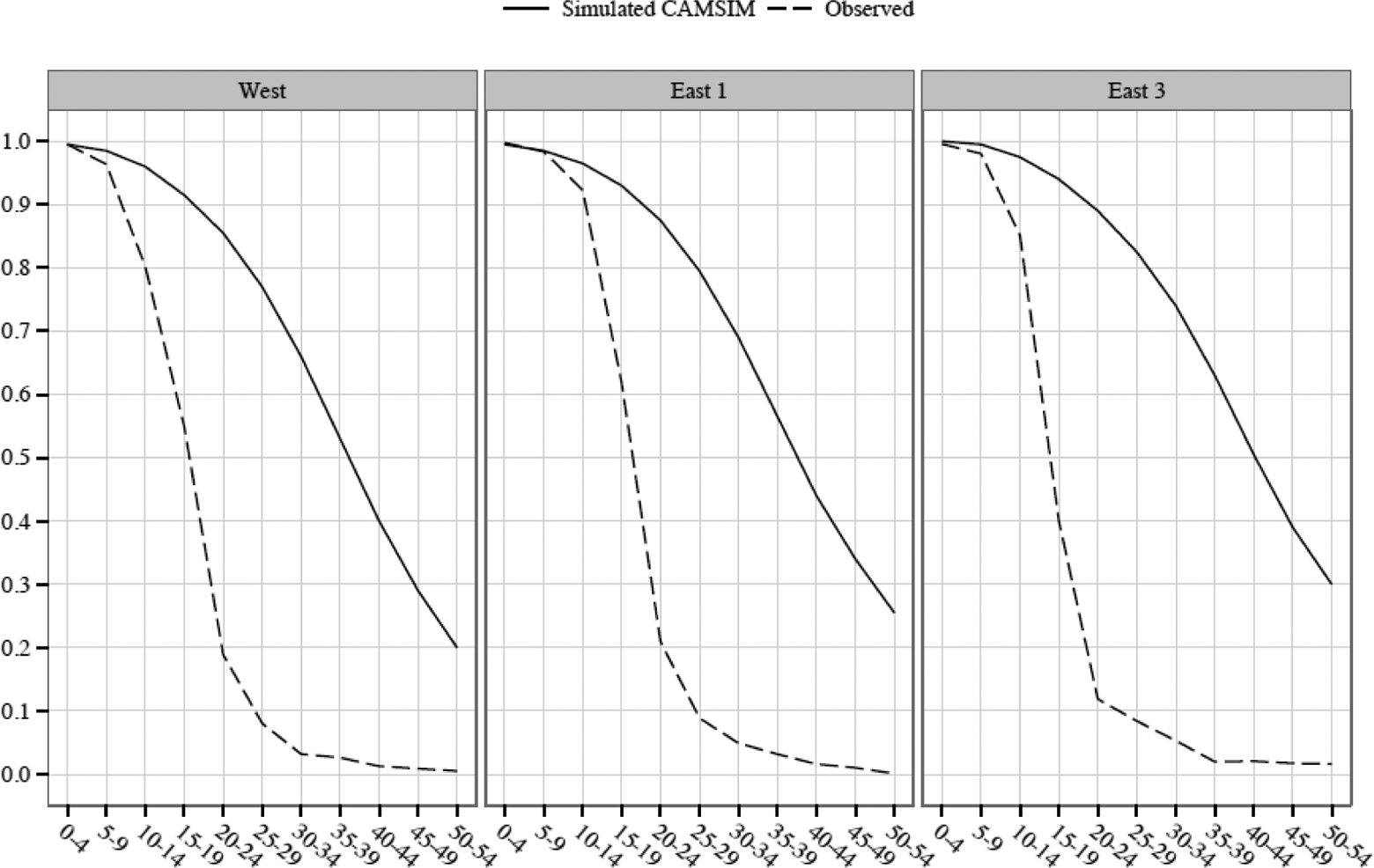
Age-specific rates of potential and observed parental coresidence, females by region of Poland–Lithuania.
To better spell out those issues, Figure 7 presents what can be termed “propensities;” that is, estimates of the percentage of people who had the potential to coreside with their parents under given demographic conditions, but who did not do so. These estimates are derived in a straightforward manner by taking the actual rates of parental coresidence as a percentage of the potential rates and then subtracting the result from 100. As such, they can be used to yield unbiased estimates of the departure of children from the parental home. 35
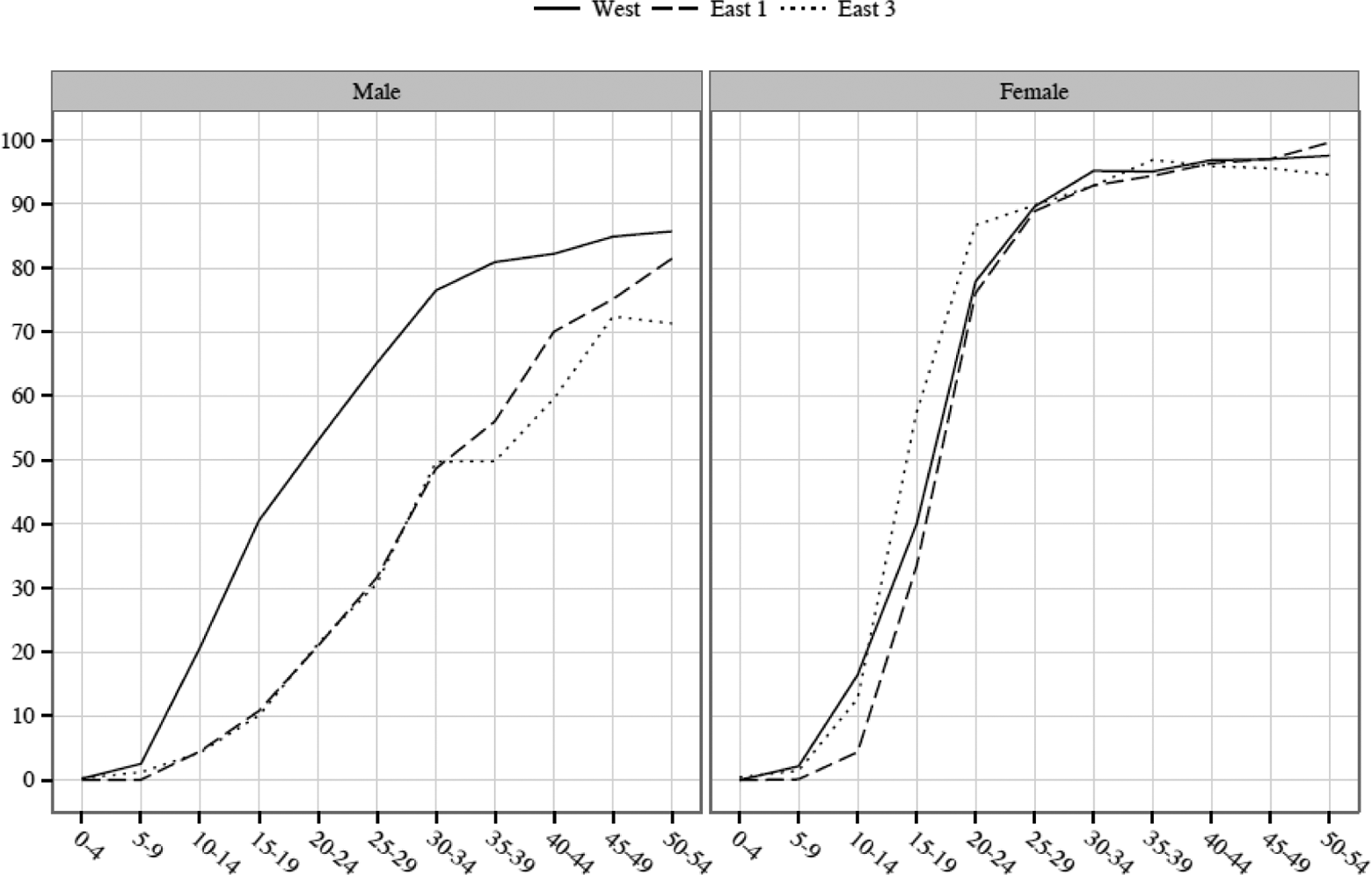
Male and female “propensities” to not live with parents, by age and regions of Poland–Lithuania (percentage men/women who had the potential to coreside with their parents, but who did not do so).
The “propensity” rates point out fairly well the contrast between the Polish western and eastern regions. Home-leaving processes among men unfolded much earlier in the West, where already among adolescents it was quite widespread (e.g., 40 percent of males aged fifteen to nineteen who could have lived with at least one parent did not do so). The share of leavers continued to increase thereafter. The process slowed down among men in their thirties and was essentially completed among men in their late forties. 36 Among men in the East, leaving the parental home have started much later, and it never resulted in propensities as high as those in the West. Every fifth teenager in the West who could have lived with his or her parents lived apart from them, compared to only every twenty-fifth teenager in the East. Whereas in the West, more than 50 percent of those who were going to leave home had already done so by their twentieth birthday, this threshold was not passed in the East until the men were ten to fifteen years older. Consequently, the male populations differed not only with regard to the period in which the majority of transitions occurred in the life course of the synthetic cohorts but also in terms of the overall time span of these transitions.
In contrast to men, women had very high propensities to leave home across all of the regions. Thus, while the departure of the male offspring appears to have been strongly delayed in the East, daughters left at a much faster pace everywhere. Still, the proportion of teenage and young adult females outside the parental home in Polessya (East 3) was higher with regard to other areas, indicating the particularly abrupt exit of younger females from home. This also implies that the male–female gaps were especially large in the East. Whereas in the West equal proportions of late adolescent men and women were living apart from their living parents, in Polessya women were more than six times more likely to leave than men.
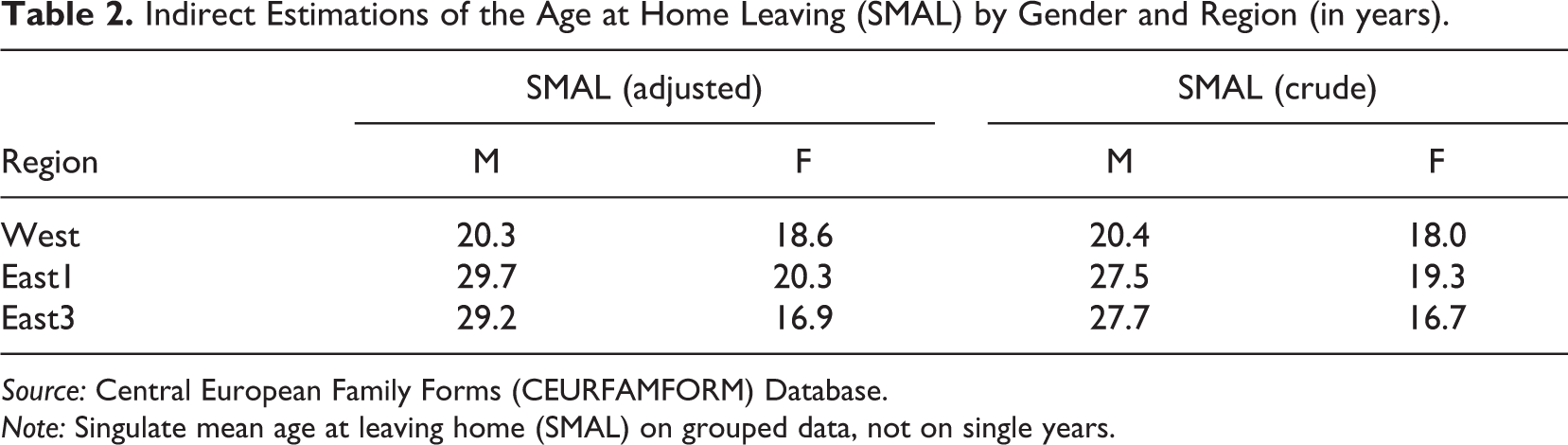
The age-specific propensities presented in Figure 7 can be used to compute the ages at which people left home using indirect techniques commonly applied to current-status data. 37 Based on the work of Hajnal, the “singulate mean age at leaving home” (SMAL) can be calculated from the proportions who “never left home” by age and gender, yielding the mean number of years lived by a cohort of men or women before their departure from home. In the present application of Hajnal’s original reasoning, the SMAL is treated as a measurement of the mean age of those who leave home before the age of fifty, under the assumption that the vast majority of individuals who leave the parental home do so by this threshold and that those who had not left at this point remained in that condition for the rest of their lives. 38
The indirect estimation of the age at home leaving is utilized in Table 2, which also includes estimates yielded by applying the SMAL formula to the crude observed rates of parental coresidence. Broad interregional differences are immediately apparent for men, as the age at which they left home varied considerably between the western and the eastern parts of the country. Young males in the West left home earliest, on average by around the age of twenty. By contrast, the Belarusian and Red Ruthenian populations (East 1 and 2) represent the most striking deviations from the western pattern of early home leaving. Eastern males left home on average nine to ten years later.
Indirect Estimations of the Age at Home Leaving (SMAL) by Gender and Region (in years).
Source: Central European Family Forms (CEURFAMFORM) Database.
Note: Singulate mean age at leaving home (SMAL) on grouped data, not on single years.
In contrast, the timing of female home leaving was much more similar across all of the clusters. In all regions, women left the parental home earlier than men, on average no later than at the age of twenty. Leaving the nest tended to be earliest among girls from southern Belarus (East 3), who typically left home at sixteen to seventeen years of age. The ages were only slightly higher (ages nineteen to twenty) among women in the other two large territorial groupings (West and East 1). Whereas there was a huge gender gap in the nest-leaving patterns in the East (ten to twelve years of difference), no such gap exists in the data for the Polish western lands.
Coresidence with Married Sons over the Life Course
There are many types of living arrangements which merit investigation, all of which have their specific life-course patterns and are differentially conditioned by demographic rates and processes. 39 However, a type of living arrangement which has long exercised a peculiar fascination over minds of the family historians of Europe was coresidence with married children. Exploring residential patterns through assessment of the numerical weight of married offspring cohabitating with older generation has proven crucial for the typologization of Eurasian family systems, especially when it comes to distinguishing between stem and joint families. 40 Not only were the stem and joint-family systems capable of shaping demographic outcomes in distinct ways, they also reflected often very contrasting systems of social security and welfare provision. 41
In what follows, we will first look at a broad indicator of intergenerational coresidence across Polish–Lithuanian areas, that is, the percentage of men aged thirty and older residing with at least one married son. 42 In the next step, we will focus on male individuals aged sixty-five and older living in multigenerational families, now subdivided into stem-family households and joint-family households following the Ruggles definitions, slightly modified. 43 The proceeding discussion has been intended, again, to highlight the role of demographic constraints on those two forms of living arrangements, without necessary unraveling the whole complexity of stem- or joint-family appearances in historical populations of Poland–Lithuania. 44
In Figure 8, the observed percentage of males residing with at least one married son was illustrated with dashed lines, separately for the three major clusters of Poland–Lithuania. For largely demographic reasons (the egos’ own reproductive career and the nuptiality of his offspring), in all of the clusters there is a pronounced tendency for the observed proportion of individuals living with at least one married son to increase with age. However, the differences between the west and east of Poland appear very striking, in terms of both the “tempo” and quantum differentials. In the western regions, the onset of coresidence with married sons occurred much later in the male life cycle, a feature that is related to a later family formation and a slower transition to parenthood. 45 Among men in their early forties, this tendency increases eight-fold (East 1) or even twenty-fold (Polessya) relative to that of their counterparts in the western territories. Although these disparities, which are so acute among younger generations, partially even out among older men, the divergence of regional patterns within Poland–Lithuania never disappears. In the final stages of life, the men’s rates of coresidence with married sons in the West amounted to values which in the eastern areas had been exceeded by individuals some fifteen or more years younger.

Observed and potential male age-specific rates of coresidence with at least one married son by regions of Poland–Lithuania.
Some men in the East, especially in Polessya, experienced cohabitation with their married sons while still in their thirties. The pace of transition into intergenerational coresidence was also much faster there, and by the time these males reached their fiftieth birthday, that pattern was already pretty widespread in the regional populations. Polessya (East 3) stands out as an extreme version of patterns observed in East 1, as the reluctance to share a dwelling with married sons was much lower there, especially among middle-aged and elderly men.
While the actual percentages of adults and elderly people with at least one married son can be measured directly in each listing, these data do not tell us whether those in actual coresidence represented all individuals with the potential for such coresidence or whether only a fraction of men with available married sons actually lived with them. To address this issue, solid lines were added to regional curves in Figure 8 to show the maximum potential percentages of men with at least one married son in each cluster, using the information derived from CAMSIM. These potential percentages illustrate what would have happened if every individual who had married sons had shared a residence with at least one of them at specific life stages.
A strong variation in actual residential behavior relative to the existing demographic opportunities manifests between the clusters. The western pattern illustrates the largest discrepancy by far between observed and potential coresidence. Compared to their counterparts in eastern territories, much fewer individuals in the West took advantage of the existing opportunities to share a living space with a married son at all stages of life. The discrepancy is particularly striking at a middle age (45–49), when only ca. one-quarter of the men who could have lived with a married son actually did so in the West. For men of all ages, the propensity to coreside with at least one married son (i.e., the observed share of individuals with coresident descendant nuclei taken as a percentage of the potential share with at least one married son) was always much higher in the East than in the Polish western areas. Moreover, unlike among men in the West, among men in the East the gap between potential and observed coresidence closes entirely in old age (see more subsequently).
We may now add yet another building block to the assessment of the role of the “demographic filter” in constraining the prevalence of certain living arrangements in historical Poland by focusing on the proportions of the elderly living in stem- or joint-family arrangements. 46 Our approach will rely on looking at what proportion of stem-family arrangements which could have existed among the elderly actually occurred. Accordingly, we might be able to assess how close or how far these people were from the maximum “jointness” of family life that might have been possible under specific demographic conditions.
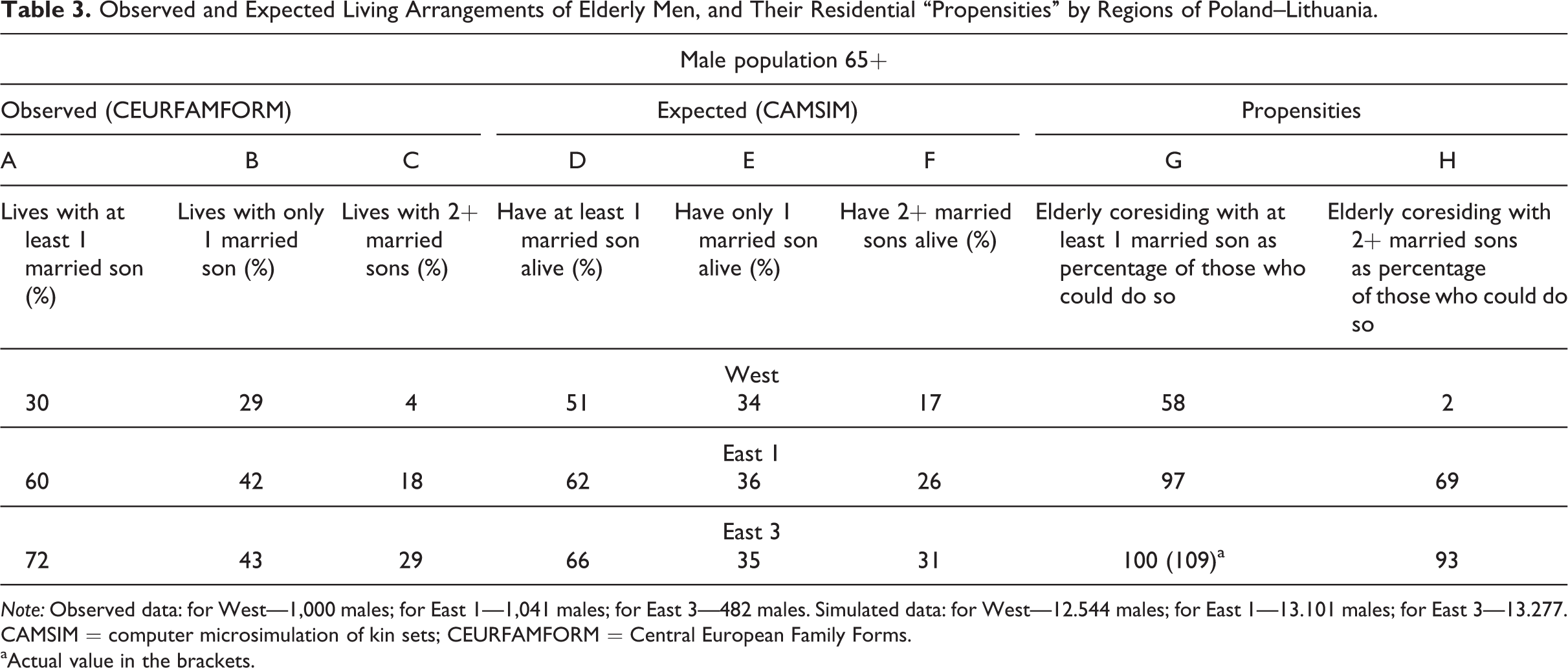
The data to be used in exploring these complex issues are contained in Table 3. The table consists of three major column panels. In the first three columns, the actual proportions of elderly people living in two major residential forms (stem- and joint-families) have been calculated from the listings (B–C), along with a summary measure of multigenerational coresidence (A). As on previous occasions, the demographic background against which these observable tendencies will be assessed has been provided by CAMSIM (columns D–F). It yields the percentage of the elderly population who had the potential to reside in stem- or joint-family constellations under each demographic system and represents what would have happened if every elderly person in a fictional population governed by demographic parameters very close to Polish–Lithuanian realities tended to maximize his or her coresidence with available married sons. Finally, the last two columns (G–H) are fitted with what can be termed “propensities,” that is, the estimates of the percentage of those people who could have resided in given family configurations and who “actually” did so. 47
Observed and Expected Living Arrangements of Elderly Men, and Their Residential “Propensities” by Regions of Poland–Lithuania.
Note: Observed data: for West—1,000 males; for East 1—1,041 males; for East 3—482 males. Simulated data: for West—12.544 males; for East 1—13.101 males; for East 3—13.277. CAMSIM = computer microsimulation of kin sets; CEURFAMFORM = Central European Family Forms.
aActual value in the brackets.
As expected, the contrast between areas of Poland–Lithuania regarding the observable proportions of elderly living with married male progeny is quite dramatic (columns A–C). Whereas less than one-third of men in the West lived with at least one married son, the respective proportions doubled in East 1 and reached 72 percent in Polessya. The contrast is even more striking when it comes to the prevalence of joint families among the aged. The two antipodal modes of familial behavior are marked, on the one hand, by the complete aversion to the joint-family configuration in western Poland; on the other, by quite a substantial popularity of living with at least two married sons in the eastern territories, attributable to roughly one-fifth to one-third of all elderly men.
The impact of demographic conditions on the maximum frequency of multigenerational cohabitation among the elderly shows up clearly in all three models (columns D–F). In all of them, approximately 35 percent (eastern areas) to 50 percent (western Poland) of elderly men would have had no surviving married sons, hence no straightforward chances to form patrilineally structured multigenerational households. Roughly one-half to two-thirds of those with at least one married son alive would have had only one such son (the western model would fall on the upper bounds of that range). The regional differences are more pronounced when the probability of having two or more surviving married male descendants is considered. Male chances in the East would be greater (and almost twice as great in East 3 as in western Poland), but even in the East no more than one-quarter to one-third of the elderly could have lived with at least two conjugal units involving their sons. In other words, whatever the ideal family form we assume to have been present among rural people in historic Poland, the likelihood of an elderly person forming an extended living arrangement including one married son has nowhere been absolute. As far as living with two or more married sons would be concerned, the residential chances were particularly limited. 48
Finally, following the “propensity approach,” it can be inferred that among elderly men with at least one married son in the West, the share of those who actually coresided reached nearly 60 percent. This implies that roughly four out of ten men aged sixty-five and above who could have shared domestic space with a married male descendant in western Poland did not do so. As nearly the entire potential for living with more than one married son was unrealized in the West (98 percent of those who could have done so did not), the abovementioned propensities can be taken as indicative of actual preferences regarding stem-family organization in old age. The major dilemma in this regard is to decide which threshold values can be taken as indicative of the presence of the “true” stem-family pattern, and which are not sufficient. Inevitably, arriving at any hard-and-fast rules in this regard is largely impossible, although the finding that 40 percent of the elderly declined to follow the stem-family path despite objective opportunities to do so makes it difficult to describe western Poland as an “ideal” stem-family society. 49
It seems unlikely that all instances of coresidence with only one married son in the West would appear only when there were no more married sons available. A voluminous auxiliary evidence from the eighteenth-century western Poland (i.e., some estate inventories 50 ) provide vivid examples of the dispersion of married sons beyond the parental household that may contradict the assumption that the observed circumvention of intergenerational coresidence in our own listings was all about demographic feasibility. On the contrary, a rough estimate would suggest that not living with any married sons—a marked pattern in the populations of western Poland (70 percent of elderly men)—could have been strongly, but still not absolutely, connected to the demographic availability of married male progeny. By dividing the percentage of old people not having married sons (column D) by the respective percentage of those not living with any of them (column A), it can be deduced that over two-thirds of those who did not live with any married sons in the West may have found themselves in this situation for demographic reasons. However, a significant minority of them (30 percent) apparently failed to take advantage of existing opportunities for multigenerational coresidence.
In the eastern areas, by contrast, it appears that elderly people were much more likely than in the West to live with a married son when the opportunity presented itself. A comparison of coresidence levels in empirical (column A) and simulated (column D) populations suggests that the residential “jointness” of elderly men with at least one married son was nearly absolute in the East. 51 In other words, in these eastern territories, an older man with surviving married sons most likely would not have passed on the chance to coreside with at least one conjugal nucleus made up of his successors. While there were very rare cases in which coresidence did not occur—most of which were found in the East 1 region—these exceptions can be largely attributed to demographic reasons. 52
Table 3 offers further clues as regards the relative prevalence of joint-family organization among the eastern populations. A comparison of the observed and potential rates of the elderly living in joint-family configurations shows that the demographic potential for joint-family coresidence was realized in full only in Polessya (East 3), where the actual proportions of this type of coresidence nearly equaled those predicted. In Polessya, only every fourteenth member of the elderly population rejected the opportunity to coreside with a married son. The situation was quite different in East 1. By subtracting those who actually lived with at least two married sons (column C) from those who could have done so based on demographics (column F), and taking the result as the percentage of the latter, we estimate that 69 percent of the older men in the region with a sufficient number of progeny to form joint families did so in reality. Thus, beyond the Polessyan region, a large number of older men in the East (almost one-third) might have chosen to live with only one married son or with no married progeny at all, despite the demographic feasibility of coresiding with more than one married son. In other words, despite the theoretical potential to form joint families with their male descendants, they favored (or were pressed to choose) cohabitation of a stem-family type, or they lived with unmarried offspring only or with kin other than children.
Conclusions: What Difference Does It Make?
The major goal of this article was to demonstrate the utility of incorporating CAMSIM into the standard analysis of living arrangements in historical populations of Poland–Lithuania. Although the presented exercise is confined to a regional study of a “far away Poland,” it may bear certain implications for a much broader terrain of the family history interests in coresidence patterns. The advantages of combining the two approaches in an analysis of historical residential structures can be boiled down to the following aspects: (1) possibility to reinstate demography in the studies of living arrangements, (2) interpretive and classificatory utilities, (3) minimizing the risk of artificial contrasts in comparative analysis of family systems, and (4) making space for multidimensional explanations after ruling out purely demographic determinants.
The basic theoretical assumption underlying this article was the possibility that demography affected people’s chances of forming various types of residential arrangements. As far as historical Poland–Lithuania is concerned, the assumption has been fully warranted. The combination of census microdata analysis with microsimulation demonstrated how vulnerable the description of living arrangements in a census was to the underlying demographic history of the populations being counted. The findings established in previous sections leave no doubt that residential behaviors on Polish–Lithuanian lands were strongly influenced by demographic factors. By combining census microdata on living arrangements with model kin sets, we were able to show that parental death—or, more generally, the entire plexus of mutually related demographic factors—could be the important factor influencing the residence patterns of children and teenagers registered in the listings. Here the major goal was to control for purely demographic influences in order to arrive at less biased measures of individual migratory movements and through this to assess a true propensity to leave the parental home.
In a similar vein, whatever the ideal family form we assume to have been present among rural people in historic Poland, the likelihood of an elderly person forming an extended family household including at least one married son has nowhere been absolute. It was particularly limited as far as coresidence with two or more married sons would be concerned. In light of both of these factors, our primary task was to assess how many old people must be barred from coresidence by the absence of kin before demography is labeled a negligible constraint. This was necessary if we wished to establish whether the demographic “bottom line” was decisive in explaining the regional differences in family composition across Poland–Lithuania or not.
Comparing the microsimulation with the historical microdata has facilitated answering that particular in the negative. One of the major insights spurred by the incorporation of CAMSIM was that in terms of the formation of complex family arrangements, the populations of eastern and western Polish–Lithuanian lands made use of the demographic potential at their disposal to very different degrees. Differences in the living arrangements found across the Polish–Lithuanian regions did not arise solely from demographic inevitabilities but were instead largely the result of region-specific cultural preferences (or other important, albeit non-demographic, pressures).
The use of methodologies not previously applied to studies of family forms in eastern Europe (such as computer microsimulation) draws us closer to solving problems which would have been practically impossible to address using more conventional methods. Of prime importance in this context is the clear confirmation of the divergence of Polish eastern family forms from those dominant in western Poland. While a skeptical reader perusing the basic description of familial characteristics of the three major clusters in the second section could still argue that many of them are mere reflections on the variations in demographic conditions, the application of the propensity approach should dispel any doubts about the significant familial divide between the East and West of historic Poland. However, unlike in more conventional comparative approaches, in which arguments were based commonly on comparing observable patterns of domestic group organization, we have managed here to isolate differential operation of a probable “human factor” (“residential preferences,” or “propensities” 53 ) by showing how different societies of Poland–Lithuania were realizing their demographic potential for multigenerational coresidence over the individual life course.
Moreover, the implications of the microsimulation experiment provided us with better tools to classify family organization in western and eastern parts of Poland, hence to better interpret information derived from the empirical data. As far as coresidential issues were concerned, we acquire greater confidence in defining the forms of family and living arrangements specific to Polish–Lithuanian territories: the “weak” stem-family pattern in western Poland and the two variants of joint-family patterns in the eastern areas—only one of which might belong to the model of the ideal joint-family system. One of the major distinguishing factors between the two zones of familial behavior was the complete aversion to the joint-family configuration in western Poland despite demographic opportunities, but other disparities were just as crucial. The inhabitants of eastern territories not only much more fully utilized the demographic potential at their disposal to build complex family forms, they also acted as if demography had been the sole constraining factor on their residential choice, especially in Polessya. Whenever the restrictive influence of the joint forces of fertility, nuptiality, and mortality allowed it to happen, a full optimization of domestic groups accretion followed.
If, as some scholars claim, existing geographies of family forms in historic Europe are “limiting and misleading” in their failure to account for the effects of demographic conditions, 54 then the present study makes yet another contribution to the development of a more comprehensive understanding of the issue. Instead of comparing populations solely on the basis of observed living arrangements, a future comparative spatial analysis should ideally rely on scaling various societies according to the “propensities” of their members to develop different types of coresidence patterns. Although such an approach does not guarantee the reinstatement of the “grand theory” in studies of historical family systems, it could provide a necessary correction to some intriguing recent findings of family historians, including those of the present author. For example, it has been attested that the extent of structural simplification of the domestic groups in western Poland–Lithuania (where 78 percent of households were simple in the eighteenth century) substantially outweighed the patterns observed in the sample of English parishes, in which the respective proportions amounted to no more than 72 percent (also when approached in terms of various measures of data dispersion). 55 Although it might be tempting to treat these figures as if they represent a dramatic challenge to the inherited distinction between northwestern Europe, where households were assumed to have been predominantly nuclear for centuries, and the eastern part of the continent, where more complex family arrangements were assumed to have been dominant, 56 the discussion unfolded in the preceding pages gives certain reasons to not surrender to that temptation. Although it is technically correct to say that in early modern Poland simple domestic groups were more preponderant than in preindustrial England, sound reasons exist to view such crude comparisons as capable of producing misleading results. Take the effect of parental survivorship among the countries compared. While in historical Poland respectively 30, 44, and 59 percent of men had no parent alive at their twenty-fifth, thirtieth, and thirty-fifth birthdays—that is, in those ages when household formation tended to be at its peak in most societies, corresponding estimates for England of the same time yield figures almost twice as low. 57 If we consider the most common forms of household extensions to be those occurring through vertical upward extensions (i.e., by including parental generation), then it is clear that historical Poland had much worse chances for multigenerational coresidence than England. The Polish population seemed indeed to be much more predestined to produce higher rates of simple family households than the English one, but that was likely due to demographic rather than ideational reasons.
In this article, demographic mechanisms were of interest not for their own sake, but rather for the purpose of isolating the effects of demography on family structure from the non-demographic sources of residential behavior. By determining what proportion of the living arrangements (or household structures) which might have existed under specific demographic realities actually did exist, we were able to rule out, or control for one potential cause (purely demographic influences) before eventually crediting other (economic or cultural) explanations of residence patterns in future analyses. Viewed from whatever angle, in proceeding to investigate whether various patterns resulted from differences in economic and environmental conditions, or whether they had a deeper “cultural” basis, isolating the overarching effects of demography on the kin pool is indispensable. 58
Footnotes
Acknowledgments
I would like to thank Jim Oeppen who generously agreed to design computer microsimulation of kin sets (CAMSIM) for Polish–Lithuanian populations and over the twelve months of work accepted my endless requests for clarifications and modifications of the program. I also thank my sister Julia Szołtysek who assisted me with language editing, and two anonymous reviewers for their useful comments on an earlier draft of this article.
Declaration of Conflicting Interests
The author(s) declared no potential conflicts of interest with respect to the research, authorship, and/or publication of this article.
Funding
The author(s) received no financial support for the research, authorship, and/or publication of this article.