



Abstract
Using data from the China Health and Nutrition Survey, this research addresses the limitations of previous research on parental involvement in childcare in China by examining the cohort variations in parents’ childcare time and exploring the influences of individual characteristics on childcare for each parent within the family. The results show that while the trend in men’s childcare time increased from 2004 to 2011, women’s childcare time slightly decreased over the same period; however, while women spent more childcare time in more recent cohorts relative to earlier cohorts, there is no significant change across men’s cohorts.
Research on changes in parental time with children has been conducted primarily in Western industrialized nations, most notably the United States, but recent research on this topic has become increasingly common in developing countries such as China. 1 During the last two decades, a number of studies showed that the total childcare time in American families has increased, and the gender gap between mothers and fathers in childcare has narrowed substantially. 2
Parental Time with Children in the United States
Past research in the United States assumed that increases in female labor force participation rates would be associated with declining parental time with children 3 ; however, this assumption has been challenged in more recent research. 4 Scholars studying time use in US families argue that the increase in mothers’ labor force participation between the mid-1960s and the end of the 1990s did not necessarily decrease the actual time spent caring for children. 5 In the face of time pressures, parents, especially mothers, seek ways to maximize time with children. They try to balance paid work and childcare in the household by curtailing the hours of work when there is a conflict between them. For example, according to Cohen and Bianchi’s 6 research, the majority (54 percent) of married women with children under six years old at home did not work full time.
In addition, the cultural context of parenting has changed in recent decades with particular norms that fathers become more intimately involved in the care of their children. 7 One recent study 8 using the American Time Use Survey data shows that in the United States, between 1965 and 2011, American parents’ time with children continued to increase. Time devoted by married mothers to childcare has increased from 10.6 hours per week in 1965 to 14.3 hours per week in 2011, whereas time devoted by married fathers has also increased from 2.6 hours to 7.2 hours during the same period. This increased time spent in childcare may be attributable to the ideology of intensive parenting in the United States. Hays 9 argues that mothers of all social classes have accepted a broad ideology of intensive mothering (i.e., child-centered and emotionally involved beliefs) and placed great responsibility on almost all aspects of their children’s needs. Similarly, Lareau’s concept of “concerted cultivation” 10 and Nelson’s “parenting out of control” 11 have both illustrated the fact that today’s demands for parental investment in child-rearing have increased (although the parenting practice varies across social class), emphasizing mothers’, especially middle-class mothers’, intense involvement in children’s daily life. Consequently, based on the intensive mothering ideology, mothers are expected to invest more time with their children, even as mothers work more hours outside of home.
Social Changes Related to Parental Time with Children in China
In China, women with young children may face an even greater work–family conflict. This is because part-time jobs or flexible working schedules are not very common for women to facilitate family–work balance in China. Also low wages have seriously restricted Chinese women’s ability to quit their jobs, so they have little choice but to keep on working to support their families. And because of low wages, the feasibility of hiring caregivers or using private childcare services is very limited, especially for most Chinese rural families. At the same time, because of the birth planning policy that has strictly limited family size, children have become more precious than ever before, so more contemporary Chinese women decide to work full time in order to offer childhood experiences that they hope will ensure their children better living conditions in the future. 12 Consequently, the pressure on women with young children to play the dual role of mothers and income earners is intense.
Although a considerable body of literature addressed the change in parental time with children in the United States, little research has examined changes in parental time in China–a nation that has successfully implemented a population policy to affect its demographic processes by reducing the birth rate and one that has experienced rapid economic and industrial development over the past two decades. Generally, there are about two major changes likely to affect the contours of China’s parental care.
First, economic transformations and privatization have led to a substantial decline in publicly funded childcare programs, shifting care responsibilities (time and costs) predominantly back to the family. 13 In the urban sector, parents have to rely on fee-for-service private or commercialized public kindergartens to meet their childcare needs, 14 which increases inequality in access to high-quality childcare. 15 Women’s childcare responsibility has become a major contributor to their weak position in terms of employment and earnings in the urban labor market. 16 Using panel data for the period 1990–2005, Jia and Dong 17 found that women with young children had lower earnings than childless women in the emerging nonstate sector. And the earnings differential resulted in women who were from low-income families having to withdraw from the labor force in large numbers. 18 In the rural sector, childcare services that can substitute for family provision are generally unavailable and economic pressure to work is enormous. Wang and Dong 19 investigated the impact of childcare on women’s occupational choice in low-income villages and found that having young children at home increased women’s participation rate in agricultural production and reduced their participation in wage employment due to the relative flexibility in agricultural employment compared to wage employment. The probability that a mother does not participate in paid work and chooses to look after her children increases with the income level of the husband. The finding showed the hard choices women from rural, low-income families have to make, between earning an income and their children’s well-being, because of the lack of affordable, decent childcare services.
Second, the declining influence of socialist ideology was accompanied by a decrease in progressive gender ideology and the reemergence of traditional gender values. 20 Meanwhile, women have been disproportionately pushed out of formal employment opportunities, are more likely to drop out of the labor market than men, and are concentrated in low-paid, irregular forms of informal employment. 21 All of these have increased pressures on women to return to the home or at least to place renewed emphasis on the traditional woman’s normative position in the division of household labor. Given the rapid changes in social and economic trends that intensify the burden of childcare provision despite smaller families, the time allocation of parents with young children needs to be further investigated in China. Analyzing how childcare time has changed within the family and what influences fathers and mothers to invest in this family activity will provide better understanding of the gendered division of labor within the family, deepen our knowledge about the linkage between time allocation and its consequences, and help to improve public policies regarding childcare provision.
Using a four-wave data set, 22 I first investigate how parental time with children for families in China has changed over time (period effects), and how historical events may leave different imprints on successive cohorts’ life experiences and, consequently, lead to differential parental childcare outcomes (cohort effects). Then, I conduct multivariate regressions to analyze how parents’ time allocation varies by education, income, and employment status. This study is different from previous studies because not only do I move beyond the relationship between labor market and family, trying to look at how the effects of period and cohort on childcare time differ for wife and husband, but I also distinguish childcare from other housework activities, using couple-level data to examine how husbands and wives’ childcare time is related. My goals are to provide a better understanding of the dynamic of changing time spent in childcare in a society undergoing rapid change in its social structure and family roles and to provide new evidence on fathers’ and mothers’ allocation of time to childcare in China.
Empirical Evidence on Parental Time with Children
In the US literature, a number of studies found that fathers and mothers’ allocation of time to childcare is becoming more similar. 23 More recently, with the growing sociological interest in addressing and explaining how spouses (especially husbands) allocate time to housework, scholars argue that the decreasing gender gap in childcare was a result of an increase in men’s time in the household. 24 Research on changes in parental time demonstrated that the time use differences between husband and wife are highly correlated with individuals’ education, income, and employment status. Previous research indicates that there has been a growing trend toward increased hours of paid work per week among women but decreased hours of paid work per week among men. 25 Mothers give up free time so they can allocate more time to paid work and more time to childcare. Fathers also have been found to spend more time with children by reducing their time spent in paid work. 26
Researchers also argue that mothers with more resources do not necessarily bargain out of doing childcare, which contradicts the premise of relative resources hypotheses. 27 For example, highly educated women, who may also have greater earning capacity and more control over work–life balance, spent more time in childcare than did less educated women, on average. 28 In addition, changing parenting norms have also played an important role in increasing parental time with children. A number of research studies document that intensive parenting ideology has become a dominant aspect of parenting today. On the one hand, mothers are constantly concerned with their children’s safety and feel pressure to enhance children’s intellectual development (e.g., paying for pianos, computers, and all kinds of learning tools or sending of the children to special skills classes) 29 ; on the other, compared to previous generations of mothers, the newest generation of highly educated mothers perhaps seek closer relationships with children than with their husbands as a result of the vulnerability of marriage. 30
In China, few studies have looked at the allocation of time to childcare. Among those that did, they mainly concentrate on women, the normative primary caregiver and the person presumed to be most affected by caregiving. These studies illustrate how women’s caregiving time varies subject to a series of personal, family, and labor market characteristics. 31 Further, there is a major controversy surrounding the general pattern of parental time with children in Chinese society. Some research found that mothers’ workforce participation in both urban and rural areas in China has substantially reduced the time they invest in child-rearing. 32
Other scholars argued that Chinese parents may invest more time in children today due to the one child per family policy, with working parents shifting their focus from work to children. 33 People who hold this argument pointed out that as children in China become ever more precious, demands associated with childcare grow. Traditional Chinese parenting has been depicted as the authoritarian style 34 in that parents not only endorse the use of authoritarian methods (e.g., physical punishment) in child-rearing but are also held accountable for their children’s failures. 35 Due to the recent changes in the structure of Chinese families under the one-child policy, some researchers believe that although traditional Chinese parenting may still exist within the contemporary Chinese parent–child relationship, more and more Chinese parents tend to practice authoritative parenting that emphasizes parental support and warmth. 36 A typical image of an only child family, thus, was one in which the parents with authoritative rather than with authoritarian parenting invested more time with their only child. The intrafamily relationships were no longer based on parental authority, but rather on the child and aiding him or her to grow up correctly. For example, Chen et al. 37 suggested that parents with a relatively higher occupational and educational level were more likely to use authoritative practices and less likely to use authoritarian practices in child-rearing. With the increased prevalence of authoritative parenting, high expectations are focused upon the child in hopes that the child will be at the top of the class academically or to be better than their children’s peers in arts, science, or sports. Based on these changes in Chinese parenting, we would expect a greater time investment pattern in more recent years than in the past.
Research Hypotheses
In this study, I aim to describe the pattern of change in childcare time among Chinese couples with children under age six. I will also investigate the factors driving such changes. A major difference of this research from previous studies of Chinese parenting is that I take a life course approach to elucidate how childcare time of mothers and fathers has changed over time. Specifically, I will focus on the period and cohort effects on mothers and fathers’ childcare hours. According to the life course perspective, period effects tend to be more immediate and thus can be used to reflect the responses of individuals weighing the costs and benefits of particular behaviors. 38 For example, Casper and O’Connell 39 found that married men’s income affects their participation in childcare only in nonrecession years. In contrast, cohort effects tend to be more gradual and reflect how much of the temporal change is actually due to the particular time and circumstances in which an individual grew up and reached adulthood. For example, research suggests that the shift in Americans’ attitudes toward working mothers reflected the growing representation in the population of cohorts with receptive attitudes toward working mothers—cohorts who had themselves moved from childhood into adulthood during the period in which women’s labor force participation grew rapidly. 40
After the Second World War in China, the Chinese government promoted gender equality by encouraging women to go on to further their education and to join the labor force. Although by the twenty-first century, Chinese women’s labor force participation was at lower levels than during the postwar decades, according to the World Bank data, Chinese women’s labor force participation rate was still as high as 64 percent in 2011, ranking the fortieth among 184 countries and regions. Therefore, the majority of women still work outside the home. Moreover, during the recession years, it is possible that the macroeconomic conditions restricted couples’ material recourses and also their perceptions of the costs and benefits of childcare. Since young couples with younger children in the family have to spend relatively more time working in order to maintain their standard of living, the corresponding time spent with children might decrease.
Nevertheless, China is a nation with a strong traditional culture regarding child-rearing by women as a mother’s primary obligation. Due to the recent changes in the structure of Chinese families under one-child policy, children in China have become ever more precious. Consequently, the demands and expectations associated with childcare have grown. A new parenting norm may be emerging, which encourages parents, especially mothers, to spend more time with small children. In addition, as some previous studies indicated, there may also be a revival of traditional gender role ideology nowadays, 41 as working women seek to restore a “feminine” identity in the family. 42 As more and more unmarried young women, including college students, do not press men to share chores equally but instead attempt to restore a traditional female identity by returning home, 43 women’s childcare time may increase.
Based on these changes in society, two competing expectations regarding change in men and women’s childcare time are possible. On the one hand, it is possible that both mothers and fathers’ time will be affected by the economic recession year and that there may be a downturn in childcare trends in 2009. Due to the increases in women’s education, employment, and income during the study period, women may have strengthened their bargaining power in the family, which may result in men’s time in the household doing childcare work to be increasing and women’s time to be decreasing (Hypothesis 1a). On the other hand, it is equally plausible that women’s childcare time has increased across cohorts, just like in American families (Hypothesis 1b).
Apart from the period and cohort effects, parental time with children is expected to be influenced by individuals’ education, income, and employment status. The impacts of these factors may vary both within and between cohorts. For instance, compared to earlier cohorts, women in more recent cohorts are more likely to be well educated, have higher income, and have full-time jobs. Previous studies of child development in the Western literature found that more educated parents make greater investments in their children 44 by providing higher levels of material living standards (e.g., better nutrition) and by devoting more time to their children. Studies in the US literature also show that highly educated fathers devote more time to childcare than do less educated fathers, and they are more likely to participate in interactive and educational activities in order to foster children’s human capital development. 45
Families with more income can provide the financial means so that parents can spend time participating in children’s experiences (vacations, lessons, and outings). 46 Using data from the 2003 and 2004 American Time Use Survey, Kimmel and Connelly 47 find a positive effect of both mothers’ wages and fathers’ earnings on mothers’ primary childcare time. Lareau 48 in her study demonstrated that middle- and upper-class parents spend more time in the “concerted cultivation” of their children, whereas in white and black working-class and poor families, child-rearing strategies emphasize the “accomplishment of natural growth.” Thus, the literature in the United States highlights that higher education and better income are associated with more time parents spent with their children. In addition, scholars studying time use in US families argue that the increase in mothers’ labor force participation does not necessarily decrease the actual time spent caring for children. 49 The time that non-working parents spend with their children is not that much greater than the time spent with children by working parents. 50
In China, there has been a significant increase in women’s educational attainment, and women’s labor force participation remains high since the Chinese government promoted gender equality during the Maoist era (1949–1976), by encouraging women attain greater education and to join the labor force. 51 China’s higher education expansion commenced in 1999, affecting the educational opportunities of various population groups. It allowed both men and women living in poverty to have an opportunity to obtain a college education. For these reasons, today’s parents are, on average, more educated and more likely to be employed. Therefore, I expect that compared to earlier Chinese cohorts, the more recent cohorts who have benefited the most from the socioeconomic transitions are more likely to spend more time with their children. I expect that the parents with more education and higher personal income will invest more time in their children than the parents with less education and lower income (Hypothesis 2).
In addition, as I mentioned earlier, unlike working mothers in Western countries, working mothers in China usually do not have the option of working part-time jobs or flexible working schedules. Along with the low wages, Chinese mothers have been seriously restricted to invest as much time in their children as US mothers insofar as adapting paid work is concerned. Fathers in China, like most other countries, are expected to be the main breadwinner in the family and to work in paid jobs outside the household. Consequently, their time spent with children is expected to be restricted by their work commitments. Thus, I expect employment status to show a significant negative impact on childcare time for both men and women
Last, childcare choice has been studied in both the United States and China. Research has shown that the likelihood of purchasing nonparental childcare increases as employed mothers’ income rises. 52 Some Chinese studies explored the relationship between informal childcare arrangements and Chinese women’s employment, 53 finding that grandparents caring for grandchildren is common for many families. By providing childcare for grandchildren, grandparents reduce mothers’ care burden, allowing them to devote more time to economic opportunities. 54 According to those previous studies, I would expect that parents, especially mothers, in households that have more access to outside childcare possibilities (formal and informal care) may provide less childcare themselves (Hypothesis 4).
Method
Data and Sample Selection
The data in this study come from the CHNS, jointly conducted by the Carolina Population Center at the University of North Carolina at Chapel Hill and the Chinese Academy of Preventive Medicine in Beijing. The data are collected from nine provinces (i.e., Guangxi, Guizhou, Heilongjiang, Henan, Hubei, Hunan, Jiangsu, Liaoning, and Shandong) in China, including both the developed coastal provinces and the inland provinces. This panel survey began in 1989 with a sample of about 4,400 households and a total of 16,000 individuals who were randomly selected from four counties and 167 communities in each province. The advantage of this data set is that it not only contains the household questionnaire that provides couple-level change in childcare time but also has demographic information at the individual level.
Since the questions asked about time allocation before 2000 are different from those used after 2004, only four waves of data (2004, 2006, 2009, and 2011) are used in the current analysis, to ensure the comparability of measures. The analytic sample limited to the married parents with a spouse present with at least one own-household child under age six, and both members of the couple have answered the childcare survey. The sample is also restricted to parents between the ages of seventeen and forty. Omitting observations with missing information, I have a total number of 397 households (397 wives and 397 husbands) in the sample, with 84 in 2004, 79 in 2006, 85 in 2009, and 149 in 2011 (see Table 1). Although different waves of survey data could form an unbalanced panel data set, family composition changes very little over time. Thus, I use the data as pooled cross-sectional data in this article with all available waves of data, just like some earlier studies using the same data set. 55
Descriptions of the Sample for All the Major Variables.
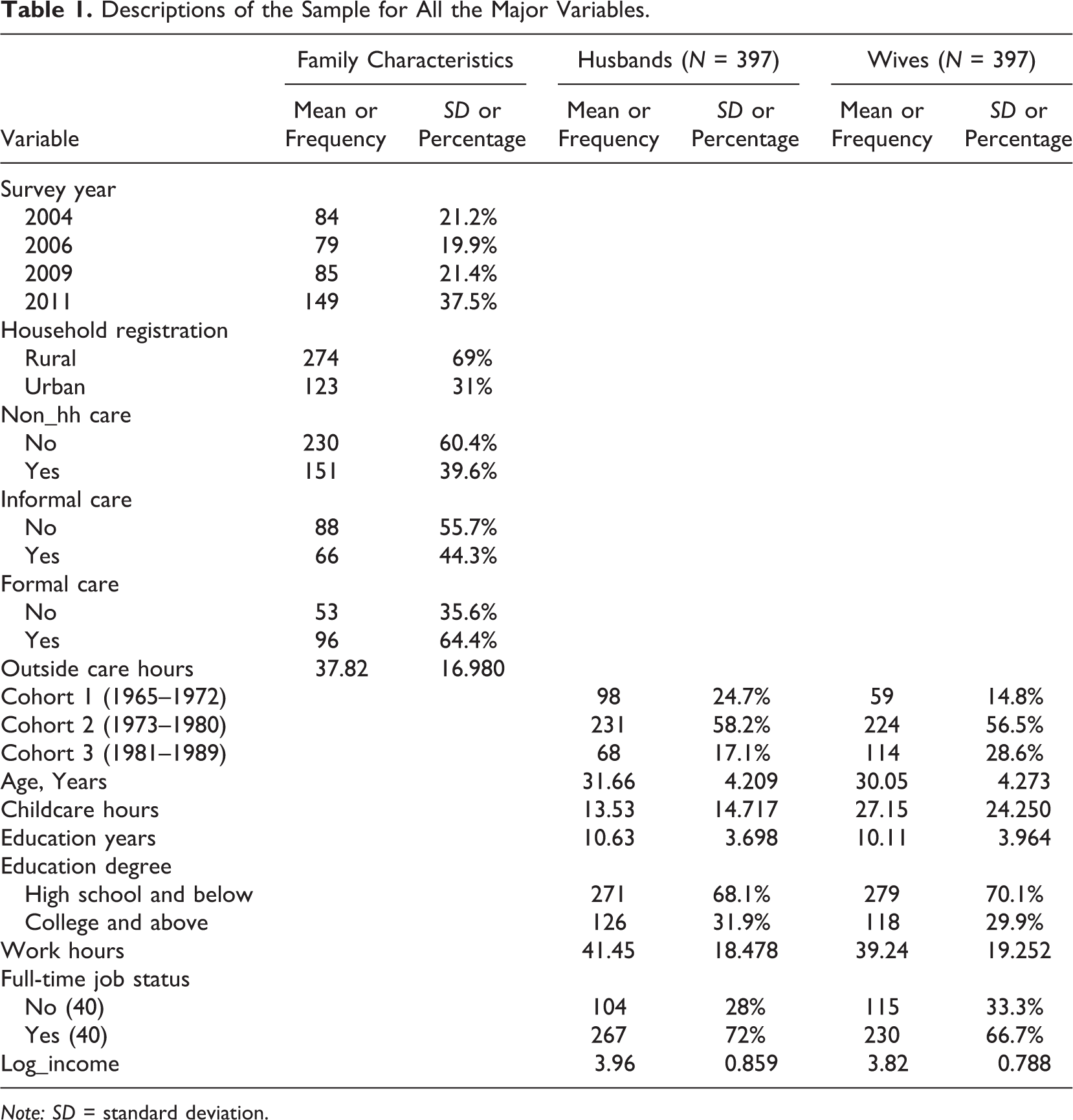
Note: SD = standard deviation.
Measurements
Childcare time
The major outcome in this study is time spent in childcare, which was measured by a single question from the China Health and Nutrition Survey: How much time did you spend taking care of the children by feeding, bathing, dressing, holding, or watching them during the past week? (hours)
Period effects and cohort effects
In order to examine both period effects and cohort effects on parental time with children, I include both survey year and cohort categories in the model. Survey year represents whether the year the respondent answered the survey will have an effect on their time spent with children. Cohort represents a structural category that reflects the impact of the intersection of historical time and individual lives when respondents reach early adulthood (age eighteen to twenty-five). The age of respondents in the sample ranges from seventeen to forty. The life histories of sample members can be organized into three eight-year birth cohorts. The earliest cohort in the study (cohort 1, born during 1965–1972) is among the “cultural revolution babies.” This is the cohort that experienced the first stage of economic reforms when they reached their early adulthood during 1983–1990. Cohort 2 (1973–1980) are the “the children of rusticated youth,” whose parents were sent to live in rural areas and participate in agricultural production labor. 57 Members from cohort 2 are more likely to have experienced less parental investment at early ages due to the encouragement of work by the Chinese government. When the members of this cohort reached their early adulthood during 1991–1998, it was the time when China had achieved hypereconomic growth. 58 The most recent cohort members (cohort 3, born during 1981–1989) are among the economic reform and one-child policy babies who reached their early adulthood during 1999–2006. This is the cohort that has historical significance as the “children of the one-child policy” in that they are those children who were born under one-child policy and who have become parents.
Nonhousehold care
The question “was child cared for by nonhousehold provider last week?” was asked in the survey to explore whether there is any outside care in addition to household care. Nonhousehold care was operationalized as those children cared for by nonhousehold provider last week (= 1) and those children not cared for by nonhousehold provider last week (= 0). It further asked the place where the care had taken place. Two variables were constructed based on the information: informal care and formal care. Informal care included care in paternal grandparents’ home, maternal grandparents’ home, other relative’s home, or neighbor’s home, with positive responses as “yes” (= 1) and negative responses as “no” (= 0). Formal care included care in a private care center, public care center, work unit care center, primary school’s preschool, nursery school, or other facility, with positive responses as yes (= 1) and negative responses as no (= 0). Overall, a total of 151 families had their children cared by nonhousehold the previous week. Among them, there were sixty-six respondents choosing informal care and ninety-six of them utilizing formal care. Hours of outside care was also asked in the survey. However, since two-thirds of respondents (66.8 percent) did not list the time of outside care, I will only report the descriptive statistic but will not include it in the analysis.
Education
Education years was used as a continuous variable to capture whether each year increase in education impacted parents’ childcare time. It ranged from zero (no education) to eighteen (six years college or more). Degree was operationalized as those who had a college degree or more (=1) and those who had a high school degree or less (= 0).
Income
Individual income was conceptualized as the sum of all sources of income and revenue minus expenditures for one household member. The value at each wave was then inflated to 2009 Yuan currency values. The logarithm of income was used as an explanatory variable for both substantive and technical reasons. Substantively, the meaning of a change in income was more multiplicative than additive. In the context of income, a US$5,000 raise does not have the same significance for a person making US$200,000 a year as for an individual earning US$20,000 a year, but a doubling of their respective incomes might have a similar impact on both. A positive linear relationship to the logarithm of income implied that equivalent proportional increases in income were translated into equivalent increases in the dependent variable. In other words, each change of 1 unit on the log scale (unstandardized) had the same effect on the childcare time rather than each change of 1 unit on the dollar scale. In addition, the use of the logarithm of income eliminated the positive skewness (3.692) of the income distribution (skewness of log income is −2.547).
Work hour and full-time job status
Work hour was constructed by a single question in the survey: “number of hours worked last week?” It was a continuous variable. Full-time job status was recoded as those individuals who worked forty hours or more last week (=1) and those who worked less than forty hours last week (= 0).
Multivariate Analysis
In this section, I first present the estimation strategy followed and then I interpret the results of the estimation of the hours of childcare by each of the parents. The dependent variable is regressed against the aforementioned explanatory variables, as expressed in the following specification:


where cch is the number of hours that each parent (W and H) dedicates to childcare; Surveyyear is the year when the survey was conducted, reflecting period effects; Cohort is constructed by the birth year of each parent, reflecting cohort effects; and z includes individual characteristics for each spouse and other family characteristics. The parameters β and δ are the coefficients accompanying the variables; µ is the constant term, representing the average for the population; and the e are the error terms.
Estimation Strategy
There are a number of considerations that have shaped the estimation strategy. The first is that childcare (as dependent variable here) is considered to be a task with characteristics different from housework and, hence, it is studied independently from other uses of time. 59 Therefore, time for cleaning, food preparing, or other activities is omitted in the analysis. Secondly, since I am interested in finding the trend of change in childcare time over the past eight years, continuous measurement instead of ordinal measurement of childcare is used, which is different from the study by Short et al. 60 Third, although several items are computed to capture different effects of parents’ education, income, and employment status, after some exploratory exercises, explanatory variables included in the models are indicators for wife’s education years, wife’s log_income, wife’s full-time job status, husband’s education years, husband’s college degree, husband’s log_income, and formal care. I have included some of the constructed items in separate models to avoid induced endogeneity.
Results and Discussion
Table 1 illustrates the distribution of the sample for each of the expected correlates of childcare time, including families characteristics, both husbands’ and wives’ characteristics.
Table 1 shows that 68.8 percent of respondents are from rural areas, and over half of them were born between 1973 and 1980. As expected, wives generally spend more hours with children than their husbands (27.2 vs. 13.5). Approximately 40 percent have had their child cared for outside the home in the last week, and the average weekly outside time was 37.8 hours. It can be seen from the table that people may have to choose both informal care and formal care in order to balance their time between work and family. As for measures related to education, about 30–32 percent of respondents were college-educated, and the average years of education is 10.6 and 10.1 for husbands and wives, respectively. Compared to husbands (¥9120), wives have less income (¥6607). For the indicators of employment status, husbands work slightly more than their wives (41.5 hours for husbands vs. 39.2 hours for wives), and 72 percent of husbands and 66.7 percent wives were working more than forty hours per week in the sample.
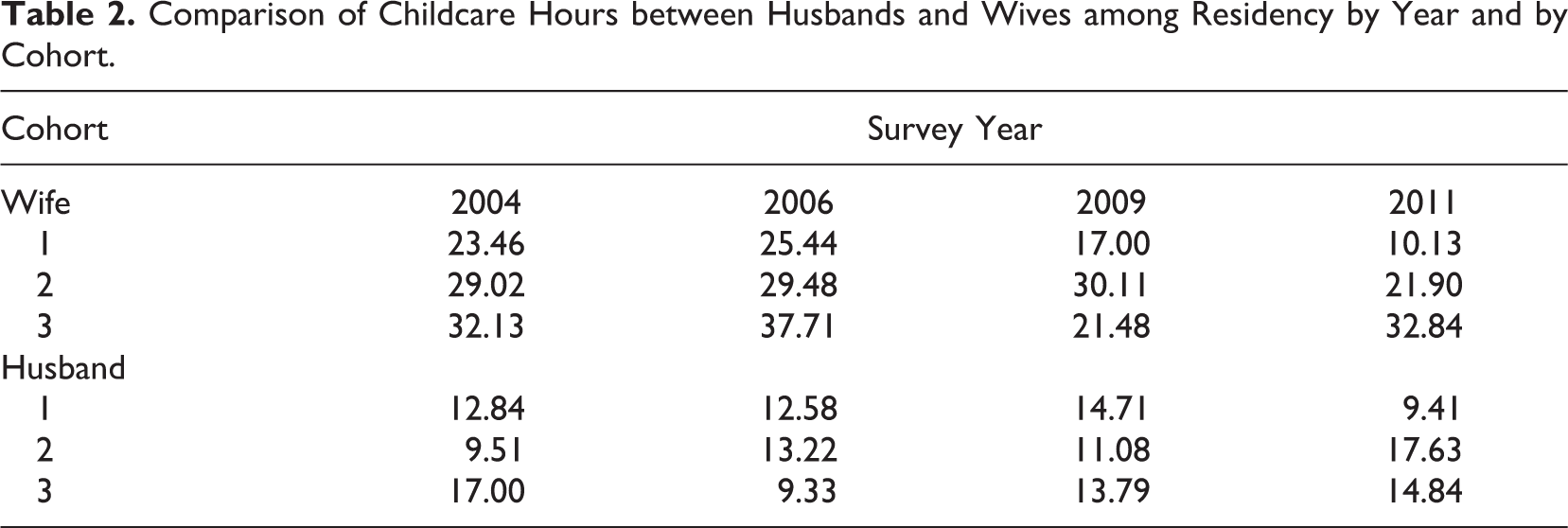
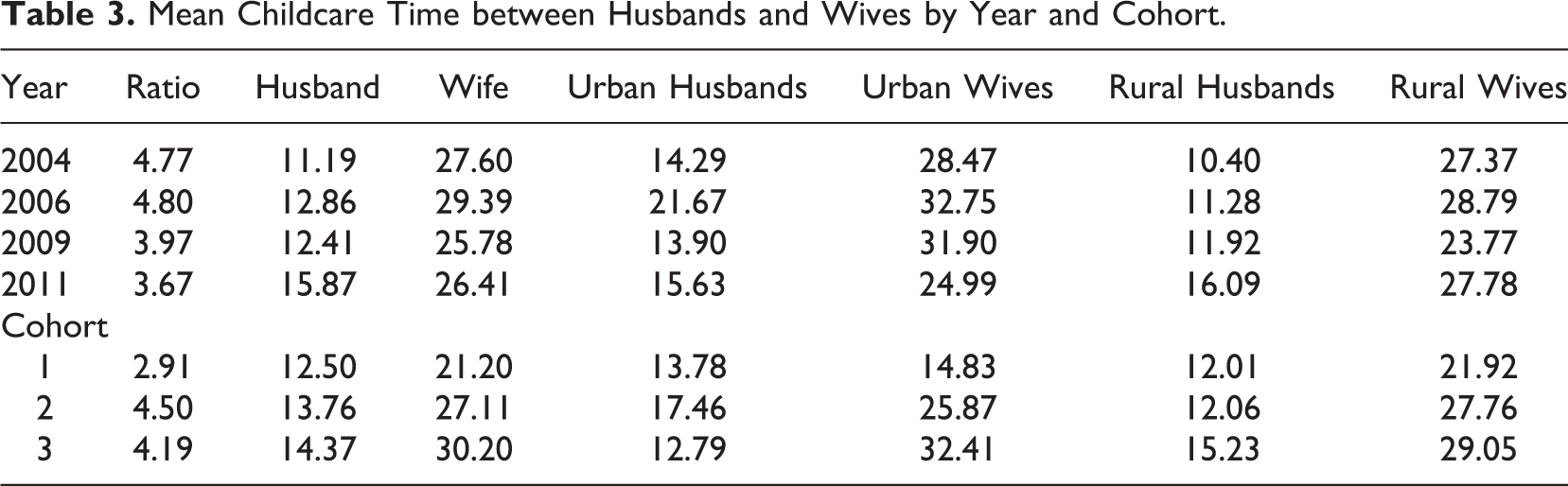
According to Table 2 and Figure 1, the average time spent taking care of children for all mothers ranged from 27.6 hours per week in 2004 to 26.4 per week in 2011; childcare time for fathers has increased over time, from 11.2 hours to 15.9 hours during the same period. It should be noted that for both mothers and fathers, in the year of 2009, there was a temporary change or a downturn in childcare trend as expected, likely due to the period effect of the macroeconomic recession that impacted family’s economic conditions and by extension, parents’ evaluation of the costs and benefits of employment. In that circumstance, it is likely that mothers and fathers both have to trade-off their time spent with children to contribute more income to the family. The higher unemployment rate in the recession year compared to other years resulted in less time available for childcare. Urban parents have generally spent more time with their children than rural parents. However, in 2011, both mothers and fathers in rural places were found to be devoting more time to childcare than mothers and fathers in urban places. This may be due to the more widespread availability and use of formal care in urban places, which I will discuss in a later section. Although there is a slight decrease in the ratio of mother’s childcare time to father’s childcare time, the analysis of variance test shows that there is no significant change regarding the gender gap in childcare time over the past years, F (3, 393) = 0.822, p = .482. Although mothers continue to spend more time with children than fathers, there is a borderline statistically significant difference in fathers’ childcare time (increasing) across the study period, F(3, 393) = 2.191, p = .089, but no significant change in mothers’ childcare time, F(3, 393) = 0.369, p = .775.
Comparison of Childcare Hours between Husbands and Wives among Residency by Year and by Cohort.
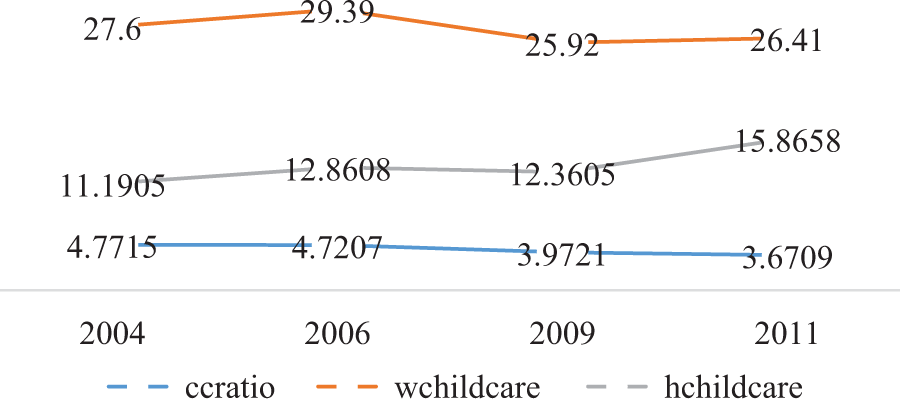
Comparison of childcare hours over years between husband and wife.
Table 3 shows that there is variation in the average time spent taking care of children for men and women across different cohorts. Among people in the earliest cohort, both men’s and women’s childcare time decreased over the study period from 12.8 to 9.4 and from 23.5 to 10.1, respectively. In the second cohort, while women’s childcare time is lower in 2011 (17.6) compared to that in other survey years, men’s childcare time is higher in 2011 (21.9) compared to that in other survey years. Time spent with children for men in more recent cohorts increased between 2006 and 2011, whereas women’s time was relatively stable, with the exception of 2009 (a downturn).
Mean Childcare Time between Husbands and Wives by Year and Cohort.
After checking the normality of the data and finding that the distributions are not normal, nonparametric tests were used to analyze the intercorrelation among predictors and dependent variables (see Table 4). There is a significant correlation between husband’s childcare and wife’s childcare (Spearman’s ρ = .251**), indicating that husbands spend more time with children if their spouse spends more time with the children. In other words, couples do not trade-off in their childcare time. According to data shown in the table, there is a significant correlation between wife’s childcare time and wife’s cohort. This suggests that while there is an increased pattern of father’s childcare time over time due to the period effect, there may be a change in mother’s childcare time due to the cohort effect.
Nonparametric Tests for Intercorrelations among Predictors.a
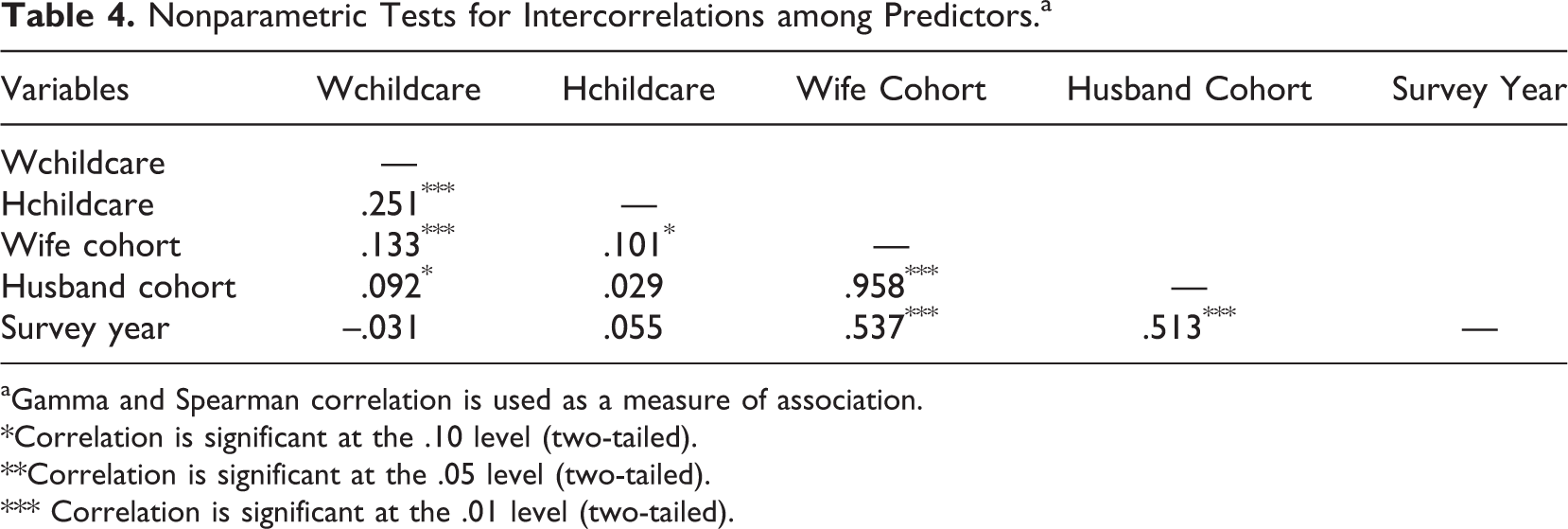
aGamma and Spearman correlation is used as a measure of association.
*Correlation is significant at the .10 level (two-tailed).
**Correlation is significant at the .05 level (two-tailed).
*** Correlation is significant at the .01 level (two-tailed).
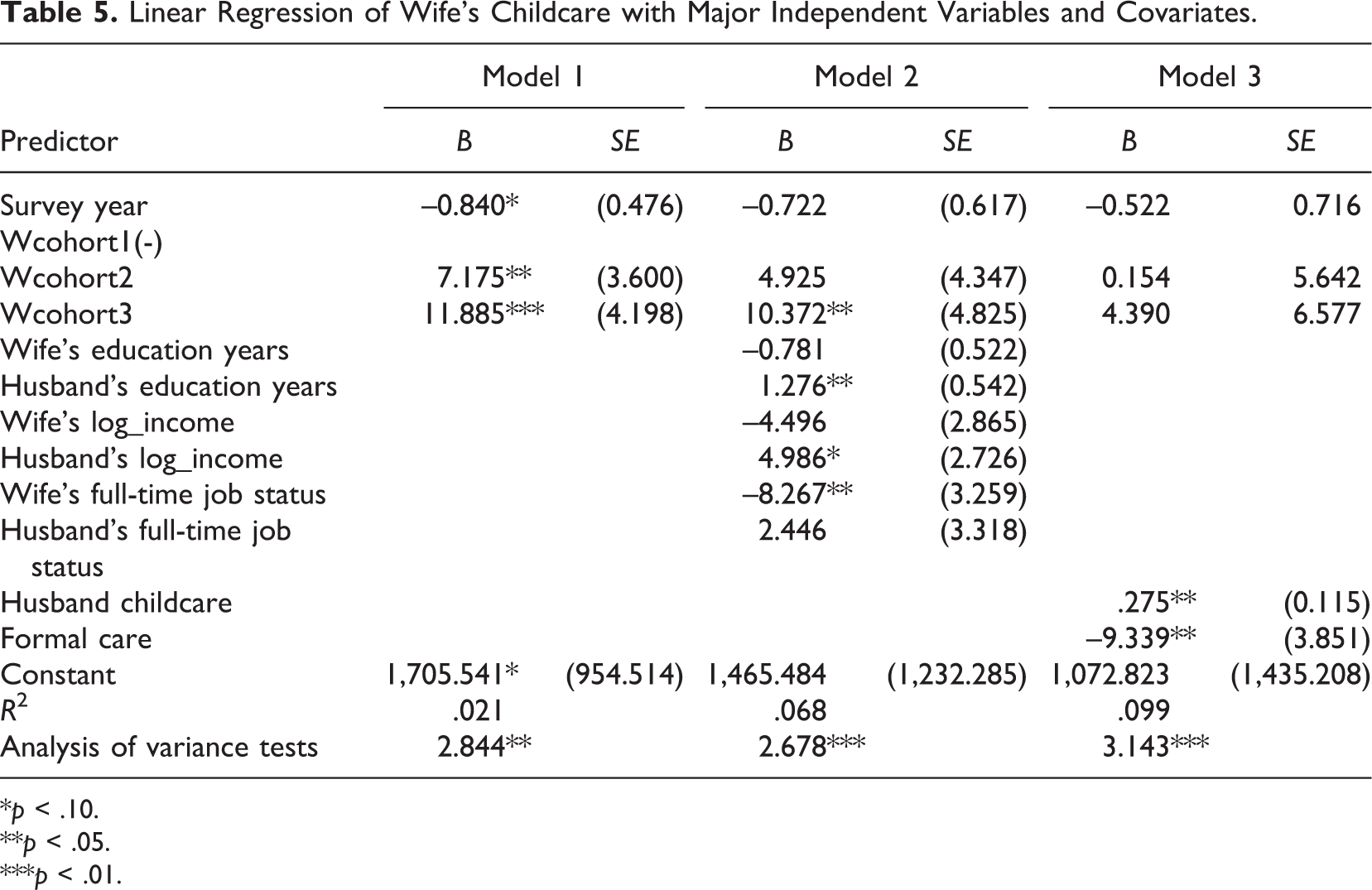
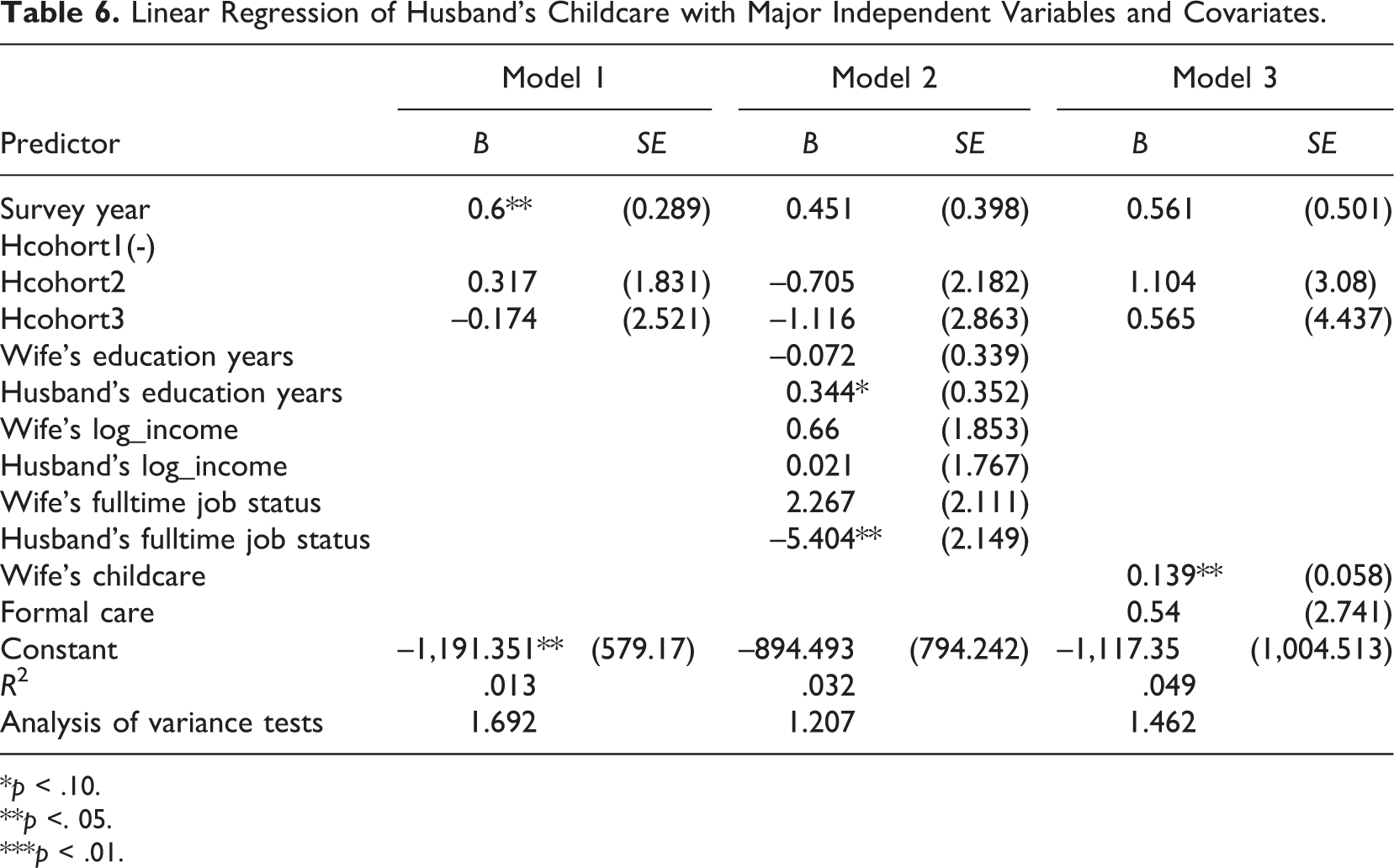
Given well-documented gender differences in the amount of time mothers and fathers spend in childcare, I provide estimates separately by gender. The multivariate linear regression model is used for analyzing the couple-level data to illustrate how period effects and cohort effects are different for husband’s and wife’s childcare time and how husband’s and wife’s characteristics affect their childcare time differently with the relevant variables controlled for (see Tables 5 and 6).
Linear Regression of Wife’s Childcare with Major Independent Variables and Covariates.
*p < .10.
**p < .05.
***p < .01.
Linear Regression of Husband’s Childcare with Major Independent Variables and Covariates.
*p < .10.
**p <. 05.
***p < .01.
The t tests indicated that the estimated differences in period and cohort effects on time spent with children are statistically significant between two models of men and women (t period = −2.57, p = .01; t cohort2 = 1.698, p = .09; t cohort3 = 2.46, p = .01). More specifically, according to Table 5, model 1 again demonstrated that wife’s cohort is positively associated with overall time with children. Compared to the earliest cohorts, the middle cohort (cohort 2) spent 7.175 more hours with their children, while the most recent cohort (cohort 3) spent 11.885 more hours with their children. This supports my earlier argument that the changes in mother’s time invested to children can at least in part be attributed to a cohort effect. In addition, when the cohort effect is controlled in the model, there is a borderline statistically significant negative period effect on mother’s childcare time, indicating that during the year of 2004 to 2011, mother’s childcare time slightly deceased. This may be due to the increases in women’s education, employment, and income, which have strengthened their bargaining power in the family, so women’s time spent with children has decreased compared to men’s. Alternatively, it also could be attributed to the support from formal or informal childcare services provided by the state or families members during this time, which reduced some of the burden women have carried.
Then I add both mother’s and father’s characteristics in model 2 with cohort. When all of the husband’s characteristics have been controlled for, there are still significant cohort effects on wife’s childcare time. Although wife’s education years, wife’s log_income, and wife’s full-time job status all show negative relationships with childcare hours, the associations are not statistically significant, except wife’s full-time job status. Although spouses’ education, income, and employment status are related, the variance inflation factor indicated there are no multicollinearity problems among the predictors. Women who work more than forty hours per week spent 8.3 fewer hours with their kids than women who worked less than forty hours. When all of the wife’s characteristics have been controlled for, husband’s characteristics show positive relationships with wife’s childcare hours. Both husband’s education years and log_income have a significant impact on wife’s childcare time. This indicates that each additional year of husband’s education will increase his wife’s childcare time 1.3 hours; and the greater the husband’s log_income, the more time his wife spent with their children (B = 4.986).
Finally, since informal care does not have a significant impact on either mother’s childcare time or father’s childcare time, I only added husband’s care and formal care in the last model for further discussion. Model 3 shows that with husband’s care and formal care controlled for, cohort effects on wife’s childcare time became insignificant. As husband’s care increased 1 hour, wife’s childcare time also increased 0.3 hour. Compared to wives who do not have their children sent to formal care, wives who use formal care significantly reduced their own childcare time. Table 7 further suggests that, on average, mothers spend less time caring for their children if they use formal childcare than if they do not. Especially in cohort 3, the average childcare time for half of those mothers who do not use formal care is 39.1 hours, whereas the average childcare time for the other half of those who do use formal care is 16.7 hours. Therefore, the cohort effect on wife’s childcare time is largely attributable to differences in the use of formal childcare patterns. In other words, the increase in wife’s childcare time is mainly due to the increased time among those mothers in more recent cohort who do not use formal childcare. Most of those mothers do not work full time.
Mean Childcare Hours for Use of Formal Childcare by Gender.
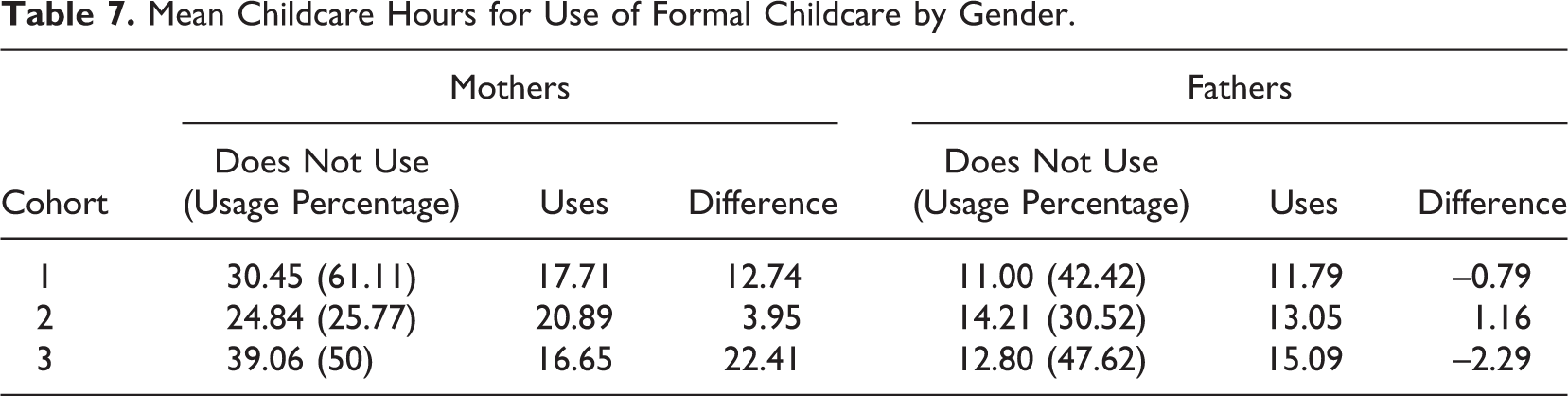
Previous research in China suggested that women’s status may be deteriorating due to the perceptions of discrimination are on the rise among cohorts of women in the labor market. 61 In China, managers, faced with numerous applicants for each position and with a growing awareness of the need to minimize costs, choose male applicants over equally qualified women, citing costs of maternity and childcare benefits as the reason. 62 Gender discrimination along with the lack of sufficient socialized domestic services has preserved the value of “traditional” gender role ideology and encourage women to be more devoted to domestic work. It is also possible that women are being pushed out of the labor force because of work–family conflict or pulled out due to the preciousness of a single child. In addition, it implies the view that substitute childcare promotes gender equality that mothers’ time spent on childcare is closer to that of fathers when formal childcare is used.
In contrast to the cohort effect on wife’s childcare time, husband’s overall time with children is positively affected by period effects, suggesting that there is an increased pattern of husband’s childcare time on average from 2004 to 2011. But there is no cohort effect found for husband’s childcare time. I further investigated whether mother’s and father’s characteristics impacted husband’s childcare time in model 2, net of the period and cohort effect. As I expected, husband’s full-time job status is negatively associated with his childcare time in that fathers who work full time spent 5.4 hours less on childcare than those fathers who do not hold a full-time job, when all the other variables are controlled for. The higher the husband’s education, the more time the husband spent with their children (B = 0.344). However, husband’s log_income does not have a significant impact on the childcare hours, and wife’s characteristics do not seem to influence their spouse’s childcare time either. This could be because I used absolute measures instead of relative measures in the analysis, which leaves the question regarding how spouse’s relative resources in the family influence their childcare time for further investigation. Model 3 indicates that as wife’s care increased 1 hour, husband’s childcare time increased 0.1 hours. The results show that formal care positively affected husband’s childcare time, although it is not statistically significant in current sample, we still can see the pattern. Further research with large sample data is needed to examine the relationship between formal care and husband’s care time.
Conclusion
In conclusion, there are three major findings in my research. First, while the increased pattern of father’s childcare time is due to period effects, the increases in mother’s childcare time are attributed to cohort effects. During the economic recession year (2009), there was a downturn in childcare for both mothers and fathers’. Couples with younger children in the family may have had to trade-off the time spent with children with the time spent working in order to maintain their standard of living. Furthermore, there is an increased pattern of father’s childcare time and a stable pattern of mother’s childcare time that I observed over the study period. This might be because of the increase in women’s education, employment, and income, which have strengthened their bargaining power in the family. In contrast, the increases in married women’s overall time with children are due to the cohort effects, with more recent cohorts spending significantly more time than earlier cohorts. This is consistent with previous research showing that the declining influence of progressive gender ideology and the growing likelihood of being pushed out of formal employment opportunities have increased pressures on women to drop out of the labor market and return home to care for their children. 63 Formal care mediated the cohort effects on wife’s childcare time such that the increase in wife’s childcare time is mainly due to the increased time among those mothers in more recent cohort who do not use formal childcare.
Second, there is a positive relationship between father’s childcare time and mother’s childcare time in that as fathers spend more time with children, their spouse spends more time with children as well. Couples do not trade-off in their childcare time. Although this is consistent with some of the Western studies, 64 further research is needed to examine whether the relationship exists across families in different socioeconomic groups. In addition, the results imply the view that substitute childcare promotes gender equality in that mothers’ time spent on childcare time is closer to that of fathers when formal childcare is used.
Last, my research found that employment status has a significant negative effect on parental time with children, with those parents who work full time spending less time with their children than parents who do not work full time. In regard to education and income, differences in childcare time have been found by gender. Highly educated fathers devote more time to childcare than less educated fathers, but no such association has been found for mothers. Moreover, one’s “own” income is not significantly related to greater time in childcare for either mothers or fathers. Nonetheless, whereas higher education and income of fathers are associated with more hours spent on childcare by mothers, the opposite is not true so that an increase of mothers’ income does not lead to more hours spent on childcare by fathers. One possible explanation is that in Chinese families, wives trade-off their greater contribution in childcare for less obligation in breadwinning. As Zhou and Moen 65 suggested, gender ideology creates gendered resources in the exchange of paid work for unpaid work between the spouses. The husband, who has more gendered advantage from status and financial contributions, claims lighter housework responsibility; the wife, who has more power from domestic work, is released from an equal sharing of the breadwinner responsibility. 66
Apart from these major findings, another important contribution of this analysis is that I use the couple-level data to conduct a comparison analysis between the wife and husband’s allocation of time within family, although the sample size may become a limitation for the current analyses. Another limitation is that childcare is something negotiated in families, but our understandings of it are based mainly on one-sided reports. Further studies will consider using absolute items instead of the relative terms for individuals’ education and income measures in the analysis to investigate how spouse’s relative resources influence the division of childcare in Chinese family.
Footnotes
Acknowledgments
I am grateful to Dr. Kristen Lee, Dr. Robert Wagmiller, and Dr. Debra Street for their comments on early versions of this manuscript.
Declaration of Conflicting Interests
The authors declared no potential conflicts of interest with respect to the research, authorship, and/or publication of this article.
Funding
The authors disclosed receipt of the following financial support for the research, authorship, and/or publication of this article: This research was supported by Beijing National Science Foundation (9174046).