



Abstract
The case study investigates how the responsibilities of an early modern “anxious patriarch” modified in a stepfamily context. It focuses on the central concern of aristocratic patriarchs to secure the continuity of the lineage and transmit properties and governance by positioning a heir. By reading the testaments, correspondence and the exceptional series of instructions to his eldest son, the study depicts the strategies, which the aristocrat Miklós Esterházy adopted, and argues that these strategies served to solicit the compliance of and solidarity among kin, half-kin, and step-kin as well as his own image as a good father.
Introduction
“I am happy to hear that your Grace was pleased to receive my portrait; but you possess not only my image, but me as well, whom I wholeheartedly wish your Grace would see not only in image, but very soon personally too.” 1 This passage from a letter sent by Miklós Esterházy to his fiancée, Krisztina Nyáry, reveals that Esterházy sent a small portrait of himself as a substitute for his presence until the two would eventually be able to meet in person. The young fiancée must have been surprised by the unexpected gesture, since it was rather customary to send portraits of brides rather than grooms as a gift. Esterházy’s gesture offers an example of how he cleverly used the production and exchange of portraits to reinforce emotional bonds among family members, which was an essential capacity in a social milieu, where mortality was high and deceased spouses almost routinely needed to be replaced. His first-born son, István Esterházy learned the lesson from his father: as an adult he also cleverly used self-portraiture as a means of presenting his personal identity and familial roles. In 1641, he commissioned a portrait of himself, immediately after the death of his mother in February, the birth of his first and only daughter in March, and his nomination to the position of supreme captaincy of an important frontier fortress (See Figure 1). 2
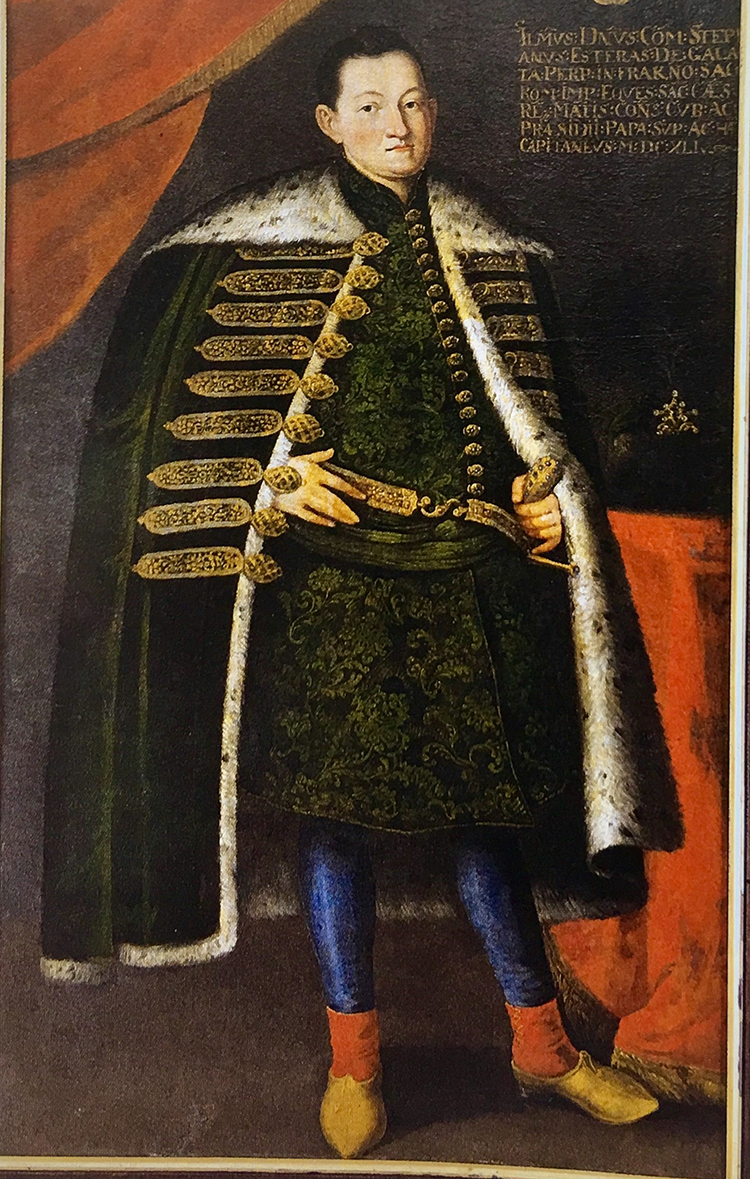
Portrait of István Esterházy, 1641. Forchtenstein, Esterházy Privatstiftung.
I suggest that István Esterházy’s self-presentation as husband, father, soldier, and politician (he was also described as a counselor to the king in the inscriptions) was a gesture intended to enhance his patriarchal masculinity and social prestige and thus reinforce his imagined role as a dynasty patriarch. 3 He had good reasons to do so. In early modern Europe, the fear of children of first marriages was widespread that in the family of their remarried parents they would be displaced by their halfsiblings and would suffer emotional and material damages. The great variety of legal tools designed to secure the inheritance of children from first marriages offers ample testimony to this widespread anxiety, 4 which in István’s case was not unbased at all. István’s father, Miklós Esterházy had not only designated instead of István his younger son from his second marriage as the dynasty head, but in the name of dynastic goals he also disinherited István by distributing his inheritance from his mother among his younger half-siblings and his stepmother.
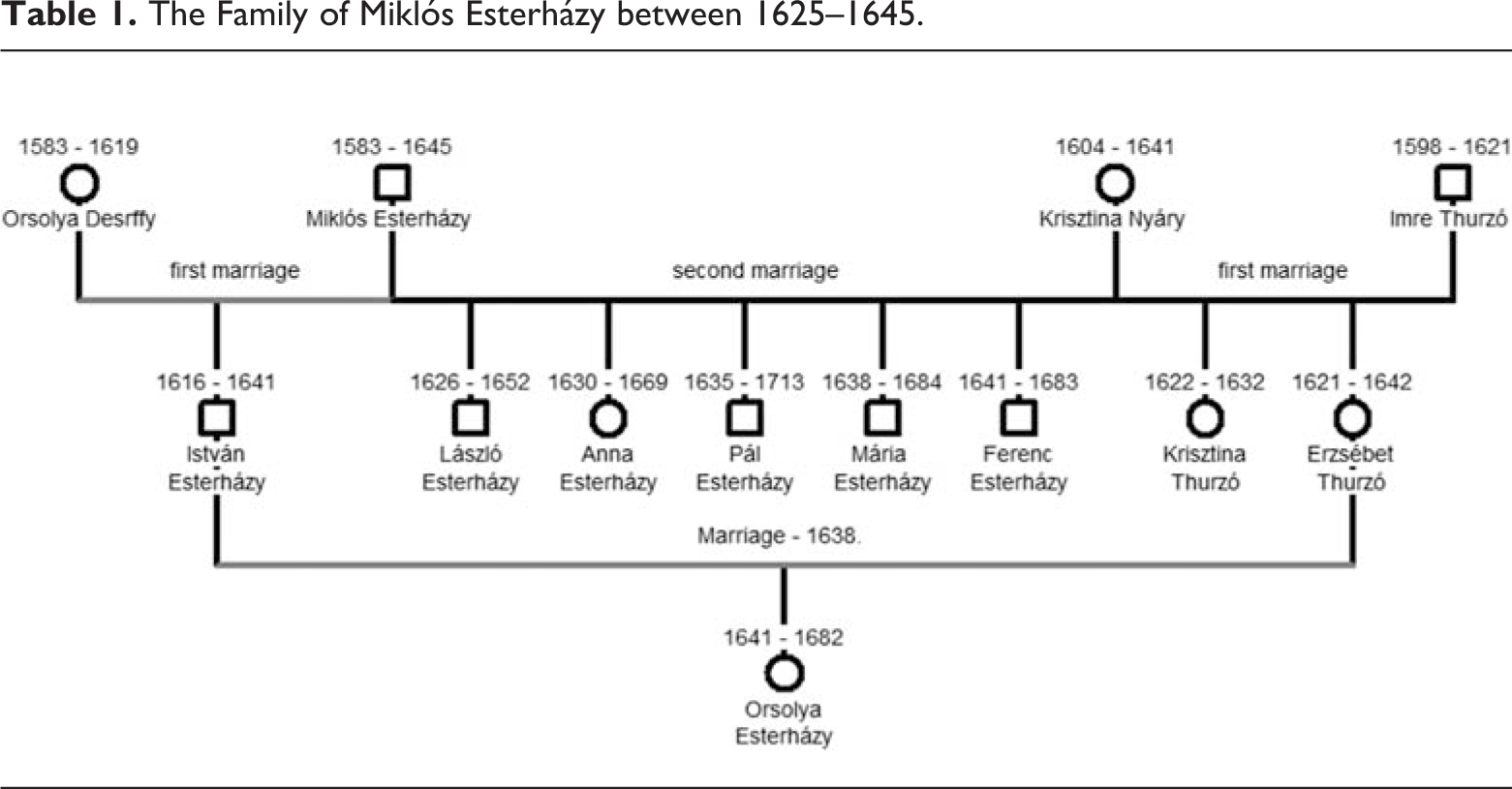
In this paper, I aim to show how the father’s role and the responsibilities of a dynasty patriarch shifted in a stepfamily context (for the family structure see Table 1 below). I will closely read Miklós Esterházy’s correspondence, instructions to his eldest son and his series of last wills in order to see his familial expectations, fears and hopes. 5 My case study of the Esterházy family, which was a landowning family in the territory of Hungary ruled by Habsburg monarchs from the early sixteenth century, can be considered an East Central European control case of early modern patriarchal manhood developed in the context of early modern England. From the perspective of male identity, the sixteenth and seventeenth centuries have been termed the age of “anxious patriarchs,” which was followed by the cult of motherhood from the eighteenth century onward, when anxieties developed and clustered rather around the performance of maternal obligations. 6 As Alexandra Shepard has observed, the dominant model of early modern masculinity was tied to the householding status, which was in turn linked to marriage and middle age, as well as the social status of middling groups and elites. 7 Thus, the example of Miklós Esterházy illustrates a lived experience of this dominant and normative model, since Esterházy was the archetypal figure of an elite man in positions of governance. In his case, his anxieties seem not to have followed from his difficulties in conforming to the normative model of governing male identity, as has been observed in some other cases, 8 nor from the many responsibilities which fell on his shoulders. Rather, his familial letters, instructions, and testaments suggest that his primary concern centered around soliciting the compliance of and solidarity among the governed individuals in the dynasty which he headed.
The Family of Miklós Esterházy between 1625–1645.
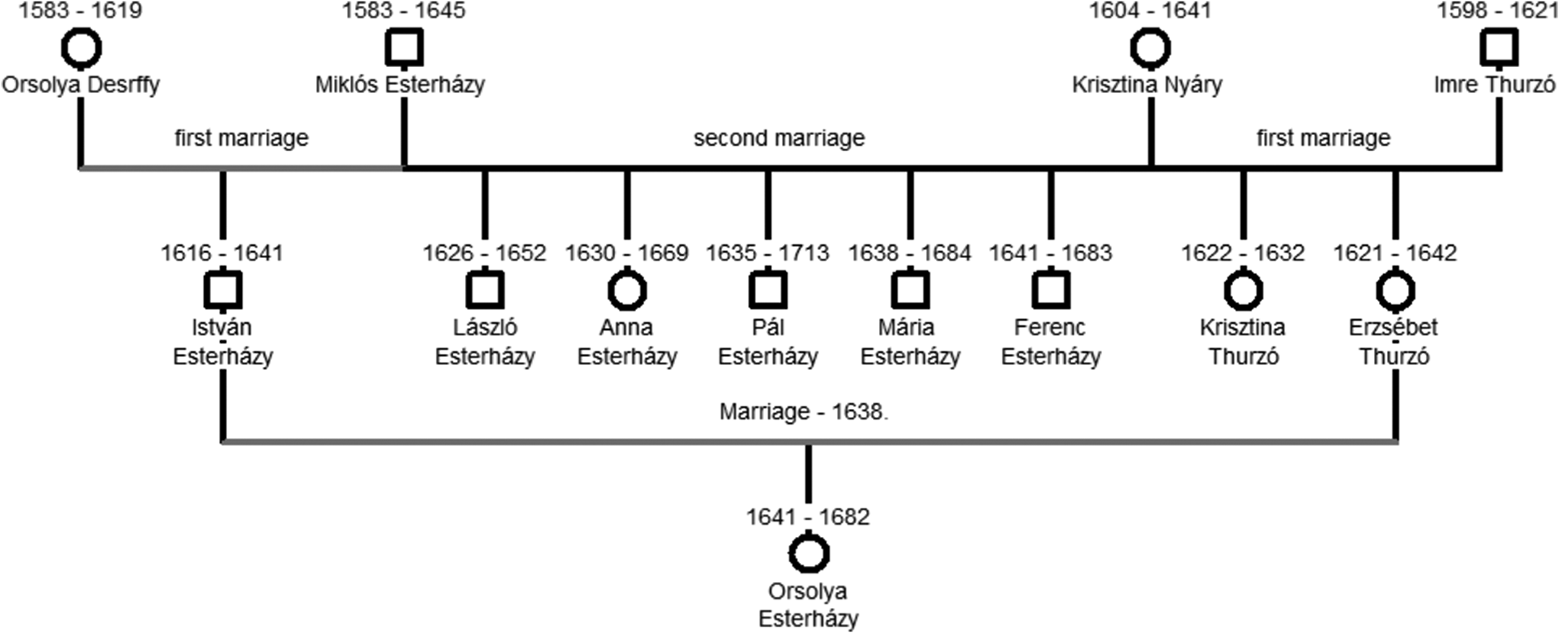
I use the concept of dynasty as an equivalent of the term familia, which was used at the time to denote lineages deriving from the same ancestor. Thus, I extend the meanings of the term from its narrower usage (a term for ruling families) to economically and politically powerful aristocratic family networks. I examine the anxious process of transferring the right and the status to govern an aristocratic dynasty from one generation to the next. Miklós Esterházy’s arresting personality and striking talents secured him not only the hands of very rich widows in two subsequent marriages, but also the favor of the Habsburg king. He rose rapidly from the middle nobility to the top. 9 When he became Palatine in 1625 (the most influential political position in Habsburg Hungary) and received the title of Count from the king, he commemorated his social advancement and the foundation of a new aristocratic dynasty by commissioning portraits, the first works in what was to become a large gallery of portraits of ancestors. In addition to the double-portrait of himself and his new wife (see Figure 2.), he also ordered a full-body painting of his deceased first wife, Orsolya Dersffy, and her mother, Orsolya Császár (see Figure 3.), who left her daughter a fabulous fortune. 10 Obviously, the family patriarch also very consciously manipulated the visualization of deceased family members for the purpose of forging the lineage through remembering.
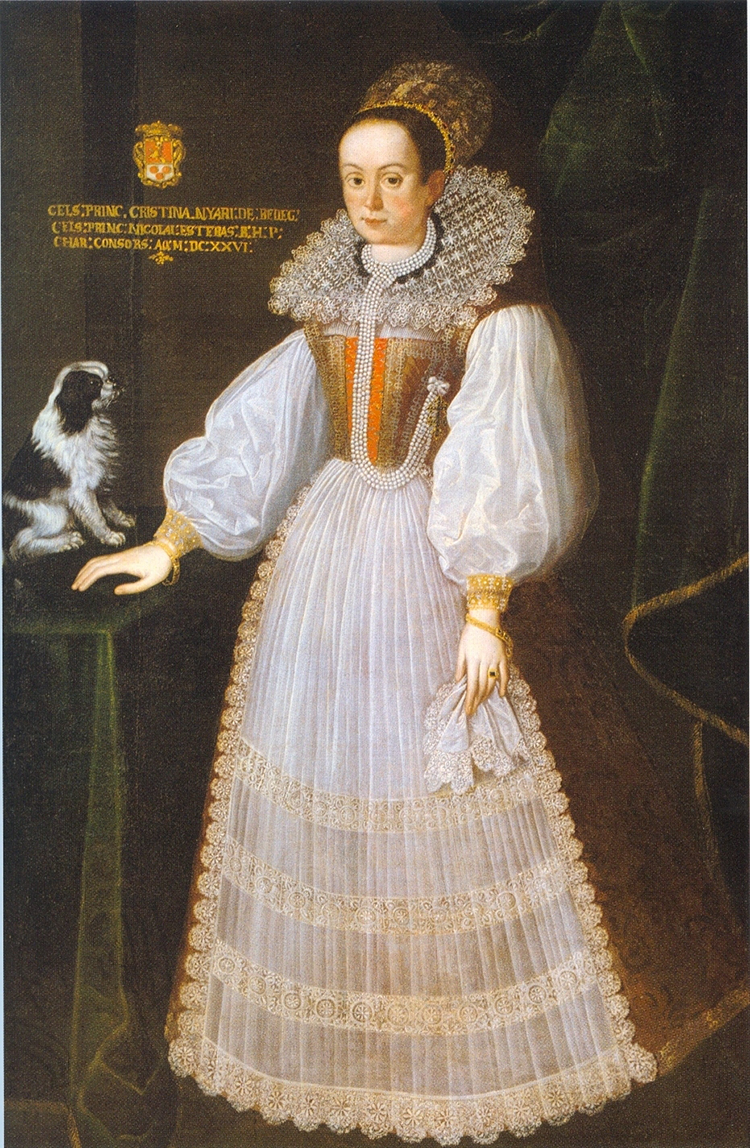
Portrait of Krisztina Nyáry. Forchtenstein, Esterházy Privatstiftung.
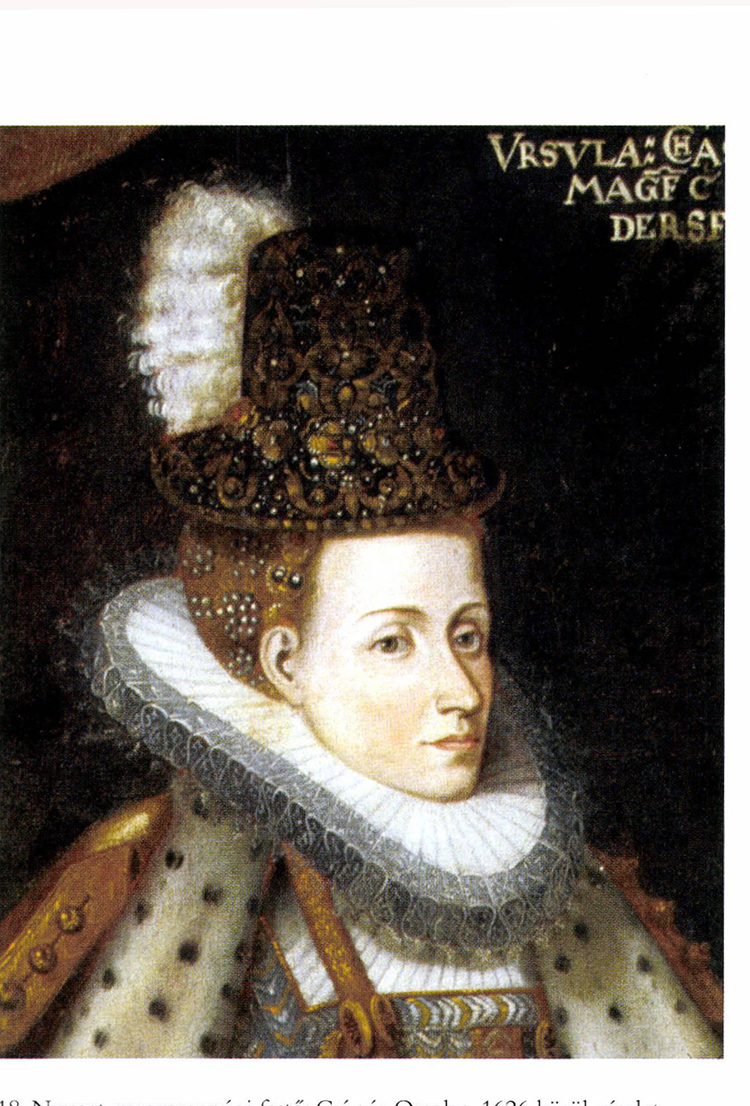
Portrait of Orsolya Császár, 1626, detail. Forchtenstein, Esterházy Privatstiftung.
But the young second wife not only encountered her “predecessor” day by day as she moved about in her new Forchtenstein residence, but Orsolya’s three-year-old son, István, also gazed on her from the walls (see Figure 4). 11 This may well have been less painful for her than coming across her stepson in person. She avoided the company of the eight-year-old boy, 12 whose presence must have reminded her of the absence of her two little daughters from her first marriage, Krisztina and Erzsébet. The young widow had been pushed to leave them under the wardship of their paternal grandmother, but she hoped and strove to get them back through the political influence of her second husband. 13 She perhaps found some relief from her loneliness after the birth of their first common child, László, who was born on the last day of 1626. 14
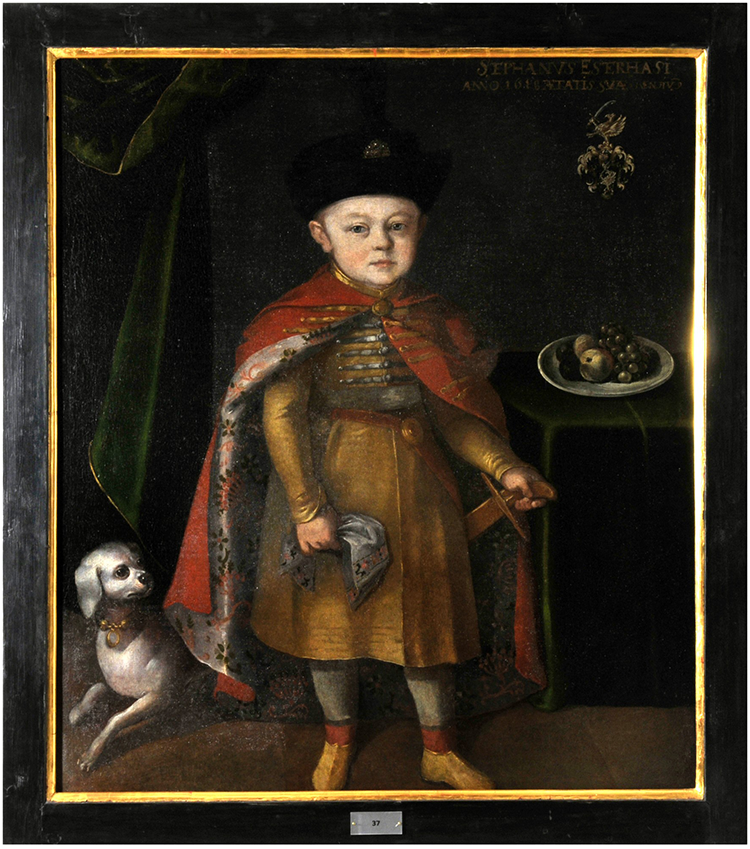
Portrait of the three-year-old István, 1618. Forchtenstein, Esterházy Privatstiftung.
Perhaps the most contested and unstable stage of family life-cycles was the process of intergenerational transmission of authority and property, and this is where Miklós’s fears and hopes were indeed most intense. This issue would be contested in stepfamilies with added intensity, given the conflicting interests of parents, stepparents, halfsiblings, and stepsiblings, who often belonged to different age groups. From the perspective of male stepfamily governors, it became an ever-present and extremely challenging task to ensure that property and resources went to the right heirs. Indeed, one would expect this contestation between halfsiblings and stepsiblings to be all the more intense in Hungary, since the prevailing pattern of noble inheritance was not primogeniture, but division of the family patrimony equally among sons, which was a conflict-laden and contested process. Moreover, since wealth was transmitted to sons and daughters from biological parents, 15 the scale of inheritance could be very different between halfsiblings, which generated considerable differences in status, which, in turn, could become a source of tension between them. Fathers nevertheless strove to secure the lineage, which was one of their chief responsibilities, by designating “the first among equals” from among their descendants, preferably their sons, who would govern the dynasty, which comprised making decisions concerning property and marital and career choices of family members. As no written rules existed to channel the process, the outcome was shaped, as I will demonstrate, by the negotiations of power and emotions among family members.
As opposed to other parts of Europe with primogeniture laws, 16 confident patriarchs in Hungary could thus empower themselves to chose their most appropriate male heir—we will follow this process below from Miklós Esterházy’s viewpoint.
The fact that Miklós headed and governed a stepfamily which cherished the memory of the first wife (who was also the mother of his firstborn son) and contained both halfsiblings and stepsiblings does not make his case exceptional, since such complex families were part of everyday life in preindustrial Europe. While the frequency of modern stepfamilies is the consequence of an increasing divorce rate, it was the common nature of untimely death that broke early modern European families, followed by the need to restore the conjugal unit by remarriage. 17 However, the stepfamily structure in this case, which involved a remarried widower and widow each of whom brought children from their first marriage, makes their case less representative. While in the past widowers with children remarried more often than widows, and thus the stepmother was a more typical figure, in our own days stepfathers are less scarce as mothers have the custody of their children and they bring stepfathers to the household. 18 It is a common feature however of past and present stepfamilies that the most complex stepfamily type, when each of the two spouses brings children to the new union who then become stepsiblings, was rare in the past, much as it is rare today. 19
The fact that, when her first husband died, Krisztina Nyáry had to leave her very small daughters in the hands of their paternal kin and that she managed to get them and their guardianship over them back after she had remarried went against general trends. In Hungary as in many other regions of Europe, according to the customary law of the nobility, a widowed mother lost guardianship over her underage children and their properties when she remarried (when she “put down the name of her husband,” to use the early modern phrasing). 20 This was due to anxieties over the influence of stepfathers over the paternal inheritance of their stepchildren, which manifested itself in the popular early modern image of the “cruel mother” leaving her children behind for the sake of a new spouse. 21 In our case, however, first the extreme power of the paternal kin and the helplessness of the seventeen-year-old widowed mother and, later, the extreme political influence of the second husband turned the usual scenario on its head.
To sum up so far, it is the overwhelming power which makes the the case of the Esterházy-Nyáry alliance in the middle of the seventeenth century an exceptional one, not the fact that the husband and wife forged and lived in subsequent stepfamilies. As the dynasty founder, Miklós was an aspiring man, dedicated to the creation of family identity and memory. He and his descendants were quick to realize that the family archive and the creation and preservation of documents, both written (archive), visual (family portrait gallery), and material (treasury), played a pivotal role in the manufacture of social and power relations as well as collective memories, as historians have only recently begun to acknowledge. 22 The Esterházy family archive is exceptional not only for its richness, but for its system of organization, having a dual order: family affairs and documents (familial correspondence, marriage documents, guardianship documents, dowry materials, etc.) are systematically separated from property and political documents. 23 In the first part of the study, reading his series of last wills, I will show how Miklós was deeply preoccupied with family concord, and I will present four sets of family strategies which he applied to promote peace and integrity (ensuring the loyalty of horizontal kin, restricting the role of the stepmother, being a caring stepfather, and the marriage of step-siblings). In the second part, I will trace the reasons behind his excessive anxieties by reading the instructions he wrote for his eldest son, interpreting their function in the context of halfsibling rivalry over the transmission of governance and property and his need to legitimize his own patriarchal governing strategies and himself as a good father of his children from two different marriages.
Promoting Peace and Prosperity in Dynasty and Stepfamily
During the five years of his widowhood (1619–1624), István Esterházy’s father was deeply preoccupied with the education and moral formation of his son, as his two testamentary dispositions from the period show (1619, 1623). At one point, the text of his will, which was drafted in 1623, turns into an exhortation addressed to his imagined adult son, who was only seven years old at the time: István, my son, when you take over the estates, make sure that you do not become unworthy of possessing them, but remember firmly that you have been entrusted to custody them even though they have descended to you from your father and mother, and for which you will have to account. Reckon also with the goods with which you will be blessed by God and spend the first share of it in the service of your true prince and your poor country […], and from the second share support your relatives in need and your true friends. The rest of your possessions you can freely spend on needs of your life honest in both godly and worldly aspects as well as on your humble and loyal servants. But make sure that you do not spend it with pride or intemperance, with games and wicked company, since God will untimely take away everything from you or you from these, and you will not be able to enjoy God’s wealth on earth and will have to account for it strictly in your afterlife. But let our merciful God be your governor […]. Amen.
24
The rhetoric of fatherly advice to a son was a long-lived genre, which gained popularity in both printed and manuscript versions in seventeenth century Europe. Miklós himself composed a series of such counsels both to his eldest son and his tutors, following the narrative scheme of moral teachings followed by practical advice concerning personal conduct which was intended to prepare male offspring for governing roles both in the realm of family and state.
26
So the very fact that Miklós Esterházy invested a great deal in the upbringing of his eldest son, offering detailed advice to the boy when he was eleven, eighteen, and twenty-three years old, but did not use this tool for the education and guidance of his younger sons seems to support the argument that he destined him, even after the birth of his half-brothers, as his heir and dynasty patriarch.
27
“We wanted to present to you these things in general, […], which you should often reread and apply yourself accordingly, this being our fatherly wish and command to you,” he wrote to István when the boy was eighteen years old.
28
In other words, as palatine, Miklós expected his son to accept his fatherly control over István’s daily timetable, practices, soul, and mind: When you rise in the morning infallibly at six a clock or sometimes earlier, your first thing should be, after you have gotten dressed, the morning prayer, humbling yourself in private. Afterwards, attend the first of the two holy masses we have in court, and then come to see us and do first the task we give to you, and if we do not say anything, start reading for one or two hours the authors we usually commend or some religious reading, among them the Bible. Then retreat to your house or leave the house for your recreation, which should be honorable, avoiding gambling games by card and cube […]. I advise and even warn you that before going to bed you should make a balance of the day and find out who you were that day.
29
Before looking in more detail at the fatherly instructions below, let us first consider the palatine’s later testaments, which he penned during his second marriage (in 1624, 1625, 1630, and 1641). The radical change in both aims and tone compared to his first wills written as a widower caring for one underage son is very apparent. After addressing questions concerning the division of the family patrimony between his first son and his son’s four-year-old halfsibling László, Miklós concluded, “I wish that godly love and blessings prevail between my sons.” 31 He addressed his two sons and his three brothers at the end again: “I admonish and request my brothers and my sons to live in fear of God and brotherly love that God may bless them and they may be deserving of eternal life.” As the head of his second family, which had a growing number of children (four sons and two daughters at this time, in 1630) and dozens of nephews, several of whom he fostered in his courts, Miklós grew increasingly preoccupied with family concord, which he equated with family prosperity. Family feuds were considered the antechambers of dynastic decline, impoverishment, and extinction, much as unity was thought of as a prerequisite of familial success. 32 Miklós invested a vast amount of energy and applied a whole set of strategies to manage conflicting interests and maintain peaceful relations among kin, half-kin, and step-kin.
The Loyalty of Horizontal Kin
Miklós extended his authority as father over his sons and daughters by reinforcing the dynastic network and activating a “love of kin” between uncles and their nieces and nephews. 33 In his wills, he entrusted the legal guardianship of his children to his two younger brothers, Pál and Dániel. This was normal, as it followed the order of precedence in inheritance. But additionally, he also expected them to provide daily education and caregiving in the role of foster parents. 34 He elicited the loyalty of his brothers by making generous provisions for them. He turned his share of the family patrimony over to them, 35 which was an extraordinary gesture in the service of enhancing dynastical solidarity. It was customary that he included his brothers in the royal donations he earned by his services and in the diploma which made him a count. It was unusual, however, that he gave some of his acquired properties to his brothers and their children, “partly for money, and partly out of love of kin,” and set aside considerable sums of money for them from the annual incomes from the properties they handled as guardians and tutors. 36 Moreover, in case the lineage of his sons did not continue, his wealth was to devolve not to his daughters’ families and heirs (which was also a legal possibility), but to his brothers or their male descendants. 37 That his support and generosity toward horizontal kin went beyond conventions is also reflected by the fact that he had to warn his son István not to interfere with his decision: “I counsel you with paternal love that you do not trouble my brother over this, but be considerate of his humanity and great number of children, and rather allow him also the possession of two more portions of land in the abovementioned village.” 38 Apparently, his extension of patriarchal charity to horizontal kindred was a strategic display of hegemonic masculinity, which served to reinforce loyalty within the dynasty and facilitate the maintenance of its status. 39
The Restricted Role of the Stepmother
Paradoxically, the unity and concord of the stepfamily was also nurtured by the fact that, as an authoritative patriarch, Miklós gave his second wife a very limited role as stepmother. 40 Even during his long absences, he still sought to play roles which were understood as maternal, for instance trying to ensure that his children were properly nurtured and clothed and that the appropriate care was given for their health. In his daily letters to his wife, he gave various warnings concerning their wellbeing, for instance, “neither you nor the little children should go outside in this unpredictable weather, and gave instructions that little István’s head be kept warm.” 41
Moreover, the fact that the palatine did not expect his wife to eat together with her stepson in his absence offers a pithy summary of the relationship between the twenty-three-year-old Krisztina and her eleven-year-old stepson. 42 When the father was at home, it was seen as natural that István would sit with them: eating together was a symbol of the unity of the family, and the dinner table also served as a site for fatherly teaching, as the father’s instructions to his son’s tutors reveals: “When they [i.e. István and the children reared and educated in his company] eat with us, […] they should address me with questions, and after leaving the table one has to question them recreatim what they have noticed and heard.” 43
But why did the father not want to make use of this tool to promote the unity of his family and the relationship between stepmother and stepson? István, as the unceasing paternal discipline and concern reveals, did not excel in his studies, and he was an immature, childish teenager, who even at the age of 18 ate loudly and voraciously and often stared into space, leaving his mouth open. 44 The father, I presume from his written words and the tone of his letters, was aware of his sons deficiencies, which he himself tried hard to help him overcome, and understood the difficult situation his beloved, young wife faced, so he did not force her to endure her stepson’s presence. In other words, he did not expect her to become a surrogate mother to him, and his patience and discretion made it possible for the stepfamily to forge adequately strong bonds in the long run.
The Caring Stepfather
While Krisztina was not expected to fulfill and did not fulfill motherly roles as a stepmother, the pater familias did not hesitate to assume the role of father to her two stepdaughters. First and foremost, Miklós engaged wholeheartedly in the fight to get Krisztina’s underage daughters and their properties back from the wardship of their paternal grandmother. He was driven by his emotional identification with his beloved wife: “even an unreasoning animal can hardly suffer being deprived of its progeny, which is against nature,” he wrote in defense of his legal battle against the influential grandmother by evoking the shared idea that removing a child from its mother was an act of cruelty. 45 The public battle was a good opportunity for him to prove himself as a potent politician and an authoritative patriarch. “I will show this woman just who she is dealing with as an opponent,” he wrote in a letter to the helpless Krisztina. 46 The integration of his prestigious and wealthy stepdaughters (the granddaughters of the deceased palatine) into the household added to the emotional, material, and social wellbeing of his stepfamily, and their presence extended his sphere of influence as a governing male. He missed no opportunity to show himself to be a caring stepfather: “The little children perhaps suffer from excess rheum because they run and go outside. The doctor should prepare the same syrup for them as he did last time. Little Krisztina [his stepdaughter] should also receive the syrup that she took earlier, and her eyes should be smeared with healing waters,” 47 he wrote in the winter of 1630. His stepdaughters were eight and ten at the time, and his son László by Krisztina was only four, and their daughter Anna Júlia only six months old. His concern for the wellbeing of the “little children” (“gyermecskék”) and advice with regard to their care and medical remedies drew no distinction between their common progeny and his stepdaughters, whom he tenderly called by individual pet-names such as “Krisztinka” and “Örzsécske.” 48 It is in fact astonishing, even if it was the order of the day, how casually his letters integrated family and public affairs, his concern for his children making its way into most of his letters even when they concerned the highest state business.
The Stepsibling Marriage
His stepdaughters also served as a tool with which he was able to promote emotional and material bonds within the family. In the testament that he penned at the beginning of his second marriage, he asked his newlywed wife both to love his son and to “raise her daughters so that she keeps one of them for my little son, so when they like each other, our commitment would be reinforced by theirs.” 49 Apparently, the father considered marriage of stepsister and stepbrother as a repeated match between two families, which was a customary tool of reinforcing aristocratic alliances. 50 Such matches usually were also advantageous for the family economically: Following the untimely death of their father, which meant the end of the male line of the wealthy Thurzós, Erzsébet and Krisztina became the heirs of the Thurzó-estates, hence the stepsibling marriage made it possible for the Esterházys to put their hands on them. 51
The multiplication of bonds between family members was also a handy tool to facilitate emotional ties: the stepmother and stepson became also mother-in-law and son-in-law, which provided a good opportunity for emotional exchanges between them through the mediating figure of her daughter and his wife, Erzsébet. In June 1638, the father happily informed his wife that her “new son-in-law” had not followed him, but rather had preferred to remain behind courting his fiancée.
52
Even if as stepmother and child stepson Krisztina and István failed to engage in an intimate relationship, in their transition to mother-in-law and adult son-in-law they felt themselves at ease and leisurely fostered a warm-hearted bond (forged by regular gifts, greetings, letters, and visits) which fitted exchanges between in-laws. This seems to have met contemporary expectations, since they did not refrain from addressing each other in their rather occasional exchanges of letters as was expected from mother and son, as well as stepmother and stepson: My beloved son lord […] I have not heard for long anything about your lordship, whom I ask therefore to write to me about his conditions. About Julianka [his smaller half-sister], I can write that she is better, thank goodness, but the other [halfsibling] is having difficult times. I would even guess that they will leave us, but the doctor reassures me about their recovery […] I serve your lordship as long as I live, Krisztina Nyáry [manu propria signature].
53
We might well think that the fact that Krisztina wrote her letters to her son-in-law with the help of a scribe derived from the nature of their relationship. This is disproven, however, by her letters to her daughters, in which she also used a scribe, but wrote her signature in her own hand. 55 This was not due to her limited literacy, since she wrote all her letters to her husband on her own. 56 So, being a person who honored conventions, she followed the contemporary expectation that husband and wife should write autograph letters to each other, while with all her other relatives she corresponded with a scribe, thus also following the social customs of her time, she accepted this more formal way of communication. 57
The stepsibling match thus served as a handy tool to foster the elimination of conflicting interests and stabilize the relationship between stepmother and stepson. The issue of designating the would-be heir and family patriarch became a less momentous issue for Krisztina: the choice between her son-in-law István (on the side of her daughter from her first marriage) or her first son in the second marriage, László, as heir may not have made a big difference to her.
The Heir Will be the Most Capable Son
The issue of choosing the would-be family patriarch made the relationship between halfsiblings very tense. The father’s close attachment to and concern for the wellbeing of his firstborn son did not wane, but rather grew in intensity during the two decades of his second marriage, reflected also by his repeated instructions to his son’s tutors and to his son himself, instructions which the father intended to regulate his son’s “entire life, how to relate both to god and people, and how to behave decently in general.” 58
Miklós used the fatherly speech of discipline, advice, moral instruction, and social etiquette intensively in his writings intended for his eldest son (curiously, not a single letter written to his other sons survives). He was a patriarchal father who tried to teach by advice, making exhortations, offering shows of affection in his letters, and setting a good example. Contrary to the widespread practice among the elite across Europe of using corporal punishment to discipline children, he considered physical violence an ineffective tool (even if applied occasionally). 59 “I exhort you out of fatherly love” is a recurrent phrase with which he prefaced his written advice. This was characteristic of the mentality of the time. “Love” was also closely tied to fatherly education by György I Rákóczi, Prince of Transylvania (1630–1648). Rákóczi began an exhortation to his son written in 1637 as follows: “Both my fatherly love and my guarding of your honor and success as well as my providence, which taught and educated you in good morals, provides me the possibility, my good son, György Rákóczi, of presenting to you a brief but important and godly and praiseworthy small instruction.” 60 Disciplining was coupled with a particular emotional dynamic, which both of them formulated explicitly: the son’s honor was linked to fatherly joy, as opposed to the parental sorrow fed by sonly shame. 61 Miklós Esterházy exhorted his eighteen-year-old son to read the selection of biblical quotations he had compounded for his moral building often and to behave accordingly, adding, “if you obey, God will bless you […] and we also give you, as our firstborn son, our paternal blessing, and will provide such education and love for you that you become the Joseph of our familia.” 62
Miklós’s patriarchal discipline and love were closely connected, and he understood love as a mutual obligation, the fulfillment of the duty of fathers to give their sons support in return for their obedience and respect. 63 The manner in which Miklós proposes to his son István as a model figure the youngest but most beloved son of the biblical Jacob is very interesting: if István obeys him, his fatherly love and the education and provisions he gives will enable him to remain his father’s first born and favored son and thus also become the Joseph of the family, who supports his brothers.
This emphasis is indicative of fatherly anxieties. Miklós worried that his bad-tempered firstborn son would trigger discord with his half-brothers. He had good reason to worry, as at the time of his marriage in 1638 he had handed over to István only a small portion of his due inheritance from his deceased mother (the castle of Lackenbach), distributing the greater part of the properties from his mother among István’s younger half-brothers, his stepmother, and his uncles, and he compensated the boy for the loss of prestigious castles and landed properties with the promise of mere cash.
64
Hence the need to exhort the disinherited István again and again to accept his father’s will and not to do anything that would give rise to tension or animosity with his half-brothers, to whom the father referred as full brothers. In 1639, he gave István the following instructions: Do not let yourself be lured by other people’s sweet-talk, and do not sadden me, your mother [i.e. your stepmother], and your kinsfolk, especially those with whom you are one [i.e. your siblings], and do not behave yourself unkindly towards them, since your goodness will be returned, so just manage yourself and your affairs according to my earlier and present instructions […], and if you do this, God will bless you and you will be able to keep our love and fatherly blessing on yourself.
65
I exhort István again to honor me even in my coffin, and he should not incite with his pretensions hatred and dispute among his kin, lest, being the eldest, he should render himself smaller and make God withdraw his blessings from him and people look on him with contempt.
66
Man has three worldly conditions: childhood, youth, and adulthood. In your childhood, I did everything which I had to do. I wished to educate you accordingly in your youth, never sparing any expense, even with the many troubles I faced. I have always provided a good fatherly example, and I have educated you until your marriage, which we have arranged for our honor, your honor, and the family’s honor so that you cannot have the smallest complaint about my proceedings with regards to your fiancée’s person, her morals, her status, or her family, or for that matter for the preparations for the marriage.
68
Do not let yourself be disturbed or saddened by all tiny affairs, and do not become sullen and give yourself totally over to melancholy when you do not want to speak to anybody. Rather, you should consciously dissimulate your inner feelings, even the proper ones, so that no one can see what is inside you, and therefore you should not pour yourself out in your joyfulness either, which will earn you only contempt.
70
Be very temperate in your eating and drinking, leave behind all unduly indulgences and keep a good sense of moderation, otherwise you will become very ill, as you have already been, or you will have a short life, and you should consider whether it is worth trading this life for gluttony or excessive food and drinks.
73
We let you live in a nicely built house, but we will not withdraw from it our hands and providence. […] Thus, we wish you to bring your honest home closer to us, not for our, but rather for your own sake, as you do not understand yet what it means for one to provide for oneself in freedom.
76
Conclusion
We have seen a story about the typical desire of an early modern patriarch to secure family concord and thus the future survival and success of his elite family by trying to regulate relationships among stepsiblings and halfsiblings by encouraging them to maintain affectionate and caring relations. Stepfamily patriarchs had to cope with augmented anxieties and adopt additional strategies to forge familial solidarity and identity. Marriage between stepsiblings was a favored tool to achieve this goal. Moreover, the patriarch in focus here strove to exert and also lengthen in time his authority over his much younger second wife, the stepmother to his firstborn son, by securing the loyalty and support of his horizontal kin, his brothers and their sons. The actualization of the dynastic network blurred the boundaries of the stepfamily in moments of strategic decisions, such as inheritance issues, but stepfamily members compensated for the decrease of power with very intensive emotional exchanges. From the perspective of children, this case study highlights the widespread anxieties of children from first marriages who feared they would be displaced in a consecutive family unit.
There can be little doubt that the protagonist of this story, Miklós Esterházy, contrary to his original, more orthodox plan that his firstborn son from his first marriage would become the future dynasty patriarch, over the life course he determined to designate his son from his second marriage instead as head of dynasty. This was not a strategic act of coping with the stepmother’s jealousy, since he had settled emotional and material tensions between stepmother and stepson by the stepsibling marriage, which made them mother-in-law and son-in-law. Instead, he strove to handle some of his other patriarchal duties. First, he provided for all his kin, including his brothers, his nephews, and his five surviving children born into his second marriage from the bequest of his first wife. Second, he secured the continuity of the lineage by supporting the most capable son as patriarch instead of the firstborn but less talented son. As he argued at several points in his wills, the older or the more capable one should govern in the family. At the same time, he strove to maintain family concord by providing attentively for the emotional and mental wellbeing of his first, less capable, and disinherited son, whom he tried to keep under patriarchal control through education, love, and discipline. The patriarch’s generosity and affection were essential tools with which he elicited the loyalty of his subordinates, children, wife, nephews, and siblings.
Was Miklós Esterházy’s eldest son, who was incapable of exercising self-restraint, the only person who defied the patriarch? His father’s anxieties and the strategies he adopted to attain his goals seem to confirm our initial hypothesis, according to which István’s self-presentation as a patriarchal male in 1641 was a gesture with which he announced his claim to the role of the future family patriarch. In the end, the latent conflict between the halfsiblings, which was typical in early modern elite stepfamilies between children born into subsequent marriages, did not escalate due to István’s sudden death later that year, which enabled his halfsibling László to assume the role of the patriarch in 1645, when the father died, with the full support of his brothers and uncles.
The loving care Miklós Esterházy showed in the role of the family patriarch was part of the legacy he left for his children, even though Pál Esterházy, who finally became the head of the dynasty following the tragic death of his brother László in 1652, refused to follow the paternal example. Instead of earning loyalties with the performance of love and concern, as dynasty and himself a stepfamily patriarch, Pál attempted to enforce compliance with aggression, blackmailing, intimidation, and ploys to make others vulnerable and dependent. 79 Both father and son exemplify the early modern confidence and privilege of dynasty patriarchs to control not only the present, but the future of subordinated family members. The way the remarried stepfamily head, Miklós Esterházy manipulated the transmission of wealth to the next generation lived up the worst concerns of children of first marriages and their disinherited maternal relatives.
Footnotes
Declaration of Conflicting Interests
The author(s) declared no potential conflicts of interest with respect to the research, authorship, and/or publication of this article.
Funding
The author(s) disclosed receipt of the following financial support for the research and/or authorship of this article: HAS Momentum Program—Integrating Families Research Group (LP2017-3/2017).
