



Abstract
The family has long played a key role in the perception, interpretation, and treatment of mental illness across Europe and North America. Yet, historical studies of psychiatry tend to neglect the complex relationship between psychiatric institutions, patients, and their families. Using a Danish nerve sanatorium as a case, this article traces the shifting meanings attached to the family and the home as a potential cause and cure of mental illnesses from the mid-1950s to the late 1980s. While the family figured prominently in conceptions of mental illness throughout these decades, the specific interpretations and treatment practices, as well as the degrees of secrecy, altered significantly. From offering discretion and seclusion and focusing on outer, objectively verifiable circumstances regarding family relationships, doctors increasingly emphasized internal psychodynamics between family members and encouraged openness as a path to healing. The findings call for greater scholarly attention to the complicated intertwinements of psychiatric practices, family history, and changing knowledge practices in the shifting historical configurations of experiences of mental illness.
During the twentieth century, the history of the family and the history of mental illness were intertwined in various ways. In most of Europe and North America, the family played a key role in the perception, interpretation, and treatment of mental illness. Scientists and doctors often located the origins of pathological afflictions in the family, whether in the form of biological inheritance, environmental impact, interpersonal dynamics, or a combination of the three. Moreover, insofar as the mentally ill person was considered a symptom of an unhealthy family, relatives had a strong interest in keeping the affliction of a family member secret. Many families avoided talking openly about mental illness, both among themselves and to the outside world, and relatives often went to great lengths to conceal signs of deviancy. Confining an ill family member in a psychiatric institution was one way to help avoid stigma and uphold the family reputation. In turn, the knowledge practices and treatment regimens at psychiatric institutions oftentimes helped cement the understanding of mental illness as rooted in the family—further bolstering the need for silence and secrecy.
Focusing on the nexus between the psychiatric institution, the family, and mental illness, our study foregrounds knowledge practices and social behaviors that have seldom been examined in any depth. The history of madness is a research field with strong traditions of examining institutionalization, diagnostic traditions, and types of treatment, as well as cultural attitudes toward “the insane.” 1 Scholars have, further, documented how definitions of deviancy have helped to delineate and affirm normalcy, supporting various forms of inclusion and exclusion—often in highly gendered ways—throughout history. 2 Curiously, with few exceptions, historical studies of psychiatry have tended to neglect the intertwined histories of the family and of mental institutions in the changeable configurations of mental illness. Generally, the history of the family and that of the psychiatric institution have, as Catharine Coleborne phrases it, “been treated as discrete.” 3 The studies that have in fact addressed the connections between these fields tend to concentrate either on the families’ experiences with a mentally ill family member, 4 the families’ role in admitting the mentally ill to psychiatric wards, 5 or patients’ experience of suffering. 6
Building on, but departing from, such studies, this article approaches mental illness as a historically contingent phenomenon and experience that is affected by broader societal patterns—such as social moral norms, gender codes, modes of public governance, and family structures—as well as by medical theories and situated therapeutic practices. Cultural understandings of mental illness and the shifting forms of behavior they engender, we posit, shape the experience of being ill. As recent research into the history of experience and history of emotions has demonstrated, sensory experiences and emotions are profoundly molded by culture and micro- and macropolitical forms of power. 7 This perspective is also supported by different ecological approaches to mental afflictions stressing the context dependency of experiences of mental illness. 8 In the twentieth century, we suggest, the family and specific family relationships were central to the perception, practices, and experiences of mental illness.
Both as an institution and as a set of biological or judicial relationships, the family is an eminently historical phenomenon. Certainly, there is no such thing as “The Family,” as David H. J. Morgan has put it. Rather, families are “constantly undergoing change, whether we are talking about families in general located in historical time or any individual family moving through that time.” 9 Nevertheless, in mainstream culture as well as in psychological theories, notions of the family are important in explaining individual mental health issues. These insights call for more integrated inquiry into the mutual involvements between families and psychiatric institutions in a variety of contexts.
We take up this thread, using the Danish institution of Jysk Nervesanatorium from the 1950s through the late 1980s as a case study exploring the role that doctors accorded the family in interpretations of mental illness, as well as the therapeutic devices they employed to address the problems they identified. Specifically, we probe into the shifting significance attached to secrecy and openness in the treatment of psychiatric patients.
Originally a private institution, Jysk Nervesanatorium operated in parallel to, and in collaboration with, the public psychiatric system in the period from 1957 to 1989, treating altogether 13,874 patients diagnosed with a variety of mental illnesses, most notably depression and anxiety disorders. 10 Patients with severe neuroses and patients who were deemed at risk of suicide were not admitted. 11 The institution was founded by doctor H. I. Schou in 1957 with support from the Evangelical Lutheran Church of Denmark (the national church of Denmark), and capital was raised by a large national fundraising scheme in 1945. The patients at Jysk Nervesanatorium, however, were nearly all referred from the public system, which also financed their care. The institution was closed in 1989 when a reorganization of Danish psychiatry halted the flow of public funds to the sanatorium. 12 The doctors, nurses, and later psychologists and social workers at the sanatorium were all trained in the Danish public education system, and the diagnostic practices and therapy in many ways resembled those at contemporary public psychiatric hospitals. Individual treatments often consisted in tranquilizers and other psychoactive drugs, in addition, sometimes, in electroconvulsive therapy. Therapeutic conversations though, were always a critical part of the treatment: in the words of one leading doctor at the sanatorium, “the conversational therapy was always fundamental.” 13
Jysk Nervesanatorium might therefore be conceived of as a semi-public institution, and its operations as one of “the many hands of the state,” as Kimberly J. Morgan and Ann Shola Orloff might have put it. It was part of those “real-world practices of governance” in which a “mix of public and private (nonprofit and proprietary) actors [were] charged with implementing policies.” 14 The interactions between doctors and patients were thus also a meeting point between state and citizen, one that profoundly shaped the experience of mental illness for those involved.
The main source material analyzed here is patient records. 15 Of the total collection of 13,874 patient records stored at the Danish National Archives, we studied of 142 records from the first two years of the institution's operation (1957–58) and 202 records from the last years (1987–89). In addition, we have read through 132 sample records from the years 1971, 1972, and 1975. Of these, 73 percent involved female patients. This gendered pattern reflects a more general statistic. Historically, and still today, the number of women diagnosed with mental illnesses far exceeds that of men. 16 In addition to the patient records, we have read a series of published accounts of the life at Jysk Nervesanatorium by both doctors and former patients accessible in two anniversary publications.
Whereas published sources, such as medical journals, policy papers, or published accounts of medical institutions provide important insights into the development of psychiatric theories and officially sanctioned forms of therapy, 17 patient records allow us to approximate situated practices and interactions between doctors and patients. Varying in length from a few pages to 30–40 pages, the patient records contain standard biographical information and notes about diagnoses and treatments entered into pre-specified categories (that changed radically over the years). Importantly, they include detailed observations in prose from therapeutic conversations. The records are invariably filtered through doctors’ priorities and categories, and hence foreground their perspective. As Petter Aaslestad has pointed out, there will always be an underlying discrepancy between patients’ experiences and doctors’ interpretations and accounts. 18 Nevertheless, due to the very elaborate descriptions of conversations between doctors and patients, occasionally supplemented with written statements or letters from the patients or their relatives, these sources are the closest we can come to an insight into the patients’ own experiences of mental illness in this context.
Aiming to identify continuity and change over time, we have sought to track changing categorizations, themes, and discursive patterns in the configuration of the mentally ill person and the family, as well as to find out how forms of treatment developed from the 1950s to the 1980s. Over and above our extensive readings, we have also engaged in close readings of selected records. No record is ever fully representative: on the contrary, close attention to the individual record allows us to unfold the particularities of personal biographies while also exploring how some of the broader patterns that we found across the records manifested in individual life situations. How did doctors explain and seek to cure their patients’ illnesses? What role did patients and their families play in these processes? How did understandings of secrecy and openness in these relationships change over the years and how did that affect configurations of mental illness? These are the main questions we pursue in this article.
While some patterns we identify were undoubtedly specific to this institution and the Danish context, some of the larger changes that helped shape these—including a transformation of family structures and a growing cultural credo of openness—can be detected in other countries including Britain, the United States, and the other Scandinavian countries during the same period. 19 This raises further questions about whether and how such changes reconfigured the experience of mental illness in other national contexts as well.
The Castle in the Woods
Figure 1. Space, like time, engenders forgetfulness; but it does so by setting us bodily free from our surroundings and giving us back our primitive, unattached state. (…) Time, we say, is Lethe; but change of air is a similar draught, and, if it works less thoroughly, does so more quickly.
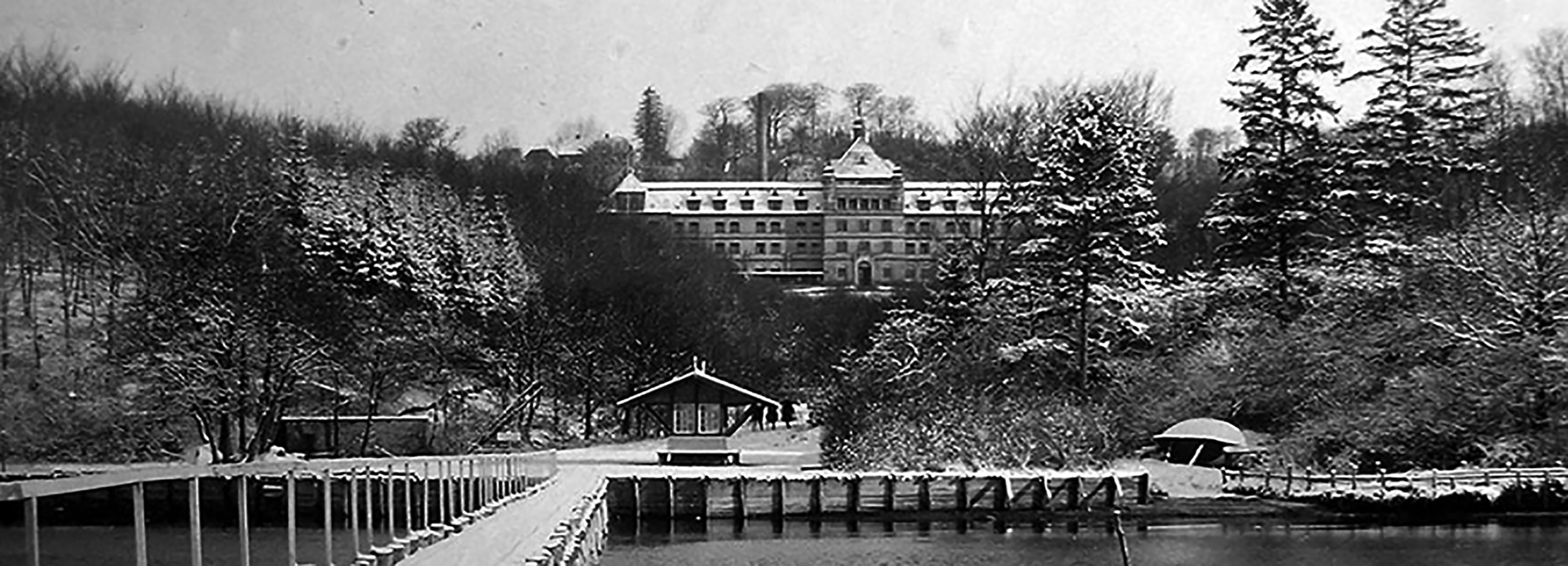
Text: Jysk Nervesanatorium ‘The castle in the woods’. Photo from the seaside.
Thomas Mann, The Magic Mountain, 1928
The opening lines of Thomas Mann's sanatorium novel The Magic Mountain resonate with the ideals informing the practices at Jysk Nervesanatorium. Hidden away from the public in a forest near the beautiful inlet of Vejle Fjord, Jysk Nervesanatorium was commonly known as “the Castle in the Woods.” Besides a more general medical psychiatric treatment, the institution offered temporary respite from family troubles as well as a change of air.
The buildings had previously housed a sanatorium for tuberculosis patients, but in 1957, after a modernization process, the place reopened as a nerve sanatorium. 20 In line with its history, the sanatorium was presented not as a cause for embarrassment, but as a restorative, curative refuge for quiet rejuvenation. Even though the institution now catered to patients with psychiatric diseases, the treatment followed some of the same principles as before: plenty of rest, exercise, and a nourishing diet. What distinguished this semi-public institution from other mental hospitals was the opportunity to be admitted with discretion, thus helping to manage the stigma attached to mental illness and protect the family reputation. Trespassing was prohibited, family visits had to take place at scheduled times, and, as one former employee mentioned during our visit to the institution, prior announcement of visits gave patients the opportunity to retire to their rooms if they did not wish to be seen by outsiders. 21 While the mental illness of a family member could hardly be entirely concealed, admitting him or her to an institution removed from the everyday life of the family offered the possibility of a sort of open secret, a fact of life that was tacitly understood but rarely spoken about. Moreover, it shielded the ill person herself from confrontation with friends, neighbors, and acquaintances, as well as from the family for a while. Suffering from “bad nerves” was in itself less stigmatizing than being labeled “mentally ill.” 22
Although silence, concealment, and secrecy have undoubtedly been experienced as burdensome and repressive for many individuals, historically secrecy has also served as a protective barrier capable of shielding an individual or a family from public disgrace and stigmatization. As Michel Foucault poetically phrased it: “Silence and secrecy are a shelter for power, anchoring its prohibitions; but they also loosen its hold and provide for relatively obscure areas of tolerance.” 23 Rather than being unequivocally oppressive or liberating, for the patients at the sanatorium, secrecy was presumably sometimes protective and suffocating all at once. Some patients mentioned that suffering from mental illness was embarrassing and humiliating or expressed the hope that the cause of their illness might be somatic or “organic” rather than psychological. According to her record, Anna, who was admitted in 1958, for example, told her doctor that she found her “hysterical” suffering very “shameful”. The doctor noted that Anna had expressed hope that her siblings or sisters-in-law would not find out about her illness. 24 No doubt, secrecy surrounding mental illness could contribute to further stigmatization; but for the individual it might also represent a shield from shame or social ostracization.
“Secrecy” is related to “home.” The Danish word for the adjective secret, “hemmelig,” stems from the Old Norse “heimiligr,” which denotes belonging to the house or the family. This word comes from the German heimlich, derived from the German “Heim,” meaning home.
25
In Danish as in German, the words designating secret and home are, in sum, both etymologically and semantically intertwined. Similarly, what Jysk Nervesanatorium offered its patients was both secret and homelike (even though the possibility of seclusion and rest diminished over the years). A crucial aspect of the treatment was the removal from one's own sometimes dysfunctional or inadequate home and family for a prolonged period. As an alternative, the doctors, nurses, psychologists, and other employees sought to create a loving and safe atmosphere, that is, the atmosphere of a home and family as they thought it ought to be. Several current and former employees emphasized these values in the 25-year celebratory anniversary publication published in 1982. As one of the founding doctors, Arne Johannesen, explained: One frequently faces nervous patients who feel stuck, who are no longer able to work, or who cannot find the necessary rest at home, either because of cramped living conditions or noisy children, or because the neurosis is grounded precisely in conflicts at home or at the workplace. (…) A very considerable part of the treatment here is the change of environment. At home, the nervous and the depressed suffer from being constantly reminded of the demands they are supposed to meet, but which they are unable to live up to. At the sanatorium, this falls into the background and the relaxation from responsibility feels as a relief.
26
Chairman of the sanatorium board Bishop Johannes W. Jacobsen also highlighted the importance of the “homelike environment” of the place. He emphasizes in the anniversary publication that it was a priority that no patient should ever feel that they were “just a number.” 27 The doctors and nurses similarly described how they involved their own families to help create a warm atmosphere, and otherwise sought to promote an environment that would make the patients feel safe and at peace. 28 Aside from arranging daily communal meals, the doctors and nurses also encouraged friendly contact between patients in six “cozy” (hyggelige) little day rooms, where patients could drink coffee, chat, or do needlework. As doctor Arne Johannesen wrote, “the daily homelike harmony ensures the right conditions for a maximum benefit of the actual neurosis cure.” 29 During the last decades of the institution's operation, patients were even given domestic duties, being assigned to either the “kitchen group” or the “garden group.” 30
In popular imagination, the history of psychiatry is often associated with confinement, the straitjacket, and enforced invasive treatment. However, as historian Jesper Vaczy Kragh has pointed out, such procedures were only ever part of the story. Throughout the twentieth century, individuals did find support and alleviation—if rarely a cure—in psychiatric institutions.
31
Some of the patients at Jysk Nervesanatorium were undoubtedly critical of the practices there. Nevertheless, it appears that many were in fact quite content with the place. Several patients resisted discharge or asked to be readmitted.
32
Some of the former patients also participated in the official self-representation, depicting the institution as homelike. For example, in the anniversary publication the former patient Marie Folsach described her arrival at the institution as the feeling of entering a new home: The loving reception, the beautiful surroundings outside and inside, the well-run house – entirely without the air of a hospital – my sunny room with the exceptional view of the park and the inlet; it was as if it whispered words, calming and encouraging.
33
To her, this alternative, secluded home offered relief and healing. Even though her description was clearly shaped by the celebratory tone of the book, it is telling that patients were willing to participate in constructing such a positive narrative. Our overall impression from reading the records is that patients were mostly satisfied with their stay at the sanatorium.
The emphasis on home and family in the public representations of the institution reflects a more general idealization of the home in this period, but it also ties in with the central position accorded to the family in historical understandings of mental illness. The family figures centrally in the patient records both in the mid-1950s and in the late 1980s as a locus as well as a potential cure for mental illness. This is particularly noticeable in cases of female patients, likely because women were also generally more closely associated with the domestic sphere in this period. Yet, as the following sections show, conceptualizations of the relationship between mental illness and family relationships changed over the years, as did the degree of exchange and interaction between the institution and the patients’ families, and indeed therapeutic perceptions of secrecy and seclusion in relation to illness (Figure 2).
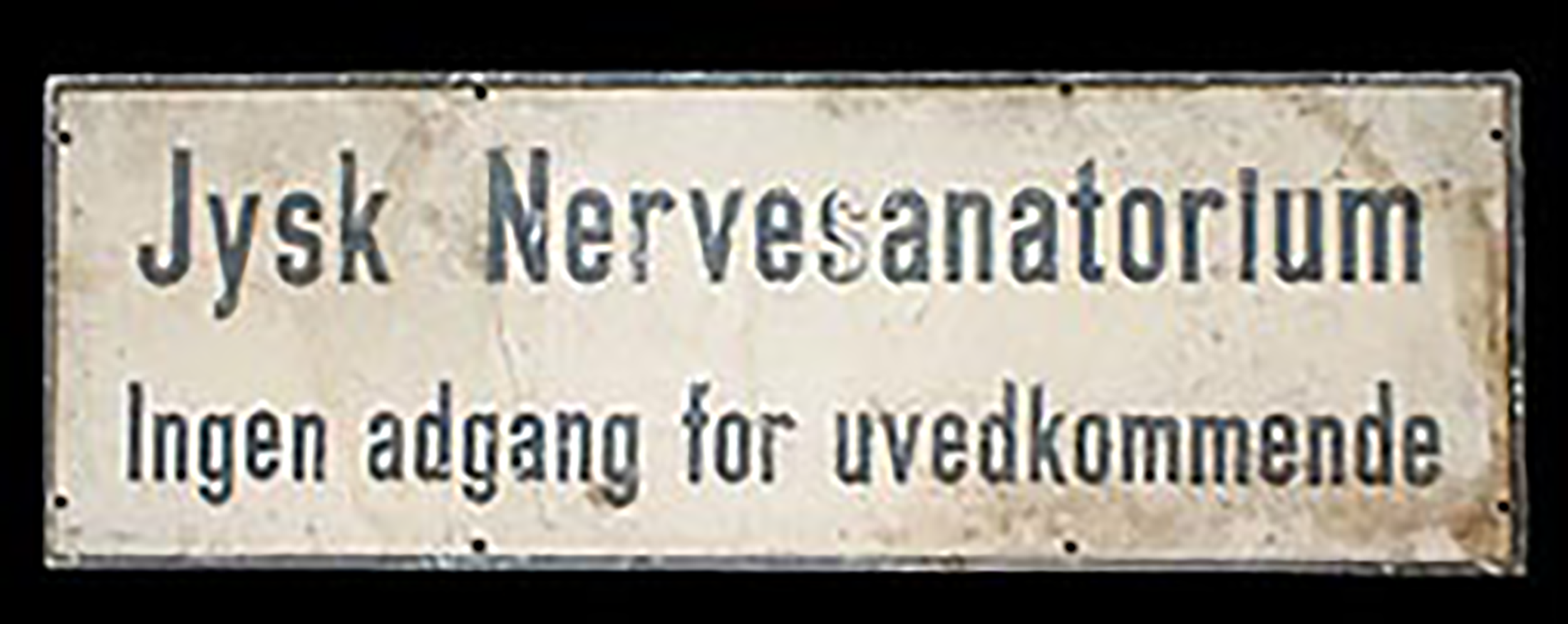
Text: Jysk Nervesanatorium: No admission for unauthorized persons.
Family exile
From the first years of the operation of the Jysk Nervesanatorium until the mid-1970s, the patients’ contact with their families was, in general, sparse. The early records from conversations reflect a focus on the circumstances of family environment that might have affected the patient's mental health. An interest in events and objectively observable facts that might have contributed to the suffering can be detected both in the specific categories of the record and in the detailed transcripts of conversations between doctors and patients. From the 1950s through the late 1970s, the records are ordered in categories such as “kinship,” “external/outer life circumstances,” “physical health” (including specific notes on the women's menstrual cycle), “abuses,” “social disposition,” “pre-morbid psychological condition,” “previous mental suffering or trauma,” “present state of mind,” and “present status.” While these categories are filled in with rather brief factual statements, the doctors’ more detailed notes from the therapeutic conversations with the patients concentrate on relationships close or distant, harmonious or conflicting, between spouses, parents, and children, as well as between in-laws, as potential roots of the illness. The overall tone in the records from the 1950s is matter-of-fact and clinical, presumably reflecting an aspiration to neutrality in the medical judgment. Referring to the patients, doctors use the abbreviation for patient “pt.,” rather than his or her name. Similarly, the doctors use impersonal nouns such as “husband” or “informant” for family members and refer to themselves as “one” [man] rather than using the first person singular. The patient's full name appears only on the first page.
For several of the admitted women in the early period, “an absent husband” was singled out as the central problem and cause of the illness. Thora (1957) 34 was among the very first patients admitted to the sanatorium. The descriptions in her record mostly revolve around her husband's working conditions. As the doctor notes, “her husband is a bricklayer and has spent the last year on the road, being at home only during the weekends. The patient is very upset about this. She does not think she can cope with all the problems at home.” Throughout the therapeutic sessions, doctor and patient frequently return to this issue: “The patient's husband, as mentioned earlier, travels a lot and is rarely at home. This bothers the patient a lot, the children often ask when he is coming home. The patient has two children aged 6 and nearly 2, and she is two months pregnant.” Like many of the other patients, Thora was readmitted several times, and in one of the later accounts the doctors concluded that her husband's frequent disappearances was the most essential problem: “Despite previous theories on her genesis/state of mind, family quarrels or a feeling of guilt due to the abortion, one is of the conviction that the husband's absence from the home, apart from the weekend visits, is the main problem for the patient.” 35
According to the doctor, Anna's (1957) main grievance also related to her husband's absence: Current complaints: Too much alone. Sorry that her husband has so much work – no time for family life. (…) her husband was employed in a new position in 1957 and is very preoccupied by his work. The patient is seriously afraid that this new situation will become permanent and affect their family life.
36
Margrethe's record (1957) mirrors similar concerns: The special work of her husband seems to be a burden for the patient. As an example, his work as a customs officer sometimes implies that he returns home 1–1½ hours later than expected. This is a considerable burden for the patient, who, from the moment she expects him home and until he actually arrives, shakes and trembles, and at the same time, her migraine and severe headache invariably begin and do not stop even though her husband returns shortly after.
37
Not only husbands’ absences from home, but aspects of their behavior were also addressed, as in the record of Ellen (1958): The patient's problem is the spineless husband, who either will not or cannot get anything done. She confirms that he sometimes disappears for periods of one to two weeks. Where he is, or what he does [while he is away], she does not know, but he always looks dangerous and disarranged when he returns.
38
The records thus reflect attention to women's situation in the household, isolated as they often were with the responsibility for children and other duties in the home.
In addition, financial worries and matrimonial regrets are a recurrent theme in the records from the 1950s. 39 Even though the doctors end up pointing to Thora's absent husband as the primary cause of her suffering, they also record her assertion, in a session of narco-analysis, 40 that she was worried about her family's financial situation: “the patient talks a bit about their uncertain economic situation, but adds, weeping, that she might be the only one who looks at it that way.” According to the doctor's notes, Thora also expressed anxiety about whether she had married the right man many years ago: “she had the choice between two men but got pregnant and had to marry. She was in doubt about which of the two men to marry, but she generally thinks that she was far too young for marriage, she was only 18.” Another patient who, according to the doctor's notes, dwelt on the idea that she had married unfortunately and too young was Gerda (1958). At the age of 18 she had married an 11-year older man, who then died of a brain hemorrhage when she was 42. She was left alone with six small and half-grown children. “In the years before her husband died, he was sick and paralyzed because of the first stroke. Difficult time. He was crotchety, and she had to take care of everything. Shakes, when she speaks about it.” 41
Insofar as the records accurately reflect the contents of the conversations between doctors and patients, these revolved primarily around the family situation, past and present. Identifying the cause of the mental affliction appears to have been, at least in part, a collaborative effort involving both patient and doctor. While the doctors undoubtedly asked about specific family issues and hence helped guide the patients’ interpretations of their own family situation, the patients also often appear to have volunteered information about family relationships that might have led to their current condition. Characteristic of the records from the 1950s is that the focus of the conversations is on outer, mostly uncontrollable family circumstances—such as physical absence, age differences, unfortunate incidents, family finances, or traumatizing family histories.
Besides describing the matrimonial situation, several of the early records detail larger family conflicts.
42
The doctors connected Kirsten's (1957) suffering to her difficulties settling in a new part of the country where social norms were more conservative and religious than what she was accustomed to. Moreover, she had a troubled relationship with her mother-in-law, whose expectations she felt she could never live up to. According to the doctor's notes, her husband confirmed her account of the problematic relationship: “The husband states that it has been a severe load for the patient to have her mother-in-law live in their house. His mother is very rigid [stiv] and very skilled, takes control of everything. Decides how the boys should be dressed, etc. Pt. is very friendly toward his mother, though probably suffers in silence.”
43
Thora, whose husband's absence had been identified as the main factor in her state of mind, had also been in conflict with her father-in-law immediately prior to her admission. Her husband's father had persuaded the couple to exchange houses, which meant that Thora had had to take care of her husband's two younger half-brothers: In the summer of 1956 the patient's husband swapped homes with his father and foster mother, and the husband's two half-brothers 17 and 18 had to live with pt. for a small salary. The father-in-law did not stick to his part of the agreement, and due to diverse minor quarrels between the brothers and pt., the husband [and the patient] had to return the house and move back to their 2½ rooms apartment.
44
In the case of Gerda (1958), whose husband had died of a stroke, the doctors also registered “other traumas,” including the fact that “the daughter-in-law left the pt.'s oldest son and two small children a couple of years ago. This has affected the patient heavily (…) the son's broken marriage was a significant burden for pt., who especially thinks the children suffer.” 45 As these cases show, the early records are filled with facts and lists of diverse conflicts in the family that could potentially have caused the suffering, as well as brief, sometimes pithy descriptions of individual personalities.
Recording long and detailed descriptions of patients’ problematic relationships and disputes in the broader family circles in the 1950s, the doctors usually refrained from analyzing the psychological dynamics or personality structures of the individuals involved. In the case of Edith (1957), the doctor's notes contain a number of observations, but little additional interpretation: as a child exposed to trauma of a sexual character; a man whom the family knew lured the patient into a barn and attempted intimate contact. This frightened the patient greatly, has often thought of the episode. (…) Pt. further relates that the conditions in the childhood home were disharmonious, influenced by the quarrels between the parents.
46
Focusing on family affairs, the doctor maintains a distance, avoiding digging deeply into the patient's personal experiences or their specific consequences for the patient's psychological disposition. This is also the case in Inge's record (1958), in which the doctor depicts what seems to have been a rather dysfunctional dynamic: the relationship with parents and the younger brother, who is 12 years of age, are described as good. The relationship with the sister, who is 16, is very poor. Pt. feels persecuted by her. She harasses pt. in every possible way, always carries her point. (pt. 20 years old, has been engaged 1½ years, but broke up because of pt.'s illness.)
47
In the 1950s, the heyday of the conventional nuclear family in Denmark as in other European countries, women were intimately linked to the home, ideologically as well as practically. In the years 1940–1965, nearly half of all women in Denmark aged between 15 and 74 were housewives. 48 The home was their domain, and the immediate family was their main social world as well as a crucial source of individual identity. In public discourse and popular culture, housewives were celebrated as homemakers, charged with responsibility for the physical and emotional well-being of the family—and ultimately, for the vibrancy of the nation, which was perceived to rest on the hundreds of thousands of happy homes across the country. 49 Men, by contrast, were associated with the public sphere and the marketplace. Even though they, too, spent considerable amounts of time at home with the family, for many men, professional occupation and public life were fundamental to their self-image.
Following this gendered pattern, it is perhaps unsurprising that when men were admitted to the sanatorium, the cause of the patient's suffering was more frequently located in working conditions than in family issues. Claus's record (1957), for example, consists of detailed descriptions of a project with a market garden that went wrong, and there is a strong indication that broken career dreams were the main cause of his suffering. 50 In Thomas's case (1958), the doctor notes: “New boss at work and has since April been forced to work with a new employee, who is ‘new in the field’ and has taken over too many of the patient's assignments (…) he had to limit the colleague's work, as he was interfering too much.” 51 A lack of communication between husband and wife is addressed briefly, but not in itself seen as an essential factor in the male patient's frustration: “one recommends that the patient talks more with his wife in the future about potential moments of irritation. He is not accustomed to talk about his problems to anyone and just keeps them to himself.” 52
During the first decades of its operation, the “Castle in the Woods” thus offered patients a temporary refuge from flawed family relationships or a problematic home life situation. In the few cases where patients expressed a wish to leave before the doctors deemed them ready, the personnel emphasized the importance of rest and of amassing energy to face the problems at home. As in Veronica's record (1970–1971): “I impress upon her one more time how important it is that she has gathered reserves of energy to bring home. I explain to her that if she wants to stay with her husband, she must help him.” 53 Giving the patients a break from difficult family relationships and helping them gain the capacity to deal with such issues was thus an essential aspect of keeping them away from home over prolonged periods of time.
Family Therapy
Throughout the operation of the nerve sanatorium, doctors pinpointed family relationships as a locus of illness, that is, as the primary realm of mental illness—as its cause and potential cure. Yet the ways in which they did so changed over the years, as did the professional composition at the institution. Whereas in the early first decades the staff consisted of doctors and nurses, sometimes supplemented with consultant psychologists, by the mid-1970s social workers had joined as permanent staff. The different staff groups now collaborated in the treatment of the individual patients, seeking to provide holistic care. 54 This mirrored a general tendency in Danish psychiatry at that point in time, in which a more holistic approach to mental illness had developed. New areas such as sexology, social psychiatry, and, not least, a renewed interest in psychoanalysis were now influencing psychiatric practices. 55
Alongside this development, the records reflect subtle changes in vocabulary and language use. The predefined categories of the early records have disappeared, leaving it up to the individual doctor to define which types of information were important to note. From the 1970s onward, the doctors use first names more frequently, indicating a stronger view of the patient as an individual subject. The physicians have apparently ceased striving for moral neutrality in their interpretations: their personal judgments shine through in their accounts. In the case of Veronica (1970–1971), mentioned above, the doctor notes: “the patient is the typical hausfrau who jumps around and does everything in her power to satisfy her husband, ingratitude is the world's reward, she has to think a little bit more about herself.” 56 As the example also shows, a new critical view of prevailing gender roles and family structures seems to be influencing the doctor's interpretations.
By the end of the 1970s, a shift had taken place both in the perception of the family and in the ways in which the personnel involved the family in the patient's treatment. In addition to the more frequent so-called three-part conversations between doctor, patient, and a close relative, mostly the spouse, family members now began to contact both the patients and the institution over the telephone. It appears that the more widespread use of this technology also contributed to an extended communication between the institution and the patients’ relatives. One record from 1975 describes several family members calling to interfere with the doctor's treatment of a patient. The patient, 55-year-old Grete, had been depressive for seven to eight years according to her own account since losing contact with her eldest son at the time of his marriage. At the point of admission, she had not yet seen her four-year-old grandchild, nor did any of her other children have contact with their older brother. During her stay at the sanatorium, her husband called the institution to ask the doctors to prevent Grete contacting her estranged son and daughter-in-law, specifically instructing them however not to mention his request. Later, Grete's daughter also telephoned to complain about a letter that her mother had received from her father while at the sanatorium. Presumably, the father had written that he could not bear the situation anymore. According to the record, the daughter had called in an agitated state: as the doctor states, she “quite understandably thinks the timing of the letter was terrible, just as her mother has settled in so well in the sanatorium.” 57 As this example illustrates, phone conversations and letter communication with different family members meant that a stay at Jysk Nervesanatorium no longer implied a complete hiatus from one's family situation. Characteristic of the later records is an increased cooperation with, or a direct engagement of, the patient's family in the treatment strategy.
From the somewhat distant and neutral descriptions of the early years of problems at home with husbands, children, and in-laws, or of financial concerns, there is also a notable shift in the 1970s to a focus on the internal and subjective aspects of relationships. The doctors begin to pay more attention to feelings and psychodynamics, especially between spouses; conversations with the married couples had now become a prevailing therapeutic strategy. As the following quote from 1988 shows, the doctors now make little pretension to objectivity: Couple conversation: Helene, her husband John, HC:
The conversation naturally revolves around their mutual relationship, especially the latest weeks and months, during the Pentecost gathering, double messages. HN [Helene Nielsen] is clearly affected by her confusion about her feelings/relation to John, whereas John seems like a large teddy bear with a handyman's vitality [håndværksmæssig saft og kraft]. John states openly that he does not talk much about his feelings/no experience with that, and he will probably have difficulties learning it. 58
Whereas in the 1950s problems in the family were usually described in neutral terminology without noteworthy attempts at interpretation, the doctors were now increasingly seeking to analyze the personality structures of the spouses and trying to facilitate a better dialog between them. These developments within the institution went hand in hand with an increasing interest in Freudian theories in Danish psychiatry. The Danish Psychoanalytical Society had been established in 1953, and during the following decades a growing number of therapists became certified as psychoanalysts. Although most psychiatrists remained deeply skeptical of psychoanalysis and pointed to the lack of evidence for its efficacy, others emphasized its worth in increasing the patients’ quality of life. 59 The doctors at Jysk Nervesanatorium had been influenced by psychotherapy from the outset, but by the late 1970s their focus on psychology and the unconscious dynamics of the patients had increased. 60
Although the records were written by the doctors and shaped by their concerns and categories, the patients seem to have shared their preoccupations with feelings, gender roles, and communication patterns between husband and wife. In a follow-up conversation between Helene and her therapist, the focus on feelings and power dynamics continues, and these emotional aspects are identified as the main problem: HN [Helene Nielsen] describes the relationship to her husband as “a chain.” She feels that he can be completely “normal” on the outside, charming for instance, but at home he is DOMINEERING in every way, dictatorial, makes violent sexual demands, is “filthy,” but can also be kind and nice-forthcoming [sød-imødekommende]. (…) prior to the admission I have been in contact with HN over the phone and invited her TOGETHER WITH THE HUSBAND to a conversation. The husband did not want this.
61
From the late 1970s and through the 1980s, the records are principally composed of accounts of couple therapy, showcasing an increasing engagement with the patients’ families. Notes on the conversations focus on the couple's mutual relationship, their emotions, and the patients’ inner selves. The records reflect a conviction that digging into one's inner self, articulating one's feelings, and sharing these was an important step in the path to healing. Thora, who had been admitted for the first time in 1957, was readmitted in the 1980s, and now her “absent husband” was invited in for a couple therapy session: Couple conversation: (Pt, husband, Christian, sgp, FM og LG)
The conversation progresses quite slowly, and the participants focus a lot on their wish for Thora to return to the way she was before, as if they imagine that “having something together” necessarily means that they should do sports together. Both are good at avoiding conflicts, she, hiding behind her symptoms, and he behind gardening and TV watching. During the conversation we touch on the topic “clear communication”, just as we emphasize that if no demands are made, everything can drown in indifference. We sense that the spouses care about each other, but rarely express it. 62
As these extracts show, the psychiatrists were now involving themselves more intensely in the internal “psychodynamics” of the family, and especially in the couple's relationship. They analyzed personality traits and sought to enable better communication between the spouses as a crucial means of curing mental illness. A shift in therapeutic attention had gradually taken place from outer observable facts about the family environment to interior psychological, emotional, and power-laden dynamics. What in the 1950s had been understood as a secret inner space that could legitimately be shielded from the gaze of doctors and family now became the subject of disclosure.
Therapists also observed the patients as they interacted with other patients. Thora, for example, was considered an asset to the gardening group, but she did not express her emotions as much as one might wish: Thora has participated in the group in her own quiet way. Verbally, she has not been very active, but she has been engaged in the group's activities and thereby helped create a very good environment, which has also affected the fellowship with the other patients in the ward.
63
Even though the number of women at the sanatorium far exceeded that of men, it is telling that, by the late 1970s, both partners were often involved in the treatment, even though only one of them had been admitted with nervous symptoms. This also seems to have been the case when men were admitted. As Karl's record (1988) testifies: The conversation gives me the impression of being a deeply emotionally struggling person – obviously intelligent – who is insecure/self-critical, quite cynical/sensitive/corrective/withholds information. There are also signs of confusion, but besides that no actual psycho-suspect characteristics. KL [Karl Larsen] has taken a lot of medicine over the years and has had a regular use of alcohol (once admitted for drug misuse and suicide threats). Once, a little more than a year ago, KL took a serious overdose of medicine. (is on the verge of tears [when talking] about this). Considerations of treatment are inner therapy, garden group (non-intellectual work) + enough couples’ conversation.
64
Notes follow on the first “outpatient” couple therapy session with Karl and his wife, and we see how even the children were sometimes invited to participate and thereby involved in solving conflicts: Ambulant couple conversation: Karl, Birgit, H.C (+ the children).
It is obvious that Karl approximately 14 days ago has had depression/relapse to a “meltdown” and very low self-esteem, he seems to have forgotten the different strategies of action learned here. The main problem is still the insufficient mutual mirroring between the spouses. 65
Mental illness among the male patients was increasingly understood in this period as a consequence of their emotional disposition and their lack of communicative capabilities in family relationships. The ability to share one's innermost feelings with one's spouse was now seen as the key both to a good relationship and to mental health. The one-on-one conversations between doctor and patient that had been the standard therapy form in the 1950s were now replaced by therapy/treatment as a joint venture involving both husbands and wives. In 1988, Elizabeth even considered admission along with her husband: “She considers letting herself be released tomorrow, and then to be re-admitted with her husband as guest, so that, for a shorter period of time, they can have more intensive treatment with couple therapy, which, she feels, is exactly what she needs in order to clarify her relationship to her husband.”
66
While the possibility of taking a break from one's own family still played a part in the treatment of patients during the 1980s, the doctors stress this less frequently in the records as an aspect of treatment. Moreover, the practice of integrating patients’ family members into the institutional therapeutic practices through joint therapy sessions also compromised the principle of seclusion. The reorientation from external circumstances to interior emotional dynamics also meant a transfer of responsibility from the doctors to the patients and their families, who were now expected to engage more actively in the treatment process. In this sense, the change in institutional practices also helped to redefine the experience of mental illness.
While most patients appear to have participated willingly in therapy sessions, others were critical. Thora, who had been admitted several times over the decades, cared little for social interaction and couples’ therapy. Once such forms of treatment were all that the institution could offer her, with the doctors declining her request for psychoactive drugs, Thora asked to be released. According to the doctors’ notes, the other patients had been very positive and supportive toward her: “but she has not wished (or been able) to meet this and has constantly stressed that the situation now is different from the other times she has been admitted here.” The therapists regret that they are compelled to let her go, and add, “Unfortunately we cannot but accept her choice, even though we feel we could have helped her if she had been more motivated.” 67 Thora's refusal to let the doctors examine her relationship and its modes of communication, and their focus on divulging her inner self, eventually led to the conclusion of her stay at the sanatorium.
As the opportunity for seclusion during treatment declined—with the decentralization in Danish psychiatry and the further development of outpatient treatment from the late 1970s onward—a consequence was that the Jysk Nervesanatorium lost its public financial support. As stated in the 25-year anniversary publication published in 1982, the staff at the sanatorium struggled in vain for the place to survive, emphasizing the desirability of admission far away from one's home and common social circles: In the efforts to decentralize the psychiatric hospital services (…) it should not be overlooked that there are some patients who do not wish to be admitted to a local hospital or who for special reasons wish to be confined outside their home municipality. Such wishes for admission ought to be accommodated for human and therapeutic reasons.
68
But the attempts to preserve the sanatorium did not succeed. In Denmark, the late 1980s were marked by economic decline and the overall drive to reduce public financing of welfare services. 69 Economic conditions influenced psychiatric practices. As Merete Bjerrum has pointed out, the restructuring of Danish psychiatry to more outpatient treatment was, not least, financially motivated. Institutionalization and the offer of a public bed were more expensive than ambulant care, and as the municipalities took over the main responsibility of mental health care from the state in 1973, they had to make hard economic choices. 70 The special homelike care that the sanatorium offered can thus be seen as characteristic of what has been called “the golden days” of the Danish welfare state, the epoch from the 1950s to the 1970s, which was marked by economic growth. 71
The possibility of an interim removal from one's family and a change of air gradually became compromised as the type of treatment shifted from a focus on exterior matters to a deeper scrutiny of inner and interpersonal relationships. Moreover, the opportunity for a longer residence in seclusion decreased in tandem with the growing use of outpatient medical treatment. Today the buildings host a wellness, conference, and rehabilitation center.
Conclusion
The case of Jysk Nervesanatorium shows how the family was reimagined as a cause and a cure of mental suffering and how shifting dynamics of secrecy and disclosure gradually altered what it meant to be mentally ill during the later twentieth century. From being a place of seclusion where the afflicted could find temporary respite from their problems at home, rest, and peacefully recuperate, “the Castle in the Woods” gradually opened to the outside world and patients were increasingly expected to participate actively in their own healing, notably involving their families in the process. This went hand in hand with a growing perception of the patients’ conditions as caused by inner emotional dispositions and a new credo of openness and sharing as a path to recovery. The family remained a locus of illness throughout the period, but the degrees of secrecy in relation to the afflictions changed significantly as did the relationship between doctor and patients. Moreover, the shifting configurations of mental illness at Jysk Nerve sanatorium indexed different broader structural changes.
First, the changing approach to the family—from exterior to interior, from exile to involvement—mirrored a gradual transformation of the family, its gendered patterns, and its place in the larger social landscape. The differing social conditions and cultural expectations of women and men played an important role in the records. As in much of Europe and North America, during the 1950s, women in Denmark were associated with the domestic sphere, and many housewives felt lonely and isolated, especially when their husbands were absent much of the time. While the doctors located the causes of women's mental illness in family problems, the mental afflictions of men, who were breadwinners and associated with the public sphere, were perceived as being rooted in problems at the workplace. By the late 1970s, as more and more women were entering the workforce and with the emergence of new ideals of masculinity, conversations between doctors and patients of both genders centered on other issues. The mental afflictions of both men and women were now seen as rooted in disharmonious emotional dispositions, common problems of communication, power struggles, and unfortunate psychodynamics within the family.
Second, broader economic and political structures also influenced the conditions and practices at Jysk Nervesanatorium. As a “hand of the state,” the sanatorium was highly dependent on public support for the individual patient after admission. The existence of Jysk Nervesanatorium was enabled by the general economic growth in Denmark from the late 1950s to the 1970s in “the golden days” of the welfare state. In time, the opportunity for a longer residence in seclusion decreased in tandem with the growing use of outpatient medical treatment. In short, the changes in the configurations of mental illness at this specific site were not only conditioned by scientific developments within psychiatry. They also reflected new perceptions of the family and broader cultural and socio-economic developments in the welfare state.
Third, the gradual shift in the doctors’ focus from exterior family conditions to interior psychodynamics in the mutual relationships between family members, notably spouses, also reflects a general emotionalization of Scandinavian society in these decades. Alongside youth rebellion, the feminist movement, and anti-hierarchical, anti-authoritarian struggles, the 1970s witnessed what scholars have called “an emotional revolution.” New sensibilities and expectations of emotional authenticity and openness increasingly affected not just intimate relationships—but also workplace interactions and political activism. Inspired by a combination of Marxist and Freudian theories, many observers saw an alienation from nature and a disconnect from the true inner self as the major problems of contemporary society. 72 Although these ideals were spearheaded by young hippies and left-wing activists, they made their mark on the rest of society. The last decades of the twentieth century saw the rise of a new public emotionality, in which it became more acceptable, even desirable, to discuss intimate emotional problems in public. 73 Keeping secrets became increasingly suspect; even shameful thoughts and emotions were now to be disclosed. When the doctors at the nerve sanatorium promoted emotional openness and genuineness in their therapeutic conversations, their approach thus mirrored and contributed to larger cultural developments.
Changes in the situated experience of mental illness were thus a consequence of the entanglements between psychiatric practices, family constellations, and cultures of knowledge—and the altering dynamics of secrecy and disclosure. This Danish case serves as a reminder that to approximate the historically contingent experiences of mental illness, it is necessary to move beyond studies of psychiatric theories or diagnostic practices to examine more closely the situated interactions between doctors, patients, and their families as well as their interlinkages with broader cultural, political, socio-economic currents, and shared imaginaries of mental illness.
Footnotes
Funding
The research for this article was funded by a Sapere Aude grant from Independent Research Fund Denmark.