



Abstract
This paper explores the lives and agency of three generations free colored women on St. Croix, an island in the Danish-Norwegian West-Indies from the period 1760–1850. Different social strategies these women adopted in finding and defining their identities in a racially prejudiced society and how their social networks and family bonds affected their choices and lives have been studied. By applying a combination of prosopography and microhistory, new insights, and perspectives of free colored women's agency is gained. This paper suggests that free women of color were resourceful and independent and consciously employed complex social practices to climb the social ladder.
Keywords
Introduction
Henriette Fransisca Coppy, a 26-year-old free woman of color on the Caribbean island St. Croix, inherited a substantial sum from her father, procurator Nicolaj Adler Coppy in 1807. 1 This inheritance allowed her to purchase a large house in a fashionable neighborhood and improve the lives of her family. 2 Henriette, along with other free women of color in the town Christiansted, St. Croix, faced challenges navigating a society that often treated them as second-class citizens despite their supposed legal equality. This paper explores the strategies employed by three generations of free women of color to assert control over their lives and examines the influence of family ties and racial discourses on their choices.
The cases of Frederika Matilda Trott, her daughter Henriette Fransisca Coppy, and granddaughter Eliza Frederica Bentzon demonstrate the resourcefulness and independence of these women as they navigated the complex social landscape of Christiansted. They built successful lives by starting businesses, owning property, and maintaining extensive social networks. This study argues that free women of color were not merely victims of their circumstances but were active agents in shaping their destinies within the confines of a restrictive society. By situating their experiences within the broader historiography of free people of color in the Caribbean, this paper contributes to our understanding of their resilience and adaptability. Through the individual cases of Frederika, Henriette and Eliza, spanning a century, nuanced understanding of the lives and choices of free women of color in the Danish West Indies during the eighteenth and nineteenth centuries is achieved. This study shows the agency and motivation of these women in the face of discrimination and social constraints.
During the eighteenth century, the population of free people of color in Christiansted increased dramatically and the majority of the free colored were women. 3 The free colored people were often treated as second class citizens, although they were supposed to have legal equality to white people. According to the slave code of 1775, it was specifically stated that free colored people were to be (…) esteemed and respected in all regards equally with the free-born (…). 4 In practice, however, they were discriminated and impeded in their daily lives, social practices, and relationships. The many ordinances and restrictive legislations against free people of color during the eighteenth century resulted in obscuring the distinction between enslaved people and free colored people. Being free did not mean the same to a colored person as to a white person. 5
The first woman studied in this paper is Frederika Matilda Trott, likely born as an enslaved in the 1740s and manumitted around 1760. She became a houseowner, slaveowner, and a landlady and was connected to a Danish merchant, possibly her father, her whole life. When he died, she took his last name, took over his house, and brought up four daughters from four different men there. The second of those daughters was Henriette Fransisca Coppy, born in 1781 and daughter of procurator Nicolaj Adler Coppy. At the age of twenty, Henriette started a long-term, tumultuous relationship with a Norwegian man named Adrian Benoni Bentzon, who eventually became the governor of St. Croix. Together, they had a daughter and a son, both of whom were recognized by their father. However, Adrian, never married Henriette. Instead, he married a New York millionaire's daughter. Their marriage was deeply unhappy, likely due to Adrian's open relationship with Henriette. His wife chose to live in New York, rather than St. Croix, and they officially divorced in 1819. As a result, Henriette and her children lived with Adrian in Christiansted where she managed his household for an extended period. Eliza Frederica Bentzon, born in 1804, and her brother Frederik William Bentzon, born in 1808, were sent to Europe for expensive education and they both led affluent lives and married into well-to-do families. When Adrian died in 1827, Henriette and her children were well provided for.
The discourses of African-Caribbean women in the eighteenth and nineteenth centuries portrayed colored women as being physically strong and unfeminine, but also immoral and seductive. 6 Kit Candlin and Cassandra Pybus show in their book Enterprising women. Gender, race and power in the revolutionary Atlantic how free women of color were long described exclusively as weak concubines of white men. These women were often seen as victims and their independence and their agency was not given much attention. 7 However, recent studies have challenged these representations of free women of color by highlighting their independence, agency, and power. Throughout the Caribbean region, free women of color held important positions in the urban economy and social life. Research on free women of color in Dominguan port cities in the eighteenth century, for instance, shows that free women of color had many different positions. They worked as planters in the countryside, they were active in real estate, they bought and sold enslaved people and they worked independently in commercial enterprises or in domestic services. 8 It is argued that these women often possessed more freedom than white women did, like freedom of movement, freedom to choose how to live their lives and freedom to economically participate in society. 9 For instance, in Cuba at the beginning of the nineteenth century, 17 percent of the population were free people of color. Many of them, men, and women, enjoyed substantial individual freedom. They were highly skilled entrepreneurs, accumulating wealth and status to ensure upward social mobility for themselves and their families and thereby provide economic stability. The free women of color in Cuba were found in occupations in different sectors of society, they were visible in the cities and they were highly regarded for their work. At the same time, because of their work, freedom, and independence, they confronted white social norms and standards concerning race, labor, and gender. 10 Free women of color who engaged in business or trade, for instance, were challenging the societal expectations that they should be confined to domestic roles. Although the free women of color did cohabit and had children with white men, they seem to have used these relationships in their own favor. The women were independent, and they had agency to shape and have control over their own lives. They were socially mobile, kept large social networks and were able to secure themselves and their children. 11
Numerous studies have examined the lives of successive generations of free colored women in various regions of South America and the Caribbean. These investigations shed light on how social mobility, living conditions, social roles, and social networks evolved over time, as well as how legislation, racial theories, and discourses influenced these changes. 12 Many free people of color stayed in one place for generations, making it feasible to explore multi-generational narratives within the context of family, relationships, and community. 13 In this study, the three women examined—Frederica Matilda Trott, Henriette Fransisca Coppy, and Eliza Bentzon—were closely related and lived either together or in close proximity to each other for a long period. This allows for not only an analysis of their individual agency but also an exploration of their interconnected relationships and networks as they developed over time.
The experiences of free women of color were not exclusive to the Caribbean or South America; similar cases can be found in other regions where the colonial plantation economy relied on enslaved labor. For instance, in Mauritius, free women of color shared comparable experiences with their counterparts in the Caribbean. 14 Historian Richard B. Allen has examined the life and experiences of Marie Rozette, a free woman of color in Mauritius during the late eighteenth and early nineteenth centuries. His research offers a unique perspective on the roles and agency of free women of color within a racially and culturally divided society shaped by colonial rule, slavery, and rigorous social hierarchies. Like Frederica, Henriette, and Eliza, Marie Rozette's life demonstrates the resilience and resourcefulness of free women of color, despite the challenges they faced. Through his exploration of Marie Rozette's life, Richard B. Allen highlights the unique and often underappreciated contributions of free women of color to the social, cultural, and economic fabric of colonial Mauritius. 15
Although the free women of color seem to have had independence, freedom, and agency within these plantation societies, they were still seen as outsiders. The historian and anthropologist Jerome Handler introduced the term “unappropriated people” in the context of Caribbean history, referring to people who on paper were free, but did not fit into the formal social categories. These “unappropriated people” occupied a unique position; while they were not enslaved, they were not fully integrated or accepted by the white social order. Furthermore, their status was often influenced by external circumstances like prosperity, profession, and social networks. The term “unappropriated people” highlights their insignificant status, as they did not fit into the racial and social hierarchies that were so important in these societies. 16 The free women of color in Danish West Indies share similarities with the “unappropriated people.” They were not enslaved, but they also did not fully belong to the dominant white social order. This ambiguous social status of free people of color is a common theme in recent studies. 17 Not only were they mostly excluded from the white-dominated power structures, at the same time they were not seen as part of the group of enslaved people. This resulted in a complicated social landscape to navigate. Confronting significant challenges such as racial prejudices, discriminatory laws, and social exclusion, these women needed to develop strategies for navigating their social environment.
Much of the research on lives of enslaved in the Caribbean and particularly in the Danish West Indies has focused on broad themes like the plantation economy, demography, health care, or education. 18 The historian Neville A.T. Hall's work on slave society in the Danish West Indies has been of immense importance to the historiography of the region. His research not only shed light on the lives, experiences, and treatment of enslaved people, but he also provided a understanding of the complex social dynamics within these societies. 19 Still, due to a lack of primary source material, not many individual life stories and narratives have been found. Because personal narratives are so scarce in colonial archives, it is difficult to encapsulate individual stories of enslaved and free people of color. 20 Some scholars, however, have managed to give people of color, whether enslaved or free, a voice. Danish historian Gunvor Simonsen, for example, delved into the legal archives and court statements of St. Croix to reconstruct individual “voices” and narrative practices of enslaved people. 21 Through her research, Simonsen revealed how enslaved individuals perceived themselves and coped with the oppression and hardships of a life in bondage. By examining the court statements of a select few, she managed to reconstruct their world. However, countless voices of enslaved and free people of color remain unheard due to the absence of archival records such as court statements, personal documents, letters, or probate records. 22 It can be challenging to fully comprehend the complex cultural and social contexts the free women of color lived in. Marisa Fuentes demonstrates this in her study of a famous free woman of color in eighteenth century Barbados. Through extensive research in archival records, Fuentes shows that this woman, Rachel Pringle Polgreen, was a wealthy businesswoman who owned a hotel/brothel and numerous enslaved people. However, due to the limited archival documents on the personal life of Polgreen, it is impossible to fully access and understand her life beyond the properties and businesses. 23
When researching enslaved or free women of color, the challenges extend beyond the limited availability of sources. A major obstacle is that most records were created by white men in power who lacked interest in giving voice to enslaved or free colored individuals unless it served their purposes. Consequently, their motives were often self-serving. When contemporary white men described free women of color, the narrative typically revolved around seduction, sexuality, and laziness. As a result, finding narratives that provide insights into the lives, agency, and motivations of free people of color is challenging.
This present study applies an approach based on prosopography and microhistory. Prosopography is a method that, through collection and analysis of biographical data, can find relationships between people within specified historical contexts. Microhistory, on the other hand, is a method that focusses on individuals or small scale communities, in order to shed light on bigger historical themes and developments. 24 A combination of prosopography and microhistory are well-suited for this subject, because they allow for an in-depth exploration of individual agency, resilience, and social networks of free women of color and help connect individual experiences to broader historical contexts.
Numerous sources from the Danish National Archives (DNA) have been utilized for this study, including cadasters, records of free colored individuals, censuses, church records, testaments, memoirs, and probate records. One of the main primary sources were the St. Croix cadasters, which were recorded from the 1730s and comprise lists of addresses, names, and properties, including enslaved individuals, for tax purposes. The Danish-Norwegian government used these records to calculate taxes for each person, specifying stipulated amounts for houses, land, and enslaved. The cadasters are particularly valuable for this project as they register individuals for each street, neighborhood, and region on St. Croix, regardless of their status or color. This allows for tracking a person's wealth and properties over time, as well as assessing their social mobility. In addition to the cadasters, the records, and censuses of free colored people of St. Croix were crucial for this study. These records provide the addresses and names of all free colored individuals living in the same house for each year, offering insights into family structures over time. The advantage of these documents is that they shed light on the familial relationships and living arrangements of free colored people, which are essential for understanding their social dynamics. However, a disadvantage is that the records may not reveal the entire scope of an individual's social interactions or fully capture the complexities of their lives. One other substantial challenge in this study is the imbalance of the researched source material on the three women. Because Henriette had a long-term relationship with the governor Adrian Benzton, over whom a great deal was publicly written, we have considerably more information about her and her life with Bentzon than of her mother or daughter. Henriette's mother Frederica is only found in the sources as an adult. She was manumitted and no trace of her years in slavery have been discovered. Henriette's daughter, Eliza, is even more absent from the St. Croix source material than her mother and grandmother, presumably because she was only a child when she was sent from St. Croix to Germany and she has not been found in German sources.
This paper is building upon scholarly works on free women of color in the Caribbean, South America, and from other plantation colonies, like Mauritius, as well as archival sources from the DNA. It argues that the case studies of Frederika, Henriette, and Eliza, three generations of free women of color in the Danish West Indies, contribute to a more nuanced understanding of the lives, challenges, and opportunities of free women of color, while acknowledging the broader context of colonial power structures and institutions.
Demography, Legislation, and Social Structures on St. Croix and Christiansted
For the twin-nation of Denmark-Norway, the late seventeenth century marked the beginning of their colonial expansion in the Caribbean, notably later than other European powers. The acquisition of the islands St. Thomas in 1671, St. Jan in 1717, and the purchase of St. Croix from France in 1733, laid the foundation for an extensive plantation economy centered around sugar and cotton production, fueled by enslaved labor. St. Croix emerged as the center of Danish-Norwegian trade, with Christiansted becoming the largest town among the three. 25
Historian Neville Hall, in his book Slave society in the Danish West Indies, shows how the demographic, social, and economic developments influenced the lives of free colored people. The population of St Croix experienced a dramatic increase throughout the eighteenth century. In 1758, Christiansted had a total population of 2.175, with 1422 enslaved and 753 white individuals. By the end of the century, the total population had more than doubled with enslaved people constituting over 50 percent of the population, and free people of color accounting for around 25 percent of the population. In 1797, 35 percent of the total population of St. Croix consisted of free people of color, many of whom had migrated from the island St. Thomas. 80 percent of all the free people of color in Danish West Indies, lived on St. Croix in 1797. However, this rapid increase in the free people of color population on St. Croix did not lead to acceptance or integration in the white society. Instead, they were often perceived as a threat. Legislation from the end of the eighteenth century was enforced to control and restrict the growing number of free people of color and relationships between white men and free colored women were strongly discouraged. Furthermore, due to the large number of enslaved on St. Croix, in combination with the prevailing racist discourses, it was often hard for free colored people to find employment. As a result, at the end of the eighteenth century, many free people of color belonged to the economically vulnerable underclass. The rising population of free people of color in the Danish West Indies, particularly in Christiansted, challenged the prevailing colonial view that only enslaved and free white people should exist. Consequently, formal legislation emerged from the 1740s onwards, to control the free colored population. It was only in the nineteenth century that attitudes towards this group gradually shifted, leading to greater recognition and acceptance of free people of color, particularly those with economic success and connections to the white community. At the same time, several legal and social reforms were implemented that expanded the rights and privileges of free people of color and provided a foundation for social mobility. 26
The increasing population of free colored people in the nineteenth century was primarily due to natural growth and immigration. Until then, manumission was an important factor in the growth of this population. Manumission often occurred as a reward for exceptional service, sexual favors, or as a means of protecting loved ones and children fathered by white men. Enslaved people could be freed through a testament, as a gift, or they could save money and buy themselves or their loved one's freedom. 27 A child born to a freed mother was automatically considered free. Consequently, the motivations for manumission were particularly strong for women. 28
The demographic and social developments in Christiansted in the eighteenth and nineteenth centuries had a direct influence on the lives and choices of Frederica, Henriette, and Eliza. As the free colored population increased, these women navigated the shifting social landscape. Frederica, born as a slave and manumitted in a time when the free colored population was not yet fully recognized, used her resourcefulness to acquire and rent out properties, ensuring a comfortable life for herself and her daughters. Henriette, born free, witnessed a change in the view of free colored women and the expansion of opportunities. This change allowed her to move out of the neighborhood designated for colored individuals and establish a life among white people. Eliza, born into a wealthy household with a white father and possibly a light appearance, exemplifies the change in social mobility experienced by the free colored population as restrictive laws and regulations were challenged. These women, situated within a complex social environment, actively took control over, and shaped their own lives despite facing significant challenges such as racial prejudices, discriminatory laws, and social exclusion.
Frederica Mathilda Trott (ca. 1740–1807)
In the Caribbean world, free women of color demonstrated remarkable ingenuity and resourcefulness as independent women, despite facing persistent racial discrimination. The life of Frederica Mathilda Trott exemplifies this resilience. Born into slavery, she eventually gained her freedom and become a landlady and owner of multiple houses, thereby securing a better life for herself and her children. However, it is important to note that Frederica's life was inextricably shaped by the era in which she lived. As a resourceful woman, she managed to navigate within the limitations of her social status, but her possibilities for social mobility and spatial movement within Christiansted were restricted compared to those of her daughter, who was born a free woman of color.
Frederica Trott experienced firsthand how free colored people on St. Croix were controlled. In the second half of the eighteenth century several ordonnances and edicts were published that limited the freedom of the free colored people. Officially, free people of color should have the same rights as whites, but in practice, this was not the case. Under the guise of protecting the free people of color, an ordonnance was issued in 1774. This ordonnance made it harder to set enslaved free and at the same time it enforced the free colored people to always carry a letter of freedom and to visibly show their status as free by wearing a red-white cockade on their hats. 29 A curfew for free people of color was implemented, restricting their night time activities after 10pm. Although this was 2 h later than the curfew for enslaved, it still limited their freedom. They were no longer allowed to organize and participate in dances, unless given explicitly permission to do so by the governor. Furthermore, in an ordonnance from 1786, it was stated that free colored women, when baptizing their children, were not longer allowed to use patronyms from their former owners. Additionally, the free colored people were not permitted to wear festive or luxurious clothing, nor jewelry, but they could dress in white's second-hand clothing, if they could prove from whom they had bought the clothing. 30 Restricting the free people of color's movements and controlling their freedom, served to decrease the differences between the enslaved and the free colored people, making it challenging for them to prosper. Furthermore, these restrictions limited their chances of social mobility and emancipation within the society in Christiansted because they were portrayed and treated as second-class citizens.
However, numerous women throughout the Caribbean region started their own companies, ran plantations, became owners of enslaved and actively managed properties, like Frederica Trott did. Many of these women had successful enterprises and became wealthy women of high status. 31 In St. Croix, for instance, the enslaved woman Maria Elisabeth Yard was manumitted in 1800 and quickly thereafter she accumulated considerable prosperity. On the one hand she had a powerful alley in a judge for whom she worked as a housekeeper and was connected to for the rest of her life. From him she inherited a house and he probably supported her in other ways throughout his life. On the other hand, however, she worked independently as a seamstress, she purchased several houses in Christiansted, which she rented out and she was the owner of numerous enslaved who worked for her in different businesses. 32
Another example of an independent free colored women on St. Croix was Susanna Uyttendal. She was born enslaved in 1774 but was freed at the age of twelve. In her life she lived together with three different white men with whom she had several children. She was the owner of a large house in the respectable Company Street where she had a knit-ware and cloths-shop, and she was a resourceful and wealthy woman. 33 In many regards, the life of Frederica Matilda Trott was very similar to that of Maria Elisabeth Yard and Susanna Uyttendal.
Frederica Matilda is first found in the archival primary sources in the year 1760, when she was registered in the cadasters of Christiansted. Due to the scarcity of the source material in the first half of the eighteenth century, Frederica has not been found in archival records before 1760. The church archives from the black Lutheran church and lists of enslaved people, for instance, only exist after the 1780s and it is therefore difficult to find out more about Frederica's exact background. Since she first appears in the cadasters from Christiansted in 1760, this indicates that she was born enslaved but was manumitted later in life.
Frederica owned different properties from 1770 onwards that she rented out and she also was the owner of several enslaved people. In the cadaster of 1760, Frederica is noted as a “free negroe woman” living alone in Queens Cross street. 34 In this year, Frederica did not yet own any enslaved people and the house she lived in was not hers, because she was not required to pay any taxes. 35 By 1763 Frederica had moved to a different rental house in the same street and she was the owner of two enslaved, one grown up and one adolescent child. Their gender was not specified. 36 After three years she moved to the adjacent street “Negergottet,” where she in 1769 owned two houses and two grown up enslaved. During the next years she acquired several houses in different streets in the same neighborhood. 37 Her properties were rented out and sometimes she lived in the same house from where she rented out rooms. Also, Frederica owned a changing numbers of enslaved every year, indicating that she sold or purchased new enslaved. 38 She lived in various houses in the same neighborhood before she in 1786 settled down in a large house in East street number 61, where she stayed for the rest of her life. It was large enough to house herself, her daughters and later also her grandchildren, as well as one to three tenants. The tenants were usually free colored people, but sometimes Frederica rented out rooms to white men as well. In 1800, for instance, the household on East street 61 consisted of five adults of whom one free colored tenant and one enslaved. Two years later, in 1802, two new tenants, one woman and a white man had moved into the house. 39
Frederica was active in the local community she lived in. She was often registered as a godmother during baptisms in the Black Lutheran church, often together with her daughters. Acting as a godmother indicates that Frederica was a respected influential person within the free colored community of Christiansted. Furthermore, Frederica's frequent involvement as a godmother alongside her daughters indicates that she maintained strong familial bonds. In February 1804, for example, two twin sisters were baptized. The first girl was given the name Frederika Mathilda and the second girl Lovisa Augusta, which was the same name as Frederica's oldest daughter. Both Frederica and her daughter Henriette were godmothers at the baptism of the two girls. 40 That one of the girls was named after Frederica Mathilda and the second girl was named after her oldest daughter, is notable and although we do not know the exact reason, we can assume that the mother of these children had a special bond with Frederica. Also, the fact that Frederica often acted as a godmother during baptisms together with her daughters, indicates that she had a close relationship with her family and a large social network within the colored society of Christiansted.
The rest of her life, Frederica remained in the same neighborhood where most free people of color were ordered to reside. An edict from 1746 stated that this part of town, called the Free Gut was the only place where the free people of color of Christiansted were allowed to live. 41 Governor Jens Hansen initiated this edict in which the segregated housing arrangements for free colored were established. The free colored people were only permitted to build their houses in the Free Gut area of the town and they were allocated lots half the size of the ones in other parts of the town meant for white people. 42 At the end of the eighteenth century, an increasing number of free colored people moved out of the Free Gut and were settled down in the more affluent parts of town. 43 Frederica, however, never moved to a different part of Christiansted, but her accumulated wealth from the properties she owned, must have given her and her family a certain status.
As the earlier mentioned Maria Elisabeth Yard, Frederica seems to have had an enduring connection to a white man, presumably her father. The Danish merchant and custom controller Frederich Trott was the owner of the commercial firm Fæster og Trott that, among others, sold sugar to Norway. 44 It is not possible to know for sure that Frederich Trott was in fact Frederica's father, but there are some indications that it was, indeed, the case. Manumitted enslaved and free people of color often took the name of either their former owner or their father. Sometimes an enslaved mother would give her child a patronymic forename, especially when the (white) father was absent and the child grew up only with the mother. That way the chances of the father to recognize and perhaps free the child were increased. 45 This practice also existed in the free colored community. Although an ordinance of 1776 stated that it was no longer allowed for free colored to give their children the patronym of their former owner or white father, the practice continued. 46 Frederica's second daughter, Henriette Fransisca, for instance, used her father's last name, Coppy, throughout her whole life. Frederica's connections to Frederich Trott would have had important implications on her life. It is possible that this connection would have improved her social standing and access to resources and opportunities that other free women of color did not have. These advantages could, in turn make, her able to provide a good life for her children, including better chances for social mobility.
Giving free children of color names from their father, ensured them an identity and perhaps gave the white father some sense of responsibility. One indication that Frederich Trott was her father and perhaps freed her as a child, is that Frederica shared the first name with him. Another indication of their connection is the fact that Frederica, after Trott's death in 1786, not only inherited his house on East street 61, but also his last name. Before 1786, Frederica was never registered with the last name Trott, but after this year this is the name used in all sources.
It seems that Frederich Trott was involved in Frederica's life for a long time. From the 1760s Frederich Trott and Frederica lived very close, usually only a couple of houses away from each other in the same street. When one of them moved to another street, the other always followed. For instance, both owned a house and lived for a couple of years in the street Negergottet, while they both were renting out several houses in East street. When Frederich Trott in 1780 purchased a house in the neighboring street Bjergegaden and moved there, Frederica did the same and moved into a house just three blocks removed from where Frederich lived. After Frederich Trott's death in 1786, Frederica became the legal owner of Trott's house in East street 61 and she moved to this house together with her daughters.
Frederica Trott, while resourceful, experienced limited social mobility in terms of spatial movement within Christiansted. She remained in the same neighborhood throughout her life, where she owned several properties and enslaved people. Although she was active in the free colored community, there is no evidence suggesting her involvement in the white social circles of the town, unlike her daughter Henriette. Nonetheless, it is plausible that Frederica's investments in real estate and her accumulation of wealth, as evidenced by her large East Street household, paved the way for Henriette to cross paths with Adrian Bentzon. This highlights the interconnected nature of Frederica's resourcefulness and the opportunities that became available for her daughter.
Henriette Fransisca Coppy (1781–1858)
Henriette Fransisca Coppy, born in Christiansted in 1781, was the second of four sisters and the daughter of Frederica Matilda Trott. Although she never married, Henriette had four children with three different white men, maintaining a long-term relationship with one of them for over two decades. Throughout her life, she cultivated and sustained social networks both within the communities of people of color and white people in Christiansted.
Henriette's life represents a notable shift in the experiences of free colored women in her time, as she transitioned from her birthplace in the free colored neighborhood to more affluent areas of Christiansted. She eventually died as a prosperous woman on a large plantation, which her children had become the legal owners of. Her life was not an isolated case; Anna Hegaard, the daughter of the earlier mentioned Susanna Uyttendal, had a strikingly similar life story. Both Henriette's and Anna's mothers were born enslaved but were manumitted. They both built successful businesses and achieved prosperity as free women. Like Henriette, Anna was involved in a decades-long relationship with a governor, became a plantation owner, and was even more wealthy and admired than her mother. Moreover, Anna actively participated in and was respected by Christiansted's white society. 47
Towards the end of the eighteenth century, the perception of free colored people, and the racial and gendered discourses surrounding them, became more persistent. At the same time, the discussions regarding the abolition of the slave trade flourished, and this, too, influenced how colored people were regarded. In 1792, a decree was signed by the Danish-Norwegian king, stating that slave trade should be abolished due to the inhumane conditions on the slave trading ships. Keeping enslaved people would still be allowed, since it was only the slave trade that became prohibited. 48 To make the transition smooth, slave owners and slave traders were given ten years to make sure they had enough enslaved people on their plantations to sustain the production. They were provided with financial support to better the conditions of the enslaved people. Still, many owners of enslaved people disagreed. In 1802, seventy-five plantation owners wrote a letter to the king of Denmark-Norway, explaining that it was not possible to run profitable plantations without a new supply of enslaved people. Since, in their opinion, the enslaved women aborted their children to have more sexual freedom, they were clearly unsuitable for having and raising children. Therefore, a self-sufficient population of enslaved people could not be achieved. 49 It was decided that the slave trade could continue temporarily because the Danish-Norwegian islands were dependent on a regular influx of enslaved. This also had an impact on the free people of color because the discussions regarding enslaved and free colored people that followed the near abolition of the slave trade was deeply racist. In an anonym memorandum, probably written by the Chief of Police, free colored people were described as lazy and unwilling to perform manual labor. According to this author, free colored people perceived themselves as better than whites and therefore free colored people refused to work for whites. They would rather steal than earn money with manual work. The author concluded that free colored people were “the plague of the colonies.” 50
Contemporary narratives portrayed free colored women as being hardworking, immoral, and devious, but at the same time highly tactical, since they searched out white men of a certain status for material advantages and prosperity. The fact that many of these women had several white lovers, who became fathers of their children, was regarded as evidence for their promiscuousness and manipulative characters. 51 White men who wrote about the Caribbean, often objectified the sexuality of free colored women, believing that they were “the cause of much of the immorality that prevails West India.” 52 Men traveling to the West Indies were warned against free colored women because of the threat of these women's daunting sexuality and egocentric ambitions. On the other hand, free colored women have often been regarded as dependent victims because they were concubines to white men and were often set aside when the men married. 53 They clearly had agency and skills in maneuvering different social circles and had complex social networks, both within the free colored community and the white community.
At the age of nineteen Henriette had her first child, a son called Hans Nicolay. We do not know who the father was. At the baptism of Hans Nicolay, in January 1800, seven godfathers and no godmothers were registered. These men were all respectable white men of high social standing and power, including a general, a member of the council of Christiansted, a custom cashier, and a custom inspector. Also present as a godfather was Adrian Benoni Bentzon, Henriette's later lover. Since he had only just arrived on St. Croix a couple of months before, he could not have been the father of the child. 54 Four years later Henriette had another child, a daughter called Eliza Frederica. In the baptism records again seven godfathers were named, of whom three also had been present at the baptism of Hans Nicolay. All the godfathers were again white men of high social standing. That Henriette on both baptisms chose white male godfathers of a certain status and wealth means that she not only knew these men personally, but also was familiar with the social circles these men frequented in. Remarkably, the father's name, Adrian Bentzon, was explicitly stated in Eliza's baptism records. 55 This implicates that Henriette insisted that Adrian acknowledged the child and took his responsibility as a father, which was not often the case. At the baptism of Henriette's nephew in 1806, for instance, the father's name was not mentioned at all. 56
Henriette lived together with her mother and sisters in East Street 61 until she in 1806 bought a house in Queen Street for herself, her daughter, and her sisters. Her mother stayed in the large house in East Street 61. Henriette also cohabited with Adrian Bentzon until he married in 1807. 57 Many white men had free colored lovers they called housekeepers, who cohabited with them for long periods of time. This form of concubinage was widely accepted and seen as a crucial part of colonial life. 58 The relationship and the cohabitation were often terminated when the white man married. 59 Adrian's wife, Magdalen Astor, the daughter of the American millionaire Jacob Astor, moved in with him in 1807 and Henriette subsequently had to move out. 60 In 1807, Henriette was registered with her two children Eliza Frederica Bentzon and Frederik William Bentzon together with her sisters in their house in Queens Street. 61
Magdalen Astor, however, did not stay long on St. Croix. The marriage with Adrian Bentzon was deeply unhappy and after the birth of a daughter and a son, Magdalen took the children and moved back to her family in New York. Henriette started cohabiting with Adrian again, but she was still registered on the same address as her sisters. By 1811 the sisters and their families had all moved to a large house in the fashionable King Street, close to the fort, that was owned by the eldest of Henriette's sisters. 62 Since it was accepted for white men to live with free colored, but not accepted to formally marry them, it is likely that Henriette officially had to be registered on another address than Adrian while living with him. 63
In 1816, Adrian was promoted to general governor and it was decided that it was better for his status and esteem if he brought his wife back from New York to live with him instead of living with his free colored mistress. Adrian Benzton's good friend Hans Dahlerup, who lived a couple of years in Adrian's house in Christiansted, describes in his memoirs how Magdalen was sent for and Henriette again had to move out. He tells that when Magdalen arrived in the harbor of Christiansted, a small boat was sent to pick her up from the ship. Magdalen, however, had clearly changed her mind and refused to set foot in the city. She demanded to be brought back to New York on the next ship and promptly Henriette moved in again with Adrian. 64 In 1819, Magdalen Astor and Adrian Bentzon were officially divorced by royal decreet. 65
Although Henriette bore another child with an American consul while Adrian Bentzon was traveling in Europe, her relationship with Adrian continued until his death in 1827. Their two children, Eliza and Frederik were sent to Germany for education and they kept in touch with their parents by writing letters. In Adrian's probate records, letters from Frederik to his father, written in Latin, are mentioned. The letters themselves, however, have not survived. Eliza and Frederik were both recognized as Adrian's legal heirs, who were entitled to his inheritance. Henriette was present when the probate records were written down, and she was the main heir to his assets. 66 After Adrian's death, Henriette moved to the plantation Judith Fancy, which had been partly owned by him. She lived there for a couple of years before she was joined by her son Frederik. In 1836, Eliza and Frederik both became the new owners of the plantation, including 119 enslaved. Frederik married in Christiansted to a daughter of a free colored woman and a Danish merchant and they lived on Judith Fancy together with Henriette for many years. Henriette died on the plantation in 1858 at the age of seventy-seven. 67
Throughout her life, Henriette maintained close bonds with her family and her social networks within the free colored society. One of her sisters regularly lived together with her, and Henriette was often registered as a witness or godmother in the Black Lutheran Parish Church of Christiansted, often together with her mother or with one of her sisters. She also seems to have had a close bond to her half-brothers. Her father Nicolaj Adler Coppy had a long-time relationship with his free colored housekeeper Rebecca van Beverhout, with whom he had two sons. As Henriette, these two sons used their father’s last name their whole life. When Henriette bore a daughter in 1813 to an American consul, both her half-brothers were registered as godfathers at the baptism. 68 Furthermore, one of her half-brothers stayed for a couple of years with Adrian Bentzon in the governor's residence in Christiansted while Henriette and her children lived in Bentzon's other house. 69
Henriette was described as a strong, independent, and willful woman. The earlier mentioned Danish admiral Hans Dahlerup, who lived on St. Croix from 1814–1815, wrote in his memoirs a description of Bentzon's household and family arrangements. He specifically mentioned Bentzon's free colored housekeeper and mistress Henriette Fransisca Coppy: [She] had the fiercest temperament I have known among the fiercest of the creoles. Several times Bentzon and his mistress had parted in anger, but the relationship between them was kept for the sake of the children. Dahlerup continued: She behaved like an angel towards Bentzon and his friends [..] but towards the slaves in the household she behaved like a witch. 70 That Henriette was harsh towards the enslaved in Adrian's household fits the social context she lived in. Henriette spent much of her time in the white social circles of Christiansted and she owned a house in a respected, mainly white neighborhood. It is therefore likely that felt she belonged to the white society. Adrian Bentzon himself wrote a letter in 1818, where he explained why free people of color treated their enslaved so much worse than white people did. According to him, the main reason for this brutal treatment was that the free colored people did not want to be associated with enslaved. Rather, they saw themselves as being a part of the white society, especially if they had a light skin color. 71 Since Henriette was born free and she spent much of her life in the white communities of Christiansted, she identified herself more with white people than with enslaved and that she acted accordingly.
Skin color played a crucial role in determining the extent to which free colored individuals were accepted within white society during the eighteenth century. As the term “negroe” became synonymous with “slave,” dark skin color was perceived as a moral deficit. This perception fueled racist justifications for slavery, as it was claimed that enslaved individuals were incapable of taking care of themselves and had to be “saved” by whites. 72 Free colored individuals were often categorized by their racial background, with terms such as “mulatto,” “quadroon,” “mustee,” and “mustifino” employed to describe the varying degrees of mixed heritage. As each successive generation had a white parent, the children's skin color often became lighter, which increased their chances of being included in white society. 73 In the context of this paper, it is important to recognize how these racial distinctions influenced the lives of free colored women like Henriette Fransisca Coppy. Described by Hans Dahlerup as having a skin color “almost white, like a woman from southern Europe,” Henriette's lighter complexion likely contributed to her social mobility and acceptance within Christiansted's white society. 74
Adrian Bentzon did not have a high esteem of black people. In a long, forty page document written to the minister of finances in Denmark in 1802, he defended the practice of slavery. He argued that the slave trade should continue because of the inferiority of colored people. They were bestial, unintelligent, and lacked any moral understanding and should therefore be treated as livestock and not as people. It was, however, the moral duty of the owners to treat the enslaved properly and not abuse them. 75
Although Henriette and her children were treated well and lived wealthy lives in Adrian Bentzon's household, they were still perceived as second-class people. Hans Dahlerup attended many parties and dinners during his stay on St. Croix and he describes how the free colored mistresses of his white male friends had to sit in another room, away from sight. Also, when Adrian Bentzon's and Magdalen Astor's nine-year-old son died, Adrian reported this tragic loss in a letter to a friend as the death of his only son. He did not mention his other son, the 11-year-old Frederik William, at all. 76 This highlights the complex social dynamics and racial hierarchy on nineteenth-century St. Croix. Even though Henriette and her children lived comfortably together with Adrian Bentzon, they were still not fully accepted due to their background. Despite more equality and a better social standing, free people of color could still be segregated during social events and white children were more legitimate than colored children.
The life of Henriette Fransisca Coppy's illustrates the evolving identity and societal perception of free colored women in the Danish West Indies. Unlike her mother, Henriette was born free and never experienced life in bondage. Despite growing up during a time when racist discourses limited the freedoms and rights of free colored women, Henriette challenged these restrictions by moving out of her designated neighborhood and actively participating in both the white and free colored communities of Christiansted.
Henriette's decision to cohabit with white men of high social status demonstrates her autonomy and desire to find a partner who matched her own position in society. Rather than being dependent victims, free colored women like Henriette made deliberate choices about their futures, asserting their agency. 77 Over time, the social boundaries between free white people and free colored individuals began to blur, giving way to a more nuanced social order where color and social networks became as significant as one's background. Henriette's life serves as a testament to this transformation, showcasing the resilience and determination of free colored women in navigating the complexities of their evolving social status.
Eliza Frederica Bentzon (1804–1855)
Eliza Frederica Bentzon, born in 1804, was raised in a household where her mother adeptly navigated the intricacies of being a free woman of color in a relationship with a prominent and influential white man. Consequently, Eliza's upbringing was marked by a unique mix of opportunities and obstacles. While she enjoyed an affluent lifestyle and access to education, she must also have faced the pervasive prejudices and racism towards free individuals of color in Christiansted. 78
A list from 1816 meticulously documented the names, ages, religions, occupations, and household structures of free colored individuals living in Christiansted. Interestingly, while Henriette's sisters and their children were registered together, sharing a household and engaging in various occupations, Henriette and her two children, Eliza and Frederik, were curiously absent from the list despite living in Christiansted at that time. 79 According to the 1816 census, Henriette resided in Adrian Bentzon's house on Queens Cross Street, owning three enslaved people. Adrian himself lived in the governor's residence on King Street with Henriette's half-brother. Notably the census made no mention of Henriette's skin color, unlike other censuses. 80 The omission of Henriette's skin color in the census, compared to previous records, highlights the evolving social attitudes and racial dynamics in the Danish West Indies. This shift reflects a growing recognition and acceptance of free people of color, particularly those with economic success and connections to the white community. As their identities became more closely aligned with white culture, the importance of skin color in defining their social status was reduced. In Henriette's case, this change signifies the complex and changing nature of race and identity during her lifetime, illustrating the broader social transformation within the Danish West Indies. Henriette's absence from the list of free colored individuals, along with her connections to the white community, could signal a shift in identity for those in the privileged sectors of the free colored community. These individuals not only identified with white culture but were increasingly recognized as full members of white society. This changing dynamic sets the stage for understanding the life and experiences of Eliza, Henriette's daughter, within this evolving context.
When Eliza Frederica Bentzon was born in 1804, free colored people in the Danish West Indies were still in the process of finding and defining their identities in a racially prejudiced society where people of color still were looked down upon. Although free people of color had already gained some respect and privileges, they were still associated with enslaved people and viewed as second-class citizens with moral deficits. During the nineteenth century, however, the lives of many free colored people, like Eliza Bentzon, improved. On the one hand the free colored people themselves protested and rebelled against their unequal treatments, resulting in improved legislation and on the other hand attitudes towards them softened, making it easier to be emancipated.
Due to immigration, manumissions, and natural increase, the population of free colored people more than tripled between 1787 and 1815. They became more self-conscious and many started to challenge the restrictive laws and regulations against them. 81 In the period of the British occupation of the Danish West Indies, between 1801 and 1802 and from 1807 to 1815, a shift in the views of free coloreds occurred. The British were more lenient towards the free colored community and they did not always follow the restrictive laws the Danish had initiated against the free colored people. When the Danish took over from the British in 1815, it become clear that the free colored people wanted more freedom and privileges and they wanted to be respected on the same level as the white people. Several protests and complaints against the discrimination of free colored individuals were submitted and this general feeling of dissatisfaction culminated in 1816. A petition, signed by 331 free colored men from St. Croix and St. Thomas, was personally brought to the king in Copenhagen by two free men of color. 82 They asked the king for, among others, more privileges, less discrimination, elimination of the restrictions, to be treated under the same law as whites and the right to be entitled to applying for a public loan. 83 Although the petition was not honored, it was the start of a process where the free people of color eventually would gain more freedom, respect, and acceptance. However, it took a long time before they earned full independence and legal equality. Following a newly imposed order in the British West Indies in 1829, where free colored people were given equal civil and legal rights, the Danish West Indies initiated the same process. In 1830, a report was drawn by Governor Van Scholten. This report recommended that the mandatory freedom certificates should be abandoned, and the free colored people should receive more privileges. Still, the report was very ethnocentric, favoring people with a light skin color and discriminating first generation manumits. Four years later, in 1834, a final royal ordinance was accepted, giving full equality with no distinction to all persons who were in legal possession of their freedom at the time of the ordinance. 84 Nonetheless, it still took a long time before the free people of color were socially accepted in the Danish West Indies. A Danish adjutant residing on St. Croix between 1840 and 1846 described in his memoirs how free colored women of high social standing were invited to a ball together with white women, but all the whites stayed home. They did not want to be associated with the free colored women. By the end of the adjuctant's stay in St. Croix, social acceptance and the emancipation of free colored women had improved to such an extent that white women and free colored women could encounter each other outside without the white women turning their heads away. 85
Although not much information is found in the archives of Eliza Bentzon, her life represents a significant shift in the social landscape for free people of color in the Danish West Indies. Born with several advantages her mother and grandmother lacked and probably a lighter skin color, Eliza grew up in a period when free people of color were more, though not fully, emancipated and given more rights. Raised in a wealthy household with a supportive father, Eliza had access to educational opportunities uncommon for free colored children. 86 She attended school in Christiansted and was later sent to Germany, along with her brother, for further education under the care of her father's close friend. Although it is unclear when Eliza left for Europe, it is likely that her mother Henriette accompanied her and her brother to help them settle in before returning to St. Croix. Notably, Henriette appears in every St. Croix census until 1816 but is absent in 1817 and 1818, possibly indicating her time spent in Europe. 87
The life of Eliza Frederica Bentzon serves an illustration of the complex and shifting dynamics of race, identity, and social status in the Danish West Indies during the early nineteenth century. Born into a privileged, yet marginalized family, Eliza's experiences reflect the evolving social attitudes and racial prejudices in the society. As the daughter of a free woman of color and a prominent white man, she enjoyed unique opportunities, like access to education and an affluent lifestyle, while simultaneously navigating the challenges of a society with racial divisions and inequalities.
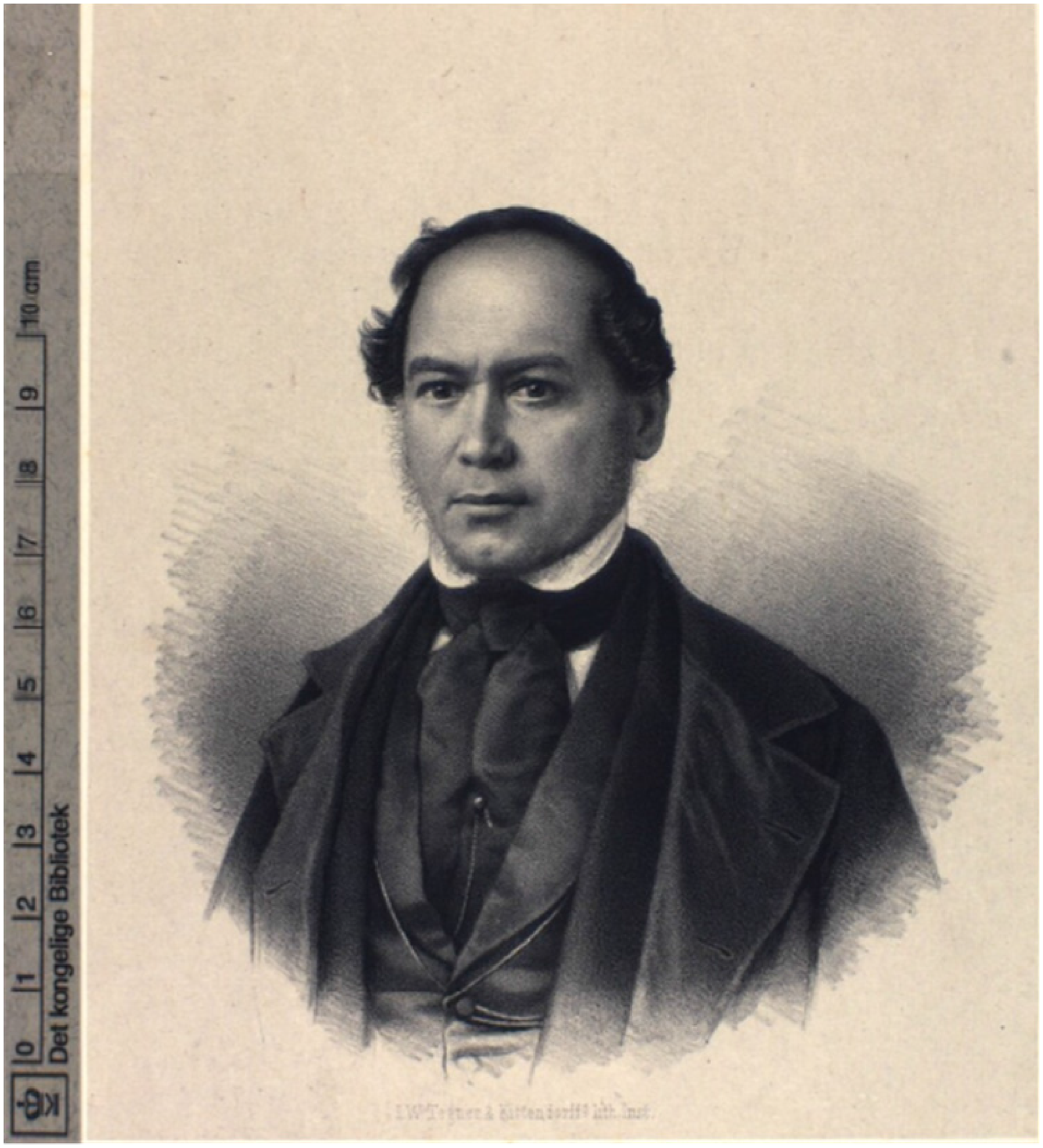
Although there are no drawings or paintings of Eliza, a portrait of her brother Frederik might give us some idea of her appearance, keeping in mind that siblings may not have similar looks. Frederik is portrayed around 1850 when he was forty-two years old and he is depicted as a stately man wearing a black suit, a high white shirt, and a necktie. He has a light complexion with dark eyes and hair.
Isac Wilhelm, Drawing of Frederik William Bentzon, 1850, Det Kgl. Biblioteks billedsamlingsamling.
Conclusion
This paper examines the lives of free colored women in the Danish West Indies during the period 1760–1850. The focus is on three women from three generations in Christiansted on the Caribbean island St. Croix: Frederica Matilda Trott, born as a slave and manumitted around 1760, her daughter Henriette Fransisca Coppy, born free and engaged in a long-term relationship with a Norwegian governor, and Henriette's daughter with this governor, Eliza Bentzon, who grew up in an affluent household and married a white merchant in Germany.
By examining these women's social strategies for defining and establishing their identities within a racially prejudiced society, this paper demonstrates that, consistent with other research in colonial plantation economies, free women of color were resourceful, tenacious, and independent, despite the challenges they faced. Frederica Matilda Trott's generation confronted strict regulations and restrictions on free colored people, which limited their mobility and opportunities. Regardless of these constraints, Frederica climbed the social ladder by acquiring and renting out properties in Christiansted, ensuring a comfortable life for herself and her daughters. In contrast, her daughter Henriette witnessed a shift in the perception of free colored women, with expanding opportunities. This change enabled Henriette to move out of the neighborhood designated for colored individuals and establish a life among white people. Eliza's generation saw a growing free colored population that challenged restrictive laws and regulations. Although full equality was not achieved until 1834, free colored people gradually experienced increased freedom, respect, and privileges. Born into a wealthy household with a white father and possibly a light appearance, Eliza exemplifies this change in social mobility. The personal histories of Frederica Trott, Henriette Coppy, and Eliza Bentzon reveal the emergence of a new group of free colored women in the Danish West Indies at the turn of the nineteenth century. These women, with Euro-Afro-Caribbean roots and a unique social and cultural identity, were self-reliant and determined. They built extensive networks within both free colored and white communities, enabling them to navigate the complex social landscape of their era. Their experiences exemplify the fluidity of social boundaries and the intricate interplay between race, gender, and class in the evolving colonial society.
This paper emphasizes the importance of understanding the diversity of experiences among free women of color. While the lives of Frederica, Henriette, and Eliza demonstrate the potential for upward mobility and social integration, it is essential to recognize that not all free women of color shared the same opportunities or outcomes. Factors such as individual circumstances, socio-economic background, and the broader social and cultural context they lived in, shaped their experiences, creating a spectrum of possibilities for free women of color. Their lives offer valuable insights into the diverse paths free women of color throughout the Atlantic world and beyond pursued to take control of their own lives, despite the racial prejudices and white social norms they faced.
In conclusion, this paper highlights the significance of examining the lives of free women of color in the context of the Danish West Indies, as it enriches our understanding of their multifaceted identities, agency, and persistence. By considering the historiography and the individual stories of Frederica, Henriette, and Eliza, this study demonstrates how free women of color navigated and negotiated the complex social landscape of their time, shaping their own destinies amidst the challenges they encountered.
Footnotes
Declaration of Conflicting Interests
The author declared no potential conflicts of interest with respect to the research, authorship, and/or publication of this article.
Funding
The author received no financial support for the research, authorship, and/or publication of this article.
