



Abstract
Several studies have shown the importance of the mother in the survival and wellbeing of her children. However, none of them have analyzed the rural areas of the Iberian Peninsula. In this article we use the life courses of more than 10 thousand children born between 1750 and 1959 to understand the effects of being motherless on the survival, educative outputs, and wellbeing. To achieve this, we use descriptive statistics as well as Cox and OLS regression models. Our results confirm that the mother is one of the most important relative for the survival and wellbeing of her young children.
Keywords
Introduction
“Madre no hay más que una” (there is only one mother) is a popular Spanish saying and it highlights the understanding of the importance of mothers in society. The saying suggests, on the one hand, that stepmothers cannot completely replace mothers in the care of children and, on the other, that the father is less important and more easily substitutable. The objective of this article is to verify the importance of the mother in rural Spain following the path of a noteworthy article written for the semi-urban town of Aranjuez. 1 In addition, we will study the effect of the loss of the mother on the survival of her children, as well as on their educational outputs (literacy) and biological well-being outputs (heights). We cover a longer period than Reher and González-Quiñones and we explore new variables, such as sex preferences, for the Spanish case. Furthermore, the global context presents certain differences between both case studies. The area analyzed here is completely rural, made up of more than 80 percent by day labourers and farmers. This article addresses the consequences of the absence of the mother for children at different ages and periods.
Several studies around the world have been done to confirm the importance of the mother in infant survival. 2 Sear and Mace 3 provide a useful overview of these studies. All the cited papers, without exception, confirm mothers as the most important person in their children's infancy. Mothers intervene in the wellbeing of their children in three ways. 4 First, they play a fundamental role in determining what their children eat. Especially during the first months of life, children are completely dependent on their mothers for nourishment. Second, they control the feeding of their children—during breastfeeding and later—and decide on the hygiene surrounding eating. Third, they protect their children and are in charge of caregiving, especially if their children are ill. In historical rural Spain, mothers also had an important role as an economic contributor to the family income. Women suffered income discrimination in comparison with males, but, in the majority of cases, the female income was necessary for the maintenance of the family (Silvestre 2005; Borderías and Muñoz-Abeledo, 2018).
Several papers based on life courses have studied the probabilities of death of motherless and fatherless children, mainly during infancy. 5 The death of a parent at a crucial time in a child's life may have potentially lasting health effects on that child. The economic, social, and epidemiological context also affects an individual's health and lifespan. Above this, the attitude to life of orphaned children and their behaviour in relation to health tends to differ from children with living parents.
Several studies indicate a connection between the death of a parent and life expectancy. 6 On average, young people who have experienced the death of a parent live shorter lives than their peers; they have poorer health habits and are more likely to smoke. 7 In addition, Andersson et al. 8 found that in Sweden between 1800 and 1895 only 40 percent of children who lost their mother in their first year of their life made it to the age of 15 years old and explain that “the death risk represented by being a motherless infant exceeded every other death risk for a child.”
Materials and Methods
We focus on a rural area called Middle Huerva, Aragón, which is located in the northeast of Spain (see Figure 1). The border of the area is 19 km away from Zaragoza, the regional capital. Our research analyzes fourteen villages: Alfamén, Aylés, Botorrita, Codos, Cosuenda, Jaulín, Longares, Mezalocha, Mozota, Muel, Torrecilla de Valmadrid, Tosos, Valmadrid, and Villanueva de Huerva. This area, a combination of plains and foothills near the Huerva river, was characterized by the production of cereal, wine, and sheep for the period. The total population was approximately 6,275 inhabitants in 1750, 9,493 in 1857, and 10,494 in 1950.
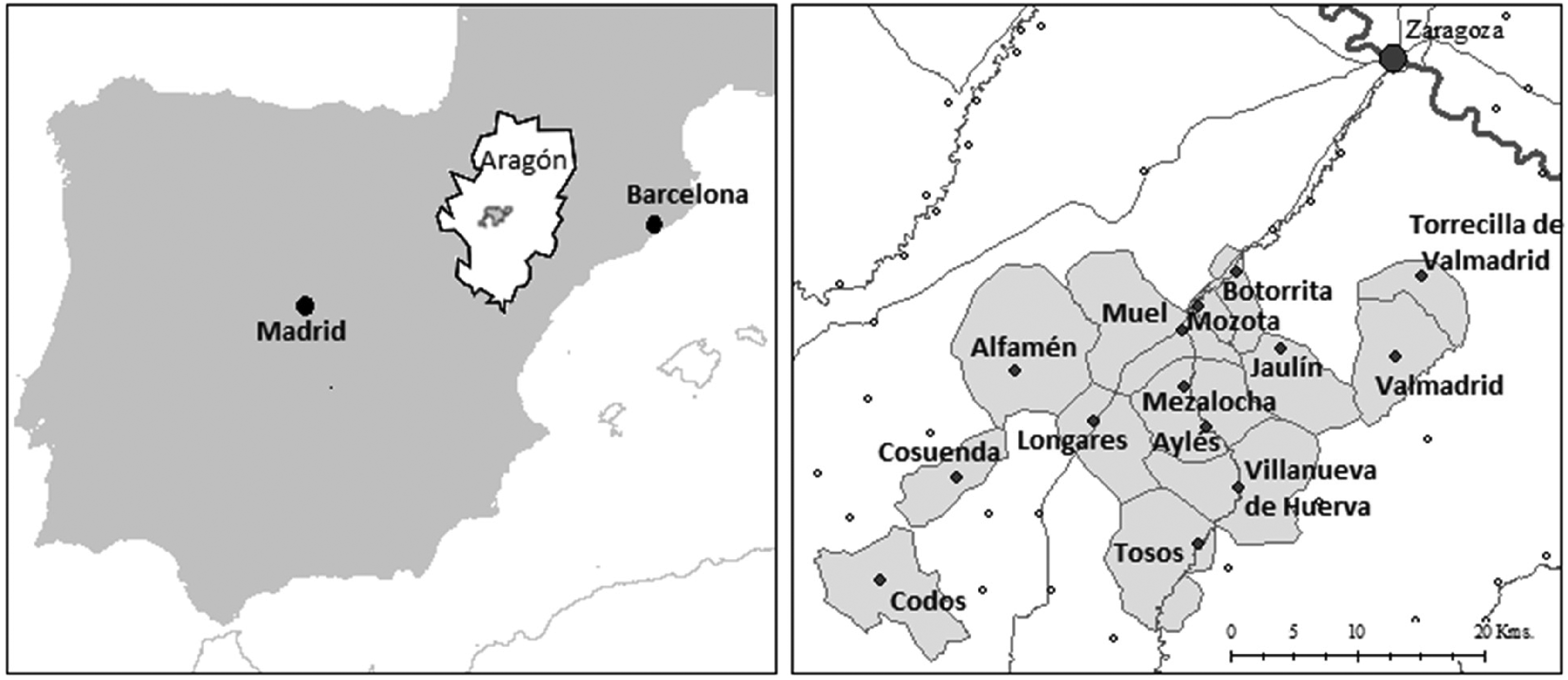
Area of study: Middle Huerva (Aragón, Spain).
We use the Alfamén and Middle Huerva Database (onwards AMHDB) throughout the paper. This database was constructed following the family reconstitution method proposed by Fleury and Henry 9 and offers high-quality insight into a rural context. The statistical analysis relies on the complete Church registers of these villages, which contain information on all births, marriages, and deaths that occurred from 1575 onwards. 10 It includes all individuals born in the study area or who migrated to the area (unfortunately we cannot follow the individuals who left the study villages). For children born in the last decade analyzed (1950s), data were obtained from interviews with families residing in the villages of interest. This has provided data on births and deaths of children and their parents after 1950. Parish records include all children born alive, because baptism was mandatory to access heaven in the Catholic faith. Due to the predominance of the quam primum (as soon as possible) catholic baptism practice, almost all infants were baptised within the first 24 h of life, most of them on the day of their birth. Only from the 1890s onwards did the birth-baptism gap begin to increase. Therefore, in this case we are not facing the limitation of data for the first 24 h of life, which the Civil Registration data of Reher and González-Quiñones had. 11 One problem associated with the study area is rural to urban migration, especially since the late nineteenth century, which became more pronounced from the 1960s onwards (at the end of our study). In any case, we must bear in mind that the focus of the study is on rural areas.
Here we analyze the period between 1750 and 1959. The main reason for the starting date is that registration quality greatly improved from 1750 onwards. Infant and child mortality rates before that date are too low, so the under-registration of deaths are an issue. We conclude our analysis in 1959 because, from that decade, the sample of infant and child mortality was too small to reach interesting conclusions. The period has been divided into three sub-periods according to the demographic modernization process: (1) the period prior to the demographic transition (1750–1869), which was characterized by high birth rates and childhood mortality of approximately 50 percent of children; (2) the first stages of the demographic transition, where a decline of childhood mortality took place (of about 20 percent in the early stages), but the birth rate barely decreased (1870–1909); (3) the period of fertility transition, when Spain became a country with low birth rates and low childhood mortality (1910–1959). Therefore, during this period (1750–1959), mortality of children in the first five years of life went from 40–50 percent for 1750–1770, to a mortality of 16.5 percent of children born in the period 1930–1949. This is relatively similar to the results found by Pérez Moreda et al. 12 for the country as a whole. Maternal mortality remained very high throughout the period given the lack of access to good medical care and prevailing poor hygienic conditions. The rate was approximately 450 deaths per 100,000 deliveries until 1930. 13
For most of this period, at least until the beginning of the twentieth century, the study area was characterized by a traditional regime of high fertility and low living standards, based on mostly low-productivity rain-fed crops. In this traditional rural society, there was also a strong preference for boys that had lethal consequences for girls. 14 Economic, social, and fertility modernization began in the early twentieth century, with an upward trend in per capita levels coupled with a reduction in average family size. However, it was not until the 1960s and later that living standards increased rapidly.
Marital fertility remained stable (at about 6–7 children born on average in complete families) until the beginning of the twentieth century. From that point on a rapid decline began, leading to an average marital fertility in complete families close to three children in the 1930s and even lower thereafter. Part of this rapid decline in fertility possibly stems from the reduction in mortality and the increase in average family size. Thus, until the 1880s the average family size of complete families was close to six members residing in nuclear families (two parents and four children in total). However, in the 1890s and 1900s the average family size in complete families increased to seven members, increasing the pressure on the family budget (in a period close to the agrarian depression of the 1880s). From that point onwards, the average family size started to decrease due to fertility control, falling below five members in the 1930s and continuing to decline. 15
In total, the database includes 16,145 children born between 1750 and 1959 (of which we can follow 11,610 until a later event, such as death or wedding, so they are included in the analysis). Of those, 7,089 were born between 1750 and 1869, 4,538 between 1870 and 1909, and 4,518 between 1910 and 1959. The database also includes a sample of height data (conscriptions) for 4,262 men who reached 21 years. This source is available from 1856 (individuals born in 1835 onwards) until the 1970s. All men were conscripted, including those exempt from military service, except fugitives and emigrants. When they were measured before the age of 21, the heights were homogenized following the criteria applied by Ayuda and Puche-Gil. 16
In order to analyze the consequences of the death of mothers, we have identified the children who lost their mother using their life history. Throughout the article, special attention is paid to children who lost their mother in the first 24 months of life. This criterion is very restrictive and reduces the sample size, but it produces the clearest and most precise results, which is why it was used for the statistical regressions. The analysis only considers children who died after their mothers (or in the same day) and those who survived. Although all the procedures present problems and possible selection biases, together they provide a comparative perspective on the effect of the loss of the mother on life expectancy and on the biological wellbeing of children. With this procedure, we have a sample of 1,177 children who lost their mothers during their first 24 months of life (1750–1959). In the case of the father, a similar criterion has been applied to the children whose fathers survived at least until they turned 10 years old.
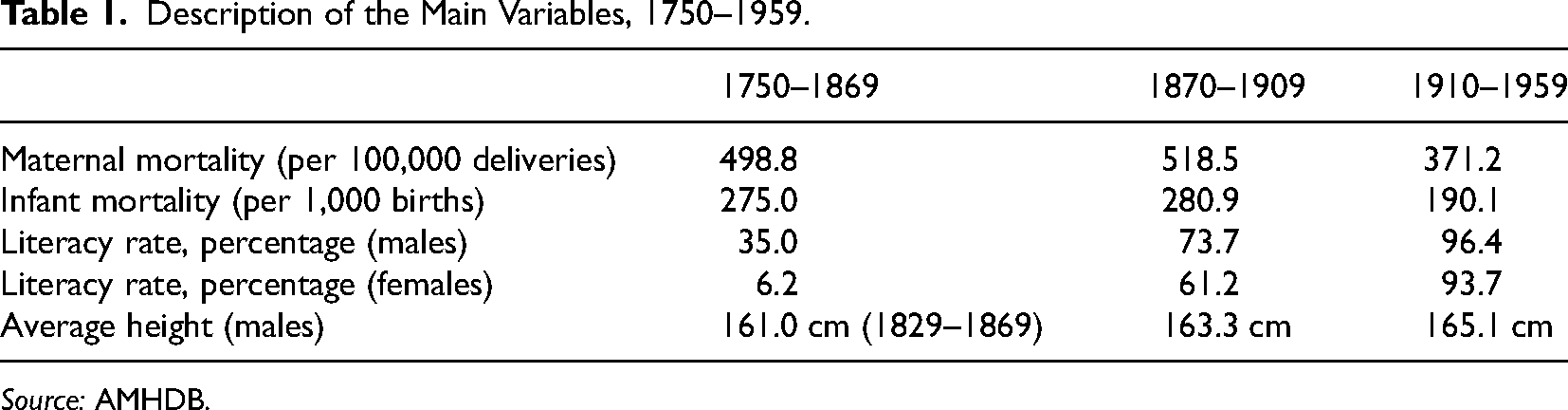
Table 1 presents data on maternal mortality, infant mortality, male and female literacy ratios and mean stature of individuals in the study area in each of the subperiods. These variables will be the basis of the whole article and we can see how they present similar values from 1750 until the beginning of the twentieth century, to produce improvements in the standards of living and survival from that moment on.
Description of the Main Variables, 1750–1959.
Source: AMHDB.
This article makes use of statistical techniques based on the probability of death at different ages, q(x), Cox proportional hazard models, and ordinary least squares (OLS) linear regressions with heteroskedasticity-robust estimation. Throughout this article we will use probability of death at different ages to compare children who lost their mother to those who did not. Cox proportional hazard regressions will be used to further investigate which factors influenced mortality in children under two years of age controlling by the mother's survival status. To obtain more complete and interesting results within the prob Cox proportional hazard it models we will also control for: parental occupation (as a proxy for socio-economic status); number of living siblings (as this might have had an effect), birth order (this is independent of the number of living siblings because of the high mortality rate, although in all cases the parity is higher than the number of living siblings); whether the year of death was a year of high mortality; and controls for village and decade of birth. The OLS linear regressions with heteroskedasticity-robust estimation will have each male's height at age 21 in millimetres as a dependent variable and aim to study whether being motherless (before the age of two) was a determinant of height at age 21. To this end, the different models will also take into account father's survival, paternal occupation (as a proxy for family socio-economic status), the individual's literacy (as a proxy for investment in him in his childhood), whether they claimed any health or physical problems in evading compulsory military service and controls for decade of birth and village.
Results
The results in this section provide various illustrations of the importance of the mother at different levels including probability of death, literacy output and biological wellbeing. We suggest health outcomes of mothers’ direct interventions especially through the probability of death analyses and divide this section into subsections to analyze different points of view.
The Importance of the Mother on the Probability of Death of her Children
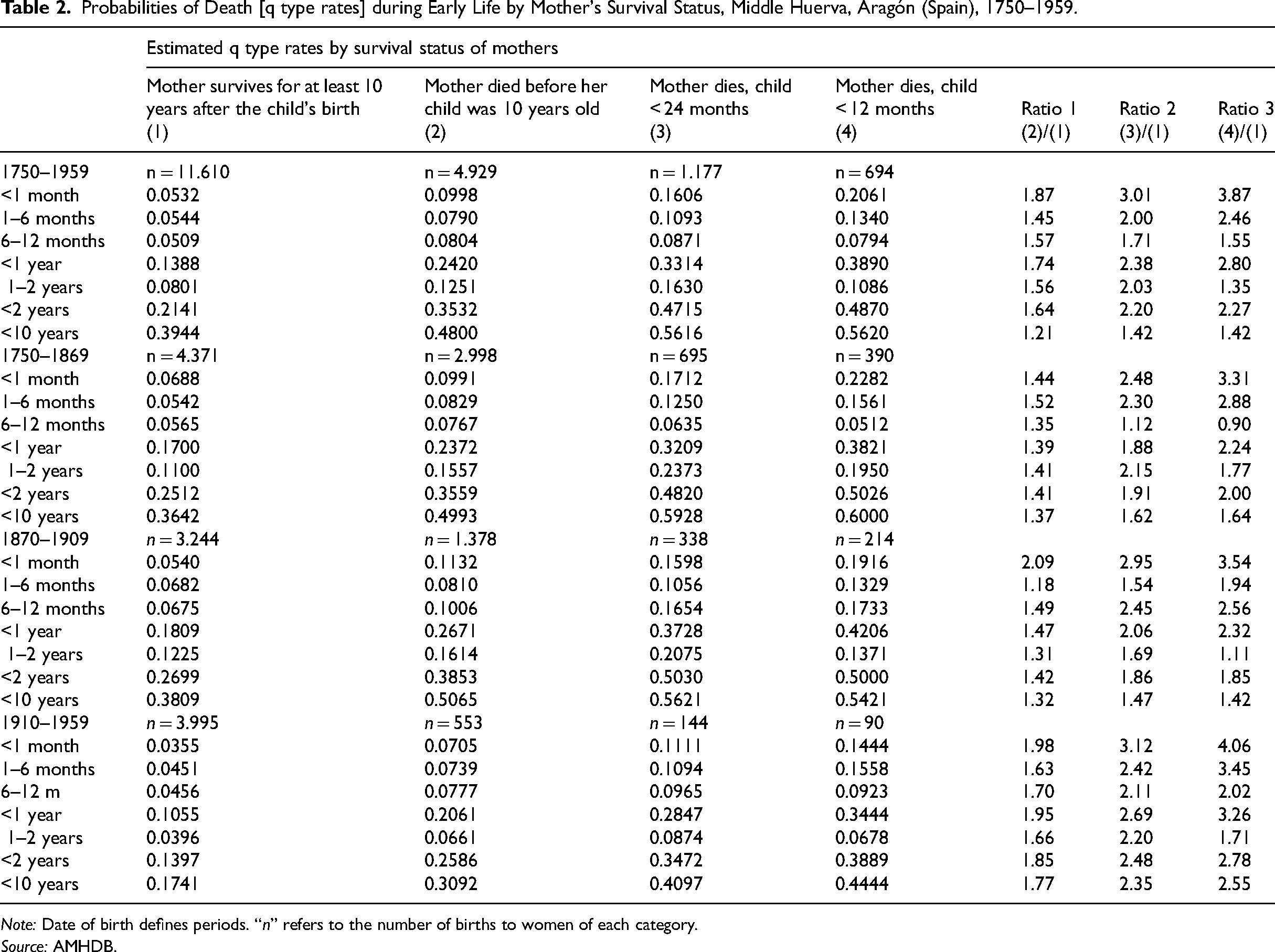
A mother's intervention in breastfeeding, feeding her children and caring of them had a great influence on their survival. Table 2 shows the probabilities of death of children according to the survival status of their mothers and the age of children at death. These results clearly point to the important role of the mother in the survival of her offspring. For the entire period, the chances of survival of children whose mother was alive until at least 10 years of age were between 1.4 and 3.9 times higher than those of children who had lost their mother. Losing a mother in the first one or two years of life doubled the chances of dying in almost all age groups, especially the youngest. The ratios obtained in our analysis confirm that the presence of the mother is a determining factor in survival.
Probabilities of Death [q type rates] during Early Life by Mother's Survival Status, Middle Huerva, Aragón (Spain), 1750–1959.
Note: Date of birth defines periods. “n” refers to the number of births to women of each category.
Source: AMHDB.
In analysing the probabilities of death for the three sub-periods mentioned above, we found that the mortality patterns by age were similar. The chances of dying for the youngest children, especially those younger than one month old, increased between 1.9 and 3.9 times if they lost their mother. Children from zero to nine years old continue to have high ratios. We not only confirm the importance of the mother, but also find that they were even more pertinent in the late stages of the demographic transition. However, the number of deaths (and thus the probability of death) decreased during the demographic transition, although without significant changes in the ratios. For example, the chances of dying in the group of children under age two are 0.5 (very high) in the period 1750–1869 among children who had lost their mother in the first year of life, but it decreased to 0.39 in the period 1910–1959. This represents a mere 22-percent decrease in the probability of dying. However, among children whose mother was alive until at least 10 years of age, the odds of dying before age two fell from 0.25 in 1750–1869, to 0.14 in 1910–1959, a decrease of 44 percent. In other words, the improvements in mortality were more beneficial for children whose mothers lived, although these improvements were felt to a lesser extent by all groups (we will discuss this in the Discussion section and propose an explanation for these results).
In Table A1 of the Appendix, we compare the age group with the most extreme results (the children who were younger than one month old when they lost their mother) separately. That is, we are taking only children whose mother died in their first month of life and they survived at least one day after her death. We have compared them with the children whose mothers survived at least until they turned 10 years old. The results show that, in the early stages of life, their chances of dying skyrocketed to 6.2 times higher than those whose mothers survived. After six months of age, however, the differences disappeared for those whose mother died in their first month of life, presenting an even lower probability of death. Therefore, if children survived past six months despite the death of their mother in the first month of life, they were more likely to survive than others who had not lost their mother. High mortality in the first months of life possibly conditioned children in such a way that only the strongest children reached six months of life and, therefore, their subsequent mortality rates were relatively low. Then there could have been a process of selection of the strongest. In addition, the mortality of children at an age close to that of their mothers has also been largely affected by perinatal causes that affect the mortality of the mother and the children, as noted for the majority of British cases by the Royal College of Pediatrics and Child Health. 17
Table A1 also shows that the odds of dying after the first- and second-year increase for children of surviving mothers but decrease for motherless children. It is possible that this is the consequence of selection biases. By multiplying the mortality of motherless in the first months of life several-fold, the strongest survived, and this may mean that they are less impacted by mortality problems later in life.
From the day of the mother's death, we have calculated how many more days they lived. The results confirm that the children who were the youngest at the time of their mother's death had the shortest life span. The mortality of children whose mother died during childbirth or very close to it (possibly due to perinatal causes) was especially high, and they usually died in the days following delivery. The effect of the mother is clearly very prominent, with almost 10 percent of the children who lost their mother between zero and five months dying in the week after their mother's death, and 17.5 percent in the following month. In the case of children between 6 and 23 months, these percentages drop to 3.9 and 7.6 respectively.
Table A2 confirms that the death of the mother had a strong impact on the chances of the survival of her children in the short- and medium-term. This was especially true among children who were in the early stages of breastfeeding, so their surviving family may have been forced to find a surrogate nurse. Likewise, it is possible to indirectly observe the influence of breastfeeding on the nutrition of children through the evolution of mortality. The results present some differences with those obtained for the Spanish town of Aranjuez with a similar analysis for a shorter period. 18 In our study area, if the mother died in the first week of life, 9.5 percent of the children died in the first five months (12.5 percent in the case of Aranjuez). If the mother died in the first month of life, 17.5 percent of the children in our study area died in the first five months (37.5 percent in Aranjuez). In this sample, we require that the child survives for at least one day after the death of the mother. This factor alone does not explain the gap between Aranjuez and our area. Since it is a traditional rural environment, the majority of fathers who had just lost their wives could have had more relatives in the same locality (such as grandparents, siblings, brothers, and sister-in-law or nephews) who could have helped the child's upbringing in the early stages after the death. Maternal grandmothers, for instance, have been found to improve the survival of children, but paternal grandmothers worsened their chances and grandfathers had no effect. 19
The Importance of Other Family Members Residing in the Same Household of the Mother on Probability of Death
Various studies have shown that other relatives could partially substitute the role of the mother, although not as efficiently. 20 In Table A3 of the Appendix, we analyze the role of fathers and mothers as a function of the number of siblings. The results are diverse, but we must keep in mind that this is an approximation including relatives but with a relatively small sample that could be skewing the results. The lowest mortality is found in households with both living spouses and a large number of children who could help with parenting. The probabilities of death were very low in these households (among the lowest found in the entire paper). If there were no other children who could collaborate for the rearing of the newborn, the probabilities of death increased between 1.7 and 2.4 times. However, this can also be linked to inexperienced parents (or “unhealthy families”). The number of living siblings, in this case, would not only be additional help for caring for the newborn, but would also be a sign of households with families with better hygiene behaviours.
More interesting are the results in Table A3 Columns (3) and (4), where there is a widowed father who takes over the household. The results confirm that no member of the family can replace the mother, especially during lactation. We found ratios between 4.6 and 0.6 times the probabilities of death with respect to families with both parents and several siblings. Siblings perhaps required a mother's directions in order to improve the chances of a newborn's survival. However, the most extreme result occurred when only the father was alive and there were no other children available (or just one) to care for the newborn. In that case, mortality rates for children under two years increased between 5 and 11.4 times, with the majority of children who had lost their mother dying in the first months of life.
These results have two implications: (1) a significant number of widowed fathers seem to have been unable to take a correct care of the newborn, and (2) that the number of living siblings could have affected the probabilities of the death of children, even when the mother was alive.
The limited effect of fathers on the survival of their children could perhaps be explained by the gender roles in households. Traditionally in rural Spain the role of childminding was not assigned to fathers; they were not prepared for the responsibilities associated with childcare. A young child could be a daily burden, it could disrupt work life, reduce socialization activities, and reduce the chance of remarriage. This result could also be attested to the misleading effect of the small sample size or other factors that we cannot control, so the explanation of gender roles should be taken with caution. In fact, the small sample size in Table A3 may have affected the results (which is why the results in Table 3 regarding siblings are more interesting). More data are needed to delve into these possible explanations and to understand the role of the father after the death of the mother. In any case, across studies on the role of fathers in child survival, only a third find any positive impact of the presence of fathers. 21
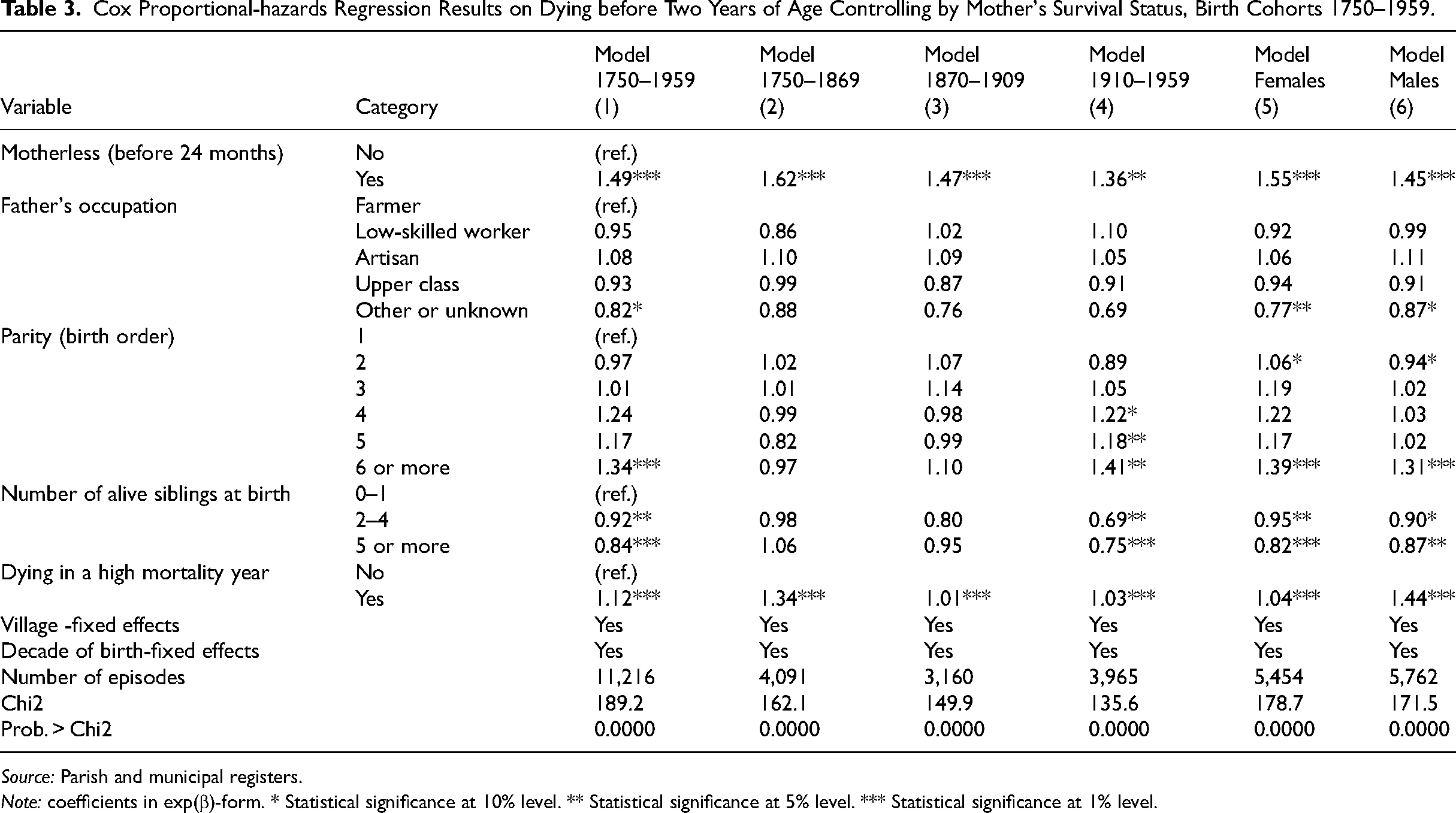
Cox Proportional-hazards Regression Results on Dying before Two Years of Age Controlling by Mother's Survival Status, Birth Cohorts 1750–1959.
Source: Parish and municipal registers.
Note: coefficients in exp(β)-form. * Statistical significance at 10% level. ** Statistical significance at 5% level. *** Statistical significance at 1% level.
The Importance of Mother and Siblings From Multivariate Regression Models (Confirming the Previous Findings Using Event History Analysis)
Following the results of the previous subsections, in this subsection we want to confirm the results by using multivariate models. To do so, in Table 3 we have run six Cox proportional hazard regression models whose dependent variable is the death of a child before two years of age, controlling by the survival status of the mother. All models have the following independent variables: being motherless (the mother predeceased the child); the paternal occupation (as proxy for family socioeconomic status); the birth order of the children 22 (since parity might have affected mortality); the number of living siblings (to confirm their role in the survival of the newborns); whether the year of death was a year of particularly high mortality; and controls for village and decade of birth. The six models are distributed as follows: (1) Complete model, (2) Model for the birth cohorts 1750–1869, (3) Model for the birth cohorts 1870–1909, (4) Model for the birth cohorts 1910–1959, (5) Model for girls only, (6) Model for boys only. These models allow us to interact the presence of the mother with other variables such as household size or family socioeconomic status.
The results in Table 3 are clear and consistent. In all models being motherless is associated with an increased chance of dying of more than one-third and usually more than 50 percent. Another significant variable is birth order; children born in high parities increased their chances of dying by between 20 percent and 40 percent. This may be due to the fact that they were born to older mothers, which would be associated with greater problems during birth and even with problems in the development in the womb. In historical periods it is common to find poorer health status and higher mortality among children born to older mothers. 23 As shown earlier, the number of siblings is strongly associated with a lower chance of sibling death (20 percent). Therefore, siblings are important to the survival of newborns, but not nearly as important as the mother, who is twice as important according to the coefficients of Table 3. In addition, it is interesting to note that increasing parity (related to increasing maternal age) was associated with higher odds of newborn death. However, a higher number of living siblings was linked to higher odds of survival, highlighting the importance of the presence of siblings independently of the parity. Also, as expected, epidemic years were associated with higher mortalities.
One point in which Tables 2 and 3 differ is in the intensity of the effect of the mother's presence. While in Table 2 a slight increase in the importance of this factor in mortality can be observed, in Table 3, controlling for various factors, a slight loss of importance is observed. On the one hand, we must take into account that they are different methodologies and that infant mortality in the last subperiod is very low. On the other hand, the result obtained seems to indicate that, controlling for other family and environmental factors, the loss of the mother can be softened in a context of medical and economic improvements and low mortality from contagious diseases.
The Sex Preferences and Their Influence on Probability of Death
A fundamental factor that has conditioned demographic behaviour in rural Spain is the preference for sons. 24 The existence of preferential behaviour towards boys has been observed for the study area. 25 This led to an excess in the mortality of girls during the period prior to the fertility transition, and even during the first decades of the twentieth century. 26 However, little has been done to understand whether discriminatory behaviour is mainly conditioned by one parent or by both parents at the same time. Figure 2 shows the mortality ratios, following the methodology applied so far, according to the sex of the deceased child. The results must be explained from the biological (greater weakness of boys) and social (preference for sons) contexts. Despite the greater weakness of boys during the first months of life, it is motherless girls who experience the greatest increase in mortality in the first month of life. They suffered strong discrimination, and that ultimately affected their mortality during the weakest period of their lives. In the rest of the studied period, between the first month of life and the first year, boys and girls show similar excess mortality rates, although slightly higher in the case of boys. This is explained by the greater weakness of boys and because, during that period, children were breastfeeding (weaning started at around six to seven months of life, when mothers would start combining breastfeeding and solid food). This meant that newborn did not compete with other family members for family resources during breastfeeding. Some authors have pointed out the possibility that boys had biological advantages over girls during, at least, the second half of the first year of life. 27 However, this is unclear according to the results of our analysis. The second period in which the mortality ratio of girls was lower than that of boys was between two and nine years. This is different from what Pavard et al. 28 find in Canada in the seventeenth and eighteenth centuries where there was a threefold increase in mortality for motherless girls, compared to motherless boys, after the age of three. In this period, the strongest children survived and discrimination in food or care has less impact on mortality. Even so, in the total ratio of the number of boys/girls alive, the mortality of girls up to ten years of age continued to be higher than that of boys until the twentieth century.
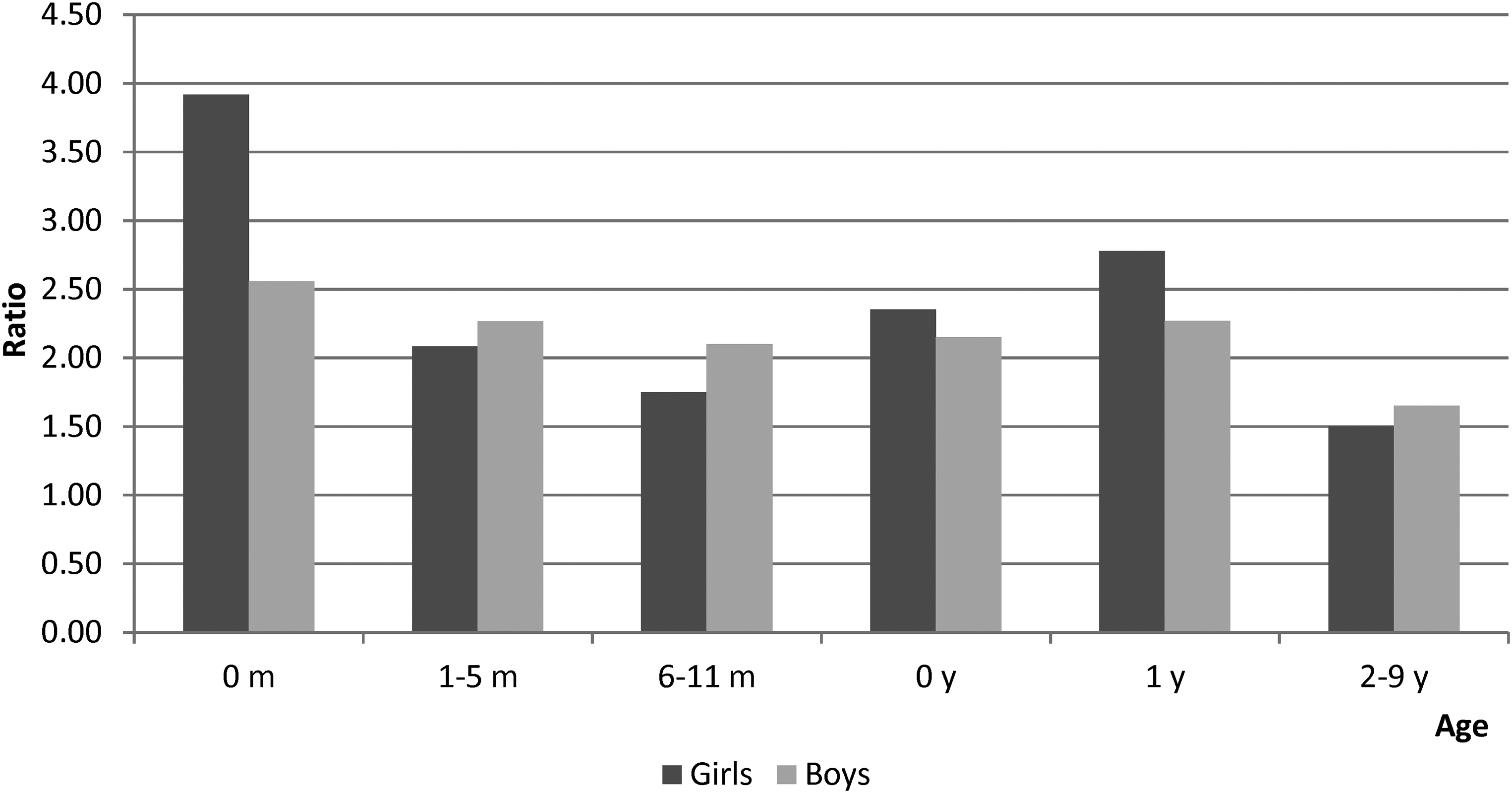
Sex differences in excess mortality, Middle Huerva, Aragón (Spain), 1750–1959.
In addition, some work suggests that there could be epidemiological factors that could also play an important role in sex-specific differences in childhood mortality. 29 Therefore, the explanation of gender preference to explain the mortality found is not the only possible one. However, what is notable is that we have found differences in mortality by sex after the loss of the mother at young ages.
The Effect of the Loss of the Mother on Child Development
To this point we have focused the analysis on the probabilities of death, but our interest goes further. We want to analyze the connection between the presence of the mother and the good biological and social development during childhood and youth. We measure this through two variables. We approach social and cultural development through the literacy rates of men and women, and biological wellbeing through the use of the heights of military conscriptions (at 21 years old).
The educational level of the mother and its impact on reducing childhood mortality during demographic modernization has been analyzed for different places. 30 The educational level of mothers in urban Spain increased their children's chances of survival through better feeding patterns and greater attention to the advice of health authorities. 31 However, little is known about the impact of the death of a mother on her children's education. Mothers (especially literate ones) have played a fundamental role in the development of class attendance habits as well as transmitting the importance of education to their children. 32 At the same time, mothers, through their participation in the labour market, allow their children to attend school until later in life. 33 Mothers thus prevent their children's possible early entrance into the labour market. 34 According to Reher and González-Quiñones 35 for the Spanish case: “A reduction of family income leads invariably to earlier entry of children into the labour market.”
However, in Table 4 we find that there were huge differences in literacy rates between motherless sons and daughters (who lost their mother in the first two years of life), and those with both parents alive. Looking 1850–1909 for this analysis (given that the first Spanish census with information on literacy is that of 1860), we can see that the difference in literacy between boys with both parents and boys without a mother is almost 12 percent, and the difference for girls is almost five percent. These differences by gender could be the consequence of the different economic role of boys and girls at early age. In the rural agrarian context that we are analysing, boys were more appreciated in agricultural tasks, so they had more job opportunities with which to substitute school attendance. At the same time, motherless children did not have a mother insisting on the importance of attending class. The role of father could not be a complete replacement of mother's role in this regard.
Percentage of Literate People (over 18 years old) by Mother's Survival Status, Middle Huerva, Aragón (Spain), 1850–1909.
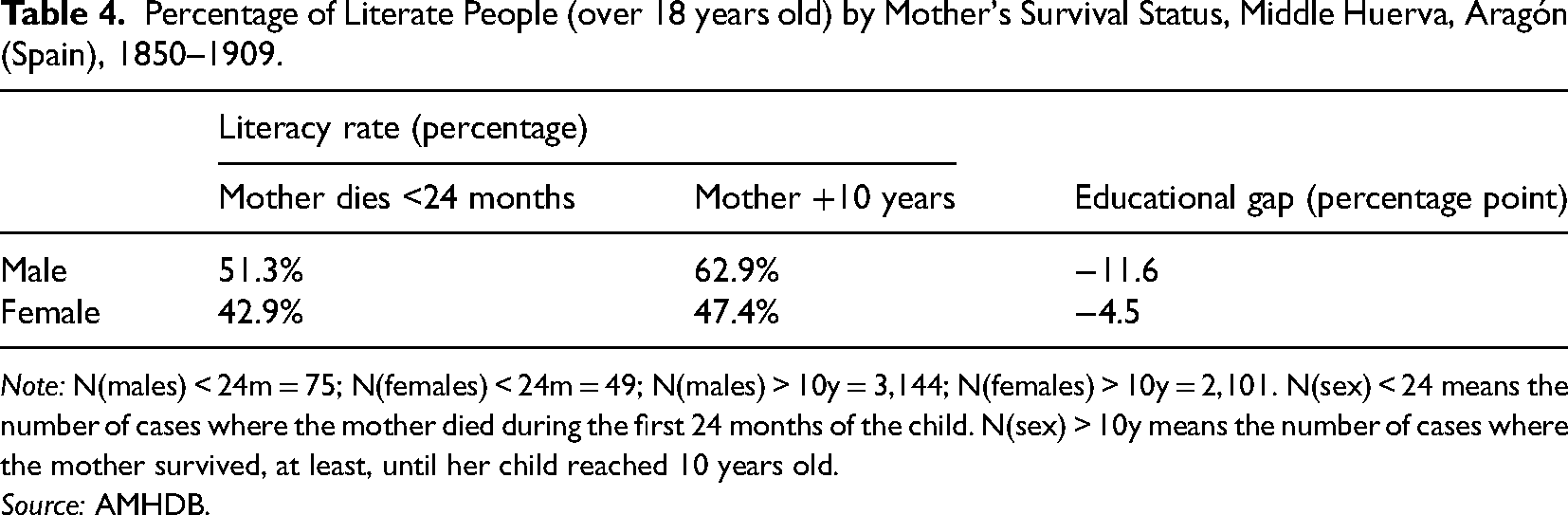
Note: N(males) < 24m = 75; N(females) < 24m = 49; N(males) > 10y = 3,144; N(females) > 10y = 2,101. N(sex) < 24 means the number of cases where the mother died during the first 24 months of the child. N(sex) > 10y means the number of cases where the mother survived, at least, until her child reached 10 years old.
Source: AMHDB.
The results of Table 4 confirm that the mother not only played a fundamental role in the development of the child through nutrition: other cultural and social factors, such as educational level, were also affected by her absence. This influence could have played out in two ways. On the one hand, children might have needed to replace the mother's secondary breadwinner role through their own work. 36 On the other hand, the greater importance of the mother in caring for the children and ensuring compliance in their educational habits (including attending classes and completing their homework) could have had negative effects on motherless children.
We also compare the biological wellbeing of motherless children and those with both parents alive by heights of military recruits. Heights are a cumulative indicator of the nutritional status of young soldiers from conception to the point of measurement. Parents play a fundamental role in height beyond the important genetic component. They are the ones who provide food and care for their children, especially when they are young. Biological wellbeing is determined by nutrients received, diseases experienced, and care received. In all these cases, parents play a fundamental role in: the distribution of family income; the type and quantity of food they give to their children; the care they give during childhood and adolescence; and the hygiene maintained to avoid contagious diseases.
Table A4 of the Appendix shows the stature of young men at conscription (around 21 years of age) in relation to the survival status of their parents. The sample includes 4,262 men. The results show that men whose mother died in the first two years of life were on average 14.3 millimetres shorter than men whose parents were alive during their childhood and adolescence. In this case, we can only analyze boys, but the result seems to confirm the results found above. Another interesting possible finding of Table A4 is that the differences in height could have converged over time. Just as the probabilities of death were reduced by improvements in living conditions, the gap in levels of biological wellbeing could also have been reduced. According to our results, even in a male breadwinner society, when mother's roles were not necessarily linked to their economic contribution to the family, their presence still had an effect on the survival of their children.
However, as mentioned above, the results in Table A4 should be treated with caution due to several limitations of the data. The small sample size, especially in the first and last sub-periods, could be biasing the sample. In addition, there are several biological factors (such as the growth process and its stages) that we cannot take into account and that could explain the results. 37
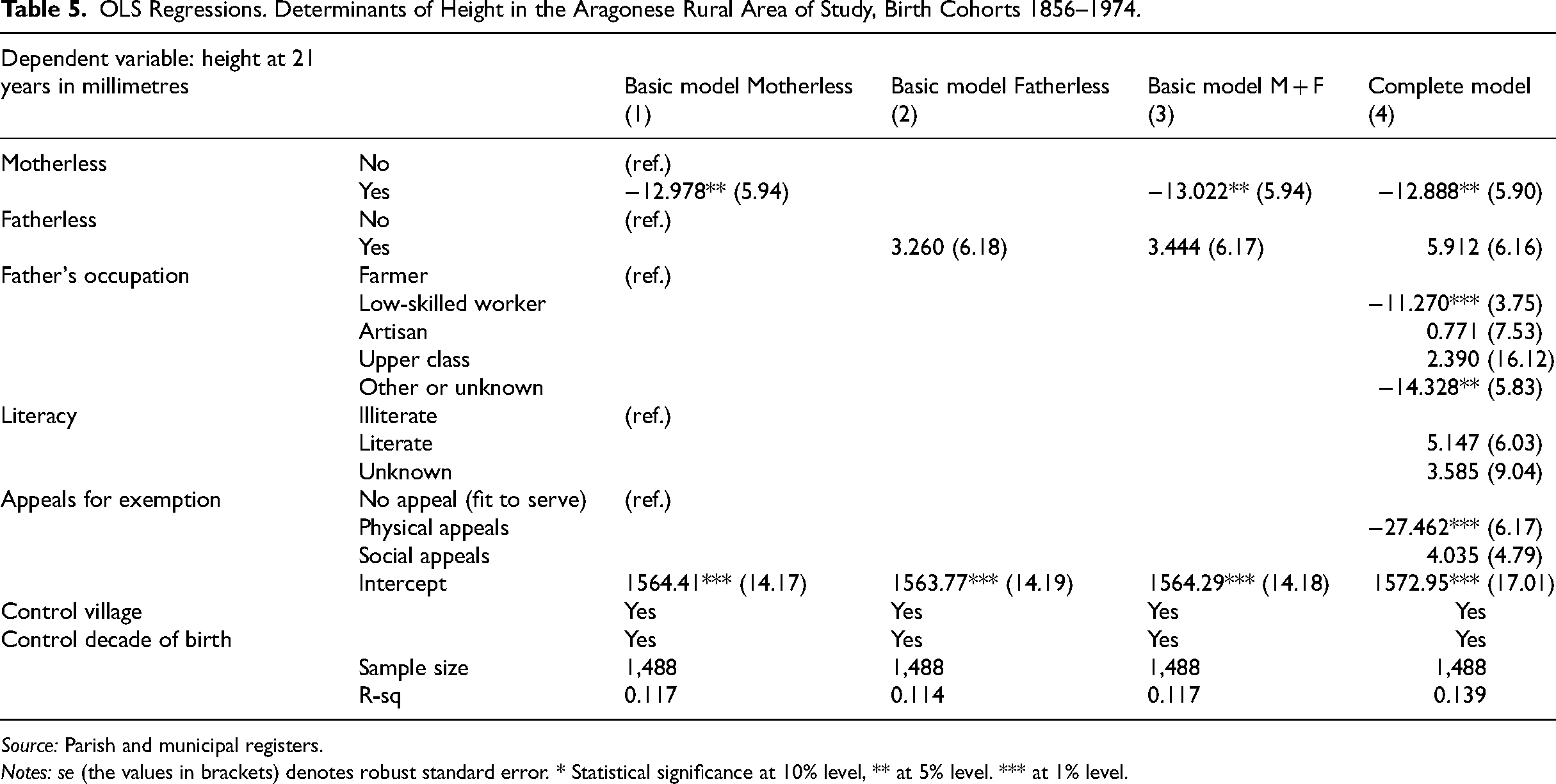
To confirm the relationship between being motherless before the age of two and height, in Table 5 we have conducted four models of OLS linear regressions with heteroskedasticity-robust estimation. Our aim is to confirm, as elsewhere in Europe, that there was a negative relationship between height and motherlessness. 38 This would be independent of the improvements in height that occurred throughout the nineteenth and twentieth centuries with economic and social modernization. For this purpose, we have taken as a dependent variable the height of the individuals at 21 years of age in millimetres. In relation with independent variables, the first model only includes motherlessness before the age of two and controls for village and decade of birth. The second model replaces motherlessness with fatherlessness. The third model includes both variables along with controls. Finally, the fourth model builds on model 3 but also includes paternal occupation, literacy and appeals to avoid military service. The results, in all models, indicate that motherlessness was related to an average height at age 21 that is between 1.2 and 1.3 cm shorter. No (significant) relationship was found for fatherlessness in deaths before the age of two years. Regarding the rest of the variables, being the child of a low-skilled worker was related to an average height approximately 1 cm shorter than others and having physical problems at age 21 was associated with a strong penalty in height of more than 2.5 cm. In short, all the multivariate models confirm the descriptive statistics. Male children who had lost their mother before the age of two suffered a strong penalty in biological wellbeing during childhood.
OLS Regressions. Determinants of Height in the Aragonese Rural Area of Study, Birth Cohorts 1856–1974.
Source: Parish and municipal registers.
Notes: se (the values in brackets) denotes robust standard error. * Statistical significance at 10% level, ** at 5% level. *** at 1% level.
The differences in height that result from the regression models (Table 5) are slightly larger than in the table with descriptive statistics (Table A4 of the Appendix). This is possibly telling us that, controlling for a set of factors such as socioeconomic status or literacy, the role of the mother is even more evident in the biological well-being of the children. Even though in-depth research on this issue is necessary given the small sample size.
Discussion and Preliminary Conclusions
This paper has allowed us to draw interesting conclusions about the important historical role of the mother in rural Spain. Mothers were especially important in the first years of children's lives, when they are most vulnerable to disease and the effects of nutritional problems. According to our findings (Table 2), mothers were particularly vital in the period prior to weaning. In those first months of life the mortality rates of motherless children were up to four times higher than those of children with their mother alive. Therefore, breastfeeding is confirmed as a fundamental moment in the survival of children. From weaning, children receive solid food, being able to survive without breastfeeding. Access to solid food was also linked to the possibility of receiving spoiled food, bacteria and viruses through untreated water. At this point, the presence of a mother figure could be key in trying to take greater care of the quality of food and hygiene in its preparation (especially from the late nineteenth century onwards when health knowledge increased). Given the long lactation processes combined with solid foods in Spain, the death of the mother was a strong shock to the feeding patterns of children during the first years of life. Our results have also found a reduction in the probability of death six months after weaning began in the area being studied. 39 That is, the chances of dying despite the shock of the loss of the mother were reduced when solid foods were replacing breastfeeding (even partially).
The most advanced stages of childhood and adolescence were also affected by the presence of mothers, although the negative impacts of losing a mother were less intense. Our results to this point have confirmed those obtained elsewhere in the world included in the above-mentioned bibliography. Rural Spain is no exception when it comes to the importance of the mother. Both descriptive statistics and different regression models have confirmed this point. However, the coefficients obtained have tended to be higher over the more than two centuries of study. Thus, the role of mothers was especially prominent in this context with living standards close to survival. Changes in mortality over time have also been influenced by the fall in mortality from infectious diseases and the development of a public health system. 40
This paper has also allowed us to verify the important role of the mother in the demographic transition process, directly (through her interventions) and indirectly (through her behaviour), with visible effects on the survival and wellbeing of children. The probabilities of death decreased with the demographic transition process, although the ratios of the effects of maternal mortality on the probability of death were not reduced. In our results there is an important issue, which according to our findings may be counter-intuitive, concerning why the mother-effect increased in importance in our study area over time, especially during the demographic transition. We have a tentative answer, which needs to be confirmed by further studies.
Before the demographic transition, child mortality was very high in rural Spain due to the widespread presence of contagious diseases and the incorrect hygienic context in which these children grew up. Parents had little knowledge and few skills to combat these diseases and reduce their children's mortality. However, childhood mortality related to contagious diseases started to decrease in the study area in the last third of the nineteenth century due to multiple factors related to hygienic-sanitary improvements and social and economic modernization. 41 During the last decades of nineteenth century and the first decades of the twentieth century, there were improvements in the education of mothers and a greater dissemination of knowledge about hygiene and health. The role of mothers in the survival of their children had increased due to their increased knowledge and the reduced presence of epidemic diseases. This would explain the increase in the gradient of being motherless over time. The “chance” factor was reduced (i.e., involuntary exposure to contagious diseases was reduced) and maternal knowledge increased in importance. Thus, motherlessness became even more important despite economic and health improvements; this was not because the mortality of motherless children increased, but because it increased in relative importance.
The children of widowed fathers and without siblings (to collaborate in the upbringing of the newborn) experienced high death rates. More research is needed on this point to verify this result. The newborn's gender was also a determining factor for his/her survival. Our results (especially the finding of Table 3) confirm the historical discrimination against girls that had existed in our rural Spanish study area until the early twentieth century. The death of the mother increased the chances of dying for girls under six months by 4–5 times, while for boys it was 0.5–3 times.
In the later stages of childhood, we found that mothers exerted great influence on the literacy possibilities of their children (especially boys). This is possible the consequence of a lower age of entry into the labour market for motherless children (as opposed to those with both parents), and the lack of the mother to establish habits around education and its importance. We have also found important effects on the biological wellbeing of children who lost their mothers. For most of our period of study, men who lost their mothers in the first two years of their lives were more than a centimetre shorter than those with both parents (which was confirmed by both descriptive statistics and regressions). This could have occurred because of the loss of their mother's income and maternal care. Children with mothers not only benefited from increased survival through their care but were also healthier in the first months of life, which had a strong impact on their biological wellbeing as they reached adulthood.
We must bear in mind that this is a rural population from villages where around 4,500 individuals disappear from the sample throughout the period. Most of them to marry in nearby villages or to go to work in the cities (mainly Zaragoza or Barcelona). Due to the available data, we cannot easily follow individuals once they have left the study area. This is a limitation for our conclusions. However, we do not have any evidence to think that out-migrated individuals had a differentiated behaviour.
How the loss of a mother affects children and adults today is still debated. 42 This is especially pertinent in developing countries, where the government is not strong enough to provide the basic needs of these children. Adapting this type of research to current societies is a challenge for contemporary social scientists. The role of the mother has been, and possibly continues to be, the most important factor in the development of her children in childhood and adolescence.
Supplemental Material
sj-docx-1-jfh-10.1177_03631990241258997 - Supplemental material for “There is Only One Mother”: The Importance of Mother in Rural Spain, 1750–1959
Supplemental material, sj-docx-1-jfh-10.1177_03631990241258997 for “There is Only One Mother”: The Importance of Mother in Rural Spain, 1750–1959 by Francisco J. Marco-Gracia, Amy Rommelspacher and Youngook Jang in Journal of Family History
Footnotes
Declaration of Conflicting Interests
The authors declared no potential conflicts of interest with respect to the research, authorship, and/or publication of this article.
Funding
The authors disclosed receipt of the following financial support for the research, authorship, and/or publication of this article: This work was supported by the Ministerio de Ciencia e Innovación, Gobierno de Aragón (grant number PID2022.137302NB-C32, S55_23R).

Supplemental Material
Supplemental material for this article is available online.
Notes
Author Biographies
Supplementary Material
Please find the following supplemental material available below.
For Open Access articles published under a Creative Commons License, all supplemental material carries the same license as the article it is associated with.
For non-Open Access articles published, all supplemental material carries a non-exclusive license, and permission requests for re-use of supplemental material or any part of supplemental material shall be sent directly to the copyright owner as specified in the copyright notice associated with the article.
