




Abstract
The article investigates the relations, in the light of new paradigms of economic development, between trust and economic wealth at the micro level in the Republic of Latvia, by means of a structural equation modelling-based approach and a framework combining social capital and social identity theory, in a rationale of cross-fertilization between social and cognitive science. Results are also tested against control dimensions reflecting relevant divides in Latvian society (residence place dimensions; ethno-linguistic belongings; educational differences). General results support the hypothesis of the existence of a causal path connecting personal wealth, institutional trust, social engagement and trust towards people. Results are found to be highly sensitive to the geographical and educational divide (but not to the ethno-linguistic one).
Introduction
A promising but largely unexplored area of cross-fertilization between social and cognitive science consists in the study of the relations between cognitive and relational determinants of space in cities and regions (Aydalot, 1986; Healey, 2006). In particular, the study of how relations between agents in a geographical environment and territorial-related factors affect individual and group cognition (and, in particular, individual and collective social identity and the self) still requires much development in theoretical and methodological terms.
In the present study, which is meant, from the empirical point of view, as a pilot one, we attempt to integrate individual and socio-territorial levels of analysis by adopting a theoretical framework, encompassing social psychology and community sociology approaches to social assets and social identity generation. In particular, we emphasize the thesis that significant others – both important people and close, direct social communities – are included in the representation of the self (cf., e.g., Saribay & Andersen, 2007, for overviews cf. also Swann & Bosson, 2010, Hogg & Terry, 2000, Abrams & Hogg, 2010). In the present article, social groups and social communities are meant as synonymous terms.
As a conceptual background of our study we assume a model according to which social identity is generated in an interaction between three different levels of social categorization: (1) self-categorization (referring to complementary processes of differentiation and belongingness, Brewer, 1991; Brewer & Gardner, 1996) generating the core component of the social identity – the self; (2) categorization of immediate, direct social groups (such as family members, close relatives, important colleagues and friends, but also teams of interests, collectives and institutional communities) (Saribay & Andersen, 2007); and (3) categorization of large-scale social communities (such as communities sharing a common political or ethnic identity) (cf. Abdelal et al., 2009). The main principle governing the underlying structure of the previously mentioned model is that the first-level (self-categorization) is the most significant in the social identity generation. Furthermore, the first level is also the most inclusive one since significant others (both persons and groups) are frequently included in the self-representation. The third level (large-scale communities) is still important but has a lower impact on the social identity generation. (cf. Pencis et al., 2011). There are social communities (with global, trans-national, and virtual but at the same time psychologically real and significant links) partly overlapping and partly transcending the third-level categorization. The more detailed analysis of them is a subject of a separate study (cf. Buchan et al., 2011).
In the present article, social identity and social categorization theory (theory of the social self, in particular) are integrated with another research framework, which is based on social capital: one of the leading concepts, which has emerged in social science in the last decades, in order to interpret social structure features such as community linkages and boundaries (Bourdieu, 1986). The concept has been used as a theoretical framework in order to study the growth and enrichment of resources related to groups, organizations, communities, by means of social interaction and linkages. In community and regional studies, social capital is seen as a tool to interpret the structure of society (Woolcock, 1998) and a set of factors behind socio-economic development.
In spite of the wide range of use of the concept, however, the adoption of the social capital concept in order to investigate socio-cognitive dynamics has been very limited. Still, the potential of social capital as an analytic tool for the study of cognitive dynamics is acknowledged in several areas of social science. Cross-fertilization attempts at integrating research on social categorization on the one hand, and large-scale social dynamics on the other hand, are, however, still missing.
In our study we combine social categorization theories with social capital theory in order to investigate the way in which social capital dimensions (meant in this context as more or less aggregate levels of categorization) affect the social self of the individual. A quantitative approach for the pilot empirical analysis is adopted, based on advanced multivariate statistics (structural equation modelling (SEM)); the analysis is carried out at the individual level. The results are tested for different clusters of respondents, divided according to socio-demographic, socio-economic and socio-cultural control dimensions.
Literature review
Social capital and learning dynamics
According to a largely shared definition, social capital is meant as the complex of resources embedded with durable relational networks (Bourdieu, 1986). The most popular thread of social capital-based studies, which is focused on social resources at the community level (Woolcock & Narayan, 2000) and is epitomized by Putnam’s work (1993), is indeed based on a positive view of social capital as a key factor behind social cohesion and socio-economic welfare. However, this view has been criticized as being simplistic from many different points of view. Many critics have focused on the underestimation of possible negative dynamics related to strong intra-community social linkages, ranging from intolerance towards diversity and alienation of outsiders, to ‘amoral familism’ (term first introduced by Banfield, 1958; see e.g. Adler & Kwon, 2002; Marques, 2005; Hadijmichalis, 2006). It is interesting to note that some of the sharpest critiques have come from an (at least implicitly) cognitive perspective, stressing the sterility of socio-geographically bounded cultural-cognitive systems, unable to interact with diverse social environments. The following adoption of taxonomies of social capital taking into account bonding (intra-community) and bridging (inter-community) components (Aldridge et al., 2002), stressing the difference existing between consolidated bonds among homogeneous actors, and sporadic contacts among heterogeneous actors, is actually based on the view of a complementarity of the two systems of bonds, in order to access both useful internal and external knowledge and information channels.
However, studies dealing with the cognitive effects of social capital are surprisingly few. Both insufficient cross-fertilization with cognitive and behavioural science (eventually also due to the difficulty of integrating different theories and methodologies), and the almost exclusive emphasis on ‘tangible’ outcomes and macro- (community-)level analysis may account for this limit. Partial exceptions are the regional science thread studying relational assets as collective learning and innovation determinants in regions and cities (Capello, 2002), and educational studies investigating the effect of community linkages on educational achievement (Putnam, 2000). Such studies, however, are not concerned with a deep investigation of socio-cognitive dynamics. A more sophisticated attempt, from this point of view, has been made by some organizational scientists, in order to investigate the way in which innovation performance is enhanced by knowledge sharing in large organizations (Tsai & Ghoshal, 1998). Such works have proposed a revision of traditional social capital taxonomies, by taking into account the level of mutual closeness of interacting agents in terms of cultural and educational background.
Social capital and identity formation
The social capital concept has been used also in order to shed a light on the way in which identity is built at the individual (Côté, 1996, 1997) and community level (Woolcock & Narayan, 2000), and to interrelate both levels. However, this thread is still in its conceptualization stages and it is affected by several theoretical and operational difficulties.
If considering social capital in a positive way in respect to cognitively oriented social identity studies, we can think of social identity in general and the social self in particular as an associative cognitive link-and-node structure (Bower & Gilligan, 1979) connecting different levels of social structures and different social structures in the same levels. Thus, we can think of nodes as individual agents, groups, communities or even knowledge repositories linked to other groups or agents. Notwithstanding the format of communities (digital or analogue) we can consider all kinds of links as potentially psychologically real and significant if they are functionally important mediators between the individual and community level of categorization (cf. a series of consistent research by Wellman, 1997, 2001).
We can think of social capital as a large-scale link-and-node structure. Thus, social identity is generated by a context-dependent activation of relevant links and nodes. Depending on the strength of activation in the social structure, there might be identity communities with weak ties and vice versa. As a crucial consequence, identity is assumed to be a variable structure consisting of hierarchical, associatively or culturally grounded (possibly also implicit) links and nodes. The main characteristics of this structure are connectivity and the grade of its activation. (cf. also: McConnell, 2011, Greenwald et al., 2002; Schnabel & Asendorpf, 2010; for an indirect forerunner of network-based analysis cf. Collins & Loftus, 1975).
Theoretical framework
Self-categorization theory
The review which is outlined in the previous section seems to underline one gap in literature focusing on socio-cognitive dynamics in communities, that is, the lack of attempts at integrating individual and collective scales of analysis. In the present article, we propose an attempt at such an integration on the basis of theories of social categorization and research on the social self (for overview cf. Swann & Bosson, 2010; Baumeister, 2010b, Crisp & Hewstone, 2006). Identity generation processes are seen at least in three different levels – (a) Self – a socio-cognitive structure generated by two mutually interdependent processes at the same time: (i) belonging to a community (and further – the generation of social acceptability and securing a position and role in the structure of community); (ii) sense of being unique, self-reflexive and thus differentiating from others (Brewer, 1991; Brewer & Gardner, 1996; Baumeister, 2010b: 138, 142); (b) Community identity generation (belongingness to different kinds of immediate interpersonal and face-to-face interaction based social communities linked by personal ties, e.g. family, personal relationships, team, collective (Saribay & Andersen, 2007; cf. also Roccas & Brewer, 2002); (c) Identity of macro-communities (large-scale social communities generating, e.g., sense of ethnic or political identity, cf. Abdelal et al., 2009). In general, subjective importance increases from (c) to (a) and decreases in the opposite direction. Also the features belonging to the (c) level are very few and sometimes marginal on the (a) level. Another crucial aspect emphasizing the centrality of the level (a) is the fact that (a) includes the core decision-making processes and the core of individual social agency that is, in turn, a necessary prerequisite for generating community-level social agency. It is worth mentioning that the above-mentioned three level structures corresponds to Côté’s (1996) framework exploring relations between (1) personality (including, e.g., also ego); (2) interaction patterns (characterizing day-to-day contacts in institutions like family and school); and (3) social structure (including political and economic systems). According to Côté, such levels are deeply correlated. Côté (1997) finds empirical evidence of the significance of such correlations, which link the three levels.
The core idea underlying the current approach is that human selves are flexible and situation dependent and one and the same individual possesses several selves connected in an interlocking system that activates certain self-aspects in one situation and different self-aspects in different situations (Baumeister, 2010a, 2010b; Crisp & Hewstone, 2006; McConnell, 2011).
The activation of self-aspects has several cognitive benefits: information is recalled better if related to the self (Rogers et al., 1979; McConnell, 2011), moreover, information related to the self is better learned and more significant. On the other hand, it has to be mentioned that, despite of its cognitive prominence, information contained in the self is not qualitatively different from other kinds of knowledge (for a discussion cf. Carlston, 2010: 82).
Social capital taxonomy
In the most relevant quantitative studies (e.g. Putnam, 1993) social capital is seen as consisting of two main components – structural and cognitive (or relational) social capital. The former component consists of individual and group networks themselves. Social/civic engagement (that is, networking with non-utilitarian purposes) is usually used as a proxy variable for individual structural social capital in community-related studies. Relational capital – meanly meant as trust capital – is commonly considered a relevant component of social capital and the main social resource embedded in social networks. In the present article, this taxonomy has been used. However, we operate a revision of the concept of trust capital, according to Seligman (1997), who acknowledges the existence of two components of individual trust: one meant as generalized trust (towards institutions and citizenship) and one meant as trust towards concrete people. According to some authors, the confusion between the two levels seems to account for several inconsistencies in social capital-based community studies at the micro and macro level (Piff et al., 2010). In the present article – on the basis of social categorization theory – it is hypothesized that the two dimensions can be considered as broadly corresponding, respectively, to the third and second level of social categorization (large groups-based and immediate groups-based categorization).
Structural analysis
Methodology and Data
The topics under investigation present some intrinsic difficulties in terms of empirical analysis. In particular, the relevant factors in such a context mainly consist of latent concepts and subjective perception of relations among them; this implies both a difficulty in terms of measurement of variables, and a difficult understanding of cause–effect dynamics. Therefore, it seems reasonable to analyse data through a methodology based on the use of SEM (Joreskog & Sorbom, 1979). Such a technique consists of a measurement part based on factor analysis (derived from psychometric studies), able to derive latent underlying concepts from observed variables, and a structural part in the strict sense of the word, based on advanced econometrics, able to study cause–effect dynamics among such latent variables.
The analysis was carried out at the micro level on a large sample of observations, which are the result of a survey carried out by SKDS Research Institute in the Republic of Latvia in December 2010, in the context of the Latvian government-endowed project Nacionālā identitāte (national identity), in order to analyse levels of quality of life, social engagement and trust capital among Latvian citizens. The survey was carried out by means of a questionnaire exploring attitudes and behaviours. Answers were measured on five-point Likert’s scales. (Likert, 1932).
The integral sample consisted of 1,000 individuals; due to missing values for some variables for 678 observations, listwise deletion was chosen for handling missing data, in order to maximize the reliability of the structural analysis in terms of test statistics. Hence, the sample used in the inferential analysis consisted of 322 individuals.
Given the ordinal (non-metric) nature of model variables – which refer to intangible assets, and are measured by psychometric scales (Stevens, 1951) – ad hoc estimation techniques were used for the structural analysis.
Model and hypotheses
In the light of the considerations mentioned above, the main tenets of the theoretical model can be summarized in two main ideas:
the three levels of social categorization are linked in a causal chain connecting the most general to the most subjective level;
the effect of the third-level (large-scale groups) on the second one (immediate groups) is mediated by concrete interaction with surrounding people (structural capital, meant as social engagement).
As for the third and the second level of social categorization, they are associated with trust capital – respectively meant as trust towards the general social structure and trust towards surrounding, concrete people. Structural capital (social engagement) is meant as a link connecting these two levels. The first level of social categorization (generation of social self) is equated with the individual’s views of community belonging.
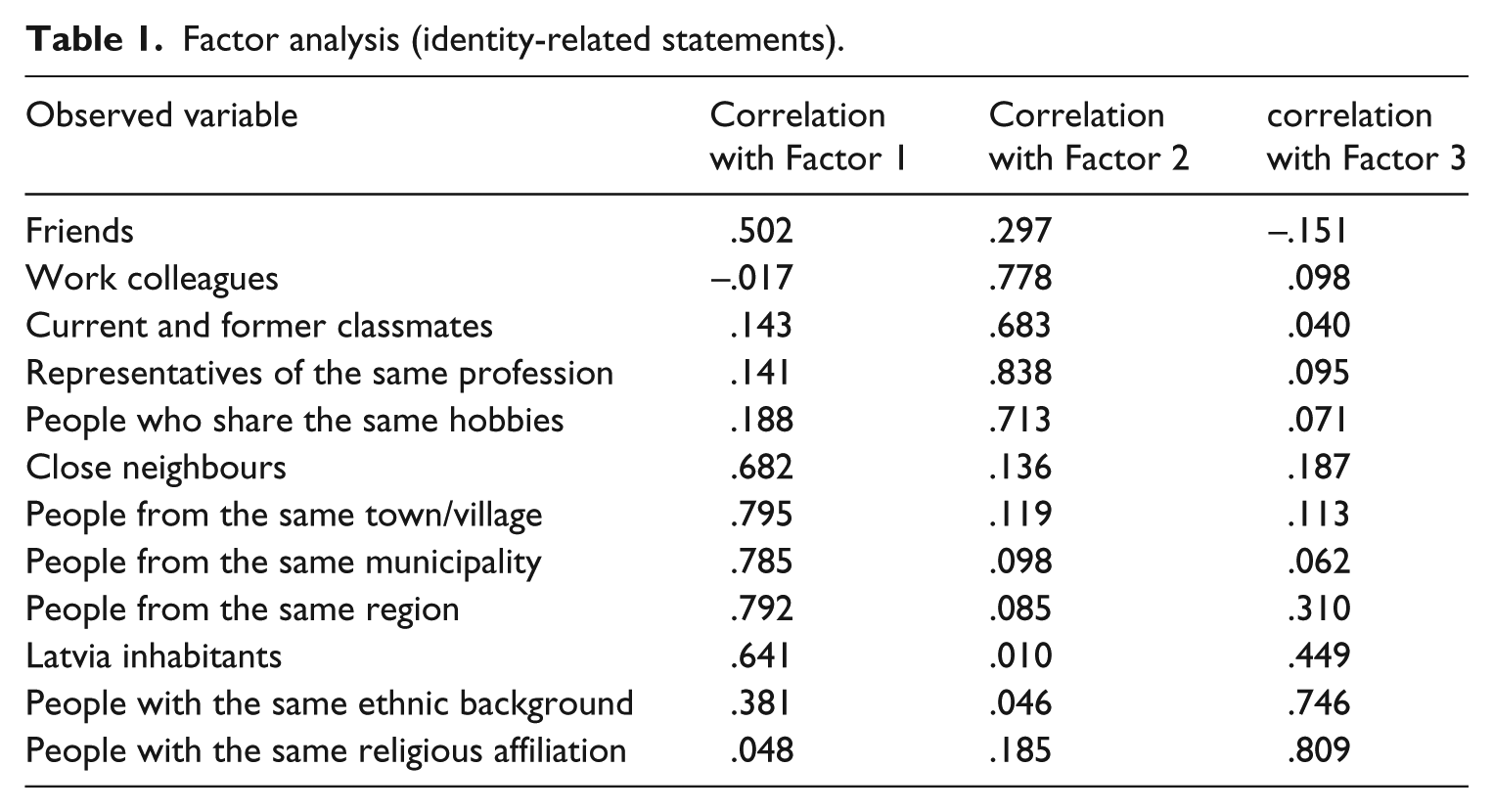
Data reduction (factor analysis) was carried out on a subset of statements investigating individuals’ sense of belonging to certain categories and groups. Statements were related to the question: ‘To which extent do you feel a sense of community related to the following groups of people?’, measured on five-point Likert’s scales. According to factor analysis, three forms of underlying criteria behind individual identity views were identified: 1) Identity based on relational-geographical proximity; 2) Identity based on professional/educational proximity; 3) Identity based on ethno-cultural proximity. Results of factor analysis are summarized below. In Table 1, components 1, 2, 3 correspond to the three above mentioned identity criteria.
Factor analysis (identity-related statements).
Hence, the following causal links were hypothesized (cf. Figure 1):
Hypothesis 1: Trust towards institutions positively affects social engagement. In terms of identity formation, it amounts to hypothesizing that the large-scale identity level affects interaction (Côté, 1996).
Hypothesis 2: Social engagement positively affects trust towards surrounding people. It is a common assumption in social capital-based organizational and regional studies, supported by several empirical confirmations (e.g. Tsai & Ghoshal, 1998). In terms of identity formation, it amounts to saying that concrete interaction has a positive effect on second level social categorization.
Hypothesis 3: Trust towards surrounding people positively affects identity views based on geographical (a), professional/educational (b), and ethno-cultural (c) proximity. Given the ‘concrete’ emotional nature of such a form of trust, it seems reasonable to hypothesize a positive effect of such a category of trust on all proximity dimensions. Such a hypothesis amounts to saying that immediate social group linkages have a significant effect on self-categorization.
Hypothesis 4: Trust towards institutions positively affects identity views based on (a) geographical and (c) ethno-cultural proximity. Trust towards institutions is hypothetically characterized by a more abstract emotional component than trust towards concrete people. Therefore, it seems reasonable to suppose a positive effect of such a category of trust on more ‘conceptual’ forms of proximity rather than professional/educational (which appears to be more experience-based than the other two dimensions).
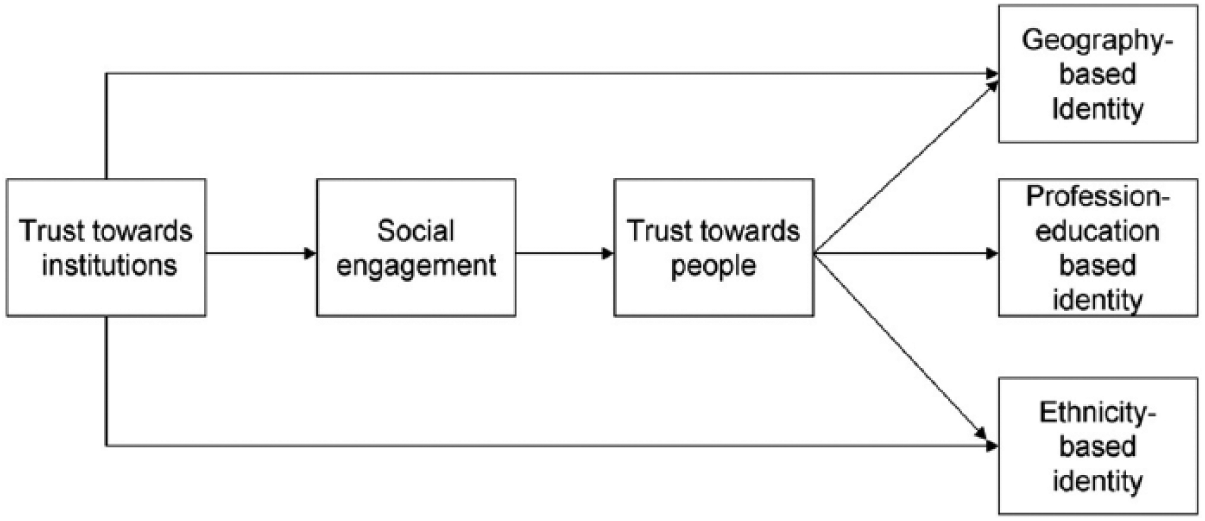
Theoretical model (hypotheses).
Case study: The social context
Latvia is an interesting context for the study of intra-community dynamics, because of several peculiar factors. The first is the multi-ethnic structure of the society, which has been historically characterized by the presence of consistent minorities, and has been subjected to massive immigration from other Soviet republics between 1944 and 1991. The second consists in the fast changes, which have affected the social and economic system of the country in the last 20 years, a feature common with almost all ex-Eastern Bloc countries. The consequences of such changes are the relevant cultural generational gap existing by Soviet-trained older generations and more Westernized youth, and the economic polarization of society, due to a predominance of neoliberal economic policies in the first years after independence. In spite of a strong development of interpersonal informal networking, Latvia is characterized, in line with a general trend in European post-communist countries (Heineck & Sussmuth, 2010), by low levels of social capital. According to Eurobarometer, the level of trust and cooperation attitude among Latvian people is considerably lower than the EU average, and the engagement in socially conscious activities is low as well. Latvian society could be described, borrowing from Woolcock’s taxonomy (1998), as being characterized by a problematic relationship between integration and linkage, a situation in which trust and goodwill are limited to family members, friends and close acquaintances, and there is an insufficient exploitation of potential civic linkages, which the shift to liberal democracy has made theoretically possible; hence, a missing link between community and institutions (Laboratory of Analytic and Strategic Studies, 2007; Zobena, 2007). A partial explanation can be found in a perceived distance between nation and state, resulting in generalized distrust towards state governance and public institutions, and activities and initiatives which are managed and promoted by such institutions. Ethnic fragmentation and interethnic tension is another possible cause (Laboratory of Analytic and Strategic Studies, 2007). The above-mentioned features are among the problems which affect the diffusion of sustainability oriented and long term-conscious attitudes among citizens.
Descriptive statistics: Trust and identity
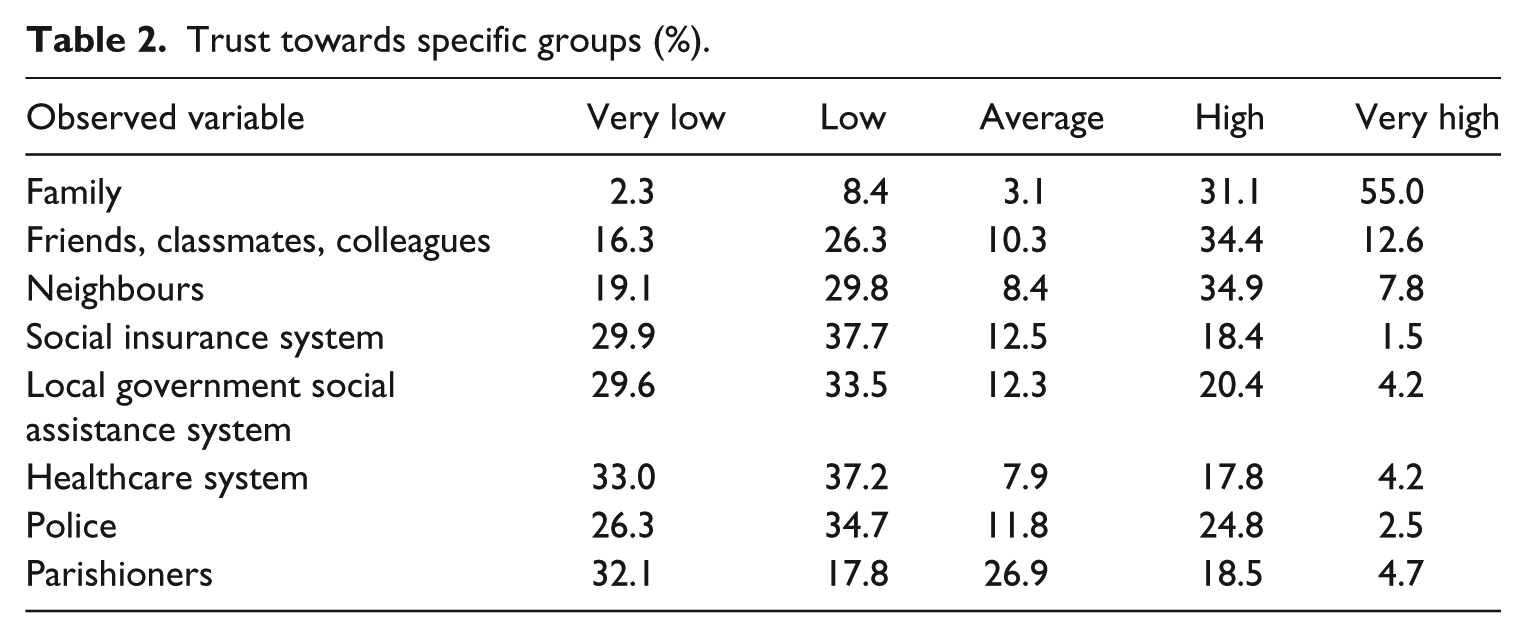
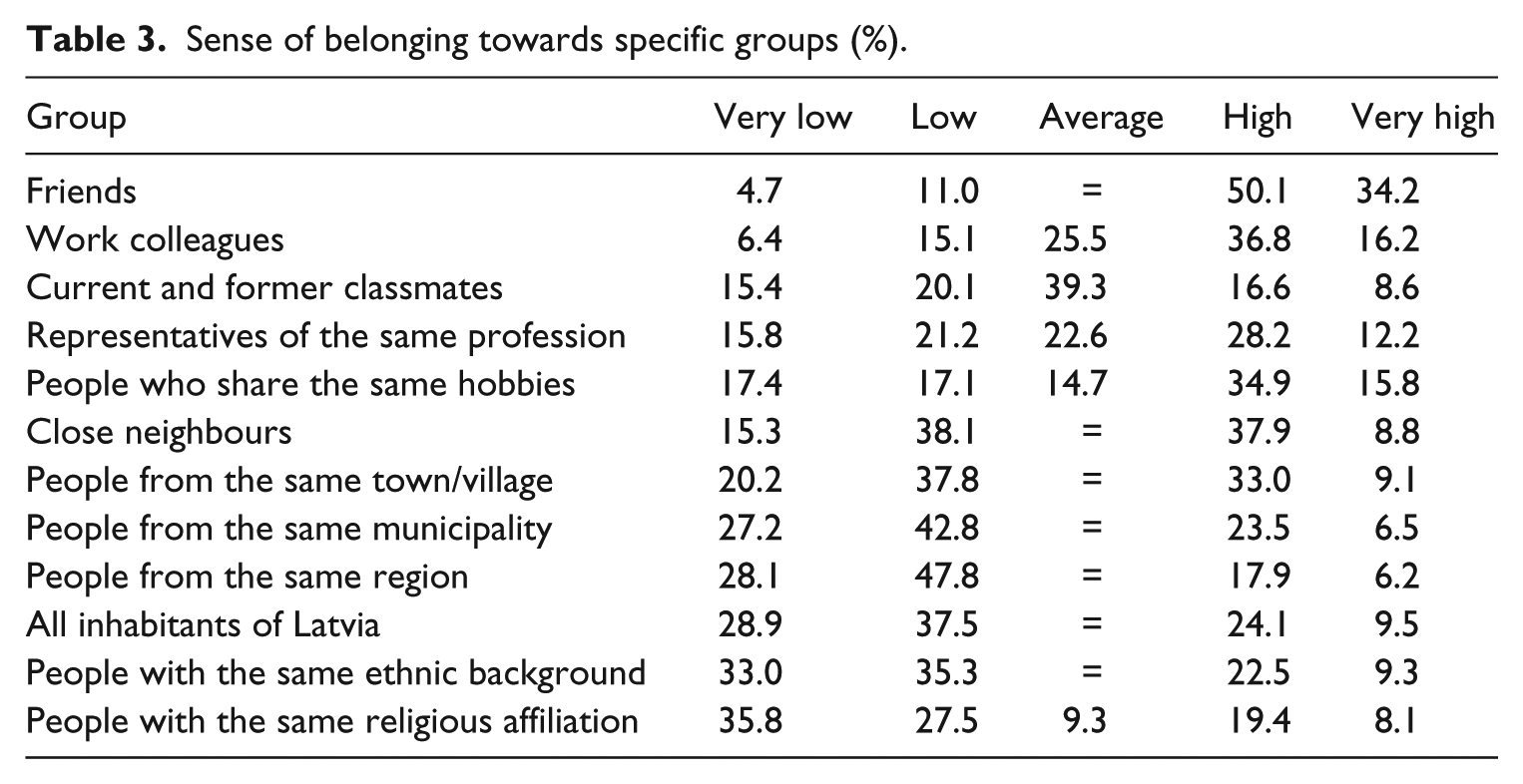
Descriptive statistics for trust and sense of belonging towards specific groups are listed in the tables below. Consistently with Eurobarometer (2004) and European Bank for Reconstruction and Development (EBRD) (2010) data, the highest degree of trust is found towards very close, surrounding groups (family in particular, and to an extent friends and neighbours) (Table 2), whereas trust towards institutions is low. Sense of belonging, too, is higher towards surrounding groups (friends, work colleagues, to an extent neighbours) (Table 3); it is relatively high also for professional/educational proximity-based groups; and it is definitely lower for larger-scale geographical proximity- and ethno-cultural proximity-based groups.
Trust towards specific groups (%).
Sense of belonging towards specific groups (%).
Measurement of variables
As stated above, social capital was classified according to Putnam’s taxonomy (1993), defining a structural and a relational dimension of social capital:
A structural social capital component, which can be summarized as the extent of socio-political engagement related to community and city life. This component is related to a set of questions assessing the degree of involvement of the respondents in neighbourhood activities and civic associations. In the model, the variable was measured on the basis of the question ‘How often are you involved in neighbourhood social activities?’
Two relational social capital components. Confirmatory factor analysis was carried out on a set of statements related to the degree of trust towards specific groups of people and institutional bodies (measured on five-point Likert (1932) scales). Analysis confirmed the existence of two underlying factors, which could be associated with trust towards concrete people and trust towards institutional bodies (Table 4): trust towards people in the respondent’s daily life, which is related to questions investigating the degree of trust towards immediate surrounding groups (friends, neighbours, colleagues, family members); trust towards institutions, which is related to questions investigating the degree of trust towards various institutional bodies (city administration, parliament, police, etc.).
Factor analysis results (trust components).

Trust towards concrete people and trust towards institutions were respectively measured by (a) trust towards neighbours; and (b) trust towards the social assistance system.
The three above-mentioned identity views (geography-based, common profession/education-based, ethnicity-based) were used as dependent variables representing the first level of social categorization (self-representation, sense of belonging). Identity views were respectively measured by the intensity of sense of community related to: (a) fellow citizens; (b) representatives of the same profession; (c) people sharing the same religious affiliation with the respondent.
Analysis
The chosen estimation method was Bayesian estimation, which is the standard technique adopted in the software used (AMOS 7.0) for the structural analysis of models including non-metric variables (Figure 2). (1) The results show very significant effects (99% confidence level) for all hypothesized causal effects, except for the effect of trust towards people on profession/education-based identity, which is not found to be significant. The global goodness of fit of the model is high (Chi-square probability = .640; RMSEA = 0; CFI = 1), therefore the model as a whole can be accepted. Squared multiple correlations, however, show that the explicative power of the model is modest (Table 5).

Results.
Squared multiple correlations.

Sensitivity analysis
The results of the analysis were tested against control variables, based on the identity formation criteria resulting from factor analysis (Table 6): (a) residence place dimensions; (b) ethnicity; (c) education. A fourth control dimension (d) age was considered worth to be taken into account, because of the relevant role that is attributed by Latvian sociologists to the generational divide in explaining social phenomena (Zobena, 2007). Differences with regard to the general sample results are listed in Table 6.
Summary of sensitivity analysis results (standardized direct effects and goodness-of-fit measures).

Residence place dimensions
Towns/rural area respondents were considered separately (Figures 3 and 4). Results are quite complex to interpret and show a rather high sensitivity to the chosen control dimension. As for town inhabitants, no effect of trust towards institutions on social engagement was found; as for rural inhabitants, no effect of social engagement on trust towards people was found. Effects of the two trust dimensions on identity are comparable for urban respondents, whereas, among rural respondents, trust towards immediate groups seems to be a much more relevant predictor of identity.

Town inhabitants.
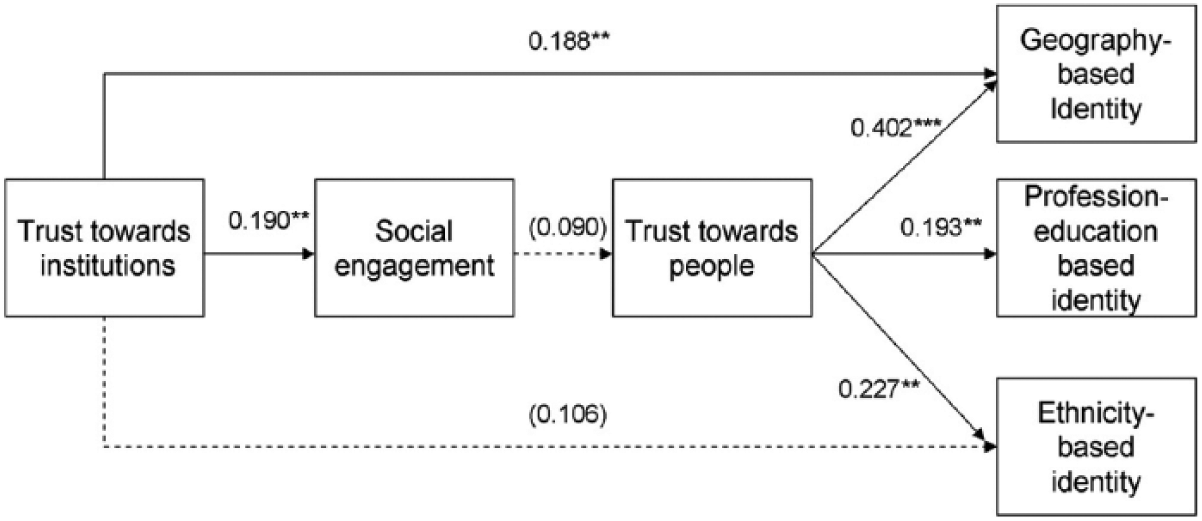
Rural inhabitants.
Ethnicity
Latvian and Russian native speakers were considered separately (Figures 5 and 6). Results show a moderately low sensitivity to the ethnic divide; however, some relevant differences were found. Latvian respondents show the same results as the general sample. As for Russians, no effect of trust towards institutions on social engagement was found; besides, trust towards institutions does not significantly affect ethnicity-based identity.

Latvian speakers.
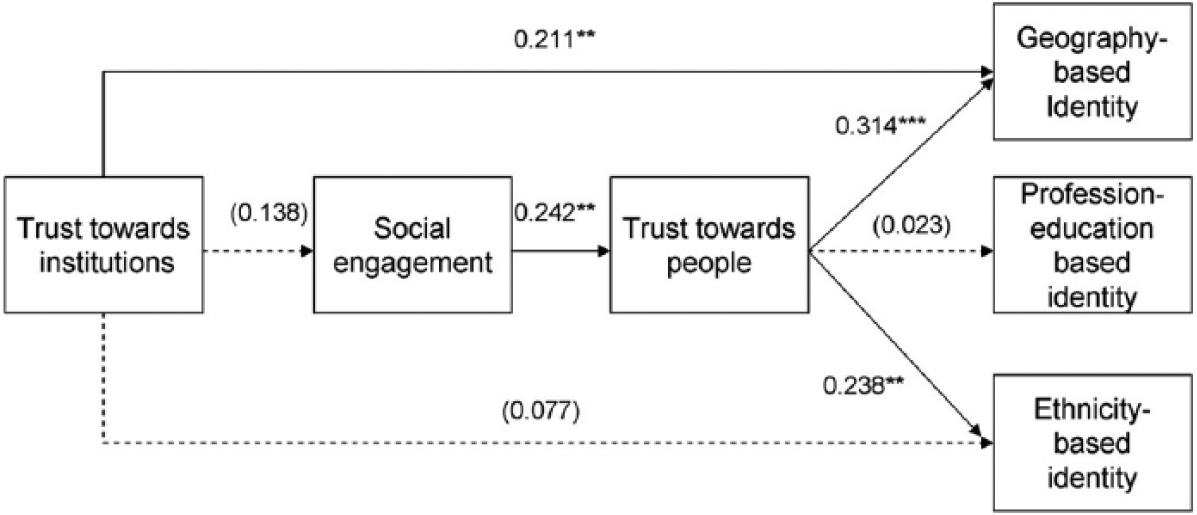
Russian speakers.
Education
The results are extremely sensitive to the educational divide (Figures 7 and 8). For respondents with low/middle education, both trust dimensions seem to affect only geography-based views of identity. For respondents with higher education, the effect of trust dimensions on identity is much more relevant (all hypotheses can be accepted), but the causal chain connecting trust towards institutions, social engagement and trust towards people is not significant. Besides, two unexpected significant effects were found for such respondents: an effect of large-scale trust on professional/educational-based identity and a direct effect of social engagement on ethnicity-based identity. Without taking into account such effects, the model does not hold well in terms of goodness of fit.

Up to secondary education.
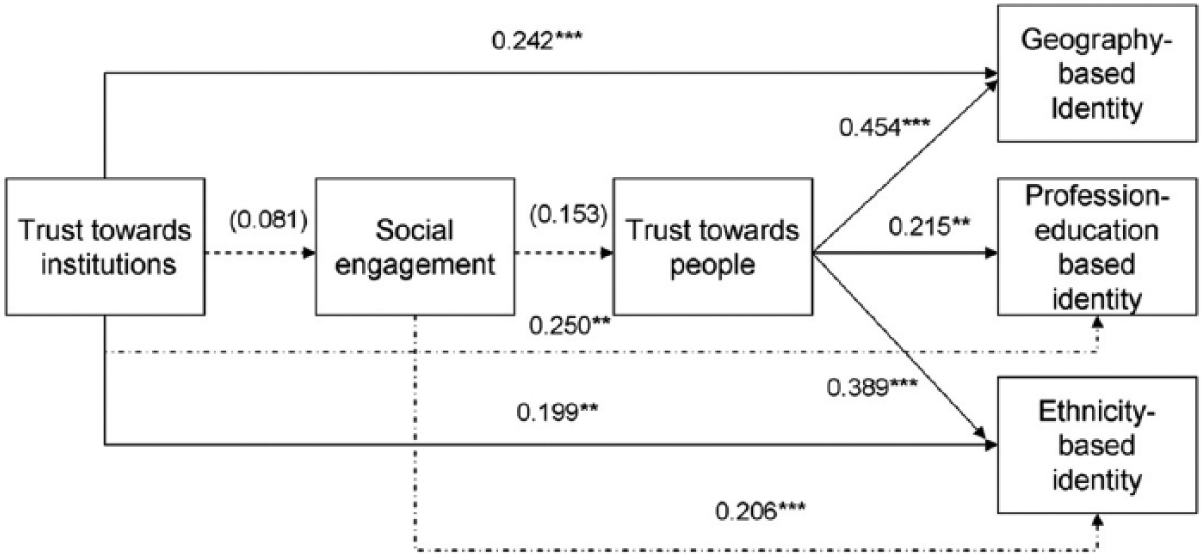
Higher education.
Age
A moderate sensitivity to the generational divide is found (Figures 9 and 10). Results for older respondents reflect general ones except for the non-significant effect of large-scale trust on social engagement. Among younger respondents, the direct effect of large-scale trust on identity views appears to be completely negligible.
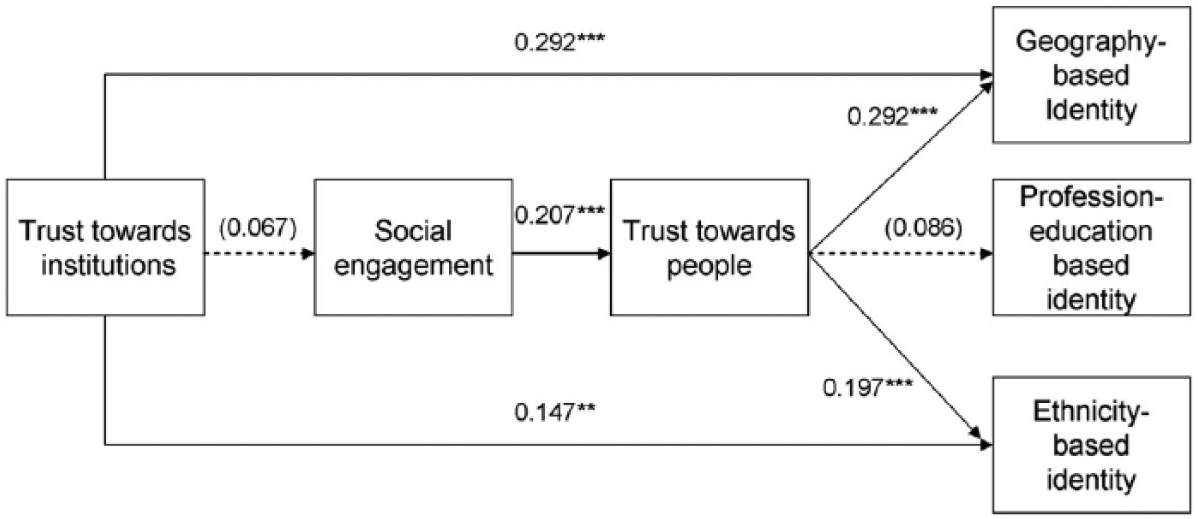
Respondents aged over 35.
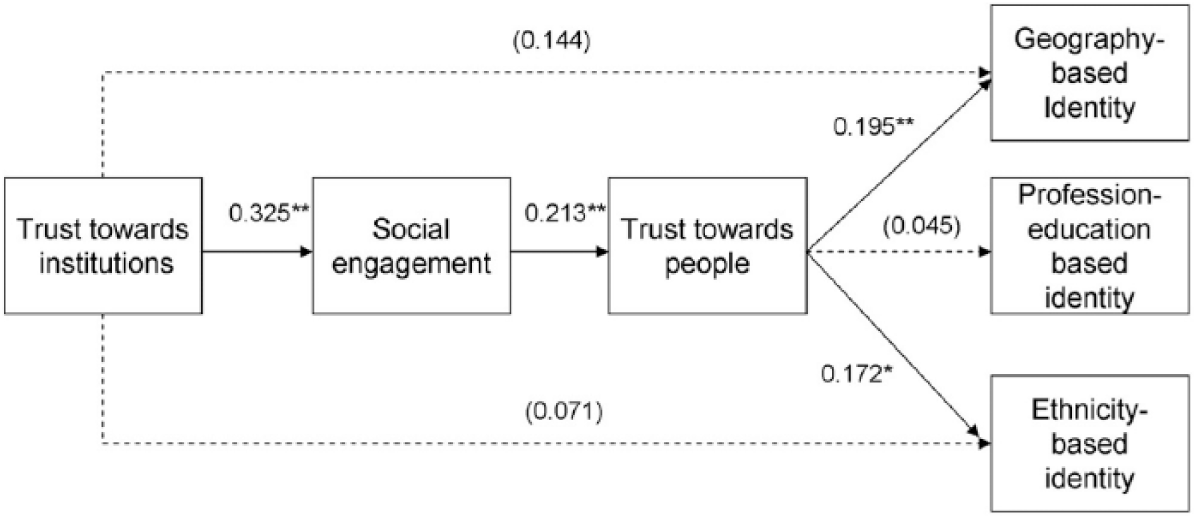
Respondents aged under 35.
Conclusions and comments
Limits of the empirical analysis
The empirical analysis must be considered as a pilot one, since it presents some structural limits. First of all, it was based on a sample of secondary data, collected through a survey which was not designed according to the aims of the current study. This made it impossible to carry out a structural measurement analysis in order to extract latent variables from observed ones. The adopted model is, therefore, based on observed variables. One of them (social engagement) is measured through a single indicator; the others are measured through indicators selected on the basis of factor analysis.
The second limit relates to the sample size, which was suitable for the structural analysis. The issue of minimum or ideal sample size in order to get reliable results for a SEM analysis is widely discussed in literature, with no universal consensus about rules-of-thumb. For our study, we referred to widely used conventions, where N = 100–200 is considered the minimum sample size for conducting SEM (e.g. Boomsma & Hoogland, 2001; Tabachnick & Fidell, 2001; Kline, 2005) and N = 100 per group is considered the minimum sample size for multi-group modeling (Kline, 2005). For two of the considered groups in the sensitivity analysis, the sample size is slightly smaller than generally accepted rules-of-thumbs would suggest (N = 99 for Russian-speaking respondents and respondents with higher education). Therefore, sensitivity analysis results should be taken with particular caution.
The third limit relates to the fact that it was not possible to compare results for the Latvian dataset with samples from other countries (for example, the two other Baltic states) since the analysis was carried only among Latvian respondents and there were no available comparable data for other countries. Comparative research would be a possible direction for future research.
Results
The theoretical model which is tested in the present pilot study was aimed at investigating a possible causal chain connecting three levels of social categorization – self-categorization, categorization of direct communities and categorization of large-scale social communities. With the support of social capital theory, we equated large-scale and immediate group categorization with two different forms of trust capital (trust towards institutions, and trust towards concrete people), and hypothesized them to be linked by the concrete experience and knowledge of individual contacts.
The general results of the statistical analysis basically confirm our hypotheses and Côté (1996)’s hypotheses on the correlation of three levels of identity structure, and on the slightly more relevant role of trust towards immediate groups in fostering identity views. Sensitivity analysis, however, makes the whole picture appear somehow more complex, since some links of this chain appear to be missing when considering specific sub-communities, although the model fit is high for all considered groups (except for the case of highly educated respondents).
For example, among town inhabitants, Russian speakers, older and more educated respondents, large-scale trust does not significantly affect social engagement. Such a result seems to suggest that people belonging to these groups act socially regardless of their views on the society and their perception of institutional activity as a whole. The non-significant effect of social engagement on immediate group trust among rural inhabitants, on the other hand, may suggest that social contact is not relevant for trust building in compact environments and communities where all people supposedly know each other. The same result is, however, found among educated respondents too: in this case, a higher conceptual attitude towards trust, regardless of contextual personal experience, may be hypothesized.
Besides, it can be said that the relative relevance of immediate group trust and large-scale trust with regard to views of identity is strongly dependent on the considered cluster. In general, the role of immediate groups seems to be more relevant among rural inhabitants, younger respondents and (to some extent) ethnic minorities; such results seem to suggest a more context- and experience-oriented view of identity among such groups. Among other groups, the two trust dimensions seem to have a quite comparable relevance. Both trust dimensions appear to be very relevant among educated respondents; this result is – once again – rather counter-intuitive and would need to be investigated more in depth.
It must be noticed that observed positive effects, although most of them are found to be highly significant, are not very strong. Besides, squared multiple correlations show a modest predicting effect of variables in the model. Therefore, social engagement does not appear to be a strong predictor of relational capital, and relational capital does not appear to be a strong predictor of identity: this implies that relevant exogenous factors predicting self-categorization are absent from the model, and it is not possible to derive a satisfactory model of self-categorization to be based only on social structure-related predictors.
However, even taking into account such a limitation, it can be said that results support the main tenets of the theoretical model, since it shows that (a) the three levels of identity formation are (generally) positively correlated; (b) structural capital (social interaction) is a link connecting large-scale and immediate group trust; (c) both the second-level categorization (based on direct communities, institutions and close others) and large-scale social communities (third level) affect the generation of social self (self-categorization, i.e. first level).
The high sensitivity of the results to intra-community divides seems to confirm the thesis that social identity in general, and self in particular, are highly context-dependent (McConnell, 2011; Roccas & Brewer, 2002). With regard to such an issue, the analysis that is described in the present work may be enriched by testing the model in different social contexts, in order to investigate the context-dependency of social identity representation. A longitudinal study of social dynamics of identity transformation would also complement the current data.
Furthermore, the present study did not take into account global trans-national communities – such as digital communities – which nowadays can be considered stronger than ethnic and political ones (Buchan et al., 2011). A more exact analysis of the impact of digital communities onto self-representation would be the topic of a separate study.
Implications
Although the present study is meant, from the empirical point of view, as a pilot one, its results are of some interest with regard to social capital-based community studies. The adoption of two trust levels as model variables can be seen as having implications for the ongoing debate on the determinants of social capital generation in communities, which sees some scholars (Putnam, 1993, 2000) supporting a bottom-up view, based on the emphasis on civic engagement as source of trust, and some others supporting a top-down view, based on the main role of institutional activity in fostering a suitable climate for social capital development (e.g. Tarrow, 1996; Knack & Keefer, 1997). The approach proposed in this article allows us to underline, among certain groups (in particular, in our sample: rural inhabitants, Latvian speakers, and low-educated respondents), a degree of significant correlation between the assessment of institutional activity and the involvement in civic activities, which (at times) leads to the development of trust towards concrete people: this may be seen as a sort of psychological linkage between the two approaches, identifying one of the sources of civic engagement and community trust with individual attitudes towards institutions. The high sensitivity of such patterns towards socio-cultural control variables, however, suggests caution in overestimating such a linkage, and emphasizes its high dependency on the context.
Results have implications, too, for social categorization theory. First of all, the study provides a largely unexplored way of analysing the structure of cognitive representations of others in adopting SEM and social capital framework as background to the analysis. This approach allows operationalizing variables that determine different patterns of social categorization. Thus, the approach extends the analysis of processing information about social categories by adding macro-level variables that make it possible to analyse social categories from a larger scale exploring relations between macro-group and individual levels. Second, the results confirm significance of a three-level model of categorization (self-categorization, categorization of immediate groups, and categorization of large-scale communities) and their characteristic patterns (e.g. inclusiveness of self-categorization with respect to the immediate groups which can be observed in the emphasis of trust on immediate categorization). Although the three-level model in general seems to be valid, as soon as more detailed sensitivity analysis is applied, a more complex context-based structure of categorization emerges. Thus, whereas a variety of context-dependent approaches in the analysis of the social self are proposed at an individual level (McConnell, 2011; Roccas & Brewer, 2002), our study proposes that social categorization is rather context-dependent also at a macro (trans-individual community) level.
Footnotes
Funding
This research received no specific grant from any funding agency in the public, commercial, or not-for-profit sectors.