



Abstract

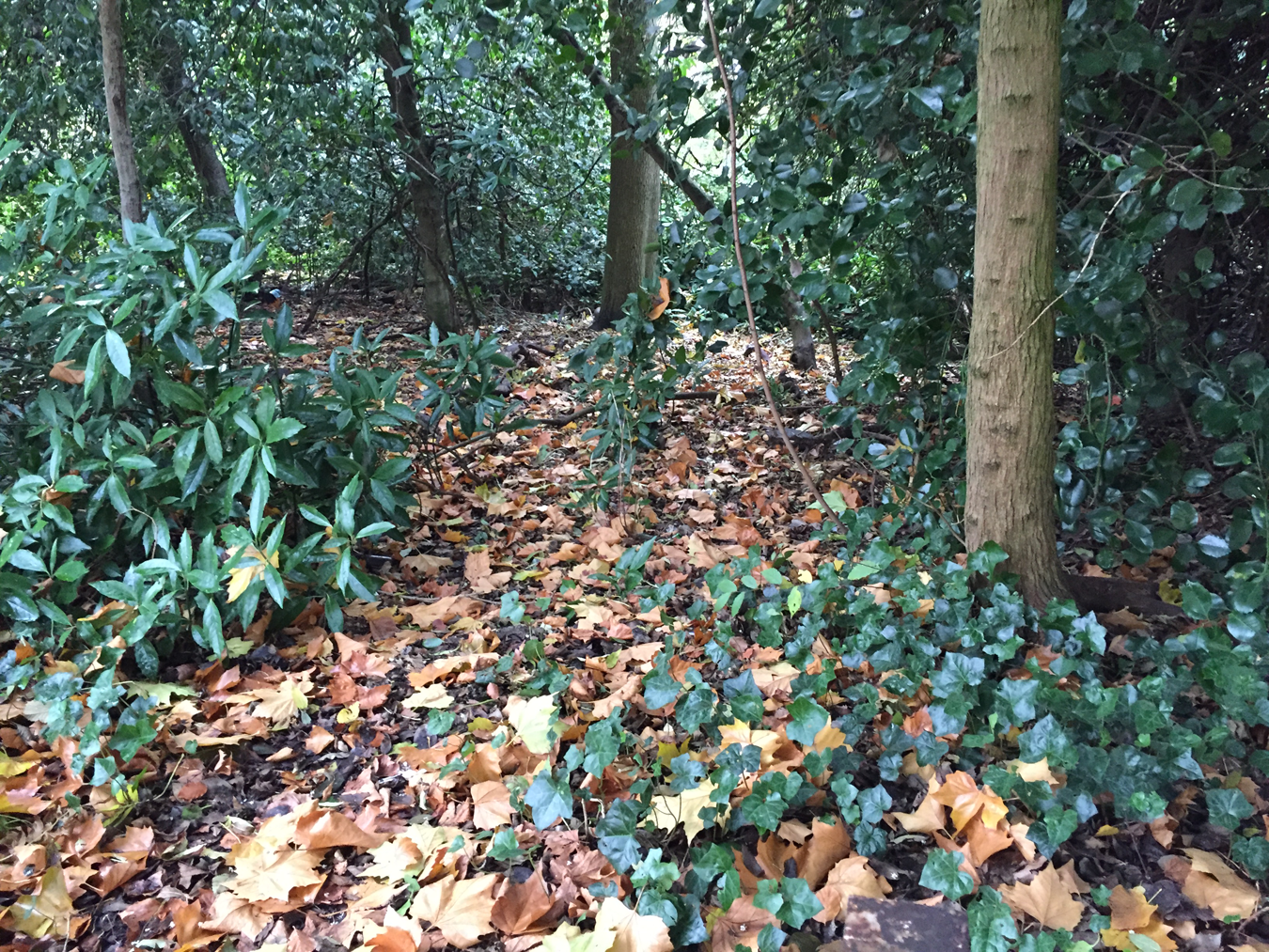
Photo credited to Janet Wolff.
Whenever I see a wild and overgrown garden, I think of Zygmunt. Anyone who has visited him at the home he has lived in for the past 45 years will be familiar with his own particular garden, and will also know the name of his gardener. You enter by a tall iron gate, and push your way past an overgrown hedge; a little garden wilderness is on your left as you walk towards the front door, an abandoned and somewhat mysterious table and chairs in the small clearing. The garden probably hasn’t been tended for a few decades. As Zygmunt invariably explains to the visitor: ‘Charles Darwin is my gardener’.
There is a real beauty to the untended and lush greenery. And there is something very appealing about the idea of resisting cultivation – of letting events take their course. It may be a bit of a stretch, but I can’t help seeing a parallel in Zygmunt’s writing. He does not follow the usual rules, cite the obvious sources, remain within the expected boundaries. His reading is voraciously wide, and what he reads finds a way into his text, which spills across disciplines and picks up disparate objects and subjects at will. It is a writing – and thinking – style, as his many followers will be aware, that from time to time encounters criticism and resistance from within a more orderly, empirical, careful scholarly world. For me the flow of thought is sometimes a little too ungrounded, fascinating and creative speculation presented as definitive analysis. And yet over the decades the most important insights, the most brilliant diagnoses have emerged and have become the firm basis of our understanding of contemporary society. You could say that this is the mechanism of the survival of the fittest in the field of sociology, fully visible to our gaze.
The gardener appears as a character – or rather a metaphor, a type – in Zygmunt’s books. He forces his preconceived design on the plot by encouraging the growth of the right types of plants (mostly the plants he himself has sown or planted) and uprooting and destroying all other plants, now renamed ‘weeds’, whose uninvited and unwanted presence, unwanted because uninvited, can’t be squared with the overall harmony of the design (Liquid Times).
He (the gardener here, as well as in Legislators and Interpreters, is a man) epitomizes the modern world view and practice, replacing the premodern gamekeeper whose task is defence without interference. The gardener, it seems, is resolutely opposed to the Darwinian project. Later, the utopian ideals and plans of the gardener are themselves pushed to the side, in a post-modern society in which the hunter emerges as the new trope. In this bleak world of plunder, escape, superficiality, overwhelming and paralysing choice, the image of the gardener takes on a nostalgic tinge. I’m not sure it’s possible to find in the texts any such admission – any real clue of a prejudice in favour of the project of modernity (which, after all, Zygmunt has also criticized devastatingly elsewhere – notably in Modernity and the Holocaust). But I choose to think that this is his melancholic preference. And, despite the fabulous chaos of his own garden, one could say that Zygmunt’s writing too is in the end not at all Darwinian: out of the wide (wild?) reading and the apparently random digressions and examples comes a rather carefully curated, and deeply felt, account of our world and its histories. Not utopian, of course. But a subtle project of the sociologist-gardener.