



Abstract
This study examines the transmission of work values from parents to children between mid-adolescence and early midlife. The authors propose that work-related values are transmitted from parents to children in two sequential and complementary processes stretched across adolescence and early adulthood. The first process of work value exposure and reception in the family context is captured by the socialization model. The second process is one of delayed value activation, long after initial socialization, when the young adult offspring engages with the demands and vicissitudes of their own emerging careers. The authors find evidence for family socialization in adolescence and also support for the delayed activation model during adulthood. Although parental values were measured more than two decades earlier, the authors find the strongest associations of parent and child values when the offspring were in their late 30s. In addition, parent–child value similarity is heightened when adult children navigate career uncertainty and change, consistent with a delayed activation process.
Work values, or the fundamental orientations individuals hold toward distinct types of rewards from working, have long been studied for their role in career choice, work-related behavior, and job satisfaction and commitment (Hofmans, De Gieter, & Pepermans, 2013; M. K. Johnson, 2001b; M. K. Johnson & Monserud, 2010; Kraaykamp, Cemalcilar, & Tosun, 2019; Mannheim, 1993; Martin & Shehan, 1989; Sortheix, Dietrich, Chow, & Salmela-Aro, 2013; Weisgram, Bigler, & Liben, 2010). Classic psychological and sociological studies of value development, including vocational development, have primarily focused on adolescence (Mortimer, Lam, & Lee, 2015). This focus is consistent with the conceptualization of adolescence as the primary stage of identity formation, encompassing work-related aspects of identity such as work values, vocational interests, and occupational choice (Mortimer et al., 2015; Staff, Messersmith, & Schulenberg, 2009).
More recent work, however, views adolescence as an important, but not exclusive, period of identity development, widening the study of socialization to that which occurs both before and after the teen years (Bosma & Kunnen, 2001; Mortimer et al., 2015). Work-related identity development may be an especially lengthy process in the United States given the lack of institutionalized bridges from school to work (Kerckhoff, 2003; Mortimer et al., 2015). Young workers in the United States often “flounder” during their early years in the labor market, working in a succession of unrelated jobs and experiencing periods of unemployment (Vuolo, Mortimer, & Staff, 2014, p. 145).
Parents are an important influence on vocational development, including the formation of children’s work values (Cemalcilar, Secinti, & Sumer, 2018; Galambos & Sears, 1998; M. K. Johnson & Mortimer, 2015; Kraaykamp et al., 2019; Staff et al., 2009), as they are children’s initial work role models. Children see their parents’ day-to-day reactions to work stressors, their sources of satisfaction, their degree of investment in their jobs, and perhaps on a less frequent basis, their decisions regarding job or career changes (Preves & Mortimer, 2013; Skorikov & Patton, 2007). Moreover, parents’ class position shapes the opportunity structure for their children, along with the values they bring to their parenting. Youth in lower socioeconomic status families develop stronger extrinsic values, emphasizing rewards gained from doing a job (e.g., income, advancement opportunities, prestige, security), whereas youth in higher socioeconomic status families internalize stronger intrinsic values, emphasizing the rewards inherent to work itself, such as expression of one’s own interests and abilities, doing work that is meaningful, and opportunities for creativity and service to others (Johnson & Mortimer 2011; Kalleberg & Marsden, 2019; Krahn & Galambos, 2013).
While there is evidence of intergenerational similarity in work values, as there is for more general values (e.g., Bengston, Biblarz, & Roberts, 2002; Cemalcilar, Jensen, & Tosun, 2019), important questions remain, especially considering that vocational development extends well beyond childhood and the teen years when parents and children interact more closely and frequently. In this study, we draw on data from a panel of adolescents followed into adulthood, along with data from their parents, to examine how parent–child work value similarity evolves. We also examine when this similarity develops, considering the period from mid-adolescence to adulthood. Recent theoretical work on identity development recommends that greater attention be given to the timing of intergenerational transmission processes (e.g., Cemalcilar et al., 2019). We consider two potentially complementary processes in the transmission of work-related values from parents to their children: an early socialization process and a delayed activation process. As we discuss in the following section, these processes may build on each other and unfold over a longitudinal span from adolescence to early adulthood. Thus, questions of how and when intergenerational similarity develops are interrelated, with knowledge of the when contributing to an understanding of the how.
Early Socialization
Socialization models emphasize both direct tuition and the child’s observation of parents’ experiences and behavior. With respect to work value development, parents talk to their children about their work, and children overhear parents talking about work with one another and with others. Children sometimes have occasion to visit parents’ workplaces. Over time, children grow in awareness of parental work experiences and how they are perceived and interpreted by their parents. In all of these ways, children have opportunities to learn what is important to their parents about work and what factors should be considered in choosing the type of work one does. Socialization occurs primarily in childhood and adolescence, when parents and children are in much more frequent proximity than when children become adults. Indeed, as social interaction and observation are key in familial socialization about work, childhood and adolescence are usually the focus of intergenerational transmission studies (Kittel, Kalleitner, & Tsakloglou, 2019; Kraaykamp et al., 2019).
In a model that has continued to be influential over time (Hitlin & Piliavin, 2004), Kohn and colleagues (Kohn, 1969; Kohn & Schooler, 1983) linked parents’ occupations to children’s values through the influence work had on parents’ own values and their subsequent approach to parenting. Specifically, fathers who experienced more self-direction at work were more likely to value self-direction in their children, whereas fathers with low levels of self-direction at work were more likely to value obedience in their children. Distinct socialization practices followed from these value orientations. Various studies since Kohn’s foundational research have linked parents’ class position and occupational characteristics, as well as parents’ work values, to their children’s work values (e.g., Galambos & Sears, 1998; M. K. Johnson & Mortimer, 2015; Porfeli & Vondracek, 2007; Ryu & Mortimer, 1996). Ryu and Mortimer (1996), for example, found that both mothers’ and fathers’ education levels and occupational self-direction were positively associated with their adolescent children’s intrinsic work values.
Thus, from this first perspective, we hypothesize that adolescents’ work values will be significantly associated with their parents’ work values. At what age this becomes apparent in the adolescent population is unspecified. Previous study indicates parents and adolescents show statistically significant work value similarity at least by the senior year of high school (e.g., Ryu & Mortimer, 1996), but research on timing is limited. As such, we pose a simple hypothesis, but our analysis will assess similarity at the beginning and end of high school. In addition, while values in different domains may be learned from parents at somewhat different ages (Min, Silverstein, & Lendon, 2012; Pinquart & Silbereisen, 2004), we have no reason to expect that the two dimensions of work values, intrinsic and extrinsic are learned from parents on different timetables.
Although the early socialization model does not generate clear predictions about what happens later in life, we might expect that parent–child similarity would remain fairly stable or perhaps weaken after adolescence. While very few studies include adult child participants older than their early 20s, a meta-analysis focused on intergenerational similarity in the “value of hard work” found that father–child similarity declined with age (Cemalcilar et al., 2018). Nonetheless, we introduce a perspective in the next section that provides a rationale for expecting parent–child similarity to strengthen beyond the early socialization period.
Delayed Activation
We posit a second process related to parental value transference: What children learn from their parents begins early, but value transmission is more fully apparent when children actively engage in domains that are relevant to parents’ values (Min et al., 2012). In the case of the work domain, such engagement typically occurs well beyond adolescence, as young people in contemporary cohorts become established in work and careers. A similar process has been observed in the educational realm. Taylor, Clayton, and Rowley (2004) hypothesized that children’s experiences as students lead to “working models of school,” including attitudes, values, and beliefs, which come to the fore many years later, when they themselves are parents and must guide their children as they navigate educational challenges. In developing educational expectations for their own children, their “childhood memories are ‘reactivated’ and their children come to be prepared for similar experiences” (p. 171). Indeed, occupational values may be key components of the family “idioculture” (Fine, 1979) and family “capital” (Swartz, 2008) that are effectively transmitted across generations but may have limited significance to children until they actively engage with their own work experiences in the occupational world. Thus, the delayed activation process builds on the early socialization process and brings it to fruition.
According to the delayed activation model, through childhood socialization parents plant “value seeds,” which over time sprout, bloom, and eventually bear fruit as the child becomes more actively involved in work. Parents’ values may remain somewhat abstract and not well understood by children until they discover their meaning in concrete work-related circumstances. In this way, parents’ values initially lie partially dormant during adolescence, but then become stronger over time and, in particular, during the phase of becoming established in a career. Consistent with this expectation, the transition to adulthood brings with it considerable change in work values (M. K. Johnson, 2001b). Transitioning out of school, relinquishing “survival jobs,” making decisions at key occupational junctures, and settling into a potentially long-term career may bring out the practical real-life significance of occupational values once conveyed by one’s parents and superficially adopted in adolescence, thereby promoting more robust value similarity between adult children and their parents.
Indeed, if this study were to find delayed activation of work values that were transferred earlier by parents, this would be a clear example of a sleeper effect. In their classic definition of this phenomenon, Kagan and Moss (1962) considered a sleeper effect to occur when there is a “stronger relation between a variable measured early and measured late in development than between similar variables measured contemporaneously or more contiguously” (p. 278). Sleeper effects are rare, and their role in development is controversial (Clarke & Clarke, 1981). They have been observed in experimental work on persuasion, as initially high-credibility communicators are more effective in influencing people’s opinions than low-credibility communicators. However, over time their messages become less persuasive, whereas those of low-credibility communicators gain influence (Hovland & Weiss, 1951). Sleeper effects have also been observed in the study of resilience from adolescence to adulthood (Tjaden, Rolando, Doty, & Mortimer, 2019). For at-risk youth, beneficial uses of time during high school (e.g., time spent participating in extracurricular activities) had long-term impacts on positive development in early adulthood (but not in adolescence) net of many potential confounders. Similarly, in a family socialization context, Min et al. (2012) found lagged effects of parents’ gender role attitudes on adult children (beyond parent–child similarity during the child’s adolescence) but only in families marked by high solidarity.
A delayed activation model thus predicts that intergenerational similarity in work-related values grows after adolescence, as work experiences make more salient and activate what has been learned previously. This would be reflected in increasing evidence of parental value transmission as children mature into adulthood.
Orientations surrounding work (as well as other domains of life) are more likely to become salient and the focus of conscious thought in times of uncertainty. As Herbert Mead (1934) pointed out long ago, much behavior is not guided by deliberate reflection. Instead, active consideration of goals and related perceptions occurs when habitual behavior is in some way questioned, disrupted, or otherwise no longer sufficient. In this study, we identify three experiences that would likely capture times in which young people become engaged in active thinking about their careers: First, when adult children recently moved into jobs they considered to be their careers, making occupational experiences and rewards more salient and consequential for their values and work identity; second, when they experienced job dissatisfaction that might foster critical reflection about how one’s current job reflects one’s values; and finally, when they expressed a desire to change jobs or careers, which could prompt active assessment of value priorities in a job search. Thus, we hypothesize,
Rationale for This Study
Guided by a proposed developmental synthesis of early socialization and delayed activation processes, we examine the timing of work value transmission from parents to their children. We hypothesize that two fundamental processes shape young people’s work values sequentially; considering them together offers a dynamic understanding of occupational value development. Children may be exposed to distinct ways of conceptualizing the rewards of work initially in their relationships with parents and perhaps others early in life. Later, work experiences that heighten psychological engagement and deliberation may stimulate further development of values and deepen the influence of early value socialization. Occupational decision-making at particular junctures in the work career may foster deeper understanding of, and engagement with, parental values.
We focus on the relationships between the values parents held during their children’s adolescence and their children’s contemporaneous values as well as later on as the children move into their 20s and 30s. This facilitates examination of intergenerational transmission during adolescence as well as how parental values during adolescence may become more important to their children’s values with age, despite the growing passage of time.
Thus far, we have said nothing about reciprocal causation. Parent–child value similarity in adulthood might plausibly arise through a long-term bidirectional process in which parents influence their children, while at the same time, young people’s attitudes and experiences in the workplace significantly impact their parents’ values. However, because teenagers have limited experience and “expertise” in the work domain, their work values at this early age are less likely to influence their parents’ work orientations than when they are older (Pinquart & Silbereisen, 2004). Moreover, because our measures of parental values are limited to the time when their children were adolescents, our study cannot examine how parents’ values change thereafter. As we cannot shed light on long-term reciprocity, our contribution lies in examining when parental values held during adolescence are most likely to be reflected in offspring’s values.
In this study, we first examine when parent–child value similarity develops, comparing mid-adolescence, late adolescence, the transition to adulthood, and adulthood to test Hypotheses 1 and 2. The timing of parental influence as addressed in these hypotheses provides initial insight into how intergenerational value transmission may occur. We then test for patterns in the data that address Hypothesis 3, elucidating the processes involved in delayed activation of presumably dormant parental work values.
Method
Sample and Design
The data come from the Youth Development Study (YDS; Mortimer, 2003, 2012), a panel study beginning with randomly selected ninth graders from the St. Paul, MN, public high schools in 1988 (N = 1,010). 1 The panel completed surveys 19 times from age 14 to 15 years (1988) to 37 to 38 years (2011). For the first 4 years, students were surveyed in their classrooms or by mail if the student had left the school district. Afterward, data were collected via mail. Two-thirds of the original panel were retained through 2011. Panel retention was not associated with indicators of socioeconomic origin, mental health, and prior values. However, males and non-Whites had higher risk of survey attrition, and youth without an employed parent in 1987 had lower retention than other youth (Mortimer, 2003; Staff & Mortimer, 2007). Mailed questionnaires were sent to all residential parents in 1988 and 1991, which included an assessment of their work values if they were employed. Fathers had less representation in the parent sample than mothers largely because of the prevalence of single-parent families. In 1988, 95.9% of adolescents had one or more parents participating (924 mothers and 649 fathers). In 1991, 79.1% of adolescents had at least one parent participating (690 mothers and 440 fathers).
The sample was largely White (74%), reflecting the composition of St. Paul at the initiation of the study, and roughly half female (52%). Most parents completed high school or some postsecondary training but had not completed a BA (19% of mothers and 33% of fathers completed a BA or higher). Less than 10% did not finish high school (9% of mothers and 7% of fathers). Fathers were on average 42 years old in 1988 (with 90% between 32 and 52 years) and mothers were on average 40 years old (with over 90% between ages 31 and 47 years).
This study focuses on 886 adolescents for whom we have data on at least one parent’s work values. Parents were only surveyed if they resided with the study adolescent, and the work value questions were only posed to parents who were employed. The panel includes 796 respondents for whom data on work values were collected from mothers (in one or both years), and 628 respondents for whom data on work values were collected from fathers (in one or both years). Data on work values for both mothers and fathers were only available for 538 adolescents (53% of the original sample of 1,010 and 61% of those for whom we have work values for at least one parent).
To incorporate respondents living in a range of family structures and for whom both parents’ values were not available, we estimate our models with two overlapping samples defined by whether participants have data on mothers’ work values and fathers’ work values, respectively. Analyzing both mothers’ and fathers’ work values in the same model would restrict our study to the 538 adolescents who lived with both an employed mother and an employed father (thus selecting on both marital status and employment status). Yet because the samples are highly overlapping, many predictors of offspring work values will produce similar estimates for both samples, including the control variables and mothers’/fathers’ educations. The correlation between mothers’ and fathers’ work values was not high, however. Therefore, estimates of their relationship to offspring values in separate models are not redundant. While it is beyond the scope of this article to fully consider gender dynamics in the intergenerational transmission of work values, we do examine interactions with child gender in both models of mothers’ work values and fathers’ work values, allowing a check on whether same-sex parent–child dyads (e.g., mother–daughter) involve more similarity than cross-sex dyads (e.g., father–daughter).
We used multiple imputation techniques (based on 20 imputations) to handle missing data for both the independent and dependent variables (see D. R. Johnson & Young, 2011). The imputation model was based on the entire 1,010 study sample, but we created flags for whether the respondent had work value data for mothers or for fathers, which we used to limit the sample to appropriate respondents for our analyses. That is, when we analyze father–child similarity in values, we restrict our analysis to respondents who had data from fathers on work values. We also created flags for offspring employment status, because in models where adult children’s work conditions are the focus, we restrict our analyses to employed respondents. Just as imputing work values to absent parents would be inappropriate, so too would be imputing work conditions for adult offspring who are not employed. This strategy to missing data imputation maximizes the information used in the imputation models and does it once for the whole study and yet allows appropriate restrictions to be made on which participants should be included across the various analyses in the study.
Measures
Parents’ work values were assessed in 1988 and 1991 if they were currently employed. Parents were asked to rate the importance of a series of work features if they were to seek another job (1 = not important at all to 4 = extremely important). To measure extrinsic work values, we averaged ratings of four items, including “the income,” “a steady job, with little chance of getting laid off,” “a job that people regard highly,” and “good chances of getting ahead.” Cronbach’s α ranged from .57 (fathers in 1991) to .74 (mothers in 1991). We averaged ratings of six items to measure intrinsic work values: “a chance to learn a lot of new things,” “a job that uses my skills and abilities,” “a job with a lot of responsibility,” “a chance to be helpful to others or useful to society,” “a chance to make my own decisions,” and “a chance to work with people rather than things.” Cronbach’s α ranged from .76 (fathers in 1988) to .82 (mothers in 1991). We averaged responses for each construct if they were available in both waves, but in order to include as many mothers and fathers as possible, we used data from a single wave to represent parents’ work values if only one wave of data were available. 2 Among those with measures of parents’ work values in both 1988 and 1991, stability was fairly high, with over time correlations ranging from .52 (fathers’ extrinsic values) to .61 (mothers’ intrinsic values). Agreement between mothers and fathers was not particularly high, however, with a correlation of .18 for both intrinsic values and extrinsic values when adolescents had both parents participating.
Offspring’s work values were also measured by asking respondents to rate the importance of job features when they are looking for work. During high school, the question was worded such that they were specifically directed to consider future work after finishing school. Extrinsic and intrinsic values were measured by an identical set of job features as for parents, except that for offspring “good pay” was designated instead of “the income.” We examine work values assessed in 1988 (age 14–15 years), 1991, 1995, 2000, 2005, and 2011 (age 37–38 years) to cover the period from mid-adolescence to adulthood with roughly similar intervals between assessments. Cronbach’s α for extrinsic values ranged from .61 (in 2000) to .69 (in 1995). For intrinsic values, it ranged from .77 (in 1988) to .83 (in 1991).
To address the delayed activation hypotheses, we include three measures that tap occupational engagement later in adulthood. First, we measure adult children’s assessments of how their current work relates to their long-term career plans. Those employed indicated whether their primary job was not linked to their long-term career objectives, would probably continue as a long-term career, would probably not continue as a long-term career but would provide skills or knowledge to prepare for a career, or they did not know. Second, adult children who were employed reported their level of job satisfaction (1 = extremely dissatisfied and 6 = extremely satisfied). Finally, in a series of questions asking whether respondents would like to change circumstances in various areas of their lives, respondents indicated whether they would like to change jobs or careers (0 = no change and 1 = some change/a great deal of change).
Multivariate analyses controlled for gender, whether the respondent was White or non-White, and mother’s/father’s educational attainment (1 = less than high school degree, 2 = high school degree, 3 = some college, 4 = community/junior college degree, 5 = 4-year college degree, 6 = some graduate school, 7 = master’s degree, and 8 = PhD or professional degree).
Analysis Plan
After a brief presentation of descriptive statistics for our key measures, we begin with an examination of bivariate correlations between parents’ and offspring’s work values across the years as the children matured from adolescence to adulthood. The correlational trends provide foundational evidence as to whether parent–child similarity in work values is reduced, maintained, or strengthened across the transition to adulthood. We then estimate multilevel models examining the relationship between parental work values and their offspring’s work values, formally testing whether the relationship strengthens as the young person ages. Then, moving to a multivariate approach, we estimated a series of models testing our additional expectations for the specific processes involved in delayed activation of work values. For these multivariate models, we examine offspring work values data at the last wave available (2011, age 37–38 years) for the most part, with one exception detailed later.
Results
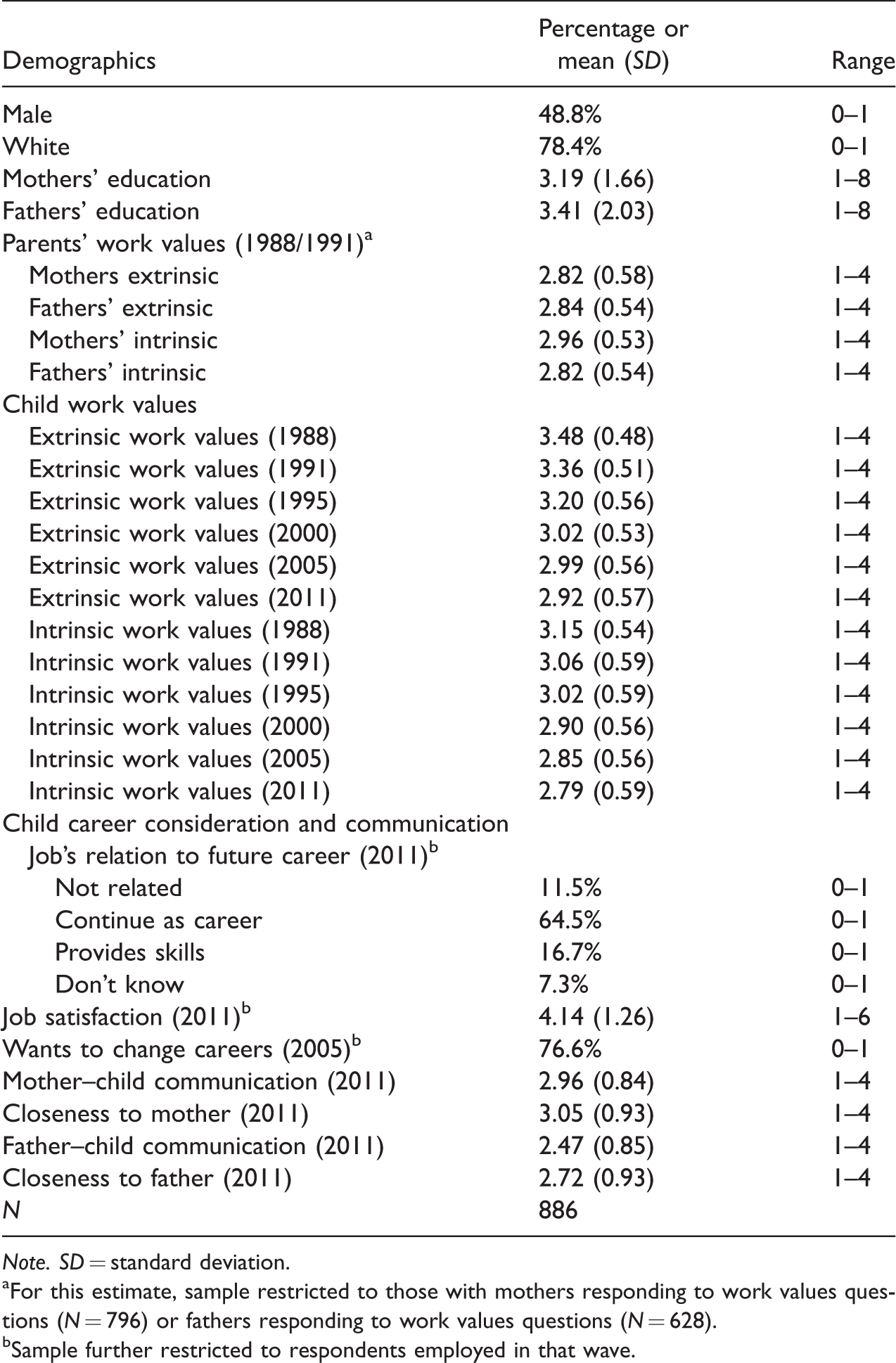
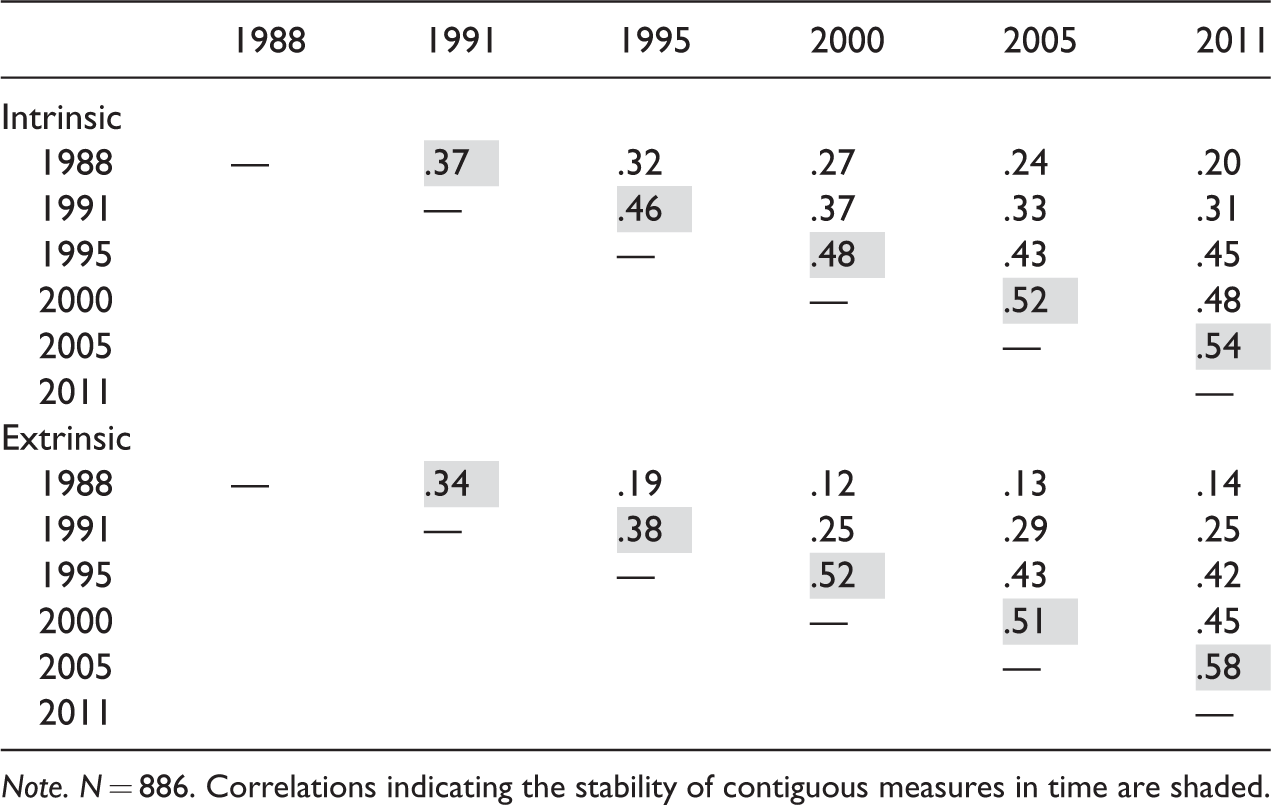
Table 1 provides descriptive statistics on both generations’ work values and sociodemographic characteristics for the study sample. Adolescents’ extrinsic and intrinsic work values were initially at higher levels than mothers’ and fathers’ corresponding values, but the averages slowly adjusted downward as they grew older. This weakening of both extrinsic and intrinsic values from adolescence to adulthood has been observed before, both in the YDS and in nationally representative data (M. K. Johnson, 2001a; M. K. Johnson, Sage, & Mortimer, 2012). Table 2 shows the correlations among the children’s work values from adolescence to adulthood. Correlations between successive measurement points are stronger at older ages (left- to right-shaded boxes), a pattern also evident in other data (M. K. Johnson, 2001b) that indicate increasing stability of values.
Descriptive Statistics of Sample Characteristics and Work Values.
Note. SD = standard deviation.
aFor this estimate, sample restricted to those with mothers responding to work values questions (N = 796) or fathers responding to work values questions (N = 628).
bSample further restricted to respondents employed in that wave.
Overtime Correlations for Children’s Work Values, 1988 (Age 14–15 Years) to 2011 (Age 37–38 Years).
Note. N = 886. Correlations indicating the stability of contiguous measures in time are shaded.
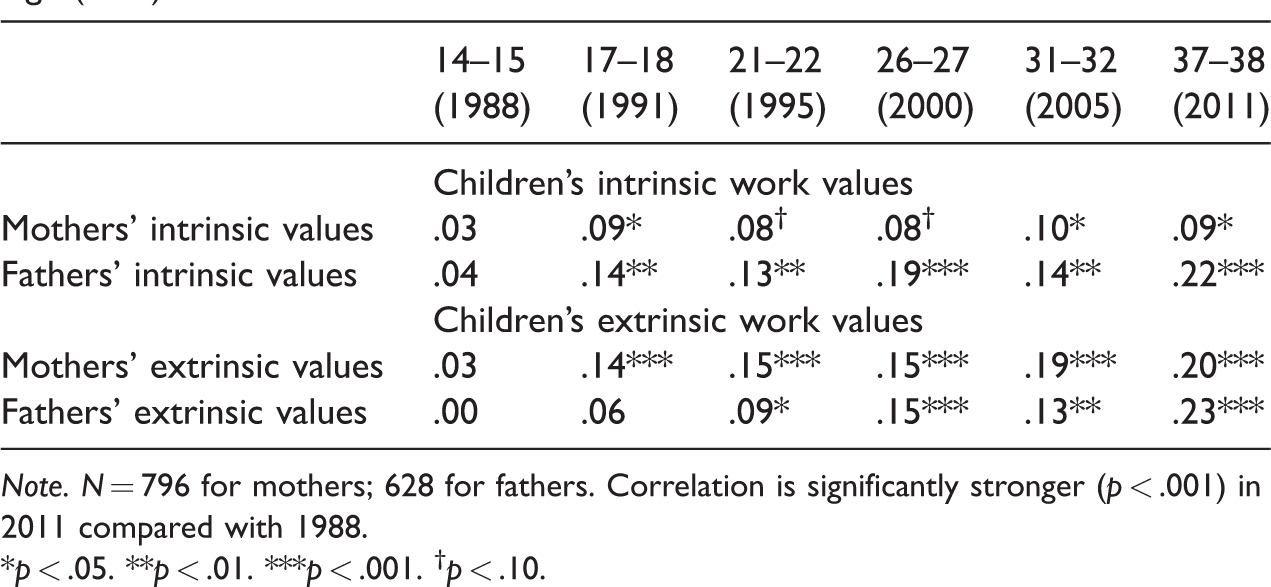
We begin our examination of the research hypotheses by presenting the pattern of correlations between parents’ work values (measured during their children’s adolescence) and their children’s work values measured during adolescence and through their late 30s. As shown in Table 3, mothers’ and fathers’ work values were not correlated with their children’s work values in mid-adolescence (1988 or ninth grade) 3 but were by the end of high school. In 1991, when most respondents were in their last year of high school, adolescents’ intrinsic work values were positively correlated with both mothers’ and fathers’ intrinsic work values; adolescents’ extrinsic work values were positively correlated with only mothers’ extrinsic work values.
Correlations Between Parent’s and Children’s Work Values by Children’s Age (Year).
Note. N = 796 for mothers; 628 for fathers. Correlation is significantly stronger (p < .001) in 2011 compared with 1988.
p < .05. **p < .01. ***p < .001. †p < .10.
Correlations emerging by the late teens are consistent with parents’ work-related socialization of children (Hypothesis 1). It is also notable, however, that the correlations strengthened as the adolescents moved into adulthood. Despite the increasing passage of time as parents’ work values were measured, the correlations are near equal or of larger magnitude throughout the child’s 20s and 30s than they were when adolescents were in the 12th grade (1991). Remarkably, parents’ work values, measured two decades earlier, were positively and significantly correlated with adult children’s work values at age 37 to 38 years (2011). Although we do a more formal test of the differences over time (age) subsequently, in which we can see specific contrasts, we do note that the correlations at this last age of assessment are significantly larger than those at the first age of assessment (with the exception of mothers’ intrinsic values). Thus, the data are also consistent with Hypothesis 2, that work value similarity between children and parents would be stronger in adulthood than in adolescence.
Supplemental analyses (not shown) indicate that this pattern is consistent across offspring gender and across parents’ education levels. We also found that with the exception of the association between mothers’ intrinsic values and adult children’s intrinsic values, which was the weakest (r = .09, p < .05) at the last wave, the associations at age 37 to 38 years remained statistically significant when we controlled adult children’s work values measured one wave earlier (age 31–32 years, results not shown). In these lagged dependent variable regression models, the estimate for the parents’ work values represents an association with change in the child’s work values between the time points. Thus, these findings indicate that parents’ past work values predicted change in adult children’s work values during the children’s mid-30s. A growing connection between parents’ and children’s work values as children become established in adult work roles is consistent with a delayed activation process.
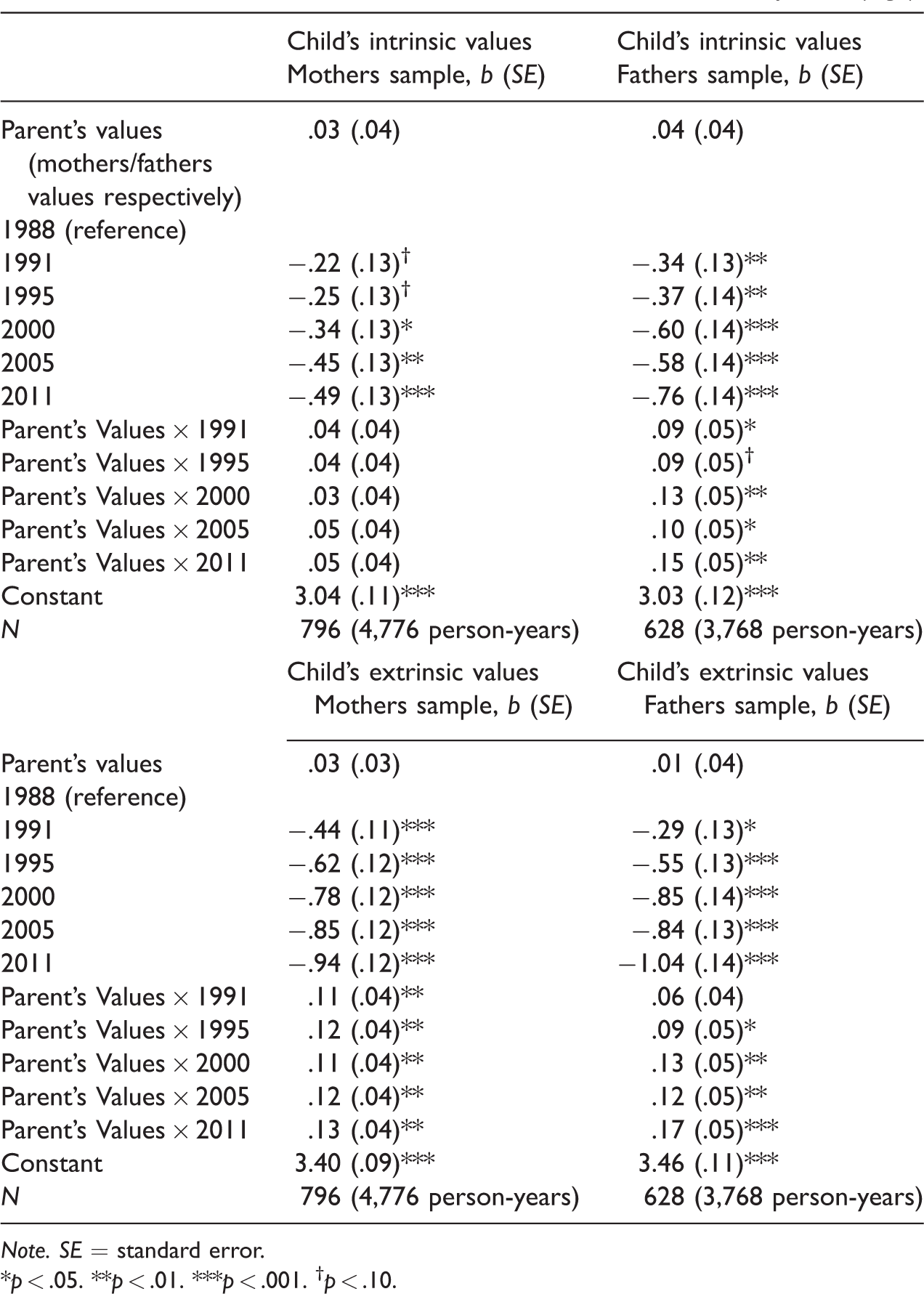
We next transformed the data to a person-wave structure to further examine whether offspring’s work values become more similar to parents’ work values with age. The results, shown in Table 4, indicate no main effects of parents’ work values, reflecting the lack of a significant correlation between parents and adolescents in 1988 (as was the case in Table 3). The main effect of each year coefficient indicates that the strength of intrinsic and extrinsic values declines on average with age for young people, consistent with the descriptive statistics in Table 1. 4 The interaction terms between parents’ values and year largely document a strengthening association (or similarity) with age. This is the case for mothers’ extrinsic values, which quickly become more similar, and both fathers’ intrinsic and extrinsic values, which also show increased similarity quickly, but even greater similarity by the children’s late 30s (2011). For example, the coefficient for Father’s Values × 1991 in the intrinsic model (b = .09, p < .05) indicates the association between fathers and children is .09 larger in 1991 than it was in 1988. The coefficient for Father’s Values × 2011 indicates that it was .15 larger in 2011 than it was in 1988. In an exception to the pattern, young people’s intrinsic values do not become significantly more similar to mothers’ intrinsic values over time, and the time trend for mothers’ extrinsic values after 1991 is weak. Thus, we find significant differences by year (age) in the influence of parents’ work values on their child’s work values, resulting in a growing similarity with age, consistent with Hypothesis 2.
Mothers’ and Fathers’ Influence on Children’s Work Values by Time (Age).
Note. SE = standard error.
p < .05. **p < .01. ***p < .001. †p < .10.
To further examine the delayed activation perspective, we test Hypothesis 3, that parent–child work value similarity is stronger when young adult children have experiences that prompt deeper thinking about jobs and career choice. To do so, we examined whether parent–child value similarity in adulthood (2011, age 37–38 years) was stronger under circumstances that would promote occupational engagement and perhaps enhance the salience and foster reevaluation of parental values. We selected three indicators of such circumstances: First, when adult children moved into jobs they considered to be their careers, making occupational experiences and rewards more salient and consequential for one’s values and work identity; second, when they experienced job dissatisfaction that might prompt critical reflection about how one’s current job reflects one’s values; and finally, when they expressed a desire to change jobs or careers, which could prompt active assessment of value priorities in a job search.
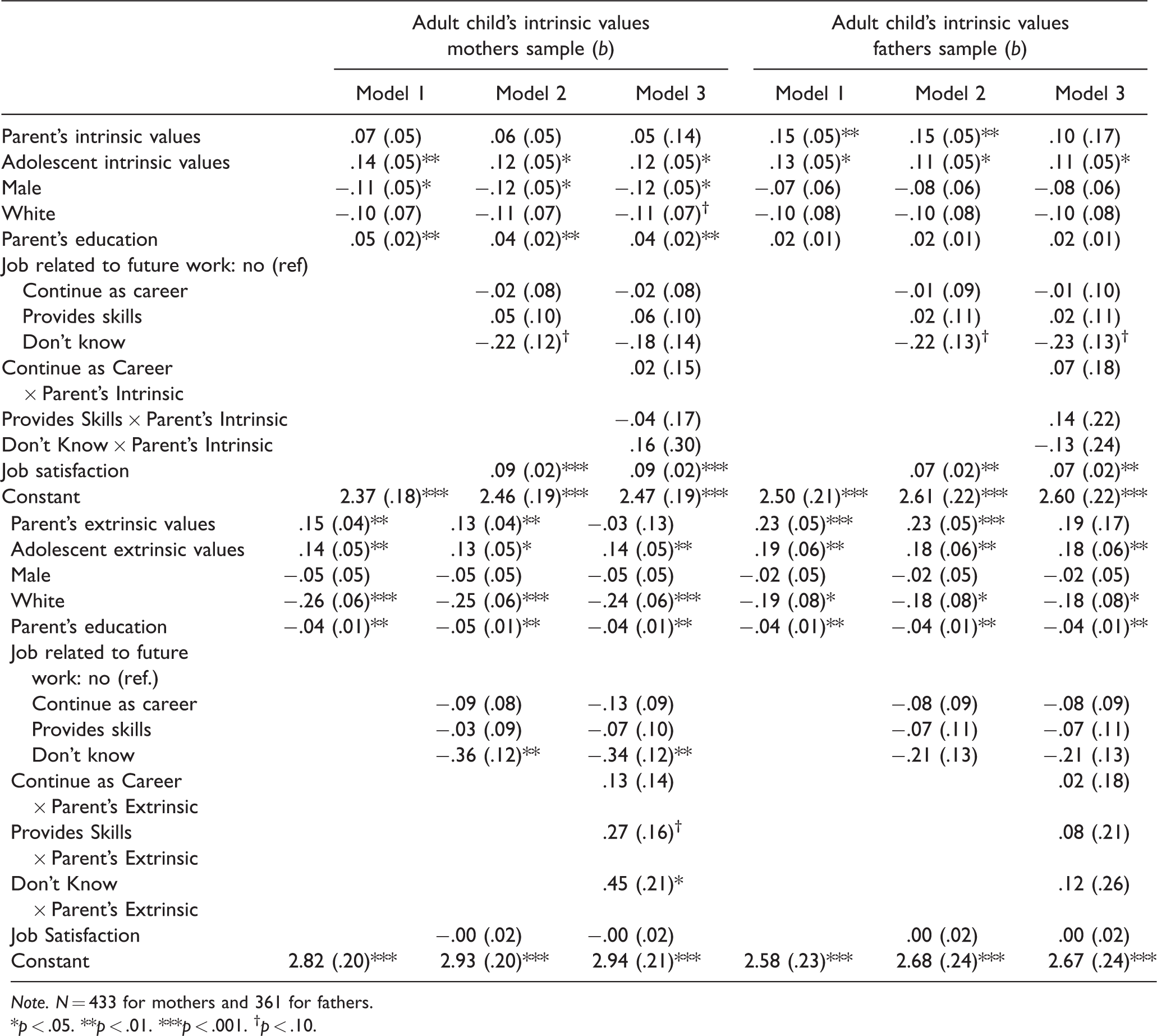
In Table 5, we present models for mothers and fathers, considering the first two of these indicators, the relation of one’s job to careers and job satisfaction. Because both capture assessments of work, we restrict the analysis to adult children who were employed at the time of measurement. Model 1 includes only parental work values and the control variables, to establish whether the significant correlations between parental work values and adult children’s work values (Table 3) are significant in this subsample with controls for sociodemographic factors. For intrinsic values (upper panel), only fathers show significant similarity with their children’s values; for extrinsic values (lower panel), both parents do. Model 2 includes the main effects of career relevance and job satisfaction. Job satisfaction is associated with stronger intrinsic values and is not associated with extrinsic values. Answering “don’t know” to whether one’s current job is related to one’s long-term career is associated with weaker extrinsic values in the model with mothers’ data (compared with the reference category of indicating one’s work is not related to one’s future career, as indicated in the table, but also compared with the other two categories). 5
Activation Models of Adult Children’s (2011) Work Values.
Note. N = 433 for mothers and 361 for fathers.
p < .05. **p < .01. ***p < .001. †p < .10.
Model 3 examines the interaction between career relevance and parental values (Hypothesis 3). Results do not show a significant contrast between career jobs and survival jobs (i.e., not related to future work), but rather that mothers’ extrinsic work values were more strongly reflected in adult children’s values when they expressed uncertainty about the career relevance of their current work (i.e., “I don’t know”). Although this finding was unexpected, career uncertainty may be considered counter normative at an age (37–38 years) when the adult child is expected to have become established in a career, precipitating engagement with occupational decision-making and heightening earlier parental influence. 6 Although we also tested for interactions between job satisfaction and parental values (Hypothesis 3), they were not significant (not shown). Moreover, we tested gender interactions with parental values to see whether mothers’ and fathers’ values, respectively, were more influential for their adult daughters or sons and found no significant differences.
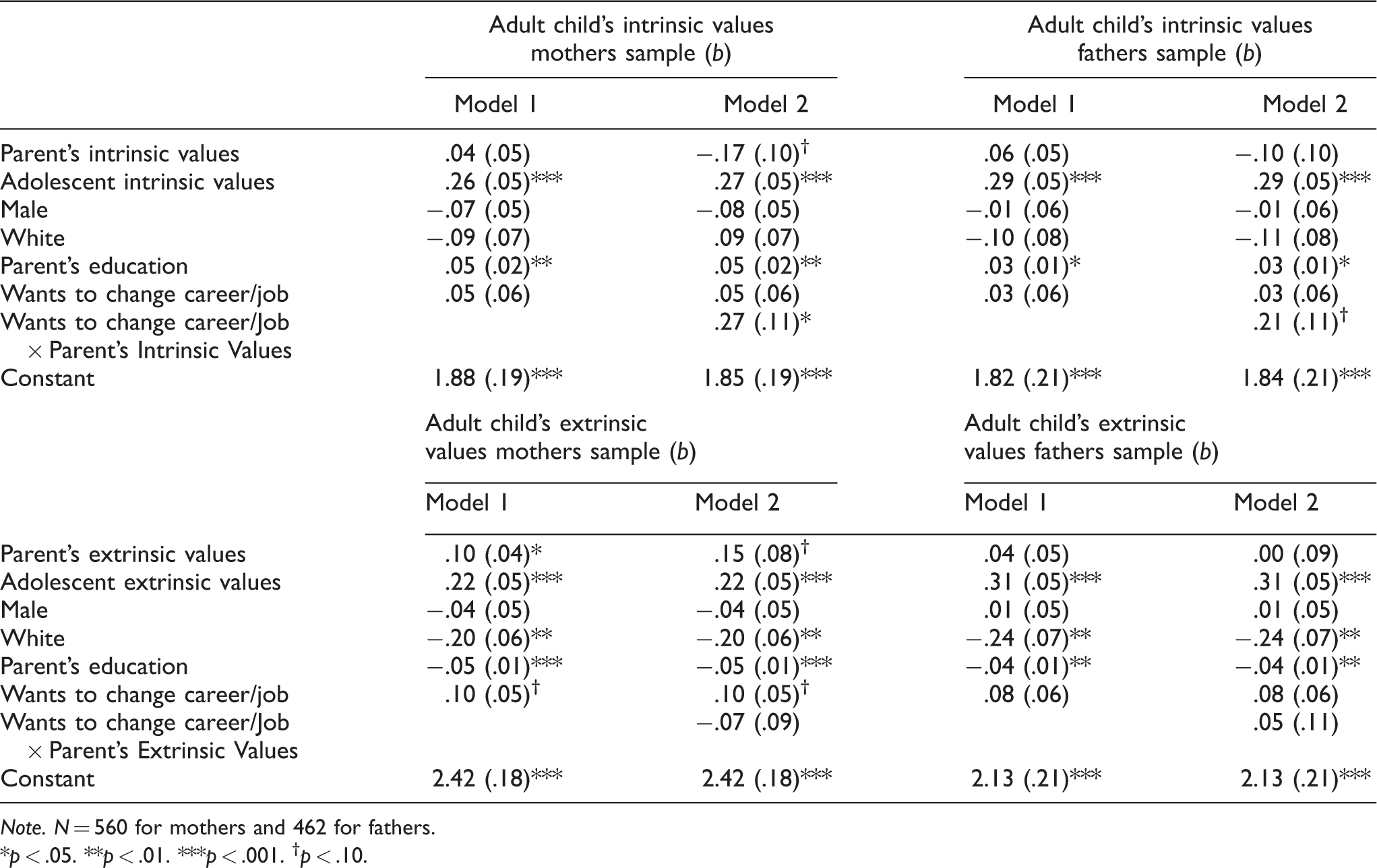
Finally, we examined the third indicator, considering whether those who wanted to change jobs or careers would show stronger intergenerational similarity in work values (Hypothesis 3). Because the questionnaire item asking whether the respondent wanted to change their job or career was only included in the 2005 survey, we examined this possibility by examining work values in 2009, the next time work values were assessed after 2005. While this is still an overly long interval, it was preferable to assessing work values in 2011 as we have been doing up to this point. Model 1 in Table 6 includes the main effect of wanting to change jobs or careers. Wanting to change jobs or careers is not itself significantly associated with either intrinsic or extrinsic work values. Model 2 tests the conditional effect of parental work values dependent on the desire to change jobs or careers. As shown in Table 6, the relationship between mothers’ intrinsic values and adult children’s intrinsic work value was stronger when adult children expressed a desire to change jobs or careers. This supports Hypothesis 3 and is consistent with the delayed activation perspective. The coefficient for fathers is similar but not statistically significant at conventional levels (b = .21, p = .06). Parental influence is stronger when adult children are actively engaged in planning their careers. This engagement likely involves wrestling with what is important and what one wants in a career. Earlier socialization may come to the fore or crystallize at such times. 7
Activation Model: Desire to Change Jobs/Careers at Age 31 to 32 Years (2005) and Intrinsic Work Values at 37 to 38 Years (2009).
Note. N = 560 for mothers and 462 for fathers.
p < .05. **p < .01. ***p < .001. †p < .10.
Supplemental Analysis
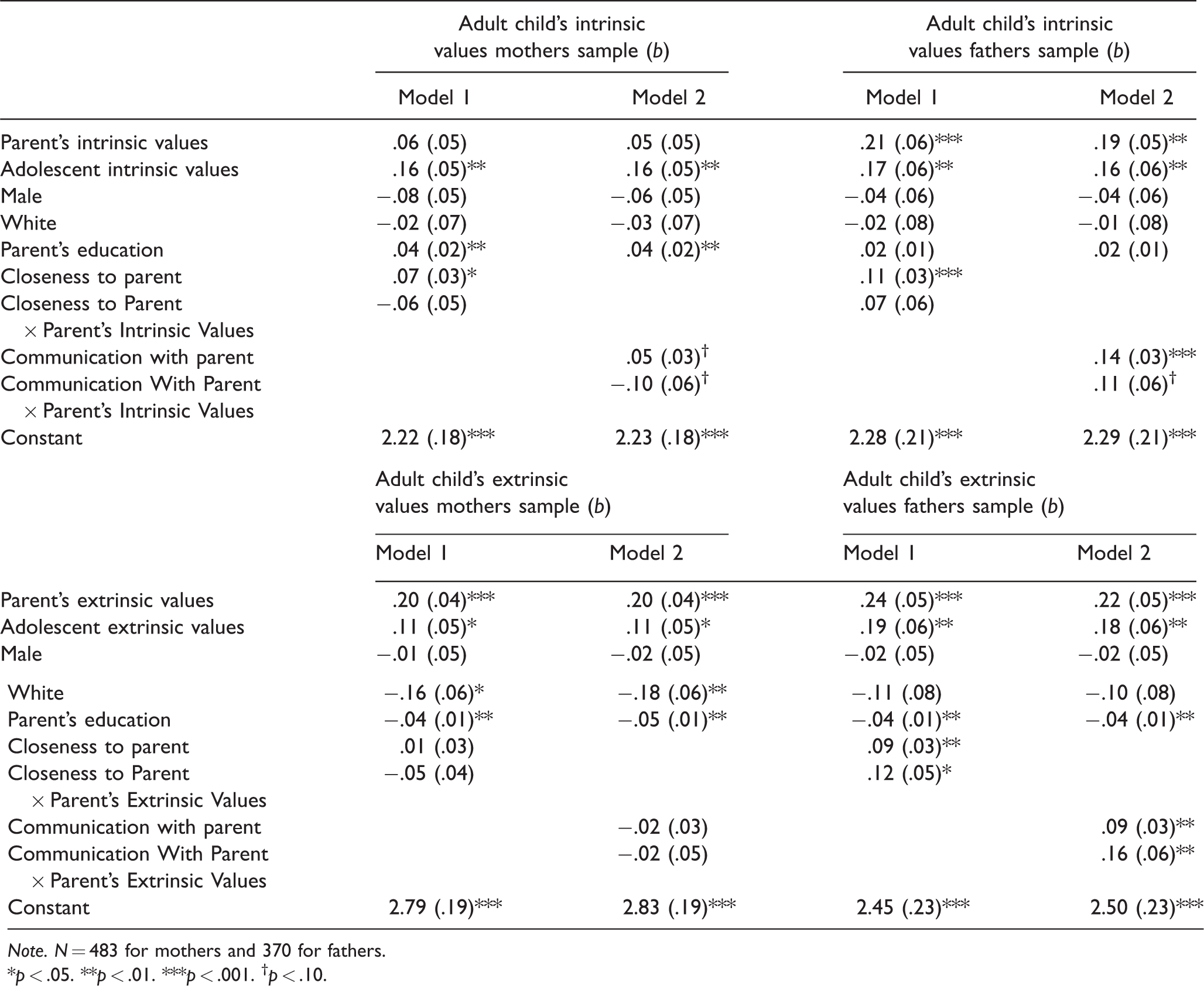
We also assessed whether parent–child closeness and communication in adulthood moderated the level of similarity between parents’ work values (still assessed during the child’s adolescence) and adult children’s work values. Adult children reported how close they felt to their mother/father (1 = not close at all to 4 = extremely close). Although we lacked communication measures specific to the work domain, adult children were asked how often they talk with their mother/father about personal concerns and decisions in their life and how often their mother/father talked over important decisions with them (1 = never to 4 = often). We averaged these two items and estimated whether more frequent communication strengthened the influence of parents’ values on adult children’s values.
Estimates from models examining the interaction between parents’ work values and parent–child closeness (Model 1) and parent–child communication (Model 2) appear in Table 7. Significant conditional effects were observed for fathers. Fathers’ extrinsic values were more similar to their adult children’s extrinsic values when the adult children reported greater closeness to them (lower panel). In addition, more frequent communication between adult children and their fathers also strengthened the similarity of fathers’ and adult children’s work values. This was statistically significant for extrinsic values (lower panel) but did not quite reach the conventional significance level for intrinsic values (upper panel). Thus, when adult children are close to and communicate about important issues more frequently with fathers, their extrinsic work values in particular become more similar to what their fathers’ values were back when the children were adolescents.
Parent–Child Closeness and Communication in Adulthood and Value Similarity.
Note. N = 483 for mothers and 370 for fathers.
p < .05. **p < .01. ***p < .001. †p < .10.
Discussion
By examining the transmission of work values from parents to children from mid-adolescence to early midlife, this study documents empirical patterns consistent with early-life socialization and also with a delayed activation perspective. Parent–child similarity emerged by the late teen years, consistent with Hypothesis 1. Interestingly, parents’ and children’s values were not significantly correlated at the earliest time of measurement, ninth grade, indicating that similarity emerged during the high school years. We also found that similarity continued to strengthen up through the 30s for fathers’ intrinsic and extrinsic work values, and for mothers’ extrinsic work values, a pattern early socialization alone does not explain. The growing similarity with age is consistent with Hypothesis 2. Delayed activation seems to complement and build upon earlier intergenerational similarity that was developed, while parents and children were in close proximity.
In addition to these general age patterns, we found that young adults in their 30s who had been thinking about changing jobs or careers, or who did not know whether their current work was connected to their long-term career plans, held values more similar to their parents than other same-aged young adults, providing partial support for Hypothesis 3. When children are in circumstances that foster active reflection about work—when they are wondering whether their current job is related to their career plans, or when they are seeking a new job or career—parental values were more closely related to adult children’s values. This is consistent with the idea that parental work values conveyed and perhaps half-heartedly adopted one to two decades ago become more salient and influential in subsequent years. Thus, we find support for a process through which socialization in adolescence plants seeds of parental work values. These value seeds lie partially dormant until work life begins. With maturation, reflection, and active engagement in the workforce, the early planted “seeds” of parental values sprout, bloom, and bear fruit. In particular, when the adult child is actively shaping his or her career by considering changing jobs or careers, long-standing parental intrinsic values become more consequential; not being sure about whether one’s work is related to a long-term career or not heightens similarity with mothers’ extrinsic values. In contrast, job dissatisfaction did not demonstrate the same pattern of effects. Those who were dissatisfied with their current work were not those with values more similar to their parents.
Conclusion
Longitudinal data from the YDS, enabling observation of the development of children’s values from mid-adolescence to adulthood, have allowed us to examine the transmission of work values from parents to children over a substantial period of time. This research has assessed the process through which parents transmit their work values to their children by evaluating early socialization and delayed activation processes.
The findings presented here have broad implications for the study of intergenerational transmission generally and occupational value transmission in particular. As noted in the introduction to this article, the classic theories of vocational development define adolescence as the key stage for work identity formation, including interests, values, and choices (Mortimer et al., 2015; Staff et al., 2009). According to these theories, people and experiences at this time of life are critical for occupational value development. Increasingly, however, and congruent with the lengthening transition to adulthood, theorists of vocational development are extending their purview well beyond the teen years, recognizing that work identity, values, and preferences shift over time along with accelerating change in the world of work itself. While this study confirms that occupational values continue to change through the late 30s, with both value dimensions diminishing in importance somewhat in the aggregate, parental influence does not lessen over time, as one might expect given the potential impact of new significant others and experiences. The rather astounding pattern revealed by our analysis is that parental influence continues to grow as the youth moves from mid-adolescence, through the transition to adulthood, and into adulthood. This phenomenon is especially notable when offspring are wrestling with uncertainty and change in their careers. At a more general level of life-course and developmental theory, our findings indicating delayed activation of earlier socialization processes provide a clear example of a developmental sleeper effect (Clarke & Clarke, 1981; Kagan & Moss, 1962; Min et al., 2012). They reveal how individual circumstances in the life course can bring to life nascent individual preferences and beliefs introduced in a much earlier phase of development.
While the design of the YDS, with its cross-generational and longitudinal work value data, provides a unique opportunity to examine the transmission processes at issue, this research is not without limitations. Arguably most important, as no data were collected from parents after the respondents’ high school years, we have no measures of parents’ work values after their children’s adolescence. Furthermore, we do not have knowledge of the content of parent–child discussions in subsequent years, that is, whether parents and children talked specifically about work. Thus, ongoing parent–child communication and contemporaneous value transmission constitute a plausible competing explanation for the evidence in this article purportedly supporting delayed activation. The dominant socialization approaches may underestimate how much ongoing parental socialization actually occurs in adult children’s lives.
We do find that closeness to fathers and communication with fathers about important matters at midlife strengthened intergenerational extrinsic work value similarity. It should be noted that this similarity implicated work values measured for the father over two decades earlier. Although work values in adulthood are more stable than earlier in the life course, the stability of parental values over only 3 years in this study (when their children went from 9th to 12th grade) ranged from .5 to .6. Such stability would no doubt be lower if assessed over the entire period. While it could be that ongoing interaction with parents involves continued influence of parental values on adult children’s values, contemporaneous communication does not offer a complete alternative explanation for increasing similarity to parents’ earlier values.
Another competing explanation lies in the genetic similarity of parents and children. Genetic processes could produce growing value similarity between parents and children if value heritability increases with age. A recent study of substance use, for example, found increasing genetic effects from adolescence through middle adulthood (Kendler, Schmitt, Aggen, & Prescott, 2008). Although values have not been the focus of research on age patterns of genetic inheritance, the heritability of some cognitive traits and behaviors has been shown to increase with age (Shanahan & Boardman, 2009). Increasing heritability could arise from biological processes, with gene expression facilitated by environmental exposures that occur later in development, for example, by reaching a threshold level of exposure to a drug. It may also arise because with advancing age young people are more able to select their own social environments based on genetic predispositions. Selection into environments later shapes orientations and behavior (Kendler et al., 2008), a process referred to as accentuation in life-course sociology (Elder, Shanahan, & Jennings, 2015) and as corresponsiveness, a case of proactive person–environment transaction in life-span developmental and personality psychology (Caspi & Roberts, 2001; Caspi, Roberts, & Shiner, 2005). In the case of general, abstract life values, studies of twins and their parents have shown patterns consistent with a genetic explanation for family members’ similarity (Kandler, Gottschling, & Spinath, 2016). Although our study cannot test genetic pathways, it is important to acknowledge this potential alternative process through which the hypothesized growing parent–child similarity could occur.
This study is also limited in the range of experiences considered among those plausibly related to value transmission. While we have drawn upon a very large archive of potentially relevant information collected over two decades, it is conceivable that other dimensions of family life or career trajectories (of parents and children) would elucidate transmission processes. Furthermore, measurement of the variables of interest here is restricted by the data at hand. Some key measures we employ to test the delayed activation perspective are single items. While the work value constructs rely on standard, multiple item scales, single questionnaire responses measured how respondents perceived their current work in relation to a future intended career, their job satisfaction, and whether they were thinking about changing jobs or careers. Future research could consider more complex, and potentially more reliable, ways of capturing activation periods in young workers’ lives.
It must also be noted that the data were obtained from a community sample, not one that is representative of the U.S. population. While we have no reason to believe that the process of parent–child value transmission would be fundamentally different across regions of the country, these findings may not reflect more general processes. Moreover, limited sample size precluded extensive study of same- and cross-gender influences, for example, from mothers to daughters and sons. We find no significant differences in sons’ and daughters’ similarity with parental work values across multiple time points, but we were unable to test whether the indicators of activation mattered more for gender-matched parent–child dyads (i.e., three-way interactions). Our findings implicating the activation model involve both maternal and paternal influences, but larger samples of mothers, fathers, and children of both sexes would promote understanding of gender-specific intergenerational transmission.
Finally, parental value assessment only covered those parents who were employed while their children were in high school. Parents may lack employment for various reasons (e.g., child care, unemployment, disability) and these reasons may be reflected in their own values and those of their children. Similarly, patterns of parental employment may influence socialization outcomes. For example, the stronger association between fathers’ intrinsic work values and their adult children’s values (in comparison to mothers,’ as shown in the last column of Table 3) may well be due to the still traditional gender role allocation in the parental generation, with fathers’ serving as the central breadwinners and mothers more often in part-time or noncareer types of employment.
But despite these caveats and shortcomings, the findings presented here suggest five promising directions for future studies. First, it would be useful to examine processes of delayed activation in more recent youth cohorts as they make the transition to adulthood. Given the lengthening transition to adulthood and the changing labor market, we might expect delayed activation processes to be even more relevant for understanding more recent cohorts’ work values. Furthermore, shifting gender roles and the more active labor force involvement of contemporary mothers could alter patterns of work value transference to children.
Second, it would be desirable to examine early socialization and delayed activation processes in other societies with varying school-to-work transition regimes, distinct economic and labor conditions, as well as varying family arrangements. Recent research has focused on cross-cultural similarities and differences in the major sources of influence on work values (including parental socialization) as well as the impact of work values on outcomes for individuals. Kraaykamp et al. (2019), for example, theorize that parental transmission is more difficult in time of rapid change (e.g., economic crises) and stronger in collectivistic and family-oriented societies. This research has yet to examine the timing of intergenerational value transmission, however. The lack of institutionalized pathways from school to work, the strong emphasis on “college for all,” and weak emphasis on vocational exploration in adolescence in the United States could make work-related identity development especially lengthy in the United States. A formal apprenticeship system during the teen years, in contrast, could enable adolescents to test drive their developing work values much earlier (Mortimer & Krueger, 2000), with an activation of parents’ values considerably less delayed. The centrality of mothers and fathers in work socialization could also vary across societies depending on female labor force participation rates and the degree of gender equity in pay and occupational position.
Third, qualitative research would be useful to address offspring’s subjective understandings of parental influence as they move from adolescence to adulthood. Much as adults may recognize how similar they are to their parents in raising their own children (as if modes of childrearing were etched into the psyche as they observed their parents in action many years earlier), adults may also come to consciously understand the meaning and merits of their parents’ occupational values as they encounter the challenges and demands of work. However, parental influence may not be highly salient or consciously recognized. Instead, the occupational values to which children are exposed early on may be part of the taken-for-granted expectancies, the “kind of people we are,” that influence much of daily life (Vaisey, 2009, p. 1707).
Fourth, continuing vocational socialization processes in the family should be studied from the vantage of both parents and children—these may foster not only continued value transmission from parents to children, as these findings suggest, but also reciprocal processes through which adult children’s work experiences and subjective reactions to those experiences come to influence aging parents’ own understanding of work and their own value priorities. For example, parental observation of the increasing precarity of work for their children in the aftermath of economic downturns, like the recent Great Recession, could possibly lead to a reconsideration of the importance of job security and opportunities for advancement.
Finally, this research suggests the merits of extending the research purview to other vocationally relevant orientations. Do parents transmit their job satisfaction, work commitment, and job insecurity to their children, in ways that may reinforce or counteract lessons from their adult children’s own work experiences? We hope that the intriguing findings of this study, which is likely the first to examine parents’ continuing influence on children’s values from adolescence to adulthood, will inspire future research to examine these possibilities.
Footnotes
Declaration of Conflicting Interests
The authors declared no potential conflicts of interest with respect to the research, authorship, and/or publication of this article.
Funding
The authors disclosed receipt of the following financial support for the research, authorship, and/or publication of this article: This project was supported by Grant Number R01HD044138 from the Eunice Kennedy Shriver National Institute of Child Health and Human Development and the National Institute of Mental Health (MH42843). The work on this manuscript was also supported by the Research Group “Genetic and Social Causes of Life Chances” at the Center for Interdisciplinary Research, University of Bielfeld (ZiF). The content is solely the responsibility of the authors and does not represent the official views of the sponsors.